By the Tunisia Tourism Guide team · Last fact-checked 6 June 2026 · FCDO advice last updated 23 February 2026, re-checked word for word 2 July 2026 (unchanged) · We review this guide whenever a government advisory changes
So — is Tunisia safe for tourists right now? Yes, for the places tourists actually go. The beach resorts, Tunis, Djerba and the desert circuit all sit far outside the border zones the UK Foreign Office restricts, more than 11 million people holidayed here in 2025, and no terrorist incident has affected tourists since May 2023. The honest detail — including what the FCDO says word for word — is below.
In this update: FCDO advice re-checked word for word (unchanged since 23 February 2026), the 2026 El Ghriba pilgrimage outcome added, record 2025 visitor figures confirmed, and every price and phone number re-verified.
I’m going to do something the other articles on this subject don’t, which is treat you like an adult. Tunisia’s recent history includes events nobody should gloss over, and a page-one search result that’s still showing a 2020 advisory map and calling the whole country a no-go zone isn’t treating you like an adult either — it’s just out of date. So here’s the deal: I’ll quote the official advice exactly and date-stamp it, walk you through what changed after 2015, tell you what the actual risks are (spoiler: the biggest one involves a steering wheel, not terrorism), and give you a straight answer for every resort. By the end you’ll know more about Tunisia’s security picture than most people selling holidays there.
Is Tunisia safe? The 30-second version
| Question | The short answer (June 2026) |
|---|---|
| UK government position | No advisory against the tourist coast, Tunis, Djerba or the desert circuit. Specific border and mountain zones are restricted — quoted in full below |
| US government position | Level 2 of 4, “exercise increased caution” — the same level as France, Spain and Italy |
| Last incident affecting tourists | May 2023, at the El Ghriba synagogue on Djerba. Nothing affecting tourists since |
| Visitor numbers | 11 million+ in 2025, an all-time record; nearly 450,000 Brits, also a record |
| Security you’ll notice | Armed tourist police, hotel entrance screening, scanners at airports and big sites — standard since 2015 |
| Biggest real risk | The roads, statistically — about five times the UK fatality rate. Then petty theft and overcharging |
| Insurance | Essential. Your GHIC is not valid in Tunisia, and travelling against FCDO advice can void your policy |
| Emergency numbers | Ambulance 190 · Police 197 · Fire 198 · National Guard (rural) 193 |

What the FCDO actually says (quoted exactly)
Most safety articles paraphrase the Foreign, Commonwealth and Development Office until the meaning dissolves. Here is the real thing, from gov.uk’s Tunisia travel advice, last updated 23 February 2026 and checked by us on 2 July 2026.
The headline: “FCDO advises against all travel to parts of Tunisia” — the operative words being parts of. Two categories follow.
Where the FCDO advises against ALL travel
In western Tunisia, along the Algerian border: “the Chaambi Mountains National Park and the designated military operations zones: Mount Salloum, Mount Sammamma, Mount Mghila” — due to, in its words, “cross-border terrorist activity and operations by the Tunisian security forces.”
In southern Tunisia, along the Libyan border: “the militarised zone south of the towns of El Borma and Dhehiba; within 20km of the rest of the Tunisia-Libya border area north of Dhehiba; the town of Ben Guerdane and immediate surrounding area” — due to “cross-border terrorist activity and fighting in Libya.”
Where it advises against all but essential travel
Quoting again: “areas north and west of the town of Ghardimaou in Jendouba Governorate, including El Feidja National Park; within 20km of the Tunisia-Algeria border in El Kef and Jendouba governorates, south of the town of Jendouba; Kasserine Governorate, including the town of Sbeitla; within 10km of the rest of the Tunisia-Algeria border south of Kasserine Governorate; within 10km of Mount Mghila; Mount Orbata”; and in the south, “within 75km of the Tunisia-Libya border, including Remada and El Borma but excluding Zarzis, the C118 road and all areas in Medenine Governorate north of the road.”
Read that last clause twice, because it’s the one that matters for holidaymakers heading south: Zarzis, the C118 road and everywhere in Medenine Governorate north of it are explicitly carved out — which is the FCDO formally confirming that Djerba and its neighbouring coast are fine. One sad note for history lovers: Sbeitla’s superb Roman ruins sit inside the Kasserine restriction, which is why you won’t find them in our guide to the best things to do in Tunisia — and why you should be wary of any tour that offers them.
Two more FCDO lines worth quoting precisely. On terrorism: “Terrorists are likely to try to carry out attacks in Tunisia” — wording the FCDO also applies, incidentally, to France and Spain. And on what happens if you ignore the zones: “Your travel insurance could be invalidated if you travel against advice from the Foreign, Commonwealth & Development Office.” That second line is the practical one. The zones aren’t a suggestion; they’re a condition of your cover.
Where the restricted zones are — versus where you’ll be
Now put the two maps side by side. Every restricted zone is a border strip or an inland mountain range. Every place you’d plausibly book is on the coast or the established desert circuit. The nearest “essential travel only” area to Sousse is Kasserine Governorate, roughly three hours’ drive inland through territory no excursion goes anywhere near. Hammamet, Monastir and Mahdia are further still. Tunis is about as close to the Algerian border restrictions as London is to Cardiff. And the southern circuit — Tozeur, Douz, Matmata, Tataouine’s ksour, Ksar Ghilane — threads comfortably outside every line on the FCDO map, which is precisely why thousands of package-tour 4x4s run it every week without note.
It’s also worth knowing the other governments agree on the geography while phrasing things their own way. The US State Department has Tunisia at Level 2, “exercise increased caution” (advisory dated October 2024) — the same bracket it gives France — with its own “do not travel” list confined to the border strips, the Kasserine mountains and the desert south of Remada, and it explicitly excepts the towns of Tabarka and Ain Draham from its Algerian-border buffer. Canada (updated 26 May 2026) and Australia both say “exercise a high degree of caution” countrywide with near-identical border restrictions, and Canada names the same tourist exceptions — Tabarka, Ain Draham, Chebika, Tamerza, Mides. Ireland files Tunisia at “high degree of caution”, level two of its four. Nobody — not one Western government — advises against the resorts, the capital, Djerba or the classic Sahara loop.
How 2015 changed everything — and what protects you now
You can’t write honestly about Tunisian tourism without 2015, so let’s do it properly and soberly. On 18 March that year, gunmen attacked the Bardo National Museum in Tunis, killing 21 tourists, one of them British. Fourteen weeks later, on 26 June, a gunman walked up the beach at Port El Kantaoui, near Sousse, and murdered 38 people at the Riu Imperial Marhaba hotel. Thirty of them were British — the largest loss of British life to terrorism since the London bombings of 2005. Anyone old enough to have watched the news that summer remembers it, and plenty of the people googling “is Tunisia safe” are really asking about that day. That November, a bomb on a presidential guard bus in Tunis killed twelve officers, and Tunisia declared the state of emergency that — renewed ever since, most recently through to the end of 2026 — remains in force today.
What happened next is the part that rarely gets told properly. Tunisia’s economy lives on tourism, and the state rebuilt its protection from the ground up. From July 2015, a thousand armed tourist-security officers deployed along the coast and inside hotels — the first time Tunisia’s tourist police carried weapons. Hotels installed perimeter gates, vehicle checks, scanners and CCTV as standard; armed patrols — sometimes on quad bikes — began working the resort beaches; airport screening tightened to a level UK travellers will recognise from anywhere else. The UK worked directly with Tunisia on aviation and site security through this period, and in July 2017 the Foreign Office formally lifted its advice against travel to the coast, its minister citing “the security improvements that the Tunisian authorities and tourist industry have made, with support from the UK and international partners.” Thomas Cook’s first flights returned in February 2018, TUI followed that May, and the recovery has compounded every year since: by 2025 Tunisia welcomed more than 11 million visitors, the most in its history, including nearly 450,000 from the UK — finally beating the 2014 record.
None of which erases what happened. A decade of investment, a permanent armed presence at every meaningful site, and eleven million annual visitors is simply what the picture looks like now, and you deserve both halves of the story.

The honest timeline, 2015 to 2026
| When | What happened | Who was affected |
|---|---|---|
| March 2015 | Bardo Museum attack, Tunis | 21 tourists killed, incl. 1 Briton |
| June 2015 | Beach attack at Port El Kantaoui (Sousse) | 38 tourists killed, incl. 30 Britons |
| Nov 2015 | Presidential guard bus bombing, Tunis; state of emergency declared | 12 security personnel killed |
| 2018–2021 | Sporadic small attacks targeting police in Tunis (2018, 2019, 2020, 2021) | Security forces; no tourists killed |
| May 2023 | Shooting at the security cordon during the El Ghriba pilgrimage, Djerba | 3 security officers and 2 visiting pilgrims killed |
| 2024 – today | No terrorist incidents affecting tourists recorded in the FCDO’s or Canada’s incident lists | — |
Three things stand out from that table. First, since 2015 the targets have overwhelmingly been security forces, not visitors. Second, the one exception — El Ghriba in May 2023, when a National Guard member shot dead three colleagues and two pilgrims at the synagogue’s cordon — was met with an immediate security response, and the pilgrimage it struck has come back: the 2026 Lag BaOmer gathering went ahead this spring under tight protection, with international pilgrims returning and the traditional Minara procession held for the first time since the attack. We cover visiting the synagogue respectfully in our Djerba guides. Third, and most simply: as of publication, nothing affecting tourists in over three years — a period in which something like thirty million visits happened.
Does the Middle East situation affect Tunisia? (June 2026)
A fair question in 2026, and one generating real anxiety online. The factual position as we publish: no Western government has raised its Tunisia advice in response to events further east. Tunisia is 2,000+ miles from the Gulf; its airspace and airports operate normally; the FCDO notes only that “peaceful demonstrations have occurred in some Tunisian cities, including outside some western embassies” in response to the situation in Israel and the Palestinian territories. The sensible translation: steer clear of any demonstration you encounter — they cluster in central Tunis, at weekends, around national dates like 14 January — and otherwise carry on. If anything changes, the advisory pages linked above change first, which is why we date-stamp this guide and tell you to check them the week you fly.
Resort by resort: how safe is where you’re actually going?
Hammamet and Yasmine Hammamet
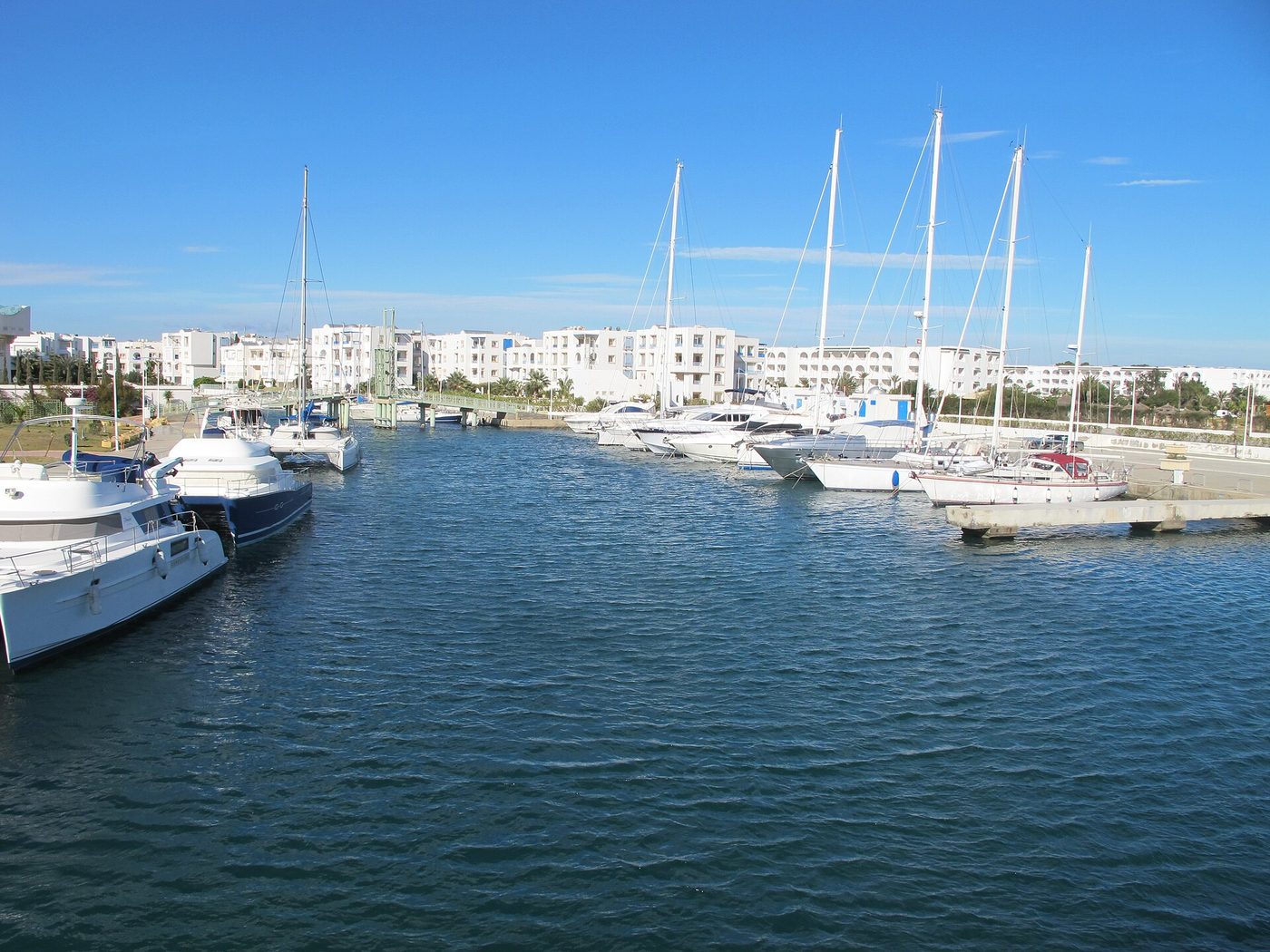
The flagship UK package resort, and statistically about as risky as a garden centre. Gated hotel entrances, bag checks at the bigger properties, police visible on the beach strip and around the medina. Your realistic problems here are an over-friendly carpet salesman, a taxi “broken meter”, and sunburn. Walking the tourist zones in the evening is normal and busy; the same street sense you’d use in Torremolinos applies.

Sousse and Port El Kantaoui
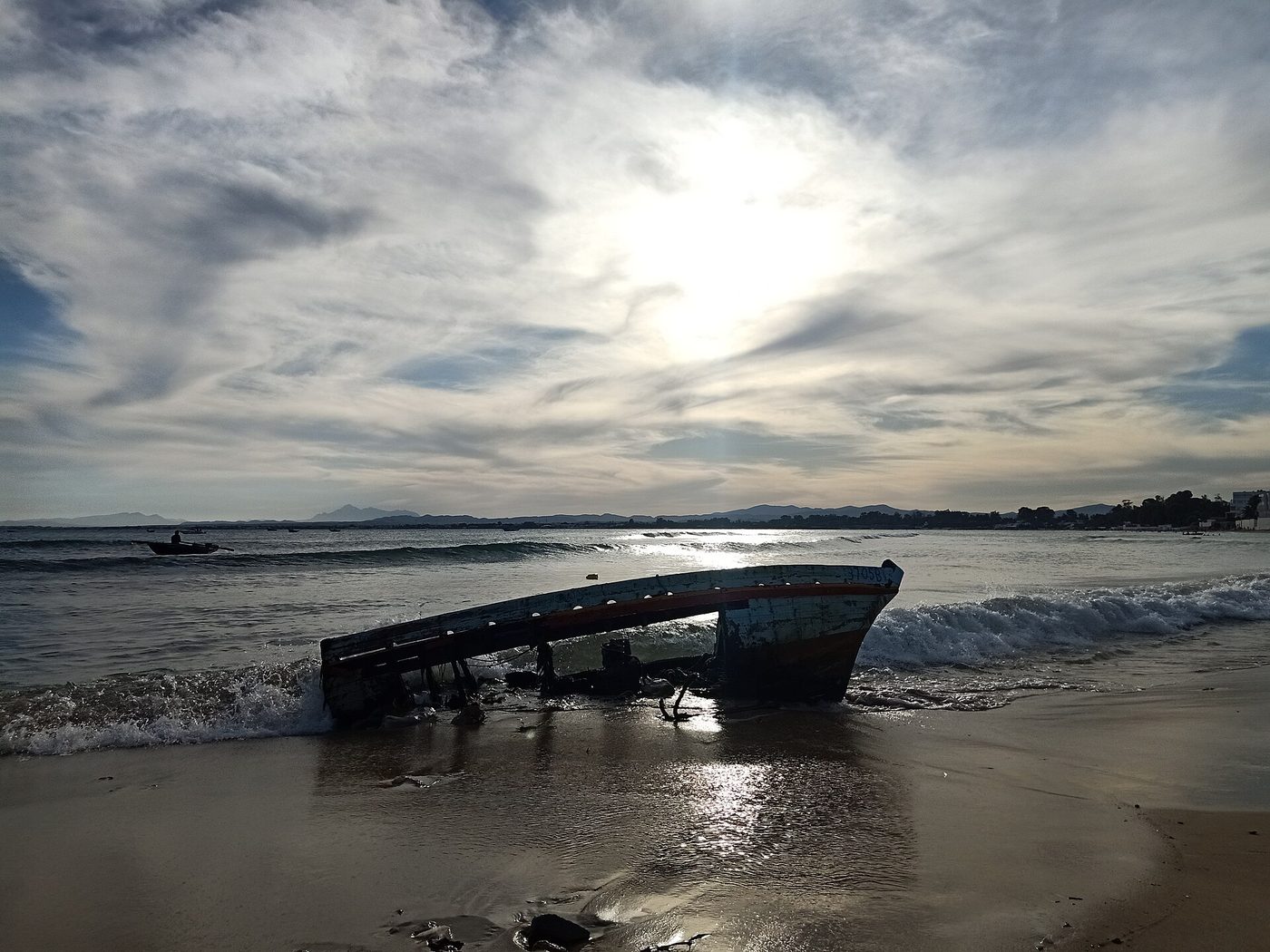
The hardest question in Tunisian tourism, answered straight: Sousse is where 2015 happened, and Sousse is consequently where the security rebuild is most visible — armed patrols along Boujaafar beach and the marina, screening at hotel doors, cameras on the front. The town has carried a decade of record-breaking seasons since; British, German and French operators all sell it heavily again. The medina requires standard pickpocket awareness (it’s a working market, and crowds are crowds), and that is genuinely the extent of it. We’ve a full standalone guide to Sousse coming as part of this series.
Monastir, Skanes and Mahdia
Quiet, family-weighted, unremarkable in the best way. Monastir’s marina and ribat see heavy footfall with a light police presence; Mahdia barely registers a hassle level at all — it’s repeatedly the place readers tell us they felt safest in the whole country. Usual beach-valuables rules apply.

Djerba
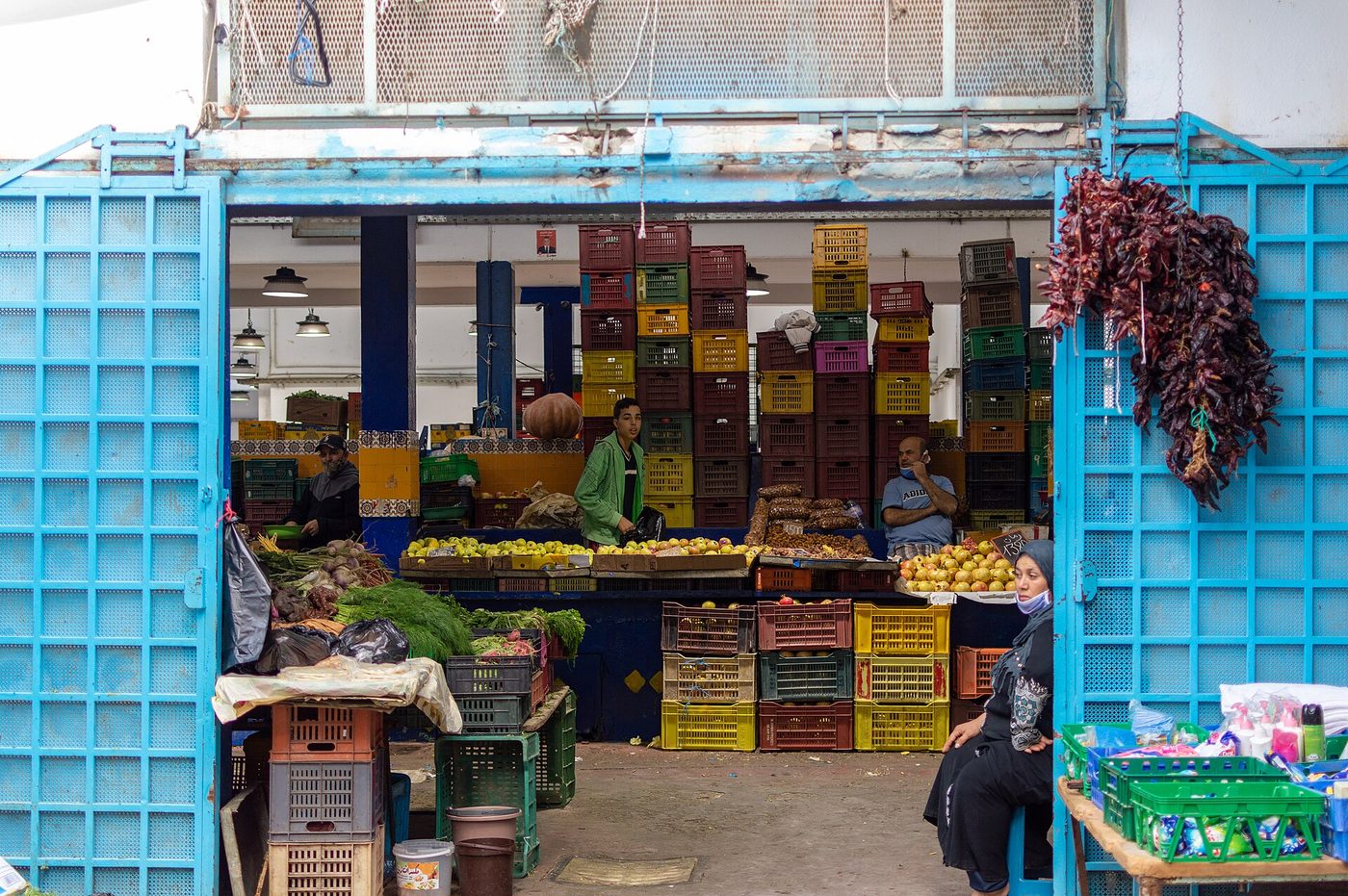
The island runs at a gentler rhythm than the mainland and most visitors notice it within an hour of landing. Hotel-zone security mirrors the mainland standard; Houmt Souk’s market hassle is mild by North African standards; the El Ghriba synagogue sits behind a professional security cordon year-round (bring your passport, expect airport-style checks — covered properly in our forthcoming El Ghriba guide). The FCDO’s southern carve-out names Djerba’s governorate specifically, so the island sits squarely inside the green zone — as does the road south as far as the C118.

Tunis, Carthage and Sidi Bou Said
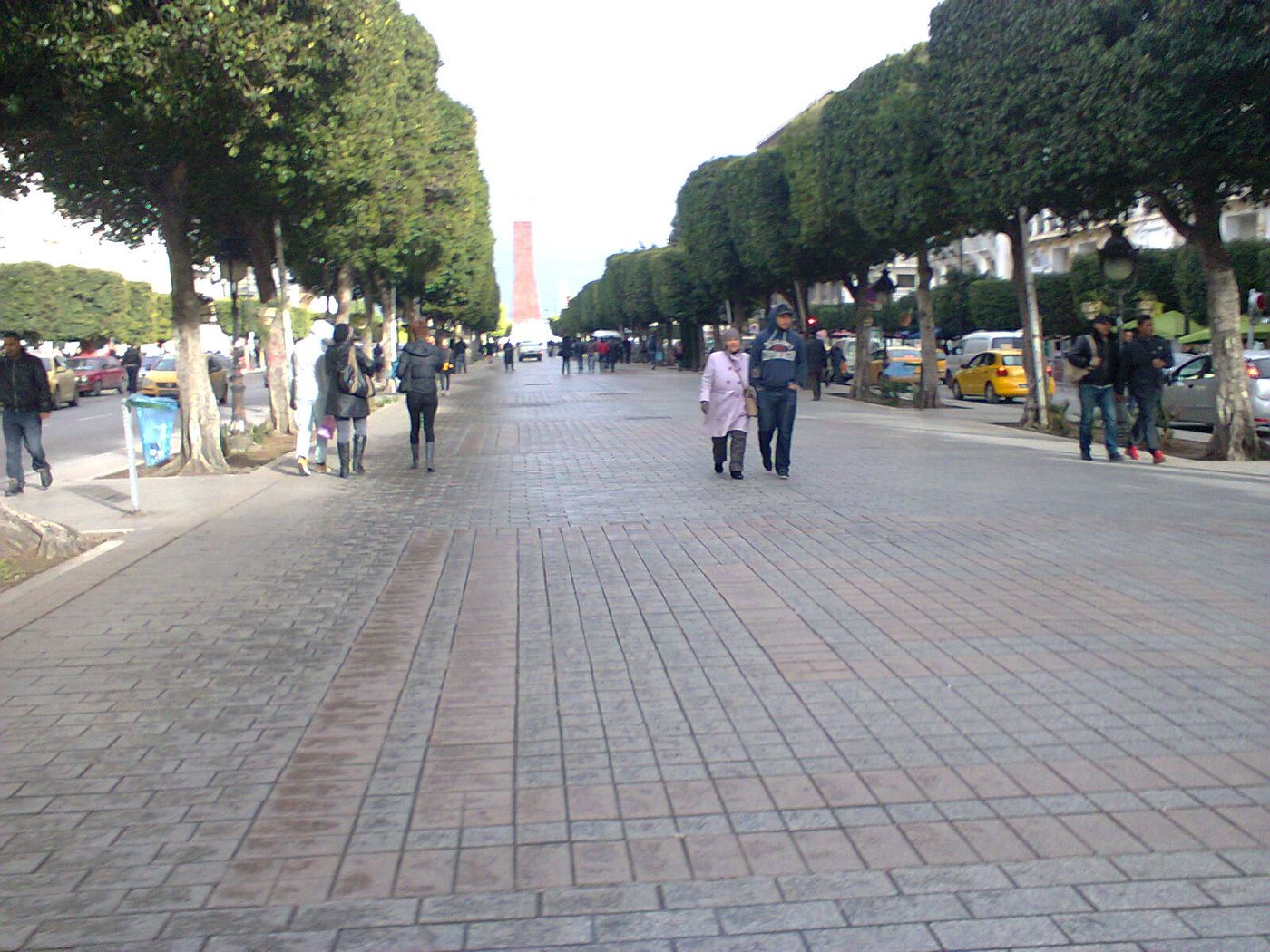
A working capital of two million people, with a capital city’s ordinary cautions: watch your phone and bag in the medina crush and on the TGM train, use ride-hailing or metered taxis at night, and skip any demonstration you happen across (they concentrate around Avenue Habib Bourguiba and government quarters at weekends). Carthage and Sidi Bou Said are leafy, policed, daytime suburbs with effectively resort-level calm. After dark the medina proper empties and isn’t the place for a wander — not because it’s menacing, simply because it’s shut.

The Sahara circuit: Tozeur, Douz, Matmata, Tataouine
All of it sits outside the restricted zones, and the standard excursion loop is one of the most supervised tourist routes in the country — convoys, established camps, drivers who do the run weekly. Two genuine rules for independent desert travellers: stay on the established circuit (the deep south beyond Remada is a designated military zone and emphatically not for tourism), and for anything beyond the standard routes, the National Guard’s tourism brigade recommends registering your route at its offices in Douz, Tozeur or Tataouine before setting out. Heat, not security, is the desert’s real hazard — more on that below.
Tabarka and Ain Draham
Worth a specific note because maps mislead here: both towns sit close to the Algerian border buffer, yet both are explicitly excepted by name in the US and Canadian advisories, and the FCDO’s restricted strip starts south and west of them. The dive boats, the jazz festival and the cork-forest hill walks are all in bounds. Just don’t drive into the marked border zones beyond — which, since there’s nothing there for a visitor anyway, takes effort.

The risks you’ll actually meet, ranked honestly
Here’s the part the fear-led articles bury: rank Tunisia’s risks by the likelihood of one actually spoiling your holiday, and terrorism comes last by a distance. This is the realistic list.
1. The roads
Tunisia’s road fatality rate runs around five times the UK’s (roughly 16.5 deaths per 100,000 people against the UK’s ~3.2, on the latest comparable World Bank figures). You’ll feel why within minutes of any transfer: lane discipline is a rumour, overtaking is a contact sport, pedestrians own the carriageway and rural roads at night feature unlit vehicles, livestock and sand drifts. What to actually do: choose coaches and reputable transfer firms over the cheapest option, belt up in taxis (yes, even when the driver hasn’t), avoid driving rural roads after dark, and if you hire a car, treat roundabouts as a negotiation. Louages — the shared intercity taxis — are statistically your riskiest ride; pick a seat in the middle row and a driver who looks rested, or take the train.
2. Petty theft and overcharging
The FCDO’s crime section opens with a sentence worth framing: “The majority of visits to Tunisia are unaffected by crime. The most common crime experienced is theft.” So: phones lifted in medina crowds, bags snatched from beach loungers, distraction tricks (“you’ve dropped something”, the over-helpful direction-giver) in tourist zones. Standard discipline beats all of it — crossbody bag, phone zipped, nothing valuable on the sand while you swim, hotel safe for passports. The financial version is overcharging: taxi meters that are “broken” (insist, or get out), souk opening prices pitched at four times value (haggling is the culture, not a con), and the carpet-shop tea ceremony that ends in a price like a phone number. Firm, smiling “la, shukran” — no, thank you — solves ninety percent of it.
3. The romance long game (“bezness”)
Canada’s official advisory says it plainly: in some resorts, young Tunisians seek relationships with older visitors “either to enrich themselves or to come to Canada” — swap in any Western country. It’s common enough to have a local name, bezness, and it can escalate from holiday romance to requests for money, visa sponsorship or marriage with practised speed. Nobody’s policing whom you fall for on holiday; just know the pattern exists, be sceptical of fast-moving devotion from staff or beach acquaintances, and never send money after you’ve flown home. We’ll publish a full, frank guide to bezness and other scams as this series grows.
4. Harassment
Covered properly in the solo-women section below, because that’s whom it disproportionately affects.
5. Demonstrations
Occasional, mostly central Tunis, mostly weekends and symbolic dates, occasionally outside Western embassies, and very occasionally turning ugly. The FCDO notes authorities can impose curfews or checkpoints at short notice. Tourist exposure is close to nil unless you go looking; if one materialises near you, leave the area and let it be.
6. Terrorism
Last on the list, deliberately. The threat is real enough that the FCDO words it “terrorists are likely to try to carry out attacks in Tunisia” — and contextual enough that it applies near-identical wording to France. Against it stand a decade-old armed-security architecture, a state of emergency that keeps soldiers at sensitive sites, and a three-year stretch (and counting) without an incident touching a tourist. Sensible behaviour is the same everywhere in the world: know your hotel’s exits, give security checks the thirty seconds they take, and report anything genuinely odd to the nearest officer — of whom, you’ll notice, there are plenty.
For women travelling solo
The honest version, because the brochure version helps nobody. Most solo women report warm, protective hospitality — and a level of verbal attention in tourist zones that ranges from tedious to genuinely wearing: catcalls, persistent vendors, the self-appointed “guide” who won’t take the first no. The FCDO notes that reports of sexual harassment and assault increase statistically in the summer months, in busy public places at night and in quieter parks and beaches by day; Canada’s advisory is blunter still about verbal abuse. Practical calibration from women who travel here often: resort zones and Djerba are easy; Tunis is a working capital where business-like confidence works; dress reads as respect outside the resorts (shoulders/knees covered in medinas pays for itself in reduced attention, bikinis are entirely normal on hotel beaches); fake wedding rings divide opinion; “la, shukran” delivered without a smile ends most exchanges; and the block button works on persistent WhatsApp suitors just as well abroad as at home. Sit in the back of taxis, use hotel-called cars at night, and know that Tunisian women around you will intervene on your behalf with zero hesitation if someone oversteps — it’s a national sport. A dedicated solo-female guide with much more of this is on its way.
LGBT+ travellers: the legal facts
No euphemisms: the FCDO states, in full, “Same-sex sexual activity is illegal in Tunisia. Members of the LGBT+ community have been targeted by criminals.” Article 230 of the penal code carries up to three years’ imprisonment, and enforcement is not theoretical — Amnesty International documented a wave of arrests as recently as late 2024 and early 2025. In practice, visiting LGBT+ travellers holiday in Tunisia without incident every season — hotels don’t interrogate same-sex room-shares in tourist zones — but the legal reality means discretion in public, caution on dating apps (entrapment and blackmail are documented), and an understanding that local protection if something goes wrong is limited. Each traveller weighs that trade differently; you deserve the facts to weigh it with.
Families and older travellers
The short section, because the news is short: Tunisia’s resort machine was built around families and the winter-sun generation, and it shows. Kids’ clubs, shallow beaches, step-free promenades, pharmacies everywhere, and a culture that adores children — expect yours to be greeted, fussed over and fed. The two family-specific cautions are the sun (UV here is serious from May to September; the 2025 heatwave pushed Kairouan to 48°C in July — plan shade hours) and the pool/beach flag system: red means no, even when it looks inviting, and lifeguard cover varies by hotel. Older travellers should note pavements and medina lanes are uneven, and that travel insurance pricing reflects the fact that serious medical treatment means private clinics, paid on the spot.
Health, water and the insurance question
Start with the one that surprises people: your GHIC (or old EHIC) is not valid in Tunisia. There’s no reciprocal healthcare agreement, public hospitals expect foreign nationals to pay, and anything serious means a private clinic that wants a card or cash before treatment — with repatriation, if it comes to that, running into five figures. Decent travel insurance isn’t a nice-to-have here; it’s the price of entry. Check your policy covers the activities you’ll actually do (quad bikes, camel rides and jet skis are classic exclusions), and remember the FCDO line quoted earlier: enter a restricted zone and you may have no cover at all.
The tap water question gets contradictory answers online, so here’s the careful one: official UK guidance (see TravelHealthPro, the NHS-linked service the FCDO itself points to) is the standard precautionary set for Tunisia — and the practical consensus from people who live there is that mains water is heavily chlorinated, varies by region, and isn’t worth the gamble on a one-week stomach. Drink bottled (it’s pennies), use it for teeth if you’re sensitive, skip ice from questionable sources, and follow the boil-it-cook-it-peel-it logic at street stalls. “Tunisia tummy” is the country’s most common holiday ailment and it’s nearly always food-hygiene-plus-new-bacteria, not anything sinister: eat where the locals queue, go hard on things served hot, be choosy about buffet items that have sat. Pharmacies are excellent, everywhere, and pharmacists speak enough English or French to sort rehydration salts and the usual remedies in two minutes.
Sun and heat round out the health picture. July and August regularly exceed 40°C inland — the Sahara circuit is genuinely dangerous in high summer and the standard tours thin out accordingly — and even coastal humidity wears people down faster than they expect. Water, hats, shade hours, and if you’re doing the desert, do it October to April like the locals do. Check the beach flag before you swim; some beaches run a proper flag system and the FCDO’s advice is to follow it and supervise children closely, especially where there’s no lifeguard.
If something does go wrong
The numbers, verified against the FCDO’s own list: ambulance 190, police 197, fire 198, and in rural areas and small villages the National Guard on 193. In resort areas, your first practical call is usually the hotel front desk — they’ll get tourist police moving faster than your French will — and for theft you’ll need a police report from the local station for any insurance claim, so do it before you fly home, tedious as it is. The British Embassy sits at Rue du Lac Windermere, Les Berges du Lac, Tunis; consular help runs through gov.uk’s contact channels, or call the FCDO in London on 020 7008 5000, which answers around the clock. Photograph your passport, insurance certificate and EHIC-replacement policy schedule before you travel; losing the originals matters far less when copies live in your email.
Is Tunisia safer than Morocco, Egypt or Turkey?
The question every comparison-shopper asks, answered without false precision. All four are mass-market destinations that Western governments file in their middle advisory tiers; all four run visible tourist policing. Egypt’s Red Sea resorts operate under a heavier security cordon with a longer recent incident list; Morocco trades at similar advisory levels to Tunisia with a bigger hassle economy around its big-city medinas; Turkey’s risk profile concentrates on its south-eastern border, far from the Aegean resorts. Tunisia’s distinguishing facts are a decade of heavy, visible investment since 2015, restricted zones that sit unusually far from its tourist areas, and — on the current advisories — a US Level 2 shared with France and Spain. On harassment and scams, seasoned travellers consistently rate Tunisia gentler than Morocco or Egypt. On roads, all four deserve the same respect. If your benchmark is “as safe as Spain”, nowhere in North Africa clears it; if it’s “safe enough that the official advice, the insurers and eleven million annual visitors agree”, Tunisia clears it comfortably.
Is Tunisia safe? Your questions answered
Is it safe to travel to Tunisia right now?
Yes, for the tourist coast, Tunis, Djerba and the established desert circuit — no Western government advises against any of them as of 6 June 2026, and there’s been no incident affecting tourists since May 2023. Border strips and the Kasserine mountains remain restricted; they’re nowhere near the holiday map.
Is Tunisia safe for British tourists?
Yes — nearly 450,000 visited in 2025, a record, on direct TUI, easyJet and Jet2 routes. The FCDO restricts specific border zones only, and resort security has run at post-2015 standards for a decade. Brits are Tunisia’s fastest-growing market, and the resorts know it.
Is Sousse safe now, after 2015?
Sousse rebuilt its security harder than anywhere: armed beach patrols, hotel screening, constant police presence on the front. A decade of record seasons and every major UK operator selling it again speak plainly. Standard medina pickpocket-awareness is the residual issue.
Is Djerba safe after the 2023 synagogue attack?
Yes. The 2023 attack at El Ghriba’s security cordon was met with immediate reinforcement; the synagogue’s pilgrimage returned fully in 2026 with international visitors under tight protection, and the island’s tourist zones have run normally throughout. The FCDO’s southern carve-out names Djerba’s governorate as fine explicitly.
Is Tunis safe at night?
The new town and tourist districts, yes, with ordinary capital-city sense — metered taxis or ride-hailing, main streets, valuables minimal. The medina simply closes after dark and isn’t worth wandering then. Avoid any demonstration you encounter; they’re rare, announced by crowds, and easy to walk away from.
Is Tunisia safe for solo female travellers?
Thousands do it every year and most report it warmer and easier than they feared, with verbal harassment the honest caveat — tiresome in tourist zones, worse in summer, manageable with firm refusals and standard precautions. Resorts and Djerba are the gentlest entry points. Our full solo-female guide is coming in this series.
What areas of Tunisia should tourists avoid?
The FCDO’s restricted zones: the Algerian border strips and Chaambi/Kasserine mountain areas in the west, the Libyan border zones, Ben Guerdane and the deep south beyond Remada — plus Kasserine Governorate (including Sbeitla) on the essential-travel-only list. None are tourist territory. Everywhere you’d actually book is outside them.
Is the Sahara safe to visit?
The established circuit — Tozeur, Douz, Matmata, Ksar Ghilane, the ksour — yes, and heavily travelled. Use organised tours or register independent desert routes with the National Guard offices in Douz, Tozeur or Tataouine. The genuine desert dangers are heat and distance, which is why summer departures barely run.
Are taxis safe in Tunisia?
Physically, yes; financially, insist on the meter or agree the fare first. Yellow city taxis are everywhere and cheap; Bolt works in greater Tunis; hotel-called cars cost more and remove the negotiation. The seatbelt advice is sincere.
Can you drink the tap water?
Stick to bottled. Official UK travel-health guidance applies standard precautions to Tunisia, chlorination and quality vary by region, and a holiday gut is not the place to experiment. Bottled water costs pennies and every shop sells it.
Is Tunisia safe for families?
It’s arguably the Mediterranean’s most family-engineered coastline — shallow beaches, kids’ clubs, a culture that adores children. Watch the sun, respect the beach flags, and pack the usual medicines so you’re not hunting a pharmacy at midnight (though one will be near, and good).
Do I need travel insurance for Tunisia?
Emphatically — your GHIC doesn’t work here, medical care for foreigners is pay-up-front private, and the FCDO warns that entering its restricted zones can invalidate policies. Cover the activities you’ll actually do: quads, camels and jet skis are standard exclusions.
The bottom line
Tunisia in 2026 is a country that learned the hardest possible lesson in 2015 and spent a decade acting on it — and whose restricted zones, quoted exactly above, sit a geography lesson away from its beaches. Eleven million visitors, record British numbers, three quiet years and four Western governments’ maps all point the same way. Go, insure yourself properly, respect the sun and the souk pricing, buckle the seatbelt — and spend the energy you’ve been spending on this question planning the good part instead. Our guide to the 45 best things to do in Tunisia is the place to start.
A final word on how this Tunisia safety guide works: we re-check the advisories, the incident lists and the numbers whenever the FCDO updates its page, and the date stamp at the top tells you exactly when that last happened. Before you book and again before you fly: check the FCDO’s Tunisia page yourself, sign up for its free email alerts, sort insurance the day you book, and photograph your documents. That’s the whole checklist — the habit that keeps this subject boring, which is exactly what you want it to be.
If this page has settled your mind, the planning starts here: the best time to visit, where to stay, our one- and two-week itineraries, and the practical travel tips that keep small problems small. For the days out, see getting around Tunisia, the excursions actually worth booking, what to eat — and, for pure fun, the Star Wars filming locations.
Photo credits
All images via Wikimedia Commons, used with thanks: Boujaafar beach, Sousse © Aliayadi (CC BY-SA 4.0); Avenue Habib Bourguiba, Tunis © Silar (CC0); Hammamet kasbah © Marc Ryckaert (CC BY 3.0); Yasmine Hammamet marina © R-E-AL (CC BY-SA 3.0); Houmt Souk, Djerba (public domain); Douz camels © Yamen (CC BY-SA 3.0); Antonine Baths, Carthage (public domain).