By the Tunisia Tourism Guide team · Last fact-checked 2 July 2026 · FCDO advice last updated 23 February 2026, re-checked word for word 2 July 2026 (still current, unchanged) · We don’t sell tours or take hotel commissions — this is independent advice, written to be useful.
Someone asks us this most weeks, usually one of three people: a city-breaker who’s found cheap flights and a hotel near the medina, a cruise passenger due to dock at La Goulette for a single day, or a nervous parent whose grown-up child has booked a stopover and half-remembers something bad happening in Tunis a decade ago. All three deserve a straight answer rather than a safety-index score out of a hundred that explains nothing.
So here it is. Yes — Tunis is safe for tourists who stick to the central and coastal districts by day and take normal big-city precautions after dark. The UK Foreign Office does not advise against travel to Tunis; its restricted zones are the remote Algerian and Libyan border areas, nowhere near the capital. The real risks here are pickpockets in the souk crush, taxi drivers who forget they own a meter, and the occasional weekend demonstration — not terrorism, and not the streets themselves.
That’s the verdict. Below is the honest detail behind it, neighbourhood by neighbourhood, with the exact FCDO wording, the taxi trick that saves you money and temper, and a calm, factual account of the Bardo Museum attack that the fear-led articles either ignore or turn into a scare. This is the Tunis chapter of our wider, country-wide guide to whether Tunisia is safe — read that too if you’re weighing up the resorts.
Is Tunis safe? The 30-second verdict
If you only read one thing, read this. It’s the summary we’d give a friend at the airport.
| Question | The short answer (July 2026) |
|---|---|
| UK government position | No advisory against Tunis, Carthage, Sidi Bou Said or La Marsa. Only remote border and mountain zones are restricted — quoted in full below |
| The biggest real risk | Pickpocketing in medina crowds and on the TGM train; then taxi overcharging. Violent crime against tourists is rare |
| Is the medina safe? | Yes by day — energetic, not dangerous. After dark it simply shuts; be out before the shutters come down |
| Is Tunis safe at night? | The Ville Nouvelle and coastal suburbs, yes, with ordinary city sense. Use a metered taxi or Bolt rather than walking unlit backstreets |
| Cruise arrivals (La Goulette) | Fine — the only real hazard is the taxi pack at the terminal exit. Insist on the meter (“compteur”) or use Bolt |
| Solo female travellers | Thousands manage it happily; verbal harassment is the honest caveat, worse in summer, manageable with firm refusals |
| Emergency numbers | Police 197 · Ambulance 190 · Fire 198. British Embassy is in Les Berges du Lac |
Bottom line: Tunis is a working North African capital of more than two million people, with a working capital’s ordinary cautions and none of the drama the headlines might have left in your memory. Treat it with the same street sense you’d bring to Naples or Marseille and you’ll be fine. Here’s the detail.
What the FCDO actually says about Tunis
Most safety articles paraphrase the Foreign, Commonwealth and Development Office until the meaning drains away, or skip it entirely. Here is the real thing, quoted exactly from gov.uk’s Tunisia travel advice. The page was last updated 23 February 2026 and was marked “Still current at: 2 July 2026” when we checked it word for word for this guide; the most recent change note simply reads “Removal of information about temporary safety measures following severe storm.”
The banner at the top says: “FCDO (Foreign, Commonwealth and Development Office) advises against all travel to parts of Tunisia” — and the operative words are parts of. The critical thing for a Tunis visitor is which parts, because none of them is the capital or the coast around it.
The areas the FCDO warns against — and why Tunis isn’t one of them
In western Tunisia, along the Algerian border, the FCDO “advises against all travel to”: “the Chaambi Mountains National Park” and “the designated military operations zones: Mount Salloum, Mount Sammamma, Mount Mghila” — “due to cross-border terrorist activity and operations by the Tunisian security forces.” It also advises against all but essential travel to a longer list of interior areas, including — and we quote it precisely because a hard house rule is never to send anyone there — “Kasserine Governorate, including the town of Sbeitla.”
In southern Tunisia, along the Libyan border, the FCDO “advises against all travel to”: “the militarised zone south of the towns of El Borma and Dhehiba; within 20km of the rest of the Tunisia-Libya border area north of Dhehiba; the town of Ben Guerdane and immediate surrounding area” — “due to cross-border terrorist activity and fighting in Libya.” A further “all but essential travel” band covers “within 75km of the Tunisia-Libya border, including Remada and El Borma but excluding Zarzis, the C118 road and all areas in Medenine Governorate north of the road.”
Read that list twice and one thing jumps out: every restricted zone is a remote border strip or an inland mountain range. Tunis, Carthage, Sidi Bou Said, La Marsa, La Goulette and the whole Gulf of Tunis coast are not in any of them — not even close. The nearest restricted area to the capital is the Chaambi/Kasserine belt in the far west; Tunis sits about as far from it as London sits from Cardiff. When a page-one search result shows you a red map and implies the whole country is a no-go zone, it is simply out of date, and the official source above is how you prove it to yourself.
What this means for your travel insurance
This is the practical payoff, and it cuts both ways. The FCDO states plainly: “Your travel insurance could be invalidated if you travel against advice from the Foreign, Commonwealth & Development Office (FCDO).” Because Tunis is not an area the FCDO advises against, a normal holiday here keeps your cover intact — you are travelling entirely within advice. The only way to void your policy on a Tunisia trip is to drive off into one of the border or mountain zones quoted above, which no city-break or excursion has any reason to do. Sort travel insurance the day you book (your GHIC is not valid in Tunisia — more on that later), and you’ve dealt with the single most important piece of admin. For the full picture on advisories and insurance, see our guide to Tunisia travel advice.
If you want the full country-wide picture — the resorts, the desert, the US and Canadian positions — it’s all in our guide to whether Tunisia is safe, with the same quotes and dates.
Crime in Tunis — what to actually watch for
Here’s the reassuring headline, straight from the FCDO’s own crime section: “The majority of visits to Tunisia are unaffected by crime. The most common crime experienced is theft.” It adds that “criminals are known to sometimes use confidence tricks as a distraction while carrying out thefts.” That’s the whole shape of it in two sentences: opportunistic theft, sometimes dressed up as a distraction, and very little that’s violent. Rank the things that might realistically go wrong on a Tunis city break and terrorism comes a distant last; petty theft and overcharging come first. This is the practical list.
Pickpocketing — the medina crush, the souk and the TGM
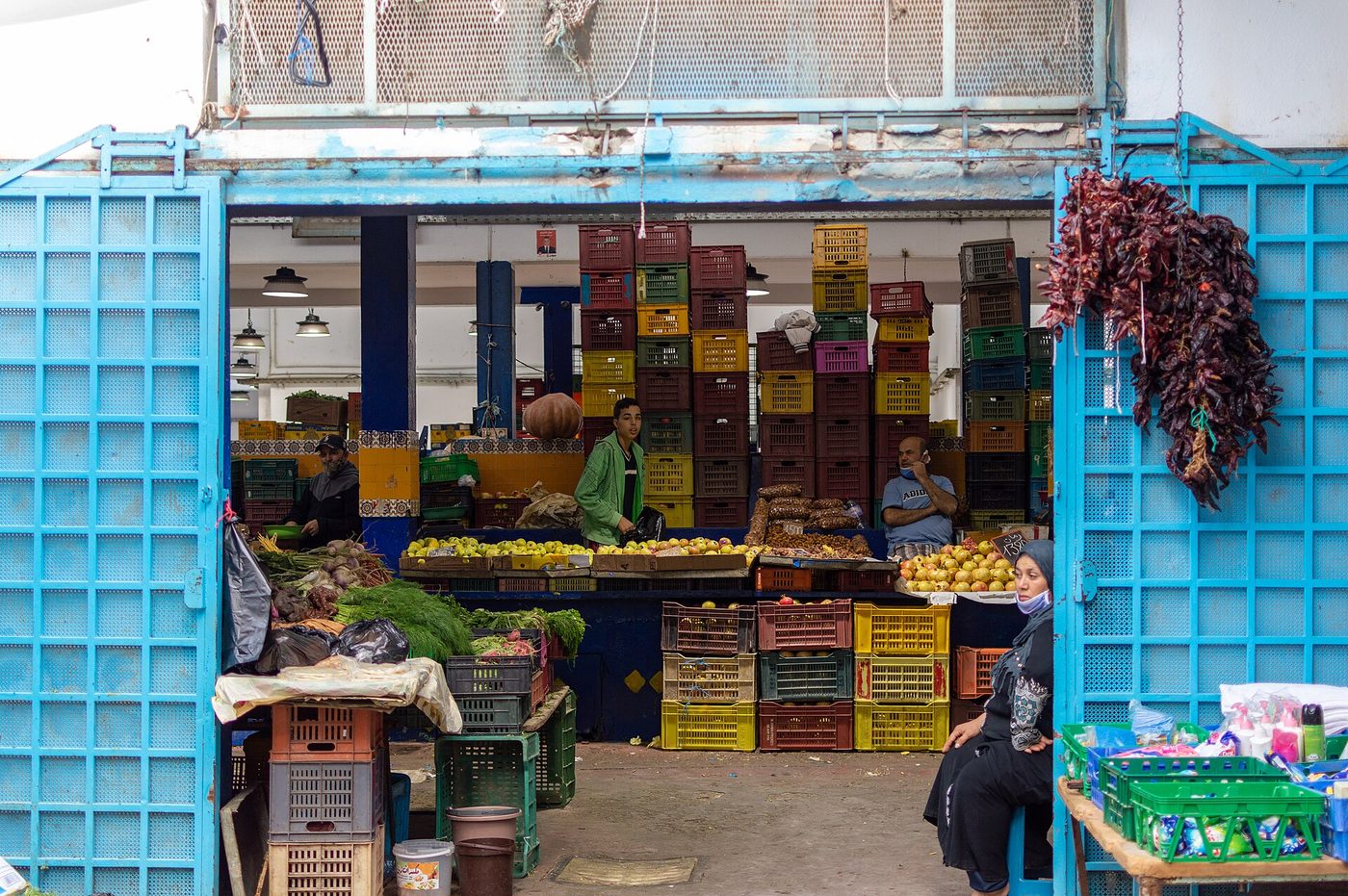
The single most likely nuisance. It concentrates exactly where you’d expect: the tight, shoulder-to-shoulder lanes of the medina souks (Souk El Attarine and the perfume-and-jewellery arteries especially), the main railway station, and the TGM light-rail train out to Carthage, Sidi Bou Said and La Marsa when it’s packed at rush hour. None of it is aggressive — it’s a hand in an unzipped bag, not a confrontation. Standard discipline defeats nearly all of it: a cross-body bag worn to the front, your phone zipped away rather than in a back pocket or loose in your hand, nothing valuable on show, and a hand resting on your bag in the densest crowds. Leave the good jewellery and the second passport in the hotel safe.
“Faux guides” and the free-tea carpet routine
You’ll meet the friendly stranger who insists the medina is “closed today” except for one special workshop, or who falls into step beside you as a self-appointed guide and then wants paying. The classic version ends in a carpet shop with a glass of mint tea and a sales pitch you didn’t ask for. It’s a hassle, not a danger. A smiling, firm “la, shukran” (no, thank you) and continuing to walk works almost every time; don’t follow anyone who’s steering you somewhere, and know that the medina’s main routes are perfectly navigable on your own with a phone map. If someone attaches themselves and won’t leave, stepping into a shop or up to a police officer — there are many around the tourist areas — ends it.
Taxi overcharging — and the magic word “compteur”
The most common way to be parted from money in Tunis, and the easiest to fix. Official taxis are yellow, metered and genuinely cheap when the meter runs — a hop across the centre costs a few dinars. The scam is the “broken meter”, after which the driver names a tourist price several times the real fare. Your one word of defence is “compteur” (the French for meter, pronounced roughly “com-tur”): say it before you get in, watch that it’s switched on and reads zero, and if the driver refuses, simply get out and hail the next one — there’s always another. For longer trips where meters “don’t work,” agree the fare first and, if it helps, type the number into your phone’s calculator so there’s no “misunderstanding” at the end. Better still, use a ride-hailing app: Bolt (and sometimes inDrive) operate in Greater Tunis and set the price in advance, which removes the negotiation entirely. Note that Uber does not operate in Tunisia, so don’t rely on it. The full rundown of taxis, shared louages and trains is in our guide to getting around Tunisia.
Currency-exchange and “fake hotel employee” tricks
Two smaller ones worth naming. Change money only at banks, official bureaux de change or your hotel — never with a helpful man on the street, where short-changing and counterfeit notes are the game. (The dinar is a closed currency anyway: you can’t buy it before you fly and can’t take it home, so you change on arrival and keep the receipts.) The other is the “fake hotel employee” — someone who greets you by name or claims to work at your hotel to strike up a bond that ends in a shop or a taxi. Genuine hotel staff don’t hustle you into buying carpets. Polite scepticism costs nothing.
Is the Tunis medina safe?
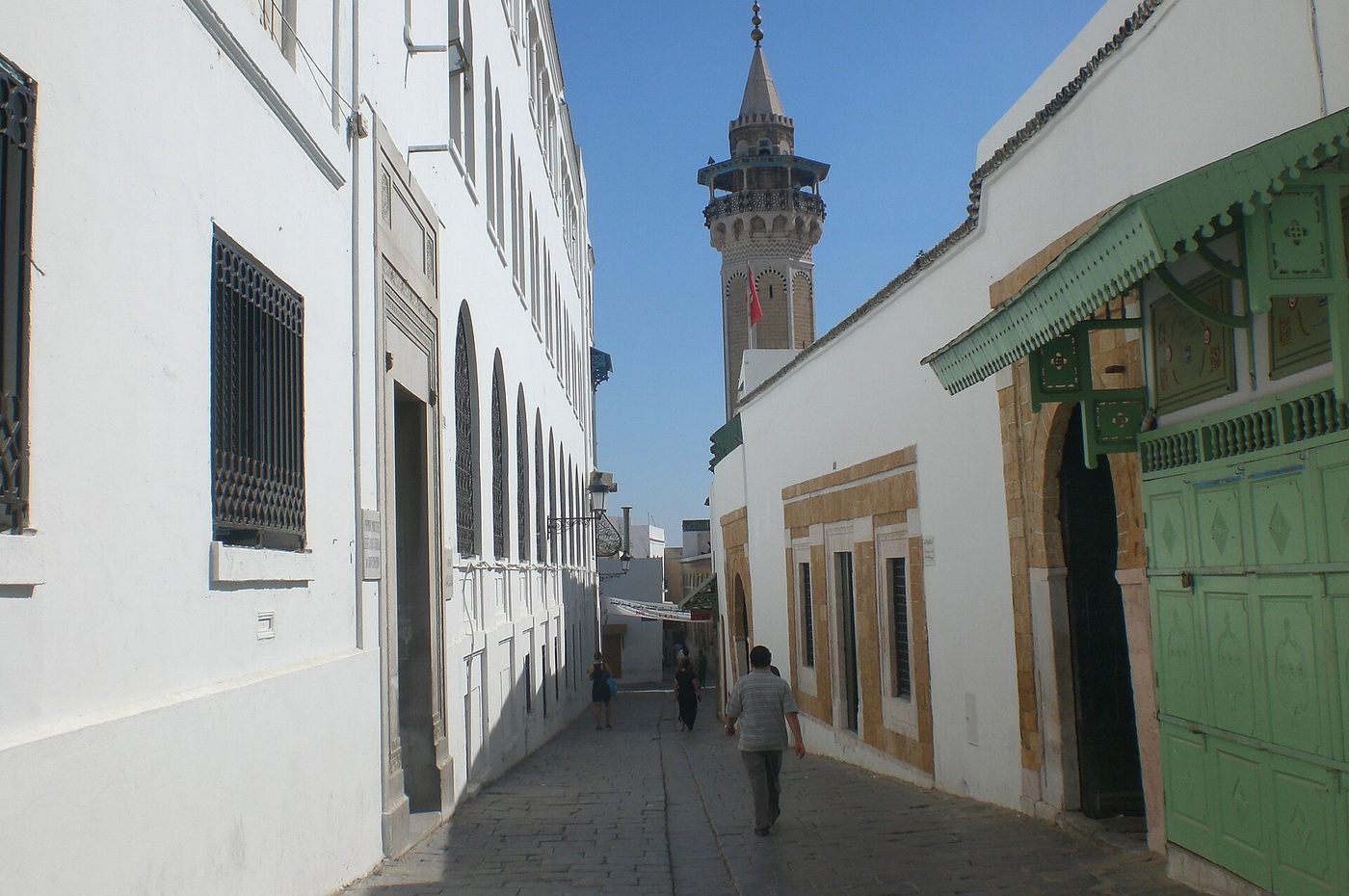
This is the question the search box fills in for you, and the honest answer is a firm “yes, with one timing rule.” The medina of Tunis is a UNESCO World Heritage maze of some 700 monuments, mosques and souks, and by day it’s one of the great pleasures of the city. But it behaves very differently at 11am and at 11pm, so treat those as two different places.
The medina by day — energetic, not dangerous
By day the medina is loud, close, dazzling and completely fine to explore. Thousands of people move through it — shoppers, locals on errands, tourists, kids on the way to school. The “risk” is sensory overload and the odd persistent vendor, not your safety. Keep your bag zipped and to the front in the busiest souk lanes, accept that you’ll get a bit lost (that’s the point), and enjoy it. If the hard-sell wears you down, duck into a rooftop café for a mint tea and a view over the rooftops and let it wash off.
The medina after dark — be out before the shutters come down
Here’s the one real rule. Once the shops shutter — roughly from early evening, and firmly so after around 7pm outside Ramadan — the medina’s narrow lanes empty out and go quiet and dark. It isn’t that they become menacing; it’s that they become deserted and disorienting, with few people about and no reason for a visitor to be threading unlit alleys alone. So plan to be out of the deep medina and back on the well-lit main streets, or in a restaurant, before it empties. If you’re staying at a riad inside the medina, that’s absolutely fine — just arrive and leave by taxi to the nearest gate rather than wandering in on foot late at night. Dinner and evening life happen in the Ville Nouvelle and the coastal suburbs, not in the after-hours souk.

Is Tunis safe at night?
Yes — in the right places, with ordinary city sense. The Ville Nouvelle around Avenue Habib Bourguiba stays busy and policed into the evening, and the coastal suburbs — La Marsa, Gammarth and Les Berges du Lac — are where Tunis’s relaxed evening life actually happens: seafront restaurants, cafés, families out late, a genuinely pleasant buzz. These are the districts to base an evening around.
The night-time rules are the same you’d use in any big city: stick to well-lit, populated streets, keep your phone and valuables out of sight, and don’t walk long distances through empty or unlit areas late on — take a metered taxi or a Bolt instead, which is cheap and easy. Lone late-night wandering through the deserted medina or quiet back streets is the thing to skip; a short ride-hailed hop between the lively spots is the thing to do. Do that and Tunis after dark is comfortable rather than nervy.
Neighbourhood by neighbourhood — where’s safe, where to skip
The index sites reduce this to scores out of ten; here’s the lived version.
Avenue Habib Bourguiba & the Ville Nouvelle — the policed spine
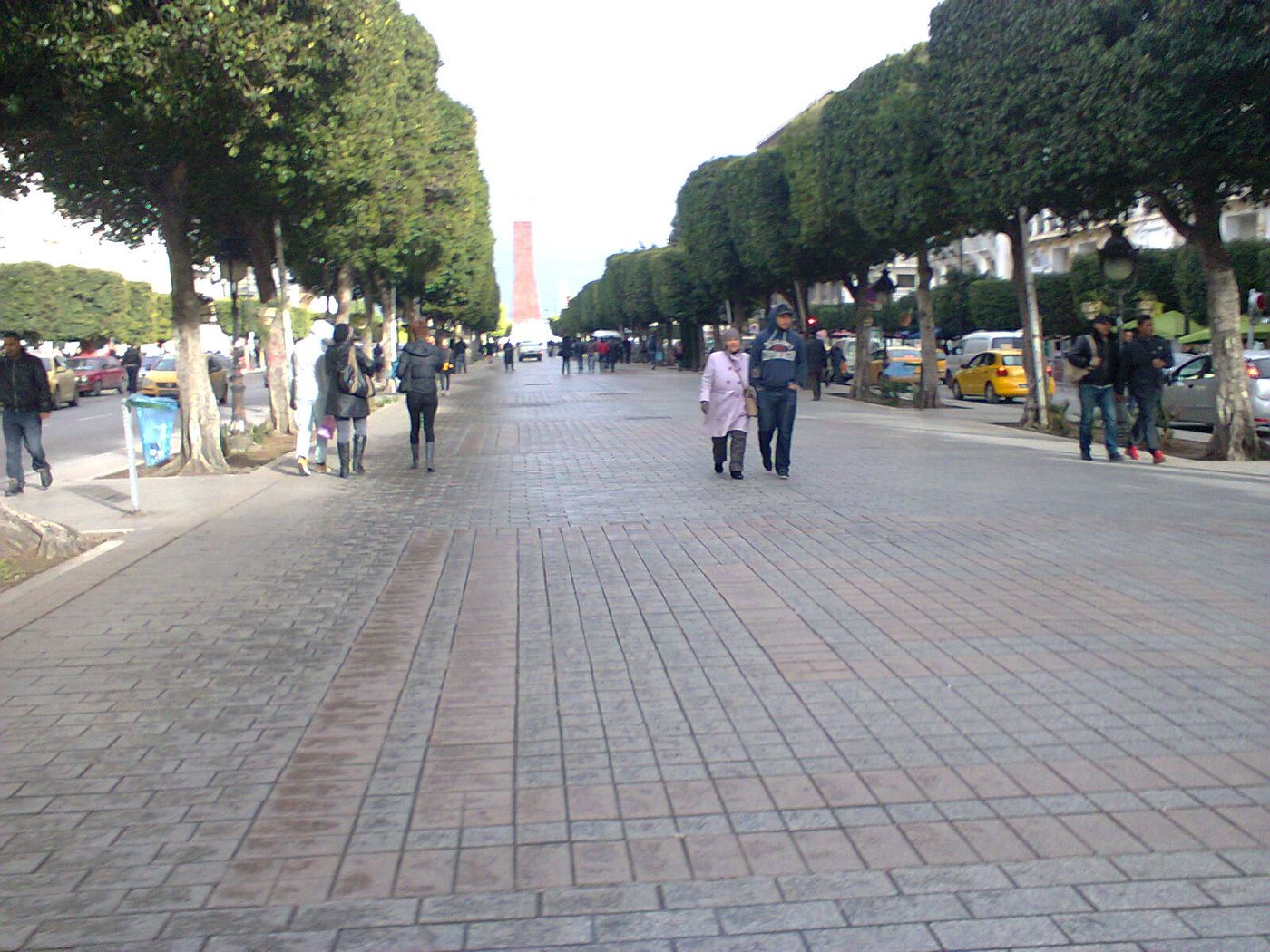
The grand, tree-lined boulevard that runs from the medina gate down towards the lake is the city’s main artery and its safest-feeling public space: wide pavements, café terraces, a visible police and security presence (the Ministry of the Interior sits on it, which means it’s watched), and crowds from morning until late. The one caveat is that its very prominence makes it the place demonstrations gather — more on that below — but on an ordinary day it’s exactly where you’d want to stroll, people-watch and get your bearings.
The safe day-trip triangle — Carthage, Sidi Bou Said & La Marsa
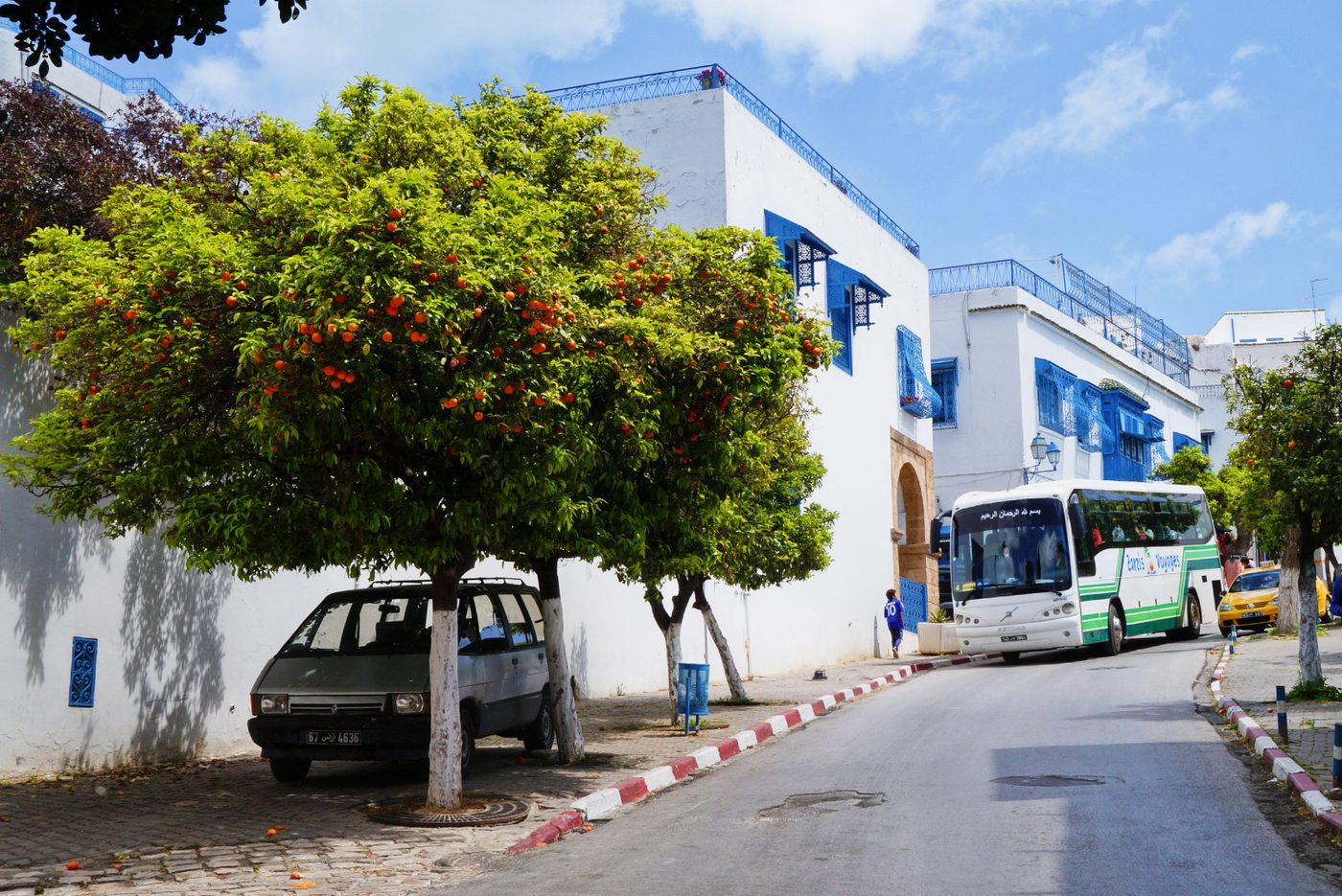
This is the reassuring heart of a Tunis trip, and it’s all strung along one easy light-rail line. Hop on the TGM train from Tunis Marine and it runs out along the coast to Carthage, then Sidi Bou Said, then La Marsa — three of the calmest, leafiest, most visitor-friendly spots in the whole country. Carthage is a genteel residential suburb wrapped around the spread-out ruins of the ancient city; wandering the ruins of ancient Carthage — the Antonine Baths, the Byrsa hill — feels about as risky as a National Trust afternoon. Sidi Bou Said is the postcard blue-and-white clifftop village above the gulf, busy with day-trippers and thoroughly safe (watch your bag in the crowded main lane, that’s all). La Marsa is an upmarket seaside suburb with a long corniche made for an evening walk. On the TGM itself, just keep your pockets zipped in rush-hour crowds — the ride is the one place pickpockets work this route.
Les Berges du Lac & Gammarth — modern and quiet
Les Berges du Lac is the gleaming business-and-embassy district by the lagoon (the British Embassy is here), full of modern hotels, malls and restaurants and about as sedate as Tunis gets. Gammarth, just up the coast past La Marsa, is the beach-hotel and nightlife strip — resort-calm, with a light, unbothered feel in the evenings. Both are comfortable places to stay or dine if you want modern and low-key over historic and hectic.
Areas with nothing for a tourist
Every big city has districts a visitor has no reason to visit, and Tunis is no different. The outer western suburbs — names like Ettadhamen and Douar Hicher come up — are working-class residential areas well away from anything you’ve travelled to see; they’re not tourist hunting-grounds so much as simply irrelevant to your trip, and best skipped for the same reason you wouldn’t go sightseeing in an outer-ring housing estate at home. Stay on the medina–Bourguiba–coast axis and you’ll never come near them.
Arriving by cruise at La Goulette — reading the taxi scene
If you’re here for a day off a ship, this section is for you, because it’s the one part of a Tunis visit where a little forewarning saves real money and hassle — and it’s the bit every glossy safety article leaves out. La Goulette is the port that serves Tunis, a short drive from the centre, and the town and terminal themselves are perfectly safe. The catch is the taxi pack.
As you come out of the cruise terminal, expect a cluster of drivers waiting to pounce with a friendly “taxi? Tunis? Carthage?” The familiar move is a headline price — say “5 euros to Tunis” — that quietly becomes “5 euros each… and that’s just one way,” or a flat fee for a “tour” that balloons at every stop. It’s overcharging, not danger, but it’s dispiriting on a tight day. The fix is simple: don’t do the deal in the scrum by the terminal doors. Walk out of the port gates onto the ordinary street and either hail a passing yellow metered taxi and insist on the “compteur”, or open Bolt on your phone and order a car at a fixed, honest price. If you do want a driver for the whole day, agree the total and the exact itinerary in writing (a note on your phone) before you set off, and pay at the end.
On timing: a typical port day gives you comfortable time to see Carthage and Sidi Bou Said at a relaxed pace, or the medina and the Bardo, but not realistically all of it — pick two. Keep your ship’s all-aboard time as a hard deadline, build in a generous buffer for Tunis traffic, and you’ll be back with time to spare. For what’s actually worth your few hours ashore, see our Tunis city guide.
Terrorism, the Bardo Museum and the security picture — the honest context
You can’t write honestly about safety in Tunis without addressing the thing many UK readers half-remember, so let’s do it properly, factually and without melodrama. On 18 March 2015, gunmen attacked the Bardo National Museum in Tunis. The FCDO records it in plain terms: “in March 2015, 21 tourists were killed, including a British national, in a terrorist attack at the Bardo Museum in the centre of Tunis.” Just over three months later, on 26 June 2015, a gunman attacked a beach near Sousse; again in the FCDO’s words, “in June 2015, 38 foreign tourists were killed, including 30 British nationals, in a terrorist attack at Port El Kantaoui near Sousse” — the largest loss of British life to terrorism since the 2005 London bombings. Anyone who watched the news that summer remembers it, and it’s often what’s really behind the words “is Tunis safe.” (We cover the coast’s side of that story in how safe Sousse is today.)
What happened next is the part that rarely gets told. Tunisia’s economy runs on tourism, and the state rebuilt its security from the ground up. A formal state of emergency has been in place since 2015 — the FCDO notes it dates to “a terrorist attack against a police bus” that November — and, in its words, “the security forces are visibly present in many parts of the country, including at the entry points to some towns and cities.” Armed tourist police, hotel-entrance screening, and scanners at airports and major sites became standard. Crucially for a museum visitor: the Bardo reopened to the public on 14 September 2023 after a long closure, with new galleries added, and it welcomes visitors again today. (As with any attraction, check current opening hours and tickets before you go — they change.)
Put the residual risk in proportion. The FCDO’s standing wording is that “terrorists are likely to try to carry out attacks in Tunisia” — near-identical language it also applies to France and Spain — and it flags higher-risk settings you’d find anywhere: “religious sites, tourist sites and festivals; government buildings; public transport networks and vehicles; businesses with western interests; areas where foreign nationals and tourists are known to gather, or any crowded area.” Its own recent-incident list for the country shows that since 2015 the targets have overwhelmingly been the security forces — a stabbed officer in the La Goulette area in 2023, an axe attack outside the Interior Ministry in 2021, a 2020 suicide bombing of a police patrol — not tourists, with nothing affecting visitors in Tunis in years. The sensible behaviour is the same as anywhere in the world: know your hotel’s exits, give the security checks the thirty seconds they take, steer clear of crowds you don’t need to be in, and report anything genuinely odd to one of the many officers around. Then spend your energy on the good part of the day.
Demonstrations and protests — usually calm, occasionally not
Tunis is a politically lively capital, and from time to time that spills onto the streets — almost always peacefully, almost always in predictable places. The FCDO’s wording is worth having exactly: “Demonstrations and protests happen occasionally and may start with little or no warning. Although rare, they can sometimes become violent. Demonstrations and protests tend to be at weekends and on prominent national dates (which may include 14 January and 17 December). They usually take place in central areas of Tunis and other major cities, and may focus on government buildings.” It also notes that “in response to the current situation in Israel and Palestine, peaceful demonstrations have occurred in some Tunisian cities, including outside some western embassies.”
In practice that means the flashpoints are the obvious central ones: Avenue Habib Bourguiba, the area around the Ministry of the Interior, and government buildings, at weekends and on those symbolic dates. Tourist exposure is close to nil unless you walk into one. The FCDO’s advice, which we’d echo, is to “avoid demonstrations, protests and strikes wherever possible,” “move away from areas where demonstrations are taking place,” obey any curfews or checkpoints (the authorities “may impose curfews or set up checkpoints at short notice”), and “follow the advice of your hotel and tour operator.” If you see a crowd gathering with flags and banners, just turn the other way and carry on with your day — it really is that simple.
Is Tunis safe for solo female travellers?
The honest version, because the brochure version helps nobody. Most solo women who visit Tunis come away pleasantly surprised — Tunisia is meaningfully safer and gentler than its reputation, women are visible everywhere in public and professional life (the country’s progressive Personal Status Code dates back to 1956), and violent crime against tourists is rare. The genuine caveat is verbal harassment: catcalls, comments and the odd persistent vendor or self-appointed “guide,” concentrated in tourist zones and on the street. It’s wearing rather than dangerous, and it is individual misconduct, not a reflection of Tunisians as a whole — the local women around you have zero patience for it and will often step in.
Worth knowing: the FCDO records that “reports of sexual harassment and sexual assault statistically increase in the summer months,” and that these “include trouble in busy public places at night and quieter public parks and beaches during the daytime.” So calibrate a little in high summer, particularly after dark and in quiet, empty spots. The practical kit is straightforward: a cross-body zipped bag; your phone out of sight rather than in your hand on the TGM; the medina by daylight, not after the shutters come down; confident, businesslike body language; and a licensed metered taxi or Bolt after dark rather than a long walk. A flat, unsmiling “la, shukran” ends most unwanted exchanges, and dressing a touch more covered around religious sites and in the medina (shoulders and knees) reads as respect and quietly reduces attention — while normal beachwear is completely fine at hotel pools and beaches. On the whole, Tunis rewards the same instincts that serve a solo woman well in any Mediterranean capital.
Health & practicalities
A few non-safety essentials that still shape the trip. On water: Tunis tap water is treated and chlorinated, but it varies by area and can upset a stomach that isn’t used to it, so for a short visit stick to bottled water (it costs pennies and every shop sells it), go easy on ice from questionable sources, and be a little cautious with raw salads and unpeeled fruit in the first day or two. “Tunisia tummy” is almost always ordinary food-and-water adjustment, not anything sinister, and pharmacies — excellent, everywhere, with English- or French-speaking staff — will sort rehydration salts in two minutes. Check the NHS-linked TravelHealthPro Tunisia page for routine vaccination and food-and-water advice before you travel.
On money and cover: as noted, your UK GHIC is not valid in Tunisia — there’s no reciprocal healthcare deal, and serious treatment means a private clinic that wants payment up front — so comprehensive travel insurance with medical cover and repatriation is essential, not optional. The dinar is a closed currency (roughly £1 to 3.8–3.9 dinars in mid-2026, but check the current rate); change money on arrival and keep receipts to convert leftover cash back before you fly. And in summer, respect the heat — Tunis bakes in July and August, so carry water, use shade in the middle of the day and pace the sightseeing. Our general Tunisia travel tips cover the rest of the practical side.
Tunis safety tips — the quick checklist
Everything above, boiled down to what you’d actually put on a phone note:
- Wear a cross-body bag, zipped and to the front in medina and souk crowds and on the TGM — that defeats the main risk, pickpocketing.
- Learn one word: “compteur.” Insist on the taxi meter before you set off, or use Bolt (Uber doesn’t operate here). Agree any fixed fare in advance.
- Do the medina by day. Be out on the lit main streets before the shops shutter in the early evening.
- Carry ID. The FCDO says you must: keep a copy of your passport photo page on you, as officials may ask for it.
- Avoid demonstrations. They cluster around Avenue Habib Bourguiba and government buildings at weekends and on national dates — walk away from any crowd with banners.
- At night, ride don’t walk. Stick to La Marsa, Gammarth, Les Berges du Lac and the busy Ville Nouvelle; take a metered taxi or Bolt between them.
- Change money only at banks, official bureaux or your hotel — never on the street.
- Cruise arrivals: walk out of the La Goulette terminal before hailing a metered cab or ordering a Bolt; ignore the “per person + return” taxi pitch at the doors.
- Drink bottled water for a short stay, and pack rehydration sachets just in case.
- Insure properly. GHIC is not valid in Tunisia; Tunis is within FCDO advice, so a normal policy stays valid.
- Save the numbers below and note where the British Embassy is before you go.
Emergency numbers & the British Embassy in Tunis
Keep these to hand — and in a resort or hotel, your quickest first call is usually the front desk, which will get help moving faster than your French will.
- Police: 197
- Ambulance (SAMU): 190
- Fire / Civil Protection: 198
- British Embassy Tunis: located in Les Berges du Lac, Tunis. For consular help, contact details and to report a lost passport or an emergency, use the UK government’s Tunisia page at gov.uk/world/tunisia.
If you’re a victim of theft, get a police report from the local station before you fly home — tedious, but you’ll need it for any insurance claim. And do two things before you travel: photograph your passport, insurance certificate and policy schedule (so losing the originals matters far less), and sign up for the FCDO’s free email alerts for Tunisia so any change to the advice reaches you before you go.
So, is Tunis worth visiting? The verdict
Yes — with your eyes open, which is exactly how you’d approach any big Mediterranean city. Tunis is safe for the ordinary tourist: the FCDO doesn’t advise against travelling here, violent crime against visitors is rare, the medina is a joy by day, and the coastal triangle of Carthage, Sidi Bou Said and La Marsa is as gentle a day out as you’ll find in North Africa. Handle the pickpockets with a zipped bag, the taxis with the word “compteur,” the medina with a sensible bedtime and the odd demonstration with a change of direction, and there’s very little left to worry about. What’s left is a fascinating, warm, ancient-and-modern capital that most visitors leave liking far more than they expected — part of the reason we think Tunisia is worth visiting in the first place.
Ready to plan the good part? Start with what to see and do in Tunis, set it in the wider picture with our country-wide guide to whether Tunisia is safe, and browse things to do across Tunisia for where to go next. If the island’s on your list too, here’s safety on Djerba.
Is Tunis safe? Your questions answered
Is Tunis safe for tourists right now (2026)?
Yes, for the central and coastal districts by day with normal city precautions. As of 2 July 2026 the FCDO does not advise against travel to Tunis — its restricted zones are the remote Algerian and Libyan border areas and the western mountains, none of them near the capital. The realistic risks are pickpocketing and taxi overcharging, not violence.
Is Tunis safe at night?
The Ville Nouvelle and the coastal suburbs — La Marsa, Gammarth, Les Berges du Lac — are comfortable in the evening with ordinary big-city sense: well-lit main streets, valuables out of sight, and a metered taxi or Bolt rather than a long walk. The deserted medina and quiet unlit back streets are the things to avoid after dark, mostly because they simply empty out.
Is the Tunis medina safe? Is it safe to walk it after dark?
By day, yes — it’s energetic and thoroughly fine, with pickpocketing the only real nuisance in the crowds, so keep your bag zipped and to the front. After dark it’s a different place: the shops shutter in the early evening and the lanes go dark, quiet and disorienting, so plan to be out on the lit main streets before then. If you’re staying at a riad inside, arrive and leave by taxi to the nearest gate.
Is Tunis safe for solo female travellers?
Thousands manage it happily and most find it warmer and easier than they feared. The honest caveat is verbal harassment — catcalls and persistent vendors — which is wearing rather than dangerous and, the FCDO notes, statistically rises in summer. Firm refusals (“la, shukran”), a zipped cross-body bag, the medina by daylight, and licensed taxis or Bolt at night handle it. Resorts and the coastal suburbs are the gentlest.
What areas of Tunis should I avoid?
There’s nowhere central a tourist needs to fear, but the outer western suburbs (names like Ettadhamen and Douar Hicher) are working residential districts with nothing to see, best skipped simply because they’re irrelevant to your trip. Avoid the deep medina late at night and steer clear of any demonstration. Stay on the medina–Bourguiba–coast axis and you’re on solid ground throughout.
Are taxis in Tunis safe, and how do I avoid being overcharged?
Physically yes; financially, insist on the meter. Official taxis are yellow and cheap when the meter (“compteur”) runs — say the word before you get in and check it’s on, or get out and hail another. For longer trips agree the fare first, or just use Bolt (or inDrive), which fixes the price in advance. Uber does not operate in Tunisia. Full detail is in our guide to getting around Tunisia.
Is it safe to get off the ship at La Goulette and explore Tunis independently?
Yes — the port and town are safe, and independent day trips to Carthage and Sidi Bou Said are very doable. The one hazard is the taxi pack at the terminal exit, whose “5 euros to Tunis” tends to become “per person, and the return.” Walk out of the port gates before hailing a metered cab or ordering a Bolt, agree any all-day fare and route in advance, and keep your all-aboard time as a hard deadline.
Are Carthage, Sidi Bou Said and La Marsa safe day trips from Tunis?
Very. All three sit along the coastal TGM light-rail line and are among the calmest, most visitor-friendly spots in the country — Carthage a genteel suburb around the ancient ruins, Sidi Bou Said the blue-and-white clifftop village, La Marsa an upmarket seaside town with a long corniche. Keep your pockets zipped on a crowded TGM and your bag to the front in Sidi Bou Said’s busy main lane; otherwise, relax and enjoy them.
Is there still a terrorism risk in Tunis, and has the Bardo Museum reopened?
The Bardo National Museum was attacked on 18 March 2015 — the FCDO records 21 tourists killed, including a British national — and it reopened to the public on 14 September 2023 with new galleries, welcoming visitors again (check current hours before you go). Since 2015 Tunisia has run a permanent state of emergency and heavy site security; the FCDO says attacks remain possible, as it does for France and Spain, but recent incidents in the country have targeted security forces, not tourists.
Are there demonstrations or protests in Tunis, and are they dangerous for tourists?
They happen occasionally, usually peacefully, mostly at weekends and on national dates (which the FCDO says may include 14 January and 17 December), in central Tunis around Avenue Habib Bourguiba and government buildings, and sometimes outside western embassies. They can rarely turn violent, so the advice is simple: avoid them, walk away from any crowd with banners, obey any curfews or checkpoints, and follow your hotel’s guidance. Tourist exposure is close to nil unless you go looking.
Is the tap water safe to drink in Tunis?
It’s treated and chlorinated, but quality varies by area and it can upset an unaccustomed stomach, so for a short stay drink bottled water (it’s pennies), go easy on ice from uncertain sources, and be cautious with raw salads early on. Pharmacies everywhere stock rehydration salts if you need them. It’s sensible caution, not cause for alarm.
What are the emergency numbers in Tunis, and where is the British Embassy?
Police 197, ambulance (SAMU) 190, fire 198. In a hotel, the front desk is often your fastest first call. The British Embassy is in Les Berges du Lac, Tunis; for consular help, lost passports and emergencies, use gov.uk/world/tunisia. Report any theft to the local police station before flying home so you have a report for insurance.
Written by the Tunisia Tourism Guide team — an independent, UK-focused guide to travelling in Tunisia. We don’t sell tours or take hotel commissions. Safety information, including all FCDO quotations, was re-checked word for word on 2 July 2026; advisories change, so always read the FCDO’s Tunisia page yourself and confirm current details before you book and again