Category: Djerba

Complete Djerba guides: beaches, Houmt Souk, street art, where to stay and island day trips.

  • Djerba Travel Guide: Things to Do & Island Tips (2026)

    Djerba Travel Guide: Things to Do & Island Tips (2026)

    By the Tunisia Tourism Guide team · Last updated 10 June 2026 · All prices checked at publication

    The best things to do in Djerba are wandering Houmt Souk’s whitewashed lanes, visiting El Ghriba — the oldest synagogue in Africa — hunting street art in Djerbahood, standing where Star Wars built Mos Eisley at Ajim, and doing absolutely nothing on seventeen kilometres of white sand. This guide covers all of it, with prices in dinars and pounds.

    Here is why this page exists. Djerba is quietly becoming the British holiday story of the decade in Tunisia — easyJet now flies there direct, TUI has piled on capacity, and the island is cheaper than the Greek islands it gets compared to — yet almost everything useful written about it is in French or German. The English guides that do exist were mostly written by people who came for two days, photographed a door, and left. They will not tell you that the flamingos leave before the tourists arrive, that the famous street-art village has faded in the salt air (and why it is still worth going), or what a taxi from the airport should actually cost. I will.

    I have organised this the way you will actually use it: an honest verdict first, the practical facts British travellers ask about (flights, safety, the closed currency), then the island’s ten genuinely best experiences, day trips, food and a month-by-month rundown of when to come.

    Djerba at a glance

    Essentials The short version
    Flight from the UK Around 3.5 hours direct — easyJet from Luton and Manchester, TUI packages from regional airports
    FCDO status No travel restrictions for Djerba (advice last updated 23 February 2026; checked 6 June 2026)
    Money Tunisian dinar, a closed currency — exchange on arrival; £1 ≈ 3.9 TND (June 2026)
    Best months May, June, September and October — hot sea, bearable sun, thinner crowds
    Top three Houmt Souk, El Ghriba synagogue, Djerbahood street art
    Sea swimming Comfortable late June to October (23–28°C)
    Language Arabic and French everywhere; decent English in hotels and tourist sites
    UNESCO World Heritage listed since September 2023

    Is Djerba worth visiting?

    Yes — if you understand what it is. Djerba is a slow island. It does white beaches, low whitewashed villages, serious history and golden evening light better than anywhere else in Tunisia. What it does not do is nightlife, walkable sightseeing density or drama. People who love Djerba love it for the calm; people who come back disappointed usually wanted Marrakech with a beach.

    What Djerba does brilliantly

    The beaches on the north-east coast — Sidi Mahres and La Seguia — are legitimately among North Africa’s best: long, white, shallow and warm into October. The cultural layer underneath the resorts is the real surprise. This is an island where a 2,500-year-old Jewish community still worships in Africa’s oldest synagogue, where Berber villages produce pottery the way they did under Rome, and where UNESCO inscribed the whole settlement pattern — the scattered fortified farmsteads, the sunken mosques, the planted palm groves — as a World Heritage Site in 2023. You can be on a sun lounger by ten and inside a working synagogue that predates Islam by lunchtime. Very few package destinations offer that.

    It is also conspicuously good value. A beer in a bar runs 5–8 TND (£1.30–£2), a metered taxi crosses half the island for under a fiver, and the island’s flagship attraction costs less than £10 to enter.

    What Djerba does not do well

    Be honest with yourself about this list. Nightlife is hotel entertainment and a handful of beach clubs, not a scene. The interior, between the showpiece villages, is flat and scrubby — nobody comes here for landscape. Distances are too far to walk and public transport is thin, so every outing involves a taxi or a hire car. In July and August the heat tops 33°C and the resort zone is wall-to-wall families, while in deep winter the island half-closes and the sea is for looking at. And if you stay inside an all-inclusive for a week, Djerba will feel like any all-inclusive anywhere — the island only works if you leave the strip.

    Djerba or Hammamet?

    The eternal Tunisian package-holiday question. Choose Hammamet for a livelier resort town feel, shorter transfers from a bigger airport, greener scenery and easier day trips to Tunis, Carthage and Sidi Bou Said. Choose Djerba for better and warmer beaches, a more distinctive culture you can actually touch, the Star Wars and Sahara side trips, and a calmer, more grown-up pace. Families with teenagers tend to prefer Hammamet; couples, beach purists and the curious tend to prefer Djerba. For the full national picture, start with our guide to the 45 best things to do in Tunisia.

    Djerba essentials: what to know before you go

    Where is Djerba, exactly?

    Djerba sits in the Gulf of Gabès off Tunisia’s south-east coast — at around 514 square kilometres it is North Africa’s largest island, though it barely feels like an island at all: a road causeway ties it to the mainland at El Kantara in the south-east, and a 24-hour car ferry shuttles across the 2km strait from Jorf to Ajim in the west. The crossing takes about fifteen minutes and runs roughly every twenty minutes through the day, less often overnight. The causeway road, incidentally, rides an alignment first engineered in antiquity — the modern tarmac just follows where carts crossed two thousand years ago.

    The island’s geography is simple. Houmt Souk, the capital, sits on the north coast next to the airport. The hotel zone (the “Zone Touristique”) runs along the north-east shore on Sidi Mahres beach. Midoun is the market town inland of the hotels; Erriadh (Djerbahood) and El Ghriba are in the centre; Guellala and Ajim hold the south and west. Nothing is more than 40 minutes from anything else.

    A UNESCO island — and why that matters to your holiday

    In September 2023, UNESCO inscribed “Djerba: Testimony to a settlement pattern in an island territory” on the World Heritage List — Tunisia’s ninth site and its first new listing since 1997. What was recognised is not one monument but the island’s whole way of living: the scattered fortified farmsteads (each a self-sufficient houch with its own rainwater cisterns), the low underground and fortress mosques, and the centuries of Muslims, Jews and Christians living side by side. You will feel it everywhere — it is why Djerba looks and works like nowhere else in Tunisia, and it is worth keeping in mind as you pass the unassuming white domes between the towns. Many of the listed monuments are exactly the places in this guide.

    The whitewashed Sidi Mahrez mosque among the palms — part of Djerba’s UNESCO-listed island landscape

    Is Djerba safe? What the FCDO actually says

    Djerba carries no UK government travel restriction. The Foreign, Commonwealth & Development Office advice for Tunisia (last updated 23 February 2026, still current when we checked on 6 June 2026) draws its advisory zones far from the island. Quoted exactly, the FCDO advises against all travel to: “the militarised zone south of the towns of El Borma and Dhehiba”, “within 20km of the rest of the Tunisia-Libya border area north of Dhehiba” and “the town of Ben Guerdane and immediate surrounding area”; and against all but essential travel to “within 75km of the Tunisia-Libya border, including Remada and El Borma but excluding Zarzis, the C118 road and all areas in Medenine Governorate north of the road”.

    Read that last clause again, because it is the one that matters here: Djerba, all of it, lies north of the C118 in Medenine Governorate and is explicitly excluded from the advisory, as is neighbouring Zarzis. The FCDO’s separate western-Tunisia zones (the Chaambi Mountains National Park and military operations zones at Mount Salloum, Mount Sammamma and Mount Mghila under “all travel”; Kasserine Governorate including Sbeitla, parts of the Algerian border belt, areas around Ghardimaou and Mount Orbata under “all but essential”) are a full day’s drive from the island and nowhere near anywhere in this guide. Security at tourist sites — visible since 2015 and stepped up around El Ghriba since 2023 — is part of the scenery: expect bag checks and the odd passport glance. For context, history and our own unvarnished assessment, read our honest guide to whether Tunisia is safe right now, and check gov.uk before you book.

    Getting to Djerba from the UK

    This is the bit that has changed most. easyJet flies direct to Djerba–Zarzis International (DJE) from London Luton and Manchester — around 3 hours 25 minutes in the air, with summer 2026 one-way fares from about £36–£45 if you book early. TUI sells both flight-only seats and full packages to Djerba from a spread of UK regional airports; check their timetable for your nearest departure point, because the map shifts season to season. (Jet2, despite what some forums claim, does not currently fly to Djerba.) The airport is small, modern enough and sits just 8km west of Houmt Souk — you can be at a Zone Touristique hotel within 40 minutes of the seatbelt sign going off.

    One route to avoid: flying into Enfidha (the airport for Hammamet and Sousse) “because the flight was cheaper”. Enfidha is around 450km and a five-hour drive from Djerba. Unless someone else is paying for the transfer, fly direct.

    Money on Djerba: the closed dinar, explained

    The Tunisian dinar is a closed currency — you cannot buy it before you travel and you cannot legally take it home. Exchange sterling or euros (or just withdraw from an ATM) once you arrive; rates barely vary, and in June 2026 £1 buys around 3.9 TND. Two rules save you grief on departure day. First, keep your bank or bureau exchange receipts: to change leftover dinars back at the airport you must show the receipt from where you originally got them — and per the FCDO, cash-machine receipts are not accepted, so convert your last dinars before you are down to relying on ATM slips. Second, spend down to near zero; re-exchange limits are stingy. ATMs are plentiful in Houmt Souk, Midoun and the hotel zone; cards work in hotels, bigger restaurants and supermarkets, while the souks, louages and beach cafés run on cash.

    Budget for the hotel tourist tax too, payable at check-in: the standard rates are 12 TND per person per night in 4–5* hotels, 8 TND in 3* and 4 TND in 2*, charged on your first ten nights only, with under-12s exempt. For a couple on a week in a four-star, that is 168 TND (about £43) — annoying, but not a scandal.

    Getting around Djerba

    The island is flat as a pancake and the roads are decent; the only question is how much independence you want.

    Taxis are the default and they are cheap. Meters start around 0.9 TND with roughly 1 TND per kilometre by day (about 26p), a surcharge after 9pm, and a small fixed airport supplement. Airport to the Zone Touristique runs around 50 TND (£13); airport to Houmt Souk more like 10–15 TND (£2.50–£4). Insist on the meter or agree the fare before you move — the only bad taxi experiences on Djerba are unpriced ones. For a day of sightseeing, negotiating a private driver for a flat rate is normal and often costs less than two organised excursions.

    Car hire makes sense for two or three days of exploring rather than the whole week — Europcar, Sixt and Holiday Autos all have desks at the airport. Driving is calmer than mainland Tunisia, but watch for scooters at dusk. Bikes and scooters are rentable through most Zone Touristique hotels, and the flat terrain makes cycling to Midoun or along the coast road a real option in spring and autumn (less so in August). Louages — the shared white minibuses — link Houmt Souk with Midoun, Ajim and the mainland for pocket change, leaving when full; public buses exist and cost almost nothing, but timetables are theoretical. Most visitors settle on taxis plus one hire-car day, and that is what I would do too.

    The best things to do in Djerba

    Ten experiences, honestly ranked. Here is the scannable version, then the detail.

    Experience Time needed Cost (approx)
    Houmt Souk old town & fish market Half a day Free to wander
    El Ghriba synagogue 1 hour Free (donation welcome)
    Djerbahood street art, Erriadh 1–2 hours Free
    Borj El Kebir fort 1 hour ~8 TND / £2
    Guellala pottery village & museum Half a day with El Ghriba Workshops free; museum a few dinars
    Djerba Explore Park (crocodiles + Lalla Hadria) 2–3 hours 37 TND / £9.50 adult, 24 TND child
    Star Wars sites at Ajim Half a day Free
    Midoun & the Friday market 2 hours Free
    Sidi Mahres & La Seguia beaches As long as you like Free (loungers extra)
    Boat trip to Flamingo Island Full day ~70–100 TND / £18–26 with lunch

    1. Houmt Souk — the island’s living capital

    Café terraces and souvenir stalls in the whitewashed lanes of Houmt Souk, Djerba

    Start here. Houmt Souk (“the market quarter”) is what Mediterranean old towns looked like before they were curated — a knot of whitewashed lanes, blue doors, café squares and covered souks where islanders still outnumber tourists most mornings. The textile and jewellery souks reward unhurried browsing (Djerba’s Jewish silversmiths made this a jewellery island long before the resorts came), and haggling is expected but gentler than Tunis. Seek out the old fondouks — merchants’ courtyard inns, some 300 years old, now hotels and cafés you can wander into for the price of a coffee.

    Two timing tips. The big weekly market days are Monday and Thursday, when the squares fill with stalls and the town is at its liveliest. And get to the port’s fish market mid-morning, when the day’s catch is auctioned the traditional way — strings of fish held aloft, prices barked, the whole hall in on it. Buy nothing, watch everything. It is the best free show on the island.

    2. El Ghriba — Africa’s oldest synagogue

    Blue-tiled interior of El Ghriba synagogue on Djerba, the oldest synagogue in Africa

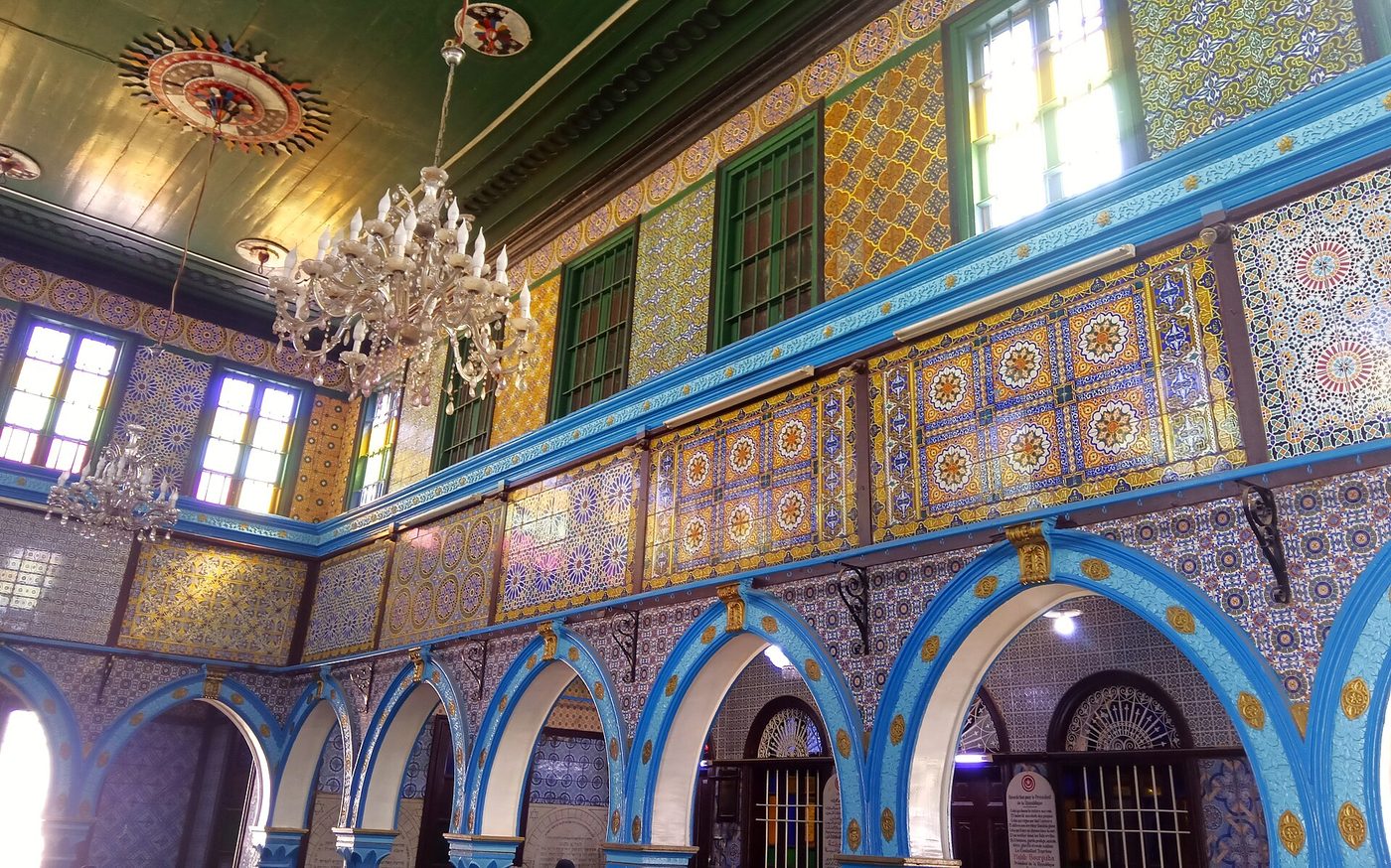
    In the village of Erriadh stands the spiritual heart of one of the world’s oldest Jewish communities — tradition says refugees from Jerusalem founded El Ghriba after the destruction of the First Temple in 586 BC, carrying a stone of the temple with them. The building you enter today is mostly 19th-century, and it is gorgeous: a cool interior of blue tilework, striped arches and hanging lamps, with folded prayer notes pushed into the woodwork by pilgrims. It remains a working synagogue, the centrepiece of an annual Lag BaOmer pilgrimage each spring (the 2026 edition ran in early May) that draws Jewish families from across the world back to the island.

    Practicalities: entry is free with a donation box by the door; it is typically open to visitors morning and mid-afternoon but closed Friday evening through Saturday (Shabbat) and on Jewish holidays. Dress modestly — knees and shoulders covered, head coverings provided — and bring your passport, because there is a proper security checkpoint outside. That security is not theatre: a gun attack during the May 2023 pilgrimage killed five people, including two worshippers, and Tunisia jailed five men over it in February 2026. The community chose to keep the synagogue and the pilgrimage open, under heavy protection, and visiting respectfully is widely seen on the island as part of supporting that choice. Go — it is ten minutes from Djerbahood and the two pair naturally.

    3. Djerbahood — the street-art village of Erriadh

    Trompe-l’oeil mural of a yellow taxi in Djerbahood, the street-art village of Erriadh, Djerba

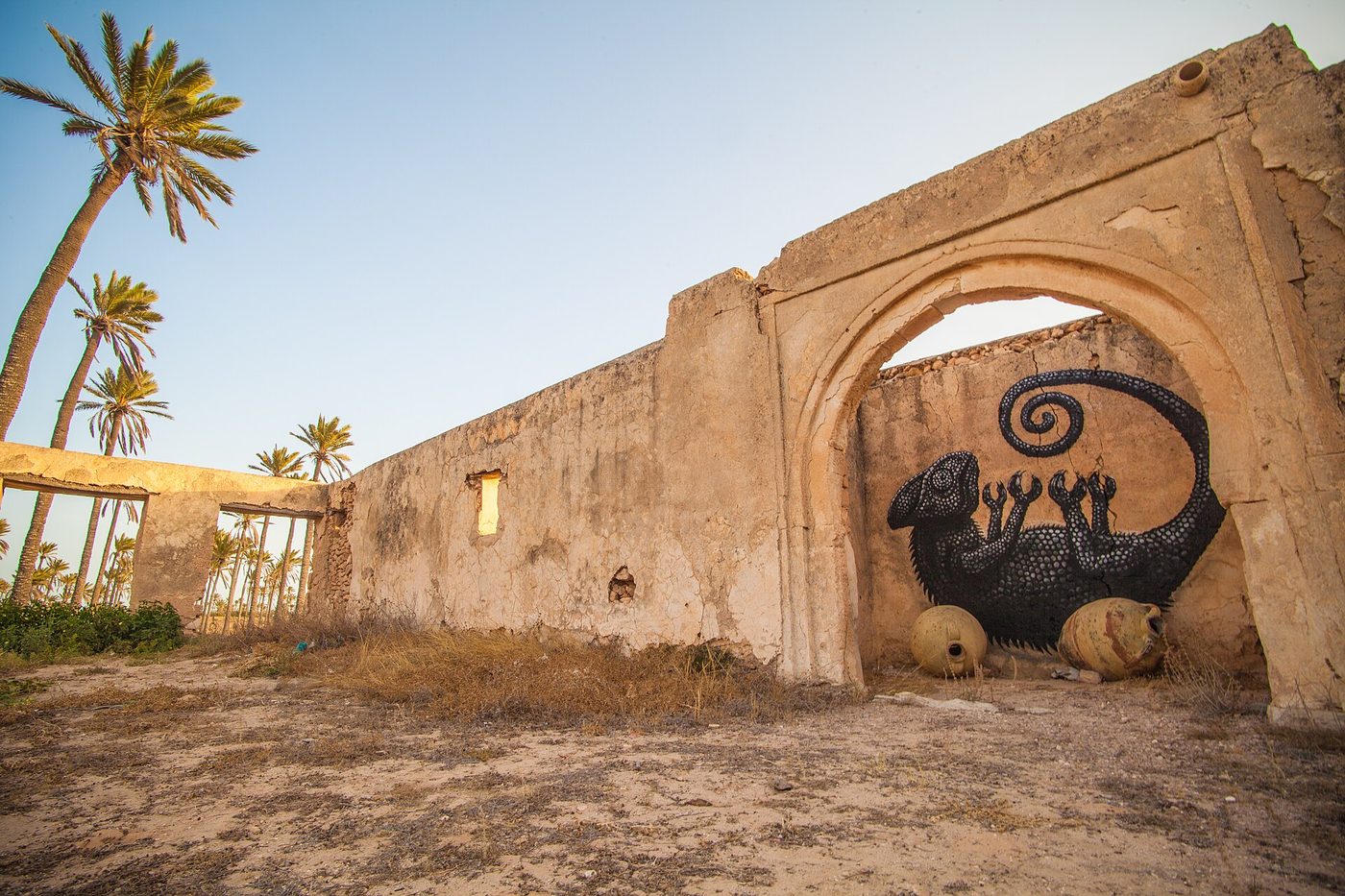
    In 2014, a Paris gallery turned the lanes of Erriadh into an open-air museum, inviting artists from some thirty countries to paint around 250 murals across the village’s walls and doorways — and, unusually, the villagers said yes. A decade on, honesty is required: the Saharan sun, salt air and lime-washed walls have faded or flaked a fair number of the originals. But the project never really stopped — a fresh wave of works arrived in 2022, new pieces keep appearing, and rounding a corner to find a three-storey portrait on a crumbling 17th-century wall still lands every single time. Entry is free, it is a working village rather than a gallery (keep voices down, ask before photographing people), and the small cafés in its courtyards are lovely. Allow ninety minutes, hunt the tiny Space Invader mosaics as you go, and combine it with El Ghriba next door.

    4. Borj El Kebir — the pirate fort of Houmt Souk

    Guarding the harbour east of the fishing port, this squat 15th-century fortress — also signed as Borj Ghazi Mustapha — is Djerba’s bloodiest address: Spaniards, Ottomans and the corsair Dragut all contested it, and after the 1560 massacre of the Spanish garrison a tower of their skulls stood on the shore for nearly three centuries. Today it is a calm, atmospheric ramble of ramparts, courtyards and excavated layers with the best sea views in town. Entry is around 8 TND (£2) with a small charge for cameras; hours shift seasonally (roughly 8am–7pm in summer, shorter in winter). Half an hour is plenty — go late afternoon when the stone glows.

    5. Guellala — pottery the Roman way

    Hand-painted ceramics stacked in a Guellala pottery workshop, Djerba

    The Berber village of Guellala on the south coast has fired clay since antiquity — Roman Meninx shipped its amphorae across the Mediterranean, and the workshops that line the road today still pull pots from wood-fired kilns dug half underground. Watch a thrower work for five minutes and you will understand the price of the bowl in your hand; this is the one place on Djerba where “handmade” is simply true, and the honest place to buy ceramics. On the hill above, the Guellala Museum gives the island’s traditions — weddings, weaving, olive pressing — the full diorama treatment (open roughly 8am–8pm in summer, to 6pm in winter). The museum is a touch kitsch, I will admit, but the hilltop view across the island to the mainland is worth the climb alone.

    6. Djerba Explore Park — crocodiles and a world-class museum

    Young Nile crocodiles at the Djerba Explore Park crocodile farm

    File this under “sounds like a tourist trap, is actually rather good”. Djerba Explore, near the lighthouse at the eastern end of the hotel strip, is three attractions on one ticket: a Nile crocodile farm with several hundred animals basking around landscaped lagoons (feeding time, around 4pm daily except Mondays, is pure pantomime); a reconstructed heritage village explaining the houch farmsteads and olive-oil mills you have been driving past all week; and — the sleeper hit — the Lalla Hadria Museum, fifteen rooms of genuinely superb Islamic and Tunisian art spanning thirteen centuries. Entry is 37 TND (about £9.50) for adults and 24 TND for children aged 4–12, with the paid zones open 9am–6.30pm. With kids it is the easiest half-day on the island; without them, come for the museum and stay for the crocodiles anyway.

    7. Ajim — drink where Star Wars drank

    Fishing boats at the port of Ajim, Djerba — the town that played Mos Eisley in Star Wars

    In April 1976 a film crew rolled into Ajim, Djerba’s scruffy ferry port, and turned it into Mos Eisley — the “wretched hive of scum and villainy” of the original Star Wars. The domed building that played the Cantina exterior was a bakery on the edge of town; fans have long identified a lonely whitewashed cottage on the coast road north of Ajim as Ben Kenobi’s hermitage. Expectation management: nothing is preserved, signposted or ticketed — decades of ordinary town life have altered or absorbed most reference points, and part of the fun is standing in a working Tunisian port matching 1977 freeze-frames to 2026 reality. It costs nothing, takes half a day with lunch, and pairs perfectly with the ferry crossing. If this is your religion, the major pilgrimage sites — Mos Espa, Matmata, the Lars homestead — are on the mainland, and I cover them in our country-wide guide to the best things to do in Tunisia.

    8. Midoun and the Friday market

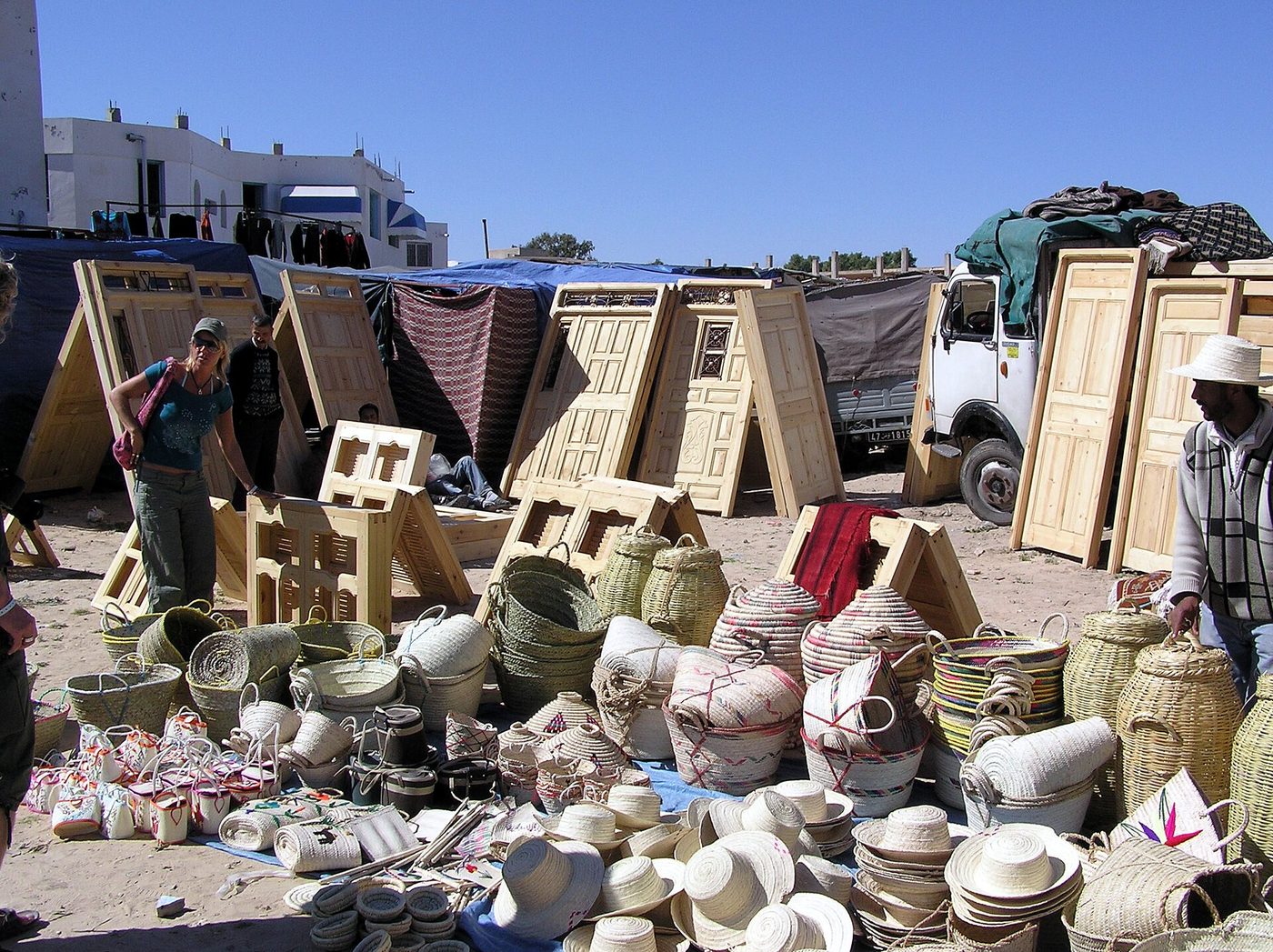
    Midoun, the island’s second town, sits ten minutes inland from the hotel zone and is where the Zone Touristique goes shopping. Most of the week it is a pleasant, low-key place for a coffee and a wander; on Friday mornings it erupts into Djerba’s biggest weekly market — spices, olives, ceramics, livestock at the edges, and half the island bartering at full volume. Go early (it winds down by lunchtime), keep your wits about the “special price” carpet emporia on the fringes, and try the makroudh — date-stuffed semolina pastries — from whichever stall has the longest local queue.

    9. The beaches: Sidi Mahres and La Seguia

    Kayaks on the sand on Djerba’s north-east coast beaches

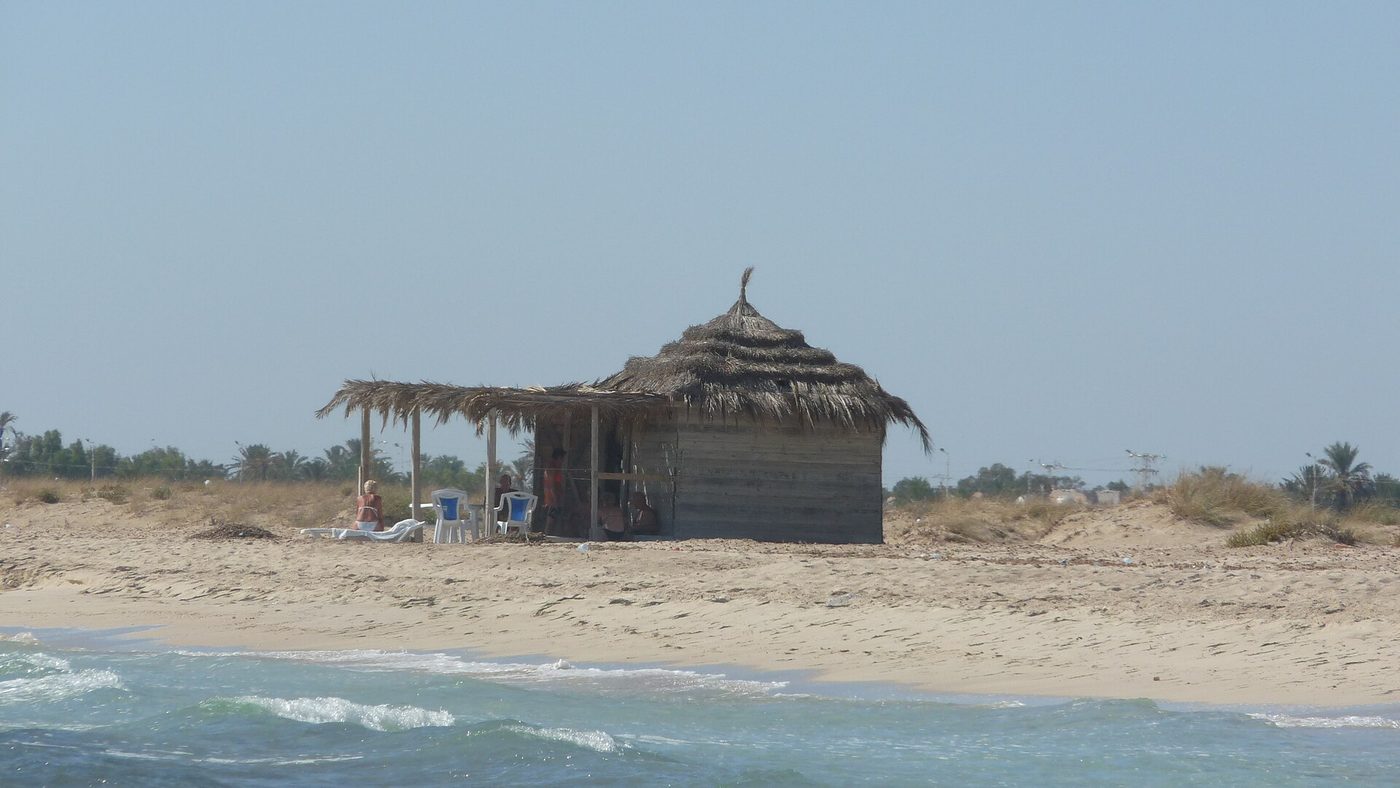
    Djerba’s reputation rests on its north-east corner. Sidi Mahres is the big one — seventeen-odd kilometres of fine white sand shelving so gently into clear, bath-warm water that you can wade out a hundred metres and still stand. It fronts the Zone Touristique, so every hotel opens onto a groomed stretch, but Tunisian law keeps all beaches public: walk far enough in either direction and the loungers thin out into emptiness. Around the eastern lighthouse, La Seguia is shallower and wilder still, with kitesurfers carving the lagoon behind and barely a building in sight — my pick for a deliberately lazy afternoon. The sea hits 23°C by late June and stays swimmable to late October; for the full coastal rundown beyond Djerba, our month-by-month guide to the best time to visit Tunisia has the water temperatures for the whole country.

    10. Sail to Flamingo Island — with one honest warning

    Boat trip to the Flamingo Island sandbar, one of the best things to do in Djerba

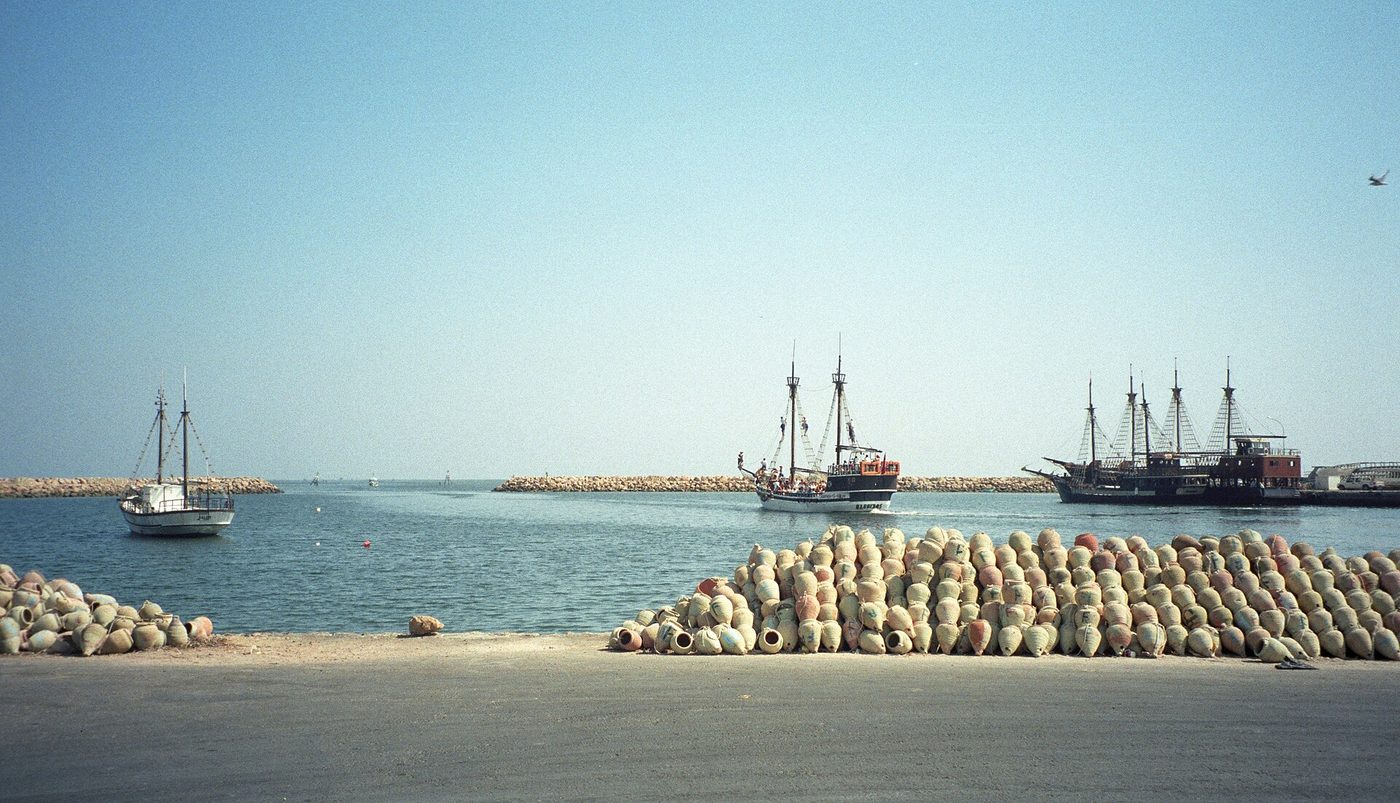
    The classic Djerba excursion is a day’s sail from Houmt Souk marina to Ras R’mal, a long sandbar of dunes and shallows universally sold as Flamingo Island — usually aboard an absurd mock-pirate galleon, with swimming stops, music and a grilled-fish couscous lunch cooked on board. Booked locally or online it runs around 70–100 TND (£18–26) per person for roughly six hours, and as a lazy, faintly ridiculous day on the water it earns its place here. The honest warning: the flamingos are winter residents. They gather from roughly November to March and are gone by the time summer charter flights arrive — if a tout promises you flamingos in July, he is selling you a boat ride. Go for the sandbar, the swimming and the lunch, and if you are here in winter, go for the birds too.

    The best day trips from Djerba

    Djerba is the gateway to Tunisia’s deep south, and one big day out is the difference between a beach holiday and a trip you talk about for years. Every hotel desk and local agency sells these; booking a couple of days ahead is fine outside peak weeks.

    Ksar Ghilane — the Sahara in a day

    The headline act: roughly three and a half hours each way by 4×4 or coach to a palm oasis on the edge of the Grand Erg Oriental, where you swim in a warm spring with real dunes rolling to the horizon, ride a camel or a quad, and eat lunch under canvas. It is a long day — twelve hours plus, much of it driving — and in high summer it is brutally hot, but it remains the cheapest, easiest true-Sahara hit from any Tunisian resort. Overnight versions with a night in a desert camp are the better experience if you can spare the time.

    Tataouine and Chenini — the Berber south

    A different flavour of epic: the fortified granaries (ksour) around Tataouine — whose name George Lucas borrowed wholesale — and the staggering abandoned hilltop village of Chenini, where cave homes spill down an arid ridge around a white mosque. Most tours pair two or three sites with lunch in a cave restaurant. Both towns sit outside the FCDO’s advisory zones (Remada, further south, is inside the 75km Libya-border belt — tours do not go there); stick with a licensed operator and the standard circuit and this is a straightforward, deeply memorable day.

    Matmata — Luke Skywalker’s house

    On the mainland three hours west: the troglodyte pit-homes of Matmata, one of which — Hotel Sidi Driss — served as the Lars homestead interior in Star Wars and still serves lunch in the actual courtyard. Often combined with Ksar Ghilane or the ksour into a long loop, or done as an overnight southern circuit taking in all three. If you only do one mainland day trip and you grew up on those films, this is the one.

    Zarzis — the quiet neighbour

    Twenty minutes over the causeway, Zarzis is a working coastal town with long, empty beaches, a likeable museum and barely a tour bus in sight — explicitly excluded from FCDO advisories, and the easiest taste of un-touristed Tunisia you can get from a Djerba base. Go for a half-day with lunch by the port.

    Where to stay in Djerba

    Three honest choices. The Zone Touristique along Sidi Mahres is the package-holiday strip: forty-odd resorts from family all-inclusives to adults-only TUI Blue, all opening straight onto the best sand — ideal if the beach is the point, characterless if it is not. Houmt Souk is for travellers who want Tunisia outside the window: converted fondouk hotels in the old town for a fraction of resort prices, with the souks, port and bus connections on foot — but a taxi ride from swimmable beaches. The interior and south — around Erriadh and Midoun — hides Djerba’s loveliest secret, restored houch farmsteads turned boutique guesthouses with courtyard pools and silence. My usual advice: couples split a week between a houch guesthouse and a beach resort and get the whole island. For the national picture — including how Djerba’s strip compares with Hammamet’s and Sousse’s — see our full guide to where to stay in Tunisia.

    What to eat in Djerba

    Skip the hotel buffet at least three times for these. Couscous Djerbien is the island’s own dish — steamed with fish or lamb, green with herbs, spicier than mainland versions; the port restaurants in Houmt Souk do it properly. A brik — shatteringly crisp pastry around a just-set egg, tuna and capers — costs a pound or two anywhere and is the national snack for good reason (eat it folded, point first, or wear the egg). Grilled fish by weight at the Houmt Souk fish-market restaurants is the island’s best meal: pick your fish from the morning’s catch, pay by the kilo, and it arrives charred with salad, harissa and chips for less than a starter costs at home. Order lablabi (chickpea broth over torn bread, with harissa, cumin and a soft egg) once, from somewhere full of workmen, and you will order it twice. Finish with makroudh and mint tea. Alcohol is easy in licensed hotel bars and tourist-zone restaurants (a Celtia lager runs 5–8 TND), scarcer in the towns, and invisible in village cafés — that is the local rhythm, not a restriction on you.

    When to go: Djerba weather, month by month

    Djerba is the warmest corner of Tunisia — the south’s sun with the sea taking the edge off — and it runs a genuinely long season.

    Month Daytime high Sea temp Verdict
    January 16°C 15°C Quiet, mild, cheap; sea for looking at
    February 17°C 15°C Almonds blossom; flamingos still about
    March 19°C 16°C Spring proper; sightseeing weather
    April 22°C 17°C Lovely; kitesurf season starts
    May 26°C 20°C Superb all-rounder; pilgrimage season
    June 30°C 23°C Proper beach weather begins
    July 33°C 26°C Hot, busy, family high season
    August 34°C 28°C Hottest; book air-con and a pool
    September 30°C 27°C My favourite: hot sea, fading crowds
    October 26°C 24°C Still swimmable; bargains appear
    November 21°C 20°C Shoulder’s end; flamingos return
    December 17°C 17°C Winter sun, half-closed resorts

    For sunbathing, late June to mid-October; for sightseeing and the Sahara, April–May and October; for both at once, September. One date for the diary: Ramadan 2027 begins around 8 February and runs to early March — the island works fine for visitors then, but resort entertainment quietens and some restaurants close by day. The full national breakdown is in our month-by-month guide to the best time to visit Tunisia.

    Djerba practical information

    Question Answer
    Visa for UK citizens None for stays up to 90 days; passport valid for the duration of your stay and stamped on arrival
    Health Your GHIC is not valid in Tunisia — comprehensive travel insurance is essential. TravelHealthPro recommends being up to date on routine jabs, hepatitis A for most visitors, typhoid for some; no malaria risk. Drink bottled water
    Plugs Types C and E (European two-pin), 230V — bring adaptors
    Emergency numbers Police 197 · Ambulance 190 · Fire 198
    Tipping Round up in cafés; 10% in restaurants; 5–10 TND a day for drivers and guides
    Friday prayers Some shops and sites pause around midday Friday — plan beach time
    Haggling Expected in souks (start around half), never in supermarkets or metered taxis

    Djerba FAQ

    Is Djerba worth visiting?

    Yes — for white-sand beaches that rank with anywhere on the Mediterranean, a living cultural mix you will not find elsewhere (Africa’s oldest synagogue, Berber pottery villages, UNESCO-listed farmsteads) and serious value for money. Skip it if you need nightlife or walkable city sightseeing; this is a slow island that rewards the curious.

    Is Djerba safe to visit in 2026?

    Djerba carries no FCDO travel restriction — the advisory zones (last updated 23 February 2026) all lie on the mainland, far from the island, which is explicitly excluded from the Libya-border advisory. Tourist sites have visible security, and the usual resort common sense applies. Our full Tunisia safety guide covers the detail honestly.

    Does easyJet fly to Djerba?

    Yes — easyJet flies direct to Djerba–Zarzis (DJE) from London Luton and Manchester, taking around 3 hours 25 minutes, with summer 2026 fares from roughly £36 one way booked early. TUI also flies and sells packages from several UK regional airports. Jet2 does not currently serve Djerba.

    How many days do you need in Djerba?

    A week is the sweet spot: three or four beach days, one day for Houmt Souk and the fort, one for El Ghriba, Djerbahood and Guellala, and one big mainland day trip (Sahara or Star Wars). Sightseers can see the island’s headline acts in two full days; fortnights are for the truly horizontal.

    Is Djerba better than Hammamet?

    For beaches, warmth, cultural interest and calm, Djerba. For liveliness, shorter transfers, greenery and easy trips to Tunis and Carthage, Hammamet. Couples and beach connoisseurs tend to pick Djerba; families wanting waterparks and bustle often prefer Hammamet. Neither is wrong — they are different holidays.

    What is Djerba famous for?

    Homer’s land of the Lotus-Eaters; the El Ghriba synagogue and one of the world’s oldest Jewish communities; the Djerbahood street-art village; standing in for Mos Eisley in Star Wars; pottery from Guellala; and seventeen kilometres of white sand at Sidi Mahres. Since 2023, also a UNESCO World Heritage island.

    Is Djerbahood still there in 2026?

    Yes. Some of the original 2014 murals have faded or flaked in the sun and salt air, but new works were added in 2022 and since, and the village remains free to wander and very much worth ninety minutes — especially combined with El Ghriba, ten minutes’ walk away.

    Is Djerba good for families?

    Very — the sea at Sidi Mahres and La Seguia is shallow, warm and waveless for hundreds of metres, the all-inclusives are built for kids, and Djerba Explore’s crocodiles (feeding time around 4pm) seal the deal. The only caveats: August heat, and distances that make a buggy-friendly taxi budget sensible.

    Can you drink alcohol in Djerba?

    Yes — in licensed hotel bars, resort restaurants and some tourist-zone venues, where a local Celtia lager costs 5–8 TND (£1.30–£2). Towns and village cafés are largely dry, and drinking in the street is a no. During Ramadan, service outside resorts gets patchier.

    Can you do a day trip from Djerba to the Sahara?

    Yes — Ksar Ghilane, a hot-spring oasis on the edge of the great dunes, is about 3.5 hours each way and every agency sells it as a long single day (or better, an overnight with a desert camp). Tataouine’s ksour and Matmata’s Star Wars cave homes are the other classic mainland runs.

    How do you get around Djerba without a car?

    Easily: metered taxis are plentiful and cheap (about 1 TND per kilometre — 26p), hotels rent bikes and scooters for the flat coast roads, and shared louage minibuses link the towns for pennies. For sightseeing days, agreeing a flat rate with one driver usually beats two organised excursions on price.

    Is the Djerba crocodile farm worth visiting?

    With children, unreservedly — several hundred Nile crocodiles, a 4pm feeding spectacle (not Mondays) and a heritage village on one 37 TND ticket. Without children it is still decent value, mainly because the same ticket includes the Lalla Hadria Museum, the best art collection in southern Tunisia.

    Plan the rest of your trip

    Djerba is the start of southern Tunisia, not the end of it. We publish new in-depth guides daily through 2026 — every island sight above gets its own detailed page, along with the full Sahara, Star Wars and beach breakdowns. Until then, the essentials: our honest read on Tunisia safety, the month-by-month weather guide, the country-wide 45 best things to do in Tunisia and — before you book anything — where to stay in Tunisia. Bookmark us; the island rewards the well-prepared.

    Djerba pairs naturally with the mainland: see how it slots into our Tunisia itinerary, add the Roman ruins if you’re crossing to the coast, and read the travel tips guide before you fly.

    Sources for this guide include the FCDO Tunisia travel advice (gov.uk, updated 23 February 2026), TravelHealthPro country guidance for Tunisia, UNESCO World Heritage Centre, Djerba Explore official visitor information, and our own price checks at publication. Hours and prices shift season to season in Tunisia — treat figures as “around”, and re-check anything critical before you travel.

    Photo credits

    All images via Wikimedia Commons, used with thanks: Houmt Souk café square © Tico (public domain); Sidi Mahrez mosque © Bilel Hawari (CC BY-SA 3.0); El Ghriba synagogue interior © Dr. Ondřej Havelka (CC BY 4.0); Djerbahood mural © Rani777 – Baha-Eddine MKD (CC BY-SA 4.0); Guellala pottery © Noomen9 (CC BY-SA 4.0); Djerba Explore crocodiles © Ovva olfa (CC BY-SA 4.0); Ajim port © Houss 2020 (CC0); Djerba beach kayaks © Michel Mougey (CC BY 3.0); Flamingo Island boat © Bilel Hawari (CC BY-SA 3.0).