By the Tunisia Tourism Guide team · Last updated 2 July 2026 · We don’t sell tours or take hotel commissions — this is independent advice, written to be useful.
Every week someone asks us the same thing in slightly different words: is Tunisia worth visiting, or is it a bit of a gamble? Usually they’ve found a package that looks almost too cheap, read one glowing blog and one horror story, and come away more confused than when they started.
So here’s the honest answer. Yes — Tunisia is worth visiting for most UK holidaymakers, as long as you go with the right expectations. You get world-class Roman ruins with no queues, a genuine slice of the Sahara three hours from Gatwick, warm sea into October and some of the best value in the Mediterranean. What you don’t get is faultless five-star service, buzzing nightlife or pristine infrastructure. Match the country to what you actually want from a holiday and you’ll have a brilliant, cheap, memorable trip. Get the expectations wrong and you’ll spend a week feeling short-changed.
This guide is the conversation we’d have with a friend who was on the fence — the genuine draws, the real downsides UK travellers report, and a plain “who it’s for and who it isn’t.” It’s the first stop in our wider guide to things to do in Tunisia, so once you’ve decided, you’ll know where to go next.
The short answer: a quick verdict
If you only read one thing, read this. It’s the summary we’d give at the airport.
Book Tunisia if you want…
Give it a miss if you want…
Great-value winter and shoulder-season sun
Faultless five-star, Dubai-grade service
Roman history you can have almost to yourself
A buzzing, late-night party-resort scene
A first, short-haul taste of North Africa
Pristine pavements and predictable infrastructure
A night in the Sahara without a long flight
A destination where nobody ever tries to sell you anything
A family all-inclusive that won’t wreck the budget
Guaranteed sunshine in the depths of winter
Bottom line: Tunisia punches far above its price. It rewards curiosity and a relaxed attitude, and it frustrates anyone expecting Western Europe with a tan. Here’s the honest detail behind that.
Why visit Tunisia? The genuine draws
Let’s start with the good stuff, because there’s a lot of it, and it’s the reason we think most people should go.
Value that’s genuinely hard to beat
Tunisia is, year in year out, one of the cheapest Mediterranean packages a British traveller can book — often the cheapest. Low-season all-inclusive weeks routinely appear for a couple of hundred pounds a head, and even in summer it undercuts Spain, Greece and Turkey for the same star rating. On the ground it stays cheap: a sit-down lunch for the price of a coffee back home, a strong espresso for under a pound, a taxi across town for a few dinars. We won’t quote a fixed package price because they move constantly — but check the current fares and you’ll see why Tunisia keeps pulling people back. Just remember the dinar is a closed currency: you can’t buy it before you fly, and you can’t take it home, so you change money on arrival.
Roman ruins without the crowds
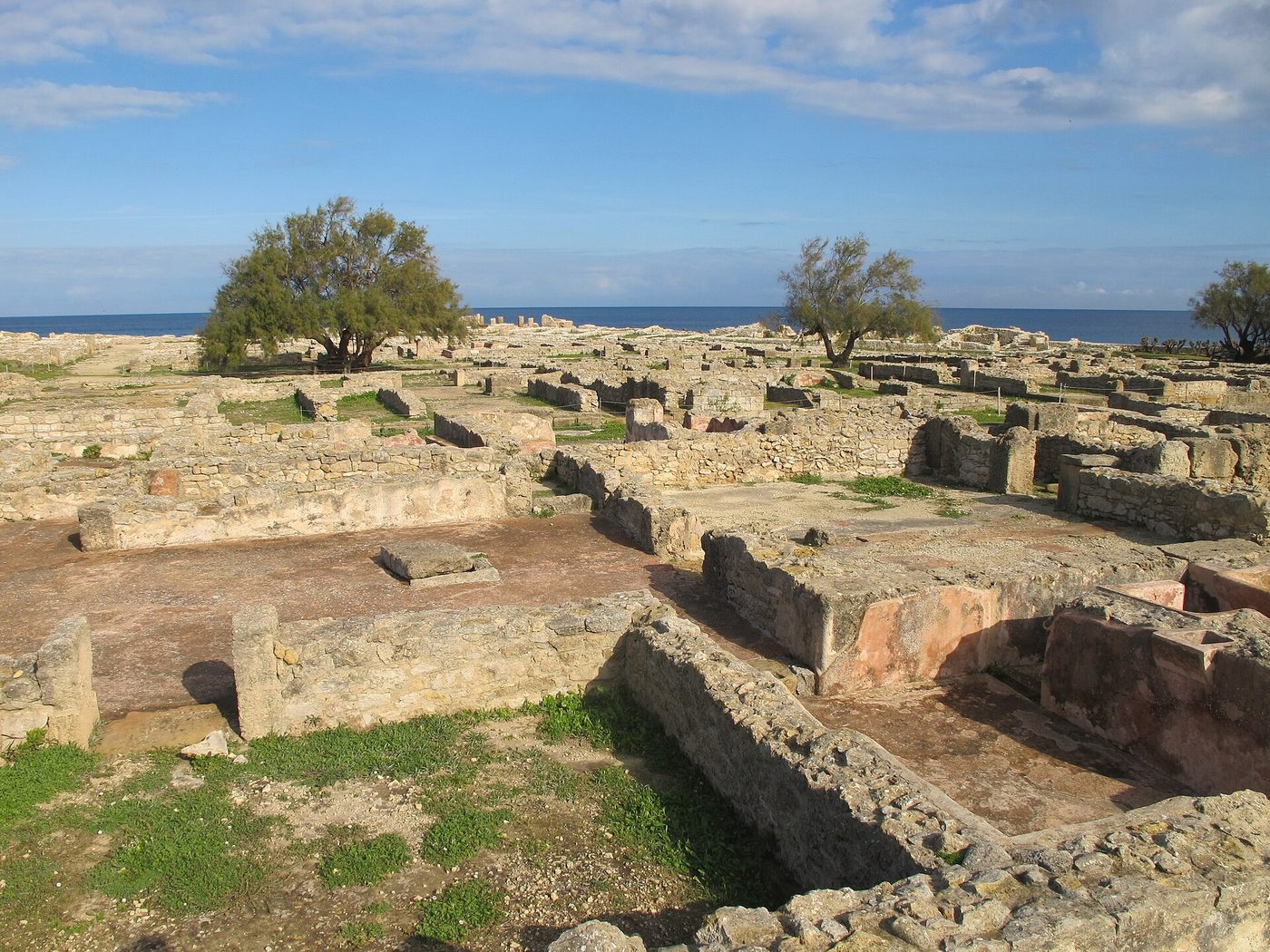
This is Tunisia’s secret weapon. The amphitheatre at El Djem is one of the largest and best-preserved in the entire Roman world — you can stand on the arena floor and climb the tiers with barely another soul around. Carthage, once Rome’s great rival, sprawls above the sea just outside the capital. Dougga is arguably the finest Roman town in North Africa and you’ll often have whole streets to yourself. If you’ve queued at the Colosseum, the contrast is almost comic. Our guide to Roman ruins in Tunisia maps out the best of them.
The Sahara — on a short-haul flight
Very few places let you swim in the Med and sleep under Saharan stars in the same week. From the desert gateways of Douz and Tozeur you can ride a camel into real dunes, watch the sun come up over a sea of sand, and visit the salt flats and film sets that stood in for Tatooine. It is the single most memorable thing most of our readers do, and it’s genuinely accessible as a one- or two-night trip. Start with our guide to the Tunisian Sahara.
Beaches and a sea that stays warm
The coast is the reason most Brits come, and it delivers: long sandy strands at Hammamet, Sousse and the island of Djerba, with a sea that’s still swimmable well into the autumn. It isn’t the Maldives — some resort beaches are busier and scruffier than the brochure suggests — but there are genuinely lovely stretches if you know where to look. Our honest roundup of Tunisia’s best beaches separates the gems from the let-downs.
Food, souks and a warm welcome
Tunisian food is underrated and dirt cheap: fiery harissa, crisp fried brik, slow-cooked couscous, fresh grilled fish, mountains of dates and pastries. The souks of Tunis, Sousse and Kairouan are a sensory overload in the best way. And the hospitality is real — for all the hassle we’ll get to in a minute, Tunisians are, on the whole, hugely welcoming to visitors. Get stuck into our Tunisian food guide before you go.
It’s genuinely easy to reach
Flights from the UK run about three hours — roughly the same as mainland Spain. easyJet and TUI fly direct into Enfidha (for Hammamet and Sousse), and there are direct routes to Djerba and Monastir too. For a destination that feels this different, the travel effort is minimal.
The honest cons — what UK travellers actually report
Here’s where we part company with the glossy “15 reasons to visit” lists. Tunisia has real downsides, and pretending otherwise helps nobody. None of these are dealbreakers on their own, but you should know them before you book.
Touts and hassle in the tourist spots
The most common complaint. In the medinas and around the resorts you’ll be approached — sometimes persistently — by people selling tours, carpets, camel rides and “genuine” bargains. A classic opener is a friendly “Hello! Do you remember me? I’m a waiter from your hotel!” — designed to steer you to a shop where he earns commission. It’s rarely threatening, but it can wear you down. A polite, firm “no thank you” and walking on works almost every time; tucking your hotel wristband out of sight helps too. Once you get the rhythm of it, it fades into background noise.
Tired resorts and variable service
Star ratings in Tunisia don’t map neatly onto UK expectations — a “four star” can feel like a well-worn three. Some hotels are dated, and buffet service at dinner can turn into a bit of a scrum. There’s also a tip-driven culture in some resorts where a little cash smooths everything; to some it feels friendly, to others forced. Read recent reviews of your specific hotel rather than trusting the brochure, and pick your resort with our where-to-stay guide.
The dreaded upset stomach
Travellers’ tummy is the single most-cited Tunisia downside, usually from resort buffets or drinks made with tap water. It’s far from guaranteed — plenty of people never have a moment’s trouble — but it’s common enough to plan around. Stick to bottled or sealed water (including for brushing your teeth if you’re cautious), be sensible at buffets, and pack rehydration sachets just in case. Our Tunisia travel tips cover the practical side.
Healthcare: fine in private clinics, thin elsewhere
Private clinics in the big cities and resort areas are decent, but public and rural facilities are under-resourced, and you’ll often be asked to pay up front — even in an emergency. Your UK GHIC card is not valid in Tunisia. Comprehensive travel insurance with medical cover and repatriation isn’t optional here; it’s essential. Check the NHS’s TravelHealthPro Tunisia page for jabs and food-and-water advice before you travel.
Alcohol is available — but it’s not a party destination
You can drink in Tunisia: resort hotels and licensed bars serve beer (the local lager is Celtia), wine and spirits, and no one minds a poolside drink. But this is a Muslim country, alcohol isn’t sold everywhere, and it’s pricier and less central to the scene than in Spain or Greece. During Ramadan (roughly mid-February to mid-March in 2026) daytime sales largely stop and the atmosphere is quieter, though tourist hotels keep serving.
The weather isn’t a dead cert off-season
Summer is reliably hot. But if you’re tempted by those cheap March or November deals, know that shoulder-season weather is a gamble — you might get glorious sun or a run of grey, breezy days when the sea’s too cold to enjoy. If sunbathing is the whole point of the trip, our best time to visit guide will save you from booking the wrong week.
Getting around takes patience
There’s no Uber. Taxis are cheap but you’ll want to insist on the meter (the “compteur”) or agree a price first, because tourists are routinely quoted several times the going rate — hotel-arranged taxis in particular can cost double the street price. Shared louages (minibuses) and trains are cheap and characterful but not always punctual. It’s all part of the adventure, but if you want everything to run to a Swiss timetable, this isn’t your country. Here’s how getting around Tunisia actually works.
Is Tunisia safe? The honest picture
This is the question underneath all the others, usually because people remember the 2015 attacks in Sousse and at the Bardo Museum. It would be wrong to gloss over them, and wrong to let them define the country a decade later.
Since 2015 Tunisia overhauled tourist security, and the recovery has been dramatic: 2025 was a record year with more than 11 million international visitors. This is a mass-market destination that millions of Europeans holiday in every year, not a frontier.
The UK Foreign Office does advise against travel to specific areas — chiefly the Chaambi Mountains and remote stretches of the Algerian and Libyan borders, and against all but essential travel to parts of the interior including Kasserine Governorate. That advice was “still current at 2 July 2026 (last updated 23 February 2026)” as we write. Crucially, every place you’d actually holiday — Hammamet, Sousse, Djerba, Tunis and the main Sahara circuit — sits far from those zones. We’ve written the whole thing up, with the exact wording and dates, in our guide to whether Tunisia is safe. Read it, and you’ll feel a lot calmer about booking.
Tunisia vs Morocco vs Spain — how it really compares
Most people weighing up Tunisia are also eyeing Morocco or a safe Spanish package. Here’s the honest trade-off.
Tunisia
Morocco
Spain
Value
Cheapest of the three
Cheap, but dearer than Tunisia
More expensive
Service & polish
Variable
Variable, more tourism depth
Slick and predictable
Culture shock
Gentle intro to North Africa
Bigger, more intense
Minimal
Beaches
Good, warm sea
Not the main draw
Excellent, developed
Best for
Value + history + first Sahara
Souks, mountains, riads
Reliable, easy sun
In short: Tunisia is cheaper than Morocco for almost everything and an easier first step into the region, while Morocco has more depth and Spain more polish. If value and uncrowded history are your priorities, Tunisia wins.
So, who is Tunisia actually for?
This is the part the listicles skip, and it’s the part that actually decides whether you’ll love your holiday.
You’ll love Tunisia if…
You want maximum holiday for minimum money and you’re relaxed about a bit of wear and tear.
You’re a history lover who’d rather have El Djem to yourself than queue at the Colosseum.
It’s your first trip to North Africa and you want a gentle, short-haul introduction.
You’re Sahara-curious and love the idea of a desert night without a long-haul flight.
You’re a family after a cheap, sunny, all-inclusive base with day trips on the side.
You’re chasing shoulder-season warmth and you’ll take the small gamble on the weather.
You might not, if…
Nightlife and clubbing are the whole point of your holiday.
You expect flawless five-star service and get genuinely annoyed when things are a bit rough around the edges.
You want spotless infrastructure and everything running exactly on time.
You hate being approached by vendors and can’t let it wash over you.
You never plan to leave the sunlounger — in which case a cheaper-to-reach Spanish resort may suit you better.
Practical must-knows before you book
A few things that quietly make or break a Tunisia trip:
The dinar is a closed currency. You can’t get it in the UK and can’t take it home — change money on arrival, keep your receipts, and convert leftover cash back before you fly. Reckon on roughly £1 to 3.8–3.9 dinars, but check the current rate.
Budget beyond the package. An all-inclusive covers the basics, but day trips, tips, taxis and souvenirs add up. A modest daily spend goes a long way here.
Time it right. May–June and September–October are the sweet spot for sun without the peak-summer heat; our month-by-month guide has the detail.
Have a rough plan. Even from an all-inclusive, two or three excursions transform the trip. A first-timer’s itinerary helps you slot them in.
The verdict: is Tunisia worth visiting?
Yes — with your eyes open. For value, uncrowded history, a genuine desert adventure and a warm sea a short flight away, few places come close for the money. It isn’t polished, and it isn’t for everyone, but the things it does well are things most sunshine destinations can’t offer at any price. Go for the ruins, the Sahara and the value; make peace with the rough edges; and you’ll almost certainly come home glad you took the chance.
Is Tunisia worth visiting? Your questions answered
Is Tunisia worth visiting in 2026?
Yes. After a record 2025 with more than 11 million visitors, Tunisia in 2026 is firmly back as a mainstream, well-run holiday destination. For value, Roman history and a taste of the Sahara on a short-haul flight, it’s one of the best-value trips a UK traveller can book — provided you’re relaxed about the rough edges.
Is Tunisia a good holiday destination for families?
It’s a strong family choice: cheap all-inclusives, warm shallow sea, waterparks and camel rides, and a short flight. Service and hygiene standards vary, so read recent reviews of your specific hotel, pack rehydration sachets, and choose a family-focused resort. Many UK families return year after year.
Is Tunisia safe for tourists right now?
The tourist areas are considered safe and are heavily visited. The Foreign Office advises against travel only to specific border and mountain zones, all far from the resorts. Take normal precautions with taxis and valuables. See our full, date-stamped Tunisia safety guide for the exact FCDO wording.
Is Tunisia cheaper than Morocco or Spain?
Generally yes on both counts. Tunisia is usually the cheapest of the three for packages, food, taxis and entry fees — cheaper than Morocco for almost everything and well under Spain. Morocco offers more tourism depth and Spain more polish, but for sheer value Tunisia is hard to beat.
What is the downside of visiting Tunisia?
The main gripes are persistent vendors and touts in tourist areas, tired resorts with variable service, the risk of an upset stomach from buffets or tap water, and infrastructure that doesn’t always run on time. None are dealbreakers, but they’re worth knowing so you arrive with the right expectations.
How long is the flight to Tunisia from the UK?
Around three hours — much like mainland Spain. London to Enfidha is roughly three hours; Manchester and other UK airports are a little longer. easyJet and TUI fly direct into Enfidha, with direct routes to Djerba and Monastir too.
Can you drink alcohol in Tunisia?
Yes. Resort hotels and licensed bars serve beer, wine and spirits, and a poolside drink is completely normal. It’s a Muslim country, so alcohol isn’t sold everywhere and it’s pricier than in Europe. During Ramadan daytime sales largely stop, though tourist hotels continue to serve.
Is Tunisia worth it just for a beach holiday, or only for culture?
Both work, but the magic is combining them. The beaches and warm sea justify a pure resort week, yet what sets Tunisia apart is how easily you can add Roman ruins, a Sahara night or a souk day trip. Treat it as a beach base with brilliant excursions and you’ll get the most out of it.
Will I get food poisoning in Tunisia?
Not necessarily — many visitors never have a problem — but an upset stomach is the most commonly reported issue, usually from buffets or tap water. Drink bottled or sealed water, be sensible at buffets, wash or sanitise hands, and pack rehydration salts. Sensible caution makes it far less likely.
Is Tunisia better than Egypt or Turkey?
It’s usually cheaper and quieter than both, with better-preserved Roman sites and an easier Sahara trip. Egypt wins on ancient wonders and Red Sea diving; Turkey on infrastructure and variety. For value, uncrowded history and a gentle first taste of the region, Tunisia holds its own.
How much spending money do I need for a week in Tunisia?
Less than almost anywhere in the Med. On top of an all-inclusive, a modest daily budget covers meals out, taxis, tips and a couple of excursions comfortably. Remember you can only get dinars on arrival, so budget in pounds and change money once you land.
When is the best time of year to go to Tunisia?
May–June and September–October give the best balance of warmth and comfort, with hot, reliable summers in between. Winter is mild but not beach weather, and shoulder-season sun is a gamble. Our best time to visit guide breaks it down month by month.
Written by the Tunisia Tourism Guide team — an independent UK-focused guide to travelling in Tunisia. We don’t sell tours or take hotel commissions. Prices and advice were checked at publication; always confirm current details before you book.
By the Tunisia Tourism Guide team · Last updated 6 June 2026 · All prices checked at publication
The best things to do in Tunisia range from wandering Carthage and the world’s third-largest Roman amphitheatre to sleeping in a Sahara camp, exploring blue-and-white Sidi Bou Said and eating brik from a paper wrapper for less than a pound. This guide covers 45 of them, organised by region, with real prices for every site we could verify.
I’ll be straight with you about why this page exists: most lists of things to do in Tunisia are written by people who flew in for a weekend, photographed Sidi Bou Said, and left. They’ll tell you a place is “worth seeing” without telling you what it costs, how long it takes, or how to reach it from the resort where you’re actually staying. So this guide does three things differently. Every site has its entry fee in dinars and pounds. Everything is organised by region, the way you’d actually plan days out. And where something is overrated, slow to reach or only worth it in certain months, I say so.
Tunisia at a glance
Essentials
The short version
Flight time from the UK
About 3 hours (TUI and easyJet fly direct to Enfidha and Djerba)
Currency
Tunisian dinar (TND), roughly 3.8 TND to £1. It’s a closed currency: you can’t buy it before you fly, so exchange on arrival and keep your receipts
Visa for UK visitors
None needed for stays up to 90 days
Best months
April–June and September–October for sightseeing; June–September for beaches; October–April for the Sahara
Typical costs
Most ancient sites charge 12–13 TND (just over £3). A street-food lunch is under £2. A two-day Sahara tour from the coast is about £130
Safety
The tourist coast and main sights sit well outside the FCDO’s restricted border zones — the full detail, quoted exactly, is in the practical section at the end
Short on time? The ten I’d actually prioritise
El Jem — a Roman amphitheatre to rival Rome’s, without the queues
The Tunis medina — the best preserved old city in North Africa
Sidi Bou Said — the blue-and-white clifftop village
Carthage — eight sites of the city Rome destroyed and rebuilt
A night in a Sahara desert camp out of Douz or Tozeur
The Bardo Museum — the world’s greatest Roman mosaic collection
Matmata’s underground houses (yes, the Star Wars ones)
Kairouan — Islam’s fourth holiest city, and its best makroudh
Djerbahood — a whole village turned open-air street-art gallery
Dougga — Africa’s best preserved Roman town, often near-empty
Tunis and the north
If you do one culture-focused day in Tunisia, do it here. Three of the best places to visit in Tunisia – the capital’s medina, Carthage and Sidi Bou Said – chain together on a single suburban railway line, which makes this the easiest big day out in the country — and one of the cheapest anywhere on the Mediterranean.
1. Get lost in the Tunis medina
Seven centuries of trade built this knot of covered souks, and unlike the bazaars of Marrakech or Istanbul, nobody has polished it up for visitors. Men still collect glowing charcoal for the cafés, chechia-makers still steam felt hats in Souk des Chaouachias, and the hassle level stays low. Come in the morning, enter from Bab el Bhar (the sea gate), and aim roughly for the Zitouna Mosque at the centre; getting lost on the way is the point. It costs nothing, which makes it the best free thing to do in Tunisia by a distance.
Need to know: free; souks liveliest before noon and quiet on Friday afternoons.
2. Walk through 3,000 years at Carthage
Carthage was Rome’s great rival until Rome erased it, then rebuilt it as one of the empire’s richest cities. What survives is scattered across a posh seaside suburb: the colossal Antonine Baths down by the water, the Punic harbours (two quiet lagoons that once hid a war fleet), Byrsa Hill, the Roman theatre and the haunting Tophet sanctuary. One 12 TND ticket covers all eight zones — about £3 for a UNESCO site that would cost ten times that in Italy. Note the hilltop Carthage National Museum was still closed for renovation when we checked; the open-air sites more than fill half a day.
Need to know: 12 TND (about £3) for the multi-site ticket, cash at any gate; typically 8am–5pm winter, until 7pm in summer.
3. Watch the light change in Sidi Bou Said
The blue-and-white village on the cliff is Tunisia’s postcard, and for once the postcard undersells it. Arrive before 10am or you’ll share the main lane with every tour group on the coast; by late afternoon they’re gone again and the bougainvillea glows. Skip the famous Café des Délices terrace if it’s rammed and pay a couple of dinars more for mint tea with pine nuts at Café des Nattes at the top of the steps. Dar el Annabi, a family mansion you can poke around for 5–10 TND, is worth it for the rooftop alone; Ennejma Ezzahra, the Baron d’Erlanger’s palace, charges 10 TND and earns it.
Need to know: village free to wander; mint tea at the famous cafés about 8–10 TND; combine with Carthage on the TGM line.
4. Stand under the Bardo’s mosaics
The Bardo holds the finest collection of Roman mosaics on earth, displayed in a 19th-century beylical palace that’s a sight in itself. The famous portrait of Virgil is here, along with floor-spanning hunting scenes lifted from villas at Dougga and El Jem. It reopened in September 2023 after two difficult years and feels loved again. Allow two hours; go Tuesday to Sunday (closed Mondays).
Need to know: 13 TND (about £3.40); 9am–5pm in summer, slightly shorter hours in winter; closed Mondays.
5. Ride the TGM along the bay
The little TGM suburban train has linked Tunis with La Goulette, Carthage, Sidi Bou Said and La Marsa since 1872, and it remains the best-value sightseeing transport in the country: about 1.25 TND first class, which is 33p. Hop off at Carthage Hannibal for Byrsa Hill, Carthage Présidence for the baths, then ride two more stops to Sidi Bou Said. It’s scruffy, frequent and entirely the way to do this coast.
Need to know: around 1.25 TND first class; runs from before dawn until after midnight.
6. Smell the harbour at Bizerte
An hour north of the capital, Bizerte’s old port is the prettiest harbour scene in Tunisia: faded fishing boats, a whitewashed kasbah wall, men mending nets who will sell you the morning’s catch grilled at a quayside table. Almost no foreign visitors make it here, which is most of the charm. Push 15 minutes further to Cap Angela, the northernmost point of Africa, for the photo with the rusted sign.
Need to know: free; louages (shared taxis) from Tunis take about an hour for a few dinars.
7. Have Dougga almost to yourself
Dougga is the best preserved Roman town in Africa — a complete hillside city with a 3,500-seat theatre, a capitol whose columns you’ll photograph from every angle, paved streets, even the communal latrines (still arranged for conversation). On a spring weekday you can count the other visitors on one hand. It’s two hours from Tunis and awkward without a driver, which is exactly why it stays quiet. Entry has crept up to about 12 TND; it remains absurd value.
Need to know: about 12 TND; 8am–7pm in summer, 8.30am–5pm winter; easiest as a day tour or hired taxi from Tunis.
8. Count flamingos at Ichkeul
Lake Ichkeul is one of only two sites on earth UNESCO-listed for wetland birdlife (the other is the Danube delta). Between October and March the lake fills with tens of thousands of wintering ducks, geese and flamingos, watched over by water buffalo and an eco-museum on the mountain. There’s no formal ticket; you simply drive in. Bring binoculars and low expectations of facilities.
Need to know: free; best October–March; about 30 minutes from Bizerte.
9. Dive the Coral Coast at Tabarka
Tunisia’s green, pine-backed north-west corner feels more Sardinia than Sahara. Tabarka built its name on red coral, and its dive schools run trips to coral walls, groupers and a couple of wrecks from around 50 TND a dive — some of the cheapest Mediterranean diving going. Non-divers get the Genoese fort, the seafront Needles rock spires, and a jazz festival each July that fills the town.
Need to know: dives from roughly 50 TND (£13); season May–October; 2.5–3 hours from Tunis.
10. Go underground at Bulla Regia
The Romans of Bulla Regia beat the summer heat by building their villas one storey down, and the result is unique: complete underground houses with their mosaics still in place, lit by sunken courtyards. You climb down a ladder of stairs into the House of Amphitrite and find Neptune on the floor where he’s been for 1,800 years. It pairs naturally with Dougga or Tabarka on a northern loop.
Need to know: modest entry fee, cash; combine with Dougga for the best ruins day in the country.
Cap Bon and Hammamet
The Cap Bon peninsula points at Sicily like a finger, and most UK package holidays land at its base in Hammamet. The resort gets sneered at by people who never left their sunlounger; the peninsula behind it is one of Tunisia’s most rewarding day-trip territories.
11. Do Hammamet properly: medina, kasbah, then beach
Hammamet’s pocket-sized medina sits right on the sand, its kasbah walls dropping straight to the water — a view that explains why every European painter and playwright of the 1920s summered here. The lanes inside are touristy but still pretty, and the beach that curves away north is the long, gentle kind families dream about. Do the culture before 11am, swim after.
Need to know: medina free; kasbah a few dinars; the town beach is free and the best stretches are in front of the older hotels.
12. Take the kids to Yasmine Hammamet
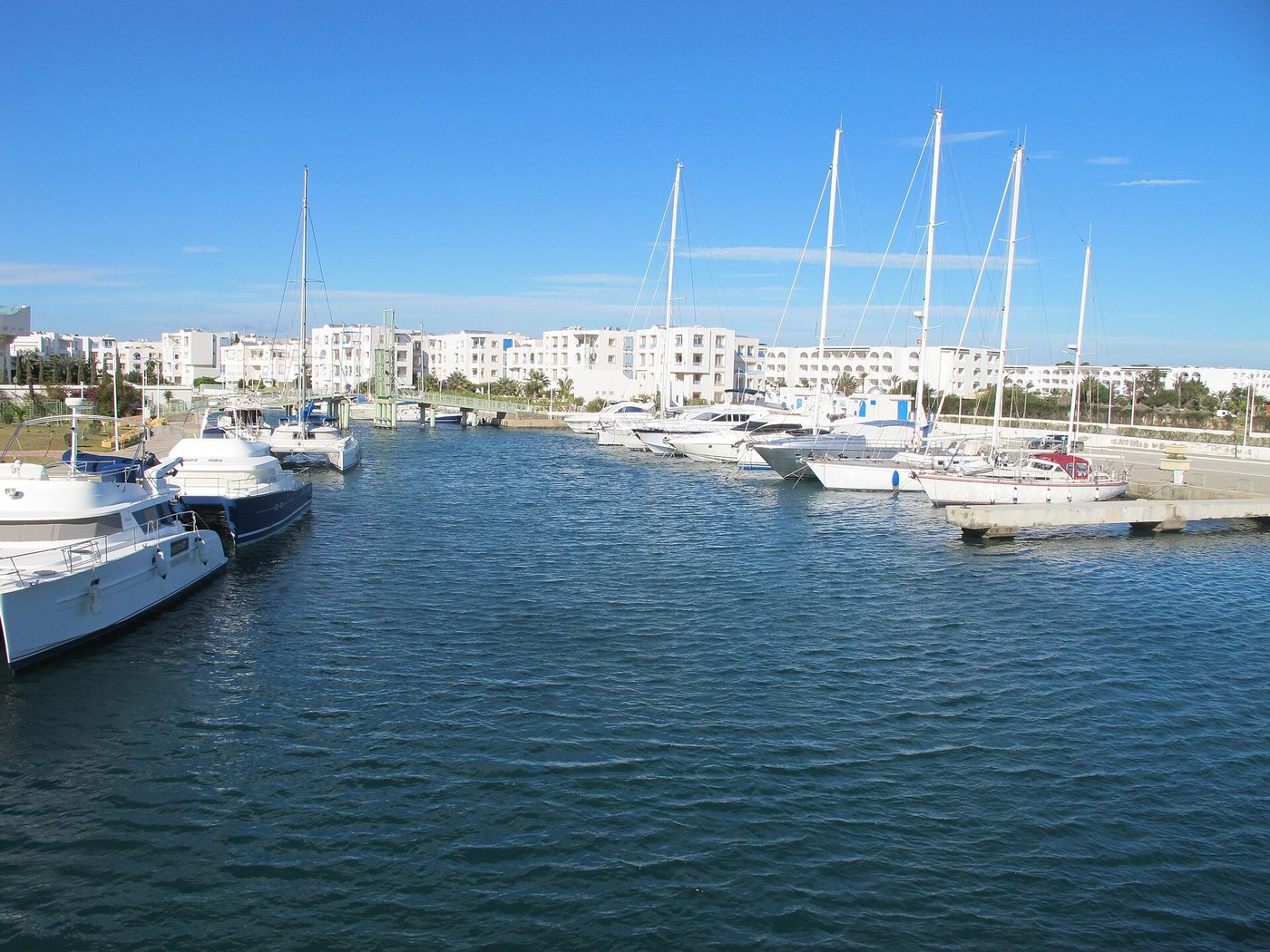
The purpose-built marina zone south of town divides opinion, but with children it simply works: Carthage Land’s rides and the adjoining parks bundle from about 25 TND, the Aqualand waterpark runs all summer, and the marina promenade fills with families every evening. It is not remotely authentic Tunisia. It is, however, a very easy good day out.
Need to know: park combos roughly 25–40 TND depending on what you bundle; the fake medina is free to walk.
13. Buy your ceramics at Nabeul’s Friday market
Nabeul is Tunisia’s pottery capital, 15 minutes from Hammamet, and its Friday market is the place to buy the bowls and tiles you’ll see priced triple in hotel shops. Ignore the camel-photo hustlers at the entrance, walk past the tourist rows, and find the workshops on the side streets where the wheel is actually spinning. Haggle from half the asking price, smile throughout.
Need to know: Friday mornings, go before 10am; louage from Hammamet takes 15 minutes.
14. Climb Kelibia’s fort and swim at Mansoura
Kelibia’s Byzantine fortress crowns a headland above what regular visitors quietly call the best beach in Tunisia: Mansoura’s white sand and glass-clear water, mercifully short on big hotels. The fort’s ramparts give you the whole peninsula and, on a clear day, Sicily. The fishing-port restaurants below grill the catch and pour Kelibia’s own dry muscat, the only wine made within sight of where its grapes grow.
Need to know: fort entry a few dinars; 1.5 hours from Hammamet by louage or hire car.
15. Stand in the only surviving Punic town at Kerkouane
Rome levelled every Carthaginian city except this one, which simply got abandoned and forgotten by the sea. What’s left at Kerkouane is modest but genuinely unique on earth: street grids, pink waterproof floors, and bath tubs — the Punic obsession — in nearly every house, looking out over a turquoise bay. UNESCO-listed, rarely visited, deeply atmospheric if you let it be.
Need to know: modest entry, closed Mondays historically — check locally; pair with Kelibia, 20 minutes away.
16. Watch falconry country from El Haouaria’s caves
At Cap Bon’s wind-blasted tip, El Haouaria’s Roman quarry caves drop golden light onto chambers cut for Carthage’s building stone. The village has trained falcons since antiquity (the festival each June is the time to see them fly), and the headland walks above the caves are the best coastal hiking on the peninsula. On the drive back, Korbous’ cliffside hot springs pour warm sulphur water straight into the sea — join the locals soaking their feet.
Need to know: caves a few dinars; this is hire-car or day-tour territory; the full Cap Bon loop is one of Tunisia’s great drives.
Sousse, the Sahel and the holy city
The central coast — Sousse, Port El Kantaoui, Monastir, Mahdia — is where the other half of UK package travellers land. You’re better placed than Hammamet for day trips: Kairouan and El Jem, two of the country’s heavyweight sights, are each about an hour away.
17. Climb the ribat tower above Sousse medina
Sousse’s UNESCO medina is the working-city version of Tunis’s: fewer souvenirs, more fabric merchants, and a ribat — an 8th-century fortified monastery — whose spiral tower stairs reward you with the best view on the coast. Monty Python fans will recognise the walls: much of Life of Brian was filmed here and at Monastir. The archaeological museum in the kasbah keeps a mosaic collection second only to the Bardo.
Need to know: ribat and museum each charge a few dinars (under 10 TND); the medina is free; watch for the fake “official guides” at the gates.
18. Sail, golf or just promenade at Port El Kantaoui
Tunisia’s first purpose-built marina has mellowed into something genuinely pleasant: bobbing yachts, pirate-ship family cruises, and 36 holes of golf where a round costs 156 TND — about £41, which is roughly what you’d pay just for a trolley in the Algarve. Boat trips tout for dolphin sightings; treat the dolphins as a bonus, not a promise.
Need to know: 18 holes about 156 TND, 9 holes 92 TND, book ahead in spring and autumn; boat trips from around £20 — agree what’s included first.
19. Make a family day of Friguia Park
Halfway between Sousse and Hammamet, Friguia keeps lions, giraffes, lemurs and a sea-lion show in a park big enough to need half a day. It’s the standard family excursion from both coasts and better run than you might fear, though animal-welfare standards are not what UK zoos enforce — the dolphin show in particular is one to skip if that matters to you, and it should.
Need to know: 15 TND adults, 10 TND children, cash only; sea-lion shows at 10am, 1pm and 3pm; dolphin show extra.
20. Pay respects in Monastir: ribat and mausoleum
Monastir’s ribat is the oldest and most filmed in North Africa — Jesus of Nazareth and Life of Brian both shot here — and its tower view over the marina and golden Bourguiba Mausoleum is the town’s money shot. The mausoleum itself, resting place of independent Tunisia’s founding president, is free, gleaming and quietly moving; cover shoulders and knees.
Need to know: ribat a few dinars, mausoleum free; ten minutes from Skanes hotels in a taxi.
21. Slow right down in Mahdia
Mahdia is what the Sahel coast looked like before the package hotels: a slim peninsula of whitewashed lanes, a sea gate, weavers working silk for wedding outfits, and a clifftop cemetery that turns gold at sunset. The beach north of town is arguably the softest sand in the country. If the bigger resorts feel hectic, this is your antidote, one louage hop from Sousse.
Need to know: everything in the old town is free; Friday is market day around the Skifa el Kahla gate.
22. Hear the call to prayer in Kairouan
Islam’s fourth holiest city earns a full day. The Great Mosque’s marble courtyard — columns recycled from Carthage itself — is open to non-Muslim visitors (prayer hall excepted, modest dress lent at the door), and one combined ticket of about 12 TND also covers the Aghlabid Basins, the Barber’s Mosque and more. Then the part nobody warns you about: Kairouan makes Tunisia’s best makroudh, the date-stuffed semolina diamond, and the medina stalls sell them warm for pennies. Carpet sellers here run the smoothest patter in the country; enjoy the tea, hold your wallet.
Need to know: combined monuments ticket about 12 TND from the Great Mosque entrance; mosque visiting hours run mornings to early afternoon, shorter on Fridays; one hour from Sousse.
23. Stand on the arena floor at El Jem
The amphitheatre at El Jem held 35,000 spectators — in a town that, then as now, barely justified it — and it is magnificently intact: third biggest in the Roman world, and unlike the Colosseum you can still walk the underground corridors where men and animals waited, then stand dead centre on the arena floor and test the acoustics. Your 12 TND ticket includes the museum 700 metres away, whose mosaics alone would anchor a national collection anywhere else. In July and August the El Jem Symphonic Festival stages orchestras under floodlights here; if your dates align, move things to be in that audience.
Need to know: 12 TND including the museum; open daily roughly 8am–6.30pm summer, to 5.30pm winter; direct trains and louages from Sousse take about an hour.
Djerba and the south-east
Djerba does its own thing: an island of whitewashed domed houses, Berber villages, a 2,500-year-old Jewish community and the gentlest beaches in the country, all flat enough to cycle. UK flights now land here direct, and it makes the best base for striking out into the ksour country and the desert beyond.
24. Claim your stretch of Sidi Mahres beach
Djerba’s north-east coast is one long run of white sand and water so shallow you wade out fifty metres before it reaches your waist — which is exactly why families love it. The hotel zone has the loungers; walk five minutes beyond the last parasol and you’ll often have the Mediterranean to yourself, give or take a passing camel offering rides (agree a price before you mount, and expect to haggle from silly opening numbers).
Need to know: free; the lagoon end towards Ras R’mel collects flamingos between October and March.
25. Hunt murals in Djerbahood
In 2014, the village of Erriadh invited 150 street artists from 30 countries to paint it, and they never really stopped. The result is one of the world’s great open-air galleries: calligraffiti across crumbling doorways, octopuses wrapping whole façades, new pieces appearing every year among the fading ones. It’s free, unfenced and best at golden hour with a fresh phone battery. Have coffee in the village square and give the lanes a full hour.
Need to know: free, always open; 15 minutes from Houmt Souk by taxi.
26. Bid at the Houmt Souk fish auction
Djerba’s main town keeps its soul in the covered market, where the morning fish auction is pure theatre: the crier hoists a string of sea bream, the café crowd bids, and the whole thing is settled in seconds. The surrounding souk does the usual carpets-and-ceramics dance, but the fondouks — old merchants’ inns with galleried courtyards — and the stout Borj el Ghazi Mustapha fort by the water round out a proper half day.
Need to know: market mornings only; fort a few dinars; buy your fish at auction and several nearby grills will cook it for a small fee.
27. Visit El Ghriba with respect
Africa’s oldest synagogue has anchored Djerba’s Jewish community for something like two millennia, and its blue-tiled interior is open to respectful visitors. Security is airport-style — bring your passport — entry is free with a donation box at the door, men cover their heads (kippahs provided) and shoulders stay covered. During the Lag BaOmer pilgrimage each spring it becomes one of the great religious gatherings of North Africa.
Need to know: free entry, donation expected; closed to visitors on Shabbat (Friday evening to Saturday evening) and Jewish holidays.
28. Meet 400 crocodiles at Djerba Explore
Djerba Explore bundles three things: a genuinely good museum of Tunisian art (Lalla Hadria), a reconstructed heritage village, and the Sahara’s largest crocodile farm, where feeding time at 4pm draws the crowds. With children it’s the island’s banker afternoon. One ticket covers the lot.
Need to know: 37 TND adults, 24 TND children 4–12, under-4s free; paying areas open 9am–6.30pm; crocodile feeding daily at 4pm.
29. Sail the pirate ship to Flamingo Island
Yes, it’s a tourist galleon with a sound system. It’s also a genuinely lovely day: an hour’s sail from Houmt Souk to a sandbar island, grilled fish lunch, swimming in water like a warm bath, and — between October and March — actual flamingos. At about €20 a head including lunch it’s one of the cheapest full days out you can buy in Tunisia. Book the morning sailing; afternoons run hotter and choppier.
Need to know: around €20 adults, €15 children with lunch; flamingos winter only; bring reef shoes for the sandbar.
30. Learn to kitesurf on the lagoon
Djerba’s south-east lagoon is forty square kilometres of flat, waist-deep water with steady thermals — about as forgiving a classroom as kitesurfing offers anywhere. The schools by the El Kantara causeway take complete beginners: a two-hour taster runs about €60, a six-hour course €180. Season runs spring to autumn; even watching from the shore café is a decent hour.
Need to know: tasters about €60; best wind April–October; wetsuits provided outside high summer.
The Sahara and the deep south
This is the Tunisia that gets under people’s skin: salt lakes that mirror the sky, mountain oases pouring spring water into palm groves, underground villages, and the dunes of the Grand Erg Oriental. It’s also Star Wars country — George Lucas built Tatooine here and named it after a real town. Base yourself in Tozeur or Douz, or come on a two-day swing from the coast.
31. Do the classic two-day Sahara circuit
Every coast hotel sells it and it remains, honestly, one of the best-value organised trips in the Mediterranean: a 4×4 or coach loop through El Jem or Matmata, a night in Douz or a desert camp, dawn over the dunes, the Chott el Jerid crossing and the mountain oases, typically £130–150 per person booked online. The coach legs are long — there’s no hiding it — but you cover the country’s whole southern highlight reel in 36 hours. Booking through GetYourGuide or Viator usually beats the hotel rep’s price for the identical bus.
Need to know: from about £130 with the overnight; take a fleece — desert nights are cold even in May; expect 5am starts.
32. Soak at Ksar Ghilane, the desert’s hot tub
Where the stony desert gives way to real Saharan sand, a spring fills a palm-shaded pool at exactly bath temperature. Ksar Ghilane is the standard day trip from Djerba (around £70 with lunch) and the turnaround point of many camel treks: swim, eat under the tamarisks, then quad or ride out to the Roman fort of Tisavar on the dune line for sunset. The luxury camps here are the most comfortable way to sleep in the Tunisian Sahara.
Need to know: day trips from Djerba about £70; camel and quad hire on site (agree prices first — roughly 50 TND camel, 100 TND quad).
33. Go underground in Matmata
The Amazigh of Matmata solved desert living by digging: crater courtyards sunk five metres into the earth, with cave rooms radiating off them, cool in August and warm in January. Several families open their homes to visitors — a few dinars (5–10 TND) is a fair thank-you, and you’ll likely be offered bread, oil and honey. And then there’s the Hotel Sidi Driss, whose dining courtyard is Luke Skywalker’s childhood home from A New Hope, original set dressing still bolted to the walls. Wander in for free or the price of a drink; superfans can actually stay the night for the cost of a UK takeaway.
Need to know: home visits 5–10 TND per person; Sidi Driss free to look around politely; an hour from the coast road south.
34. Walk the Mos Espa film set
Out past Tozeur, the largest surviving Star Wars set on the planet stands alone in the desert: the domed streets of Mos Espa from The Phantom Menace, slowly weathering but still walkable, free, and gloriously surreal with nothing but dunes to the horizon. The road is paved the whole way — a normal hire car does it in 40 minutes from Tozeur — and a local campaign cleared the advancing dune that threatened the set, buying it years of life. Go for the first hour after sunrise: cooler, emptier, better light.
Need to know: free (small charge for the loo, sellers at the gate); combine with Ong Jemal ridge and Sidi Bouhlel canyon on a half-day 4×4 loop.
35. Cross the Chott el Jerid salt lake
The causeway road across Tunisia’s great salt lake is 80 kilometres of white crust, mirages and water pooled in impossible pinks and greens. Pull over at the midway stalls, walk out onto the crunching salt, buy a desert rose, and accept that your photos will look fake however honest they are. Star Wars pilgrims: the Lars homestead igloo from the films stands restored out on the flats nearby, GPS coordinates widely published.
Need to know: free, it’s a public road between Tozeur and Douz; the light is best early or late.
36. Idle through Tozeur’s old town and palmeraie
Tozeur is the Sahara’s most civilised base: an old quarter built entirely in patterned yellow brickwork, a palm grove of several hundred thousand trees fed by ancient springs, and date shops selling deglet nour — the “fingers of light” — straight off the branch. Ride a calèche through the palmeraie, drink palm-shaded tea, and if you’re here in late autumn, buy harvest-season dates by the kilo for nothing.
Need to know: old town free; calèche rides and the Dar Cherait museum are cheap — agree prices first; November–December is date harvest.
37. Chase waterfalls at Chebika, Tamerza and Mides
Where the Atlas mountains die into the desert, three oases hide actual waterfalls: Chebika’s palm canyon, Tamerza’s cascades beside a ruined village, and Mides’ slot gorge, which film fans know from The English Patient. The classic 4×4 loop from Tozeur does all three in a half day from about £45–60 per person, often bolted onto Mos Espa. You can swim under Tamerza’s falls most of the year; spring flow is strongest.
Need to know: full-day 4×4 tours around 200 TND/£52 per person; entry to the oases themselves is free or a dinar or two; wear grippy sandals.
38. Explore the ksour around Tataouine
Yes, Tataouine is a real town, and the fortified granaries (ksour) around it inspired more than just a planet’s name. Ksar Ouled Soltane’s courtyards of stacked, vaulted ghorfas — four storeys of mud-brick cells like a wasp nest — are free to wander and at their best in late light. Hilltop Chenini, a Berber village still half-inhabited around its crumbling citadel and white mosque, is the other essential stop; Ksar Hadada (a Phantom Menace set) charges a token 2 TND. All of this sits comfortably outside the FCDO’s southern restricted zones — the details are in the safety section below.
Need to know: Ksar Ouled Soltane and Chenini free (tip a local guide 5–10 TND if you take one); doable as a long day from Djerba.
39. Ride a camel into the dunes at Douz
Douz calls itself the gateway to the Sahara and earns it: the town ends and the Grand Erg simply begins. Sunset camel treks run about 60 TND for two hours — agree the price and duration before mounting, and check your camel looks well kept; welfare varies and your custom is your vote. Stay for the Thursday market (livestock, spices, desert kit) and, if you can swing a December visit, the International Festival of the Sahara: camel racing, poetry and Berber horsemanship that’s been running since 1910.
Need to know: about 60 TND for two hours by camel; overnight camp packages from roughly 200 TND; festival each December.
40. Ride the Lézard Rouge through Selja Gorge
The bey’s restored 1900s train rattles from Metlaoui into the red rock slot of the Selja Gorge — a short, scenic, faintly absurd jaunt in carriages built for royalty. After years out of service it was relaunched in May 2025 following a full restoration, running May to September with morning departures most days except Saturdays, around 20–25 TND. One honest caveat: this service has history with sudden suspensions, so confirm it’s running locally (in Tozeur or Metlaoui) before you build a morning around it.
Need to know: about 20–25 TND; roughly 1¾ hours round trip; check locally that it’s operating before travelling out.
Food, souks and living culture
Still wondering what to do in Tunisia beyond the sights? Tunisia’s culture isn’t behind glass. It’s in the markets, the steam of a hammam, a fried pastry handed over a counter. Build these five into whatever else you do.
41. Eat the street food trinity: brik, lablabi, fricassée
Start with brik à l’oeuf: a tissue-thin pastry parcel fried around a whole egg, tuna and capers, eaten folded with the yolk running — 1 to 3 TND from any stall, and the single best pound you’ll spend in Tunisia. Lablabi is the working man’s breakfast: chickpea broth poured over torn bread, hit with harissa, cumin, a soft egg and olive oil, stirred into glorious chaos for a few dinars. The fricassée — a fried roll stuffed with tuna, harissa, olives and potato — is the beach lunch. A proper fish couscous at a mid-range place runs 25–45 TND, and harissa, by the way, is UNESCO-listed heritage; buy tubes from Nabeul to take home.
Need to know: stalls with a queue of locals are your quality guarantee; street eating is half the point of being here.
42. Sweat it out in a hammam, then thalasso it off
The hammam is Tunisia’s weekly ritual, and a neighbourhood one costs about 5–6 TND entry — add a gommage scrub from a kessala and you’re still under 40 TND, pink, polished and slightly reborn. Sexes bathe separately (women usually daytime, men early morning and evening); bring or buy a kessa mitt. At the other end of the scale, Tunisia is the world’s second thalassotherapy destination after France: seawater pools, algae wraps and four-hand massages in Hammamet, Sousse and Djerba for roughly €70 a day package — a third of French prices for the same treatments.
Need to know: local hammam 5–10 TND; tourist hammam-and-massage packages 40–140 TND; thalasso day spas from about €70.
43. Haggle for the right souvenirs
The good buys: olive-wood bowls, Nabeul ceramics, Sejnane pottery (UNESCO-listed, made by Berber women in the north), fouta towels, harissa, date syrup, and — if you know what you’re doing — a Kairouan carpet with its official seal. The rules: never accept the first price (start around half and meet in the middle), tea during carpet negotiations carries no obligation, and “it’s real silver” usually isn’t. Buy from workshops over hotel boutiques and your money lands with the maker.
Need to know: souks close Friday afternoons in religious towns; cash gets better prices than card everywhere.
44. Time your trip to a festival
Tunisia’s festival calendar is older than its tourism. The Carthage International Festival fills the Roman theatre with global acts each July and August (its 60th edition runs summer 2026); El Jem’s Symphonic Festival puts orchestras in the amphitheatre under floodlights; Tabarka’s jazz festival brings the north-west corner to life in July; and Douz’s Sahara Festival each December is the real desert deal — camel racing, sloughi hounds, poetry duels. Note the Tataouine Ksour Festival has moved permanently to December too.
Need to know: Carthage and El Jem programmes drop in early summer — book tickets and rooms together; December in Douz needs warm layers.
45. End every day like a Tunisian: tea, pastry, promenade
The national rhythm: late-afternoon mint tea with pine nuts (2–5 TND in a local café, 8–10 at the famous ones), something sweet — makroudh in Kairouan, bambalouni doughnuts fried to order in Sidi Bou Said — then the evening promenade along whichever corniche is nearest. Beer drinkers: a cold Celtia in a bar is 5–8 TND, and Tunisian wine (try a Mornag red or that Kelibia muscat) has 2,500 years of practice behind it. Alcohol is sold in licensed bars, most hotels and some supermarkets — not everywhere, and not on Fridays in the shops.
Need to know: cafés are unhurried by design — nobody is coming to move you along. That’s the point.
The best things to do, by traveller
You are…
Build your trip around
A family with kids
Djerba’s shallow beaches (24), Djerba Explore’s crocodiles (28), the pirate ship (29), Friguia Park (19), Carthage Land (12), a camel ride done right (39)
A history lover
El Jem (23), Carthage (2), Dougga (7), the Bardo (4), Kerkouane (15), Kairouan (22), Bulla Regia (10)
A couple
Sidi Bou Said at golden hour (3), a thalasso day (42), Mahdia’s old town (21), a Sahara camp night (31), dinner in a Tunis medina palace (1)
An adventurer
Kitesurfing Djerba (30), diving Tabarka (9), the oasis canyons (37), quad to Tisavar fort (32), Douz by camel (39)
A Star Wars person
Mos Espa (34), Hotel Sidi Driss (33), the Lars homestead on the Chott (35), Ksar Ouled Soltane and Ksar Hadada (38)
On a package, no hire car
Everything in the day-trips table below — the excursion desk is your friend, the online platforms are usually cheaper
Day trips from your resort
The honest matrix of what’s worth it from each base. Times are one-way by tour coach or taxi.
Staying in…
Easy half-day
Full day, worth it
Stretch (long day or overnight)
Hammamet / Yasmine
Nabeul market (15 min), Hammamet medina
Tunis + Carthage + Sidi Bou Said (1 h); Cap Bon loop; Kairouan (1¾ h)
Inland sites are 40°C bake-outs by noon; the Sahara proper is off the menu
September–October
Warm sea, thinning crowds, Sahara reopens
Sea stays swimmable to late October most years
November–March
Sahara at its best, Ichkeul’s birds, thalasso, Douz festival, date harvest
Coast hotels quiet and cheap; you’ll swim in the pool, not the sea
Three ways to put it together
48 hours from a cruise ship or city break: day one, Tunis medina morning, Bardo afternoon; day two, TGM to Carthage’s main sites, then Sidi Bou Said for the late light. You’ll have spent about £10 on entries and transport combined.
The classic week: two nights Tunis (medina, Bardo, Carthage, Sidi Bou Said), louage or train south for Kairouan and El Jem with a night in Sousse or Mahdia, then two nights Tozeur for the oases, Mos Espa and the Chott crossing, finishing in Douz for a camel sunset. Public transport does all of it; a hire car does it more comfortably.
The resort-based version (most UK visitors): base in Hammamet, Sousse or Djerba; spend your days between the beach and one excursion every second day — Tunis/Carthage day, Kairouan + El Jem day, and the 2-day Sahara circuit as the centrepiece. You will not feel you missed the country.
The practical bits nobody puts in their listicle
Getting around
Louages — shared eight-seat taxis that leave when full — connect everywhere, cost a few dinars an hour of travel, and are the great underrated Tunisian experience in themselves. Trains link Tunis with Sousse and El Jem cheaply if not punctually. Yellow city taxis are metered and cheap (insist the meter goes on); Bolt works in greater Tunis. Hire cars unlock Cap Bon, the north and the Dougga run — book the excess down, and expect police checkpoints to wave you through politely. There is no Uber.
Money
The dinar is a closed currency: you cannot buy it before you fly, and you cannot take meaningful amounts home, so exchange on arrival (airport rates are government-set and fine) and keep every exchange receipt — you’ll need one to convert leftovers back at departure. Cards work in hotels, bigger restaurants and supermarkets; the souks, louages and street food run on cash. Budget for the tourist tax your hotel adds at checkout: 8 TND per person per night in 3-star places, 12 TND in 4- and 5-star, capped at ten nights.
For the coast, the capital, and every one of the 45 things to do in Tunisia listed above: yes, with normal city sense. UK government advice draws its lines along the borders, not the tourist map. As of the FCDO’s Tunisia advice page (updated 23 February 2026, still current when we checked on 6 June 2026), the FCDO advises against all travel to: the Chaambi Mountains National Park and the designated military operations zones of Mount Salloum, Mount Sammamma and Mount Mghila; the militarised zone south of El Borma and Dhehiba; within 20km of the rest of the Tunisia-Libya border area north of Dhehiba; and the town of Ben Guerdane and immediate surrounding area. It advises against all but essential travel to: areas north and west of Ghardimaou in Jendouba Governorate, including El Feidja National Park; within 20km of the Tunisia-Algeria border in El Kef and Jendouba governorates south of the town of Jendouba; Kasserine Governorate, including the town of Sbeitla; within 10km of the rest of the Tunisia-Algeria border south of Kasserine Governorate; within 10km of Mount Mghila; Mount Orbata; and within 75km of the Tunisia-Libya border — excluding Zarzis, the C118 road and all areas in Medenine Governorate north of that road.
Read that exclusion again, because it matters: Djerba, Zarzis, Tataouine town and the ksour all sit outside the restricted zones, as do Tozeur, Douz, Matmata and everywhere else in this guide. Sbeitla’s Roman ruins, sadly, sit inside one — which is why they’re not on this list. Check the FCDO’s Tunisia page close to travel, since travelling against its advice typically voids your insurance. Two more things: your GHIC card is not valid in Tunisia, so decent travel insurance is non-negotiable; and drones are illegal to bring in without prior authorisation — leave it at home.
Things to do in Tunisia: your questions answered
How many days do you need in Tunisia?
A week covers the classic loop: Tunis and Carthage, Kairouan, El Jem and a two-day Sahara swing. Ten to fourteen days does the whole country without rushing, adding Cap Bon, Tozeur’s oases and Djerba. On a one-week beach package, budget two or three excursion days and you’ll see the headline attractions.
Is Tunisia worth visiting?
If you want Roman ruins without crowds, Saharan landscapes without a long-haul flight, and beach holidays at two-thirds of Greek prices — emphatically yes. It suits curious travellers better than luxury-seekers: service is warm but unpolished, and the magic lives outside the hotel gates.
Is Tunisia safe for tourists in 2026?
The tourist regions are calm and security at hotels and sites is visible and professional. The FCDO’s restrictions apply to specific border and mountain zones far from the coast, the capital and every attraction in this guide — the full zone list is quoted exactly in the section above. Use city common sense and check the FCDO page before you book.
Is Tunisia cheap?
Genuinely. Major ancient sites charge about £3, a street lunch is £1–2, a taxi across Tunis is £2–3, beer is under £2 and a two-hour camel trek about £16. The exceptions: imported drinks, thalasso treatments and anything bought inside a hotel. A couple can sightsee lavishly on £40 a day plus accommodation.
When is the best time to visit?
May, then October, then April and September. July and August are for the beach and the festivals, not inland sightseeing. November to March is Sahara season — crisp days, cold nights, empty sites — and the cheapest time for a thalasso-and-pool break on the coast.
Which part of Tunisia has the best beaches?
Djerba for shallow, family-friendly white sand; Mansoura at Kelibia for sheer water quality; Mahdia for soft-sand peace; Hammamet for the classic long resort curve. The wild northern coves around Cap Serrat are the connoisseur’s answer, if you have a car.
Can you visit the Star Wars filming locations?
Yes — most are free and reachable on a normal day trip. Mos Espa and the Lars homestead sit near Tozeur, Hotel Sidi Driss serves lunch in Luke’s actual courtyard in Matmata, and Ksar Ouled Soltane and Ksar Hadada flank Tataouine. A two-day southern loop covers the lot.
Can you do the Sahara without a tour?
To the edge, yes: Tozeur, Douz, the Chott crossing and Ksar Ghilane’s track are all reachable in a hire car (the last stretch ideally 4×4). Into the dunes proper, no — and the organised circuits are cheap and well-run enough that fighting them is a false economy.
Tunisia or Morocco?
Tunisia is smaller, cheaper, calmer and less hassled; its Roman sites outclass Morocco’s and the Sahara is far easier to reach. Morocco wins on mountain trekking, imperial-city grandeur and food depth. For a first North African trip with limited time, Tunisia is the gentler, better-value introduction.
What is Tunisia famous for?
Carthage and Hannibal, the best-preserved Roman amphitheatre in Africa at El Jem, the Star Wars sets of Tatooine, blue-and-white Sidi Bou Said, harissa, dates, jasmine and an unbroken 3,000-year habit of being the crossroads of the Mediterranean.
Do they speak English in Tunisia?
In hotels and tourist sites, yes, functionally. Elsewhere Tunisian Arabic and French run daily life, and a few words of either transform your welcome. Learn “aslema” (hello), “shukran” (thanks) and “barsha” (a lot) and watch faces light up.
Can you drink alcohol in Tunisia?
Yes — in licensed bars, most tourist hotels and resorts, and selected supermarkets (not on Fridays, and not during some religious periods). A local Celtia lager costs 5–8 TND in a bar. Drinking on the street is a no; drinking at your beach bar is entirely normal.
Plan the rest of your trip
This guide is the front door to everything we publish: detailed guides to every region and all the major Tunisia attractions, month-by-month weather breakdowns, resort comparisons, itineraries and the full Star Wars trail are rolling out daily through 2026. Bookmark us, and if you read one thing next, make it our honest guide to where to stay before you book anything.
One last thing before you book any of it: our Tunisia travel tips guide covers the unglamorous essentials — money, dress codes, taxis, SIM cards — that make every experience on this list run smoother.