By the Tunisia Tourism Guide team · Last fact-checked 2 July 2026 · FCDO advice last updated 23 February 2026, re-checked word for word on 2 July 2026 (still current, unchanged) · We don’t sell tours or take hotel commissions — this is independent advice, and we update it whenever a government advisory moves.
If you’re asking whether Sousse is safe, there’s a fair chance you already know why you’re asking. On 26 June 2015 a gunman walked up the beach at Port El Kantaoui, just north of the city, and murdered 38 holidaymakers — 30 of them British. A lot of the people typing “is Sousse safe” into a search box a decade on are really asking about that day, and they deserve a straight answer rather than either a sales pitch or a shudder.
So here it is, plainly: yes — Sousse is considered safe for tourists today, and it has been for years. The UK Foreign Office does not advise against travel to Sousse or Port El Kantaoui; both sit far from every restricted zone on the map. Tunisia had a record year in 2025 with more than 11 million visitors, and the Sousse coast is among the busiest resort strips in the country. The honest caveat is the ordinary one: your realistic day-to-day risks are pickpockets, taxi overcharging and medina hard-selling — not terrorism. This guide gives you the full picture, including what the FCDO says word for word, what actually changed after 2015, and how safe the places you’ll really be genuinely are.
It sits alongside our wider look at how safe Tunisia is overall, and once you’ve settled the safety question you can get on with the fun part in our full guide to what to see and do in Sousse.
Is Sousse safe? The 30-second verdict
If you read nothing else, read this. It’s the summary we’d give a friend at the airport.
| Question | The short answer (July 2026) |
|---|---|
| Is Sousse safe for tourists right now? | Yes — for the resort strip, Port El Kantaoui, the seafront and the medina by day. It’s a mainstream package destination that millions visit every year. |
| UK government position | No FCDO advisory against Sousse or Port El Kantaoui. The restricted zones are all remote border and mountain areas — quoted in full below. |
| The 2015 attack | 26 June 2015, Port El Kantaoui: 38 killed, 30 British. Treated honestly below. Security was rebuilt from the ground up afterwards. |
| Biggest real risk | Petty theft and overcharging — pickpockets in the souk, “broken” taxi meters, beach-lounger opportunists. Then the roads. |
| Security you’ll notice | Armed tourist police on the beach and marina, bag checks and screening at hotel entrances, cameras on the front — standard since 2015. |
| The recovery | Record 11m+ visitors to Tunisia in 2025; the Sousse coast is one of its most popular resort areas, sold again by every major UK operator. |
| Insurance | Essential. Your GHIC is not valid in Tunisia, and travelling against FCDO advice can void your policy. Sousse is not against advice. |
| Emergency numbers | Ambulance 190 · Police 197 · Fire 198 · National Guard (rural) 193 |
The rest of this page is the detail behind that box — starting with the part no honest guide can skip.

What happened in Sousse in 2015 — and why I won’t skip over it
You can’t write honestly about Sousse without June 2015, so let’s do it properly and soberly, because glossing over it would be its own kind of insult.
The Port El Kantaoui beach attack, 26 June 2015
Shortly before noon on Friday 26 June 2015, a 23-year-old attacker named Seifeddine Rezgui Yacoubi arrived at the beach in front of the Riu Imperial Marhaba hotel in Port El Kantaoui, the resort zone about 10km north of Sousse city centre. He had hidden an assault rifle inside a beach umbrella. He opened fire on holidaymakers on the sand and around the pool, moved through the hotel, and was killed by security forces a short time later. Thirty-eight people died — 30 of them British nationals — and dozens more were injured. It was the deadliest attack in modern Tunisian history and the largest loss of British life to terrorism since the London bombings of 2005. The Islamic State group claimed responsibility.
The Foreign Office records it in its own list of significant incidents to this day, in the plainest terms: “in June 2015, 38 foreign tourists were killed, including 30 British nationals, in a terrorist attack at Port El Kantaoui near Sousse.” We quote it because it should be quoted, not buried. (Sources: gov.uk FCDO Tunisia advice; BBC News coverage, 26 June 2015.)
The aftermath for British holidaymakers
The response was immediate and enormous. Within days the UK travel industry and the Foreign Office organised the return of around 3,000 British nationals from Tunisia; Thomson and First Choice (now TUI) and other operators suspended their programmes; and in July 2015 the FCO changed its advice to warn against all but essential travel to the country. For two years, package holidays to Tunisia effectively stopped. If you remember the summer of 2015, you remember the images of empty sunbeds and a wall of flowers on the sand at Marhaba beach.
The 2017 inquest, and what it found
In 2017 an inquest into the 30 British deaths was held at the Royal Courts of Justice in London before coroner Nicholas Loraine-Smith. It concluded that the victims had been “unlawfully killed”, and it did not spare the response on the day: the coroner heard that the reaction of the Tunisian security forces had been “at best shambolic and at worst cowardly”, with a deliberate slowness by some who might have been able to stop the gunman sooner. The coroner ruled that a legal precedent prevented him from returning a “neglect” conclusion against the tour operator, and a number of the bereaved families went on to pursue a civil action against TUI. We include this not to reopen wounds but because a guide that claimed everything was simply fine would not deserve your trust. (Sources: Judiciary.uk inquest report, 2017; BBC News, 28 February 2017.)
What became of the hotel
The Riu Imperial Marhaba did not stay shuttered. In 2017 it reopened under new management, rebranded as the Steigenberger Hotel Kantaoui Bay, run by the German Steigenberger group. The Tunisian owner, Zohra Driss, invested a reported sum in the region of six million dinars refurbishing the property, and much of the original staff was kept on. Some travellers find it meaningful that the place reopened and its people kept their jobs; others would rather stay elsewhere entirely, and both feelings are completely reasonable. (Source: Travel Weekly, 2017.)
What actually changed after 2015
Here is the part that rarely gets told properly, and it’s the part that matters most if you’re weighing up a booking. Tunisia’s economy lives on tourism, and after 2015 the state rebuilt its protection of that economy from the ground up — nowhere more visibly than in Sousse, the town where the worst happened.
The security overhaul you’ll see with your own eyes
From July 2015, roughly a thousand armed tourist-security officers were deployed along the coast and inside hotels — the first time Tunisia’s tourist police routinely carried weapons. Hotels installed perimeter gates, vehicle checks, metal detectors, bag scanners and CCTV as standard. Armed patrols — sometimes on quad bikes — began working the resort beaches, including Boujaafar and the Port El Kantaoui strip. Airport screening was tightened to a level any UK traveller will recognise. A formal state of emergency, first declared after a bomb attack on a presidential guard bus in Tunis in November 2015, has been renewed ever since and remains in force. You will notice all of this within an hour of arriving; it is the everyday backdrop of a Sousse holiday now.
The FCDO’s own verdict on those changes
The clearest proof that the overhaul was judged real came from the Foreign Office itself. On 26 July 2017, the FCO lifted its warning against travel to most of Tunisia, including Sousse — a formal decision that the country was safe enough for holidaymakers again. The government’s explanation at the time was explicit: the change followed direct UK–Tunisian work on security, and the fact that, in its words, the Tunisian authorities had improved protective security in its major cities and tourist resorts. Thomas Cook’s first flights returned in February 2018, TUI followed that May, and the recovery has compounded every year since. (Sources: ABTA, July 2017; TTG Media, July 2017.)
The honest caveat
None of this makes anywhere risk-free, and we won’t pretend otherwise. The FCDO still records a general terrorism threat for Tunisia, wording it “terrorists are likely to try to carry out attacks in Tunisia” — near-identical language, incidentally, to what it applies to France and Spain. What stands against that threat now is a decade-old armed-security architecture, a standing state of emergency that keeps a permanent presence at sensitive sites, and a long stretch with no attack affecting tourists anywhere in the country. That is the honest, two-sided picture, and you deserve both halves of it.

What the FCDO says about Sousse today (quoted exactly)
Most safety articles paraphrase the Foreign, Commonwealth and Development Office until the meaning dissolves. Here is the real thing, taken from gov.uk’s Tunisia travel advice, marked “Still current at: 2 July 2026” and “Updated: 23 February 2026”, which we re-checked word for word on 2 July 2026.
The single most important fact for anyone booking Sousse: Sousse and Port El Kantaoui do not appear anywhere in the FCDO’s restricted zones. Every place the FCDO warns against is a remote border strip or an inland mountain range. Read the two lists and you’ll see the point immediately.
Where the FCDO advises against ALL travel
In western Tunisia, along the Algerian border: “the Chaambi Mountains National Park and the designated military operations zones: Mount Salloum, Mount Sammamma, Mount Mghila”. And in the south, along the Libyan border: “the militarised zone south of the towns of El Borma and Dhehiba; within 20km of the rest of the Tunisia-Libya border area north of Dhehiba; the town of Ben Guerdane and immediate surrounding area”.
Where it advises against all but essential travel
Again, quoting exactly: “areas north and west of the town of Ghardimaou in Jendouba Governorate, including El Feidja National Park; within 20km of the Tunisia-Algeria border in El Kef and Jendouba governorates, south of the town of Jendouba; Kasserine Governorate, including the town of Sbeitla; within 10km of the rest of the Tunisia-Algeria border south of Kasserine Governorate; within 10km of Mount Mghila; Mount Orbata”; and in the south, “within 75km of the Tunisia-Libya border, including Remada and El Borma but excluding Zarzis, the C118 road and all areas in Medenine Governorate north of the road.”
Look at that list and then look at a map. The nearest restricted area to Sousse is Kasserine Governorate, roughly three hours’ drive inland through territory no beach excursion goes anywhere near. Sousse sits on the central east coast, on the Gulf of Hammamet, about as far from those border zones as it is possible to be while still in Tunisia. This is the FCDO effectively confirming what the visitor numbers already tell you: the Sousse coast is not a place the UK government warns you away from. The same holds for the capital, if you plan a day trip there — you can read whether Tunis is safe in its own guide. For the full national picture, see our breakdown of the current FCDO travel advice for Tunisia.
The insurance line that actually matters
One more FCDO sentence is worth quoting because it hits your wallet: “Your travel insurance could be invalidated if you travel against advice from the Foreign, Commonwealth & Development Office.” The practical translation for Sousse is reassuring — because Sousse is not against FCDO advice, a standard policy covers you here normally. The warning bites only if you wander into one of the restricted border zones above, which no ordinary holiday would. Buy proper cover, and you’re fine.
How safe is where you’ll actually be?
“Is Sousse safe” is really several questions, because a fenced beach resort, a working market and a quiet backstreet at midnight are not the same place. Here’s the honest breakdown of the areas you’ll actually spend time in.
The resort strip and hotel beaches
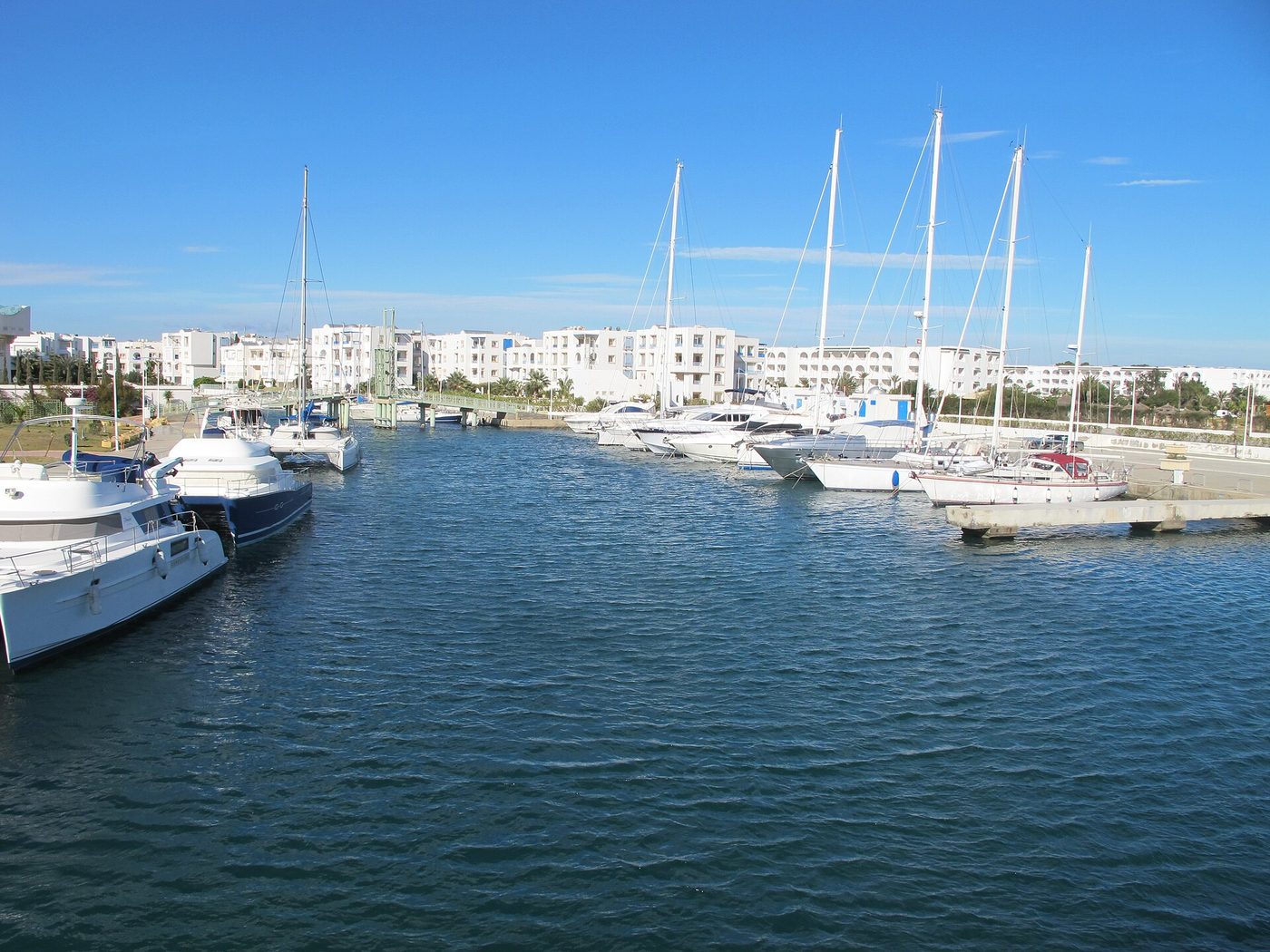
Port El Kantaoui and the Boujaafar seafront — the zones where you’ll spend most of a package holiday — are the most heavily secured places you’ll go, and statistically about as risky as an afternoon at a garden centre. Gated hotel entrances, bag checks at the bigger properties, cameras, and police visible on the beach strip and around the marina are the norm. Your realistic problems here are an over-friendly jet-ski tout, a “special price” on a boat trip, and sunburn. Walking the resort promenade and the marina in the evening is completely normal and busy; the same street sense you’d use in a Spanish resort applies.
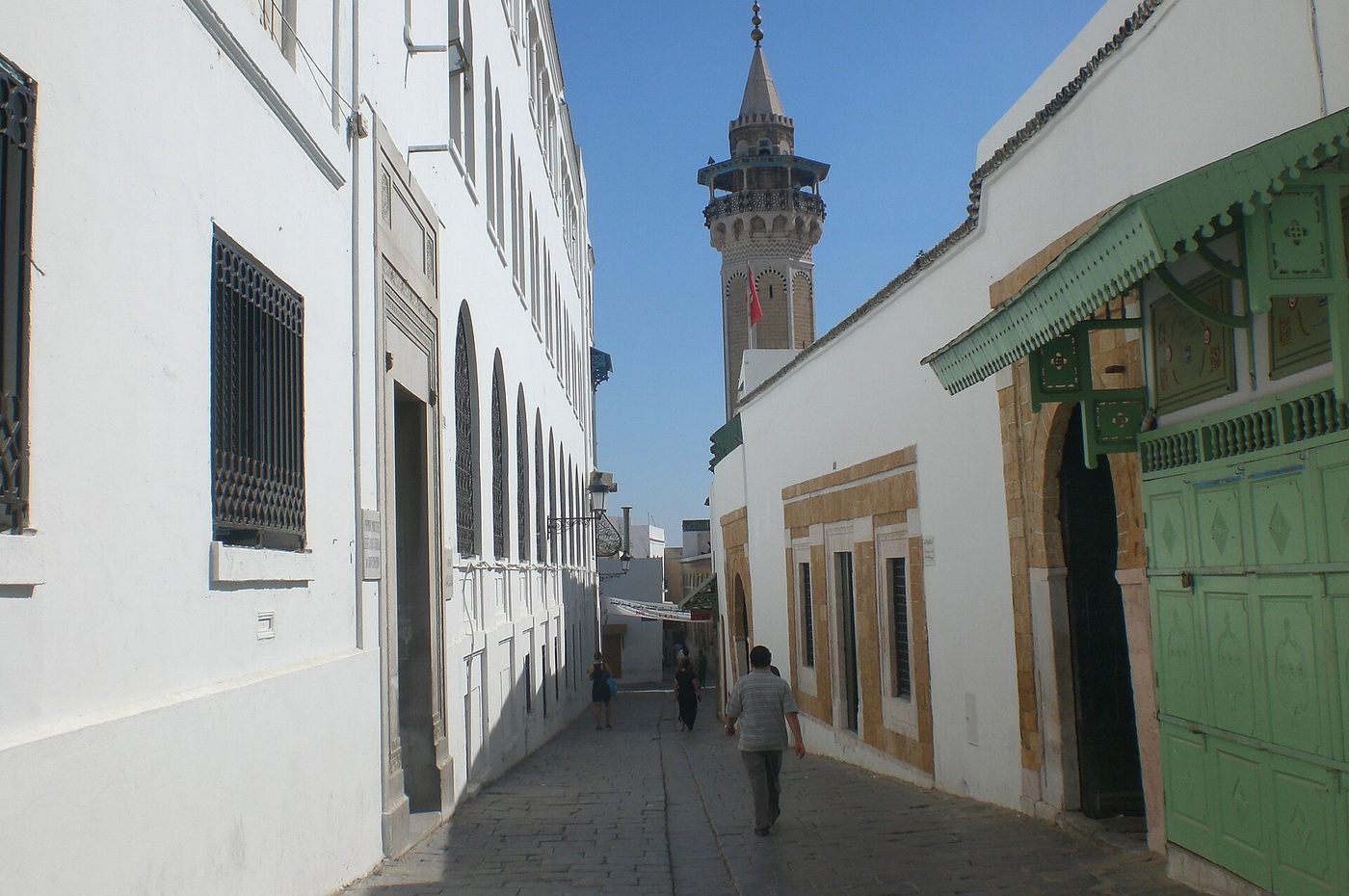
The Sousse medina and souk
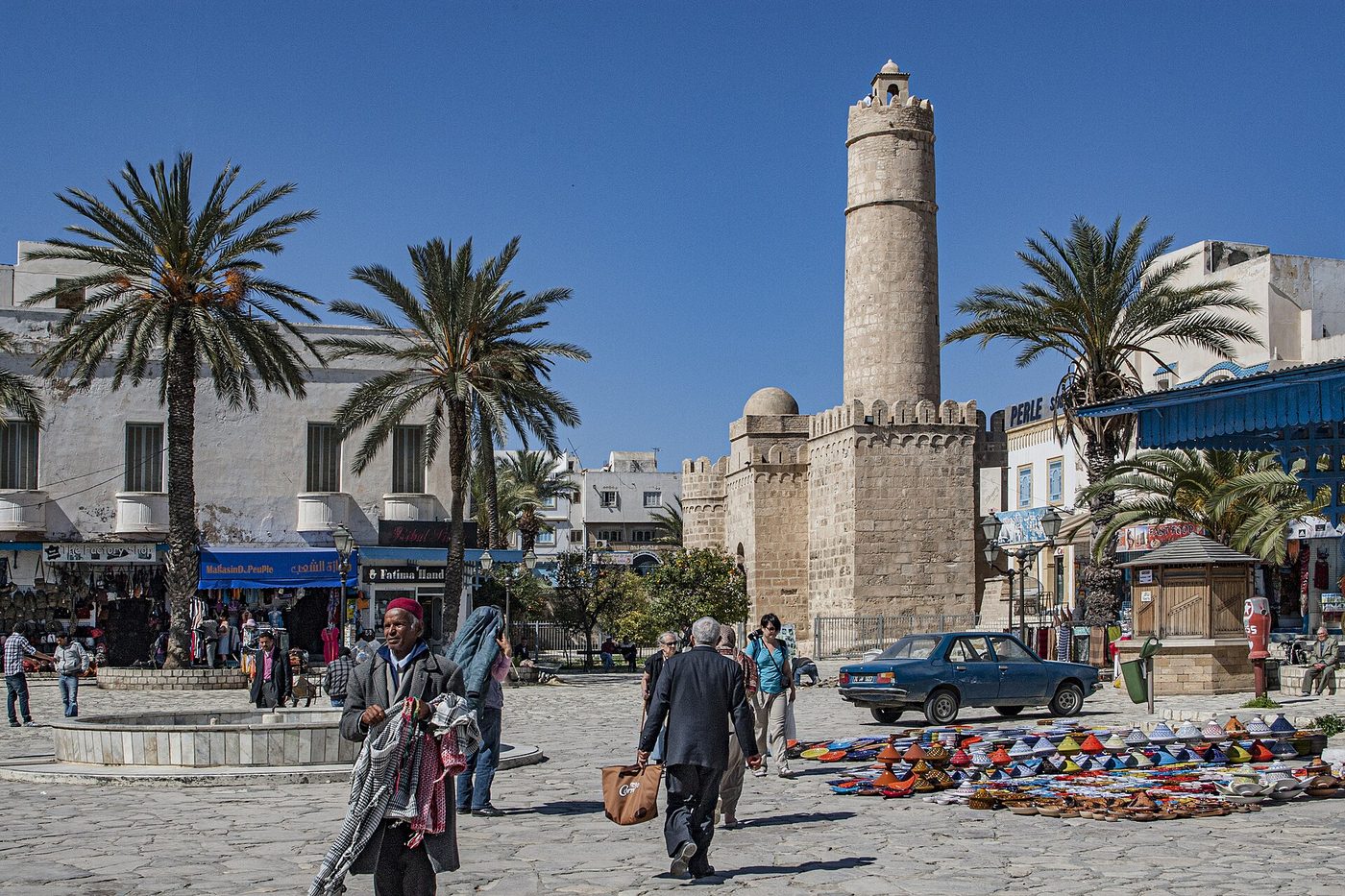
The old walled medina — a UNESCO World Heritage site, with its landmark Ribat fortress and Great Mosque — is safe to walk by day and well worth doing. It is also, in the same breath, the hassle and hard-sell capital of the trip. Expect persistent “guides” who attach themselves to you, carpet-shop invitations that are hard to refuse politely, the classic “I work at your hotel, remember me?” opener, and opening prices pitched at several times what anyone actually pays. None of it is usually threatening; it is wearing. The genuine security issue in the medina crowds is ordinary pickpocketing, so keep your phone zipped and your bag crossed in front of you. A firm, smiling “la, shukran” — no, thank you — and walking on solves the vast majority of it.
Getting around: taxis, louages and the little train
Sousse’s yellow “petit taxi” cabs are cheap and everywhere, and physically perfectly safe. The catch is financial, not personal: always ask the driver to run the meter (the compteur) or agree the fare before you set off, because tourists are routinely quoted several times the going rate, and hotel-arranged taxis in particular can cost multiples of a metered street fare. We won’t quote a fixed price because they move — but a short metered hop across town is genuinely cheap, so if a driver’s “meter is broken,” wait for the next cab. The Metro du Sahel light-rail line links Sousse with Monastir and Mahdia cheaply and reliably, and shared louages (intercity minibuses) are cheap if characterful. For the full picture on taxis, louages and the Metro du Sahel, see our transport guide.
After dark
Sousse has a genuine nightlife scene, and the marina and main seafront stay lively and well-lit into the small hours. Stick to those busy, illuminated areas — the Kantaoui marina, the Boujaafar front, the resort strips — and use a pre-booked or hotel-called taxi to get home rather than flagging one on a quiet street. The medina largely shuts and empties after dark; it isn’t menacing, it’s simply closed, so it’s not the place for a late wander. Standard resort-town sense — not too much to drink, valuables minimal, don’t walk unlit backstreets alone — covers the rest.
The everyday risks that matter more than terrorism
Here is what the fear-led articles bury and the safety-index checklists skim: rank Sousse’s risks by how likely each one is to actually spoil your holiday, and terrorism comes a long way down. This is the realistic list, roughly in order.
1. Petty theft and pickpocketing
The FCDO’s crime section opens with a line worth remembering: “The majority of visits to Tunisia are unaffected by crime. The most common crime experienced is theft.” In Sousse that means phones lifted in the medina crush, bags taken from beach loungers while people swim, and distraction tricks in the busy tourist zones. The fix is boring and effective: a crossbody bag worn in front, a phone zipped away, nothing valuable left on the sand, and passports in the hotel safe. Do that and you remove almost all of the realistic risk.
2. Scams and overcharging
The financial hassles are more common than any physical threat. The greatest hits: taxi meters that are suddenly “broken” (insist, or take another cab); souk opening prices pitched at four times value (haggling is the culture here, not a con — it’s expected, so enjoy it); the “closed today, come to my brother’s shop instead” redirect; and the carpet-shop mint-tea ritual that ends in a price like a phone number. Check your change, decide your ceiling before you start bargaining, and remember that a friendly, firm refusal is not rude here — it’s simply part of the dance.
3. Women travelling in Sousse
The honest version, because the brochure version helps nobody. Most women report Sousse warm, friendly and easy by day, and the resort zones and beaches are the gentlest part of the country to travel as a woman. The genuine caveat is verbal harassment — catcalls, persistent vendors, the self-appointed “guide” who won’t take a first no — which is tiresome rather than dangerous, and worse in the summer. The FCDO notes plainly that “reports of sexual harassment and sexual assault statistically increase in the summer months,” including “trouble in busy public places at night and quieter public parks and beaches during the daytime.” The practical calibration from women who travel here often: dress a little more modestly off-resort (shoulders and knees covered in the medina pays for itself in reduced attention; bikinis are entirely normal on hotel beaches), deliver “la, shukran” without a smile to end an exchange, sit in the back of taxis, use hotel-called cars at night, and know that Tunisian women nearby will step in on your behalf without hesitation if someone oversteps.
4. Demonstrations and strikes
Occasional, and almost never a tourist problem. Protests in Tunisia cluster in central Tunis and other city centres, tend to happen at weekends and on symbolic national dates — the FCDO specifically mentions “14 January and 17 December” — and can occasionally turn tense. Your exposure in a Sousse resort is close to nil unless you go looking. The standing advice is simple: if you come across any demonstration, leave the area and let it be, and follow any instruction from your hotel or operator.
5. Health, water and the practical stuff
A few things quietly make or break a Sousse trip on the health front. Stick to bottled water — it costs pennies and every shop sells it — and use it for brushing your teeth if your stomach is sensitive; mains water is heavily chlorinated and varies by region, and a holiday gut is not the place to experiment. “Tunisia tummy” is the country’s most common holiday ailment and it’s nearly always food-hygiene-plus-new-bacteria, not anything sinister, so be a little choosy at buffets, go for things served properly hot, and pack rehydration sachets just in case. Sousse’s summer sun is serious from May to September, so treat water, hats and shade hours as non-negotiable. Pharmacies are excellent and everywhere, and pharmacists speak enough English or French to sort the usual remedies in minutes. For the wider practical picture, our Tunisia travel tips cover the details.
6. The one people forget: the roads
Statistically, the most dangerous thing you’ll do in Tunisia involves a steering wheel, not a headline. The national road-fatality rate runs several times the UK’s, and you’ll feel why on any transfer: lane discipline is optional, overtaking is enthusiastic, and rural roads at night can feature unlit vehicles and livestock. What to actually do: choose reputable coaches and transfer firms over the cheapest option, wear a seatbelt in taxis even when the driver doesn’t, avoid driving rural roads after dark, and take the Metro du Sahel rather than a louage where you can.
7. Terrorism
Last on the list, deliberately, because that is where the honest ranking puts it. The threat is real enough that the FCDO words it carefully, and contextual enough that it applies near-identical wording to Western European countries. Against it stand the decade-old armed-security architecture described above, the state of emergency, and a long quiet stretch. Sensible behaviour is the same as anywhere in the world: know your hotel’s exits, give the security checks the thirty seconds they take, and report anything genuinely odd to the nearest officer — of whom, in Sousse, you’ll notice there are plenty.
The recovery — why millions still choose Sousse
Numbers are the most honest reassurance there is, so here they are. Tunisia welcomed more than 11 million international visitors in 2025 — a record, generating tourism revenue of roughly 2.68 billion US dollars. That came on top of 2024, which had already beaten the pre-pandemic 2019 peak with around 10.25 million arrivals. The Sousse and Port El Kantaoui coast is consistently one of the busiest resort zones in the whole country, sold heavily again by British, German and French operators alike. Put simply: a decade after the worst day in its tourism history, Sousse is not limping back — it is one of the most-visited stretches of coast in North Africa, and millions of Europeans return to these exact beaches every single year. (Sources: Travel And Tour World, 2025/26; Xinhua, January 2025.)
My honest verdict — should you book Sousse?
Yes, with your eyes open — which is the same answer we’d give for almost any mainstream Mediterranean holiday. Sousse is safe for a normal package trip taken with normal city-abroad sense. The resort strip and Port El Kantaoui are among the most secured places you’ll ever holiday; the beaches are lovely and the sea stays warm well into autumn; and the medina rewards you richly if you can shrug the hard-selling off as background noise. Your energy is far better spent on pickpocket-awareness and taxi meters than on the fear that brought you to this page.
If the memory of 2015 still sits heavily with you, that is entirely understandable, and no article can or should argue you out of a feeling. Some travellers who feel that way prefer the gentler, lower-key rhythm of quieter Hammamet up the coast, or the island calm of Djerba further south — both mainstream, both well-secured, both covered in their own safety guides. But if you want a lively, great-value resort town with a real old city attached and the reassurance of heavy, visible security, Sousse absolutely earns its place. When you’re ready to plan the good part, our full guide to things to do in Sousse and our roundup of Tunisia’s best beaches, including the Boujaafar seafront, are the places to start. From there, our advice on where to stay in Tunisia helps you pick the right resort, our wider guide to the best things to do in Tunisia maps out the day trips worth taking — and if you’re still deciding on the country as a whole, see whether Tunisia is worth visiting.
Is Sousse safe? Your questions answered
Is Sousse safe to visit in 2026?
Yes. Sousse is a mainstream package destination that millions of Europeans visit every year, and no Western government advises against travelling there. The FCDO’s restricted zones are all remote border and mountain areas, none of them near Sousse. Your realistic day-to-day risks are pickpocketing and overcharging, not terrorism, and the resort strip is heavily secured.
Is Sousse safe now, after 2015?
Yes. Sousse rebuilt its security harder than anywhere in Tunisia after the 2015 Port El Kantaoui attack: armed patrols on Boujaafar beach and the marina, screening at hotel doors, and cameras on the front, all standard for a decade now. The Foreign Office formally lifted its warning against travel to Sousse in July 2017, citing the improved protective security, and every major UK operator sells the resort again.
Is Port El Kantaoui safe now?
Yes. Port El Kantaoui, the marina and resort area about 10km north of Sousse, was the scene of the 2015 attack and is consequently one of the most heavily patrolled resort zones in the country. Gated hotels, bag checks, beach patrols and the tourist police are the everyday norm. It is busy with holidaymakers through every season, and the hotel at the centre of the tragedy reopened in 2017 under new management as the Steigenberger Hotel Kantaoui Bay.
Does the FCDO advise against travel to Sousse?
No. As of the advice marked “still current at 2 July 2026” (updated 23 February 2026), the FCDO does not advise against travel to Sousse or Port El Kantaoui. Its restricted zones are western-Tunisia and Algerian-border mountain areas (including the Chaambi Mountains and Kasserine Governorate) and southern Libyan-border areas (including Ben Guerdane and the deep south) — all far inland or on the frontiers, and none of them anywhere near the Sousse coast.
What happened to the Riu Imperial Marhaba hotel — does it still exist?
It reopened. After the 2015 attack the Riu Imperial Marhaba was refurbished and reopened in 2017 rebranded as the Steigenberger Hotel Kantaoui Bay, operated by the German Steigenberger group, with much of its original staff retained. Some travellers find the reopening and the kept jobs meaningful; others prefer to stay elsewhere. Both are entirely understandable choices.
Is Sousse safe for solo female travellers?
For the most part, yes, and many solo women report it warmer and easier than they feared, with the resort zones and beaches the gentlest part of Tunisia to travel. The honest caveat is verbal harassment, which is tiresome rather than dangerous and worse in summer — the FCDO notes harassment reports rise in the summer months. Firm refusals, more modest dress off-resort, back-seat taxis and hotel-called cars at night all help, and local women will readily intervene if someone oversteps.
Is Sousse safe at night?
The lit, busy areas — the Port El Kantaoui marina, the Boujaafar seafront and the resort strips — are fine at night with ordinary resort-town sense, and Sousse has a genuine nightlife scene there. Use a pre-booked or hotel-called taxi rather than flagging one on a quiet street, keep valuables minimal, and avoid unlit backstreets. The old medina largely closes and empties after dark, so it’s not the place for a late wander — not because it’s dangerous, simply because it’s shut.
Is the Sousse medina safe, or are the scams bad?
It’s safe to walk by day and well worth seeing, but it is the hassle and hard-sell centre of the trip. Expect persistent faux-guides, carpet-shop pressure, the “I work at your hotel” opener and opening prices several times over the odds — wearing rather than threatening. The one real security issue is pickpocketing in the crowds, so keep your phone and bag secure. A firm, friendly “la, shukran” and walking on handles the rest.
Are the taxis in Sousse safe, and why are hotel taxis so much dearer?
Physically they’re safe; the issue is the fare. Always ask for the meter (the compteur) or agree a price before you set off, because tourists are frequently overcharged. Hotel-arranged taxis cost more because they remove the negotiation and add a mark-up — convenient, but a metered street cab is much cheaper for the same trip. If a driver claims the meter is broken, wait for the next one.
Is Sousse safe for families with kids?
Yes — the Sousse coast was built around family package holidays, with shallow beaches, kids’ clubs, waterparks and a culture that adores children. The everyday cautions are practical rather than security-related: watch the strong summer sun, respect the beach-flag system, keep an eye on children around the pool and sea, and pack the usual medicines so you’re not hunting a pharmacy at midnight (though a good one will be close by).
Do I need travel insurance for Tunisia, and does the FCDO advice affect it?
Yes, emphatically. Your UK GHIC is not valid in Tunisia, public hospitals expect foreign nationals to pay, and serious treatment means a private clinic wanting payment up front — so comprehensive travel and medical insurance is essential. The FCDO warns that travelling against its advice can invalidate a policy, but since Sousse is not against its advice, standard cover applies here normally. Just make sure your policy covers activities like quad bikes, jet skis and camel rides, which are common exclusions.
How has security changed in Sousse since 2015?
Dramatically and visibly. From July 2015 around a thousand armed tourist-security officers were deployed along the coast and in hotels, and resorts added perimeter gates, vehicle checks, scanners and CCTV; armed patrols — sometimes on quad bikes — began working the beaches, and airport screening tightened. A state of emergency has been in force ever since. The Foreign Office judged these changes sufficient to lift its travel warning in July 2017, and the measures remain the everyday backdrop of a Sousse holiday.
Written by the Tunisia Tourism Guide team — an independent, UK-focused guide to travelling in Tunisia. We don’t sell tours or take hotel commissions. We re-check the FCDO advisory, the incident record and the visitor numbers whenever the government updates its page, and the date stamp at the top tells you when that last happened. Before you book and again before you fly, check the
More in Safety
All in this collection →Explore Tunisia
4 collections
One response to “Is Sousse Safe? What UK Visitors Should Know”
[…] Safety. Monastir is a calm, low-hassle town well inside Tunisia’s normal tourist areas. Take the usual sensible precautions; for the current picture, see our guide on whether Sousse and the Sahel are safe. […]