Blog

  • Is Hammamet Safe?

    Is Hammamet Safe?

    By the Tunisia Tourism Guide team · Last fact-checked 2 July 2026 · FCDO advice last updated 23 February 2026, re-checked word for word 2 July 2026 (unchanged) · We don’t sell tours or take hotel commissions — this is independent advice, and we review it whenever a government advisory changes.

    You’ve found a Hammamet deal that looks almost too good, you’re half-booked, and then you make the mistake of googling “is Hammamet safe” at eleven at night. Up comes a “safety index” score you can’t interpret, a wall of twelve scams, and a decade-old news clip. So here is the straight answer before anything else.

    Yes — Hammamet is one of Tunisia’s safest resort areas, and among the safest places most UK holidaymakers will ever go. It’s a purpose-built resort zone on the Cap Bon peninsula, heavily touristed and heavily policed, sitting hundreds of miles from any area the UK Foreign Office restricts. The things that’ll actually test your patience here are minor — pushy vendors, a haggle in the medina, a taxi driver whose meter has mysteriously broken — and they’re irritations, not dangers. This guide gives you the honest detail behind that yes.

    We’ll quote the FCDO word for word and date-stamp it, split Hammamet into the two very different places it actually is (the polished Yasmine marina versus the old town), and walk you through beaches, taxis, night walks, the scams by name, women travelling solo, day trips and the health basics. It’s the Hammamet chapter of our wider guide to whether Tunisia is safe, so if you want the full national picture, that’s where to go next.

    Is Hammamet safe? The 30-second verdict

    If you read one thing, read this. It’s the summary we’d give a friend at the departure gate.

    Question The short answer (July 2026)
    Overall Very safe for tourists. A mainstream, purpose-built resort zone millions holiday in every year
    UK government position No advisory against travel to Hammamet, Yasmine Hammamet, Nabeul or anywhere on Cap Bon. Restricted zones are all far away — quoted in full below
    Nearest restricted area Hundreds of miles away, on the western Algerian border and the far south by Libya — the opposite corner of the country
    Biggest real risk The roads, statistically, then petty theft and overcharging. Not violence, not terrorism
    Main annoyance Touts and haggling in the old medina; the odd “broken” taxi meter. Wearing, not threatening
    Yasmine vs old town Yasmine Hammamet is gated, polished and low-hassle; the old town is charming but touty. Both are safe
    Solo women Resort zones relaxed; catcalling possible outside them, tiresome not dangerous. Manageable with firm refusals
    Insurance Essential. Your GHIC is not valid in Tunisia, so travel insurance with medical cover is a must
    Emergency numbers Ambulance 190 · Police 197 · Fire 198 · National Guard (rural) 193

    Bottom line: Hammamet is about as risky as a large, sunny garden centre with a beach attached. Take the same sense you’d take to any Mediterranean resort, keep a hand on your phone in a crowd, and the rest is holiday. Here’s the honest detail.

    The historic kasbah at Hammamet, with the Tunisian flag flying over the ramparts and the town beyond, on the Cap Bon coast

    What the FCDO says — and why Hammamet is nowhere near the risk zones

    Most safety pages paraphrase the Foreign, Commonwealth and Development Office until the meaning turns to mush. Here’s the real thing, from gov.uk’s Tunisia travel advice, last updated 23 February 2026 and re-checked by us, word for word, on 2 July 2026 (unchanged).

    The headline reads: “FCDO advises against all travel to parts of Tunisia” — the operative words being parts of. Two lists follow, and Hammamet is on neither.

    Where the FCDO advises against ALL travel

    In western Tunisia, along the Algerian border: “the Chaambi Mountains National Park and the designated military operations zones: Mount Salloum, Mount Sammamma, Mount Mghila” — due to, in its words, “cross-border terrorist activity and operations by the Tunisian security forces.” And in the south, along the Libyan border: “the militarised zone south of the towns of El Borma and Dhehiba; within 20km of the rest of the Tunisia-Libya border area north of Dhehiba; the town of Ben Guerdane and immediate surrounding area.”

    Where it advises against all but essential travel

    Quoting again: “areas north and west of the town of Ghardimaou in Jendouba Governorate, including El Feidja National Park; within 20km of the Tunisia-Algeria border in El Kef and Jendouba governorates, south of the town of Jendouba; Kasserine Governorate, including the town of Sbeitla; within 10km of the rest of the Tunisia-Algeria border south of Kasserine Governorate; within 10km of Mount Mghila; Mount Orbata”; and in the south, “within 75km of the Tunisia-Libya border, including Remada and El Borma but excluding Zarzis, the C118 road and all areas in Medenine Governorate north of the road.”

    Now look at a map. Every one of those places is a border strip or an inland mountain range in the far west or the deep south. Hammamet sits on the Cap Bon peninsula, on the north-east coast, roughly 60km south-east of Tunis — about as far from those zones as it’s possible to be while staying in the country. The nearest restricted area, Kasserine Governorate, is several hours’ drive inland through territory no beach excursion goes anywhere near. Hammamet, Yasmine Hammamet, the wider Cap Bon coast and the market town of Nabeul next door carry no FCDO advisory against travel of any kind. If a page has told you otherwise, it’s reading an out-of-date map.

    Two more FCDO lines worth quoting precisely. On terrorism, the advice says: “Terrorists are likely to try to carry out attacks in Tunisia” — wording it also applies, incidentally, to France and Spain — and it notes that “a formal state of emergency has been in place since a terrorist attack against a police bus took place in 2015.” We’ll deal with the terrorism question honestly in a moment, because it’s the one under all the others. But the geography is the headline: on the security map, Hammamet is in the calmest corner of a country whose troubles sit at the far edges. Our full, date-stamped guide to whether Tunisia is safe puts the whole national picture in context.

    What about 2015? The honest context

    You can’t write honestly about Tunisian resort safety without 2015, so let’s do it properly rather than hiding behind “past incidents.” The FCDO records it plainly: “in June 2015, 38 foreign tourists were killed, including 30 British nationals, in a terrorist attack at Port El Kantaoui near Sousse”, and earlier that year, “in March 2015, 21 tourists were killed, including a British national, in a terrorist attack at the Bardo Museum in the centre of Tunis.” Anyone old enough to have watched the news that summer remembers it, and plenty of people googling “is Hammamet safe” are really asking about that day.

    Two things you deserve to know. First, the geography: the beach attack was at Port El Kantaoui, near Sousse — roughly 90 minutes down the coast from Hammamet, not in it — and the museum attack was in central Tunis. Second, what changed. Since 2015 Tunisia rebuilt its tourist security from the ground up: a thousand armed tourist-security officers deployed along the coast and inside hotels, perimeter gates and vehicle checks became standard, scanners appeared at airports and big sites, and armed patrols — sometimes on quad bikes — began working the resort beaches. The UK Foreign Office formally lifted its advice against travel to the coast in July 2017, TUI and the other big operators returned, and the recovery has compounded every year since: more than 11 million people holidayed in Tunisia in 2025, an all-time record, with no terrorist incident affecting tourists since May 2023. None of that erases what happened. It’s simply the honest other half of the story, and it’s why the resorts you’d book today, Hammamet chief among them, run behind a decade-old wall of visible security.

    Is Yasmine Hammamet safe? And how it differs from the old town

    Here’s the thing nobody else spells out clearly, and it’s the single most useful thing to understand before you go. “Hammamet” is really two places with two different characters, and which one you stay in shapes your whole trip. Both are safe. They just feel different.

    Yasmine Hammamet — the polished, low-hassle option

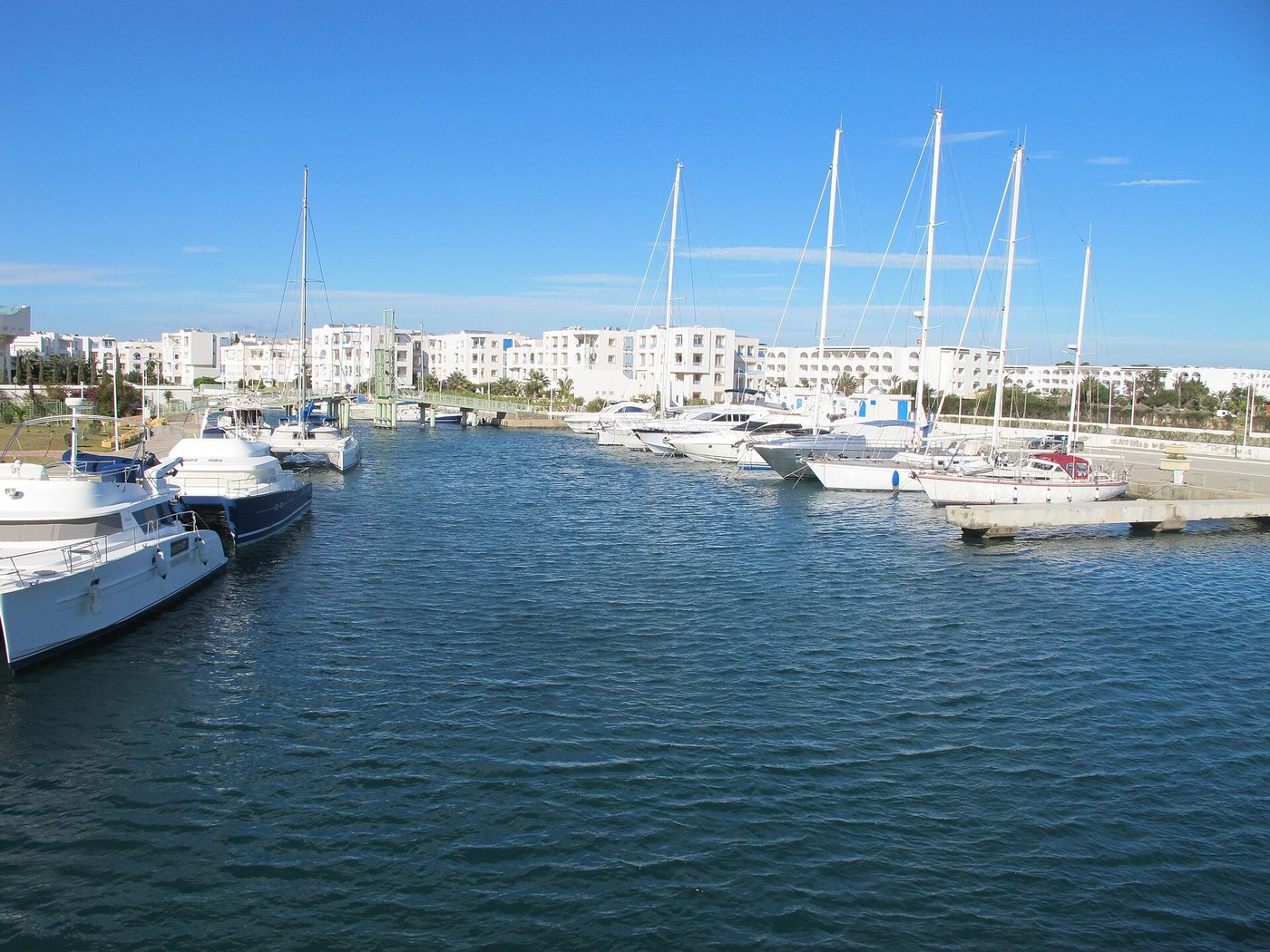
    Yasmine Hammamet is the newer, purpose-built resort zone a few kilometres south of the old town, and it’s where most UK package hotels sit. Think gated hotel compounds, a smart marina full of yachts and pirate-ship excursion boats, a medina-themed shopping-and-entertainment complex, and wide, clean promenades. Police are visible but relaxed, bag checks happen at the bigger hotel entrances, and the whole zone is built around keeping tourists comfortable. If you’re a first-timer, travelling with children, or simply want the lowest-friction version of Hammamet, this is it — the hassle level here is genuinely low, and evenings around the marina are busy and easy. Our full Hammamet guide covers what there actually is to do in the resort.

    Yachts moored at the purpose-built marina in Yasmine Hammamet, the resort zone popular with British holidaymakers

    Hammamet Centre and the old medina — charming, but this is where the hassle lives

    The old town, a few kilometres north, is where Hammamet keeps its soul: a compact walled medina, a photogenic kasbah rising straight out of the sea, whitewashed lanes and a working souk. It’s lovely, entirely walkable, and safe to explore by day. But be honest with yourself about what it is — a place that makes a living from tourists — because this is where the touts, the carpet-shop invitations and the five-to-ten-times mark-ups concentrate. None of it is dangerous. It’s just the part of Hammamet where you’ll need your polite-but-firm “no” most often. Plenty of people love the old town precisely because it has more character than the marina; just go in knowing you’re on the vendors’ turf.

    So which should you stay in?

    If you want easy, gated and family-friendly, base yourself in Yasmine Hammamet. If you want character and don’t mind brushing off a sales pitch, the old town and the strip between the two suit you better. Many people do both — sleep in Yasmine, wander the old medina by day. Our guide to where to stay in Tunisia helps you choose the right base for the trip you actually want.

    Crime and scams: the honest day-to-day

    Time for the part the fear-led articles bury and the scared-straight articles overdo. The FCDO’s crime section opens with a sentence worth framing: “The majority of visits to Tunisia are unaffected by crime. The most common crime experienced is theft.” That’s the calibration. Almost nothing here is about your safety; nearly all of it is about your wallet and your patience. Here’s the realistic list, most common first.

    Petty theft and bag-snatching

    Phones lifted in a medina crush, a bag left on a beach lounger while you swim, the occasional moped rider snatching a bag from a shoulder — the FCDO specifically flags bag-snatching by people on mopeds in Tunisia’s tourist areas. Standard discipline defeats nearly all of it: a crossbody bag worn to the front, phone zipped away in crowds, nothing valuable on the sand while you’re in the water, passports in the hotel safe, and cash drawn from ATMs inside a bank rather than a quiet street machine. Do that and you’ve closed off the commonest problem in Hammamet before it starts.

    The medina and souk — haggling and mark-ups

    In the old medina, opening prices are often pitched at five to ten times what a thing is worth — not a con so much as the local sport, but a shock if you’re not ready for it. Haggling is expected: counter at roughly a fifth to a quarter of the first quote and work up from there, and remember you are never, ever obliged to buy, however much tea you’ve been poured. Walking away is a perfectly normal move and often improves the price on your way out the door. Be a little wary of “handmade” and “genuine” craft that’s neither; if it matters, buy from a fixed-price government artisan shop.

    Touts and the “I’m a waiter from your hotel” trick

    A classic Hammamet opener is a warm “Hello! Do you remember me? I’m a waiter from your hotel!” — from someone who is not, in fact, a waiter from your hotel. The move is designed to build false familiarity and steer you to a shop where he earns commission, and some read your hotel wristband to name the property and sound convincing. The counter is simple: tuck your wristband out of sight, and meet the whole thing with a friendly, firm “no thank you” before walking on. It’s rarely more than a minor pester, and once you’ve done it a few times it fades into background noise.

    The jasmine-seller move

    Hammamet’s emblem is jasmine, and sellers will sometimes drape a sprig on you, tuck one behind an ear or press it into a child’s hand “as a gift” — then ask for money, sometimes firmly. It targets women and families most. No drama needed: hand it straight back with a smile and a “no thank you,” and don’t accept it onto your person in the first place if you can help it.

    Restaurant and menu tricks

    In the touristy stretches, watch for menus priced in euros rather than dinar (always confirm the currency), for bread, olives and harissa arriving “free” then appearing on the bill, and for the total not quite matching what you ordered. None of it is universal — most places are straight — but glance at the bill before you pay, agree prices for anything not clearly listed, and you’ll head it off.

    Bezness — the romance long game

    One you may not have heard named. In some resorts, a minority of young locals pursue relationships with visitors “either to enrich themselves or to come to” a Western country, as Canada’s official advisory bluntly puts it — it’s common enough across North African resorts to have earned a local name, bezness. It can move from holiday romance to requests for money, gifts, visa sponsorship or marriage with practised speed. Nobody’s policing who you fall for on holiday; just know the pattern exists, be a little sceptical of fast-moving devotion from staff or beach acquaintances, and never send money once you’ve flown home.

    Taxis and getting around safely

    Physically, taxis in Hammamet are fine. Financially, they’re where tourists most often get gently fleeced, so this is the section to actually remember.

    The rule is simple: insist on the meter — the “compteur” — or agree a price before you get in. Yellow metered taxis are everywhere and cheap; the meter starts low and short hops cost very little. The scam, such as it is, is the “broken” meter followed by a tourist price several times the real one. If the meter’s “broken,” either agree a firm price first or wave the taxi on and take the next — there’s always another.

    On the specific journeys people ask about, with every figure hedged because these things move and drivers vary:

    • Hammamet centre to Yasmine Hammamet is a short hop that should cost only a few dinars on the meter. Expect to pay more if you take a hotel-arranged car, and note there’s a legitimate night surcharge (commonly around 50%) after roughly 9pm — that one’s real, not a scam. Always confirm the current fare with your hotel desk.
    • From the airport. Most UK packages land at Enfidha (about 40–45 minutes away) with the transfer already included — the easy option. If you arrive independently at Tunis-Carthage (around 65km, roughly an hour), the meter should come to somewhere in the region of 70–90 dinars, but touts routinely quote 150–200, blaming a “broken meter” or a “toll surcharge.” Agree the meter or a fixed price before you load your bags. Treat these numbers as ballpark and check the current rate.

    If you’re hiring a car, know that the FCDO says plainly “driving standards can be low,” and that’s not snobbery — lane discipline is loose, overtaking is enthusiastic, and rural roads at night can hide unlit vehicles, livestock and sand. You’ll need a 1968 international driving permit alongside your UK licence and a green card from your insurer. Avoid driving rural roads after dark, and approach the routine police and military checkpoints slowly with your documents ready — they’re standard, not sinister. For the full picture, see our guide to getting around Tunisia.

    Is Hammamet safe to walk around at night?

    In the busy zones, yes. The Yasmine marina and the main resort strip are lively and well-lit into the evening, and walking them after dinner is completely normal — the same street sense you’d use in any Spanish resort applies here. What to skip: empty residential back-streets away from the tourist areas, and dark, unlit stretches of beach late at night. If you’re coming back from somewhere quiet or it’s a long walk in the dark, take a licensed taxi rather than trek it. And apply the usual bar-and-club awareness — keep an eye on your drink, don’t wander off alone with people you’ve just met. None of this is Hammamet-specific; it’s just sense.

    Beaches, pools and water safety

    The beaches are a genuine draw — long, sandy and, in the resort zones, cleaner and calmer than Tunisia’s reputation suggests. Hotel beaches are monitored and the public stretches are busy and generally supervised in season. The real water risks are the ordinary ones. The FCDO notes that “some beaches have a flag system” and advises you to “make sure you understand the system and follow any warnings” — red means out, even when the sea looks perfectly inviting. Lifeguard cover varies by hotel and stretch, so watch children closely, especially where there’s no lifeguard on duty. If you’re taking a jet ski or a water-sports ride, use a visibly reputable operator, check the equipment, and don’t let anyone talk you into something beyond your confidence. Our roundup of Tunisia’s beaches has more on the coast.

    A calm, sandy beach at Hammamet, Tunisia, with swimmers in clear shallow water and the whitewashed town behind

    Excursions: quad bikes, buggies and day trips

    Two very different excursion risks are worth flagging, because nobody else seems to.

    Quad bikes and buggies

    Quad-bike and buggy trips are among Hammamet’s most-sold excursions, and they’re where a genuinely avoidable injury risk lives. The FCDO’s wording is worth heeding: “Quad bikes are popular in desert resorts. Take the same precautions as you would in the UK. Safety standards can vary considerably. Always wear a crash helmet.” In practice: book through your hotel rep or a clearly reputable operator, insist on a helmet and confirm the gear’s actually provided before you pay (some budget outfits hand you nothing), don’t let a guide goad you into going fast, and make sure your travel insurance covers quad bikes — they’re a classic exclusion, as are jet skis and camel rides. Ride sensibly and it’s good fun; treat it as a race and it’s the likeliest way to spoil your holiday.

    Day trips from Hammamet

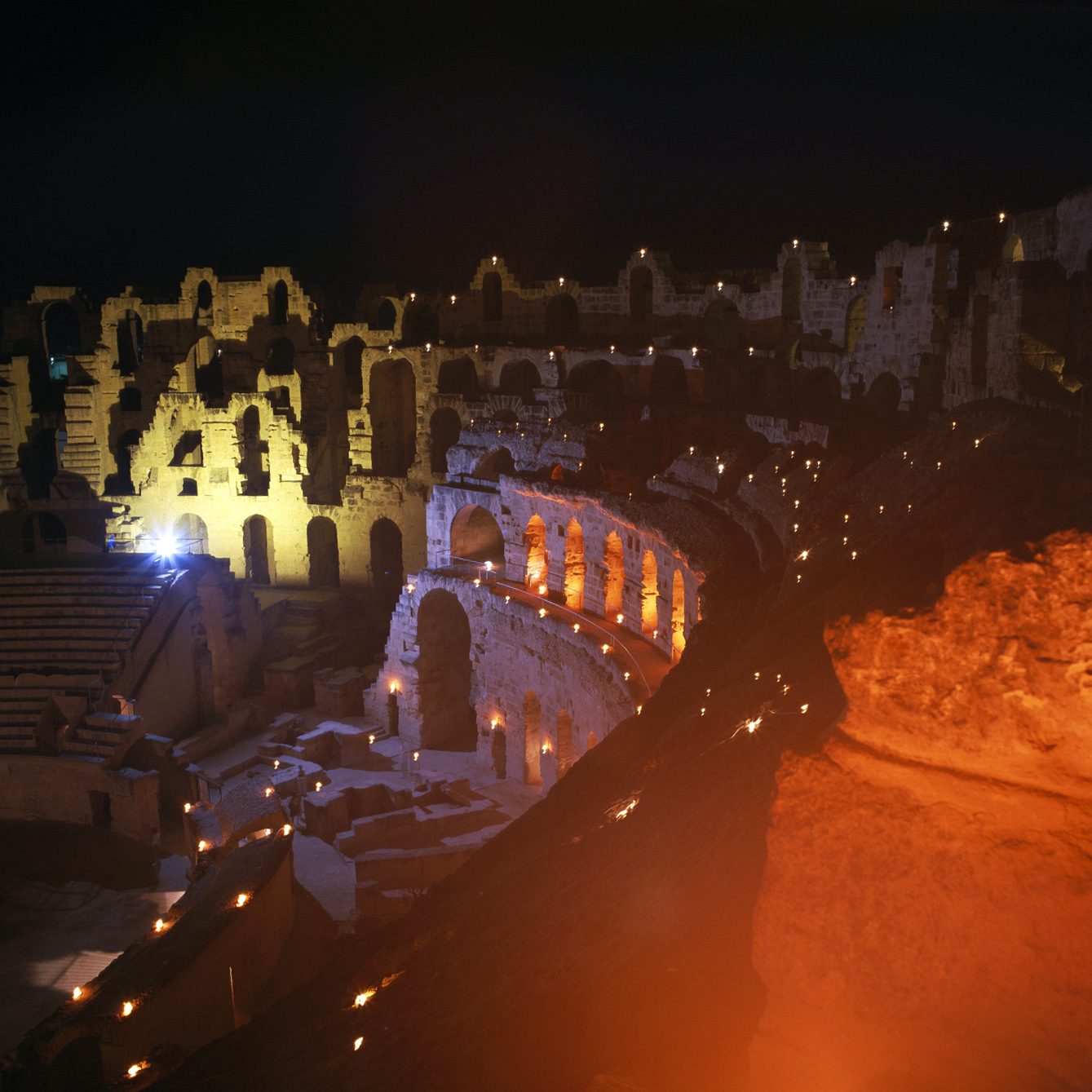
    The good news for day-trippers: everything you’d realistically visit from Hammamet is well outside the restricted zones and safe with a reputable operator. The market at Nabeul next door, the capital and its suburbs — Tunis, Carthage, blue-and-white Sidi Bou Saïd — the vast Roman amphitheatre at El Djem and the holy city of Kairouan are all comfortably in bounds. You’ll pass routine police and military checkpoints on the Tunis road, and you may see soldiers checking vehicles; that’s the visible edge of the post-2015 security, not a sign of danger. Book through your rep or a trusted operator rather than a stranger on the beach, and see our guides to the best Tunisia excursions and the Roman ruins worth the drive.

    Is Hammamet safe for solo female travellers?

    The honest version, because the brochure version helps nobody. Most solo women report warm, often protective hospitality in Hammamet — and, outside the resort bubble, a level of verbal attention that ranges from tedious to genuinely wearing: catcalls, persistent vendors, the self-appointed “guide” who won’t take a first no. It’s an annoyance far more than a danger, but you deserve to know it’s there. The FCDO notes that “reports of sexual harassment and sexual assault statistically increase in the summer months”, with “trouble in busy public places at night and quieter public parks and beaches during the daytime” — so calibrate accordingly.

    What works, from women who travel here often: the resort zones and the marina are easy and relaxed; dress a little more covered once you’re off the hotel beach and into the medina (shoulders and knees, and it reads as respect and buys you calmer streets — bikinis are entirely normal on the beach itself); a confident, unsmiling “la, shukran” — no, thank you — ends most exchanges; sunglasses and simply not engaging work wonders; sit in the back of taxis and use hotel-called cars at night; and be aware of the bezness pattern above. Reassuringly, Tunisian women around you will step in without hesitation if someone genuinely oversteps. Our Tunisia travel tips go deeper on solo and first-timer practicalities.

    Is Hammamet safe for families?

    It’s one of the best places in Tunisia to bring children, and the resort machine was built with families in mind. Yasmine Hammamet in particular gives you gated hotels, a calm marina, shallow supervised beaches, kids’ clubs and a culture that genuinely adores children — expect yours to be fussed over and fed. The family-specific things to watch aren’t about crime at all: the sun (it’s fierce from late spring to early autumn — shade hours, hats, high-factor cream), the beach and pool flag system, and the classic first-few-days tummy bug (bottled water, sensible buffet choices). Pack the usual children’s medicines so you’re not hunting a pharmacy at midnight — though there’ll be a good one nearby if you are.

    Health, water and insurance

    Start with the one that catches people out: your GHIC (or old EHIC) is not valid in Tunisia. It isn’t an EU country and there’s no reciprocal healthcare deal, so public hospitals expect foreign nationals to pay, and anything serious means a private clinic that wants a card or cash before treatment — with repatriation, if it ever comes to that, running well into five figures. Comprehensive travel insurance with medical cover and repatriation isn’t optional here; it’s the price of the trip. Check it covers the activities you’ll actually do — quad bikes, jet skis and camel rides are the usual exclusions — and remember the FCDO’s warning that travelling into a restricted zone can invalidate your policy entirely.

    For the everyday health stuff, the sensible source is the NHS-linked TravelHealthPro Tunisia page (Tunisia is country 226), which sets out the standard vaccine and food-and-water advice — check it before you travel, as guidance changes. The practical version: stick to bottled water (it costs pennies), use it for brushing your teeth if you’re cautious, skip ice from anywhere that looks iffy, and be sensible at buffets — go for things served properly hot and freshly cooked. “Tunisia tummy” is the country’s most common holiday complaint, nearly always food-and-water hygiene rather than anything sinister, so pack rehydration sachets just in case. Pharmacies are excellent and everywhere, and pharmacists usually speak enough English or French to sort you out fast. Two more: the sun and heat (35°C-plus in high summer) are a bigger real risk than any crime, so pace yourself; and Tunisia is a rabies-risk country, so don’t approach or pet stray dogs or cats, however friendly they look.

    Alcohol, dress and local etiquette

    You can drink in Hammamet without a second thought. Resort hotels and licensed bars serve beer (the local lager is Celtia), wine and spirits, and a poolside drink is entirely normal. The FCDO’s own note is useful here: “The sale of alcohol is permitted in Tunisia but is banned from sale in supermarkets on Fridays. You can still order and drink alcohol in hotels and bars. During Ramadan, sale of alcohol is banned” — but crucially, “these rules do not apply at holiday resorts.” So your resort keeps serving through Ramadan and Fridays; it’s only supermarket shelves that go dry. If you’re driving, note the drink-drive limit is stricter than the UK’s — just don’t.

    On dress and etiquette, the FCDO puts it neatly: “Beach-appropriate clothing in holiday resorts is acceptable, however when visiting religious sites or remote areas of the country, local custom is to dress modestly.” In other words, beachwear on the beach, a bit more cover in the medina and at mosques. One legal-practical note the FCDO also makes: “As a foreign national, you must carry ID, such as a copy of the photo page of your passport” — so keep a photocopy on you and the original in the safe.

    A quick safety checklist for Hammamet

    • Insist on the taxi meter (the compteur) or agree the fare first; wave on any “broken” meter.
    • Tuck your hotel wristband away in town — it’s the tell touts read.
    • Crossbody bag to the front in the medina; phone zipped; nothing valuable on the sand while you swim.
    • Haggle from about a fifth of the first price and never feel obliged to buy.
    • Hand jasmine straight back unless you fancy paying for it.
    • Follow the beach flags — red means out — and watch children in the water.
    • Wear a helmet on quad/buggy trips and check your insurance covers them.
    • Stick to bottled water and pack rehydration sachets.
    • Get proper travel insurance with medical cover — your GHIC won’t work here.
    • Carry a passport photocopy and keep the original in the hotel safe.
    • Emergency numbers: ambulance 190, police 197, fire 198, National Guard 193 — but in a resort, your hotel front desk is usually the fastest first call.

    So, should you go to Hammamet?

    Yes — with your eyes open, but genuinely relaxed. Hammamet is a purpose-built, heavily policed resort zone in the safest corner of a country whose troubles sit hundreds of miles away at its edges, quoted exactly above so you can check them yourself. The honest downsides are the touts, the haggling and the occasional creative taxi fare — irritations you can manage with a firm smile and a bit of preparation, not dangers that should keep you home. Millions holiday here every year, the vast majority without a moment’s trouble. Sort your insurance, keep a hand on your phone in a crowd, respect the sun and the souk prices, and spend the worry you’ve been spending on this question planning the good part instead.

    Ready to plan? See how Djerba compares on safety if you’re weighing up islands, dig into our full Hammamet guide for what to do once you’re there, and decide whether the country as a whole is your kind of trip with is Tunisia worth visiting.

    Is Hammamet safe? Your questions answered

    Is Hammamet safe for British tourists right now?

    Yes. As of 2 July 2026, the FCDO has no advisory against travel to Hammamet, Yasmine Hammamet or anywhere on Cap Bon — its restricted zones are all on the far western and southern borders, hundreds of miles away. Hammamet is a mainstream UK package resort with a decade of post-2015 security, and hundreds of thousands of Britons holiday in Tunisia every year. Take normal resort precautions and you’ll be fine.

    Is Yasmine Hammamet safe, and how is it different from Hammamet town?

    Yasmine Hammamet is the purpose-built resort zone south of the old town: gated hotels, a marina, themed shopping, visible police, low hassle — ideal for families and first-timers. Hammamet town, a few kilometres north, has the historic medina and kasbah; it’s just as safe but this is where the touts and mark-ups concentrate. Both are safe; Yasmine is the more polished, lower-friction option.

    Is Hammamet safe to walk around at night?

    In the busy areas, yes. The Yasmine marina and the main resort strip are well-lit and lively into the evening, and walking them after dinner is normal. Stick to lit main roads, skip empty residential back-streets and dark beach stretches late at night, and take a licensed taxi back if it’s a long walk in the dark. Apply the same street sense you would at any Mediterranean resort.

    Is Hammamet safe for solo female travellers?

    Broadly yes, with one honest caveat: verbal harassment. Resort zones and the marina are relaxed, but outside them you may meet catcalling and persistent attention — wearing rather than dangerous, and worse in summer. Dress a little more covered off the beach, use a firm unsmiling “no,” sit in the back of taxis and use hotel-called cars at night. Most solo women find Hammamet easier and warmer than they feared.

    How safe are the beaches in Hammamet?

    Very. The resort-zone beaches are clean, busy and monitored, and Hammamet’s sea is among the calmer, sandier stretches of the Tunisian coast. Follow the flag system — red means don’t swim, even when the sea looks fine — watch children closely where there’s no lifeguard, keep valuables off the sand while you swim, and use a reputable operator for jet skis and water sports. The main risks are ordinary water-safety ones, not crime.

    Are taxis safe in Hammamet, and how much should they cost?

    Physically safe; financially, insist on the meter (the compteur) or agree a price first, because the “broken meter” overcharge is the main taxi scam. Hammamet centre to Yasmine is a short hop of only a few dinars on the meter (more via a hotel car, plus a legitimate night surcharge after about 9pm). From Tunis-Carthage airport (around 65km) the meter should be roughly 70–90 dinars, though touts quote far more — agree the fare first. Treat all figures as approximate and confirm current rates.

    Is the Hammamet medina safe, and how do I handle the touts and haggling?

    The medina is safe to explore by day; the challenge is commercial, not criminal. Expect opening prices five to ten times the real value — counter at about a fifth to a quarter and work up, and never feel obliged to buy. For touts, tuck your hotel wristband out of sight and use a friendly but firm “no thank you” before walking on. The “I’m a waiter from your hotel” line is a commission-hunting opener, not a real waiter.

    What is the jasmine scam, and the “waiter from your hotel” trick?

    The jasmine move: a seller drapes or hands you a sprig of jasmine “as a gift,” then asks for money — hand it straight back and don’t accept it in the first place. The “waiter” trick: someone greets you like an old friend, claims to work at your hotel (sometimes reading your wristband to name it), then steers you to a shop for commission. Both are harmless pesters, not dangers; a polite firm refusal ends them.

    Is it safe to do a quad bike or buggy excursion in Hammamet?

    Yes, if you’re sensible. The FCDO warns that quad-bike safety standards “can vary considerably” and to “always wear a crash helmet.” Book through your hotel rep or a reputable operator, insist on a helmet and confirm the gear is provided before paying, don’t be goaded into going fast, and check your travel insurance covers quad bikes — they’re a common exclusion. Ridden carefully it’s good fun; the real risk is a fall, not crime.

    Was Hammamet affected by the 2015 Tunisia attacks, and is there still a threat?

    No, Hammamet was not attacked. The 2015 beach attack was at Port El Kantaoui near Sousse, about 90 minutes down the coast, and the museum attack was in Tunis. Since then Tunisia has rebuilt resort security with armed tourist police, hotel screening and beach patrols, and there’s been no terrorist incident affecting tourists since May 2023. The FCDO notes a general threat nationally, as it does for France and Spain, but resort areas like Hammamet are heavily protected.

    Can I drink the tap water in Hammamet, and do I need travel insurance?

    Stick to bottled water — it costs pennies, and the first-few-days tummy bug is the commonest Tunisia complaint. Use bottled for brushing teeth if you’re cautious and be sensible at buffets. On insurance: it’s essential, because your GHIC is not valid in Tunisia and serious care means paying a private clinic up front. Get comprehensive medical cover with repatriation, and make sure it includes activities like quad bikes and jet skis. Check current health advice on NHS TravelHealthPro (country 226).

    Is it safe to do day trips from Hammamet to Nabeul, Tunis or Carthage?

    Yes. Nabeul, Tunis, Carthage, Sidi Bou Saïd, El Djem and Kairouan are all well outside the FCDO’s restricted zones and safe with a reputable operator. You’ll pass routine police and military checkpoints on the Tunis road — standard post-2015 security, not a warning sign. Book through your rep or a trusted excursion company rather than a stranger on the beach, and apply normal city sense with your phone and bag in busy medinas.


    Written by the Tunisia Tourism Guide team — an independent, UK-focused guide to travelling in Tunisia. We don’t sell tours or take hotel commissions. Safety information was checked against FCDO and NHS/TravelHealthPro guidance at publication; advisories change, so always check the FCDO’s Tunisia page yourself before you book and again before you fly.

    Photo credits

    All images via Wikimedia Commons, used with thanks: the kasbah at Hammamet © Marc Ryckaert (MJJR) (CC BY 3.0); the marina at Yasmine Hammamet © Kritzolina (CC BY-SA 4.0); the beach at Hammamet © Mohatatou (CC BY-SA 4.0).

  • Is Djerba Safe?

    Is Djerba Safe?

    By the Tunisia Tourism Guide team · Last fact-checked 2 July 2026 · FCDO advice last updated 23 February 2026, re-checked word for word 2 July 2026 (still current, unchanged) · We don’t sell tours or take hotel commissions — this is independent advice, written to be useful.

    Every summer, someone books a cheap week in Djerba, then makes the mistake of googling the island the night before they fly. They half-remember something from the news, the search throws up a scary-looking “safety score”, and suddenly a relaxing holiday feels like a gamble. If that’s you, take a breath.

    Yes — Djerba is one of Tunisia’s safest spots, and among the calmest places most UK holidaymakers will ever visit. It’s a quiet island off the far south-east coast, a long way from every zone the UK Foreign Office restricts, and the whole thing runs on package tourism, which means visible security and hotels that know exactly why you came. The one event you’re probably thinking of — the 2023 attack at the El Ghriba synagogue — was real, and we’ll tell you about it straight, without either glossing over it or letting it define an island of 160,000 people. But the everyday reality is warm, easy and low-drama.

    This is the honest version: why Djerba is so safe, what the FCDO actually says (word for word, with the bit almost every other page misses), what really happened in 2023 and where it stands now, and the small, ordinary risks that genuinely deserve your attention — which, spoiler, mostly involve a quad bike rather than anything sinister. It’s the island-specific companion to our wider guide on how safe Tunisia is overall, so once your mind is at rest you’ll know exactly where to go next.

    Is Djerba safe right now? The 30-second verdict

    If you only read one box, read this one. It’s the summary we’d give you at the airport.

    Question The short answer (July 2026)
    UK government position No advisory against Djerba. The island is explicitly excluded from the southern border warning — quoted in full below
    How safe, really? One of Tunisia’s calmest destinations. Island pace, saturation resort security, far from every restricted zone
    Last serious incident 9 May 2023, at the El Ghriba synagogue. Nothing affecting tourists since; the pilgrimage returned in 2026 under heavy protection
    Biggest everyday risk Quad bikes and scooters, then unlit rural roads at night. Terrorism is statistically last on the list
    Petty crime Low-level: occasional pickpocketing in Houmt Souk, taxi overcharging, souvenir mark-ups. Rarely aggressive
    Families & children Genuinely easy — calm shallow beaches, kids’ clubs, the crocodile farm. A soft landing for North Africa
    Insurance Essential. Your GHIC is not valid in Tunisia, and travelling against FCDO advice can void a policy (Djerba doesn’t trigger that)
    Emergency numbers Ambulance 190 · Police 197 · Fire 198 · National Guard (rural) 193

    Bottom line: Djerba is a mainstream, well-protected holiday island that millions of Europeans have visited without incident. Go with normal holiday sense — watch your bag in the souk, respect a quad bike, drink bottled water — and the island will do the rest. Here’s the honest detail behind that.

    Whitewashed arched arcade street in Houmt Souk, the main town on the island of Djerba

    Why Djerba is among the safest places in Tunisia

    This isn’t wishful thinking or brochure-speak. There are concrete, structural reasons Djerba sits at the calm end of the scale, and they’re worth understanding because they’re what make the confident “yes” more than an opinion.

    It’s an island, a long way from any trouble

    Djerba is tucked into the Gulf of Gabes off Tunisia’s far south-east coast, reached by a short ferry or the old Roman causeway at El Kantara. That geography matters. The two areas the FCDO restricts are the western Algerian border (the Chaambi Mountains and the Kasserine region) and a strip of the southern Libyan border around Ben Guerdane and the deep desert. Djerba is nowhere near either. It sits in the northern part of Medenine Governorate, on the coast, well above the line the FCDO draws — and being a contained island, there’s no through-traffic, no border to wander towards, nothing to stray into by accident. You could not blunder into a restricted zone from your sunlounger if you tried.

    The whole island runs on package tourism — so it polices itself

    Djerba has been a mass-market beach destination for decades, with a long ribbon of resort hotels along the north-east coast at Sidi Mahrez and Aghir. That economy depends entirely on holidaymakers feeling safe, and since 2015 Tunisia rebuilt its tourist security from the ground up: gated hotel entrances, bag checks at the bigger properties, armed tourist police, airport screening you’ll recognise from anywhere in Europe. On an island this focused on tourism, that presence is dense. You’ll notice security without it ever feeling heavy — a scanner at the hotel gate, an officer near the market, a patrol along the beach strip. It fades into background noise within a day.

    Recognised, valued and stable

    In September 2023 — just months after the attack — UNESCO added Djerba to its World Heritage list, recognising the island’s centuries-old pattern of settlement and its long history of peaceful coexistence between Muslim, Jewish and Christian communities. It’s the kind of quiet marker that tells you what Djerba actually is: not a frontier, but a settled, layered, cared-for place that the world has decided is worth protecting. That heritage is a big part of why you’d visit in the first place, and it’s woven through our fuller guide to Djerba.

    What the FCDO says about Djerba — and the bit almost everyone misses

    Here’s where we do the thing the “safety index” sites won’t: quote the official advice exactly, rather than paraphrase it into mush. This is from gov.uk’s Tunisia travel advice, which was last updated on 23 February 2026 and which we re-checked, word for word, on 2 July 2026 — still current, unchanged.

    The FCDO advises against travel to parts of Tunisia — and the operative words are “parts of”. The restricted areas are the western Algerian border zones (the Chaambi Mountains National Park and the Kasserine region, including Sbeitla) and a set of southern zones along the Libyan border. It’s that southern clause that matters for anyone heading to Djerba, so here it is verbatim. The FCDO advises against all but essential travel to:

    “within 75km of the Tunisia-Libya border, including Remada and El Borma but excluding Zarzis, the C118 road and all areas in Medenine Governorate north of the road.”

    Read the second half of that sentence twice, because it’s the line every other page on this subject either buries or omits entirely. Zarzis, the C118 road and every area of Medenine Governorate north of that road are explicitly carved out of the advisory. Djerba sits in northern Medenine Governorate, north of the C118 — which means the UK government has, in its own careful wording, formally confirmed that Djerba is not in an advised-against area. There is no FCDO warning against travelling to the island. That’s not our interpretation; it’s the plain reading of the exclusion.

    Why labour the point? Because it has a real, practical consequence: your travel insurance stays valid. The FCDO is blunt that “your travel insurance could be invalidated if you travel against advice” — but since Djerba is expressly excluded from the advice, a normal Djerba holiday doesn’t touch that trap at all. (The one way you could is by driving south into the genuinely restricted border zones, which no holidaymaker has any reason to do.) One sad footnote for history-lovers: the same set of restrictions is why you’ll never see us promote Sbeitla’s Roman ruins, which sit inside the Kasserine caution zone — be wary of any tour that offers them.

    Terrorism, in honest context

    The FCDO’s national wording is that “terrorists are likely to try to carry out attacks in Tunisia”, with higher risk around “religious sites, tourist sites and festivals” — language it also applies, incidentally, to France and Spain. It’s a real risk stated plainly, not a reason to stay home. Against it sits a decade-old armed-security architecture, a state of emergency in force since 2015, and the simple fact that no incident has affected tourists in Tunisia since May 2023. On Djerba specifically, the one site that carries genuine history — the El Ghriba synagogue — is now among the most heavily protected places in the entire country, precisely because of that history. Which brings us to the thing you actually came here to ask about.

    The 2023 El Ghriba synagogue attack — what really happened

    We’re going to handle this properly, soberly and with respect for the people who died, because you deserve the facts rather than a vague shadow you half-remember from a headline. Skipping it would be dishonest; sensationalising it would be worse.

    The facts, told straight

    On 9 May 2023, during the annual Lag BaOmer pilgrimage to the El Ghriba synagogue — one of the oldest Jewish sites in the world — a serving member of the Tunisian National Guard opened fire near the synagogue’s security cordon. According to the FCDO’s own account, the shooting left “3 security personnel and 2 civilians killed, and 10 injured”. The attacker had first killed a fellow guardsman at a naval facility elsewhere on the island before driving to the synagogue, where he was shot dead by security forces shortly after arriving. In plain terms: five people were killed, plus the attacker; two of the dead were visiting pilgrims (cousins, one Tunisian-Israeli and one French-Tunisian), and the rest were the security personnel guarding the site. It was, by every serious assessment, a premeditated but isolated act by a lone individual — not a sophisticated cell, not an organised network. That distinction doesn’t lessen the loss, but it matters for understanding the risk.

    Where it stands now

    The Tunisian justice system followed through. On 16 February 2026, a court sentenced five people to prison terms of up to 15 years for their involvement in the attack, according to reporting by Africanews and the European Jewish Congress. The response on the ground was immediate reinforcement of an already-guarded site.

    The synagogue and the pilgrimage today

    El Ghriba is open, and the pilgrimage has come back. The 2026 Lag BaOmer gathering ran from 30 April to 6 May under tight security, with international pilgrims returning — including France’s ambassador — and the traditional Minara procession held for the first time since the attack. Numbers are down from the thousands who came before 2023, but the tradition is alive and protected. If you visit the synagogue as a tourist, expect airport-style checks and bring your passport; the security is real, visible and permanent. That’s the honest shape of it: a genuine tragedy, reckoned with in court, at a site that is now one of the most secure in Tunisia and remains a working place of pilgrimage. You can read more about the island’s remarkable Jewish heritage, respectfully, in our guide to Tunisian culture.

    A calm Djerba beach at sunset, with a thatched parasol and palm tree beside the sea at Sidi Mahrez

    Everyday safety in Djerba — the risks that actually apply to you

    Here’s the part the fear-led articles skip and the useful ones lead with. Rank Djerba’s risks by how likely each one is to actually affect your holiday, and the picture flips: the things worth your attention are ordinary, manageable and nothing to do with the headlines.

    Quad bikes, buggies and scooters — the genuine number-one risk

    If anything spoils a Djerba holiday, statistically it’s this. Quad-bike and buggy excursions are heavily marketed across the island, and the FCDO flags them specifically: safety standards “can vary considerably”, and its advice is blunt — always wear a crash helmet. These are powerful machines, often hired to people with no experience, sometimes on loose sand or shared with traffic. Take it seriously. Book through a reputable operator, insist on a proper safety briefing and a helmet that fits, don’t ride two-up with a child unless the seat is genuinely built for it, and check that your travel insurance actually covers quad bikes and scooters — they’re a classic policy exclusion, and an uncovered accident here gets expensive fast. Ridden sensibly with the right kit, they’re good fun; ridden carelessly, they’re the reason to read this paragraph twice.

    Driving, and driving at night

    Tunisian roads take patience, and the island is no exception. The real hazard is rural roads after dark: the FCDO warns that “driving at night can be hazardous outside towns, due to unlit roads, vehicles without lights and livestock on the road”, and that’s exactly what you’ll find away from the resort strip. Junctions are chaotic, and you’ll meet the occasional police or National Guard checkpoint — approach slowly, keep your passport (or a copy) and driving documents to hand, and be polite; they’re routine. If you hire a car, do your exploring in daylight and treat roundabouts as a negotiation. For the bigger picture on getting about, our guide to driving and getting around Tunisia covers taxis, louages and the lot.

    Petty theft and overcharging

    Djerba is low-crime by any measure, but ordinary tourist-zone opportunism exists. The most common issue is petty theft — a phone lifted in the crush of Houmt Souk’s market lanes, a bag left unattended on a beach lounger — and it’s easily beaten with standard discipline: a crossbody bag, valuables in the hotel safe, nothing precious on the sand while you swim. The financial version is overcharging rather than theft: taxi drivers with a “broken” meter (insist on it, or agree the fare before you set off), and souk prices pitched at several times their value (haggling is the culture here, not a scam — it’s expected, and it’s half the fun). A firm, friendly “la, shukran” — no, thank you — and walking on handles the persistent souvenir sellers and the occasional over-familiar “friend” who claims to remember you from your hotel. It rarely tips into anything aggressive.

    Beaches, sun and water

    Djerba’s beaches are among the island’s chief pleasures — long, shallow and calm — and they’re well suited to families, but a few sensible rules apply. Watch the beach flag before you swim (red means no, even when the sea looks inviting), supervise children closely even where there’s a lifeguard, and be aware that jellyfish appear some summers. The bigger everyday hazard is simply the heat: summers here are hot and dry, regularly into the low-to-mid 30s Celsius, and dehydration and sunburn creep up faster than people expect. Water, hats, shade in the middle of the day, and go easy on your first afternoon. For where the nicest stretches are, see our roundup of Tunisia’s best beaches, and if the heat is a deciding factor, our best time to visit guide breaks it down month by month.

    Tap water and food

    Stick to bottled water — it costs pennies and every shop sells it. Tunisian mains water is heavily chlorinated and varies by region, and a one-week holiday isn’t the moment to test your stomach on it; use bottled for drinking, and for brushing your teeth too if you’re at all sensitive. Food is generally a pleasure and rarely a problem if you use common sense: eat where it’s busy, favour things served freshly and hot, and be a little choosy about buffet items that have been sitting out. “Tunisia tummy” is the country’s most common holiday complaint and it’s almost always mild food-hygiene-plus-new-bacteria rather than anything serious. Pharmacies on the island are excellent and everywhere, and pharmacists speak enough English or French to sort rehydration salts in a couple of minutes. Our Tunisia travel tips cover the practical health-and-money side, including the all-important reminder that the dinar is a closed currency — you can’t buy it before you fly or take it home, so you change money on arrival.

    Is Djerba safe for families?

    Genuinely, yes — this is one of the island’s real strengths, and it’s the beat the “safety score” sites skip entirely. Djerba’s resorts were built around families and the winter-sun crowd, and it shows: kids’ clubs, calm shallow water you can walk out into for a hundred metres, step-free promenades, and a culture that adores children — expect yours to be greeted, fussed over and fed. The star family day out is Djerba Explore Park near Midoun, home to a crocodile farm with hundreds of Nile crocodiles (one of the largest such collections in the Mediterranean); the feeding, usually late afternoon, is the crowd-pleaser, so check the current time when you arrive. Add camel rides, a heritage village and calm beaches, and you have a soft, easy introduction to North Africa for children.

    The family-specific cautions are the ordinary ones: the sun (serious from May to September — hats, shade hours, sunscreen), the beach flags (respect the red), and quad excursions (only with proper child seats and helmets, per the section above). None of that is unique to Djerba; it’s simply what sensible parents do anywhere hot. For more ideas beyond the resort, browse the island’s excursions and things to do.

    Is Djerba safe for solo female travellers?

    The honest version, because the brochure version helps nobody. Most solo women find Djerba easy and welcoming, and the resort zones in particular are relaxed — bikinis are entirely normal on hotel beaches, and you’ll rarely feel bothered inside the tourist bubble. The honest caveat is verbal harassment, which is more likely away from the resorts — in Houmt Souk’s market, say, or quieter spots — and which the FCDO notes tends to increase in the summer months and “in busy public places at night and quieter public parks and beaches during the daytime”. It’s usually non-aggressive: catcalls, persistent vendors, a self-appointed “guide” who won’t take the first no.

    What works, from women who travel here often: dress a little more covered outside the resort zones (shoulders and knees in the medina reads as respect and quietly reduces attention — it pays for itself), deliver a firm “la, shukran” without a smile to end most exchanges, take a taxi rather than walk after dark, and don’t be shy about the block button for any over-keen WhatsApp suitor. Reassuringly, Tunisian women around you will step in without hesitation if someone oversteps — it’s practically a national sport. It’s not a place to feel afraid; it’s a place to be assertive and travel with the same street sense you’d use in any unfamiliar city.

    Is Djerba safer than the rest of Tunisia?

    Fairly compared: yes, Djerba sits at the calmer end. The island’s contained geography and gentler pace make it feel more relaxed than the mainland cities — several readers tell us it’s the place they felt most at ease in the whole country. But the honest point is that all the main destinations sit outside the FCDO’s restricted zones and run on the same post-2015 security standards. The capital simply carries a big-city’s ordinary cautions (watch your bag in the medina crush, use metered taxis at night); you can read the specifics in our guide to how safe Tunis is. The flagship beach resort on the mainland is likewise well-drilled and busy — see our take on safety in Hammamet. Djerba’s edge is atmosphere as much as anything: island calm versus city bustle. None of them should worry you; Djerba is just the softest landing of the lot.

    Practical safety tips for your Djerba holiday

    The whole checklist, in one scannable place:

    • Sort insurance the day you book — and make sure it covers quad bikes, scooters, camel rides and jet skis, which are common exclusions. Your GHIC does not work in Tunisia.
    • Respect the quad bike. Reputable operator, proper briefing, a helmet that fits, no undersized passengers. It’s the single biggest everyday risk on the island.
    • Drive in daylight. Save rural roads for the day; unlit roads, stray livestock and unlit vehicles make night driving the real road hazard.
    • Insist on the taxi meter or agree the price before you set off. Hotel-arranged cars cost more but remove the haggle.
    • Bottled water only, including for teeth if you’re sensitive, and be sensible with buffets and street stalls.
    • Beach sense: check the flag, supervise children even with a lifeguard, and don’t leave valuables on the sand.
    • Heat plan: water, hats, sunscreen, shade in the middle of the day — the sun is fiercer than it feels.
    • Carry ID. Foreign nationals should carry a passport photo-page copy; keep the original in the hotel safe.
    • At El Ghriba and mosques, bring your passport, expect security checks, and dress modestly — and during Ramadan (which fell in February in 2026) be discreet about eating and drinking in public in daytime, though resort hotels carry on as normal.
    • Check before you fly: read the FCDO’s Tunisia page yourself and sign up for its free email alerts, so you’ll know first if anything changes. Our guide to Tunisia travel advice walks through how to read it.

    Is Djerba safe? Your questions answered

    Is Djerba safe to visit right now (2026)?

    Yes. Djerba is one of Tunisia’s calmest, most tourism-focused destinations, it’s explicitly excluded from the FCDO’s southern border advisory, and there’s been no incident affecting tourists since May 2023. Go with normal holiday sense and you’ll find it easy and welcoming.

    Is Djerba safe for tourists after the 2023 synagogue attack?

    Yes. The 9 May 2023 attack at the El Ghriba synagogue was a serious but isolated event, met with immediate reinforcement of an already-guarded site. The pilgrimage returned in 2026 under tight security, the perpetrators were convicted in February 2026, and the island’s tourist zones have run normally throughout. The synagogue is now one of the most heavily protected sites in Tunisia.

    What happened at the El Ghriba synagogue in Djerba in 2023?

    On 9 May 2023, during the Lag BaOmer pilgrimage, a serving National Guard member opened fire near the synagogue after killing a colleague elsewhere on the island. The FCDO records that “3 security personnel and 2 civilians” were killed and 10 injured; the attacker was shot dead by security forces. It was assessed as a premeditated but isolated act by a lone individual.

    Is the El Ghriba synagogue open to visitors, and is the pilgrimage still held?

    Yes to both. The synagogue is open to tourists under permanent, visible security — bring your passport and expect airport-style checks. The annual Lag BaOmer pilgrimage returned in 2026 (30 April to 6 May) with international pilgrims and the revived Minara procession, held under heavy protection.

    Does the FCDO advise against travel to Djerba?

    No. The FCDO’s southern-Tunisia warning covers a 75km strip along the Libyan border “but excluding Zarzis, the C118 road and all areas in Medenine Governorate north of the road”. Djerba sits in northern Medenine Governorate, north of that road, so it is expressly carved out — there is no advisory against travelling there, and your travel insurance stays valid.

    Is it safe to hire a quad bike, buggy or scooter in Djerba?

    It can be, with care — but this is the island’s biggest everyday risk. The FCDO warns that safety standards vary considerably and to always wear a crash helmet. Book with a reputable operator, insist on a proper briefing and a helmet, don’t carry undersized passengers, and confirm your insurance covers quad bikes, which are a common exclusion.

    Is it safe to drive in Djerba, and to drive at night?

    Daytime driving is fine with patience; night driving on rural roads is the real hazard. The FCDO cites unlit roads, unlit vehicles and livestock as night dangers outside towns. Keep your documents to hand for routine checkpoints, do your exploring in daylight, and treat junctions and roundabouts cautiously.

    Is Djerba safe for families and young children?

    Very. The resorts are built around families, with kids’ clubs, calm shallow beaches and a child-loving culture. The crocodile farm at Djerba Explore Park is a highlight. The only real cautions are the ordinary ones: sun protection, respecting the beach flags, and quad excursions only with proper child seats and helmets.

    Is Djerba safe for solo female travellers?

    Generally yes, and the resort zones are relaxed. The honest caveat is verbal harassment, more likely outside the resorts and usually non-aggressive; the FCDO notes it rises in summer. Firm refusals, modest dress outside the tourist areas, and taxis after dark handle almost all of it, and local women will readily step in if someone oversteps.

    Is Djerba safer than mainland Tunisia (Tunis, Sousse, Hammamet)?

    Djerba sits at the calmer end, thanks to its island pace and contained geography — many visitors say it’s where they felt most at ease. That said, all the main destinations are outside the restricted zones and share the same post-2015 security. The cities simply carry ordinary big-city cautions; the island feels the most laid-back of the lot.

    Is the tap water safe to drink in Djerba?

    Stick to bottled — it costs pennies and is everywhere. Mains water is heavily chlorinated and varies by region, and a holiday stomach isn’t worth the gamble. Use bottled for drinking and for teeth if you’re sensitive, and be sensible with ice from questionable sources.

    Is Houmt Souk safe, and are the markets safe from pickpockets?

    Yes, Houmt Souk is safe and enjoyable by day. As in any busy market, use standard pickpocket awareness: a crossbody bag, phone zipped away, and no valuables on show. Overcharging and persistent sellers are the main nuisances, both handled with firm, friendly haggling and a “la, shukran”.

    The bottom line

    Djerba is a safe, gentle, well-protected holiday island — one of the easiest places in Tunisia to visit, and a soft first step into North Africa for families and first-timers alike. The FCDO doesn’t advise against it (it’s expressly excluded from the nearest warning), your insurance stays valid, and the everyday risks that genuinely matter are the ordinary ones: a quad bike ridden without a helmet, a rural road at night, the sun. The 2023 tragedy at El Ghriba was real, and we’ve told it to you straight rather than pretended otherwise — but it was an isolated event at a site that is now among the most secure in the country, on an island that remains warm, welcoming and calm.

    So go. Insure yourself properly, respect the quad bike and the sun, drink bottled water, and spend the energy you’ve been spending on this question planning the good part instead. Start with our full guide to Djerba for everything to see and do on the island, or step back to the big picture with our country-wide guide to whether Tunisia is safe. If you’re still weighing it all up, our honest take on whether Tunisia is worth visiting lays out the trade-offs, and our roundup of the best things to do in Tunisia is the place to start planning.

    A detailed street-art mural on a whitewashed wall in the Djerbahood district of Erriadh, Djerba

    Written by the Tunisia Tourism Guide team — an independent, UK-focused guide to travelling in Tunisia. We don’t sell tours or take hotel commissions. Safety information is quoted from the FCDO and dated; the 2023 events are drawn from gov.uk, BBC and Reuters reporting. Advisories change — always check the FCDO’s Tunisia page and confirm current details before you book and again before you fly.

    Photo credits

    All images via Wikimedia Commons, used with tha

  • Is Tunis Safe for Tourists?

    Is Tunis Safe for Tourists?

    By the Tunisia Tourism Guide team · Last fact-checked 2 July 2026 · FCDO advice last updated 23 February 2026, re-checked word for word 2 July 2026 (still current, unchanged) · We don’t sell tours or take hotel commissions — this is independent advice, written to be useful.

    Someone asks us this most weeks, usually one of three people: a city-breaker who’s found cheap flights and a hotel near the medina, a cruise passenger due to dock at La Goulette for a single day, or a nervous parent whose grown-up child has booked a stopover and half-remembers something bad happening in Tunis a decade ago. All three deserve a straight answer rather than a safety-index score out of a hundred that explains nothing.

    So here it is. Yes — Tunis is safe for tourists who stick to the central and coastal districts by day and take normal big-city precautions after dark. The UK Foreign Office does not advise against travel to Tunis; its restricted zones are the remote Algerian and Libyan border areas, nowhere near the capital. The real risks here are pickpockets in the souk crush, taxi drivers who forget they own a meter, and the occasional weekend demonstration — not terrorism, and not the streets themselves.

    That’s the verdict. Below is the honest detail behind it, neighbourhood by neighbourhood, with the exact FCDO wording, the taxi trick that saves you money and temper, and a calm, factual account of the Bardo Museum attack that the fear-led articles either ignore or turn into a scare. This is the Tunis chapter of our wider, country-wide guide to whether Tunisia is safe — read that too if you’re weighing up the resorts.

    Is Tunis safe? The 30-second verdict

    If you only read one thing, read this. It’s the summary we’d give a friend at the airport.

    Question The short answer (July 2026)
    UK government position No advisory against Tunis, Carthage, Sidi Bou Said or La Marsa. Only remote border and mountain zones are restricted — quoted in full below
    The biggest real risk Pickpocketing in medina crowds and on the TGM train; then taxi overcharging. Violent crime against tourists is rare
    Is the medina safe? Yes by day — energetic, not dangerous. After dark it simply shuts; be out before the shutters come down
    Is Tunis safe at night? The Ville Nouvelle and coastal suburbs, yes, with ordinary city sense. Use a metered taxi or Bolt rather than walking unlit backstreets
    Cruise arrivals (La Goulette) Fine — the only real hazard is the taxi pack at the terminal exit. Insist on the meter (“compteur”) or use Bolt
    Solo female travellers Thousands manage it happily; verbal harassment is the honest caveat, worse in summer, manageable with firm refusals
    Emergency numbers Police 197 · Ambulance 190 · Fire 198. British Embassy is in Les Berges du Lac

    Bottom line: Tunis is a working North African capital of more than two million people, with a working capital’s ordinary cautions and none of the drama the headlines might have left in your memory. Treat it with the same street sense you’d bring to Naples or Marseille and you’ll be fine. Here’s the detail.

    Avenue Habib Bourguiba in central Tunis, the city's busy tree-lined main boulevard, on an ordinary day

    What the FCDO actually says about Tunis

    Most safety articles paraphrase the Foreign, Commonwealth and Development Office until the meaning drains away, or skip it entirely. Here is the real thing, quoted exactly from gov.uk’s Tunisia travel advice. The page was last updated 23 February 2026 and was marked “Still current at: 2 July 2026” when we checked it word for word for this guide; the most recent change note simply reads “Removal of information about temporary safety measures following severe storm.”

    The banner at the top says: “FCDO (Foreign, Commonwealth and Development Office) advises against all travel to parts of Tunisia” — and the operative words are parts of. The critical thing for a Tunis visitor is which parts, because none of them is the capital or the coast around it.

    The areas the FCDO warns against — and why Tunis isn’t one of them

    In western Tunisia, along the Algerian border, the FCDO “advises against all travel to”: “the Chaambi Mountains National Park” and “the designated military operations zones: Mount Salloum, Mount Sammamma, Mount Mghila”“due to cross-border terrorist activity and operations by the Tunisian security forces.” It also advises against all but essential travel to a longer list of interior areas, including — and we quote it precisely because a hard house rule is never to send anyone there — “Kasserine Governorate, including the town of Sbeitla.”

    In southern Tunisia, along the Libyan border, the FCDO “advises against all travel to”: “the militarised zone south of the towns of El Borma and Dhehiba; within 20km of the rest of the Tunisia-Libya border area north of Dhehiba; the town of Ben Guerdane and immediate surrounding area”“due to cross-border terrorist activity and fighting in Libya.” A further “all but essential travel” band covers “within 75km of the Tunisia-Libya border, including Remada and El Borma but excluding Zarzis, the C118 road and all areas in Medenine Governorate north of the road.”

    Read that list twice and one thing jumps out: every restricted zone is a remote border strip or an inland mountain range. Tunis, Carthage, Sidi Bou Said, La Marsa, La Goulette and the whole Gulf of Tunis coast are not in any of them — not even close. The nearest restricted area to the capital is the Chaambi/Kasserine belt in the far west; Tunis sits about as far from it as London sits from Cardiff. When a page-one search result shows you a red map and implies the whole country is a no-go zone, it is simply out of date, and the official source above is how you prove it to yourself.

    What this means for your travel insurance

    This is the practical payoff, and it cuts both ways. The FCDO states plainly: “Your travel insurance could be invalidated if you travel against advice from the Foreign, Commonwealth & Development Office (FCDO).” Because Tunis is not an area the FCDO advises against, a normal holiday here keeps your cover intact — you are travelling entirely within advice. The only way to void your policy on a Tunisia trip is to drive off into one of the border or mountain zones quoted above, which no city-break or excursion has any reason to do. Sort travel insurance the day you book (your GHIC is not valid in Tunisia — more on that later), and you’ve dealt with the single most important piece of admin. For the full picture on advisories and insurance, see our guide to Tunisia travel advice.

    If you want the full country-wide picture — the resorts, the desert, the US and Canadian positions — it’s all in our guide to whether Tunisia is safe, with the same quotes and dates.

    Crime in Tunis — what to actually watch for

    Here’s the reassuring headline, straight from the FCDO’s own crime section: “The majority of visits to Tunisia are unaffected by crime. The most common crime experienced is theft.” It adds that “criminals are known to sometimes use confidence tricks as a distraction while carrying out thefts.” That’s the whole shape of it in two sentences: opportunistic theft, sometimes dressed up as a distraction, and very little that’s violent. Rank the things that might realistically go wrong on a Tunis city break and terrorism comes a distant last; petty theft and overcharging come first. This is the practical list.

    Pickpocketing — the medina crush, the souk and the TGM

    The single most likely nuisance. It concentrates exactly where you’d expect: the tight, shoulder-to-shoulder lanes of the medina souks (Souk El Attarine and the perfume-and-jewellery arteries especially), the main railway station, and the TGM light-rail train out to Carthage, Sidi Bou Said and La Marsa when it’s packed at rush hour. None of it is aggressive — it’s a hand in an unzipped bag, not a confrontation. Standard discipline defeats nearly all of it: a cross-body bag worn to the front, your phone zipped away rather than in a back pocket or loose in your hand, nothing valuable on show, and a hand resting on your bag in the densest crowds. Leave the good jewellery and the second passport in the hotel safe.

    “Faux guides” and the free-tea carpet routine

    You’ll meet the friendly stranger who insists the medina is “closed today” except for one special workshop, or who falls into step beside you as a self-appointed guide and then wants paying. The classic version ends in a carpet shop with a glass of mint tea and a sales pitch you didn’t ask for. It’s a hassle, not a danger. A smiling, firm “la, shukran” (no, thank you) and continuing to walk works almost every time; don’t follow anyone who’s steering you somewhere, and know that the medina’s main routes are perfectly navigable on your own with a phone map. If someone attaches themselves and won’t leave, stepping into a shop or up to a police officer — there are many around the tourist areas — ends it.

    Taxi overcharging — and the magic word “compteur”

    The most common way to be parted from money in Tunis, and the easiest to fix. Official taxis are yellow, metered and genuinely cheap when the meter runs — a hop across the centre costs a few dinars. The scam is the “broken meter”, after which the driver names a tourist price several times the real fare. Your one word of defence is “compteur” (the French for meter, pronounced roughly “com-tur”): say it before you get in, watch that it’s switched on and reads zero, and if the driver refuses, simply get out and hail the next one — there’s always another. For longer trips where meters “don’t work,” agree the fare first and, if it helps, type the number into your phone’s calculator so there’s no “misunderstanding” at the end. Better still, use a ride-hailing app: Bolt (and sometimes inDrive) operate in Greater Tunis and set the price in advance, which removes the negotiation entirely. Note that Uber does not operate in Tunisia, so don’t rely on it. The full rundown of taxis, shared louages and trains is in our guide to getting around Tunisia.

    Currency-exchange and “fake hotel employee” tricks

    Two smaller ones worth naming. Change money only at banks, official bureaux de change or your hotel — never with a helpful man on the street, where short-changing and counterfeit notes are the game. (The dinar is a closed currency anyway: you can’t buy it before you fly and can’t take it home, so you change on arrival and keep the receipts.) The other is the “fake hotel employee” — someone who greets you by name or claims to work at your hotel to strike up a bond that ends in a shop or a taxi. Genuine hotel staff don’t hustle you into buying carpets. Polite scepticism costs nothing.

    Is the Tunis medina safe?

    This is the question the search box fills in for you, and the honest answer is a firm “yes, with one timing rule.” The medina of Tunis is a UNESCO World Heritage maze of some 700 monuments, mosques and souks, and by day it’s one of the great pleasures of the city. But it behaves very differently at 11am and at 11pm, so treat those as two different places.

    The medina by day — energetic, not dangerous

    By day the medina is loud, close, dazzling and completely fine to explore. Thousands of people move through it — shoppers, locals on errands, tourists, kids on the way to school. The “risk” is sensory overload and the odd persistent vendor, not your safety. Keep your bag zipped and to the front in the busiest souk lanes, accept that you’ll get a bit lost (that’s the point), and enjoy it. If the hard-sell wears you down, duck into a rooftop café for a mint tea and a view over the rooftops and let it wash off.

    The medina after dark — be out before the shutters come down

    Here’s the one real rule. Once the shops shutter — roughly from early evening, and firmly so after around 7pm outside Ramadan — the medina’s narrow lanes empty out and go quiet and dark. It isn’t that they become menacing; it’s that they become deserted and disorienting, with few people about and no reason for a visitor to be threading unlit alleys alone. So plan to be out of the deep medina and back on the well-lit main streets, or in a restaurant, before it empties. If you’re staying at a riad inside the medina, that’s absolutely fine — just arrive and leave by taxi to the nearest gate rather than wandering in on foot late at night. Dinner and evening life happen in the Ville Nouvelle and the coastal suburbs, not in the after-hours souk.

    A covered lane in the Tunis medina, busy with shoppers by day

    Is Tunis safe at night?

    Yes — in the right places, with ordinary city sense. The Ville Nouvelle around Avenue Habib Bourguiba stays busy and policed into the evening, and the coastal suburbs — La Marsa, Gammarth and Les Berges du Lac — are where Tunis’s relaxed evening life actually happens: seafront restaurants, cafés, families out late, a genuinely pleasant buzz. These are the districts to base an evening around.

    The night-time rules are the same you’d use in any big city: stick to well-lit, populated streets, keep your phone and valuables out of sight, and don’t walk long distances through empty or unlit areas late on — take a metered taxi or a Bolt instead, which is cheap and easy. Lone late-night wandering through the deserted medina or quiet back streets is the thing to skip; a short ride-hailed hop between the lively spots is the thing to do. Do that and Tunis after dark is comfortable rather than nervy.

    Neighbourhood by neighbourhood — where’s safe, where to skip

    The index sites reduce this to scores out of ten; here’s the lived version.

    Avenue Habib Bourguiba & the Ville Nouvelle — the policed spine

    The grand, tree-lined boulevard that runs from the medina gate down towards the lake is the city’s main artery and its safest-feeling public space: wide pavements, café terraces, a visible police and security presence (the Ministry of the Interior sits on it, which means it’s watched), and crowds from morning until late. The one caveat is that its very prominence makes it the place demonstrations gather — more on that below — but on an ordinary day it’s exactly where you’d want to stroll, people-watch and get your bearings.

    The safe day-trip triangle — Carthage, Sidi Bou Said & La Marsa

    This is the reassuring heart of a Tunis trip, and it’s all strung along one easy light-rail line. Hop on the TGM train from Tunis Marine and it runs out along the coast to Carthage, then Sidi Bou Said, then La Marsa — three of the calmest, leafiest, most visitor-friendly spots in the whole country. Carthage is a genteel residential suburb wrapped around the spread-out ruins of the ancient city; wandering the ruins of ancient Carthage — the Antonine Baths, the Byrsa hill — feels about as risky as a National Trust afternoon. Sidi Bou Said is the postcard blue-and-white clifftop village above the gulf, busy with day-trippers and thoroughly safe (watch your bag in the crowded main lane, that’s all). La Marsa is an upmarket seaside suburb with a long corniche made for an evening walk. On the TGM itself, just keep your pockets zipped in rush-hour crowds — the ride is the one place pickpockets work this route.

    The blue-and-white clifftop village of Sidi Bou Said above the Gulf of Tunis, a safe day trip from the capital

    Les Berges du Lac & Gammarth — modern and quiet

    Les Berges du Lac is the gleaming business-and-embassy district by the lagoon (the British Embassy is here), full of modern hotels, malls and restaurants and about as sedate as Tunis gets. Gammarth, just up the coast past La Marsa, is the beach-hotel and nightlife strip — resort-calm, with a light, unbothered feel in the evenings. Both are comfortable places to stay or dine if you want modern and low-key over historic and hectic.

    Areas with nothing for a tourist

    Every big city has districts a visitor has no reason to visit, and Tunis is no different. The outer western suburbs — names like Ettadhamen and Douar Hicher come up — are working-class residential areas well away from anything you’ve travelled to see; they’re not tourist hunting-grounds so much as simply irrelevant to your trip, and best skipped for the same reason you wouldn’t go sightseeing in an outer-ring housing estate at home. Stay on the medina–Bourguiba–coast axis and you’ll never come near them.

    Arriving by cruise at La Goulette — reading the taxi scene

    If you’re here for a day off a ship, this section is for you, because it’s the one part of a Tunis visit where a little forewarning saves real money and hassle — and it’s the bit every glossy safety article leaves out. La Goulette is the port that serves Tunis, a short drive from the centre, and the town and terminal themselves are perfectly safe. The catch is the taxi pack.

    As you come out of the cruise terminal, expect a cluster of drivers waiting to pounce with a friendly “taxi? Tunis? Carthage?” The familiar move is a headline price — say “5 euros to Tunis” — that quietly becomes “5 euros each… and that’s just one way,” or a flat fee for a “tour” that balloons at every stop. It’s overcharging, not danger, but it’s dispiriting on a tight day. The fix is simple: don’t do the deal in the scrum by the terminal doors. Walk out of the port gates onto the ordinary street and either hail a passing yellow metered taxi and insist on the “compteur”, or open Bolt on your phone and order a car at a fixed, honest price. If you do want a driver for the whole day, agree the total and the exact itinerary in writing (a note on your phone) before you set off, and pay at the end.

    On timing: a typical port day gives you comfortable time to see Carthage and Sidi Bou Said at a relaxed pace, or the medina and the Bardo, but not realistically all of it — pick two. Keep your ship’s all-aboard time as a hard deadline, build in a generous buffer for Tunis traffic, and you’ll be back with time to spare. For what’s actually worth your few hours ashore, see our Tunis city guide.

    Terrorism, the Bardo Museum and the security picture — the honest context

    You can’t write honestly about safety in Tunis without addressing the thing many UK readers half-remember, so let’s do it properly, factually and without melodrama. On 18 March 2015, gunmen attacked the Bardo National Museum in Tunis. The FCDO records it in plain terms: “in March 2015, 21 tourists were killed, including a British national, in a terrorist attack at the Bardo Museum in the centre of Tunis.” Just over three months later, on 26 June 2015, a gunman attacked a beach near Sousse; again in the FCDO’s words, “in June 2015, 38 foreign tourists were killed, including 30 British nationals, in a terrorist attack at Port El Kantaoui near Sousse” — the largest loss of British life to terrorism since the 2005 London bombings. Anyone who watched the news that summer remembers it, and it’s often what’s really behind the words “is Tunis safe.” (We cover the coast’s side of that story in how safe Sousse is today.)

    What happened next is the part that rarely gets told. Tunisia’s economy runs on tourism, and the state rebuilt its security from the ground up. A formal state of emergency has been in place since 2015 — the FCDO notes it dates to “a terrorist attack against a police bus” that November — and, in its words, “the security forces are visibly present in many parts of the country, including at the entry points to some towns and cities.” Armed tourist police, hotel-entrance screening, and scanners at airports and major sites became standard. Crucially for a museum visitor: the Bardo reopened to the public on 14 September 2023 after a long closure, with new galleries added, and it welcomes visitors again today. (As with any attraction, check current opening hours and tickets before you go — they change.)

    Put the residual risk in proportion. The FCDO’s standing wording is that “terrorists are likely to try to carry out attacks in Tunisia” — near-identical language it also applies to France and Spain — and it flags higher-risk settings you’d find anywhere: “religious sites, tourist sites and festivals; government buildings; public transport networks and vehicles; businesses with western interests; areas where foreign nationals and tourists are known to gather, or any crowded area.” Its own recent-incident list for the country shows that since 2015 the targets have overwhelmingly been the security forces — a stabbed officer in the La Goulette area in 2023, an axe attack outside the Interior Ministry in 2021, a 2020 suicide bombing of a police patrol — not tourists, with nothing affecting visitors in Tunis in years. The sensible behaviour is the same as anywhere in the world: know your hotel’s exits, give the security checks the thirty seconds they take, steer clear of crowds you don’t need to be in, and report anything genuinely odd to one of the many officers around. Then spend your energy on the good part of the day.

    Demonstrations and protests — usually calm, occasionally not

    Tunis is a politically lively capital, and from time to time that spills onto the streets — almost always peacefully, almost always in predictable places. The FCDO’s wording is worth having exactly: “Demonstrations and protests happen occasionally and may start with little or no warning. Although rare, they can sometimes become violent. Demonstrations and protests tend to be at weekends and on prominent national dates (which may include 14 January and 17 December). They usually take place in central areas of Tunis and other major cities, and may focus on government buildings.” It also notes that “in response to the current situation in Israel and Palestine, peaceful demonstrations have occurred in some Tunisian cities, including outside some western embassies.”

    In practice that means the flashpoints are the obvious central ones: Avenue Habib Bourguiba, the area around the Ministry of the Interior, and government buildings, at weekends and on those symbolic dates. Tourist exposure is close to nil unless you walk into one. The FCDO’s advice, which we’d echo, is to “avoid demonstrations, protests and strikes wherever possible,” “move away from areas where demonstrations are taking place,” obey any curfews or checkpoints (the authorities “may impose curfews or set up checkpoints at short notice”), and “follow the advice of your hotel and tour operator.” If you see a crowd gathering with flags and banners, just turn the other way and carry on with your day — it really is that simple.

    Is Tunis safe for solo female travellers?

    The honest version, because the brochure version helps nobody. Most solo women who visit Tunis come away pleasantly surprised — Tunisia is meaningfully safer and gentler than its reputation, women are visible everywhere in public and professional life (the country’s progressive Personal Status Code dates back to 1956), and violent crime against tourists is rare. The genuine caveat is verbal harassment: catcalls, comments and the odd persistent vendor or self-appointed “guide,” concentrated in tourist zones and on the street. It’s wearing rather than dangerous, and it is individual misconduct, not a reflection of Tunisians as a whole — the local women around you have zero patience for it and will often step in.

    Worth knowing: the FCDO records that “reports of sexual harassment and sexual assault statistically increase in the summer months,” and that these “include trouble in busy public places at night and quieter public parks and beaches during the daytime.” So calibrate a little in high summer, particularly after dark and in quiet, empty spots. The practical kit is straightforward: a cross-body zipped bag; your phone out of sight rather than in your hand on the TGM; the medina by daylight, not after the shutters come down; confident, businesslike body language; and a licensed metered taxi or Bolt after dark rather than a long walk. A flat, unsmiling “la, shukran” ends most unwanted exchanges, and dressing a touch more covered around religious sites and in the medina (shoulders and knees) reads as respect and quietly reduces attention — while normal beachwear is completely fine at hotel pools and beaches. On the whole, Tunis rewards the same instincts that serve a solo woman well in any Mediterranean capital.

    Health & practicalities

    A few non-safety essentials that still shape the trip. On water: Tunis tap water is treated and chlorinated, but it varies by area and can upset a stomach that isn’t used to it, so for a short visit stick to bottled water (it costs pennies and every shop sells it), go easy on ice from questionable sources, and be a little cautious with raw salads and unpeeled fruit in the first day or two. “Tunisia tummy” is almost always ordinary food-and-water adjustment, not anything sinister, and pharmacies — excellent, everywhere, with English- or French-speaking staff — will sort rehydration salts in two minutes. Check the NHS-linked TravelHealthPro Tunisia page for routine vaccination and food-and-water advice before you travel.

    On money and cover: as noted, your UK GHIC is not valid in Tunisia — there’s no reciprocal healthcare deal, and serious treatment means a private clinic that wants payment up front — so comprehensive travel insurance with medical cover and repatriation is essential, not optional. The dinar is a closed currency (roughly £1 to 3.8–3.9 dinars in mid-2026, but check the current rate); change money on arrival and keep receipts to convert leftover cash back before you fly. And in summer, respect the heat — Tunis bakes in July and August, so carry water, use shade in the middle of the day and pace the sightseeing. Our general Tunisia travel tips cover the rest of the practical side.

    Tunis safety tips — the quick checklist

    Everything above, boiled down to what you’d actually put on a phone note:

    • Wear a cross-body bag, zipped and to the front in medina and souk crowds and on the TGM — that defeats the main risk, pickpocketing.
    • Learn one word: “compteur.” Insist on the taxi meter before you set off, or use Bolt (Uber doesn’t operate here). Agree any fixed fare in advance.
    • Do the medina by day. Be out on the lit main streets before the shops shutter in the early evening.
    • Carry ID. The FCDO says you must: keep a copy of your passport photo page on you, as officials may ask for it.
    • Avoid demonstrations. They cluster around Avenue Habib Bourguiba and government buildings at weekends and on national dates — walk away from any crowd with banners.
    • At night, ride don’t walk. Stick to La Marsa, Gammarth, Les Berges du Lac and the busy Ville Nouvelle; take a metered taxi or Bolt between them.
    • Change money only at banks, official bureaux or your hotel — never on the street.
    • Cruise arrivals: walk out of the La Goulette terminal before hailing a metered cab or ordering a Bolt; ignore the “per person + return” taxi pitch at the doors.
    • Drink bottled water for a short stay, and pack rehydration sachets just in case.
    • Insure properly. GHIC is not valid in Tunisia; Tunis is within FCDO advice, so a normal policy stays valid.
    • Save the numbers below and note where the British Embassy is before you go.

    Emergency numbers & the British Embassy in Tunis

    Keep these to hand — and in a resort or hotel, your quickest first call is usually the front desk, which will get help moving faster than your French will.

    • Police: 197
    • Ambulance (SAMU): 190
    • Fire / Civil Protection: 198
    • British Embassy Tunis: located in Les Berges du Lac, Tunis. For consular help, contact details and to report a lost passport or an emergency, use the UK government’s Tunisia page at gov.uk/world/tunisia.

    If you’re a victim of theft, get a police report from the local station before you fly home — tedious, but you’ll need it for any insurance claim. And do two things before you travel: photograph your passport, insurance certificate and policy schedule (so losing the originals matters far less), and sign up for the FCDO’s free email alerts for Tunisia so any change to the advice reaches you before you go.

    So, is Tunis worth visiting? The verdict

    Yes — with your eyes open, which is exactly how you’d approach any big Mediterranean city. Tunis is safe for the ordinary tourist: the FCDO doesn’t advise against travelling here, violent crime against visitors is rare, the medina is a joy by day, and the coastal triangle of Carthage, Sidi Bou Said and La Marsa is as gentle a day out as you’ll find in North Africa. Handle the pickpockets with a zipped bag, the taxis with the word “compteur,” the medina with a sensible bedtime and the odd demonstration with a change of direction, and there’s very little left to worry about. What’s left is a fascinating, warm, ancient-and-modern capital that most visitors leave liking far more than they expected — part of the reason we think Tunisia is worth visiting in the first place.

    Ready to plan the good part? Start with what to see and do in Tunis, set it in the wider picture with our country-wide guide to whether Tunisia is safe, and browse things to do across Tunisia for where to go next. If the island’s on your list too, here’s safety on Djerba.

    Is Tunis safe? Your questions answered

    Is Tunis safe for tourists right now (2026)?

    Yes, for the central and coastal districts by day with normal city precautions. As of 2 July 2026 the FCDO does not advise against travel to Tunis — its restricted zones are the remote Algerian and Libyan border areas and the western mountains, none of them near the capital. The realistic risks are pickpocketing and taxi overcharging, not violence.

    Is Tunis safe at night?

    The Ville Nouvelle and the coastal suburbs — La Marsa, Gammarth, Les Berges du Lac — are comfortable in the evening with ordinary big-city sense: well-lit main streets, valuables out of sight, and a metered taxi or Bolt rather than a long walk. The deserted medina and quiet unlit back streets are the things to avoid after dark, mostly because they simply empty out.

    Is the Tunis medina safe? Is it safe to walk it after dark?

    By day, yes — it’s energetic and thoroughly fine, with pickpocketing the only real nuisance in the crowds, so keep your bag zipped and to the front. After dark it’s a different place: the shops shutter in the early evening and the lanes go dark, quiet and disorienting, so plan to be out on the lit main streets before then. If you’re staying at a riad inside, arrive and leave by taxi to the nearest gate.

    Is Tunis safe for solo female travellers?

    Thousands manage it happily and most find it warmer and easier than they feared. The honest caveat is verbal harassment — catcalls and persistent vendors — which is wearing rather than dangerous and, the FCDO notes, statistically rises in summer. Firm refusals (“la, shukran”), a zipped cross-body bag, the medina by daylight, and licensed taxis or Bolt at night handle it. Resorts and the coastal suburbs are the gentlest.

    What areas of Tunis should I avoid?

    There’s nowhere central a tourist needs to fear, but the outer western suburbs (names like Ettadhamen and Douar Hicher) are working residential districts with nothing to see, best skipped simply because they’re irrelevant to your trip. Avoid the deep medina late at night and steer clear of any demonstration. Stay on the medina–Bourguiba–coast axis and you’re on solid ground throughout.

    Are taxis in Tunis safe, and how do I avoid being overcharged?

    Physically yes; financially, insist on the meter. Official taxis are yellow and cheap when the meter (“compteur”) runs — say the word before you get in and check it’s on, or get out and hail another. For longer trips agree the fare first, or just use Bolt (or inDrive), which fixes the price in advance. Uber does not operate in Tunisia. Full detail is in our guide to getting around Tunisia.

    Is it safe to get off the ship at La Goulette and explore Tunis independently?

    Yes — the port and town are safe, and independent day trips to Carthage and Sidi Bou Said are very doable. The one hazard is the taxi pack at the terminal exit, whose “5 euros to Tunis” tends to become “per person, and the return.” Walk out of the port gates before hailing a metered cab or ordering a Bolt, agree any all-day fare and route in advance, and keep your all-aboard time as a hard deadline.

    Are Carthage, Sidi Bou Said and La Marsa safe day trips from Tunis?

    Very. All three sit along the coastal TGM light-rail line and are among the calmest, most visitor-friendly spots in the country — Carthage a genteel suburb around the ancient ruins, Sidi Bou Said the blue-and-white clifftop village, La Marsa an upmarket seaside town with a long corniche. Keep your pockets zipped on a crowded TGM and your bag to the front in Sidi Bou Said’s busy main lane; otherwise, relax and enjoy them.

    Is there still a terrorism risk in Tunis, and has the Bardo Museum reopened?

    The Bardo National Museum was attacked on 18 March 2015 — the FCDO records 21 tourists killed, including a British national — and it reopened to the public on 14 September 2023 with new galleries, welcoming visitors again (check current hours before you go). Since 2015 Tunisia has run a permanent state of emergency and heavy site security; the FCDO says attacks remain possible, as it does for France and Spain, but recent incidents in the country have targeted security forces, not tourists.

    Are there demonstrations or protests in Tunis, and are they dangerous for tourists?

    They happen occasionally, usually peacefully, mostly at weekends and on national dates (which the FCDO says may include 14 January and 17 December), in central Tunis around Avenue Habib Bourguiba and government buildings, and sometimes outside western embassies. They can rarely turn violent, so the advice is simple: avoid them, walk away from any crowd with banners, obey any curfews or checkpoints, and follow your hotel’s guidance. Tourist exposure is close to nil unless you go looking.

    Is the tap water safe to drink in Tunis?

    It’s treated and chlorinated, but quality varies by area and it can upset an unaccustomed stomach, so for a short stay drink bottled water (it’s pennies), go easy on ice from uncertain sources, and be cautious with raw salads early on. Pharmacies everywhere stock rehydration salts if you need them. It’s sensible caution, not cause for alarm.

    What are the emergency numbers in Tunis, and where is the British Embassy?

    Police 197, ambulance (SAMU) 190, fire 198. In a hotel, the front desk is often your fastest first call. The British Embassy is in Les Berges du Lac, Tunis; for consular help, lost passports and emergencies, use gov.uk/world/tunisia. Report any theft to the local police station before flying home so you have a report for insurance.


    Written by the Tunisia Tourism Guide team — an independent, UK-focused guide to travelling in Tunisia. We don’t sell tours or take hotel commissions. Safety information, including all FCDO quotations, was re-checked word for word on 2 July 2026; advisories change, so always read the FCDO’s Tunisia page yourself and confirm current details before you book and again

  • Is Sousse Safe? What UK Visitors Should Know

    Is Sousse Safe? What UK Visitors Should Know

    By the Tunisia Tourism Guide team · Last fact-checked 2 July 2026 · FCDO advice last updated 23 February 2026, re-checked word for word on 2 July 2026 (still current, unchanged) · We don’t sell tours or take hotel commissions — this is independent advice, and we update it whenever a government advisory moves.

    If you’re asking whether Sousse is safe, there’s a fair chance you already know why you’re asking. On 26 June 2015 a gunman walked up the beach at Port El Kantaoui, just north of the city, and murdered 38 holidaymakers — 30 of them British. A lot of the people typing “is Sousse safe” into a search box a decade on are really asking about that day, and they deserve a straight answer rather than either a sales pitch or a shudder.

    So here it is, plainly: yes — Sousse is considered safe for tourists today, and it has been for years. The UK Foreign Office does not advise against travel to Sousse or Port El Kantaoui; both sit far from every restricted zone on the map. Tunisia had a record year in 2025 with more than 11 million visitors, and the Sousse coast is among the busiest resort strips in the country. The honest caveat is the ordinary one: your realistic day-to-day risks are pickpockets, taxi overcharging and medina hard-selling — not terrorism. This guide gives you the full picture, including what the FCDO says word for word, what actually changed after 2015, and how safe the places you’ll really be genuinely are.

    It sits alongside our wider look at how safe Tunisia is overall, and once you’ve settled the safety question you can get on with the fun part in our full guide to what to see and do in Sousse.

    Is Sousse safe? The 30-second verdict

    If you read nothing else, read this. It’s the summary we’d give a friend at the airport.

    Question The short answer (July 2026)
    Is Sousse safe for tourists right now? Yes — for the resort strip, Port El Kantaoui, the seafront and the medina by day. It’s a mainstream package destination that millions visit every year.
    UK government position No FCDO advisory against Sousse or Port El Kantaoui. The restricted zones are all remote border and mountain areas — quoted in full below.
    The 2015 attack 26 June 2015, Port El Kantaoui: 38 killed, 30 British. Treated honestly below. Security was rebuilt from the ground up afterwards.
    Biggest real risk Petty theft and overcharging — pickpockets in the souk, “broken” taxi meters, beach-lounger opportunists. Then the roads.
    Security you’ll notice Armed tourist police on the beach and marina, bag checks and screening at hotel entrances, cameras on the front — standard since 2015.
    The recovery Record 11m+ visitors to Tunisia in 2025; the Sousse coast is one of its most popular resort areas, sold again by every major UK operator.
    Insurance Essential. Your GHIC is not valid in Tunisia, and travelling against FCDO advice can void your policy. Sousse is not against advice.
    Emergency numbers Ambulance 190 · Police 197 · Fire 198 · National Guard (rural) 193

    The rest of this page is the detail behind that box — starting with the part no honest guide can skip.

    Holidaymakers swimming and playing in the sea off the sandy Boujaafar seafront in Sousse, Tunisia

    What happened in Sousse in 2015 — and why I won’t skip over it

    You can’t write honestly about Sousse without June 2015, so let’s do it properly and soberly, because glossing over it would be its own kind of insult.

    The Port El Kantaoui beach attack, 26 June 2015

    Shortly before noon on Friday 26 June 2015, a 23-year-old attacker named Seifeddine Rezgui Yacoubi arrived at the beach in front of the Riu Imperial Marhaba hotel in Port El Kantaoui, the resort zone about 10km north of Sousse city centre. He had hidden an assault rifle inside a beach umbrella. He opened fire on holidaymakers on the sand and around the pool, moved through the hotel, and was killed by security forces a short time later. Thirty-eight people died — 30 of them British nationals — and dozens more were injured. It was the deadliest attack in modern Tunisian history and the largest loss of British life to terrorism since the London bombings of 2005. The Islamic State group claimed responsibility.

    The Foreign Office records it in its own list of significant incidents to this day, in the plainest terms: “in June 2015, 38 foreign tourists were killed, including 30 British nationals, in a terrorist attack at Port El Kantaoui near Sousse.” We quote it because it should be quoted, not buried. (Sources: gov.uk FCDO Tunisia advice; BBC News coverage, 26 June 2015.)

    The aftermath for British holidaymakers

    The response was immediate and enormous. Within days the UK travel industry and the Foreign Office organised the return of around 3,000 British nationals from Tunisia; Thomson and First Choice (now TUI) and other operators suspended their programmes; and in July 2015 the FCO changed its advice to warn against all but essential travel to the country. For two years, package holidays to Tunisia effectively stopped. If you remember the summer of 2015, you remember the images of empty sunbeds and a wall of flowers on the sand at Marhaba beach.

    The 2017 inquest, and what it found

    In 2017 an inquest into the 30 British deaths was held at the Royal Courts of Justice in London before coroner Nicholas Loraine-Smith. It concluded that the victims had been “unlawfully killed”, and it did not spare the response on the day: the coroner heard that the reaction of the Tunisian security forces had been “at best shambolic and at worst cowardly”, with a deliberate slowness by some who might have been able to stop the gunman sooner. The coroner ruled that a legal precedent prevented him from returning a “neglect” conclusion against the tour operator, and a number of the bereaved families went on to pursue a civil action against TUI. We include this not to reopen wounds but because a guide that claimed everything was simply fine would not deserve your trust. (Sources: Judiciary.uk inquest report, 2017; BBC News, 28 February 2017.)

    What became of the hotel

    The Riu Imperial Marhaba did not stay shuttered. In 2017 it reopened under new management, rebranded as the Steigenberger Hotel Kantaoui Bay, run by the German Steigenberger group. The Tunisian owner, Zohra Driss, invested a reported sum in the region of six million dinars refurbishing the property, and much of the original staff was kept on. Some travellers find it meaningful that the place reopened and its people kept their jobs; others would rather stay elsewhere entirely, and both feelings are completely reasonable. (Source: Travel Weekly, 2017.)

    What actually changed after 2015

    Here is the part that rarely gets told properly, and it’s the part that matters most if you’re weighing up a booking. Tunisia’s economy lives on tourism, and after 2015 the state rebuilt its protection of that economy from the ground up — nowhere more visibly than in Sousse, the town where the worst happened.

    The security overhaul you’ll see with your own eyes

    From July 2015, roughly a thousand armed tourist-security officers were deployed along the coast and inside hotels — the first time Tunisia’s tourist police routinely carried weapons. Hotels installed perimeter gates, vehicle checks, metal detectors, bag scanners and CCTV as standard. Armed patrols — sometimes on quad bikes — began working the resort beaches, including Boujaafar and the Port El Kantaoui strip. Airport screening was tightened to a level any UK traveller will recognise. A formal state of emergency, first declared after a bomb attack on a presidential guard bus in Tunis in November 2015, has been renewed ever since and remains in force. You will notice all of this within an hour of arriving; it is the everyday backdrop of a Sousse holiday now.

    The FCDO’s own verdict on those changes

    The clearest proof that the overhaul was judged real came from the Foreign Office itself. On 26 July 2017, the FCO lifted its warning against travel to most of Tunisia, including Sousse — a formal decision that the country was safe enough for holidaymakers again. The government’s explanation at the time was explicit: the change followed direct UK–Tunisian work on security, and the fact that, in its words, the Tunisian authorities had improved protective security in its major cities and tourist resorts. Thomas Cook’s first flights returned in February 2018, TUI followed that May, and the recovery has compounded every year since. (Sources: ABTA, July 2017; TTG Media, July 2017.)

    The honest caveat

    None of this makes anywhere risk-free, and we won’t pretend otherwise. The FCDO still records a general terrorism threat for Tunisia, wording it “terrorists are likely to try to carry out attacks in Tunisia” — near-identical language, incidentally, to what it applies to France and Spain. What stands against that threat now is a decade-old armed-security architecture, a standing state of emergency that keeps a permanent presence at sensitive sites, and a long stretch with no attack affecting tourists anywhere in the country. That is the honest, two-sided picture, and you deserve both halves of it.

    Yachts moored under a blue sky in the whitewashed marina at Port El Kantaoui, the resort area north of Sousse

    What the FCDO says about Sousse today (quoted exactly)

    Most safety articles paraphrase the Foreign, Commonwealth and Development Office until the meaning dissolves. Here is the real thing, taken from gov.uk’s Tunisia travel advice, marked “Still current at: 2 July 2026” and “Updated: 23 February 2026”, which we re-checked word for word on 2 July 2026.

    The single most important fact for anyone booking Sousse: Sousse and Port El Kantaoui do not appear anywhere in the FCDO’s restricted zones. Every place the FCDO warns against is a remote border strip or an inland mountain range. Read the two lists and you’ll see the point immediately.

    Where the FCDO advises against ALL travel

    In western Tunisia, along the Algerian border: “the Chaambi Mountains National Park and the designated military operations zones: Mount Salloum, Mount Sammamma, Mount Mghila”. And in the south, along the Libyan border: “the militarised zone south of the towns of El Borma and Dhehiba; within 20km of the rest of the Tunisia-Libya border area north of Dhehiba; the town of Ben Guerdane and immediate surrounding area”.

    Where it advises against all but essential travel

    Again, quoting exactly: “areas north and west of the town of Ghardimaou in Jendouba Governorate, including El Feidja National Park; within 20km of the Tunisia-Algeria border in El Kef and Jendouba governorates, south of the town of Jendouba; Kasserine Governorate, including the town of Sbeitla; within 10km of the rest of the Tunisia-Algeria border south of Kasserine Governorate; within 10km of Mount Mghila; Mount Orbata”; and in the south, “within 75km of the Tunisia-Libya border, including Remada and El Borma but excluding Zarzis, the C118 road and all areas in Medenine Governorate north of the road.”

    Look at that list and then look at a map. The nearest restricted area to Sousse is Kasserine Governorate, roughly three hours’ drive inland through territory no beach excursion goes anywhere near. Sousse sits on the central east coast, on the Gulf of Hammamet, about as far from those border zones as it is possible to be while still in Tunisia. This is the FCDO effectively confirming what the visitor numbers already tell you: the Sousse coast is not a place the UK government warns you away from. The same holds for the capital, if you plan a day trip there — you can read whether Tunis is safe in its own guide. For the full national picture, see our breakdown of the current FCDO travel advice for Tunisia.

    The insurance line that actually matters

    One more FCDO sentence is worth quoting because it hits your wallet: “Your travel insurance could be invalidated if you travel against advice from the Foreign, Commonwealth & Development Office.” The practical translation for Sousse is reassuring — because Sousse is not against FCDO advice, a standard policy covers you here normally. The warning bites only if you wander into one of the restricted border zones above, which no ordinary holiday would. Buy proper cover, and you’re fine.

    How safe is where you’ll actually be?

    “Is Sousse safe” is really several questions, because a fenced beach resort, a working market and a quiet backstreet at midnight are not the same place. Here’s the honest breakdown of the areas you’ll actually spend time in.

    The resort strip and hotel beaches

    Port El Kantaoui and the Boujaafar seafront — the zones where you’ll spend most of a package holiday — are the most heavily secured places you’ll go, and statistically about as risky as an afternoon at a garden centre. Gated hotel entrances, bag checks at the bigger properties, cameras, and police visible on the beach strip and around the marina are the norm. Your realistic problems here are an over-friendly jet-ski tout, a “special price” on a boat trip, and sunburn. Walking the resort promenade and the marina in the evening is completely normal and busy; the same street sense you’d use in a Spanish resort applies.

    The Sousse medina and souk

    The old walled medina — a UNESCO World Heritage site, with its landmark Ribat fortress and Great Mosque — is safe to walk by day and well worth doing. It is also, in the same breath, the hassle and hard-sell capital of the trip. Expect persistent “guides” who attach themselves to you, carpet-shop invitations that are hard to refuse politely, the classic “I work at your hotel, remember me?” opener, and opening prices pitched at several times what anyone actually pays. None of it is usually threatening; it is wearing. The genuine security issue in the medina crowds is ordinary pickpocketing, so keep your phone zipped and your bag crossed in front of you. A firm, smiling “la, shukran” — no, thank you — and walking on solves the vast majority of it.

    People walking past a market stall in the sunny medina square below the Ribat fortress and tower in Sousse

    Getting around: taxis, louages and the little train

    Sousse’s yellow “petit taxi” cabs are cheap and everywhere, and physically perfectly safe. The catch is financial, not personal: always ask the driver to run the meter (the compteur) or agree the fare before you set off, because tourists are routinely quoted several times the going rate, and hotel-arranged taxis in particular can cost multiples of a metered street fare. We won’t quote a fixed price because they move — but a short metered hop across town is genuinely cheap, so if a driver’s “meter is broken,” wait for the next cab. The Metro du Sahel light-rail line links Sousse with Monastir and Mahdia cheaply and reliably, and shared louages (intercity minibuses) are cheap if characterful. For the full picture on taxis, louages and the Metro du Sahel, see our transport guide.

    After dark

    Sousse has a genuine nightlife scene, and the marina and main seafront stay lively and well-lit into the small hours. Stick to those busy, illuminated areas — the Kantaoui marina, the Boujaafar front, the resort strips — and use a pre-booked or hotel-called taxi to get home rather than flagging one on a quiet street. The medina largely shuts and empties after dark; it isn’t menacing, it’s simply closed, so it’s not the place for a late wander. Standard resort-town sense — not too much to drink, valuables minimal, don’t walk unlit backstreets alone — covers the rest.

    The everyday risks that matter more than terrorism

    Here is what the fear-led articles bury and the safety-index checklists skim: rank Sousse’s risks by how likely each one is to actually spoil your holiday, and terrorism comes a long way down. This is the realistic list, roughly in order.

    1. Petty theft and pickpocketing

    The FCDO’s crime section opens with a line worth remembering: “The majority of visits to Tunisia are unaffected by crime. The most common crime experienced is theft.” In Sousse that means phones lifted in the medina crush, bags taken from beach loungers while people swim, and distraction tricks in the busy tourist zones. The fix is boring and effective: a crossbody bag worn in front, a phone zipped away, nothing valuable left on the sand, and passports in the hotel safe. Do that and you remove almost all of the realistic risk.

    2. Scams and overcharging

    The financial hassles are more common than any physical threat. The greatest hits: taxi meters that are suddenly “broken” (insist, or take another cab); souk opening prices pitched at four times value (haggling is the culture here, not a con — it’s expected, so enjoy it); the “closed today, come to my brother’s shop instead” redirect; and the carpet-shop mint-tea ritual that ends in a price like a phone number. Check your change, decide your ceiling before you start bargaining, and remember that a friendly, firm refusal is not rude here — it’s simply part of the dance.

    3. Women travelling in Sousse

    The honest version, because the brochure version helps nobody. Most women report Sousse warm, friendly and easy by day, and the resort zones and beaches are the gentlest part of the country to travel as a woman. The genuine caveat is verbal harassment — catcalls, persistent vendors, the self-appointed “guide” who won’t take a first no — which is tiresome rather than dangerous, and worse in the summer. The FCDO notes plainly that “reports of sexual harassment and sexual assault statistically increase in the summer months,” including “trouble in busy public places at night and quieter public parks and beaches during the daytime.” The practical calibration from women who travel here often: dress a little more modestly off-resort (shoulders and knees covered in the medina pays for itself in reduced attention; bikinis are entirely normal on hotel beaches), deliver “la, shukran” without a smile to end an exchange, sit in the back of taxis, use hotel-called cars at night, and know that Tunisian women nearby will step in on your behalf without hesitation if someone oversteps.

    4. Demonstrations and strikes

    Occasional, and almost never a tourist problem. Protests in Tunisia cluster in central Tunis and other city centres, tend to happen at weekends and on symbolic national dates — the FCDO specifically mentions “14 January and 17 December” — and can occasionally turn tense. Your exposure in a Sousse resort is close to nil unless you go looking. The standing advice is simple: if you come across any demonstration, leave the area and let it be, and follow any instruction from your hotel or operator.

    5. Health, water and the practical stuff

    A few things quietly make or break a Sousse trip on the health front. Stick to bottled water — it costs pennies and every shop sells it — and use it for brushing your teeth if your stomach is sensitive; mains water is heavily chlorinated and varies by region, and a holiday gut is not the place to experiment. “Tunisia tummy” is the country’s most common holiday ailment and it’s nearly always food-hygiene-plus-new-bacteria, not anything sinister, so be a little choosy at buffets, go for things served properly hot, and pack rehydration sachets just in case. Sousse’s summer sun is serious from May to September, so treat water, hats and shade hours as non-negotiable. Pharmacies are excellent and everywhere, and pharmacists speak enough English or French to sort the usual remedies in minutes. For the wider practical picture, our Tunisia travel tips cover the details.

    6. The one people forget: the roads

    Statistically, the most dangerous thing you’ll do in Tunisia involves a steering wheel, not a headline. The national road-fatality rate runs several times the UK’s, and you’ll feel why on any transfer: lane discipline is optional, overtaking is enthusiastic, and rural roads at night can feature unlit vehicles and livestock. What to actually do: choose reputable coaches and transfer firms over the cheapest option, wear a seatbelt in taxis even when the driver doesn’t, avoid driving rural roads after dark, and take the Metro du Sahel rather than a louage where you can.

    7. Terrorism

    Last on the list, deliberately, because that is where the honest ranking puts it. The threat is real enough that the FCDO words it carefully, and contextual enough that it applies near-identical wording to Western European countries. Against it stand the decade-old armed-security architecture described above, the state of emergency, and a long quiet stretch. Sensible behaviour is the same as anywhere in the world: know your hotel’s exits, give the security checks the thirty seconds they take, and report anything genuinely odd to the nearest officer — of whom, in Sousse, you’ll notice there are plenty.

    The recovery — why millions still choose Sousse

    Numbers are the most honest reassurance there is, so here they are. Tunisia welcomed more than 11 million international visitors in 2025 — a record, generating tourism revenue of roughly 2.68 billion US dollars. That came on top of 2024, which had already beaten the pre-pandemic 2019 peak with around 10.25 million arrivals. The Sousse and Port El Kantaoui coast is consistently one of the busiest resort zones in the whole country, sold heavily again by British, German and French operators alike. Put simply: a decade after the worst day in its tourism history, Sousse is not limping back — it is one of the most-visited stretches of coast in North Africa, and millions of Europeans return to these exact beaches every single year. (Sources: Travel And Tour World, 2025/26; Xinhua, January 2025.)

    My honest verdict — should you book Sousse?

    Yes, with your eyes open — which is the same answer we’d give for almost any mainstream Mediterranean holiday. Sousse is safe for a normal package trip taken with normal city-abroad sense. The resort strip and Port El Kantaoui are among the most secured places you’ll ever holiday; the beaches are lovely and the sea stays warm well into autumn; and the medina rewards you richly if you can shrug the hard-selling off as background noise. Your energy is far better spent on pickpocket-awareness and taxi meters than on the fear that brought you to this page.

    If the memory of 2015 still sits heavily with you, that is entirely understandable, and no article can or should argue you out of a feeling. Some travellers who feel that way prefer the gentler, lower-key rhythm of quieter Hammamet up the coast, or the island calm of Djerba further south — both mainstream, both well-secured, both covered in their own safety guides. But if you want a lively, great-value resort town with a real old city attached and the reassurance of heavy, visible security, Sousse absolutely earns its place. When you’re ready to plan the good part, our full guide to things to do in Sousse and our roundup of Tunisia’s best beaches, including the Boujaafar seafront, are the places to start. From there, our advice on where to stay in Tunisia helps you pick the right resort, our wider guide to the best things to do in Tunisia maps out the day trips worth taking — and if you’re still deciding on the country as a whole, see whether Tunisia is worth visiting.

    Is Sousse safe? Your questions answered

    Is Sousse safe to visit in 2026?

    Yes. Sousse is a mainstream package destination that millions of Europeans visit every year, and no Western government advises against travelling there. The FCDO’s restricted zones are all remote border and mountain areas, none of them near Sousse. Your realistic day-to-day risks are pickpocketing and overcharging, not terrorism, and the resort strip is heavily secured.

    Is Sousse safe now, after 2015?

    Yes. Sousse rebuilt its security harder than anywhere in Tunisia after the 2015 Port El Kantaoui attack: armed patrols on Boujaafar beach and the marina, screening at hotel doors, and cameras on the front, all standard for a decade now. The Foreign Office formally lifted its warning against travel to Sousse in July 2017, citing the improved protective security, and every major UK operator sells the resort again.

    Is Port El Kantaoui safe now?

    Yes. Port El Kantaoui, the marina and resort area about 10km north of Sousse, was the scene of the 2015 attack and is consequently one of the most heavily patrolled resort zones in the country. Gated hotels, bag checks, beach patrols and the tourist police are the everyday norm. It is busy with holidaymakers through every season, and the hotel at the centre of the tragedy reopened in 2017 under new management as the Steigenberger Hotel Kantaoui Bay.

    Does the FCDO advise against travel to Sousse?

    No. As of the advice marked “still current at 2 July 2026” (updated 23 February 2026), the FCDO does not advise against travel to Sousse or Port El Kantaoui. Its restricted zones are western-Tunisia and Algerian-border mountain areas (including the Chaambi Mountains and Kasserine Governorate) and southern Libyan-border areas (including Ben Guerdane and the deep south) — all far inland or on the frontiers, and none of them anywhere near the Sousse coast.

    What happened to the Riu Imperial Marhaba hotel — does it still exist?

    It reopened. After the 2015 attack the Riu Imperial Marhaba was refurbished and reopened in 2017 rebranded as the Steigenberger Hotel Kantaoui Bay, operated by the German Steigenberger group, with much of its original staff retained. Some travellers find the reopening and the kept jobs meaningful; others prefer to stay elsewhere. Both are entirely understandable choices.

    Is Sousse safe for solo female travellers?

    For the most part, yes, and many solo women report it warmer and easier than they feared, with the resort zones and beaches the gentlest part of Tunisia to travel. The honest caveat is verbal harassment, which is tiresome rather than dangerous and worse in summer — the FCDO notes harassment reports rise in the summer months. Firm refusals, more modest dress off-resort, back-seat taxis and hotel-called cars at night all help, and local women will readily intervene if someone oversteps.

    Is Sousse safe at night?

    The lit, busy areas — the Port El Kantaoui marina, the Boujaafar seafront and the resort strips — are fine at night with ordinary resort-town sense, and Sousse has a genuine nightlife scene there. Use a pre-booked or hotel-called taxi rather than flagging one on a quiet street, keep valuables minimal, and avoid unlit backstreets. The old medina largely closes and empties after dark, so it’s not the place for a late wander — not because it’s dangerous, simply because it’s shut.

    Is the Sousse medina safe, or are the scams bad?

    It’s safe to walk by day and well worth seeing, but it is the hassle and hard-sell centre of the trip. Expect persistent faux-guides, carpet-shop pressure, the “I work at your hotel” opener and opening prices several times over the odds — wearing rather than threatening. The one real security issue is pickpocketing in the crowds, so keep your phone and bag secure. A firm, friendly “la, shukran” and walking on handles the rest.

    Are the taxis in Sousse safe, and why are hotel taxis so much dearer?

    Physically they’re safe; the issue is the fare. Always ask for the meter (the compteur) or agree a price before you set off, because tourists are frequently overcharged. Hotel-arranged taxis cost more because they remove the negotiation and add a mark-up — convenient, but a metered street cab is much cheaper for the same trip. If a driver claims the meter is broken, wait for the next one.

    Is Sousse safe for families with kids?

    Yes — the Sousse coast was built around family package holidays, with shallow beaches, kids’ clubs, waterparks and a culture that adores children. The everyday cautions are practical rather than security-related: watch the strong summer sun, respect the beach-flag system, keep an eye on children around the pool and sea, and pack the usual medicines so you’re not hunting a pharmacy at midnight (though a good one will be close by).

    Do I need travel insurance for Tunisia, and does the FCDO advice affect it?

    Yes, emphatically. Your UK GHIC is not valid in Tunisia, public hospitals expect foreign nationals to pay, and serious treatment means a private clinic wanting payment up front — so comprehensive travel and medical insurance is essential. The FCDO warns that travelling against its advice can invalidate a policy, but since Sousse is not against its advice, standard cover applies here normally. Just make sure your policy covers activities like quad bikes, jet skis and camel rides, which are common exclusions.

    How has security changed in Sousse since 2015?

    Dramatically and visibly. From July 2015 around a thousand armed tourist-security officers were deployed along the coast and in hotels, and resorts added perimeter gates, vehicle checks, scanners and CCTV; armed patrols — sometimes on quad bikes — began working the beaches, and airport screening tightened. A state of emergency has been in force ever since. The Foreign Office judged these changes sufficient to lift its travel warning in July 2017, and the measures remain the everyday backdrop of a Sousse holiday.


    Written by the Tunisia Tourism Guide team — an independent, UK-focused guide to travelling in Tunisia. We don’t sell tours or take hotel commissions. We re-check the FCDO advisory, the incident record and the visitor numbers whenever the government updates its page, and the date stamp at the top tells you when that last happened. Before you book and again before you fly, check the

  • Tunisia Travel Advice: FCDO & US Guidance Explained

    Tunisia Travel Advice: FCDO & US Guidance Explained

    By the Tunisia Tourism Guide team · Advice checked 2 July 2026 · FCDO advice last updated 23 February 2026, re-checked word for word 2 July 2026 (unchanged) · We don’t sell tours or take hotel commissions, and we re-read this page whenever a government advisory changes.

    Search “tunisia travel advice” and you get a wall of government pages, each written for one nationality, each split across half a dozen bureaucratic sub-pages, and none of them willing to tell you the one thing you actually want to know: what does this mean for my week in Sousse? So that’s the job here.

    Here’s the short version of the Tunisia travel advice, as it stands on 2 July 2026. No Western government advises against travel to the tourist coast, Tunis, Djerba or the established desert circuit. The FCDO and the US State Department both flag Tunisia, but their restrictions apply to specific, remote border and mountain zones — every one of them a long drive from any hotel you’d book. The warnings are real; they are also geographically precise. Below, I quote the official wording exactly, date-stamp it, and translate it into what it means for your trip.

    This is a companion to our full guide to whether Tunisia is safe, which walks through the country’s recent history, the resort-by-resort picture and the day-to-day risks in much more depth. This page does one thing and does it thoroughly: it decodes the official FCDO Tunisia advice and the US guidance, side by side, and tells you what to do with it. If you only ever read the government pages, you’ll come away either needlessly frightened or none the wiser. Read this first.

    One promise before we start: I am not going to be dismissive of the official advice, the way some travel blogs are. The FCDO exists to give you the sober version, and on a safety topic that’s exactly what you want. What I will do is put its wording in plain English and tell you honestly how far the red zones sit from the green ones.

    The marina at Port El Kantaoui near Sousse, a mainstream Tunisian resort well outside any FCDO restricted zone

    What the FCDO says about Tunisia (and when it was last updated)

    Most articles paraphrase the Foreign, Commonwealth and Development Office until the meaning quietly disappears. I’m going to do the opposite and give you the real thing, straight from gov.uk’s Tunisia travel advice.

    The critical detail on any safety page is the date, so here it is up front. As we checked it on 2 July 2026, the gov.uk Tunisia page read “Still current at: 2 July 2026” and “Updated: 23 February 2026”. The most recent change note was the “Removal of information about temporary safety measures following severe storm” — in other words, a weather clean-up, not a new security warning. That is genuinely reassuring: the substantive zone advice has not moved since February.

    The headline banner on the page is one sentence: “FCDO (Foreign, Commonwealth and Development Office) advises against all travel to parts of Tunisia.” The operative words are parts of. It does not say Tunisia; it says parts of Tunisia, and it then defines those parts precisely. Two categories follow — “all travel” and “all but essential travel” — and I’ll quote each one in full, because the exact wording is the whole point of this page.

    Areas where the FCDO advises against all travel

    These are the strictest restrictions: remote border strips and designated military zones. Quoted verbatim from gov.uk (still current at 2 July 2026; last updated 23 February 2026):

    Western Tunisia, including the Tunisia-Algeria border — FCDO advises against all travel to:

    • the Chaambi Mountains National Park
    • the designated military operations zones: Mount Salloum; Mount Sammamma; Mount Mghila

    Southern Tunisia, including the Tunisia-Libya border — FCDO advises against all travel to:

    • the militarised zone south of the towns of El Borma and Dhehiba
    • within 20km of the rest of the Tunisia-Libya border area north of Dhehiba
    • the town of Ben Guerdane and immediate surrounding area

    The FCDO gives its reasons plainly: on the Algerian side, “cross-border terrorist activity and operations by the Tunisian security forces”; on the Libyan side, “cross-border terrorist activity and fighting in Libya.” Look at that list again and notice what it is: a national park high in the western mountains, three named peaks, a militarised strip in the deep south, and a single border town. There is not a beach resort, a Roman site on any normal itinerary, or a city on it anywhere.

    Areas where the FCDO advises against all but essential travel

    The second, slightly softer category adds a wider buffer around the same borders and mountains. Again, quoted verbatim from gov.uk (still current at 2 July 2026; last updated 23 February 2026):

    In addition, FCDO advises against all but essential travel to:

    • areas north and west of the town of Ghardimaou in Jendouba Governorate, including El Feidja National Park
    • within 20km of the Tunisia-Algeria border in El Kef and Jendouba governorates, south of the town of Jendouba
    • Kasserine Governorate, including the town of Sbeitla
    • within 10km of the rest of the Tunisia-Algeria border south of Kasserine Governorate
    • within 10km of Mount Mghila
    • Mount Orbata

    In addition, FCDO advises against all but essential travel to within 75km of the Tunisia-Libya border, including Remada and El Borma but excluding Zarzis, the C118 road and all areas in Medenine Governorate north of the road.

    Two footnotes for accuracy. First, the FCDO’s separate Regional risks page (updated 29 April 2026) adds a little more detail to the El Kef and Jendouba line, noting the 20km strip includes “the archaeological site of Chemtou” and describing a “heightened Tunisian security presence at the border with Algeria.” Second, one line in that list deserves a full stop and your attention: Kasserine Governorate, including the town of Sbeitla. Sbeitla has a magnificent set of Roman ruins — and it sits inside the essential-travel-only zone. That is exactly why you will never find Sbeitla in our guide to the best Roman ruins in Tunisia, and why you should be wary of any tour that tries to sell you Sbeitla or a route through Kasserine. It is an area to avoid, not a destination. Treat it that way.

    The Zarzis, C118 and Medenine carve-out — the bit most guides miss

    Read that last quoted clause a second time, because it is the single most useful sentence in the whole advisory for anyone heading south, and almost nobody explains it: “within 75km of the Tunisia-Libya border… but excluding Zarzis, the C118 road and all areas in Medenine Governorate north of the road.”

    In plain English: the FCDO has drawn a 75km buffer inland from the Libyan border, and then deliberately cut a hole in it. Zarzis, the C118 road, and everywhere in Medenine Governorate north of that road are explicitly carved out of the restriction. That is the FCDO formally confirming that the island of Djerba and its neighbouring stretch of coast are outside the zone it warns about. If you are booking a Djerba package or a Zarzis beach hotel, this clause is your green light in black and white — and it is worth screenshotting the gov.uk page the week you fly, so you have the current wording to hand.

    What “advises against travel” actually means for you

    The phrases “all travel” and “all but essential travel” are not just bureaucratic gradations. They have real consequences for your insurance and, if you’re on a package, your refund rights. Here is what each one actually does.

    The difference between “all travel” and “all but essential travel”

    “Advises against all travel” is the FCDO’s strongest warning short of telling British nationals to leave: don’t go there for any reason. “Advises against all but essential travel” is a notch down — it accepts that some people have a genuine, unavoidable need to be there (work, family emergencies), while making clear that a holiday is not an essential reason. For a tourist the practical effect is identical: both mean “this is not a place you visit on holiday.” The only reason the distinction matters to you is that it draws the map of where your travel insurance may stop working — which is the next, and most important, point.

    How this affects your travel insurance

    This is the line that actually costs people money, so here it is straight from gov.uk, verbatim: “Your travel insurance could be invalidated if you travel against advice from the Foreign, Commonwealth & Development Office (FCDO).”

    Translate that into the real world. If you deliberately drive into one of the restricted zones above — the border strips, the Kasserine mountains, the deep desert south of Remada — a standard travel-insurance policy can treat your whole trip as travel against FCDO advice and decline to pay out, including for something unrelated like a broken ankle at the pool. The zones are not a polite suggestion; they are effectively a condition of your cover. The flip side is the reassuring part: because every mainstream resort, city and desert-circuit town sits outside those zones, a normal Tunisia holiday does not trip this wire at all. You are covered as usual for Hammamet, Sousse, Djerba, Tunis and Tozeur, precisely because the FCDO does not advise against travel to any of them. As a rule of thumb from the consumer comparison sites: if an “advises against” warning was already in place for your destination when you bought the policy, you’re not covered for it; if the FCDO changes its advice after you buy, you’re usually covered. Always confirm the specifics with your own insurer — policies differ, and this is general guidance, not a ruling on your particular cover.

    Package holidays and your refund rights

    If you booked a package — flights and hotel together through a UK operator — you have a separate and genuinely useful layer of protection that stands apart from your insurance. Under the Package Travel and Linked Travel Arrangements Regulations 2018, if the FCDO starts advising against travel to your destination (or its immediate vicinity) after you book and before you travel, you can postpone or cancel and get a full refund. In practice that means if, hypothetically, the advice for a resort area changed between your booking and your flight, you would not be stuck: an ATOL-protected package gives you the right to your money back rather than a fight with an insurer. This is why booking a package rather than piecing a trip together yourself carries a quiet safety benefit for a destination like this. As ever, confirm the detail with your operator and check the ABTA and ATOL small print — but know that the right exists, because most travel blogs never mention it.

    Tunisia areas to avoid — mapped to where you’re actually going

    Now let’s put the two maps side by side: the FCDO’s red zones, and the places you’d realistically book. The pattern is stark. Every restricted zone is a border strip or an inland mountain range. Every resort and city is on the coast or the established desert loop, a long way from any of them. Here is the honest distance picture, resort by resort.

    Where you’re going Nearest FCDO restricted zone The honest picture
    The resort town of Hammamet & Yasmine Hammamet Kasserine Governorate, roughly 200km / 3–4 hours inland Well clear. The flagship UK package resort; nothing restricted is remotely near it.
    Sousse and Port El Kantaoui Kasserine Governorate, roughly 3 hours’ drive inland Well clear. No excursion route goes anywhere near the restricted interior.
    Monastir, Skanes & Mahdia Kasserine Governorate, further still than Sousse Well clear. Quiet, family-weighted coast with no restriction anywhere close.
    Djerba & Zarzis Explicitly excluded from the 75km Libya buffer by name Formally carved out by the FCDO. As inside the green zone as it gets.
    The capital, Tunis, Carthage & Sidi Bou Said Algeria-border restrictions, well over 150km west Well clear. About as close to the border zones as London is to Cardiff.
    Kairouan Kasserine Governorate to its west Clear. The holy city sits outside every zone; standard routes don’t touch Kasserine.
    Tozeur & Douz (the Sahara circuit) Mount Orbata / the deep desert south of Remada Clear on the established loop. The classic tour threads comfortably outside every line.

    The single most important row is the one that isn’t there: Sbeitla and Kasserine. They are areas to avoid, not places to visit. Do not route through Kasserine Governorate, and be sceptical of any operator offering Sbeitla’s ruins as a day trip — the ruins are real and impressive, but they sit inside the essential-travel-only zone, and going there can void your insurance for the entire holiday. Everywhere you’d genuinely want to be is on the coast or the supervised desert circuit, and every one of those places is outside the FCDO’s lines. For the fuller resort-by-resort breakdown, including the security you’ll actually see on the ground, see our Tunisia safety guide; and for Sousse specifically — the resort people ask about most because of 2015 — we’ve a dedicated answer to is Sousse safe to visit.

    A blue-and-white street in Sidi Bou Said near Tunis, a safe and popular Tunisia holiday spot

    What the US State Department says (and why it’s different)

    UK readers often stumble across the American advice and panic, because it uses different words and different distances. So let’s decode it. The US State Department places Tunisia at Level 2: Exercise Increased Caution, on a travel advisory dated 23 October 2024 (reissued to update its high-risk-area information). Worth knowing: Level 2 is the same tier the US assigns to France, Spain and Italy. It is the middle of a four-step scale, not a red alert.

    The country summary reads: “Exercise increased caution in Tunisia due to terrorism. Some areas have increased risk.” Those “some areas” are the US Level 4 “Do Not Travel” sub-zones, and they map almost exactly onto the FCDO’s. Quoted from travel.state.gov, the US says do not travel to areas “within 16 km of the Algerian border due to terrorism, except for the cities of Tabarka and Ain Draham”; “within 16 km of the border with Libya”; “Mount Chaambi National Park, Mount Salloum, Mount Sammamma, and Mount Mghila in Kasserine governorate”; “the Mount Orbata area in the Gafsa governorate”; and “the desert south of Remada.”

    Two differences are worth understanding. First, the thresholds: the US uses a flat 16km buffer along both borders, where the FCDO uses layered 10km, 20km and 75km zones depending on the stretch. That’s not one government being braver than the other — it’s just two different ways of drawing the same caution, each reflecting its own risk appetite. Second, the freshness: the live US page as we fetched it is dated October 2024, which makes it older than the FCDO’s February 2026 update. If you want the most current official read on Tunisia, the UK page is the fresher of the two — though some third-party trackers claim a later US reissue, so re-check the date on travel.state.gov yourself. The US Embassy in Tunis is on +216 71-107-000.

    What other governments say — EU, Ireland, Australia and Canada

    It’s worth a quick tour of the other major advisories, because they all agree on the geography while phrasing things their own way — and seeing them line up should settle any lingering worry that “one country knows something the others don’t.” Nobody advises against the resorts, the capital, Djerba or the classic Sahara loop.

    Government Headline level Border rule & named exceptions
    UK (FCDO) “Advises against all travel to parts of Tunisia” (the named zones only) Layered 10 / 20 / 75km zones; carves out Zarzis, the C118 and Medenine north of the road
    USA (State Dept) Level 2: Exercise Increased Caution Flat 16km border buffer; excepts Tabarka & Ain Draham
    Canada Exercise a high degree of caution (countrywide, due to terrorism) Avoid within 20km of the Algerian border and Kasserine governorate; excepts named tourist towns
    Australia (Smartraveller) Exercise a high degree of caution (overall, due to terrorism) “Do not travel” within 20km of the Algerian border except the P7 highway and Ain Draham, Tamerza, Mides, Chebika, Tabarka
    Ireland (DFA) Exercise a high degree of caution Risk of further attacks remains; avoid the border areas

    Notice how Canada and Australia go out of their way to name safe towns — Tabarka, Ain Draham, Tamerza, Mides, Chebika — right next to the border restrictions. That’s a helpful signal in its own right: these are places close enough to the frontier to need a mention, and the official advice is that they’re fine to visit. There is no single EU-wide advisory; each member state publishes its own through its national foreign ministry, and they align broadly with the picture above. The takeaway is simple: five governments, five slightly different vocabularies, one shared conclusion — avoid the borders and the western mountains, and the rest of Tunisia is open for a normal holiday. If you’re still weighing the country up at all, our honest verdict on whether Tunisia is worth visiting tackles the value-versus-rough-edges question head on.

    The terrorism threat, in honest context

    You can’t responsibly write about Tunisia travel advice without addressing terrorism directly, so let’s do it soberly — neither glossing over it nor letting it define the country a decade on. The FCDO’s safety and security page (updated 23 February 2026) states it plainly: “Terrorists are likely to try to carry out attacks in Tunisia.” It lists the higher-risk locations as religious sites, tourist sites and festivals, government buildings, public transport, businesses with western interests, and areas where foreign nationals and tourists gather, or any crowded area. Worth knowing for perspective: the FCDO applies near-identical “likely to try to carry out attacks” wording to France and Spain.

    The honest history behind that warning is 2015. In March that year, the FCDO records that “in March 2015, 21 tourists were killed, including a British national, in a terrorist attack at the Bardo Museum in the centre of Tunis”; and that June, “in June 2015, 38 foreign tourists were killed, including 30 British nationals, in a terrorist attack at Port El Kantaoui near Sousse.” That day near Sousse was the largest loss of British life to terrorism since the 2005 London bombings, and plenty of people googling Tunisia’s safety are really asking about it. It would be wrong to skate over that. The most recent incident the FCDO notes is the 2023 attack at the El Ghriba synagogue on Djerba, in which “3 security personnel and 2 civilians” were killed and 10 injured.

    What changed after 2015 is the part that rarely gets told. The FCDO records that “a formal state of emergency has been in place since a terrorist attack against a police bus took place in 2015” — and behind that formal wording sits a decade of concrete change: armed tourist police deployed along the coast for the first time, hotel entrance screening and perimeter security as standard, scanners at airports and major sites, and armed patrols on the resort beaches. Since 2015 the targets have overwhelmingly been the security forces themselves rather than tourists, and the last attack to affect visitors was over three years ago — a period spanning tens of millions of visits. The threat is real enough that every Western government mentions it; it is also contextual enough that the same governments file Tunisia in their middle tiers alongside major European destinations. Both halves of that are true, and you deserve both. The fuller, soberly-told history — the timeline, the security rebuild, the resort-by-resort reality — is in our main Tunisia safety guide.

    Everyday safety — crime, harassment, demonstrations and scams

    Terrorism dominates the headlines, but it is statistically the least likely thing to affect your holiday. The FCDO’s crime section opens with a sentence worth keeping in mind: “The majority of visits to Tunisia are unaffected by crime. The most common crime experienced is theft.” Think phones lifted in medina crowds, bags off beach loungers, the occasional distraction trick in tourist zones. A crossbody bag, a zipped pocket and the hotel safe for your passport neutralise nearly all of it.

    A few other realities the FCDO flags, quoted where the wording matters. On harassment: “Reports of sexual harassment and sexual assault statistically increase in the summer months.” On identity: “As a foreign national, you must carry ID, such as a copy of the photo page of your passport” — so keep a copy on you and the original in the safe. On LGBT+ travellers, the FCDO is blunt and it’s important to know before you book: “Same-sex sexual activity is illegal in Tunisia.” Demonstrations tend to cluster at weekends and around the national dates of 14 January and 17 December, mostly in central Tunis; there have also been anti-migrant tensions reported around Sfax and the coast. The rule with any demonstration is the same everywhere: don’t go looking, and if you come across one, leave the area.

    The scam you’re most likely to meet isn’t dangerous, just annoying: the taxi with the “broken” meter, or the friendly stranger who steers you to a “special” shop where he earns commission. Insist on the meter (the compteur) or agree a price first, and a firm, smiling “no thank you” ends most approaches. We’ve gathered the lot — the meter trick, the fake “hotel waiter”, souk haggling, the emergency numbers — into our practical Tunisia travel tips, which is the companion piece to this one.

    Yachts moored at the marina in Yasmine Hammamet, a purpose-built Tunisian resort far from any restricted zone

    Entry requirements for UK travellers (2026)

    The entry rules for Tunisia are refreshingly simple for British passport holders, but two myths float around online, so let’s bust them with the exact FCDO wording from the entry requirements page (updated 23 February 2026).

    On visas: “You can visit Tunisia without a visa for up to 90 days.” No visa, no online form, no fee for a standard holiday — you get your passport stamped on arrival and that’s it. Overstaying without a valid reason means a fine on departure, so don’t linger past 90 days.

    On passport validity, here is the myth-buster: “To enter Tunisia, your passport should be valid for the duration of your stay.” That’s it — the duration of your stay, not the “six months’ validity” rule that several other websites wrongly repeat for Tunisia. If your passport covers the dates you’re actually there, you meet the rule. (It never hurts to have a comfortable margin, but the official requirement is duration of stay.)

    A few other entry practicalities, hedged where prices move:

    • Carry photo-page ID at all times once you’re in the country — the FCDO requires it, so keep a copy on you.
    • Proof of onward travel and accommodation can be requested at the border; a small number of travellers have been refused entry for lacking accommodation evidence, so have your hotel booking to hand.
    • Hotel tax on arrival: the FCDO cites around 8 Tunisian Dinars per person per night for 3-star hotels and around 12 for 4- and 5-star, charged for a maximum of ten nights. Treat those as indicative — check the current figures, as they can change.
    • The dinar is a closed currency. The FCDO states plainly: “You are not allowed to take Tunisian dinars out of the country.” You also can’t buy it before you fly. Change money on arrival, keep your withdrawal receipts, and convert leftover cash back before departure. There are strict currency controls, and bringing foreign currency in involves a small stamp-duty payment.
    • Drones are banned without prior authorisation — leave them at home unless you’ve arranged permission.

    Health and insurance essentials

    Two health facts on this page could genuinely save your holiday, and the first surprises people every time. Your UK GHIC (or the old EHIC) is not valid in Tunisia. Tunisia sits outside the UK’s healthcare agreements, there’s no reciprocal cover, and public hospitals expect foreign nationals to pay — anything serious means a private clinic that wants a card or cash before it treats you, with repatriation running into five figures if it comes to that. This is why comprehensive travel insurance with medical and repatriation cover isn’t optional for Tunisia; it’s the price of entry. And remember the FCDO line from earlier: stray into a restricted zone and even that insurance can be voided.

    For vaccinations and food-and-water advice, use the official NHS-linked service rather than a random blog: the TravelHealthPro Tunisia page (Tunisia is country 226) sets out the recommended jabs and the standard precautions. The short version travellers actually need: stick to bottled or sealed water, be sensible at buffets, and pack rehydration sachets, because an upset stomach is the most common Tunisia ailment by a distance and it’s almost always food-and-water hygiene, not anything sinister. Pharmacies, for what it’s worth, are excellent and everywhere.

    Getting around safely

    If you plan to drive, a couple of FCDO points matter. To drive in Tunisia you need a 1968 international driving permit (IDP) alongside your UK licence, and the FCDO notes “you also need to carry a green card” for insurance. Expect military and police checkpoints, especially the closer you get to the interior or the borders: approach them slowly and have your ID ready to present. The bigger everyday hazard, honestly, is the driving culture itself — lane discipline is loose and rural roads at night bring unlit vehicles and livestock — which is why many holidaymakers skip car hire entirely and use transfers, taxis and the train. For the full mechanics of louages, trains, taxi meters and whether to hire a car at all, see our guide to getting around Tunisia.

    Your pre-departure checklist

    Everything above distils into a short, boring routine — and boring is exactly what you want a safety checklist to be. Before you book, and again the week you fly:

    • Check the gov.uk Tunisia page yourself the day before you travel, and note the “Updated” date — advice can change.
    • Sign up for the FCDO’s free email alerts so any change lands in your inbox.
    • Buy travel insurance the day you book, not the week you fly — and check it covers the activities you’ll actually do (quad bikes and camel rides are classic exclusions).
    • Screenshot your passport photo page and insurance certificate, and email copies to yourself.
    • Carry a copy of your passport photo page at all times, as the FCDO requires; leave the original in the hotel safe.
    • Note the British Embassy in Tunis (+216 71 108 700) and the emergency numbers — ambulance 190, police 197 — before you need them.
    • Carry some cash, remembering you can only get dinars on arrival and can’t take them home.

    Tunisia travel advice: your questions answered

    Is Tunisia safe to travel to right now?

    Yes, for the places tourists actually go. As of 2 July 2026, no Western government advises against travel to the tourist coast, Tunis, Djerba or the established desert circuit. The FCDO restricts only specific border strips and western mountain zones, all far from the resorts, and there’s been no incident affecting tourists since May 2023. Check gov.uk yourself before you fly.

    What areas of Tunisia does the FCDO say to avoid?

    The FCDO advises against all travel to the Chaambi Mountains National Park, the Mount Salloum/Sammamma/Mghila military zones, the militarised strip south of El Borma and Dhehiba, within 20km of the Libya border north of Dhehiba, and Ben Guerdane. It advises against all but essential travel to Kasserine Governorate (including Sbeitla), wider Algeria-border buffers, Mount Orbata, and within 75km of the Libya border — but explicitly excludes Zarzis, the C118 road and Medenine north of that road. None are tourist areas.

    Is Sousse safe to visit?

    Yes. Sousse and Port El Kantaoui sit roughly three hours’ drive from the nearest restricted zone, and no FCDO warning applies to them. Because 2015 happened here, Sousse also has the most visible security rebuild in the country — armed beach patrols and hotel screening. Standard medina pickpocket-awareness is the residual issue. We cover it in full in our guide to whether Sousse is safe.

    Is it safe to go to Djerba, Hammamet or Tunis?

    Yes to all three. Djerba is explicitly carved out of the FCDO’s southern zone by name. Hammamet is the flagship UK package resort with nothing restricted anywhere near it. Tunis is a working capital roughly as far from the Algeria-border zones as London is from Cardiff, needing only ordinary big-city sense with your bag and phone. All three sit well outside every restricted area.

    Does the FCDO advise against all travel to Tunisia?

    No — and this is a common misconception. The FCDO advises against all travel to parts of Tunisia, namely the named border and mountain zones. It does not advise against travel to the country as a whole, nor to any resort area, city or the main desert circuit. Anyone telling you “the UK says don’t go to Tunisia” has misread the banner; the operative words are “parts of.”

    Will my travel insurance be valid if I go to Tunisia?

    For a normal resort or city holiday, yes — because the FCDO doesn’t advise against travel to those places. The only way to invalidate a standard policy is to travel into one of the restricted zones against FCDO advice, which no package tourist has any reason to do. The FCDO’s own wording is that travel against its advice “could be invalidated.” Always confirm the specifics with your own insurer.

    Can I get a refund if the travel advice changes after I book?

    If you booked a package through a UK operator, generally yes. Under the Package Travel Regulations 2018, if the FCDO starts advising against travel to your destination after you book and before you travel, you can cancel or postpone for a full refund. This is separate from your insurance and is a real advantage of booking an ATOL-protected package. Confirm the detail with your operator.

    Do I need a visa to visit Tunisia from the UK?

    No. The FCDO states you can visit Tunisia without a visa for up to 90 days. You simply get your passport stamped on arrival — no online form or fee for a standard holiday. Just don’t overstay the 90 days, or you’ll face a fine on departure.

    How long does my passport need to be valid for Tunisia?

    Just for the duration of your stay — not six months, despite what some sites claim. The FCDO’s exact wording is that your passport “should be valid for the duration of your stay.” If it covers the dates you’re actually in Tunisia, you meet the entry rule. A little extra margin never hurts, but it isn’t officially required.

    Is there still a terrorism threat in Tunisia?

    The FCDO says “terrorists are likely to try to carry out attacks in Tunisia” — wording it also applies to France and Spain. The threat is real, which is why resort security has run at heightened levels since 2015 and a state of emergency remains in force. In practice, the last attack affecting tourists was in May 2023, targets since 2015 have overwhelmingly been security forces, and mainstream travel continues normally for millions each year.

    Is Tunisia safe for solo female and LGBT+ travellers?

    Solo women mostly report warm, protective hospitality alongside verbal harassment that the FCDO notes increases in the summer months — manageable with firm refusals and standard precautions. For LGBT+ travellers, the FCDO is explicit that “same-sex sexual activity is illegal in Tunisia,” which means real discretion in public and caution on dating apps. Both groups travel in Tunisia every season; both deserve the honest legal and practical facts before booking.

    What does the US State Department say about Tunisia?

    The US places Tunisia at Level 2, “Exercise Increased Caution,” due to terrorism — the same level it gives France, Spain and Italy — on an advisory dated 23 October 2024. Its Level 4 “Do Not Travel” sub-zones are the border strips (a flat 16km buffer, excepting Tabarka and Ain Draham), the Kasserine mountains, Mount Orbata and the desert south of Remada. It broadly mirrors the FCDO, just with different distances.


    Written by the Tunisia Tourism Guide team — an independent, UK-focused guide to travelling in Tunisia. We don’t sell tours or take hotel commissions. This page is a plain-English summary of official advice, not a substitute for it: the FCDO and US State Department wording is quoted as it stood on 2 July 2026, and advice can change at any time. Always check gov.uk yourself before you book and again before you travel.

    Photo credits

    All images via Wikimedia Commons, used with thanks: the marina at Port El Kantaoui, Sousse © Amy Keus (CC BY-SA 2.0); a street in Sidi Bou Said © Rene Cortin (CC BY-SA 4.0); the marina at Yasmine Hammamet © Kritzolina (CC BY-SA 4.0).

  • Nightlife in Tunisia: Resort-by-Resort Guide

    Nightlife in Tunisia: Resort-by-Resort Guide

    By the Tunisia Tourism Guide team · Last updated 2 July 2026 · We don’t sell tours or take hotel commissions — this is independent advice, written to be useful.

    If your idea of a good night out is a strip full of clubs, cheap shots and a foam party at 3am, we need to have an honest chat before you book. Tunisia isn’t Magaluf, and it was never trying to be. But that doesn’t mean the evenings are dead — far from it. So let’s set the record straight, resort by resort, and work out where you’ll actually have the night you’re after.

    So here’s the short version. Tunisia nightlife is real but resort-based: think hotel shows, marina bars, a handful of proper clubs and long, warm evenings out rather than a full-on club strip. It’s a Muslim country, so alcohol is served in licensed hotels and bars rather than everywhere, and the liveliest scene is around Yasmine Hammamet. Sousse and Port El Kantaoui come close behind; Djerba is deliberately calm, and Tunis is the real year-round local scene. Pick the right resort and you’ll be delighted.

    This is the conversation we’d have with a mate who’d found a cheap package and wanted to know, honestly, what the nights are like. It’s part of our wider guide to things to do in Tunisia, and if you’re still deciding whether to come at all, start with whether Tunisia is worth visiting first.

    Nightlife at a glance: which resort suits your night?

    If you only read one thing, read this. It’s the summary we’d give you at the airport.

    Resort What the night’s actually like Who it suits
    Yasmine Hammamet The closest thing Tunisia has to a party strip — marina bars, a couple of big clubs, hotel entertainment Couples and groups who want a proper night out without going far
    Sousse & Port El Kantaoui Marina bars, beach clubs and hotel discos; genuinely lively May–September, quieter off-season Anyone wanting a summer buzz with a beach-club feel
    Monastir Mostly hotel-based, with cafés and bars around the marina; borrows Sousse’s scene by taxi Relaxed couples happy with a marina drink and a hotel show
    Djerba Low-key by design — hotel bars, a few clubs on the Midoun strip, café-and-shisha evenings Couples and families who want calm, not clubbing
    Tunis, La Marsa & Gammarth The real local scene: rooftops, live music, upscale lounges, sunset terraces — and it runs all year City-breakers and culture-first travellers, not package clubbers

    Bottom line: Tunisia does a lovely, low-pressure evening far better than it does a big night out. Match your resort to the mood you want and you’ll be happy. Here’s the honest detail behind each one.

    What Tunisia nightlife is actually like (read this first)

    This is the bit every glossy “10 best clubs in Tunisia” list skips, and it’s the bit that decides whether you’ll love your evenings or feel a little flat. So we’ll say it plainly, because it’s genuinely the most important thing to understand before you pick a resort.

    Tunisia is a Muslim country, and its nightlife is overwhelmingly built around resorts, hotels and marinas rather than town centres. You won’t find rows of open-fronted bars spilling onto the pavement the way you would in a Spanish or Greek resort. Instead you’ll find a hotel with an evening show and a bar, a marina lined with cafés and a few licensed bars, and — if you’ve chosen the right resort — a nightclub or two you can taxi to. It’s a different rhythm, and once you get it, it’s a really pleasant one.

    Alcohol is legal and easy enough to find, but only in licensed places: hotels, dedicated bars, restaurants with a licence and the clubs. It isn’t sold in corner shops, and outside the tourist zones people don’t drink openly. Inside your resort a cocktail by the pool is completely normal and nobody bats an eyelid; step into a residential neighbourhood and it’s a more conservative picture. We call it the “tourist-zone bubble”, and the trick is simply to read the room — relaxed on the strip, discreet off it.

    The other thing nobody tells you is that the coastal scene is seasonal. The beach clubs, the outdoor bars, the “big night out” energy — that’s a summer phenomenon, roughly May to September and peaking in July and August. Come in March or November and the resorts are quieter, the beach clubs are shut, and the evenings shrink to hotel bars and animation shows. Only Tunis and its coastal suburbs really run all year. If a lively night matters to you, our best time to visit guide is worth a look before you book.

    So, to set expectations honestly: if a wild club strip is the entire point of your holiday, Tunisia isn’t it, and we’d rather tell you now than have you feel short-changed. But if you want warm evenings, a decent bar, a proper hotel show, a marina stroll and the option of a club when the mood takes you, you’ll get exactly that — and for a fraction of what it’d cost elsewhere.

    Yachts moored at the marina in Yasmine Hammamet, the resort's after-dark hub

    Nightlife by resort: where should you actually go?

    Right — the part you came for. Here’s what each resort really delivers after dark, with a straight verdict on each, because no two are the same and the brochures won’t tell you the difference.

    Yasmine Hammamet & Hammamet — the closest thing to a party strip

    If nightlife is high on your list, this is where we’d point you. Yasmine Hammamet is a purpose-built resort zone just south of the old town, and its marina — the Medina-styled port area — is the liveliest after-dark spot in the country. You’ll find waterfront bars, cafés, restaurants, shisha lounges and the odd club all within a walkable stretch, which is a rarity in Tunisia. Wander down on a summer evening and it genuinely hums.

    For actual clubbing, the landmark is Calypso, one of Hammamet’s longest-running clubs — it’s been going since 1971, which in nightlife terms is practically prehistoric, and it was still listed as trading in early 2026. There are also larger clubs out in the Hammamet Sud area, the sort of big venues that draw a young summer crowd. We’ll be honest, though: a few Hammamet clubs pick up recurring complaints about overpriced drinks and murky bills, so treat these as long-running spots rather than guaranteed fixtures, check they’re still going before you build a night around one, and always agree drink prices or check the tab before you rack up a round. It saves a nasty surprise.

    The old town of Hammamet has a gentler, more atmospheric evening — a floodlit kasbah by the sea, seafront restaurants and a relaxed stroll — which suits couples who want charm over volume. Between the two Hammamets you’ve got the widest range of evenings in Tunisia, from a quiet dinner to a proper late one. For everything else the town does, see our full Hammamet guide.

    Our verdict: the best all-round choice for a lively holiday. Base yourself in Yasmine Hammamet if a real night out matters; pick the old town if you’d rather have romance than a dance floor.

    Sousse & Port El Kantaoui — bars, beach clubs and a marina

    Sousse is the big, buzzy resort city of the Sahel coast, and just up the road sits Port El Kantaoui, a pretty purpose-built marina resort that’s where most of the after-dark action happens. In summer it’s genuinely lively: marina-side bars, beach clubs that run into the evening, hotel discos and a walkable waterfront where families and groups mingle over ice creams and cocktails alike.

    You’ll hear names like Bananas, Living and various marina clubs mentioned on forums, but a lot of those references are old, so we’d file them under “long-running Kantaoui-area spots — check they’re still open” rather than promise you they’re waiting for you. The Hard Rock Cafe at Port El Kantaoui is a reliable, current fixture if you want a known quantity. In Sousse city itself, the seafront Boujaafar area and the bigger hotels host the evening scene, though the city has a rougher, more local edge than the polished marina.

    One honest note. Some readers will remember the terrible 2015 attack on a beach near Sousse; it would be wrong to pretend it didn’t happen, and equally wrong to let it define a normal, working resort a decade on. Security was overhauled afterwards and the area has long since returned to being an ordinary, busy holiday destination — but if it’s on your mind, read our full, date-stamped guide to whether Tunisia is safe, which sets out the current picture properly. For everything the resort offers by day, our Sousse guide has you covered.

    Our verdict: a strong second to Hammamet for a lively holiday, best enjoyed May to September. Stay in or near Port El Kantaoui for the marina scene; expect it to wind down noticeably in the shoulder months.

    The marina and whitewashed resort of Port El Kantaoui near Sousse at dusk

    Monastir — mostly hotel-based, borrow Sousse’s scene

    Monastir is a smaller, more laid-back resort town a short hop south of Sousse, and its nightlife is honestly pretty gentle. The focus is Marina Cap Monastir, a smart little harbour ringed with cafés, restaurants and a few bars — lovely for an evening stroll, a leisurely dinner and a drink watching the boats, but not somewhere you’ll find a thumping club scene.

    Most of the evening entertainment happens inside the hotels: animation teams, live music, cabaret-style shows and the resident bar. It’s perfectly pleasant, and if you’re after a relaxed couple’s holiday with the odd nice night out, it does the job. If you want more, Sousse and Port El Kantaoui are a cheap, quick taxi away, so plenty of Monastir visitors simply borrow that scene for their bigger nights. Just sort the return taxi in advance — more on getting home safely below.

    Our verdict: choose Monastir for calm evenings and a pretty marina, not for clubbing. Treat Sousse as your overflow when you want livelier.

    Djerba — low-key by design

    We love Djerba, but let’s be straight: you don’t come to this island for the nightlife. The whole appeal of Djerba is that it’s mellow — sandy beaches, whitewashed villages, palm groves and a slower pace — and the evenings match. What you get is hotel bars, resort entertainment, and a small cluster of clubs and bars along the Midoun and Aghir tourist strip in the island’s east, which perk up in high summer and go quiet the rest of the year.

    The nicest Djerba evenings, for our money, aren’t about alcohol at all. Head into Houmt Souk, the island’s main town, and you’ll find atmospheric squares, seafood restaurants and traditional cafés where locals and visitors sit over a mint tea and a shisha late into the warm night. It’s sociable, safe and completely charming — a different kind of night out, and arguably a better one. For the full picture of the island, see our Djerba guide.

    Our verdict: come to Djerba for calm, not clubbing. If a lively strip is essential you’ll be disappointed; if you want warm, easygoing evenings and a great café culture, it’s a joy.

    Tunis, La Marsa & Gammarth — the real local scene

    Here’s the twist most package holidaymakers never discover: the best, most genuine nightlife in Tunisia isn’t in the resorts at all — it’s in and around the capital. Tunis and its coastal suburbs of La Marsa, Gammarth and Sidi Bou Said have a proper, year-round scene aimed at locals and well-heeled Tunisians rather than tour groups, and it’s a completely different world.

    Think rooftop bars with skyline views, upscale lounges, live-music venues, cocktail spots along the Berges du Lac district, and beach clubs at Gammarth in summer. La Marsa’s seafront has a string of bars and cafés that stay busy into the night, and Sidi Bou Said — the famous blue-and-white clifftop village — has a handful of gorgeous terrace cafés and wine bars where you can watch the sun drop into the Gulf of Tunis with a glass of local white. It’s the most romantic drink in the country and we recommend it to everyone.

    Because this is a real-city scene rather than a seasonal resort one, it runs all year, which makes Tunis the pick if you’re travelling outside summer and still want atmosphere after dark. It’s dressier and a touch pricier than the resorts, but the quality is a clear step up. Dive into our guide to Tunis for where to stay and what to do, and read up on Tunisian culture to get the most from an evening out here.

    Our verdict: the best nightlife in the country if you define nightlife as quality bars, live music and rooftops rather than package clubs. Ideal for a city break, a couple’s trip or any visit outside peak summer.

    Blue parasols of a clifftop café terrace overlooking the sea at Sidi Bou Said near Tunis

    Can you drink alcohol in Tunisia? (and where to buy it)

    Yes, you can — this is one of the most common worries we hear, and it’s a needless one for a resort holiday. Alcohol is entirely legal in Tunisia. The legal drinking age is 18, and both locals and visitors can buy and drink it. What’s different from Europe is that it’s a bit scarcer and a bit pricier, and it’s sold in licensed places rather than everywhere.

    The official FCDO guidance puts it neatly, and it’s worth quoting exactly because it clears up the confusion: “The sale of alcohol is permitted in Tunisia but is banned from sale in supermarkets on Fridays. You can still order and drink alcohol in hotels and bars. During Ramadan, sale of alcohol is banned and the consumption of alcohol is restricted to fewer restaurants and bars. These rules do not apply at holiday resorts.” That last line is the one to hold onto — your resort keeps serving regardless.

    If you want to buy a bottle to take back to your room, you won’t find it in the little corner shops (the hanouts). Instead, head for the bigger supermarkets — Carrefour, Monoprix and Géant branches usually have a dedicated alcohol section. As a rough guide these sections tend to open around midday and close by early evening, and they shut on Fridays, so plan around that rather than assuming you can grab a bottle at 8pm on the way back from the beach.

    As for what to try, the local lager is Celtia — a light 5% beer that’s been brewed in Tunisia since the 1950s and is what you’ll be handed almost everywhere. Tunisia also makes decent wine, with Magon the best-known red, mostly grown on the Cap Bon peninsula. And for a proper local nightcap, look out for Boukha, a fig brandy, or Thibarine, a date liqueur — both make good souvenirs, and a sealed bottle travels home fine in your checked luggage. Pair any of it with a proper dinner first; our Tunisian food guide is the place to start.

    What a night out actually costs (in £)

    Good news: even with drinks being pricier than corner-shop cheap, a night out in Tunisia is a bargain by UK standards. Nobody else seems to bother converting the prices into sterling, so here’s a rough guide. Bear in mind the dinar is a closed currency — you can’t buy it before you fly or take it home — and that £1 was worth roughly 3.8–3.9 dinars in mid-2026. Treat these as ballpark figures and always check the current rate and the actual menu.

    What you’re buying Rough cost in dinar Roughly in £
    A local Celtia beer in a bar ~5–10 TND ~£1.30–£2.60
    A cocktail in a marina bar ~15–30 TND ~£4–£8
    Nightclub entry (often includes a drink) ~20–50 TND ~£5–£13
    A short late-night taxi across a resort ~5–15 TND ~£1.30–£4

    A few honest caveats. Imported drinks and hotel-bar prices run higher than the figures above, and prices climb in the fancier Tunis venues. Tipping isn’t obligatory but rounding up or adding around 10% is normal and appreciated. And keep some small dinar notes on you for taxis and tips — you don’t want to be handing a driver a large note at 1am and haggling over change.

    The one thing that catches people out is the drinks bill in a handful of clubs, where “buy a girl a drink” scams and mystery charges do crop up. It’s not common and it’s easily dodged: ask the price before you order, keep an eye on your tab, and don’t accept drinks from strangers who then expect you to pay a fortune for them. Sensible habits you’d use anywhere.

    Nightlife during Ramadan: what changes

    This is the single biggest thing that can quietly reshape your trip, and most guides barely mention it. During the holy month of Ramadan, the whole rhythm of the country shifts, and if you’re picturing a lively holiday it pays to know the dates before you book. In 2026 Ramadan falls roughly from mid-February to mid-March — confirm the exact dates before you commit, as they move each year.

    Here’s what actually changes. Away from the resorts, supermarket alcohol sales stop for the month, many non-hotel bars and restaurants thin right out or close, and daytime is deliberately quiet as people fast between dawn and dusk. Eating, drinking or smoking in public in the daytime can cause genuine offence, so it’s a time to be considerate. After the fast breaks at sunset (iftar), towns come alive in a warm, family-focused, non-alcoholic way — it’s a lovely cultural experience, just not a boozy one.

    The crucial exemption, in the FCDO’s own words, is this: “During Ramadan, sale of alcohol is banned and the consumption of alcohol is restricted to fewer restaurants and bars. These rules do not apply at holiday resorts.” In other words, your all-inclusive hotel bar carries on serving, and the resort bubble stays largely intact. But the wider town scene is much quieter, so if a full-on lively holiday is the goal, we’d simply avoid the Ramadan window and travel in summer instead — our best time to visit guide lays out the calendar so you can plan around it.

    Getting home safely (taxis, apps and common sense)

    This is the part of a night out that every other guide fumbles, and it’s the one worth getting right. Tunisia is a safe place to holiday and going out is no exception, but the practicalities of getting back to your hotel at night are worth a proper word, because taxis are where most hassle happens.

    The golden rule with taxis is to sort the fare before you set off. In the daytime you can usually insist on the meter — ask for the “compteur” — but late at night many drivers simply won’t use it, so agree a price up front instead, and don’t be shy about it. Tourists are routinely quoted several times the going rate, and hotel-arranged taxis in particular can cost roughly double the street price, so it pays to know the rough cost of your journey before you get in. Keep small dinar notes handy so you can pay the agreed fare without a fuss over change.

    In the cities the easy answer is Bolt, the ride-hailing app, which operates in Tunis and works in the bigger resort areas too — the fare is fixed and shown in advance, which takes all the negotiation out of it. There’s no Uber in Tunisia, but Bolt fills the gap nicely where it’s available. For late returns from a resort, a hotel-arranged or hotel-recommended taxi is the safest bet even at the higher price; agree the fare, note the driver, and you’re set.

    A couple of sensible-precaution notes from the official advice. The FCDO records that reports of harassment and assault “statistically increase in the summer months”, including “trouble in busy public places at night”, so stick with your group, keep an eye on your drink and your belongings in busy nightlife spots, and trust your instincts as you would anywhere. Petty theft can happen where crowds gather. On dress, beach clothing is fine inside resorts, but cover up a little when you’re heading out into town or anywhere away from the tourist zone — it’s respectful and it draws less attention. For more on the practicalities, see how getting around Tunisia actually works.

    Culture after dark: nights out beyond the clubs

    Some of the best evenings we’ve had in Tunisia had nothing to do with a bar. If you think of “nightlife” a little more broadly — which, honestly, is the right way to approach this country — a whole extra layer opens up, and it’s brilliant for couples, families and anyone who isn’t fussed about clubbing.

    In summer, the star turns are the festivals held in ancient Roman theatres. The Carthage International Festival runs through July and August in the open-air Roman theatre near Tunis, with concerts, dance and drama under the stars. The El Jem Symphonic Nocturnes bring orchestral music to the floodlit amphitheatre — one of the best-preserved in the Roman world — on summer nights. And the Hammamet International Festival stages theatre and music at its seafront open-air venue. Sitting in two-thousand-year-old stone tiers watching a show is a genuinely unforgettable night; our guide to Roman ruins like El Jem explains why these places are so special by day, too.

    Beyond the festivals, the everyday evening culture is a joy. Wander a floodlit medina after dark, browse the souks as they wind down, settle into a traditional café for a mint tea and a shisha, or take that sunset terrace drink in Sidi Bou Said we keep banging on about. These are the nights that make people fall for Tunisia, and they cost almost nothing. There’s plenty more in our roundup of things to do in Tunisia beyond the bars.

    A bottle and glass of Celtia, Tunisia's most common local lager, in a bar

    Going out with the kids

    If you’re travelling as a family, the good news is that Tunisian resort evenings are built for exactly this. Hotels run nightly animation — kids’ discos, mini shows, cabaret and live music — so there’s entertainment on the doorstep without a babysitter or a late taxi. Come summer, an early-evening stroll around a lit-up marina like Yasmine Hammamet or Port El Kantaoui, ice cream in hand, is a lovely, safe, easygoing way to spend a night out with children in tow.

    It’s a gentle, wholesome kind of after-dark that most package resorts do very well, and it fits neatly around younger bedtimes. For much more on making the trip work with children, from choosing the right resort to keeping everyone happy, see our full guide to going to Tunisia with kids.

    Nightlife in Tunisia: your questions answered

    Is there much nightlife in Tunisia?

    There’s a decent amount, but it’s resort-based rather than a club-strip scene. Expect hotel entertainment, marina bars, café-and-shisha culture and a handful of proper nightclubs, mostly around Yasmine Hammamet and Port El Kantaoui. It’s livelier in summer and much quieter off-season. If you want warm evenings and the option of a club, you’ll be happy; if you want a Spanish-style strip, you won’t.

    Which Tunisian resort has the best nightlife?

    Yasmine Hammamet is the liveliest, with the country’s best cluster of marina bars and clubs in one walkable stretch. Sousse and Port El Kantaoui come a close second, especially May to September. Djerba and Monastir are deliberately low-key. For quality bars, live music and rooftops rather than package clubbing, Tunis and its suburbs are the best of all, and they run year-round.

    Can you drink alcohol in Tunisia, and where can you buy it?

    Yes. Alcohol is legal from age 18 and served in hotels, licensed bars, restaurants and clubs. To buy a bottle, use the bigger supermarkets (Carrefour, Monoprix, Géant) rather than corner shops; those alcohol sections tend to open midday to early evening and close on Fridays. Inside resorts a drink is completely normal; away from tourist zones, drink discreetly. The local lager is Celtia.

    Is Yasmine Hammamet good for nightlife, and what clubs are there?

    It’s the best resort in Tunisia for a night out. The marina is lined with bars, cafés and shisha lounges, and there are clubs including Calypso, one of the country’s longest-running (since 1971), plus larger venues in Hammamet Sud. Some clubs attract overpricing complaints, so check they’re still trading, agree drink prices and keep an eye on your bill.

    What is there to do at night in Sousse and Port El Kantaoui?

    Port El Kantaoui is the after-dark hub: a pretty marina with bars, beach clubs, hotel discos and a walkable waterfront, at its best from May to September. The Hard Rock Cafe there is a reliable fixture. Sousse city has a livelier, more local edge around the Boujaafar seafront and the bigger hotels. Many venues you’ll read about online are old, so check they’re still open.

    Does Djerba have any nightlife?

    Some, but it’s intentionally low-key. You’ll find hotel bars, resort entertainment and a small cluster of clubs and bars along the Midoun and Aghir strip that liven up in high summer. The nicest Djerba evenings are the café-and-shisha scene in Houmt Souk, over mint tea into the warm night. Come here for calm, not clubbing — if a lively strip is essential, choose Hammamet instead.

    What happens to nightlife during Ramadan, and when is Ramadan 2026?

    Ramadan in 2026 runs roughly mid-February to mid-March (confirm the exact dates before booking). During the month, supermarket alcohol sales stop, many non-hotel bars thin out, and daytime is quiet as people fast. Crucially, the FCDO confirms these rules “do not apply at holiday resorts”, so your hotel bar keeps serving. For a lively holiday, travel in summer instead.

    How much does a beer, cocktail or club entry cost in Tunisia?

    Roughly: a local Celtia beer around 5–10 TND (about £1.30–£2.60), a cocktail around 15–30 TND (about £4–£8), and club entry around 20–50 TND (about £5–£13), often including a drink. Hotel and imported-drink prices run higher, and Tunis venues are pricier. These are ballpark figures — check the current exchange rate and the actual menu.

    Is it safe to go out at night in Tunisia?

    Generally yes, and millions holiday here every year. Take the same sensible precautions you would anywhere: stay with your group, watch your drink and belongings in busy spots, and arrange your taxi home. The FCDO notes harassment reports rise in the summer months, including in busy places at night, so trust your instincts. See our date-stamped safety guide for the full picture.

    How do I get back to my hotel safely at night?

    Agree the taxi fare before you set off — at night many drivers won’t use the meter, so settle a price first, and expect hotel-arranged taxis to cost more. In the cities, the Bolt app gives you a fixed fare shown in advance and takes the haggling out of it (there’s no Uber in Tunisia). For late returns from a resort, a hotel-recommended taxi is safest. Keep small dinar notes for the fare.

    What should I wear on a night out in Tunisia?

    Inside resorts and at the clubs, normal holiday and going-out clothes are fine — smart-casual works for the marina bars and Tunis lounges, which can be a touch dressier. When you head out into a town or anywhere away from the tourist zone, cover up a little more; it’s respectful in a Muslim country and draws less attention. There’s no strict dress code at resort venues.

    Do bars and clubs overcharge tourists?

    It can happen in a small number of clubs, usually via inflated drink prices, mystery charges or “buy this stranger a drink” scams. It’s easily avoided: ask the price before you order, keep an eye on your tab, don’t accept drinks from strangers who then expect payment, and use reputable, well-reviewed venues. The vast majority of bars are straightforward and cheap by UK standards.

    The final word: which resort is right for you?

    So, to bring it home. Tunisia won’t give you a wild club strip, and if that’s non-negotiable you should book elsewhere with a clear conscience. But it does warm, sociable, great-value evenings beautifully — and it does them in more ways than the listicles let on.

    Want the liveliest night? Head for Yasmine Hammamet, with Sousse and Port El Kantaoui close behind in summer. Want calm, with a lovely café culture and the odd hotel show? Djerba or Monastir. Want the real, year-round scene — rooftops, live music, sunset terraces? Base yourself in or near Tunis. And whichever you choose, remember it’s a Muslim country with a resort bubble, that the coast comes alive in summer, and that the smartest thing you can do on any night out is agree your taxi fare before you climb in.

    Get the resort right and you’ll have exactly the evenings you were hoping for. Next, sort where you’re staying with our where-to-stay guide to build out the rest of your trip.


    Written by the Tunisia Tourism Guide team — an independent UK-focused guide to travelling in Tunisia. We don’t sell tours or take hotel commissions. Prices, opening times and venue details were checked at publication and can change quickly; always confirm current details, and never assume a specific bar or club is still open before you build a night around it.

    Photo credits

    All images via Wikimedia Commons, used with thanks: the marina at Yasmine Hammamet © Kritzolina (CC BY-SA 4.0); Port El Kantaoui marina at dusk © tormentor4555 (CC BY-SA 3.0); a café terrace at Sidi Bou Said © Mstyslav Chernov (CC BY-SA 3.0); a bottle of Celtia beer © Habib M’henni (CC BY-SA 4.0).

  • Tunisia with Kids: Family Activities & Waterparks

    Tunisia with Kids: Family Activities & Waterparks

    By the Tunisia Tourism Guide team · Last updated 2 July 2026 · We don’t sell tours or take hotel commissions — this is independent advice, written to be useful.

    We get a lot of nervous emails from parents. Something along the lines of: the package is cheap, the flight’s short, but is Tunisia actually any good with young children, or are we booking ourselves a fortnight of tantrums in 35-degree heat? It’s a fair worry, and most of the pages you’ll find answering it are either a single 2019 trip diary or an insurer trying to sell you cover.

    So here’s the straight answer. Yes — Tunisia with kids works, and it’s a genuinely good family holiday for most UK households, especially with children roughly aged three to twelve. You get warm, shallow sea, a short flight, some of the cheapest all-inclusives in the Med, waterparks, camel rides and crocodile farms, and a culture that openly adores children. The catch is the summer heat and a few unglamorous logistics — car seats, cobbles, high chairs — that nobody warns you about. Get the timing and the resort right and it’s brilliant. Get them wrong and it’s hard work.

    This is the guide we’d give a friend planning their first trip with kids: what to do sorted by age, the real waterparks with hedged 2026 prices, the animal parks, and then the boring-but-vital stuff every UK parent actually asks. It sits inside our wider guide to things to do in Tunisia, so once the school-holiday logistics are sorted, you’ll know where to point the family next.

    At a glance: Tunisia with kids

    If you’re skim-reading between school runs, here’s the summary.

    The quick version What we’d tell you
    Best ages for it Roughly 3–12 is the sweet spot; babies and teens both work with tweaks
    Flight from the UK Around three hours to Enfidha, Monastir or Djerba — much like mainland Spain
    Best resorts for families Yasmine Hammamet, Port El Kantaoui (Sousse) and Djerba
    Waterparks Real and good — but summer-only, roughly May–October, so half-term can be too late
    When to go June and September for warm sea without the peak-summer furnace
    Watch out for Summer heat for under-5s, no car seats in taxis, few high chairs, tap water
    Budget note The dinar is a closed currency — you can only get it on arrival

    Bottom line: Tunisia rewards families who match the trip to their children’s ages and pick their week carefully. It’s cheap, warm and welcoming, and the rough edges are all manageable once you know they’re coming. Here’s the honest detail.

    Is Tunisia good for families? The honest answer

    Yes, and it’s better than its reputation suggests. The core appeal is simple: a short flight, a warm and often very shallow sea, budget-friendly all-inclusives with kids’ clubs, and Tunisians who genuinely light up around children. Waiters will carry your toddler off for a tour of the kitchen. Strangers will coo over the baby. For a lot of parents, that warmth is worth as much as any waterslide.

    On value it’s hard to argue with. Tunisia is repeatedly rated among the cheapest package destinations going — one widely-cited study put a seven-night break at roughly £576 per person, though that figure is a couple of years old now and prices have crept up, so treat it as a ballpark and check current fares. Either way, a family all-inclusive here typically undercuts Spain, Greece and Turkey for the same star rating.

    Where you need your eyes open is the heat and the practicalities. Peak summer on the coast can sit in the low-to-mid 30s, which is a lot for a baby or a toddler who won’t nap in the warmth. And there are a handful of things — no car seats in taxis, hardly any high chairs, tap water you shouldn’t drink — that catch first-timers out. None are dealbreakers. All are easier once you’ve read the logistics section below. If you want the broader case for the country, our honest take on whether Tunisia is worth visiting covers the grown-up pros and cons too.

    A camel led along the sand at Hammamet, a gentle short ride young children enjoy

    Things to do in Tunisia with kids, by age

    The single most useful way to plan is by your children’s ages, because what delights a four-year-old bores a fourteen-year-old rigid. Here’s how we’d shape it.

    Toddlers and under-5s: keep it shallow, shady and short

    With the littlest ones, the hotel pool and a calm bay will do most of the heavy lifting, and that’s fine — you didn’t come to march a two-year-old round a Roman city. Tunisia’s family resorts are built for exactly this: gently shelving, bathtub-warm water at places like Yasmine Hammamet and the sheltered beaches of Djerba, which is about the easiest island here for little legs.

    Beyond the pool, think small and low-effort. A short camel or pony plod along the sand (a five-minute wobble, not a desert trek) is usually a hit. Horse-drawn calèche rides potter around several resort towns. Mini-golf, the softplay many big hotels have, and feeding the odd resident peacock or tortoise fill an afternoon nicely. The trick with this age is to fight the heat: swim and explore early, retreat to shade at midday, and don’t over-schedule. A calm week beats a packed one that ends in meltdowns.

    Honestly, skip the long day trips at this age. A three-hour coach to a ruin with a fractious toddler is nobody’s idea of a holiday. Save those for next time.

    Ages 5 to 10: the golden zone

    This is where Tunisia really sings. Old enough to love a waterslide and remember a crocodile, young enough to still find a “pirate” boat trip the greatest thing ever — five to ten is the age band the country seems built for.

    The waterparks (full rundown below) are the obvious headline. Beyond those, the replica pirate-ship boat trips from Sousse, Hammamet and Monastir are a reliable winner: you sail out of the port for a couple of hours, the kids get pirate bandanas, there’s a swim stop, lunch and a bit of a show. Fair warning — the onboard DJ tends to be loud, so it’s more knees-up than serene cruise. Djerba Explore’s crocodile farm, with its late-afternoon feeding, tends to produce wide eyes and endless retelling. And the medinas turn into a brilliant free game if you frame them as a treasure hunt — spot the cats, find the biggest door, haggle for a fez.

    This is also the age when a bit of history lands, if you pitch it right. The colossal amphitheatre at El Djem becomes “the real Gladiator arena,” and letting them run the tiers and stand on the arena floor beats any museum. More on that below.

    Teens: Star Wars, quad bikes and something to post

    Teenagers are the group most likely to sigh at a beach club, and the good news is Tunisia has genuinely cool cards to play. Chief among them: this is where big chunks of Star Wars was filmed. The Mos Espa set still stands in the desert near Nefta, the underground Berber homes at Matmata doubled as the Lars homestead, and for a certain kind of teen, standing on Tatooine is a genuinely memorable, very postable day out.

    Pair that with a taste of the Sahara — camel treks into real dunes, quad-biking, a night under more stars than they’ve ever seen — and you’ve got the makings of a trip they’ll actually talk about at school. Closer to the coast, watersports (jet-skis, banana boats, diving lessons for confident swimmers) and the street art of Djerbahood, an entire village turned open-air gallery, tend to go down well. Teens can also handle the longer excursions the little ones can’t, so this is the age to add a proper day trip or two.

    Tunisia’s waterparks: the real ones, with 2026 prices

    Waterparks are the thing UK parents most want named and pinned down, and it’s the thing most guides skip. So here they are — the actual parks, what they’re like, and roughly what you’ll pay. Two big caveats first, because they matter.

    They’re summer-seasonal. Tunisia’s standalone waterparks generally run from around May to October and shut for the winter. That has a real consequence for anyone eyeing the cheaper October half-term deals: the sea may still be swimmable, but the waterpark you booked the holiday around might already be closed. Always check current opening dates on the park’s own channels before you build a trip around one.

    Prices move, so treat these as indicative. Gate prices shift by season and change year to year, online tickets are usually cheaper than the gate, and the official park websites were loading as empty shells when we last checked, so confirm the current figure before you go rather than taking ours as gospel.

    Carthage Land & Aqua Land, Yasmine Hammamet

    The big one. Sitting in the heart of the Medina Yasmine Hammamet complex, this is billed as the largest amusement park in North Africa, and it pairs a theme park (Carthage Land) with a waterpark section (Aqua Land) plus a children’s area, dining and an extreme zone. The signature ride is a King Kong spinning coaster with a drop of around 13 metres. As a rough guide we’ve seen gate prices in the region of 25 dinars for an adult and 15 for a child, with little ones under about 95cm free and online tickets cheaper — but prices vary by season, so check the current rate and the presale before you go. If you’re basing yourselves around Hammamet, it’s the easiest big day out with kids.

    Carthage Land Les Berges du Lac, Tunis

    A separate site up in the capital’s smart Berges du Lac district, this one leans on what it calls the largest wave pool in Tunisia. It’s handy rather than destination-worthy: if you’re spending a couple of days in or near Tunis at either end of the trip, it’s an easy way to burn off the kids without trekking back down the coast. If you’re staying purely on the Hammamet or Sousse strip, the Yasmine Hammamet park is the more logical choice.

    Acqua Palace, Port El Kantaoui (Sousse)

    Up the coast near Sousse, Acqua Palace is one of Tunisia’s first and largest waterparks, spread over a couple of hectares with some seriously tall slides — the “black hole” and “space boat” types run to around 17 metres. It opens roughly May to October, typically from mid-morning to late afternoon. On price, older reviews mention something like 30 dinars adult and 25 child, while more recent ones cite figures up towards 55 and 45 — a wide range, so hedge your budget, check the current gate price, and be aware there’s usually a minimum-height rule around 80cm on the big slides and a refundable deposit on lockers.

    Resort and hotel aquaparks

    Don’t overlook the simplest option: plenty of the bigger all-inclusives in Djerba and Hammamet have their own splash zones and mini slides on site. With very young children, these are often the best of the lot — no taxis, no gate queues, no packing a bag, and you’re never more than a towel’s throw from your own sunlounger. If an on-site aquapark matters to you, make it a filter when you pick the hotel, and use our where to stay in Tunisia guide to weigh up the options.

    Waterpark know-how

    • Go early. The parks get hot, busy and queue-heavy by lunchtime. First hour after opening is bliss by comparison.
    • Sun is relentless. There’s little natural shade at the pools. Rashies, high-factor cream reapplied often, and a rented parasol or lounger pay for themselves.
    • Mind the height rules. The best slides have minimum heights, which can quietly ruin a smaller child’s day if you haven’t warned them. Manage expectations on the way in.
    • Watch non-swimmers closely. Lifeguarding is variable. With weaker swimmers, floats and your own eyes matter more than at a UK park.
    • Bring cash and a deposit. Lockers, food and extras are usually cash, and locker deposits are common.
    A water slide at a Tunisian hotel aquapark, a summer highlight for families

    Animal and nature days out

    After the pools, animals are the surest way to fill a day with a delighted child. Tunisia’s options come with a couple of things you should know before you go — including one hard fact the brochures get wrong.

    Djerba Explore Park

    The pick of the bunch for many families. The star attraction is a crocodile farm with more than 400 Nile crocodiles lazing around a tropical lagoon, and the daily feeding (usually late afternoon, around 5pm) is genuinely gripping — worth timing your visit around. There are reptile and baby-croc photo moments too, plus the Lalla Hadria museum of Islamic art (well over a thousand exhibits across many halls) and a reconstructed heritage village if you fancy a calmer wander. It typically opens from mid-morning into the evening. On Djerba, it’s the obvious rainy-plan-B and hot-afternoon fixture rolled into one.

    Friguia Park, near Bouficha

    Friguia is a safari-style zoo between Hammamet and Sousse, home to a few hundred animals across dozens of species, with the headline draw being its sea-lion shows (typically a few times a day). One important correction, because you’ll see it wrong all over the internet: there are no dolphins here. Friguia’s dolphinarium closed back in 2016 and the dolphins were rehomed abroad — so ignore any listing promising a dolphin show or a “swim with dolphins,” because it doesn’t exist. What you’ll see is the sea-lion performance.

    Skip Friguia if you’re sensitive to animal welfare — as with many older zoos, some recent visitors have raised concerns about enclosures and conditions, and you may prefer to give it a miss on principle. If that’s not a sticking point for your family, younger children usually enjoy the safari-train ride round the grounds and the sea-lions.

    Camel rides and pirate boat trips

    Two classic resort outings worth setting expectations on. A short beach camel ride is a gentle, giggly five or ten minutes on the sand — sweet for photos, not a serious trek. The pirate-ship boat trips, meanwhile, are more of an event: a couple of hours out of the port on a replica galleon, bandanas for the kids, a swim stop, lunch and a show. They’re good fun, but the DJ and music can be full-volume, so if you’ve a noise-sensitive child or a napping baby, weigh that up.

    A note on dolphin-watching cruises

    Separately from Friguia, you’ll see wild dolphin-watching boat trips advertised from some ports. These head out to look for dolphins in the open sea, and sightings — when they happen — are lovely. Just go in knowing there’s no guarantee: it’s wild wildlife, so some trips come back having seen plenty and others none at all. Manage the kids’ hopes accordingly.

    Nile crocodiles at Djerba Explore Park's crocodile farm

    History even kids enjoy

    You don’t have to be a culture vulture to slip a bit of history in, and a couple of Tunisia’s sites are genuinely kid-proof. The trick is picking the ones with wow-factor and letting children roam rather than reading them every information board.

    Top of the list is the amphitheatre at El Djem, one of the largest and best-preserved in the Roman world and, crucially, one you can properly explore. Sell it as the real gladiator arena, let them stand on the sand and climb the tiers, and it lands far better than any museum. Carthage, sprawling above the sea near Tunis, has the atmospheric Antonine Baths to clamber around, and the ribat (a squat little fortress) in the medina of Sousse gives you battlements to climb and sea views as a reward. Keep visits short, go early before the heat, bring water and a snack, and quit while you’re ahead.

    Which resort is best for families?

    Where you base yourself matters more than any single attraction, because with kids you’ll spend most of the holiday within a short hop of your hotel. Three areas do the family thing best.

    Resort area Why families like it Nearest airport
    Yasmine Hammamet / Hammamet Calm bays, big family resorts, the Carthage Land waterpark on the doorstep, gentle marina strolls Enfidha
    Port El Kantaoui / Sousse Purpose-built family marina, shallow beaches, Acqua Palace waterpark, pirate-boat trips Enfidha or Monastir
    Djerba Sheltered shallow water, laid-back island pace, Djerba Explore, easiest for the very youngest Djerba

    Broadly: Yasmine Hammamet is the safe, well-oiled all-rounder with the biggest waterpark; Port El Kantaoui is a purpose-built family marina with plenty within walking distance; and Djerba is the gentlest, most laid-back option and our pick for babies and toddlers. All three sit close to the airports listed, keeping the dreaded transfer with tired children short. For calm, shallow swimming specifically, our roundup of Tunisia’s best beaches flags the gentlest bays, and if you want quieter corners beyond the big resorts, our hidden gems guide has ideas for older, more adventurous families.

    When to go with children: half-term versus summer heat

    This is the single most important call you’ll make, so give it a moment’s thought.

    Peak summer — July and August — is reliably sunny but hot, often sitting in the low-to-mid 30s on the coast and hotter inland. For older children who live in the pool, that’s fine. For babies and toddlers who can’t tell you they’re overheating, it’s genuinely draining, and midday becomes a write-off. If you’re tied to the summer holidays, plan around the heat: early starts, long shady middles, late swims.

    The shoulder months are the sweet spot. June and September give you warm, swimmable sea without the full furnace, and they’re our default recommendation for families. October is more of a trade-off: the air is still pleasant (often around 27°C) and the sea stays swimmable into the middle of the month, which makes October half-term tempting — but remember the standalone waterparks are winding down or already shut by then. So if a waterpark is the whole point for your kids, October half-term is a gamble; if you’re happy with the sea and a hotel splash pool, it can be a lovely, quieter week. One more diary note: Ramadan shifts each year and changes the daytime rhythm in some towns, so it’s worth checking the dates when you book. Our best time to visit Tunisia guide breaks all of this down month by month.

    The boring-but-vital bits UK parents ask about

    Here’s the part no glossy listicle covers and every parent needs — the unglamorous logistics that quietly make or break a family trip. We’d rather you knew all of this before you fly.

    Getting around: car seats and taxi belts

    This one surprises people. Child car seats simply aren’t the norm in Tunisia, and many taxis don’t have working rear seat belts — sometimes they’re missing, sometimes tucked down out of the way under the seat cover. If your child still needs a seat, the safest bet is to bring your own lightweight one from home, or book a ride through an app like Bolt and choose a higher “Comfort” tier where the cars tend to be newer. For airport transfers, a pre-booked private transfer with seats requested is worth the small extra. Our guide to getting around Tunisia covers taxis, transfers and the meter etiquette in full.

    Pushchairs versus the medina

    Love your pushchair as you might, the old medinas will defeat it. They’re hilly, cobbled, crowded and prone to random flights of steps — brilliant to explore, hopeless on wheels. Bring a baby carrier or sling for medina days and market wanders and you’ll save yourself a lot of swearing. A pushchair is still useful around the flatter resort promenades and marinas, so it’s worth packing, just don’t rely on it everywhere.

    Nappies, formula and tap water

    Good news on supplies: nappies, wipes, formula and jarred baby food are easy to find in the supermarkets and pharmacies of the resort towns — the big Monoprix and Carrefour branches stock familiar sorts of things. Out in smaller villages the choice thins out fast, so stock up in town. The one firm rule: don’t drink the tap water, and that includes making up formula with it. Use bottled water for feeds and for brushing teeth if you’re being careful, and buy the big bottles — they’re cheap and everywhere.

    Food and fussy eaters

    Fussy eaters do fine here, which is a relief for a lot of parents. The all-inclusive buffets are a genuine safe haven — there’s always plain pasta, chips, bread, fruit, rice and something grilled, so even the pickiest usually find something. Beyond the hotels, familiar chains have a presence (think the likes of KFC, Papa John’s and local burger spots), even if there’s no McDonald’s. And it’s worth nudging the more adventurous ones to try the local staples — mild couscous, the crispy fried pastry called brik — because Tunisian food is underrated and cheap. One heads-up: high chairs are surprisingly rare, even at breakfast in some hotels and in most restaurants, so if your baby needs one, ask when booking and don’t count on it.

    Sun, heat and health

    Babies and toddlers need real protection from the North African sun: deep shade in the middle of the day, a high-factor cream reapplied constantly, hats, UV suits and plenty of fluids. Heat and mild tummy upsets are the two things most likely to derail a family week, so pack rehydration sachets and children’s paracetamol, and be sensible about buffet food and water. For pre-travel health — jabs and food-and-water advice — check the NHS’s TravelHealthPro Tunisia page before you go rather than relying on hearsay. Two things that catch UK families out: your GHIC card is not valid in Tunisia, and you’ll often be asked to pay medical fees up front, even in a clinic. Comprehensive family travel insurance with proper medical cover isn’t optional here — it’s essential.

    Money

    A quirk worth planning for: the Tunisian dinar is a closed currency. You can’t buy it before you fly and you can’t take it home, so you’ll change money or withdraw cash on arrival. Take a card, but carry cash too — waterpark lockers, camel-ride men, market stalls, small cafés and taxis are overwhelmingly cash-only. Change what you think you’ll need at the airport or an ATM when you land, keep the receipts, and convert any leftover dinars back before you leave.

    The marina at Yasmine Hammamet, close to the Carthage Land family theme park

    Is Tunisia safe for families?

    The short, honest version: the tourist areas where you’d actually stay — Hammamet, Sousse, Djerba and the main resort strips — are considered safe and are visited by millions of European families every year. Petty issues like persistent vendors and overcharging taxis are far more likely to trouble you than anything serious, and a firm, friendly “no thank you” handles most of it.

    The Foreign Office does advise against travel to certain remote areas — chiefly stretches of the Algerian and Libyan borders and some interior mountain zones — but every family resort sits well away from those. Rather than paraphrase government advice here, we’ve laid it all out, with the exact FCDO wording and dates, in our dedicated guide to whether Tunisia is safe. Read that one before you book and you’ll have the full, current picture.

    Tunisia with kids: your questions answered

    Is Tunisia good for a family holiday?

    Yes, particularly for children aged roughly three to twelve. You get a short flight, warm shallow sea, cheap all-inclusives with kids’ clubs, waterparks and animal parks, and a culture that adores children. The main things to plan around are the summer heat for under-fives and a few practicalities like car seats and high chairs. Get the timing and resort right and it’s a great-value family trip.

    What is there to do in Tunisia with kids?

    Plenty. Waterparks like Carthage Land and Acqua Palace, the crocodile farm at Djerba Explore, sea-lion shows at Friguia, replica pirate-ship boat trips, short camel rides on the beach, and the “gladiator” amphitheatre at El Djem. Teenagers can add Star Wars filming locations, desert quad-biking and camel treks, and watersports. Most of it clusters around the family resorts of Hammamet, Sousse and Djerba.

    What are the best waterparks in Tunisia?

    The main three are Carthage Land & Aqua Land in Yasmine Hammamet (the biggest, near Hammamet), Carthage Land Les Berges du Lac in Tunis (a large wave pool, handy for the capital), and Acqua Palace at Port El Kantaoui near Sousse (tall slides, one of the country’s first). Many all-inclusive hotels in Djerba and Hammamet also have their own splash zones, which are often easiest with little ones.

    How much does Carthage Land cost, and is it worth it?

    As a rough guide we’ve seen gate prices around 25 dinars for an adult and 15 for a child, with under-95cm children usually free and online tickets cheaper — but prices vary by season, so check the current rate before you go. For families with children who love rides and slides, the Yasmine Hammamet park is a solid full day out and generally considered worth it; go early to beat the heat and queues.

    When are Tunisia’s waterparks open?

    The standalone waterparks are summer-seasonal, running roughly from May to October and closing for the winter. That’s a key point for October half-term: the sea may still be swimmable, but the waterpark you booked around could already be shut. Always confirm current opening dates on the park’s own channels before building a trip around one.

    Is Tunisia too hot for a family holiday in summer?

    July and August can sit in the low-to-mid 30s on the coast, which is a lot for babies and toddlers, though fine for older, pool-loving children if you plan around midday. For the best balance of warm sea and comfortable temperatures, June and September are the sweet spot for families. October is pleasant too, but the waterparks are winding down by then.

    Which Tunisia resort is best for families — Hammamet, Sousse or Djerba?

    All three are strong. Yasmine Hammamet is the well-oiled all-rounder with the biggest waterpark on the doorstep; Port El Kantaoui near Sousse is a purpose-built family marina with lots within walking distance; and Djerba is the gentlest, most laid-back option and our pick for the very youngest. Each is close to an airport, keeping transfers with tired children short.

    Can you drink the tap water in Tunisia, and what about formula for babies?

    Don’t drink the tap water, and don’t use it to make up formula. Stick to bottled water for feeds and, if you’re being cautious, for brushing teeth too. Bottled water is cheap and sold everywhere. Nappies, wipes, formula and jarred baby food are easy to buy in the supermarkets and pharmacies of the resort towns, though the choice thins out in smaller villages, so stock up in town.

    Do taxis in Tunisia have car seats or seat belts?

    Child car seats aren’t the norm, and many taxis lack working rear seat belts — sometimes missing, sometimes tucked under the seat cover. If your child needs a seat, bring your own lightweight one or book through an app like Bolt and pick a higher “Comfort” tier for newer cars. For airport transfers, request seats with a pre-booked private transfer.

    Are Tunisian hotels good for fussy eaters, and do they have high chairs?

    Fussy eaters generally do well: the all-inclusive buffets always have plain pasta, chips, bread, rice, fruit and something grilled. Familiar chains exist in the resorts too. High chairs, however, are surprisingly scarce — even at breakfast in some hotels and in most restaurants — so if your baby needs one, ask when you book and don’t count on it being there.

    Is it easy to use a pushchair in the medinas?

    No — the old medinas are hilly, cobbled, crowded and full of random steps, and a pushchair is more hindrance than help there. Bring a baby carrier or sling for medina and market days. A pushchair is still handy on the flatter resort promenades and marinas, so pack it, but don’t rely on it for the atmospheric old-town wanders.

    Are there dolphins at Friguia Park?

    No. Friguia’s dolphinarium closed in 2016 and the dolphins were rehomed abroad, so ignore any listing promising a dolphin show or a swim with dolphins — it no longer exists. What the park runs today is a sea-lion show, alongside a safari-style zoo. If you’re sensitive to animal welfare, you may prefer to skip Friguia altogether.

    What can you do with teenagers in Tunisia?

    Teens tend to enjoy the Star Wars filming locations (the Mos Espa set near Nefta, the Matmata cave homes), a taste of the Sahara with camel treks and quad-biking, watersports like jet-skis and diving, and the street art of the Djerbahood district. They can also handle the longer day trips younger children can’t, so this is the age to add a proper excursion or two.

    The final word

    Tunisia is a genuinely good, genuinely cheap family holiday if you play to its strengths. Base yourself in Hammamet, Sousse or Djerba, aim for June or September, keep the little ones shaded and the teenagers busy with Star Wars and the desert, and pack for the small realities — a car seat, a carrier, rehydration sachets, plenty of bottled water. Do that, and you’ll get warm sea, waterslides, crocodiles and camel rides for a fraction of what the same trip costs elsewhere, plus a country that treats your children like guests of honour.

    It won’t suit everyone. If you need spotless infrastructure, guaranteed high chairs and a car seat in every taxi, you may find it hard work. But for most UK families willing to roll with a few rough edges, it delivers a brilliant, memorable, affordable trip. When you’re ready to plan the rest, browse the full guide to things to do in Tunisia and start slotting the family days out into place.


    Written by the Tunisia Tourism Guide team — an independent UK-focused guide to travelling in Tunisia. We don’t sell tours or take hotel commissions. Prices, opening seasons and advice were checked at publication; waterpark prices and dates in particular change often, so always confirm current details before you book.

    Photo credits

    All images via Wikimedia Commons, used with thanks: a beach camel ride at Sousse © Crosa from Nuernberg (CC BY 2.0); children’s water slides at a Tunisian hotel aquapark © Pavel Soro London (CC0); a Nile crocodile at Djerba Explore Park © Ad Meskens (CC BY-SA 4.0); the marina at Yasmine Hammamet © Kritzolina (CC BY-SA 4.0).

  • Tunisia Hidden Gems: 20 Places Most Tourists Miss

    Tunisia Hidden Gems: 20 Places Most Tourists Miss

    By the Tunisia Tourism Guide team · Last updated 2 July 2026 · We don’t sell tours or take hotel commissions — this is independent advice, written to be useful.

    Here’s a game we play whenever a new “Tunisia hidden gems” list lands in our inbox: count how many of the entries are actually hidden. Usually it’s two or three out of ten. The rest are Sidi Bou Said, Carthage, El Djem — places that see coachloads every single day and have done for decades. Calling them secret is a nice headline and a small lie.

    So this is the honest version. Tunisia’s real hidden gems are its Punic ruins with no ticket queue, its half-abandoned Berber villages, its craft towns and its wind-blown islands — Kerkouane, Ghar el Melh, Takrouna, the Kerkennah archipelago and a dozen more. Below are 20 genuinely under-visited places, grouped by region so you can pick by where you’re based, and — the bit most lists skip — a plain word on how a normal holidaymaker actually gets to each one.

    These aren’t a replacement for the big-hitters. Do the famous stuff too; our guide to things to do in Tunisia covers that, and there’s plenty of overlap with the country’s most beautiful places. Think of this as the second act — where you go once you’ve decided Tunisia’s worth visiting and you want to peel away from the crowd.

    At a glance: the 20, and how hard they are to reach

    If you only skim one thing, skim this. “Day trip” means you can realistically do it and be back at your resort for dinner; “needs a base” means it’s better with a hire car and a night nearby.

    Place Region What it is Reachability
    Kerkouane Cap Bon The only un-rebuilt Punic city Day trip from Hammamet
    El Haouaria caves Cap Bon Roman sea-quarry caverns Day trip from Hammamet
    Nabeul back-streets Cap Bon Working pottery quarter Easy day trip
    Korbous Cap Bon Clifftop hot springs Day trip from Tunis
    Ghar el Melh North coast Ottoman forts + sand gardens Day trip from Tunis
    Utica North coast Maybe the oldest Phoenician city Day trip from Tunis
    Sejnane North coast Women’s pottery village Needs a base/car
    Cap Serrat North coast Undeveloped wild beach Needs a car
    Ichkeul North coast Flamingo wetland (UNESCO) Day trip from Bizerte
    Zaghouan Inland Roman Temple of Water Day trip from Tunis
    Zriba Olia Inland Half-abandoned hill village Day trip from Hammamet
    Takrouna Inland Berber eyrie above the Sahel Day trip from Sousse
    Testour Inland Andalusian town, backwards clock Day trip from Tunis
    Kerkennah Islands Slow-motion archipelago Needs a base + ferry
    Sidi Jmour Djerba Wild west-coast beach Day trip on Djerba
    Ghomrassen South Troglodyte Berber village Needs a base/car
    Guermessa South Hidden clifftop ksar Needs a base/car
    Aïn Draham North-west Cork-oak mountain town Needs a base
    Hergla Sahel coast Whitewashed fishing village Easy day trip
    Chebika & Tamerza South-west Mountain oases Needs a base

    Now the detail — and the honest verdicts, because a couple of these are more famous than the “hidden gems” tag suggests.

    First, the honest bit: what isn’t a hidden gem

    Before we send you anywhere, let’s clear out the impostors. These places are all wonderful and you should absolutely see them — but if a blog is selling them as secret, be sceptical of the rest of that list.

    • Sidi Bou Said — the blue-and-white village near Tunis is gorgeous and completely on the trail. Cruise groups pour through daily.
    • Carthage — Rome’s old rival is a must-see, but “hidden” it is not; it’s the capital’s headline day trip.
    • El Djem — the giant amphitheatre is one of the finest in the Roman world and one of the busiest sites in Tunisia. Brilliant. Not a secret.
    • Matmata and Djerbahood — the troglodyte pits and the Djerba street-art quarter are firmly on every tour. Go, enjoy, don’t be told they’re undiscovered.
    • Dougga — this one stings, because Dougga genuinely is the best Roman town in North Africa and it’s still quiet on a good day. But it’s in enough guidebooks now that we’d stop short of calling it hidden. We cover it properly in our Roman ruins guide instead.

    Right. With the impostors named, here are the places that earn the label.

    Cap Bon and the north-east: Tunisia’s garden peninsula

    Cap Bon is the fat thumb of land pointing at Sicily, an hour or so from the Hammamet resorts. Most package guests never leave the beach strip, which is a shame, because the peninsula hides the single best under-visited site in the country.

    Kerkouane — the only Punic city the Romans never rebuilt

    This is our top pick, and it isn’t close. Kerkouane is the only known Punic town that Rome didn’t flatten and build over — it was abandoned around 250 BC during the First Punic War and simply left, so what you walk through is a pure Carthaginian street plan: house foundations, workshops, and the famous pink-plaster bathtubs still sitting in their bathrooms. It was only rediscovered in 1952 and has been a UNESCO World Heritage Site since 1985.

    What gets us is how empty it is. You can have the whole seafront site to yourself, sea on one side, the ghost of a 2,300-year-old town on the other. There’s a small museum too. Entry is modest — reckon on roughly 8 dinars including the museum, but check the current price on the day — and you’ll want a couple of hours.

    It sits near Kelibia on Cap Bon’s east coast, around 100 km east of Tunis and very doable as a day trip from Hammamet with a hire car. Honestly, if you see one thing on this whole list, make it this.

    Preserved Punic house ruins at the archaeological site of Kerkouane on Tunisia's Cap Bon coast

    El Haouaria and the Roman sea-caves

    Right at the tip of Cap Bon, where the land points at Sicily, are the sea-caves of Ghar el Kebir — huge sandstone caverns that the Phoenicians and then the Romans quarried for building stone. They cut it here and shipped it by sea to Carthage, and you can still read the tool marks on the walls. Sunlight comes in off the water and lights the chambers a soft gold. It’s a national monument and about 3 km west of El Haouaria town, roughly 60 km from Hammamet.

    El Haouaria itself is known for an old spring falconry tradition, and it makes a natural pairing with Kerkouane on a Cap Bon day out. Verdict: genuinely off-radar, mildly atmospheric rather than jaw-dropping, well worth it if you’re already up this way.

    Nabeul’s back-street pottery workshops

    Nabeul is Cap Bon’s main town and it’s no secret as a name — it has a resort strip of its own. But the bit worth your time isn’t the beach; it’s the working ceramics quarter behind it, around Avenue Habib Thameur, where potters have been turning out tiles and bowls since Phoenician times. By some counts Nabeul produces the lion’s share of Tunisia’s pottery. Skip the tourist-tat shops on the front and go where the kilns actually are, and time it for the big Friday morning market if you can. It’s a lovely, unhurried counterpoint to the souks of Sousse or Tunis, and the harissa here is a thing of beauty — see our Tunisian food guide for what to bring home.

    Korbous — Roman-era hot springs on a cliff

    A quick bonus for the curious. Korbous is a tiny thermal spa town wedged into a cliff on Cap Bon’s west coast, where hot mineral water has drawn bathers since Roman times — in places it steams straight out of the rock into the sea. It’s faded and a bit ramshackle, not a polished wellness resort, but the drive along the coast from the Tunis side is spectacular and it’s an easy half-day if you have wheels.

    The wild north coast: lagoons, potters and empty ruins

    North and west of Tunis the coast turns green and empty — a run of lagoons, cork forests and Phoenician ruins that barely register on the package-holiday map. This is our favourite region for genuine off-the-beaten-path Tunisia.

    Ghar el Melh and its ramli sand gardens

    Ghar el Melh is a former Ottoman naval base sitting under a hillside on a wide lagoon, its old forts still standing over the water. That alone would earn it a spot. But the real story is agricultural, and it’s one nobody else on page one seems to know: the ramli gardens.

    These are vegetable plots laid out on the sandy lagoon shore by the Andalusian diaspora back in the 17th century, and they’re watered by nothing but the tide — seawater rises up through the sand and freshwater floats on top, so the roots drink from a natural, self-refreshing layer. It’s clever enough that the FAO recognised it as a Globally Important Agricultural Heritage System in June 2020, and Ghar el Melh was the first city in the Arab world accredited a Ramsar “Wetland City”, back in 2018. The wetland runs to some 15,000 hectares and pulls in birdlife.

    You come for quiet lagoon views, old forts, a working fishing harbour and a genuinely unique bit of farming heritage. It’s an easy day trip from Tunis with a car, and it feels a world away from the resorts.

    Old stone fortifications overlooking the wide lagoon at Ghar el Melh on Tunisia's north coast

    Utica — maybe the oldest Phoenician city in the western Mediterranean

    Everyone’s heard of Carthage. Almost nobody visits Utica, which — by tradition — is older, founded by Tyre around 1101 BC and for centuries the second city of Punic North Africa. It sits about 30–35 km north-west of Tunis, signposted “Utique Ruines” off the old national road, and it is gloriously, almost eerily, empty. You get Punic necropolises and, from the later Roman town, the mosaics and courtyard of the House of the Cascade. There’s a small museum on site.

    Is it as monumental as Carthage or Dougga? No — much of the great city is unexcavated or gone. But standing near-alone on a site this old, this close to the capital, is a strange and lovely thing. One for history lovers rather than casual sightseers, and a fine pairing with Ghar el Melh on a north-coast day from Tunis.

    Sejnane — pottery shaped only by women

    Sejnane is a small hill town a couple of hours north-west of Tunis where the pottery is made the way it was before the potter’s wheel existed — hand-coiled, wheel-less, painted with earth pigments and iron oxide, then fired in the open on a bed of burning cow-dung and bark. And it’s made only by women. The technique is so old and so distinctive that UNESCO put it on the Intangible Cultural Heritage list in 2018.

    There’s essentially no tourist machinery here. The women sell their figures and bowls direct, from their homes and at the roadside, and buying a piece straight from the maker is the whole point. It’s a proper detour — you need a car and a bit of patience — but it’s one of the most authentic craft encounters in the country. More on this and other living traditions in our Tunisian culture guide.

    Cap Serrat and the Kroumirie coast

    If you want a beach with almost nobody on it, Cap Serrat is about as undeveloped as a good sand beach gets in the Med — a curve of pale sand backed by hills and a little lighthouse, reached down a rough road with next to no facilities at the end. Bring your own food, water and shade; take your litter out. It’s the kind of place our beaches guide exists to point you towards once you’ve done the busy resort strands. Honest note: the road puts a lot of people off, which is exactly why it stays quiet.

    Ichkeul National Park — flamingos and a UNESCO wetland

    Ichkeul is a big shallow lake and marsh under a lone limestone hill near Bizerte, a UNESCO World Heritage Site and one of the most important wintering grounds for migratory birds in North Africa. Come in the colder months — roughly January to March — and the water fills with flamingos, ducks and geese in their tens of thousands. There’s an eco-museum and walking trails on the hill. If you’re travelling with kids who like wildlife, this is a winner, and it’s an easy day trip from Bizerte. Out of season the birdlife thins right out, so time it right or give it a miss.

    The inland heartland: villages, aqueducts and clifftops

    Head inland from Tunis and Hammamet and within an hour you’re among olive hills, Roman waterworks and hilltop villages that see barely a foreign face. Most of these are day-trippable, which makes them the easiest “hidden” wins on the list.

    Zaghouan and the Temple of Water

    At the foot of Djebel Zaghouan, the Romans built a monumental nymphaeum — the Temple of Water — over the springs that fed the aqueduct to Carthage, one of the longest in the whole empire at well over 130 km. It’s a handsome semicircle of columns and niches set against the mountain, and there’s a local proverb that whoever drinks the water of Zaghouan will return to Tunisia. The town itself has a photogenic “umbrella street” strung with colour in the medina. It’s about an hour from Tunis and a very easy, very rewarding half-day.

    Zriba Olia — a half-abandoned mountain village

    Near Hammam Zriba, a short hop from Zaghouan, the old stone village of Zriba Olia clings to a rocky hillside around the shrine of Sidi Abdelkader Jilani. Most residents moved down to the new village long ago, so what’s left is a hauntingly quiet cluster of stone houses with big views toward Djebel Zaghouan. It’s eerie in the good way — the kind of place you wander slowly and take a lot of photos. Easy to fold into a Zaghouan day from Tunis or Hammamet.

    Takrouna — a Berber eyrie above the Sahel

    Takrouna is a tiny Amazigh village stuck on top of a 200-metre rock between Zaghouan and Enfidha, with a scatter of whitewashed houses, an old shrine and a WWII memorial on the slopes below. The reason to climb up is the view — a full 360 degrees over the olive plains to the sea — best enjoyed over a glass of mint tea at the little café up top.

    Fair warning: Takrouna has been going viral, and it’s more visited than it was even a couple of years ago. It’s still a hidden gem by any sensible measure, but go sooner rather than later. It’s an easy detour from Sousse or on the way to Kairouan.

    The whitewashed Amazigh hilltop village of Takrouna above the Tunisian Sahel

    Testour — Andalusian streets and a backwards clock

    Testour is one of Tunisia’s odder and lovelier towns, founded around 1609 by Muslims and Moriscos expelled from Spain, who rebuilt their Andalusian world in the Medjerda valley. The Great Mosque, finished in 1631, has a distinctly Spanish octagonal minaret — and set into it, a clock whose numerals run backwards, one of only a handful of such clocks anywhere. Nobody fully agrees why; the stories range from a homesick nod to lost Andalusia to a builder’s quiet protest.

    The town is also known for malouf, the Andalusian-Arab music brought over from Spain, with an annual festival, and for its cheese. It’s about 76 km from Tunis and makes a characterful day trip. Genuinely off the tourist track and full of atmosphere.

    Islands and the deep south, done differently

    Some of Tunisia’s best hiding places are surrounded by water or buried in the far south. These take more effort — a ferry, a hire car, an overnight — but they reward it.

    The Kerkennah Islands — Tunisia’s slow-motion archipelago

    Twenty-odd kilometres off Sfax lie the Kerkennah Islands, a low, flat, palm-dotted archipelago where the pace drops to almost nothing. There are no big resorts to speak of — just fishermen using traditional palm-frond traps and clay pots to catch octopus, a ruined fort at Borj el Hissar, bicycles, and long empty shallows perfect for a slow swim. This is where Tunisians go to switch off, and it shows.

    You get there on the SONOTRAK car ferry from Sfax — the crossing takes around an hour and costs only a few dinars, though it’s worth knowing that high winds do occasionally cancel sailings (there were weather cancellations reported in January 2026), so build in a little slack. The main town is Remla. This is a “needs a base” pick: stay a night or two, hire a bike, eat the octopus. If you’re travelling with kids, the flat lanes and calm water make it an easy, safe place to potter about.

    Traditional palm-frond fishing in the shallow tidal flats of the Kerkennah Islands off Sfax, Tunisia

    Sidi Jmour — Djerba’s wild west coast

    Everyone who flies into Djerba lands near the busy north-east beaches. Almost nobody drives to Sidi Jmour on the island’s quiet west coast near Ajim, and that’s their loss — it’s a stretch of white sand and turquoise shallows with a little marabout shrine on the rise behind, undeveloped and blissfully empty. Locals know it as a sunset spot. If you’ve got a car on Djerba and half a day, it’s the antidote to the resort strip and one of the loveliest quiet beaches on the island.

    Ghomrassen and Guermessa — Berber villages beyond the Star Wars trail

    The Tataouine hinterland is famous for its ksour and troglodyte homes, and while Chenini and Douiret get the coach traffic, two neighbours stay genuinely quiet. Ghomrassen, about 26 km from Tataouine, is an old Berber town built around cave-homes cut into the hillsides. Guermessa is even better hidden — a clifftop village about half an hour from Chenini that you can’t even see from the road until you’re almost on it.

    These sit well north of anywhere sensitive, and they’re routinely visited, but they’re deep-south spots: you’ll want a hire car (ideally something with a bit of clearance), and it’s easiest to chain them with Chenini and Douiret on a proper southern loop beyond the Sahara highlights. As always in the far south, follow current travel advice and don’t drift toward the Libyan border — more on that below. For the film-set angle, our Star Wars Tunisia guide maps the locations.

    Aïn Draham — Tunisia’s green, misty mountains

    Most people don’t picture Tunisia like this: cork-oak and pine forests, cool damp air, and the occasional dusting of snow in winter. Aïn Draham is a former French hill station up in the Kroumirie range in the far north-west, all red-roofed houses and forest walks, with the small lakeside village of Beni Mtir nearby. It’s a proper change of scene — jumpers, not swimsuits — and a lovely base for a day or two of walking. Stick to the town and the nearby forest tracks and enjoy the cool.

    A few more worth the detour

    To round out the twenty, a handful of shorter picks that don’t need a full section but earn their place:

    • Hergla — a whitewashed clifftop fishing village on the Sahel coast between Sousse and Enfidha, with a pretty little medina and esparto-grass basketry. Very easy day trip and refreshingly low-key.
    • Chebika and Tamerza — mountain oases in the south-west near the Algerian side of the country, with palm-filled gorges, a waterfall and the ruins of an old village. Dramatic and film-famous, but genuinely remote; best done from a Tozeur base as part of a wider desert trip. This corner sits close to the Algerian border, so glance at the current FCDO advice before you set off — though the oasis circuit itself is a well-trodden tour route.
    • Bulla Regia — a Roman town near Jendouba where the wealthy built their villas underground to beat the summer heat, so you walk down into cool rooms with mosaic floors still in place. Extraordinary, and much quieter than El Djem. It sits comfortably away from the restricted border zones.
    • Salakta — a small coastal spot south of Mahdia with a low-key beach, a little archaeological museum and, offshore, WWII wreck-diving for the properly adventurous.

    How to actually reach hidden Tunisia

    The reason these places stay quiet is the same reason they take a bit of effort. Here’s the practical toolkit, because no listicle competitor bothers with it.

    • Hire a car for the inland and coastal gems. To drive you’ll want your UK licence plus a 1968 International Driving Permit — buy it in the UK before you fly (the Post Office does them) — and the car should come with a green card for insurance. Expect police and military checkpoints on rural roads: slow right down, be polite, and carry your passport or a copy.
    • Or use louages for the budget adventure. Louages are shared long-distance minibuses that run set routes for a pittance, leaving when they fill up. They’ll get you to most towns on this list — Nabeul, Zaghouan, Testour, Bizerte — but not down the rough tracks to Cap Serrat or Sidi Jmour. Our guide to getting around Tunisia explains how louages and hire cars actually work.
    • Consider a local guide or driver for the far south. For the Tataouine villages or a Tozeur-based oasis loop, hiring a driver for the day removes a lot of hassle and navigational stress, and often costs less than you’d think.
    • Carry cash — rural ATMs are scarce. The Tunisian dinar is a closed currency: you can’t buy it before you travel and you can’t take it home, so you change money on arrival and convert leftovers before you fly out. Reckon on roughly £1 to 3.8–3.9 dinars, but check the current rate. Load up on cash in a city before heading into the countryside, where card machines and cashpoints are thin on the ground.
    • Dress modestly in the villages. These are conservative rural communities, not resorts. Cover shoulders and knees, ask before photographing people, and you’ll be met with warmth. Our Tunisia travel tips cover the etiquette in full.

    When to go, and an honest word on safety

    For the countryside and villages, spring (March to May) and autumn (September to November) are the sweet spot — warm, green and comfortable for walking. Inland sites like Zaghouan, Testour and the ruins bake in high summer, so avoid the middle of the day in July and August. Ichkeul’s birdlife peaks in late winter. If you want the full month-by-month picture, our best time to visit guide lays it out.

    On safety, a straight word. We’ve deliberately left some places off this list that you’ll see on other “hidden gems” round-ups, because the UK Foreign Office advises against travel to them. In particular we’ve avoided anything near the Algerian border in the north-west — including El Feidja National Park and the area north and west of Ghardimaou, and the archaeological site of Chemtou — and we don’t send anyone toward Kasserine, Sbeitla or the Chaambi Mountains, or into the restricted zones near the Libyan border in the deep south-east. That FCDO advice was still current as we published on 2 July 2026. The genuinely under-visited places above all sit well clear of those zones — but the far-south picks especially are worth a quick sense-check against current advice before you go. For the exact wording and dates, see our guide to whether Tunisia is safe.

    The verdict

    Tunisia’s real hidden gems ask a little more of you than the resort beach does — a hire car, a ferry timetable, a rough road, a willingness to be the only foreigner in the café. But that’s exactly the trade. In return you get a 2,300-year-old Punic city to yourself, sand gardens watered by the tide, a village clock that runs backwards and an island where the loudest sound is the wind in the palms. Do the famous stuff too — but leave a day or two for these, and they’ll be the bit you talk about when you get home.

    Ready to build it into a trip? Slot a couple of these into a Tunisia itinerary, browse organised excursions if you’d rather not drive, or go back to the full guide to things to do in Tunisia.

    Tunisia hidden gems: your questions answered

    What are the most underrated places to visit in Tunisia?

    Our top underrated picks are Kerkouane (the only un-rebuilt Punic city), Ghar el Melh and its tide-watered sand gardens, Utica, the Kerkennah Islands, Sejnane’s women’s pottery village and the clifftop villages of Takrouna and Testour. All are genuinely quiet, unlike Sidi Bou Said, Carthage or El Djem, which are wonderful but firmly on the tourist trail.

    Where can I go in Tunisia to avoid the crowds?

    Head for the wild north coast (Ghar el Melh, Utica, Cap Serrat, Sejnane), inland villages an hour from Tunis (Zaghouan, Zriba Olia, Testour), or the Kerkennah Islands off Sfax. These see a fraction of the visitors the coastal resorts and headline ruins get, so you’ll often have a site or beach almost to yourself, especially outside high summer.

    What is the most beautiful hidden village in Tunisia?

    It’s a close call between Takrouna, a whitewashed Berber village on a rock with 360-degree views over the Sahel, and Testour, an Andalusian town with Spanish-style architecture and a famous backwards-running mosque clock. For sheer atmosphere, the half-abandoned stone village of Zriba Olia is hard to beat too. All three are easy day trips from the north’s resorts.

    Can you visit Tunisia’s hidden gems without a tour or a guide?

    Yes, for most of them. Towns like Nabeul, Zaghouan, Testour and Bizerte are reachable by cheap shared louages, and a hire car opens up nearly everything on this list. You’ll want a guide or private driver mainly for the far-south Berber villages around Tataouine, where navigation and rough roads make a local driver worth the money.

    How do you get to the Kerkennah Islands from the mainland?

    Take the SONOTRAK car ferry from Sfax. The crossing takes around an hour and costs only a few dinars, with several sailings a day — though strong winds can occasionally cancel them, so allow a little slack in your plans. Once there, hire a bike; the islands are flat, quiet and made for slow exploring rather than rushing.

    Is Kerkouane worth visiting, and how much does it cost to get in?

    Absolutely — it’s our number-one hidden gem. Kerkouane is the only Punic town Rome never rebuilt, a UNESCO site where you walk through original Carthaginian streets and see the famous pink bathtubs, usually with barely another soul around. Entry is modest, roughly 8 dinars including the on-site museum, but check the current price on the day.

    What are the best off-the-beaten-path places near Hammamet, Sousse or Djerba?

    From Hammamet, drive out to Kerkouane, the El Haouaria caves and Zriba Olia on Cap Bon. From Sousse, Takrouna and the fishing village of Hergla are easy detours. On Djerba, skip the busy north-east beaches for Sidi Jmour on the wild, undeveloped west coast — a turquoise cove that most package guests never find.

    Do I need a hire car to explore rural Tunisia, or can I use louages?

    You can do a lot by louage — the shared minibuses reach most towns cheaply — but they don’t run down the rough tracks to places like Cap Serrat, Sidi Jmour or the hidden Berber villages. For those, and for full flexibility, hire a car. Bring a 1968 International Driving Permit from the UK and check the hire car has a green card for insurance.

    When is the best time of year to visit Tunisia’s countryside and villages?

    Spring (March to May) and autumn (September to November) are ideal: warm, green and comfortable for walking, without the fierce heat that bakes inland sites in July and August. If birdwatching at Ichkeul is the goal, aim for late winter, roughly January to March, when the flamingos and migratory flocks are at their peak.

    Are Tunisia’s remote areas safe for tourists to visit?

    The under-visited places in this guide all sit well away from the areas the UK Foreign Office advises against — chiefly the Algerian and Libyan border zones, the Chaambi Mountains and Kasserine Governorate. We’ve deliberately left those out. As always, take normal rural precautions, carry ID for checkpoints, and check current FCDO advice before travelling, especially for the far south. See our full, date-stamped safety guide for the exact wording.

    What are the ramli sand gardens at Ghar el Melh?

    They’re vegetable plots on the sandy shore of Ghar el Melh’s lagoon, created by Andalusian settlers in the 17th century and watered entirely by the tide — seawater rises through the sand while freshwater floats on top, feeding the roots naturally. The FAO recognised them as a Globally Important Agricultural Heritage System in 2020. It’s a genuinely unique bit of farming you won’t see elsewhere.

    Which “hidden gems” in Tunisia are actually too touristy now?

    Be wary of any list that calls Sidi Bou Said, Carthage, El Djem, Matmata or Djerbahood “hidden” — they’re all superb but heavily visited. Even Dougga, the finest Roman town in North Africa, is well-documented now. See them by all means, just don’t expect solitude. For that, stick to the genuinely quiet picks in this guide.


    Written by the Tunisia Tourism Guide team — an independent UK-focused guide to travelling in Tunisia. We don’t sell tours or take hotel commissions. Prices, opening hours and safety advice were checked at publication; sites, ferries and rural roads can change, so always confirm current details before you set out.

    Photo credits

    All images via Wikimedia Commons, used with thanks: the Punic ruins at Kerkouane &copy

  • The 25 Most Beautiful Places in Tunisia

    The 25 Most Beautiful Places in Tunisia

    By the Tunisia Tourism Guide team · Last updated 2 July 2026 · We don’t sell tours or take hotel commissions — this is independent advice, written to be useful.

    Some of the most beautiful places in Tunisia sit an hour from a package resort, and some take real effort to reach — and nobody ever tells you which is which. This is a country smaller than England that still packs in blue-and-white cliff villages, one of the biggest Roman amphitheatres on earth, a pink salt lake the size of a small county, and Berber homes carved into the rock that George Lucas turned into Tatooine. Most “prettiest places” lists just show you the pictures and leave you to work out the rest. We’d rather tell you where each place actually is, when the light’s best for a photo, and — honestly — whether it’s worth giving up a day of your holiday for.

    So here’s the short version. The most beautiful places in Tunisia are the clifftop village of Sidi Bou Said, the towering Roman amphitheatre at El Djem, the shimmering Chott el Jerid salt lake and the honeycomb Berber ksour of the south — but the full list runs to 25, spread across coast, capital, Roman heartland and Sahara. This guide groups them by region so you can see which cluster around your resort, and it’s part of our wider rundown of things to do in Tunisia. Still on the fence about the country itself? Start with whether Tunisia is worth visiting and come back.

    These are also, for the record, the most Instagrammable places in Tunisia and its best photography spots — we’ve flagged the light for each — but the real point is that they’re gorgeous in person, camera or no camera.

    How to use this list — regions, resort bases and the best light

    Tunisia falls into a handful of loose regions, and where you’re staying decides which are easy day trips and which need an overnight. Here’s the quick mental map:

    • The north & Cap Bon coast — Sidi Bou Said, Carthage, Hammamet, Bizerte, Tabarka. Nearest airport Enfidha (NBE) or Tunis. Most are day-trippable from Hammamet or the capital.
    • Tunis & the capital — the medina, the Bardo mosaics, the French quarter. Fly into Tunis-Carthage; a city in its own right.
    • Roman Tunisia — El Djem, Dougga, Bulla Regia, Zaghouan. Scattered inland; El Djem is an easy train hop from Sousse, the rest need more effort.
    • The Sahara & oases — Chott el Jerid, Tozeur, Nefta, Douz. The deep south-west; realistically an overnight or an organised two-day trip.
    • The Berber south & the ksour — Ksar Ouled Soltane, Chenini, Matmata, Djerba. Reached from Djerba (DJE) or on a southern loop.
    • Nature & lakes — Ichkeul, Tamerza, Chebika. Off to the sides, for people who’ll drive.

    Two practical notes before we start. First, the sightseeing sweet spot is spring and autumn — the summer is glorious on the coast but brutal in the desert and the ruins, where there’s no shade; our best time to visit Tunisia guide breaks it down month by month. Second, carry cash. Many sites are cash-only, and the dinar is a closed currency — you can’t buy it before you fly, so you’ll change money on arrival and keep some small notes for entry fees. Reckon on roughly £1 to 3.8–3.9 dinars in mid-2026, but check the current rate.

    One question we get more than any other is whether the north or the south is the more beautiful half of the country. They’re gorgeous in completely different ways — here’s the honest comparison to help you lean one way:

    The north & coast The south & desert
    The look Blue-and-white villages, green hills, Roman ruins Salt lakes, palm oases, honeycomb ksour, dunes
    Easiest from Tunis, Hammamet, Enfidha resorts Djerba, Tozeur, or an organised loop
    Effort Mostly easy day trips Overnights and long drives
    Best season Spring–autumn (coast fine in summer) Autumn–spring (summer punishingly hot)
    Go here if… You want classic Mediterranean prettiness with less effort You want landscapes that feel like another planet

    At a glance — all 25, and whether they’re worth your time

    If you only skim one thing, skim this. “Best light” is when to photograph it; “Worth it” is our honest verdict on giving up holiday time for it.

    Place Region Nearest base Best light Worth it?
    Sidi Bou Said North coast Tunis / Hammamet Sunrise–11am ★★★ Unmissable
    El Djem amphitheatre Roman Sousse Morning ★★★ Unmissable
    Chott el Jerid Sahara Tozeur Sunrise & sunset ★★★ Unmissable
    Carthage North coast Tunis Late afternoon ★★★ Worth it
    Tunis medina Capital Tunis Mid-morning ★★★ Worth it
    Ksar Ouled Soltane Berber south Djerba / Tataouine 4–6pm, Oct–Apr ★★★ Worth it
    Dougga Roman Tunis / Le Kef Late afternoon ★★★ For ruins fans
    Tozeur palmeraie Sahara Tozeur Late afternoon ★★★ Worth it
    Matmata Berber south Djerba Midday (interiors) ★★ Worth it
    Djerbahood, Erriadh Djerba Djerba Overcast / morning ★★ Worth it
    Kairouan Great Mosque Central Sousse Morning ★★★ Worth it
    Chenini Berber south Tataouine Golden hour ★★ If you’ll drive
    Bulla Regia Roman Jendouba Midday (underground) ★★ Underrated
    Bardo mosaics Capital Tunis Any (indoor) ★★★ Wet-weather win
    Hammamet medina North coast Hammamet Late afternoon ★★ Easy win
    Sousse medina & ribat Sahel Sousse Morning ★★ Easy win
    Douz & the dunes Sahara Douz Sunrise / sunset ★★★ For the desert
    Nefta & La Corbeille Sahara Tozeur Late afternoon ★★ If nearby
    Korbous, Cap Bon North coast Hammamet Afternoon ★★ If you have a car
    Tabarka & Les Aiguilles North coast Tabarka Sunset ★★ Off the trail
    Bizerte old port North coast Bizerte Golden hour ★★ Quiet charmer
    Ghar el Melh North coast Bizerte Late afternoon ★ Car only
    Zaghouan Water Temple Roman Tunis Midday ★★ Free & quick
    Ichkeul National Park Nature Bizerte Sunset ★★ For birders
    Tamerza & Chebika Nature Tozeur Midday ★★ Desert oases

    Now the detail, region by region — starting on the coast, where most UK holidays begin.

    The blue-and-white north & the Cap Bon coast

    This is the Tunisia of the brochures: whitewashed walls, cobalt shutters, the sea a short taxi from your sunlounger. It’s also the most accessible cluster, so if you’re on a package near Hammamet or the capital, start here.

    1. Sidi Bou Said — the icon

    If Tunisia has a single postcard image, this is it. Sidi Bou Said is a clifftop village just outside Tunis where every house is whitewashed and every door, window and wrought-iron grille is painted the same specific blue. Artists have been coming here for a century — Klee, Macke and Matisse all painted the light — and it still earns the fuss. Wander the cobbled lanes, climb to the viewpoint over the Gulf of Tunis, and have a mint tea with pine nuts at the Café des Nattes.

    The photographer’s trick: the village faces roughly east, so sunrise is more spectacular than sunset, and it’s blissfully empty before about 11am. Come mid-afternoon and you’ll be shuffling through coach parties toward the sunset viewpoint. It’s a 20-minute taxi or a hop on the TGM light rail from central Tunis, so it slots neatly into a day around the capital — see everything nearby in our guide to Tunis.

    White-walled houses with bright blue doors and windows in the clifftop village of Sidi Bou Said, Tunisia.

    2. Carthage — ancient ruins above the sea

    A few stops down the same TGM line lies Carthage, once Rome’s great rival and now a leafy, well-heeled suburb strewn with ruins. The Antonine Baths sprawl right down to the water, the Byrsa Hill gives you the whole Gulf of Tunis at your feet, and there’s a genuine thrill in standing where Hannibal’s city stood. It isn’t a single tidy site — it’s scattered across a suburb — so give it half a day and pair it with Sidi Bou Said next door. Late-afternoon light warms the stone beautifully, and you’ll often have these ruins almost to yourself.

    3. Hammamet & its medina

    Hammamet is where a lot of UK holidays actually happen, and its old medina is prettier than it has any right to be for a resort town — a compact walled kasbah right on the beach, whitewashed and jasmine-scented, with ramparts you can walk for a sea view. Paul Klee painted “Hammamet with Its Mosque” here in 1914. It’s not a bucket-list wonder, but if you’re staying nearby it’s a lovely late-afternoon stroll and an easy win. Our full Hammamet guide has the rest.

    4. Korbous & the Cap Bon cliffs

    North of Hammamet, the Cap Bon peninsula narrows into dramatic cliffs, and at Korbous natural hot springs run down the rock — in one spot, hot mineral water pours straight into the cold sea. It’s gorgeous and a bit ramshackle, and you’ll need a car (or a driver for the day) to get the best of the coast road. Worth it if you’re the type who likes a scenic drive more than a queue; skip it if you’ve only a couple of days.

    5. Tabarka & the Coral Coast

    Right up in the forested north-west, near the Algerian border but comfortably clear of any restricted zone, Tabarka is a different Tunisia — cork oaks, a Genoese fort on an islet, and Les Aiguilles, a row of jagged rock “needles” rising straight from the sea. It’s off the standard package trail and a long haul from the southern resorts, so it’s really for road-trippers or divers. At sunset the needles are magnificent.

    6. Bizerte old port

    Bizerte’s old harbour is one of the quiet delights of the north: a horseshoe of pastel fishing boats and old houses, backed by a kasbah, with none of the hard sell you get further south. Golden hour on the quay is lovely. It also sits beside a big lagoon that draws flamingos, and the wider stretch of coast here has some of Tunisia’s best beaches, if you fancy combining the two.

    7. Ghar el Melh — the lagoon & Ottoman forts

    Once a corsair harbour known to Europeans as Porto Farina, Ghar el Melh is a sleepy lagoon town with three Ottoman forts and centuries-old raised gardens along the water. It’s genuinely one of Tunisia’s hidden gems — but it’s also strictly a car job, with next to no public transport, and there’s not a lot to do beyond soak up the calm. Only worth the detour if you’re already driving Cap Bon.

    Tunis — the capital’s own beauty

    People treat Tunis as an airport rather than a destination, which is a mistake. Give it a day.

    8. The medina of Tunis

    The UNESCO-listed old city is a labyrinth of covered souks, tiled doorways and quiet courtyard palaces, centred on the Zitouna Mosque. Yes, there’s some hassle from vendors, but far less than the resort medinas, and the deeper you go the calmer it gets. Climb to one of the rooftop café terraces for a view over the whole tiled sprawl to the Zitouna minaret — mid-morning light is kindest. It’s the beating heart of the capital, and a proper immersion in Tunisian culture.

    9. The Bardo mosaics

    The Bardo Museum holds the finest collection of Roman mosaics on the planet, lifted from sites all over the country and displayed in a former palace. Room after room of vast, intricate floors — Virgil, Neptune, hunting scenes — in colours that have barely faded in 1,800 years. Best of all for a Tunisian holiday: it’s indoor, so it’s the perfect move on the one grey, breezy day the coast throws at you off-season.

    10. Avenue Habib Bourguiba & the French quarter

    Between the medina and the lake, the “ville nouvelle” is all wide boulevards, ornate French-colonial façades and a grand cathedral facing the old Interior Ministry. Avenue Habib Bourguiba — the “Champs-Élysées of Tunis” — is where the city comes out to stroll in the evening. It’s not a wonder, but it’s a handsome, atmospheric counterpoint to the medina, and the two together make a full, easy day on foot.

    Roman Tunisia — the most beautiful ancient sites

    This is Tunisia’s secret weapon. The Roman remains here rival Italy’s, and you’ll often have them almost to yourself.

    11. The amphitheatre of El Djem

    Nothing prepares you for El Djem. In the middle of an ordinary town rises one of the largest and best-preserved Roman amphitheatres anywhere — a golden three-tier colosseum you can walk out onto the arena floor of, climb the tiers of, and explore the underground chambers below. And you can do it with barely a soul around. If you’ve queued for the Colosseum in Rome, the contrast is almost funny.

    It’s beautifully easy to reach: a direct train from Sousse takes about 1 hour 7 minutes (a few a day, tickets often just a couple of dinars), and the station is around 300 metres from the monument. Entry was around 12 dinars (roughly £3) for non-residents as of spring 2026, including the museum and nearby Roman villas — but check current prices, and note the hours shift with the season (broadly summer around 07:30–19:00, winter around 08:00–17:30, shorter during Ramadan). Morning light on the arches is glorious. Base yourself in Sousse and this is one of the easiest brilliant day trips in the country. More context in our Roman ruins guide.

    The vast Roman amphitheatre of El Djem rising above the town, Tunisia.

    12. Dougga — the best-preserved Roman town in North Africa

    Dougga is what El Djem isn’t: not one building but a whole abandoned city on a hillside — a theatre, a market, brothels, temples and the honey-coloured Capitol, one of the most photographed Roman buildings in Africa, all spread across a green valley. Late-afternoon light on the Capitol columns is the shot.

    The catch is access: there’s no direct public transport. From Tunis you take a louage (shared minibus) from the Bab Saadoun station to Téboursouk — around 1.5 to 2 hours and roughly 15 dinars — then a local taxi the last few kilometres to the site (agree a fare, around 15–20 dinars, and ask the driver to wait). It’s about 100km from Tunis and an easy add-on if you’re heading toward Le Kef. Honest verdict: a bit of a mission without a car, but if you love Roman ruins it’s arguably the finest site in the country.

    13. Bulla Regia — the underground villas

    Here’s the one nobody else writes about, and it’s extraordinary. To escape the summer heat, the Romans at Bulla Regia built their villas underground — and because they were buried, the mosaic floors survive in place, in situ, still on the ground where they were laid. You descend a stone staircase into the House of Amphitrite and there’s a sea-god mosaic under your feet, complete, in a cool subterranean room. Almost no other guide sends you here, which is exactly why you should go.

    It sits about 7km north-west of Jendouba; any Jendouba–Tabarka louage or bus can drop you at the turn-off (then a 3km walk), or take a taxi from Jendouba for around 5 dinars. Allow two to three hours. Spring and autumn are ideal — cooler, with wildflowers. The underground stairs make it tricky for anyone with limited mobility, so bear that in mind.

    14. Zaghouan Water Temple

    Tucked at the foot of a mountain about 50km from Tunis, the Temple des Eaux is where the Romans captured a spring and sent the water 123km along an aqueduct to Carthage. The semicircular temple, its columns framing the mountain behind, is a lovely, low-key spot — and it’s free to enter, with free parking. It’s a quick, easy half-day from Tunis, often bolted onto a Dougga trip. Not a headline wonder, but pretty, peaceful and costs nothing.

    The Sahara, oases & salt lakes

    The south-west is where Tunisia stops looking like the Med and starts looking like another planet. It’s a haul from the coast — realistically an overnight or an organised two-day trip — but for many of our readers it’s the highlight of the whole holiday.

    15. Chott el Jerid — the pink salt lake

    Chott el Jerid is the largest salt pan in the Sahara — roughly 5,000 square kilometres of blinding white crust, shimmering brine pools and, in the low sun, extraordinary colour: pinks, oranges, golds, the odd flash of green. The main road, the P16, runs straight across the middle between Tozeur and Kebili, so you cross it whether you plan to or not — but stop for the light and it’s unforgettable. Sunrise and sunset are when the colours and mirages come alive.

    One firm safety point: stay on the road. The salt crust looks solid but hides brackish water and soft mud, and vehicles do break through — only go off-piste with a local 4×4 guide. Visit late autumn to early spring; high summer here hits 38–45°C. It’s the dramatic overture to the wider Tunisian Sahara.

    The vast salt pan of Chott el Jerid stretching to the horizon under a wide sky, Tunisia.

    16. Tozeur & the Ouled El Hadef

    Tozeur is the great oasis town of the south-west, its palmeraie sheltering more than 200,000 date palms in a green sea against the desert. But the real beauty is the old quarter, Ouled El Hadef, a 14th-century medina built of ochre bricks laid in raised geometric patterns you’ll see nowhere else on earth except neighbouring Nefta. The brickwork glows in the late afternoon — that’s when to walk it. Tozeur has its own small airport and makes the natural base for the whole desert region.

    17. Nefta & La Corbeille

    Half an hour west of Tozeur, Nefta shares the same beautiful brickwork and adds La Corbeille — “the basket” — a deep natural bowl of springs and palms you can look down into from the town above. It’s a holy town, dotted with domed marabout shrines, and quieter than Tozeur. If you’re already out here it’s a lovely, easy add-on; it’s not worth a special journey on its own.

    18. Douz & the Grand Erg Oriental

    Douz is where the tarmac ends and the real dunes of the Grand Erg Oriental begin — the point at which Tunisia stops being a beach holiday and becomes a proper desert one. Ride out at dawn or dusk and you get the classic sea-of-sand golden hour, the dunes rippling to the horizon. A quick, candid word: the roadside camel-photo hustle is a bit dispiriting — if it doesn’t sit right, walk out onto the dunes on foot instead, or arrange a proper trek. An overnight camp out here, under a sky thick with stars, is the memory most of our readers bring home.

    The Berber south & the ksour — Star Wars country

    South-east of the salt lakes, the landscape turns to bare hills studded with fortified granaries and cave-villages. This is where the films came — and it’s genuinely otherworldly. It’s most easily reached from Djerba, or on an organised southern loop.

    19. Ksar Ouled Soltane — the honeycomb granary

    This is the one that stops you in your tracks. A ksar is a fortified Berber granary, and Ksar Ouled Soltane is the finest: two courtyards ringed by ghorfas — vaulted mud-brick storage cells — stacked four storeys high, their curved openings honeycombing the walls. Fans will recognise it as the slave quarters of Mos Espa from The Phantom Menace. The light does the work between about 4 and 6pm from October to April, when shadows rake across the arches. It’s about 23km south-east of Tataouine, and it’s the star of any tour of the Star Wars filming locations in Tunisia.

    20. Chenini — the cliff-clinging village

    Chenini is a 12th-century Berber village that pours down a steep ridge, its pale houses and a white mosque seeming to grow out of the rock, with cave-dwellings tucked into the cliff behind. A few hundred people still live here. It’s remote — about 18km from Tataouine, and a very long way from the coast — so realistically you reach it on an organised excursion from Djerba or Tataouine (often bundled with Ksar Ouled Soltane) or a 4×4 self-drive. Golden hour, with the low sun on the ridge, is magical. Honest verdict: only if you’ll make the effort — but those who do rarely regret it.

    21. Matmata — the underground homes

    Matmata is the troglodyte village, where Berber families dug their homes down into the soft rock as sunken courtyards ringed by cave-rooms — cool in summer, warm in winter. One of them, the Hotel Sidi Driss, was Luke Skywalker’s boyhood home, the Lars homestead, and you can still eat and sleep in it. Interiors photograph best around midday when light spills into the pit courtyards. It’s a standard stop on southern tours and pairs naturally with the ksour.

    22. Djerba & Djerbahood

    The island of Djerba is a holiday in itself — white sand, whitewashed mosques, the old souk of Houmt Souk — but its most surprising sight is Djerbahood, in the village of Erriadh. In 2014 a Paris gallery invited around 150 street artists from some 30 countries to paint the whitewashed walls, leaving roughly 250 murals threaded through the lanes. It’s free to wander, endlessly photogenic, and best shot on an overcast morning when the colours pop without harsh shadows. Some murals have faded and new ones appear, so no two visits match. The historic El Ghriba synagogue is nearby.

    Nature & lakes worth the trip

    Two more, for the people who like their beauty green and wild rather than built.

    23. Ichkeul National Park

    A UNESCO-listed wetland near Bizerte, Ichkeul is a rare survivor — a lake and marsh, backed by a lone mountain, that draws tens of thousands of migrating birds. In winter the water fills with flamingos, ducks and storks; water buffalo graze the shore; and at sunset the lake turns to a mirror under the mountain. There’s a short hike up Jebel Ichkeul and hot springs at the base. It’s about an hour from Bizerte or Tunis — one for birdwatchers and quiet-nature lovers rather than a must-see for everyone.

    24. Tamerza & Chebika

    Up in the mountains near the Algerian frontier (but well clear of any restricted zone) sit the “mountain oases” — Tamerza and Chebika — where springs feed palm groves and small waterfalls tumble through bare golden rock. Chebika, clinging to a cliff above its palmerie, stood in for scenes in The English Patient. They’re usually visited together on a 4×4 loop out of Tozeur, and the contrast of green palms against the ochre canyon is striking. Midday actually works well here, deep in the gorges.

    25. Sousse & Kairouan — the Sahel double

    We’ll close with two you can pair from the same base. The medina of Sousse is a whitewashed, UNESCO-listed walled town with a ninth-century ribat (fortress-monastery) you can climb for a view over the rooftops to the sea — a genuinely handsome old town wrapped around a package resort. An hour inland, Kairouan is Islam’s fourth-holiest city, and its Great Mosque of Sidi Okba — the oldest in the Maghreb, a vast honey-stone courtyard under a square minaret — is one of the most beautiful buildings in the country. Morning light floods the courtyard. Both are easy day trips from the Sousse or Monastir resorts.

    The sunlit courtyard and minaret of the Great Mosque of Kairouan, Tunisia.

    How many of these can you actually fit into one holiday?

    Be realistic — you won’t do all 25 in a week, and trying would ruin the point. Here’s how it tends to shake out.

    From a coastal resort week (Hammamet, Sousse, Monastir): you can comfortably manage three or four of these as day trips — say El Djem and Kairouan from Sousse, plus a day around Tunis for Sidi Bou Said, Carthage and the medina. The desert is a stretch as a day trip from the coast; most people who want it book a dedicated two-day organised excursion that loops in Douz, Chott el Jerid, Matmata and Tozeur.

    From Djerba: the southern sights — Matmata, Chenini, Ksar Ouled Soltane, the edge of the Sahara — are all within reach on day or overnight trips, which is why Djerba is a brilliant base for the Berber south.

    If you want to see the lot: hire a car and run a proper north-to-south loop over 10–14 days, or string together organised excursions. Self-driving gives you the ruins and the light on your own timetable; organised trips take the navigation and the desert 4×4 off your hands. Our Tunisia itinerary maps out a route, and getting around Tunisia covers louages, trains and car hire honestly. One more time: carry cash for entry fees, because the dinar is closed and many sites don’t take cards — our Tunisia travel tips have the money side covered.

    A quick word on safety — and where we’ve deliberately not sent you

    Every place on this list sits well away from the areas the UK Foreign Office advises against visiting. We’ve purposely left out the far-interior and border zones — you won’t find us calling Kasserine, the Chaambi Mountains or the remote desert frontier a “beauty spot,” because they’re the exact areas travellers are warned off. The 25 above are the mainstream, well-visited, safe-to-reach Tunisia. For the exact, date-stamped FCDO wording and the full picture, read our dedicated guide to whether Tunisia is safe before you plan a route.

    The most beautiful places in Tunisia: your questions answered

    What is the most beautiful place in Tunisia?

    For sheer postcard beauty, most people crown Sidi Bou Said — the blue-and-white clifftop village above the Gulf of Tunis. Close runners-up are the towering Roman amphitheatre at El Djem and the shimmering Chott el Jerid salt lake at sunrise. If you want one unforgettable image, make it Sidi Bou Said before 11am, when the lanes are still empty.

    What is the prettiest town in Tunisia?

    Sidi Bou Said takes it for looks alone, but Tozeur runs it close with its ochre patterned brickwork and vast palm oasis, and the whitewashed medinas of Kairouan and Sousse are lovely too. For a resort town, Hammamet’s little walled medina on the beach is prettier than you’d expect. It depends whether you want blue-and-white, desert-gold or old-medina character.

    Where is the most Instagrammable place in Tunisia?

    The blue doors and cobbled lanes of Sidi Bou Said are the classic shot, followed by the honeycomb arches of Ksar Ouled Soltane, the murals of Djerbahood on Djerba, and the golden columns of the Roman Capitol at Dougga. For raw drama, Chott el Jerid at sunrise is hard to beat. Aim for early morning or late afternoon light at all of them.

    Which part of Tunisia is most beautiful — the north or the south?

    They’re beautiful in completely different ways. The north gives you blue-and-white villages, Roman ruins and green coast; the south gives you salt lakes, palm oases and otherworldly Berber ksour. If you love classic Mediterranean prettiness, go north; if you want landscapes that feel like another planet, go south. Ideally, on a longer trip, you do both.

    Is Sidi Bou Said worth visiting, and when is the best time of day?

    Yes — it’s the most photogenic spot in the country and an easy trip from Tunis. The key is timing: the village faces east, so come at sunrise or before about 11am, when the light is soft and the lanes are quiet. By mid-afternoon it fills with coach parties heading for the sunset viewpoint. Early is calmer, cooler and far better for photos.

    Can you visit the Sahara or Chott el Jerid on a day trip from a resort?

    From the deep south it’s easy, but from the northern and Sahel coast resorts the desert is a long way. Most people who want it book a dedicated two-day organised excursion that loops in Chott el Jerid, Douz, Matmata and Tozeur rather than trying to cram it into one day. From Djerba, the southern sights are much more day-trippable.

    Is Dougga or Bulla Regia worth the trip, and how do you get there without a car?

    For Roman-history lovers, both are worth it. Dougga is the best-preserved Roman town in North Africa; reach it by louage from Tunis to Téboursouk, then a local taxi. Bulla Regia’s underground villas, with their mosaics still in place, are the one almost nobody else covers; take a Jendouba–Tabarka louage to the turn-off, or a short taxi from Jendouba. Both are doable without a car, just slower.

    How many beautiful places can I see on a one-week Tunisia holiday?

    Realistically three or four from a coastal resort — for example El Djem and Kairouan from Sousse, plus a day around Tunis for Sidi Bou Said and Carthage. Add a dedicated two-day desert excursion and you’ll also bag Chott el Jerid, Matmata and Tozeur. To see the whole country properly, allow 10–14 days with a hire car or a chain of organised trips.

    What is the best time of year to visit Tunisia for sightseeing and photos?

    Spring (roughly April–June) and autumn (September–October) are ideal — warm, clear light without the punishing summer heat that makes the desert and shade-free ruins hard going. Summer is glorious on the coast but tough inland; winter is mild and quiet, and lovely for the ruins, though the desert nights are cold. Our best time to visit guide has the month-by-month detail.

    Are the Star Wars filming locations in Tunisia worth visiting?

    If you’re even a casual fan, yes — and they happen to be genuinely beautiful in their own right. Ksar Ouled Soltane (Mos Espa’s slave quarters), Matmata (the Lars homestead) and the Chott el Jerid sets are the highlights, mostly clustered in the south and easily combined. Even without the film connection, the ksour and troglodyte homes are among Tunisia’s most striking sights.

    Is it safe to travel around Tunisia to see these places?

    The places on this list are all in mainstream, well-visited areas, well away from the border and interior zones the Foreign Office advises against. Millions of Europeans holiday here every year. Take normal precautions — insist on taxi meters, watch valuables in crowds — and read our date-stamped safety guide for the exact FCDO wording before you plan a route through the south.

    Do I need cash to visit these sights?

    Yes — carry dinars. Many archaeological sites, oasis 4×4 trips and small cafés are cash-only, and the Tunisian dinar is a closed currency, so you can’t buy it before you fly. Change money on arrival, keep small notes for entry fees (many are only a few dinars), and convert any leftover cash back before you leave the country.


    Written by the Tunisia Tourism Guide team — an independent UK-focused guide to travelling in Tunisia. We don’t sell tours or take hotel commissions. Prices, hours and site details were checked at publication; always confirm current details before you travel, as opening times and fees change with the season and Ramadan.

    Photo credits

    All images via Wikimedia Commons, used with thanks: Sidi Bou Said © Rene Cortin (CC BY-SA 4.0); the amphitheatre at El Djem © Dennis Jarvis (CC BY-SA 2.0); Chott el Jerid © Raphael Toussaint (CC BY-SA 3.0); the Great Mosque of Kairouan © Keith Roper (CC BY 2.0).

  • Is Tunisia Worth Visiting? An Honest Answer

    Is Tunisia Worth Visiting? An Honest Answer

    By the Tunisia Tourism Guide team · Last updated 2 July 2026 · We don’t sell tours or take hotel commissions — this is independent advice, written to be useful.

    Every week someone asks us the same thing in slightly different words: is Tunisia worth visiting, or is it a bit of a gamble? Usually they’ve found a package that looks almost too cheap, read one glowing blog and one horror story, and come away more confused than when they started.

    So here’s the honest answer. Yes — Tunisia is worth visiting for most UK holidaymakers, as long as you go with the right expectations. You get world-class Roman ruins with no queues, a genuine slice of the Sahara three hours from Gatwick, warm sea into October and some of the best value in the Mediterranean. What you don’t get is faultless five-star service, buzzing nightlife or pristine infrastructure. Match the country to what you actually want from a holiday and you’ll have a brilliant, cheap, memorable trip. Get the expectations wrong and you’ll spend a week feeling short-changed.

    This guide is the conversation we’d have with a friend who was on the fence — the genuine draws, the real downsides UK travellers report, and a plain “who it’s for and who it isn’t.” It’s the first stop in our wider guide to things to do in Tunisia, so once you’ve decided, you’ll know where to go next.

    The short answer: a quick verdict

    If you only read one thing, read this. It’s the summary we’d give at the airport.

    Book Tunisia if you want… Give it a miss if you want…
    Great-value winter and shoulder-season sun Faultless five-star, Dubai-grade service
    Roman history you can have almost to yourself A buzzing, late-night party-resort scene
    A first, short-haul taste of North Africa Pristine pavements and predictable infrastructure
    A night in the Sahara without a long flight A destination where nobody ever tries to sell you anything
    A family all-inclusive that won’t wreck the budget Guaranteed sunshine in the depths of winter

    Bottom line: Tunisia punches far above its price. It rewards curiosity and a relaxed attitude, and it frustrates anyone expecting Western Europe with a tan. Here’s the honest detail behind that.

    Why visit Tunisia? The genuine draws

    Let’s start with the good stuff, because there’s a lot of it, and it’s the reason we think most people should go.

    Value that’s genuinely hard to beat

    Tunisia is, year in year out, one of the cheapest Mediterranean packages a British traveller can book — often the cheapest. Low-season all-inclusive weeks routinely appear for a couple of hundred pounds a head, and even in summer it undercuts Spain, Greece and Turkey for the same star rating. On the ground it stays cheap: a sit-down lunch for the price of a coffee back home, a strong espresso for under a pound, a taxi across town for a few dinars. We won’t quote a fixed package price because they move constantly — but check the current fares and you’ll see why Tunisia keeps pulling people back. Just remember the dinar is a closed currency: you can’t buy it before you fly, and you can’t take it home, so you change money on arrival.

    Roman ruins without the crowds

    This is Tunisia’s secret weapon. The amphitheatre at El Djem is one of the largest and best-preserved in the entire Roman world — you can stand on the arena floor and climb the tiers with barely another soul around. Carthage, once Rome’s great rival, sprawls above the sea just outside the capital. Dougga is arguably the finest Roman town in North Africa and you’ll often have whole streets to yourself. If you’ve queued at the Colosseum, the contrast is almost comic. Our guide to Roman ruins in Tunisia maps out the best of them.

    The Roman amphitheatre at El Djem, Tunisia, one of the best-preserved in the world

    The Sahara — on a short-haul flight

    Very few places let you swim in the Med and sleep under Saharan stars in the same week. From the desert gateways of Douz and Tozeur you can ride a camel into real dunes, watch the sun come up over a sea of sand, and visit the salt flats and film sets that stood in for Tatooine. It is the single most memorable thing most of our readers do, and it’s genuinely accessible as a one- or two-night trip. Start with our guide to the Tunisian Sahara.

    Beaches and a sea that stays warm

    The coast is the reason most Brits come, and it delivers: long sandy strands at Hammamet, Sousse and the island of Djerba, with a sea that’s still swimmable well into the autumn. It isn’t the Maldives — some resort beaches are busier and scruffier than the brochure suggests — but there are genuinely lovely stretches if you know where to look. Our honest roundup of Tunisia’s best beaches separates the gems from the let-downs.

    Food, souks and a warm welcome

    Tunisian food is underrated and dirt cheap: fiery harissa, crisp fried brik, slow-cooked couscous, fresh grilled fish, mountains of dates and pastries. The souks of Tunis, Sousse and Kairouan are a sensory overload in the best way. And the hospitality is real — for all the hassle we’ll get to in a minute, Tunisians are, on the whole, hugely welcoming to visitors. Get stuck into our Tunisian food guide before you go.

    It’s genuinely easy to reach

    Flights from the UK run about three hours — roughly the same as mainland Spain. easyJet and TUI fly direct into Enfidha (for Hammamet and Sousse), and there are direct routes to Djerba and Monastir too. For a destination that feels this different, the travel effort is minimal.

    The honest cons — what UK travellers actually report

    Here’s where we part company with the glossy “15 reasons to visit” lists. Tunisia has real downsides, and pretending otherwise helps nobody. None of these are dealbreakers on their own, but you should know them before you book.

    Touts and hassle in the tourist spots

    The most common complaint. In the medinas and around the resorts you’ll be approached — sometimes persistently — by people selling tours, carpets, camel rides and “genuine” bargains. A classic opener is a friendly “Hello! Do you remember me? I’m a waiter from your hotel!” — designed to steer you to a shop where he earns commission. It’s rarely threatening, but it can wear you down. A polite, firm “no thank you” and walking on works almost every time; tucking your hotel wristband out of sight helps too. Once you get the rhythm of it, it fades into background noise.

    Tired resorts and variable service

    Star ratings in Tunisia don’t map neatly onto UK expectations — a “four star” can feel like a well-worn three. Some hotels are dated, and buffet service at dinner can turn into a bit of a scrum. There’s also a tip-driven culture in some resorts where a little cash smooths everything; to some it feels friendly, to others forced. Read recent reviews of your specific hotel rather than trusting the brochure, and pick your resort with our where-to-stay guide.

    The blue-and-white clifftop village of Sidi Bou Said near Tunis

    The dreaded upset stomach

    Travellers’ tummy is the single most-cited Tunisia downside, usually from resort buffets or drinks made with tap water. It’s far from guaranteed — plenty of people never have a moment’s trouble — but it’s common enough to plan around. Stick to bottled or sealed water (including for brushing your teeth if you’re cautious), be sensible at buffets, and pack rehydration sachets just in case. Our Tunisia travel tips cover the practical side.

    Healthcare: fine in private clinics, thin elsewhere

    Private clinics in the big cities and resort areas are decent, but public and rural facilities are under-resourced, and you’ll often be asked to pay up front — even in an emergency. Your UK GHIC card is not valid in Tunisia. Comprehensive travel insurance with medical cover and repatriation isn’t optional here; it’s essential. Check the NHS’s TravelHealthPro Tunisia page for jabs and food-and-water advice before you travel.

    Alcohol is available — but it’s not a party destination

    You can drink in Tunisia: resort hotels and licensed bars serve beer (the local lager is Celtia), wine and spirits, and no one minds a poolside drink. But this is a Muslim country, alcohol isn’t sold everywhere, and it’s pricier and less central to the scene than in Spain or Greece. During Ramadan (roughly mid-February to mid-March in 2026) daytime sales largely stop and the atmosphere is quieter, though tourist hotels keep serving.

    The weather isn’t a dead cert off-season

    Summer is reliably hot. But if you’re tempted by those cheap March or November deals, know that shoulder-season weather is a gamble — you might get glorious sun or a run of grey, breezy days when the sea’s too cold to enjoy. If sunbathing is the whole point of the trip, our best time to visit guide will save you from booking the wrong week.

    Getting around takes patience

    There’s no Uber. Taxis are cheap but you’ll want to insist on the meter (the “compteur”) or agree a price first, because tourists are routinely quoted several times the going rate — hotel-arranged taxis in particular can cost double the street price. Shared louages (minibuses) and trains are cheap and characterful but not always punctual. It’s all part of the adventure, but if you want everything to run to a Swiss timetable, this isn’t your country. Here’s how getting around Tunisia actually works.

    Is Tunisia safe? The honest picture

    This is the question underneath all the others, usually because people remember the 2015 attacks in Sousse and at the Bardo Museum. It would be wrong to gloss over them, and wrong to let them define the country a decade later.

    Since 2015 Tunisia overhauled tourist security, and the recovery has been dramatic: 2025 was a record year with more than 11 million international visitors. This is a mass-market destination that millions of Europeans holiday in every year, not a frontier.

    The UK Foreign Office does advise against travel to specific areas — chiefly the Chaambi Mountains and remote stretches of the Algerian and Libyan borders, and against all but essential travel to parts of the interior including Kasserine Governorate. That advice was “still current at 2 July 2026 (last updated 23 February 2026)” as we write. Crucially, every place you’d actually holiday — Hammamet, Sousse, Djerba, Tunis and the main Sahara circuit — sits far from those zones. We’ve written the whole thing up, with the exact wording and dates, in our guide to whether Tunisia is safe. Read it, and you’ll feel a lot calmer about booking.

    Tunisia vs Morocco vs Spain — how it really compares

    Most people weighing up Tunisia are also eyeing Morocco or a safe Spanish package. Here’s the honest trade-off.

    Tunisia Morocco Spain
    Value Cheapest of the three Cheap, but dearer than Tunisia More expensive
    Service & polish Variable Variable, more tourism depth Slick and predictable
    Culture shock Gentle intro to North Africa Bigger, more intense Minimal
    Beaches Good, warm sea Not the main draw Excellent, developed
    Best for Value + history + first Sahara Souks, mountains, riads Reliable, easy sun

    In short: Tunisia is cheaper than Morocco for almost everything and an easier first step into the region, while Morocco has more depth and Spain more polish. If value and uncrowded history are your priorities, Tunisia wins.

    Camels crossing golden dunes in the Tunisian Sahara near Douz

    So, who is Tunisia actually for?

    This is the part the listicles skip, and it’s the part that actually decides whether you’ll love your holiday.

    You’ll love Tunisia if…

    • You want maximum holiday for minimum money and you’re relaxed about a bit of wear and tear.
    • You’re a history lover who’d rather have El Djem to yourself than queue at the Colosseum.
    • It’s your first trip to North Africa and you want a gentle, short-haul introduction.
    • You’re Sahara-curious and love the idea of a desert night without a long-haul flight.
    • You’re a family after a cheap, sunny, all-inclusive base with day trips on the side.
    • You’re chasing shoulder-season warmth and you’ll take the small gamble on the weather.

    You might not, if…

    • Nightlife and clubbing are the whole point of your holiday.
    • You expect flawless five-star service and get genuinely annoyed when things are a bit rough around the edges.
    • You want spotless infrastructure and everything running exactly on time.
    • You hate being approached by vendors and can’t let it wash over you.
    • You never plan to leave the sunlounger — in which case a cheaper-to-reach Spanish resort may suit you better.

    Practical must-knows before you book

    A few things that quietly make or break a Tunisia trip:

    • The dinar is a closed currency. You can’t get it in the UK and can’t take it home — change money on arrival, keep your receipts, and convert leftover cash back before you fly. Reckon on roughly £1 to 3.8–3.9 dinars, but check the current rate.
    • Budget beyond the package. An all-inclusive covers the basics, but day trips, tips, taxis and souvenirs add up. A modest daily spend goes a long way here.
    • Time it right. May–June and September–October are the sweet spot for sun without the peak-summer heat; our month-by-month guide has the detail.
    • Have a rough plan. Even from an all-inclusive, two or three excursions transform the trip. A first-timer’s itinerary helps you slot them in.
    Vaulted ruins of the Antonine Baths at ancient Carthage near Tunis

    The verdict: is Tunisia worth visiting?

    Yes — with your eyes open. For value, uncrowded history, a genuine desert adventure and a warm sea a short flight away, few places come close for the money. It isn’t polished, and it isn’t for everyone, but the things it does well are things most sunshine destinations can’t offer at any price. Go for the ruins, the Sahara and the value; make peace with the rough edges; and you’ll almost certainly come home glad you took the chance.

    Ready to plan? Browse the most beautiful places in Tunisia, seek out its quieter hidden gems, or start with the full guide to things to do in Tunisia.

    Is Tunisia worth visiting? Your questions answered

    Is Tunisia worth visiting in 2026?

    Yes. After a record 2025 with more than 11 million visitors, Tunisia in 2026 is firmly back as a mainstream, well-run holiday destination. For value, Roman history and a taste of the Sahara on a short-haul flight, it’s one of the best-value trips a UK traveller can book — provided you’re relaxed about the rough edges.

    Is Tunisia a good holiday destination for families?

    It’s a strong family choice: cheap all-inclusives, warm shallow sea, waterparks and camel rides, and a short flight. Service and hygiene standards vary, so read recent reviews of your specific hotel, pack rehydration sachets, and choose a family-focused resort. Many UK families return year after year.

    Is Tunisia safe for tourists right now?

    The tourist areas are considered safe and are heavily visited. The Foreign Office advises against travel only to specific border and mountain zones, all far from the resorts. Take normal precautions with taxis and valuables. See our full, date-stamped Tunisia safety guide for the exact FCDO wording.

    Is Tunisia cheaper than Morocco or Spain?

    Generally yes on both counts. Tunisia is usually the cheapest of the three for packages, food, taxis and entry fees — cheaper than Morocco for almost everything and well under Spain. Morocco offers more tourism depth and Spain more polish, but for sheer value Tunisia is hard to beat.

    What is the downside of visiting Tunisia?

    The main gripes are persistent vendors and touts in tourist areas, tired resorts with variable service, the risk of an upset stomach from buffets or tap water, and infrastructure that doesn’t always run on time. None are dealbreakers, but they’re worth knowing so you arrive with the right expectations.

    How long is the flight to Tunisia from the UK?

    Around three hours — much like mainland Spain. London to Enfidha is roughly three hours; Manchester and other UK airports are a little longer. easyJet and TUI fly direct into Enfidha, with direct routes to Djerba and Monastir too.

    Can you drink alcohol in Tunisia?

    Yes. Resort hotels and licensed bars serve beer, wine and spirits, and a poolside drink is completely normal. It’s a Muslim country, so alcohol isn’t sold everywhere and it’s pricier than in Europe. During Ramadan daytime sales largely stop, though tourist hotels continue to serve.

    Is Tunisia worth it just for a beach holiday, or only for culture?

    Both work, but the magic is combining them. The beaches and warm sea justify a pure resort week, yet what sets Tunisia apart is how easily you can add Roman ruins, a Sahara night or a souk day trip. Treat it as a beach base with brilliant excursions and you’ll get the most out of it.

    Will I get food poisoning in Tunisia?

    Not necessarily — many visitors never have a problem — but an upset stomach is the most commonly reported issue, usually from buffets or tap water. Drink bottled or sealed water, be sensible at buffets, wash or sanitise hands, and pack rehydration salts. Sensible caution makes it far less likely.

    Is Tunisia better than Egypt or Turkey?

    It’s usually cheaper and quieter than both, with better-preserved Roman sites and an easier Sahara trip. Egypt wins on ancient wonders and Red Sea diving; Turkey on infrastructure and variety. For value, uncrowded history and a gentle first taste of the region, Tunisia holds its own.

    How much spending money do I need for a week in Tunisia?

    Less than almost anywhere in the Med. On top of an all-inclusive, a modest daily budget covers meals out, taxis, tips and a couple of excursions comfortably. Remember you can only get dinars on arrival, so budget in pounds and change money once you land.

    When is the best time of year to go to Tunisia?

    May–June and September–October give the best balance of warmth and comfort, with hot, reliable summers in between. Winter is mild but not beach weather, and shoulder-season sun is a gamble. Our best time to visit guide breaks it down month by month.


    Written by the Tunisia Tourism Guide team — an independent UK-focused guide to travelling in Tunisia. We don’t sell tours or take hotel commissions. Prices and advice were checked at publication; always confirm current details before you book.

    Photo credits

    All images via Wikimedia Commons, used with thanks: the amphitheatre at El Djem © Agnieszka Wolska (CC BY-SA 3.0); Sidi Bou Said © Rene Cortin (CC BY-SA 4.0); camels near Douz © Dennis G. Jarvis (CC BY-SA 2.0); the Antonine Baths at Carthage © Bengt Nyman (CC BY 2.0).