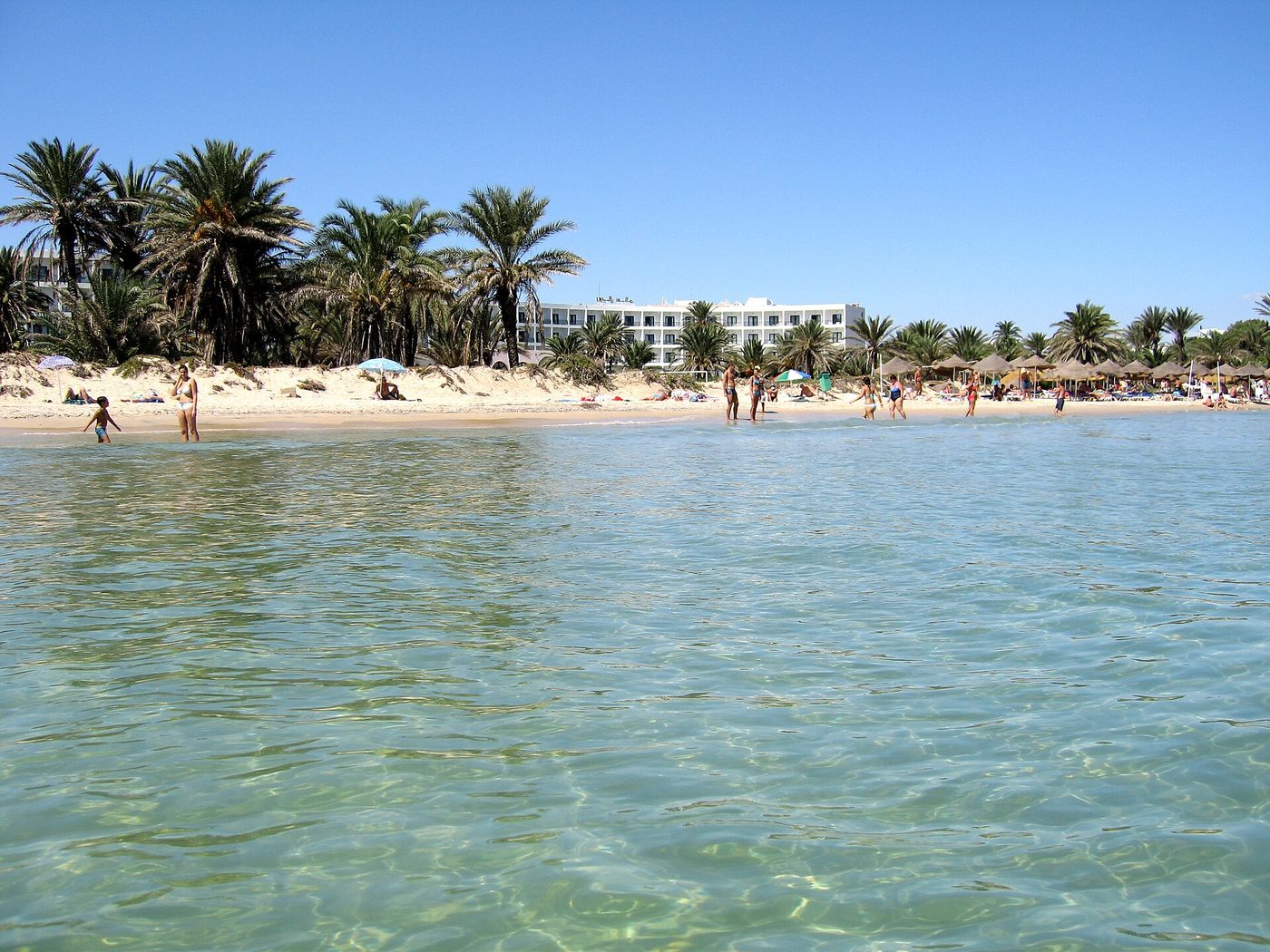
The first time I walked out of Sousse’s medina onto the seafront, a man selling fried doughnuts the size of dinner plates asked me, in English, whether I was lost. I was, slightly. That’s Sousse in one image: a 1,200-year-old walled city that tips you out, blinking, onto a modern promenade of palm trees, beach loungers and bambalouni stalls. No other Tunisian resort splices the two worlds together so casually.
The best things to do in Sousse cluster around its UNESCO-listed medina — the Ribat fortress, the Great Mosque and the superb mosaic museum in the kasbah — plus Bou Jaafar beach, the marina at Port El Kantaoui, and easy day trips to Monastir, Mahdia, El Jem‘s Roman amphitheatre and holy Kairouan.
This guide covers all of it: the city itself, the wider Sahel coast it anchors, which hotel zone to actually book, how the brilliant little Sahel Metro gets you to Monastir for pocket change, and the honest stuff — hassle, history, safety — that the brochures skip. I’ve written it primarily for UK travellers, because Sousse is one of the easiest package holidays you can book from Britain, but independent travellers will find everything they need here too. It’s part of our wider guide to the best things to do in Tunisia, where the Sahel coast earns several entries of its own.
Things to do in Sousse at a glance
| Experience | Best for | Where | Time needed |
|---|---|---|---|
| Medina, Ribat & Great Mosque | History without the crowds of Tunis | Central Sousse | Half a day |
| Sousse Archaeological Museum | Roman mosaics — Tunisia’s best after the Bardo | The kasbah, top of the medina | 1–2 hours |
| Bou Jaafar beach & corniche | City beach life, evening promenading | Boulevard Hédi Chaker | As long as you like |
| Port El Kantaoui | Marina strolls, golf, boat trips, families | 10km north of Sousse | Half a day or your whole stay |
| Monastir | The Ribat (of Monty Python fame) & Bourguiba’s mausoleum | 30–45 min by Sahel Metro | Day trip |
| Mahdia | A quieter, prettier old town on a sea-wrapped peninsula | South by metro or louage | Day trip |
| El Jem amphitheatre | The Roman world’s third-largest colosseum | Just over an hour by train | Day trip |
| Kairouan | The Great Mosque and the medina of Islam’s holy city of the Maghreb | About an hour by louage | Day trip |

Is Sousse worth visiting? My honest verdict
Yes — with eyes open. Sousse is Tunisia’s third-largest city and its most established package-holiday resort, and both halves of that sentence matter. You get a real, working Tunisian city with a genuinely important medina; you also get a tourist strip that has seen better decades, a couple of abandoned hotel shells on the seafront, and medina traders who can be persistent to the point of tiresome. I’d still pick it over most of its rivals for one reason: location. Nowhere else in Tunisia puts this much within an hour of your sunlounger.
Here’s how I’d call it by traveller type, having weighed Sousse against the rest of the coast:
Families
Strong. Stay north of the city — the Hammam Sousse strip or Port El Kantaoui — where the beaches are wider and calmer, and you’ve got boat trips, a marina, mini-golf and water parks within pushchair range. The all-inclusives here are TUI and easyJet holidays staples for a reason: they’re decent value and the flight is barely three hours.
Couples
Good, with a caveat. Port El Kantaoui is the prettier, more polished base for two; central Sousse gives you more local life and better food. If you’re after boutique-hotel romance, though, I’ll be straight with you: the Sahel does big resorts, not riads. For honeymoon-pretty, Hammamet or Sidi Bou Said do it better.
Nightlife
Sousse is, by Tunisian standards, the party coast — bars along Boujaffar, hotel discos, and clubs that actually stay open late. Temper expectations: this is Tunisia, not Ayia Napa, and much of the scene lives inside hotels. But if nightlife matters at all, pick Sousse over Hammamet’s quieter zones or sleepy Djerba.
Solo and independent travellers
Better than you’d expect. The Sahel Metro and louage network make Sousse the best car-free base in the country, and staying near the medina keeps you in the real city rather than marooned on a hotel strip. Women travelling solo report more low-level hassle here than in Mahdia or Djerba — wearisome rather than threatening, but worth knowing.
Is Sousse safe? The question UK visitors actually ask
I’m not going to bury this in a footnote. On 26 June 2015, a gunman murdered 38 tourists — 30 of them British — on the beach and in the grounds of a hotel at Port El Kantaoui. It was the deadliest terrorist attack on Britons since 7/7, and it emptied this coast for the best part of three years. If you’re old enough to remember the news coverage, Sousse and that image are probably still linked in your mind, and pretending otherwise would be daft.
What’s changed since? A great deal. Tunisia overhauled resort security — expect screened hotel entrances, bag checks, perimeter patrols and a visible police presence along the beaches, which after a few days you stop noticing. The hotel itself reopened under new ownership and now trades as the Steigenberger Kantaoui Bay. And the UK government’s position has long since normalised: the Foreign Office lifted its blanket warning against the Tunisian coast back in 2017, and today its advice for the Sahel is the same as for any mainstream Mediterranean resort — stay alert, follow local guidance.
To be precise about it, the FCDO (advice last updated 23 February 2026) advises against all travel only to: the Chaambi Mountains National Park and the designated military operations zones of Mount Salloum, Mount Sammamma and Mount Mghila; the militarised zone south of El Borma and Dhehiba; within 20km of the rest of the Tunisia–Libya border area north of Dhehiba; and the town of Ben Guerdane and its immediate surrounding area. It advises against all but essential travel to specified areas along the Algerian border — including Kasserine Governorate and the town of Sbeitla, within 10km of Mount Mghila, and Mount Orbata — and to within 75km of the Libyan border, excluding Zarzis, the C118 road and areas of Medenine Governorate north of that road.
Look at a map and you’ll see the point: every one of those zones is a long way — three hours’ drive or more — from Sousse, Monastir, Mahdia, El Jem and Kairouan, all of which sit squarely in the unrestricted majority of the country where the FCDO simply urges normal vigilance. Day-to-day, the risks you’ll actually encounter are the boring ones: pickpockets in the medina crush, taxi drivers “forgetting” the meter, and sunburn. I’ve written a full, honest assessment — including what resort security looks like now and how locals talk about 2015 — in our guide to whether Tunisia is safe right now.
The best things to do in Sousse itself
Most of what matters in Sousse city fits inside or beside the medina, which means you can cover the headline sights in a focused half-day — though the place rewards a slower wander. One practical note before you set off: the big heritage sites repriced in April 2026 under a new national ticketing system, so prices you’ll see in older guidebooks (and on most blogs) are out of date. I’ve given the current position for each sight below. Take cash; card machines are a rumour here.
1. Get lost in the UNESCO-listed medina
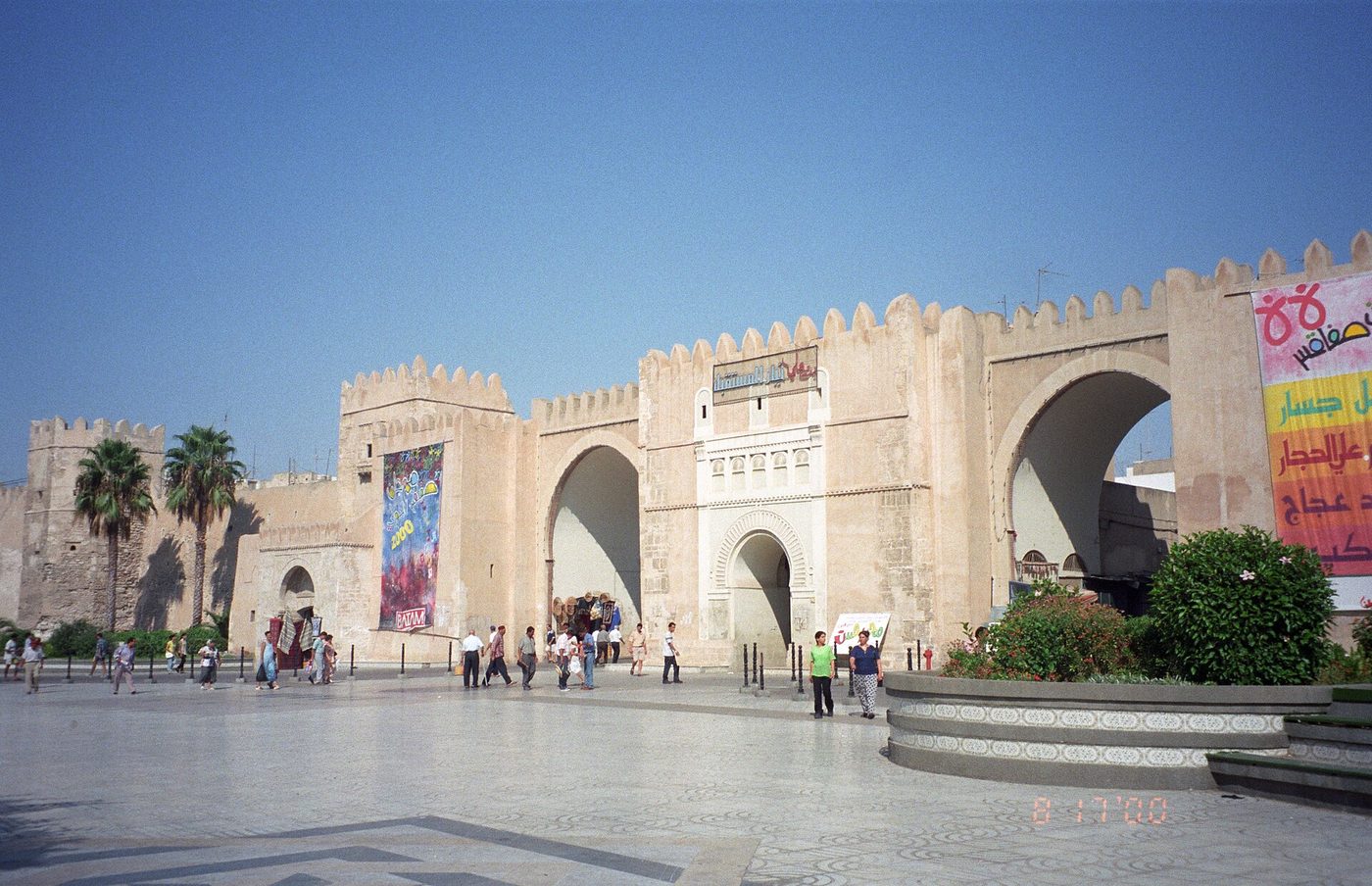
Sousse’s old town has been on the UNESCO World Heritage list since 1988, and unlike the museum-piece medinas elsewhere on the Med, this one still does its day job: kids walking to school, men playing dominoes outside cafés, washing strung between ninth-century walls. The tourist gauntlet — and there is one — runs along the main drags of Rue d’Angleterre and Rue de Paris, where the carpet-and-ceramics salesmen work hard. My advice is the same as for every medina in Tunisia: smile, decline, keep moving, and within two turnings you’ll have the alleys almost to yourself. The western and southern quarters, uphill towards the kasbah, are the atmospheric bits. A polite but firm “la, shukran” (no, thank you) is the most useful Arabic you’ll learn all week.

2. Climb the Ribat — Sousse’s fortress-monastery
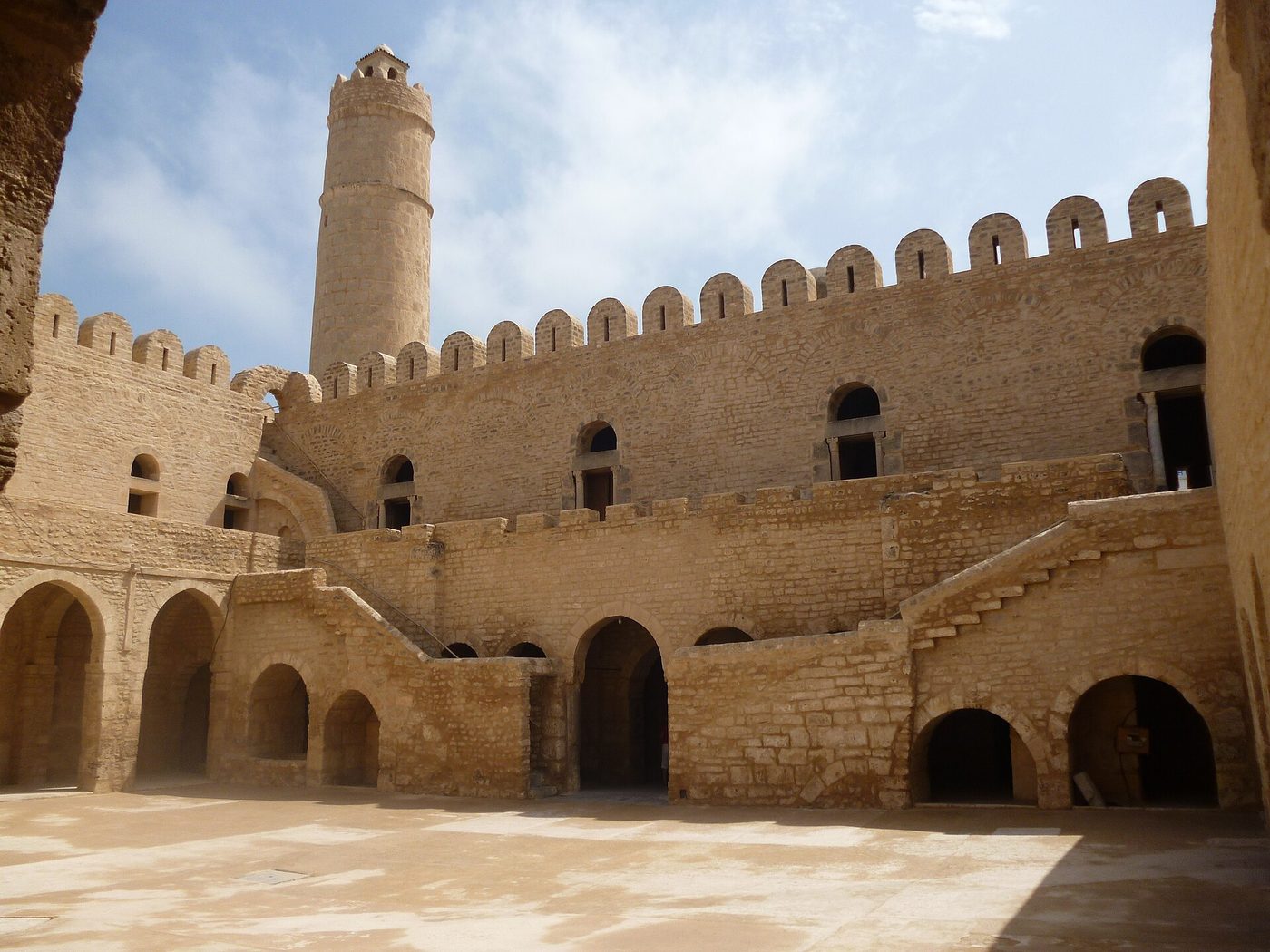
The Ribat is the building that explains Sousse. Part fortress, part monastery, it was built in the eighth and ninth centuries for warrior-monks guarding the coast against Byzantine raids, and it’s the finest surviving example of its kind in North Africa. The courtyard is austere and lovely, the dormitory cells are pleasingly spartan, and the real prize is the nador — the spiral-staired watchtower — from which you get the definitive view over the medina rooftops to the Great Mosque’s crenellated courtyard directly below. The climb is tight and the steps are worn glassy-smooth, so save it for grippy shoes. Entry is around 8 TND (about £2); it’s open daily from roughly 8am, closing 5–6pm depending on season. Go first thing: you’ll share it with pigeons rather than tour groups, and the morning light on the pale stone is the best photograph in Sousse.
3. The Great Mosque — ninth-century swagger, no minaret
Two minutes from the Ribat stands the Great Mosque, founded in 851 and looking, frankly, more like a fortress than the fortress does — all battlements and bare kufic restraint, with corner towers instead of a minaret. Non-Muslims can visit the arcaded marble courtyard (but not the prayer hall) for a small fee of around 5–8 TND at the kiosk; cover shoulders and knees, and robes are lent at the door if you’ve misjudged it. It’s a calm, austere, strangely moving space, and the view of its courtyard from the Ribat tower beforehand makes sense of the architecture.
4. Sousse Archaeological Museum — the best mosaics outside the Bardo
Housed in the kasbah at the medina’s highest corner, this is the one Sousse sight I’d call unmissable even if ruins normally leave you cold. The Sahel’s Roman towns were rich, and their floors prove it: Neptune riding a chariot of hippocamps, Bacchus drawn by tigers, gladiators, fishing scenes, a wonderful third-century Medusa — room after cool, dim room of mosaics that rank as Tunisia’s finest collection after the Bardo in Tunis, and you’ll often have them to yourself. Entry is 10 TND (about £2.60), cash only. Allow ninety minutes, go in the morning, and don’t skip the ramparts views from the courtyard on your way out.

5. Dar Essid — how a wealthy Sousse family actually lived
A private house-museum tucked against the medina’s northern wall, Dar Essid shows you an eleventh-century mansion as its last owners left it: bridal chambers, Ottoman tiles, a two-seater marble loo of Roman vintage and a kitchen that smells plausibly of the nineteenth century. It costs a few dinars, takes half an hour, and the climb up its narrow tower ends in one of the medina’s best views. It’s the perfect antidote to monument fatigue — history at the scale of one family.
6. Bou Jaafar beach and the corniche
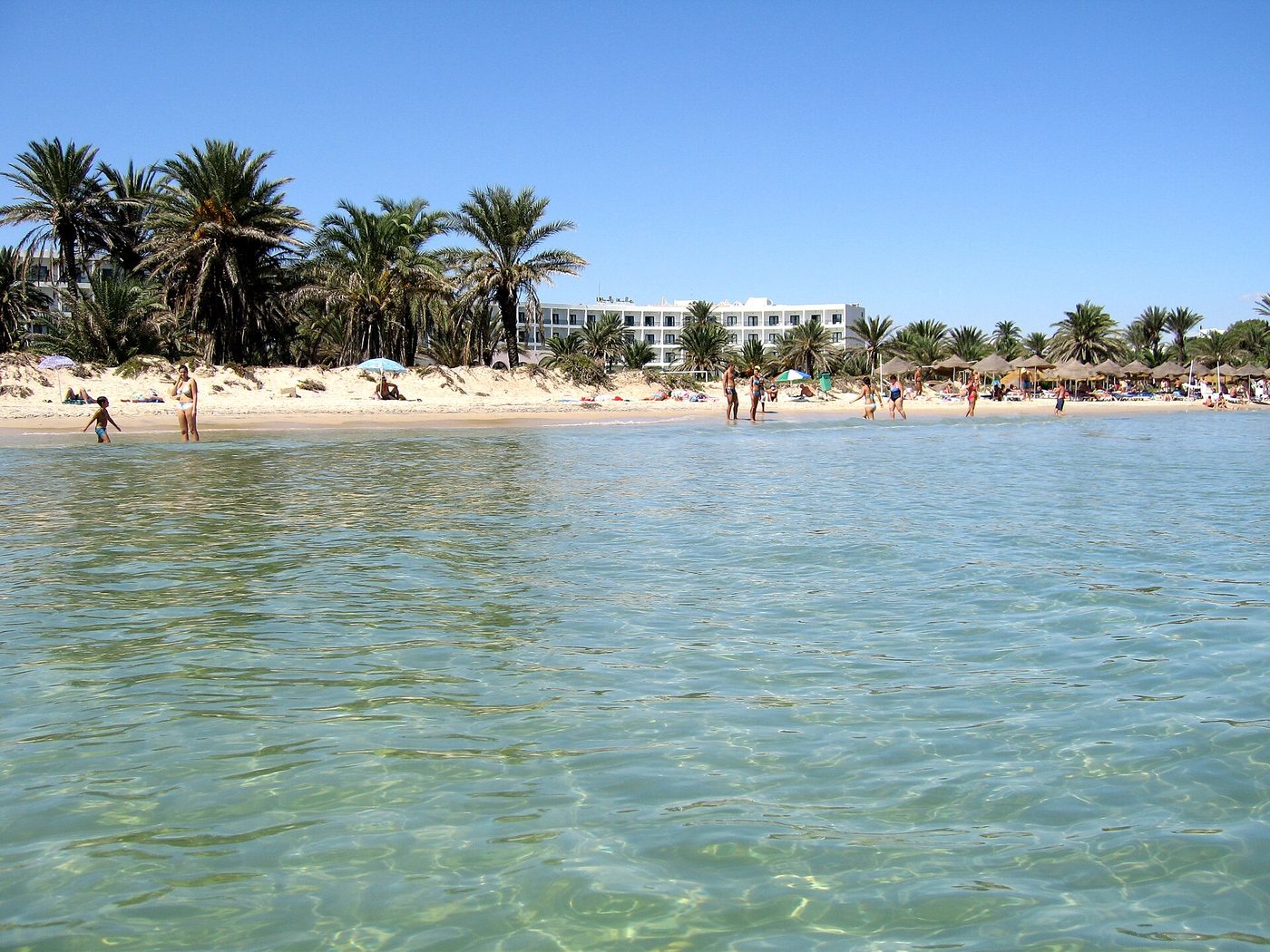
Sousse’s city beach starts where the medina ends — a long, genuinely sandy sweep backed by Boulevard Hédi Chaker’s palms and café terraces. By Tunisian city-beach standards it’s a good one: soft sand, gently shelving water that hits 22–23°C in June and a bath-like 26–27°C by August, loungers and parasols for a few dinars, camel-and-quad men working the shoreline. It’s busy, local and cheerful rather than pristine; if you want manicured, that’s what the hotel-strip beaches north of town are for. The corniche comes alive in the evening, when half of Sousse turns out to promenade — join them with a bambalouni (a hot, sugared doughnut the size of your face, about a dinar) and watch the lads backflip off the breakwater.
7. Souk el Ahad — the Sunday market
Sousse’s sprawling Sunday souk, south of the bus station, is where the city actually shops: produce, spices, ceramics, Kairouan carpets, knock-off football shirts, livestock at the fringes and not a cruise-ship trinket in sight. It runs Sunday mornings into early afternoon. Go for the spectacle rather than the shopping, keep your valuables zipped in the crush, and haggle for fun — opening prices are a suggestion, not a sentence.
8. Evenings: café culture, shisha and the louder stuff
Once the promenade fills, Sousse offers three distinct evenings. The local one: mint tea with pine nuts and a shisha pipe at a café along the corniche or in Place des Martyrs. The package one: hotel bars, pool-deck entertainment and discos along the Boujaffar strip — Sousse has the liveliest hotel nightlife in Tunisia, for whatever that crown is worth. And the in-between: a slow dinner of grilled fish and Celtia beer at a licensed seafront restaurant. Alcohol is freely available in hotels and licensed venues, though it’s polite to keep merriment off the street. One heads-up: the Catacombs on the city’s edge — early-Christian burial tunnels — have a long history of unannounced closures, so ask at your hotel before trekking out to them.
Port El Kantaoui: the manicured half of a Sousse holiday

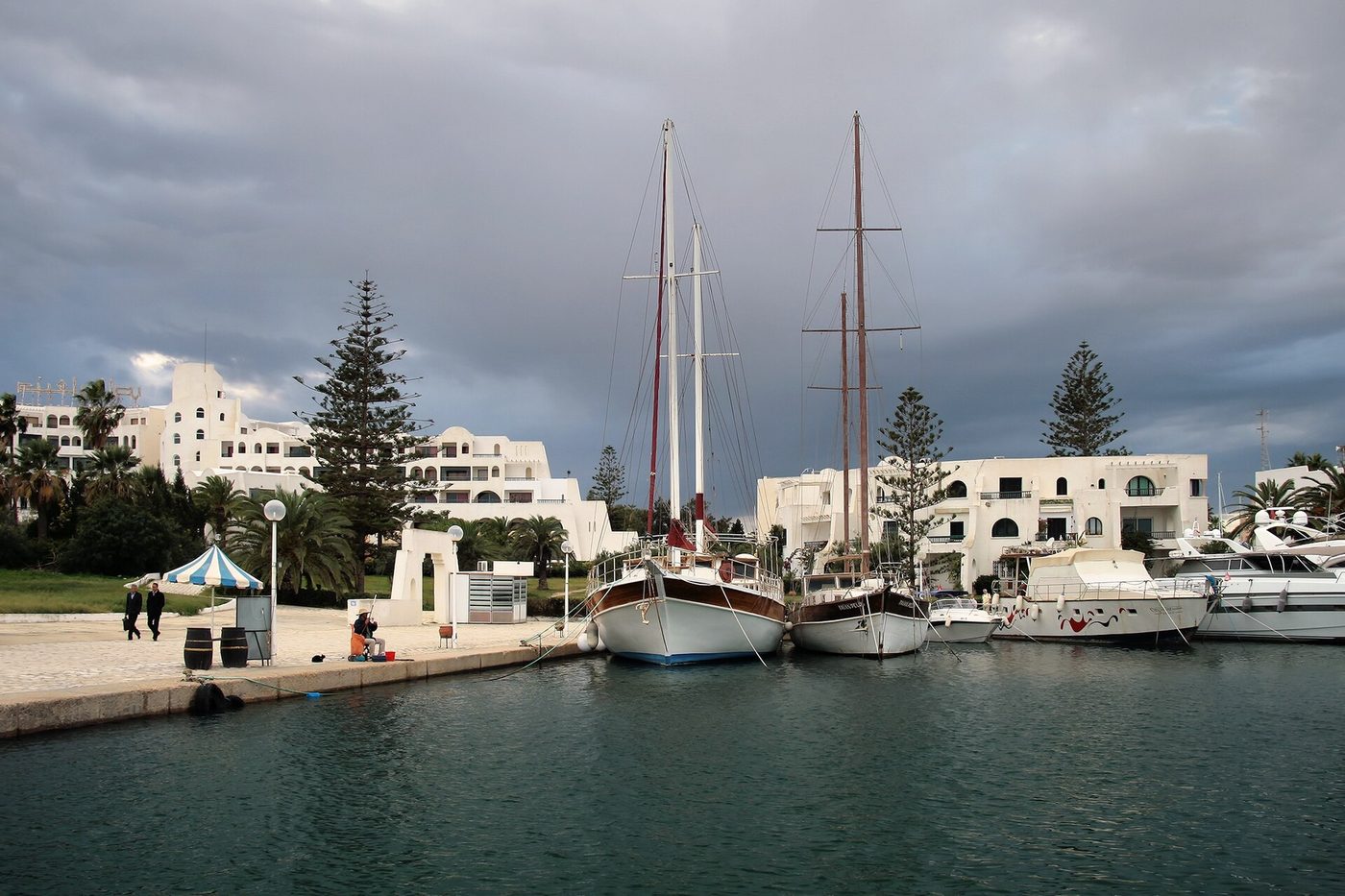
Ten kilometres north of the medina, Port El Kantaoui is Sousse’s alter ego: a purpose-built “garden port” laid out around a marina in 1979, all whitewashed Andalusian arches, bougainvillea and not a hint of urban grit. Critics call it Tunisia-lite, and they’re not wrong — it was designed for tourists from the first sketch. But it’s done with enough charm that I always enjoy a half-day there, and for families it’s arguably the better base on this coast.
What to actually do: amble the marina and pick a quayside café (prices carry a yacht-tax — a coffee costs double the medina rate, which is still barely £1.50); book a “pirate ship” cruise, an hour or three of swimming stops and cutlass-waving that children adore — prices are whatever you negotiate at the kiosk, so agree exactly what’s included (lunch, drinks, hotel pickup) before any money changes hands; and let golfers loose on El Kantaoui Golf Club’s 36 holes, two full courses (the Sea and the Panorama) that have anchored Tunisian golf since the resort opened. The diving centres in the marina run beginner-friendly trips, and the beaches either side of the port are wider, cleaner and calmer than Bou Jaafar.
For children there’s also Hannibal Park, an endearingly retro funfair that runs from afternoon until late, and the seasonal Acqua Palace water park (open roughly June to September). Neither will trouble Alton Towers, but at Tunisian prices nobody’s complaining. Getting between Sousse and Port El Kantaoui is a 5–10 TND metered taxi ride (£1.30–£2.60), or one of the toy-town tourist road trains that trundle along the coast road if you’re not in a hurry. You can technically walk it along the beach — allow well over two hours each way and a forgiving attitude to building sites.
The beaches, zone by zone
“Sousse beach” is really a single 15km ribbon of sand running north from the medina to beyond Port El Kantaoui, but it changes character every few kilometres, and where you stay decides which version you get.
| Beach zone | Character | Best for |
|---|---|---|
| Bou Jaafar (city) | Lively town beach, promenade behind, vendors about | People-watching, evening swims, budget stays |
| Hammam Sousse hotel strip | Wide sand fronting the big all-inclusives, loungers organised by hotel | Package holidays, families who want zero faff |
| Port El Kantaoui | Cleanest and calmest, marina at hand, watersports kiosks | Families, couples, anyone fussy about their sand |
| Chott Meriem & north | Progressively emptier, more local, the odd beach café | Escaping the crowds without a car |
Three honest notes. First, vendors patrol everywhere south of Port El Kantaoui — a cheerful “la, shukran” works, but if low-level selling ruins a beach day for you, base yourself north. Second, jellyfish drift in some high-summer weeks, typically August, varying year to year; locals simply swim elsewhere for a few days, and so should you. Third, every beach in Tunisia is public by law — hotels rent the loungers (5–15 TND), not the sea, so you’re free to lay a towel anywhere the sand isn’t literally fenced.
The day-trip planner: four big hitters, zero coach required
This table is the heart of why I rate Sousse as a base. Pin it to your fridge door (or hotel minibar):
| Destination | How | Time each way | Cost each way | Go for |
|---|---|---|---|---|
| Monastir | Sahel Metro from Bab Jedid | 30–45 min | 2–3 TND | The Ribat, Bourguiba Mausoleum, an easy first outing |
| Mahdia | Sahel Metro (or louage) | 1.5–2 hrs | a few TND | The peninsula old town, silk, quiet beaches, Friday market |
| El Jem | SNCFT train from Sousse station | just over 1 hr | a few TND | The Roman world’s third-largest amphitheatre |
| Kairouan | Louage from the main station | ~1 hr | ~6 TND | The Great Mosque, carpets, makroudh pastries |
| Hergla | Taxi from Port El Kantaoui | ~20 min | agree the fare | Blue-and-white village calm, esparto weaving, fish lunch |
Pattern your week so the inland trips (El Jem, Kairouan) land on cooler or cloudier days and the coastal ones (Monastir, Mahdia) double as beach days. Check return times before you set off — the trains especially keep countryside hours — and carry your passport copy; you won’t usually need it, but louage police checkpoints occasionally like to see one.
Monastir: Ribats, mausoleums and Monty Python

Twenty kilometres south of Sousse — half an hour and small change on the Sahel Metro — Monastir is the day trip I recommend first. It’s a tidier, quieter town than Sousse, pleasant rather than thrilling, except for two sights that are very thrilling indeed.
The Ribat of Monastir
Founded in 796, Monastir’s coastal fortress is older, bigger and more film-set perfect than Sousse’s — which is precisely why it has spent fifty years moonlighting as ancient Judea. Franco Zeffirelli shot Jesus of Nazareth here in the mid-70s, and in 1978 Monty Python arrived to film Life of Brian: the Sermon on the Mount confusion (“blessed are the cheesemakers?”), the stoning, Brian’s window address to the masses — much of it happened inside these walls and the medina lanes beside them. Entry is around 8 TND (about £2), hours roughly 9am–6pm. Climb the nador tower for a knockout panorama: golden stone below, turquoise sea behind, and the green-roofed mausoleum gleaming to the west. Film pilgrims should look smug; everyone else can simply enjoy North Africa’s most photogenic fortress.
The Bourguiba Mausoleum

Habib Bourguiba — father of Tunisian independence, educator, autocrat, feminist (genuinely: he gave Tunisian women rights decades ahead of the region) — was born in Monastir, and his resting place doesn’t do humility. A marble avenue runs arrow-straight from the cemetery gates to a gilded dome flanked by twin minarets; inside, the great man lies beneath chandeliers amid family tombs and memorabilia. Entry is free. It’s open roughly 9am–5.30pm in summer; dress modestly (covered shoulders and knees) and keep voices down — whatever Tunisians think of his later years, and opinions vary, this is a place of real national feeling. Between the two sights, the marina and a swim at the Ribat-side beach, Monastir fills a leisurely day. The Sahel Metro back to Sousse runs into the evening, so there’s no need to rush your sunset.
Mahdia: the Sahel’s best-kept secret

Keep going south past Monastir — about an hour and a half on the metro, or quicker by louage — and the package coast simply runs out of steam. Mahdia, the Fatimid dynasty’s tenth-century capital, occupies a narrow peninsula that pokes a kilometre into the Mediterranean, and it remains a fishing town first and a tourist town a distant second. It is, for my money, the prettiest seaside spot between Tunis and Djerba.
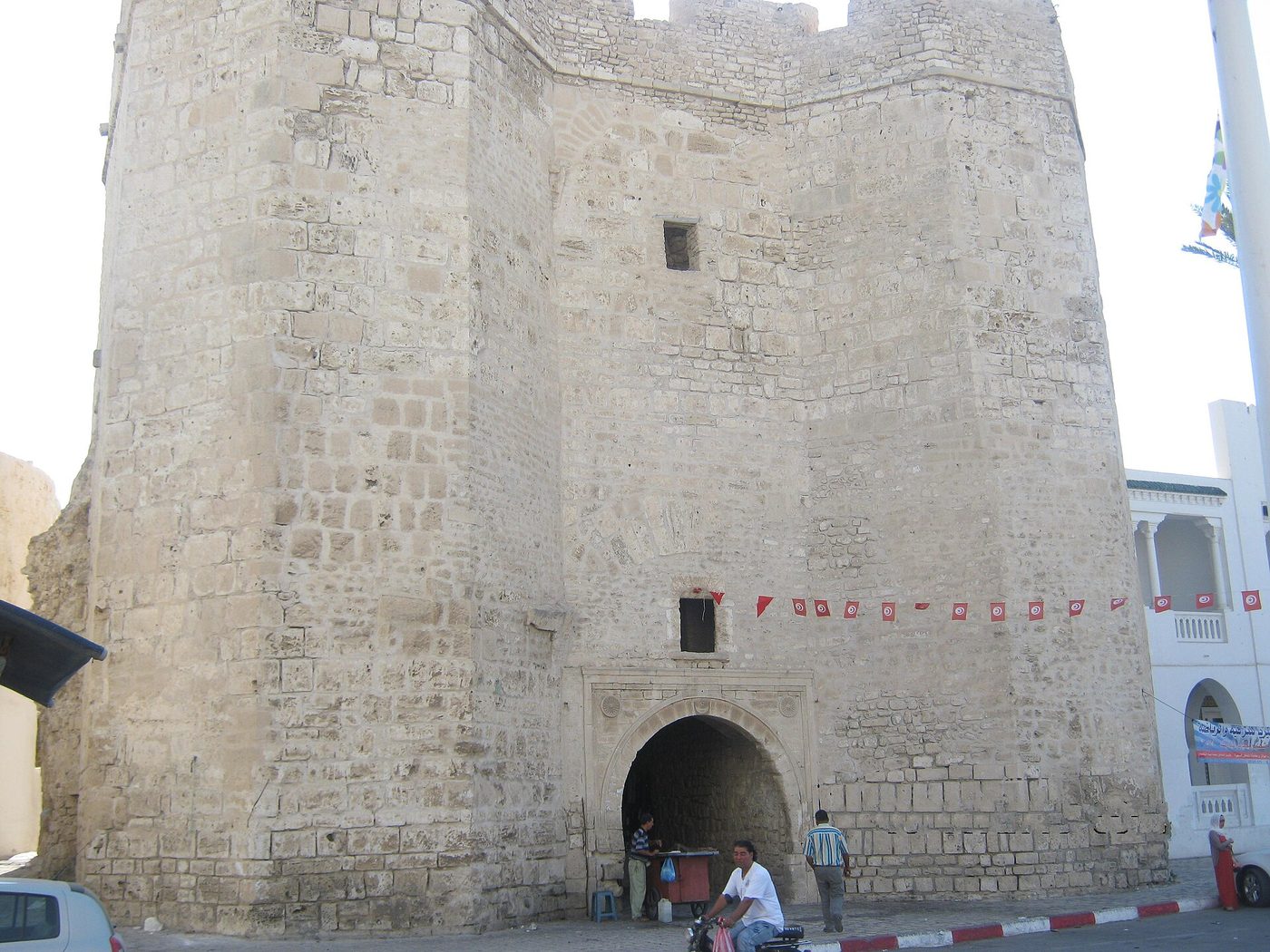
You enter the old town through the Skifa el Kahla, a fortified black vault of a gate — the only landward way in for a thousand years — whose dim passage opens onto whitewashed lanes full of silk. Mahdia’s weavers have made wedding silks for centuries, and you’ll still hear looms clacking behind half-open doors; the Friday-morning market that spills around the gate is the moment to come if you can engineer it, when the square fills with embroidered fabric and half the region’s grandmothers. Deeper in: a marble-paved square of café tables, the sea-edge Great Mosque (a faithful replica of the Fatimid original), the clifftop Ottoman fort of Borj el Kebir — worth circling for the views even when its opening hours are being temperamental, so check locally — and a cemetery of blinding white tombs running down to a lighthouse at the point where Africa simply stops. The town beach north of the peninsula is broad, gently shelving and quieter than anything in Sousse. Bring your swimmers, eat grilled fish by the harbour for a few pounds, and thank me later.
El Jem: the colosseum in a market town

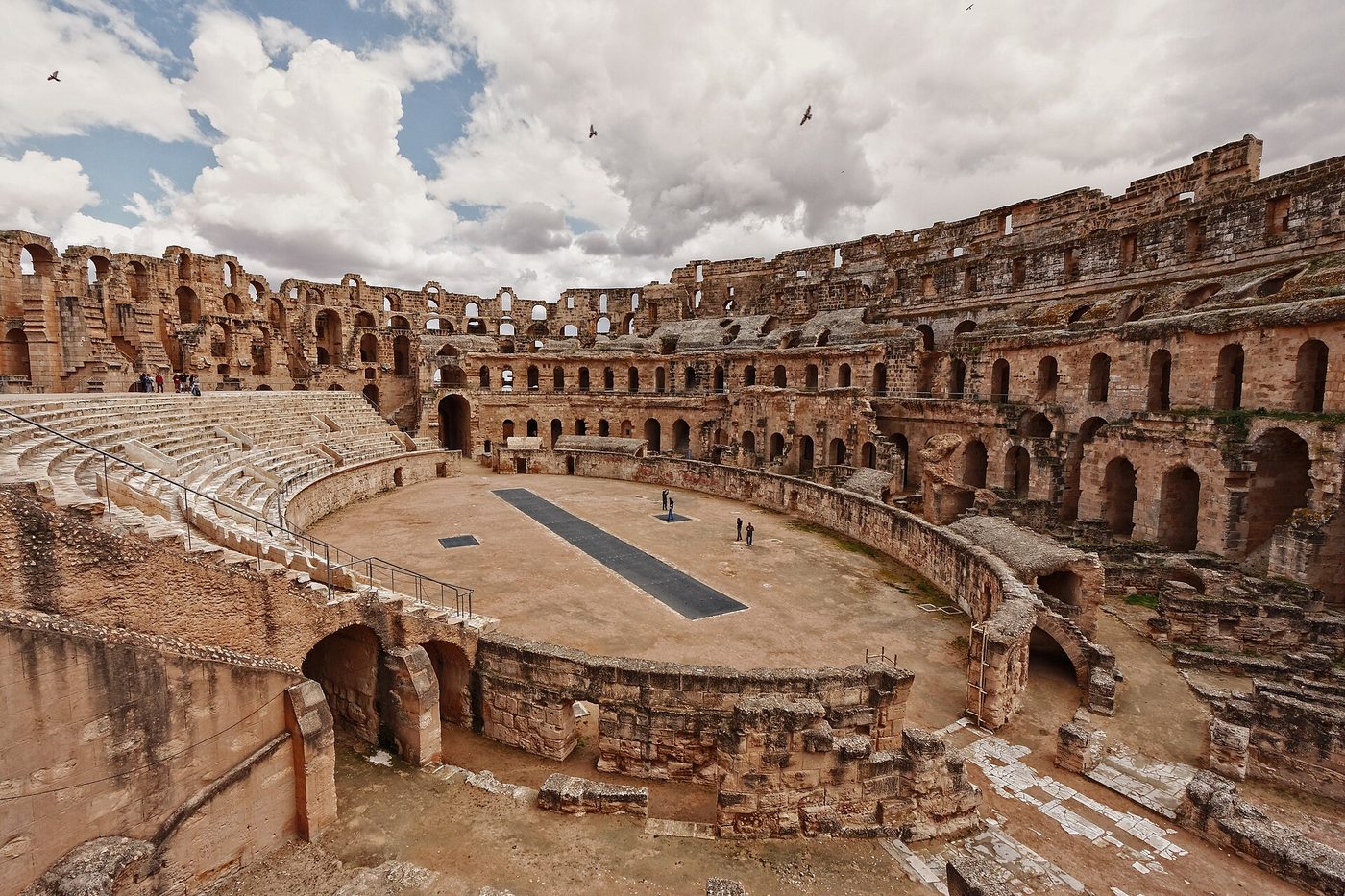
Nothing prepares you for El Jem. You rattle an hour south-west of Sousse through olive country on the train, step out into a dusty Tunisian market town — and there, rearing over the lock-up shops and louage rank, is the third-largest amphitheatre the Roman world ever built, after the Colosseum itself and long-vanished Capua. Around 35,000 spectators once packed it; today, on a quiet morning, the audience is you and the sparrows.
What makes El Jem extraordinary isn’t just the scale — it’s the access. You can prowl the arena floor, climb the upper tiers (UNESCO-listed since 1979, and far more complete than Rome’s), and best of all descend into the basement corridors where gladiators and big cats waited beneath the killing floor. The same ticket covers the excellent mosaic museum 600 metres away, built over a Roman villa — don’t skip it. On pricing, be aware that entry was 12 TND for years, but Tunisia’s April 2026 heritage-ticket overhaul has repriced the headline sites — the top national tier is now 30 TND (under £8) — so bring enough cash and treat anything a blog quotes as provisional, this one included. Trains from Sousse Bab Jedid take just over an hour for a few dinars each way, but there are only a handful of daily departures, so confirm the return time before you leave the station — or fall back on a louage to Sousse via a change, or a taxi splurge.
Kairouan: the holy city, an hour inland

Kairouan is the day trip for the soul. Founded in 670, it’s often described — particularly in North African tradition — as the fourth holiest city in Islam after Mecca, Medina and Jerusalem, and whatever the theological league table, it is unarguably the spiritual capital of the Maghreb. The whole ensemble — medina, Great Mosque, Aghlabid water basins — has been UNESCO-listed since 1988.
The Great Mosque is the anchor: a vast, ancient courtyard of recycled Roman columns and sun-bleached marble, with a minaret like a lighthouse for the faithful. Non-Muslims can enter the courtyard and look into the prayer hall from its doorway, but not step inside — modest dress required, robes available at the gate. A combined ticket, sold at the tourist office by the medina wall, has historically cost around 12 TND and covers the city’s main monuments: the mosque, the ninth-century Aghlabid Basins, the Barber’s Mosque (Sidi Sahab’s gorgeously tiled zaouia) and the camel-turned well of Bir Barouta — though, as at El Jem, expect the April 2026 repricing to have nudged figures upward. Kairouan’s medina out-charms Sousse’s: quieter, pinker, and the place to buy both a carpet (the city is Tunisia’s knot-tying capital; resist the hard sell unless you mean it) and makroudh, the local date-stuffed semolina pastries, fried fresh and sticky with honey. Louages run from Sousse constantly, take about an hour, and cost around 6 TND (£1.50) each way — easily the simplest big-ticket day trip in Tunisia. There’s no train, so it’s louage, excursion coach or taxi.
Two smaller escapes: Hergla and Friguia

Twenty-odd kilometres north of Port El Kantaoui, Hergla is the Sahel’s miniature Sidi Bou Said: a blue-and-white fishing village stacked on low cliffs, where the main industries remain boats and esparto-grass weaving — you’ll see the woven mats and baskets drying outside workshops, and they make far better souvenirs than anything in the medina gauntlet. There’s a clean beach below the village, a couple of fish restaurants above the harbour, and precisely nothing else to do, which is the point. A taxi from Port El Kantaoui takes twenty minutes; agree the fare first.
Halfway to Hammamet, Friguia Park is the coast’s family-day standby: a spacious safari-style zoo with lions, giraffes, elephants and flamingos, plus camel rides and a daily sea-lion show (the park’s dolphinarium closed back in 2016, so ignore any excursion seller promising dolphins — it’s sea lions now). Entry runs around 15 TND for adults and 10 for children, with shows at intervals through the day; it’s closed Mondays outside holiday periods. It’s no San Diego Zoo, and animal-welfare standards are a notch below what UK zoos manage, but enclosures are larger than you might fear and small children leave delighted.
Where to stay in Sousse: pick your zone before your hotel
This is the decision most people get wrong, because the brochures market “Sousse” as one place when it’s really three. Get the zone right and the hotel almost picks itself; I cover the country-wide version of this logic in our guide to where to stay in Tunisia.
Central Sousse & Bou Jaafar
City hotels along the seafront boulevard, the medina ten minutes’ walk away, restaurants and nightlife on the doorstep. Beaches are busier and the buildings older — this is where Sousse’s faded-grandeur reputation lives, including a couple of derelict hotel hulks awaiting demolition that nobody will photograph for the brochure. Pick it for: character, independence, evening life, budget. Avoid it for: a flop-and-drop beach week.
The Hammam Sousse strip (Sousse Nord)
The unbroken chain of three-to-five-star resorts lining the sand between city and marina. This is where the bulk of TUI and easyJet holidays packages land you, and the formula works: big pools, big buffets, wide beach, evening entertainment of the foam-party-and-fez variety. The trade-off is geography — you’re 15–30 TND in taxis from anywhere that isn’t your hotel, and the strip itself, walked at midday, is mostly walls and parked coaches. Pick it for: all-inclusive ease with kids. Avoid it for: any illusion you’re staying in a Tunisian town.
Port El Kantaoui
The polished northern option: marina, golf, the coast’s cleanest beaches, and footpaths where the strip has dual carriageway. Hotels skew newer and pricier (by Tunisian standards — a five-star half-board week here still undercuts a Travelodge weekend). Pick it for: families, couples, golfers, first-timers nervous about North Africa. Avoid it for: local colour — you’ll need to commute into Sousse for that.
Whichever zone you book, remember Tunisia’s tourist tax, payable at check-in since late 2024: 12 TND per person per night in four- and five-star hotels, 8 TND in three-star, 4 TND in two-star, capped at ten nights, under-12s exempt. For a family of four in a four-star fortnight that’s a non-trivial 240 TND (about £60) in cash you should plan for.
Getting to Sousse from the UK
Sousse has the rare luxury of two airports, and which one your flight uses matters more than the fare.
Monastir (MIR) is the close one — 15km away, 20–30 minutes by taxi (roughly 30–50 TND, £8–13, agree it first or insist on the meter), and the Sahel Metro even calls at the airport for the price of a coffee if you’re travelling light. easyJet flies here from the UK in summer, alongside various holiday charters.
Enfidha (NBE) is the big charter gateway 50–60km north, serving most TUI packages and the majority of easyJet’s Tunisia network, with UK departures spanning Gatwick, Luton, Manchester, Birmingham, Bristol, Liverpool, Newcastle, Edinburgh, Glasgow, Belfast and more depending on season. Flight time from London is about three hours five minutes. Transfers to Sousse take 45–60 minutes: package transfers are bundled, pre-booked private cars run around £35–50, and local taxis are markedly cheaper if you agree the fare before getting in.
Two route-planning realities for 2026: Jet2 does not fly to Tunisia, whatever a search engine’s autocomplete implies, and there’s no direct UK service to Tunis-Carthage worth bending your plans around — for the Sahel you want NBE or MIR anyway. If you’re comparing months before booking, our month-by-month best time to visit Tunisia guide covers when each resort hits its stride.
Getting around the Sahel: the metro that makes this coast
The single most useful thing in this guide might be this: the Sahel has a railway, almost no tourist uses it, and it turns the whole coast into one resort. The Métro du Sahel is a cheerfully scruffy electric light railway running from Sousse’s Bab Jedid station (at the southern corner of the medina walls, ten minutes’ walk from Bou Jaafar) south through Monastir — calling at Monastir’s airport — and on down to Mahdia, with trains roughly every 40 minutes from early morning until around 10pm. Fares are a couple of dinars — well under £1 to Monastir, slightly more to Mahdia — bought with cash at the station window. Carriages are basic, punctuality is approximate, sea views from the Monastir–Mahdia stretch are excellent, and the people-watching beats any excursion coach. For Sousse–Monastir–Mahdia, it’s all the transport you need.
For everywhere else: yellow taxis are everywhere and cheap when metered — insist on it (“compteur, s’il vous plaît”), expect a 50% surcharge between 9pm and 5am, and budget single-figure dinars for most hops around town. Louages — shared eight-seat minibuses that leave when full — are the intercity workhorse: Sousse’s main station sends them constantly to Kairouan, Mahdia, Tunis and beyond at state-fixed fares displayed inside the van. They’re safe, fast (occasionally faster than you’d like) and the most Tunisian experience money can buy for under £2. SNCFT mainline trains from Sousse cover El Jem and Sfax southbound, Tunis northbound; buy tickets at the station, and double-check times locally as timetables thin out off-season. Car hire exists but for this coast it’s genuinely unnecessary — between metro, train, louage and taxi, I’ve never once wanted one here.
Package holiday or DIY? How to book the Sahel from the UK
Sousse is one of the few destinations where I’ll defend the package holiday with a straight face. TUI and easyJet holidays buy hotel rooms here at volume prices no booking site matches, transfers from Enfidha are bundled (that’s a £35–50 saving each way on a pre-booked car), and ATOL protection costs you nothing extra. For a one-base, all-inclusive beach fortnight, the package usually wins on arithmetic alone — especially in school holidays, when booking the January sales matters more than the platform.
DIY earns its keep in three cases. First, if you want central Sousse or a smaller hotel the brochures don’t carry — packages overwhelmingly sell the strip and Port El Kantaoui. Second, shoulder season, when flight-only fares drop and four-star B&B rates go for a song direct or via the usual booking sites. Third, if you’re combining bases — say four nights Sousse and three in Mahdia or Tunis — which no operator will sell you off the shelf. The hybrid I use myself: book the flight the moment schedules open, hold a refundable hotel, then watch rates. One warning either way: don’t buy excursions from your rep before pricing the same trip by metro, train or louage using this guide — the mark-up on a coach to El Jem versus the train fare has to be seen to be believed. Excursions earn their money on the desert runs and anywhere public transport doesn’t reach; for the Sahel’s own sights, your £15 of train tickets beats their £150 of coach seats.
What to eat in Sousse (and where the good stuff hides)
All-inclusive buffets have a gravitational pull, but eat at least a few meals out — Sahel cooking is the reason Tunisians argue about restaurants the way Britons argue about chippies. The non-negotiables: brik, a shatteringly crisp filo parcel around a just-runny egg and tuna (eat it folded, drip with dignity); ojja, eggs poached in a spicy tomato-and-merguez skillet; grilled fish, priced by the kilo and chosen from the ice — daurade and loup de mer are safe bets, and a whole fish with chips and salad in a local place costs less than a hotel cocktail; couscous done properly on a Friday; lablebi, the chickpea-and-harissa workman’s soup, if you find a stall and feel brave; and bambalouni doughnuts on the corniche for pocket change. Harissa arrives with everything; so does bread. Tunisian rosé and Celtia lager are honest companions where licensed. The rule of thumb that never fails me: the further a menu stands from a hotel lobby and the fewer languages it’s printed in, the better the kitchen.
Money and practicalities: the closed-currency thing, explained
The Tunisian dinar is a closed currency — you cannot legally buy it in the UK or take it out of Tunisia. In practice: bring sterling cash and/or your bank cards, exchange or withdraw on arrival (airport desks are fine for a starter sum; bank ATMs in town give the same official rate, with £1 worth around 3.9 TND in June 2026), keep your exchange receipts, and re-convert leftovers at the airport before you fly home. Don’t take dinars home as souvenirs beyond a note or two; you’ll get nothing for them in Britain.
The rest of the essentials, rapid-fire. UK passport holders need no visa for stays up to 90 days. Your GHIC/EHIC is not valid in Tunisia — comprehensive travel insurance isn’t optional, and check the excess covers quad bikes if you’re tempted. For jabs and health prep, follow the NHS’s TravelHealthPro guidance rather than forum hearsay; tap water is officially treated but most visitors (and plenty of locals) drink bottled, at under a dinar a litre. Tipping: round up taxis, a dinar or two per bag or drink, 10% in proper restaurants where service isn’t included. Dress is relaxed in resort zones, modest in the medina and anywhere religious. Friday lunchtime is prayer time — some smaller sights and shops pause. And the hassle question, since you’ll have read the reviews: medina selling is theatre with a script — decline pleasantly, never accept “free gifts”, and it stays theatre.
When to visit Sousse
The Sahel does a proper Mediterranean summer: sea at 22–23°C in June rising to 26–27°C in August, with July–August heat that’s beach-perfect and sightseeing-brutal — El Jem and Kairouan in mid-August are for masochists. My picks: June and September for the full beach holiday with bearable medinas, May and October for sightseeing-first trips with swimmable seas, and the UK school summer holidays if you must — book early, as TUI’s Enfidha flights fill fast. Winter is shoulder-season quiet: 17°C, flashes of rain, hotels at silly prices and sights to yourself. Sousse’s big summer event, the Festival International de Sousse, typically runs July–August with open-air concerts — dates land late, so check locally. Ramadan won’t trouble 2026’s summer visitors (it ended in March; in 2027 it starts around early February). For the full month-by-month breakdown, see our best time to visit Tunisia guide.
What things to do in Sousse actually cost
Because “Tunisia is cheap” is vague and budgets aren’t, here’s what I’d plan against, in dinars and honest sterling. Where the April 2026 heritage repricing bites, I’ve said so.
| Item | Typical cost (TND) | In £ (≈3.9 TND/£) |
|---|---|---|
| Sousse Archaeological Museum | 10 | £2.60 |
| Ribat of Sousse | ~8 | ~£2 |
| Great Mosque courtyard | 5–8 | £1.30–2 |
| El Jem amphitheatre + museum | 12 historically; budget up to 30 post-repricing | £3–7.70 |
| Kairouan combined monuments ticket | ~12, may have risen | ~£3 |
| Sahel Metro to Monastir | 2–3 | under £1 |
| Louage to Kairouan | ~6 each way | ~£1.50 |
| Metered taxi across town | 4–8 | £1–2 |
| Sunlounger + parasol (public beach) | 5–15 | £1.30–3.85 |
| Whole grilled fish dinner, local restaurant | 25–40 | £6.50–10 |
| Mint tea / bambalouni | 1–3 | pennies |
| Tourist tax (4–5★ hotel) | 12 pp/night, max 10 nights | ~£3 |
Working total: a sightseeing-heavy day — museum, Ribat, lunch, taxis, a fish supper — rarely clears 100 TND (£26) per person, and a metro day trip to Monastir with mausoleum (free) and Ribat (~8 TND) is barely 20 TND (£5) before lunch. The only line items that genuinely dent a wallet are excursion-desk coaches, marina boat trips if you skip the haggle, and carpets you didn’t plan to buy. Carry small notes: making change is the national sport nobody admits to.
How long do you need, and a one-week plan
Three nights covers Sousse city and one day trip; a week does the Sahel justice. If I were building the ideal seven days from a Sousse or Port El Kantaoui base: day one, beach and bearings; day two, medina morning (Ribat, Great Mosque, museum) and corniche evening; day three, Monastir by metro; day four, beach, marina and a boat trip; day five, El Jem by train; day six, Kairouan by louage; day seven, Mahdia by metro — pack swimmers — or Hergla if you want lazier. That’s four UNESCO-calibre sights and three coastal towns on about £15 of public transport, which no excursion desk will ever sell you. With ten days, add a night in Tunis or push on to Djerba; with less, guard the medina morning and El Jem above all.
Sousse FAQ: your questions answered
Is Sousse worth visiting?
Yes — for the UNESCO medina, Tunisia’s best mosaic museum after the Bardo, long sandy beaches and an unmatched day-trip roster (Monastir, Mahdia, El Jem, Kairouan). It’s a working city rather than a postcard, so expect bustle and some hassle alongside the history. Beach-purists who hate vendors should base at Port El Kantaoui.
Is Sousse better than Hammamet?
Different jobs. Sousse wins on sights, day trips, nightlife and getting around without a car; Hammamet wins on garden-resort prettiness and a gentler pace. First-timers who want a classic flop-and-drop lean Hammamet; the curious, restless or carless lean Sousse. Our full Hammamet guide makes the comparison properly.
Is Sousse safe for tourists?
The FCDO has no advisory against the Sahel coast — its restricted zones (advice last updated 23 February 2026) all lie far inland or along the Libyan and Algerian borders. Resort security was overhauled after 2015 and remains visible. Normal city sense covers the actual risks: pickpockets, meter-shy taxis, sunburn. See our full Tunisia safety guide.
How many days do you need in Sousse?
Two full days for the city itself — medina, Ribat, museum, beach. But Sousse earns its keep as a base: with Monastir, Mahdia, El Jem and Kairouan each an easy day trip by metro, train or louage, a week fills itself without repeating a single sight.
What is Sousse famous for?
Its ninth-century medina and Ribat fortress (UNESCO-listed since 1988), the Roman mosaics in its kasbah museum, 15km of sandy Mediterranean beach, and being Tunisia’s liveliest package-holiday city. Film buffs add Monastir’s Ribat next door, where Life of Brian was shot.
Is Port El Kantaoui worth visiting — and how far is it?
Yes, for half a day at least: a pretty purpose-built marina (vintage 1979) with boat trips, 36 holes of golf and the coast’s best-kept beaches. It’s 10km north of central Sousse — a 5–10 TND metered taxi or a slow tourist road-train along the coast road.
Can you do El Jem and Kairouan in one day?
Only with a hired driver or organised excursion — they lie in different directions with no useful public-transport link between them. By yourself, give each its own day: El Jem by train (just over an hour), Kairouan by louage (about an hour). Both deserve the time anyway.
Do you need a visa for Tunisia from the UK?
No — UK passport holders get 90 days visa-free on arrival. You’ll fill in a small entry card at the airport. Make sure your passport is in date for your whole stay, and remember the dinar is a closed currency: exchange money after you land, not before.
What is the Metro Sahel?
A cheap electric light railway linking Sousse (Bab Jedid station) with Monastir, Monastir airport and Mahdia, roughly every 40 minutes from early until about 10pm. Fares are a couple of dinars, paid cash at the window. It’s the easiest way to day-trip along the coast — and almost no tourists know it exists.
Is Mahdia worth visiting?
Emphatically — it’s the Sahel’s most atmospheric old town: a Fatimid-era peninsula of whitewashed lanes, working silk looms, a clifftop fort and beaches quieter than anything in Sousse. Go on a Friday for the market by the Skifa el Kahla gate, eat fish by the harbour, and you’ve had the best-value day on this coast.
How do you get from Monastir airport to Sousse?
It’s only about 15km. A taxi takes 20–30 minutes and should cost roughly 30–50 TND (£8–13) — agree the fare or insist on the meter, and remember the 50% surcharge after 9pm. Travelling light, the Sahel Metro calls at the airport and trundles to Sousse Bab Jedid for a couple of dinars.
Is Sousse expensive?
No. Outside your hotel, the Sahel is one of the Mediterranean’s cheapest coasts: metered taxi hops for £1–2, museum entry around £2–3, a whole grilled fish dinner for under £10, doughnuts and mint tea for pennies. Budget mainly for the tourist tax (up to 12 TND per adult per night, paid at check-in) and souvenir haggling.
Final thoughts: the coast that does everything
I started with a doughnut seller asking if I was lost, so let me end with what I’d tell him now: in Sousse, being slightly lost is the method. This coast doesn’t do one perfect thing — it does a ninth-century fortress before breakfast, a Roman colosseum by lunch, a Fatimid fishing town by teatime and a sugared bambalouni on a promenade at dusk, all off one sunlounger and a £1 railway. Choose your zone with care, learn your “la, shukran”, keep a pocket of small dinars, and Sousse will quietly out-deliver every flashier resort on the Med. That’s not something I say about many package-holiday towns. It’s why I keep coming back to this one.
Researched and updated 6 June 2026. Prices use £1 ≈ 3.9 TND and reflect Tunisia’s April 2026 national heritage-ticket changes; always carry cash for sights and check hours locally, especially outside summer. FCDO travel advice quoted as last updated 23 February 2026 — check gov.uk before you book and travel. Health guidance: see the NHS and TravelHealthPro.
Photo credits
All images via Wikimedia Commons. Ribat Of Sousse: Christian Manhart (CC BY-SA 3.0 igo); Sousse Medina: Yamen (CC BY-SA 4.0); Sousse Museum Mosaic: Pascal Radigue (Public domain); Port El Kantaoui Marina: Jorge Franganillo (CC BY 3.0); Ribat Monastir: IssamBarhoumi (CC BY-SA 4.0); Bourguiba Mausoleum: Runtinger (CC0); Mahdia Skifa Kahla: Anouarhamzamahdia (CC BY-SA 3.0); El Jem Amphitheatre: Agnieszka Wolska (CC BY-SA 3.0); Kairouan Great Mosque: Keith Roper (CC BY 2.0); Hergla Village: Rais67 (CC BY-SA 4.0).
From Sousse the whole country opens up: see how it anchors our Tunisia itinerary, how to reach the Sahara and the Star Wars sets beyond it, and the travel tips worth reading before any of that.