By the Tunisia Tourism Guide team · Last updated 19 October 2026 · We don’t sell tours or take hotel commissions — this is independent advice, written to be useful.
It’s usually the night before the flight when it dawns on people: the Post Office travel money counter doesn’t have Tunisian dinars, the bank looks blank, and the online currency sites don’t list them either. Have you missed something? No. Tunisia simply runs a closed currency, and once you understand what that means, getting your holiday money sorted is easy.
The Tunisian dinar (TND) is a closed currency: you can’t buy it before you travel and you’re not allowed to take it out of Tunisia. Bring pounds or euros and a debit card, change money or use an ATM when you land, keep every exchange receipt, and spend or change back your dinars before you fly home.
This guide is part of our wider Tunisia travel tips, and it’s the money chapter in full: what the closed-currency rules mean in practice, the current exchange rate, the notes you’ll handle, where to change money, how ATMs and cards work, how much cash you can bring in, and how to avoid ending up with a pocketful of dinars at the departure gate.
Tunisian dinar at a glance
| What | The short version |
|---|---|
| Currency | Tunisian dinar (TND), written DT locally; 1 dinar = 1,000 millimes |
| Exchange rate | 3.99 TND to £1 (Banque Centrale de Tunisie interbank rate, 27 October 2026) |
| Buy before you go? | No: it’s a closed currency, so you get dinars in Tunisia |
| Take dinars home? | No: the FCDO says you are not allowed to take dinars out of Tunisia |
| Banknotes | 5, 10, 20 and 50 dinars |
| Where to get dinars | Airport exchange counters, banks, BCT-authorised bureaux de change and ATMs |
| Cards | Accepted in many places in towns and tourist areas; taxis generally want cash |
| Big amounts of cash | Foreign currency of 20,000 TND or more must be declared |
| Golden rule | Keep every official exchange receipt |
What “closed currency” actually means
A closed currency is one whose movement in and out of the country is restricted by law. Tunisia keeps tight control of the dinar, and for visitors that boils down to three practical rules.
1. You can’t buy dinars before you travel
Because the import and export of dinars is prohibited, UK banks and bureaux don’t stock them. The Post Office’s online travel money list, for example, offers Bahraini, Jordanian and Kuwaiti dinars but not the Tunisian dinar. Any website that does offer “Tunisian dinars delivered to your door” deserves a long, hard look. You get your dinars when you land.
2. You can’t take dinars out of Tunisia
The Foreign, Commonwealth & Development Office (FCDO) says simply that you are not allowed to take Tunisian dinars out of Tunisia, and the Canadian and Australian governments both describe importing and exporting dinars as prohibited. So the aim is to land with no dinars and leave with none.
3. Keep your exchange receipts
The FCDO advises keeping official exchange receipts and any currency declaration documents. Those receipts are what you show if you want to change leftover dinars back into pounds or euros at the end of your trip. Without them, you may be stuck with your dinars. Fold them into your passport and don’t throw them away until you’re home.
FCDO advice, last updated 24 July 2026 and still current on 15 October 2026; always check gov.uk/foreign-travel-advice/tunisia before you book. The full entry rules, including what border officials can ask to see, are in our guide to Tunisia visa and entry requirements.
The exchange rate
The Banque Centrale de Tunisie (BCT) publishes daily reference rates. On 27 October 2026 its interbank rates were:
| Currency | Interbank rate (TND per unit) | BCT banknote rate |
|---|---|---|
| £1 (pound sterling) | 3.9906 | See the BCT page |
| €1 (euro) | 3.3529 | See the BCT page |
| $1 (US dollar) | 3.0080 | See the BCT page |
The rate you actually get at an exchange counter or from your card provider will be a little different, because of the counter’s margin or your bank’s conversion rate and fees. The rate moves daily, so check the BCT’s exchange rate page before you go to get a feel for it.
Quick conversions
A rough rule of thumb: divide dinar prices by four to get pounds. It comes out a little lower than the true pound figure, so treat it as a rough guide only. At the BCT’s 27 October 2026 rate:
| Dinars | Roughly in pounds | Pounds | Roughly in dinars | |
|---|---|---|---|---|
| 5 TND | £1.25 | £10 | 40 TND | |
| 10 TND | £2.51 | £20 | 80 TND | |
| 20 TND | £5.01 | £50 | 200 TND | |
| 50 TND | £12.53 | £100 | 399 TND | |
| 100 TND | £25.06 | £200 | 798 TND |
To put that in context: entry to the Punic town of Kerkouane was 8 TND for non-residents in October 2026, about £2, and the hotel tax the FCDO describes is 8 TND per person per night at 3-star hotels and 12 TND at 4- and 5-star hotels, about £2-3.
Notes and coins
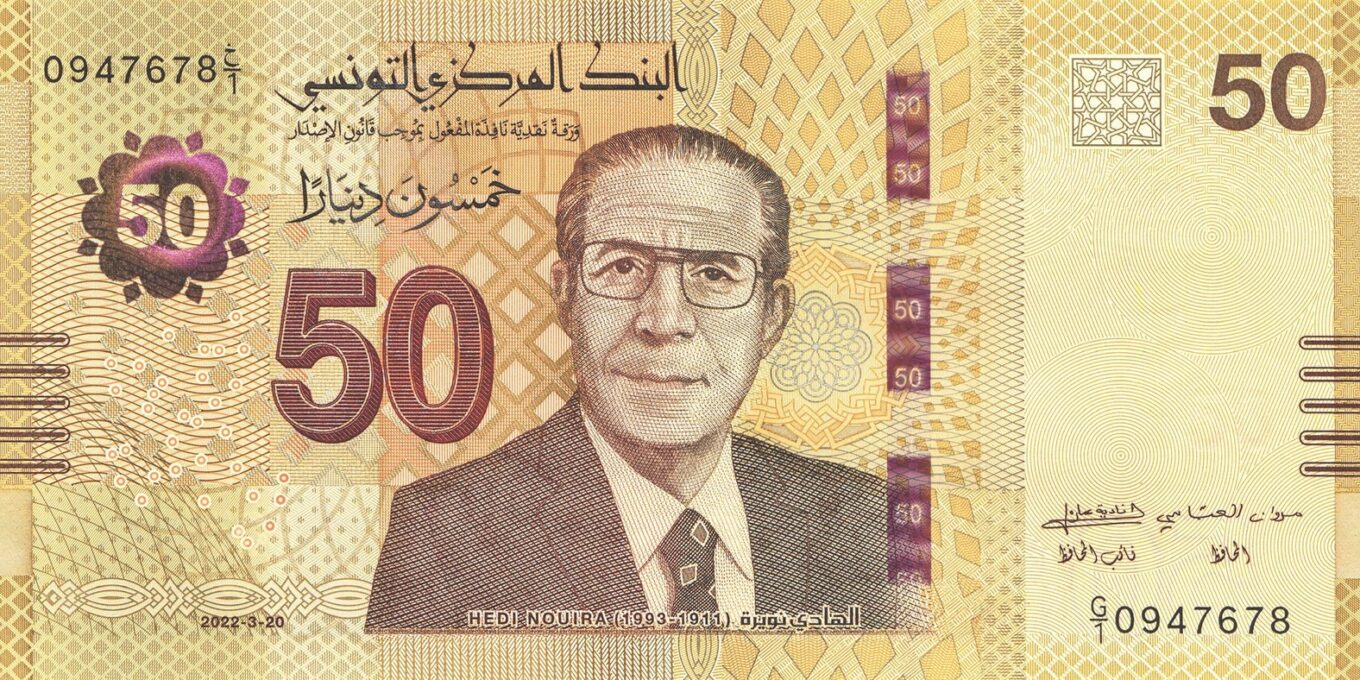
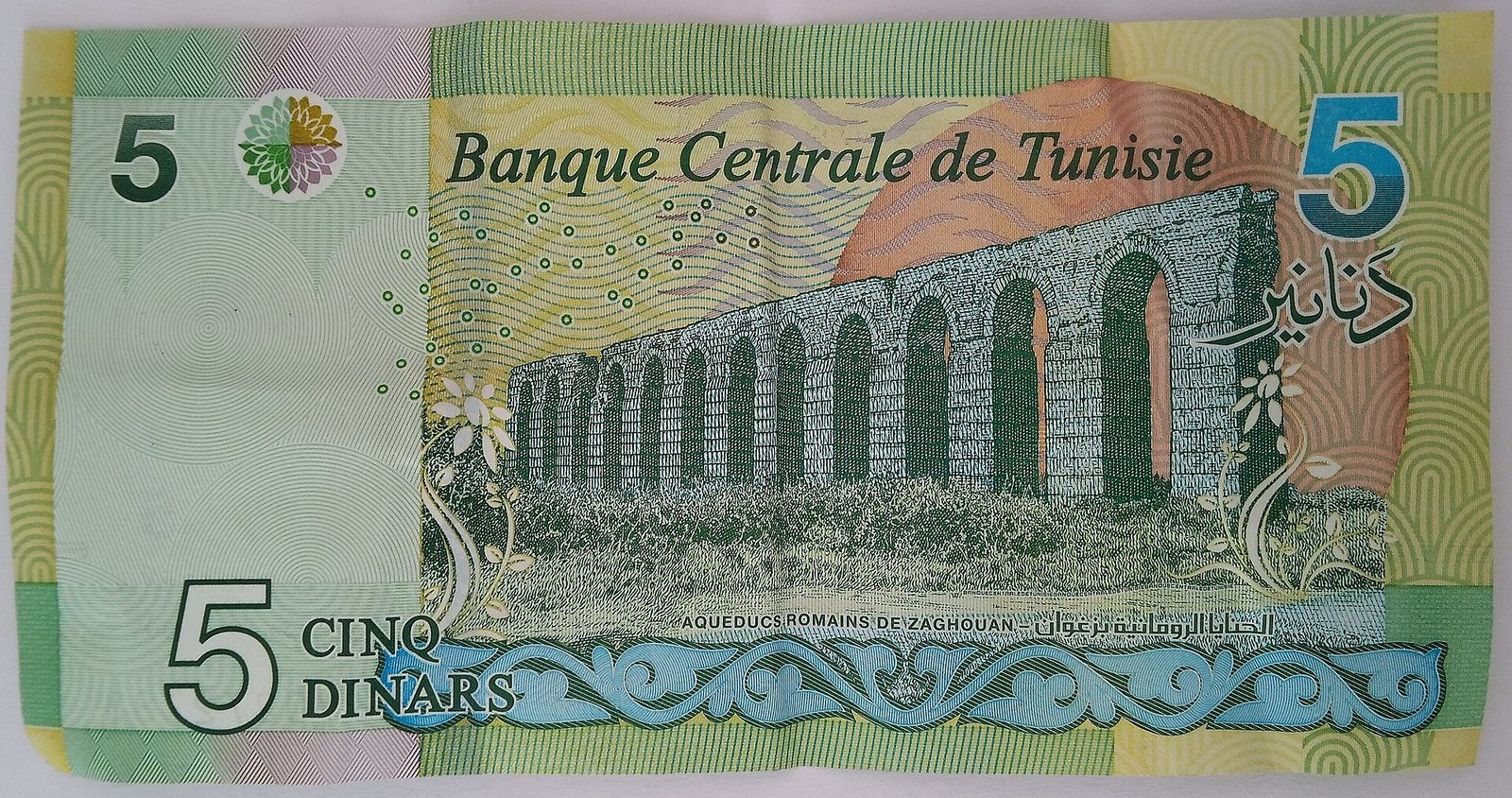
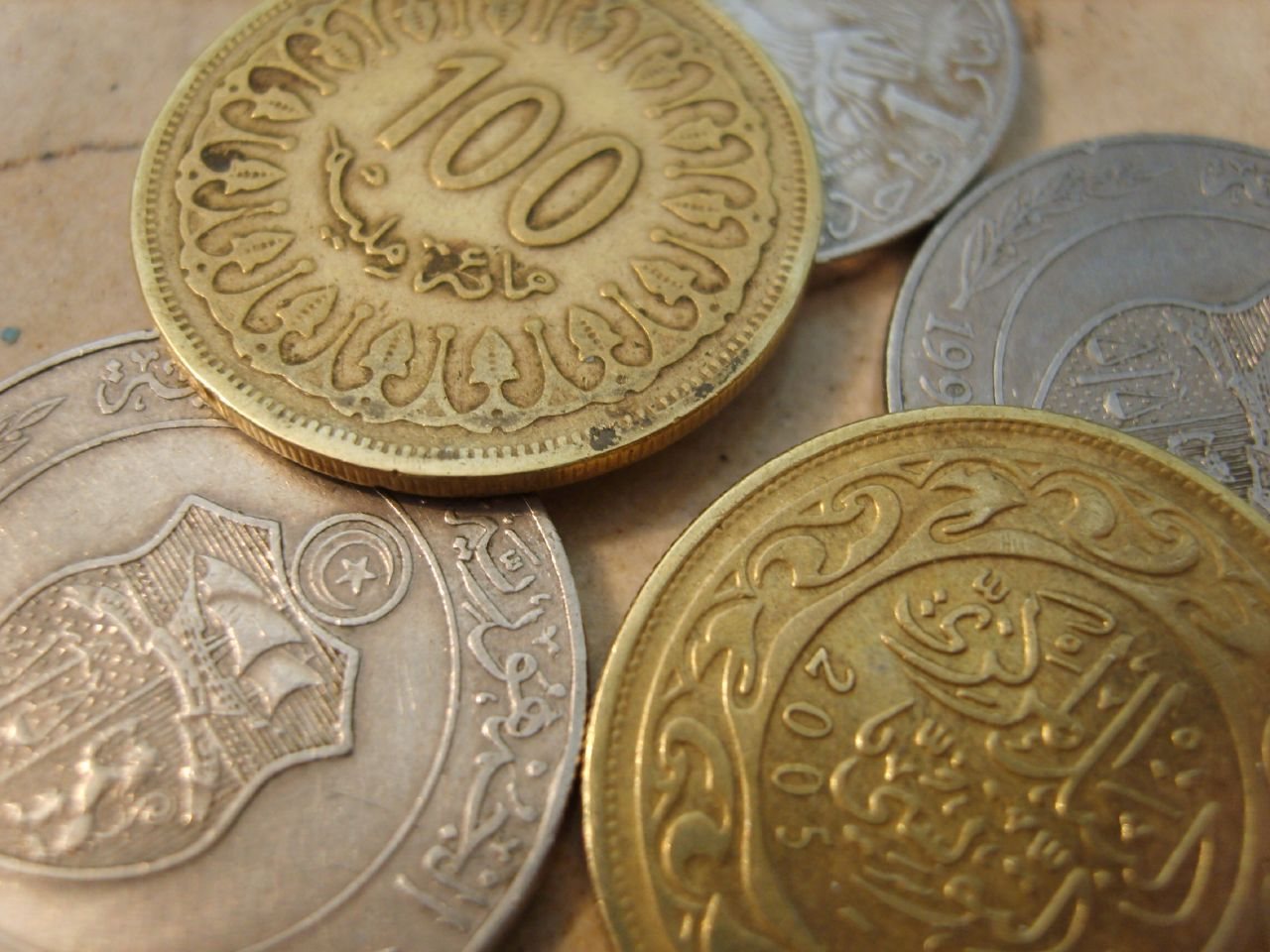
Tunisian banknotes come in 5, 10, 20 and 50 dinars, issued by the Banque Centrale de Tunisie. The current designs date from several different years, and you’ll see a mix in your change:
| Note | Series | Recent printing |
|---|---|---|
| 5 dinars | Type 2022, in circulation since April 2022 | The back shows the Zaghouan aqueduct |
| 10 dinars | Type 2020 | An updated printing of the same design went into circulation in October 2025 |
| 20 dinars | Type 2017 | A reprint with a new date and signatures was issued in February 2026; it circulates alongside the older 20s |
| 50 dinars | Type 2022, in circulation since April 2022 | A reprint with new signatures went into circulation in September 2025 |
The new printings are the same designs with new dates and signatures, and older notes of the same type remain in use alongside them, so don’t be alarmed if two 20-dinar notes in your wallet look slightly different. Much older series, such as the notes of the 1970s, 1980s and early 1990s, have been withdrawn from circulation and are now collectors’ items; if someone hands you one as change, hand it back.
Millimes and how prices are written
One dinar is divided into 1,000 millimes, and you’ll see prices written with three digits after the separator: something marked 2,500 or 2.500 costs two and a half dinars, not two thousand five hundred. It confuses almost everyone on day one, especially in cafés and markets. If a price looks absurdly high, check where the separator is.

Best currency to take to Tunisia
Either pounds or euros will do the job. Both are quoted daily by the Banque Centrale de Tunisie and exchanged at banks and bureaux across the country, and the BCT’s banknote rates for both sit close to the interbank rate. A few practical points:
- Bring clean, undamaged notes. Torn, marked or very worn notes can be refused at exchange counters.
- Don’t bring a huge wad. For most holidays, a few hundred pounds in cash plus a debit card is plenty. Change what you need for a few days at a time rather than everything on day one, so you don’t end up with leftovers.
- Bring a card as back-up. ATMs are common in towns and resorts, and a card means you never need to carry large amounts of cash.
- Euros are handy if you’re travelling on. If your trip continues to Europe, euros save a conversion, but there’s no rate advantage to buying euros in the UK just to change them again in Tunisia.
Where to change money
At the airport
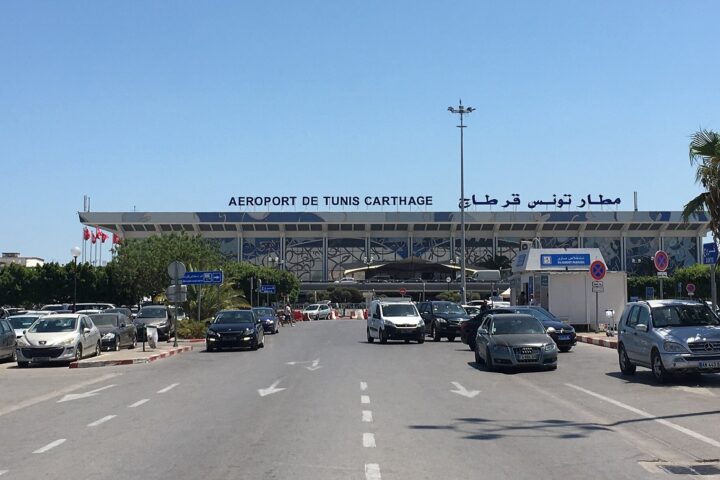
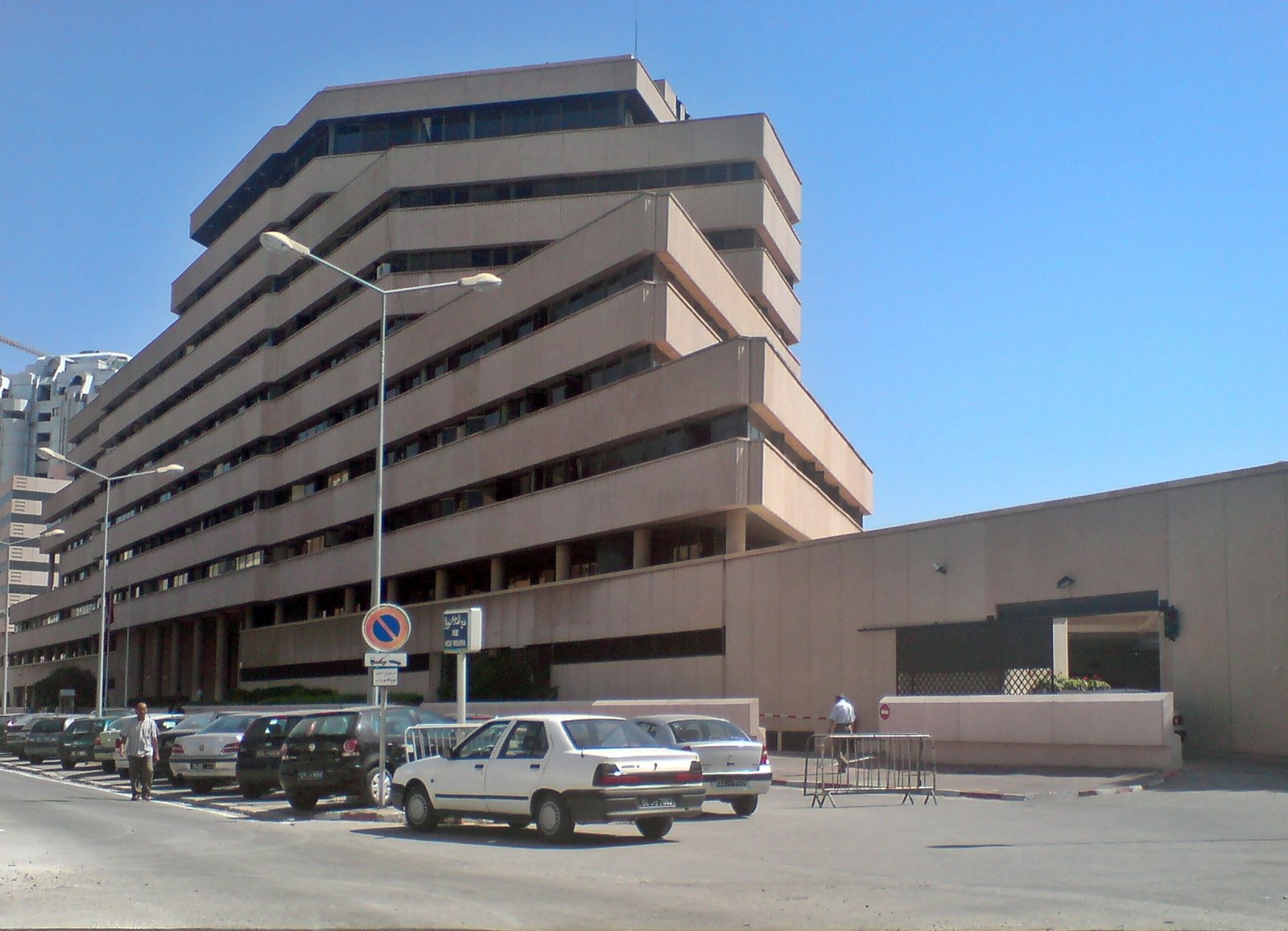
Exchange counters operate at the main international airports. The Banque Centrale de Tunisie’s list of authorised bureaux de change, dated 1 May 2026, includes counters on the ground and first floors at Tunis-Carthage, in the public hall at Monastir and in both the arrivals and departures halls at Enfidha-Hammamet. Changing enough on arrival for a taxi, tips and your first day or two is sensible, especially if you land late.
Banks
Banks change money in towns and cities, and they’re the place to go for bigger sums. Take your passport with you, and keep the receipt. Opening hours vary, so a bank isn’t the answer late in the evening.
Authorised bureaux de change
Tunisia licenses private exchange bureaux, and the BCT publishes the list. As of 1 May 2026 it had 465 numbered entries, from Tunis and Sousse to Djerba, Mahdia and Tabarka, many of them in tourist areas. They’re often quicker than a bank and open longer hours. Look for the official licence and ask for a receipt every time.
Hotels
Some hotels will change money at reception. It’s convenient, but compare the rate with a bank or bureau before you change a large amount, and as always, keep the receipt.
Avoid street changers
You may be offered a “better rate” by someone outside a bank or in a souk. Say no. Street changers can’t give you an official receipt, which means you can’t change your dinars back at the end, and swapping cash with strangers is an easy way to be short-changed or handed old, withdrawn notes. Stick to banks, airport counters and BCT-authorised bureaux. Our guide to common scams in Tunisia covers the money tricks to watch for.
ATMs in Tunisia
Using an ATM with a UK debit card is the easiest way to get dinars for most visitors. The Canadian and Australian governments both say ATMs are widely available in tourist areas and in the big towns and cities. Figures published by the Banque Centrale de Tunisie for the first half of 2026 counted 3,427 ATMs across the country.
Some practical advice:
- Tell your bank you’re travelling, if it asks you to, so a foreign withdrawal isn’t blocked.
- Check your card’s foreign fees before you go. Some UK debit and credit cards charge a fee per withdrawal and a percentage on the conversion; others are designed for travel and charge little or nothing. Your card issuer’s website will tell you.
- Read the screen. The ATM may show its own fee before you confirm. If it offers to convert the amount into pounds for you, decline and choose to be charged in dinars: the machine’s own conversion is usually worse than your bank’s.
- Use ATMs attached to banks, ideally inside or in daylight, and cover the keypad.
- Keep the slip. An ATM withdrawal is your exchange record too.
- Have a back-up. Bring a second card, kept separately, in case one is swallowed or blocked.
The FCDO notes that in extreme cases, power cuts can disrupt ATMs and card payments, usually only temporarily. Don’t leave it until your last dinar to look for a machine.
Paying by card
Canada’s and Australia’s travel advice both say many establishments in urban and tourist areas accept credit cards: larger hotels, many restaurants in the resorts and cities, supermarkets and bigger shops. Card use in Tunisia is growing fast, with the BCT reporting rising numbers of card and electronic payments through 2026.
But Tunisia is still a country where cash matters. You’ll need dinars for:
- taxis, which Canada’s advice says generally only accept cash;
- louages, buses and trains; see our guide to getting around Tunisia;
- small cafés, street food and most market stalls;
- entry tickets at many archaeological sites and museums;
- tips, which are a part of daily life in Tunisia;
- doctors and hospitals, which, according to Australia’s advice, usually want payment before treatment, sometimes in cash.
When you pay by card, the same rule applies as at the ATM: if the terminal offers to charge you in pounds, choose dinars.
Bringing cash in: the declaration rules
For a normal holiday you’ll be nowhere near the limits, but if you’re carrying a lot of cash, know the thresholds. Canada’s travel advice sets them out, and a Tunisian customs official quoted in La Presse in June 2026 also pointed to 20,000 TND as the level above which declaration is mandatory.
| Foreign currency you carry (TND equivalent) | Roughly in pounds | What to do |
|---|---|---|
| Up to 5,000 TND | Up to about £1,260 | Nothing special; keep exchange receipts |
| More than 5,000 TND | More than about £1,260 | Declare it to customs on arrival if you may take some of it home again |
| 20,000 TND or more | About £5,050 or more | Declaration required on arrival, departure and in transit |
| 30,000 TND or more | About £7,580 or more | Can’t be taken out of Tunisia, even if declared |
The FCDO’s own advice is to check the applicable rules and whether you need to make a declaration on arrival, because undeclared foreign currency may be confiscated. If you’re bringing a significant sum, for a long stay or a big purchase, declare it and keep the paperwork.
Changing dinars back before you leave
The Banque Centrale de Tunisie’s rules allow authorised bureaux to re-convert dinars left over by non-resident travellers who changed foreign currency into dinars during their stay. In practice, that means you can change leftover dinars back into pounds or euros at an exchange counter if you can show your official exchange receipts.
- Bring your receipts and passport to the counter.
- Check the allowance at the counter. How much you can change back depends on the dinars you obtained, so ask the bank or bureau rather than relying on a figure from a forum.
- Do it before security. At Enfidha-Hammamet, for example, the BCT list includes a counter in the departures hall. Don’t count on finding one airside.
- Better still, spend down. Plan the last couple of days so you need very little cash, then use what’s left, coins included, on coffee, snacks or a last souvenir.
How much money do you need?
It depends on your trip, but here’s how we’d think about it.
- All-inclusive week: your meals and drinks are covered, so cash is mainly for tips, the hotel tax if your package doesn’t include it, taxis, a couple of excursions and souvenirs. Our guide to Tunisia all-inclusive holidays covers the extras.
- Independent travel: you’ll spend more day to day on food, transport and entry fees, but most of it is cheap by UK standards, and site tickets such as Kerkouane’s 8 TND are modest. Use ATMs as you go rather than carrying everything.
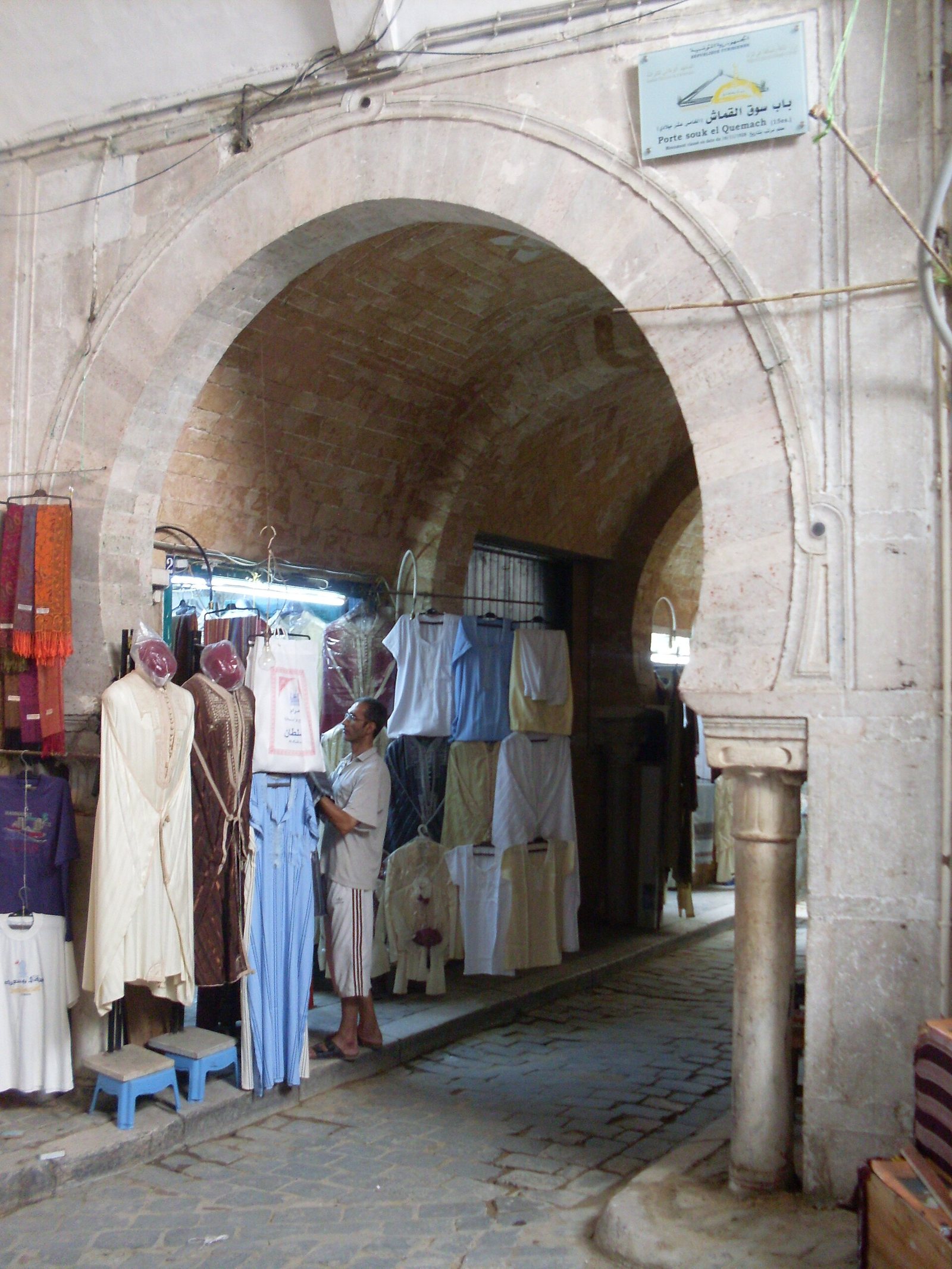
- Shopping in the souks: prices aren’t fixed, so cash in small notes helps when haggling in places like the Tunis medina or Houmt Souk on Djerba.
Money safety tips
- Carry small notes. Taxi drivers and stallholders don’t always have change for a 50.
- Count your change before you walk away, especially in your first days when the notes and millimes are unfamiliar.
- Split your money. Keep a day’s cash in your pocket and the rest, plus a back-up card, in the hotel safe.
- Agree taxi fares or insist on the meter. This is a common place to overpay.
- Keep receipts together in one place, with your passport.
- Use your card for big purchases in established shops, and pay in dinars.
Tunisia’s tourist areas are, on the whole, relaxed places to carry money, but the usual big-resort cautions apply. Our guide to whether Tunisia is safe covers petty crime and how to avoid it.
Tunisian dinar: frequently asked questions
Can I buy Tunisian dinars in the UK?
Not from mainstream providers. The dinar is a closed currency, and its export and import are restricted, so UK banks and the Post Office don’t stock it; the Post Office’s online travel money list doesn’t include it. Take pounds or euros and a debit card, and change money or use an ATM when you arrive.
Can you take Tunisian dinars out of Tunisia?
No. The FCDO says you are not allowed to take Tunisian dinars out of Tunisia, and Canada’s and Australia’s advice describes importing and exporting them as prohibited. Spend what you have or change it back at an authorised counter before you leave, showing your exchange receipts. Don’t plan to keep a few notes as a souvenir.
What is the best currency to take to Tunisia?
Pounds and euros both work well. The Banque Centrale de Tunisie quotes both daily, and banks and bureaux change both. There’s no advantage in buying euros in the UK just to change them again in Tunisia. Bring clean, undamaged notes and a debit card as back-up.
What is the exchange rate of the Tunisian dinar to the pound?
On 27 October 2026 the Banque Centrale de Tunisie’s interbank rate was 3.9906 dinars to £1. A handy rule of thumb is to divide dinar prices by four to get a rough pound figure. Check the BCT’s site before you travel, as the rate moves daily.
Are there ATMs in Tunisia?
Yes. Canada’s and Australia’s travel advice both say ATMs are widely available in tourist areas and in the larger towns and cities, and BCT figures counted 3,427 machines in the first half of 2026. Check your card’s foreign fees, choose to be charged in dinars, and carry a back-up card.
Can I use my credit card in Tunisia?
In many places, yes: many establishments in urban and tourist areas take cards, including larger hotels, restaurants and shops. But taxis generally want cash, as do markets, small cafés and many site ticket offices. Carry dinars for everyday spending and use your card for bigger bills.
Where is the best place to exchange money in Tunisia?
Banks and BCT-authorised bureaux de change generally give fair rates and official receipts. Airport counters at Tunis-Carthage, Monastir and Enfidha-Hammamet are handy for your first dinars. Hotels are convenient but compare the rate first, and never change money with street dealers: they can’t give you the receipt you need to change dinars back.
Can I change dinars back into pounds when I leave?
Usually, yes, if you have your official exchange receipts. The Banque Centrale de Tunisie’s rules let authorised bureaux re-convert leftover dinars for non-resident travellers who exchanged foreign currency. Ask at the counter how much you can change back, and do it before passport control.
How much cash can I bring into Tunisia?
There’s no small cap on bringing in foreign currency, but large amounts must be declared. According to Canada’s travel advice, 20,000 TND or more in foreign currency must be declared, and amounts over 5,000 TND should be declared if you might take the money home. You can’t leave with 30,000 TND or more.
Why are Tunisian prices written with three decimal places?
Because one dinar is made up of 1,000 millimes. A price of 2,500 or 2.500 means two and a half dinars, not 2,500. It catches most visitors out on their first day, so if a café bill looks astronomical, look again at where the separator sits.
Final thoughts
The closed-currency rules sound daunting, but in practice they come down to a simple routine: arrive with pounds or euros and a card, get dinars at the airport or an ATM, keep every receipt, carry small notes, and run your dinars down before you fly home. Do that and money will be the least of your worries in Tunisia.
Next, check the entry rules in our guide to visas and passports for Tunisia, brush up on the rest of the things to know before you go, or plan your arrival with our where to stay in Tunisia guide.
Written by the Tunisia Tourism Guide team — an independent UK-focused guide to travelling in Tunisia. We don’t sell tours or take hotel commissions. Prices and advice were checked at publication; always confirm current details before you book.
Photo credits
All images via Wikimedia Commons, used with thanks: The back of the 5-dinar note © DrRachT (CC BY-SA 4.0); Tunisian dinar and millime coins © 金娜 Kim S (CC BY-SA 2.0); An earlier 10-dinar note with coins © Timo Schmidt (Copyrighted free use); The Banque Centrale de Tunisie headquarters © Citizen59 (CC BY-SA 3.0); A souk lane in the Tunis medina: Rais67 (Public domain); The Marche Central in Tunis: Rais67 (CC0); A 50-dinar banknote: Lrj900 (CC0).