Blog

  • Tunis Travel Guide: Things to Do in the Capital (2026)

    Tunis Travel Guide: Things to Do in the Capital (2026)

    By Joseph — last updated 6 June 2026. Prices checked against Tunisia’s April 2026 heritage-site repricing; transport status checked the week of publication.

    Most visitors to Tunisia never give its capital a chance — they land, get bussed to the beach, and Tunis becomes motorway hoardings seen from a coach window. One slow afternoon in the medina, mint tea on a rooftop, was all it took to convince me they’re missing the best city break in North Africa.

    The best things to do in Tunis are wandering the UNESCO-listed medina, seeing the Roman mosaics at the Bardo Museum, riding the TGM train out to the ruins of Carthage and the blue-and-white village of Sidi Bou Said, walking Avenue Habib Bourguiba, and eating brik and lablabi where locals queue for them.

    This guide is written for UK travellers — whether you’re flying in direct for a long weekend, tacking two capital days onto a beach holiday, or stepping off a cruise ship at La Goulette with eight hours to use well. I’ve packed in everything I wish I’d known the first time: exact entry prices under the new April 2026 tariffs, how the TGM actually works, which museums are closed on Mondays, and an honest verdict on what’s worth your time.

    Is Tunis worth visiting? My honest take

    Yes — and I’d go further: Tunis is the most underrated city break in the Mediterranean right now. Where else can you stand in a 1,300-year-old mosque courtyard, see the world’s finest Roman mosaic collection, picnic above the harbour Hannibal sailed from, and drink mint tea in a clifftop village that seduced Paul Klee — all in one weekend, on a three-hour flight from London, in a city where a generous lunch costs a fiver?

    The honest caveats: Tunis is not a polished tourist product. Pavements are cracked, some grand colonial buildings are crumbling, the medina hassle is real (though gentler than Marrakech, in my experience), and much of the city goes quiet after dark — this is a capital that lives by day. Sundays shut most of the souks; Mondays shut most of the museums. If you need rooftop cocktail bars and seamless logistics, you’ll find Tunis rough around the edges. If you like your cities layered, lived-in and absurdly good value, you’ll be plotting a return visit on the flight home.

    How Tunis is laid out (read this first)

    Tunis confuses first-timers because it’s really three cities stitched together, and the famous sights aren’t where you expect. Nothing on a “Tunis” postcard — Carthage’s columns, Sidi Bou Said’s blue doors — is actually in central Tunis. Here’s the map in your head:

    Zone What it is Highlights How you get there
    The medina The walled Arab old city, founded in the 7th century — UNESCO-listed since 1979 Zitouna Mosque, souks, palaces, rooftop cafés On foot from Bab el Bhar
    Ville Nouvelle The French-built new town along Avenue Habib Bourguiba Cathedral, Théâtre Municipal, Marché Central, cafés On foot; most hotels are here
    The Bardo A western suburb housing the national museum in a beylical palace The world’s great Roman mosaic collection Taxi (15–20 min) or metro
    The TGM coast Seaside suburbs strung along a Victorian-era suburban railway Carthage, Sidi Bou Said, La Marsa, La Goulette TGM train from Tunis Marine

    The crucial orientation point is Bab el Bhar (the “Sea Gate”, which the French called Porte de France): the freestanding arch where Avenue de France meets the medina. Stand under it and the old city’s lanes rise to the west; the dead-straight, tree-lined Avenue Habib Bourguiba runs east towards the lake, the TGM station and, eventually, the sea. Everything in central Tunis hangs off that axis, and you can walk the lot.

    Things to do in Tunis at a glance

    # Thing to do Zone Best for Time needed
    1 Get lost in the medina Medina Everyone Half a day
    2 Zitouna Mosque courtyard Medina History & architecture 30–45 min
    3 Haggle in the souks Medina Shoppers 1–2 hours
    4 Palaces & the beys’ mausoleum Medina Quiet corners 1–2 hours
    5 Mint tea on a rooftop terrace Medina The view 1 hour
    6 Street food: lablabi, brik, fricassé Medina Budget eats Ongoing
    7 Walk Avenue Habib Bourguiba Ville Nouvelle Café culture 1–2 hours
    8 Cathedral & Théâtre Municipal Ville Nouvelle Architecture 45 min
    9 Bab el Bhar at golden hour Ville Nouvelle Photographers 20 min
    10 Marché Central food market Ville Nouvelle Food lovers 1 hour
    11 Bardo National Museum Bardo Unmissable 2–3 hours
    12 Ride the TGM train TGM coast The journey itself 35 min each way
    13 The ruins of Carthage TGM coast Unmissable Half a day
    14 Byrsa Hill viewpoint TGM coast Views & history 1 hour
    15 Sidi Bou Said village TGM coast Everyone 2–3 hours
    16 Ennejma Ezzahra palace TGM coast Music & design 1 hour
    17 La Marsa & a La Goulette fish dinner TGM coast Local evenings Evening
    18 Day trip: Dougga Day trip Roman Tunisia Full day
    19 Day trip: Zaghouan, Thuburbo Majus & Uthina Day trip Ruins without crowds Full day
    20 Day trip: Bizerte Day trip Old port atmosphere Full day
    21 Catch a show: festivals & the theatre Various Culture by night Evening
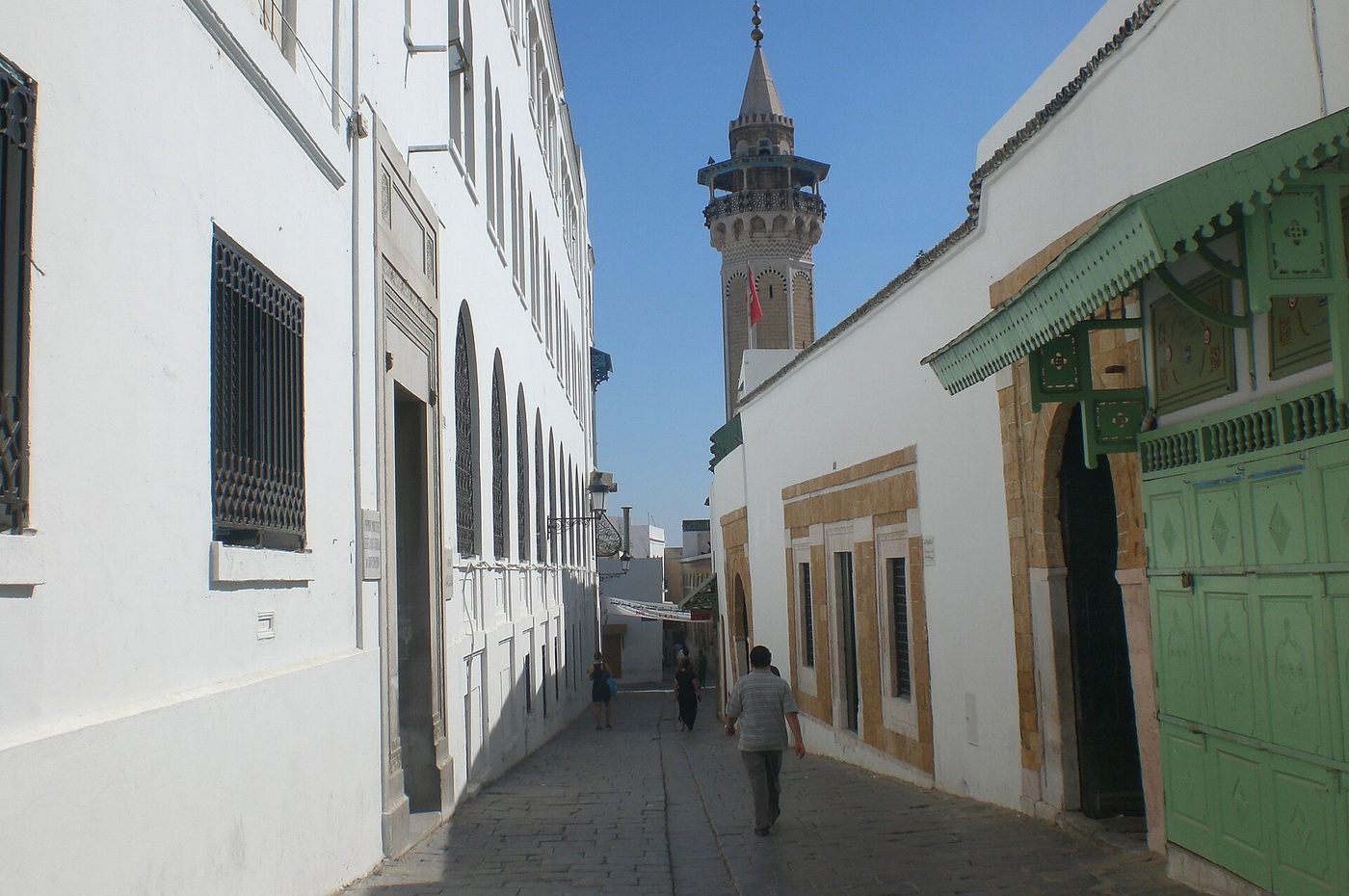
    Rue du Diwan, a whitewashed lane in the UNESCO-listed Tunis medina

    The medina: Tunis’s 1,300-year-old heart

    Founded in the 7th century and continuously inhabited ever since, the medina of Tunis was one of the first places in the Arab world inscribed by UNESCO (1979, the same year as Carthage), and it contains some 700 listed monuments — palaces, mosques, mausoleums, madrasas and fondouks layered behind plain whitewashed walls. Unlike Marrakech’s medina, it isn’t built for tourists: most of what you’ll pass is simply people’s lives. That’s exactly why I love it.

    1. Get properly lost in the lanes

    Set aside half a day, enter under Bab el Bhar, and surrender to the geography. The main spine — Rue Jamaa Ez-Zitouna — funnels you uphill past souvenir stalls to the great mosque, and it’s the only part that ever feels crowded. Turn off it almost anywhere and within two minutes you’ll have a lane to yourself: studded doors in faded ochre, cats asleep on marble doorsteps, the knock of a coppersmith’s hammer somewhere out of sight. Rue du Diwan, Rue Sidi Ben Arous and Rue du Pacha are particularly lovely. I always tell first-timers: you cannot stay lost for long. The medina is barely a kilometre across, downhill always leads east towards the Ville Nouvelle, and any shopkeeper will point you back to “Jamaa Zitouna” with a smile.

    One practical rhythm to know: the souks largely close on Sunday (a colonial-era habit the trading quarters never dropped), when the lanes are atmospheric but shuttered, and things also pause around Friday midday prayers. If shopping and bustle are the point, come Monday to Saturday. If photographs of empty, echoing lanes are the point, Sunday morning is quietly magical.

    2. Stand in the courtyard of the Zitouna Mosque

    The Great Mosque — Ez-Zitouna, “the mosque of the olive tree” — has anchored the medina since the 8th century, and its prayer hall was built largely with columns salvaged from Roman Carthage, which delights me every time I think about it. Non-Muslims can’t enter the prayer hall itself, but you can visit the vast marble courtyard from a viewing area, watch the light move along the arcades, and admire the square Hafsid minaret that owns the medina skyline.

    Visits are generally mornings only (roughly 9am to midday), and the mosque is closed to visitors on Fridays and during prayer times; a small entry fee may apply depending on the day and the gatekeeper. Dress modestly — shoulders and knees covered, and women may be offered a headscarf. It’s worth planning your medina morning around, because the courtyard is the old city’s one great open space and the views from the surrounding terraces all frame its minaret.

    Courtyard of the Zitouna Mosque in the medina - one of the best things to do in Tunis

    3. Haggle your way through the souks

    The covered souks wrap around the Zitouna in concentric rings, historically arranged so the “noble” trades sat closest to the mosque. Souk El Attarine, the perfumers’ souk, still sells amber, jasmine and orange-blossom essence from cubbyhole shops; Souk des Chéchias is where the last makers of Tunisia’s burgundy felt caps work their presses (watching them is free and fascinating); Souk El Berka, the old jewellery market, glitters with gold under painted arches. My rule for buying anything: decide what it’s worth to you, open at half the asking price, and keep it friendly — Tunisian haggling is a conversation, not combat. Ceramics, olive-wood bowls, harissa and a chéchia you will absolutely wear once are the classic hauls. Cash (dinars) rules in the souks, so come prepared.

    4. Find the palaces and the mausoleum of the beys

    The medina’s deeper secret is its palace architecture. Tourbet el Bey, the mausoleum of the Husainid dynasty that ruled Tunisia from 1705 until 1957, reopened to visitors in 2023 after restoration: a hush of green-tiled domes and Italianate marble where the beys lie under carved stone turbans. Entry is a few dinars (prices were being re-set across state sites when I last checked — have small notes ready). Dar Lasram, an 18th-century palace on Rue du Tribunal, houses the medina conservation association and usually lets you wander into its courtyard for free on weekdays. I’d skip planning around Dar Ben Abdallah, the folk-traditions museum — it has been closed for restoration on and off for years and opening is unreliable. If a door to any old fondouk stands open, poke your head in; the worst that happens is a friendly wave out.

    5. Take mint tea on a rooftop terrace

    Several carpet shops and cafés near the Zitouna have colonised the rooftops, and a pot of mint tea with pine nuts up there — white terraces to the horizon, the minaret close enough to touch, swifts wheeling overhead — is my single favourite cheap thrill in Tunis. Café Panorama (follow the signs from Rue Jamaa Ez-Zitouna) and the terrace at El Ali, a restored café-restaurant at 45 bis Rue Jamaa Ez-Zitouna, are reliable; expect to pay a tourist-terrace 5–8 TND for the tea and consider it rent for the view. A polite warning: if a charming stranger insists on leading you to a “special exhibition with a free view, only today”, it ends at a carpet showroom. The terraces above are real; the urgency is not.

    6. Eat like a local: lablabi, brik and fricassé

    Some of Tunisia’s best food costs pennies and is eaten standing up. Lablabi — a workman’s breakfast of chickpeas in garlicky, cumin-spiked broth poured over torn bread, crowned with harissa, capers, tuna and a barely-set egg — is the dish I crave most from home; the hole-in-the-wall joints around the medina and Halfaouine do it best for 3–6 TND, and you order by sitting down and nodding. Brik à l’œuf, a shatteringly crisp pastry triangle around a runny egg and tuna, is everywhere and dangerous to eat in good clothes. Fricassé — a small fried roll stuffed with tuna, harissa, olives and potato — is the 2 TND snack that ruins you for meal-deal sandwiches forever. For a proper sit-down lunch in the medina, Fondouk El Attarine (in a restored caravanserai off the perfume souk; closed Sundays) does a fish couscous worth crossing town for, and El Ali’s daily plates are honest and generous. Note that most medina restaurants serve no alcohol and close by early evening.

    The Ville Nouvelle: colonial Tunis and café life

    East of Bab el Bhar, the French laid out a grid of boulevards in the late 19th century, and the result is one of the Mediterranean’s great ensembles of belle-époque, art nouveau and art deco architecture — some 400 listed buildings in varying states of glory and decay. This is where Tunisians actually hang out: the pavement cafés, the patisseries, the bookshops, the evening passeggiata.

    7. Walk Avenue Habib Bourguiba end to end

    Tunis’s Champs-Élysées (the comparison is compulsory; the locals make it themselves, with a wink) runs arrow-straight from Bab el Bhar to the lagoon, divided by a central promenade under clipped ficus trees. Walk it slowly. You’ll pass flower kiosks, newspaper stands, the wedding-cake Théâtre Municipal, grand café terraces full of arguments and espresso, and at the eastern end the landmark clock tower roundabout. The avenue is also modern Tunisian history in one street — it was the stage of the 2011 revolution — and there’s still a light security presence along it; you may be asked not to photograph official buildings (the Ministry of the Interior, conspicuously fenced, is the one to keep the camera away from). Stop at Café de Paris, pay 3 TND for a direct espresso, and people-watch under the same awnings that have shaded this corner since 1930.

    The clock tower at the eastern end of Avenue Habib Bourguiba, Tunis

    8. Look up at the Cathedral and the Théâtre Municipal

    The Cathedral of St Vincent de Paul (1897) lands on Avenue Bourguiba like a Romanesque-Byzantine spaceship, its golden mosaic of Christ glowing above the porch. It’s a working Catholic cathedral — a reminder that Tunis has always been a layered, Mediterranean city — and visitors are welcome outside service times; entry is free and ten minutes inside is enough for the stained glass and the cool hush. Directly across the avenue, the Théâtre Municipal (1902) is the art nouveau confection locals call “the wedding cake”; if anything is playing while you’re in town, a ticket is cheap and the auditorium is gorgeous.

    Facade of the Cathedral of St Vincent de Paul on Avenue Habib Bourguiba

    9. Frame your photo at Bab el Bhar

    The Sea Gate of 1848 once stood in the city walls with waves almost at its feet — the lagoon has since been pushed back by landfill — and now it stands alone on Place de la Victoire, the hinge between the two Tunises. Come at golden hour, when the stone glows and half the city seems to funnel through the arch, and shoot from the medina side with the avenue framed beyond. The square around it has a couple of café terraces perfect for watching the world change century as it walks past.

    Bab el Bhar, the Sea Gate between the Tunis medina and the Ville Nouvelle

    10. Graze the Marché Central

    Two blocks south of the avenue on Rue Charles de Gaulle, the central market (Fondouk El Ghalla) is the city’s belly: pyramids of spiced olives, mountains of harissa-red peppers, fishmongers shouting the morning’s catch from Sfax and Bizerte, and stalls selling nothing but mloukhia leaves or pickled lemons. Mornings (Tuesday to Sunday) are the show; it winds down after lunch. Buy olives, dates, a jar of proper harissa and some halva, and you’ve sorted gifts for a fraction of souk prices — and nobody haggles here, which is its own kind of holiday.

    The Bardo: the museum that justifies the flight

    11. Spend a morning at the Bardo National Museum

    I’ll say it plainly: the Bardo is one of the world’s great museums, and if you see one indoor thing in Tunisia, make it this. Housed in a 19th-century beylical palace in the western suburbs (a museum since 1888), it holds what is widely considered the finest collection of Roman mosaics anywhere — entire floors lifted from villas at Sousse, El Jem, Dougga and Carthage and hung like paintings up the palace walls. The star is the 3rd-century mosaic of Virgil flanked by the muses Clio and Melpomene — the only known portrait of the poet made anywhere near his lifetime — but my own favourites are the great Triumph of Neptune, a whole room of writhing sea-gods, and the haul of bronzes and marble sunk off Mahdia in a Roman shipwreck around 80 BC. Give it two to three unhurried hours.

    The Virgil and the Muses mosaic at the Bardo National Museum

    The museum reopened in September 2023 after a two-year closure and is in better shape than I’ve ever seen it. The practical details, as of June 2026: closed Mondays; open roughly 9am–5pm in summer (May–September) and 9.30am–4.30pm in winter; entry 30 TND (about £8) for non-residents under the national tariff grid introduced on 1 April 2026, with a 2 TND rate for students and children; casual photography is now included in your ticket. A combined Bardo + Carthage ticket exists at 45 TND (about £12) — the easiest money you’ll save all trip if you’re doing both, and you should be. State museums advertise free entry on the first Sunday of the month, though official wording suggests this is aimed at residents — don’t build your itinerary around it.

    One piece of history deserves naming rather than whispering: in March 2015, 21 tourists were killed, including a British national, in a terrorist attack at the Bardo. Tunisia’s security posture changed profoundly after that year — you’ll see the bag scanners and the calm, visible policing — and the museum today feels as relaxed as any in southern Europe. I’ve written more about the wider picture in my honest guide to whether Tunisia is safe right now.

    Getting there: a metered taxi from the centre runs 15–20 minutes (expect 5–10 TND on the meter); line 4 of the métro léger (the city tram) also stops at “Bardo” if you fancy the local experience for small change. Combine the morning here with an afternoon medina wander — they’re the same story told in different materials.

    Out along the TGM: Carthage, Sidi Bou Said and the coast

    Everything in this section hangs off one beautiful fact: a suburban railway has been trundling from central Tunis out around the lagoon to the beach suburbs since 1872, and it remains the cheapest, easiest sightseeing line in North Africa. Base yourself on it for a day — Carthage in the morning, Sidi Bou Said for golden hour — and you’ll understand why Tunis city breaks are quietly brilliant.

    12. Ride the TGM itself

    The TGM (Tunis–Goulette–Marsa) leaves from Tunis Marine station at the lagoon end of Avenue Habib Bourguiba and rattles across a causeway to La Goulette before hugging the shore through Carthage’s leafy villa-suburbs to Sidi Bou Said and La Marsa — 18 stops, about 35 minutes end to end, for well under 1.5 TND (call it 30p; buy a ticket at the window, first class is pennies more and marginally less crowded). After a rolling programme of renovation works that suspended sections of the line at times through 2024–25, full service along the whole line resumed in February 2026, though short engineering closures still pop up — when they do, TRANSTU’s bus 347 shadows the route from Tunis Marine. I’ve date-stamped this because no two travel blogs agree: as of June 2026, the train is running.

    A station on the TGM line, the suburban train linking Tunis with Carthage and Sidi Bou Said

    The stops you actually need: Carthage Hannibal for the Antonine Baths and the heart of the ruins; Carthage Byrsa for the hilltop; Sidi Bou Saïd for the village (a ten-minute uphill walk from the station); La Marsa Plage for the end-of-the-line beach promenade. Trains run from very early until around midnight, but check the last departure at the window if you’re staying out for dinner — and keep a taxi (15–20 TND back to the centre) as plan B.

    13. Walk the ruins of Carthage

    Carthage breaks people’s hearts in the best way. The city that ruled the western Mediterranean — that sent Hannibal over the Alps — was erased so thoroughly by Rome in 146 BC, then rebuilt so grandly as Roman Carthage, that what survives is a series of dreamlike fragments scattered through one of Tunis’s poshest suburbs: presidential-palace hedges, bougainvillea, and then suddenly a field of headless columns running down to a violet sea. UNESCO listed it in 1979, the same year as the medina, and the whole site repays a half-day of unhurried wandering.

    Ruins of the Antonine Baths at Carthage, the largest Roman bath complex in Africa

    The one grouped ticket — 20 TND (about £5) for non-residents since the April 2026 repricing, valid same-day across the scattered sites — covers the headline Antonine Baths (the largest Roman bath complex in Africa, its surviving basement columns hinting at something cathedral-scale), the Roman theatre, the Roman villas and Odeon quarter, the Tophet (the haunting Punic sanctuary of stelae), the Magon Quarter down by the sea wall, and the Punic Ports — two placid lagoons that were once the naval harbours of a superpower. Sites open roughly 8am–6pm in summer. Buy the ticket at the first site you reach (the Baths booth at Carthage Hannibal is the natural start), keep it handy, and expect a friendly stamp-check at each gate. Between sites you simply stroll the suburb — part of Carthage’s strange charm.

    14. Climb Byrsa Hill for the view

    Byrsa was the citadel of Punic Carthage, and the panorama from the top — over the excavated Punic quarter, the twin ports, the gulf and the twin-horned mountain of Bou Kornine across the water — is the single best “explain this landscape to me” moment in greater Tunis. The hilltop ensemble (the former cathedral of St Louis and the Carthage National Museum) has been under long-term renovation: the museum has been closed since 2018 for a major EU-backed rebuild, with reopening repeatedly trailed for 2026 — it hadn’t reopened when I last checked in early June 2026, so treat any “it’s open!” rumour with caution and check locally. The view, mercifully, is always open. Down the hill, the Roman and Paleo-Christian Museum reopened in December 2025 after its own two-year restoration — small, calm and worth twenty minutes.

    Looking across the northern suburbs of Tunis to the gulf and the mountains of Cap Bon

    15. Give Sidi Bou Said a whole golden afternoon

    Yes, it’s the postcard. Yes, it’s busy by 11am. Go anyway — but go at 4pm and stay for sunset, when the coach tours have drained away and the village returns to itself. Sidi Bou Said is a clifftop tumble of whitewashed lanes, cobalt studded doors and window grilles like wrought-iron lace, draped in bougainvillea above a toy marina. Paul Klee painted here in 1914 and called the colour intoxicating; a century on, the light still does something to you. Wander beyond the main drag — the lanes north of the lighthouse are emptiest — then queue for a bambalouni (a hot sugared doughnut, 1–2 TND) and find a wall to watch the gulf turn pink.

    A studded blue doorway and art stalls in Sidi Bou Said

    Café des Nattes, at the top of the main street, is the historic one — mint tea on rush mats where Beauvoir, Camus and half of 20th-century French letters once sat; Café des Délices below has the famous terrace cascading towards the marina (check prices before ordering; fame has its tax). Dar El Annabi, a private 18th-century house museum near the top of the village, opens its flower-stuffed courtyards and rooftop for around 10 TND including a glass of tea — touristy, but the terrace view over the bay is the best in the village. The village itself is free, always.

    Blue-and-white houses and orange trees in Sidi Bou Said

    16. Hear a palace sing at Ennejma Ezzahra

    Five minutes’ walk downhill from Sidi Bou Said’s crowds stands my favourite quiet wonder in greater Tunis: Ennejma Ezzahra, the palace that French painter-musicologist Baron Rodolphe d’Erlanger built between 1912 and 1922 as a love letter to Arab-Andalusian architecture, all carved stucco, marble courtyards and gardens running to the sea. It now houses Tunisia’s centre for Arab and Mediterranean music: the baron’s instrument collection is displayed inside, and the palace hosts intimate concerts. Entry is 10 TND (students 5 TND); it’s closed Mondays and public holidays, open roughly 9am–5pm with a midday pause most of the year (9am–3pm in July–August). Interior photography needs special permission — honestly, it’s nicer to just look.

    17. End a day in La Marsa — and eat fish in La Goulette

    Ride the TGM to its terminus and you get La Marsa, the seaside suburb where well-heeled Tunis actually lives: a long corniche made for evening strolling, a proper town beach, gelato queues and café terraces with nobody trying to sell you a carpet. It pairs perfectly with Sidi Bou Said (one stop apart) for a low-effort final evening. Alternatively, hop off halfway back at La Goulette, the port suburb, where the strip of fish restaurants serves grilled daurade and spicy seafood couscous to noisy Tunisian families until late — a complete fish dinner with salads runs 30–50 TND, and the people-watching is free. Both feel like the city with its shoes off.

    Day trips: Roman Tunisia on Tunis’s doorstep

    Tunis sits at the centre of a constellation of ancient sites that would each be a national treasure anywhere in Europe — and here you’ll often have them nearly to yourself. A note on prices: Tunisia re-set entry fees across its state heritage sites on 1 April 2026 (most now fall between 5 and 30 TND under a national tariff grid), and many third-party websites still quote the old prices — budget a little extra and carry small notes.

    18. Dougga: the best-preserved Roman town in North Africa

    About 110 km southwest of the capital, Dougga (UNESCO-listed in 1997) is the one that drops jaws: a complete Roman country town spilling down an olive-clad hillside — capitol, theatre, temples, baths, brothel, latrines and all — with wheat fields where the crowds should be. Standing in the theatre with nothing but wind and birdsong, you’ll wonder how this isn’t world famous. Without a car, take a louage (shared minibus) from Tunis’s northern station to Téboursouk (around two hours, 10–15 TND) and negotiate a taxi the last 6 km — agree the return wait too, around 20 TND total. Honestly though, this is the day I’d book a driver or small-group tour for: you’ll see more, including stops below, for £40–60. For reassurance-checkers: Dougga sits in Béja governorate, comfortably outside every FCDO advisory zone (the nearest restricted areas lie much further west and south — see the safety section below).

    19. Zaghouan, Thuburbo Majus and Uthina: the aqueduct trail

    The Romans watered Carthage from a spring 90-odd kilometres away at Zaghouan, where a graceful 2nd-century Temple of the Waters still cups the source under a craggy mountain; long stretches of the aqueduct that carried it still stride across the plain beside the Tunis road, which makes the drive half the fun. Pair it with Thuburbo Majus (a substantial Roman city, golden columns against wheat) and Uthina/Oudhna (a half-buried amphitheatre 30 km from Tunis that you may share only with swallows) for the classic “ruins without a single coach” day. Tours from Tunis combine all three from around £100 per person, or a hired driver does it for similar money split between you. Entry fees at each are modest; carry 10–20 TND per site in cash and expect the gate price to have moved with the April 2026 grid.

    20. Bizerte: the old port the guidebooks skip

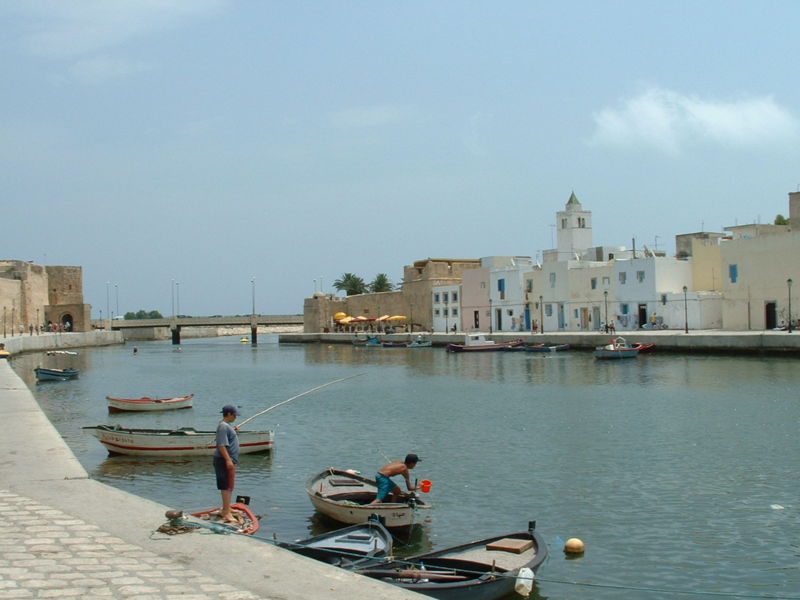
    An hour or so north of Tunis (65 km — take a louage from the northern station; the once-a-day train is uselessly timed), Bizerte wraps a photogenic old harbour in pastel houses and fishing nets below a stout kasbah, with proper beaches stretching north and a fish market that out-shouts anywhere in the capital. It was the last piece of Tunisia France gave up (1963), and it wears its history saltily. Lunch on the old port, an hour in the kasbah lanes, an ice cream on the corniche: that’s the day. It’s the least “sight”-driven trip on this list and, for that reason, the one that feels most like travel.

    21. Catch a show: festivals and stages

    Tunis does culture by night better than any city in North Africa. The summer headliner is the Carthage International Festival — its 60th edition runs in July–August 2026 — which fills the ancient theatre at Carthage with everything from Arab pop royalty to symphony orchestras under the stars (the 2026 programme lands in late June; check the festival’s site for dates and book popular nights early). Year-round, the Théâtre Municipal’s playbill is cheap and gorgeous, the cinema culture is lively, and in Ramadan the medina’s festival fills restored palaces with music — though note Ramadan fell in February–March in 2026, so summer visitors will miss that one.

    Things to do in Tunis by type of traveller

    History lovers

    You’ve hit the jackpot: Bardo + Carthage on the combined 45 TND ticket, Dougga as a day trip, and the medina’s 700 monuments as connective tissue. Three full days minimum; you’ll leave plotting a return for Sousse, Kairouan and El Jem further south.

    Couples

    Sidi Bou Said at golden hour, a dar (courtyard guesthouse) in the medina, dinner in La Marsa, and a lazy morning over croissants on Avenue Bourguiba — Tunis is a quietly romantic city precisely because nobody’s marketing it that way. If you’re combining city and sand, my guide to where to stay in Tunisia maps the coast options.

    Families

    Kids tend to love the TGM train, the Punic Ports (space to run + boats), brik-watching at the market, and Bizerte’s harbour. The Bardo in small doses (mosaic “treasure hunts” work wonders). Pavements and traffic are the main stress with very small children; the coastal suburbs are calmer bases than the centre. For a softer first-Tunisia trip with a beach attached, see Hammamet — under an hour away.

    Budget travellers

    Tunis might be the best-value capital break in the Mediterranean: 30p trains, £1 street feasts, £5 museum mornings, medina dorms and budget dars from £15–25. Your biggest costs are the flight and, if you take them, day-trip tours — louages shrink those to pennies too.

    How many days do you need in Tunis?

    Two full days covers the essentials; three lets the city breathe; four adds a proper day trip. If Tunis is your gateway to a longer Tunisian loop, the capital pairs naturally with an onward run south — my guide to the best things to do in Tunisia sketches the big picture.

    Time Morning Afternoon Evening
    Day 1 Medina: Zitouna, souks, palaces Avenue Bourguiba, cathedral, Bab el Bhar Dinner in the Ville Nouvelle
    Day 2 TGM to Carthage: baths, Byrsa, ports Sidi Bou Said + Ennejma Ezzahra Sunset tea; fish in La Goulette
    Day 3 Bardo Museum Marché Central + missed medina corners La Marsa corniche
    Day 4 Day trip: Dougga, the Zaghouan trio, or Bizerte Pack, vowing to return

    Getting to Tunis from the UK

    Quietly, this got easy again. As of June 2026 there are direct flights from London to Tunis-Carthage with Tunisair from both Heathrow (T4) and Gatwick, and with Nouvelair from Gatwick — between them currently around eight or nine departures a week, with the schedule heaviest at Gatwick; flying time is about 2 hours 45 minutes to 3 hours. Schedules on this route do shuffle seasonally, so check current days before locking plans. From elsewhere in the UK (or when direct times don’t suit), the workhorse one-stops are Air France via Paris, ITA via Rome and Lufthansa via Frankfurt or Munich. Tunis-Carthage airport sits absurdly close to town — 8 km, 15–30 minutes by taxi depending on traffic.

    UK passport holders get 90 days visa-free; your passport should be valid for the full stay. Note that the UK GHIC card is not valid in Tunisia — proper travel insurance matters here.

    Arriving by cruise ship at La Goulette

    Cruise calls have returned to Tunis in force, and the terminal at La Goulette is a 15–25 minute drive from both the medina and Carthage — but it’s also one of the most aggressive taxi gauntlets in the Mediterranean, with quotes of $60–80 for what should be a 15–25 TND metered ride. Your options, best to worst: pre-book a driver or ship excursion if you want zero friction; negotiate a return-trip price firmly (knowing the meter rate) if you want flexibility; or do what I do — walk the ~900 m to the Goulette TGM stations and ride the train, towards Tunis Marine for the medina (then a 15-minute walk up Avenue Bourguiba) or the other way to Carthage Hannibal and Sidi Bou Said for pennies. With six hours ashore you can comfortably do Carthage’s baths plus Sidi Bou Said by train; with eight, add the medina. Carry small dinar notes (there’s an exchange desk in the terminal) and leave a fat margin for the all-aboard.

    Getting around Tunis

    Central Tunis is compellingly walkable — medina + Ville Nouvelle is one continuous stroll — and the TGM covers the coast. For everything else: metered yellow taxis are everywhere and cheap (flagfall under 1 TND; most cross-town rides 3–8 TND; the Bardo 5–10 TND). Insist on the meter — “compteur, s’il vous plaît” — or step out; at night fares legitimately rise about 50% between 9pm and 5am. A heads-up that catches travellers out: Bolt no longer operates in Tunisia (it pulled out in May 2025 after a regulatory dispute), and there’s no Uber; the local app that works in Greater Tunis is Yassir, worth installing before you fly. The métro léger tram network is extensive and costs small change — line 4 for the Bardo is the one tourists actually use — though carriages get sardine-tight at rush hour and pickpockets know it. For intercity hops, louages (shared eight-seat minibuses that leave when full) are the national superpower: Moncef Bey station serves the south and Hammamet/Sousse, the northern station serves Bizerte and the Dougga road, and fares work out around 7 TND per hour of travel.

    Money in Tunis: the closed-currency rules

    The Tunisian dinar is a closed currency: you cannot legally buy it before you travel or take it home, so everyone exchanges on arrival — airport desks are fine, banks and post offices marginally better, and ATMs dispense dinars readily (tell your bank you’re travelling). The rate hovers around 3.8–3.9 dinars to the pound as I write in June 2026. Tunis runs on cash: cards work in proper restaurants, supermarkets and hotels, but the souks, lablabi joints, taxis and the TGM ticket window do not negotiate with plastic. Two rules save headaches: keep your exchange/ATM receipts (you’ll need one to convert leftover dinars back at the airport, and you can re-export only a small amount in any case), and hoard small notes — a 50-dinar note meets genuine despair at a 2-dinar fricassé stand.

    Where to stay in Tunis

    Three good answers depending on your trip. A medina dar — a restored courtyard mansion — is the romantic choice and my default for first-timers: atmospheric, central, £40–90 a night for serious charm (pack earplugs for the dawn call to prayer, and arrange a luggage-friendly meeting point; cars don’t enter the lanes). The Ville Nouvelle has the business hotels and faded grande-dames along and off Avenue Bourguiba — practical, walkable, best for short stays and solo arrivals after dark. The TGM coast (Sidi Bou Said, La Marsa, Gammarth’s resort strip) trades centrality for sea air and calm — ideal with kids or as a soft landing, with the train linking you to town until late. Hotel bills add the national tourist tax (4–12 TND per person per night depending on the hotel’s class, capped at 10 nights, collected at check-in). For the full national picture — including the all-inclusive coast — see my guide to where to stay in Tunisia.

    Food, drink and whether you can get a beer

    Eat your way up the scale: street level (lablabi, brik, fricassé, bambalouni — £1–2 a hit), market level (Marché Central picnics), medina-lunch level (Fondouk El Attarine’s fish couscous, El Ali’s daily plates — £8–15), then La Goulette’s fish terraces and La Marsa’s modern bistros (£15–25 a head, properly good). Couscous in Tunisia is Friday’s dish at home but every day’s dish for visitors; ojja — eggs poached in spicy tomato with merguez — is the brunch you didn’t know you needed; and harissa here will permanently recalibrate your supermarket jar.

    Alcohol: legal and unfussy in the right places, invisible elsewhere. Hotel bars, licensed restaurants and a clutch of Ville Nouvelle brasseries pour the local Celtia lager and decent Tunisian wine (try a Magon red — the grape heritage goes back to Carthage); medina restaurants are nearly all dry; supermarkets sell alcohol except on Fridays, when the shutters come down on the booze aisle nationwide. Drink prices are gentle — £2–3 a beer in most bars, more in hotel lounges. Public drunkenness gets you nothing but trouble; treat it like visiting a slightly stricter Italy.

    Is Tunis safe to visit?

    I’ve walked Tunis at all hours for years and the data backs my gut: this is a heavily policed, generally welcoming capital where the realistic risks are pickpockets and overcharging, not violence. The UK Foreign Office (FCDO) does not advise against travel to Tunis, Carthage, Sidi Bou Said or any of the day trips in this guide. Its Tunisia advice (last updated 23 February 2026, current as I publish) states: “The majority of visits to Tunisia are unaffected by crime. The most common crime experienced is theft”, and notes that “criminals are known to sometimes use confidence tricks as a distraction while carrying out thefts.” That matches my experience precisely: medina “helpers” steering you to cousins’ shops, the airport taxi shuffle, crowded-tram fingers. Money belt, meter, polite firmness — sorted.

    For completeness: the FCDO does advise against all but essential travel to specific areas far from Tunis — including “the Chaambi Mountains National Park and the designated military operations zones”, “Kasserine Governorate, including the town of Sbeitla”, areas “within 20km of the Tunisia-Algeria border in El Kef and Jendouba governorates south of the town of Jendouba”, and “areas north and west of the town of Ghardimaou in Jendouba Governorate” — all of which sit a long way from every place in this article (Dougga, the closest sight to any of them, is still comfortably clear). A state of emergency has been in place since 2015 and you’ll notice the security presence on Avenue Bourguiba; remember that “your travel insurance could be invalidated if you travel against FCDO advice”. I keep a fuller, regularly updated picture — including the 2015 attacks and what changed after them — in my dedicated guide: Is Tunisia safe right now?

    When to visit Tunis

    The capital is a spring and autumn city: April–June and September–October bring 20–30°C sightseeing weather, warm evenings and bearable museum halls. July and August are hot (mid-30s, occasionally worse) — doable with a TGM-and-beach rhythm and 8am starts at Carthage, and you get the Carthage Festival as compensation. Winter is mild (15–18°C days), often bright, occasionally properly wet — and gloriously crowd-free; pack a jumper for evenings. Two calendar notes: Ramadan (which fell in February–March in 2026, and shifts ~11 days earlier each year) changes café rhythms and closes some kitchens by day, while making evenings festive; and Sundays/Mondays respectively flatten the souks and shut the museums — plan around both. Month-by-month detail lives in my guide to the best time to visit Tunisia.

    Frequently asked questions

    Is Tunis worth visiting?

    Emphatically yes — for the Bardo’s mosaics, Carthage, the UNESCO medina and Sidi Bou Said alone, all within one cheap, compact city break three hours from London. Manage expectations on polish (this is a working capital, not a resort) and you’ll be richly rewarded.

    How many days do you need in Tunis?

    Two full days covers the medina, Ville Nouvelle, Carthage and Sidi Bou Said at a push. Three days adds the Bardo properly and some breathing room; four lets you take a day trip to Dougga or Bizerte. As a stop on a wider Tunisia trip, give it a minimum of two nights.

    Is Tunis safe at night?

    The Ville Nouvelle’s main streets, La Marsa, Sidi Bou Said and the Gammarth hotel zone are fine for evening strolling and dinner. The medina largely empties after dark — I’d avoid wandering its deeper lanes late, less from danger than from locked-up loneliness. Use metered taxis at night (the legal +50% night rate applies from 9pm) and the usual capital-city sense.

    Is Tunis walkable?

    Very. The medina and Ville Nouvelle form one continuous walking city — you can cross the whole centre in 30 minutes — and the TGM train handles the coastal sights. You only need wheels (taxi or tram) for the Bardo and the airport. Wear proper shoes: medina lanes are cobbled and pavements can be ankle-traps.

    Is Tunis expensive?

    It’s one of the cheapest capitals on the Mediterranean. Realistic daily costs: street-food lunch £1–3, restaurant dinner £8–20, museum entry £5–8, cross-town taxi £1–2, the TGM 30p, good doubles £40–90. A comfortable couple’s day — sights, meals, transport — rarely clears £60 between you, excluding the room.

    Can you drink alcohol in Tunis?

    Yes — in hotel bars, licensed restaurants and certain brasseries, where local Celtia beer and Tunisian wines flow without fuss. The medina is dry, supermarkets don’t sell alcohol on Fridays, and street drinking is a no. During Ramadan, options narrow mostly to hotel bars.

    Do they speak English in Tunis?

    French is the second language and works everywhere; Arabic (Derja) is the first. English is increasingly common in hotels, museums and with younger Tunisians, but taxi drivers and souk traders often have little. Learn “chukran” (thanks), “la, chukran” (no thanks — the medina essential) and numbers in French, and you’ll fly.

    How do you get from Tunis to Carthage and Sidi Bou Said?

    The TGM suburban train from Tunis Marine station (eastern end of Avenue Habib Bourguiba) runs to both: roughly 25 minutes to Carthage Hannibal for the ruins, 35 to Sidi Bou Saïd, every 15–30 minutes, for under 1.5 TND. A taxi runs 15–25 TND if you’re short on time. Full service resumed across the line in February 2026.

    What is Tunis famous for?

    Its UNESCO-listed medina (one of the Arab world’s best preserved), the Bardo Museum’s unrivalled Roman mosaics, the adjacent ruins of ancient Carthage, the blue-and-white artists’ village of Sidi Bou Said, harissa-fired street food, and its role as the heart of the 2011 Arab Spring.

    Can I combine Tunis with a beach holiday?

    Easily — that’s the classic Tunisia trip. Hammamet is under an hour south for resort comfort; Sousse and the Sahel beaches are two hours by train or louage; and a short internal hop (or gorgeous overland run) gets you to Djerba in the south. Two capital days plus a beach week is the formula package holidays never offer — and it’s better.

    Do I need to book Carthage or the Bardo in advance?

    No — both sell tickets at the door, and queues are rarely more than minutes (cruise-ship mornings at the Antonine Baths are the exception; go early or flip your day). Book ahead only for Carthage Festival shows in summer and popular medina dars in spring and autumn.

    Final thoughts: the capital nobody briefs you on

    Somewhere on your second evening — maybe on a rooftop with the medina’s terraces going gold, maybe on the TGM home from Sidi Bou Said with sand in your shoes and a paper cone of bambalouni sugar on your lap — Tunis will quietly make its case: that a city can hold Carthage and Klee, beys and brutalism, the Arab world and the Mediterranean, all at once, and barely mention it. The package coaches will keep rolling past to the beaches, and honestly, let them. It leaves more rooftop for the rest of us. Start with the full-country picture in my guide to the best things to do in Tunisia, check when to go, and give the capital the weekend it’s been patiently waiting for.

    Photo credits

    All images via Wikimedia Commons, used under their stated licences: Zitouna Mosque courtyard (CC BY-SA 3.0); Rue du Diwan, medina, by Rais67 (public domain); Bab el Bhar (public domain); Avenue Habib Bourguiba clock tower by Dan Sloan (CC BY-SA 2.0); Cathedral of St Vincent de Paul by Sami Mlouhi (CC BY-SA 4.0); Virgil mosaic, Bardo, by David Stanley (CC BY 2.0); TGM station by M.Rais (CC BY-SA 3.0); Antonine Baths by Tico, Romanian Wikipedia (public domain); northern Tunis panorama by Nicholas.gosse (CC BY-SA 4.0); Sidi Bou Said doorway by Mstyslav Chernov (CC BY-SA 3.0); Sidi Bou Said street by Rene Cortin (CC BY-SA 4.0).

    If Tunis is your way in, our Tunisia itinerary shows how the capital fits a longer loop — down to the Sahara and the Star Wars country beyond — and the travel tips guide covers everything this one hasn’t.

  • Sousse & the Sahel Coast: Things to Do & Travel Guide (2026)

    Sousse & the Sahel Coast: Things to Do & Travel Guide (2026)

    The first time I walked out of Sousse’s medina onto the seafront, a man selling fried doughnuts the size of dinner plates asked me, in English, whether I was lost. I was, slightly. That’s Sousse in one image: a 1,200-year-old walled city that tips you out, blinking, onto a modern promenade of palm trees, beach loungers and bambalouni stalls. No other Tunisian resort splices the two worlds together so casually.

    The best things to do in Sousse cluster around its UNESCO-listed medina — the Ribat fortress, the Great Mosque and the superb mosaic museum in the kasbah — plus Bou Jaafar beach, the marina at Port El Kantaoui, and easy day trips to Monastir, Mahdia, El Jem‘s Roman amphitheatre and holy Kairouan.

    This guide covers all of it: the city itself, the wider Sahel coast it anchors, which hotel zone to actually book, how the brilliant little Sahel Metro gets you to Monastir for pocket change, and the honest stuff — hassle, history, safety — that the brochures skip. I’ve written it primarily for UK travellers, because Sousse is one of the easiest package holidays you can book from Britain, but independent travellers will find everything they need here too. It’s part of our wider guide to the best things to do in Tunisia, where the Sahel coast earns several entries of its own.

    Things to do in Sousse at a glance

    Experience Best for Where Time needed
    Medina, Ribat & Great Mosque History without the crowds of Tunis Central Sousse Half a day
    Sousse Archaeological Museum Roman mosaics — Tunisia’s best after the Bardo The kasbah, top of the medina 1–2 hours
    Bou Jaafar beach & corniche City beach life, evening promenading Boulevard Hédi Chaker As long as you like
    Port El Kantaoui Marina strolls, golf, boat trips, families 10km north of Sousse Half a day or your whole stay
    Monastir The Ribat (of Monty Python fame) & Bourguiba’s mausoleum 30–45 min by Sahel Metro Day trip
    Mahdia A quieter, prettier old town on a sea-wrapped peninsula South by metro or louage Day trip
    El Jem amphitheatre The Roman world’s third-largest colosseum Just over an hour by train Day trip
    Kairouan The Great Mosque and the medina of Islam’s holy city of the Maghreb About an hour by louage Day trip
    Things to do in Sousse: the Ribat fortress rising above the medina

    Is Sousse worth visiting? My honest verdict

    Yes — with eyes open. Sousse is Tunisia’s third-largest city and its most established package-holiday resort, and both halves of that sentence matter. You get a real, working Tunisian city with a genuinely important medina; you also get a tourist strip that has seen better decades, a couple of abandoned hotel shells on the seafront, and medina traders who can be persistent to the point of tiresome. I’d still pick it over most of its rivals for one reason: location. Nowhere else in Tunisia puts this much within an hour of your sunlounger.

    Here’s how I’d call it by traveller type, having weighed Sousse against the rest of the coast:

    Families

    Strong. Stay north of the city — the Hammam Sousse strip or Port El Kantaoui — where the beaches are wider and calmer, and you’ve got boat trips, a marina, mini-golf and water parks within pushchair range. The all-inclusives here are TUI and easyJet holidays staples for a reason: they’re decent value and the flight is barely three hours.

    Couples

    Good, with a caveat. Port El Kantaoui is the prettier, more polished base for two; central Sousse gives you more local life and better food. If you’re after boutique-hotel romance, though, I’ll be straight with you: the Sahel does big resorts, not riads. For honeymoon-pretty, Hammamet or Sidi Bou Said do it better.

    Nightlife

    Sousse is, by Tunisian standards, the party coast — bars along Boujaffar, hotel discos, and clubs that actually stay open late. Temper expectations: this is Tunisia, not Ayia Napa, and much of the scene lives inside hotels. But if nightlife matters at all, pick Sousse over Hammamet’s quieter zones or sleepy Djerba.

    Solo and independent travellers

    Better than you’d expect. The Sahel Metro and louage network make Sousse the best car-free base in the country, and staying near the medina keeps you in the real city rather than marooned on a hotel strip. Women travelling solo report more low-level hassle here than in Mahdia or Djerba — wearisome rather than threatening, but worth knowing.

    Is Sousse safe? The question UK visitors actually ask

    I’m not going to bury this in a footnote. On 26 June 2015, a gunman murdered 38 tourists — 30 of them British — on the beach and in the grounds of a hotel at Port El Kantaoui. It was the deadliest terrorist attack on Britons since 7/7, and it emptied this coast for the best part of three years. If you’re old enough to remember the news coverage, Sousse and that image are probably still linked in your mind, and pretending otherwise would be daft.

    What’s changed since? A great deal. Tunisia overhauled resort security — expect screened hotel entrances, bag checks, perimeter patrols and a visible police presence along the beaches, which after a few days you stop noticing. The hotel itself reopened under new ownership and now trades as the Steigenberger Kantaoui Bay. And the UK government’s position has long since normalised: the Foreign Office lifted its blanket warning against the Tunisian coast back in 2017, and today its advice for the Sahel is the same as for any mainstream Mediterranean resort — stay alert, follow local guidance.

    To be precise about it, the FCDO (advice last updated 23 February 2026) advises against all travel only to: the Chaambi Mountains National Park and the designated military operations zones of Mount Salloum, Mount Sammamma and Mount Mghila; the militarised zone south of El Borma and Dhehiba; within 20km of the rest of the Tunisia–Libya border area north of Dhehiba; and the town of Ben Guerdane and its immediate surrounding area. It advises against all but essential travel to specified areas along the Algerian border — including Kasserine Governorate and the town of Sbeitla, within 10km of Mount Mghila, and Mount Orbata — and to within 75km of the Libyan border, excluding Zarzis, the C118 road and areas of Medenine Governorate north of that road.

    Look at a map and you’ll see the point: every one of those zones is a long way — three hours’ drive or more — from Sousse, Monastir, Mahdia, El Jem and Kairouan, all of which sit squarely in the unrestricted majority of the country where the FCDO simply urges normal vigilance. Day-to-day, the risks you’ll actually encounter are the boring ones: pickpockets in the medina crush, taxi drivers “forgetting” the meter, and sunburn. I’ve written a full, honest assessment — including what resort security looks like now and how locals talk about 2015 — in our guide to whether Tunisia is safe right now.

    The best things to do in Sousse itself

    Most of what matters in Sousse city fits inside or beside the medina, which means you can cover the headline sights in a focused half-day — though the place rewards a slower wander. One practical note before you set off: the big heritage sites repriced in April 2026 under a new national ticketing system, so prices you’ll see in older guidebooks (and on most blogs) are out of date. I’ve given the current position for each sight below. Take cash; card machines are a rumour here.

    1. Get lost in the UNESCO-listed medina

    Sousse’s old town has been on the UNESCO World Heritage list since 1988, and unlike the museum-piece medinas elsewhere on the Med, this one still does its day job: kids walking to school, men playing dominoes outside cafés, washing strung between ninth-century walls. The tourist gauntlet — and there is one — runs along the main drags of Rue d’Angleterre and Rue de Paris, where the carpet-and-ceramics salesmen work hard. My advice is the same as for every medina in Tunisia: smile, decline, keep moving, and within two turnings you’ll have the alleys almost to yourself. The western and southern quarters, uphill towards the kasbah, are the atmospheric bits. A polite but firm “la, shukran” (no, thank you) is the most useful Arabic you’ll learn all week.

    Whitewashed lane in the UNESCO-listed medina of Sousse

    2. Climb the Ribat — Sousse’s fortress-monastery

    The Ribat is the building that explains Sousse. Part fortress, part monastery, it was built in the eighth and ninth centuries for warrior-monks guarding the coast against Byzantine raids, and it’s the finest surviving example of its kind in North Africa. The courtyard is austere and lovely, the dormitory cells are pleasingly spartan, and the real prize is the nador — the spiral-staired watchtower — from which you get the definitive view over the medina rooftops to the Great Mosque’s crenellated courtyard directly below. The climb is tight and the steps are worn glassy-smooth, so save it for grippy shoes. Entry is around 8 TND (about £2); it’s open daily from roughly 8am, closing 5–6pm depending on season. Go first thing: you’ll share it with pigeons rather than tour groups, and the morning light on the pale stone is the best photograph in Sousse.

    3. The Great Mosque — ninth-century swagger, no minaret

    Two minutes from the Ribat stands the Great Mosque, founded in 851 and looking, frankly, more like a fortress than the fortress does — all battlements and bare kufic restraint, with corner towers instead of a minaret. Non-Muslims can visit the arcaded marble courtyard (but not the prayer hall) for a small fee of around 5–8 TND at the kiosk; cover shoulders and knees, and robes are lent at the door if you’ve misjudged it. It’s a calm, austere, strangely moving space, and the view of its courtyard from the Ribat tower beforehand makes sense of the architecture.

    4. Sousse Archaeological Museum — the best mosaics outside the Bardo

    Housed in the kasbah at the medina’s highest corner, this is the one Sousse sight I’d call unmissable even if ruins normally leave you cold. The Sahel’s Roman towns were rich, and their floors prove it: Neptune riding a chariot of hippocamps, Bacchus drawn by tigers, gladiators, fishing scenes, a wonderful third-century Medusa — room after cool, dim room of mosaics that rank as Tunisia’s finest collection after the Bardo in Tunis, and you’ll often have them to yourself. Entry is 10 TND (about £2.60), cash only. Allow ninety minutes, go in the morning, and don’t skip the ramparts views from the courtyard on your way out.

    Roman mosaic in the Sousse Archaeological Museum

    5. Dar Essid — how a wealthy Sousse family actually lived

    A private house-museum tucked against the medina’s northern wall, Dar Essid shows you an eleventh-century mansion as its last owners left it: bridal chambers, Ottoman tiles, a two-seater marble loo of Roman vintage and a kitchen that smells plausibly of the nineteenth century. It costs a few dinars, takes half an hour, and the climb up its narrow tower ends in one of the medina’s best views. It’s the perfect antidote to monument fatigue — history at the scale of one family.

    6. Bou Jaafar beach and the corniche

    Sousse’s city beach starts where the medina ends — a long, genuinely sandy sweep backed by Boulevard Hédi Chaker’s palms and café terraces. By Tunisian city-beach standards it’s a good one: soft sand, gently shelving water that hits 22–23°C in June and a bath-like 26–27°C by August, loungers and parasols for a few dinars, camel-and-quad men working the shoreline. It’s busy, local and cheerful rather than pristine; if you want manicured, that’s what the hotel-strip beaches north of town are for. The corniche comes alive in the evening, when half of Sousse turns out to promenade — join them with a bambalouni (a hot, sugared doughnut the size of your face, about a dinar) and watch the lads backflip off the breakwater.

    7. Souk el Ahad — the Sunday market

    Sousse’s sprawling Sunday souk, south of the bus station, is where the city actually shops: produce, spices, ceramics, Kairouan carpets, knock-off football shirts, livestock at the fringes and not a cruise-ship trinket in sight. It runs Sunday mornings into early afternoon. Go for the spectacle rather than the shopping, keep your valuables zipped in the crush, and haggle for fun — opening prices are a suggestion, not a sentence.

    8. Evenings: café culture, shisha and the louder stuff

    Once the promenade fills, Sousse offers three distinct evenings. The local one: mint tea with pine nuts and a shisha pipe at a café along the corniche or in Place des Martyrs. The package one: hotel bars, pool-deck entertainment and discos along the Boujaffar strip — Sousse has the liveliest hotel nightlife in Tunisia, for whatever that crown is worth. And the in-between: a slow dinner of grilled fish and Celtia beer at a licensed seafront restaurant. Alcohol is freely available in hotels and licensed venues, though it’s polite to keep merriment off the street. One heads-up: the Catacombs on the city’s edge — early-Christian burial tunnels — have a long history of unannounced closures, so ask at your hotel before trekking out to them.

    Port El Kantaoui: the manicured half of a Sousse holiday

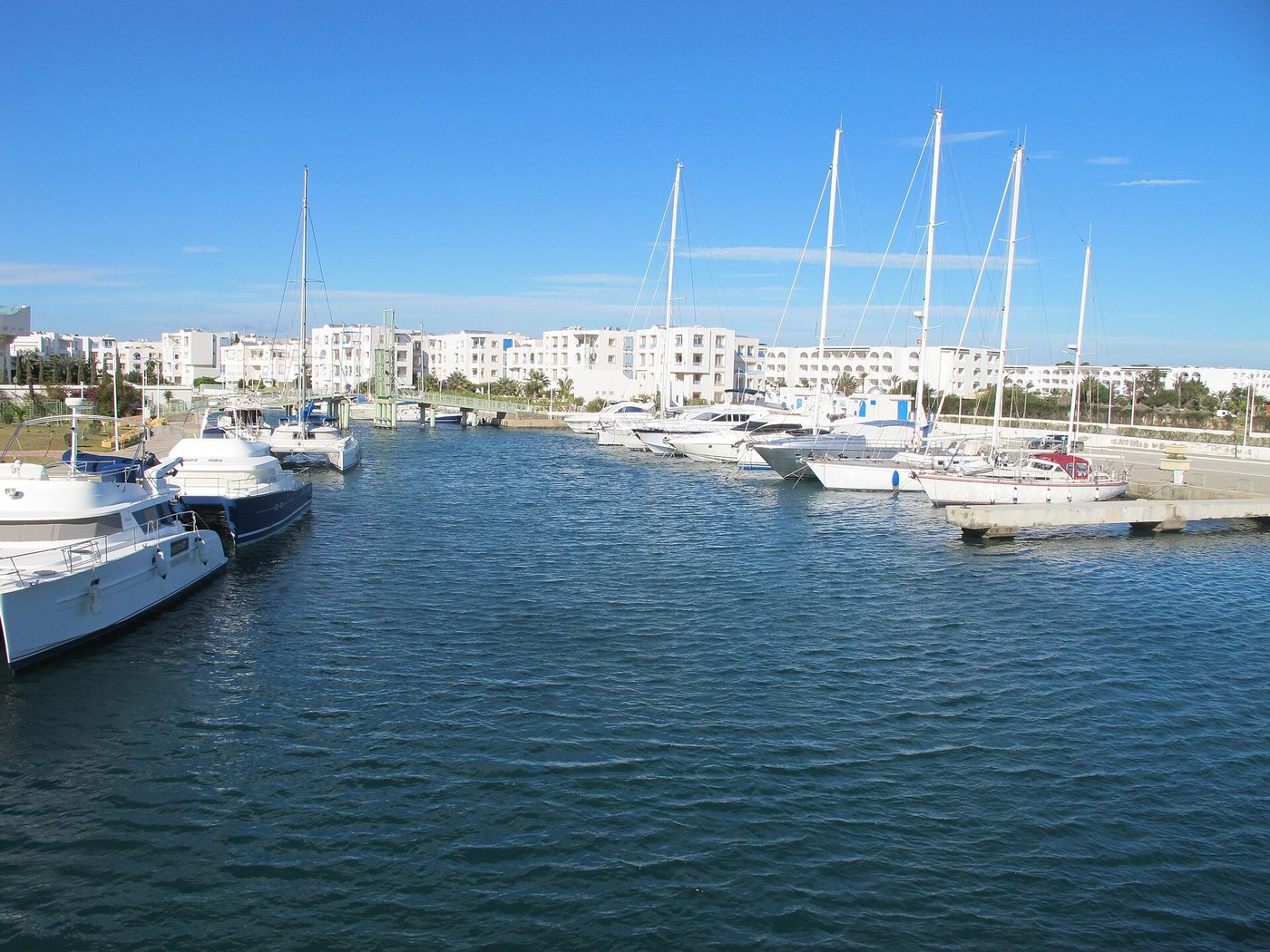
    Boats moored in Port El Kantaoui marina north of Sousse

    Ten kilometres north of the medina, Port El Kantaoui is Sousse’s alter ego: a purpose-built “garden port” laid out around a marina in 1979, all whitewashed Andalusian arches, bougainvillea and not a hint of urban grit. Critics call it Tunisia-lite, and they’re not wrong — it was designed for tourists from the first sketch. But it’s done with enough charm that I always enjoy a half-day there, and for families it’s arguably the better base on this coast.

    What to actually do: amble the marina and pick a quayside café (prices carry a yacht-tax — a coffee costs double the medina rate, which is still barely £1.50); book a “pirate ship” cruise, an hour or three of swimming stops and cutlass-waving that children adore — prices are whatever you negotiate at the kiosk, so agree exactly what’s included (lunch, drinks, hotel pickup) before any money changes hands; and let golfers loose on El Kantaoui Golf Club’s 36 holes, two full courses (the Sea and the Panorama) that have anchored Tunisian golf since the resort opened. The diving centres in the marina run beginner-friendly trips, and the beaches either side of the port are wider, cleaner and calmer than Bou Jaafar.

    For children there’s also Hannibal Park, an endearingly retro funfair that runs from afternoon until late, and the seasonal Acqua Palace water park (open roughly June to September). Neither will trouble Alton Towers, but at Tunisian prices nobody’s complaining. Getting between Sousse and Port El Kantaoui is a 5–10 TND metered taxi ride (£1.30–£2.60), or one of the toy-town tourist road trains that trundle along the coast road if you’re not in a hurry. You can technically walk it along the beach — allow well over two hours each way and a forgiving attitude to building sites.

    The beaches, zone by zone

    “Sousse beach” is really a single 15km ribbon of sand running north from the medina to beyond Port El Kantaoui, but it changes character every few kilometres, and where you stay decides which version you get.

    Beach zone Character Best for
    Bou Jaafar (city) Lively town beach, promenade behind, vendors about People-watching, evening swims, budget stays
    Hammam Sousse hotel strip Wide sand fronting the big all-inclusives, loungers organised by hotel Package holidays, families who want zero faff
    Port El Kantaoui Cleanest and calmest, marina at hand, watersports kiosks Families, couples, anyone fussy about their sand
    Chott Meriem & north Progressively emptier, more local, the odd beach café Escaping the crowds without a car

    Three honest notes. First, vendors patrol everywhere south of Port El Kantaoui — a cheerful “la, shukran” works, but if low-level selling ruins a beach day for you, base yourself north. Second, jellyfish drift in some high-summer weeks, typically August, varying year to year; locals simply swim elsewhere for a few days, and so should you. Third, every beach in Tunisia is public by law — hotels rent the loungers (5–15 TND), not the sea, so you’re free to lay a towel anywhere the sand isn’t literally fenced.

    The day-trip planner: four big hitters, zero coach required

    This table is the heart of why I rate Sousse as a base. Pin it to your fridge door (or hotel minibar):

    Destination How Time each way Cost each way Go for
    Monastir Sahel Metro from Bab Jedid 30–45 min 2–3 TND The Ribat, Bourguiba Mausoleum, an easy first outing
    Mahdia Sahel Metro (or louage) 1.5–2 hrs a few TND The peninsula old town, silk, quiet beaches, Friday market
    El Jem SNCFT train from Sousse station just over 1 hr a few TND The Roman world’s third-largest amphitheatre
    Kairouan Louage from the main station ~1 hr ~6 TND The Great Mosque, carpets, makroudh pastries
    Hergla Taxi from Port El Kantaoui ~20 min agree the fare Blue-and-white village calm, esparto weaving, fish lunch

    Pattern your week so the inland trips (El Jem, Kairouan) land on cooler or cloudier days and the coastal ones (Monastir, Mahdia) double as beach days. Check return times before you set off — the trains especially keep countryside hours — and carry your passport copy; you won’t usually need it, but louage police checkpoints occasionally like to see one.

    Monastir: Ribats, mausoleums and Monty Python

    The Ribat of Monastir, filming location for Life of Brian

    Twenty kilometres south of Sousse — half an hour and small change on the Sahel Metro — Monastir is the day trip I recommend first. It’s a tidier, quieter town than Sousse, pleasant rather than thrilling, except for two sights that are very thrilling indeed.

    The Ribat of Monastir

    Founded in 796, Monastir’s coastal fortress is older, bigger and more film-set perfect than Sousse’s — which is precisely why it has spent fifty years moonlighting as ancient Judea. Franco Zeffirelli shot Jesus of Nazareth here in the mid-70s, and in 1978 Monty Python arrived to film Life of Brian: the Sermon on the Mount confusion (“blessed are the cheesemakers?”), the stoning, Brian’s window address to the masses — much of it happened inside these walls and the medina lanes beside them. Entry is around 8 TND (about £2), hours roughly 9am–6pm. Climb the nador tower for a knockout panorama: golden stone below, turquoise sea behind, and the green-roofed mausoleum gleaming to the west. Film pilgrims should look smug; everyone else can simply enjoy North Africa’s most photogenic fortress.

    The Bourguiba Mausoleum

    Golden dome and minarets of the Bourguiba Mausoleum in Monastir

    Habib Bourguiba — father of Tunisian independence, educator, autocrat, feminist (genuinely: he gave Tunisian women rights decades ahead of the region) — was born in Monastir, and his resting place doesn’t do humility. A marble avenue runs arrow-straight from the cemetery gates to a gilded dome flanked by twin minarets; inside, the great man lies beneath chandeliers amid family tombs and memorabilia. Entry is free. It’s open roughly 9am–5.30pm in summer; dress modestly (covered shoulders and knees) and keep voices down — whatever Tunisians think of his later years, and opinions vary, this is a place of real national feeling. Between the two sights, the marina and a swim at the Ribat-side beach, Monastir fills a leisurely day. The Sahel Metro back to Sousse runs into the evening, so there’s no need to rush your sunset.

    Mahdia: the Sahel’s best-kept secret

    The Skifa el Kahla gate into Mahdia's old town

    Keep going south past Monastir — about an hour and a half on the metro, or quicker by louage — and the package coast simply runs out of steam. Mahdia, the Fatimid dynasty’s tenth-century capital, occupies a narrow peninsula that pokes a kilometre into the Mediterranean, and it remains a fishing town first and a tourist town a distant second. It is, for my money, the prettiest seaside spot between Tunis and Djerba.

    You enter the old town through the Skifa el Kahla, a fortified black vault of a gate — the only landward way in for a thousand years — whose dim passage opens onto whitewashed lanes full of silk. Mahdia’s weavers have made wedding silks for centuries, and you’ll still hear looms clacking behind half-open doors; the Friday-morning market that spills around the gate is the moment to come if you can engineer it, when the square fills with embroidered fabric and half the region’s grandmothers. Deeper in: a marble-paved square of café tables, the sea-edge Great Mosque (a faithful replica of the Fatimid original), the clifftop Ottoman fort of Borj el Kebir — worth circling for the views even when its opening hours are being temperamental, so check locally — and a cemetery of blinding white tombs running down to a lighthouse at the point where Africa simply stops. The town beach north of the peninsula is broad, gently shelving and quieter than anything in Sousse. Bring your swimmers, eat grilled fish by the harbour for a few pounds, and thank me later.

    El Jem: the colosseum in a market town

    The Roman amphitheatre of El Jem, an easy day trip from Sousse

    Nothing prepares you for El Jem. You rattle an hour south-west of Sousse through olive country on the train, step out into a dusty Tunisian market town — and there, rearing over the lock-up shops and louage rank, is the third-largest amphitheatre the Roman world ever built, after the Colosseum itself and long-vanished Capua. Around 35,000 spectators once packed it; today, on a quiet morning, the audience is you and the sparrows.

    What makes El Jem extraordinary isn’t just the scale — it’s the access. You can prowl the arena floor, climb the upper tiers (UNESCO-listed since 1979, and far more complete than Rome’s), and best of all descend into the basement corridors where gladiators and big cats waited beneath the killing floor. The same ticket covers the excellent mosaic museum 600 metres away, built over a Roman villa — don’t skip it. On pricing, be aware that entry was 12 TND for years, but Tunisia’s April 2026 heritage-ticket overhaul has repriced the headline sites — the top national tier is now 30 TND (under £8) — so bring enough cash and treat anything a blog quotes as provisional, this one included. Trains from Sousse Bab Jedid take just over an hour for a few dinars each way, but there are only a handful of daily departures, so confirm the return time before you leave the station — or fall back on a louage to Sousse via a change, or a taxi splurge.

    Kairouan: the holy city, an hour inland

    Courtyard and minaret of the Great Mosque of Kairouan

    Kairouan is the day trip for the soul. Founded in 670, it’s often described — particularly in North African tradition — as the fourth holiest city in Islam after Mecca, Medina and Jerusalem, and whatever the theological league table, it is unarguably the spiritual capital of the Maghreb. The whole ensemble — medina, Great Mosque, Aghlabid water basins — has been UNESCO-listed since 1988.

    The Great Mosque is the anchor: a vast, ancient courtyard of recycled Roman columns and sun-bleached marble, with a minaret like a lighthouse for the faithful. Non-Muslims can enter the courtyard and look into the prayer hall from its doorway, but not step inside — modest dress required, robes available at the gate. A combined ticket, sold at the tourist office by the medina wall, has historically cost around 12 TND and covers the city’s main monuments: the mosque, the ninth-century Aghlabid Basins, the Barber’s Mosque (Sidi Sahab’s gorgeously tiled zaouia) and the camel-turned well of Bir Barouta — though, as at El Jem, expect the April 2026 repricing to have nudged figures upward. Kairouan’s medina out-charms Sousse’s: quieter, pinker, and the place to buy both a carpet (the city is Tunisia’s knot-tying capital; resist the hard sell unless you mean it) and makroudh, the local date-stuffed semolina pastries, fried fresh and sticky with honey. Louages run from Sousse constantly, take about an hour, and cost around 6 TND (£1.50) each way — easily the simplest big-ticket day trip in Tunisia. There’s no train, so it’s louage, excursion coach or taxi.

    Two smaller escapes: Hergla and Friguia

    Whitewashed mosque in the fishing village of Hergla, north of Sousse

    Twenty-odd kilometres north of Port El Kantaoui, Hergla is the Sahel’s miniature Sidi Bou Said: a blue-and-white fishing village stacked on low cliffs, where the main industries remain boats and esparto-grass weaving — you’ll see the woven mats and baskets drying outside workshops, and they make far better souvenirs than anything in the medina gauntlet. There’s a clean beach below the village, a couple of fish restaurants above the harbour, and precisely nothing else to do, which is the point. A taxi from Port El Kantaoui takes twenty minutes; agree the fare first.

    Halfway to Hammamet, Friguia Park is the coast’s family-day standby: a spacious safari-style zoo with lions, giraffes, elephants and flamingos, plus camel rides and a daily sea-lion show (the park’s dolphinarium closed back in 2016, so ignore any excursion seller promising dolphins — it’s sea lions now). Entry runs around 15 TND for adults and 10 for children, with shows at intervals through the day; it’s closed Mondays outside holiday periods. It’s no San Diego Zoo, and animal-welfare standards are a notch below what UK zoos manage, but enclosures are larger than you might fear and small children leave delighted.

    Where to stay in Sousse: pick your zone before your hotel

    This is the decision most people get wrong, because the brochures market “Sousse” as one place when it’s really three. Get the zone right and the hotel almost picks itself; I cover the country-wide version of this logic in our guide to where to stay in Tunisia.

    Central Sousse & Bou Jaafar

    City hotels along the seafront boulevard, the medina ten minutes’ walk away, restaurants and nightlife on the doorstep. Beaches are busier and the buildings older — this is where Sousse’s faded-grandeur reputation lives, including a couple of derelict hotel hulks awaiting demolition that nobody will photograph for the brochure. Pick it for: character, independence, evening life, budget. Avoid it for: a flop-and-drop beach week.

    The Hammam Sousse strip (Sousse Nord)

    The unbroken chain of three-to-five-star resorts lining the sand between city and marina. This is where the bulk of TUI and easyJet holidays packages land you, and the formula works: big pools, big buffets, wide beach, evening entertainment of the foam-party-and-fez variety. The trade-off is geography — you’re 15–30 TND in taxis from anywhere that isn’t your hotel, and the strip itself, walked at midday, is mostly walls and parked coaches. Pick it for: all-inclusive ease with kids. Avoid it for: any illusion you’re staying in a Tunisian town.

    Port El Kantaoui

    The polished northern option: marina, golf, the coast’s cleanest beaches, and footpaths where the strip has dual carriageway. Hotels skew newer and pricier (by Tunisian standards — a five-star half-board week here still undercuts a Travelodge weekend). Pick it for: families, couples, golfers, first-timers nervous about North Africa. Avoid it for: local colour — you’ll need to commute into Sousse for that.

    Whichever zone you book, remember Tunisia’s tourist tax, payable at check-in since late 2024: 12 TND per person per night in four- and five-star hotels, 8 TND in three-star, 4 TND in two-star, capped at ten nights, under-12s exempt. For a family of four in a four-star fortnight that’s a non-trivial 240 TND (about £60) in cash you should plan for.

    Getting to Sousse from the UK

    Sousse has the rare luxury of two airports, and which one your flight uses matters more than the fare.

    Monastir (MIR) is the close one — 15km away, 20–30 minutes by taxi (roughly 30–50 TND, £8–13, agree it first or insist on the meter), and the Sahel Metro even calls at the airport for the price of a coffee if you’re travelling light. easyJet flies here from the UK in summer, alongside various holiday charters.

    Enfidha (NBE) is the big charter gateway 50–60km north, serving most TUI packages and the majority of easyJet’s Tunisia network, with UK departures spanning Gatwick, Luton, Manchester, Birmingham, Bristol, Liverpool, Newcastle, Edinburgh, Glasgow, Belfast and more depending on season. Flight time from London is about three hours five minutes. Transfers to Sousse take 45–60 minutes: package transfers are bundled, pre-booked private cars run around £35–50, and local taxis are markedly cheaper if you agree the fare before getting in.

    Two route-planning realities for 2026: Jet2 does not fly to Tunisia, whatever a search engine’s autocomplete implies, and there’s no direct UK service to Tunis-Carthage worth bending your plans around — for the Sahel you want NBE or MIR anyway. If you’re comparing months before booking, our month-by-month best time to visit Tunisia guide covers when each resort hits its stride.

    Getting around the Sahel: the metro that makes this coast

    The single most useful thing in this guide might be this: the Sahel has a railway, almost no tourist uses it, and it turns the whole coast into one resort. The Métro du Sahel is a cheerfully scruffy electric light railway running from Sousse’s Bab Jedid station (at the southern corner of the medina walls, ten minutes’ walk from Bou Jaafar) south through Monastir — calling at Monastir’s airport — and on down to Mahdia, with trains roughly every 40 minutes from early morning until around 10pm. Fares are a couple of dinars — well under £1 to Monastir, slightly more to Mahdia — bought with cash at the station window. Carriages are basic, punctuality is approximate, sea views from the Monastir–Mahdia stretch are excellent, and the people-watching beats any excursion coach. For Sousse–Monastir–Mahdia, it’s all the transport you need.

    For everywhere else: yellow taxis are everywhere and cheap when metered — insist on it (“compteur, s’il vous plaît”), expect a 50% surcharge between 9pm and 5am, and budget single-figure dinars for most hops around town. Louages — shared eight-seat minibuses that leave when full — are the intercity workhorse: Sousse’s main station sends them constantly to Kairouan, Mahdia, Tunis and beyond at state-fixed fares displayed inside the van. They’re safe, fast (occasionally faster than you’d like) and the most Tunisian experience money can buy for under £2. SNCFT mainline trains from Sousse cover El Jem and Sfax southbound, Tunis northbound; buy tickets at the station, and double-check times locally as timetables thin out off-season. Car hire exists but for this coast it’s genuinely unnecessary — between metro, train, louage and taxi, I’ve never once wanted one here.

    Package holiday or DIY? How to book the Sahel from the UK

    Sousse is one of the few destinations where I’ll defend the package holiday with a straight face. TUI and easyJet holidays buy hotel rooms here at volume prices no booking site matches, transfers from Enfidha are bundled (that’s a £35–50 saving each way on a pre-booked car), and ATOL protection costs you nothing extra. For a one-base, all-inclusive beach fortnight, the package usually wins on arithmetic alone — especially in school holidays, when booking the January sales matters more than the platform.

    DIY earns its keep in three cases. First, if you want central Sousse or a smaller hotel the brochures don’t carry — packages overwhelmingly sell the strip and Port El Kantaoui. Second, shoulder season, when flight-only fares drop and four-star B&B rates go for a song direct or via the usual booking sites. Third, if you’re combining bases — say four nights Sousse and three in Mahdia or Tunis — which no operator will sell you off the shelf. The hybrid I use myself: book the flight the moment schedules open, hold a refundable hotel, then watch rates. One warning either way: don’t buy excursions from your rep before pricing the same trip by metro, train or louage using this guide — the mark-up on a coach to El Jem versus the train fare has to be seen to be believed. Excursions earn their money on the desert runs and anywhere public transport doesn’t reach; for the Sahel’s own sights, your £15 of train tickets beats their £150 of coach seats.

    What to eat in Sousse (and where the good stuff hides)

    All-inclusive buffets have a gravitational pull, but eat at least a few meals out — Sahel cooking is the reason Tunisians argue about restaurants the way Britons argue about chippies. The non-negotiables: brik, a shatteringly crisp filo parcel around a just-runny egg and tuna (eat it folded, drip with dignity); ojja, eggs poached in a spicy tomato-and-merguez skillet; grilled fish, priced by the kilo and chosen from the ice — daurade and loup de mer are safe bets, and a whole fish with chips and salad in a local place costs less than a hotel cocktail; couscous done properly on a Friday; lablebi, the chickpea-and-harissa workman’s soup, if you find a stall and feel brave; and bambalouni doughnuts on the corniche for pocket change. Harissa arrives with everything; so does bread. Tunisian rosé and Celtia lager are honest companions where licensed. The rule of thumb that never fails me: the further a menu stands from a hotel lobby and the fewer languages it’s printed in, the better the kitchen.

    Money and practicalities: the closed-currency thing, explained

    The Tunisian dinar is a closed currency — you cannot legally buy it in the UK or take it out of Tunisia. In practice: bring sterling cash and/or your bank cards, exchange or withdraw on arrival (airport desks are fine for a starter sum; bank ATMs in town give the same official rate, with £1 worth around 3.9 TND in June 2026), keep your exchange receipts, and re-convert leftovers at the airport before you fly home. Don’t take dinars home as souvenirs beyond a note or two; you’ll get nothing for them in Britain.

    The rest of the essentials, rapid-fire. UK passport holders need no visa for stays up to 90 days. Your GHIC/EHIC is not valid in Tunisia — comprehensive travel insurance isn’t optional, and check the excess covers quad bikes if you’re tempted. For jabs and health prep, follow the NHS’s TravelHealthPro guidance rather than forum hearsay; tap water is officially treated but most visitors (and plenty of locals) drink bottled, at under a dinar a litre. Tipping: round up taxis, a dinar or two per bag or drink, 10% in proper restaurants where service isn’t included. Dress is relaxed in resort zones, modest in the medina and anywhere religious. Friday lunchtime is prayer time — some smaller sights and shops pause. And the hassle question, since you’ll have read the reviews: medina selling is theatre with a script — decline pleasantly, never accept “free gifts”, and it stays theatre.

    When to visit Sousse

    The Sahel does a proper Mediterranean summer: sea at 22–23°C in June rising to 26–27°C in August, with July–August heat that’s beach-perfect and sightseeing-brutal — El Jem and Kairouan in mid-August are for masochists. My picks: June and September for the full beach holiday with bearable medinas, May and October for sightseeing-first trips with swimmable seas, and the UK school summer holidays if you must — book early, as TUI’s Enfidha flights fill fast. Winter is shoulder-season quiet: 17°C, flashes of rain, hotels at silly prices and sights to yourself. Sousse’s big summer event, the Festival International de Sousse, typically runs July–August with open-air concerts — dates land late, so check locally. Ramadan won’t trouble 2026’s summer visitors (it ended in March; in 2027 it starts around early February). For the full month-by-month breakdown, see our best time to visit Tunisia guide.

    What things to do in Sousse actually cost

    Because “Tunisia is cheap” is vague and budgets aren’t, here’s what I’d plan against, in dinars and honest sterling. Where the April 2026 heritage repricing bites, I’ve said so.

    Item Typical cost (TND) In £ (≈3.9 TND/£)
    Sousse Archaeological Museum 10 £2.60
    Ribat of Sousse ~8 ~£2
    Great Mosque courtyard 5–8 £1.30–2
    El Jem amphitheatre + museum 12 historically; budget up to 30 post-repricing £3–7.70
    Kairouan combined monuments ticket ~12, may have risen ~£3
    Sahel Metro to Monastir 2–3 under £1
    Louage to Kairouan ~6 each way ~£1.50
    Metered taxi across town 4–8 £1–2
    Sunlounger + parasol (public beach) 5–15 £1.30–3.85
    Whole grilled fish dinner, local restaurant 25–40 £6.50–10
    Mint tea / bambalouni 1–3 pennies
    Tourist tax (4–5★ hotel) 12 pp/night, max 10 nights ~£3

    Working total: a sightseeing-heavy day — museum, Ribat, lunch, taxis, a fish supper — rarely clears 100 TND (£26) per person, and a metro day trip to Monastir with mausoleum (free) and Ribat (~8 TND) is barely 20 TND (£5) before lunch. The only line items that genuinely dent a wallet are excursion-desk coaches, marina boat trips if you skip the haggle, and carpets you didn’t plan to buy. Carry small notes: making change is the national sport nobody admits to.

    How long do you need, and a one-week plan

    Three nights covers Sousse city and one day trip; a week does the Sahel justice. If I were building the ideal seven days from a Sousse or Port El Kantaoui base: day one, beach and bearings; day two, medina morning (Ribat, Great Mosque, museum) and corniche evening; day three, Monastir by metro; day four, beach, marina and a boat trip; day five, El Jem by train; day six, Kairouan by louage; day seven, Mahdia by metro — pack swimmers — or Hergla if you want lazier. That’s four UNESCO-calibre sights and three coastal towns on about £15 of public transport, which no excursion desk will ever sell you. With ten days, add a night in Tunis or push on to Djerba; with less, guard the medina morning and El Jem above all.

    Sousse FAQ: your questions answered

    Is Sousse worth visiting?

    Yes — for the UNESCO medina, Tunisia’s best mosaic museum after the Bardo, long sandy beaches and an unmatched day-trip roster (Monastir, Mahdia, El Jem, Kairouan). It’s a working city rather than a postcard, so expect bustle and some hassle alongside the history. Beach-purists who hate vendors should base at Port El Kantaoui.

    Is Sousse better than Hammamet?

    Different jobs. Sousse wins on sights, day trips, nightlife and getting around without a car; Hammamet wins on garden-resort prettiness and a gentler pace. First-timers who want a classic flop-and-drop lean Hammamet; the curious, restless or carless lean Sousse. Our full Hammamet guide makes the comparison properly.

    Is Sousse safe for tourists?

    The FCDO has no advisory against the Sahel coast — its restricted zones (advice last updated 23 February 2026) all lie far inland or along the Libyan and Algerian borders. Resort security was overhauled after 2015 and remains visible. Normal city sense covers the actual risks: pickpockets, meter-shy taxis, sunburn. See our full Tunisia safety guide.

    How many days do you need in Sousse?

    Two full days for the city itself — medina, Ribat, museum, beach. But Sousse earns its keep as a base: with Monastir, Mahdia, El Jem and Kairouan each an easy day trip by metro, train or louage, a week fills itself without repeating a single sight.

    What is Sousse famous for?

    Its ninth-century medina and Ribat fortress (UNESCO-listed since 1988), the Roman mosaics in its kasbah museum, 15km of sandy Mediterranean beach, and being Tunisia’s liveliest package-holiday city. Film buffs add Monastir’s Ribat next door, where Life of Brian was shot.

    Is Port El Kantaoui worth visiting — and how far is it?

    Yes, for half a day at least: a pretty purpose-built marina (vintage 1979) with boat trips, 36 holes of golf and the coast’s best-kept beaches. It’s 10km north of central Sousse — a 5–10 TND metered taxi or a slow tourist road-train along the coast road.

    Can you do El Jem and Kairouan in one day?

    Only with a hired driver or organised excursion — they lie in different directions with no useful public-transport link between them. By yourself, give each its own day: El Jem by train (just over an hour), Kairouan by louage (about an hour). Both deserve the time anyway.

    Do you need a visa for Tunisia from the UK?

    No — UK passport holders get 90 days visa-free on arrival. You’ll fill in a small entry card at the airport. Make sure your passport is in date for your whole stay, and remember the dinar is a closed currency: exchange money after you land, not before.

    What is the Metro Sahel?

    A cheap electric light railway linking Sousse (Bab Jedid station) with Monastir, Monastir airport and Mahdia, roughly every 40 minutes from early until about 10pm. Fares are a couple of dinars, paid cash at the window. It’s the easiest way to day-trip along the coast — and almost no tourists know it exists.

    Is Mahdia worth visiting?

    Emphatically — it’s the Sahel’s most atmospheric old town: a Fatimid-era peninsula of whitewashed lanes, working silk looms, a clifftop fort and beaches quieter than anything in Sousse. Go on a Friday for the market by the Skifa el Kahla gate, eat fish by the harbour, and you’ve had the best-value day on this coast.

    How do you get from Monastir airport to Sousse?

    It’s only about 15km. A taxi takes 20–30 minutes and should cost roughly 30–50 TND (£8–13) — agree the fare or insist on the meter, and remember the 50% surcharge after 9pm. Travelling light, the Sahel Metro calls at the airport and trundles to Sousse Bab Jedid for a couple of dinars.

    Is Sousse expensive?

    No. Outside your hotel, the Sahel is one of the Mediterranean’s cheapest coasts: metered taxi hops for £1–2, museum entry around £2–3, a whole grilled fish dinner for under £10, doughnuts and mint tea for pennies. Budget mainly for the tourist tax (up to 12 TND per adult per night, paid at check-in) and souvenir haggling.

    Final thoughts: the coast that does everything

    I started with a doughnut seller asking if I was lost, so let me end with what I’d tell him now: in Sousse, being slightly lost is the method. This coast doesn’t do one perfect thing — it does a ninth-century fortress before breakfast, a Roman colosseum by lunch, a Fatimid fishing town by teatime and a sugared bambalouni on a promenade at dusk, all off one sunlounger and a £1 railway. Choose your zone with care, learn your “la, shukran”, keep a pocket of small dinars, and Sousse will quietly out-deliver every flashier resort on the Med. That’s not something I say about many package-holiday towns. It’s why I keep coming back to this one.

    Researched and updated 6 June 2026. Prices use £1 ≈ 3.9 TND and reflect Tunisia’s April 2026 national heritage-ticket changes; always carry cash for sights and check hours locally, especially outside summer. FCDO travel advice quoted as last updated 23 February 2026 — check gov.uk before you book and travel. Health guidance: see the NHS and TravelHealthPro.

    Photo credits

    All images via Wikimedia Commons. Ribat Of Sousse: Christian Manhart (CC BY-SA 3.0 igo); Sousse Medina: Yamen (CC BY-SA 4.0); Sousse Museum Mosaic: Pascal Radigue (Public domain); Port El Kantaoui Marina: Jorge Franganillo (CC BY 3.0); Ribat Monastir: IssamBarhoumi (CC BY-SA 4.0); Bourguiba Mausoleum: Runtinger (CC0); Mahdia Skifa Kahla: Anouarhamzamahdia (CC BY-SA 3.0); El Jem Amphitheatre: Agnieszka Wolska (CC BY-SA 3.0); Kairouan Great Mosque: Keith Roper (CC BY 2.0); Hergla Village: Rais67 (CC BY-SA 4.0).

    From Sousse the whole country opens up: see how it anchors our Tunisia itinerary, how to reach the Sahara and the Star Wars sets beyond it, and the travel tips worth reading before any of that.

  • Hammamet Travel Guide: Things to Do & Area Tips (2026)

    Hammamet Travel Guide: Things to Do & Area Tips (2026)

    By the Tunisia Tourism Guide team · Last updated 11 June 2026 · All prices checked at publication

    The best things to do in Hammamet are exploring the walled medina and its seafront Kasbah, swimming off ten kilometres of gently shelving sand, wandering the gardens of Dar Sebastian, strolling Yasmine Hammamet’s marina, and day-tripping to Nabeul’s Friday market, the Cap Bon coast and Carthage. This guide covers all of it — with prices in dinars and pounds.

    And one thing more, before anything else: there are three different Hammamets, and two different medinas, and every year thousands of British holidaymakers book one believing they are getting another. No guide on the first page of Google explains this properly. I will, because it is the single most useful thing anyone can tell you about the place.

    Hammamet has been Tunisia’s flagship resort for as long as Britons have flown south for guaranteed sun — every UK operator sells it, and it is very often the first (sometimes the only) Tunisian name people know. It earns that status: a genuinely pretty old town wrapped in fifteenth-century walls, a vast arc of sand, hotels that cost half what you would pay across the water in Sicily, and more worthwhile day trips within ninety minutes than any other base in the country. But the resort sprawls along fifteen kilometres of coastline, the brochure photos rarely tell you which bit you are looking at, and the difference between a fortnight in Hammamet Centre and a fortnight in Yasmine Hammamet is the difference between two entirely separate holidays. Let’s fix that first, then get into the 21 best things to do.

    Hammamet at a glance

    Essentials The short version
    Flight from the UK 3h15–3h45 direct to Enfidha (NBE) — easyJet and TUI from a dozen UK airports; the airport is 40 minutes from your hotel
    FCDO status No travel restrictions for Hammamet, Nabeul or Cap Bon (advice last updated 23 February 2026; checked at publication)
    Money Tunisian dinar, a closed currency — you exchange on arrival, not at home; £1 ≈ 3.9 TND (June 2026)
    The three zones Hammamet Centre (the real town), Hammamet Nord/Mrezga (the hotel strip), Yasmine Hammamet (purpose-built marina resort, 10km south)
    Best months May, June, September, October — warm sea, kinder sun, lower prices
    Top three The medina and Kasbah, the beach below the old town, a Cap Bon day trip
    Sea swimming Comfortable June to October (23–28°C, warmest late August)
    Tourist tax 4–12 TND per person per night by hotel grade, collected by the hotel, capped at ten nights; under-12s exempt

    The three Hammamets, explained

    This is the section I wish someone had written before my first visit, so here it is at the top where it belongs.

    Hammamet Centre is the original town — roughly 100,000 people across the wider district, a working Tunisian community with a fishing harbour’s worth of charm. The walled medina sits right on the sand at its heart, the Kasbah on its seaward corner, with cafés, banks, the Magasin Général supermarket and the bus and louage stations all walkable. Hotels here are mostly older, smaller and closer to real life. If you want to step out of your lobby into an actual town, this is your Hammamet.

    Hammamet Nord — the stretch running north-east towards Nabeul, through the Mrezga district — is where a large share of the big all-inclusives actually stand. The beach is broad and lovely, but the “town” outside many gates is a dual carriageway, a strip of cafés and other hotels. Plenty of British package holidays labelled simply “Hammamet” land you here, a 15–25 TND taxi from the medina. That is not a disaster — it is often the best sand — but you should know before you book that “five minutes from the centre” on a resort map can mean five minutes by car, not on foot.

    Yasmine Hammamet is a different town in everything but name: a purpose-built resort zone opened around the millennium, ten kilometres south of the medina, with its own marina (700-plus berths, the largest in Tunisia), a strip of international four- and five-stars, a casino, the Carthage Land theme park and a concrete “medina” built in the 1990s as an attraction. It is groomed, spacious, easy and entirely artificial. Families and first-timers often love it; anyone hoping for Tunisia-the-country can find it sterile. A taxi between Yasmine and the real medina runs about 8 TND (£2) on the meter — drivers will cheerfully quote tourists 15, so insist on the meter or agree the price first.

    Hammamet Centre Hammamet Nord / Mrezga Yasmine Hammamet
    Feels like A real Tunisian seaside town A hotel strip with great sand A purpose-built resort bubble
    Best for Culture, atmosphere, walking to things Beach-first all-inclusive holidays Families, marina strolls, nightlife-lite
    The beach Pretty but narrower; busy with locals in summer The widest, best-kept stretches Groomed resort frontage, watersports everywhere
    Walk to the real medina? Yes Rarely — budget short taxi rides No — 10km; taxi about 8 TND
    Evenings Cafés, fish restaurants, promenade Mostly your hotel’s entertainment Marina restaurants, casino, beach clubs

    And the two medinas. The old medina — the real one, free, lived-in, fifteenth-century — is in Hammamet Centre. The “Medina Mediterranea” in Yasmine Hammamet is a themed shopping-and-cafés complex built for the resort, barely older than the hotels around it. TripAdvisor currently ranks the replica among Hammamet’s top attractions while its own reviewers complain the listing photos show the genuine article ten kilometres away; excursion sellers blur the two as well. If a “medina tour” is sold from a Yasmine hotel lobby, ask which medina it means. You want the old one. Picking the right zone matters more than picking the right hotel here — my country-wide guide to where to stay in Tunisia puts Hammamet’s options in context against Sousse, Djerba and the rest.

    The 21 best things to do in Hammamet

    In one glance — then the detail, with prices as checked in June 2026. (Tunisia reset many official site tariffs nationwide on 1 April 2026, so treat any older blog’s figures with suspicion, and all of mine as “around”.)

    1. Get lost in Hammamet’s old medina
    2. Walk the ramparts of the Kasbah
    3. Find the Great Mosque and the medina’s prettiest doors
    4. Follow the seafront path below the walls
    5. Spend a slow morning at Dar Sebastian
    6. Catch the Hammamet International Festival
    7. Poke around the Roman ruins of Pupput
    8. Claim your patch of the great beach
    9. Take a boat trip from the marina
    10. Try the watersports menu
    11. Sweat it out in a hammam or thalasso spa
    12. Stroll Yasmine Hammamet’s marina at sunset
    13. Do Carthage Land and Aqua Land with the kids
    14. Judge the “new medina” for yourself
    15. Have a flutter and a late night in Yasmine
    16. Play golf at Citrus or Yasmine
    17. Quad-bike the hills behind town
    18. Meet the sea lions at Friguia Park
    19. Spend Friday at Nabeul’s market and pottery shops
    20. Drive the Cap Bon loop: Kelibia, Kerkouane, El Haouaria
    21. Day-trip to Tunis, Carthage and Sidi Bou Said

    Old Hammamet: the medina, the Kasbah and the culture

    1. Get lost in Hammamet’s old medina

    View over the whitewashed rooftops of Hammamet medina towards the sea

    Hammamet’s medina is small — you can cross it in ten minutes — and that is precisely its charm. Founded in the fifteenth century on the site of a ninth-century fort, it is a proper lived-in quarter: washing strung between whitewashed walls, doors painted in blues and studded with black nail patterns, jasmine sellers threading machmoum garlands (the town’s emblem — Hammamet without jasmine would be Cornwall without pasties). The outer lanes nearest the gates are wall-to-wall souvenir stalls, and the hassle there is real if good-natured; push two streets deeper and it evaporates into silence. Entry is free, it never closes, and the morning light before 10am — before the day-trip coaches — is the best time to wander. Haggling etiquette: start around a third of the first price, smile throughout, and walk away once; the walk-away discount is genuine.

    2. Walk the ramparts of the Kasbah

    The stone walls of Hammamet's seafront Kasbah rising above the medina, Tunisia

    The Kasbah anchors the medina’s seaward corner — a squat, honey-coloured fort begun in the medieval era and given its present shape in the fifteenth century. Inside there is a small museum and a café, but the point is the rampart walk: the whole sweep of the bay from one battlement, the medina’s rooftops from another, fishing boats drawn up on the sand directly below. Entry was around 8 TND (£2) when I checked, open roughly 8.30am–6pm; local conservation groups have campaigned for years for restoration money, so expect the odd scaffold pole and do not expect interpretive panels. Twenty minutes is enough; the photographs last longer.

    3. Find the Great Mosque and the medina’s prettiest doors

    The tiled minaret of the Great Mosque rising above Hammamet medina's souk lanes

    Deep in the medina, the Great Mosque’s tiled minaret rises over the souk lanes — non-Muslims cannot enter, but the exterior, the doorway and the surrounding alleys are the old town’s most photogenic corner. This is also where to play Hammamet’s best free game: door-spotting. The medina’s doors — arched, painted, nail-studded with fish and crescent motifs against the white — were Instagram material a century before Instagram; Paul Klee painted here in April 1914 and his Hammamet with Its Mosque now hangs in the Metropolitan Museum of Art in New York. He said the town made him a painter. You will leave with two hundred photographs and consider every one justified.

    4. Follow the seafront path below the walls

    Where the medina meets the Mediterranean, a short path runs beneath the ramparts past beached wooden fishing boats, with the Kasbah above and café terraces tucked into the rocks. Café Sidi Bou Hdid, set against the wall itself, is the famous spot for a mint tea with pine nuts as the light goes gold — pay tourist prices (5–8 TND a glass) without complaint, because the table position is the product. This walk at 6pm, tea included, is my single favourite free-ish thing in Hammamet, and the moment the town most resembles the place Klee, Gide and half of 1930s bohemia fell for.

    5. Spend a slow morning at Dar Sebastian

    White arcades and pool of Dar Sebastian, the George Sebastian villa in Hammamet

    In the 1920s a Romanian aristocrat named George Sebastian built himself a white villa in the orange groves north of town and accidentally invented the Hammamet aesthetic: colonnaded pool, horseshoe arches, black-and-white marble, gardens of cypress and bougainvillea. The guest book ran to Jean Cocteau, André Gide, Greta Garbo and both George VI and Edward VIII; Frank Lloyd Wright reputedly called it the most beautiful house he knew; Rommel briefly requisitioned it in 1943. Tunisia bought it after independence and it is now the International Cultural Centre, open to visitors daily (roughly 8am–6pm outside event days) for a few dinars. Go mid-morning, walk the gardens, peer into the extraordinary sunken bath, and thank Sebastian for every white-and-blue hotel lobby you have ever liked.

    6. Catch the Hammamet International Festival

    Dar Sebastian’s grounds hold a 1,000-seat open-air amphitheatre, and every summer since 1964 it has staged the Hammamet International Festival — a July-to-August run of Tunisian and international music, theatre and dance under the stars. The 59th edition ran from 11 July to 13 August 2025; the 60th is expected across July and August 2026, with the programme usually announced in late June on festivaldehammamet.com. Tickets are cheap by UK standards, the crowd is local and dressed up, and a warm night of Arabic song in a seaside amphitheatre will outrank anything your hotel’s entertainment team has planned. If your dates align, go — it is the best evening out on the whole Cap Bon coast.

    7. Poke around the Roman ruins of Pupput

    Roman mosaics at the Pupput archaeological site in Hammamet, Tunisia

    Hammamet has its own Roman site, and almost nobody visits — which is either a warning or a recommendation depending on your taste. Pupput, squeezed between hotels on the road towards Yasmine, was a Roman colony from the late second century AD; what survives is a four-hectare park of house foundations, two bath complexes and a genuinely good collection of mosaics, including funerary mosaics mounted along the site walls. Entry is 5 TND (about £1.30), open 9am–5pm in summer (shorter hours mid-September to May). Be honest with yourself: if you are doing El Jem or Carthage this holiday, Pupput is a 30–40 minute completist’s stop. But for five dinars, ruins-to-yourself silence ten minutes from your sunbed is a fine way to spend the hottest hour of the afternoon.

    The beach, the sea and the spa

    8. Claim your patch of the great beach

    Things to do in Hammamet: clear shallow water, soft sand and watersports on the town's long beach

    Hammamet’s beach is the reason everything else exists: a ten-kilometre crescent of fine pale sand shelving so gently that you can wade out fifty metres and still touch bottom — which is why families with small children have been coming here since the 1960s. Two things the brochures skip. First, all Tunisian beaches are public by law; hotels run sunbed concessions on their frontage, but nobody can stop you walking the entire bay, and public-stretch loungers go for 5–15 TND a day. Second, quality varies sharply by zone: the sand below the medina is the most picturesque and the most crowded with local families in summer (with litter an occasional problem on the town end); the Nord/Mrezga stretch is the widest and best-kept; Yasmine’s frontage is groomed daily but backed by concrete. The sea hits 23–24°C in June, 26–28°C by late August, and stays swimmable well into October — for the month-by-month picture, see my full guide to the best time to visit Tunisia. One seasonal honesty note: like everywhere on this coast, some Augusts bring jellyfish blooms for a week or two; it varies year to year, and locals simply check which way the wind has been blowing.

    9. Take a boat trip from the marina

    Pirate-ship cruises — yes, with eye patches, foam swords and a swimming stop — sail daily in season from Yasmine’s marina, and gentler catamaran and fishing trips go from the same quays. Expect 60–120 TND (£15–30) per person for a half day depending on lunch and how hard you haggled at the kiosk, roughly half what the same trip costs booked through a hotel rep. It is unapologetic tourist theatre, the kids on board have the time of their lives, and the view back to the Kasbah from the water is the one angle of Hammamet you cannot get any other way.

    10. Try the watersports menu

    Every few hundred metres of hotel beach has its watersports shack: banana boats and ringos (around 20–30 TND for ten minutes), jet skis (typically 60–100 TND for fifteen to twenty minutes — agree the time and price before your feet leave the sand), parasailing over the bay, paddleboards by the hour. Standards are looser than at home: life jackets exist, paperwork mostly does not, and your travel insurance small print almost certainly excludes jet skis — check before rather than after. The shallow, waveless water that makes the beach perfect for toddlers also makes it forgiving for first-time paddleboarders; mornings are glassiest.

    11. Sweat it out in a hammam or thalasso spa

    The town is literally named for its baths — Hammamet comes from the Arabic for them — so skipping the steam feels rude. You have two routes. The local public hammams (every neighbourhood has one, men’s and women’s hours separate) cost a few dinars and deliver the real, sociable, scrubbed-raw experience. Or go the resort route: Hammamet is one of the Mediterranean’s thalassotherapy capitals, and big hotel spas — Bel Azur and its neighbours among them — sell seawater pools, gommage scrubs and massage packages from roughly 40–110+ TND (£10–28) a treatment, a fraction of UK spa prices. My advice: one proper local hammam for the story, one thalasso afternoon for the limbs, and you will board the flight home two years younger.

    Yasmine Hammamet: the resort zone

    12. Stroll Yasmine Hammamet’s marina at sunset

    Yachts moored in Yasmine Hammamet marina, Tunisia

    Whatever you think of purpose-built resorts, Yasmine’s marina earns its evening hour: 700-plus berths of yachts and gulets, a palm-lined quay of restaurants and ice-cream stands, and a long mole to walk out along as the sky pinks behind the masts. It is the social centre of the southern zone — Tunisian families promenading in their best, kids on rollerblades, the boat touts winding down for the day. Dinner on the quay costs more than in town (mains 25–45 TND) and the food is international-hotel-adjacent, but you are paying for the parade. If you are staying in Centre or Nord, this plus Carthage Land makes Yasmine a half-day visit rather than a base — which, between us, is the right amount of Yasmine.

    13. Do Carthage Land and Aqua Land with the kids

    Tunisia’s biggest theme park sits inside Yasmine’s “medina” complex: Carthage Land, a Punic-and-pirates park of coasters and dark rides, with the Aqua Land waterpark attached. Official 2025–26 season prices: 37 TND on the gate (33 TND online) for the main park, 52 TND (46 online) for the parks combined, family-of-four combo tickets at 208 TND gate / 179 TND online, free entry under 95cm in height; doors typically 10am–6pm. By Alton Towers standards it is small and the queues are mercifully short; by holiday-with-a-seven-year-old standards it is a guaranteed great day for around £13 a head. In high summer do the waterpark side first, before the slides’ surfaces heat up.

    14. Judge the “new medina” for yourself

    Medina Mediterranea — the walled souk-and-cafés complex by Carthage Land — was built in the 1990s as a sanitised medina experience for the resort zone, and it is exactly that: clean lanes, painted doors aged by set-dressers, shops at fixed-ish prices, the odd falconer posing for photos. Much of it can be wandered free; the themed attractions inside are ticketed through the Carthage Land operator. I am going to be straighter with you than the brochures: if you are mobile enough to reach the real medina ten kilometres north, go there instead — the difference is the difference between Venice and the Venetian in Vegas. But for families with buggies, mobility-limited travellers, or a low-effort souvenir hour before dinner, it does its job without a single hard sell, and that has its own appeal after a week of haggling.

    15. Have a flutter and a late night in Yasmine

    Hammamet’s nightlife is modest by Spanish-island standards — this is a family resort in a Muslim country, and most evenings end at hotel animation shows. The exceptions cluster in Yasmine: the Casino La Médina (open nightly from about 9pm into the small hours, with slot machines and table games — take your passport, leave the shorts), a handful of beach clubs and lounge bars along the marina, and summer pop-up parties at the bigger hotels. Local Celtia lager runs 5–8 TND in licensed venues; note that supermarkets do not sell alcohol on Fridays, and during Ramadan bars outside resort hotels go quiet (usefully, the entire summer 2026 season falls well clear — Ramadan 2027 begins around 8 February). Manage expectations and it is a pleasant night out; expect Ibiza and you will be in bed, puzzled, by eleven.

    Active Hammamet and family days out

    16. Play golf at Citrus or Yasmine

    Hammamet is Tunisia’s golf capital: Citrus Golf Club’s two eighteen-hole courses (La Forêt and Les Oliviers) wind through eucalyptus and olive groves ten minutes inland, and Golf Yasmine adds another eighteen plus an academy nearer the southern zone. Green fees move with the seasons but budget roughly €60–90 for eighteen holes with high-season rates at the top of that band, plus around €25–30 for a buggy — roughly half the cost of a comparable round on the Algarve, on courses kept in genuinely good nick. Book tee times through your hotel or the club sites directly; summer afternoons are furnace-like, so locals play at first light and you should too.

    17. Quad-bike the hills behind town

    Behind the coast road the land climbs into dry, scrubby hills laced with farm tracks — which is exactly where the quad-bike outfits go. A two-hour guided circuit (typically £35–60 per person booked online, less negotiated locally) gets you dust, olive groves, hilltop views back over the whole bay, and usually a mint-tea stop at a berber-tent café. Camel-ride add-ons are widely sold and fine for a fifteen-minute novelty; if a proper desert camel trek is on your list, save it for the real Sahara — my country-wide guide to the 45 best things to do in Tunisia covers where that actually happens. Wear sunglasses, a buff and clothes you have stopped loving; the dust is total.

    18. Meet the sea lions at Friguia Park

    Half an hour south down the Sousse road at Bouficha, Friguia Park is a 36-hectare safari-ish zoo holding around 400 animals across some 60 species — lions, giraffes, elephants, flamingos — in enclosures that are large by regional standards, plus a sea-lion show (usually 11am and 4pm) and a Zulu dance spectacle. Entry is around 15 TND for adults, 10 for children. Two honesty notes. First, some excursion sellers still advertise a “dolphinarium” — that closed back in 2016 after a welfare controversy, and good riddance; sea lions are the marine act now. Second, if hand-on-heart zoo standards matter deeply to you, calibrate expectations: this is a decent African wildlife park, not Marwell. Children rate it the best non-beach day of the holiday with wearying consistency.

    The day trips: Hammamet as a base

    This is Hammamet’s quiet superpower. No other Tunisian resort puts so much within ninety minutes — and because the excursion coaches all leave from here, prices are the keenest in the country. Three trips stand above the rest.

    19. Spend Friday at Nabeul’s market and pottery shops

    Nabeul, ten kilometres up the coast (15 minutes and a few dinars by taxi or louage), is the governorate capital and Tunisia’s ceramics town — the glazed bowls, tiles and lemon-covered everything you have seen in every souvenir shop are made here. Friday is market day, when stalls swallow the town centre; go early (it winds down by lunchtime), skip the sad little “camel market” corner staged for the coaches, and head instead for the pottery workshops on the Tunis road where you can watch throwing and buy seconds at half boutique price. A genuinely good haul — a hand-painted serving bowl, a set of tiles — runs 20–80 TND with friendly haggling. Wednesdays and Saturdays work too for the shops; Friday is for the spectacle.

    20. Drive the Cap Bon loop: Kelibia, Kerkouane, El Haouaria

    The Byzantine fortress of Kelibia overlooking the Cap Bon coastline

    Rent a car for one day (or hire a taxi driver for around 150–250 TND) and loop the Cap Bon peninsula — the green, vine-and-citrus thumb of land pointing at Sicily, and the best day out on this coast. First stop Kelibia, an hour away: a working fishing port crowned by a Byzantine fortress (entry around 8 TND, open to 6pm in summer) with the whole strait below its walls, and beneath it Mansoura beach, a sweep of white sand and improbably clear turquoise that regularly embarrasses the famous beaches further south — sharp-eyed beach collectors should also see my ranking in the Tunisia highlights guide.

    Excavated Punic houses at Kerkouane UNESCO World Heritage site, Cap Bon

    Twenty minutes on lies Kerkouane, UNESCO-listed since 1986 and unique on Earth: the only Punic town never rebuilt by Rome, abandoned in the third century BC and left alone. You walk streets Hannibal’s contemporaries laid out, past houses with their famous pink-plastered bathtubs still in situ — the Carthaginians were obsessive bathers, which after a Tunisian August you will understand. Entry 8 TND, open 9am–6pm in summer; the small museum closes Mondays. The site sits on a wildflower clifftop over a violently blue sea, and on a June weekday you may share it with nobody but the caretaker. Finish at El Haouaria at the cape’s tip, where Punic and Roman quarrymen cut Carthage’s building stone from sea caves (ticketed, around 8 TND; parts are fenced for safety), falcons ride the updrafts in spring, and the fish restaurants by the harbour do the day’s catch for the price of a UK starter.

    21. Day-trip to Tunis, Carthage and Sidi Bou Said

    Blue-and-white streets of Sidi Bou Said, an easy day trip from Hammamet

    The capital is only 65–75 kilometres away — an hour and a quarter up the motorway — which puts a world-class cultural day inside easy reach: the Bardo Museum’s Roman mosaic collection (the finest anywhere), the sprawled ruins and Antonine Baths of Carthage, and the blue-and-white clifftop village of Sidi Bou Said, which is every bit as pretty as its postcards and best either before 10am or at golden hour. Since April 2026 a combined Bardo-plus-Carthage ticket costs 45 TND (about £11.50) — good value for what is effectively Tunisia’s Louvre and its Pompeii in one go. Organised coach trips from Hammamet run £35–45 including lunch; a private taxi for the day costs similar money split between four and lets you skip the carpet-shop “comfort stop”. If you only take one excursion of the holiday, this is it. (Honourable mentions for second place: the Roman aqueduct temple at Zaghouan under its mountain, El Jem’s colossal amphitheatre two hours south, and holy Kairouan — all coverable from Hammamet, all in the country guide.)

    Getting to Hammamet (and getting around)

    Flights. Your airport is Enfidha–Hammamet (NBE), 40-odd kilometres and about 40 minutes south. Summer 2026 has the strongest UK schedule yet: easyJet flies from London Gatwick and Luton plus a spread of regional airports (Bristol, Manchester, Liverpool, Newcastle, Edinburgh, Glasgow and Belfast among them), while TUI operates from a dozen UK bases including Gatwick, Stansted, Birmingham, East Midlands, Cardiff and Newcastle — flight time 3h15–3h45. Tunis-Carthage airport (about 70km, an hour and a quarter) is the scheduled-flight alternative with Tunisair and others, useful for city-break add-ons. There is no Jet2 service to Tunisia, whatever a search engine’s AI summary may tell you.

    Airport to hotel. Package travellers get coach transfers included. Independently: an official metered taxi from Enfidha runs roughly 45–60 TND to most Hammamet hotels (there is a 4.5 TND airport pickup supplement, around 1 TND per big bag, and fares rise 50% between 9pm and 5am — relevant, since UK flights often land late); pre-booked private transfers cost €25–35 and are worth it after a night arrival.

    Around town. Yellow metered taxis are everywhere and cheap — flagfall about 1 TND, roughly 0.6 TND per kilometre, 3–8 TND for hops within your zone, about 8 TND between Centre and Yasmine on the meter. The meter is the law and your friend; “it’s broken” means find the next cab. Louages — shared white minibuses that leave when full — connect Hammamet to Tunis (4–5 TND, about an hour), Nabeul, Sousse and beyond from two stations near the centre, and are the budget traveller’s secret weapon. There is technically a rail branch via Bir Bou Regba on the Tunis–Sousse main line, but services have been thin since a 2024 suspension and the rolling stock is tired; take the louage. Car hire makes sense for exactly one purpose here — the Cap Bon loop — and driving standards require a calm temperament.

    Where to stay (the short version)

    The zone decision above does nine-tenths of the work; after that it is budget and board basis. Headlines: Hammamet Centre for boutique dars and walkability, Nord/Mrezga for the big-name all-inclusives on the best sand, Yasmine for shiny five-stars, the marina and thalasso palaces. Hotel-grade tourist tax (12 TND per adult per night in four- and five-star places, 8 TND in three-star, 4 TND in two-star, first ten nights only, under-12s exempt) is collected by the hotel at check-in — have a little cash ready. The full country picture, including how Hammamet stacks against Sousse, Monastir and Djerba and which board basis actually pays, is in my dedicated guide to where to stay in Tunisia.

    When to go

    May, June, September and October are the sweet spots: 24–30°C days, a swimmable sea, and room to breathe on the sand. July and August deliver guaranteed 32–33°C heat, the warmest water (26–28°C) and peak everything — prices, crowds, and the annual possibility of a jellyfish week. Winter is mild (16–18°C), half the hotels doze, and the medina is at its most local; bring a jumper for evenings. School-holiday families: late August edges July — the sea is warmer and the worst heat usually breaks. The full month-by-month breakdown, festivals included, is in the best time to visit Tunisia guide.

    Is Hammamet safe?

    For the cautious — and after 2015, British travellers are entitled to be — the plain facts. The FCDO does not advise against travel to Hammamet, Nabeul or anywhere on Cap Bon. Its Tunisia advice (last updated 23 February 2026, current as this guide went to press) restricts only specific areas far from here: it advises against all travel to the Chaambi Mountains National Park and designated military operations zones, the militarised zone south of El Borma and Dhehiba, within 20km of most of the Tunisia-Libya border north of Dhehiba, and the town of Ben Guerdane and its immediate surrounds; and against all but essential travel to parts of the Algerian border region, Kasserine Governorate including Sbeitla, and areas within 75km of the Libyan border — all of them several hundred kilometres from your sunbed. A state of emergency has been in place nationally since 2015 and you will see routine armed police at resort entrances and tourist sites; most visitors find it reassuring rather than alarming. Day-to-day, your realistic concerns are sunburn, taxi meters and souk over-charging. The full picture — including what the FCDO actually says, sea-safety flags and solo-female notes — is in my honest assessment of whether Tunisia is safe right now; check gov.uk for the live version before you fly.

    Is Hammamet worth visiting? My honest verdict

    Yes — for the right traveller, and knowing which Hammamet you are buying. Choose it if you want a proper beach holiday with real culture within walking (or short-taxi) distance, the best day-trip menu in Tunisia, family infrastructure that actually works, and value that makes the Balearics look like daylight robbery. The medina-Kasbah-seafront ensemble is small but genuinely lovely; Dar Sebastian and the festival give it a soul most resort towns never had; Cap Bon is an under-visited delight.

    Be more cautious if you crave walkable urban density (that is Tunis, not a resort), wild nightlife (Malia it is not), or untouched-Tunisia authenticity — Hammamet has been in the package brochures for sixty years and wears it: persistent (if good-humoured) souk hassle, restaurant menus engineered for tourists, and stretches of coast where one hotel ends only because the next begins. If your dream Tunisia is slower and softer, the island pace of Djerba may fit better. But as an all-rounder — flight time, cost, beach, culture, day trips, family-friendliness — Hammamet remains the most complete single base on the Tunisian coast, and in 2026 it is better value than it has been in years.

    Things to do in Hammamet: your questions answered

    Is there much to do in Hammamet?

    More than its sun-and-sand reputation suggests: a walled fifteenth-century medina and seafront Kasbah, the Dar Sebastian villa and summer festival, Roman ruins at Pupput, a theme park and waterpark, golf, thalasso spas, boat trips — plus Nabeul, Cap Bon, Tunis and Carthage all within day-trip range. A week fills itself; two needs only mild planning. The genuinely thin spots are museums (one small one in the Kasbah) and nightlife — for everything else, the list of things to do in Hammamet runs deeper than any other Tunisian resort’s.

    What is Hammamet most famous for?

    Its beach — ten kilometres of fine, gently shelving sand — plus the prettiest medina-and-fort ensemble on this coast, jasmine (the town symbol, sold as machmoum garlands on every corner), thalassotherapy spas, and a 1930s bohemian past that drew Paul Klee, André Gide and Greta Garbo before the package jets arrived.

    Which is better, Hammamet or Sousse?

    Hammamet for the prettier old town, calmer atmosphere and the Cap Bon day trips; Sousse for a bigger, livelier city with a UNESCO medina, more urban buzz and marginally better rail links. Beaches are excellent in both. First-timers wanting a resort-shaped holiday usually prefer Hammamet; travellers wanting a city that happens to have a beach lean Sousse.

    What is the difference between Hammamet and Yasmine Hammamet?

    Hammamet is the real town, with the historic medina, Kasbah and local life. Yasmine Hammamet is a purpose-built resort zone ten kilometres south, opened around 2000: marina, big hotels, casino, theme park and a replica “medina”. They are a short taxi apart (about 8 TND on the meter) but feel like different countries. Sightseers should base in or near the centre; bubble-seekers will be happy in Yasmine.

    Can you drink alcohol in Hammamet?

    Yes — in hotel bars, licensed restaurants and beach clubs, where a local Celtia lager costs 5–8 TND (£1.30–2). The Magasin Général supermarket near the centre sells beer and Tunisian wine except on Fridays. Drinking in the street is a no, and outside resort areas café culture is dry.

    Can you wear shorts and bikinis in Hammamet?

    On the beach and in hotels, wear exactly what you would in Spain — bikinis included. In the medina, the souks and Nabeul market, shorts are fine but shoulders-covered and knee-length earns warmer service; for mosque exteriors and rural Cap Bon, dress a notch more modestly. Topless sunbathing happens by hotel pools but is officially frowned on.

    How far is the airport from Hammamet?

    Enfidha–Hammamet (NBE) is about 40km away — roughly 40 minutes by road. A metered taxi runs 45–60 TND plus small official supplements (more at night), pre-booked transfers €25–35, and package coaches are included. Tunis-Carthage airport is the alternative at about 70km, an hour and a quarter away.

    How many days do you need in Hammamet?

    Three days covers the town itself — medina, Kasbah, beach, Dar Sebastian, a Nabeul run. A week lets you add Cap Bon, the capital and proper pool time without rushing. Two weeks is a classic family booking and works because the day-trip menu is the deepest of any Tunisian resort.

    Is the sea warm in Hammamet?

    From late June to early October, comfortably: about 23–24°C in June, peaking at 26–28°C in August, still around 25°C in late September. May and October are bracing-but-doable (18–21°C); winter swimming is for the hardy and the photographed.

    Is Hammamet cheap?

    By UK standards, very. Once there: beers under £2, three-course tourist menus £8–12, taxis a pound or two per hop, top attractions £1–3, a family theme-park day around £50. The dinar is a closed currency, so change money on arrival (cards work in hotels and bigger restaurants), keep your exchange receipts, and spend or re-exchange dinars before you leave — you cannot take them home.

    Plan the rest of your trip

    Hammamet is the start. Every sight above — Yasmine in depth, the three zones hotel-by-hotel, the beaches stretch-by-stretch, Nabeul, the full Cap Bon road trip — gets its own detailed guide on this site through 2026. Until those land, the essentials: the country-wide 45 best things to do in Tunisia, my honest read on Tunisia safety, the month-by-month weather guide, where to stay in Tunisia — and if you are torn between bases, how the south’s island alternative compares in the Djerba guide. Bookmark us; Hammamet rewards the well-briefed.

    Since this guide first went up, more of those have landed: how Hammamet fits a one- or two-week itinerary, the overnight run to the Sahara, the Star Wars locations further south, what to eat while you’re here, and the travel tips that smooth all of it.

    Sources for this guide include the FCDO Tunisia travel advice (gov.uk, updated 23 February 2026), the AMVPPC (Tunisia’s national heritage agency) official site pages for Pupput and Kerkouane, the Festival International de Hammamet, official Carthage Land ticketing, Port Yasmine Hammamet, TravelHealthPro country guidance, and our own price checks at publication — including Tunisia’s national heritage-ticket revision of 1 April 2026. Hours and prices in Tunisia shift season to season; treat figures as “around” and re-check anything critical before you travel.

    Photo credits

    All images via Wikimedia Commons, used with thanks: Hammamet beach © Marc Ryckaert (MJJR) (CC BY 3.0); medina rooftops © Marc Ryckaert (MJJR) (CC BY 3.0); Kasbah ramparts © Noomen9 (CC BY-SA 4.0); Great Mosque minaret © E.Selmaj (CC BY-SA 3.0); Dar Sebastian © Habib M’henni (CC BY-SA 3.0); Pupput © Rais67 (public domain); Yasmine

  • Djerba Travel Guide: Things to Do & Island Tips (2026)

    Djerba Travel Guide: Things to Do & Island Tips (2026)

    By the Tunisia Tourism Guide team · Last updated 10 June 2026 · All prices checked at publication

    The best things to do in Djerba are wandering Houmt Souk’s whitewashed lanes, visiting El Ghriba — the oldest synagogue in Africa — hunting street art in Djerbahood, standing where Star Wars built Mos Eisley at Ajim, and doing absolutely nothing on seventeen kilometres of white sand. This guide covers all of it, with prices in dinars and pounds.

    Here is why this page exists. Djerba is quietly becoming the British holiday story of the decade in Tunisia — easyJet now flies there direct, TUI has piled on capacity, and the island is cheaper than the Greek islands it gets compared to — yet almost everything useful written about it is in French or German. The English guides that do exist were mostly written by people who came for two days, photographed a door, and left. They will not tell you that the flamingos leave before the tourists arrive, that the famous street-art village has faded in the salt air (and why it is still worth going), or what a taxi from the airport should actually cost. I will.

    I have organised this the way you will actually use it: an honest verdict first, the practical facts British travellers ask about (flights, safety, the closed currency), then the island’s ten genuinely best experiences, day trips, food and a month-by-month rundown of when to come.

    Djerba at a glance

    Essentials The short version
    Flight from the UK Around 3.5 hours direct — easyJet from Luton and Manchester, TUI packages from regional airports
    FCDO status No travel restrictions for Djerba (advice last updated 23 February 2026; checked 6 June 2026)
    Money Tunisian dinar, a closed currency — exchange on arrival; £1 ≈ 3.9 TND (June 2026)
    Best months May, June, September and October — hot sea, bearable sun, thinner crowds
    Top three Houmt Souk, El Ghriba synagogue, Djerbahood street art
    Sea swimming Comfortable late June to October (23–28°C)
    Language Arabic and French everywhere; decent English in hotels and tourist sites
    UNESCO World Heritage listed since September 2023

    Is Djerba worth visiting?

    Yes — if you understand what it is. Djerba is a slow island. It does white beaches, low whitewashed villages, serious history and golden evening light better than anywhere else in Tunisia. What it does not do is nightlife, walkable sightseeing density or drama. People who love Djerba love it for the calm; people who come back disappointed usually wanted Marrakech with a beach.

    What Djerba does brilliantly

    The beaches on the north-east coast — Sidi Mahres and La Seguia — are legitimately among North Africa’s best: long, white, shallow and warm into October. The cultural layer underneath the resorts is the real surprise. This is an island where a 2,500-year-old Jewish community still worships in Africa’s oldest synagogue, where Berber villages produce pottery the way they did under Rome, and where UNESCO inscribed the whole settlement pattern — the scattered fortified farmsteads, the sunken mosques, the planted palm groves — as a World Heritage Site in 2023. You can be on a sun lounger by ten and inside a working synagogue that predates Islam by lunchtime. Very few package destinations offer that.

    It is also conspicuously good value. A beer in a bar runs 5–8 TND (£1.30–£2), a metered taxi crosses half the island for under a fiver, and the island’s flagship attraction costs less than £10 to enter.

    What Djerba does not do well

    Be honest with yourself about this list. Nightlife is hotel entertainment and a handful of beach clubs, not a scene. The interior, between the showpiece villages, is flat and scrubby — nobody comes here for landscape. Distances are too far to walk and public transport is thin, so every outing involves a taxi or a hire car. In July and August the heat tops 33°C and the resort zone is wall-to-wall families, while in deep winter the island half-closes and the sea is for looking at. And if you stay inside an all-inclusive for a week, Djerba will feel like any all-inclusive anywhere — the island only works if you leave the strip.

    Djerba or Hammamet?

    The eternal Tunisian package-holiday question. Choose Hammamet for a livelier resort town feel, shorter transfers from a bigger airport, greener scenery and easier day trips to Tunis, Carthage and Sidi Bou Said. Choose Djerba for better and warmer beaches, a more distinctive culture you can actually touch, the Star Wars and Sahara side trips, and a calmer, more grown-up pace. Families with teenagers tend to prefer Hammamet; couples, beach purists and the curious tend to prefer Djerba. For the full national picture, start with our guide to the 45 best things to do in Tunisia.

    Djerba essentials: what to know before you go

    Where is Djerba, exactly?

    Djerba sits in the Gulf of Gabès off Tunisia’s south-east coast — at around 514 square kilometres it is North Africa’s largest island, though it barely feels like an island at all: a road causeway ties it to the mainland at El Kantara in the south-east, and a 24-hour car ferry shuttles across the 2km strait from Jorf to Ajim in the west. The crossing takes about fifteen minutes and runs roughly every twenty minutes through the day, less often overnight. The causeway road, incidentally, rides an alignment first engineered in antiquity — the modern tarmac just follows where carts crossed two thousand years ago.

    The island’s geography is simple. Houmt Souk, the capital, sits on the north coast next to the airport. The hotel zone (the “Zone Touristique”) runs along the north-east shore on Sidi Mahres beach. Midoun is the market town inland of the hotels; Erriadh (Djerbahood) and El Ghriba are in the centre; Guellala and Ajim hold the south and west. Nothing is more than 40 minutes from anything else.

    A UNESCO island — and why that matters to your holiday

    In September 2023, UNESCO inscribed “Djerba: Testimony to a settlement pattern in an island territory” on the World Heritage List — Tunisia’s ninth site and its first new listing since 1997. What was recognised is not one monument but the island’s whole way of living: the scattered fortified farmsteads (each a self-sufficient houch with its own rainwater cisterns), the low underground and fortress mosques, and the centuries of Muslims, Jews and Christians living side by side. You will feel it everywhere — it is why Djerba looks and works like nowhere else in Tunisia, and it is worth keeping in mind as you pass the unassuming white domes between the towns. Many of the listed monuments are exactly the places in this guide.

    The whitewashed Sidi Mahrez mosque among the palms — part of Djerba’s UNESCO-listed island landscape

    Is Djerba safe? What the FCDO actually says

    Djerba carries no UK government travel restriction. The Foreign, Commonwealth & Development Office advice for Tunisia (last updated 23 February 2026, still current when we checked on 6 June 2026) draws its advisory zones far from the island. Quoted exactly, the FCDO advises against all travel to: “the militarised zone south of the towns of El Borma and Dhehiba”, “within 20km of the rest of the Tunisia-Libya border area north of Dhehiba” and “the town of Ben Guerdane and immediate surrounding area”; and against all but essential travel to “within 75km of the Tunisia-Libya border, including Remada and El Borma but excluding Zarzis, the C118 road and all areas in Medenine Governorate north of the road”.

    Read that last clause again, because it is the one that matters here: Djerba, all of it, lies north of the C118 in Medenine Governorate and is explicitly excluded from the advisory, as is neighbouring Zarzis. The FCDO’s separate western-Tunisia zones (the Chaambi Mountains National Park and military operations zones at Mount Salloum, Mount Sammamma and Mount Mghila under “all travel”; Kasserine Governorate including Sbeitla, parts of the Algerian border belt, areas around Ghardimaou and Mount Orbata under “all but essential”) are a full day’s drive from the island and nowhere near anywhere in this guide. Security at tourist sites — visible since 2015 and stepped up around El Ghriba since 2023 — is part of the scenery: expect bag checks and the odd passport glance. For context, history and our own unvarnished assessment, read our honest guide to whether Tunisia is safe right now, and check gov.uk before you book.

    Getting to Djerba from the UK

    This is the bit that has changed most. easyJet flies direct to Djerba–Zarzis International (DJE) from London Luton and Manchester — around 3 hours 25 minutes in the air, with summer 2026 one-way fares from about £36–£45 if you book early. TUI sells both flight-only seats and full packages to Djerba from a spread of UK regional airports; check their timetable for your nearest departure point, because the map shifts season to season. (Jet2, despite what some forums claim, does not currently fly to Djerba.) The airport is small, modern enough and sits just 8km west of Houmt Souk — you can be at a Zone Touristique hotel within 40 minutes of the seatbelt sign going off.

    One route to avoid: flying into Enfidha (the airport for Hammamet and Sousse) “because the flight was cheaper”. Enfidha is around 450km and a five-hour drive from Djerba. Unless someone else is paying for the transfer, fly direct.

    Money on Djerba: the closed dinar, explained

    The Tunisian dinar is a closed currency — you cannot buy it before you travel and you cannot legally take it home. Exchange sterling or euros (or just withdraw from an ATM) once you arrive; rates barely vary, and in June 2026 £1 buys around 3.9 TND. Two rules save you grief on departure day. First, keep your bank or bureau exchange receipts: to change leftover dinars back at the airport you must show the receipt from where you originally got them — and per the FCDO, cash-machine receipts are not accepted, so convert your last dinars before you are down to relying on ATM slips. Second, spend down to near zero; re-exchange limits are stingy. ATMs are plentiful in Houmt Souk, Midoun and the hotel zone; cards work in hotels, bigger restaurants and supermarkets, while the souks, louages and beach cafés run on cash.

    Budget for the hotel tourist tax too, payable at check-in: the standard rates are 12 TND per person per night in 4–5* hotels, 8 TND in 3* and 4 TND in 2*, charged on your first ten nights only, with under-12s exempt. For a couple on a week in a four-star, that is 168 TND (about £43) — annoying, but not a scandal.

    Getting around Djerba

    The island is flat as a pancake and the roads are decent; the only question is how much independence you want.

    Taxis are the default and they are cheap. Meters start around 0.9 TND with roughly 1 TND per kilometre by day (about 26p), a surcharge after 9pm, and a small fixed airport supplement. Airport to the Zone Touristique runs around 50 TND (£13); airport to Houmt Souk more like 10–15 TND (£2.50–£4). Insist on the meter or agree the fare before you move — the only bad taxi experiences on Djerba are unpriced ones. For a day of sightseeing, negotiating a private driver for a flat rate is normal and often costs less than two organised excursions.

    Car hire makes sense for two or three days of exploring rather than the whole week — Europcar, Sixt and Holiday Autos all have desks at the airport. Driving is calmer than mainland Tunisia, but watch for scooters at dusk. Bikes and scooters are rentable through most Zone Touristique hotels, and the flat terrain makes cycling to Midoun or along the coast road a real option in spring and autumn (less so in August). Louages — the shared white minibuses — link Houmt Souk with Midoun, Ajim and the mainland for pocket change, leaving when full; public buses exist and cost almost nothing, but timetables are theoretical. Most visitors settle on taxis plus one hire-car day, and that is what I would do too.

    The best things to do in Djerba

    Ten experiences, honestly ranked. Here is the scannable version, then the detail.

    Experience Time needed Cost (approx)
    Houmt Souk old town & fish market Half a day Free to wander
    El Ghriba synagogue 1 hour Free (donation welcome)
    Djerbahood street art, Erriadh 1–2 hours Free
    Borj El Kebir fort 1 hour ~8 TND / £2
    Guellala pottery village & museum Half a day with El Ghriba Workshops free; museum a few dinars
    Djerba Explore Park (crocodiles + Lalla Hadria) 2–3 hours 37 TND / £9.50 adult, 24 TND child
    Star Wars sites at Ajim Half a day Free
    Midoun & the Friday market 2 hours Free
    Sidi Mahres & La Seguia beaches As long as you like Free (loungers extra)
    Boat trip to Flamingo Island Full day ~70–100 TND / £18–26 with lunch

    1. Houmt Souk — the island’s living capital

    Café terraces and souvenir stalls in the whitewashed lanes of Houmt Souk, Djerba

    Start here. Houmt Souk (“the market quarter”) is what Mediterranean old towns looked like before they were curated — a knot of whitewashed lanes, blue doors, café squares and covered souks where islanders still outnumber tourists most mornings. The textile and jewellery souks reward unhurried browsing (Djerba’s Jewish silversmiths made this a jewellery island long before the resorts came), and haggling is expected but gentler than Tunis. Seek out the old fondouks — merchants’ courtyard inns, some 300 years old, now hotels and cafés you can wander into for the price of a coffee.

    Two timing tips. The big weekly market days are Monday and Thursday, when the squares fill with stalls and the town is at its liveliest. And get to the port’s fish market mid-morning, when the day’s catch is auctioned the traditional way — strings of fish held aloft, prices barked, the whole hall in on it. Buy nothing, watch everything. It is the best free show on the island.

    2. El Ghriba — Africa’s oldest synagogue

    Blue-tiled interior of El Ghriba synagogue on Djerba, the oldest synagogue in Africa

    In the village of Erriadh stands the spiritual heart of one of the world’s oldest Jewish communities — tradition says refugees from Jerusalem founded El Ghriba after the destruction of the First Temple in 586 BC, carrying a stone of the temple with them. The building you enter today is mostly 19th-century, and it is gorgeous: a cool interior of blue tilework, striped arches and hanging lamps, with folded prayer notes pushed into the woodwork by pilgrims. It remains a working synagogue, the centrepiece of an annual Lag BaOmer pilgrimage each spring (the 2026 edition ran in early May) that draws Jewish families from across the world back to the island.

    Practicalities: entry is free with a donation box by the door; it is typically open to visitors morning and mid-afternoon but closed Friday evening through Saturday (Shabbat) and on Jewish holidays. Dress modestly — knees and shoulders covered, head coverings provided — and bring your passport, because there is a proper security checkpoint outside. That security is not theatre: a gun attack during the May 2023 pilgrimage killed five people, including two worshippers, and Tunisia jailed five men over it in February 2026. The community chose to keep the synagogue and the pilgrimage open, under heavy protection, and visiting respectfully is widely seen on the island as part of supporting that choice. Go — it is ten minutes from Djerbahood and the two pair naturally.

    3. Djerbahood — the street-art village of Erriadh

    Trompe-l’oeil mural of a yellow taxi in Djerbahood, the street-art village of Erriadh, Djerba

    In 2014, a Paris gallery turned the lanes of Erriadh into an open-air museum, inviting artists from some thirty countries to paint around 250 murals across the village’s walls and doorways — and, unusually, the villagers said yes. A decade on, honesty is required: the Saharan sun, salt air and lime-washed walls have faded or flaked a fair number of the originals. But the project never really stopped — a fresh wave of works arrived in 2022, new pieces keep appearing, and rounding a corner to find a three-storey portrait on a crumbling 17th-century wall still lands every single time. Entry is free, it is a working village rather than a gallery (keep voices down, ask before photographing people), and the small cafés in its courtyards are lovely. Allow ninety minutes, hunt the tiny Space Invader mosaics as you go, and combine it with El Ghriba next door.

    4. Borj El Kebir — the pirate fort of Houmt Souk

    Guarding the harbour east of the fishing port, this squat 15th-century fortress — also signed as Borj Ghazi Mustapha — is Djerba’s bloodiest address: Spaniards, Ottomans and the corsair Dragut all contested it, and after the 1560 massacre of the Spanish garrison a tower of their skulls stood on the shore for nearly three centuries. Today it is a calm, atmospheric ramble of ramparts, courtyards and excavated layers with the best sea views in town. Entry is around 8 TND (£2) with a small charge for cameras; hours shift seasonally (roughly 8am–7pm in summer, shorter in winter). Half an hour is plenty — go late afternoon when the stone glows.

    5. Guellala — pottery the Roman way

    Hand-painted ceramics stacked in a Guellala pottery workshop, Djerba

    The Berber village of Guellala on the south coast has fired clay since antiquity — Roman Meninx shipped its amphorae across the Mediterranean, and the workshops that line the road today still pull pots from wood-fired kilns dug half underground. Watch a thrower work for five minutes and you will understand the price of the bowl in your hand; this is the one place on Djerba where “handmade” is simply true, and the honest place to buy ceramics. On the hill above, the Guellala Museum gives the island’s traditions — weddings, weaving, olive pressing — the full diorama treatment (open roughly 8am–8pm in summer, to 6pm in winter). The museum is a touch kitsch, I will admit, but the hilltop view across the island to the mainland is worth the climb alone.

    6. Djerba Explore Park — crocodiles and a world-class museum

    Young Nile crocodiles at the Djerba Explore Park crocodile farm

    File this under “sounds like a tourist trap, is actually rather good”. Djerba Explore, near the lighthouse at the eastern end of the hotel strip, is three attractions on one ticket: a Nile crocodile farm with several hundred animals basking around landscaped lagoons (feeding time, around 4pm daily except Mondays, is pure pantomime); a reconstructed heritage village explaining the houch farmsteads and olive-oil mills you have been driving past all week; and — the sleeper hit — the Lalla Hadria Museum, fifteen rooms of genuinely superb Islamic and Tunisian art spanning thirteen centuries. Entry is 37 TND (about £9.50) for adults and 24 TND for children aged 4–12, with the paid zones open 9am–6.30pm. With kids it is the easiest half-day on the island; without them, come for the museum and stay for the crocodiles anyway.

    7. Ajim — drink where Star Wars drank

    Fishing boats at the port of Ajim, Djerba — the town that played Mos Eisley in Star Wars

    In April 1976 a film crew rolled into Ajim, Djerba’s scruffy ferry port, and turned it into Mos Eisley — the “wretched hive of scum and villainy” of the original Star Wars. The domed building that played the Cantina exterior was a bakery on the edge of town; fans have long identified a lonely whitewashed cottage on the coast road north of Ajim as Ben Kenobi’s hermitage. Expectation management: nothing is preserved, signposted or ticketed — decades of ordinary town life have altered or absorbed most reference points, and part of the fun is standing in a working Tunisian port matching 1977 freeze-frames to 2026 reality. It costs nothing, takes half a day with lunch, and pairs perfectly with the ferry crossing. If this is your religion, the major pilgrimage sites — Mos Espa, Matmata, the Lars homestead — are on the mainland, and I cover them in our country-wide guide to the best things to do in Tunisia.

    8. Midoun and the Friday market

    Midoun, the island’s second town, sits ten minutes inland from the hotel zone and is where the Zone Touristique goes shopping. Most of the week it is a pleasant, low-key place for a coffee and a wander; on Friday mornings it erupts into Djerba’s biggest weekly market — spices, olives, ceramics, livestock at the edges, and half the island bartering at full volume. Go early (it winds down by lunchtime), keep your wits about the “special price” carpet emporia on the fringes, and try the makroudh — date-stuffed semolina pastries — from whichever stall has the longest local queue.

    9. The beaches: Sidi Mahres and La Seguia

    Kayaks on the sand on Djerba’s north-east coast beaches

    Djerba’s reputation rests on its north-east corner. Sidi Mahres is the big one — seventeen-odd kilometres of fine white sand shelving so gently into clear, bath-warm water that you can wade out a hundred metres and still stand. It fronts the Zone Touristique, so every hotel opens onto a groomed stretch, but Tunisian law keeps all beaches public: walk far enough in either direction and the loungers thin out into emptiness. Around the eastern lighthouse, La Seguia is shallower and wilder still, with kitesurfers carving the lagoon behind and barely a building in sight — my pick for a deliberately lazy afternoon. The sea hits 23°C by late June and stays swimmable to late October; for the full coastal rundown beyond Djerba, our month-by-month guide to the best time to visit Tunisia has the water temperatures for the whole country.

    10. Sail to Flamingo Island — with one honest warning

    Boat trip to the Flamingo Island sandbar, one of the best things to do in Djerba

    The classic Djerba excursion is a day’s sail from Houmt Souk marina to Ras R’mal, a long sandbar of dunes and shallows universally sold as Flamingo Island — usually aboard an absurd mock-pirate galleon, with swimming stops, music and a grilled-fish couscous lunch cooked on board. Booked locally or online it runs around 70–100 TND (£18–26) per person for roughly six hours, and as a lazy, faintly ridiculous day on the water it earns its place here. The honest warning: the flamingos are winter residents. They gather from roughly November to March and are gone by the time summer charter flights arrive — if a tout promises you flamingos in July, he is selling you a boat ride. Go for the sandbar, the swimming and the lunch, and if you are here in winter, go for the birds too.

    The best day trips from Djerba

    Djerba is the gateway to Tunisia’s deep south, and one big day out is the difference between a beach holiday and a trip you talk about for years. Every hotel desk and local agency sells these; booking a couple of days ahead is fine outside peak weeks.

    Ksar Ghilane — the Sahara in a day

    The headline act: roughly three and a half hours each way by 4×4 or coach to a palm oasis on the edge of the Grand Erg Oriental, where you swim in a warm spring with real dunes rolling to the horizon, ride a camel or a quad, and eat lunch under canvas. It is a long day — twelve hours plus, much of it driving — and in high summer it is brutally hot, but it remains the cheapest, easiest true-Sahara hit from any Tunisian resort. Overnight versions with a night in a desert camp are the better experience if you can spare the time.

    Tataouine and Chenini — the Berber south

    A different flavour of epic: the fortified granaries (ksour) around Tataouine — whose name George Lucas borrowed wholesale — and the staggering abandoned hilltop village of Chenini, where cave homes spill down an arid ridge around a white mosque. Most tours pair two or three sites with lunch in a cave restaurant. Both towns sit outside the FCDO’s advisory zones (Remada, further south, is inside the 75km Libya-border belt — tours do not go there); stick with a licensed operator and the standard circuit and this is a straightforward, deeply memorable day.

    Matmata — Luke Skywalker’s house

    On the mainland three hours west: the troglodyte pit-homes of Matmata, one of which — Hotel Sidi Driss — served as the Lars homestead interior in Star Wars and still serves lunch in the actual courtyard. Often combined with Ksar Ghilane or the ksour into a long loop, or done as an overnight southern circuit taking in all three. If you only do one mainland day trip and you grew up on those films, this is the one.

    Zarzis — the quiet neighbour

    Twenty minutes over the causeway, Zarzis is a working coastal town with long, empty beaches, a likeable museum and barely a tour bus in sight — explicitly excluded from FCDO advisories, and the easiest taste of un-touristed Tunisia you can get from a Djerba base. Go for a half-day with lunch by the port.

    Where to stay in Djerba

    Three honest choices. The Zone Touristique along Sidi Mahres is the package-holiday strip: forty-odd resorts from family all-inclusives to adults-only TUI Blue, all opening straight onto the best sand — ideal if the beach is the point, characterless if it is not. Houmt Souk is for travellers who want Tunisia outside the window: converted fondouk hotels in the old town for a fraction of resort prices, with the souks, port and bus connections on foot — but a taxi ride from swimmable beaches. The interior and south — around Erriadh and Midoun — hides Djerba’s loveliest secret, restored houch farmsteads turned boutique guesthouses with courtyard pools and silence. My usual advice: couples split a week between a houch guesthouse and a beach resort and get the whole island. For the national picture — including how Djerba’s strip compares with Hammamet’s and Sousse’s — see our full guide to where to stay in Tunisia.

    What to eat in Djerba

    Skip the hotel buffet at least three times for these. Couscous Djerbien is the island’s own dish — steamed with fish or lamb, green with herbs, spicier than mainland versions; the port restaurants in Houmt Souk do it properly. A brik — shatteringly crisp pastry around a just-set egg, tuna and capers — costs a pound or two anywhere and is the national snack for good reason (eat it folded, point first, or wear the egg). Grilled fish by weight at the Houmt Souk fish-market restaurants is the island’s best meal: pick your fish from the morning’s catch, pay by the kilo, and it arrives charred with salad, harissa and chips for less than a starter costs at home. Order lablabi (chickpea broth over torn bread, with harissa, cumin and a soft egg) once, from somewhere full of workmen, and you will order it twice. Finish with makroudh and mint tea. Alcohol is easy in licensed hotel bars and tourist-zone restaurants (a Celtia lager runs 5–8 TND), scarcer in the towns, and invisible in village cafés — that is the local rhythm, not a restriction on you.

    When to go: Djerba weather, month by month

    Djerba is the warmest corner of Tunisia — the south’s sun with the sea taking the edge off — and it runs a genuinely long season.

    Month Daytime high Sea temp Verdict
    January 16°C 15°C Quiet, mild, cheap; sea for looking at
    February 17°C 15°C Almonds blossom; flamingos still about
    March 19°C 16°C Spring proper; sightseeing weather
    April 22°C 17°C Lovely; kitesurf season starts
    May 26°C 20°C Superb all-rounder; pilgrimage season
    June 30°C 23°C Proper beach weather begins
    July 33°C 26°C Hot, busy, family high season
    August 34°C 28°C Hottest; book air-con and a pool
    September 30°C 27°C My favourite: hot sea, fading crowds
    October 26°C 24°C Still swimmable; bargains appear
    November 21°C 20°C Shoulder’s end; flamingos return
    December 17°C 17°C Winter sun, half-closed resorts

    For sunbathing, late June to mid-October; for sightseeing and the Sahara, April–May and October; for both at once, September. One date for the diary: Ramadan 2027 begins around 8 February and runs to early March — the island works fine for visitors then, but resort entertainment quietens and some restaurants close by day. The full national breakdown is in our month-by-month guide to the best time to visit Tunisia.

    Djerba practical information

    Question Answer
    Visa for UK citizens None for stays up to 90 days; passport valid for the duration of your stay and stamped on arrival
    Health Your GHIC is not valid in Tunisia — comprehensive travel insurance is essential. TravelHealthPro recommends being up to date on routine jabs, hepatitis A for most visitors, typhoid for some; no malaria risk. Drink bottled water
    Plugs Types C and E (European two-pin), 230V — bring adaptors
    Emergency numbers Police 197 · Ambulance 190 · Fire 198
    Tipping Round up in cafés; 10% in restaurants; 5–10 TND a day for drivers and guides
    Friday prayers Some shops and sites pause around midday Friday — plan beach time
    Haggling Expected in souks (start around half), never in supermarkets or metered taxis

    Djerba FAQ

    Is Djerba worth visiting?

    Yes — for white-sand beaches that rank with anywhere on the Mediterranean, a living cultural mix you will not find elsewhere (Africa’s oldest synagogue, Berber pottery villages, UNESCO-listed farmsteads) and serious value for money. Skip it if you need nightlife or walkable city sightseeing; this is a slow island that rewards the curious.

    Is Djerba safe to visit in 2026?

    Djerba carries no FCDO travel restriction — the advisory zones (last updated 23 February 2026) all lie on the mainland, far from the island, which is explicitly excluded from the Libya-border advisory. Tourist sites have visible security, and the usual resort common sense applies. Our full Tunisia safety guide covers the detail honestly.

    Does easyJet fly to Djerba?

    Yes — easyJet flies direct to Djerba–Zarzis (DJE) from London Luton and Manchester, taking around 3 hours 25 minutes, with summer 2026 fares from roughly £36 one way booked early. TUI also flies and sells packages from several UK regional airports. Jet2 does not currently serve Djerba.

    How many days do you need in Djerba?

    A week is the sweet spot: three or four beach days, one day for Houmt Souk and the fort, one for El Ghriba, Djerbahood and Guellala, and one big mainland day trip (Sahara or Star Wars). Sightseers can see the island’s headline acts in two full days; fortnights are for the truly horizontal.

    Is Djerba better than Hammamet?

    For beaches, warmth, cultural interest and calm, Djerba. For liveliness, shorter transfers, greenery and easy trips to Tunis and Carthage, Hammamet. Couples and beach connoisseurs tend to pick Djerba; families wanting waterparks and bustle often prefer Hammamet. Neither is wrong — they are different holidays.

    What is Djerba famous for?

    Homer’s land of the Lotus-Eaters; the El Ghriba synagogue and one of the world’s oldest Jewish communities; the Djerbahood street-art village; standing in for Mos Eisley in Star Wars; pottery from Guellala; and seventeen kilometres of white sand at Sidi Mahres. Since 2023, also a UNESCO World Heritage island.

    Is Djerbahood still there in 2026?

    Yes. Some of the original 2014 murals have faded or flaked in the sun and salt air, but new works were added in 2022 and since, and the village remains free to wander and very much worth ninety minutes — especially combined with El Ghriba, ten minutes’ walk away.

    Is Djerba good for families?

    Very — the sea at Sidi Mahres and La Seguia is shallow, warm and waveless for hundreds of metres, the all-inclusives are built for kids, and Djerba Explore’s crocodiles (feeding time around 4pm) seal the deal. The only caveats: August heat, and distances that make a buggy-friendly taxi budget sensible.

    Can you drink alcohol in Djerba?

    Yes — in licensed hotel bars, resort restaurants and some tourist-zone venues, where a local Celtia lager costs 5–8 TND (£1.30–£2). Towns and village cafés are largely dry, and drinking in the street is a no. During Ramadan, service outside resorts gets patchier.

    Can you do a day trip from Djerba to the Sahara?

    Yes — Ksar Ghilane, a hot-spring oasis on the edge of the great dunes, is about 3.5 hours each way and every agency sells it as a long single day (or better, an overnight with a desert camp). Tataouine’s ksour and Matmata’s Star Wars cave homes are the other classic mainland runs.

    How do you get around Djerba without a car?

    Easily: metered taxis are plentiful and cheap (about 1 TND per kilometre — 26p), hotels rent bikes and scooters for the flat coast roads, and shared louage minibuses link the towns for pennies. For sightseeing days, agreeing a flat rate with one driver usually beats two organised excursions on price.

    Is the Djerba crocodile farm worth visiting?

    With children, unreservedly — several hundred Nile crocodiles, a 4pm feeding spectacle (not Mondays) and a heritage village on one 37 TND ticket. Without children it is still decent value, mainly because the same ticket includes the Lalla Hadria Museum, the best art collection in southern Tunisia.

    Plan the rest of your trip

    Djerba is the start of southern Tunisia, not the end of it. We publish new in-depth guides daily through 2026 — every island sight above gets its own detailed page, along with the full Sahara, Star Wars and beach breakdowns. Until then, the essentials: our honest read on Tunisia safety, the month-by-month weather guide, the country-wide 45 best things to do in Tunisia and — before you book anything — where to stay in Tunisia. Bookmark us; the island rewards the well-prepared.

    Djerba pairs naturally with the mainland: see how it slots into our Tunisia itinerary, add the Roman ruins if you’re crossing to the coast, and read the travel tips guide before you fly.

    Sources for this guide include the FCDO Tunisia travel advice (gov.uk, updated 23 February 2026), TravelHealthPro country guidance for Tunisia, UNESCO World Heritage Centre, Djerba Explore official visitor information, and our own price checks at publication. Hours and prices shift season to season in Tunisia — treat figures as “around”, and re-check anything critical before you travel.

    Photo credits

    All images via Wikimedia Commons, used with thanks: Houmt Souk café square © Tico (public domain); Sidi Mahrez mosque © Bilel Hawari (CC BY-SA 3.0); El Ghriba synagogue interior © Dr. Ondřej Havelka (CC BY 4.0); Djerbahood mural © Rani777 – Baha-Eddine MKD (CC BY-SA 4.0); Guellala pottery © Noomen9 (CC BY-SA 4.0); Djerba Explore crocodiles © Ovva olfa (CC BY-SA 4.0); Ajim port © Houss 2020 (CC0); Djerba beach kayaks © Michel Mougey (CC BY 3.0); Flamingo Island boat © Bilel Hawari (CC BY-SA 3.0).

  • Where to Stay in Tunisia: Areas, Resorts & All-Inclusive

    Where to Stay in Tunisia: Areas, Resorts & All-Inclusive

    Last updated: 6 June 2026

    The first time I booked a Tunisia holiday, I spent three evenings going round in circles on the same question everyone asks: Hammamet or Sousse? Djerba or the mainland? The brochures made every resort sound identical — “golden sands, azure waters” — and none of them told me the things that actually decide a trip, like how far the hotel strip is from the airport, or whether you can walk anywhere in the evening.

    So, where to stay in Tunisia? Most British visitors stay on the east coast: Hammamet and Yasmine Hammamet for first-timers and couples, Sousse and Port El Kantaoui for families and nightlife, Skanes–Monastir for short transfers, Mahdia for quiet sand, and the island of Djerba for the longest season. For a city break, base yourself in Tunis near Carthage and Sidi Bou Said.

    That’s the one-paragraph answer. The rest of this guide is the detail I wish someone had given me: an honest area-by-area comparison written for people flying from the UK — mostly on TUI and easyJet into Enfidha, Monastir or Djerba — plus the all-inclusive sums, the named hotels worth your money, transfer times from every airport, and the quieter alternatives if a 400-room resort is your idea of purgatory. I’ve based it on my own stays across the country and double-checked every price and claim in June 2026.

    Where to stay in Tunisia at a glance

    Area Best for Airport & transfer The vibe
    Hammamet (town & Yasmine) First-timers, couples, gardens and spas Enfidha, 35–45 min Tunisia’s original resort; whitewashed, relaxed, jasmine-scented
    Sousse & Port El Kantaoui Families, nightlife, wanting a real city Enfidha 30–45 min; Monastir 20–30 min Big, lively, UNESCO medina next to beach hotels
    Skanes–Monastir Short transfers, value all-inclusives Monastir, 5–15 min A purpose-built hotel strip between airport and historic town
    Mahdia Peace, the best mainland sand, over-50s Monastir, ~45 min; Enfidha ~1 hr 30 Sleepy fishing town with a gorgeous beach and few crowds
    Djerba Longest season, calm water, repeat visitors Djerba–Zarzis, 20–25 min Low-rise island of whitewashed villages and long shallow beaches
    Tunis, Carthage & Sidi Bou Said City breaks, culture, food, boutique dars Tunis–Carthage, 20–30 min Capital energy, ancient ruins, blue-and-white clifftop village
    Tozeur & the south Sahara nights, film-set landscapes Tozeur–Nefta (domestic/charter) Date palms, dunes and some of North Africa’s coolest design hotels
    Tabarka & the north Diving, green scenery, escaping the crowds Tunis–Carthage, ~2 hr 30 by road Corkwood hills meet the “Coral Coast”; barely a tour bus in sight
    Where to stay in Tunisia: hotels and yachts around the marina at Yasmine Hammamet

    How to choose: start with the airport, not the hotel

    Here’s the thing the booking sites never spell out. Tunisia’s package resorts cluster around three airports, and your flight usually decides your region before you’ve looked at a single hotel.

    Enfidha–Hammamet (NBE) is the main holiday gateway, sitting conveniently between the two big resort regions. TUI flies in from a spread of UK airports and easyJet from London Gatwick and Luton plus a growing list of regional departures. Land here and you’re 35–45 minutes from Hammamet to the north or Sousse to the south.

    Monastir (MIR) sits right on the doorstep of the Skanes hotel strip — some transfers are genuinely ten minutes — and is the closest airport to Mahdia. It sees fewer UK flights than Enfidha these days, so check what’s flying in your week before you set your heart on it.

    Djerba–Zarzis (DJE) serves the island of Djerba, with direct TUI flights from the UK. No ferries, no long drives: you’re on your sun lounger within the hour.

    Tunis–Carthage (TUN) is the capital’s airport and the scheduled-airline gateway rather than a charter hub — the one you want for a city break or an independent trip. One honest note: Jet2 does not currently fly to Tunisia at all, whatever old forum threads suggest, so your realistic options from the UK are TUI, easyJet and scheduled connections.

    Package travellers: pick the region your airline serves best and you’ll save yourself a ninety-minute coach trawl past other people’s hotels. Independent travellers: Tunisia is compact, the louage (shared minibus) network is cheap, and the train line runs down the coast — you can realistically combine Tunis, Hammamet and Sousse in one trip. For ideas on filling that itinerary, my guide to the best things to do in Tunisia covers the whole country.

    Hammamet & Yasmine Hammamet: the classic first-timer base

    If I’m honest, Hammamet is where I’d send most first-time visitors, and it’s where the majority of British package holidays end up. It has been Tunisia’s resort town since the 1920s, when European artists and aristocrats built villas in its citrus groves, and it still feels softer and greener than anywhere else on the coast.

    But “Hammamet” on a booking site means two quite different places, and it pays to know which one you’re getting.

    Hammamet town and Hammamet Nord: character and walkability

    The original town curls around a honey-coloured medina and a small 15th-century kasbah right on the sand — one of the few places in the Mediterranean where a medieval fort drops straight onto a swimming beach. Stay on this side and you can stroll to fish restaurants, the souk and the wonderful Villa Sebastian gardens rather than depending on taxis. Hotels here tend to be older and set in genuinely mature gardens.

    The grand dame is The Sindbad, a five-star just along from the kasbah with decades of repeat British guests. For pure indulgence, La Badira — an adults-only five-star and a member of The Leading Hotels of the World — is, for my money, the best hotel on the Tunisian mainland: all white minimalism, a Clarins spa and a clifftop pool that makes you forget the buffet resorts exist. Expect roughly 400–1,000 dinars (about £100–£250) a night depending on season, which would barely get you a Travelodge with a sea glimpse in Spain.

    Yasmine Hammamet: the purpose-built strip

    Twenty minutes south, Yasmine Hammamet is a different animal: a master-planned resort zone built in the 1990s around Tunisia’s biggest marina, with a long paved corniche, a faux-medina shopping quarter, and a wall of four- and five-star all-inclusives shoulder to shoulder along the sand. It’s where the bulk of TUI and easyJet holidays packages land you.

    Is it “real Tunisia”? Not remotely. Is it a comfortable, easy week in the sun with a toddler or a book? Absolutely. The beach is wide and gently shelving, the marina is pleasant for an evening stroll, and you’re 15 minutes by taxi (around 10–15 dinars, £2.50–£4) from the real town when you want it.

    Reliable names here include the Iberostar Waves Averroes, a solid four-star family all-inclusive, and the Hasdrubal Thalassa & Spa, a five-star whose 5,000 m² seawater spa is among the largest in Africa — thalassotherapy is a genuine Tunisian speciality and noticeably cheaper than the same treatments in France. Couples who want quiet without the adults-only price tag should look at the southern end of the strip, which is calmer than the centre.

    On the ramparts of Hammamet's seafront kasbah
    The medina and ribat of Sousse, a lively base on the Sahel coast

    Sousse & Port El Kantaoui: beach holiday with a city attached

    Sousse is the choice for anyone who gets restless after three days on a sun lounger. It’s Tunisia’s third city — a proper, working place of about a quarter of a million people — and its UNESCO-listed medina, with the fortified Ribat watchtower you can climb for harbour views, sits ten minutes’ walk from the beachfront hotels along Boujaffar. No other Tunisian resort lets you move between buffet breakfast and thousand-year-old alleyways quite so casually.

    The flip side: central Sousse is noisier, scruffier and more insistent than Hammamet. The hassle in the medina is good-natured but constant, and the in-town beach gets very busy with locals in August. I happen to like that energy; if you don’t, this is the wrong base.

    Sousse city: value and atmosphere

    The beachfront strip north of the centre is where Tunisia’s famous-value all-inclusives live, including the long-serving Marhaba family of hotels that British tour operators have sold for decades — dependable three- and four-star packages that regularly go for under £600 a week including flights in low season. The five-star Mövenpick Resort & Marine Spa is the smartest in-town address, right on Boujaffar beach and a short walk from the medina.

    Port El Kantaoui: the manicured marina option

    Ten kilometres north, Port El Kantaoui was Tunisia’s first purpose-built resort (1979), designed as a whitewashed “Andalusian” village around a 340-berth marina, with a golf course behind. It’s cleaner, calmer and prettier than Sousse proper — and correspondingly more sanitised. Families with younger children tend to prefer it; the gently shelving beach is one of the safest on this coast, and the marina restaurants make an easy evening out. The five-star Iberostar Selection Diar El Andalous is the benchmark hotel here, with a serious thalasso centre and immaculate gardens.

    My rule of thumb: under-10s or a quiet week, El Kantaoui; teenagers, nightlife or a tight budget, Sousse itself.

    Dusk over the marina and whitewashed resort village of Port El Kantaoui

    Skanes–Monastir: shortest transfers in Tunisia

    Monastir’s hotel zone, Skanes, runs along the palm-lined coast between the airport and the town — which means transfers so short that some guests are checking in 15 minutes after the seatbelt signs go off. After a 6am start from Manchester, do not underestimate how good that feels.

    Skanes itself is a strip rather than a place: hotels, beach, a road, and not much to walk to. But Monastir town, ten minutes away, is a gem most package tourists never properly explore — its seafront Ribat (a fortified monastery, and a Monty Python’s Life of Brian filming location) is the most atmospheric building on this coast, and the marina below it does a good line in grilled fish. Hotels here skew three- and four-star and family-friendly; the One Resort Aqua Park & Spa, five minutes from the airport with its own slides, is the typical — and typically excellent-value — package pick.

    Choose Skanes–Monastir if your priorities are price, pool time and minimal faff. Choose elsewhere if you want strolling distance to restaurants and life outside the hotel gates.

    Mahdia: the quiet one (and the best sand on the mainland)

    Mahdia is what Hammamet was 40 years ago. It’s a small fishing town on a narrow peninsula an hour or so south of Monastir airport, with a working weaving tradition, an unhurried medina, and — I’ll say it plainly — the finest stretch of sand on the Tunisian mainland: pale, powdery and backed by a modest line of hotels rather than a wall of them.

    There’s no strip, no clubs, no parasailing tout every fifty metres. Evenings mean the cafés around the Skifa el Kahla gate and the extraordinary cemetery-fringed point where the old Fatimid port glows at sunset. It suits couples, over-50s, and anyone on a second or third Tunisia trip who wants the beach without the circus. The trade-offs are a longer transfer (about 45 minutes from Monastir, closer to 1 hour 30 from Enfidha) and a smaller hotel choice — mostly solid four-stars with a couple of five-star thalasso houses.

    Djerba: the island with the longest season

    Djerba is my answer to two specific questions. First: where should you go outside high summer? The island sits far enough south that it’s reliably the warmest place in Tunisia — you can swim comfortably into early November, a month after the Hammamet sea has turned brisk, and it’s the obvious pick for May or October sun. (I’ve broken down the temperatures month by month in my guide to the best time to visit Tunisia.) Second: where do repeat visitors go? Djerba. People get oddly loyal to this island, and after a few visits I understand why.

    It’s flat, low-rise and whitewashed, planted with olives and palms, and culturally distinct from the mainland — home to one of the oldest Jewish communities in the world at the El Ghriba synagogue, Berber villages, and the remarkable Djerbahood street-art quarter in Erriadh, where artists from 30-odd countries have painted an entire village.

    The Zone Touristique: Sidi Mahres beach

    Most hotels line the island’s north-east shore between Houmt Souk and Midoun, along the long, shallow, lagoon-calm sweep of Sidi Mahres beach — about 20–25 minutes from the airport. This is flamingo-and-kitesurf country: the water stays waist-deep forever, which small children and nervous swimmers love. The Radisson Blu Palace Resort & Thalasso is the polished five-star choice; the adults-only TUI BLUE Palm Beach Palace is the couples’ favourite on the TUI programme; and the four-star Royal Karthago down at Aghir delivers the classic big-pool all-inclusive week at a friendly price.

    Houmt Souk and the villages: the other Djerba

    The island’s capital, Houmt Souk, is a proper market town of whitewashed funduqs (old merchants’ inns), fish auctions and unhurried café squares. Stay here — or better, in a converted village house like the lovely Dar Dhiafa in Erriadh, fourteen rooms knitted out of four old houses around two small pools — and you get a completely different, slower Djerba, with the beaches a short taxi ride away.

    Shallow turquoise water on Sidi Mahres beach, Djerba

    Tunis, Carthage & Sidi Bou Said: the city break

    Nobody flies to Tunisia purely for a city break — and that’s exactly why you should consider it. Tunis gives you a UNESCO-listed medina of 700-odd monuments, the scattered seaside ruins of ancient Carthage, the Bardo’s world-class Roman mosaics and the absurdly photogenic blue-and-white village of Sidi Bou Said, all within half an hour of each other, for a fraction of what a comparable weekend in Rome costs.

    Where you sleep shapes the trip, and there are three distinct choices.

    The medina: stay in a dar

    A dar is a traditional courtyard mansion, and a handful in the Tunis medina have been converted into intimate guesthouses — my favourite way to stay in the capital. Dar Ben Gacem, a seven-room 17th-century house run as a social enterprise, is the standard-bearer: breakfast under the citrus tree, rooftop views over the minarets, and the souks on your doorstep before the day-trippers arrive. Around 300–350 dinars (£75–£90) a night, which strikes me as one of the great accommodation bargains of the Mediterranean.

    Sidi Bou Said and Gammarth: coast and class

    Clifftop Sidi Bou Said has a few exquisite small hotels — La Villa Bleue, thirteen sea-facing rooms wrapped around a pool, is the romantic splurge — while the beach suburb of Gammarth just beyond holds the capital’s two international heavyweights: The Residence Tunis, all colonnaded calm with a golf course and celebrated spa, and the Four Seasons Hotel Tunis. Stay out here and you’re on the sand with Carthage between you and the city — a genuinely good compromise if you want ruins by day and resort comfort by night.

    Blue-and-white houses of Sidi Bou Said village near Tunis

    Tozeur & the south: a night (or three) in the Sahara

    The desert south is not a beach base — it’s a different holiday altogether, and most people bolt it onto a coastal stay as a two- or three-night side trip. The oasis town of Tozeur, with its brickwork old quarter and quarter-million date palms, is the comfortable gateway, and it has quietly acquired some of the most interesting hotels in North Africa.

    The headline act is The Mora Sahara Tozeur — the desert palace formerly known as the Anantara, rebranded in late 2025 — with 93 rooms and villas looking out over dunes that played a backdrop for Star Wars and The English Patient. In the neighbouring oasis of Nefta, Dar Hi is the design-world’s pick: an eco-lodge of raised pisé cubes above the palmeraie, with a hammam and date-grove pool. Neither is cheap by Tunisian standards — think 800–1,300 dinars (roughly £200–£330) a night at The Mora — but both cost a fraction of an equivalent Moroccan or Emirati desert lodge.

    One practical note: check how you’ll get there before you book. The drive from the coastal resorts is long (five to six hours from Sousse), domestic flights are limited, and the romantic Lézard Rouge tourist train through the Selja gorge has been suspended on and off for years — don’t plan a trip around it without confirming it’s actually running.

    Tabarka & Kerkennah: for people who hate resorts

    Two wildcard answers for the “somewhere with no tour buses” crowd. Tabarka, up in the green north-west near the Algerian border crossing at Babouch, fronts the so-called Coral Coast — the best scuba diving in the country across some 20 sites — beneath cork-oak mountains that feel more Corsica than North Africa. The Kerkennah Islands, a flat, palm-scattered archipelago an hour and a quarter by ferry from Sfax, are about as far from Yasmine Hammamet as Tunisian tourism gets: octopus boats, salt-flat horizons, a handful of simple hotels and absolutely nothing to do, gloriously. Neither suits a first trip; both reward a second.

    All-inclusive in Tunisia: how the sums actually work

    Tunisia is one of the last genuinely cheap all-inclusive destinations in the Mediterranean, and it’s worth understanding why — and when AI is and isn’t the right call.

    The headline numbers, as of June 2026: seven-night all-inclusive packages from the UK start from roughly £450–£600 per person in the shoulder months, rising to around £680–£830+ in the school summer holidays. Booked direct, a decent four-star all-inclusive runs about 280–360 dinars (£70–£90) per room per night. Always treat exact prices as moving targets — but the gap to Spain or Greece (often £300+ more for an equivalent week) has held for years.

    The closed-currency wrinkle

    Here’s the quirk that makes all-inclusive unusually rational in Tunisia: the dinar is a closed currency. You cannot buy it before you travel, you cannot legally take it in or out of the country, and you’ll change money at the airport or use ATMs once you land (around 3.9 dinars to the pound at the time of writing). Most people consequently carry less cash than they would elsewhere — and an AI package means your big costs are settled in sterling before you fly. Just budget actual dinars for the bits AI never covers: taxis, souk shopping, tips (small notes, given often, go a long way) and the hotel tourist tax.

    The tourist tax nobody mentions

    Tunisia charges a per-night hotel tax, paid locally in dinars at checkout: currently 12 dinars (about £3) per adult per night in four- and five-star hotels, 8 dinars in three-stars and 4 dinars in two-stars, capped at the first ten nights, with under-12s exempt. A couple on a week in a four-star should set aside roughly 168 dinars (£43). It’s not included in most package prices, and reception will want it in cash — the number one “surprise” complaint I hear from first-timers.

    What all-inclusive really gets you (the drinks question)

    Yes, alcohol is served freely in resort hotels — this surprises people. Standard AI packages include local drinks: Celtia lager (on draught in hotels it’s typically served at a slightly lower strength than the bottled version), perfectly drinkable Tunisian wines like Magon, and local spirits, with international brands chargeable. Outside the hotels, alcohol is limited to licensed restaurants and bars in the tourist zones, so the resorts genuinely are where the drinking happens.

    A word about the stars

    Tunisian star ratings run generous — the long-standing local joke is that you should knock one star off to calibrate against UK expectations. A well-run Tunisian four-star is a comfortable three-and-a-half by Spanish standards: the difference shows in décor wear and buffet repetition rather than cleanliness or friendliness. The five-stars I’ve named in this guide are the real thing; below that, read recent reviews and price accordingly. It’s also why I’d rarely book Tunisian self-catering — the savings are minimal and eating out, at 25–50 dinars (£6–£13) for a generous restaurant meal, is so cheap that half-board plus lunches out often beats AI for foodies.

    Board basis Best for The honest trade-off
    All-inclusive Families, budget certainty, pool-centric weeks Buffet fatigue by day five; you’ll barely leave the hotel
    Half-board Day-trippers and foodies Lunches out are cheap; you keep evenings flexible — usually the sweet spot
    B&B / dar stays Couples, culture trips, Tunis & Djerba villages You’ll spend more time (happily) finding dinner

    Where to stay in Tunisia by traveller type

    Families with young children

    Port El Kantaoui or Djerba’s Sidi Mahres beach — both have shallow, calm water and short walks from room to sand. Skanes–Monastir wins if you dread the transfer more than anything else. Pick a hotel with a proper kids’ pool complex; the One Resort Aqua Park and Royal Karthago models are exactly what wet-weather-proofed British parents hope for.

    Couples and honeymooners

    La Badira in Hammamet for grown-up luxury; TUI BLUE Palm Beach Palace on Djerba for adults-only all-inclusive ease; La Villa Bleue in Sidi Bou Said for the romantic boutique weekend. Mahdia is the budget-friendly quiet option.

    Over-50s and slow travellers

    Mahdia and Hammamet town, no contest — walkable, gentle, garden-rich. Add a thalassotherapy hotel (Hasdrubal in Yasmine Hammamet, or Djerba’s spa five-stars); multi-day seawater cure programmes here cost less than a single day at many European spas.

    Nightlife and groups

    Central Sousse, full stop — the bars and clubs around Boujaffar are the liveliest in the country. Yasmine Hammamet’s marina strip is the calmer second choice.

    Independent and culture-first travellers

    Base in a Tunis medina dar, add Djerba’s Houmt Souk or a Tozeur desert night, and skip the resort zones entirely. The louage network and the coastal train line will get you everywhere for pocket change.

    The rocky point at Mahdia near the old Fatimid port at dusk

    Where to stay in Tunisia by month

    Area and season interact more in Tunisia than people expect — the country runs 800 km north to south, and in October that’s the difference between a jumper and a swim. The short version: the sea is comfortably swimmable from June to October on the main coast, and into November on Djerba; July and August are fiercely hot everywhere; the desert south is a winter destination. The full month-by-month picture lives in my best time to visit Tunisia guide, but here’s how it bears on where you should base yourself.

    When Best base Why
    April–May Tunis & the north; Djerba for early sun Wildflowers and ruins weather; main-coast sea still brisk (19–20°C), Djerba warmer
    June Anywhere on the coast The sweet spot: hot, dry, sea warmed up, prices below peak
    July–August Hammamet, Sousse, Djerba beachfronts Peak heat (mid-30s°C); you want the sea breeze, a pool and air-con — skip city sightseeing and the desert
    September Everywhere; my favourite month Sea at its warmest (26–28°C), crowds thinning, summer prices easing
    October Djerba first, Sousse/Hammamet early in the month Djerba stays reliably swimmable; mainland evenings turn cool
    November–March Tunis city breaks; Tozeur & the Sahara Mild, sometimes wet coast; perfect desert temperatures — this is when the south shines

    One seasonal footnote: during Ramadan (which fell in February–March in 2026, moving about 11 days earlier each year) resort hotels run essentially as normal, but life outside the tourist zones slows by day and many town restaurants close until sunset. It’s a fascinating time to visit — just not the month for a foodie city break.

    Airports & transfer times: the practical map

    Transfer misery is the most avoidable mistake in Tunisian holiday planning, so here are the real numbers — private taxi or pre-booked transfer times in normal traffic. Coach transfers that stop at six hotels can take double; if there are three or more of you, a pre-booked private car often costs barely more than the coach seats.

    Route Time Typical taxi/transfer cost
    Enfidha → Hammamet / Yasmine Hammamet 35–45 min ~70–90 TND (£18–£23)
    Enfidha → Port El Kantaoui 30–40 min ~70–90 TND (£18–£23)
    Enfidha → Sousse centre 35–45 min ~80–100 TND (£20–£26)
    Enfidha → Skanes–Monastir 50–70 min ~100–120 TND (£26–£31)
    Enfidha → Mahdia ~1 hr 30 ~130–160 TND (£33–£41)
    Monastir → Skanes hotels 5–15 min ~15–25 TND (£4–£6)
    Monastir → Sousse 20–30 min ~35–50 TND (£9–£13)
    Djerba airport → Midoun hotel zone 20–25 min ~25–35 TND (£6–£9)
    Tunis–Carthage → central Tunis / Sidi Bou Said 20–30 min ~15–30 TND (£4–£8)

    Taxis are metered and cheap by UK standards; agree the meter is on (or fix a price for airport runs) and you’ll rarely be stung. Treat the figures above as June 2026 ballparks rather than gospel.

    Is it safe to stay in these areas?

    The short answer for the resorts is yes — all the areas recommended in this guide (Hammamet, Sousse, Monastir, Mahdia, Djerba, Tunis and Tozeur town) sit outside every UK government caution zone, and hotel and tourist-site security has been visibly professional since the country overhauled it after 2015. Tunisia welcomed over 11 million visitors in 2025, including a record number of Britons.

    For completeness: the FCDO (advice last updated 23 February 2026) advises against all travel to the Chaambi Mountains National Park and the designated military operations zones of Mount Salloum, Mount Sammamma and Mount Mghila; to the militarised zone south of El Borma and Dhehiba; within 20 km of the rest of the Tunisia–Libya border area north of Dhehiba; and to the town of Ben Guerdane and its immediate surroundings. It advises against all but essential travel to specified areas along the Algerian border (including Kasserine Governorate and areas north and west of Ghardimaou), within 10 km of Mount Mghila, to Mount Orbata, and within 75 km of the Libyan border — explicitly excluding Zarzis, the C118 road and areas of Medenine Governorate north of it, which is why Djerba is unaffected. None of these zones is anywhere near the holiday coast — the nearest is over 100 km from the resorts — but always check the current FCDO page before you book. I’ve written a full, honest assessment in Is Tunisia Safe Right Now?, including what resort security actually looks like on the ground and the common scams (all of the pestering variety, none of the dangerous one).

    Date palms of the Tozeur oasis at the edge of the Sahara

    Five booking mistakes to avoid

    Booking a “Hammamet” hotel that’s actually in Yasmine (or vice versa) — check the map pin, not the resort name, because the two are 6 km and a world apart, and the same trick applies to “Sousse” hotels that sit out at El Kantaoui.

    Ignoring the transfer when comparing prices. A £30-cheaper Mahdia package can cost you three hours of coach time from Enfidha; flying into Monastir for Mahdia, or choosing Skanes when transfers matter most, is often worth more than the saving.

    Assuming five Tunisian stars equal five Spanish ones. Calibrate down half a star, read reviews from the last six months, and you’ll be delighted rather than disappointed — the value is extraordinary once your expectations are set right.

    Booking July–August for sightseeing. If your dream Tunisia trip is medinas, Carthage and the desert, come in spring, September–October or even winter — midsummer is for the beach and the pool, and the Sahara is genuinely off the menu.

    Leaving no cash for the tourist tax and tips. Reception wants the taxe de séjour in dinars at checkout, and small notes transform service everywhere — arrive with neither and your last morning becomes an ATM hunt.

    Where to stay in Tunisia: FAQs

    What is the best area to stay in Tunisia?

    For a first beach holiday, Hammamet — it balances resort comfort, walkable town life and a 40-minute transfer from Enfidha. Families often do better at Port El Kantaoui or on Djerba for the calm, shallow water; city-breakers should base in Tunis or Sidi Bou Said. There’s no single best — match the area to your travel style and month.

    Where do most British tourists stay in Tunisia?

    The big four are Yasmine Hammamet, the Sousse–Port El Kantaoui strip, Skanes–Monastir and Djerba’s Sidi Mahres zone touristique — these are where TUI and easyJet holidays concentrate their hotel programmes, served by Enfidha, Monastir and Djerba airports.

    Is Hammamet or Sousse better?

    Hammamet is prettier, greener and more relaxed; Sousse is bigger, livelier and pairs its beach with a UNESCO medina and real city life. Couples and first-timers usually prefer Hammamet; families wanting waterparks and nightlife-seekers tend to pick Sousse or neighbouring Port El Kantaoui. Transfers from Enfidha are similar (35–45 minutes) to both.

    Is Djerba better than mainland Tunisia?

    Djerba wins on season length (swimmable into November), calm shallow water and a gentler pace; the mainland wins on day-trip variety — Carthage, Kairouan, El Jem and the Atlas foothills are all reachable from the Sousse–Hammamet coast, whereas Djerba’s excursions mostly mean the desert. Repeat visitors and families lean Djerba; restless sightseers lean mainland.

    What’s the difference between Hammamet and Yasmine Hammamet?

    Hammamet is the original town — medina, kasbah, gardens, local life — while Yasmine Hammamet is a purpose-built resort zone 6 km south, created in the 1990s around a huge marina with a strip of large all-inclusive hotels. Yasmine is easier; Hammamet town has the character. Taxis between the two cost a few pounds.

    Is all-inclusive worth it in Tunisia?

    For families and pool-first holidays, emphatically yes — Tunisia is among the cheapest AI destinations in the Mediterranean and the closed currency makes prepaying attractive. Foodies should consider half-board instead: restaurant meals cost 25–50 dinars (£6–£13), and the best Tunisian cooking happens outside hotel buffets.

    Can you drink alcohol in Tunisian hotels?

    Yes. Resort hotels serve alcohol freely, and all-inclusive packages include local beer (Celtia), Tunisian wine and local spirits, with international brands usually chargeable. Outside hotels, alcohol is limited to licensed tourist-zone restaurants and bars, and sales pause during religious holidays — the hotels themselves carry on as normal.

    Are Tunisian hotel star ratings accurate?

    Treat them as half to one star generous compared with UK expectations. A Tunisian four-star usually means a clean, friendly, slightly dated three-and-a-half; the handful of true five-stars (La Badira, The Residence, the top thalasso houses) genuinely earn their rating. Recent guest reviews are a better guide than the stars.

    Which airport is best for each resort?

    Enfidha (NBE) serves Hammamet, Sousse and Port El Kantaoui (35–45 minutes); Monastir (MIR) is the closest to Skanes and Mahdia; Djerba–Zarzis (DJE) serves the island directly; and Tunis–Carthage (TUN) is the scheduled-flight gateway for city breaks. Booking flight-inclusive packages keeps the airport-resort pairing sensible automatically.

    How much spending money do I need for a week all-inclusive?

    Less than most destinations. Beyond the hotel tourist tax (12 dinars per adult per night in a 4–5*), budget for taxis, souk shopping, excursions and tips — for most couples 800–1,200 dinars (£205–£310) covers a comfortable week. Remember you can only get dinars once you’re in Tunisia, from airport bureaux or ATMs.

    Is Tunisia cheap for a holiday?

    Yes — it’s consistently among the cheapest short-haul beach destinations from the UK. Seven-night all-inclusive packages start around £450–£600 per person outside school holidays, meals out rarely top £13 a head, and even the country’s best five-star hotels cost a fraction of their Mediterranean-island equivalents.

    Where should I stay in Tunisia for Star Wars locations?

    Base in Tozeur for Mos Espa and the Chott el Jerid sets, or on Djerba for the Mos Eisley exteriors at Ajim. Most dedicated fans do a night or two in Tozeur within a coastal holiday; The Mora and Dar Hi are the comfortable bases for the desert sets.

    Final thoughts: my honest shortcut

    If you’ve read this far and still can’t decide, here’s the advice I give friends. First trip, week in the sun, want it easy: Hammamet — Yasmine if you want everything on a plate, the town end if you want somewhere to stroll. Kids under ten: Port El Kantaoui or Djerba. Hate the idea of resorts: a Tunis dar plus a Djerba village house, connected by a one-hour flight or a slow scenic train. Travelling outside July and August: think seriously about Djerba for the warmer sea, or pair the coast with a Sahara night at The Mora while the desert is bearable.

    And whichever you choose, get out of the hotel at least twice. The gap between “Tunisia the all-inclusive” and Tunisia the country is enormous — a thousand-year-old medina, a Roman colosseum to rival Rome’s and the best grilled fish of your life are usually within an hour of your sun lounger. My guide to the best things to do in Tunisia is the place to start planning those escapes.

    Photo credits

    All images via Wikimedia Commons: R-E-AL (talk | contribs | Gallery)  (German Wikipedia) (CC BY-SA 3.0); Marc Ryckaert (MJJR) (CC BY 3.0); tormentor4555 (CC BY-SA 3.0); Philippe HECKEL from France (CC BY 2.0); Rene Cortin (CC BY-SA 4.0); Diego Delso (CC BY-SA 4.0); Skander zarrad (CC BY-SA 4.0); Sharon Hahn Darlin (CC BY 2.0).

    Wherever you land, two more guides will earn their keep: our Tunisia travel tips for the practical bits, and the Tunisian food guide so you know exactly what to order on the first night.

  • Best Time to Visit Tunisia: Month-by-Month Guide (2026)

    Best Time to Visit Tunisia: Month-by-Month Guide (2026)

    By the Tunisia Tourism Guide team · Last updated 6 June 2026 · Climate figures are long-term averages; we refresh this guide each year

    The best time to visit Tunisia is spring (April to June) and autumn (September to October), when days sit at a comfortable 22–28°C, the sea is warm, and you dodge both the August heat and the August prices. July and August are for beach holidays and festivals if you can take the heat; November to March is mild, cheap, and the right time for the Sahara and the Roman ruins. The rest of this guide breaks that down month by month, region by region, because “Tunisia” covers everything from a green northern coast to the edge of the desert.

    Here’s the thing most “when to go” articles miss, and it matters: Tunisia isn’t one climate, it’s three. The northern coast around Tunis gets proper Mediterranean winters with rain. The resort coast — Hammamet, Sousse, Djerba — runs warmer and drier. And the Sahara south, Tozeur and Douz, does its own thing entirely: unbearable in July, glorious in January. A single national verdict is useless to you. So this guide gives you the weather for where you’re actually going, in the month you’re actually thinking about, plus the sea temperatures (can you swim?), the crowd levels, the prices, and — because we’re a UK site — how it all maps onto half-terms and the school summer holidays. Let’s get you the right week.

    Best time to visit Tunisia: the quick verdict

    If you want… Go… Why
    The best all-rounder May, then late September–October Warm sea, 25–28°C days, sites open, crowds and prices down. May is the single best month
    A beach holiday June to mid-October Sea 22–29°C; July–August hottest and busiest, June and September the smarter picks
    The Sahara & desert camps October to April Daytime 20–30°C instead of 40°C+; cold nights but that’s what the camp blankets are for
    Roman ruins & sightseeing April–May, September–November, mild winter days Walking Carthage or El Jem in 35°C is misery; spring and autumn are made for it
    The cheapest holiday November to March (not Christmas/New Year) Package and hotel prices fall 30–50% off summer; January–March is rock bottom
    The fewest crowds November to early March Resorts quiet, sites empty, sea too cool to swim — a fair trade for some
    UK October half-term Late October Quietly the sweet spot: sea still ~24°C, 26°C days, autumn calm. More below
    To avoid the worst of it Skip late July–August inland Hottest, most crowded, priciest; the desert is genuinely dangerous in high summer
    Best time to visit Tunisia: the clifftop village of Sidi Bou Said in spring

    Tunisia’s three climates, explained

    Before the month-by-month, get the geography straight, because it’s the whole game. Tunisia stretches about 750km north to south, and the weather changes completely as you go.

    The northern coast (Tunis, Bizerte, Tabarka, Cap Bon). This is the Mediterranean you know: hot dry summers, mild wet winters. Tunis averages around 470mm of rain a year, almost all of it between October and March. The far north-west around Tabarka is genuinely green — over 1,000mm a year, the wettest corner of the country, with cork forests that feel more Italian than African. Winter here means grey days and the odd downpour, not a beach.

    The resort coast / the Sahel (Hammamet, Sousse, Monastir, Mahdia, Djerba). Warmer, drier and sunnier than Tunis. Sousse gets only around 335mm of rain a year, Djerba just 200mm — the island is the driest, sunniest resort base, with seven hours of sunshine even in midwinter. This is where the package holidays land, and the climate is most of the reason why.

    The Sahara south (Tozeur, Douz, Matmata, the ksour). A true desert climate: scorching summers, big swings between day and night, and almost no rain (Tozeur sees under 100mm a year). In July and August the desert hits 40°C in the shade and there isn’t much shade; in January it’s a perfect 17–20°C by day and near freezing at night. The desert’s high season is the coast’s low season, and vice versa — remember that and half your planning is done.

    Tunisia weather and sea temperature by month

    The master table. Air temperatures are daytime highs for the resort coast (Sousse/Hammamet); the Sahara column is Tozeur, to show how different the south runs. Sea temperature is the Hammamet–Sousse coast; Djerba and the south run 1–2°C warmer in the swimming season. The UK column is London’s average high, so you can see exactly what you’re escaping.

    Month Coast high °C Sahara high °C Sea °C Rain days (coast) UK high °C Crowds & price
    January 17 17 16 6 8 Lowest — cheap, quiet
    February 17 19 15 6 8 Low — cheap, quiet
    March 19 23 15 5 11 Low — rising
    April 22 27 16 6 13 Shoulder — good value
    May 25 32 19 4 17 Shoulder — the sweet spot
    June 29 37 23 2 20 Rising — still good value
    July 32 40 26 1 23 Peak — hot, busy, pricey
    August 33 40 27 2 23 Peak — hottest, dearest
    September 30 35 27 4 20 Shoulder — excellent
    October 26 30 24 6 15 Shoulder — excellent
    November 22 23 21 5 11 Low — mild, quiet
    December 18 18 18 6 8 Low (bar Christmas)

    Two things jump out of that table. First, look at the sea column: it’s swimmable (20°C+) from June right through to November, peaks at a bath-like 27°C in August, and is still 24°C in October when the UK has dropped to a drizzly 15. Second, look at the Sahara column in summer — 40°C — and in winter — 17°C. That single contrast explains why desert tours run October to April and barely operate in July.

    Tunisia by season

    Spring (March to May): the sweet spot opens

    If someone forced me to pick one season, it’d be late spring. The countryside is green and wildflowered, the Roman sites are perfect walking weather, and prices haven’t woken up to summer yet. March is still cool and changeable on the coast (19°C, a few showers) but the desert is already glorious by day. April warms to the low 20s and the orange blossom scents the whole Cap Bon peninsula. May is the star: 25°C days, the sea finally crossing into swimmable, the Sahara still comfortable before the furnace arrives, and crowds thin. One honest caveat — spring is the sirocco’s most frequent season, so you may catch a few hot, dusty days when the desert wind blows north, and it’s the main window for the occasional sandstorm down south. Pack a scarf for the desert leg.

    Flower-draped white-and-blue street in Sidi Bou Said
    Flower-draped white-and-blue street in Sidi Bou Said. Photo: User:SvenZ / CC BY-SA 2.5 via Wikimedia Commons
    Citrus groves on the Cap Bon peninsula

    Summer (June to August): beach prime, inland furnace

    Summer splits hard by geography. On the coast it’s a proper beach holiday: 29–33°C, the sea a warm 23–27°C, reliable sunshine, and the festival calendar in full swing — orchestras under the floodlights at El Jem, big names at Carthage. June is the pick of the three: hot but not yet brutal, sea warm, prices below the August peak. July and August are when the resort coast is busiest and dearest (UK school holidays collide with the European and Tunisian ones), and when inland Tunisia becomes genuinely hostile — Tozeur and Kairouan sit at 40°C, and the Sahara tours dwindle to dawn-and-dusk affairs because midday desert exposure at those temperatures is dangerous, not uncomfortable. Two summer realities the brochures skip: August can bring jellyfish to the Sousse–Monastir beaches (mauve stingers bloom in late summer, variable year to year), and the humidity on the coast wears people down faster than the thermometer suggests. Drink more water than you think you need.

    Summer sunbathers on the beach at Hammamet

    Autumn (September to November): the insider’s season

    September is summer with the crowds turned down and the sea at its warmest of the entire year — 27°C, holding bath temperature from a long summer of heating. By late September the families have gone home and the prices have softened, but you’d never know summer was over from the water. October is arguably the best-value good-weather month on the calendar: 26°C days, 24°C sea, the Sahara reopening for tours, autumn light on the ruins. The one thing to know about autumn is flash-flood risk: September and October bring occasional violent convective storms to the east coast and Cap Bon — rare, short, and dramatic when they hit (2018 and 2024 both saw serious September flooding around Nabeul and Sousse). It won’t define your trip, but don’t be shocked by a spectacular thunderstorm. By November the coast is mild (22°C) and quiet, and the desert is back to perfect.

    Winter (December to February): mild coast, magic desert

    Tunisian winters are mild, not warm — think 17–18°C on the coast, cool enough that you’ll want the pool heated rather than the sea, which drops to a bracing 15–16°C. What winter is genuinely brilliant for is two things. First, the Sahara: October to March is desert high season precisely because the days are a perfect 17–23°C for camel trekking and dune-walking, even if the nights drop close to freezing (the camps have the blankets sorted). Second, the ruins and the cities — wandering Carthage, the Tunis medina or El Jem in 18°C winter sunshine, with the sites near-empty, is one of Tunisia’s underrated pleasures. Winter is also the cheapest time to come and the season the coast reinvents itself around thalassotherapy spas and golf, which run year-round. Just know that some beach hotels reduce service or close for the winter, so choose a property that’s geared up for it.

    Sand dunes near Douz, the Tunisian Sahara in winter

    Tunisia month by month

    The detail, all twelve. Each month covers the coast and the desert, whether you can swim, the crowd and price picture, what’s on, and a one-line verdict.

    Tunisia in January

    The coolest, quietest month. The coast sits at 17°C by day and 8°C at night, with the year’s grey skies and around six rainy days; the sea is 16°C and nobody’s swimming. But the Sahara is at its crisp best — sunny 17°C days for dune-walking, cold starlit nights — and the cities are yours, with Carthage and the medinas all but empty. Prices are rock bottom. Verdict: come for the desert, the ruins and the bargains, not the beach.

    Tunisia in February

    Much like January but with the first hint of a turn: the desert warms to 19°C, the almond trees blossom, and the light lengthens. Still cool and quiet on the coast (17°C, sea 15°C), still cheap, still excellent for the Sahara and sightseeing. UK February half-term (around 15–19 February 2027) makes this a viable kids’ escape — just pitch it as a desert-and-culture trip, not a beach one. Verdict: winter sun for sightseers and desert lovers, not sunbathers.

    Tunisia in March

    Spring stirs. The coast nudges up to 19°C and the countryside greens; the desert is lovely at 23°C by day. The sea’s still too cold to swim (15°C) and you may catch a windy, dusty sirocco spell, but the sightseeing is superb and the crowds and prices are still low. Verdict: a quietly excellent month for ruins, cities and the Sahara, with spring in the air.

    Tunisia in April

    One of the loveliest months to tour the country. 22°C on the coast, 27°C in the desert, orange blossom on Cap Bon, wildflowers everywhere, and Easter (late March/April) bringing a UK-holiday window of genuinely good touring weather. The sea’s still bracing at 16°C so beach days are optimistic, but everything else is ideal, and prices remain shoulder-season reasonable. Verdict: the best month for a touring or culture trip, before the heat and crowds arrive.

    Tunisia in May

    My pick for the best all-round month. 25°C days, the sea finally warm enough to enjoy (19°C and climbing), the Sahara still comfortable before summer’s furnace, long sunny days, and prices still below the summer peak. The Djerba pilgrimage to El Ghriba usually falls now, and the whole country feels fresh and green. Verdict: if you can only go once, go in May.

    Tunisia in June

    Summer proper, at its best. The coast hits 29°C, the sea crosses 23°C into genuinely warm, and you get long reliable sunshine without August’s peak heat, peak crowds or peak prices. The desert (37°C) is getting serious but early-morning tours still run. School’s not out yet in the UK, so the first three weeks are a beach-holiday bargain. Verdict: the smart beach month — summer weather, shoulder-season feel.

    The amphitheatre at El Jem, ideal for spring and autumn sightseeing

    Tunisia in July

    Hot, busy, expensive — and brilliant if that’s the holiday you want. The coast bakes at 32°C with a warm 26°C sea and barely a cloud; the festivals (Carthage, El Jem, Tabarka jazz) are in full flow. But the UK and European school holidays have begun, so resorts are full and prices peak, and the Sahara is effectively off the table by day at 40°C. Verdict: prime time for a festival-and-beach holiday; wrong time for the desert or for budget travellers.

    Tunisia in August

    The hottest, busiest, dearest month. Coast 33°C, sea at its 27°C peak, wall-to-wall sun, and every resort at capacity with European and Tunisian holidaymakers both. It’s a fine beach holiday if you book early and don’t mind crowds and prices — but watch for late-summer jellyfish around Sousse and Monastir, and write off serious inland sightseeing or desert travel in the heat. Verdict: beach-only, book-ahead, bring-a-bigger-budget territory.

    Tunisia in September

    The insider’s favourite. The schools go back, the crowds evaporate, the prices drop — and the sea is at its warmest of the entire year (27°C, banked from a long summer). Days are a perfect 30°C, the desert is cooling back to tour-able, and the light turns golden. The only watch-out is the small autumn flash-flood risk on the east coast. Verdict: arguably the best beach-and-everything month on the calendar.

    Tunisia in October

    The quiet star, and a gift for UK travellers (more on half-term below). 26°C days, a still-warm 24°C sea, the Sahara fully reopened, autumn harvests, thin crowds and falling prices — while back home it’s 15°C and grey. A few more rainy days creep in, but October consistently delivers the best balance of warmth, value and calm of any month. Verdict: the best-value warm-weather month, full stop.

    Tunisia in November

    The shoulder closes and winter eases in. The coast is mild at 22°C, the sea just about swimmable at 21°C early in the month, and the desert is back to perfect for trekking. Crowds are gone, prices low, the olive and date harvests under way and the Tozeur and Douz festival season approaching. Northern Tunisia gets its wettest weather now, so base south if rain bothers you. Verdict: mild, cheap and excellent for the desert and the south; iffy for the beach.

    Tunisia in December

    Winter, with one bright spot. The coast is 18°C and cool, the sea 18°C and unswimmable for most, and the north can be grey and wet — but the Sahara is magnificent (the Douz Sahara Festival lands late in the month), the cities are atmospheric and empty, and prices are at their lowest outside the Christmas and New Year bump. Verdict: a desert-and-culture month, and a genuine winter-sun bargain if you keep your expectations off the beach.

    Where to base yourself, season by season

    Because Tunisia’s climate splits by region, the best base shifts with the calendar. Here’s where to point yourself depending on when you can travel.

    Djerba is the year-round all-rounder. The island is the driest, sunniest resort base in the country, with seven hours of sun even in midwinter and only around 200mm of rain a year. Its sea runs a degree or two warmer than the mainland through the swimming season, and it’s the most comfortable winter beach base if you must have one. For a shoulder-season or winter-leaning trip where you still want the option of a mild beach day, Djerba is the safest bet — and it’s the natural springboard for the southern desert and the ksour, which are at their best exactly when the island’s sea has cooled.

    Hammamet and the Cap Bon coast suit spring and autumn. The northern end of the resort coast is a touch cooler and greener than Sousse, and it comes into its own in April and May when the Cap Bon citrus and orange blossom are out, and again in September and October. It’s also the best-placed base for the spring touring trip — Tunis, Carthage and Sidi Bou Said are an easy day north, and the Roman sites inland are in perfect walking weather. In high summer it’s a busy beach resort like any other.

    Sousse, Monastir and Mahdia are the summer-beach heartland. This central stretch of the Sahel is warm, dry and sunny, with the country’s biggest concentration of beach hotels and the easiest access to El Jem and Kairouan for a culture day. It’s the classic June-to-September package base. The honest seasonal caveat is the late-summer jellyfish risk around Sousse and Monastir, and that some properties wind down in winter — so for a December trip, look to Djerba or a winter-geared spa hotel instead.

    Tozeur and Douz are winter desert bases, full stop. Nobody should be booking the oasis south for July or August. From October to April, though, these are the gateways to the Sahara at its glorious best — the dunes, the salt lake, the mountain oases and the Star Wars sets all in comfortable daytime temperatures. Pair a few desert nights here with a coastal base for the classic combined trip, and let the season decide which gets the beach days.

    The north-west — Tabarka, Ain Draham and the cork forests — is the outlier: lush, green and genuinely rainy in winter, it’s a late-spring-to-early-autumn destination for hiking, diving and the July jazz festival, and best skipped in the December–January wet.

    Best time for what you’re actually doing

    The single national answer is a fudge. Here’s the right month for each kind of Tunisia trip.

    You’re here for… Best months Avoid Why
    Beach & resort June, September, early October August (crowds/price), Nov–April (cool sea) Warm sea without peak heat, crowds or prices
    The Sahara & desert camps October–April (peak Nov–March) July–August 20–30°C by day instead of 40°C+; summer is genuinely unsafe
    Roman ruins & sightseeing April–May, October–November, mild winter days July–August midday Walking Carthage or El Jem in 35°C is no fun
    The cities (Tunis, Kairouan) March–May, October–December July–August Medinas are sweaty and airless in peak heat
    Hiking the green north (Tabarka, Ain Draham) April–June, September–October December–February (wettest) The north-west is lush but genuinely rainy in winter
    Diving (Tabarka) June–September Winter Warmest, clearest water and settled seas
    Golf & thalassotherapy October–April The winter proposition: mild days, spa season, low prices
    Festivals July–August (Carthage, El Jem), December (Douz) The big cultural calendar is a summer and midwinter affair

    For the full detail on the desert trips, the ruins and the rest, our guide to the best things to do in Tunisia runs through all 45 of them with the prices and the practicalities.

    The UK school-holiday planner

    Nobody else writes this bit, and it’s the bit British families actually need. Here’s how Tunisia stacks up across each UK holiday window.

    UK holiday Rough dates Tunisia verdict
    February half-term ~15–19 Feb 2027 Good for a desert-and-culture trip, not the beach. Mild 17°C coast, perfect Sahara, low prices. Don’t expect to swim
    Easter holidays ~29 Mar–9 Apr 2027 (Easter Sun 28 Mar) Excellent shoulder. 20–22°C, green countryside, orange blossom, good touring weather, reasonable prices. Sea still cool
    May half-term Late May 2027 Arguably the best of the lot. 25°C, sea warming, Sahara still comfortable, prices pre-peak. Highly recommended
    Summer holidays ~23 Jul–1 Sep 2026 Beach prime, but hot, packed and priciest. 33°C and a warm sea; book early, expect crowds, skip the desert
    October half-term 26–30 Oct 2026 The quiet winner. 26°C days, 24°C sea, autumn calm, lower prices — while the UK is 15°C and grey. Our top half-term pick
    Christmas / New Year Late Dec Mild, atmospheric, but a price bump. Cool for the beach; lovely for the desert and the festive resort galas. Book the Sahara

    The cheapest time to visit Tunisia

    Tunisia is already one of the Mediterranean’s best-value destinations, and timing sharpens that further. The cheapest window is November to March, excluding the Christmas–New Year bump, when package and hotel prices fall 30–50% off the August peak and January to March hits rock bottom. The catch is the obvious one: that’s when the sea’s too cool to swim and some beach hotels wind down for winter. The clever middle ground is the shoulder months — May, June, September and October — where you get genuinely warm weather and a swimmable sea at a real discount to high summer. May and September are the value sweet spots: summer conditions, spring-and-autumn prices.

    Date palms in the Tozeur oasis in southern Tunisia
    Date palms in the Tozeur oasis in southern Tunisia. Photo: Cyril Romier / CC BY 2.0 via Wikimedia Commons

    A practical money note specific to Tunisia: the dinar is a closed currency, so you can’t buy it before you fly and shouldn’t try — you exchange on arrival and spend in cash for most things. That makes “spending money” genuinely separate from your package price, so budget it as its own line. Our money guide (coming in this series) covers the closed-currency rules in full; for now, just know that a cheap shoulder-season package plus modest spending money is about as good value as a winter-sun-ish trip gets.

    The worst time to visit Tunisia (and when NOT to go)

    An honest section, because most guides are too polite to give you one. The worst time to visit Tunisia is late July and August if you care about anything beyond the beach: it’s the hottest (33°C on the coast, 40°C inland), the most crowded (every European school holiday at once), and the most expensive, and the heat shuts down the desert and makes city sightseeing a sweaty slog. If your heart’s set on the Sahara, the ruins or the medinas, high summer is simply the wrong time — come in spring, autumn or winter instead. The other “avoid” is narrower: the far north-west (Tabarka, Ain Draham) in December and January, which is the wettest part of the country at its wettest time. None of this is a reason not to go to Tunisia — it’s a reason to match the month to the trip.

    Olive groves in the Tunisian countryside at harvest time

    Visiting during Ramadan

    Ramadan is worth understanding because it genuinely changes the texture of a trip. In 2026 it ran roughly 19 February to 19 March; in 2027 it falls about 8 February to 8 March, with Eid al-Fitr around 9 March (these shift by moon sighting, so confirm nearer the time). During the fasting month, many cafés and restaurants outside the tourist hotels close or reduce hours during daylight, the pace slows by day, and then the evenings come alive after iftar with food, family and a special warmth. For a package holidaymaker inside an all-inclusive resort, almost nothing changes — meals and bars run as normal. For independent travellers it’s a trade: quieter sites and a real cultural window, against reduced daytime services and altered opening hours. Either way, eating and drinking discreetly in public during daylight is the respectful move. The big resort coast barely notices Ramadan; the medinas and small towns feel it most.

    What to pack, by season

    Quick version, because it follows from everything above. Summer (Jun–Sep): light cottons, strong sun cream, a hat, and one cover-up for medinas and mosques (shoulders and knees covered shows respect and cuts hassle, especially for women). Spring and autumn (Mar–May, Oct–Nov): add a light jumper and a packable rain layer for the odd shower. Winter (Dec–Feb): proper layers — warm days but cool evenings, and a coat for the north. The Sahara, any season: a warm fleece and hat for the genuinely cold desert nights (near freezing in winter), plus a scarf for wind-blown sand, sunglasses and more water than feels necessary. Decent walking shoes for the ruins and medinas year-round — those Roman sites are large and uneven.

    Best time to visit Tunisia: your questions answered

    What is the best month to visit Tunisia?

    May, narrowly, for the all-round trip: 25°C days, a warming sea, the Sahara still comfortable, long sunshine and pre-peak prices. September and October are nearly as good, with the warmest sea of the year in September. Avoid pinning a first visit on July or August unless it’s strictly a beach holiday.

    What is the hottest month in Tunisia?

    August on the coast (around 33°C), and July–August inland, where Tozeur and Kairouan average 40°C. Records are extreme: Kairouan hit 50.3°C in August 2021, and July 2025 saw 48°C in the south. The sea is also warmest in August, at 27°C on the resort coast and up to 29°C at Djerba.

    What is the cheapest time to visit Tunisia?

    November to March, excluding Christmas and New Year, when prices fall 30–50% off summer and January to March bottoms out. For warm-weather value rather than rock-bottom price, May and September give you summer conditions at shoulder-season rates.

    What is the worst time to visit Tunisia?

    Late July and August if you want anything beyond the beach: hottest, most crowded, priciest, with the desert effectively closed by day and city sightseeing a sweaty endurance test. High summer suits beach-and-festival holidays and little else.

    Can you swim in the sea in Tunisia?

    Comfortably from June to November, when the Mediterranean is 20°C or warmer, peaking at 27°C in August (29°C at Djerba). It’s still a pleasant 24°C in October. From December to May the sea sits at 15–19°C — swimmable for the hardy, but most people stick to a heated pool.

    Is October a good time to visit Tunisia?

    Excellent — arguably the best-value warm month. Expect 26°C days, a 24°C sea, the Sahara reopened for tours, autumn calm and lower prices, all while the UK has dropped to 15°C. UK October half-term is our top pick of the school-holiday windows for exactly this reason.

    Is Tunisia warm in winter?

    Mild rather than warm: around 17–18°C by day on the coast, cooler at night, with a sea too cool for most. Winter’s real strengths are the Sahara (perfect 17–23°C touring days), the near-empty Roman sites and cities, and the lowest prices of the year. Think winter sun for sightseers and desert lovers, not sunbathers.

    When is the best time to visit the Tunisian Sahara?

    October to April, with November to March the prime window. Daytime temperatures sit at a comfortable 17–30°C instead of summer’s 40°C+, which is why desert tours run in winter and barely operate in July and August. Bring warm layers: desert nights drop close to freezing in midwinter.

    Is there a rainy season in Tunisia?

    Yes, on the north and resort coasts, roughly September to March, heaviest from October to January (December is the single wettest month). The far north-west around Tabarka is much wetter than the rest of the country; the Sahara south barely sees rain at all. Autumn can bring rare but dramatic flash-flood storms to the east coast.

    How hot is Tunisia in August?

    The coast averages 33°C with a warm 27°C sea; inland, Tozeur and Kairouan hit 40°C and beyond. It’s a full beach holiday with reliable sun, but crowds and prices peak, late-summer jellyfish can appear around Sousse and Monastir, and serious sightseeing or desert travel is off the table in the heat.

    Is Tunisia good for a winter-sun holiday?

    With realistic expectations, yes. It won’t deliver Canary-style beach weather — the sea’s too cool and some beach hotels wind down — but it offers mild sunny days, magnificent desert touring, empty historic sites, thalassotherapy and golf, and the year’s lowest prices. Choose a winter-geared resort or base south on Djerba for the mildest, sunniest option.

    When is the least crowded time to visit Tunisia?

    November to early March, when resorts are quiet, sites near-empty and prices lowest — the trade-off being cooler weather and a sea too chilly to swim. For a balance of thin crowds and warm weather, late September to October is the smart middle ground.

    Does it ever rain on a Tunisia beach holiday?

    From June to August, almost never on the resort coast — Sousse and Hammamet average one or two rainy days a month all summer, and the desert south sees none. The rain comes October to March, heaviest around December, and concentrates on the north. A summer beach week is about as rain-proof as the Mediterranean gets; a winter one is a gamble you’d lose some days of.

    Is spring or autumn better for visiting Tunisia?

    Both are excellent and it comes down to priorities. Spring (April–May) gives you green countryside, wildflowers, orange blossom and the freshest feel, but a cooler sea. Autumn (September–October) gives you the warmest sea of the year and reliable heat, with the small trade-off of an occasional autumn storm. For beach-leaning trips, pick autumn; for touring and scenery, spring.

    The bottom line

    There’s no single best time to visit Tunisia — there’s a best time for your Tunisia. Want the all-rounder with warm sea, open sites and sensible prices? May, September or October. Chasing a beach and a budget? June or late September. Dreaming of the Sahara, the ruins and the medinas? October to April, and especially the mild bright days of winter when you’ll have Carthage to yourself. The only genuine misstep is booking a desert-and-culture trip into the August furnace, or a beach week into a January chill. Match the month to the holiday and Tunisia rarely disappoints.

    Got your dates? Next, work out whether the country’s safe for them — our straight-talking guide to whether Tunisia is safe to visit has the current advice quoted in full — then start filling the itinerary from our run-down of the best things to do in Tunisia. Region guides, resort comparisons and the full month-by-month detail pages are rolling out across this series through 2026.

    Once your dates are pencilled in, the rest follows: where to stay in Tunisia, which beach suits which month, the excursions worth your money, how to get around, what you’ll be eating, and the travel tips we wish everyone read before flying.

    Tunisia weather & when to go, month by month

    Photo credits

    All images via Wikimedia Commons, used with thanks: Sidi Bou Said © Sharon Hahn Darlin (CC BY 2.0); Cap Bon citrus © Szymon9 (CC BY-SA 4.0); Hammamet beach © Faresbenrayana (CC BY-SA 4.0); Sahara dunes © Dennis G. Jarvis (CC BY-SA 2.0); El Jem amphitheatre © Brunodias.photography (CC BY-SA 4.0); Tunisian olive grove © Smailtn (CC0).

  • Is Tunisia Safe Right Now? The Honest 2026 Guide

    Is Tunisia Safe Right Now? The Honest 2026 Guide

    By the Tunisia Tourism Guide team · Last fact-checked 6 June 2026 · FCDO advice last updated 23 February 2026, re-checked word for word 2 July 2026 (unchanged) · We review this guide whenever a government advisory changes

    So — is Tunisia safe for tourists right now? Yes, for the places tourists actually go. The beach resorts, Tunis, Djerba and the desert circuit all sit far outside the border zones the UK Foreign Office restricts, more than 11 million people holidayed here in 2025, and no terrorist incident has affected tourists since May 2023. The honest detail — including what the FCDO says word for word — is below.

    In this update: FCDO advice re-checked word for word (unchanged since 23 February 2026), the 2026 El Ghriba pilgrimage outcome added, record 2025 visitor figures confirmed, and every price and phone number re-verified.

    I’m going to do something the other articles on this subject don’t, which is treat you like an adult. Tunisia’s recent history includes events nobody should gloss over, and a page-one search result that’s still showing a 2020 advisory map and calling the whole country a no-go zone isn’t treating you like an adult either — it’s just out of date. So here’s the deal: I’ll quote the official advice exactly and date-stamp it, walk you through what changed after 2015, tell you what the actual risks are (spoiler: the biggest one involves a steering wheel, not terrorism), and give you a straight answer for every resort. By the end you’ll know more about Tunisia’s security picture than most people selling holidays there.

    Is Tunisia safe? The 30-second version

    Question The short answer (June 2026)
    UK government position No advisory against the tourist coast, Tunis, Djerba or the desert circuit. Specific border and mountain zones are restricted — quoted in full below
    US government position Level 2 of 4, “exercise increased caution” — the same level as France, Spain and Italy
    Last incident affecting tourists May 2023, at the El Ghriba synagogue on Djerba. Nothing affecting tourists since
    Visitor numbers 11 million+ in 2025, an all-time record; nearly 450,000 Brits, also a record
    Security you’ll notice Armed tourist police, hotel entrance screening, scanners at airports and big sites — standard since 2015
    Biggest real risk The roads, statistically — about five times the UK fatality rate. Then petty theft and overcharging
    Insurance Essential. Your GHIC is not valid in Tunisia, and travelling against FCDO advice can void your policy
    Emergency numbers Ambulance 190 · Police 197 · Fire 198 · National Guard (rural) 193
    Is Tunisia safe - holidaymakers on Boujaafar beach in Sousse

    What the FCDO actually says (quoted exactly)

    Most safety articles paraphrase the Foreign, Commonwealth and Development Office until the meaning dissolves. Here is the real thing, from gov.uk’s Tunisia travel advice, last updated 23 February 2026 and checked by us on 2 July 2026.

    The headline: “FCDO advises against all travel to parts of Tunisia” — the operative words being parts of. Two categories follow.

    Where the FCDO advises against ALL travel

    In western Tunisia, along the Algerian border: “the Chaambi Mountains National Park and the designated military operations zones: Mount Salloum, Mount Sammamma, Mount Mghila” — due to, in its words, “cross-border terrorist activity and operations by the Tunisian security forces.”

    In southern Tunisia, along the Libyan border: “the militarised zone south of the towns of El Borma and Dhehiba; within 20km of the rest of the Tunisia-Libya border area north of Dhehiba; the town of Ben Guerdane and immediate surrounding area” — due to “cross-border terrorist activity and fighting in Libya.”

    Where it advises against all but essential travel

    Quoting again: “areas north and west of the town of Ghardimaou in Jendouba Governorate, including El Feidja National Park; within 20km of the Tunisia-Algeria border in El Kef and Jendouba governorates, south of the town of Jendouba; Kasserine Governorate, including the town of Sbeitla; within 10km of the rest of the Tunisia-Algeria border south of Kasserine Governorate; within 10km of Mount Mghila; Mount Orbata”; and in the south, “within 75km of the Tunisia-Libya border, including Remada and El Borma but excluding Zarzis, the C118 road and all areas in Medenine Governorate north of the road.”

    Read that last clause twice, because it’s the one that matters for holidaymakers heading south: Zarzis, the C118 road and everywhere in Medenine Governorate north of it are explicitly carved out — which is the FCDO formally confirming that Djerba and its neighbouring coast are fine. One sad note for history lovers: Sbeitla’s superb Roman ruins sit inside the Kasserine restriction, which is why you won’t find them in our guide to the best things to do in Tunisia — and why you should be wary of any tour that offers them.

    Two more FCDO lines worth quoting precisely. On terrorism: “Terrorists are likely to try to carry out attacks in Tunisia” — wording the FCDO also applies, incidentally, to France and Spain. And on what happens if you ignore the zones: “Your travel insurance could be invalidated if you travel against advice from the Foreign, Commonwealth & Development Office.” That second line is the practical one. The zones aren’t a suggestion; they’re a condition of your cover.

    Where the restricted zones are — versus where you’ll be

    Now put the two maps side by side. Every restricted zone is a border strip or an inland mountain range. Every place you’d plausibly book is on the coast or the established desert circuit. The nearest “essential travel only” area to Sousse is Kasserine Governorate, roughly three hours’ drive inland through territory no excursion goes anywhere near. Hammamet, Monastir and Mahdia are further still. Tunis is about as close to the Algerian border restrictions as London is to Cardiff. And the southern circuit — Tozeur, Douz, Matmata, Tataouine’s ksour, Ksar Ghilane — threads comfortably outside every line on the FCDO map, which is precisely why thousands of package-tour 4x4s run it every week without note.

    It’s also worth knowing the other governments agree on the geography while phrasing things their own way. The US State Department has Tunisia at Level 2, “exercise increased caution” (advisory dated October 2024) — the same bracket it gives France — with its own “do not travel” list confined to the border strips, the Kasserine mountains and the desert south of Remada, and it explicitly excepts the towns of Tabarka and Ain Draham from its Algerian-border buffer. Canada (updated 26 May 2026) and Australia both say “exercise a high degree of caution” countrywide with near-identical border restrictions, and Canada names the same tourist exceptions — Tabarka, Ain Draham, Chebika, Tamerza, Mides. Ireland files Tunisia at “high degree of caution”, level two of its four. Nobody — not one Western government — advises against the resorts, the capital, Djerba or the classic Sahara loop.

    How 2015 changed everything — and what protects you now

    You can’t write honestly about Tunisian tourism without 2015, so let’s do it properly and soberly. On 18 March that year, gunmen attacked the Bardo National Museum in Tunis, killing 21 tourists, one of them British. Fourteen weeks later, on 26 June, a gunman walked up the beach at Port El Kantaoui, near Sousse, and murdered 38 people at the Riu Imperial Marhaba hotel. Thirty of them were British — the largest loss of British life to terrorism since the London bombings of 2005. Anyone old enough to have watched the news that summer remembers it, and plenty of the people googling “is Tunisia safe” are really asking about that day. That November, a bomb on a presidential guard bus in Tunis killed twelve officers, and Tunisia declared the state of emergency that — renewed ever since, most recently through to the end of 2026 — remains in force today.

    What happened next is the part that rarely gets told properly. Tunisia’s economy lives on tourism, and the state rebuilt its protection from the ground up. From July 2015, a thousand armed tourist-security officers deployed along the coast and inside hotels — the first time Tunisia’s tourist police carried weapons. Hotels installed perimeter gates, vehicle checks, scanners and CCTV as standard; armed patrols — sometimes on quad bikes — began working the resort beaches; airport screening tightened to a level UK travellers will recognise from anywhere else. The UK worked directly with Tunisia on aviation and site security through this period, and in July 2017 the Foreign Office formally lifted its advice against travel to the coast, its minister citing “the security improvements that the Tunisian authorities and tourist industry have made, with support from the UK and international partners.” Thomas Cook’s first flights returned in February 2018, TUI followed that May, and the recovery has compounded every year since: by 2025 Tunisia welcomed more than 11 million visitors, the most in its history, including nearly 450,000 from the UK — finally beating the 2014 record.

    None of which erases what happened. A decade of investment, a permanent armed presence at every meaningful site, and eleven million annual visitors is simply what the picture looks like now, and you deserve both halves of the story.

    The kasbah walls above the beach in Hammamet

    The honest timeline, 2015 to 2026

    When What happened Who was affected
    March 2015 Bardo Museum attack, Tunis 21 tourists killed, incl. 1 Briton
    June 2015 Beach attack at Port El Kantaoui (Sousse) 38 tourists killed, incl. 30 Britons
    Nov 2015 Presidential guard bus bombing, Tunis; state of emergency declared 12 security personnel killed
    2018–2021 Sporadic small attacks targeting police in Tunis (2018, 2019, 2020, 2021) Security forces; no tourists killed
    May 2023 Shooting at the security cordon during the El Ghriba pilgrimage, Djerba 3 security officers and 2 visiting pilgrims killed
    2024 – today No terrorist incidents affecting tourists recorded in the FCDO’s or Canada’s incident lists

    Three things stand out from that table. First, since 2015 the targets have overwhelmingly been security forces, not visitors. Second, the one exception — El Ghriba in May 2023, when a National Guard member shot dead three colleagues and two pilgrims at the synagogue’s cordon — was met with an immediate security response, and the pilgrimage it struck has come back: the 2026 Lag BaOmer gathering went ahead this spring under tight protection, with international pilgrims returning and the traditional Minara procession held for the first time since the attack. We cover visiting the synagogue respectfully in our Djerba guides. Third, and most simply: as of publication, nothing affecting tourists in over three years — a period in which something like thirty million visits happened.

    Does the Middle East situation affect Tunisia? (June 2026)

    A fair question in 2026, and one generating real anxiety online. The factual position as we publish: no Western government has raised its Tunisia advice in response to events further east. Tunisia is 2,000+ miles from the Gulf; its airspace and airports operate normally; the FCDO notes only that “peaceful demonstrations have occurred in some Tunisian cities, including outside some western embassies” in response to the situation in Israel and the Palestinian territories. The sensible translation: steer clear of any demonstration you encounter — they cluster in central Tunis, at weekends, around national dates like 14 January — and otherwise carry on. If anything changes, the advisory pages linked above change first, which is why we date-stamp this guide and tell you to check them the week you fly.

    Resort by resort: how safe is where you’re actually going?

    Hammamet and Yasmine Hammamet

    The flagship UK package resort, and statistically about as risky as a garden centre. Gated hotel entrances, bag checks at the bigger properties, police visible on the beach strip and around the medina. Your realistic problems here are an over-friendly carpet salesman, a taxi “broken meter”, and sunburn. Walking the tourist zones in the evening is normal and busy; the same street sense you’d use in Torremolinos applies.

    Tourists aboard a pirate-style excursion boat in the marina at Yasmine Hammamet
    Tourists aboard a pirate-style excursion boat in the marina at Yasmine Hammamet. Photo: anagh / CC BY-SA 3.0 via Wikimedia Commons

    Sousse and Port El Kantaoui

    The hardest question in Tunisian tourism, answered straight: Sousse is where 2015 happened, and Sousse is consequently where the security rebuild is most visible — armed patrols along Boujaafar beach and the marina, screening at hotel doors, cameras on the front. The town has carried a decade of record-breaking seasons since; British, German and French operators all sell it heavily again. The medina requires standard pickpocket awareness (it’s a working market, and crowds are crowds), and that is genuinely the extent of it. We’ve a full standalone guide to Sousse coming as part of this series.

    Monastir, Skanes and Mahdia

    Quiet, family-weighted, unremarkable in the best way. Monastir’s marina and ribat see heavy footfall with a light police presence; Mahdia barely registers a hassle level at all — it’s repeatedly the place readers tell us they felt safest in the whole country. Usual beach-valuables rules apply.

    Shoppers in the covered market lanes of Houmt Souk, Djerba

    Djerba

    The island runs at a gentler rhythm than the mainland and most visitors notice it within an hour of landing. Hotel-zone security mirrors the mainland standard; Houmt Souk’s market hassle is mild by North African standards; the El Ghriba synagogue sits behind a professional security cordon year-round (bring your passport, expect airport-style checks — covered properly in our forthcoming El Ghriba guide). The FCDO’s southern carve-out names Djerba’s governorate specifically, so the island sits squarely inside the green zone — as does the road south as far as the C118.

    Visitors among the columns of the Antonine Baths at Carthage, one of Tunisia's most popular and secure sites

    Tunis, Carthage and Sidi Bou Said

    A working capital of two million people, with a capital city’s ordinary cautions: watch your phone and bag in the medina crush and on the TGM train, use ride-hailing or metered taxis at night, and skip any demonstration you happen across (they concentrate around Avenue Habib Bourguiba and government quarters at weekends). Carthage and Sidi Bou Said are leafy, policed, daytime suburbs with effectively resort-level calm. After dark the medina proper empties and isn’t the place for a wander — not because it’s menacing, simply because it’s shut.

    Avenue Habib Bourguiba in central Tunis on an ordinary afternoon

    The Sahara circuit: Tozeur, Douz, Matmata, Tataouine

    All of it sits outside the restricted zones, and the standard excursion loop is one of the most supervised tourist routes in the country — convoys, established camps, drivers who do the run weekly. Two genuine rules for independent desert travellers: stay on the established circuit (the deep south beyond Remada is a designated military zone and emphatically not for tourism), and for anything beyond the standard routes, the National Guard’s tourism brigade recommends registering your route at its offices in Douz, Tozeur or Tataouine before setting out. Heat, not security, is the desert’s real hazard — more on that below.

    Tabarka and Ain Draham

    Worth a specific note because maps mislead here: both towns sit close to the Algerian border buffer, yet both are explicitly excepted by name in the US and Canadian advisories, and the FCDO’s restricted strip starts south and west of them. The dive boats, the jazz festival and the cork-forest hill walks are all in bounds. Just don’t drive into the marked border zones beyond — which, since there’s nothing there for a visitor anyway, takes effort.

    Camel caravan setting out from Douz at the edge of the Sahara

    The risks you’ll actually meet, ranked honestly

    Here’s the part the fear-led articles bury: rank Tunisia’s risks by the likelihood of one actually spoiling your holiday, and terrorism comes last by a distance. This is the realistic list.

    1. The roads

    Tunisia’s road fatality rate runs around five times the UK’s (roughly 16.5 deaths per 100,000 people against the UK’s ~3.2, on the latest comparable World Bank figures). You’ll feel why within minutes of any transfer: lane discipline is a rumour, overtaking is a contact sport, pedestrians own the carriageway and rural roads at night feature unlit vehicles, livestock and sand drifts. What to actually do: choose coaches and reputable transfer firms over the cheapest option, belt up in taxis (yes, even when the driver hasn’t), avoid driving rural roads after dark, and if you hire a car, treat roundabouts as a negotiation. Louages — the shared intercity taxis — are statistically your riskiest ride; pick a seat in the middle row and a driver who looks rested, or take the train.

    2. Petty theft and overcharging

    The FCDO’s crime section opens with a sentence worth framing: “The majority of visits to Tunisia are unaffected by crime. The most common crime experienced is theft.” So: phones lifted in medina crowds, bags snatched from beach loungers, distraction tricks (“you’ve dropped something”, the over-helpful direction-giver) in tourist zones. Standard discipline beats all of it — crossbody bag, phone zipped, nothing valuable on the sand while you swim, hotel safe for passports. The financial version is overcharging: taxi meters that are “broken” (insist, or get out), souk opening prices pitched at four times value (haggling is the culture, not a con), and the carpet-shop tea ceremony that ends in a price like a phone number. Firm, smiling “la, shukran” — no, thank you — solves ninety percent of it.

    3. The romance long game (“bezness”)

    Canada’s official advisory says it plainly: in some resorts, young Tunisians seek relationships with older visitors “either to enrich themselves or to come to Canada” — swap in any Western country. It’s common enough to have a local name, bezness, and it can escalate from holiday romance to requests for money, visa sponsorship or marriage with practised speed. Nobody’s policing whom you fall for on holiday; just know the pattern exists, be sceptical of fast-moving devotion from staff or beach acquaintances, and never send money after you’ve flown home. We’ll publish a full, frank guide to bezness and other scams as this series grows.

    4. Harassment

    Covered properly in the solo-women section below, because that’s whom it disproportionately affects.

    5. Demonstrations

    Occasional, mostly central Tunis, mostly weekends and symbolic dates, occasionally outside Western embassies, and very occasionally turning ugly. The FCDO notes authorities can impose curfews or checkpoints at short notice. Tourist exposure is close to nil unless you go looking; if one materialises near you, leave the area and let it be.

    6. Terrorism

    Last on the list, deliberately. The threat is real enough that the FCDO words it “terrorists are likely to try to carry out attacks in Tunisia” — and contextual enough that it applies near-identical wording to France. Against it stand a decade-old armed-security architecture, a state of emergency that keeps soldiers at sensitive sites, and a three-year stretch (and counting) without an incident touching a tourist. Sensible behaviour is the same everywhere in the world: know your hotel’s exits, give security checks the thirty seconds they take, and report anything genuinely odd to the nearest officer — of whom, you’ll notice, there are plenty.

    For women travelling solo

    The honest version, because the brochure version helps nobody. Most solo women report warm, protective hospitality — and a level of verbal attention in tourist zones that ranges from tedious to genuinely wearing: catcalls, persistent vendors, the self-appointed “guide” who won’t take the first no. The FCDO notes that reports of sexual harassment and assault increase statistically in the summer months, in busy public places at night and in quieter parks and beaches by day; Canada’s advisory is blunter still about verbal abuse. Practical calibration from women who travel here often: resort zones and Djerba are easy; Tunis is a working capital where business-like confidence works; dress reads as respect outside the resorts (shoulders/knees covered in medinas pays for itself in reduced attention, bikinis are entirely normal on hotel beaches); fake wedding rings divide opinion; “la, shukran” delivered without a smile ends most exchanges; and the block button works on persistent WhatsApp suitors just as well abroad as at home. Sit in the back of taxis, use hotel-called cars at night, and know that Tunisian women around you will intervene on your behalf with zero hesitation if someone oversteps — it’s a national sport. A dedicated solo-female guide with much more of this is on its way.

    LGBT+ travellers: the legal facts

    No euphemisms: the FCDO states, in full, “Same-sex sexual activity is illegal in Tunisia. Members of the LGBT+ community have been targeted by criminals.” Article 230 of the penal code carries up to three years’ imprisonment, and enforcement is not theoretical — Amnesty International documented a wave of arrests as recently as late 2024 and early 2025. In practice, visiting LGBT+ travellers holiday in Tunisia without incident every season — hotels don’t interrogate same-sex room-shares in tourist zones — but the legal reality means discretion in public, caution on dating apps (entrapment and blackmail are documented), and an understanding that local protection if something goes wrong is limited. Each traveller weighs that trade differently; you deserve the facts to weigh it with.

    Families and older travellers

    The short section, because the news is short: Tunisia’s resort machine was built around families and the winter-sun generation, and it shows. Kids’ clubs, shallow beaches, step-free promenades, pharmacies everywhere, and a culture that adores children — expect yours to be greeted, fussed over and fed. The two family-specific cautions are the sun (UV here is serious from May to September; the 2025 heatwave pushed Kairouan to 48°C in July — plan shade hours) and the pool/beach flag system: red means no, even when it looks inviting, and lifeguard cover varies by hotel. Older travellers should note pavements and medina lanes are uneven, and that travel insurance pricing reflects the fact that serious medical treatment means private clinics, paid on the spot.

    Health, water and the insurance question

    Start with the one that surprises people: your GHIC (or old EHIC) is not valid in Tunisia. There’s no reciprocal healthcare agreement, public hospitals expect foreign nationals to pay, and anything serious means a private clinic that wants a card or cash before treatment — with repatriation, if it comes to that, running into five figures. Decent travel insurance isn’t a nice-to-have here; it’s the price of entry. Check your policy covers the activities you’ll actually do (quad bikes, camel rides and jet skis are classic exclusions), and remember the FCDO line quoted earlier: enter a restricted zone and you may have no cover at all.

    The tap water question gets contradictory answers online, so here’s the careful one: official UK guidance (see TravelHealthPro, the NHS-linked service the FCDO itself points to) is the standard precautionary set for Tunisia — and the practical consensus from people who live there is that mains water is heavily chlorinated, varies by region, and isn’t worth the gamble on a one-week stomach. Drink bottled (it’s pennies), use it for teeth if you’re sensitive, skip ice from questionable sources, and follow the boil-it-cook-it-peel-it logic at street stalls. “Tunisia tummy” is the country’s most common holiday ailment and it’s nearly always food-hygiene-plus-new-bacteria, not anything sinister: eat where the locals queue, go hard on things served hot, be choosy about buffet items that have sat. Pharmacies are excellent, everywhere, and pharmacists speak enough English or French to sort rehydration salts and the usual remedies in two minutes.

    Sun and heat round out the health picture. July and August regularly exceed 40°C inland — the Sahara circuit is genuinely dangerous in high summer and the standard tours thin out accordingly — and even coastal humidity wears people down faster than they expect. Water, hats, shade hours, and if you’re doing the desert, do it October to April like the locals do. Check the beach flag before you swim; some beaches run a proper flag system and the FCDO’s advice is to follow it and supervise children closely, especially where there’s no lifeguard.

    If something does go wrong

    The numbers, verified against the FCDO’s own list: ambulance 190, police 197, fire 198, and in rural areas and small villages the National Guard on 193. In resort areas, your first practical call is usually the hotel front desk — they’ll get tourist police moving faster than your French will — and for theft you’ll need a police report from the local station for any insurance claim, so do it before you fly home, tedious as it is. The British Embassy sits at Rue du Lac Windermere, Les Berges du Lac, Tunis; consular help runs through gov.uk’s contact channels, or call the FCDO in London on 020 7008 5000, which answers around the clock. Photograph your passport, insurance certificate and EHIC-replacement policy schedule before you travel; losing the originals matters far less when copies live in your email.

    Is Tunisia safer than Morocco, Egypt or Turkey?

    The question every comparison-shopper asks, answered without false precision. All four are mass-market destinations that Western governments file in their middle advisory tiers; all four run visible tourist policing. Egypt’s Red Sea resorts operate under a heavier security cordon with a longer recent incident list; Morocco trades at similar advisory levels to Tunisia with a bigger hassle economy around its big-city medinas; Turkey’s risk profile concentrates on its south-eastern border, far from the Aegean resorts. Tunisia’s distinguishing facts are a decade of heavy, visible investment since 2015, restricted zones that sit unusually far from its tourist areas, and — on the current advisories — a US Level 2 shared with France and Spain. On harassment and scams, seasoned travellers consistently rate Tunisia gentler than Morocco or Egypt. On roads, all four deserve the same respect. If your benchmark is “as safe as Spain”, nowhere in North Africa clears it; if it’s “safe enough that the official advice, the insurers and eleven million annual visitors agree”, Tunisia clears it comfortably.

    Is Tunisia safe? Your questions answered

    Is it safe to travel to Tunisia right now?

    Yes, for the tourist coast, Tunis, Djerba and the established desert circuit — no Western government advises against any of them as of 6 June 2026, and there’s been no incident affecting tourists since May 2023. Border strips and the Kasserine mountains remain restricted; they’re nowhere near the holiday map.

    Is Tunisia safe for British tourists?

    Yes — nearly 450,000 visited in 2025, a record, on direct TUI, easyJet and Jet2 routes. The FCDO restricts specific border zones only, and resort security has run at post-2015 standards for a decade. Brits are Tunisia’s fastest-growing market, and the resorts know it.

    Is Sousse safe now, after 2015?

    Sousse rebuilt its security harder than anywhere: armed beach patrols, hotel screening, constant police presence on the front. A decade of record seasons and every major UK operator selling it again speak plainly. Standard medina pickpocket-awareness is the residual issue.

    Is Djerba safe after the 2023 synagogue attack?

    Yes. The 2023 attack at El Ghriba’s security cordon was met with immediate reinforcement; the synagogue’s pilgrimage returned fully in 2026 with international visitors under tight protection, and the island’s tourist zones have run normally throughout. The FCDO’s southern carve-out names Djerba’s governorate as fine explicitly.

    Is Tunis safe at night?

    The new town and tourist districts, yes, with ordinary capital-city sense — metered taxis or ride-hailing, main streets, valuables minimal. The medina simply closes after dark and isn’t worth wandering then. Avoid any demonstration you encounter; they’re rare, announced by crowds, and easy to walk away from.

    Is Tunisia safe for solo female travellers?

    Thousands do it every year and most report it warmer and easier than they feared, with verbal harassment the honest caveat — tiresome in tourist zones, worse in summer, manageable with firm refusals and standard precautions. Resorts and Djerba are the gentlest entry points. Our full solo-female guide is coming in this series.

    What areas of Tunisia should tourists avoid?

    The FCDO’s restricted zones: the Algerian border strips and Chaambi/Kasserine mountain areas in the west, the Libyan border zones, Ben Guerdane and the deep south beyond Remada — plus Kasserine Governorate (including Sbeitla) on the essential-travel-only list. None are tourist territory. Everywhere you’d actually book is outside them.

    Is the Sahara safe to visit?

    The established circuit — Tozeur, Douz, Matmata, Ksar Ghilane, the ksour — yes, and heavily travelled. Use organised tours or register independent desert routes with the National Guard offices in Douz, Tozeur or Tataouine. The genuine desert dangers are heat and distance, which is why summer departures barely run.

    Are taxis safe in Tunisia?

    Physically, yes; financially, insist on the meter or agree the fare first. Yellow city taxis are everywhere and cheap; Bolt works in greater Tunis; hotel-called cars cost more and remove the negotiation. The seatbelt advice is sincere.

    Can you drink the tap water?

    Stick to bottled. Official UK travel-health guidance applies standard precautions to Tunisia, chlorination and quality vary by region, and a holiday gut is not the place to experiment. Bottled water costs pennies and every shop sells it.

    Is Tunisia safe for families?

    It’s arguably the Mediterranean’s most family-engineered coastline — shallow beaches, kids’ clubs, a culture that adores children. Watch the sun, respect the beach flags, and pack the usual medicines so you’re not hunting a pharmacy at midnight (though one will be near, and good).

    Do I need travel insurance for Tunisia?

    Emphatically — your GHIC doesn’t work here, medical care for foreigners is pay-up-front private, and the FCDO warns that entering its restricted zones can invalidate policies. Cover the activities you’ll actually do: quads, camels and jet skis are standard exclusions.

    The bottom line

    Tunisia in 2026 is a country that learned the hardest possible lesson in 2015 and spent a decade acting on it — and whose restricted zones, quoted exactly above, sit a geography lesson away from its beaches. Eleven million visitors, record British numbers, three quiet years and four Western governments’ maps all point the same way. Go, insure yourself properly, respect the sun and the souk pricing, buckle the seatbelt — and spend the energy you’ve been spending on this question planning the good part instead. Our guide to the 45 best things to do in Tunisia is the place to start.

    A final word on how this Tunisia safety guide works: we re-check the advisories, the incident lists and the numbers whenever the FCDO updates its page, and the date stamp at the top tells you exactly when that last happened. Before you book and again before you fly: check the FCDO’s Tunisia page yourself, sign up for its free email alerts, sort insurance the day you book, and photograph your documents. That’s the whole checklist — the habit that keeps this subject boring, which is exactly what you want it to be.

    If this page has settled your mind, the planning starts here: the best time to visit, where to stay, our one- and two-week itineraries, and the practical travel tips that keep small problems small. For the days out, see getting around Tunisia, the excursions actually worth booking, what to eat — and, for pure fun, the Star Wars filming locations.

    More Tunisia safety guides

    Related Tunisia safety guides

    Photo credits

    All images via Wikimedia Commons, used with thanks: Boujaafar beach, Sousse © Aliayadi (CC BY-SA 4.0); Avenue Habib Bourguiba, Tunis © Silar (CC0); Hammamet kasbah © Marc Ryckaert (CC BY 3.0); Yasmine Hammamet marina © R-E-AL (CC BY-SA 3.0); Houmt Souk, Djerba (public domain); Douz camels © Yamen (CC BY-SA 3.0); Antonine Baths, Carthage (public domain).

  • Things to Do in Tunisia: 45 Best Experiences (2026 Guide)

    Things to Do in Tunisia: 45 Best Experiences (2026 Guide)

    By the Tunisia Tourism Guide team · Last updated 6 June 2026 · All prices checked at publication

    The best things to do in Tunisia range from wandering Carthage and the world’s third-largest Roman amphitheatre to sleeping in a Sahara camp, exploring blue-and-white Sidi Bou Said and eating brik from a paper wrapper for less than a pound. This guide covers 45 of them, organised by region, with real prices for every site we could verify.

    I’ll be straight with you about why this page exists: most lists of things to do in Tunisia are written by people who flew in for a weekend, photographed Sidi Bou Said, and left. They’ll tell you a place is “worth seeing” without telling you what it costs, how long it takes, or how to reach it from the resort where you’re actually staying. So this guide does three things differently. Every site has its entry fee in dinars and pounds. Everything is organised by region, the way you’d actually plan days out. And where something is overrated, slow to reach or only worth it in certain months, I say so.

    Tunisia at a glance

    Essentials The short version
    Flight time from the UK About 3 hours (TUI and easyJet fly direct to Enfidha and Djerba)
    Currency Tunisian dinar (TND), roughly 3.8 TND to £1. It’s a closed currency: you can’t buy it before you fly, so exchange on arrival and keep your receipts
    Visa for UK visitors None needed for stays up to 90 days
    Best months April–June and September–October for sightseeing; June–September for beaches; October–April for the Sahara
    Typical costs Most ancient sites charge 12–13 TND (just over £3). A street-food lunch is under £2. A two-day Sahara tour from the coast is about £130
    Safety The tourist coast and main sights sit well outside the FCDO’s restricted border zones — the full detail, quoted exactly, is in the practical section at the end

    Short on time? The ten I’d actually prioritise

    1. El Jem — a Roman amphitheatre to rival Rome’s, without the queues
    2. The Tunis medina — the best preserved old city in North Africa
    3. Sidi Bou Said — the blue-and-white clifftop village
    4. Carthage — eight sites of the city Rome destroyed and rebuilt
    5. A night in a Sahara desert camp out of Douz or Tozeur
    6. The Bardo Museum — the world’s greatest Roman mosaic collection
    7. Matmata’s underground houses (yes, the Star Wars ones)
    8. Kairouan — Islam’s fourth holiest city, and its best makroudh
    9. Djerbahood — a whole village turned open-air street-art gallery
    10. Dougga — Africa’s best preserved Roman town, often near-empty

    Tunis and the north

    If you do one culture-focused day in Tunisia, do it here. Three of the best places to visit in Tunisia – the capital’s medina, Carthage and Sidi Bou Said – chain together on a single suburban railway line, which makes this the easiest big day out in the country — and one of the cheapest anywhere on the Mediterranean.

    Covered souk alley in the UNESCO-listed Tunis medina

    1. Get lost in the Tunis medina

    Seven centuries of trade built this knot of covered souks, and unlike the bazaars of Marrakech or Istanbul, nobody has polished it up for visitors. Men still collect glowing charcoal for the cafés, chechia-makers still steam felt hats in Souk des Chaouachias, and the hassle level stays low. Come in the morning, enter from Bab el Bhar (the sea gate), and aim roughly for the Zitouna Mosque at the centre; getting lost on the way is the point. It costs nothing, which makes it the best free thing to do in Tunisia by a distance.

    Need to know: free; souks liveliest before noon and quiet on Friday afternoons.

    2. Walk through 3,000 years at Carthage

    Carthage was Rome’s great rival until Rome erased it, then rebuilt it as one of the empire’s richest cities. What survives is scattered across a posh seaside suburb: the colossal Antonine Baths down by the water, the Punic harbours (two quiet lagoons that once hid a war fleet), Byrsa Hill, the Roman theatre and the haunting Tophet sanctuary. One 12 TND ticket covers all eight zones — about £3 for a UNESCO site that would cost ten times that in Italy. Note the hilltop Carthage National Museum was still closed for renovation when we checked; the open-air sites more than fill half a day.

    Need to know: 12 TND (about £3) for the multi-site ticket, cash at any gate; typically 8am–5pm winter, until 7pm in summer.

    Ruins of the Antonine Baths at Carthage with the Mediterranean behind

    3. Watch the light change in Sidi Bou Said

    The blue-and-white village on the cliff is Tunisia’s postcard, and for once the postcard undersells it. Arrive before 10am or you’ll share the main lane with every tour group on the coast; by late afternoon they’re gone again and the bougainvillea glows. Skip the famous Café des Délices terrace if it’s rammed and pay a couple of dinars more for mint tea with pine nuts at Café des Nattes at the top of the steps. Dar el Annabi, a family mansion you can poke around for 5–10 TND, is worth it for the rooftop alone; Ennejma Ezzahra, the Baron d’Erlanger’s palace, charges 10 TND and earns it.

    Need to know: village free to wander; mint tea at the famous cafés about 8–10 TND; combine with Carthage on the TGM line.

    Things to do in Tunisia: the blue and white village of Sidi Bou Said

    4. Stand under the Bardo’s mosaics

    The Bardo holds the finest collection of Roman mosaics on earth, displayed in a 19th-century beylical palace that’s a sight in itself. The famous portrait of Virgil is here, along with floor-spanning hunting scenes lifted from villas at Dougga and El Jem. It reopened in September 2023 after two difficult years and feels loved again. Allow two hours; go Tuesday to Sunday (closed Mondays).

    Need to know: 13 TND (about £3.40); 9am–5pm in summer, slightly shorter hours in winter; closed Mondays.

    5. Ride the TGM along the bay

    The little TGM suburban train has linked Tunis with La Goulette, Carthage, Sidi Bou Said and La Marsa since 1872, and it remains the best-value sightseeing transport in the country: about 1.25 TND first class, which is 33p. Hop off at Carthage Hannibal for Byrsa Hill, Carthage Présidence for the baths, then ride two more stops to Sidi Bou Said. It’s scruffy, frequent and entirely the way to do this coast.

    Need to know: around 1.25 TND first class; runs from before dawn until after midnight.

    6. Smell the harbour at Bizerte

    An hour north of the capital, Bizerte’s old port is the prettiest harbour scene in Tunisia: faded fishing boats, a whitewashed kasbah wall, men mending nets who will sell you the morning’s catch grilled at a quayside table. Almost no foreign visitors make it here, which is most of the charm. Push 15 minutes further to Cap Angela, the northernmost point of Africa, for the photo with the rusted sign.

    Need to know: free; louages (shared taxis) from Tunis take about an hour for a few dinars.

    7. Have Dougga almost to yourself

    Dougga is the best preserved Roman town in Africa — a complete hillside city with a 3,500-seat theatre, a capitol whose columns you’ll photograph from every angle, paved streets, even the communal latrines (still arranged for conversation). On a spring weekday you can count the other visitors on one hand. It’s two hours from Tunis and awkward without a driver, which is exactly why it stays quiet. Entry has crept up to about 12 TND; it remains absurd value.

    Need to know: about 12 TND; 8am–7pm in summer, 8.30am–5pm winter; easiest as a day tour or hired taxi from Tunis.

    8. Count flamingos at Ichkeul

    Lake Ichkeul is one of only two sites on earth UNESCO-listed for wetland birdlife (the other is the Danube delta). Between October and March the lake fills with tens of thousands of wintering ducks, geese and flamingos, watched over by water buffalo and an eco-museum on the mountain. There’s no formal ticket; you simply drive in. Bring binoculars and low expectations of facilities.

    Need to know: free; best October–March; about 30 minutes from Bizerte.

    9. Dive the Coral Coast at Tabarka

    Tunisia’s green, pine-backed north-west corner feels more Sardinia than Sahara. Tabarka built its name on red coral, and its dive schools run trips to coral walls, groupers and a couple of wrecks from around 50 TND a dive — some of the cheapest Mediterranean diving going. Non-divers get the Genoese fort, the seafront Needles rock spires, and a jazz festival each July that fills the town.

    Need to know: dives from roughly 50 TND (£13); season May–October; 2.5–3 hours from Tunis.

    10. Go underground at Bulla Regia

    The Romans of Bulla Regia beat the summer heat by building their villas one storey down, and the result is unique: complete underground houses with their mosaics still in place, lit by sunken courtyards. You climb down a ladder of stairs into the House of Amphitrite and find Neptune on the floor where he’s been for 1,800 years. It pairs naturally with Dougga or Tabarka on a northern loop.

    Need to know: modest entry fee, cash; combine with Dougga for the best ruins day in the country.

    Cap Bon and Hammamet

    The Cap Bon peninsula points at Sicily like a finger, and most UK package holidays land at its base in Hammamet. The resort gets sneered at by people who never left their sunlounger; the peninsula behind it is one of Tunisia’s most rewarding day-trip territories.

    11. Do Hammamet properly: medina, kasbah, then beach

    Hammamet’s pocket-sized medina sits right on the sand, its kasbah walls dropping straight to the water — a view that explains why every European painter and playwright of the 1920s summered here. The lanes inside are touristy but still pretty, and the beach that curves away north is the long, gentle kind families dream about. Do the culture before 11am, swim after.

    Need to know: medina free; kasbah a few dinars; the town beach is free and the best stretches are in front of the older hotels.

    12. Take the kids to Yasmine Hammamet

    The purpose-built marina zone south of town divides opinion, but with children it simply works: Carthage Land’s rides and the adjoining parks bundle from about 25 TND, the Aqualand waterpark runs all summer, and the marina promenade fills with families every evening. It is not remotely authentic Tunisia. It is, however, a very easy good day out.

    Need to know: park combos roughly 25–40 TND depending on what you bundle; the fake medina is free to walk.

    13. Buy your ceramics at Nabeul’s Friday market

    Nabeul is Tunisia’s pottery capital, 15 minutes from Hammamet, and its Friday market is the place to buy the bowls and tiles you’ll see priced triple in hotel shops. Ignore the camel-photo hustlers at the entrance, walk past the tourist rows, and find the workshops on the side streets where the wheel is actually spinning. Haggle from half the asking price, smile throughout.

    Need to know: Friday mornings, go before 10am; louage from Hammamet takes 15 minutes.

    14. Climb Kelibia’s fort and swim at Mansoura

    Kelibia’s Byzantine fortress crowns a headland above what regular visitors quietly call the best beach in Tunisia: Mansoura’s white sand and glass-clear water, mercifully short on big hotels. The fort’s ramparts give you the whole peninsula and, on a clear day, Sicily. The fishing-port restaurants below grill the catch and pour Kelibia’s own dry muscat, the only wine made within sight of where its grapes grow.

    Need to know: fort entry a few dinars; 1.5 hours from Hammamet by louage or hire car.

    15. Stand in the only surviving Punic town at Kerkouane

    Rome levelled every Carthaginian city except this one, which simply got abandoned and forgotten by the sea. What’s left at Kerkouane is modest but genuinely unique on earth: street grids, pink waterproof floors, and bath tubs — the Punic obsession — in nearly every house, looking out over a turquoise bay. UNESCO-listed, rarely visited, deeply atmospheric if you let it be.

    Need to know: modest entry, closed Mondays historically — check locally; pair with Kelibia, 20 minutes away.

    16. Watch falconry country from El Haouaria’s caves

    At Cap Bon’s wind-blasted tip, El Haouaria’s Roman quarry caves drop golden light onto chambers cut for Carthage’s building stone. The village has trained falcons since antiquity (the festival each June is the time to see them fly), and the headland walks above the caves are the best coastal hiking on the peninsula. On the drive back, Korbous’ cliffside hot springs pour warm sulphur water straight into the sea — join the locals soaking their feet.

    Need to know: caves a few dinars; this is hire-car or day-tour territory; the full Cap Bon loop is one of Tunisia’s great drives.

    Sousse, the Sahel and the holy city

    The central coast — Sousse, Port El Kantaoui, Monastir, Mahdia — is where the other half of UK package travellers land. You’re better placed than Hammamet for day trips: Kairouan and El Jem, two of the country’s heavyweight sights, are each about an hour away.

    The ribat watchtower above Sousse medina

    17. Climb the ribat tower above Sousse medina

    Sousse’s UNESCO medina is the working-city version of Tunis’s: fewer souvenirs, more fabric merchants, and a ribat — an 8th-century fortified monastery — whose spiral tower stairs reward you with the best view on the coast. Monty Python fans will recognise the walls: much of Life of Brian was filmed here and at Monastir. The archaeological museum in the kasbah keeps a mosaic collection second only to the Bardo.

    Need to know: ribat and museum each charge a few dinars (under 10 TND); the medina is free; watch for the fake “official guides” at the gates.

    18. Sail, golf or just promenade at Port El Kantaoui

    Tunisia’s first purpose-built marina has mellowed into something genuinely pleasant: bobbing yachts, pirate-ship family cruises, and 36 holes of golf where a round costs 156 TND — about £41, which is roughly what you’d pay just for a trolley in the Algarve. Boat trips tout for dolphin sightings; treat the dolphins as a bonus, not a promise.

    Need to know: 18 holes about 156 TND, 9 holes 92 TND, book ahead in spring and autumn; boat trips from around £20 — agree what’s included first.

    19. Make a family day of Friguia Park

    Halfway between Sousse and Hammamet, Friguia keeps lions, giraffes, lemurs and a sea-lion show in a park big enough to need half a day. It’s the standard family excursion from both coasts and better run than you might fear, though animal-welfare standards are not what UK zoos enforce — the dolphin show in particular is one to skip if that matters to you, and it should.

    Need to know: 15 TND adults, 10 TND children, cash only; sea-lion shows at 10am, 1pm and 3pm; dolphin show extra.

    20. Pay respects in Monastir: ribat and mausoleum

    Monastir’s ribat is the oldest and most filmed in North Africa — Jesus of Nazareth and Life of Brian both shot here — and its tower view over the marina and golden Bourguiba Mausoleum is the town’s money shot. The mausoleum itself, resting place of independent Tunisia’s founding president, is free, gleaming and quietly moving; cover shoulders and knees.

    Need to know: ribat a few dinars, mausoleum free; ten minutes from Skanes hotels in a taxi.

    21. Slow right down in Mahdia

    Mahdia is what the Sahel coast looked like before the package hotels: a slim peninsula of whitewashed lanes, a sea gate, weavers working silk for wedding outfits, and a clifftop cemetery that turns gold at sunset. The beach north of town is arguably the softest sand in the country. If the bigger resorts feel hectic, this is your antidote, one louage hop from Sousse.

    Need to know: everything in the old town is free; Friday is market day around the Skifa el Kahla gate.

    22. Hear the call to prayer in Kairouan

    Islam’s fourth holiest city earns a full day. The Great Mosque’s marble courtyard — columns recycled from Carthage itself — is open to non-Muslim visitors (prayer hall excepted, modest dress lent at the door), and one combined ticket of about 12 TND also covers the Aghlabid Basins, the Barber’s Mosque and more. Then the part nobody warns you about: Kairouan makes Tunisia’s best makroudh, the date-stuffed semolina diamond, and the medina stalls sell them warm for pennies. Carpet sellers here run the smoothest patter in the country; enjoy the tea, hold your wallet.

    Need to know: combined monuments ticket about 12 TND from the Great Mosque entrance; mosque visiting hours run mornings to early afternoon, shorter on Fridays; one hour from Sousse.

    Courtyard and minaret of the Great Mosque of Kairouan

    23. Stand on the arena floor at El Jem

    The amphitheatre at El Jem held 35,000 spectators — in a town that, then as now, barely justified it — and it is magnificently intact: third biggest in the Roman world, and unlike the Colosseum you can still walk the underground corridors where men and animals waited, then stand dead centre on the arena floor and test the acoustics. Your 12 TND ticket includes the museum 700 metres away, whose mosaics alone would anchor a national collection anywhere else. In July and August the El Jem Symphonic Festival stages orchestras under floodlights here; if your dates align, move things to be in that audience.

    Need to know: 12 TND including the museum; open daily roughly 8am–6.30pm summer, to 5.30pm winter; direct trains and louages from Sousse take about an hour.

    The Roman amphitheatre of El Jem rising above the town

    Djerba and the south-east

    Djerba does its own thing: an island of whitewashed domed houses, Berber villages, a 2,500-year-old Jewish community and the gentlest beaches in the country, all flat enough to cycle. UK flights now land here direct, and it makes the best base for striking out into the ksour country and the desert beyond.

    White sand and shallow turquoise water on a Djerba beach

    24. Claim your stretch of Sidi Mahres beach

    Djerba’s north-east coast is one long run of white sand and water so shallow you wade out fifty metres before it reaches your waist — which is exactly why families love it. The hotel zone has the loungers; walk five minutes beyond the last parasol and you’ll often have the Mediterranean to yourself, give or take a passing camel offering rides (agree a price before you mount, and expect to haggle from silly opening numbers).

    Need to know: free; the lagoon end towards Ras R’mel collects flamingos between October and March.

    25. Hunt murals in Djerbahood

    In 2014, the village of Erriadh invited 150 street artists from 30 countries to paint it, and they never really stopped. The result is one of the world’s great open-air galleries: calligraffiti across crumbling doorways, octopuses wrapping whole façades, new pieces appearing every year among the fading ones. It’s free, unfenced and best at golden hour with a fresh phone battery. Have coffee in the village square and give the lanes a full hour.

    Need to know: free, always open; 15 minutes from Houmt Souk by taxi.

    26. Bid at the Houmt Souk fish auction

    Djerba’s main town keeps its soul in the covered market, where the morning fish auction is pure theatre: the crier hoists a string of sea bream, the café crowd bids, and the whole thing is settled in seconds. The surrounding souk does the usual carpets-and-ceramics dance, but the fondouks — old merchants’ inns with galleried courtyards — and the stout Borj el Ghazi Mustapha fort by the water round out a proper half day.

    Need to know: market mornings only; fort a few dinars; buy your fish at auction and several nearby grills will cook it for a small fee.

    27. Visit El Ghriba with respect

    Africa’s oldest synagogue has anchored Djerba’s Jewish community for something like two millennia, and its blue-tiled interior is open to respectful visitors. Security is airport-style — bring your passport — entry is free with a donation box at the door, men cover their heads (kippahs provided) and shoulders stay covered. During the Lag BaOmer pilgrimage each spring it becomes one of the great religious gatherings of North Africa.

    Need to know: free entry, donation expected; closed to visitors on Shabbat (Friday evening to Saturday evening) and Jewish holidays.

    28. Meet 400 crocodiles at Djerba Explore

    Djerba Explore bundles three things: a genuinely good museum of Tunisian art (Lalla Hadria), a reconstructed heritage village, and the Sahara’s largest crocodile farm, where feeding time at 4pm draws the crowds. With children it’s the island’s banker afternoon. One ticket covers the lot.

    Need to know: 37 TND adults, 24 TND children 4–12, under-4s free; paying areas open 9am–6.30pm; crocodile feeding daily at 4pm.

    29. Sail the pirate ship to Flamingo Island

    Yes, it’s a tourist galleon with a sound system. It’s also a genuinely lovely day: an hour’s sail from Houmt Souk to a sandbar island, grilled fish lunch, swimming in water like a warm bath, and — between October and March — actual flamingos. At about €20 a head including lunch it’s one of the cheapest full days out you can buy in Tunisia. Book the morning sailing; afternoons run hotter and choppier.

    Need to know: around €20 adults, €15 children with lunch; flamingos winter only; bring reef shoes for the sandbar.

    30. Learn to kitesurf on the lagoon

    Djerba’s south-east lagoon is forty square kilometres of flat, waist-deep water with steady thermals — about as forgiving a classroom as kitesurfing offers anywhere. The schools by the El Kantara causeway take complete beginners: a two-hour taster runs about €60, a six-hour course €180. Season runs spring to autumn; even watching from the shore café is a decent hour.

    Need to know: tasters about €60; best wind April–October; wetsuits provided outside high summer.

    The Sahara and the deep south

    This is the Tunisia that gets under people’s skin: salt lakes that mirror the sky, mountain oases pouring spring water into palm groves, underground villages, and the dunes of the Grand Erg Oriental. It’s also Star Wars country — George Lucas built Tatooine here and named it after a real town. Base yourself in Tozeur or Douz, or come on a two-day swing from the coast.

    31. Do the classic two-day Sahara circuit

    Every coast hotel sells it and it remains, honestly, one of the best-value organised trips in the Mediterranean: a 4×4 or coach loop through El Jem or Matmata, a night in Douz or a desert camp, dawn over the dunes, the Chott el Jerid crossing and the mountain oases, typically £130–150 per person booked online. The coach legs are long — there’s no hiding it — but you cover the country’s whole southern highlight reel in 36 hours. Booking through GetYourGuide or Viator usually beats the hotel rep’s price for the identical bus.

    Need to know: from about £130 with the overnight; take a fleece — desert nights are cold even in May; expect 5am starts.

    32. Soak at Ksar Ghilane, the desert’s hot tub

    Where the stony desert gives way to real Saharan sand, a spring fills a palm-shaded pool at exactly bath temperature. Ksar Ghilane is the standard day trip from Djerba (around £70 with lunch) and the turnaround point of many camel treks: swim, eat under the tamarisks, then quad or ride out to the Roman fort of Tisavar on the dune line for sunset. The luxury camps here are the most comfortable way to sleep in the Tunisian Sahara.

    Need to know: day trips from Djerba about £70; camel and quad hire on site (agree prices first — roughly 50 TND camel, 100 TND quad).

    33. Go underground in Matmata

    The Amazigh of Matmata solved desert living by digging: crater courtyards sunk five metres into the earth, with cave rooms radiating off them, cool in August and warm in January. Several families open their homes to visitors — a few dinars (5–10 TND) is a fair thank-you, and you’ll likely be offered bread, oil and honey. And then there’s the Hotel Sidi Driss, whose dining courtyard is Luke Skywalker’s childhood home from A New Hope, original set dressing still bolted to the walls. Wander in for free or the price of a drink; superfans can actually stay the night for the cost of a UK takeaway.

    Need to know: home visits 5–10 TND per person; Sidi Driss free to look around politely; an hour from the coast road south.

    Whitewashed courtyard of an underground troglodyte house in Matmata

    34. Walk the Mos Espa film set

    Out past Tozeur, the largest surviving Star Wars set on the planet stands alone in the desert: the domed streets of Mos Espa from The Phantom Menace, slowly weathering but still walkable, free, and gloriously surreal with nothing but dunes to the horizon. The road is paved the whole way — a normal hire car does it in 40 minutes from Tozeur — and a local campaign cleared the advancing dune that threatened the set, buying it years of life. Go for the first hour after sunrise: cooler, emptier, better light.

    Need to know: free (small charge for the loo, sellers at the gate); combine with Ong Jemal ridge and Sidi Bouhlel canyon on a half-day 4×4 loop.

    Domed buildings of the Mos Espa Star Wars film set near Tozeur

    35. Cross the Chott el Jerid salt lake

    The causeway road across Tunisia’s great salt lake is 80 kilometres of white crust, mirages and water pooled in impossible pinks and greens. Pull over at the midway stalls, walk out onto the crunching salt, buy a desert rose, and accept that your photos will look fake however honest they are. Star Wars pilgrims: the Lars homestead igloo from the films stands restored out on the flats nearby, GPS coordinates widely published.

    Need to know: free, it’s a public road between Tozeur and Douz; the light is best early or late.

    Salt crust and pink-tinged water at Chott el Jerid

    36. Idle through Tozeur’s old town and palmeraie

    Tozeur is the Sahara’s most civilised base: an old quarter built entirely in patterned yellow brickwork, a palm grove of several hundred thousand trees fed by ancient springs, and date shops selling deglet nour — the “fingers of light” — straight off the branch. Ride a calèche through the palmeraie, drink palm-shaded tea, and if you’re here in late autumn, buy harvest-season dates by the kilo for nothing.

    Need to know: old town free; calèche rides and the Dar Cherait museum are cheap — agree prices first; November–December is date harvest.

    37. Chase waterfalls at Chebika, Tamerza and Mides

    Where the Atlas mountains die into the desert, three oases hide actual waterfalls: Chebika’s palm canyon, Tamerza’s cascades beside a ruined village, and Mides’ slot gorge, which film fans know from The English Patient. The classic 4×4 loop from Tozeur does all three in a half day from about £45–60 per person, often bolted onto Mos Espa. You can swim under Tamerza’s falls most of the year; spring flow is strongest.

    Need to know: full-day 4×4 tours around 200 TND/£52 per person; entry to the oases themselves is free or a dinar or two; wear grippy sandals.

    Palm trees and waterfall at the Chebika mountain oasis

    38. Explore the ksour around Tataouine

    Yes, Tataouine is a real town, and the fortified granaries (ksour) around it inspired more than just a planet’s name. Ksar Ouled Soltane’s courtyards of stacked, vaulted ghorfas — four storeys of mud-brick cells like a wasp nest — are free to wander and at their best in late light. Hilltop Chenini, a Berber village still half-inhabited around its crumbling citadel and white mosque, is the other essential stop; Ksar Hadada (a Phantom Menace set) charges a token 2 TND. All of this sits comfortably outside the FCDO’s southern restricted zones — the details are in the safety section below.

    Need to know: Ksar Ouled Soltane and Chenini free (tip a local guide 5–10 TND if you take one); doable as a long day from Djerba.

    Stacked vaulted granaries (ghorfas) at Ksar Ouled Soltane

    39. Ride a camel into the dunes at Douz

    Douz calls itself the gateway to the Sahara and earns it: the town ends and the Grand Erg simply begins. Sunset camel treks run about 60 TND for two hours — agree the price and duration before mounting, and check your camel looks well kept; welfare varies and your custom is your vote. Stay for the Thursday market (livestock, spices, desert kit) and, if you can swing a December visit, the International Festival of the Sahara: camel racing, poetry and Berber horsemanship that’s been running since 1910.

    Need to know: about 60 TND for two hours by camel; overnight camp packages from roughly 200 TND; festival each December.

    40. Ride the Lézard Rouge through Selja Gorge

    The bey’s restored 1900s train rattles from Metlaoui into the red rock slot of the Selja Gorge — a short, scenic, faintly absurd jaunt in carriages built for royalty. After years out of service it was relaunched in May 2025 following a full restoration, running May to September with morning departures most days except Saturdays, around 20–25 TND. One honest caveat: this service has history with sudden suspensions, so confirm it’s running locally (in Tozeur or Metlaoui) before you build a morning around it.

    Need to know: about 20–25 TND; roughly 1¾ hours round trip; check locally that it’s operating before travelling out.

    Food, souks and living culture

    Still wondering what to do in Tunisia beyond the sights? Tunisia’s culture isn’t behind glass. It’s in the markets, the steam of a hammam, a fried pastry handed over a counter. Build these five into whatever else you do.

    41. Eat the street food trinity: brik, lablabi, fricassée

    Start with brik à l’oeuf: a tissue-thin pastry parcel fried around a whole egg, tuna and capers, eaten folded with the yolk running — 1 to 3 TND from any stall, and the single best pound you’ll spend in Tunisia. Lablabi is the working man’s breakfast: chickpea broth poured over torn bread, hit with harissa, cumin, a soft egg and olive oil, stirred into glorious chaos for a few dinars. The fricassée — a fried roll stuffed with tuna, harissa, olives and potato — is the beach lunch. A proper fish couscous at a mid-range place runs 25–45 TND, and harissa, by the way, is UNESCO-listed heritage; buy tubes from Nabeul to take home.

    Need to know: stalls with a queue of locals are your quality guarantee; street eating is half the point of being here.

    42. Sweat it out in a hammam, then thalasso it off

    The hammam is Tunisia’s weekly ritual, and a neighbourhood one costs about 5–6 TND entry — add a gommage scrub from a kessala and you’re still under 40 TND, pink, polished and slightly reborn. Sexes bathe separately (women usually daytime, men early morning and evening); bring or buy a kessa mitt. At the other end of the scale, Tunisia is the world’s second thalassotherapy destination after France: seawater pools, algae wraps and four-hand massages in Hammamet, Sousse and Djerba for roughly €70 a day package — a third of French prices for the same treatments.

    Need to know: local hammam 5–10 TND; tourist hammam-and-massage packages 40–140 TND; thalasso day spas from about €70.

    43. Haggle for the right souvenirs

    The good buys: olive-wood bowls, Nabeul ceramics, Sejnane pottery (UNESCO-listed, made by Berber women in the north), fouta towels, harissa, date syrup, and — if you know what you’re doing — a Kairouan carpet with its official seal. The rules: never accept the first price (start around half and meet in the middle), tea during carpet negotiations carries no obligation, and “it’s real silver” usually isn’t. Buy from workshops over hotel boutiques and your money lands with the maker.

    Need to know: souks close Friday afternoons in religious towns; cash gets better prices than card everywhere.

    44. Time your trip to a festival

    Tunisia’s festival calendar is older than its tourism. The Carthage International Festival fills the Roman theatre with global acts each July and August (its 60th edition runs summer 2026); El Jem’s Symphonic Festival puts orchestras in the amphitheatre under floodlights; Tabarka’s jazz festival brings the north-west corner to life in July; and Douz’s Sahara Festival each December is the real desert deal — camel racing, sloughi hounds, poetry duels. Note the Tataouine Ksour Festival has moved permanently to December too.

    Need to know: Carthage and El Jem programmes drop in early summer — book tickets and rooms together; December in Douz needs warm layers.

    45. End every day like a Tunisian: tea, pastry, promenade

    The national rhythm: late-afternoon mint tea with pine nuts (2–5 TND in a local café, 8–10 at the famous ones), something sweet — makroudh in Kairouan, bambalouni doughnuts fried to order in Sidi Bou Said — then the evening promenade along whichever corniche is nearest. Beer drinkers: a cold Celtia in a bar is 5–8 TND, and Tunisian wine (try a Mornag red or that Kelibia muscat) has 2,500 years of practice behind it. Alcohol is sold in licensed bars, most hotels and some supermarkets — not everywhere, and not on Fridays in the shops.

    Need to know: cafés are unhurried by design — nobody is coming to move you along. That’s the point.

    The best things to do, by traveller

    You are… Build your trip around
    A family with kids Djerba’s shallow beaches (24), Djerba Explore’s crocodiles (28), the pirate ship (29), Friguia Park (19), Carthage Land (12), a camel ride done right (39)
    A history lover El Jem (23), Carthage (2), Dougga (7), the Bardo (4), Kerkouane (15), Kairouan (22), Bulla Regia (10)
    A couple Sidi Bou Said at golden hour (3), a thalasso day (42), Mahdia’s old town (21), a Sahara camp night (31), dinner in a Tunis medina palace (1)
    An adventurer Kitesurfing Djerba (30), diving Tabarka (9), the oasis canyons (37), quad to Tisavar fort (32), Douz by camel (39)
    A Star Wars person Mos Espa (34), Hotel Sidi Driss (33), the Lars homestead on the Chott (35), Ksar Ouled Soltane and Ksar Hadada (38)
    On a package, no hire car Everything in the day-trips table below — the excursion desk is your friend, the online platforms are usually cheaper

    Day trips from your resort

    The honest matrix of what’s worth it from each base. Times are one-way by tour coach or taxi.

    Staying in… Easy half-day Full day, worth it Stretch (long day or overnight)
    Hammamet / Yasmine Nabeul market (15 min), Hammamet medina Tunis + Carthage + Sidi Bou Said (1 h); Cap Bon loop; Kairouan (1¾ h) El Jem (2 h); 2-day Sahara circuit
    Sousse / El Kantaoui Sousse medina + ribat, Friguia (40 min) Kairouan (1 h); El Jem (1 h); Monastir + Mahdia combo Tunis day trip (2 h); 2-day Sahara circuit
    Monastir / Skanes Ribat + mausoleum, Sousse (30 min) El Jem (45 min); Kairouan (1¼ h); Mahdia (40 min) Tunis (2¼ h); 2-day Sahara circuit
    Djerba Djerbahood, Houmt Souk, Explore Park (all on-island) Ksar Ghilane springs (2½ h); Tataouine ksour + Chenini (2 h) Matmata (2½ h); Tozeur/Mos Espa (overnight better)

    When to do what in Tunisia

    Months Best for Honest notes
    April–June Everything: ruins, Sahara edge, first swims The sweet spot. May is the single best month
    July–August Beaches, festivals (Carthage, El Jem, Tabarka) Inland sites are 40°C bake-outs by noon; the Sahara proper is off the menu
    September–October Warm sea, thinning crowds, Sahara reopens Sea stays swimmable to late October most years
    November–March Sahara at its best, Ichkeul’s birds, thalasso, Douz festival, date harvest Coast hotels quiet and cheap; you’ll swim in the pool, not the sea

    Three ways to put it together

    48 hours from a cruise ship or city break: day one, Tunis medina morning, Bardo afternoon; day two, TGM to Carthage’s main sites, then Sidi Bou Said for the late light. You’ll have spent about £10 on entries and transport combined.

    The classic week: two nights Tunis (medina, Bardo, Carthage, Sidi Bou Said), louage or train south for Kairouan and El Jem with a night in Sousse or Mahdia, then two nights Tozeur for the oases, Mos Espa and the Chott crossing, finishing in Douz for a camel sunset. Public transport does all of it; a hire car does it more comfortably.

    The resort-based version (most UK visitors): base in Hammamet, Sousse or Djerba; spend your days between the beach and one excursion every second day — Tunis/Carthage day, Kairouan + El Jem day, and the 2-day Sahara circuit as the centrepiece. You will not feel you missed the country.

    The practical bits nobody puts in their listicle

    Getting around

    Louages — shared eight-seat taxis that leave when full — connect everywhere, cost a few dinars an hour of travel, and are the great underrated Tunisian experience in themselves. Trains link Tunis with Sousse and El Jem cheaply if not punctually. Yellow city taxis are metered and cheap (insist the meter goes on); Bolt works in greater Tunis. Hire cars unlock Cap Bon, the north and the Dougga run — book the excess down, and expect police checkpoints to wave you through politely. There is no Uber.

    Money

    The dinar is a closed currency: you cannot buy it before you fly, and you cannot take meaningful amounts home, so exchange on arrival (airport rates are government-set and fine) and keep every exchange receipt — you’ll need one to convert leftovers back at departure. Cards work in hotels, bigger restaurants and supermarkets; the souks, louages and street food run on cash. Budget for the tourist tax your hotel adds at checkout: 8 TND per person per night in 3-star places, 12 TND in 4- and 5-star, capped at ten nights.

    Is Tunisia safe to visit? The straight answer

    For the coast, the capital, and every one of the 45 things to do in Tunisia listed above: yes, with normal city sense. UK government advice draws its lines along the borders, not the tourist map. As of the FCDO’s Tunisia advice page (updated 23 February 2026, still current when we checked on 6 June 2026), the FCDO advises against all travel to: the Chaambi Mountains National Park and the designated military operations zones of Mount Salloum, Mount Sammamma and Mount Mghila; the militarised zone south of El Borma and Dhehiba; within 20km of the rest of the Tunisia-Libya border area north of Dhehiba; and the town of Ben Guerdane and immediate surrounding area. It advises against all but essential travel to: areas north and west of Ghardimaou in Jendouba Governorate, including El Feidja National Park; within 20km of the Tunisia-Algeria border in El Kef and Jendouba governorates south of the town of Jendouba; Kasserine Governorate, including the town of Sbeitla; within 10km of the rest of the Tunisia-Algeria border south of Kasserine Governorate; within 10km of Mount Mghila; Mount Orbata; and within 75km of the Tunisia-Libya border — excluding Zarzis, the C118 road and all areas in Medenine Governorate north of that road.

    Read that exclusion again, because it matters: Djerba, Zarzis, Tataouine town and the ksour all sit outside the restricted zones, as do Tozeur, Douz, Matmata and everywhere else in this guide. Sbeitla’s Roman ruins, sadly, sit inside one — which is why they’re not on this list. Check the FCDO’s Tunisia page close to travel, since travelling against its advice typically voids your insurance. Two more things: your GHIC card is not valid in Tunisia, so decent travel insurance is non-negotiable; and drones are illegal to bring in without prior authorisation — leave it at home.

    Things to do in Tunisia: your questions answered

    How many days do you need in Tunisia?

    A week covers the classic loop: Tunis and Carthage, Kairouan, El Jem and a two-day Sahara swing. Ten to fourteen days does the whole country without rushing, adding Cap Bon, Tozeur’s oases and Djerba. On a one-week beach package, budget two or three excursion days and you’ll see the headline attractions.

    Is Tunisia worth visiting?

    If you want Roman ruins without crowds, Saharan landscapes without a long-haul flight, and beach holidays at two-thirds of Greek prices — emphatically yes. It suits curious travellers better than luxury-seekers: service is warm but unpolished, and the magic lives outside the hotel gates.

    Is Tunisia safe for tourists in 2026?

    The tourist regions are calm and security at hotels and sites is visible and professional. The FCDO’s restrictions apply to specific border and mountain zones far from the coast, the capital and every attraction in this guide — the full zone list is quoted exactly in the section above. Use city common sense and check the FCDO page before you book.

    Is Tunisia cheap?

    Genuinely. Major ancient sites charge about £3, a street lunch is £1–2, a taxi across Tunis is £2–3, beer is under £2 and a two-hour camel trek about £16. The exceptions: imported drinks, thalasso treatments and anything bought inside a hotel. A couple can sightsee lavishly on £40 a day plus accommodation.

    When is the best time to visit?

    May, then October, then April and September. July and August are for the beach and the festivals, not inland sightseeing. November to March is Sahara season — crisp days, cold nights, empty sites — and the cheapest time for a thalasso-and-pool break on the coast.

    Which part of Tunisia has the best beaches?

    Djerba for shallow, family-friendly white sand; Mansoura at Kelibia for sheer water quality; Mahdia for soft-sand peace; Hammamet for the classic long resort curve. The wild northern coves around Cap Serrat are the connoisseur’s answer, if you have a car.

    Can you visit the Star Wars filming locations?

    Yes — most are free and reachable on a normal day trip. Mos Espa and the Lars homestead sit near Tozeur, Hotel Sidi Driss serves lunch in Luke’s actual courtyard in Matmata, and Ksar Ouled Soltane and Ksar Hadada flank Tataouine. A two-day southern loop covers the lot.

    Can you do the Sahara without a tour?

    To the edge, yes: Tozeur, Douz, the Chott crossing and Ksar Ghilane’s track are all reachable in a hire car (the last stretch ideally 4×4). Into the dunes proper, no — and the organised circuits are cheap and well-run enough that fighting them is a false economy.

    Tunisia or Morocco?

    Tunisia is smaller, cheaper, calmer and less hassled; its Roman sites outclass Morocco’s and the Sahara is far easier to reach. Morocco wins on mountain trekking, imperial-city grandeur and food depth. For a first North African trip with limited time, Tunisia is the gentler, better-value introduction.

    What is Tunisia famous for?

    Carthage and Hannibal, the best-preserved Roman amphitheatre in Africa at El Jem, the Star Wars sets of Tatooine, blue-and-white Sidi Bou Said, harissa, dates, jasmine and an unbroken 3,000-year habit of being the crossroads of the Mediterranean.

    Do they speak English in Tunisia?

    In hotels and tourist sites, yes, functionally. Elsewhere Tunisian Arabic and French run daily life, and a few words of either transform your welcome. Learn “aslema” (hello), “shukran” (thanks) and “barsha” (a lot) and watch faces light up.

    Can you drink alcohol in Tunisia?

    Yes — in licensed bars, most tourist hotels and resorts, and selected supermarkets (not on Fridays, and not during some religious periods). A local Celtia lager costs 5–8 TND in a bar. Drinking on the street is a no; drinking at your beach bar is entirely normal.

    Plan the rest of your trip

    This guide is the front door to everything we publish: detailed guides to every region and all the major Tunisia attractions, month-by-month weather breakdowns, resort comparisons, itineraries and the full Star Wars trail are rolling out daily through 2026. Bookmark us, and if you read one thing next, make it our honest guide to where to stay before you book anything.

    One last thing before you book any of it: our Tunisia travel tips guide covers the unglamorous essentials — money, dress codes, taxis, SIM cards — that make every experience on this list run smoother.

    More Tunisia guides in this series

    Photo credits

    All images via Wikimedia Commons, used with thanks: Sidi Bou Said © Rene Cortin (CC BY-SA 4.0); Tunis medina souk (public domain); Antonine Baths, Carthage © Tico (public domain); El Jem amphitheatre © Agnieszka Wolska (CC BY-SA 3.0); Great Mosque of Kairouan © Keith Roper (CC BY 2.0); Ribat of Sousse © Christian Manhart (CC BY-SA 3.0 IGO); Djerba beach © Philippe Heckel (CC BY 2.0); Chott el Jerid © Angeline A. van Achterberg (CC BY-SA 4.0); Mos Espa set © Eugenijus Radlinskas (CC BY 2.0); Matmata house © Bernard Gagnon (CC BY-SA 3.0); Ksar Ouled Soltane © Nassima Chahboun (CC BY-SA 4.0); Chebika oasis © Houss 2020 (CC BY-SA 4.0).