By the Tunisia Tourism Guide team · Last updated 2 July 2026 · We don’t sell tours or take hotel commissions — this is independent advice, written to be useful.
Here’s a game we play whenever a new “Tunisia hidden gems” list lands in our inbox: count how many of the entries are actually hidden. Usually it’s two or three out of ten. The rest are Sidi Bou Said, Carthage, El Djem — places that see coachloads every single day and have done for decades. Calling them secret is a nice headline and a small lie.
So this is the honest version. Tunisia’s real hidden gems are its Punic ruins with no ticket queue, its half-abandoned Berber villages, its craft towns and its wind-blown islands — Kerkouane, Ghar el Melh, Takrouna, the Kerkennah archipelago and a dozen more. Below are 20 genuinely under-visited places, grouped by region so you can pick by where you’re based, and — the bit most lists skip — a plain word on how a normal holidaymaker actually gets to each one.
These aren’t a replacement for the big-hitters. Do the famous stuff too; our guide to things to do in Tunisia covers that, and there’s plenty of overlap with the country’s most beautiful places. Think of this as the second act — where you go once you’ve decided Tunisia’s worth visiting and you want to peel away from the crowd.
At a glance: the 20, and how hard they are to reach
If you only skim one thing, skim this. “Day trip” means you can realistically do it and be back at your resort for dinner; “needs a base” means it’s better with a hire car and a night nearby.
| Place | Region | What it is | Reachability |
|---|---|---|---|
| Kerkouane | Cap Bon | The only un-rebuilt Punic city | Day trip from Hammamet |
| El Haouaria caves | Cap Bon | Roman sea-quarry caverns | Day trip from Hammamet |
| Nabeul back-streets | Cap Bon | Working pottery quarter | Easy day trip |
| Korbous | Cap Bon | Clifftop hot springs | Day trip from Tunis |
| Ghar el Melh | North coast | Ottoman forts + sand gardens | Day trip from Tunis |
| Utica | North coast | Maybe the oldest Phoenician city | Day trip from Tunis |
| Sejnane | North coast | Women’s pottery village | Needs a base/car |
| Cap Serrat | North coast | Undeveloped wild beach | Needs a car |
| Ichkeul | North coast | Flamingo wetland (UNESCO) | Day trip from Bizerte |
| Zaghouan | Inland | Roman Temple of Water | Day trip from Tunis |
| Zriba Olia | Inland | Half-abandoned hill village | Day trip from Hammamet |
| Takrouna | Inland | Berber eyrie above the Sahel | Day trip from Sousse |
| Testour | Inland | Andalusian town, backwards clock | Day trip from Tunis |
| Kerkennah | Islands | Slow-motion archipelago | Needs a base + ferry |
| Sidi Jmour | Djerba | Wild west-coast beach | Day trip on Djerba |
| Ghomrassen | South | Troglodyte Berber village | Needs a base/car |
| Guermessa | South | Hidden clifftop ksar | Needs a base/car |
| Aïn Draham | North-west | Cork-oak mountain town | Needs a base |
| Hergla | Sahel coast | Whitewashed fishing village | Easy day trip |
| Chebika & Tamerza | South-west | Mountain oases | Needs a base |
Now the detail — and the honest verdicts, because a couple of these are more famous than the “hidden gems” tag suggests.
First, the honest bit: what isn’t a hidden gem
Before we send you anywhere, let’s clear out the impostors. These places are all wonderful and you should absolutely see them — but if a blog is selling them as secret, be sceptical of the rest of that list.
- Sidi Bou Said — the blue-and-white village near Tunis is gorgeous and completely on the trail. Cruise groups pour through daily.
- Carthage — Rome’s old rival is a must-see, but “hidden” it is not; it’s the capital’s headline day trip.
- El Djem — the giant amphitheatre is one of the finest in the Roman world and one of the busiest sites in Tunisia. Brilliant. Not a secret.
- Matmata and Djerbahood — the troglodyte pits and the Djerba street-art quarter are firmly on every tour. Go, enjoy, don’t be told they’re undiscovered.
- Dougga — this one stings, because Dougga genuinely is the best Roman town in North Africa and it’s still quiet on a good day. But it’s in enough guidebooks now that we’d stop short of calling it hidden. We cover it properly in our Roman ruins guide instead.
Right. With the impostors named, here are the places that earn the label.
Cap Bon and the north-east: Tunisia’s garden peninsula
Cap Bon is the fat thumb of land pointing at Sicily, an hour or so from the Hammamet resorts. Most package guests never leave the beach strip, which is a shame, because the peninsula hides the single best under-visited site in the country.
Kerkouane — the only Punic city the Romans never rebuilt
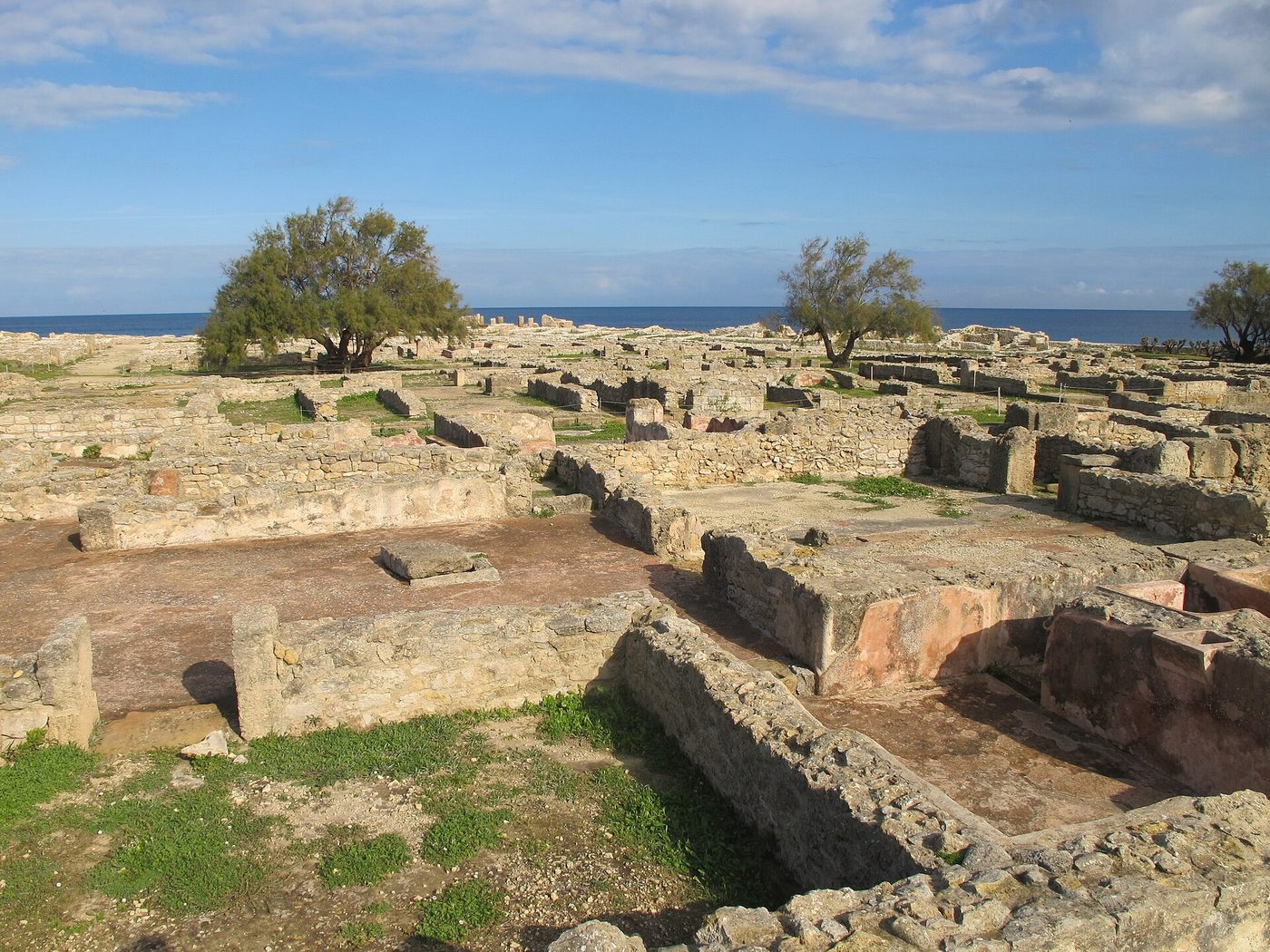
This is our top pick, and it isn’t close. Kerkouane is the only known Punic town that Rome didn’t flatten and build over — it was abandoned around 250 BC during the First Punic War and simply left, so what you walk through is a pure Carthaginian street plan: house foundations, workshops, and the famous pink-plaster bathtubs still sitting in their bathrooms. It was only rediscovered in 1952 and has been a UNESCO World Heritage Site since 1985.
What gets us is how empty it is. You can have the whole seafront site to yourself, sea on one side, the ghost of a 2,300-year-old town on the other. There’s a small museum too. Entry is modest — reckon on roughly 8 dinars including the museum, but check the current price on the day — and you’ll want a couple of hours.
It sits near Kelibia on Cap Bon’s east coast, around 100 km east of Tunis and very doable as a day trip from Hammamet with a hire car. Honestly, if you see one thing on this whole list, make it this.
El Haouaria and the Roman sea-caves
Right at the tip of Cap Bon, where the land points at Sicily, are the sea-caves of Ghar el Kebir — huge sandstone caverns that the Phoenicians and then the Romans quarried for building stone. They cut it here and shipped it by sea to Carthage, and you can still read the tool marks on the walls. Sunlight comes in off the water and lights the chambers a soft gold. It’s a national monument and about 3 km west of El Haouaria town, roughly 60 km from Hammamet.
El Haouaria itself is known for an old spring falconry tradition, and it makes a natural pairing with Kerkouane on a Cap Bon day out. Verdict: genuinely off-radar, mildly atmospheric rather than jaw-dropping, well worth it if you’re already up this way.
Nabeul’s back-street pottery workshops
Nabeul is Cap Bon’s main town and it’s no secret as a name — it has a resort strip of its own. But the bit worth your time isn’t the beach; it’s the working ceramics quarter behind it, around Avenue Habib Thameur, where potters have been turning out tiles and bowls since Phoenician times. By some counts Nabeul produces the lion’s share of Tunisia’s pottery. Skip the tourist-tat shops on the front and go where the kilns actually are, and time it for the big Friday morning market if you can. It’s a lovely, unhurried counterpoint to the souks of Sousse or Tunis, and the harissa here is a thing of beauty — see our Tunisian food guide for what to bring home.
Korbous — Roman-era hot springs on a cliff
A quick bonus for the curious. Korbous is a tiny thermal spa town wedged into a cliff on Cap Bon’s west coast, where hot mineral water has drawn bathers since Roman times — in places it steams straight out of the rock into the sea. It’s faded and a bit ramshackle, not a polished wellness resort, but the drive along the coast from the Tunis side is spectacular and it’s an easy half-day if you have wheels.
The wild north coast: lagoons, potters and empty ruins
North and west of Tunis the coast turns green and empty — a run of lagoons, cork forests and Phoenician ruins that barely register on the package-holiday map. This is our favourite region for genuine off-the-beaten-path Tunisia.
Ghar el Melh and its ramli sand gardens
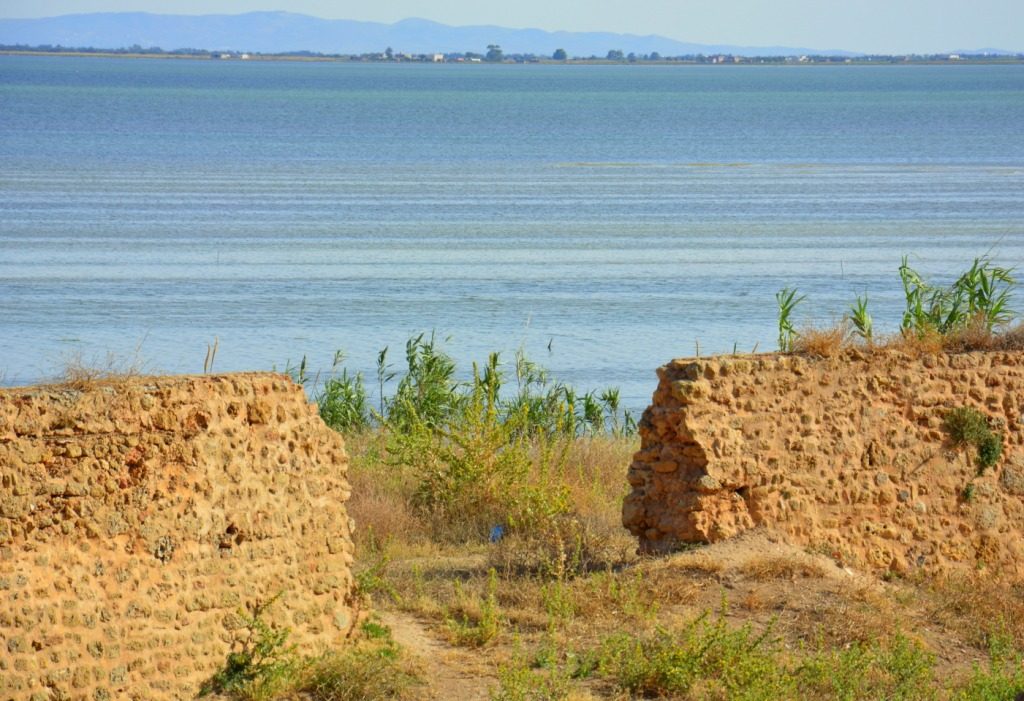
Ghar el Melh is a former Ottoman naval base sitting under a hillside on a wide lagoon, its old forts still standing over the water. That alone would earn it a spot. But the real story is agricultural, and it’s one nobody else on page one seems to know: the ramli gardens.
These are vegetable plots laid out on the sandy lagoon shore by the Andalusian diaspora back in the 17th century, and they’re watered by nothing but the tide — seawater rises up through the sand and freshwater floats on top, so the roots drink from a natural, self-refreshing layer. It’s clever enough that the FAO recognised it as a Globally Important Agricultural Heritage System in June 2020, and Ghar el Melh was the first city in the Arab world accredited a Ramsar “Wetland City”, back in 2018. The wetland runs to some 15,000 hectares and pulls in birdlife.
You come for quiet lagoon views, old forts, a working fishing harbour and a genuinely unique bit of farming heritage. It’s an easy day trip from Tunis with a car, and it feels a world away from the resorts.
Utica — maybe the oldest Phoenician city in the western Mediterranean
Everyone’s heard of Carthage. Almost nobody visits Utica, which — by tradition — is older, founded by Tyre around 1101 BC and for centuries the second city of Punic North Africa. It sits about 30–35 km north-west of Tunis, signposted “Utique Ruines” off the old national road, and it is gloriously, almost eerily, empty. You get Punic necropolises and, from the later Roman town, the mosaics and courtyard of the House of the Cascade. There’s a small museum on site.
Is it as monumental as Carthage or Dougga? No — much of the great city is unexcavated or gone. But standing near-alone on a site this old, this close to the capital, is a strange and lovely thing. One for history lovers rather than casual sightseers, and a fine pairing with Ghar el Melh on a north-coast day from Tunis.
Sejnane — pottery shaped only by women
Sejnane is a small hill town a couple of hours north-west of Tunis where the pottery is made the way it was before the potter’s wheel existed — hand-coiled, wheel-less, painted with earth pigments and iron oxide, then fired in the open on a bed of burning cow-dung and bark. And it’s made only by women. The technique is so old and so distinctive that UNESCO put it on the Intangible Cultural Heritage list in 2018.
There’s essentially no tourist machinery here. The women sell their figures and bowls direct, from their homes and at the roadside, and buying a piece straight from the maker is the whole point. It’s a proper detour — you need a car and a bit of patience — but it’s one of the most authentic craft encounters in the country. More on this and other living traditions in our Tunisian culture guide.
Cap Serrat and the Kroumirie coast
If you want a beach with almost nobody on it, Cap Serrat is about as undeveloped as a good sand beach gets in the Med — a curve of pale sand backed by hills and a little lighthouse, reached down a rough road with next to no facilities at the end. Bring your own food, water and shade; take your litter out. It’s the kind of place our beaches guide exists to point you towards once you’ve done the busy resort strands. Honest note: the road puts a lot of people off, which is exactly why it stays quiet.
Ichkeul National Park — flamingos and a UNESCO wetland
Ichkeul is a big shallow lake and marsh under a lone limestone hill near Bizerte, a UNESCO World Heritage Site and one of the most important wintering grounds for migratory birds in North Africa. Come in the colder months — roughly January to March — and the water fills with flamingos, ducks and geese in their tens of thousands. There’s an eco-museum and walking trails on the hill. If you’re travelling with kids who like wildlife, this is a winner, and it’s an easy day trip from Bizerte. Out of season the birdlife thins right out, so time it right or give it a miss.
The inland heartland: villages, aqueducts and clifftops
Head inland from Tunis and Hammamet and within an hour you’re among olive hills, Roman waterworks and hilltop villages that see barely a foreign face. Most of these are day-trippable, which makes them the easiest “hidden” wins on the list.
Zaghouan and the Temple of Water
At the foot of Djebel Zaghouan, the Romans built a monumental nymphaeum — the Temple of Water — over the springs that fed the aqueduct to Carthage, one of the longest in the whole empire at well over 130 km. It’s a handsome semicircle of columns and niches set against the mountain, and there’s a local proverb that whoever drinks the water of Zaghouan will return to Tunisia. The town itself has a photogenic “umbrella street” strung with colour in the medina. It’s about an hour from Tunis and a very easy, very rewarding half-day.
Zriba Olia — a half-abandoned mountain village
Near Hammam Zriba, a short hop from Zaghouan, the old stone village of Zriba Olia clings to a rocky hillside around the shrine of Sidi Abdelkader Jilani. Most residents moved down to the new village long ago, so what’s left is a hauntingly quiet cluster of stone houses with big views toward Djebel Zaghouan. It’s eerie in the good way — the kind of place you wander slowly and take a lot of photos. Easy to fold into a Zaghouan day from Tunis or Hammamet.
Takrouna — a Berber eyrie above the Sahel
Takrouna is a tiny Amazigh village stuck on top of a 200-metre rock between Zaghouan and Enfidha, with a scatter of whitewashed houses, an old shrine and a WWII memorial on the slopes below. The reason to climb up is the view — a full 360 degrees over the olive plains to the sea — best enjoyed over a glass of mint tea at the little café up top.
Fair warning: Takrouna has been going viral, and it’s more visited than it was even a couple of years ago. It’s still a hidden gem by any sensible measure, but go sooner rather than later. It’s an easy detour from Sousse or on the way to Kairouan.

Testour — Andalusian streets and a backwards clock
Testour is one of Tunisia’s odder and lovelier towns, founded around 1609 by Muslims and Moriscos expelled from Spain, who rebuilt their Andalusian world in the Medjerda valley. The Great Mosque, finished in 1631, has a distinctly Spanish octagonal minaret — and set into it, a clock whose numerals run backwards, one of only a handful of such clocks anywhere. Nobody fully agrees why; the stories range from a homesick nod to lost Andalusia to a builder’s quiet protest.
The town is also known for malouf, the Andalusian-Arab music brought over from Spain, with an annual festival, and for its cheese. It’s about 76 km from Tunis and makes a characterful day trip. Genuinely off the tourist track and full of atmosphere.
Islands and the deep south, done differently
Some of Tunisia’s best hiding places are surrounded by water or buried in the far south. These take more effort — a ferry, a hire car, an overnight — but they reward it.
The Kerkennah Islands — Tunisia’s slow-motion archipelago
Twenty-odd kilometres off Sfax lie the Kerkennah Islands, a low, flat, palm-dotted archipelago where the pace drops to almost nothing. There are no big resorts to speak of — just fishermen using traditional palm-frond traps and clay pots to catch octopus, a ruined fort at Borj el Hissar, bicycles, and long empty shallows perfect for a slow swim. This is where Tunisians go to switch off, and it shows.
You get there on the SONOTRAK car ferry from Sfax — the crossing takes around an hour and costs only a few dinars, though it’s worth knowing that high winds do occasionally cancel sailings (there were weather cancellations reported in January 2026), so build in a little slack. The main town is Remla. This is a “needs a base” pick: stay a night or two, hire a bike, eat the octopus. If you’re travelling with kids, the flat lanes and calm water make it an easy, safe place to potter about.

Sidi Jmour — Djerba’s wild west coast
Everyone who flies into Djerba lands near the busy north-east beaches. Almost nobody drives to Sidi Jmour on the island’s quiet west coast near Ajim, and that’s their loss — it’s a stretch of white sand and turquoise shallows with a little marabout shrine on the rise behind, undeveloped and blissfully empty. Locals know it as a sunset spot. If you’ve got a car on Djerba and half a day, it’s the antidote to the resort strip and one of the loveliest quiet beaches on the island.
Ghomrassen and Guermessa — Berber villages beyond the Star Wars trail
The Tataouine hinterland is famous for its ksour and troglodyte homes, and while Chenini and Douiret get the coach traffic, two neighbours stay genuinely quiet. Ghomrassen, about 26 km from Tataouine, is an old Berber town built around cave-homes cut into the hillsides. Guermessa is even better hidden — a clifftop village about half an hour from Chenini that you can’t even see from the road until you’re almost on it.
These sit well north of anywhere sensitive, and they’re routinely visited, but they’re deep-south spots: you’ll want a hire car (ideally something with a bit of clearance), and it’s easiest to chain them with Chenini and Douiret on a proper southern loop beyond the Sahara highlights. As always in the far south, follow current travel advice and don’t drift toward the Libyan border — more on that below. For the film-set angle, our Star Wars Tunisia guide maps the locations.
Aïn Draham — Tunisia’s green, misty mountains
Most people don’t picture Tunisia like this: cork-oak and pine forests, cool damp air, and the occasional dusting of snow in winter. Aïn Draham is a former French hill station up in the Kroumirie range in the far north-west, all red-roofed houses and forest walks, with the small lakeside village of Beni Mtir nearby. It’s a proper change of scene — jumpers, not swimsuits — and a lovely base for a day or two of walking. Stick to the town and the nearby forest tracks and enjoy the cool.
A few more worth the detour
To round out the twenty, a handful of shorter picks that don’t need a full section but earn their place:
- Hergla — a whitewashed clifftop fishing village on the Sahel coast between Sousse and Enfidha, with a pretty little medina and esparto-grass basketry. Very easy day trip and refreshingly low-key.
- Chebika and Tamerza — mountain oases in the south-west near the Algerian side of the country, with palm-filled gorges, a waterfall and the ruins of an old village. Dramatic and film-famous, but genuinely remote; best done from a Tozeur base as part of a wider desert trip. This corner sits close to the Algerian border, so glance at the current FCDO advice before you set off — though the oasis circuit itself is a well-trodden tour route.
- Bulla Regia — a Roman town near Jendouba where the wealthy built their villas underground to beat the summer heat, so you walk down into cool rooms with mosaic floors still in place. Extraordinary, and much quieter than El Djem. It sits comfortably away from the restricted border zones.
- Salakta — a small coastal spot south of Mahdia with a low-key beach, a little archaeological museum and, offshore, WWII wreck-diving for the properly adventurous.
How to actually reach hidden Tunisia
The reason these places stay quiet is the same reason they take a bit of effort. Here’s the practical toolkit, because no listicle competitor bothers with it.
- Hire a car for the inland and coastal gems. To drive you’ll want your UK licence plus a 1968 International Driving Permit — buy it in the UK before you fly (the Post Office does them) — and the car should come with a green card for insurance. Expect police and military checkpoints on rural roads: slow right down, be polite, and carry your passport or a copy.
- Or use louages for the budget adventure. Louages are shared long-distance minibuses that run set routes for a pittance, leaving when they fill up. They’ll get you to most towns on this list — Nabeul, Zaghouan, Testour, Bizerte — but not down the rough tracks to Cap Serrat or Sidi Jmour. Our guide to getting around Tunisia explains how louages and hire cars actually work.
- Consider a local guide or driver for the far south. For the Tataouine villages or a Tozeur-based oasis loop, hiring a driver for the day removes a lot of hassle and navigational stress, and often costs less than you’d think.
- Carry cash — rural ATMs are scarce. The Tunisian dinar is a closed currency: you can’t buy it before you travel and you can’t take it home, so you change money on arrival and convert leftovers before you fly out. Reckon on roughly £1 to 3.8–3.9 dinars, but check the current rate. Load up on cash in a city before heading into the countryside, where card machines and cashpoints are thin on the ground.
- Dress modestly in the villages. These are conservative rural communities, not resorts. Cover shoulders and knees, ask before photographing people, and you’ll be met with warmth. Our Tunisia travel tips cover the etiquette in full.
When to go, and an honest word on safety
For the countryside and villages, spring (March to May) and autumn (September to November) are the sweet spot — warm, green and comfortable for walking. Inland sites like Zaghouan, Testour and the ruins bake in high summer, so avoid the middle of the day in July and August. Ichkeul’s birdlife peaks in late winter. If you want the full month-by-month picture, our best time to visit guide lays it out.
On safety, a straight word. We’ve deliberately left some places off this list that you’ll see on other “hidden gems” round-ups, because the UK Foreign Office advises against travel to them. In particular we’ve avoided anything near the Algerian border in the north-west — including El Feidja National Park and the area north and west of Ghardimaou, and the archaeological site of Chemtou — and we don’t send anyone toward Kasserine, Sbeitla or the Chaambi Mountains, or into the restricted zones near the Libyan border in the deep south-east. That FCDO advice was still current as we published on 2 July 2026. The genuinely under-visited places above all sit well clear of those zones — but the far-south picks especially are worth a quick sense-check against current advice before you go. For the exact wording and dates, see our guide to whether Tunisia is safe.
The verdict
Tunisia’s real hidden gems ask a little more of you than the resort beach does — a hire car, a ferry timetable, a rough road, a willingness to be the only foreigner in the café. But that’s exactly the trade. In return you get a 2,300-year-old Punic city to yourself, sand gardens watered by the tide, a village clock that runs backwards and an island where the loudest sound is the wind in the palms. Do the famous stuff too — but leave a day or two for these, and they’ll be the bit you talk about when you get home.
Ready to build it into a trip? Slot a couple of these into a Tunisia itinerary, browse organised excursions if you’d rather not drive, or go back to the full guide to things to do in Tunisia.
Tunisia hidden gems: your questions answered
What are the most underrated places to visit in Tunisia?
Our top underrated picks are Kerkouane (the only un-rebuilt Punic city), Ghar el Melh and its tide-watered sand gardens, Utica, the Kerkennah Islands, Sejnane’s women’s pottery village and the clifftop villages of Takrouna and Testour. All are genuinely quiet, unlike Sidi Bou Said, Carthage or El Djem, which are wonderful but firmly on the tourist trail.
Where can I go in Tunisia to avoid the crowds?
Head for the wild north coast (Ghar el Melh, Utica, Cap Serrat, Sejnane), inland villages an hour from Tunis (Zaghouan, Zriba Olia, Testour), or the Kerkennah Islands off Sfax. These see a fraction of the visitors the coastal resorts and headline ruins get, so you’ll often have a site or beach almost to yourself, especially outside high summer.
What is the most beautiful hidden village in Tunisia?
It’s a close call between Takrouna, a whitewashed Berber village on a rock with 360-degree views over the Sahel, and Testour, an Andalusian town with Spanish-style architecture and a famous backwards-running mosque clock. For sheer atmosphere, the half-abandoned stone village of Zriba Olia is hard to beat too. All three are easy day trips from the north’s resorts.
Can you visit Tunisia’s hidden gems without a tour or a guide?
Yes, for most of them. Towns like Nabeul, Zaghouan, Testour and Bizerte are reachable by cheap shared louages, and a hire car opens up nearly everything on this list. You’ll want a guide or private driver mainly for the far-south Berber villages around Tataouine, where navigation and rough roads make a local driver worth the money.
How do you get to the Kerkennah Islands from the mainland?
Take the SONOTRAK car ferry from Sfax. The crossing takes around an hour and costs only a few dinars, with several sailings a day — though strong winds can occasionally cancel them, so allow a little slack in your plans. Once there, hire a bike; the islands are flat, quiet and made for slow exploring rather than rushing.
Is Kerkouane worth visiting, and how much does it cost to get in?
Absolutely — it’s our number-one hidden gem. Kerkouane is the only Punic town Rome never rebuilt, a UNESCO site where you walk through original Carthaginian streets and see the famous pink bathtubs, usually with barely another soul around. Entry is modest, roughly 8 dinars including the on-site museum, but check the current price on the day.
What are the best off-the-beaten-path places near Hammamet, Sousse or Djerba?
From Hammamet, drive out to Kerkouane, the El Haouaria caves and Zriba Olia on Cap Bon. From Sousse, Takrouna and the fishing village of Hergla are easy detours. On Djerba, skip the busy north-east beaches for Sidi Jmour on the wild, undeveloped west coast — a turquoise cove that most package guests never find.
Do I need a hire car to explore rural Tunisia, or can I use louages?
You can do a lot by louage — the shared minibuses reach most towns cheaply — but they don’t run down the rough tracks to places like Cap Serrat, Sidi Jmour or the hidden Berber villages. For those, and for full flexibility, hire a car. Bring a 1968 International Driving Permit from the UK and check the hire car has a green card for insurance.
When is the best time of year to visit Tunisia’s countryside and villages?
Spring (March to May) and autumn (September to November) are ideal: warm, green and comfortable for walking, without the fierce heat that bakes inland sites in July and August. If birdwatching at Ichkeul is the goal, aim for late winter, roughly January to March, when the flamingos and migratory flocks are at their peak.
Are Tunisia’s remote areas safe for tourists to visit?
The under-visited places in this guide all sit well away from the areas the UK Foreign Office advises against — chiefly the Algerian and Libyan border zones, the Chaambi Mountains and Kasserine Governorate. We’ve deliberately left those out. As always, take normal rural precautions, carry ID for checkpoints, and check current FCDO advice before travelling, especially for the far south. See our full, date-stamped safety guide for the exact wording.
What are the ramli sand gardens at Ghar el Melh?
They’re vegetable plots on the sandy shore of Ghar el Melh’s lagoon, created by Andalusian settlers in the 17th century and watered entirely by the tide — seawater rises through the sand while freshwater floats on top, feeding the roots naturally. The FAO recognised them as a Globally Important Agricultural Heritage System in 2020. It’s a genuinely unique bit of farming you won’t see elsewhere.
Which “hidden gems” in Tunisia are actually too touristy now?
Be wary of any list that calls Sidi Bou Said, Carthage, El Djem, Matmata or Djerbahood “hidden” — they’re all superb but heavily visited. Even Dougga, the finest Roman town in North Africa, is well-documented now. See them by all means, just don’t expect solitude. For that, stick to the genuinely quiet picks in this guide.
Written by the Tunisia Tourism Guide team — an independent UK-focused guide to travelling in Tunisia. We don’t sell tours or take hotel commissions. Prices, opening hours and safety advice were checked at publication; sites, ferries and rural roads can change, so always confirm current details before you set out.
Photo credits
All images via Wikimedia Commons, used with thanks: the Punic ruins at Kerkouane ©


One response to “Tunisia Hidden Gems: 20 Places Most Tourists Miss”
[…] It also happens to be beautiful and easy. The roads are good, the distances are short, the traffic is light once you leave the coast strip, and the scenery — orchards, vineyards, low hills, then long empty beaches — is a proper change from the hotel pool. If you’ve been wondering what’s beyond the resort, this is it. It’s one of the reasons Cap Bon keeps turning up on any honest list of Tunisia’s quieter corners. […]