By the Tunisia Tourism Guide team · Last updated 2 July 2026 · We don’t sell tours or take hotel commissions — this is independent advice, written to be useful.
Some of the most beautiful places in Tunisia sit an hour from a package resort, and some take real effort to reach — and nobody ever tells you which is which. This is a country smaller than England that still packs in blue-and-white cliff villages, one of the biggest Roman amphitheatres on earth, a pink salt lake the size of a small county, and Berber homes carved into the rock that George Lucas turned into Tatooine. Most “prettiest places” lists just show you the pictures and leave you to work out the rest. We’d rather tell you where each place actually is, when the light’s best for a photo, and — honestly — whether it’s worth giving up a day of your holiday for.
So here’s the short version. The most beautiful places in Tunisia are the clifftop village of Sidi Bou Said, the towering Roman amphitheatre at El Djem, the shimmering Chott el Jerid salt lake and the honeycomb Berber ksour of the south — but the full list runs to 25, spread across coast, capital, Roman heartland and Sahara. This guide groups them by region so you can see which cluster around your resort, and it’s part of our wider rundown of things to do in Tunisia. Still on the fence about the country itself? Start with whether Tunisia is worth visiting and come back.
These are also, for the record, the most Instagrammable places in Tunisia and its best photography spots — we’ve flagged the light for each — but the real point is that they’re gorgeous in person, camera or no camera.
How to use this list — regions, resort bases and the best light
Tunisia falls into a handful of loose regions, and where you’re staying decides which are easy day trips and which need an overnight. Here’s the quick mental map:
- The north & Cap Bon coast — Sidi Bou Said, Carthage, Hammamet, Bizerte, Tabarka. Nearest airport Enfidha (NBE) or Tunis. Most are day-trippable from Hammamet or the capital.
- Tunis & the capital — the medina, the Bardo mosaics, the French quarter. Fly into Tunis-Carthage; a city in its own right.
- Roman Tunisia — El Djem, Dougga, Bulla Regia, Zaghouan. Scattered inland; El Djem is an easy train hop from Sousse, the rest need more effort.
- The Sahara & oases — Chott el Jerid, Tozeur, Nefta, Douz. The deep south-west; realistically an overnight or an organised two-day trip.
- The Berber south & the ksour — Ksar Ouled Soltane, Chenini, Matmata, Djerba. Reached from Djerba (DJE) or on a southern loop.
- Nature & lakes — Ichkeul, Tamerza, Chebika. Off to the sides, for people who’ll drive.
Two practical notes before we start. First, the sightseeing sweet spot is spring and autumn — the summer is glorious on the coast but brutal in the desert and the ruins, where there’s no shade; our best time to visit Tunisia guide breaks it down month by month. Second, carry cash. Many sites are cash-only, and the dinar is a closed currency — you can’t buy it before you fly, so you’ll change money on arrival and keep some small notes for entry fees. Reckon on roughly £1 to 3.8–3.9 dinars in mid-2026, but check the current rate.
One question we get more than any other is whether the north or the south is the more beautiful half of the country. They’re gorgeous in completely different ways — here’s the honest comparison to help you lean one way:
| The north & coast | The south & desert | |
|---|---|---|
| The look | Blue-and-white villages, green hills, Roman ruins | Salt lakes, palm oases, honeycomb ksour, dunes |
| Easiest from | Tunis, Hammamet, Enfidha resorts | Djerba, Tozeur, or an organised loop |
| Effort | Mostly easy day trips | Overnights and long drives |
| Best season | Spring–autumn (coast fine in summer) | Autumn–spring (summer punishingly hot) |
| Go here if… | You want classic Mediterranean prettiness with less effort | You want landscapes that feel like another planet |
At a glance — all 25, and whether they’re worth your time
If you only skim one thing, skim this. “Best light” is when to photograph it; “Worth it” is our honest verdict on giving up holiday time for it.
| Place | Region | Nearest base | Best light | Worth it? |
|---|---|---|---|---|
| Sidi Bou Said | North coast | Tunis / Hammamet | Sunrise–11am | ★★★ Unmissable |
| El Djem amphitheatre | Roman | Sousse | Morning | ★★★ Unmissable |
| Chott el Jerid | Sahara | Tozeur | Sunrise & sunset | ★★★ Unmissable |
| Carthage | North coast | Tunis | Late afternoon | ★★★ Worth it |
| Tunis medina | Capital | Tunis | Mid-morning | ★★★ Worth it |
| Ksar Ouled Soltane | Berber south | Djerba / Tataouine | 4–6pm, Oct–Apr | ★★★ Worth it |
| Dougga | Roman | Tunis / Le Kef | Late afternoon | ★★★ For ruins fans |
| Tozeur palmeraie | Sahara | Tozeur | Late afternoon | ★★★ Worth it |
| Matmata | Berber south | Djerba | Midday (interiors) | ★★ Worth it |
| Djerbahood, Erriadh | Djerba | Djerba | Overcast / morning | ★★ Worth it |
| Kairouan Great Mosque | Central | Sousse | Morning | ★★★ Worth it |
| Chenini | Berber south | Tataouine | Golden hour | ★★ If you’ll drive |
| Bulla Regia | Roman | Jendouba | Midday (underground) | ★★ Underrated |
| Bardo mosaics | Capital | Tunis | Any (indoor) | ★★★ Wet-weather win |
| Hammamet medina | North coast | Hammamet | Late afternoon | ★★ Easy win |
| Sousse medina & ribat | Sahel | Sousse | Morning | ★★ Easy win |
| Douz & the dunes | Sahara | Douz | Sunrise / sunset | ★★★ For the desert |
| Nefta & La Corbeille | Sahara | Tozeur | Late afternoon | ★★ If nearby |
| Korbous, Cap Bon | North coast | Hammamet | Afternoon | ★★ If you have a car |
| Tabarka & Les Aiguilles | North coast | Tabarka | Sunset | ★★ Off the trail |
| Bizerte old port | North coast | Bizerte | Golden hour | ★★ Quiet charmer |
| Ghar el Melh | North coast | Bizerte | Late afternoon | ★ Car only |
| Zaghouan Water Temple | Roman | Tunis | Midday | ★★ Free & quick |
| Ichkeul National Park | Nature | Bizerte | Sunset | ★★ For birders |
| Tamerza & Chebika | Nature | Tozeur | Midday | ★★ Desert oases |
Now the detail, region by region — starting on the coast, where most UK holidays begin.
The blue-and-white north & the Cap Bon coast
This is the Tunisia of the brochures: whitewashed walls, cobalt shutters, the sea a short taxi from your sunlounger. It’s also the most accessible cluster, so if you’re on a package near Hammamet or the capital, start here.
1. Sidi Bou Said — the icon
If Tunisia has a single postcard image, this is it. Sidi Bou Said is a clifftop village just outside Tunis where every house is whitewashed and every door, window and wrought-iron grille is painted the same specific blue. Artists have been coming here for a century — Klee, Macke and Matisse all painted the light — and it still earns the fuss. Wander the cobbled lanes, climb to the viewpoint over the Gulf of Tunis, and have a mint tea with pine nuts at the Café des Nattes.
The photographer’s trick: the village faces roughly east, so sunrise is more spectacular than sunset, and it’s blissfully empty before about 11am. Come mid-afternoon and you’ll be shuffling through coach parties toward the sunset viewpoint. It’s a 20-minute taxi or a hop on the TGM light rail from central Tunis, so it slots neatly into a day around the capital — see everything nearby in our guide to Tunis.

2. Carthage — ancient ruins above the sea
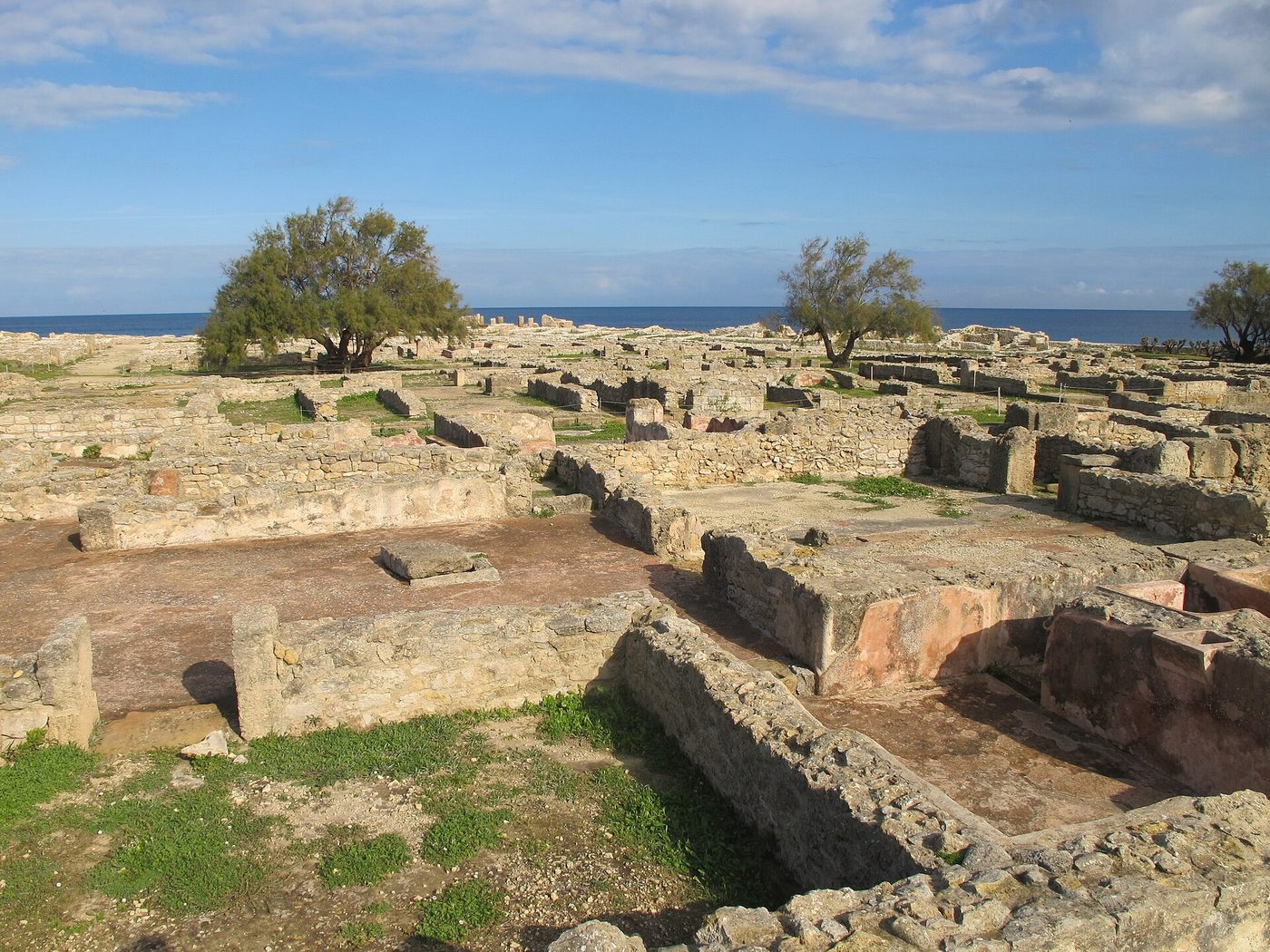
A few stops down the same TGM line lies Carthage, once Rome’s great rival and now a leafy, well-heeled suburb strewn with ruins. The Antonine Baths sprawl right down to the water, the Byrsa Hill gives you the whole Gulf of Tunis at your feet, and there’s a genuine thrill in standing where Hannibal’s city stood. It isn’t a single tidy site — it’s scattered across a suburb — so give it half a day and pair it with Sidi Bou Said next door. Late-afternoon light warms the stone beautifully, and you’ll often have these ruins almost to yourself.
3. Hammamet & its medina
Hammamet is where a lot of UK holidays actually happen, and its old medina is prettier than it has any right to be for a resort town — a compact walled kasbah right on the beach, whitewashed and jasmine-scented, with ramparts you can walk for a sea view. Paul Klee painted “Hammamet with Its Mosque” here in 1914. It’s not a bucket-list wonder, but if you’re staying nearby it’s a lovely late-afternoon stroll and an easy win. Our full Hammamet guide has the rest.
4. Korbous & the Cap Bon cliffs
North of Hammamet, the Cap Bon peninsula narrows into dramatic cliffs, and at Korbous natural hot springs run down the rock — in one spot, hot mineral water pours straight into the cold sea. It’s gorgeous and a bit ramshackle, and you’ll need a car (or a driver for the day) to get the best of the coast road. Worth it if you’re the type who likes a scenic drive more than a queue; skip it if you’ve only a couple of days.
5. Tabarka & the Coral Coast
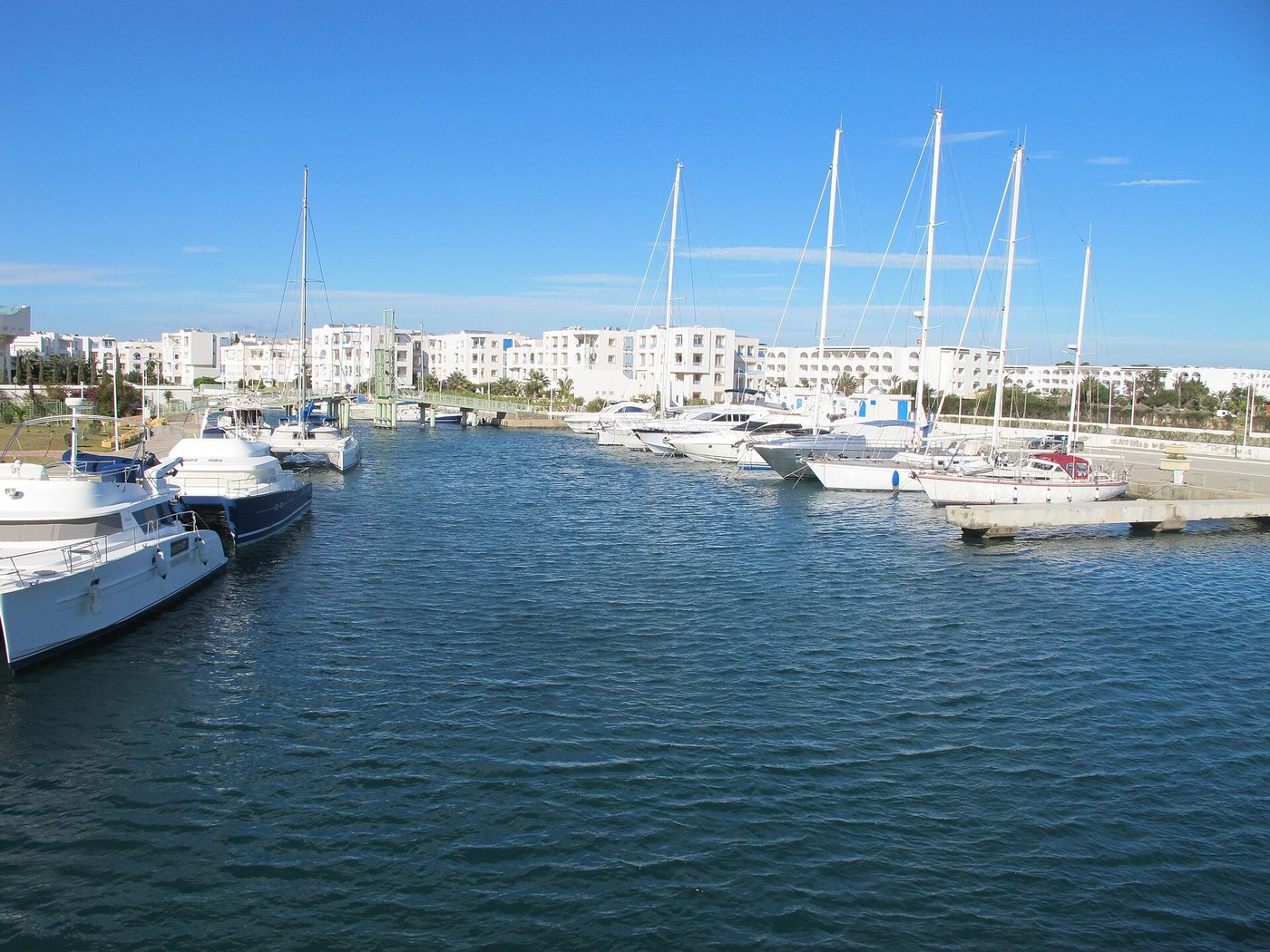
Right up in the forested north-west, near the Algerian border but comfortably clear of any restricted zone, Tabarka is a different Tunisia — cork oaks, a Genoese fort on an islet, and Les Aiguilles, a row of jagged rock “needles” rising straight from the sea. It’s off the standard package trail and a long haul from the southern resorts, so it’s really for road-trippers or divers. At sunset the needles are magnificent.
6. Bizerte old port
Bizerte’s old harbour is one of the quiet delights of the north: a horseshoe of pastel fishing boats and old houses, backed by a kasbah, with none of the hard sell you get further south. Golden hour on the quay is lovely. It also sits beside a big lagoon that draws flamingos, and the wider stretch of coast here has some of Tunisia’s best beaches, if you fancy combining the two.
7. Ghar el Melh — the lagoon & Ottoman forts
Once a corsair harbour known to Europeans as Porto Farina, Ghar el Melh is a sleepy lagoon town with three Ottoman forts and centuries-old raised gardens along the water. It’s genuinely one of Tunisia’s hidden gems — but it’s also strictly a car job, with next to no public transport, and there’s not a lot to do beyond soak up the calm. Only worth the detour if you’re already driving Cap Bon.
Tunis — the capital’s own beauty
People treat Tunis as an airport rather than a destination, which is a mistake. Give it a day.
8. The medina of Tunis
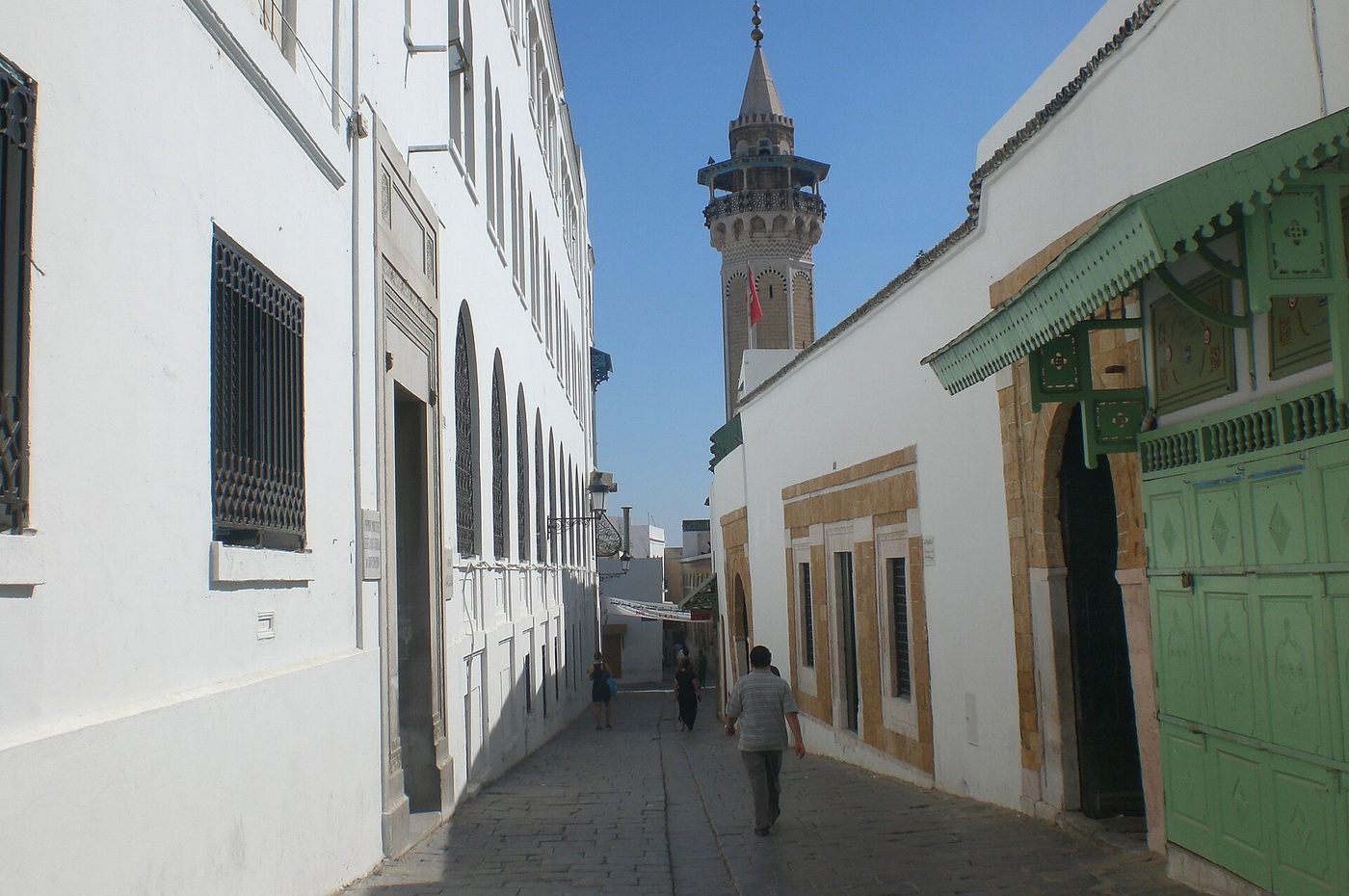
The UNESCO-listed old city is a labyrinth of covered souks, tiled doorways and quiet courtyard palaces, centred on the Zitouna Mosque. Yes, there’s some hassle from vendors, but far less than the resort medinas, and the deeper you go the calmer it gets. Climb to one of the rooftop café terraces for a view over the whole tiled sprawl to the Zitouna minaret — mid-morning light is kindest. It’s the beating heart of the capital, and a proper immersion in Tunisian culture.
9. The Bardo mosaics
The Bardo Museum holds the finest collection of Roman mosaics on the planet, lifted from sites all over the country and displayed in a former palace. Room after room of vast, intricate floors — Virgil, Neptune, hunting scenes — in colours that have barely faded in 1,800 years. Best of all for a Tunisian holiday: it’s indoor, so it’s the perfect move on the one grey, breezy day the coast throws at you off-season.
10. Avenue Habib Bourguiba & the French quarter
Between the medina and the lake, the “ville nouvelle” is all wide boulevards, ornate French-colonial façades and a grand cathedral facing the old Interior Ministry. Avenue Habib Bourguiba — the “Champs-Élysées of Tunis” — is where the city comes out to stroll in the evening. It’s not a wonder, but it’s a handsome, atmospheric counterpoint to the medina, and the two together make a full, easy day on foot.
Roman Tunisia — the most beautiful ancient sites
This is Tunisia’s secret weapon. The Roman remains here rival Italy’s, and you’ll often have them almost to yourself.
11. The amphitheatre of El Djem
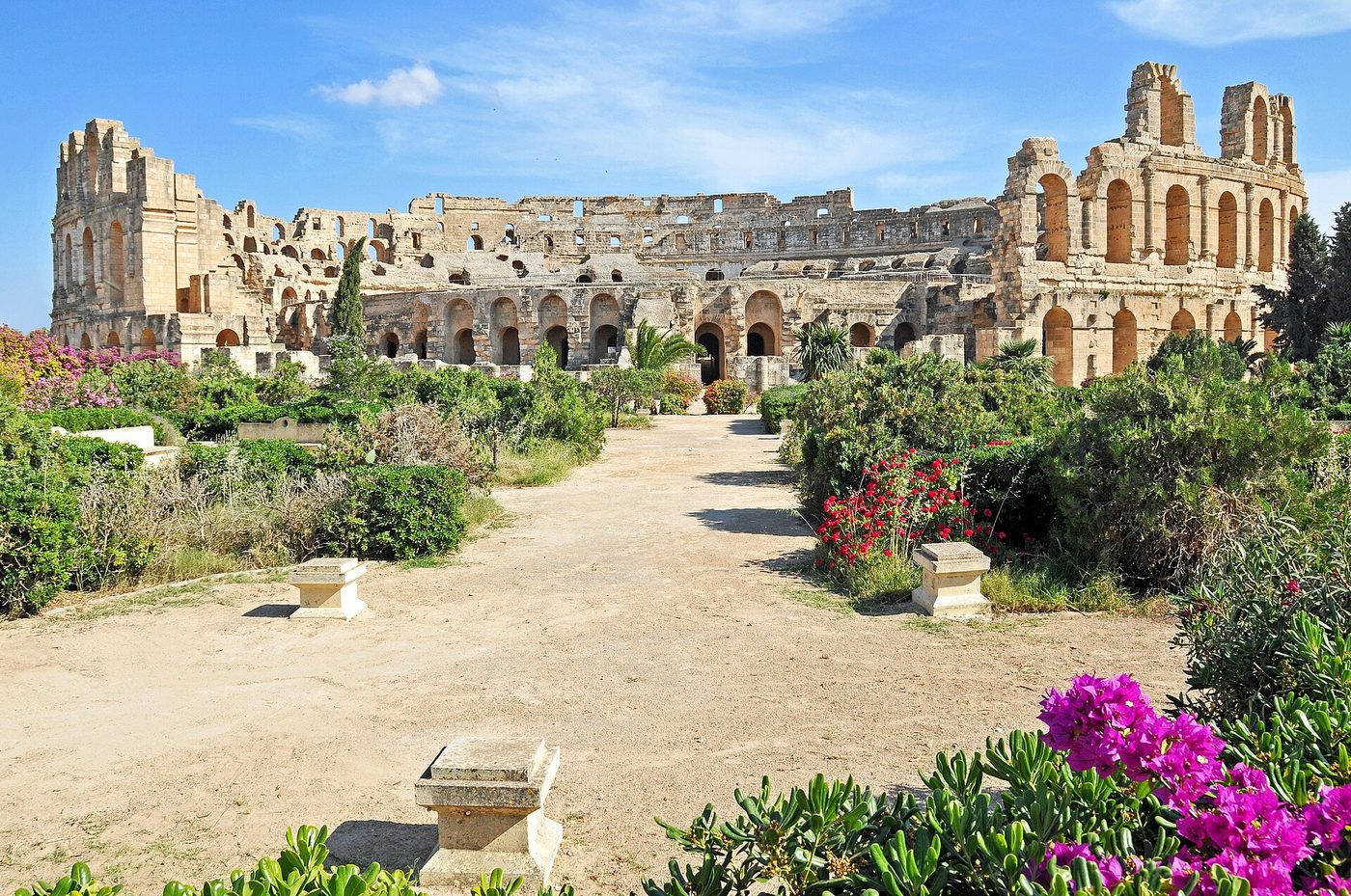
Nothing prepares you for El Djem. In the middle of an ordinary town rises one of the largest and best-preserved Roman amphitheatres anywhere — a golden three-tier colosseum you can walk out onto the arena floor of, climb the tiers of, and explore the underground chambers below. And you can do it with barely a soul around. If you’ve queued for the Colosseum in Rome, the contrast is almost funny.
It’s beautifully easy to reach: a direct train from Sousse takes about 1 hour 7 minutes (a few a day, tickets often just a couple of dinars), and the station is around 300 metres from the monument. Entry was around 12 dinars (roughly £3) for non-residents as of spring 2026, including the museum and nearby Roman villas — but check current prices, and note the hours shift with the season (broadly summer around 07:30–19:00, winter around 08:00–17:30, shorter during Ramadan). Morning light on the arches is glorious. Base yourself in Sousse and this is one of the easiest brilliant day trips in the country. More context in our Roman ruins guide.
12. Dougga — the best-preserved Roman town in North Africa
Dougga is what El Djem isn’t: not one building but a whole abandoned city on a hillside — a theatre, a market, brothels, temples and the honey-coloured Capitol, one of the most photographed Roman buildings in Africa, all spread across a green valley. Late-afternoon light on the Capitol columns is the shot.
The catch is access: there’s no direct public transport. From Tunis you take a louage (shared minibus) from the Bab Saadoun station to Téboursouk — around 1.5 to 2 hours and roughly 15 dinars — then a local taxi the last few kilometres to the site (agree a fare, around 15–20 dinars, and ask the driver to wait). It’s about 100km from Tunis and an easy add-on if you’re heading toward Le Kef. Honest verdict: a bit of a mission without a car, but if you love Roman ruins it’s arguably the finest site in the country.
13. Bulla Regia — the underground villas
Here’s the one nobody else writes about, and it’s extraordinary. To escape the summer heat, the Romans at Bulla Regia built their villas underground — and because they were buried, the mosaic floors survive in place, in situ, still on the ground where they were laid. You descend a stone staircase into the House of Amphitrite and there’s a sea-god mosaic under your feet, complete, in a cool subterranean room. Almost no other guide sends you here, which is exactly why you should go.
It sits about 7km north-west of Jendouba; any Jendouba–Tabarka louage or bus can drop you at the turn-off (then a 3km walk), or take a taxi from Jendouba for around 5 dinars. Allow two to three hours. Spring and autumn are ideal — cooler, with wildflowers. The underground stairs make it tricky for anyone with limited mobility, so bear that in mind.
14. Zaghouan Water Temple
Tucked at the foot of a mountain about 50km from Tunis, the Temple des Eaux is where the Romans captured a spring and sent the water 123km along an aqueduct to Carthage. The semicircular temple, its columns framing the mountain behind, is a lovely, low-key spot — and it’s free to enter, with free parking. It’s a quick, easy half-day from Tunis, often bolted onto a Dougga trip. Not a headline wonder, but pretty, peaceful and costs nothing.
The Sahara, oases & salt lakes
The south-west is where Tunisia stops looking like the Med and starts looking like another planet. It’s a haul from the coast — realistically an overnight or an organised two-day trip — but for many of our readers it’s the highlight of the whole holiday.
15. Chott el Jerid — the pink salt lake
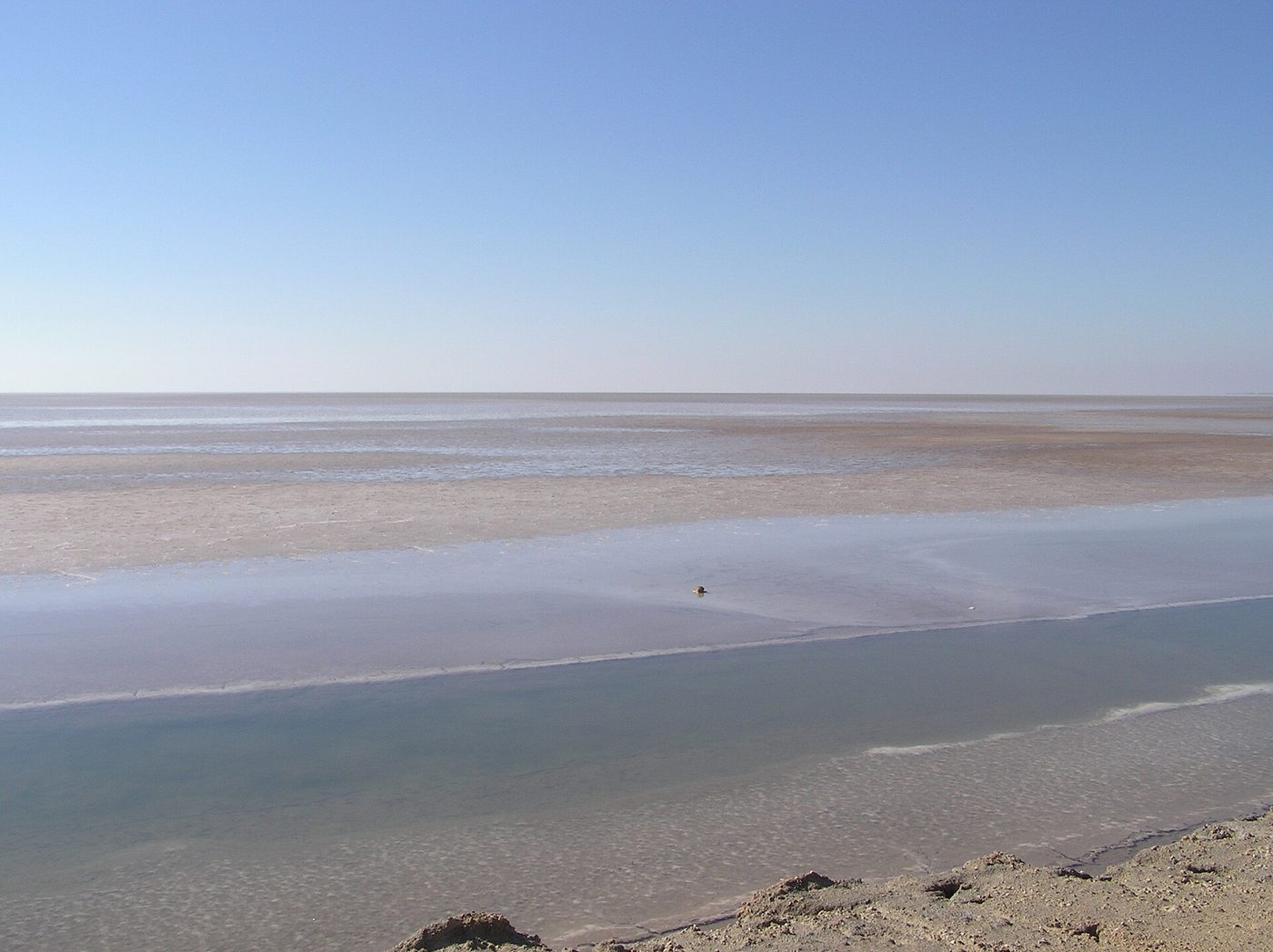
Chott el Jerid is the largest salt pan in the Sahara — roughly 5,000 square kilometres of blinding white crust, shimmering brine pools and, in the low sun, extraordinary colour: pinks, oranges, golds, the odd flash of green. The main road, the P16, runs straight across the middle between Tozeur and Kebili, so you cross it whether you plan to or not — but stop for the light and it’s unforgettable. Sunrise and sunset are when the colours and mirages come alive.
One firm safety point: stay on the road. The salt crust looks solid but hides brackish water and soft mud, and vehicles do break through — only go off-piste with a local 4×4 guide. Visit late autumn to early spring; high summer here hits 38–45°C. It’s the dramatic overture to the wider Tunisian Sahara.
16. Tozeur & the Ouled El Hadef
Tozeur is the great oasis town of the south-west, its palmeraie sheltering more than 200,000 date palms in a green sea against the desert. But the real beauty is the old quarter, Ouled El Hadef, a 14th-century medina built of ochre bricks laid in raised geometric patterns you’ll see nowhere else on earth except neighbouring Nefta. The brickwork glows in the late afternoon — that’s when to walk it. Tozeur has its own small airport and makes the natural base for the whole desert region.
17. Nefta & La Corbeille
Half an hour west of Tozeur, Nefta shares the same beautiful brickwork and adds La Corbeille — “the basket” — a deep natural bowl of springs and palms you can look down into from the town above. It’s a holy town, dotted with domed marabout shrines, and quieter than Tozeur. If you’re already out here it’s a lovely, easy add-on; it’s not worth a special journey on its own.
18. Douz & the Grand Erg Oriental
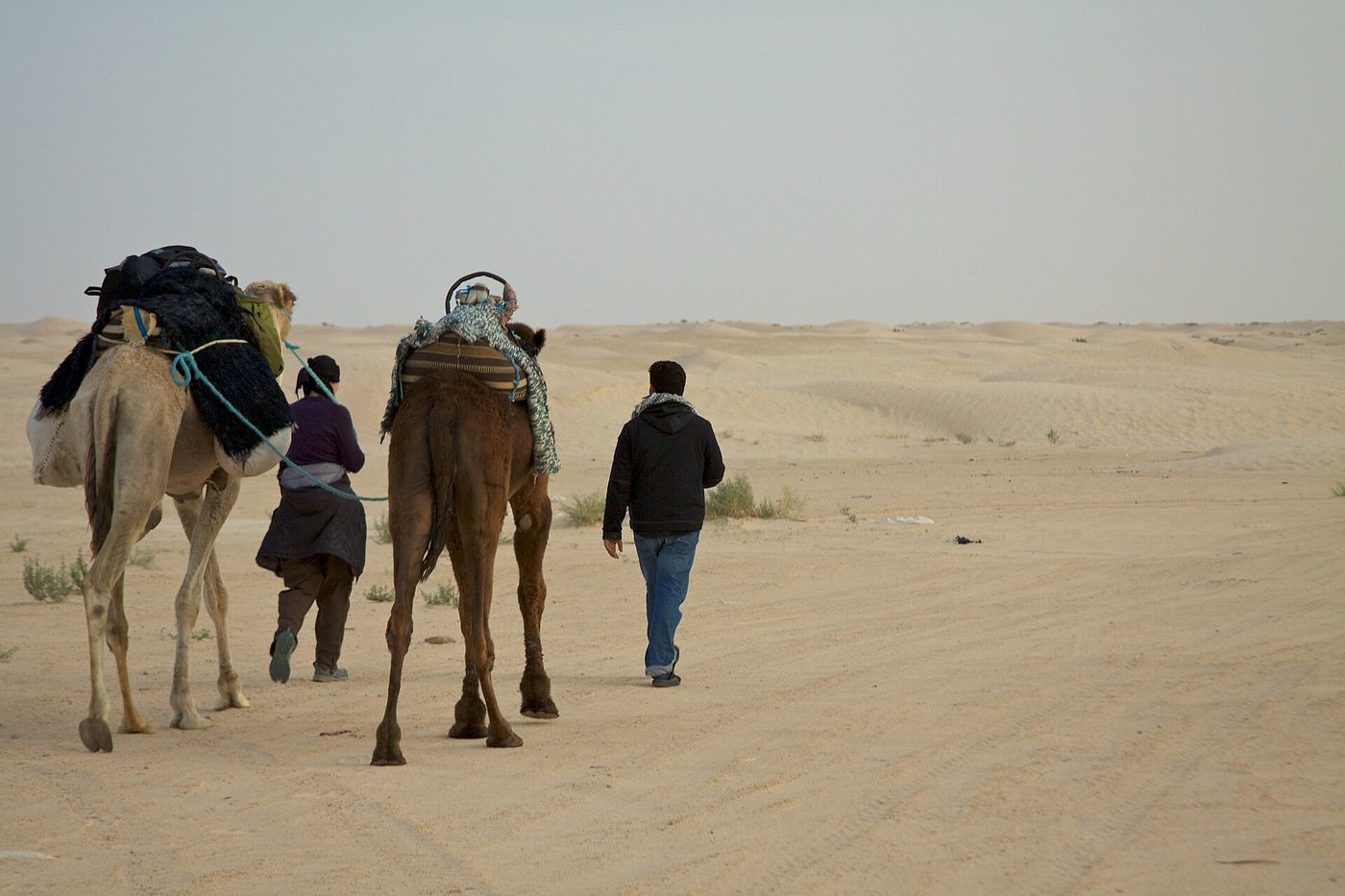
Douz is where the tarmac ends and the real dunes of the Grand Erg Oriental begin — the point at which Tunisia stops being a beach holiday and becomes a proper desert one. Ride out at dawn or dusk and you get the classic sea-of-sand golden hour, the dunes rippling to the horizon. A quick, candid word: the roadside camel-photo hustle is a bit dispiriting — if it doesn’t sit right, walk out onto the dunes on foot instead, or arrange a proper trek. An overnight camp out here, under a sky thick with stars, is the memory most of our readers bring home.
The Berber south & the ksour — Star Wars country
South-east of the salt lakes, the landscape turns to bare hills studded with fortified granaries and cave-villages. This is where the films came — and it’s genuinely otherworldly. It’s most easily reached from Djerba, or on an organised southern loop.
19. Ksar Ouled Soltane — the honeycomb granary
This is the one that stops you in your tracks. A ksar is a fortified Berber granary, and Ksar Ouled Soltane is the finest: two courtyards ringed by ghorfas — vaulted mud-brick storage cells — stacked four storeys high, their curved openings honeycombing the walls. Fans will recognise it as the slave quarters of Mos Espa from The Phantom Menace. The light does the work between about 4 and 6pm from October to April, when shadows rake across the arches. It’s about 23km south-east of Tataouine, and it’s the star of any tour of the Star Wars filming locations in Tunisia.
20. Chenini — the cliff-clinging village
Chenini is a 12th-century Berber village that pours down a steep ridge, its pale houses and a white mosque seeming to grow out of the rock, with cave-dwellings tucked into the cliff behind. A few hundred people still live here. It’s remote — about 18km from Tataouine, and a very long way from the coast — so realistically you reach it on an organised excursion from Djerba or Tataouine (often bundled with Ksar Ouled Soltane) or a 4×4 self-drive. Golden hour, with the low sun on the ridge, is magical. Honest verdict: only if you’ll make the effort — but those who do rarely regret it.
21. Matmata — the underground homes
Matmata is the troglodyte village, where Berber families dug their homes down into the soft rock as sunken courtyards ringed by cave-rooms — cool in summer, warm in winter. One of them, the Hotel Sidi Driss, was Luke Skywalker’s boyhood home, the Lars homestead, and you can still eat and sleep in it. Interiors photograph best around midday when light spills into the pit courtyards. It’s a standard stop on southern tours and pairs naturally with the ksour.
22. Djerba & Djerbahood
The island of Djerba is a holiday in itself — white sand, whitewashed mosques, the old souk of Houmt Souk — but its most surprising sight is Djerbahood, in the village of Erriadh. In 2014 a Paris gallery invited around 150 street artists from some 30 countries to paint the whitewashed walls, leaving roughly 250 murals threaded through the lanes. It’s free to wander, endlessly photogenic, and best shot on an overcast morning when the colours pop without harsh shadows. Some murals have faded and new ones appear, so no two visits match. The historic El Ghriba synagogue is nearby.
Nature & lakes worth the trip
Two more, for the people who like their beauty green and wild rather than built.
23. Ichkeul National Park
A UNESCO-listed wetland near Bizerte, Ichkeul is a rare survivor — a lake and marsh, backed by a lone mountain, that draws tens of thousands of migrating birds. In winter the water fills with flamingos, ducks and storks; water buffalo graze the shore; and at sunset the lake turns to a mirror under the mountain. There’s a short hike up Jebel Ichkeul and hot springs at the base. It’s about an hour from Bizerte or Tunis — one for birdwatchers and quiet-nature lovers rather than a must-see for everyone.
24. Tamerza & Chebika
Up in the mountains near the Algerian frontier (but well clear of any restricted zone) sit the “mountain oases” — Tamerza and Chebika — where springs feed palm groves and small waterfalls tumble through bare golden rock. Chebika, clinging to a cliff above its palmerie, stood in for scenes in The English Patient. They’re usually visited together on a 4×4 loop out of Tozeur, and the contrast of green palms against the ochre canyon is striking. Midday actually works well here, deep in the gorges.
25. Sousse & Kairouan — the Sahel double
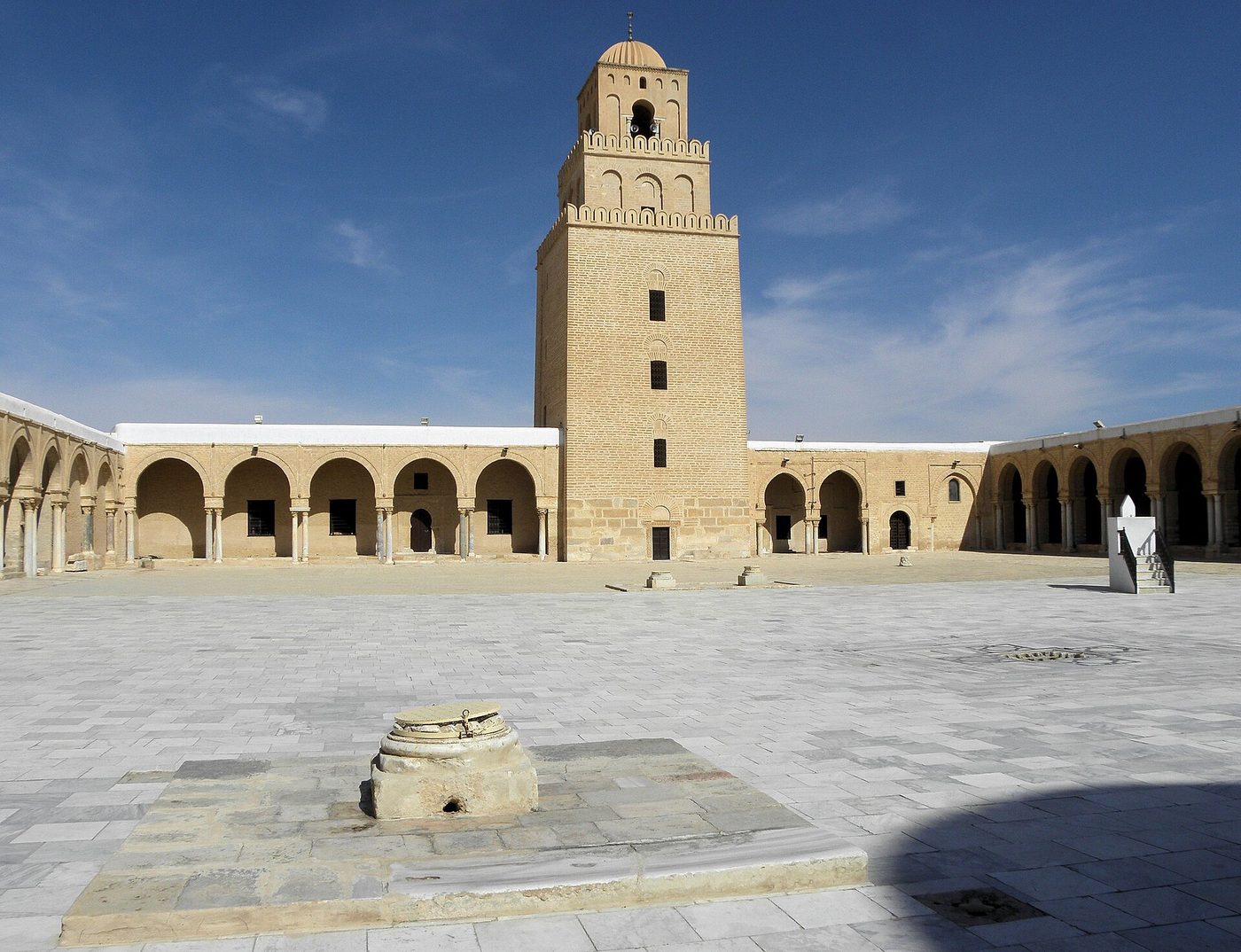
We’ll close with two you can pair from the same base. The medina of Sousse is a whitewashed, UNESCO-listed walled town with a ninth-century ribat (fortress-monastery) you can climb for a view over the rooftops to the sea — a genuinely handsome old town wrapped around a package resort. An hour inland, Kairouan is Islam’s fourth-holiest city, and its Great Mosque of Sidi Okba — the oldest in the Maghreb, a vast honey-stone courtyard under a square minaret — is one of the most beautiful buildings in the country. Morning light floods the courtyard. Both are easy day trips from the Sousse or Monastir resorts.
How many of these can you actually fit into one holiday?
Be realistic — you won’t do all 25 in a week, and trying would ruin the point. Here’s how it tends to shake out.
From a coastal resort week (Hammamet, Sousse, Monastir): you can comfortably manage three or four of these as day trips — say El Djem and Kairouan from Sousse, plus a day around Tunis for Sidi Bou Said, Carthage and the medina. The desert is a stretch as a day trip from the coast; most people who want it book a dedicated two-day organised excursion that loops in Douz, Chott el Jerid, Matmata and Tozeur.
From Djerba: the southern sights — Matmata, Chenini, Ksar Ouled Soltane, the edge of the Sahara — are all within reach on day or overnight trips, which is why Djerba is a brilliant base for the Berber south.
If you want to see the lot: hire a car and run a proper north-to-south loop over 10–14 days, or string together organised excursions. Self-driving gives you the ruins and the light on your own timetable; organised trips take the navigation and the desert 4×4 off your hands. Our Tunisia itinerary maps out a route, and getting around Tunisia covers louages, trains and car hire honestly. One more time: carry cash for entry fees, because the dinar is closed and many sites don’t take cards — our Tunisia travel tips have the money side covered.
A quick word on safety — and where we’ve deliberately not sent you
Every place on this list sits well away from the areas the UK Foreign Office advises against visiting. We’ve purposely left out the far-interior and border zones — you won’t find us calling Kasserine, the Chaambi Mountains or the remote desert frontier a “beauty spot,” because they’re the exact areas travellers are warned off. The 25 above are the mainstream, well-visited, safe-to-reach Tunisia. For the exact, date-stamped FCDO wording and the full picture, read our dedicated guide to whether Tunisia is safe before you plan a route.
The most beautiful places in Tunisia: your questions answered
What is the most beautiful place in Tunisia?
For sheer postcard beauty, most people crown Sidi Bou Said — the blue-and-white clifftop village above the Gulf of Tunis. Close runners-up are the towering Roman amphitheatre at El Djem and the shimmering Chott el Jerid salt lake at sunrise. If you want one unforgettable image, make it Sidi Bou Said before 11am, when the lanes are still empty.
What is the prettiest town in Tunisia?
Sidi Bou Said takes it for looks alone, but Tozeur runs it close with its ochre patterned brickwork and vast palm oasis, and the whitewashed medinas of Kairouan and Sousse are lovely too. For a resort town, Hammamet’s little walled medina on the beach is prettier than you’d expect. It depends whether you want blue-and-white, desert-gold or old-medina character.
Where is the most Instagrammable place in Tunisia?
The blue doors and cobbled lanes of Sidi Bou Said are the classic shot, followed by the honeycomb arches of Ksar Ouled Soltane, the murals of Djerbahood on Djerba, and the golden columns of the Roman Capitol at Dougga. For raw drama, Chott el Jerid at sunrise is hard to beat. Aim for early morning or late afternoon light at all of them.
Which part of Tunisia is most beautiful — the north or the south?
They’re beautiful in completely different ways. The north gives you blue-and-white villages, Roman ruins and green coast; the south gives you salt lakes, palm oases and otherworldly Berber ksour. If you love classic Mediterranean prettiness, go north; if you want landscapes that feel like another planet, go south. Ideally, on a longer trip, you do both.
Is Sidi Bou Said worth visiting, and when is the best time of day?
Yes — it’s the most photogenic spot in the country and an easy trip from Tunis. The key is timing: the village faces east, so come at sunrise or before about 11am, when the light is soft and the lanes are quiet. By mid-afternoon it fills with coach parties heading for the sunset viewpoint. Early is calmer, cooler and far better for photos.
Can you visit the Sahara or Chott el Jerid on a day trip from a resort?
From the deep south it’s easy, but from the northern and Sahel coast resorts the desert is a long way. Most people who want it book a dedicated two-day organised excursion that loops in Chott el Jerid, Douz, Matmata and Tozeur rather than trying to cram it into one day. From Djerba, the southern sights are much more day-trippable.
Is Dougga or Bulla Regia worth the trip, and how do you get there without a car?
For Roman-history lovers, both are worth it. Dougga is the best-preserved Roman town in North Africa; reach it by louage from Tunis to Téboursouk, then a local taxi. Bulla Regia’s underground villas, with their mosaics still in place, are the one almost nobody else covers; take a Jendouba–Tabarka louage to the turn-off, or a short taxi from Jendouba. Both are doable without a car, just slower.
How many beautiful places can I see on a one-week Tunisia holiday?
Realistically three or four from a coastal resort — for example El Djem and Kairouan from Sousse, plus a day around Tunis for Sidi Bou Said and Carthage. Add a dedicated two-day desert excursion and you’ll also bag Chott el Jerid, Matmata and Tozeur. To see the whole country properly, allow 10–14 days with a hire car or a chain of organised trips.
What is the best time of year to visit Tunisia for sightseeing and photos?
Spring (roughly April–June) and autumn (September–October) are ideal — warm, clear light without the punishing summer heat that makes the desert and shade-free ruins hard going. Summer is glorious on the coast but tough inland; winter is mild and quiet, and lovely for the ruins, though the desert nights are cold. Our best time to visit guide has the month-by-month detail.
Are the Star Wars filming locations in Tunisia worth visiting?
If you’re even a casual fan, yes — and they happen to be genuinely beautiful in their own right. Ksar Ouled Soltane (Mos Espa’s slave quarters), Matmata (the Lars homestead) and the Chott el Jerid sets are the highlights, mostly clustered in the south and easily combined. Even without the film connection, the ksour and troglodyte homes are among Tunisia’s most striking sights.
Is it safe to travel around Tunisia to see these places?
The places on this list are all in mainstream, well-visited areas, well away from the border and interior zones the Foreign Office advises against. Millions of Europeans holiday here every year. Take normal precautions — insist on taxi meters, watch valuables in crowds — and read our date-stamped safety guide for the exact FCDO wording before you plan a route through the south.
Do I need cash to visit these sights?
Yes — carry dinars. Many archaeological sites, oasis 4×4 trips and small cafés are cash-only, and the Tunisian dinar is a closed currency, so you can’t buy it before you fly. Change money on arrival, keep small notes for entry fees (many are only a few dinars), and convert any leftover cash back before you leave the country.
Written by the Tunisia Tourism Guide team — an independent UK-focused guide to travelling in Tunisia. We don’t sell tours or take hotel commissions. Prices, hours and site details were checked at publication; always confirm current details before you travel, as opening times and fees change with the season and Ramadan.
Photo credits
All images via Wikimedia Commons, used with thanks: Sidi Bou Said © Rene Cortin (CC BY-SA 4.0); the amphitheatre at El Djem © Dennis Jarvis (CC BY-SA 2.0); Chott el Jerid © Raphael Toussaint (CC BY-SA 3.0); the Great Mosque of Kairouan © Keith Roper (CC BY 2.0).