By the Tunisia Tourism Guide team · Last updated 2 July 2026 · We don’t sell tours or take hotel commissions — this is independent advice, written to be useful.
We get a lot of nervous emails from parents. Something along the lines of: the package is cheap, the flight’s short, but is Tunisia actually any good with young children, or are we booking ourselves a fortnight of tantrums in 35-degree heat? It’s a fair worry, and most of the pages you’ll find answering it are either a single 2019 trip diary or an insurer trying to sell you cover.
So here’s the straight answer. Yes — Tunisia with kids works, and it’s a genuinely good family holiday for most UK households, especially with children roughly aged three to twelve. You get warm, shallow sea, a short flight, some of the cheapest all-inclusives in the Med, waterparks, camel rides and crocodile farms, and a culture that openly adores children. The catch is the summer heat and a few unglamorous logistics — car seats, cobbles, high chairs — that nobody warns you about. Get the timing and the resort right and it’s brilliant. Get them wrong and it’s hard work.
This is the guide we’d give a friend planning their first trip with kids: what to do sorted by age, the real waterparks with hedged 2026 prices, the animal parks, and then the boring-but-vital stuff every UK parent actually asks. It sits inside our wider guide to things to do in Tunisia, so once the school-holiday logistics are sorted, you’ll know where to point the family next.
At a glance: Tunisia with kids
If you’re skim-reading between school runs, here’s the summary.
| The quick version | What we’d tell you |
|---|---|
| Best ages for it | Roughly 3–12 is the sweet spot; babies and teens both work with tweaks |
| Flight from the UK | Around three hours to Enfidha, Monastir or Djerba — much like mainland Spain |
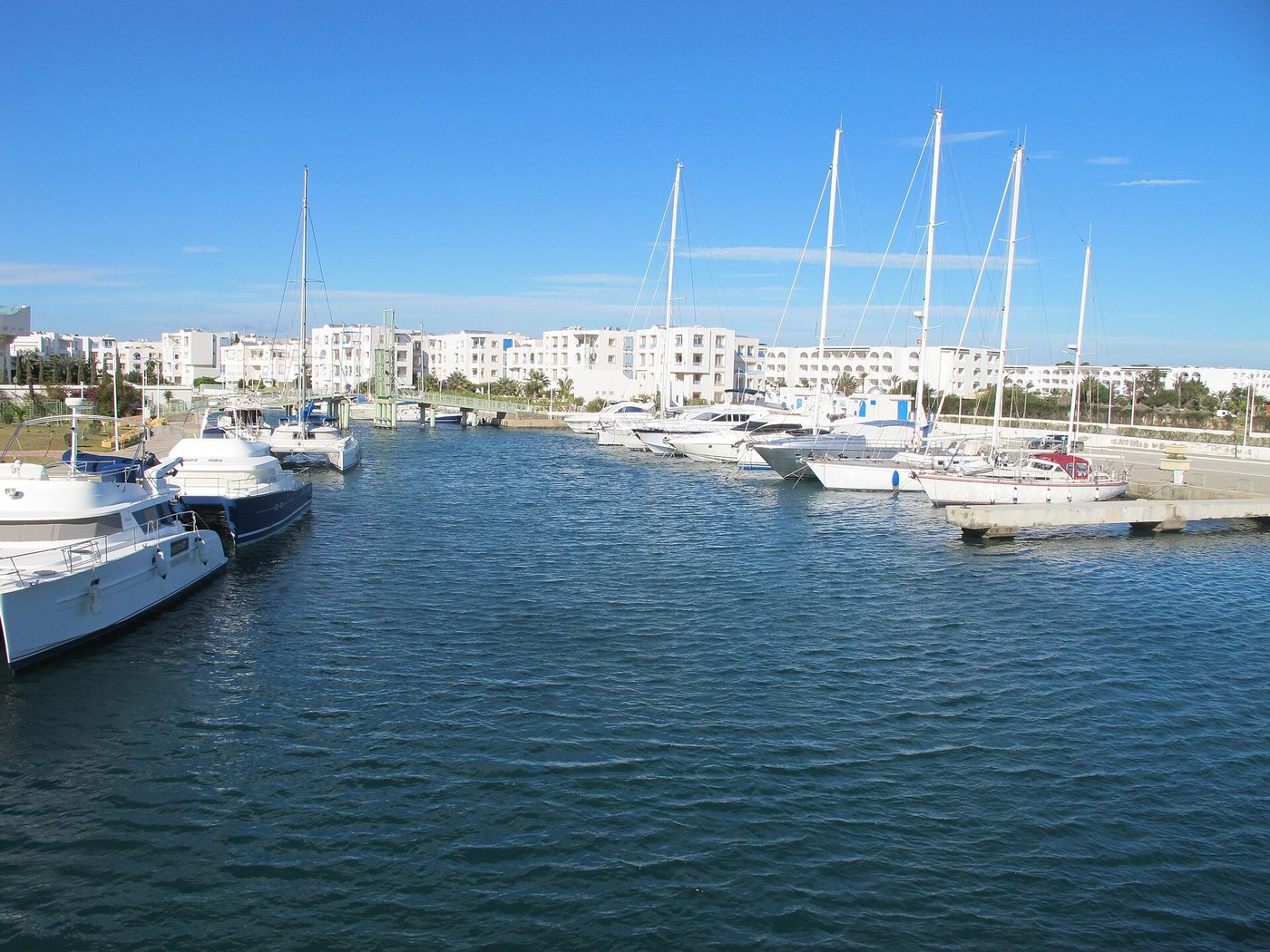
| Best resorts for families | Yasmine Hammamet, Port El Kantaoui (Sousse) and Djerba |
| Waterparks | Real and good — but summer-only, roughly May–October, so half-term can be too late |
| When to go | June and September for warm sea without the peak-summer furnace |
| Watch out for | Summer heat for under-5s, no car seats in taxis, few high chairs, tap water |
| Budget note | The dinar is a closed currency — you can only get it on arrival |
Bottom line: Tunisia rewards families who match the trip to their children’s ages and pick their week carefully. It’s cheap, warm and welcoming, and the rough edges are all manageable once you know they’re coming. Here’s the honest detail.
Is Tunisia good for families? The honest answer
Yes, and it’s better than its reputation suggests. The core appeal is simple: a short flight, a warm and often very shallow sea, budget-friendly all-inclusives with kids’ clubs, and Tunisians who genuinely light up around children. Waiters will carry your toddler off for a tour of the kitchen. Strangers will coo over the baby. For a lot of parents, that warmth is worth as much as any waterslide.
On value it’s hard to argue with. Tunisia is repeatedly rated among the cheapest package destinations going — one widely-cited study put a seven-night break at roughly £576 per person, though that figure is a couple of years old now and prices have crept up, so treat it as a ballpark and check current fares. Either way, a family all-inclusive here typically undercuts Spain, Greece and Turkey for the same star rating.
Where you need your eyes open is the heat and the practicalities. Peak summer on the coast can sit in the low-to-mid 30s, which is a lot for a baby or a toddler who won’t nap in the warmth. And there are a handful of things — no car seats in taxis, hardly any high chairs, tap water you shouldn’t drink — that catch first-timers out. None are dealbreakers. All are easier once you’ve read the logistics section below. If you want the broader case for the country, our honest take on whether Tunisia is worth visiting covers the grown-up pros and cons too.

Things to do in Tunisia with kids, by age
The single most useful way to plan is by your children’s ages, because what delights a four-year-old bores a fourteen-year-old rigid. Here’s how we’d shape it.
Toddlers and under-5s: keep it shallow, shady and short
With the littlest ones, the hotel pool and a calm bay will do most of the heavy lifting, and that’s fine — you didn’t come to march a two-year-old round a Roman city. Tunisia’s family resorts are built for exactly this: gently shelving, bathtub-warm water at places like Yasmine Hammamet and the sheltered beaches of Djerba, which is about the easiest island here for little legs.
Beyond the pool, think small and low-effort. A short camel or pony plod along the sand (a five-minute wobble, not a desert trek) is usually a hit. Horse-drawn calèche rides potter around several resort towns. Mini-golf, the softplay many big hotels have, and feeding the odd resident peacock or tortoise fill an afternoon nicely. The trick with this age is to fight the heat: swim and explore early, retreat to shade at midday, and don’t over-schedule. A calm week beats a packed one that ends in meltdowns.
Honestly, skip the long day trips at this age. A three-hour coach to a ruin with a fractious toddler is nobody’s idea of a holiday. Save those for next time.
Ages 5 to 10: the golden zone
This is where Tunisia really sings. Old enough to love a waterslide and remember a crocodile, young enough to still find a “pirate” boat trip the greatest thing ever — five to ten is the age band the country seems built for.
The waterparks (full rundown below) are the obvious headline. Beyond those, the replica pirate-ship boat trips from Sousse, Hammamet and Monastir are a reliable winner: you sail out of the port for a couple of hours, the kids get pirate bandanas, there’s a swim stop, lunch and a bit of a show. Fair warning — the onboard DJ tends to be loud, so it’s more knees-up than serene cruise. Djerba Explore’s crocodile farm, with its late-afternoon feeding, tends to produce wide eyes and endless retelling. And the medinas turn into a brilliant free game if you frame them as a treasure hunt — spot the cats, find the biggest door, haggle for a fez.
This is also the age when a bit of history lands, if you pitch it right. The colossal amphitheatre at El Djem becomes “the real Gladiator arena,” and letting them run the tiers and stand on the arena floor beats any museum. More on that below.
Teens: Star Wars, quad bikes and something to post
Teenagers are the group most likely to sigh at a beach club, and the good news is Tunisia has genuinely cool cards to play. Chief among them: this is where big chunks of Star Wars was filmed. The Mos Espa set still stands in the desert near Nefta, the underground Berber homes at Matmata doubled as the Lars homestead, and for a certain kind of teen, standing on Tatooine is a genuinely memorable, very postable day out.
Pair that with a taste of the Sahara — camel treks into real dunes, quad-biking, a night under more stars than they’ve ever seen — and you’ve got the makings of a trip they’ll actually talk about at school. Closer to the coast, watersports (jet-skis, banana boats, diving lessons for confident swimmers) and the street art of Djerbahood, an entire village turned open-air gallery, tend to go down well. Teens can also handle the longer excursions the little ones can’t, so this is the age to add a proper day trip or two.
Tunisia’s waterparks: the real ones, with 2026 prices
Waterparks are the thing UK parents most want named and pinned down, and it’s the thing most guides skip. So here they are — the actual parks, what they’re like, and roughly what you’ll pay. Two big caveats first, because they matter.
They’re summer-seasonal. Tunisia’s standalone waterparks generally run from around May to October and shut for the winter. That has a real consequence for anyone eyeing the cheaper October half-term deals: the sea may still be swimmable, but the waterpark you booked the holiday around might already be closed. Always check current opening dates on the park’s own channels before you build a trip around one.
Prices move, so treat these as indicative. Gate prices shift by season and change year to year, online tickets are usually cheaper than the gate, and the official park websites were loading as empty shells when we last checked, so confirm the current figure before you go rather than taking ours as gospel.
Carthage Land & Aqua Land, Yasmine Hammamet
The big one. Sitting in the heart of the Medina Yasmine Hammamet complex, this is billed as the largest amusement park in North Africa, and it pairs a theme park (Carthage Land) with a waterpark section (Aqua Land) plus a children’s area, dining and an extreme zone. The signature ride is a King Kong spinning coaster with a drop of around 13 metres. As a rough guide we’ve seen gate prices in the region of 25 dinars for an adult and 15 for a child, with little ones under about 95cm free and online tickets cheaper — but prices vary by season, so check the current rate and the presale before you go. If you’re basing yourselves around Hammamet, it’s the easiest big day out with kids.
Carthage Land Les Berges du Lac, Tunis
A separate site up in the capital’s smart Berges du Lac district, this one leans on what it calls the largest wave pool in Tunisia. It’s handy rather than destination-worthy: if you’re spending a couple of days in or near Tunis at either end of the trip, it’s an easy way to burn off the kids without trekking back down the coast. If you’re staying purely on the Hammamet or Sousse strip, the Yasmine Hammamet park is the more logical choice.
Acqua Palace, Port El Kantaoui (Sousse)
Up the coast near Sousse, Acqua Palace is one of Tunisia’s first and largest waterparks, spread over a couple of hectares with some seriously tall slides — the “black hole” and “space boat” types run to around 17 metres. It opens roughly May to October, typically from mid-morning to late afternoon. On price, older reviews mention something like 30 dinars adult and 25 child, while more recent ones cite figures up towards 55 and 45 — a wide range, so hedge your budget, check the current gate price, and be aware there’s usually a minimum-height rule around 80cm on the big slides and a refundable deposit on lockers.
Resort and hotel aquaparks
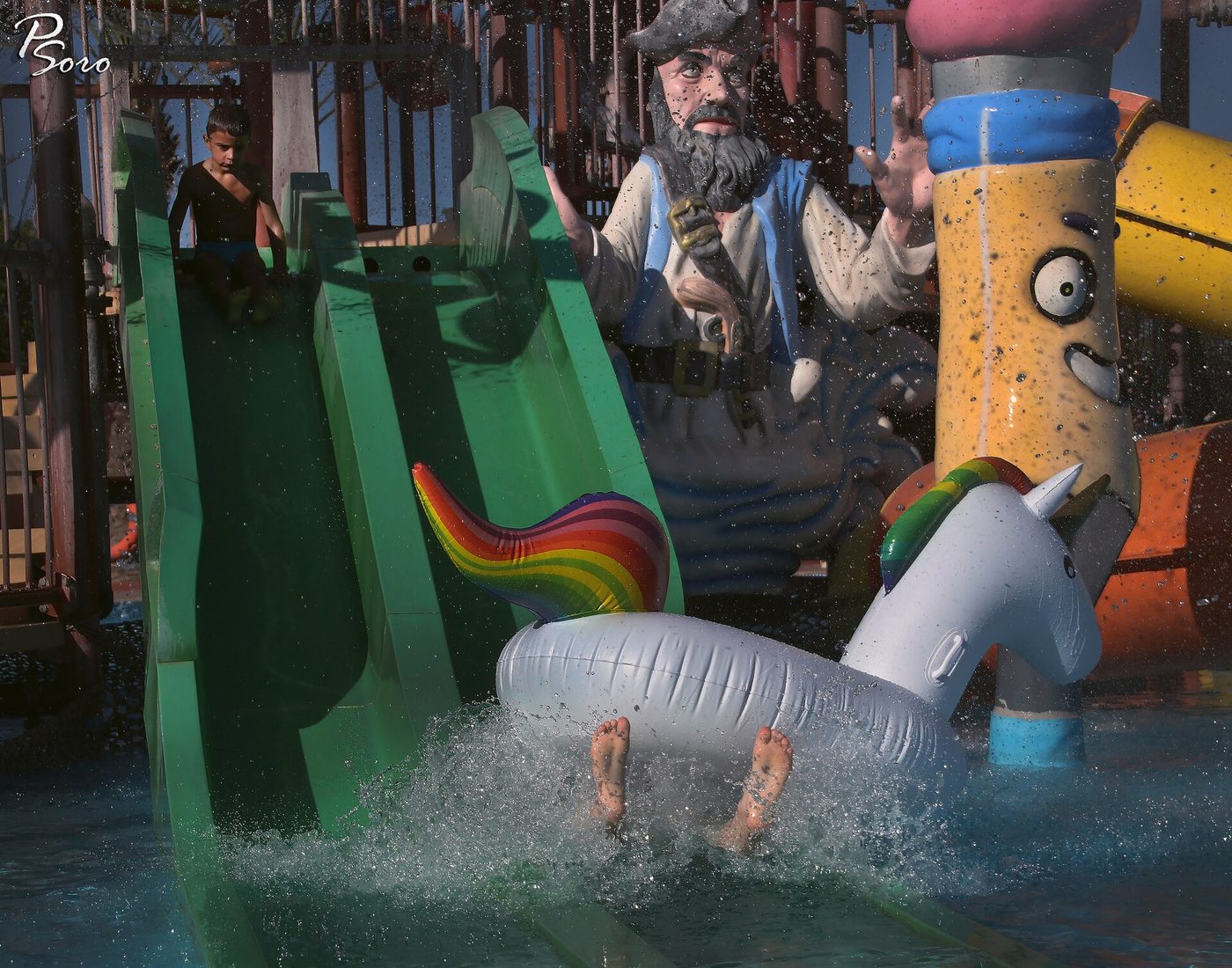
Don’t overlook the simplest option: plenty of the bigger all-inclusives in Djerba and Hammamet have their own splash zones and mini slides on site. With very young children, these are often the best of the lot — no taxis, no gate queues, no packing a bag, and you’re never more than a towel’s throw from your own sunlounger. If an on-site aquapark matters to you, make it a filter when you pick the hotel, and use our where to stay in Tunisia guide to weigh up the options.
Waterpark know-how
- Go early. The parks get hot, busy and queue-heavy by lunchtime. First hour after opening is bliss by comparison.
- Sun is relentless. There’s little natural shade at the pools. Rashies, high-factor cream reapplied often, and a rented parasol or lounger pay for themselves.
- Mind the height rules. The best slides have minimum heights, which can quietly ruin a smaller child’s day if you haven’t warned them. Manage expectations on the way in.
- Watch non-swimmers closely. Lifeguarding is variable. With weaker swimmers, floats and your own eyes matter more than at a UK park.
- Bring cash and a deposit. Lockers, food and extras are usually cash, and locker deposits are common.
Animal and nature days out
After the pools, animals are the surest way to fill a day with a delighted child. Tunisia’s options come with a couple of things you should know before you go — including one hard fact the brochures get wrong.
Djerba Explore Park
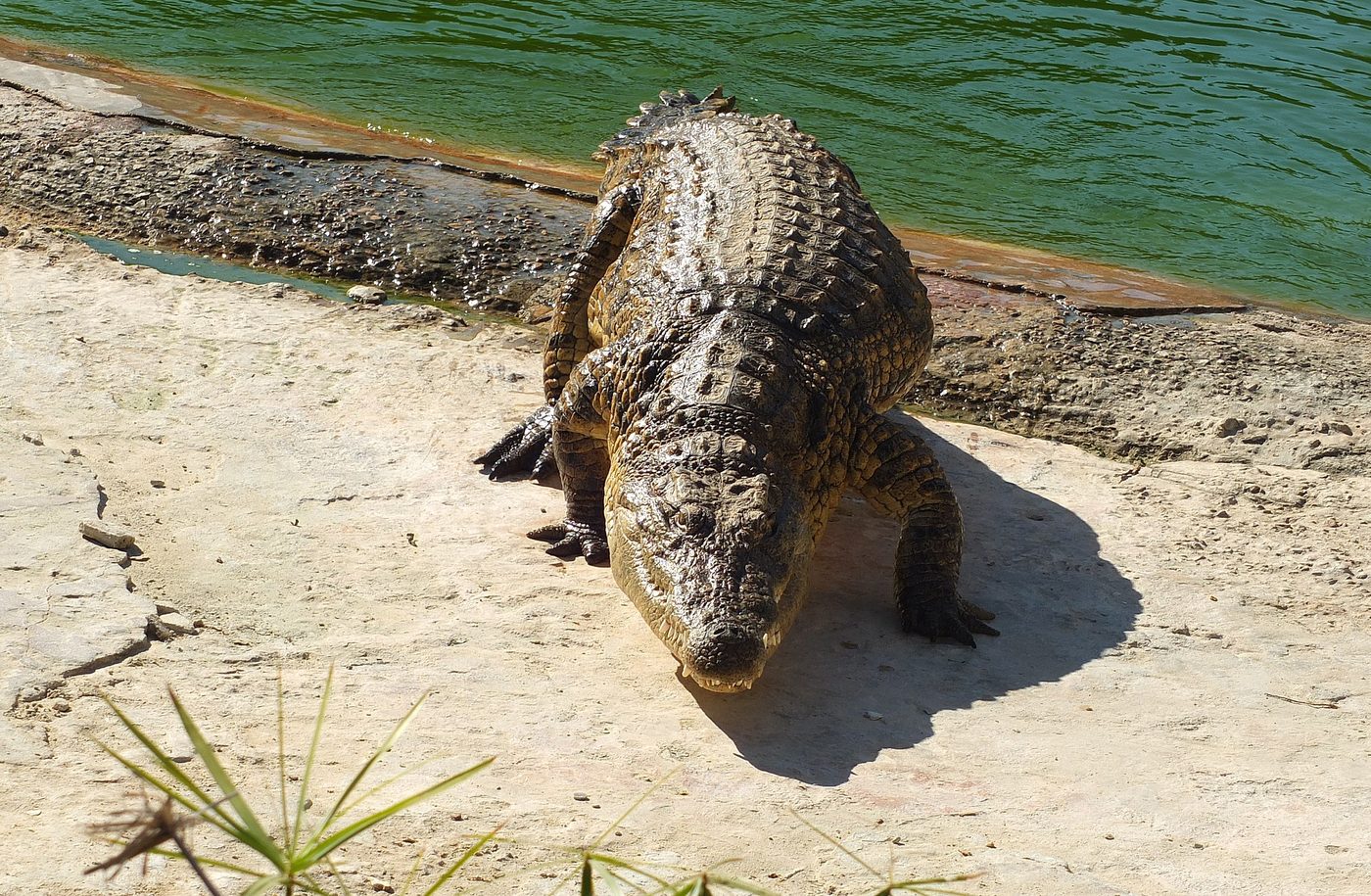
The pick of the bunch for many families. The star attraction is a crocodile farm with more than 400 Nile crocodiles lazing around a tropical lagoon, and the daily feeding (usually late afternoon, around 5pm) is genuinely gripping — worth timing your visit around. There are reptile and baby-croc photo moments too, plus the Lalla Hadria museum of Islamic art (well over a thousand exhibits across many halls) and a reconstructed heritage village if you fancy a calmer wander. It typically opens from mid-morning into the evening. On Djerba, it’s the obvious rainy-plan-B and hot-afternoon fixture rolled into one.
Friguia Park, near Bouficha
Friguia is a safari-style zoo between Hammamet and Sousse, home to a few hundred animals across dozens of species, with the headline draw being its sea-lion shows (typically a few times a day). One important correction, because you’ll see it wrong all over the internet: there are no dolphins here. Friguia’s dolphinarium closed back in 2016 and the dolphins were rehomed abroad — so ignore any listing promising a dolphin show or a “swim with dolphins,” because it doesn’t exist. What you’ll see is the sea-lion performance.
Skip Friguia if you’re sensitive to animal welfare — as with many older zoos, some recent visitors have raised concerns about enclosures and conditions, and you may prefer to give it a miss on principle. If that’s not a sticking point for your family, younger children usually enjoy the safari-train ride round the grounds and the sea-lions.
Camel rides and pirate boat trips
Two classic resort outings worth setting expectations on. A short beach camel ride is a gentle, giggly five or ten minutes on the sand — sweet for photos, not a serious trek. The pirate-ship boat trips, meanwhile, are more of an event: a couple of hours out of the port on a replica galleon, bandanas for the kids, a swim stop, lunch and a show. They’re good fun, but the DJ and music can be full-volume, so if you’ve a noise-sensitive child or a napping baby, weigh that up.
A note on dolphin-watching cruises
Separately from Friguia, you’ll see wild dolphin-watching boat trips advertised from some ports. These head out to look for dolphins in the open sea, and sightings — when they happen — are lovely. Just go in knowing there’s no guarantee: it’s wild wildlife, so some trips come back having seen plenty and others none at all. Manage the kids’ hopes accordingly.
History even kids enjoy
You don’t have to be a culture vulture to slip a bit of history in, and a couple of Tunisia’s sites are genuinely kid-proof. The trick is picking the ones with wow-factor and letting children roam rather than reading them every information board.
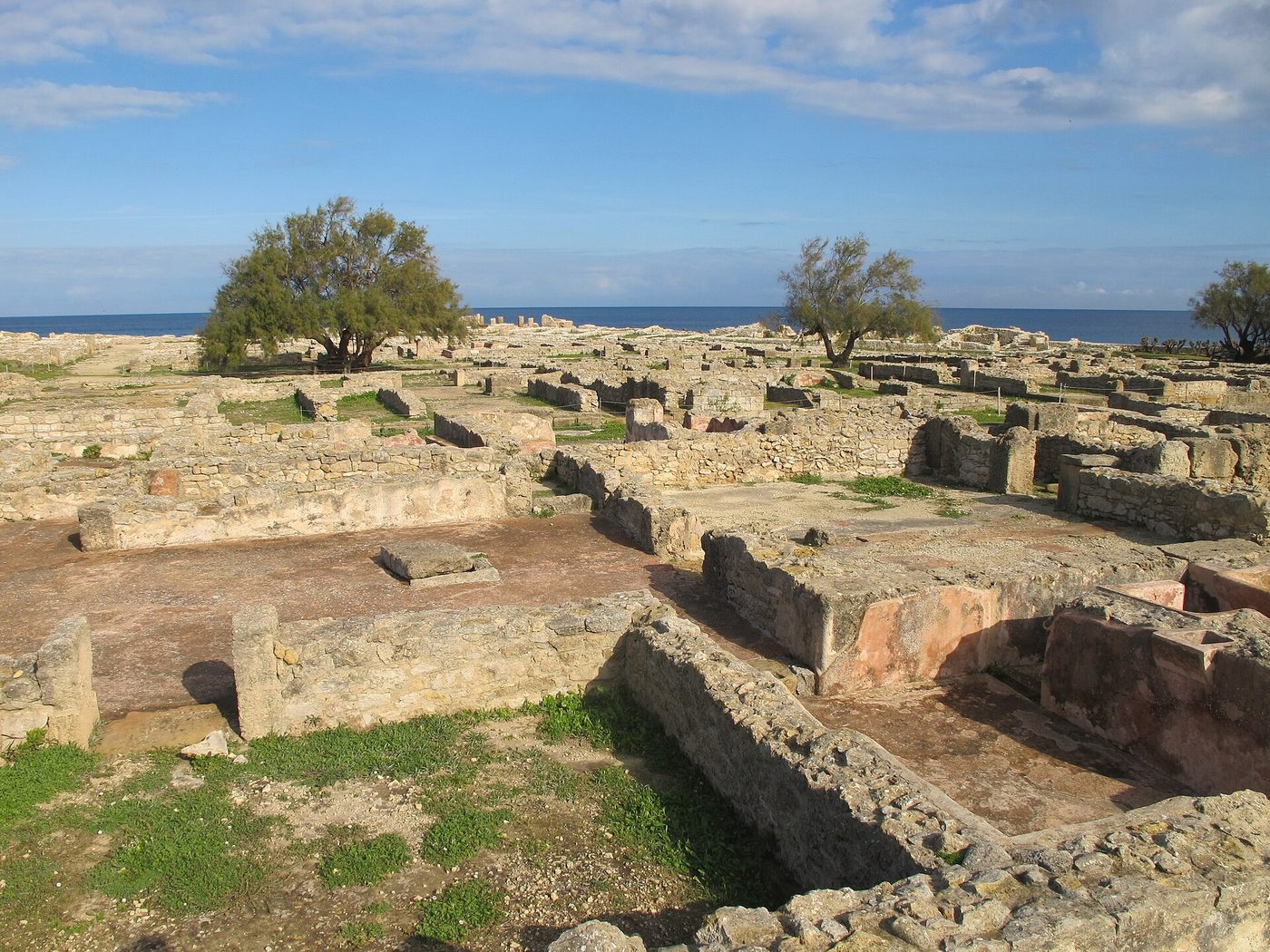
Top of the list is the amphitheatre at El Djem, one of the largest and best-preserved in the Roman world and, crucially, one you can properly explore. Sell it as the real gladiator arena, let them stand on the sand and climb the tiers, and it lands far better than any museum. Carthage, sprawling above the sea near Tunis, has the atmospheric Antonine Baths to clamber around, and the ribat (a squat little fortress) in the medina of Sousse gives you battlements to climb and sea views as a reward. Keep visits short, go early before the heat, bring water and a snack, and quit while you’re ahead.
Which resort is best for families?
Where you base yourself matters more than any single attraction, because with kids you’ll spend most of the holiday within a short hop of your hotel. Three areas do the family thing best.
| Resort area | Why families like it | Nearest airport |
|---|---|---|
| Yasmine Hammamet / Hammamet | Calm bays, big family resorts, the Carthage Land waterpark on the doorstep, gentle marina strolls | Enfidha |
| Port El Kantaoui / Sousse | Purpose-built family marina, shallow beaches, Acqua Palace waterpark, pirate-boat trips | Enfidha or Monastir |
| Djerba | Sheltered shallow water, laid-back island pace, Djerba Explore, easiest for the very youngest | Djerba |
Broadly: Yasmine Hammamet is the safe, well-oiled all-rounder with the biggest waterpark; Port El Kantaoui is a purpose-built family marina with plenty within walking distance; and Djerba is the gentlest, most laid-back option and our pick for babies and toddlers. All three sit close to the airports listed, keeping the dreaded transfer with tired children short. For calm, shallow swimming specifically, our roundup of Tunisia’s best beaches flags the gentlest bays, and if you want quieter corners beyond the big resorts, our hidden gems guide has ideas for older, more adventurous families.
When to go with children: half-term versus summer heat
This is the single most important call you’ll make, so give it a moment’s thought.
Peak summer — July and August — is reliably sunny but hot, often sitting in the low-to-mid 30s on the coast and hotter inland. For older children who live in the pool, that’s fine. For babies and toddlers who can’t tell you they’re overheating, it’s genuinely draining, and midday becomes a write-off. If you’re tied to the summer holidays, plan around the heat: early starts, long shady middles, late swims.
The shoulder months are the sweet spot. June and September give you warm, swimmable sea without the full furnace, and they’re our default recommendation for families. October is more of a trade-off: the air is still pleasant (often around 27°C) and the sea stays swimmable into the middle of the month, which makes October half-term tempting — but remember the standalone waterparks are winding down or already shut by then. So if a waterpark is the whole point for your kids, October half-term is a gamble; if you’re happy with the sea and a hotel splash pool, it can be a lovely, quieter week. One more diary note: Ramadan shifts each year and changes the daytime rhythm in some towns, so it’s worth checking the dates when you book. Our best time to visit Tunisia guide breaks all of this down month by month.
The boring-but-vital bits UK parents ask about
Here’s the part no glossy listicle covers and every parent needs — the unglamorous logistics that quietly make or break a family trip. We’d rather you knew all of this before you fly.
Getting around: car seats and taxi belts
This one surprises people. Child car seats simply aren’t the norm in Tunisia, and many taxis don’t have working rear seat belts — sometimes they’re missing, sometimes tucked down out of the way under the seat cover. If your child still needs a seat, the safest bet is to bring your own lightweight one from home, or book a ride through an app like Bolt and choose a higher “Comfort” tier where the cars tend to be newer. For airport transfers, a pre-booked private transfer with seats requested is worth the small extra. Our guide to getting around Tunisia covers taxis, transfers and the meter etiquette in full.
Pushchairs versus the medina
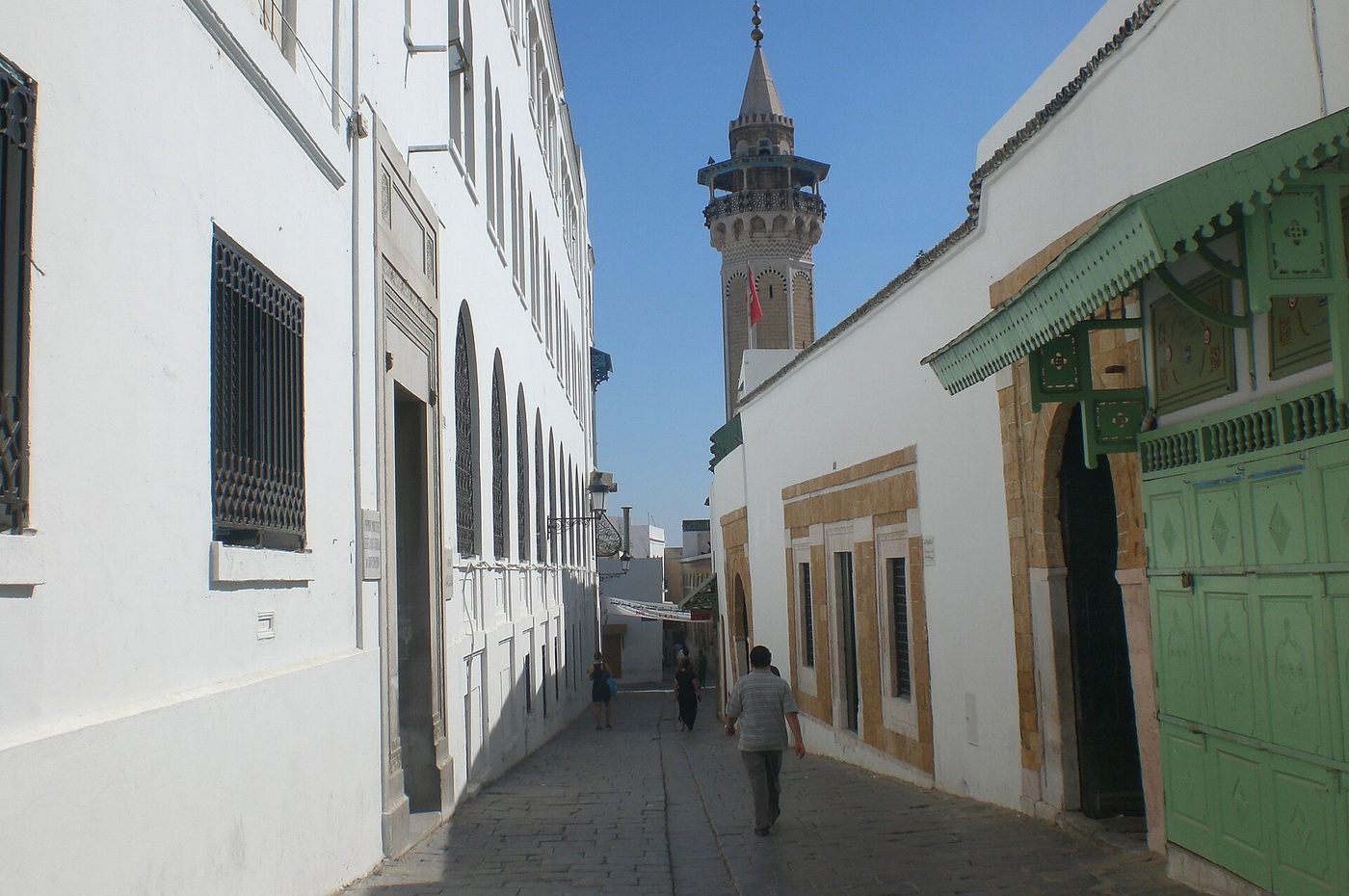
Love your pushchair as you might, the old medinas will defeat it. They’re hilly, cobbled, crowded and prone to random flights of steps — brilliant to explore, hopeless on wheels. Bring a baby carrier or sling for medina days and market wanders and you’ll save yourself a lot of swearing. A pushchair is still useful around the flatter resort promenades and marinas, so it’s worth packing, just don’t rely on it everywhere.
Nappies, formula and tap water
Good news on supplies: nappies, wipes, formula and jarred baby food are easy to find in the supermarkets and pharmacies of the resort towns — the big Monoprix and Carrefour branches stock familiar sorts of things. Out in smaller villages the choice thins out fast, so stock up in town. The one firm rule: don’t drink the tap water, and that includes making up formula with it. Use bottled water for feeds and for brushing teeth if you’re being careful, and buy the big bottles — they’re cheap and everywhere.
Food and fussy eaters
Fussy eaters do fine here, which is a relief for a lot of parents. The all-inclusive buffets are a genuine safe haven — there’s always plain pasta, chips, bread, fruit, rice and something grilled, so even the pickiest usually find something. Beyond the hotels, familiar chains have a presence (think the likes of KFC, Papa John’s and local burger spots), even if there’s no McDonald’s. And it’s worth nudging the more adventurous ones to try the local staples — mild couscous, the crispy fried pastry called brik — because Tunisian food is underrated and cheap. One heads-up: high chairs are surprisingly rare, even at breakfast in some hotels and in most restaurants, so if your baby needs one, ask when booking and don’t count on it.
Sun, heat and health
Babies and toddlers need real protection from the North African sun: deep shade in the middle of the day, a high-factor cream reapplied constantly, hats, UV suits and plenty of fluids. Heat and mild tummy upsets are the two things most likely to derail a family week, so pack rehydration sachets and children’s paracetamol, and be sensible about buffet food and water. For pre-travel health — jabs and food-and-water advice — check the NHS’s TravelHealthPro Tunisia page before you go rather than relying on hearsay. Two things that catch UK families out: your GHIC card is not valid in Tunisia, and you’ll often be asked to pay medical fees up front, even in a clinic. Comprehensive family travel insurance with proper medical cover isn’t optional here — it’s essential.
Money
A quirk worth planning for: the Tunisian dinar is a closed currency. You can’t buy it before you fly and you can’t take it home, so you’ll change money or withdraw cash on arrival. Take a card, but carry cash too — waterpark lockers, camel-ride men, market stalls, small cafés and taxis are overwhelmingly cash-only. Change what you think you’ll need at the airport or an ATM when you land, keep the receipts, and convert any leftover dinars back before you leave.
Is Tunisia safe for families?
The short, honest version: the tourist areas where you’d actually stay — Hammamet, Sousse, Djerba and the main resort strips — are considered safe and are visited by millions of European families every year. Petty issues like persistent vendors and overcharging taxis are far more likely to trouble you than anything serious, and a firm, friendly “no thank you” handles most of it.
The Foreign Office does advise against travel to certain remote areas — chiefly stretches of the Algerian and Libyan borders and some interior mountain zones — but every family resort sits well away from those. Rather than paraphrase government advice here, we’ve laid it all out, with the exact FCDO wording and dates, in our dedicated guide to whether Tunisia is safe. Read that one before you book and you’ll have the full, current picture.
Tunisia with kids: your questions answered
Is Tunisia good for a family holiday?
Yes, particularly for children aged roughly three to twelve. You get a short flight, warm shallow sea, cheap all-inclusives with kids’ clubs, waterparks and animal parks, and a culture that adores children. The main things to plan around are the summer heat for under-fives and a few practicalities like car seats and high chairs. Get the timing and resort right and it’s a great-value family trip.
What is there to do in Tunisia with kids?
Plenty. Waterparks like Carthage Land and Acqua Palace, the crocodile farm at Djerba Explore, sea-lion shows at Friguia, replica pirate-ship boat trips, short camel rides on the beach, and the “gladiator” amphitheatre at El Djem. Teenagers can add Star Wars filming locations, desert quad-biking and camel treks, and watersports. Most of it clusters around the family resorts of Hammamet, Sousse and Djerba.
What are the best waterparks in Tunisia?
The main three are Carthage Land & Aqua Land in Yasmine Hammamet (the biggest, near Hammamet), Carthage Land Les Berges du Lac in Tunis (a large wave pool, handy for the capital), and Acqua Palace at Port El Kantaoui near Sousse (tall slides, one of the country’s first). Many all-inclusive hotels in Djerba and Hammamet also have their own splash zones, which are often easiest with little ones.
How much does Carthage Land cost, and is it worth it?
As a rough guide we’ve seen gate prices around 25 dinars for an adult and 15 for a child, with under-95cm children usually free and online tickets cheaper — but prices vary by season, so check the current rate before you go. For families with children who love rides and slides, the Yasmine Hammamet park is a solid full day out and generally considered worth it; go early to beat the heat and queues.
When are Tunisia’s waterparks open?
The standalone waterparks are summer-seasonal, running roughly from May to October and closing for the winter. That’s a key point for October half-term: the sea may still be swimmable, but the waterpark you booked around could already be shut. Always confirm current opening dates on the park’s own channels before building a trip around one.
Is Tunisia too hot for a family holiday in summer?
July and August can sit in the low-to-mid 30s on the coast, which is a lot for babies and toddlers, though fine for older, pool-loving children if you plan around midday. For the best balance of warm sea and comfortable temperatures, June and September are the sweet spot for families. October is pleasant too, but the waterparks are winding down by then.
Which Tunisia resort is best for families — Hammamet, Sousse or Djerba?
All three are strong. Yasmine Hammamet is the well-oiled all-rounder with the biggest waterpark on the doorstep; Port El Kantaoui near Sousse is a purpose-built family marina with lots within walking distance; and Djerba is the gentlest, most laid-back option and our pick for the very youngest. Each is close to an airport, keeping transfers with tired children short.
Can you drink the tap water in Tunisia, and what about formula for babies?
Don’t drink the tap water, and don’t use it to make up formula. Stick to bottled water for feeds and, if you’re being cautious, for brushing teeth too. Bottled water is cheap and sold everywhere. Nappies, wipes, formula and jarred baby food are easy to buy in the supermarkets and pharmacies of the resort towns, though the choice thins out in smaller villages, so stock up in town.
Do taxis in Tunisia have car seats or seat belts?
Child car seats aren’t the norm, and many taxis lack working rear seat belts — sometimes missing, sometimes tucked under the seat cover. If your child needs a seat, bring your own lightweight one or book through an app like Bolt and pick a higher “Comfort” tier for newer cars. For airport transfers, request seats with a pre-booked private transfer.
Are Tunisian hotels good for fussy eaters, and do they have high chairs?
Fussy eaters generally do well: the all-inclusive buffets always have plain pasta, chips, bread, rice, fruit and something grilled. Familiar chains exist in the resorts too. High chairs, however, are surprisingly scarce — even at breakfast in some hotels and in most restaurants — so if your baby needs one, ask when you book and don’t count on it being there.
Is it easy to use a pushchair in the medinas?
No — the old medinas are hilly, cobbled, crowded and full of random steps, and a pushchair is more hindrance than help there. Bring a baby carrier or sling for medina and market days. A pushchair is still handy on the flatter resort promenades and marinas, so pack it, but don’t rely on it for the atmospheric old-town wanders.
Are there dolphins at Friguia Park?
No. Friguia’s dolphinarium closed in 2016 and the dolphins were rehomed abroad, so ignore any listing promising a dolphin show or a swim with dolphins — it no longer exists. What the park runs today is a sea-lion show, alongside a safari-style zoo. If you’re sensitive to animal welfare, you may prefer to skip Friguia altogether.
What can you do with teenagers in Tunisia?
Teens tend to enjoy the Star Wars filming locations (the Mos Espa set near Nefta, the Matmata cave homes), a taste of the Sahara with camel treks and quad-biking, watersports like jet-skis and diving, and the street art of the Djerbahood district. They can also handle the longer day trips younger children can’t, so this is the age to add a proper excursion or two.
The final word
Tunisia is a genuinely good, genuinely cheap family holiday if you play to its strengths. Base yourself in Hammamet, Sousse or Djerba, aim for June or September, keep the little ones shaded and the teenagers busy with Star Wars and the desert, and pack for the small realities — a car seat, a carrier, rehydration sachets, plenty of bottled water. Do that, and you’ll get warm sea, waterslides, crocodiles and camel rides for a fraction of what the same trip costs elsewhere, plus a country that treats your children like guests of honour.
It won’t suit everyone. If you need spotless infrastructure, guaranteed high chairs and a car seat in every taxi, you may find it hard work. But for most UK families willing to roll with a few rough edges, it delivers a brilliant, memorable, affordable trip. When you’re ready to plan the rest, browse the full guide to things to do in Tunisia and start slotting the family days out into place.
Written by the Tunisia Tourism Guide team — an independent UK-focused guide to travelling in Tunisia. We don’t sell tours or take hotel commissions. Prices, opening seasons and advice were checked at publication; waterpark prices and dates in particular change often, so always confirm current details before you book.
Photo credits
All images via Wikimedia Commons, used with thanks: a beach camel ride at Sousse © Crosa from Nuernberg (CC BY 2.0); children’s water slides at a Tunisian hotel aquapark © Pavel Soro London (CC0); a Nile crocodile at Djerba Explore Park © Ad Meskens (CC BY-SA 4.0); the marina at Yasmine Hammamet © Kritzolina (CC BY-SA 4.0).