Tunisia is the real Tatooine. George Lucas filmed here for four Star Wars films — A New Hope and the entire prequel trilogy — and, remarkably, most of the sets still stand in the open desert. The Star Wars filming locations in Tunisia fall into two clusters: the purpose-built desert sets around Tozeur in the west, and the ancient towns, cave-houses and hilltop ksour of the south and the island of Djerba. This is every location worth your time, with exact coordinates, the real scene filmed at each, the honest state of each set in 2026, and how to reach them from wherever you’re staying.
I’ve made this trip from both ends — out of Tozeur in a battered Land Cruiser at dawn, and out of a Djerba package hotel in a hire car with a paper map and a lot of optimism. The thing nobody tells you is that the locations are split across the country: you cannot see them all in a day, or even comfortably in a weekend. So before the site-by-site guide, let me show you how the pieces fit together, because getting that wrong is the single biggest mistake first-timers make.
Star Wars filming locations in Tunisia at a glance
Here’s the shortlist, roughly west to east, with my honest verdict on whether each is worth the detour. “Base” is the town or island you’d realistically set out from.
| Location | What was filmed | Film(s) | Nearest base | Worth it? |
|---|---|---|---|---|
| Mos Espa set | Anakin’s home spaceport; podrace town | Episode I, II | Tozeur | Essential |
| Lars Homestead dome (Chott el Djerid) | The igloo farmhouse; Luke’s twin-suns sunset | Episodes IV, II, III | Tozeur | Essential |
| Sidi Bouhlel (“Star Wars Canyon”) | Jawas capture R2-D2; Tusken attack; “Hello there” | Tozeur | High | |
| Ong Jemal & the Grande Dune | Darth Maul’s lookout; C-3PO in the dune sea | Tozeur | High | |
| Sidi Driss Hotel, Matmata | Interior of the Lars homestead (Aunt Beru’s kitchen) | Djerba / Matmata | Essential | |
| Ajim, Djerba | Mos Eisley spaceport; the cantina exterior | Djerba | Medium | |
| Amghar Mosque, Djerba | Obi-Wan Kenobi’s house exterior | Djerba | Medium | |
| Ksar Hadada | Mos Espa slave-quarters streets | Tataouine / Djerba | Medium | |
| Ksar Ouled Soltane | Disputed — scouted, probably not filmed | Tataouine | Go for the ksar, not the film | |
| Chenini & Douiret | Not filmed — the scenery that inspired Tatooine | Tataouine | Worth it on its own terms |
If you only remember one thing from this guide, make it this: the desert sets (Tozeur) and the cave-and-ksour sites (Djerba and the south) are 300–400 km apart. Pick your half based on where your flight lands, or give yourself the two or three days it takes to do both properly. More on that below.
Which Star Wars films were shot in Tunisia?
Four of them, and they bookend the saga. Here’s the timeline that actually matters, because the shoot years and the release years are very different — and getting this right is half the fun of standing on the sites.
- A New Hope (Episode IV) — the very first Star Wars footage ever shot was filmed on the Chott el Djerid salt flat in late March 1976, released 1977. This is where it all began: Luke’s homestead, the Jawas, the Tuskens, the droids stumbling through the dune sea, Mos Eisley.
- The Phantom Menace (Episode I) — shot in Tunisia in July–August 1997, released 1999. This is the prequel that built the big sets: the whole town of Mos Espa, the podrace arena, Darth Maul’s arrival at Ong Jemal.
- Attack of the Clones (Episode II) — a shorter shoot in September 2000, released 2002. Anakin returns home to find his mother; several Episode IV and I sites were reused.
- Revenge of the Sith (Episode III) — released 2005, but here’s the twist fans love: there was no separate 2005 Tunisia shoot. The film’s only Tatooine moment — Obi-Wan handing the infant Luke to Owen and Beru at the homestead — was actually filmed on Chott el Djerid back in September 2000, during the Attack of the Clones production, then finished with digital effects. So the saga’s first and last Tatooine images were shot at the same spot, four years and one trilogy apart.
What about the rest? The Empire Strikes Back and Return of the Jedi never came to Tunisia (Jedi’s Tatooine scenes were shot in Yuma, Arizona), and the sequel trilogy used Abu Dhabi and Jordan for its desert planets. So when you stand at these sites, you’re standing in the original — and the prequels — but not the Jabba’s-palace stuff. Disney later bought a slice of independently shot Tunisian footage for The Mandalorian, but no Lucasfilm crew has filmed here since 2000.
The two clusters: how to plan your Tatooine pilgrimage
This is the part the existing guides bury, so I’ll put it up front. Tunisia’s Star Wars sites are not one tidy circuit. They’re two distinct clusters at opposite ends of the country, plus a scatter of ksour in the deep south.
Cluster 1 — the desert sets, around Tozeur (the west)
This is the iconic stuff: Mos Espa, the Lars Homestead dome on the salt flats, the Star Wars Canyon at Sidi Bouhlel, and Ong Jemal with its dune sea. Everything here is open desert, reached by 4×4 from the oasis town of Tozeur. It’s a half-day or full-day trip. You’ll see the exterior of the Lars homestead here — the white igloo dome.
Cluster 2 — the towns and cave-houses (Djerba and the south)
This is where you find Matmata, where the underground Sidi Driss Hotel served as the interior of the Lars homestead; the island of Djerba, where the town of Ajim became Mos Eisley and a coastal mosque became Obi-Wan’s house; and the fortified granaries — ksour — near Tataouine that the prequels used for the slave quarters. Most package travellers reach these from Djerba.
The “one homestead, two deserts” trick: the Lars farm you remember from the films is two separate places 300 km apart. The domed exterior (with the twin-suns sunset) is on Chott el Djerid near Tozeur. The interior — Aunt Beru’s kitchen, the dining alcove, the corridor where Leia’s hologram plays — is the Sidi Driss Hotel in Matmata. A Tozeur trip shows you the outside of the house; a Djerba/Matmata trip shows you the inside. To see both, you need to cross the country.
Which cluster should you choose? It comes down to where you land. Most UK package holidays fly into Djerba (TUI and easyJet both serve it in season) or into Enfidha/Monastir for the beach resorts — putting Cluster 2 within reach. The desert sets near Tozeur are harder: there are no direct UK flights to Tozeur’s little airport, so you either fly via Tunis, take a long internal drive, or build a two- to three-day desert tour. I’ll give you exact routes, times and prices from each base further down. For the bigger picture of fitting this into a wider trip, our Tunisia itinerary guide maps out how the desert slots into 5, 7, 10 and 14-day plans, and the Tunisian Sahara guide covers the wider desert region the sets sit inside.
The desert sets: Tozeur cluster, site by site
Mos Espa — the spaceport that’s still standing
Films: The Phantom Menace (Episode I), reused for Attack of the Clones (Episode II).
Coordinates: approximately 33.9943° N, 7.8427° E, in the Eriguet dunes north of Nefta.
How to visit: 4×4 day trip from Tozeur; free to walk around; the last few kilometres are soft sand.
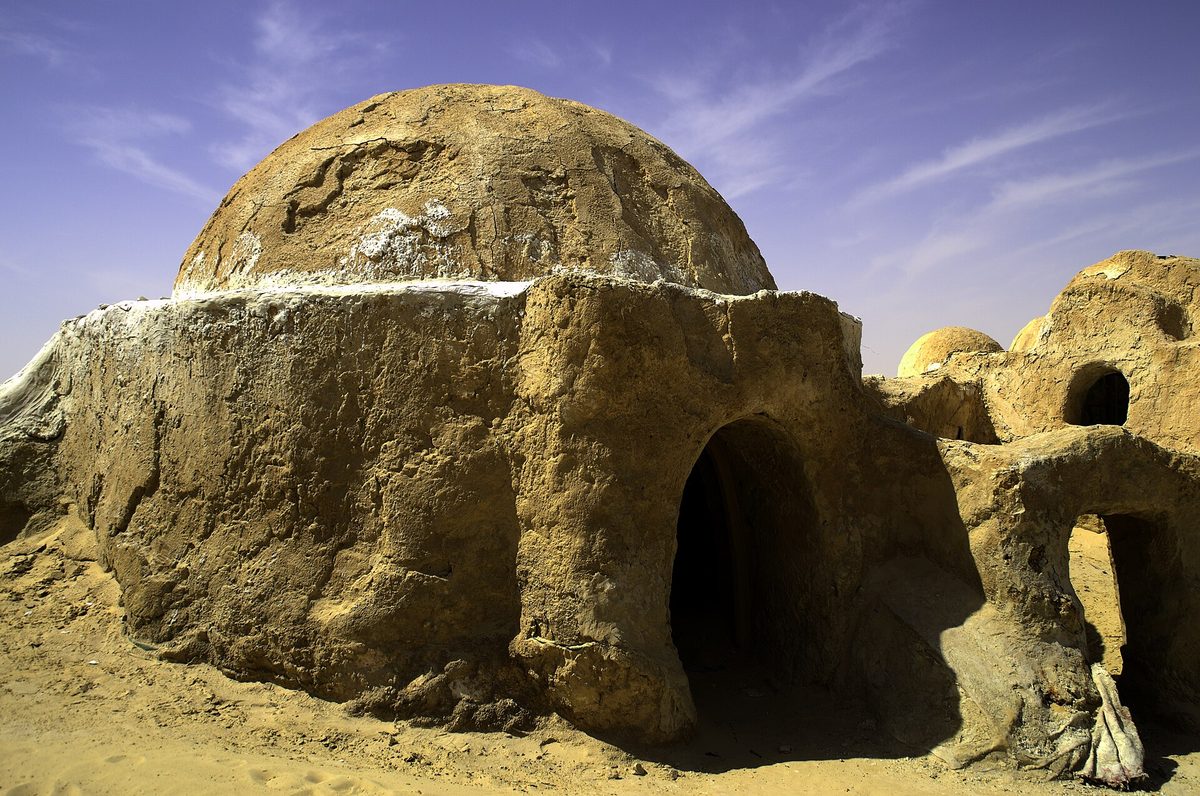
Of all the sites, this is the one that makes you gasp. Mos Espa is a whole town — around two dozen domed plaster-and-timber buildings — built from scratch for The Phantom Menace in 1997 and never taken down. You walk straight into the marketplace where young Anakin haggles, past the curved facade of Watto’s junk shop, under archways that framed the podrace crowds. It was only ever meant to last a few weeks of filming. It’s lasted nearly three decades.
Two honest warnings. First, the scale is smaller than the films suggest — the towering cityscape was extended with digital matte paintings, so the real Mos Espa is a film-set village, not a metropolis. Second, you will not have it to yourself: souvenir sellers have colonised the buildings, draping scarves and “Tatooine” trinkets over the domes, and a camel or two will be parked photogenically out front, with a small fee expected. Go at sunrise if you can — the light is extraordinary, the heat bearable, and the sellers fewer.
The state of the set in 2026: this is where the famous “Star Wars versus the dune” story is real. A crescent-shaped barchan dune has been creeping toward the set for years, and a smaller secondary Mos Espa set a few hundred metres away was swallowed by sand long ago. Geologists have warned the main set could be partially buried, and local authorities have at times bulldozed the advancing dune to hold it back. As of June 2026 the main town still stands, but the threat is genuine — this is a “go now” site, not a “someday” one. (Ignore the breathless headlines claiming it’s already buried; that’s the smaller set, or the dune threatening the main one.)
My verdict: essential. Standing in that marketplace at first light is the single best Star Wars moment in Tunisia.
The Lars Homestead dome — Chott el Djerid
Films: A New Hope, Attack of the Clones, and Revenge of the Sith — the only Tunisian site that appears in three films.
Coordinates: approximately 33.8428° N, 7.7790° E, on the salt flats between Tozeur and Kebili.
How to visit: a short walk off the causeway that crosses the chott; usually bundled into a Tozeur 4×4 day; free.
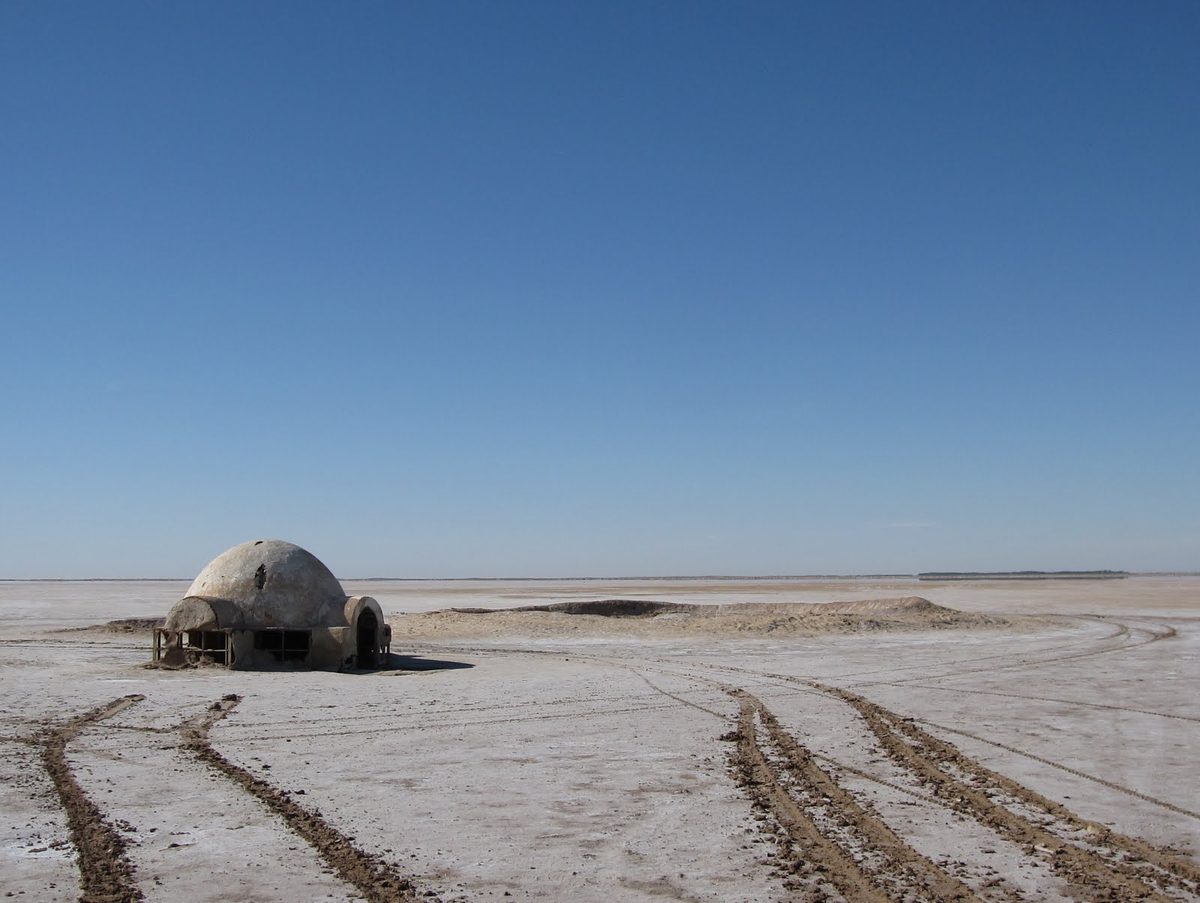
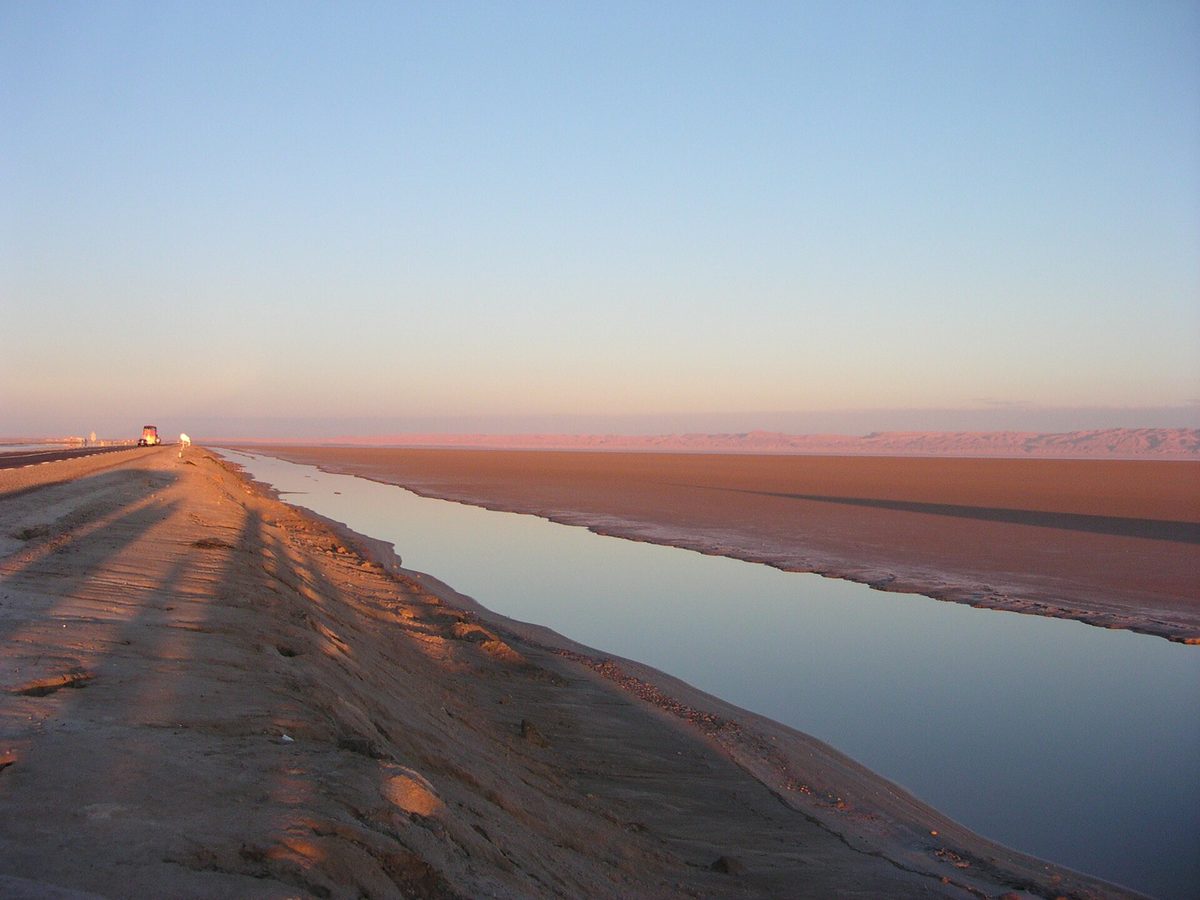
This is the white igloo dome — the exterior of the Lars moisture farm where Luke Skywalker grew up, and the spot where he watches the twin suns set in A New Hope, the franchise’s most quietly iconic shot. It sits alone on the blinding white crust of Chott el Djerid, Tunisia’s vast salt lake, with nothing around it but shimmering horizon. The very first frame of Star Wars ever committed to film was shot a stone’s throw from here in March 1976.
What I love about this site is the goosebumps-to-effort ratio: it’s an easy walk from the road, it’s free, and the emotional payoff — standing where Luke stared at two setting suns and dreamed of leaving — is immense for any fan. Bring water and sunglasses; the salt glare is brutal even in winter.
The state of the set in 2026: the dome is standing and in decent repair, and that’s thanks to fans. When the structure began crumbling, a volunteer project called “Save the Lars Homestead”, led by Belgian fan Mark Dermul, raised around US$10,000 and restored it over four days in May 2012, working in 43°C heat with forty-odd litres of white paint. It has since been patched up again — a second fan effort in 2018 and a German-government-funded restoration in 2022 reshaped the craters. So if the dome looks improbably crisp for a 1976 prop, that’s why.
My verdict: essential, and weirdly moving. Time it for late afternoon and you can watch your own (single-sun) version of the binary sunset.
Sidi Bouhlel — the “Star Wars Canyon”
Films: A New Hope (with a podrace sniper’s-eye moment in Episode I).
Coordinates: approximately 34.0362° N, 8.2803° E, in the Jebel Sidi Bouhlel range east of Tozeur.
How to visit: 4×4 and a guide — the gorge is unmarked and easy to miss.
If Mos Espa is the showpiece, Sidi Bouhlel is the connoisseur’s site, and my personal favourite. This narrow desert gorge — fans call it the “Star Wars Canyon”, though its real name is Sidi Bouhlel or the Maguer Gorge — hosted more A New Hope scenes than anywhere else in Tunisia. Walk it and you tick off a string of moments: the Jawas zapping and bundling R2-D2 into their sandcrawler; the Tusken Raiders ambushing Luke; Obi-Wan Kenobi appearing in his cloak to scare them off with that mournful cry (“Hello there,” near enough); the spot where C-3PO is recovered. It’s the only Tunisian Star Wars location that was also filmed from the air.
It’s a genuine thrill even if you’ve never seen the films, because the canyon is beautiful in its own right, and it pulls double duty in cinema history: Steven Spielberg shot scenes of Raiders of the Lost Ark here in 1980, and The English Patient used it too. You’ll want a guide who knows exactly which bend matches which shot — without one it’s just a (lovely) gorge.
My verdict: high. The most rewarding site for anyone who likes matching the real landscape to the frame.
Ong Jemal and the Grande Dune — the dune sea
Films: The Phantom Menace (Ong Jemal); A New Hope (the Grande Dune near Nefta).
How to visit: same Tozeur 4×4 circuit as Mos Espa; they’re close together.
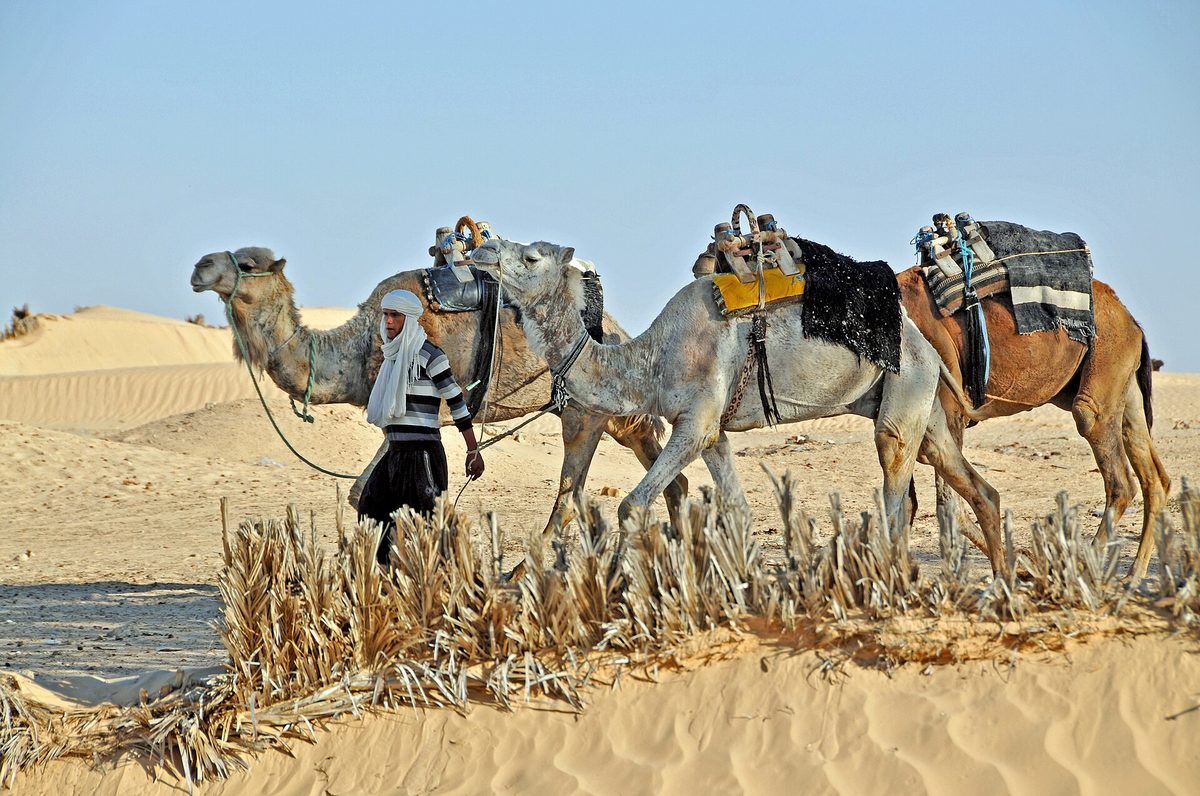
Ong Jemal — “the camel’s neck”, named for a rock outcrop that does look like one — is the dramatic mesa right beside Mos Espa where Darth Maul lands his Sith Infiltrator and surveys the desert in The Phantom Menace. Climb it for the view that the prequels used as the podrace backdrop. Nearby, the rolling Grande Dune near Nefta is the “dune sea” where, in A New Hope, C-3PO trudges over the crest complaining “How did we get into this mess?”, and where the droids pass the bleached skeleton of a krayt dragon. Most Tozeur desert tours roll Mos Espa, Ong Jemal, the Grande Dune and the Lars dome into one loop — which is exactly why Tozeur is the desert base.
My verdict: high, and effortlessly bundled with Mos Espa. The dune sea at sunrise is pure Tatooine.
The towns and cave-houses: Matmata, Djerba and the ksour
Sidi Driss Hotel, Matmata — sleep inside the Lars homestead
Films: A New Hope and Attack of the Clones.
Where: Matmata old town, Gabès Governorate (roughly 33.544° N, 9.969° E).
How to visit: a working hotel — you can stay, or stop for lunch with a tour; a few dinars to look around if you’re not eating.
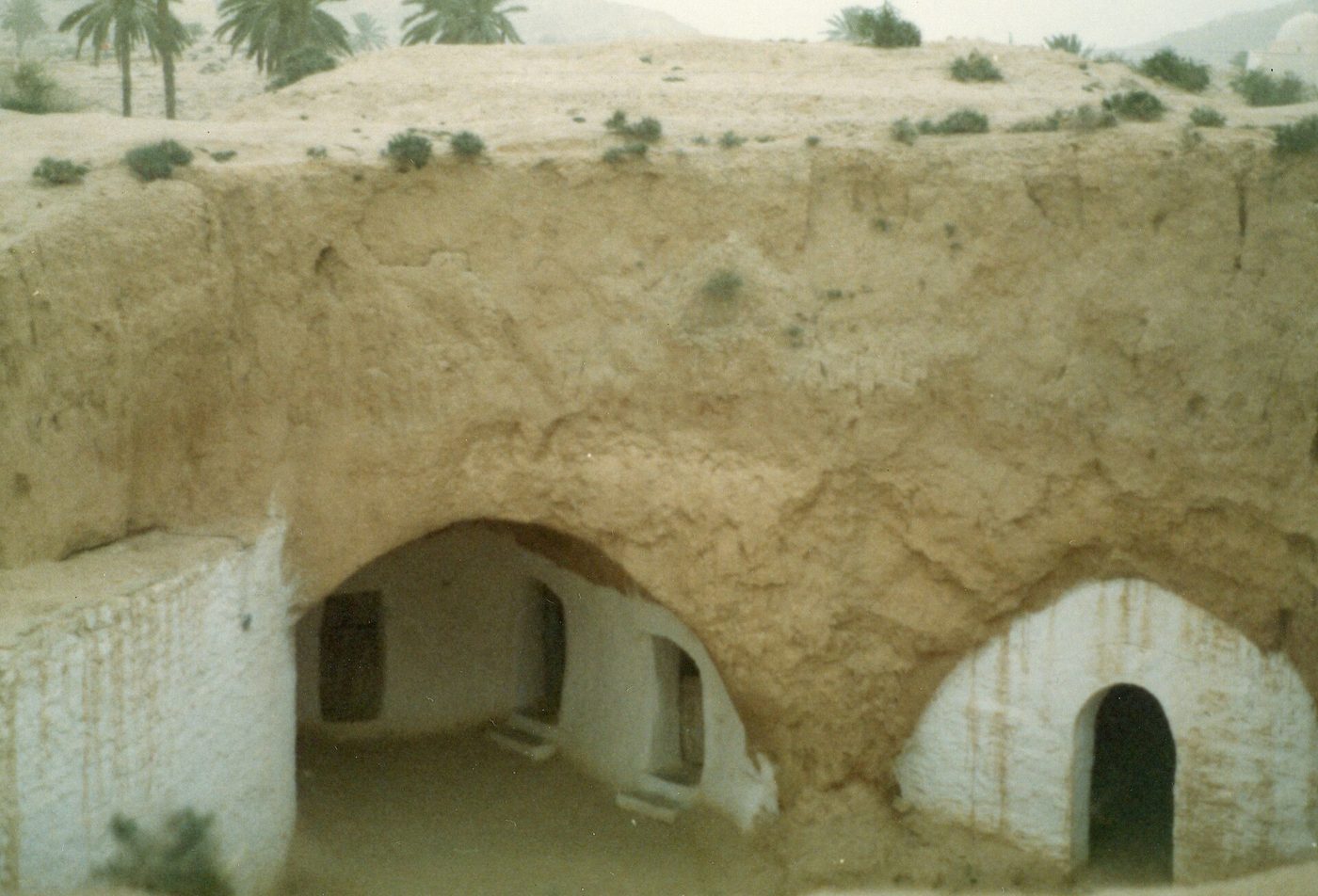
This is the one that gives you the best photo in Tunisia, because you can stand inside the film. The Sidi Driss (also spelled Sidi Idriss) is a troglodyte hotel — rooms and courtyards dug down into the earth, as the Berber people of Matmata have built for centuries — and its sunken courtyards played the interior of the Lars homestead. The dining alcove where Uncle Owen lectures Luke over blue milk, the curved corridor, Aunt Beru’s kitchen: all here, and the production left enough set dressing that it’s instantly recognisable. The hotel leans into it, with a small Star Wars display and themed rooms.
Can you stay there? Yes — and it’s a proper Tatooine sleepover, if a rustic one. It has eight cave rooms; expect somewhere around 250–300 TND (roughly £65–£90) for a basic double with shared facilities, as of mid-2026. Be clear-eyed: reviews are mixed, the rooms are spartan and a bit dilapidated, and there’s some hassling from sellers outside. But waking up in the Lars homestead is a story you’ll dine out on for years. If you’re just passing through on a tour, lunch (usually couscous) is typically included, or you can pay a few dinars — about 4 TND (£1) — to walk the courtyards.

My verdict: essential, and the easiest “stand inside the movie” moment of the lot. Manage your expectations on the rooms and you’ll love it. If you’d rather a comfortable base nearby, our where to stay in Tunisia guide covers the desert and coastal options. Matmata pairs naturally with the ksour further south and is reachable on a long day from Djerba — see the logistics section.
Ajim, Djerba — Mos Eisley spaceport
Films: A New Hope.
Coordinates: approximately 33.7240° N, 10.7500° E, the ferry town on the south-west of Djerba.
How to visit: a 30-minute drive from Djerba’s resorts; no tickets, but little signage — bring this guide.
“You will never find a more wretched hive of scum and villainy.” Ajim is the working port town on Djerba that doubled for the exterior of Mos Eisley, the spaceport where Luke and Obi-Wan hire the Millennium Falcon. The famous cantina exterior — Chalmun’s Cantina, where the band plays and Han shoots first — is a real former bakery on the edge of town. (The cantina interior, with all the aliens, was a set built back in England, so don’t expect to walk inside.) Other corners of Ajim stood in for Docking Bay 94 and the stormtrooper checkpoint.
I’ll be honest: this is the most “you have to use your imagination” site. The bakery-cantina is derelict and unmarked, and Ajim has redeveloped around it, so without knowing what you’re looking at you’d drive straight past. What it has going for it is access — if you’re on a Djerba beach holiday, this is a cheap half-day by taxi or hire car, on a flat, fully paved island where a 2WD is all you need. In 2019 the French street artist Invader added a pixel-art stormtrooper mosaic to the bakery, which at least marks the spot.
My verdict: medium. A satisfying quick pilgrimage if you’re already on Djerba; not worth a special long journey. Our Djerba travel guide covers the island’s beaches, Houmt Souk and the rest of what to do around your cantina stop.
Obi-Wan’s house — the Amghar Mosque, and a cautionary tale
Films: A New Hope (exterior, filmed as a background plate in April 1976).
Coordinates: approximately 33.7408° N, 10.7350° E, on the coast just outside Ajim.
A short way from Ajim, a whitewashed old Ibadi mosque on the shoreline — the Amghar Mosque — is the building used for the exterior of Obi-Wan “Ben” Kenobi’s house. It’s a beautiful, lonely spot, and it’s the genuine article, confirmed from the production records. One important clarification, because the internet muddles this constantly: a different Djerba mosque, Sidi Jmour, is often mislabelled as Obi-Wan’s house — but Sidi Jmour was actually used for the Anchorhead and Tosche Station scenes, most of which were cut from the final film. The Kenobi hermitage is the Amghar Mosque. Don’t let a guide take you to the wrong white mosque.
A word of warning that doubles as a plea: in November 2024, two British tourists daubed the historic Amghar Mosque with red clay paint in a misguided “restoration”, covering the ancient stone and the Invader mosaic and damaging what is now a UNESCO-listed site. It caused real upset locally. These places survive on goodwill — photograph them, don’t touch them, and certainly don’t “improve” them. Treat every set as someone else’s heritage, because it is.
My verdict: medium, and best paired with Ajim into a single Djerba half-day.
Ksar Hadada — the slave quarters
Films: The Phantom Menace.
Coordinates: approximately 33.1005° N, 10.3137° E, near Ghomrassen in the Tataouine area.
How to visit: deep south; reached on a long day or overnight from Djerba, or from Tataouine town.
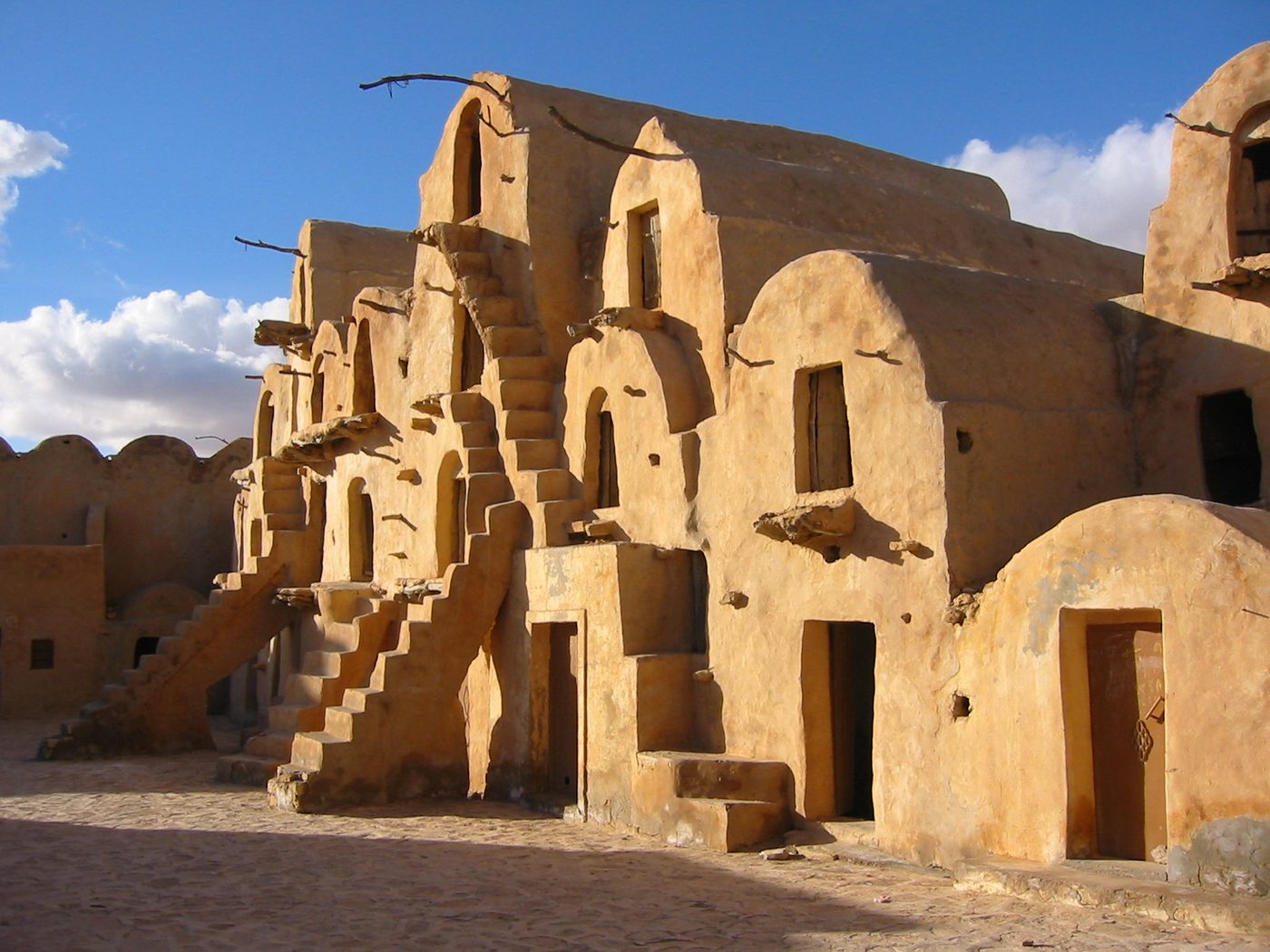
Ksar Hadada is a ksar — a fortified Amazigh granary of stacked vaulted storage cells called ghorfas, honey-coloured and otherworldly. For The Phantom Menace, its lanes and porches became the slave-quarters of Mos Espa, where Qui-Gon Jinn talks with Anakin’s mother Shmi on the doorstep. (A nice bit of trivia: the production liked the ksar so much that the courtyard design was copied to build the now-buried “small” Mos Espa set out in the dunes.) The ksar has been partly converted into a simple hotel, and a film-set corner was tidied up in 2020.
My verdict: medium — wonderful architecture, but it’s a long way south. Best for travellers doing a proper southern loop rather than a quick resort day-trip.
Ksar Ouled Soltane — spectacular, but mind the Star Wars billing
Coordinates: approximately 32.7885° N, 10.5150° E, about 23 km south-east of Tataouine.
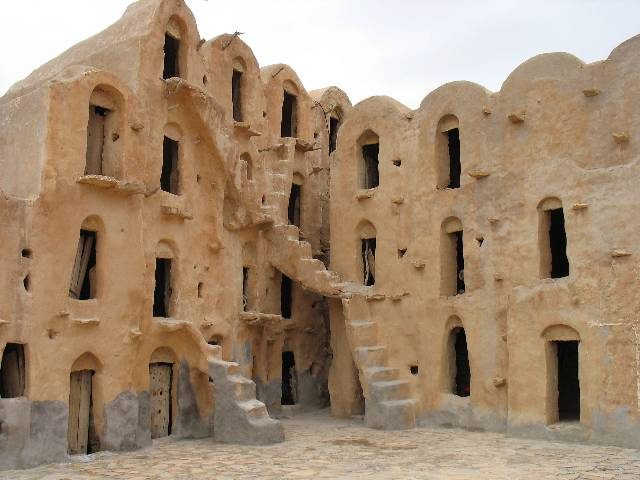
You’ll see Ksar Ouled Soltane on nearly every “Star Wars Tunisia” list, usually billed as a Phantom Menace slave-quarters location. Here’s the careful truth: the attribution is disputed. Specialist filming-location researchers — the people who work from call sheets and dated production photos — classify Ouled Soltane as a site that was scouted but not actually filmed, with the real slave-quarters footage shot at Ksar Hadada. Mainstream guidebooks still credit it, so you’ll find both stories. I’d treat its Star Wars credentials as “probably not, but visited by the location scouts” rather than gospel.
Does it matter? Not really — because Ksar Ouled Soltane is the most jaw-dropping ksar in Tunisia regardless, a four-storey courtyard of ghorfas that genuinely looks like another world. Go for the place, not the (shaky) film claim. One practical note: of all the sites in this guide, this is the closest to the restricted border zone in the deep south — still currently outside it, but see the safety section, and check the latest advice before you set off.
Chenini and Douiret — the scenery that named a galaxy
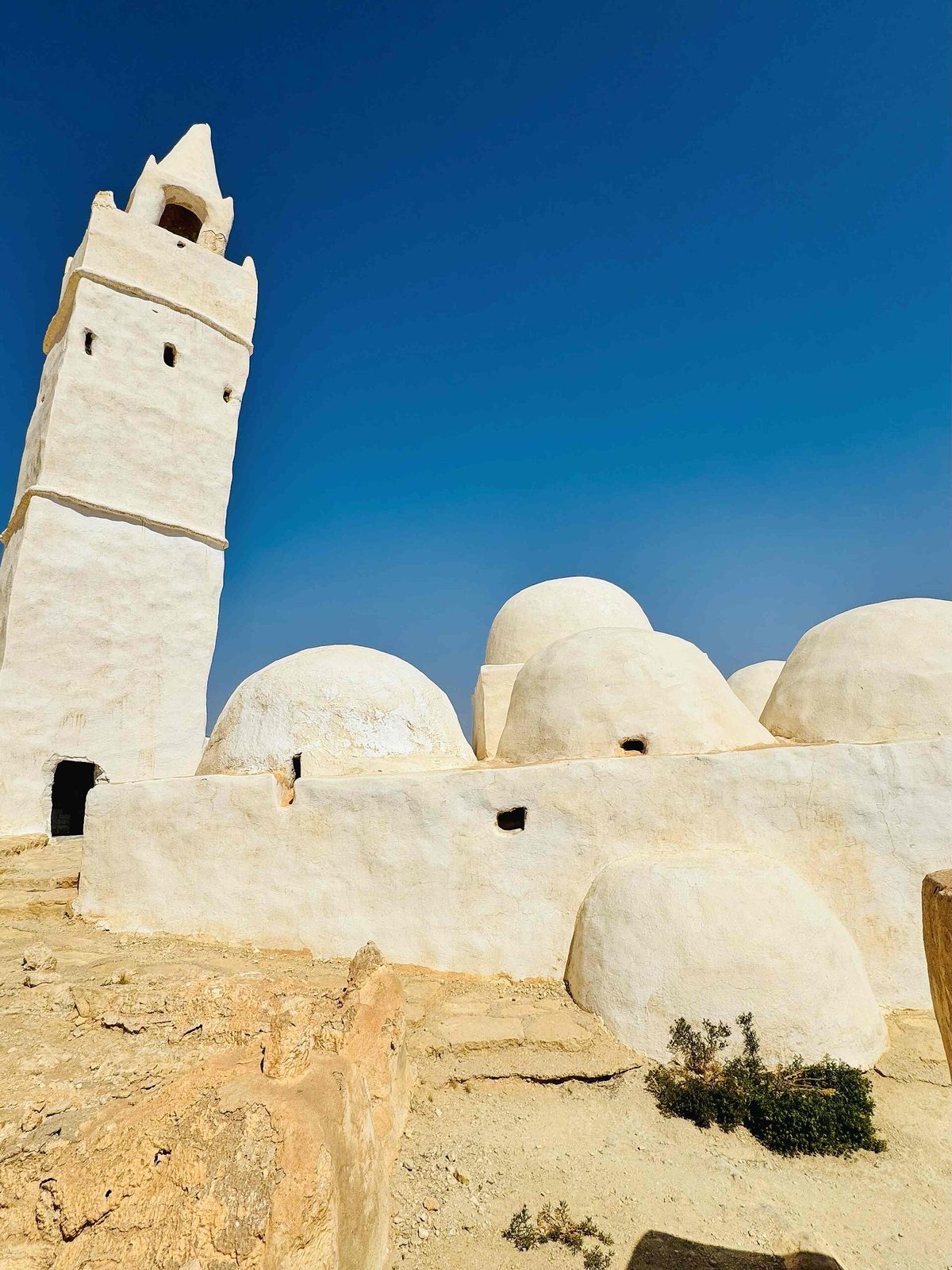
Let me clear up another common myth: Chenini and Douiret were not Star Wars filming locations. These spectacular Berber hill-villages near Tataouine — cave dwellings clinging to ridgelines beneath ruined granaries — are pure Tatooine in feel, and Chenini was scouted, but no scene was shot in either. They’re on the tours because they look the part, and they’re worth every minute on their own merits.
What is true, and lovely, is the naming. George Lucas adapted the planet name “Tatooine” from the real southern town of Tataouine while he was scouting and writing — in earlier drafts the planet had other names entirely. Fans have long noted that several Tatooine-related names echo real villages in this corner of Tunisia. You are, quite literally, standing in the country that named the most famous fictional planet in cinema.
How to visit the Star Wars locations from your resort
This is the question the other guides dodge, because most of them are written by independent travellers who flew into Tunis. If you’re on a UK package holiday, your real question is: “I’m in Djerba / Hammamet / Sousse — what can I actually reach?” Here’s the honest matrix.
| From… | Reachable in a day-trip | Needs an overnight (2+ days) | Out of reach |
|---|---|---|---|
| Djerba | Ajim, Amghar Mosque (on-island, easy) | Matmata + Sidi Driss; the southern ksour | Mos Espa / Lars dome / Tozeur (too far west) |
| Tozeur / Nefta | Mos Espa, Lars dome, Ong Jemal, Sidi Bouhlel | Matmata & the ksour (a southern loop) | Djerba/Ajim (the other end of the country) |
| Hammamet / Sousse | Nothing Star Wars in a day | 2–3 day desert tour covers Tozeur + Matmata | Everything as a day-trip — it’s 6–9 hours each way |
| Tunis | Nothing Star Wars in a day | Fly/drive to Tozeur, or a multi-day tour | — |
The crucial takeaway: no single base lets you day-trip both halves. Djerba gets you the cave-houses and towns; Tozeur gets you the desert sets. To bag both, you need two to three days and a south-then-west (or west-then-south) route.
From Djerba — the easiest package base
Djerba is the sweet spot for most UK holidaymakers. Ajim and the Amghar Mosque are on the island itself — a cheap half-day by hire car (the island is flat and entirely paved, so a 2WD is fine) or a taxi for around 30–60 TND (£8–£15) including waiting time. For Matmata and the Sidi Driss homestead interior, it’s a big but doable day: cross on the Ajim ferry (free for foot passengers, a small charge for cars, frequent) and drive inland, or take an organised excursion. The southern ksour (Ksar Hadada, Ouled Soltane) are better as an overnight.
From Tozeur — the desert-sets base
Tozeur is the launchpad for the iconic cluster. The standard outing is a half-day or full-day 4×4 trip taking in Mos Espa, Ong Jemal, the Grande Dune and the Lars dome on Chott el Djerid. Reckon on roughly £45–£100 per person depending on group size and length, usually with lunch — a private 4×4 for three to five people often works out around £70–£100 each. You genuinely need the 4×4 and a driver-guide: the final approach to Mos Espa is soft sand, and Sidi Bouhlel canyon is unmarked. Getting to Tozeur itself is the catch — there are no direct UK flights to its airport, so you’d connect via Tunis (a short Tunisair Express hop), drive (it’s a long haul from the coast), or arrive on a multi-day tour.
From Hammamet, Sousse or Monastir — go for two days, not one
I’ll say it plainly because the brochures won’t: you cannot day-trip the Star Wars sets from the beach resorts of Hammamet and Sousse. Tozeur is six hours or more each way. What works brilliantly instead is a two-day “Sahara and Star Wars” tour, which typically runs Tozeur (Mos Espa, the dune sea, the Lars dome), an overnight in or near Douz, and Matmata’s Sidi Driss on the way back, often with El Jem’s amphitheatre and Kairouan thrown in. Expect around £115–£150 per person for a two-day group tour including hotel and meals; three-day versions cost more and add Douz and Ksar Ghilane. For independent bookers, our Tunisia excursions guide explains how to book these well (and how to avoid the brutal single-day coach marathons), and the getting around Tunisia guide covers louages, trains, internal flights and car hire if you’d rather do it yourself.
Self-drive or guided?
On Djerba, self-drive is great — flat, paved, simple. For the Tozeur desert sets, take a guide: you need a 4×4 for the sand, and a good driver knows precisely which dune and which bend matches which shot, which is most of the magic. UK licence holders can drive in Tunisia for up to a year with a 1968 international driving permit (buy it at a UK Post Office before you travel, about £5.50) plus a green card from your insurer. Fuel is cheap and government-fixed. If you want the full rules on hire cars, tolls and that closed-currency dinar, the Tunisia travel tips guide has the lot.
When to go: the desert heat is real
The sets sit in genuine Sahara, and timing makes or breaks the trip. July and August are brutal — average highs around 39°C at Tozeur, with heatwaves pushing past 45°C. December to February gives mild days (16–19°C) but genuinely cold desert nights (down to 7–8°C, colder at a desert camp). The sweet spot is spring (March–April) and autumn (October–November), when daytime temperatures are pleasant and the light is gorgeous. Whatever the season, do the open-desert sites — Mos Espa, the dune sea, Chott el Djerid — at sunrise: it’s cooler, quieter, and the low sun turns the whole landscape Tatooine-gold. There’s a lovely irony that the very first 1976 shoot was hit by the region’s heaviest rain in seven years; rain here is rare, but pack for sun, wind and cold nights all the same. For a month-by-month breakdown across the whole country, see our best time to visit Tunisia guide.
Is it safe to visit the Star Wars locations in Tunisia?
Short answer: the mainstream Star Wars sites — Tozeur, Nefta, Matmata, Djerba, Tataouine town and the ksour around it — all sit outside the UK government’s “advise against travel” zones, and have done throughout the recent period. But this matters in the deep south, so let me quote the official advice exactly rather than wave it away as the casual blogs do.
As of its update on 23 February 2026, the UK Foreign, Commonwealth & Development Office (FCDO) advises against all but essential travel to, among other areas in the south, “within 75km of the Tunisia-Libya border, including Remada and El Borma but excluding Zarzis, the C118 road and all areas in Medenine Governorate north of the road“, and against all travel to “the militarised zone south of the towns of El Borma and Dhehiba“, to “within 20km of the rest of the Tunisia-Libya border area north of Dhehiba“, and to “the town of Ben Guerdane and immediate surrounding area“. In the west it advises against all but essential travel to “Kasserine Governorate, including the town of Sbeitla“.
What that means in practice for this trip: Tozeur and all the desert sets, Matmata, Djerba and Ajim are comfortably clear of any restriction. Tataouine town and the ksour of Ksar Hadada, Chenini and Douiret are also outside the zones — Tataouine town sits roughly 80 km north of Remada, which is itself the inner edge of the 75 km border belt. The one to watch is Ksar Ouled Soltane, which is the furthest south-east of the lot; it is currently outside the advisory zone on the FCDO’s wording, but it’s the closest of all these sites to the line, so check gov.uk/foreign-travel-advice/tunisia for the latest before you go. We never route readers toward Sbeitla, the Kasserine area or the border zones, and neither should any tour. For the full, current safety picture, our honest guide to whether Tunisia is safe keeps the FCDO wording up to date.
What it costs
Here’s the reassuring part: the sites themselves are mostly free or near-free. Your money goes on transport and a guide, not admission. Rough 2026 prices, with the dinar at about £1 = 3.9 TND (it’s a closed currency — you change money on arrival, and you can’t take dinar out):
| Item | Typical price | Notes |
|---|---|---|
| Entry to Mos Espa, Lars dome, Sidi Bouhlel, Ong Jemal | Free | No ticket gates; tip the camel owner if you pose |
| Sidi Driss Hotel — look around (non-guests) | ~4 TND (£1) | Lunch usually included on tours |
| Sidi Driss Hotel — room for two | ~250–300 TND (£65–£90) | Rustic, shared facilities, themed rooms |
| Ksour (Hadada, Ouled Soltane) entry | A few dinars | Sometimes just a custodian’s tip |
| Tozeur half/full-day 4×4 Star Wars trip | ~£45–£100 pp | Group size dependent; usually with lunch |
| 2-day Sahara & Star Wars tour from the coast | ~£115–£150 pp | Hotel + meals included |
| Djerba: taxi/half-day to Ajim + Amghar Mosque | ~30–60 TND (£8–£15) | Or self-drive — the island is flat and paved |
State of the sets: should you go now?
Yes — and sooner rather than later for the desert sets. Here’s my honest 2026 read, site by site, because preservation varies enormously:
- Mos Espa — standing, but with a dune literally creeping toward it and a sister set already buried. The most fragile of the big sites. Go now.
- Lars dome (Chott el Djerid) — in good shape, repeatedly restored by fans and a German-funded project. The most reliably “still there” of the lot.
- Sidi Driss, Matmata — thriving as a working hotel; the safest bet of all, since it’s maintained for business.
- Sidi Bouhlel canyon — it’s a landscape, not a structure, so it isn’t going anywhere; it just needs a guide to find.
- Ajim / Amghar Mosque, Djerba — fragmentary. The cantina-bakery is derelict; the mosque is fragile (and was vandalised in 2024). Manage expectations.
These are plaster film sets in a harsh desert, kept alive by goodwill, the odd grant and a steady trickle of fans. They won’t last forever. If a Tatooine pilgrimage is on your list, this is a good decade to do it.
Star Wars in Tunisia: frequently asked questions
Can you actually visit the Star Wars sets in Tunisia?
Yes. Most of the major sites are standing and freely accessible in the open desert or in working towns — Mos Espa, the Lars Homestead dome, the Sidi Bouhlel canyon, the Sidi Driss Hotel in Matmata, and the Ajim locations on Djerba. There are no ticket booths at the desert sets; you pay for transport and a guide, not entry.
Is Mos Espa still standing in 2026?
Yes — the main Mos Espa town still stands, with around two dozen buildings. But a migrating sand dune has been threatening it for years, and a smaller secondary set nearby is already buried. It’s the most at-risk of the big sites, so it’s a “go now” location.
Which Star Wars films were filmed in Tunisia?
A New Hope (shot 1976), The Phantom Menace (1997), Attack of the Clones (2000), and the single Tatooine scene that appears in Revenge of the Sith (also shot in 2000). The original and the prequels — but not Empire, Jedi or the sequels, which used other deserts.
Can you stay at the Star Wars hotel?
You can. The Sidi Driss (Sidi Idriss) Hotel in Matmata served as the interior of the Lars homestead, and it still rents its cave rooms — roughly £65–£90 for a basic double in 2026. It’s rustic and reviews are mixed, but sleeping inside Luke’s childhood home is hard to beat for a fan.
Where was the Mos Eisley Cantina filmed?
The exterior was a former bakery in the town of Ajim on Djerba; the alien-filled interior was a separate set built in England. So you can stand outside Chalmun’s Cantina, but there’s no bar to walk into.
Where did Luke watch the twin suns set?
At the Lars Homestead dome on the Chott el Djerid salt flat near Nefta and Tozeur — the franchise’s most iconic shot. Time your own visit for late afternoon and you can watch a (single-sun) sunset from the same spot.
How many days do you need to see them all?
Realistically two to three. The desert cluster (Tozeur) and the cave-and-town cluster (Matmata, Djerba, the ksour) are 300–400 km apart, so you can’t day-trip both from one base. A focused fan could do Djerba’s sites in a day and the Tozeur desert sets in another, with a transfer day between.
Do you need a 4×4, or can you self-drive?
For the Tozeur desert sets, take a 4×4 with a guide — the approach to Mos Espa is soft sand and Sidi Bouhlel is unmarked. On Djerba, the island is flat and fully paved, so a normal hire car (or a taxi) is fine for Ajim and the Amghar Mosque.
How much does a Star Wars tour in Tunisia cost?
A Tozeur half- or full-day 4×4 trip runs about £45–£100 per person; a two-day “Sahara and Star Wars” tour from the coastal resorts is roughly £115–£150 per person including hotel and meals. The sites are free — you’re paying for the vehicle, guide and logistics.
Why is the planet Tatooine named after a real place?
Because it is one. George Lucas borrowed the name from the southern Tunisian town of Tataouine while scouting and writing A New Hope; in earlier script drafts the planet was called something else entirely. You can visit Tataouine and the dramatic Berber villages of Chenini and Douiret nearby — they weren’t filming locations, but they’re the landscape that inspired the look.
When is the best time to visit?
Spring (March–April) or autumn (October–November), when the desert is warm but not punishing. Avoid July and August, when Tozeur regularly tops 39°C and heatwaves exceed 45°C. Whenever you go, do the open-desert sites at sunrise.
Is it safe?
The standard Star Wars sites are all outside the UK government’s advisory zones. The deep-south ksour near Tataouine are also outside, though Ksar Ouled Soltane is the closest to the restricted Libya-border belt — check the FCDO’s Tunisia advice before travelling. See our Tunisia safety guide for the current detail.
The bottom line
Tunisia is the most rewarding Star Wars pilgrimage on Earth, because so much of it is still here — not a museum exhibit but the actual desert, the actual cave-house, the actual cantina, baking under the same sun Lucas filmed in 1976. Plan around the two clusters, give it the days it deserves, go in spring or autumn, travel respectfully, and you’ll come home with the binary sunset burned into your memory. If you’re building a wider trip, start with our things to do in Tunisia guide and our itinerary planner — the desert is only one of the reasons this country is worth the flight. The Force, as they don’t quite say, is strong with this one.
Sources & further reading: UK FCDO Tunisia travel advice (gov.uk, updated 23 February 2026); Wikipedia, “List of Star Wars filming locations” and “Tatooine”; Galaxy Tours Tunisia film-site database; the “Save the Lars Homestead” restoration project (markdermul.be); climate data from Climates to Travel. Filming-location attributions follow specialist production research where it differs from general guidebooks. Prices and conditions verified to June 2026 and will change — check before you travel.
Photo credits
All images are from Wikimedia Commons, used under their respective licences:
- The Mos Espa set, one of the best-known Star Wars filming locations in Tunisia — photo by Habib M’henni, CC BY-SA 4.0, via Wikimedia Commons.
- The white igloo dome of the Lars Homestead exterior on Chott el Djerid — photo by Stefan Krasowski, CC BY 2.0, via Wikimedia Commons.
- The Chott el Djerid salt flat near Tozeur, Tunisia — photo by Gorik Francois, CC BY-SA 2.0, via Wikimedia Commons.
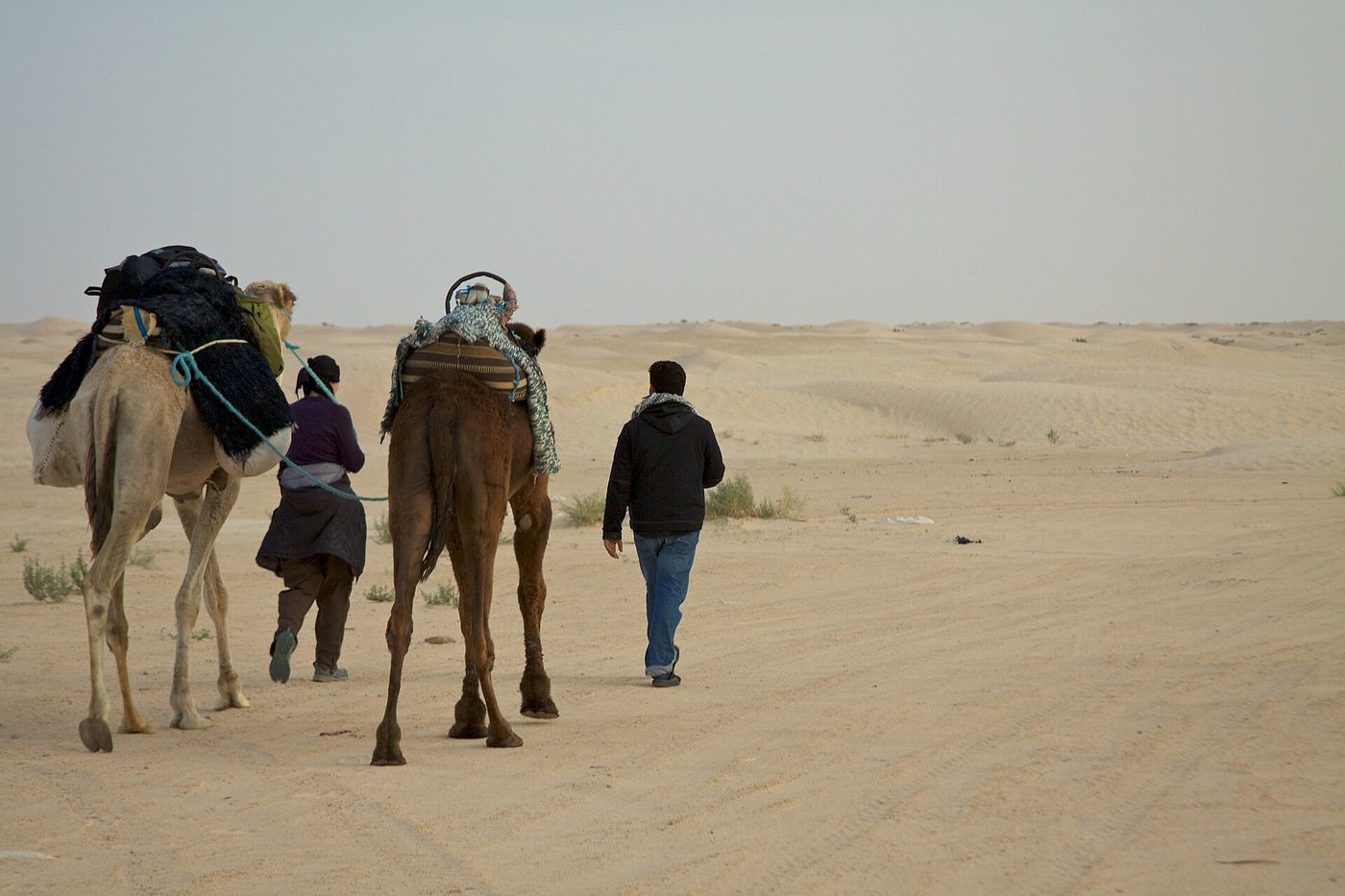
- A camel caravan crossing the dune sea of the Tunisian Sahara — photo by Dennis G. Jarvis, CC BY-SA 2.0, via Wikimedia Commons.
- A troglodyte cave dwelling in Matmata, used as the Lars homestead interior — photo by Bernard Gagnon, CC BY-SA 3.0, via Wikimedia Commons.
- The stacked ghorfas of Ksar Ouled Soltane near Tataouine — photo by Andy Carvin, CC BY-SA 2.5, via Wikimedia Commons.
- The Berber hill village of Chenini near Tataouine, Tunisia — photo by Simunaire, CC BY-SA 4.0, via Wikimedia Commons.
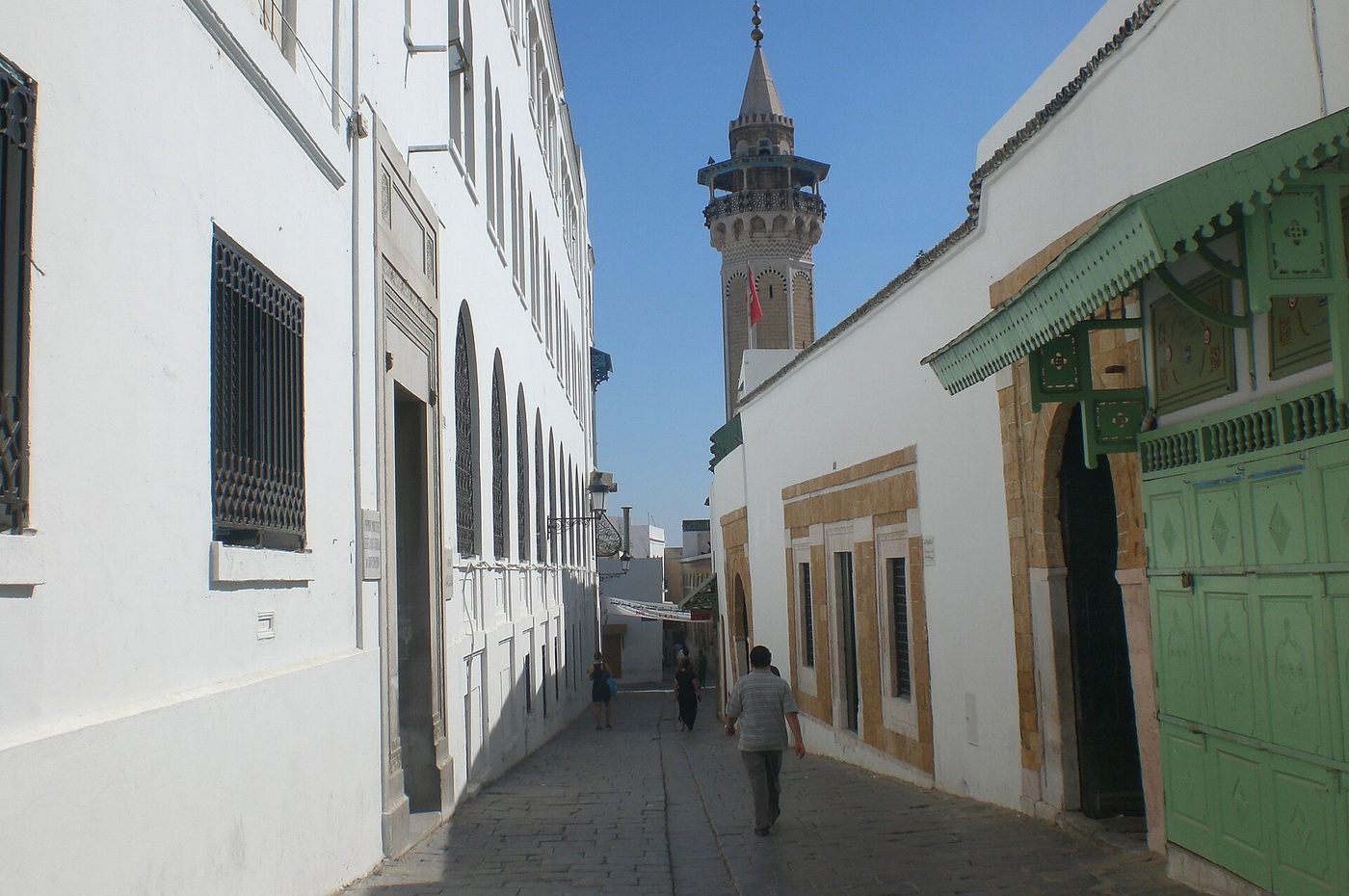
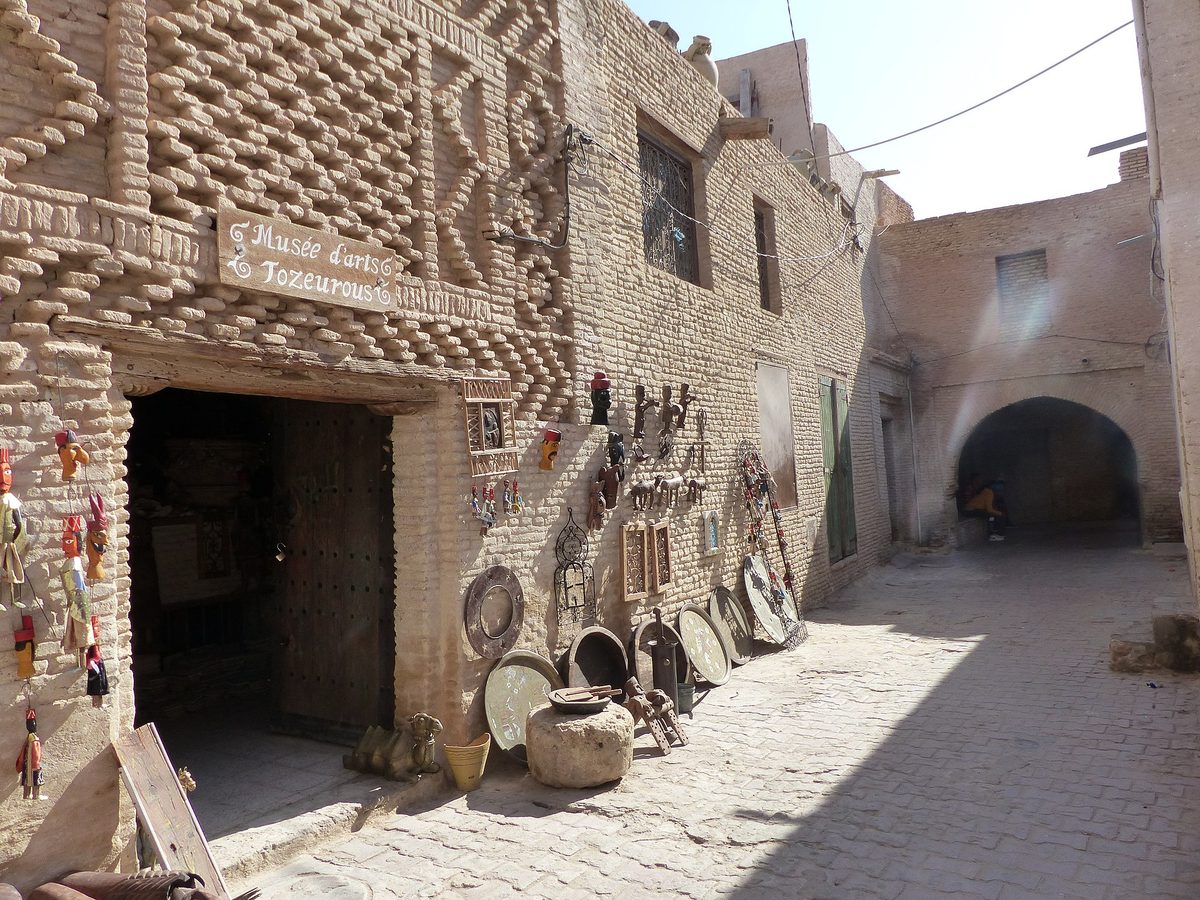
- Patterned brickwork in the medina of Tozeur, the desert gateway town — photo by Tsaag Valren, CC BY-SA 4.0, via Wikimedia Commons.
Off set, two more guides for the same trip: Tunisia’s souks, hammams and festivals, and what to eat between locations.