I’ve planned trips to Tunisia three ways: parked at an all-inclusive in Hammamet doing day trips, in a hire car looping from Tunis to the Sahara and back, and the lazy hybrid where you fly into Djerba and barely move. They’re completely different holidays, and the “perfect” plan depends entirely on which one you’re after. So this guide isn’t one route — it’s a set of ready-made plans you can lift straight off the page.
The short version: the right Tunisia itinerary depends on how you travel. With 5 days, pair the coast with a single desert overnight. Seven days adds Kairouan, El Jem and a proper southern loop. Ten to fourteen days lets you circle Tunis, the Sahara and Djerba without rushing. Base in one resort and day-trip out, or hire a car and tour — both work, and I’ve laid out each below.
How many days do you need in Tunisia?
Honestly? More than you think, and Tunisia is bigger than the map suggests — it’s around 750 km from Tabarka in the north to the Sahara camps in the deep south. The good news is the motorway spine (the A1) is fast and the highlights cluster sensibly. Here’s what each trip length realistically buys you.
| Trip length | What you can realistically cover | Best for |
|---|---|---|
| 3 days | Tunis, Carthage, Sidi Bou Said and the medina — a city break, no more | Cruise stopovers, a long weekend, first-timers testing the water |
| 5 days | A coast base (Hammamet or Sousse) plus Kairouan and El Jem, or a quick taste of the desert | Package holidaymakers who want one big day trip; short breaks |
| 7 days | The all-rounder: north, coast, the holy city of Kairouan, El Jem and one or two desert nights | Most first proper trips — the sweet spot |
| 10 days | Everything in the 7-day plan plus the deep south — Tozeur’s oases, Douz, Matmata and Star Wars country | Travellers who want the Sahara done properly |
| 14 days | The full loop including Djerba, the southern ksour and a slower pace throughout | Anyone treating Tunisia as the main event, not a side trip |
My honest take: seven days is the sweet spot for a first visit, and it’s the length I’d send most people away with. Five days works beautifully if you accept you’re choosing either the cultural coast or a desert taster, not both. Below ten days, trying to “see everything” just means seeing the inside of a car. For the full country — coast, Sahara and the island of Djerba — give it a fortnight.
Two ways to do Tunisia (pick your style first)
Before you pick a route, pick a style, because it changes everything. Tunisia splits neatly into two kinds of holiday, and most of the itinerary guides online only describe one of them — the touring road trip — while completely ignoring how most British visitors actually arrive.
The resort-base way (day trips from your hotel)
This is how the majority of UK visitors do Tunisia, and there’s no shame in it — it’s relaxing and excellent value. You book a week or two of all-inclusive in Hammamet, Sousse, Port El Kantaoui or Djerba, then dip out for day trips and one overnight desert excursion. You never pack and unpack more than once. The trade-off is that you see the country in spokes from a hub rather than as a continuous journey, and the far south is a long way from the coast. I’ll give you the best day-trip plans for each resort below.
The road-trip way (a moving loop)
Hire a car (or string together louages and trains) and travel as a continuous loop — north to the coast to the Sahara and back. You see far more, you go at your own pace, and you reach places no excursion bus bothers with. The trade-off is logistics, some long driving days, and Tunisian roads that demand your full attention. This is the better choice for second-time visitors and independent travellers. The classic touring itineraries by length are further down.
Which airport you fly into changes the plan
This matters more than any guidebook admits. Nearly every itinerary online routes from Tunis-Carthage (TUN), but most UK package flights land somewhere else entirely:
- Enfidha–Hammamet (NBE) — the purpose-built charter airport between Hammamet and Sousse. Transfers run roughly 40–45 minutes to Hammamet and 45–60 minutes to Sousse. This is the gateway for a coast-base holiday.
- Monastir (MIR) — closest to Sousse, Monastir and Mahdia; Sousse is only about 20–30 minutes away.
- Djerba–Zarzis (DJE) — the island itself, with resorts 15–40 minutes from the terminal. easyJet flies here twice a week year-round from Luton and Manchester.
- Tunis-Carthage (TUN) — the capital, best for a city break, a touring loop, or a domestic flight onward to Djerba or Tozeur.
For exactly which UK airlines fly where and when, see our best time to visit Tunisia guide and the resort breakdowns in where to stay in Tunisia.
Tunisia at a glance: the regions and what they’re for
It helps to picture the country in four bands, because every itinerary below is really just a way of stitching these together.
The north — Tunis, Carthage and the green hills
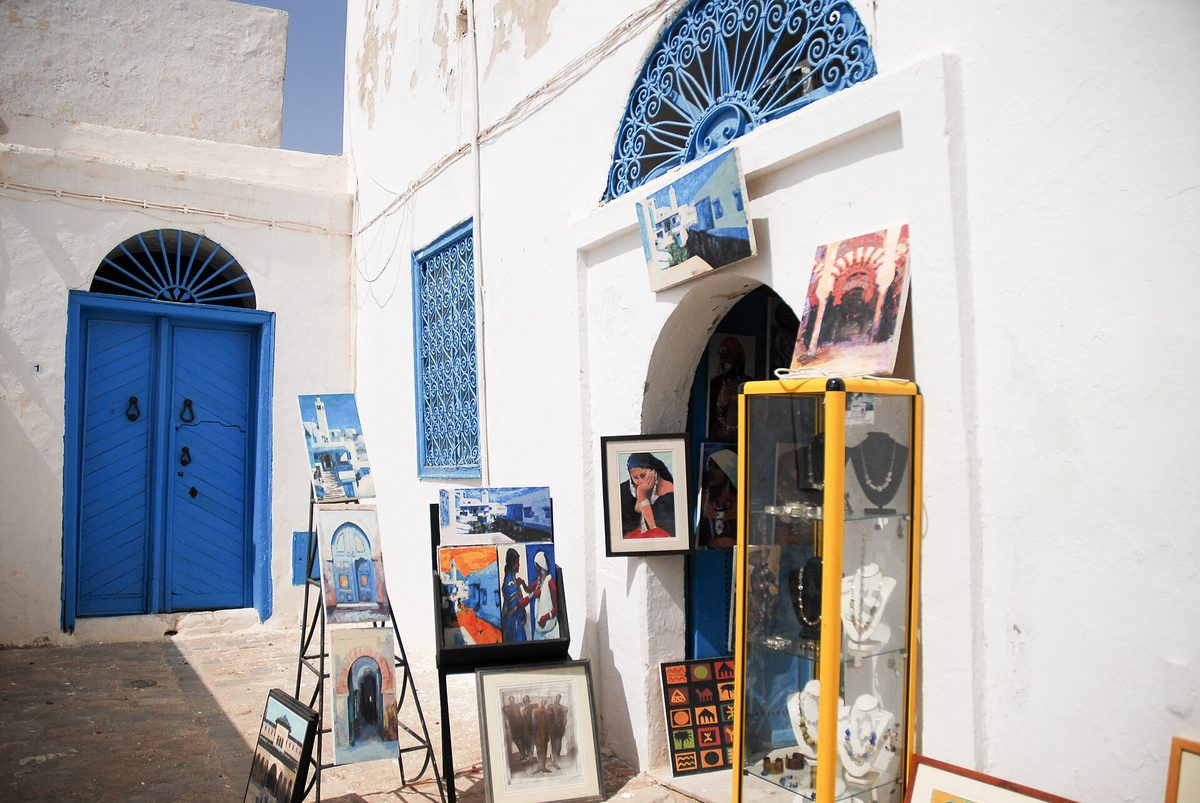
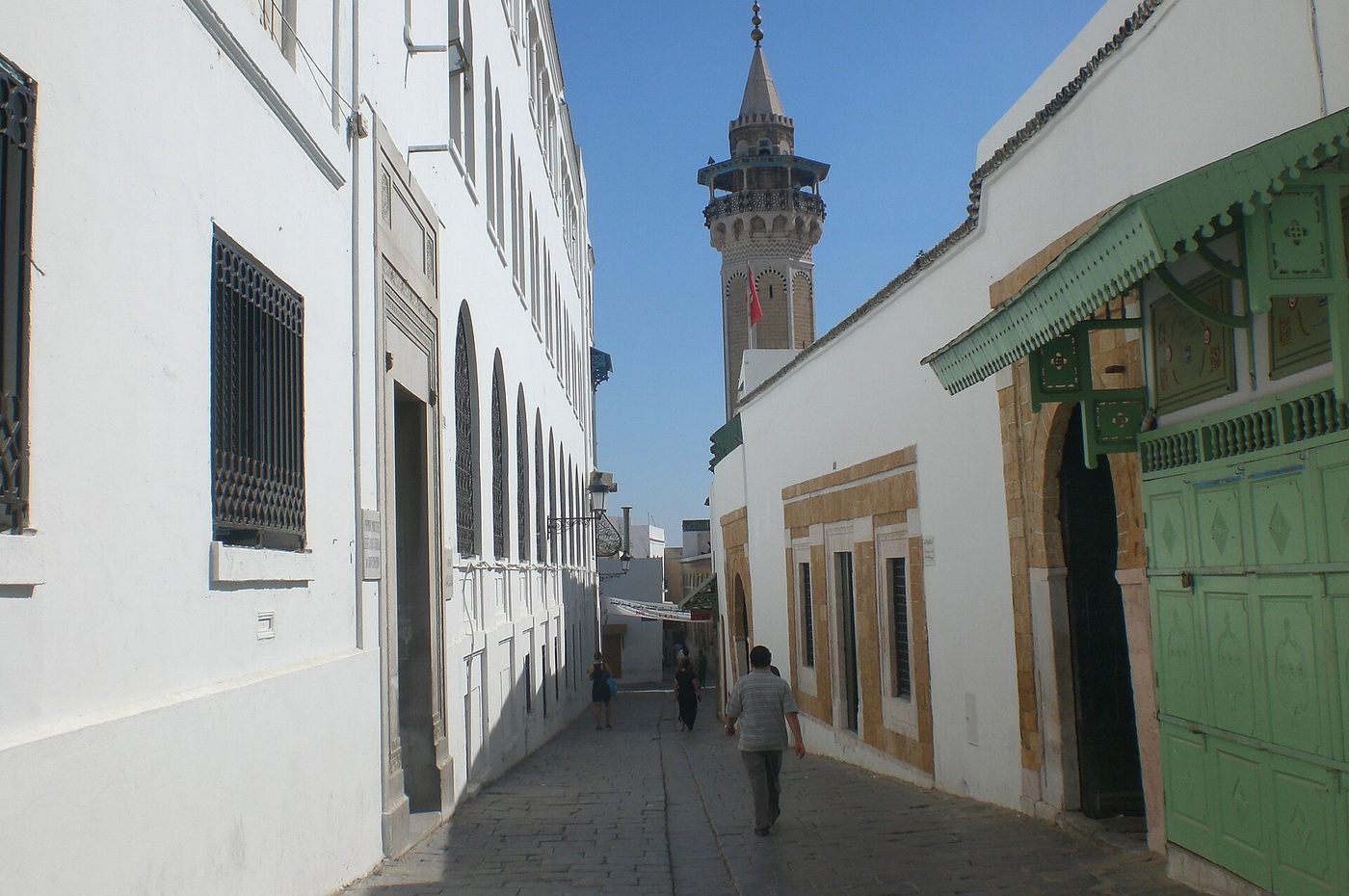
The capital, Tunis, anchors the north: a UNESCO-listed medina, the world-class Bardo mosaic museum, the ruins of ancient Carthage spread along the bay, and the blue-and-white cliff village of Sidi Bou Said. Inland lie the Roman cities of Dougga and Bulla Regia, and the cork-oak hills around Tabarka. This is the cultural heavyweight of any trip.
The coast — Hammamet, Sousse, Monastir and El Jem
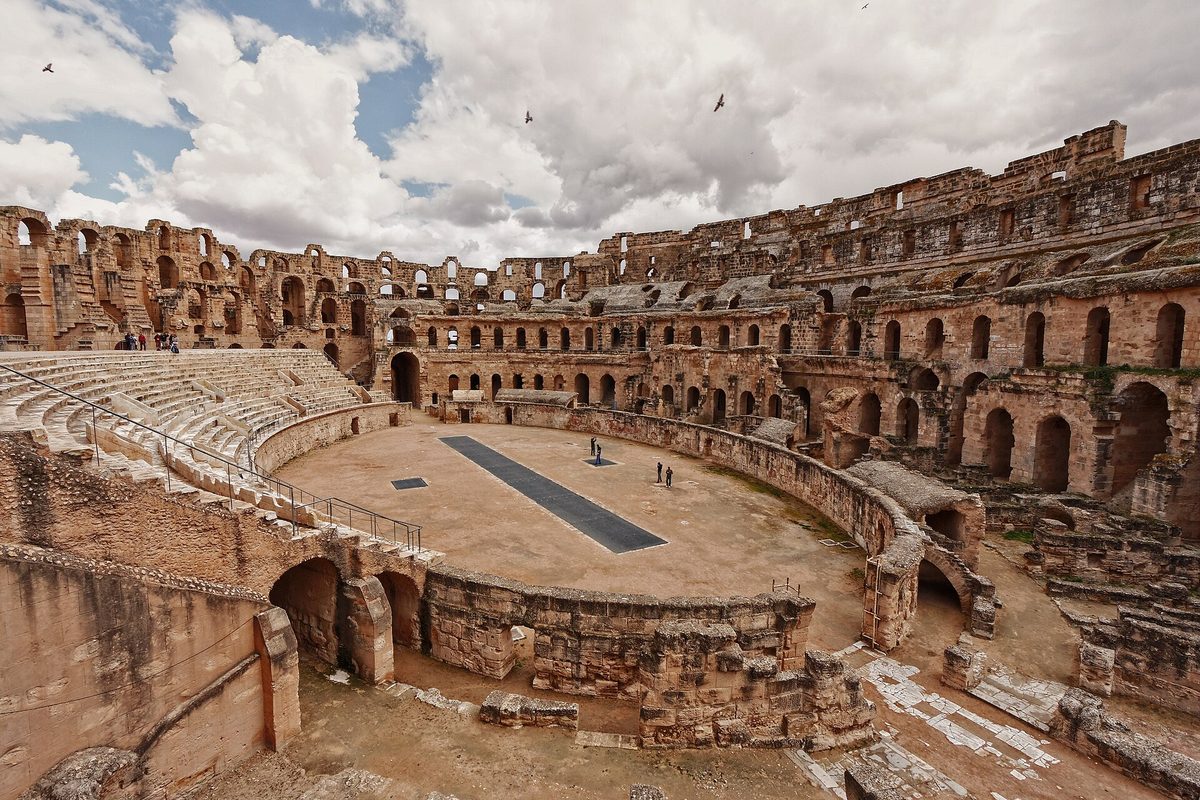
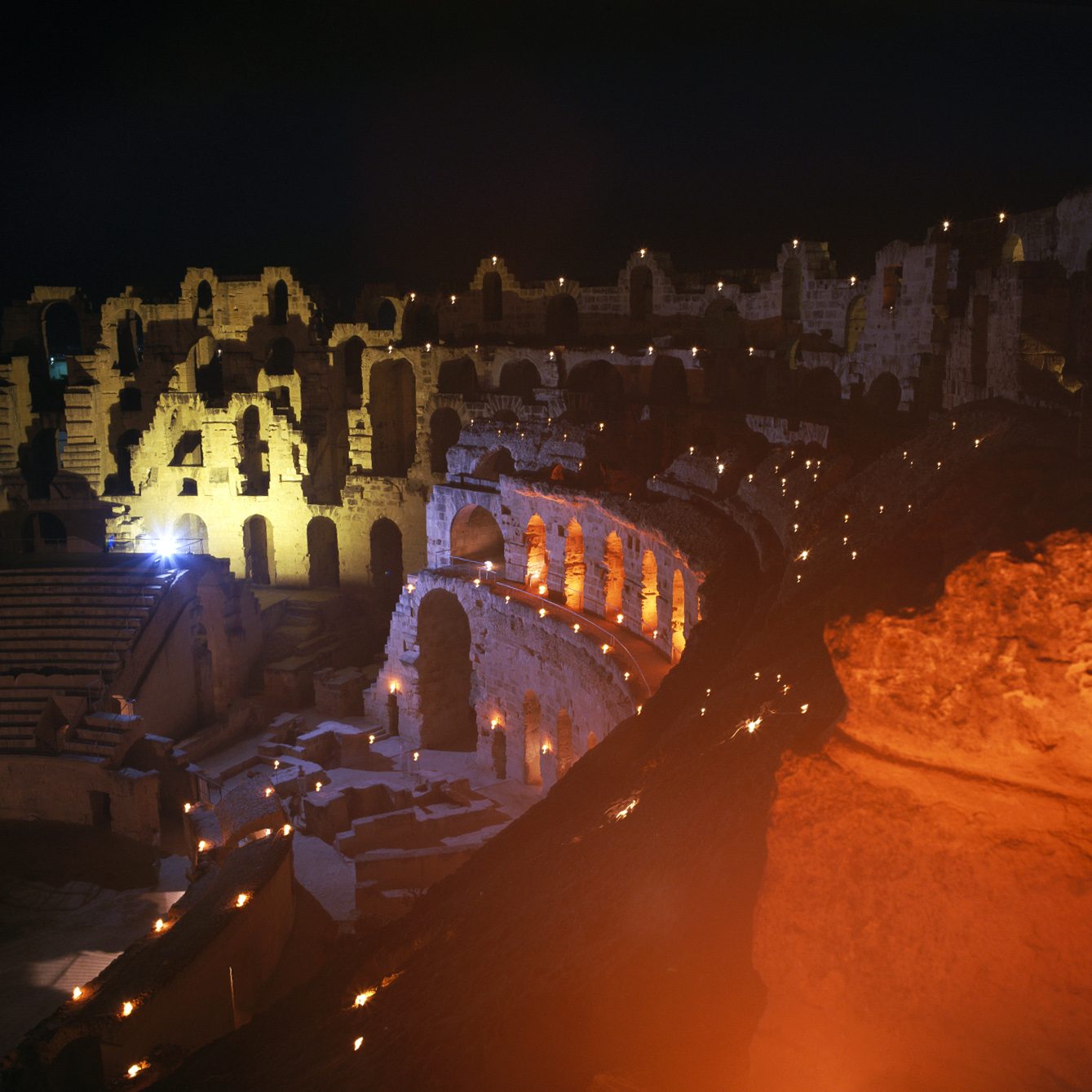
The Sahel coast is where the beaches, the all-inclusives and the easy living are: Hammamet and Yasmine Hammamet on Cap Bon, then Sousse, Port El Kantaoui, Monastir and Mahdia running south. Slot in the colossal Roman amphitheatre at El Jem — one of the best-preserved on earth — and you’ve got the spine of a coast holiday. See our full guide to the best beaches in Tunisia for where the sand is actually good.
The centre and the holy city
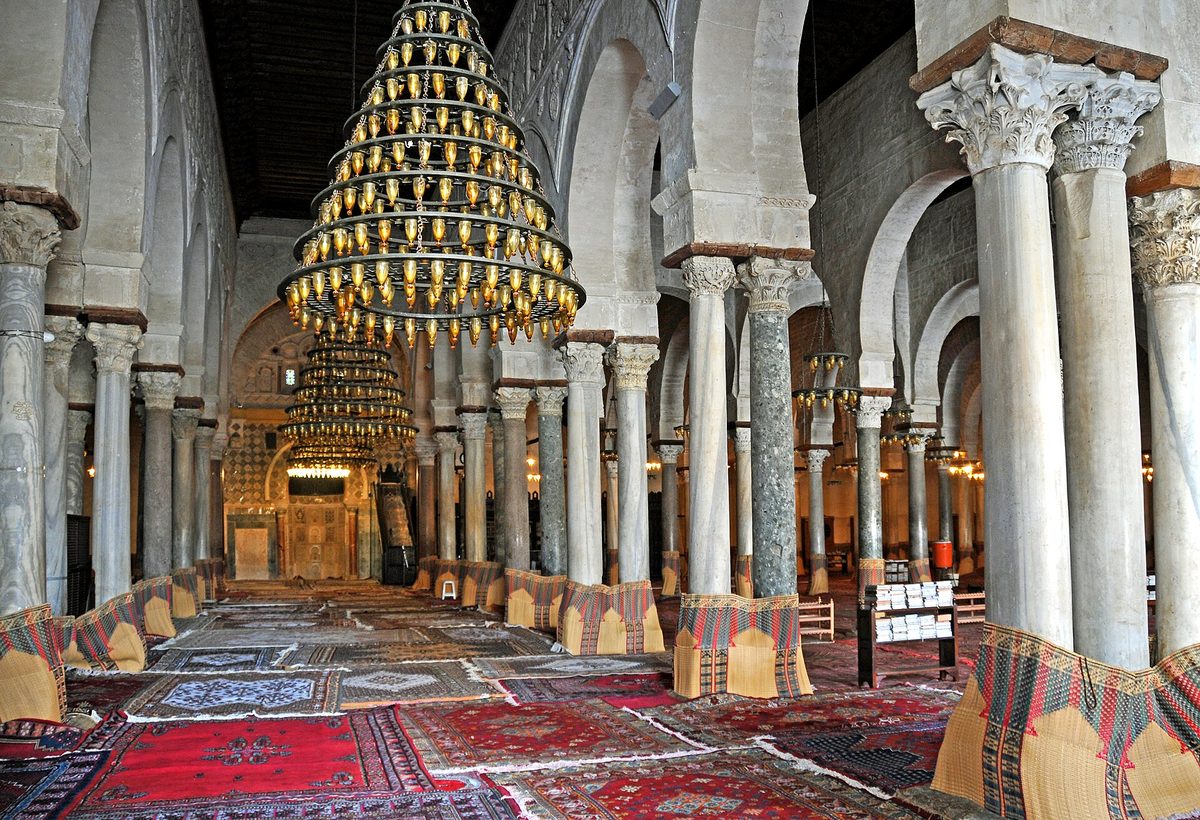
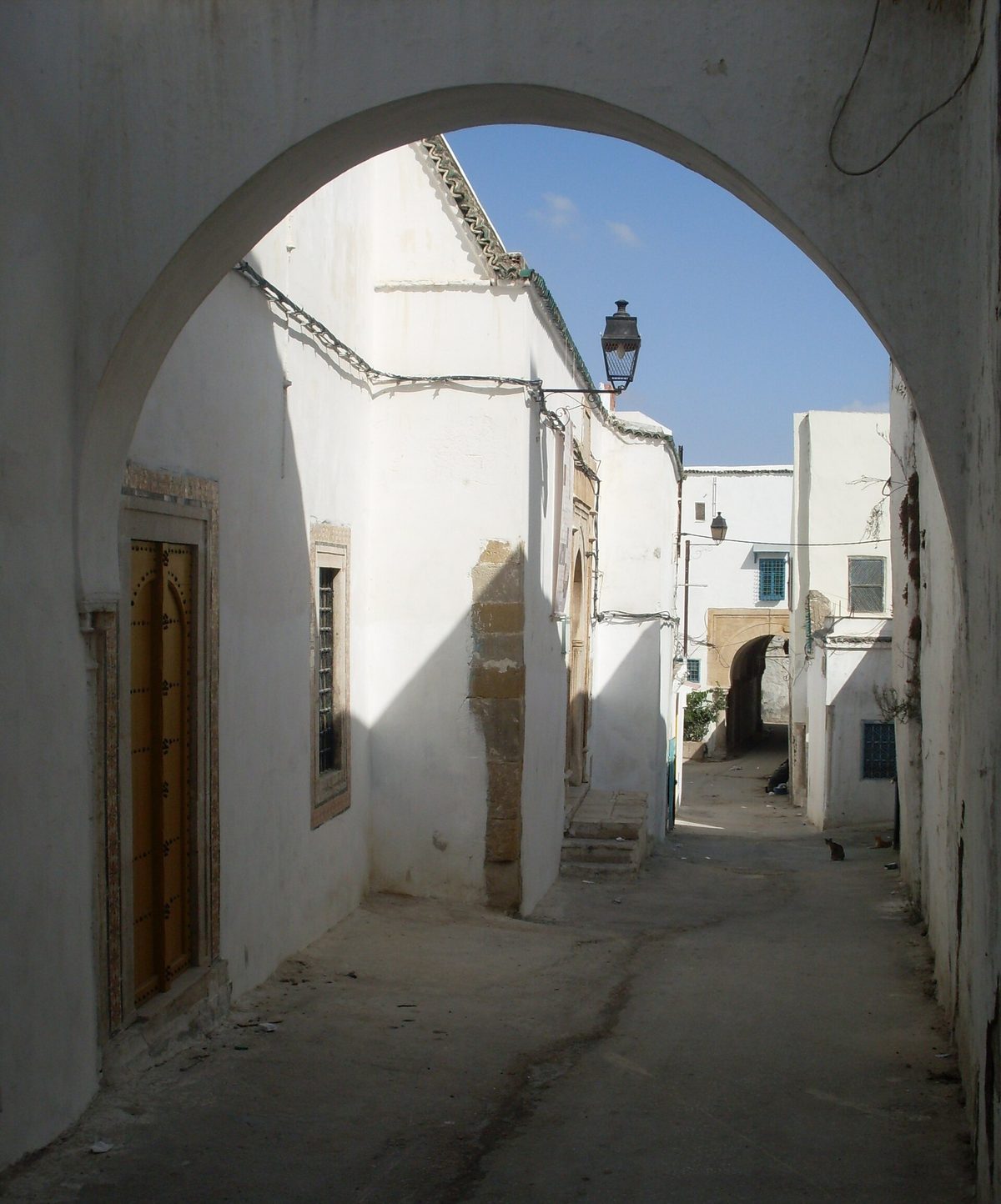
Kairouan sits inland from Sousse — the spiritual heart of Tunisia, with the magnificent Great Mosque of Uqba and a labyrinthine medina of carpet workshops. It’s an easy half-day from the coast and belongs on almost every itinerary.
The Sahara and the deep south
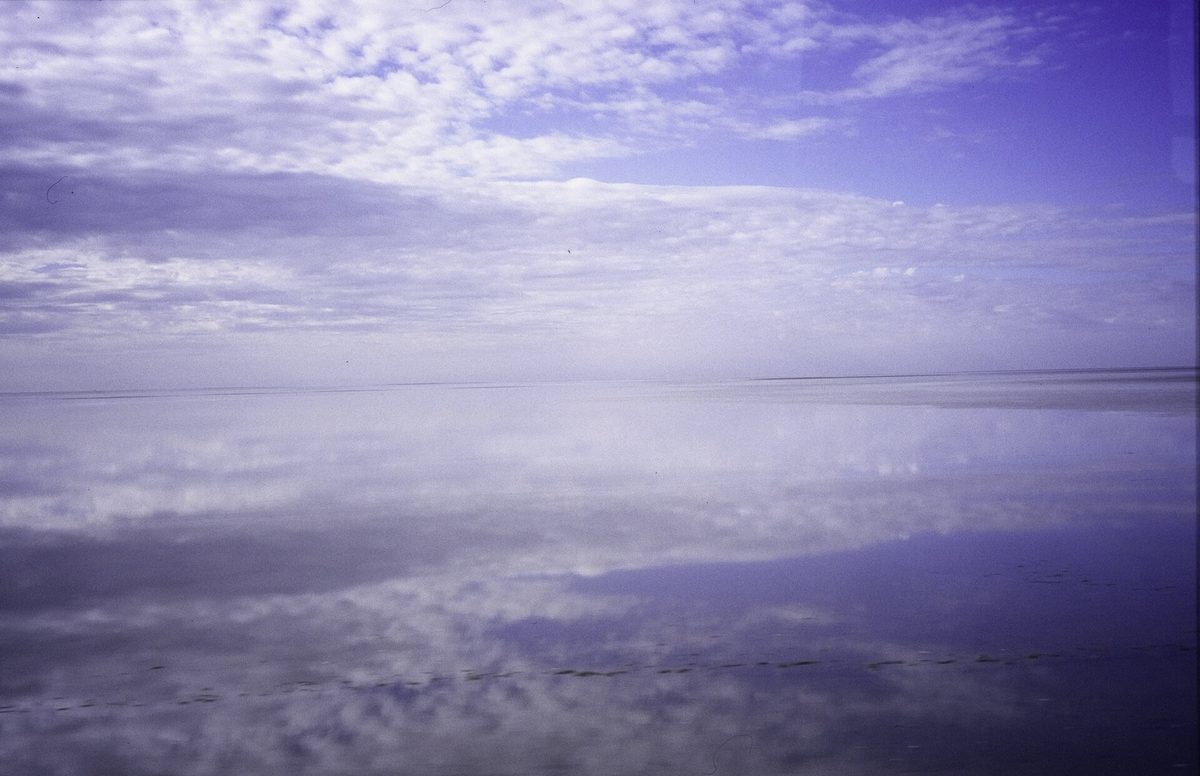
This is the bit people remember forever: the date-palm oases of Tozeur and Nefta, the shimmering salt flat of Chott el Jerid, the dunes around Douz (“the gateway to the Sahara”), the troglodyte houses of Matmata, and the Star Wars sets scattered across the sand. It’s a long way from the coast — four to five hours’ drive minimum — which is exactly why so many people skip it and later regret it.
Resort-based itineraries: the best day trips from your hotel
If you’re booked into an all-inclusive, here’s how to turn a week of sunbathing into a week that also sees the real country. Each plan assumes a 7-night stay with a mix of beach days and excursions. Book the longer day trips through your hotel’s tour desk or a local operator the day before — and always agree the price first.
From Hammamet / Yasmine Hammamet
Hammamet is the most central base of all, which is its great advantage. A realistic week:
- Day 1 — settle in. Beach, pool, and an evening stroll into Hammamet’s walled medina (the real one, not the Yasmine replica). It’s small, genuine and free to wander.
- Day 2 — Tunis & Carthage day trip. About an hour up the A1. The Bardo Museum (closed Mondays), the ruins of Carthage and a coffee in Sidi Bou Said make a full, brilliant day. Our Tunis guide has the detail.
- Day 3 — beach day, with a wander round Nabeul’s Friday market if the timing lands (it’s a proper working souk, not a staged one).
- Day 4 — Cap Bon. The Roman site of Kerkouane and the clifftop fort at Kelibia, or the thermal springs at Korbous. A gentler, quieter day.
- Day 5 — the big one: an overnight Sahara trip (see below) or a long day to Kairouan and El Jem.
- Day 6 — recover by the pool.
- Day 7 — Sidi Jdidi or a hammam and last-minute shopping in the medina.
For everything Hammamet has on its doorstep, our Hammamet travel guide goes deep.
From Sousse / Port El Kantaoui
Sousse is the best base for culture vultures, because the heaviest hitters are all within about an hour.
- Kairouan — under an hour inland, the holy city and Great Mosque. Half a day.
- El Jem — about an hour south, the Roman amphitheatre and its mosaic museum. Pair it with Kairouan only if you start early.
- Monastir — 20 minutes down the coast, with the photogenic Ribat fortress (you’ll recognise it from Life of Brian) and the Bourguiba mausoleum.
- Sousse itself — the UNESCO medina, the Ribat and the kasbah’s archaeological museum, home to some of the finest mosaics outside the Bardo.
Handy detail: the Metro du Sahel light-rail line links Sousse with Monastir and Mahdia for a couple of dinars, so you don’t even need a taxi for those two. (It’s normally running, but verify locally — the line had a service interruption that was restored in May 2026.) The full picture is in our Sousse and Sahel guide.

From Monastir
Monastir is quieter and more local than Sousse, and only minutes from its airport. Use the Metro du Sahel north to Sousse and south to Mahdia, day-trip to Kairouan and El Jem, and you’ve covered the Sahel’s greatest hits without ever hiring a car. Mahdia, at the southern end of the line, is an underrated half-day — a pretty fishing medina on a cape with far fewer tourists.
From Djerba
Djerba is the odd one out: it’s an island in the south, so the coast-and-Tunis day trips don’t apply, but the desert is much closer. From a Djerba base you can:
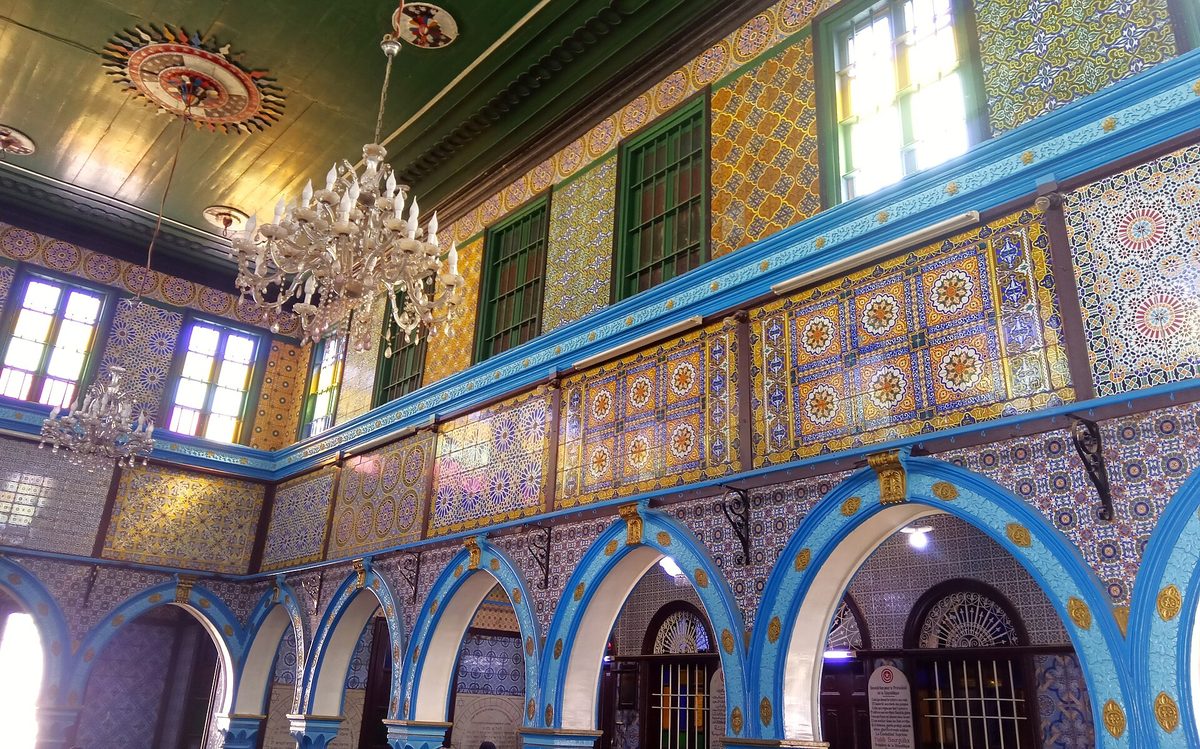
- Explore the island itself — Houmt Souk’s market, the El Ghriba synagogue, the flamingos at Ras R’mal (November to March only — never believe a summer flamingo promise), and the beaches along the Sidi Mahres strip. Our Djerba guide covers it all.
- Cross to the mainland for the ksour (fortified granaries) around Tataouine and the troglodyte villages of Chenini and Douiret.
- Take a 2-day desert excursion to Ksar Ghilane’s hot spring and a night under canvas — Djerba is one of the easiest launch points for the Sahara.
Adding an overnight Sahara trip to a beach holiday
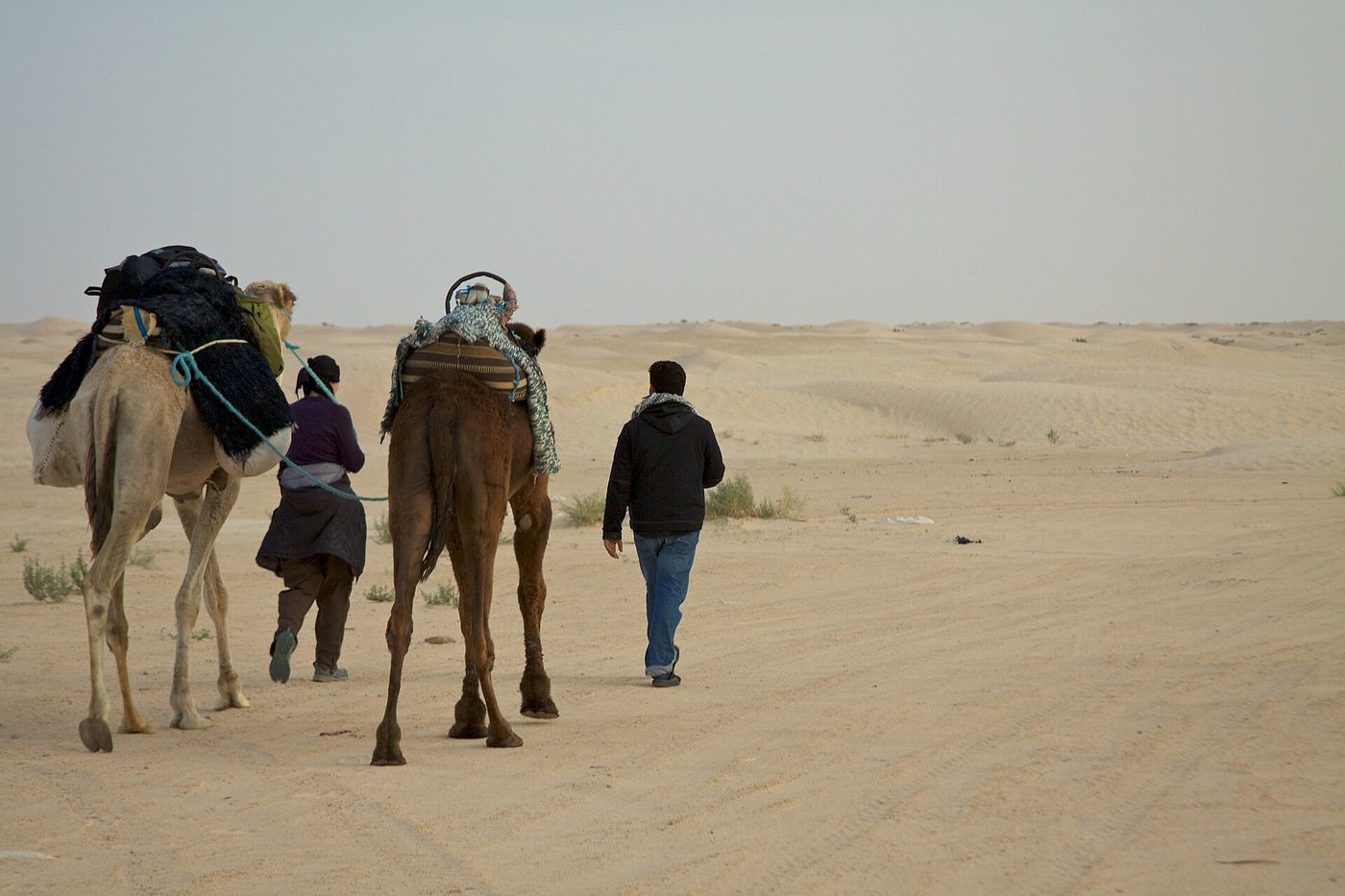
This is the single best thing you can do to upgrade a resort week, and it’s where the resort-base style really pays off. From Hammamet, Sousse or Djerba, operators run 2-day / 1-night 4×4 desert trips that typically cover Kairouan or El Jem on the way down, an oasis or the Chott el Jerid salt flat, a night in a desert camp near Douz or Ksar Ghilane, a camel ride at sunset, and the drive back. Expect a very long first day in the vehicle — this is a big country and the desert is genuinely far — but the payoff (silence, stars, dunes to the horizon) is worth every bumpy kilometre. Budget roughly 250–400 TND per person (£65–£105) depending on the operator and camp comfort; confirm exactly what’s included before you pay.
The classic Tunisia road trip: touring itineraries by length
Now the touring plans — continuous loops for travellers who’d rather move than sit still. I’ve written these around a hire car because it’s the most flexible option, but each one can be done car-free with louages, trains and the odd organised excursion (see the no-car section further down). Drive times assume an unhurried pace with photo stops.
3-day Tunisia itinerary: Tunis & Carthage mini-break
Perfect for a long weekend or a cruise call. You don’t need a car for this one — Tunis is walkable and the light-rail TGM line carries you out to the ruins.
- Day 1: The Tunis medina — souks, the Zitouna Mosque courtyard, mint tea on a rooftop — then the Bardo Museum’s mosaics in the afternoon (closed Mondays, so plan around it).
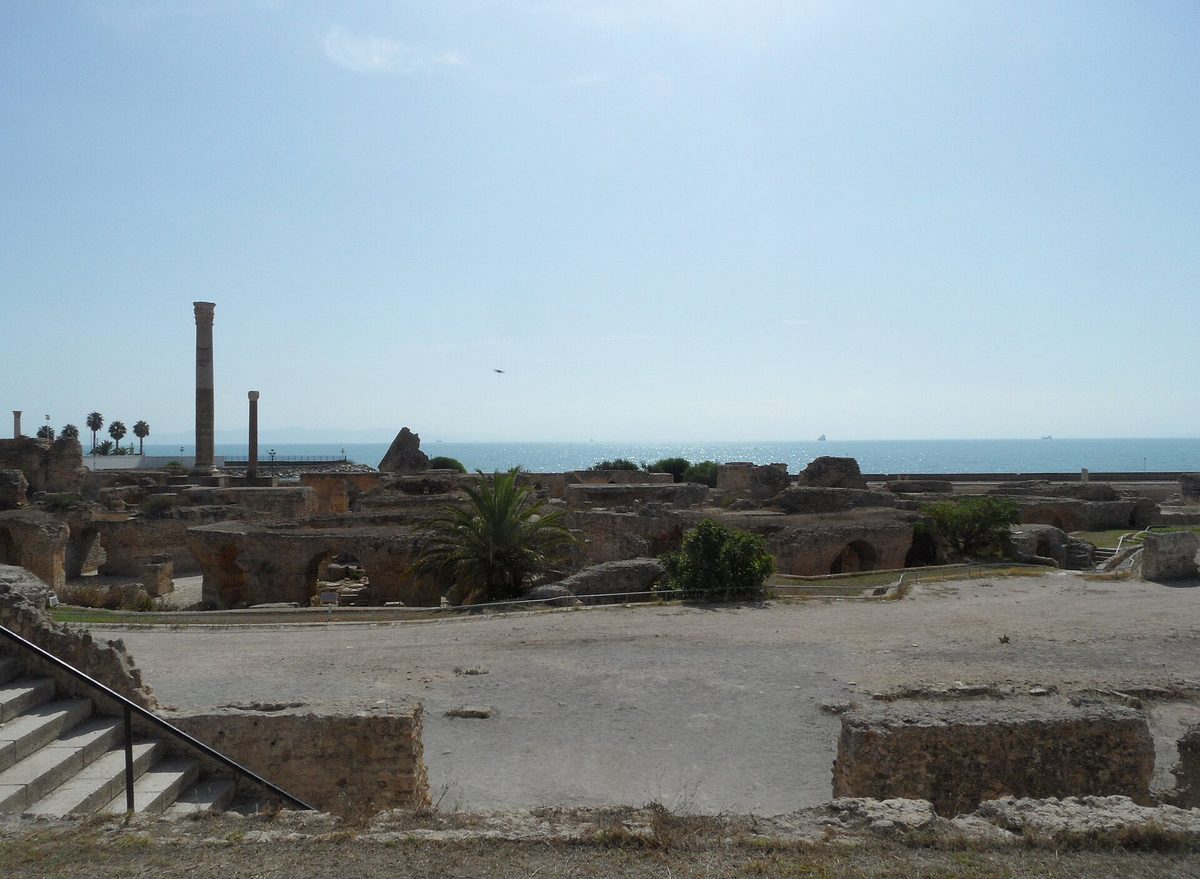
- Day 2: The TGM train to Carthage. Work through the Antonine Baths, the theatre and Byrsa Hill, then ride two more stops to Sidi Bou Said for sunset over the gulf.
- Day 3: A morning day trip — either the Roman city of Dougga (about two hours each way; one of the finest ruins in North Africa) or the seaside town of La Marsa — before flying out.
5-day Tunisia itinerary: coast and culture
Five days is tight, so this plan stays north and central and skips the long desert haul. Fly into Enfidha or Tunis.
- Day 1 — Tunis. Medina and Bardo Museum; overnight in the capital or in Sidi Bou Said.
- Day 2 — Carthage & Sidi Bou Said, then drive south to Sousse (about 1h45 on the A1). Overnight Sousse.
- Day 3 — Kairouan (under an hour inland): the Great Mosque, the medina, the Aghlabid basins. Back to the coast for the evening.
- Day 4 — El Jem amphitheatre in the morning (about an hour south of Sousse), Monastir’s Ribat in the afternoon.
- Day 5 — slow morning, beach or Sousse medina, fly home from Enfidha or Monastir.
Want the desert instead? Swap days 3–5 for a 2-night southern loop (Sousse → Tozeur → Douz → back) and accept that you’ll see less of the coast. You can’t sensibly do both the cultural coast and the Sahara in five days — that’s the honest trade-off.
7-day Tunisia itinerary: the all-rounder (day by day)
This is the one I recommend most. It balances the north, the coast, the holy city and a genuine two-night taste of the Sahara without any single day feeling like a forced march. Fly into Tunis, out of Tunis (or Enfidha).
| Day | Route | Drive |
|---|---|---|
| 1 | Tunis — medina, Bardo, overnight in the capital | — |
| 2 | Carthage & Sidi Bou Said, then south to Kairouan | ~2h |
| 3 | Kairouan sights, then on to Tozeur via Gafsa | ~4h |
| 4 | Tozeur: oases, Chott el Jerid, Nefta and the Star Wars sets | local 4×4 |
| 5 | Tozeur → Douz → Matmata (desert camp or troglodyte hotel) | ~3h+ |
| 6 | Matmata → El Jem amphitheatre → Sousse | ~3h30 |
| 7 | Sousse or Monastir, drive back to Tunis to fly out | ~2h |
Day 1 — Tunis. Land, drop the bags, and dive into the medina. Lose an hour in the covered souks, see the Zitouna Mosque courtyard, then spend the afternoon at the Bardo, whose Roman mosaics are reason enough to visit Tunisia. Eat in the new town.
Day 2 — Carthage, Sidi Bou Said, then Kairouan. Morning at the ruins of Carthage and a wander through Sidi Bou Said’s blue lanes, then pick up the car and drive south to Kairouan (about two hours). Arrive in time for the late-afternoon light on the Great Mosque.
Day 3 — Kairouan to Tozeur. See the Great Mosque properly in the morning (courtyard access for non-Muslims; modest dress; it closes to visitors around midday on Fridays), then the long, beautiful drive southwest via Gafsa to the oasis town of Tozeur — about four hours of changing landscapes. Settle into a date-palm guesthouse.
Day 4 — Tozeur’s oases and the salt flat. A full local day: a 4×4 run up to the mountain oases of Chebika, Tamerza and Mides, the vast white Chott el Jerid, the medina of Nefta, and the Mos Espa Star Wars set out in the dunes near Ong Jmel — go soon, the sand is slowly swallowing it. This is desert-tour country; the soft-sand sites need a 4×4 or a guide, not your hire saloon.
Day 5 — Tozeur to Matmata via Douz. Cross to Douz, the “gateway to the Sahara”, for a camel ride or a night in a dune camp, then continue to the lunar landscape of Matmata, where the troglodyte houses are dug into the earth. You can even sleep at the Hôtel Sidi Driss — yes, the Lars family homestead from Star Wars, still open and still serving meals in the filmed courtyard.
Day 6 — Matmata to Sousse via El Jem. Head back north, breaking the drive at the El Jem amphitheatre — climb the tiers, walk the underground passages, then carry on to Sousse for a night by the sea.
Day 7 — coast and out. A relaxed morning in Sousse or Monastir, then the easy A1 run back to Tunis for your flight.
10-day Tunisia itinerary: adding the deep south and Djerba
Ten days lets the south breathe and brings the island of Djerba into play. Take the 7-day plan and unhurry it:
- Days 1–2: Tunis, Carthage, Sidi Bou Said.
- Day 3: Dougga or Bulla Regia on the way south, overnight Kairouan.
- Day 4: Kairouan to Tozeur via Gafsa.
- Day 5: Full Tozeur day — oases, Chott el Jerid, Star Wars sets.
- Day 6: Tozeur → Douz → a night in a Ksar Ghilane desert camp.
- Day 7: Ksar Ghilane → Matmata → Gabès, or straight on to Djerba.
- Day 8: Djerba — Houmt Souk, El Ghriba, the beaches.
- Day 9: Mainland ksour from Djerba (Tataouine, Chenini), or a slow island day.
- Day 10: Fly home from Djerba, or drive the coast back north.
The clever shortcut: fly one leg. Tunisair Express links Tunis with both Djerba (about 55 minutes) and Tozeur (about an hour), turning a brutal six- or seven-hour drive into a short hop. The Tozeur flights are thin — only a few a week — so book early; Djerba flights are frequent. Doing the south one-way by air and the coast by road is the smartest way to save a whole day.

14-day / 2-week Tunisia itinerary: the full loop
With a fortnight you stop choosing. The two-week loop is simply the 10-day plan with the air let back into it — an extra night in Tozeur, a slow couple of days on Djerba, time for the Cap Bon peninsula or the northern Roman cities, and the odd do-nothing beach day so it still feels like a holiday. A sensible shape:
- Days 1–3: Tunis, Carthage, Sidi Bou Said, plus a Dougga day trip.
- Days 4–5: Cap Bon (Hammamet, Kelibia, Kerkouane) and down the coast to Sousse.
- Day 6: Kairouan and El Jem.
- Days 7–9: The southern oases — Tozeur, Nefta, Chott el Jerid, Douz.
- Day 10: Ksar Ghilane desert camp.
- Day 11: Matmata and the Tataouine ksour.
- Days 12–13: Djerba — beaches, market, El Ghriba, properly unwinding.
- Day 14: Fly home from Djerba.
For inspiration on what to actually do at each stop, our master list of things to do in Tunisia pairs perfectly with any of these routes.
Can you do Tunisia without a car?
Mostly, yes — and plenty of people do. The coast and the cities are easy on public transport; only the deep desert genuinely needs wheels or a tour. Here’s the honest breakdown.
The hire-car loop: costs and what to know
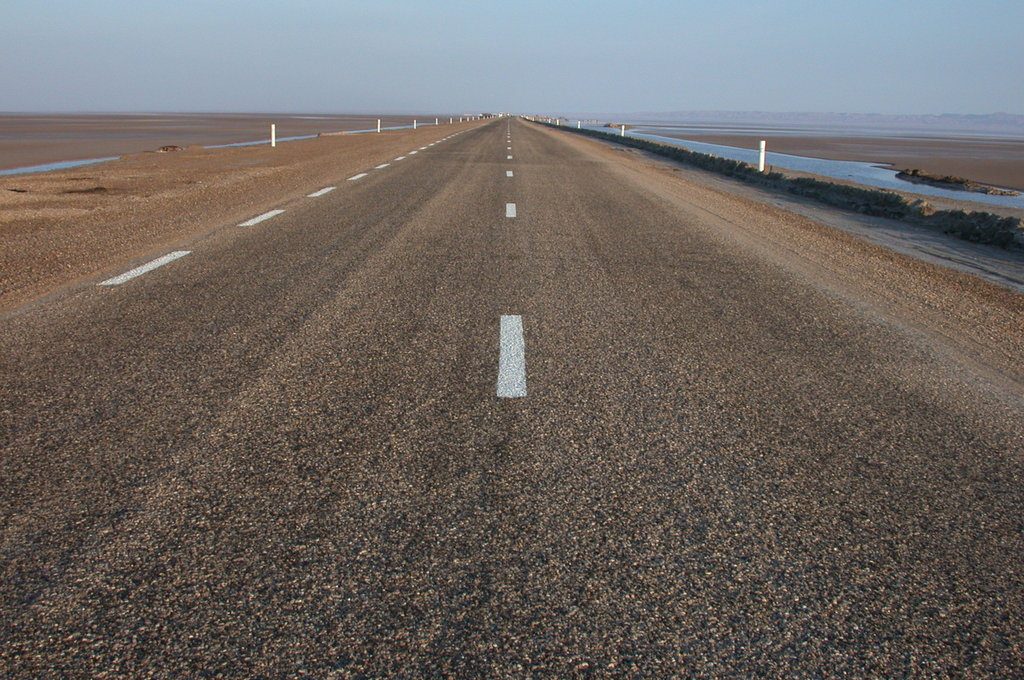
A small car runs roughly £25–£40 a day booked ahead, with fuel cheap by UK standards (petrol around 2.5–3 TND a litre). The A1 motorway is fast and its tolls are tiny — a few dinars a segment, cash only, so keep coins handy. A normal 2WD handles every sealed road including the Chott el Jerid causeway; you only need a 4×4 (or an organised excursion) for the soft-sand sites like Ksar Ghilane’s camps, Mos Espa and the dune bivouacs.
Three things UK drivers should know. First, the official advice: you can drive for up to a year on a UK licence plus a 1968 international driving permit (IDP), which you must buy in the UK before you travel (£5.50 at the Post Office) — you cannot get one abroad — and you should carry a green card for insurance. Second, driving standards are relaxed: lane discipline is loose, right of way at roundabouts is theoretical, and there are unmarked speed bumps and the occasional stray animal, so avoid driving at night outside towns. Third, you’ll pass police and military checkpoints — slow down, be ready to show your passport and licence, and don’t photograph them.
The no-car plan: louages, trains and tours
If you’d rather not drive, this is entirely doable for a coast-and-culture trip:
- Louages (shared minibuses) are the backbone of Tunisian travel — they leave when full, cost a handful of dinars, and connect everywhere. Tunis to Sousse is around 12–13 TND and a couple of hours; Sousse to Kairouan about 5–7 TND. Cash only, small notes, and they go from dedicated stations (in Tunis, Moncef Bey for the south).
- SNCFT trains run the coastal mainline from Tunis through Sousse, El Jem and Sfax down to Gabès several times a day — comfortable, scenic and from about 8 TND in second class for Tunis–Sousse. Single-track sections mean delays happen, so don’t build tight connections.
- The Metro du Sahel links Sousse, Monastir and Mahdia for a couple of dinars (normally running; confirm locally).
- Organised excursions fill the gap the desert leaves. The far south has essentially no scheduled public transport, so for Tozeur, Douz, Matmata and the Star Wars sites, a 4×4 tour from the coast or from Djerba is the realistic way in if you’re car-free.
One reality check: rail to Hammamet and Nabeul is a fragile skeleton service — use a louage instead. And Kairouan has no railway at all; reach it by louage or SNTRI coach. For the full nuts and bolts, our transport guide is the place to go (publishing shortly as the cocoon fills in).
Drive-time & distance matrix
Realistic door-to-door driving times for the legs these itineraries use. “Motorway” means the fast A1; “road” means slower national routes where 90 km on the map can still eat 90 minutes.
| Leg | Distance | Realistic drive | Road type |
|---|---|---|---|
| Tunis – Hammamet | ~65 km | ~1h | Motorway |
| Tunis – Sousse | ~140 km | ~1h45–2h | Motorway |
| Tunis – Kairouan | ~160 km | ~2h | Motorway + road |
| Sousse – Kairouan | ~57 km | ~50min–1h | Road |
| Sousse – El Jem | ~65 km | ~1h | Motorway + link |
| Kairouan – Tozeur (via Gafsa) | ~290 km | ~4h–4h30 | Road |
| Sousse – Tozeur | ~350 km | ~4h30–5h | Motorway + road |
| Tozeur – Douz (via Kebili) | ~120 km | ~1h45–2h | Road + Chott causeway |
| Douz – Matmata | ~150 km | ~2h15–2h45 | Road |
| Matmata – El Jem | ~210 km | ~2h45 | Road + motorway |
| Gabès – Djerba (via causeway) | ~110 km | ~2h–2h30 | Road + causeway |
| Tunis – Dougga | ~110 km | ~1h45–2h | Motorway + road |
The legs that need an overnight, not a day-return: anything coast-to-Tozeur (4h30–5h), Kairouan to Tozeur (4h+), and the desert loop generally. Don’t let anyone sell you a same-day round trip from Hammamet or Sousse to the Sahara and back — it exists, but it’s fourteen hours of misery for ninety minutes of dunes. Give the south two nights minimum.
Family-friendly vs independent: how to pace it
Travelling with children
Tunisia is genuinely easy with kids, but pace matters. Keep drive days short, base yourself on the coast and day-trip out rather than packing up constantly, and lean on the crowd-pleasers: the camel rides and 4×4 fun of a Douz day, the gladiator drama of El Jem, the animal parks near the resorts, and simply the beach. A resort base with one or two big excursions beats a full touring loop for under-10s. If you do go south, the troglodyte houses and the salt flat are wonderfully strange in a way children love.
Independent travellers
If it’s just you (or two of you) and you’re happy on louages, you can move faster and dig deeper — overnight in the oases, linger in Kairouan, push out to the Tataouine ksour. The 7- and 10-day touring plans above are written for you. The one thing I’d protect even on a fast trip is desert time: rushing the Sahara is the classic mistake.
What a Tunisia trip costs (a UK budget in pounds)
Tunisia is one of the best-value destinations in the Mediterranean, which is much of the appeal. Rough per-person daily guides, excluding flights:
| Style | Per person / day | What it looks like |
|---|---|---|
| Package + excursions | £40–£70 | All-inclusive resort already paid; spend on day trips, taxis, tips and shopping |
| Independent, mid-range | £55–£90 | Guesthouses/3–4★, hire car shared, restaurant meals, site entries |
| Independent, budget | £25–£45 | Simple hotels, louages, street food, the odd splurge |
Heritage sites are cheap but went up in April 2026 under a new national tariff: budget up to around 30 TND (£8) at the flagship sites — El Jem, the Bardo, Kairouan, Carthage — and a few dinars at smaller ones. A combined Bardo-plus-Carthage ticket saves money if you’re doing both. Meals run 10–25 TND in local places, more in resort restaurants. A 2-day desert excursion is 250–400 TND per person.
The dinar: a closed currency
Important and often missed: the Tunisian dinar is a closed currency. You can’t buy it in the UK before you fly and you’re not allowed to take it out of the country, so you change money on arrival (airport, banks, ATMs) and spend or reconvert what’s left before departure — keep your exchange receipts, as you can only change a limited share back. ATMs are reliable in cities and resorts, but the deep south, the louages, the site guardians and the rural cafés are all cash only, so carry small notes once you leave the coast.
Best time to visit for a touring itinerary
Timing changes which itinerary makes sense. Spring (April–May) and autumn (September–October) are ideal for a touring trip — warm but not punishing, which matters enormously once you’re inland and in the desert, where summer afternoons hit the mid-40s°C and turn sightseeing into survival. High summer (July–August) is for beach-base holidays, not Saharan road trips. Winter is mild on the coast and cold at night in the desert, but it’s the only season you’ll catch the flamingos on Djerba and the clearest desert skies. Time any trip around Ramadan too: many cafés and restaurants close in daylight hours, which reshapes a touring day. Our month-by-month best time to visit Tunisia guide has the full calendar, including festival and Ramadan dates.
Is Tunisia safe? FCDO advice for itinerary planners
The reassuring headline: every stop in the itineraries above lies outside the UK government’s “advise against travel” zones, which sit along the remote Algerian and Libyan borders, far from the tourist coast, the holy city, the oases and the islands. But because routes matter, here is the current Foreign, Commonwealth & Development Office (FCDO) guidance, quoted exactly. As of this update it was “Still current at: 17 May 2026” and last “Updated: 23 February 2026” — always re-check it before you travel, as it changes.
“FCDO advises against all travel to: the Chaambi Mountains National Park; the designated military operations zones: Mount Salloum, Mount Sammamma, Mount Mghila.”
“In addition, FCDO advises against all but essential travel to: areas north and west of the town of Ghardimaou in Jendouba Governorate, including El Feidja National Park; within 20km of the Tunisia-Algeria border in El Kef and Jendouba governorates, south of the town of Jendouba, including the archaeological site of Chemtou; Kasserine Governorate, including the town of Sbeitla; within 10km of the rest of the Tunisia-Algeria border south of Kasserine Governorate; within 10km of Mount Mghila; Mount Orbata.”
“FCDO advises against all travel to: the militarised zone south of the towns of El Borma and Dhehiba; within 20km of the rest of the Tunisia-Libya border area north of Dhehiba; the town of Ben Guerdane and immediate surrounding area. In addition, FCDO advises against all but essential travel to within 75km of the Tunisia-Libya border, including Remada and El Borma but excluding Zarzis, the C118 road and all areas in Medenine Governorate north of the road.”
What this means for your route, in plain English. Don’t build an itinerary through Kasserine or Sbeitla, or out to the Chemtou ruins near the Algerian border — they’re inside the restricted zones, so we never feature them, however tempting the Roman sites look on a map. Route Kairouan to the south via Gafsa instead. Reassuringly, the FCDO advisory explicitly excludes Zarzis, the C118 road and Djerba’s corner of Medenine governorate, so the island and its mainland day trips are fine, and the legitimate desert experience — Tozeur, Nefta, Douz, Ksar Ghilane — sits well north of the militarised south. Keep the Tataouine ksour to the Chenini and Ksar Ouled Soltane cluster and don’t push on toward the Libyan border. For the complete, regularly refreshed picture, read our dedicated is Tunisia safe guide.
Tunisia itinerary FAQs
How many days do you need in Tunisia?
Five days covers the cultural coast or a desert taster; seven days is the sweet spot that fits both with one or two Saharan nights; ten to fourteen days lets you add the deep south and Djerba at a civilised pace. For a city break, three days in Tunis is plenty.
Is 7 days enough for Tunisia?
Yes — seven days is the ideal length for a first trip. It’s enough to see Tunis and Carthage, the holy city of Kairouan, the El Jem amphitheatre and a genuine two-night taste of the Sahara without any day feeling rushed. You’ll skip Djerba and the far southern ksour, but little else essential.
What is the best route through Tunisia?
The classic loop runs Tunis → Kairouan → Tozeur → Douz → Matmata → El Jem → Sousse → back to Tunis. It threads the capital, the holy city, the oases, the dunes, the troglodyte houses and the great Roman amphitheatre into one continuous circle, mostly on good roads, returning you to your start point.
Can you do Tunisia without a car?
For the coast and cities, easily — louages (shared minibuses) and SNCFT trains connect Tunis, Sousse, Kairouan, El Jem and Monastir cheaply. The desert is the exception: with no scheduled transport to Tozeur’s sites, Douz or Ksar Ghilane, you’ll want an organised 4×4 excursion for the south if you’re not driving.
Where should I base myself in Tunisia?
For a resort holiday with day trips, Sousse or Port El Kantaoui give you the best access to Kairouan, El Jem and Monastir; Hammamet is most central for Tunis and Cap Bon; Djerba suits beach-and-desert. For touring, you don’t base — you move. Our where to stay guide compares every area.
Can you combine the beach and the desert in Tunisia?
Yes, and it’s the best of both worlds — but give it time. The Sahara is four to five hours from the coast, so add at least two nights for a desert leg rather than attempting a day return. The 7-day touring plan above does exactly this; resort-based visitors can bolt on a 2-day excursion.
How far is the Sahara from the coast?
Tozeur, the main desert gateway, is about 350 km and 4h30–5h by road from Sousse, or roughly an hour by air from Tunis on Tunisair Express. Douz and the dune camps are a little further south again. It’s a serious distance — which is why the desert deserves its own overnight, not a flying visit.
Can you do a day trip to the Sahara from Hammamet or Sousse?
You can book one, but I wouldn’t. A same-day return means 12–14 hours in a vehicle for a brief stop, and you miss the desert at its best — sunset and dawn. Far better is the 2-day / 1-night excursion every resort sells, which gives you a camp night under the stars.
Is Djerba worth visiting?
If you have ten days or more, or you’re flying in anyway, absolutely — the island has a gentle, distinct character, good beaches, the ancient El Ghriba synagogue, a lively market town and easy access to the mainland ksour. On a tight 5–7 day trip it’s a long detour south; save it for a longer visit. See our Djerba guide.
Do you need a visa for Tunisia?
UK, EU, US and many other passport holders don’t need a visa for tourist stays of up to 90 days — you get a free stamp on arrival. Your passport should be valid for the duration of your stay. Always confirm the latest entry rules for your nationality before booking, as requirements can change.
What’s the best time of year for a Tunisia itinerary?
Spring (April–May) and autumn (September–October) are ideal for touring — comfortable inland and in the desert. July and August suit a beach-base holiday but are brutally hot for the Sahara. Winter is mild on the coast, cold in the desert at night, and the only season for Djerba’s flamingos.
Is Tunisia safe to visit in 2026?
The main tourist areas — Tunis, the Sahel coast, Kairouan, the oasis towns, Djerba — sit well outside the FCDO’s restricted border zones and are visited safely by large numbers of holidaymakers. Take normal precautions, keep an eye on the current FCDO advice quoted above, and avoid the Algerian and Libyan border regions. Our safety guide goes into full detail.
Final thoughts: which Tunisia itinerary is right for you?
If you take one thing from all this, let it be the fork at the top: decide whether you want a holiday or a journey before you decide on a route. A week in a Sousse resort with a couple of cracking day trips and one night in the desert is a wonderful, low-stress trip — and for a lot of people it’s the right one. A seven-day loop from Tunis to the Sahara is a richer, more demanding adventure that shows you a whole country. Neither is better; they’re just different holidays.
Whichever you choose, the ingredients are the same and they’re remarkable: Roman cities the equal of anything in Italy, a living desert, a coast made for doing nothing, and some of the warmest hospitality in the Mediterranean — all at a fraction of European prices. Pick your length, pick your style, and go. For more route ideas and the things worth building a day around, our guide to things to do in Tunisia is the natural next read.
Ready-made routes, day by day
- Tunisia in 7 days: the ideal first-timer route
- Tunisia in 10 days: north to Sahara
- 2 weeks in Tunisia: the complete loop
How long to go, and how to get around
- How many days do you need in Tunisia?
- Tunisia road trip: routes, car hire & driving tips
- A weekend in Tunisia: is 48 hours enough?
Photo credits
All images are used under their respective Creative Commons or public-domain licences via Wikimedia Commons. Specific author and licence details for each photograph are listed below.
- El Jem amphitheatre — photo by Agnieszka Wolska, CC BY-SA 3.0, via Wikimedia Commons.
- Sidi Bou Said — photo by Mstyslav Chernov, CC BY-SA 3.0, via Wikimedia Commons.
- Carthage (Baths of Antoninus) — photo by Tamerlan Dulaev, CC BY-SA 4.0, via Wikimedia Commons.
- Great Mosque of Kairouan — photo by Dennis G. Jarvis, CC BY-SA 2.0, via Wikimedia Commons.
- Ribat of Sousse — photo by Sharon Hahn Darlin, CC BY 2.0, via Wikimedia Commons.
- Matmata troglodyte house — photo by Bernard Gagnon, CC BY-SA 3.0, via Wikimedia Commons.
- Chott el Jerid — photo by Angeline A. van Achterberg, CC BY-SA 4.0, via Wikimedia Commons.
- El Ghriba synagogue, Djerba — photo by Dr. Ondřej Havelka (cestovatel), CC BY 4.0, via Wikimedia Commons.
- Medina of Tunis — photo by Rais67, Public domain, via Wikimedia Commons.
Two companion reads for this route: the Tunisian food guide for every stop along the way, and our travel tips for the practicalities in between.
2 responses to “Tunisia Itinerary: 5, 7, 10 & 14-Day Resort & Road Trip Plans”
[…] — leave the tip and Korbous for another day. For more ideas on structuring a wider trip, see our Tunisia itinerary and the full list of day trips from Hammamet. If you’re still deciding whether to base […]
[…] all that and Sidi Bou Said rewards you handsomely. It slots neatly into a Tunisia itinerary and ranks among the country’s essential things to do — provided you time it […]