By the Tunisia Tourism Guide team · Last updated 11 June 2026 · All prices checked at publication
The best things to do in Hammamet are exploring the walled medina and its seafront Kasbah, swimming off ten kilometres of gently shelving sand, wandering the gardens of Dar Sebastian, strolling Yasmine Hammamet’s marina, and day-tripping to Nabeul’s Friday market, the Cap Bon coast and Carthage. This guide covers all of it — with prices in dinars and pounds.
And one thing more, before anything else: there are three different Hammamets, and two different medinas, and every year thousands of British holidaymakers book one believing they are getting another. No guide on the first page of Google explains this properly. I will, because it is the single most useful thing anyone can tell you about the place.
Hammamet has been Tunisia’s flagship resort for as long as Britons have flown south for guaranteed sun — every UK operator sells it, and it is very often the first (sometimes the only) Tunisian name people know. It earns that status: a genuinely pretty old town wrapped in fifteenth-century walls, a vast arc of sand, hotels that cost half what you would pay across the water in Sicily, and more worthwhile day trips within ninety minutes than any other base in the country. But the resort sprawls along fifteen kilometres of coastline, the brochure photos rarely tell you which bit you are looking at, and the difference between a fortnight in Hammamet Centre and a fortnight in Yasmine Hammamet is the difference between two entirely separate holidays. Let’s fix that first, then get into the 21 best things to do.
Hammamet at a glance
| Essentials | The short version |
|---|---|
| Flight from the UK | 3h15–3h45 direct to Enfidha (NBE) — easyJet and TUI from a dozen UK airports; the airport is 40 minutes from your hotel |
| FCDO status | No travel restrictions for Hammamet, Nabeul or Cap Bon (advice last updated 23 February 2026; checked at publication) |
| Money | Tunisian dinar, a closed currency — you exchange on arrival, not at home; £1 ≈ 3.9 TND (June 2026) |
| The three zones | Hammamet Centre (the real town), Hammamet Nord/Mrezga (the hotel strip), Yasmine Hammamet (purpose-built marina resort, 10km south) |
| Best months | May, June, September, October — warm sea, kinder sun, lower prices |
| Top three | The medina and Kasbah, the beach below the old town, a Cap Bon day trip |
| Sea swimming | Comfortable June to October (23–28°C, warmest late August) |
| Tourist tax | 4–12 TND per person per night by hotel grade, collected by the hotel, capped at ten nights; under-12s exempt |
The three Hammamets, explained
This is the section I wish someone had written before my first visit, so here it is at the top where it belongs.
Hammamet Centre is the original town — roughly 100,000 people across the wider district, a working Tunisian community with a fishing harbour’s worth of charm. The walled medina sits right on the sand at its heart, the Kasbah on its seaward corner, with cafés, banks, the Magasin Général supermarket and the bus and louage stations all walkable. Hotels here are mostly older, smaller and closer to real life. If you want to step out of your lobby into an actual town, this is your Hammamet.
Hammamet Nord — the stretch running north-east towards Nabeul, through the Mrezga district — is where a large share of the big all-inclusives actually stand. The beach is broad and lovely, but the “town” outside many gates is a dual carriageway, a strip of cafés and other hotels. Plenty of British package holidays labelled simply “Hammamet” land you here, a 15–25 TND taxi from the medina. That is not a disaster — it is often the best sand — but you should know before you book that “five minutes from the centre” on a resort map can mean five minutes by car, not on foot.
Yasmine Hammamet is a different town in everything but name: a purpose-built resort zone opened around the millennium, ten kilometres south of the medina, with its own marina (700-plus berths, the largest in Tunisia), a strip of international four- and five-stars, a casino, the Carthage Land theme park and a concrete “medina” built in the 1990s as an attraction. It is groomed, spacious, easy and entirely artificial. Families and first-timers often love it; anyone hoping for Tunisia-the-country can find it sterile. A taxi between Yasmine and the real medina runs about 8 TND (£2) on the meter — drivers will cheerfully quote tourists 15, so insist on the meter or agree the price first.
| Hammamet Centre | Hammamet Nord / Mrezga | Yasmine Hammamet | |
|---|---|---|---|
| Feels like | A real Tunisian seaside town | A hotel strip with great sand | A purpose-built resort bubble |
| Best for | Culture, atmosphere, walking to things | Beach-first all-inclusive holidays | Families, marina strolls, nightlife-lite |
| The beach | Pretty but narrower; busy with locals in summer | The widest, best-kept stretches | Groomed resort frontage, watersports everywhere |
| Walk to the real medina? | Yes | Rarely — budget short taxi rides | No — 10km; taxi about 8 TND |
| Evenings | Cafés, fish restaurants, promenade | Mostly your hotel’s entertainment | Marina restaurants, casino, beach clubs |
And the two medinas. The old medina — the real one, free, lived-in, fifteenth-century — is in Hammamet Centre. The “Medina Mediterranea” in Yasmine Hammamet is a themed shopping-and-cafés complex built for the resort, barely older than the hotels around it. TripAdvisor currently ranks the replica among Hammamet’s top attractions while its own reviewers complain the listing photos show the genuine article ten kilometres away; excursion sellers blur the two as well. If a “medina tour” is sold from a Yasmine hotel lobby, ask which medina it means. You want the old one. Picking the right zone matters more than picking the right hotel here — my country-wide guide to where to stay in Tunisia puts Hammamet’s options in context against Sousse, Djerba and the rest.
The 21 best things to do in Hammamet
In one glance — then the detail, with prices as checked in June 2026. (Tunisia reset many official site tariffs nationwide on 1 April 2026, so treat any older blog’s figures with suspicion, and all of mine as “around”.)
- Get lost in Hammamet’s old medina
- Walk the ramparts of the Kasbah
- Find the Great Mosque and the medina’s prettiest doors
- Follow the seafront path below the walls
- Spend a slow morning at Dar Sebastian
- Catch the Hammamet International Festival
- Poke around the Roman ruins of Pupput
- Claim your patch of the great beach
- Take a boat trip from the marina
- Try the watersports menu
- Sweat it out in a hammam or thalasso spa
- Stroll Yasmine Hammamet’s marina at sunset
- Do Carthage Land and Aqua Land with the kids
- Judge the “new medina” for yourself
- Have a flutter and a late night in Yasmine
- Play golf at Citrus or Yasmine
- Quad-bike the hills behind town
- Meet the sea lions at Friguia Park
- Spend Friday at Nabeul’s market and pottery shops
- Drive the Cap Bon loop: Kelibia, Kerkouane, El Haouaria
- Day-trip to Tunis, Carthage and Sidi Bou Said
Old Hammamet: the medina, the Kasbah and the culture
1. Get lost in Hammamet’s old medina

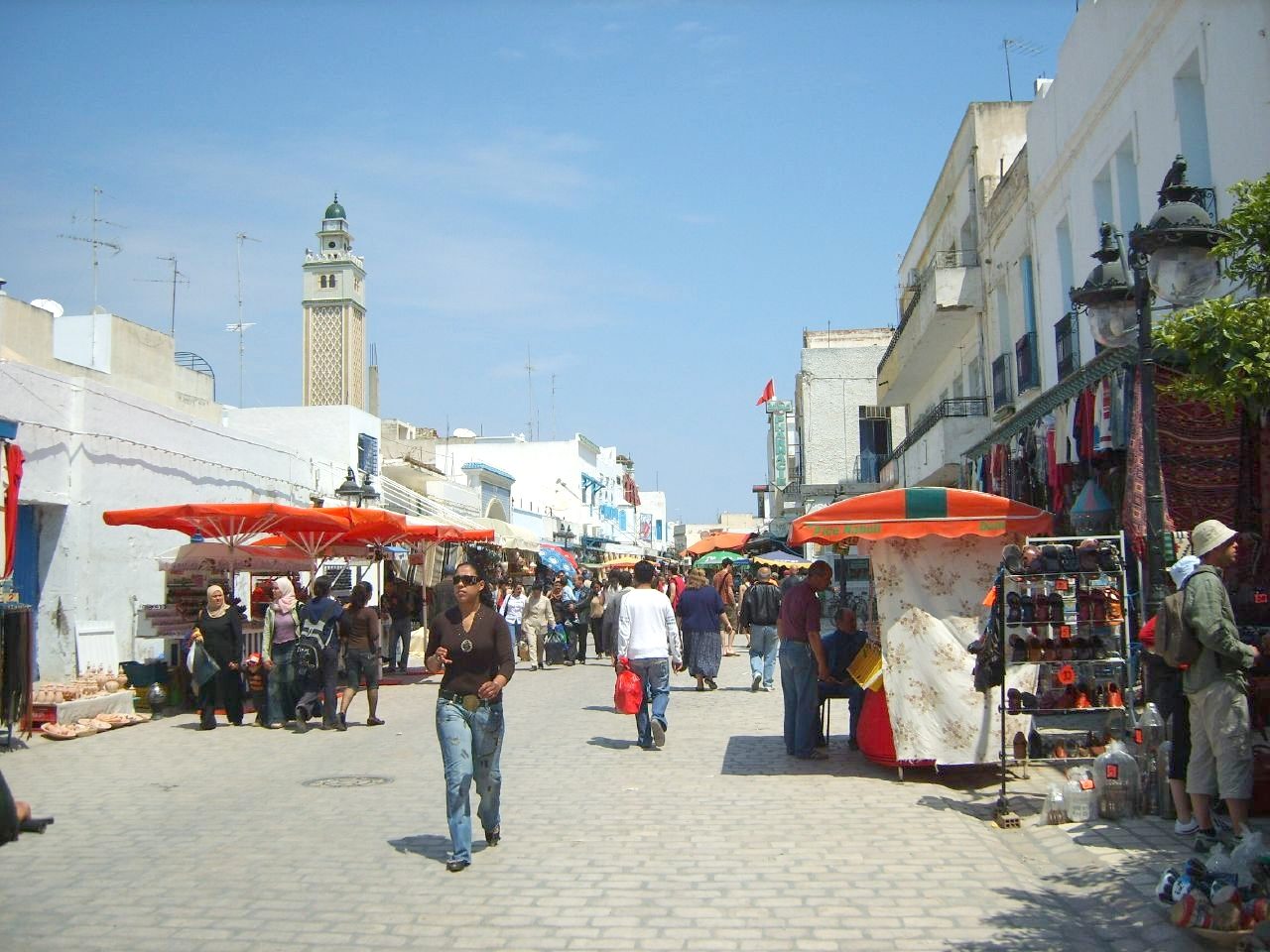
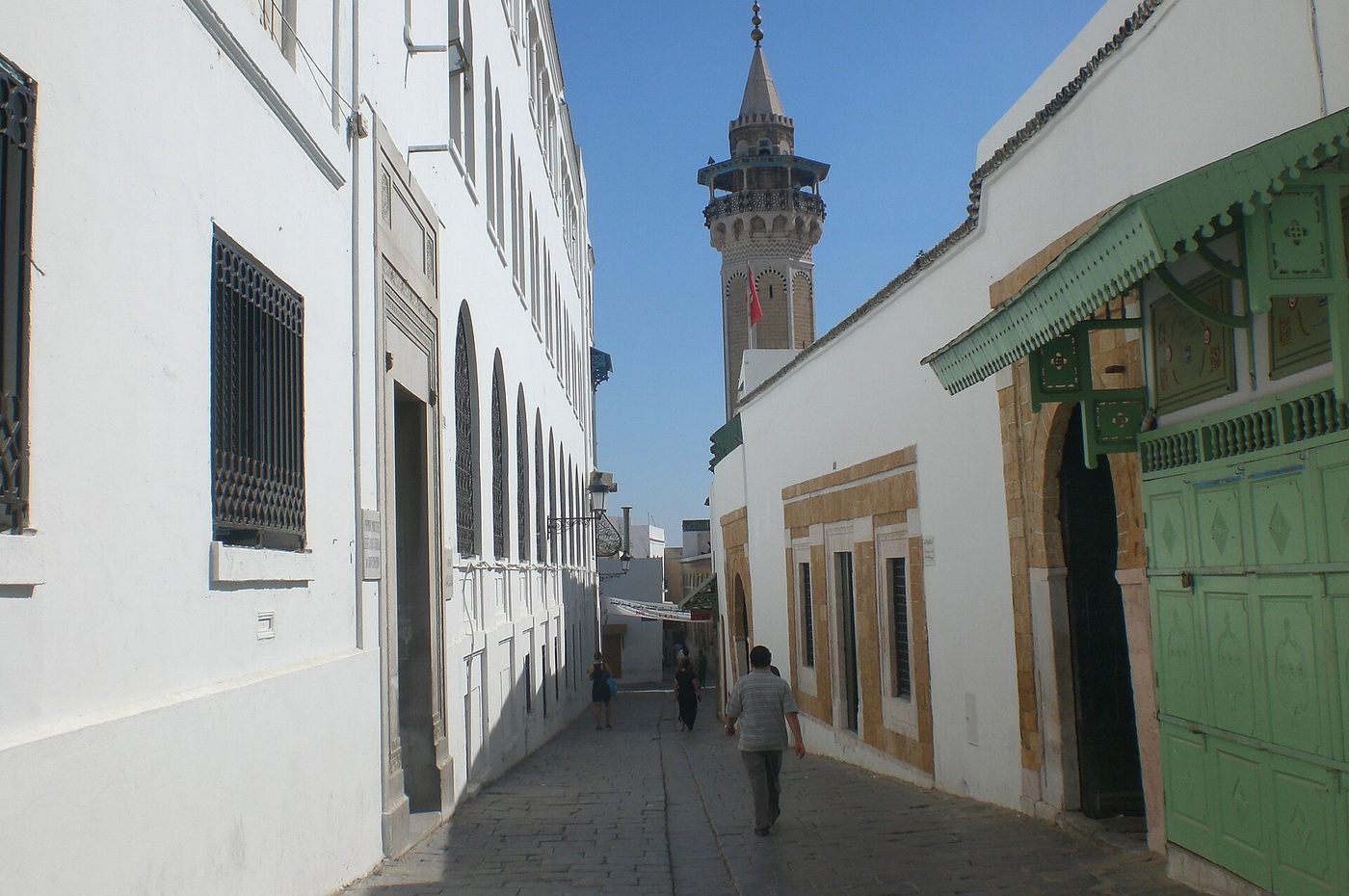
Hammamet’s medina is small — you can cross it in ten minutes — and that is precisely its charm. Founded in the fifteenth century on the site of a ninth-century fort, it is a proper lived-in quarter: washing strung between whitewashed walls, doors painted in blues and studded with black nail patterns, jasmine sellers threading machmoum garlands (the town’s emblem — Hammamet without jasmine would be Cornwall without pasties). The outer lanes nearest the gates are wall-to-wall souvenir stalls, and the hassle there is real if good-natured; push two streets deeper and it evaporates into silence. Entry is free, it never closes, and the morning light before 10am — before the day-trip coaches — is the best time to wander. Haggling etiquette: start around a third of the first price, smile throughout, and walk away once; the walk-away discount is genuine.
2. Walk the ramparts of the Kasbah

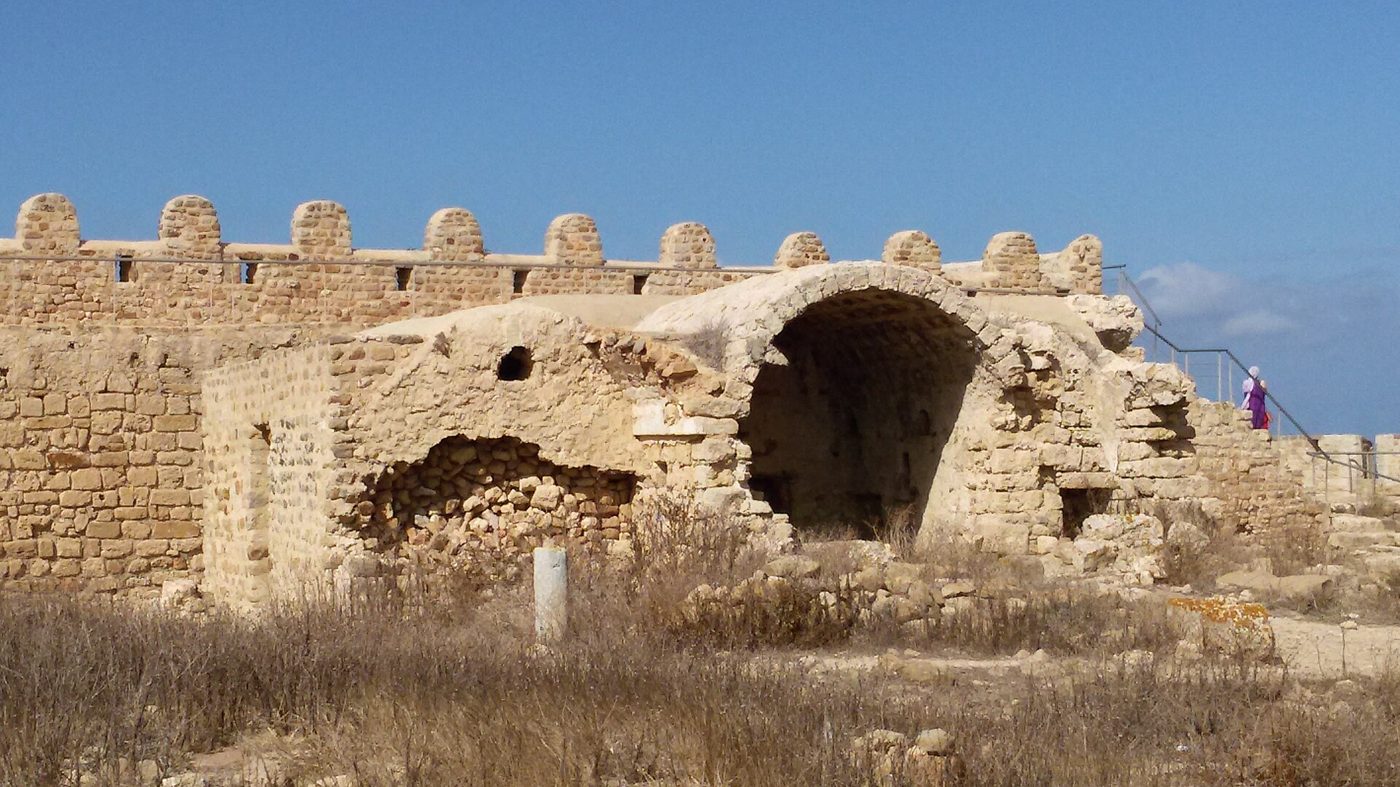
The Kasbah anchors the medina’s seaward corner — a squat, honey-coloured fort begun in the medieval era and given its present shape in the fifteenth century. Inside there is a small museum and a café, but the point is the rampart walk: the whole sweep of the bay from one battlement, the medina’s rooftops from another, fishing boats drawn up on the sand directly below. Entry was around 8 TND (£2) when I checked, open roughly 8.30am–6pm; local conservation groups have campaigned for years for restoration money, so expect the odd scaffold pole and do not expect interpretive panels. Twenty minutes is enough; the photographs last longer.
3. Find the Great Mosque and the medina’s prettiest doors

Deep in the medina, the Great Mosque’s tiled minaret rises over the souk lanes — non-Muslims cannot enter, but the exterior, the doorway and the surrounding alleys are the old town’s most photogenic corner. This is also where to play Hammamet’s best free game: door-spotting. The medina’s doors — arched, painted, nail-studded with fish and crescent motifs against the white — were Instagram material a century before Instagram; Paul Klee painted here in April 1914 and his Hammamet with Its Mosque now hangs in the Metropolitan Museum of Art in New York. He said the town made him a painter. You will leave with two hundred photographs and consider every one justified.
4. Follow the seafront path below the walls
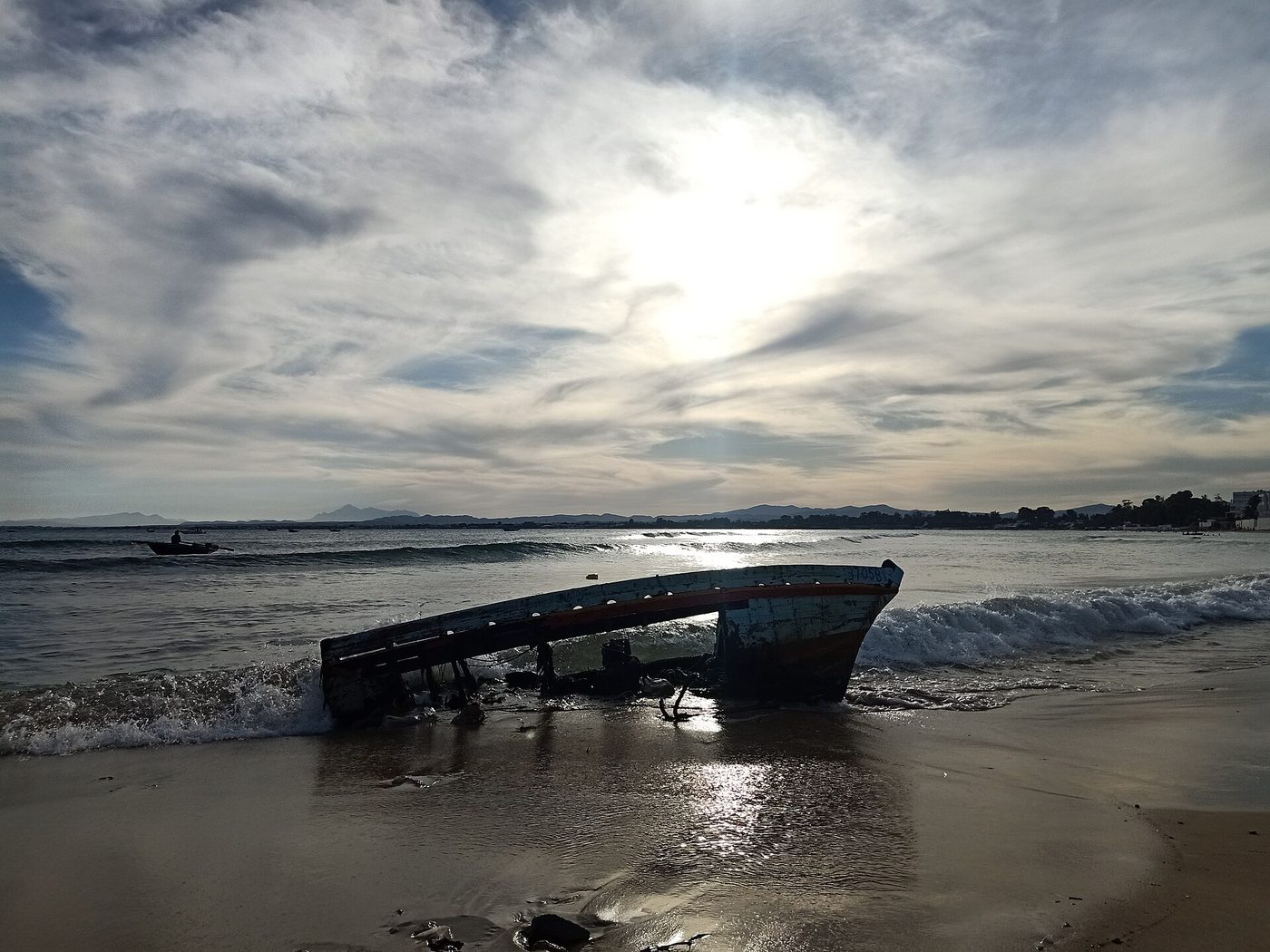
Where the medina meets the Mediterranean, a short path runs beneath the ramparts past beached wooden fishing boats, with the Kasbah above and café terraces tucked into the rocks. Café Sidi Bou Hdid, set against the wall itself, is the famous spot for a mint tea with pine nuts as the light goes gold — pay tourist prices (5–8 TND a glass) without complaint, because the table position is the product. This walk at 6pm, tea included, is my single favourite free-ish thing in Hammamet, and the moment the town most resembles the place Klee, Gide and half of 1930s bohemia fell for.
5. Spend a slow morning at Dar Sebastian

In the 1920s a Romanian aristocrat named George Sebastian built himself a white villa in the orange groves north of town and accidentally invented the Hammamet aesthetic: colonnaded pool, horseshoe arches, black-and-white marble, gardens of cypress and bougainvillea. The guest book ran to Jean Cocteau, André Gide, Greta Garbo and both George VI and Edward VIII; Frank Lloyd Wright reputedly called it the most beautiful house he knew; Rommel briefly requisitioned it in 1943. Tunisia bought it after independence and it is now the International Cultural Centre, open to visitors daily (roughly 8am–6pm outside event days) for a few dinars. Go mid-morning, walk the gardens, peer into the extraordinary sunken bath, and thank Sebastian for every white-and-blue hotel lobby you have ever liked.
6. Catch the Hammamet International Festival
Dar Sebastian’s grounds hold a 1,000-seat open-air amphitheatre, and every summer since 1964 it has staged the Hammamet International Festival — a July-to-August run of Tunisian and international music, theatre and dance under the stars. The 59th edition ran from 11 July to 13 August 2025; the 60th is expected across July and August 2026, with the programme usually announced in late June on festivaldehammamet.com. Tickets are cheap by UK standards, the crowd is local and dressed up, and a warm night of Arabic song in a seaside amphitheatre will outrank anything your hotel’s entertainment team has planned. If your dates align, go — it is the best evening out on the whole Cap Bon coast.
7. Poke around the Roman ruins of Pupput

Hammamet has its own Roman site, and almost nobody visits — which is either a warning or a recommendation depending on your taste. Pupput, squeezed between hotels on the road towards Yasmine, was a Roman colony from the late second century AD; what survives is a four-hectare park of house foundations, two bath complexes and a genuinely good collection of mosaics, including funerary mosaics mounted along the site walls. Entry is 5 TND (about £1.30), open 9am–5pm in summer (shorter hours mid-September to May). Be honest with yourself: if you are doing El Jem or Carthage this holiday, Pupput is a 30–40 minute completist’s stop. But for five dinars, ruins-to-yourself silence ten minutes from your sunbed is a fine way to spend the hottest hour of the afternoon.
The beach, the sea and the spa
8. Claim your patch of the great beach

Hammamet’s beach is the reason everything else exists: a ten-kilometre crescent of fine pale sand shelving so gently that you can wade out fifty metres and still touch bottom — which is why families with small children have been coming here since the 1960s. Two things the brochures skip. First, all Tunisian beaches are public by law; hotels run sunbed concessions on their frontage, but nobody can stop you walking the entire bay, and public-stretch loungers go for 5–15 TND a day. Second, quality varies sharply by zone: the sand below the medina is the most picturesque and the most crowded with local families in summer (with litter an occasional problem on the town end); the Nord/Mrezga stretch is the widest and best-kept; Yasmine’s frontage is groomed daily but backed by concrete. The sea hits 23–24°C in June, 26–28°C by late August, and stays swimmable well into October — for the month-by-month picture, see my full guide to the best time to visit Tunisia. One seasonal honesty note: like everywhere on this coast, some Augusts bring jellyfish blooms for a week or two; it varies year to year, and locals simply check which way the wind has been blowing.
9. Take a boat trip from the marina
Pirate-ship cruises — yes, with eye patches, foam swords and a swimming stop — sail daily in season from Yasmine’s marina, and gentler catamaran and fishing trips go from the same quays. Expect 60–120 TND (£15–30) per person for a half day depending on lunch and how hard you haggled at the kiosk, roughly half what the same trip costs booked through a hotel rep. It is unapologetic tourist theatre, the kids on board have the time of their lives, and the view back to the Kasbah from the water is the one angle of Hammamet you cannot get any other way.
10. Try the watersports menu
Every few hundred metres of hotel beach has its watersports shack: banana boats and ringos (around 20–30 TND for ten minutes), jet skis (typically 60–100 TND for fifteen to twenty minutes — agree the time and price before your feet leave the sand), parasailing over the bay, paddleboards by the hour. Standards are looser than at home: life jackets exist, paperwork mostly does not, and your travel insurance small print almost certainly excludes jet skis — check before rather than after. The shallow, waveless water that makes the beach perfect for toddlers also makes it forgiving for first-time paddleboarders; mornings are glassiest.
11. Sweat it out in a hammam or thalasso spa
The town is literally named for its baths — Hammamet comes from the Arabic for them — so skipping the steam feels rude. You have two routes. The local public hammams (every neighbourhood has one, men’s and women’s hours separate) cost a few dinars and deliver the real, sociable, scrubbed-raw experience. Or go the resort route: Hammamet is one of the Mediterranean’s thalassotherapy capitals, and big hotel spas — Bel Azur and its neighbours among them — sell seawater pools, gommage scrubs and massage packages from roughly 40–110+ TND (£10–28) a treatment, a fraction of UK spa prices. My advice: one proper local hammam for the story, one thalasso afternoon for the limbs, and you will board the flight home two years younger.
Yasmine Hammamet: the resort zone
12. Stroll Yasmine Hammamet’s marina at sunset

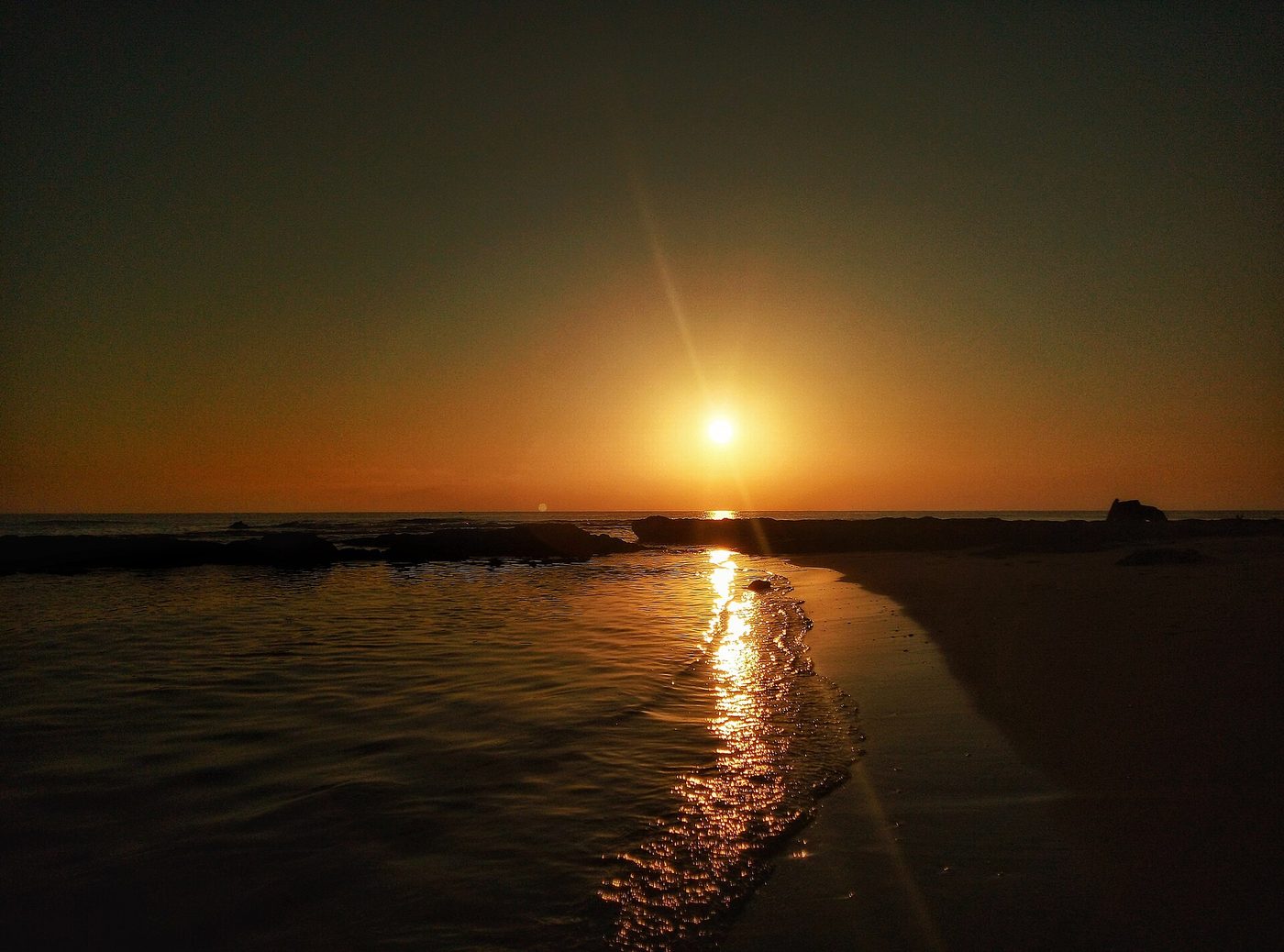
Whatever you think of purpose-built resorts, Yasmine’s marina earns its evening hour: 700-plus berths of yachts and gulets, a palm-lined quay of restaurants and ice-cream stands, and a long mole to walk out along as the sky pinks behind the masts. It is the social centre of the southern zone — Tunisian families promenading in their best, kids on rollerblades, the boat touts winding down for the day. Dinner on the quay costs more than in town (mains 25–45 TND) and the food is international-hotel-adjacent, but you are paying for the parade. If you are staying in Centre or Nord, this plus Carthage Land makes Yasmine a half-day visit rather than a base — which, between us, is the right amount of Yasmine.
13. Do Carthage Land and Aqua Land with the kids
Tunisia’s biggest theme park sits inside Yasmine’s “medina” complex: Carthage Land, a Punic-and-pirates park of coasters and dark rides, with the Aqua Land waterpark attached. Official 2025–26 season prices: 37 TND on the gate (33 TND online) for the main park, 52 TND (46 online) for the parks combined, family-of-four combo tickets at 208 TND gate / 179 TND online, free entry under 95cm in height; doors typically 10am–6pm. By Alton Towers standards it is small and the queues are mercifully short; by holiday-with-a-seven-year-old standards it is a guaranteed great day for around £13 a head. In high summer do the waterpark side first, before the slides’ surfaces heat up.
14. Judge the “new medina” for yourself
Medina Mediterranea — the walled souk-and-cafés complex by Carthage Land — was built in the 1990s as a sanitised medina experience for the resort zone, and it is exactly that: clean lanes, painted doors aged by set-dressers, shops at fixed-ish prices, the odd falconer posing for photos. Much of it can be wandered free; the themed attractions inside are ticketed through the Carthage Land operator. I am going to be straighter with you than the brochures: if you are mobile enough to reach the real medina ten kilometres north, go there instead — the difference is the difference between Venice and the Venetian in Vegas. But for families with buggies, mobility-limited travellers, or a low-effort souvenir hour before dinner, it does its job without a single hard sell, and that has its own appeal after a week of haggling.
15. Have a flutter and a late night in Yasmine
Hammamet’s nightlife is modest by Spanish-island standards — this is a family resort in a Muslim country, and most evenings end at hotel animation shows. The exceptions cluster in Yasmine: the Casino La Médina (open nightly from about 9pm into the small hours, with slot machines and table games — take your passport, leave the shorts), a handful of beach clubs and lounge bars along the marina, and summer pop-up parties at the bigger hotels. Local Celtia lager runs 5–8 TND in licensed venues; note that supermarkets do not sell alcohol on Fridays, and during Ramadan bars outside resort hotels go quiet (usefully, the entire summer 2026 season falls well clear — Ramadan 2027 begins around 8 February). Manage expectations and it is a pleasant night out; expect Ibiza and you will be in bed, puzzled, by eleven.
Active Hammamet and family days out
16. Play golf at Citrus or Yasmine
Hammamet is Tunisia’s golf capital: Citrus Golf Club’s two eighteen-hole courses (La Forêt and Les Oliviers) wind through eucalyptus and olive groves ten minutes inland, and Golf Yasmine adds another eighteen plus an academy nearer the southern zone. Green fees move with the seasons but budget roughly €60–90 for eighteen holes with high-season rates at the top of that band, plus around €25–30 for a buggy — roughly half the cost of a comparable round on the Algarve, on courses kept in genuinely good nick. Book tee times through your hotel or the club sites directly; summer afternoons are furnace-like, so locals play at first light and you should too.
17. Quad-bike the hills behind town
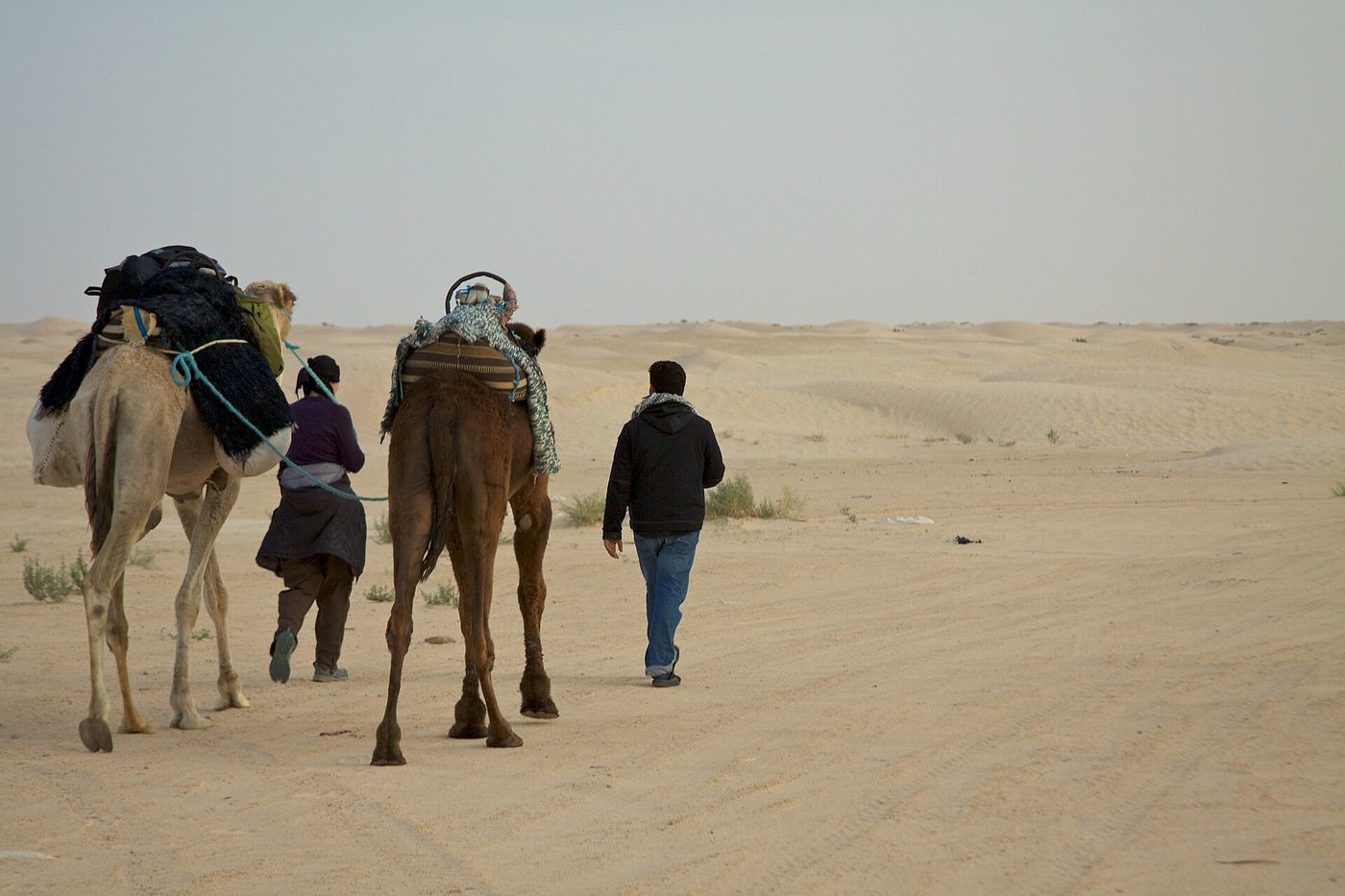
Behind the coast road the land climbs into dry, scrubby hills laced with farm tracks — which is exactly where the quad-bike outfits go. A two-hour guided circuit (typically £35–60 per person booked online, less negotiated locally) gets you dust, olive groves, hilltop views back over the whole bay, and usually a mint-tea stop at a berber-tent café. Camel-ride add-ons are widely sold and fine for a fifteen-minute novelty; if a proper desert camel trek is on your list, save it for the real Sahara — my country-wide guide to the 45 best things to do in Tunisia covers where that actually happens. Wear sunglasses, a buff and clothes you have stopped loving; the dust is total.
18. Meet the sea lions at Friguia Park
Half an hour south down the Sousse road at Bouficha, Friguia Park is a 36-hectare safari-ish zoo holding around 400 animals across some 60 species — lions, giraffes, elephants, flamingos — in enclosures that are large by regional standards, plus a sea-lion show (usually 11am and 4pm) and a Zulu dance spectacle. Entry is around 15 TND for adults, 10 for children. Two honesty notes. First, some excursion sellers still advertise a “dolphinarium” — that closed back in 2016 after a welfare controversy, and good riddance; sea lions are the marine act now. Second, if hand-on-heart zoo standards matter deeply to you, calibrate expectations: this is a decent African wildlife park, not Marwell. Children rate it the best non-beach day of the holiday with wearying consistency.
The day trips: Hammamet as a base
This is Hammamet’s quiet superpower. No other Tunisian resort puts so much within ninety minutes — and because the excursion coaches all leave from here, prices are the keenest in the country. Three trips stand above the rest.
19. Spend Friday at Nabeul’s market and pottery shops
Nabeul, ten kilometres up the coast (15 minutes and a few dinars by taxi or louage), is the governorate capital and Tunisia’s ceramics town — the glazed bowls, tiles and lemon-covered everything you have seen in every souvenir shop are made here. Friday is market day, when stalls swallow the town centre; go early (it winds down by lunchtime), skip the sad little “camel market” corner staged for the coaches, and head instead for the pottery workshops on the Tunis road where you can watch throwing and buy seconds at half boutique price. A genuinely good haul — a hand-painted serving bowl, a set of tiles — runs 20–80 TND with friendly haggling. Wednesdays and Saturdays work too for the shops; Friday is for the spectacle.
20. Drive the Cap Bon loop: Kelibia, Kerkouane, El Haouaria

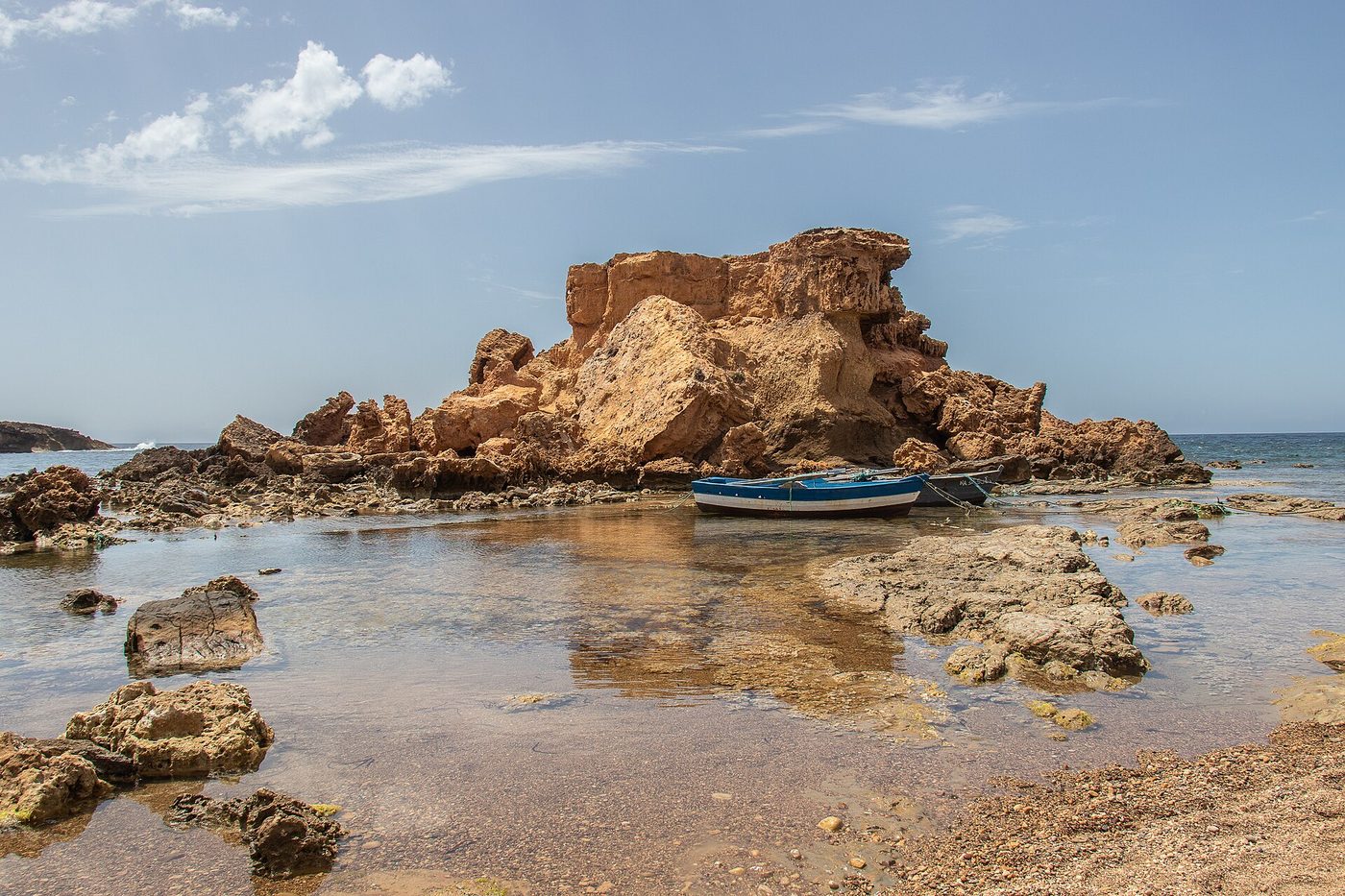
Rent a car for one day (or hire a taxi driver for around 150–250 TND) and loop the Cap Bon peninsula — the green, vine-and-citrus thumb of land pointing at Sicily, and the best day out on this coast. First stop Kelibia, an hour away: a working fishing port crowned by a Byzantine fortress (entry around 8 TND, open to 6pm in summer) with the whole strait below its walls, and beneath it Mansoura beach, a sweep of white sand and improbably clear turquoise that regularly embarrasses the famous beaches further south — sharp-eyed beach collectors should also see my ranking in the Tunisia highlights guide.

Twenty minutes on lies Kerkouane, UNESCO-listed since 1986 and unique on Earth: the only Punic town never rebuilt by Rome, abandoned in the third century BC and left alone. You walk streets Hannibal’s contemporaries laid out, past houses with their famous pink-plastered bathtubs still in situ — the Carthaginians were obsessive bathers, which after a Tunisian August you will understand. Entry 8 TND, open 9am–6pm in summer; the small museum closes Mondays. The site sits on a wildflower clifftop over a violently blue sea, and on a June weekday you may share it with nobody but the caretaker. Finish at El Haouaria at the cape’s tip, where Punic and Roman quarrymen cut Carthage’s building stone from sea caves (ticketed, around 8 TND; parts are fenced for safety), falcons ride the updrafts in spring, and the fish restaurants by the harbour do the day’s catch for the price of a UK starter.
21. Day-trip to Tunis, Carthage and Sidi Bou Said

The capital is only 65–75 kilometres away — an hour and a quarter up the motorway — which puts a world-class cultural day inside easy reach: the Bardo Museum‘s Roman mosaic collection (the finest anywhere), the sprawled ruins and Antonine Baths of Carthage, and the blue-and-white clifftop village of Sidi Bou Said, which is every bit as pretty as its postcards and best either before 10am or at golden hour. Since April 2026 a combined Bardo-plus-Carthage ticket costs 45 TND (about £11.50) — good value for what is effectively Tunisia’s Louvre and its Pompeii in one go. Organised coach trips from Hammamet run £35–45 including lunch; a private taxi for the day costs similar money split between four and lets you skip the carpet-shop “comfort stop”. If you only take one excursion of the holiday, this is it. (Honourable mentions for second place: the Roman aqueduct temple at Zaghouan under its mountain, El Jem’s colossal amphitheatre two hours south, and holy Kairouan — all coverable from Hammamet, all in the country guide.)
Getting to Hammamet (and getting around)
Flights. Your airport is Enfidha–Hammamet (NBE), 40-odd kilometres and about 40 minutes south. Summer 2026 has the strongest UK schedule yet: easyJet flies from London Gatwick and Luton plus a spread of regional airports (Bristol, Manchester, Liverpool, Newcastle, Edinburgh, Glasgow and Belfast among them), while TUI operates from a dozen UK bases including Gatwick, Stansted, Birmingham, East Midlands, Cardiff and Newcastle — flight time 3h15–3h45. Tunis-Carthage airport (about 70km, an hour and a quarter) is the scheduled-flight alternative with Tunisair and others, useful for city-break add-ons. There is no Jet2 service to Tunisia, whatever a search engine’s AI summary may tell you.
Airport to hotel. Package travellers get coach transfers included. Independently: an official metered taxi from Enfidha runs roughly 45–60 TND to most Hammamet hotels (there is a 4.5 TND airport pickup supplement, around 1 TND per big bag, and fares rise 50% between 9pm and 5am — relevant, since UK flights often land late); pre-booked private transfers cost €25–35 and are worth it after a night arrival.
Around town. Yellow metered taxis are everywhere and cheap — flagfall about 1 TND, roughly 0.6 TND per kilometre, 3–8 TND for hops within your zone, about 8 TND between Centre and Yasmine on the meter. The meter is the law and your friend; “it’s broken” means find the next cab. Louages — shared white minibuses that leave when full — connect Hammamet to Tunis (4–5 TND, about an hour), Nabeul, Sousse and beyond from two stations near the centre, and are the budget traveller’s secret weapon. There is technically a rail branch via Bir Bou Regba on the Tunis–Sousse main line, but services have been thin since a 2024 suspension and the rolling stock is tired; take the louage. Car hire makes sense for exactly one purpose here — the Cap Bon loop — and driving standards require a calm temperament.
Where to stay (the short version)
The zone decision above does nine-tenths of the work; after that it is budget and board basis. Headlines: Hammamet Centre for boutique dars and walkability, Nord/Mrezga for the big-name all-inclusives on the best sand, Yasmine for shiny five-stars, the marina and thalasso palaces. Hotel-grade tourist tax (12 TND per adult per night in four- and five-star places, 8 TND in three-star, 4 TND in two-star, first ten nights only, under-12s exempt) is collected by the hotel at check-in — have a little cash ready. The full country picture, including how Hammamet stacks against Sousse, Monastir and Djerba and which board basis actually pays, is in my dedicated guide to where to stay in Tunisia.
When to go
May, June, September and October are the sweet spots: 24–30°C days, a swimmable sea, and room to breathe on the sand. July and August deliver guaranteed 32–33°C heat, the warmest water (26–28°C) and peak everything — prices, crowds, and the annual possibility of a jellyfish week. Winter is mild (16–18°C), half the hotels doze, and the medina is at its most local; bring a jumper for evenings. School-holiday families: late August edges July — the sea is warmer and the worst heat usually breaks. The full month-by-month breakdown, festivals included, is in the best time to visit Tunisia guide.
Is Hammamet safe?
For the cautious — and after 2015, British travellers are entitled to be — the plain facts. The FCDO does not advise against travel to Hammamet, Nabeul or anywhere on Cap Bon. Its Tunisia advice (last updated 23 February 2026, current as this guide went to press) restricts only specific areas far from here: it advises against all travel to the Chaambi Mountains National Park and designated military operations zones, the militarised zone south of El Borma and Dhehiba, within 20km of most of the Tunisia-Libya border north of Dhehiba, and the town of Ben Guerdane and its immediate surrounds; and against all but essential travel to parts of the Algerian border region, Kasserine Governorate including Sbeitla, and areas within 75km of the Libyan border — all of them several hundred kilometres from your sunbed. A state of emergency has been in place nationally since 2015 and you will see routine armed police at resort entrances and tourist sites; most visitors find it reassuring rather than alarming. Day-to-day, your realistic concerns are sunburn, taxi meters and souk over-charging. The full picture — including what the FCDO actually says, sea-safety flags and solo-female notes — is in my honest assessment of whether Tunisia is safe right now; check gov.uk for the live version before you fly.
Is Hammamet worth visiting? My honest verdict
Yes — for the right traveller, and knowing which Hammamet you are buying. Choose it if you want a proper beach holiday with real culture within walking (or short-taxi) distance, the best day-trip menu in Tunisia, family infrastructure that actually works, and value that makes the Balearics look like daylight robbery. The medina-Kasbah-seafront ensemble is small but genuinely lovely; Dar Sebastian and the festival give it a soul most resort towns never had; Cap Bon is an under-visited delight.
Be more cautious if you crave walkable urban density (that is Tunis, not a resort), wild nightlife (Malia it is not), or untouched-Tunisia authenticity — Hammamet has been in the package brochures for sixty years and wears it: persistent (if good-humoured) souk hassle, restaurant menus engineered for tourists, and stretches of coast where one hotel ends only because the next begins. If your dream Tunisia is slower and softer, the island pace of Djerba may fit better. But as an all-rounder — flight time, cost, beach, culture, day trips, family-friendliness — Hammamet remains the most complete single base on the Tunisian coast, and in 2026 it is better value than it has been in years.
Things to do in Hammamet: your questions answered
Is there much to do in Hammamet?
More than its sun-and-sand reputation suggests: a walled fifteenth-century medina and seafront Kasbah, the Dar Sebastian villa and summer festival, Roman ruins at Pupput, a theme park and waterpark, golf, thalasso spas, boat trips — plus Nabeul, Cap Bon, Tunis and Carthage all within day-trip range. A week fills itself; two needs only mild planning. The genuinely thin spots are museums (one small one in the Kasbah) and nightlife — for everything else, the list of things to do in Hammamet runs deeper than any other Tunisian resort’s.
What is Hammamet most famous for?
Its beach — ten kilometres of fine, gently shelving sand — plus the prettiest medina-and-fort ensemble on this coast, jasmine (the town symbol, sold as machmoum garlands on every corner), thalassotherapy spas, and a 1930s bohemian past that drew Paul Klee, André Gide and Greta Garbo before the package jets arrived.
Which is better, Hammamet or Sousse?
Hammamet for the prettier old town, calmer atmosphere and the Cap Bon day trips; Sousse for a bigger, livelier city with a UNESCO medina, more urban buzz and marginally better rail links. Beaches are excellent in both. First-timers wanting a resort-shaped holiday usually prefer Hammamet; travellers wanting a city that happens to have a beach lean Sousse.
What is the difference between Hammamet and Yasmine Hammamet?
Hammamet is the real town, with the historic medina, Kasbah and local life. Yasmine Hammamet is a purpose-built resort zone ten kilometres south, opened around 2000: marina, big hotels, casino, theme park and a replica “medina”. They are a short taxi apart (about 8 TND on the meter) but feel like different countries. Sightseers should base in or near the centre; bubble-seekers will be happy in Yasmine.
Can you drink alcohol in Hammamet?
Yes — in hotel bars, licensed restaurants and beach clubs, where a local Celtia lager costs 5–8 TND (£1.30–2). The Magasin Général supermarket near the centre sells beer and Tunisian wine except on Fridays. Drinking in the street is a no, and outside resort areas café culture is dry.
Can you wear shorts and bikinis in Hammamet?
On the beach and in hotels, wear exactly what you would in Spain — bikinis included. In the medina, the souks and Nabeul market, shorts are fine but shoulders-covered and knee-length earns warmer service; for mosque exteriors and rural Cap Bon, dress a notch more modestly. Topless sunbathing happens by hotel pools but is officially frowned on.
How far is the airport from Hammamet?
Enfidha–Hammamet (NBE) is about 40km away — roughly 40 minutes by road. A metered taxi runs 45–60 TND plus small official supplements (more at night), pre-booked transfers €25–35, and package coaches are included. Tunis-Carthage airport is the alternative at about 70km, an hour and a quarter away.
How many days do you need in Hammamet?
Three days covers the town itself — medina, Kasbah, beach, Dar Sebastian, a Nabeul run. A week lets you add Cap Bon, the capital and proper pool time without rushing. Two weeks is a classic family booking and works because the day-trip menu is the deepest of any Tunisian resort.
Is the sea warm in Hammamet?
From late June to early October, comfortably: about 23–24°C in June, peaking at 26–28°C in August, still around 25°C in late September. May and October are bracing-but-doable (18–21°C); winter swimming is for the hardy and the photographed.
Is Hammamet cheap?
By UK standards, very. Once there: beers under £2, three-course tourist menus £8–12, taxis a pound or two per hop, top attractions £1–3, a family theme-park day around £50. The dinar is a closed currency, so change money on arrival (cards work in hotels and bigger restaurants), keep your exchange receipts, and spend or re-exchange dinars before you leave — you cannot take them home.
Plan the rest of your trip
Hammamet is the start. Every sight above — Yasmine in depth, the three zones hotel-by-hotel, the beaches stretch-by-stretch, Nabeul, the full Cap Bon road trip — gets its own detailed guide on this site through 2026. Until those land, the essentials: the country-wide 45 best things to do in Tunisia, my honest read on Tunisia safety, the month-by-month weather guide, where to stay in Tunisia — and if you are torn between bases, how the south’s island alternative compares in the Djerba guide. Bookmark us; Hammamet rewards the well-briefed.
Since this guide first went up, more of those have landed: how Hammamet fits a one- or two-week itinerary, the overnight run to the Sahara, the Star Wars locations further south, what to eat while you’re here, and the travel tips that smooth all of it.
Sources for this guide include the FCDO Tunisia travel advice (gov.uk, updated 23 February 2026), the AMVPPC (Tunisia’s national heritage agency) official site pages for Pupput and Kerkouane, the Festival International de Hammamet, official Carthage Land ticketing, Port Yasmine Hammamet, TravelHealthPro country guidance, and our own price checks at publication — including Tunisia’s national heritage-ticket revision of 1 April 2026. Hours and prices in Tunisia shift season to season; treat figures as “around” and re-check anything critical before you travel.
Photo credits
All images via Wikimedia Commons, used with thanks: Hammamet beach © Marc Ryckaert (MJJR) (CC BY 3.0); medina rooftops © Marc Ryckaert (MJJR) (CC BY 3.0); Kasbah ramparts © Noomen9 (CC BY-SA 4.0); Great Mosque minaret © E.Selmaj (CC BY-SA 3.0); Dar Sebastian © Habib M’henni (CC BY-SA 3.0); Pupput © Rais67 (public domain); Yasmine
Hammamet travel guides
- Yasmine Hammamet: what it is & what’s there
- Where to stay in Hammamet: the three zones
- Hammamet’s beaches: which stretch is best?
- Hammamet medina & kasbah guide
- The best day trips from Hammamet
- Is Hammamet worth visiting?
2 responses to “Hammamet Travel Guide: Things to Do & Area Tips (2026)”
[…] say the same thing: Mansoura, just outside Kelibia. It’s a name most British holidaymakers in Hammamet have never heard, and that’s exactly why we like it. Kelibia is a working fishing town on the […]
[…] Sousse or Hammamet, the Sahara means the famous two-day excursion — the one sold in every hotel lobby. It is a […]