Last updated: 6 June 2026
The first time I booked a Tunisia holiday, I spent three evenings going round in circles on the same question everyone asks: Hammamet or Sousse? Djerba or the mainland? The brochures made every resort sound identical — “golden sands, azure waters” — and none of them told me the things that actually decide a trip, like how far the hotel strip is from the airport, or whether you can walk anywhere in the evening.
So, where to stay in Tunisia? Most British visitors stay on the east coast: Hammamet and Yasmine Hammamet for first-timers and couples, Sousse and Port El Kantaoui for families and nightlife, Skanes–Monastir for short transfers, Mahdia for quiet sand, and the island of Djerba for the longest season. For a city break, base yourself in Tunis near Carthage and Sidi Bou Said.
That’s the one-paragraph answer. The rest of this guide is the detail I wish someone had given me: an honest area-by-area comparison written for people flying from the UK — mostly on TUI and easyJet into Enfidha, Monastir or Djerba — plus the all-inclusive sums, the named hotels worth your money, transfer times from every airport, and the quieter alternatives if a 400-room resort is your idea of purgatory. I’ve based it on my own stays across the country and double-checked every price and claim in June 2026.
Where to stay in Tunisia at a glance
| Area | Best for | Airport & transfer | The vibe |
|---|---|---|---|
| Hammamet (town & Yasmine) | First-timers, couples, gardens and spas | Enfidha, 35–45 min | Tunisia’s original resort; whitewashed, relaxed, jasmine-scented |
| Sousse & Port El Kantaoui | Families, nightlife, wanting a real city | Enfidha 30–45 min; Monastir 20–30 min | Big, lively, UNESCO medina next to beach hotels |
| Skanes–Monastir | Short transfers, value all-inclusives | Monastir, 5–15 min | A purpose-built hotel strip between airport and historic town |
| Mahdia | Peace, the best mainland sand, over-50s | Monastir, ~45 min; Enfidha ~1 hr 30 | Sleepy fishing town with a gorgeous beach and few crowds |
| Djerba | Longest season, calm water, repeat visitors | Djerba–Zarzis, 20–25 min | Low-rise island of whitewashed villages and long shallow beaches |
| Tunis, Carthage & Sidi Bou Said | City breaks, culture, food, boutique dars | Tunis–Carthage, 20–30 min | Capital energy, ancient ruins, blue-and-white clifftop village |
| Tozeur & the south | Sahara nights, film-set landscapes | Tozeur–Nefta (domestic/charter) | Date palms, dunes and some of North Africa’s coolest design hotels |
| Tabarka & the north | Diving, green scenery, escaping the crowds | Tunis–Carthage, ~2 hr 30 by road | Corkwood hills meet the “Coral Coast”; barely a tour bus in sight |

How to choose: start with the airport, not the hotel
Here’s the thing the booking sites never spell out. Tunisia’s package resorts cluster around three airports, and your flight usually decides your region before you’ve looked at a single hotel.
Enfidha–Hammamet (NBE) is the main holiday gateway, sitting conveniently between the two big resort regions. TUI flies in from a spread of UK airports and easyJet from London Gatwick and Luton plus a growing list of regional departures. Land here and you’re 35–45 minutes from Hammamet to the north or Sousse to the south.
Monastir (MIR) sits right on the doorstep of the Skanes hotel strip — some transfers are genuinely ten minutes — and is the closest airport to Mahdia. It sees fewer UK flights than Enfidha these days, so check what’s flying in your week before you set your heart on it.
Djerba–Zarzis (DJE) serves the island of Djerba, with direct TUI flights from the UK. No ferries, no long drives: you’re on your sun lounger within the hour.
Tunis–Carthage (TUN) is the capital’s airport and the scheduled-airline gateway rather than a charter hub — the one you want for a city break or an independent trip. One honest note: Jet2 does not currently fly to Tunisia at all, whatever old forum threads suggest, so your realistic options from the UK are TUI, easyJet and scheduled connections.
Package travellers: pick the region your airline serves best and you’ll save yourself a ninety-minute coach trawl past other people’s hotels. Independent travellers: Tunisia is compact, the louage (shared minibus) network is cheap, and the train line runs down the coast — you can realistically combine Tunis, Hammamet and Sousse in one trip. For ideas on filling that itinerary, my guide to the best things to do in Tunisia covers the whole country.
Hammamet & Yasmine Hammamet: the classic first-timer base
If I’m honest, Hammamet is where I’d send most first-time visitors, and it’s where the majority of British package holidays end up. It has been Tunisia’s resort town since the 1920s, when European artists and aristocrats built villas in its citrus groves, and it still feels softer and greener than anywhere else on the coast.
But “Hammamet” on a booking site means two quite different places, and it pays to know which one you’re getting.
Hammamet town and Hammamet Nord: character and walkability
The original town curls around a honey-coloured medina and a small 15th-century kasbah right on the sand — one of the few places in the Mediterranean where a medieval fort drops straight onto a swimming beach. Stay on this side and you can stroll to fish restaurants, the souk and the wonderful Villa Sebastian gardens rather than depending on taxis. Hotels here tend to be older and set in genuinely mature gardens.
The grand dame is The Sindbad, a five-star just along from the kasbah with decades of repeat British guests. For pure indulgence, La Badira — an adults-only five-star and a member of The Leading Hotels of the World — is, for my money, the best hotel on the Tunisian mainland: all white minimalism, a Clarins spa and a clifftop pool that makes you forget the buffet resorts exist. Expect roughly 400–1,000 dinars (about £100–£250) a night depending on season, which would barely get you a Travelodge with a sea glimpse in Spain.
Yasmine Hammamet: the purpose-built strip
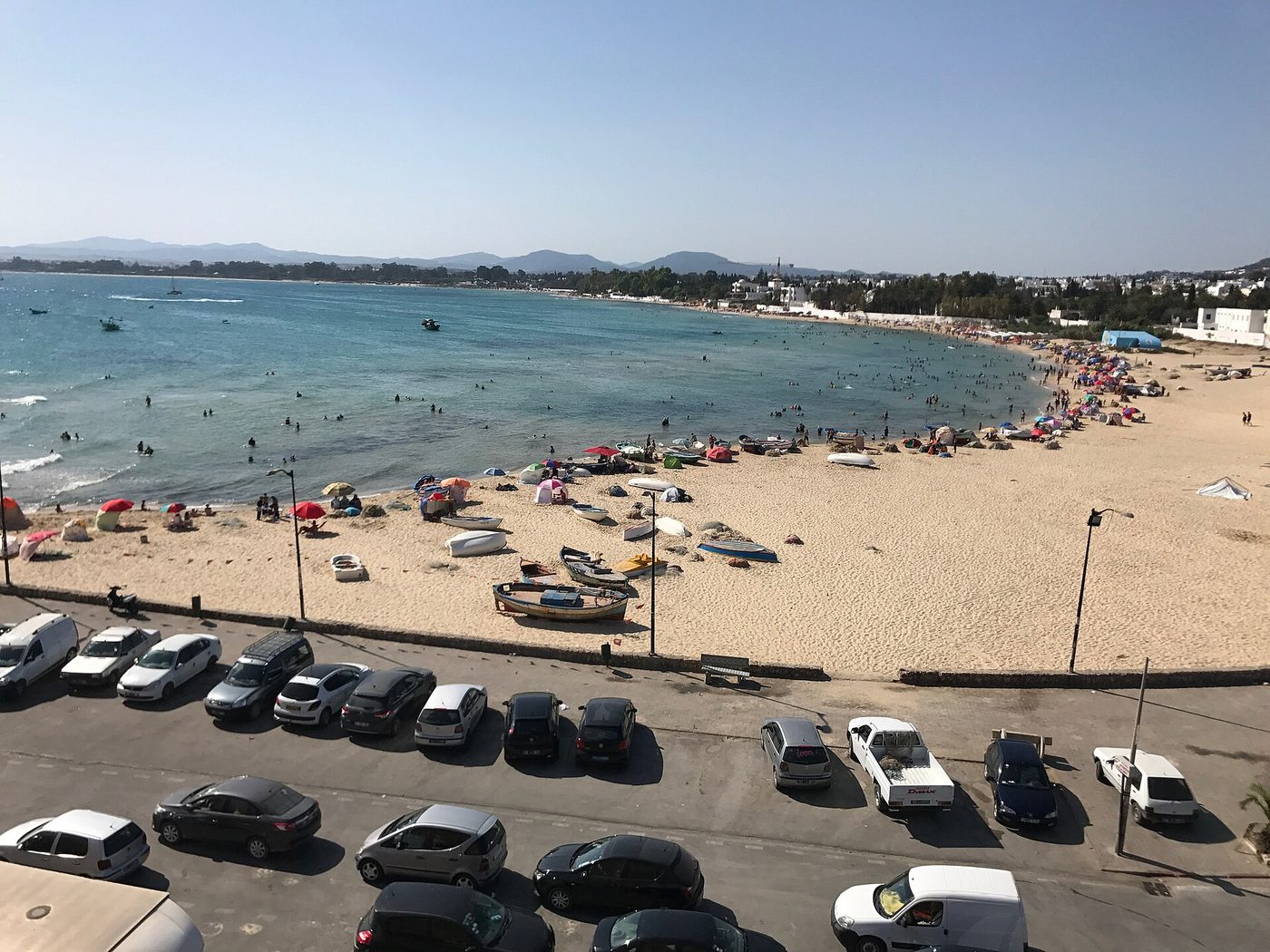
Twenty minutes south, Yasmine Hammamet is a different animal: a master-planned resort zone built in the 1990s around Tunisia’s biggest marina, with a long paved corniche, a faux-medina shopping quarter, and a wall of four- and five-star all-inclusives shoulder to shoulder along the sand. It’s where the bulk of TUI and easyJet holidays packages land you.
Is it “real Tunisia”? Not remotely. Is it a comfortable, easy week in the sun with a toddler or a book? Absolutely. The beach is wide and gently shelving, the marina is pleasant for an evening stroll, and you’re 15 minutes by taxi (around 10–15 dinars, £2.50–£4) from the real town when you want it.
Reliable names here include the Iberostar Waves Averroes, a solid four-star family all-inclusive, and the Hasdrubal Thalassa & Spa, a five-star whose 5,000 m² seawater spa is among the largest in Africa — thalassotherapy is a genuine Tunisian speciality and noticeably cheaper than the same treatments in France. Couples who want quiet without the adults-only price tag should look at the southern end of the strip, which is calmer than the centre.


Sousse & Port El Kantaoui: beach holiday with a city attached
Sousse is the choice for anyone who gets restless after three days on a sun lounger. It’s Tunisia’s third city — a proper, working place of about a quarter of a million people — and its UNESCO-listed medina, with the fortified Ribat watchtower you can climb for harbour views, sits ten minutes’ walk from the beachfront hotels along Boujaffar. No other Tunisian resort lets you move between buffet breakfast and thousand-year-old alleyways quite so casually.
The flip side: central Sousse is noisier, scruffier and more insistent than Hammamet. The hassle in the medina is good-natured but constant, and the in-town beach gets very busy with locals in August. I happen to like that energy; if you don’t, this is the wrong base.
Sousse city: value and atmosphere
The beachfront strip north of the centre is where Tunisia’s famous-value all-inclusives live, including the long-serving Marhaba family of hotels that British tour operators have sold for decades — dependable three- and four-star packages that regularly go for under £600 a week including flights in low season. The five-star Mövenpick Resort & Marine Spa is the smartest in-town address, right on Boujaffar beach and a short walk from the medina.
Port El Kantaoui: the manicured marina option
Ten kilometres north, Port El Kantaoui was Tunisia’s first purpose-built resort (1979), designed as a whitewashed “Andalusian” village around a 340-berth marina, with a golf course behind. It’s cleaner, calmer and prettier than Sousse proper — and correspondingly more sanitised. Families with younger children tend to prefer it; the gently shelving beach is one of the safest on this coast, and the marina restaurants make an easy evening out. The five-star Iberostar Selection Diar El Andalous is the benchmark hotel here, with a serious thalasso centre and immaculate gardens.
My rule of thumb: under-10s or a quiet week, El Kantaoui; teenagers, nightlife or a tight budget, Sousse itself.

Skanes–Monastir: shortest transfers in Tunisia
Monastir‘s hotel zone, Skanes, runs along the palm-lined coast between the airport and the town — which means transfers so short that some guests are checking in 15 minutes after the seatbelt signs go off. After a 6am start from Manchester, do not underestimate how good that feels.
Skanes itself is a strip rather than a place: hotels, beach, a road, and not much to walk to. But Monastir town, ten minutes away, is a gem most package tourists never properly explore — its seafront Ribat (a fortified monastery, and a Monty Python’s Life of Brian filming location) is the most atmospheric building on this coast, and the marina below it does a good line in grilled fish. Hotels here skew three- and four-star and family-friendly; the One Resort Aqua Park & Spa, five minutes from the airport with its own slides, is the typical — and typically excellent-value — package pick.
Choose Skanes–Monastir if your priorities are price, pool time and minimal faff. Choose elsewhere if you want strolling distance to restaurants and life outside the hotel gates.
Mahdia: the quiet one (and the best sand on the mainland)
Mahdia is what Hammamet was 40 years ago. It’s a small fishing town on a narrow peninsula an hour or so south of Monastir airport, with a working weaving tradition, an unhurried medina, and — I’ll say it plainly — the finest stretch of sand on the Tunisian mainland: pale, powdery and backed by a modest line of hotels rather than a wall of them.
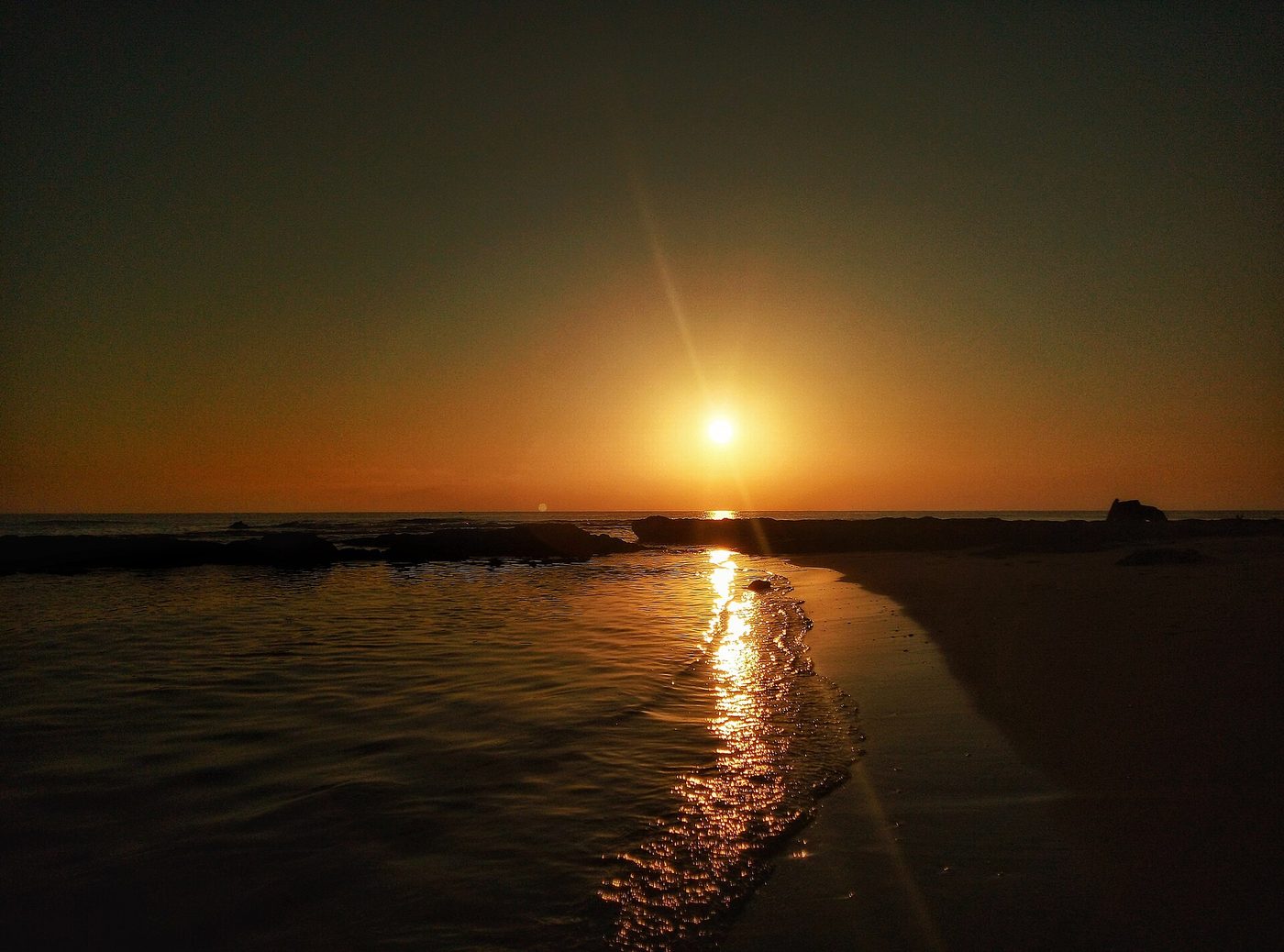
There’s no strip, no clubs, no parasailing tout every fifty metres. Evenings mean the cafés around the Skifa el Kahla gate and the extraordinary cemetery-fringed point where the old Fatimid port glows at sunset. It suits couples, over-50s, and anyone on a second or third Tunisia trip who wants the beach without the circus. The trade-offs are a longer transfer (about 45 minutes from Monastir, closer to 1 hour 30 from Enfidha) and a smaller hotel choice — mostly solid four-stars with a couple of five-star thalasso houses.
Djerba: the island with the longest season
Djerba is my answer to two specific questions. First: where should you go outside high summer? The island sits far enough south that it’s reliably the warmest place in Tunisia — you can swim comfortably into early November, a month after the Hammamet sea has turned brisk, and it’s the obvious pick for May or October sun. (I’ve broken down the temperatures month by month in my guide to the best time to visit Tunisia.) Second: where do repeat visitors go? Djerba. People get oddly loyal to this island, and after a few visits I understand why.
It’s flat, low-rise and whitewashed, planted with olives and palms, and culturally distinct from the mainland — home to one of the oldest Jewish communities in the world at the El Ghriba synagogue, Berber villages, and the remarkable Djerbahood street-art quarter in Erriadh, where artists from 30-odd countries have painted an entire village.
The Zone Touristique: Sidi Mahres beach
Most hotels line the island’s north-east shore between Houmt Souk and Midoun, along the long, shallow, lagoon-calm sweep of Sidi Mahres beach — about 20–25 minutes from the airport. This is flamingo-and-kitesurf country: the water stays waist-deep forever, which small children and nervous swimmers love. The Radisson Blu Palace Resort & Thalasso is the polished five-star choice; the adults-only TUI BLUE Palm Beach Palace is the couples’ favourite on the TUI programme; and the four-star Royal Karthago down at Aghir delivers the classic big-pool all-inclusive week at a friendly price.
Houmt Souk and the villages: the other Djerba
The island’s capital, Houmt Souk, is a proper market town of whitewashed funduqs (old merchants’ inns), fish auctions and unhurried café squares. Stay here — or better, in a converted village house like the lovely Dar Dhiafa in Erriadh, fourteen rooms knitted out of four old houses around two small pools — and you get a completely different, slower Djerba, with the beaches a short taxi ride away.

Tunis, Carthage & Sidi Bou Said: the city break
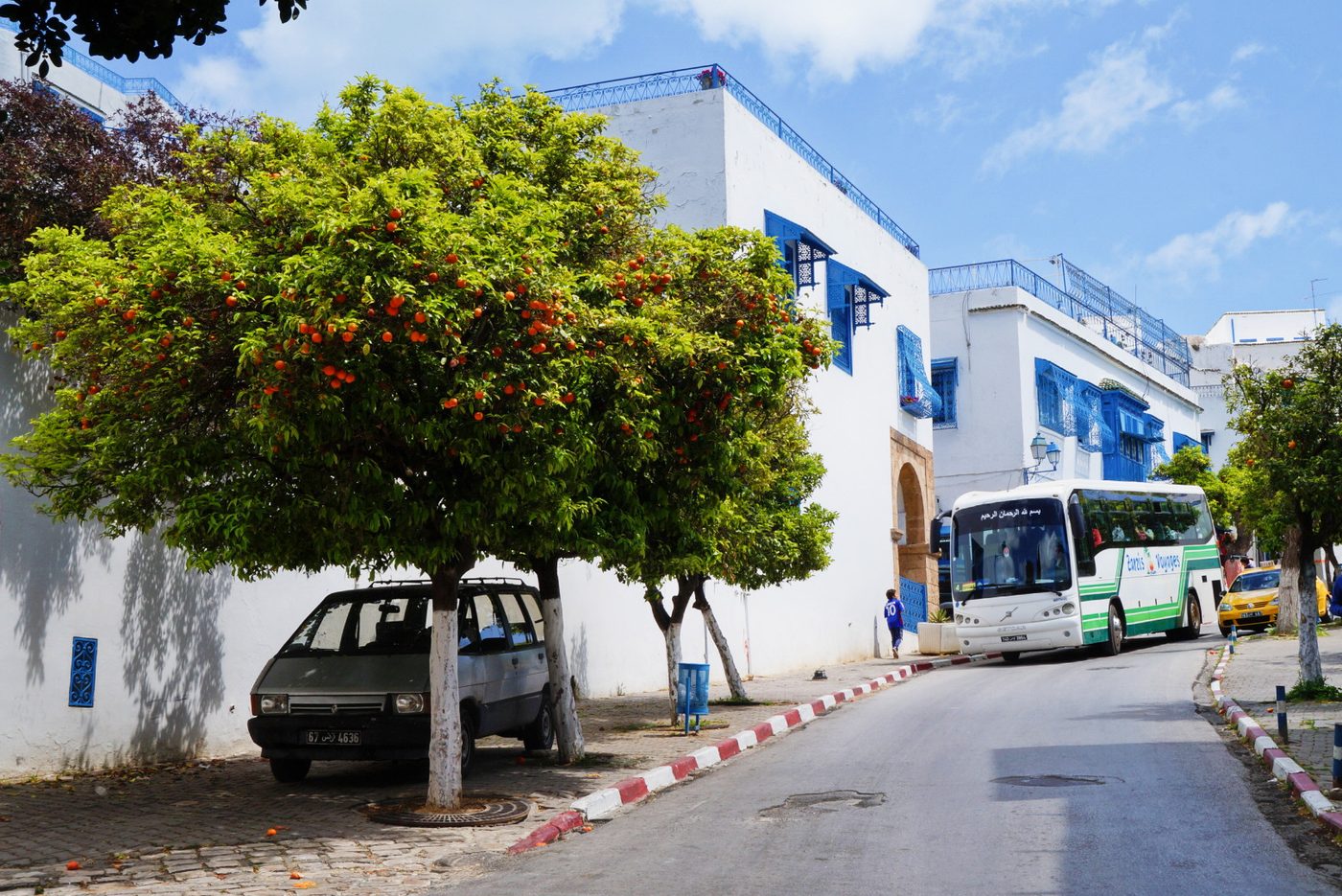
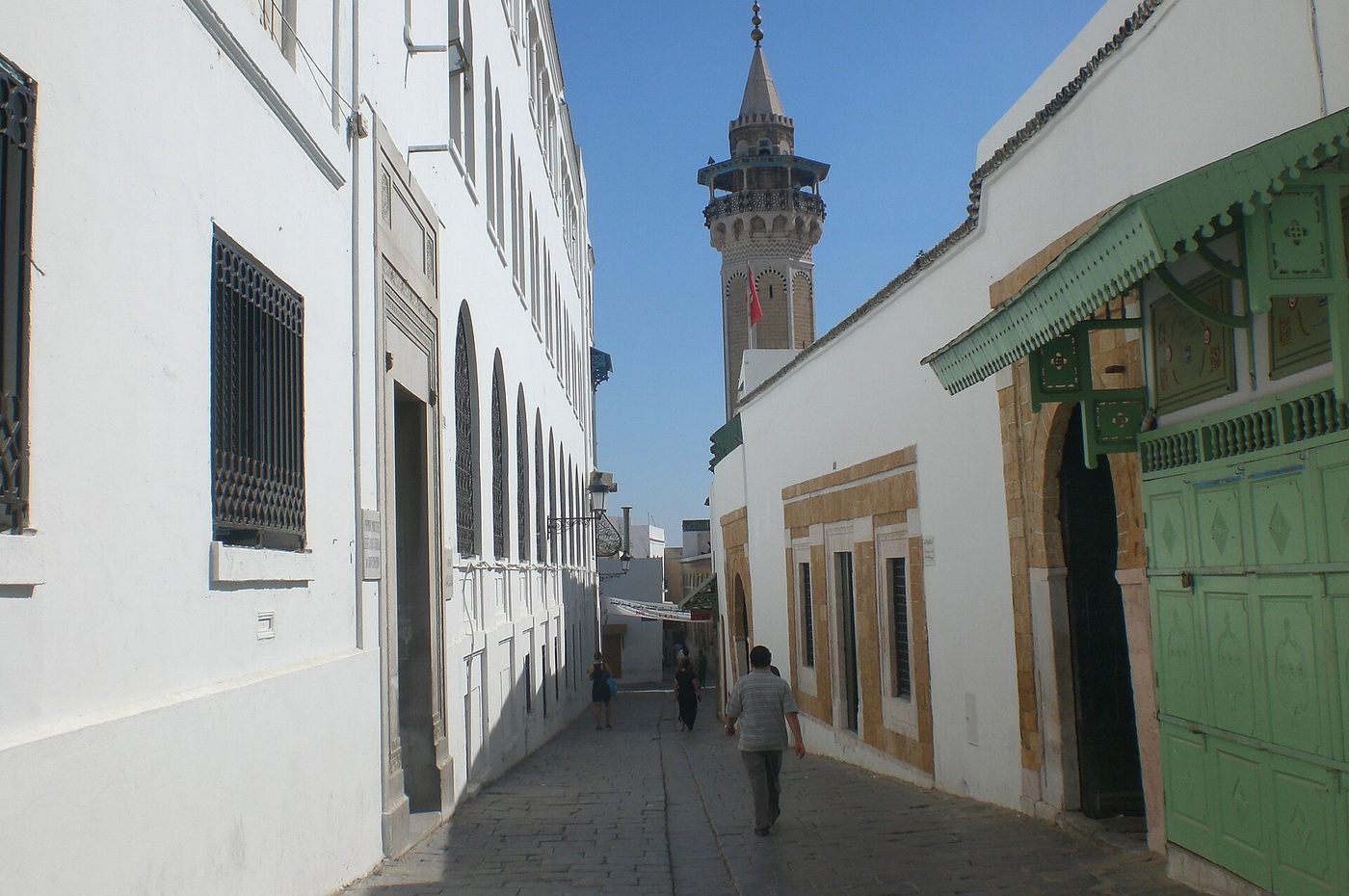
Nobody flies to Tunisia purely for a city break — and that’s exactly why you should consider it. Tunis gives you a UNESCO-listed medina of 700-odd monuments, the scattered seaside ruins of ancient Carthage, the Bardo’s world-class Roman mosaics and the absurdly photogenic blue-and-white village of Sidi Bou Said, all within half an hour of each other, for a fraction of what a comparable weekend in Rome costs.
Where you sleep shapes the trip, and there are three distinct choices.
The medina: stay in a dar
A dar is a traditional courtyard mansion, and a handful in the Tunis medina have been converted into intimate guesthouses — my favourite way to stay in the capital. Dar Ben Gacem, a seven-room 17th-century house run as a social enterprise, is the standard-bearer: breakfast under the citrus tree, rooftop views over the minarets, and the souks on your doorstep before the day-trippers arrive. Around 300–350 dinars (£75–£90) a night, which strikes me as one of the great accommodation bargains of the Mediterranean.
Sidi Bou Said and Gammarth: coast and class
Clifftop Sidi Bou Said has a few exquisite small hotels — La Villa Bleue, thirteen sea-facing rooms wrapped around a pool, is the romantic splurge — while the beach suburb of Gammarth just beyond holds the capital’s two international heavyweights: The Residence Tunis, all colonnaded calm with a golf course and celebrated spa, and the Four Seasons Hotel Tunis. Stay out here and you’re on the sand with Carthage between you and the city — a genuinely good compromise if you want ruins by day and resort comfort by night.

Tozeur & the south: a night (or three) in the Sahara
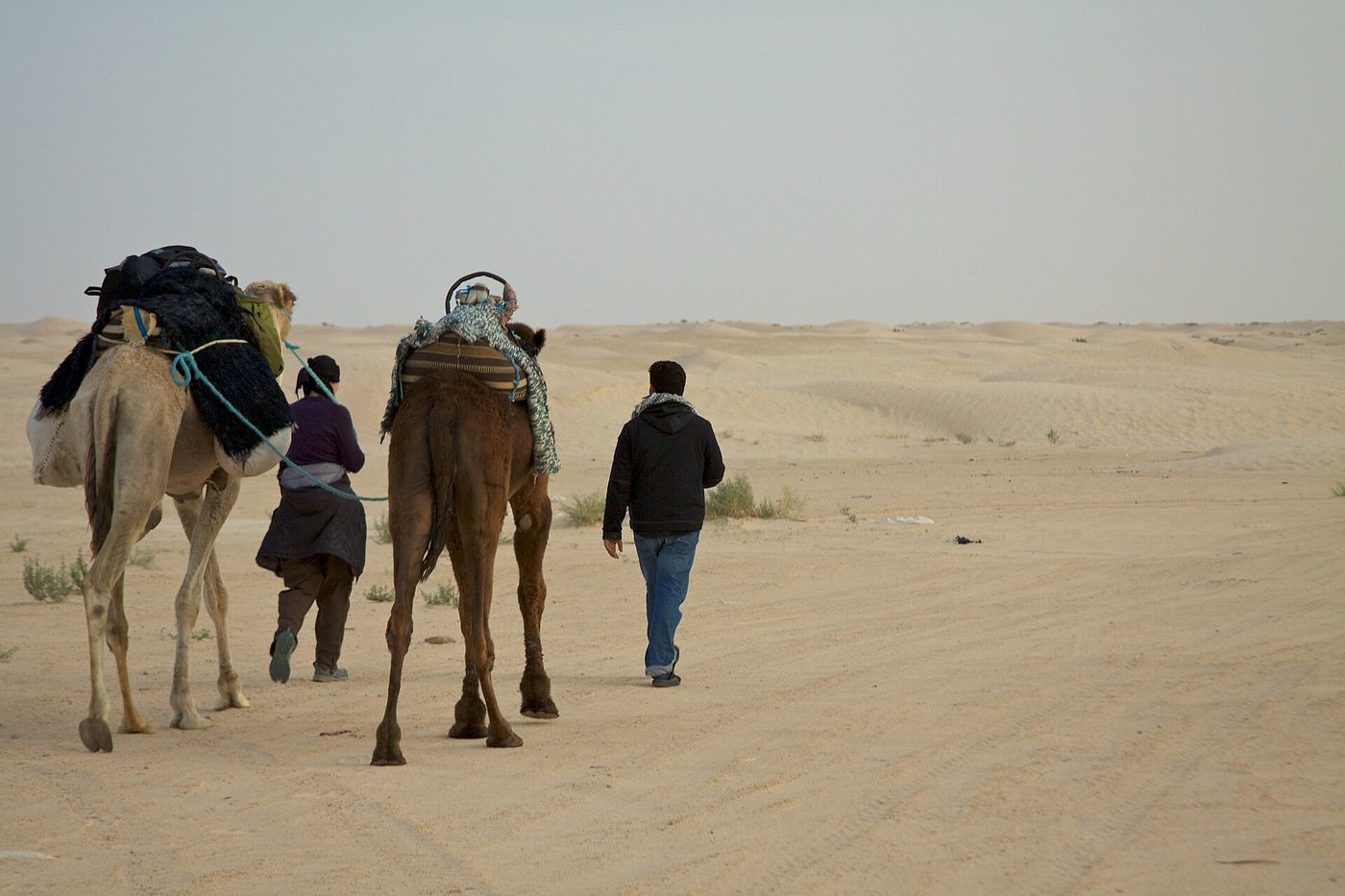
The desert south is not a beach base — it’s a different holiday altogether, and most people bolt it onto a coastal stay as a two- or three-night side trip. The oasis town of Tozeur, with its brickwork old quarter and quarter-million date palms, is the comfortable gateway, and it has quietly acquired some of the most interesting hotels in North Africa.
The headline act is The Mora Sahara Tozeur — the desert palace formerly known as the Anantara, rebranded in late 2025 — with 93 rooms and villas looking out over dunes that played a backdrop for Star Wars and The English Patient. In the neighbouring oasis of Nefta, Dar Hi is the design-world’s pick: an eco-lodge of raised pisé cubes above the palmeraie, with a hammam and date-grove pool. Neither is cheap by Tunisian standards — think 800–1,300 dinars (roughly £200–£330) a night at The Mora — but both cost a fraction of an equivalent Moroccan or Emirati desert lodge.
One practical note: check how you’ll get there before you book. The drive from the coastal resorts is long (five to six hours from Sousse), domestic flights are limited, and the romantic Lézard Rouge tourist train through the Selja gorge has been suspended on and off for years — don’t plan a trip around it without confirming it’s actually running.
Tabarka & Kerkennah: for people who hate resorts
Two wildcard answers for the “somewhere with no tour buses” crowd. Tabarka, up in the green north-west near the Algerian border crossing at Babouch, fronts the so-called Coral Coast — the best scuba diving in the country across some 20 sites — beneath cork-oak mountains that feel more Corsica than North Africa. The Kerkennah Islands, a flat, palm-scattered archipelago an hour and a quarter by ferry from Sfax, are about as far from Yasmine Hammamet as Tunisian tourism gets: octopus boats, salt-flat horizons, a handful of simple hotels and absolutely nothing to do, gloriously. Neither suits a first trip; both reward a second.
All-inclusive in Tunisia: how the sums actually work
Tunisia is one of the last genuinely cheap all-inclusive destinations in the Mediterranean, and it’s worth understanding why — and when AI is and isn’t the right call.
The headline numbers, as of June 2026: seven-night all-inclusive packages from the UK start from roughly £450–£600 per person in the shoulder months, rising to around £680–£830+ in the school summer holidays. Booked direct, a decent four-star all-inclusive runs about 280–360 dinars (£70–£90) per room per night. Always treat exact prices as moving targets — but the gap to Spain or Greece (often £300+ more for an equivalent week) has held for years.
The closed-currency wrinkle
Here’s the quirk that makes all-inclusive unusually rational in Tunisia: the dinar is a closed currency. You cannot buy it before you travel, you cannot legally take it in or out of the country, and you’ll change money at the airport or use ATMs once you land (around 3.9 dinars to the pound at the time of writing). Most people consequently carry less cash than they would elsewhere — and an AI package means your big costs are settled in sterling before you fly. Just budget actual dinars for the bits AI never covers: taxis, souk shopping, tips (small notes, given often, go a long way) and the hotel tourist tax.
The tourist tax nobody mentions
Tunisia charges a per-night hotel tax, paid locally in dinars at checkout: currently 12 dinars (about £3) per adult per night in four- and five-star hotels, 8 dinars in three-stars and 4 dinars in two-stars, capped at the first ten nights, with under-12s exempt. A couple on a week in a four-star should set aside roughly 168 dinars (£43). It’s not included in most package prices, and reception will want it in cash — the number one “surprise” complaint I hear from first-timers.
What all-inclusive really gets you (the drinks question)
Yes, alcohol is served freely in resort hotels — this surprises people. Standard AI packages include local drinks: Celtia lager (on draught in hotels it’s typically served at a slightly lower strength than the bottled version), perfectly drinkable Tunisian wines like Magon, and local spirits, with international brands chargeable. Outside the hotels, alcohol is limited to licensed restaurants and bars in the tourist zones, so the resorts genuinely are where the drinking happens.
A word about the stars
Tunisian star ratings run generous — the long-standing local joke is that you should knock one star off to calibrate against UK expectations. A well-run Tunisian four-star is a comfortable three-and-a-half by Spanish standards: the difference shows in décor wear and buffet repetition rather than cleanliness or friendliness. The five-stars I’ve named in this guide are the real thing; below that, read recent reviews and price accordingly. It’s also why I’d rarely book Tunisian self-catering — the savings are minimal and eating out, at 25–50 dinars (£6–£13) for a generous restaurant meal, is so cheap that half-board plus lunches out often beats AI for foodies.
| Board basis | Best for | The honest trade-off |
|---|---|---|
| All-inclusive | Families, budget certainty, pool-centric weeks | Buffet fatigue by day five; you’ll barely leave the hotel |
| Half-board | Day-trippers and foodies | Lunches out are cheap; you keep evenings flexible — usually the sweet spot |
| B&B / dar stays | Couples, culture trips, Tunis & Djerba villages | You’ll spend more time (happily) finding dinner |
Where to stay in Tunisia by traveller type
Families with young children
Port El Kantaoui or Djerba’s Sidi Mahres beach — both have shallow, calm water and short walks from room to sand. Skanes–Monastir wins if you dread the transfer more than anything else. Pick a hotel with a proper kids’ pool complex; the One Resort Aqua Park and Royal Karthago models are exactly what wet-weather-proofed British parents hope for.
Couples and honeymooners
La Badira in Hammamet for grown-up luxury; TUI BLUE Palm Beach Palace on Djerba for adults-only all-inclusive ease; La Villa Bleue in Sidi Bou Said for the romantic boutique weekend. Mahdia is the budget-friendly quiet option.
Over-50s and slow travellers
Mahdia and Hammamet town, no contest — walkable, gentle, garden-rich. Add a thalassotherapy hotel (Hasdrubal in Yasmine Hammamet, or Djerba’s spa five-stars); multi-day seawater cure programmes here cost less than a single day at many European spas.
Nightlife and groups
Central Sousse, full stop — the bars and clubs around Boujaffar are the liveliest in the country. Yasmine Hammamet’s marina strip is the calmer second choice.
Independent and culture-first travellers
Base in a Tunis medina dar, add Djerba’s Houmt Souk or a Tozeur desert night, and skip the resort zones entirely. The louage network and the coastal train line will get you everywhere for pocket change.

Where to stay in Tunisia by month
Area and season interact more in Tunisia than people expect — the country runs 800 km north to south, and in October that’s the difference between a jumper and a swim. The short version: the sea is comfortably swimmable from June to October on the main coast, and into November on Djerba; July and August are fiercely hot everywhere; the desert south is a winter destination. The full month-by-month picture lives in my best time to visit Tunisia guide, but here’s how it bears on where you should base yourself.
| When | Best base | Why |
|---|---|---|
| April–May | Tunis & the north; Djerba for early sun | Wildflowers and ruins weather; main-coast sea still brisk (19–20°C), Djerba warmer |
| June | Anywhere on the coast | The sweet spot: hot, dry, sea warmed up, prices below peak |
| July–August | Hammamet, Sousse, Djerba beachfronts | Peak heat (mid-30s°C); you want the sea breeze, a pool and air-con — skip city sightseeing and the desert |
| September | Everywhere; my favourite month | Sea at its warmest (26–28°C), crowds thinning, summer prices easing |
| October | Djerba first, Sousse/Hammamet early in the month | Djerba stays reliably swimmable; mainland evenings turn cool |
| November–March | Tunis city breaks; Tozeur & the Sahara | Mild, sometimes wet coast; perfect desert temperatures — this is when the south shines |
One seasonal footnote: during Ramadan (which fell in February–March in 2026, moving about 11 days earlier each year) resort hotels run essentially as normal, but life outside the tourist zones slows by day and many town restaurants close until sunset. It’s a fascinating time to visit — just not the month for a foodie city break.
Airports & transfer times: the practical map
Transfer misery is the most avoidable mistake in Tunisian holiday planning, so here are the real numbers — private taxi or pre-booked transfer times in normal traffic. Coach transfers that stop at six hotels can take double; if there are three or more of you, a pre-booked private car often costs barely more than the coach seats.
| Route | Time | Typical taxi/transfer cost |
|---|---|---|
| Enfidha → Hammamet / Yasmine Hammamet | 35–45 min | ~70–90 TND (£18–£23) |
| Enfidha → Port El Kantaoui | 30–40 min | ~70–90 TND (£18–£23) |
| Enfidha → Sousse centre | 35–45 min | ~80–100 TND (£20–£26) |
| Enfidha → Skanes–Monastir | 50–70 min | ~100–120 TND (£26–£31) |
| Enfidha → Mahdia | ~1 hr 30 | ~130–160 TND (£33–£41) |
| Monastir → Skanes hotels | 5–15 min | ~15–25 TND (£4–£6) |
| Monastir → Sousse | 20–30 min | ~35–50 TND (£9–£13) |
| Djerba airport → Midoun hotel zone | 20–25 min | ~25–35 TND (£6–£9) |
| Tunis–Carthage → central Tunis / Sidi Bou Said | 20–30 min | ~15–30 TND (£4–£8) |
Taxis are metered and cheap by UK standards; agree the meter is on (or fix a price for airport runs) and you’ll rarely be stung. Treat the figures above as June 2026 ballparks rather than gospel.
Is it safe to stay in these areas?
The short answer for the resorts is yes — all the areas recommended in this guide (Hammamet, Sousse, Monastir, Mahdia, Djerba, Tunis and Tozeur town) sit outside every UK government caution zone, and hotel and tourist-site security has been visibly professional since the country overhauled it after 2015. Tunisia welcomed over 11 million visitors in 2025, including a record number of Britons.
For completeness: the FCDO (advice last updated 23 February 2026) advises against all travel to the Chaambi Mountains National Park and the designated military operations zones of Mount Salloum, Mount Sammamma and Mount Mghila; to the militarised zone south of El Borma and Dhehiba; within 20 km of the rest of the Tunisia–Libya border area north of Dhehiba; and to the town of Ben Guerdane and its immediate surroundings. It advises against all but essential travel to specified areas along the Algerian border (including Kasserine Governorate and areas north and west of Ghardimaou), within 10 km of Mount Mghila, to Mount Orbata, and within 75 km of the Libyan border — explicitly excluding Zarzis, the C118 road and areas of Medenine Governorate north of it, which is why Djerba is unaffected. None of these zones is anywhere near the holiday coast — the nearest is over 100 km from the resorts — but always check the current FCDO page before you book. I’ve written a full, honest assessment in Is Tunisia Safe Right Now?, including what resort security actually looks like on the ground and the common scams (all of the pestering variety, none of the dangerous one).

Five booking mistakes to avoid
Booking a “Hammamet” hotel that’s actually in Yasmine (or vice versa) — check the map pin, not the resort name, because the two are 6 km and a world apart, and the same trick applies to “Sousse” hotels that sit out at El Kantaoui.
Ignoring the transfer when comparing prices. A £30-cheaper Mahdia package can cost you three hours of coach time from Enfidha; flying into Monastir for Mahdia, or choosing Skanes when transfers matter most, is often worth more than the saving.
Assuming five Tunisian stars equal five Spanish ones. Calibrate down half a star, read reviews from the last six months, and you’ll be delighted rather than disappointed — the value is extraordinary once your expectations are set right.
Booking July–August for sightseeing. If your dream Tunisia trip is medinas, Carthage and the desert, come in spring, September–October or even winter — midsummer is for the beach and the pool, and the Sahara is genuinely off the menu.
Leaving no cash for the tourist tax and tips. Reception wants the taxe de séjour in dinars at checkout, and small notes transform service everywhere — arrive with neither and your last morning becomes an ATM hunt.
Where to stay in Tunisia: FAQs
What is the best area to stay in Tunisia?
For a first beach holiday, Hammamet — it balances resort comfort, walkable town life and a 40-minute transfer from Enfidha. Families often do better at Port El Kantaoui or on Djerba for the calm, shallow water; city-breakers should base in Tunis or Sidi Bou Said. There’s no single best — match the area to your travel style and month.
Where do most British tourists stay in Tunisia?
The big four are Yasmine Hammamet, the Sousse–Port El Kantaoui strip, Skanes–Monastir and Djerba’s Sidi Mahres zone touristique — these are where TUI and easyJet holidays concentrate their hotel programmes, served by Enfidha, Monastir and Djerba airports.
Is Hammamet or Sousse better?
Hammamet is prettier, greener and more relaxed; Sousse is bigger, livelier and pairs its beach with a UNESCO medina and real city life. Couples and first-timers usually prefer Hammamet; families wanting waterparks and nightlife-seekers tend to pick Sousse or neighbouring Port El Kantaoui. Transfers from Enfidha are similar (35–45 minutes) to both.
Is Djerba better than mainland Tunisia?
Djerba wins on season length (swimmable into November), calm shallow water and a gentler pace; the mainland wins on day-trip variety — Carthage, Kairouan, El Jem and the Atlas foothills are all reachable from the Sousse–Hammamet coast, whereas Djerba’s excursions mostly mean the desert. Repeat visitors and families lean Djerba; restless sightseers lean mainland.
What’s the difference between Hammamet and Yasmine Hammamet?
Hammamet is the original town — medina, kasbah, gardens, local life — while Yasmine Hammamet is a purpose-built resort zone 6 km south, created in the 1990s around a huge marina with a strip of large all-inclusive hotels. Yasmine is easier; Hammamet town has the character. Taxis between the two cost a few pounds.
Is all-inclusive worth it in Tunisia?
For families and pool-first holidays, emphatically yes — Tunisia is among the cheapest AI destinations in the Mediterranean and the closed currency makes prepaying attractive. Foodies should consider half-board instead: restaurant meals cost 25–50 dinars (£6–£13), and the best Tunisian cooking happens outside hotel buffets.
Can you drink alcohol in Tunisian hotels?
Yes. Resort hotels serve alcohol freely, and all-inclusive packages include local beer (Celtia), Tunisian wine and local spirits, with international brands usually chargeable. Outside hotels, alcohol is limited to licensed tourist-zone restaurants and bars, and sales pause during religious holidays — the hotels themselves carry on as normal.
Are Tunisian hotel star ratings accurate?
Treat them as half to one star generous compared with UK expectations. A Tunisian four-star usually means a clean, friendly, slightly dated three-and-a-half; the handful of true five-stars (La Badira, The Residence, the top thalasso houses) genuinely earn their rating. Recent guest reviews are a better guide than the stars.
Which airport is best for each resort?
Enfidha (NBE) serves Hammamet, Sousse and Port El Kantaoui (35–45 minutes); Monastir (MIR) is the closest to Skanes and Mahdia; Djerba–Zarzis (DJE) serves the island directly; and Tunis–Carthage (TUN) is the scheduled-flight gateway for city breaks. Booking flight-inclusive packages keeps the airport-resort pairing sensible automatically.
How much spending money do I need for a week all-inclusive?
Less than most destinations. Beyond the hotel tourist tax (12 dinars per adult per night in a 4–5*), budget for taxis, souk shopping, excursions and tips — for most couples 800–1,200 dinars (£205–£310) covers a comfortable week. Remember you can only get dinars once you’re in Tunisia, from airport bureaux or ATMs.
Is Tunisia cheap for a holiday?
Yes — it’s consistently among the cheapest short-haul beach destinations from the UK. Seven-night all-inclusive packages start around £450–£600 per person outside school holidays, meals out rarely top £13 a head, and even the country’s best five-star hotels cost a fraction of their Mediterranean-island equivalents.
Where should I stay in Tunisia for Star Wars locations?
Base in Tozeur for Mos Espa and the Chott el Jerid sets, or on Djerba for the Mos Eisley exteriors at Ajim. Most dedicated fans do a night or two in Tozeur within a coastal holiday; The Mora and Dar Hi are the comfortable bases for the desert sets.
Final thoughts: my honest shortcut
If you’ve read this far and still can’t decide, here’s the advice I give friends. First trip, week in the sun, want it easy: Hammamet — Yasmine if you want everything on a plate, the town end if you want somewhere to stroll. Kids under ten: Port El Kantaoui or Djerba. Hate the idea of resorts: a Tunis dar plus a Djerba village house, connected by a one-hour flight or a slow scenic train. Travelling outside July and August: think seriously about Djerba for the warmer sea, or pair the coast with a Sahara night at The Mora while the desert is bearable.
And whichever you choose, get out of the hotel at least twice. The gap between “Tunisia the all-inclusive” and Tunisia the country is enormous — a thousand-year-old medina, a Roman colosseum to rival Rome’s and the best grilled fish of your life are usually within an hour of your sun lounger. My guide to the best things to do in Tunisia is the place to start planning those escapes.
Related guides: booking your Tunisia hotel
- The best all-inclusive hotels in Tunisia
- Tunisia all-inclusive holidays: how they really work
- Best adults-only & honeymoon hotels in Tunisia
- Best family hotels & waterpark resorts in Tunisia
Related guides: comparing resorts & destinations
- Hammamet or Sousse: which should you pick?
- Djerba or Hammamet: island vs mainland
- Tunisia vs Turkey for an all-inclusive holiday
- Tunisia vs Morocco: which to visit?
- Tunisia vs Egypt: beaches, culture & value
Photo credits
All images via Wikimedia Commons: R-E-AL (talk | contribs | Gallery) (German Wikipedia) (CC BY-SA 3.0); Marc Ryckaert (MJJR) (CC BY 3.0); tormentor4555 (CC BY-SA 3.0); Philippe HECKEL from France (CC BY 2.0); Rene Cortin (CC BY-SA 4.0); Diego Delso (CC BY-SA 4.0); Skander zarrad (CC BY-SA 4.0); Sharon Hahn Darlin (CC BY 2.0).
Wherever you land, two more guides will earn their keep: our Tunisia travel tips for the practical bits, and the Tunisian food guide so you know exactly what to order on the first night.