By Joseph — last updated 6 June 2026. Prices checked against Tunisia’s April 2026 heritage-site repricing; transport status checked the week of publication.
Most visitors to Tunisia never give its capital a chance — they land, get bussed to the beach, and Tunis becomes motorway hoardings seen from a coach window. One slow afternoon in the medina, mint tea on a rooftop, was all it took to convince me they’re missing the best city break in North Africa.
The best things to do in Tunis are wandering the UNESCO-listed medina, seeing the Roman mosaics at the Bardo Museum, riding the TGM train out to the ruins of Carthage and the blue-and-white village of Sidi Bou Said, walking Avenue Habib Bourguiba, and eating brik and lablabi where locals queue for them.
This guide is written for UK travellers — whether you’re flying in direct for a long weekend, tacking two capital days onto a beach holiday, or stepping off a cruise ship at La Goulette with eight hours to use well. I’ve packed in everything I wish I’d known the first time: exact entry prices under the new April 2026 tariffs, how the TGM actually works, which museums are closed on Mondays, and an honest verdict on what’s worth your time.
Is Tunis worth visiting? My honest take
Yes — and I’d go further: Tunis is the most underrated city break in the Mediterranean right now. Where else can you stand in a 1,300-year-old mosque courtyard, see the world’s finest Roman mosaic collection, picnic above the harbour Hannibal sailed from, and drink mint tea in a clifftop village that seduced Paul Klee — all in one weekend, on a three-hour flight from London, in a city where a generous lunch costs a fiver?
The honest caveats: Tunis is not a polished tourist product. Pavements are cracked, some grand colonial buildings are crumbling, the medina hassle is real (though gentler than Marrakech, in my experience), and much of the city goes quiet after dark — this is a capital that lives by day. Sundays shut most of the souks; Mondays shut most of the museums. If you need rooftop cocktail bars and seamless logistics, you’ll find Tunis rough around the edges. If you like your cities layered, lived-in and absurdly good value, you’ll be plotting a return visit on the flight home.
How Tunis is laid out (read this first)
Tunis confuses first-timers because it’s really three cities stitched together, and the famous sights aren’t where you expect. Nothing on a “Tunis” postcard — Carthage’s columns, Sidi Bou Said’s blue doors — is actually in central Tunis. Here’s the map in your head:
| Zone | What it is | Highlights | How you get there |
|---|---|---|---|
| The medina | The walled Arab old city, founded in the 7th century — UNESCO-listed since 1979 | Zitouna Mosque, souks, palaces, rooftop cafés | On foot from Bab el Bhar |
| Ville Nouvelle | The French-built new town along Avenue Habib Bourguiba | Cathedral, Théâtre Municipal, Marché Central, cafés | On foot; most hotels are here |
| The Bardo | A western suburb housing the national museum in a beylical palace | The world’s great Roman mosaic collection | Taxi (15–20 min) or metro |
| The TGM coast | Seaside suburbs strung along a Victorian-era suburban railway | Carthage, Sidi Bou Said, La Marsa, La Goulette | TGM train from Tunis Marine |
The crucial orientation point is Bab el Bhar (the “Sea Gate”, which the French called Porte de France): the freestanding arch where Avenue de France meets the medina. Stand under it and the old city’s lanes rise to the west; the dead-straight, tree-lined Avenue Habib Bourguiba runs east towards the lake, the TGM station and, eventually, the sea. Everything in central Tunis hangs off that axis, and you can walk the lot.
Things to do in Tunis at a glance
| # | Thing to do | Zone | Best for | Time needed |
|---|---|---|---|---|
| 1 | Get lost in the medina | Medina | Everyone | Half a day |
| 2 | Zitouna Mosque courtyard | Medina | History & architecture | 30–45 min |
| 3 | Haggle in the souks | Medina | Shoppers | 1–2 hours |
| 4 | Palaces & the beys’ mausoleum | Medina | Quiet corners | 1–2 hours |
| 5 | Mint tea on a rooftop terrace | Medina | The view | 1 hour |
| 6 | Street food: lablabi, brik, fricassé | Medina | Budget eats | Ongoing |
| 7 | Walk Avenue Habib Bourguiba | Ville Nouvelle | Café culture | 1–2 hours |
| 8 | Cathedral & Théâtre Municipal | Ville Nouvelle | Architecture | 45 min |
| 9 | Bab el Bhar at golden hour | Ville Nouvelle | Photographers | 20 min |
| 10 | Marché Central food market | Ville Nouvelle | Food lovers | 1 hour |
| 11 | Bardo National Museum | Bardo | Unmissable | 2–3 hours |
| 12 | Ride the TGM train | TGM coast | The journey itself | 35 min each way |
| 13 | The ruins of Carthage | TGM coast | Unmissable | Half a day |
| 14 | Byrsa Hill viewpoint | TGM coast | Views & history | 1 hour |
| 15 | Sidi Bou Said village | TGM coast | Everyone | 2–3 hours |
| 16 | Ennejma Ezzahra palace | TGM coast | Music & design | 1 hour |
| 17 | La Marsa & a La Goulette fish dinner | TGM coast | Local evenings | Evening |
| 18 | Day trip: Dougga | Day trip | Roman Tunisia | Full day |
| 19 | Day trip: Zaghouan, Thuburbo Majus & Uthina | Day trip | Ruins without crowds | Full day |
| 20 | Day trip: Bizerte | Day trip | Old port atmosphere | Full day |
| 21 | Catch a show: festivals & the theatre | Various | Culture by night | Evening |

The medina: Tunis’s 1,300-year-old heart
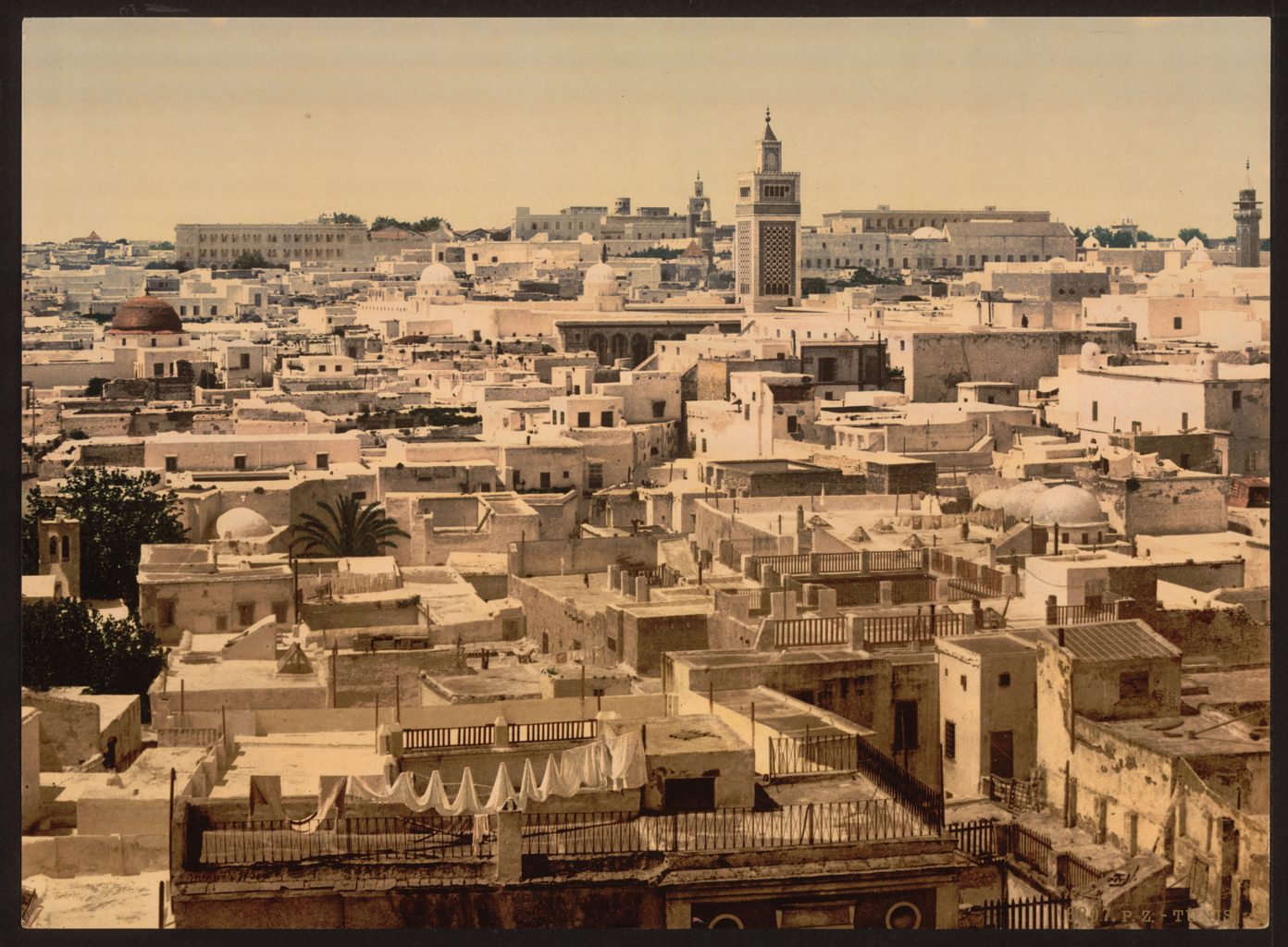
Founded in the 7th century and continuously inhabited ever since, the medina of Tunis was one of the first places in the Arab world inscribed by UNESCO (1979, the same year as Carthage), and it contains some 700 listed monuments — palaces, mosques, mausoleums, madrasas and fondouks layered behind plain whitewashed walls. Unlike Marrakech’s medina, it isn’t built for tourists: most of what you’ll pass is simply people’s lives. That’s exactly why I love it.
1. Get properly lost in the lanes
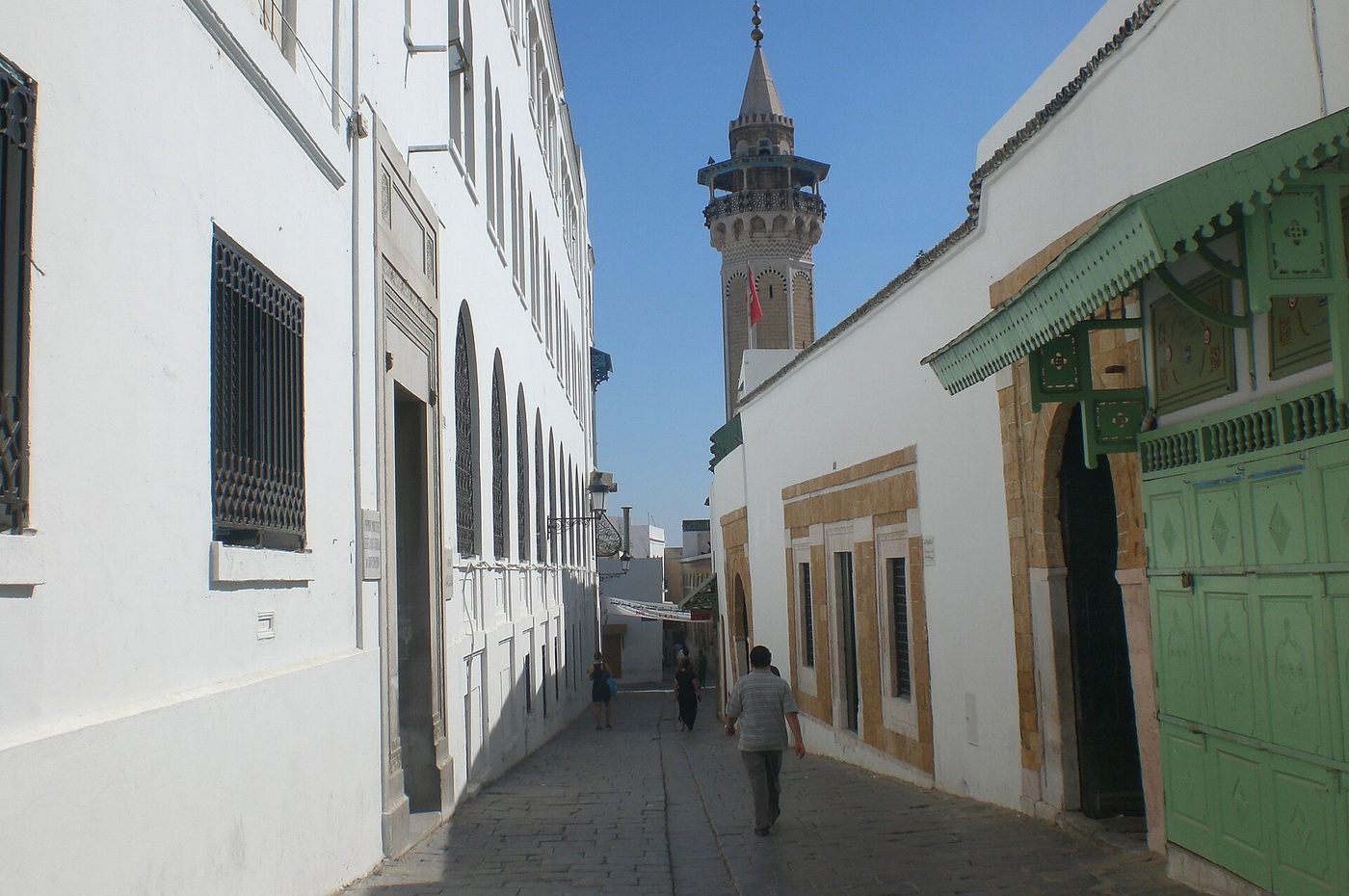
Set aside half a day, enter under Bab el Bhar, and surrender to the geography. The main spine — Rue Jamaa Ez-Zitouna — funnels you uphill past souvenir stalls to the great mosque, and it’s the only part that ever feels crowded. Turn off it almost anywhere and within two minutes you’ll have a lane to yourself: studded doors in faded ochre, cats asleep on marble doorsteps, the knock of a coppersmith’s hammer somewhere out of sight. Rue du Diwan, Rue Sidi Ben Arous and Rue du Pacha are particularly lovely. I always tell first-timers: you cannot stay lost for long. The medina is barely a kilometre across, downhill always leads east towards the Ville Nouvelle, and any shopkeeper will point you back to “Jamaa Zitouna” with a smile.
One practical rhythm to know: the souks largely close on Sunday (a colonial-era habit the trading quarters never dropped), when the lanes are atmospheric but shuttered, and things also pause around Friday midday prayers. If shopping and bustle are the point, come Monday to Saturday. If photographs of empty, echoing lanes are the point, Sunday morning is quietly magical.
2. Stand in the courtyard of the Zitouna Mosque
The Great Mosque — Ez-Zitouna, “the mosque of the olive tree” — has anchored the medina since the 8th century, and its prayer hall was built largely with columns salvaged from Roman Carthage, which delights me every time I think about it. Non-Muslims can’t enter the prayer hall itself, but you can visit the vast marble courtyard from a viewing area, watch the light move along the arcades, and admire the square Hafsid minaret that owns the medina skyline.
Visits are generally mornings only (roughly 9am to midday), and the mosque is closed to visitors on Fridays and during prayer times; a small entry fee may apply depending on the day and the gatekeeper. Dress modestly — shoulders and knees covered, and women may be offered a headscarf. It’s worth planning your medina morning around, because the courtyard is the old city’s one great open space and the views from the surrounding terraces all frame its minaret.

3. Haggle your way through the souks
The covered souks wrap around the Zitouna in concentric rings, historically arranged so the “noble” trades sat closest to the mosque. Souk El Attarine, the perfumers’ souk, still sells amber, jasmine and orange-blossom essence from cubbyhole shops; Souk des Chéchias is where the last makers of Tunisia’s burgundy felt caps work their presses (watching them is free and fascinating); Souk El Berka, the old jewellery market, glitters with gold under painted arches. My rule for buying anything: decide what it’s worth to you, open at half the asking price, and keep it friendly — Tunisian haggling is a conversation, not combat. Ceramics, olive-wood bowls, harissa and a chéchia you will absolutely wear once are the classic hauls. Cash (dinars) rules in the souks, so come prepared.
4. Find the palaces and the mausoleum of the beys
The medina’s deeper secret is its palace architecture. Tourbet el Bey, the mausoleum of the Husainid dynasty that ruled Tunisia from 1705 until 1957, reopened to visitors in 2023 after restoration: a hush of green-tiled domes and Italianate marble where the beys lie under carved stone turbans. Entry is a few dinars (prices were being re-set across state sites when I last checked — have small notes ready). Dar Lasram, an 18th-century palace on Rue du Tribunal, houses the medina conservation association and usually lets you wander into its courtyard for free on weekdays. I’d skip planning around Dar Ben Abdallah, the folk-traditions museum — it has been closed for restoration on and off for years and opening is unreliable. If a door to any old fondouk stands open, poke your head in; the worst that happens is a friendly wave out.
5. Take mint tea on a rooftop terrace
Several carpet shops and cafés near the Zitouna have colonised the rooftops, and a pot of mint tea with pine nuts up there — white terraces to the horizon, the minaret close enough to touch, swifts wheeling overhead — is my single favourite cheap thrill in Tunis. Café Panorama (follow the signs from Rue Jamaa Ez-Zitouna) and the terrace at El Ali, a restored café-restaurant at 45 bis Rue Jamaa Ez-Zitouna, are reliable; expect to pay a tourist-terrace 5–8 TND for the tea and consider it rent for the view. A polite warning: if a charming stranger insists on leading you to a “special exhibition with a free view, only today”, it ends at a carpet showroom. The terraces above are real; the urgency is not.
6. Eat like a local: lablabi, brik and fricassé
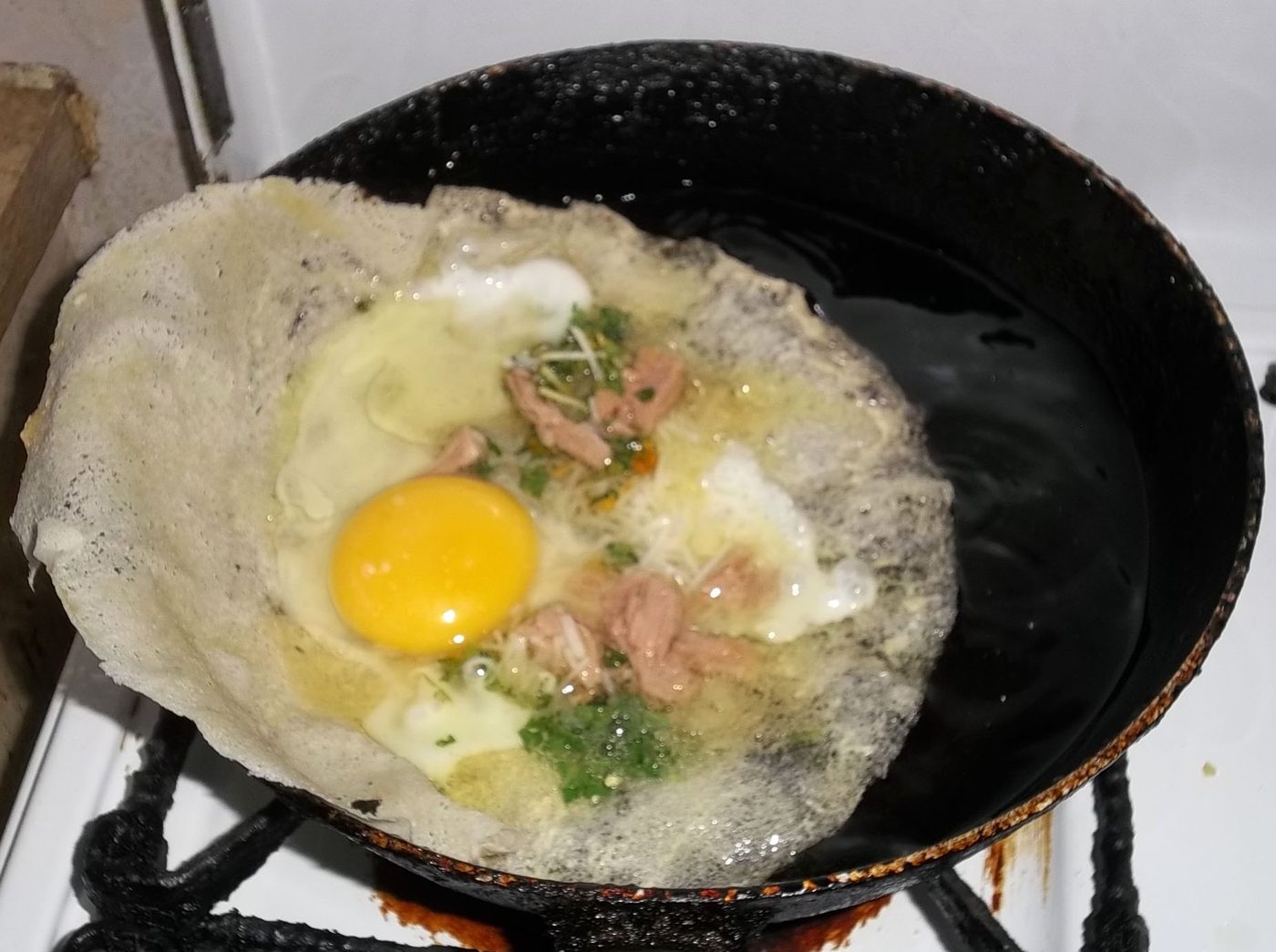
Some of Tunisia’s best food costs pennies and is eaten standing up. Lablabi — a workman’s breakfast of chickpeas in garlicky, cumin-spiked broth poured over torn bread, crowned with harissa, capers, tuna and a barely-set egg — is the dish I crave most from home; the hole-in-the-wall joints around the medina and Halfaouine do it best for 3–6 TND, and you order by sitting down and nodding. Brik à l’œuf, a shatteringly crisp pastry triangle around a runny egg and tuna, is everywhere and dangerous to eat in good clothes. Fricassé — a small fried roll stuffed with tuna, harissa, olives and potato — is the 2 TND snack that ruins you for meal-deal sandwiches forever. For a proper sit-down lunch in the medina, Fondouk El Attarine (in a restored caravanserai off the perfume souk; closed Sundays) does a fish couscous worth crossing town for, and El Ali’s daily plates are honest and generous. Note that most medina restaurants serve no alcohol and close by early evening.
The Ville Nouvelle: colonial Tunis and café life
East of Bab el Bhar, the French laid out a grid of boulevards in the late 19th century, and the result is one of the Mediterranean’s great ensembles of belle-époque, art nouveau and art deco architecture — some 400 listed buildings in varying states of glory and decay. This is where Tunisians actually hang out: the pavement cafés, the patisseries, the bookshops, the evening passeggiata.
7. Walk Avenue Habib Bourguiba end to end
Tunis’s Champs-Élysées (the comparison is compulsory; the locals make it themselves, with a wink) runs arrow-straight from Bab el Bhar to the lagoon, divided by a central promenade under clipped ficus trees. Walk it slowly. You’ll pass flower kiosks, newspaper stands, the wedding-cake Théâtre Municipal, grand café terraces full of arguments and espresso, and at the eastern end the landmark clock tower roundabout. The avenue is also modern Tunisian history in one street — it was the stage of the 2011 revolution — and there’s still a light security presence along it; you may be asked not to photograph official buildings (the Ministry of the Interior, conspicuously fenced, is the one to keep the camera away from). Stop at Café de Paris, pay 3 TND for a direct espresso, and people-watch under the same awnings that have shaded this corner since 1930.

8. Look up at the Cathedral and the Théâtre Municipal
The Cathedral of St Vincent de Paul (1897) lands on Avenue Bourguiba like a Romanesque-Byzantine spaceship, its golden mosaic of Christ glowing above the porch. It’s a working Catholic cathedral — a reminder that Tunis has always been a layered, Mediterranean city — and visitors are welcome outside service times; entry is free and ten minutes inside is enough for the stained glass and the cool hush. Directly across the avenue, the Théâtre Municipal (1902) is the art nouveau confection locals call “the wedding cake”; if anything is playing while you’re in town, a ticket is cheap and the auditorium is gorgeous.

9. Frame your photo at Bab el Bhar
The Sea Gate of 1848 once stood in the city walls with waves almost at its feet — the lagoon has since been pushed back by landfill — and now it stands alone on Place de la Victoire, the hinge between the two Tunises. Come at golden hour, when the stone glows and half the city seems to funnel through the arch, and shoot from the medina side with the avenue framed beyond. The square around it has a couple of café terraces perfect for watching the world change century as it walks past.

10. Graze the Marché Central
Two blocks south of the avenue on Rue Charles de Gaulle, the central market (Fondouk El Ghalla) is the city’s belly: pyramids of spiced olives, mountains of harissa-red peppers, fishmongers shouting the morning’s catch from Sfax and Bizerte, and stalls selling nothing but mloukhia leaves or pickled lemons. Mornings (Tuesday to Sunday) are the show; it winds down after lunch. Buy olives, dates, a jar of proper harissa and some halva, and you’ve sorted gifts for a fraction of souk prices — and nobody haggles here, which is its own kind of holiday.
The Bardo: the museum that justifies the flight
11. Spend a morning at the Bardo National Museum
I’ll say it plainly: the Bardo is one of the world’s great museums, and if you see one indoor thing in Tunisia, make it this. Housed in a 19th-century beylical palace in the western suburbs (a museum since 1888), it holds what is widely considered the finest collection of Roman mosaics anywhere — entire floors lifted from villas at Sousse, El Jem, Dougga and Carthage and hung like paintings up the palace walls. The star is the 3rd-century mosaic of Virgil flanked by the muses Clio and Melpomene — the only known portrait of the poet made anywhere near his lifetime — but my own favourites are the great Triumph of Neptune, a whole room of writhing sea-gods, and the haul of bronzes and marble sunk off Mahdia in a Roman shipwreck around 80 BC. Give it two to three unhurried hours.

The museum reopened in September 2023 after a two-year closure and is in better shape than I’ve ever seen it. The practical details, as of June 2026: closed Mondays; open roughly 9am–5pm in summer (May–September) and 9.30am–4.30pm in winter; entry 30 TND (about £8) for non-residents under the national tariff grid introduced on 1 April 2026, with a 2 TND rate for students and children; casual photography is now included in your ticket. A combined Bardo + Carthage ticket exists at 45 TND (about £12) — the easiest money you’ll save all trip if you’re doing both, and you should be. State museums advertise free entry on the first Sunday of the month, though official wording suggests this is aimed at residents — don’t build your itinerary around it.
One piece of history deserves naming rather than whispering: in March 2015, 21 tourists were killed, including a British national, in a terrorist attack at the Bardo. Tunisia’s security posture changed profoundly after that year — you’ll see the bag scanners and the calm, visible policing — and the museum today feels as relaxed as any in southern Europe. I’ve written more about the wider picture in my honest guide to whether Tunisia is safe right now.
Getting there: a metered taxi from the centre runs 15–20 minutes (expect 5–10 TND on the meter); line 4 of the métro léger (the city tram) also stops at “Bardo” if you fancy the local experience for small change. Combine the morning here with an afternoon medina wander — they’re the same story told in different materials.
Out along the TGM: Carthage, Sidi Bou Said and the coast
Everything in this section hangs off one beautiful fact: a suburban railway has been trundling from central Tunis out around the lagoon to the beach suburbs since 1872, and it remains the cheapest, easiest sightseeing line in North Africa. Base yourself on it for a day — Carthage in the morning, Sidi Bou Said for golden hour — and you’ll understand why Tunis city breaks are quietly brilliant.
12. Ride the TGM itself
The TGM (Tunis–Goulette–Marsa) leaves from Tunis Marine station at the lagoon end of Avenue Habib Bourguiba and rattles across a causeway to La Goulette before hugging the shore through Carthage’s leafy villa-suburbs to Sidi Bou Said and La Marsa — 18 stops, about 35 minutes end to end, for well under 1.5 TND (call it 30p; buy a ticket at the window, first class is pennies more and marginally less crowded). After a rolling programme of renovation works that suspended sections of the line at times through 2024–25, full service along the whole line resumed in February 2026, though short engineering closures still pop up — when they do, TRANSTU’s bus 347 shadows the route from Tunis Marine. I’ve date-stamped this because no two travel blogs agree: as of June 2026, the train is running.

The stops you actually need: Carthage Hannibal for the Antonine Baths and the heart of the ruins; Carthage Byrsa for the hilltop; Sidi Bou Saïd for the village (a ten-minute uphill walk from the station); La Marsa Plage for the end-of-the-line beach promenade. Trains run from very early until around midnight, but check the last departure at the window if you’re staying out for dinner — and keep a taxi (15–20 TND back to the centre) as plan B.
13. Walk the ruins of Carthage
Carthage breaks people’s hearts in the best way. The city that ruled the western Mediterranean — that sent Hannibal over the Alps — was erased so thoroughly by Rome in 146 BC, then rebuilt so grandly as Roman Carthage, that what survives is a series of dreamlike fragments scattered through one of Tunis’s poshest suburbs: presidential-palace hedges, bougainvillea, and then suddenly a field of headless columns running down to a violet sea. UNESCO listed it in 1979, the same year as the medina, and the whole site repays a half-day of unhurried wandering.

The one grouped ticket — 20 TND (about £5) for non-residents since the April 2026 repricing, valid same-day across the scattered sites — covers the headline Antonine Baths (the largest Roman bath complex in Africa, its surviving basement columns hinting at something cathedral-scale), the Roman theatre, the Roman villas and Odeon quarter, the Tophet (the haunting Punic sanctuary of stelae), the Magon Quarter down by the sea wall, and the Punic Ports — two placid lagoons that were once the naval harbours of a superpower. Sites open roughly 8am–6pm in summer. Buy the ticket at the first site you reach (the Baths booth at Carthage Hannibal is the natural start), keep it handy, and expect a friendly stamp-check at each gate. Between sites you simply stroll the suburb — part of Carthage’s strange charm.
14. Climb Byrsa Hill for the view
Byrsa was the citadel of Punic Carthage, and the panorama from the top — over the excavated Punic quarter, the twin ports, the gulf and the twin-horned mountain of Bou Kornine across the water — is the single best “explain this landscape to me” moment in greater Tunis. The hilltop ensemble (the former cathedral of St Louis and the Carthage National Museum) has been under long-term renovation: the museum has been closed since 2018 for a major EU-backed rebuild, with reopening repeatedly trailed for 2026 — it hadn’t reopened when I last checked in early June 2026, so treat any “it’s open!” rumour with caution and check locally. The view, mercifully, is always open. Down the hill, the Roman and Paleo-Christian Museum reopened in December 2025 after its own two-year restoration — small, calm and worth twenty minutes.

15. Give Sidi Bou Said a whole golden afternoon
Yes, it’s the postcard. Yes, it’s busy by 11am. Go anyway — but go at 4pm and stay for sunset, when the coach tours have drained away and the village returns to itself. Sidi Bou Said is a clifftop tumble of whitewashed lanes, cobalt studded doors and window grilles like wrought-iron lace, draped in bougainvillea above a toy marina. Paul Klee painted here in 1914 and called the colour intoxicating; a century on, the light still does something to you. Wander beyond the main drag — the lanes north of the lighthouse are emptiest — then queue for a bambalouni (a hot sugared doughnut, 1–2 TND) and find a wall to watch the gulf turn pink.

Café des Nattes, at the top of the main street, is the historic one — mint tea on rush mats where Beauvoir, Camus and half of 20th-century French letters once sat; Café des Délices below has the famous terrace cascading towards the marina (check prices before ordering; fame has its tax). Dar El Annabi, a private 18th-century house museum near the top of the village, opens its flower-stuffed courtyards and rooftop for around 10 TND including a glass of tea — touristy, but the terrace view over the bay is the best in the village. The village itself is free, always.

16. Hear a palace sing at Ennejma Ezzahra
Five minutes’ walk downhill from Sidi Bou Said’s crowds stands my favourite quiet wonder in greater Tunis: Ennejma Ezzahra, the palace that French painter-musicologist Baron Rodolphe d’Erlanger built between 1912 and 1922 as a love letter to Arab-Andalusian architecture, all carved stucco, marble courtyards and gardens running to the sea. It now houses Tunisia’s centre for Arab and Mediterranean music: the baron’s instrument collection is displayed inside, and the palace hosts intimate concerts. Entry is 10 TND (students 5 TND); it’s closed Mondays and public holidays, open roughly 9am–5pm with a midday pause most of the year (9am–3pm in July–August). Interior photography needs special permission — honestly, it’s nicer to just look.
17. End a day in La Marsa — and eat fish in La Goulette
Ride the TGM to its terminus and you get La Marsa, the seaside suburb where well-heeled Tunis actually lives: a long corniche made for evening strolling, a proper town beach, gelato queues and café terraces with nobody trying to sell you a carpet. It pairs perfectly with Sidi Bou Said (one stop apart) for a low-effort final evening. Alternatively, hop off halfway back at La Goulette, the port suburb, where the strip of fish restaurants serves grilled daurade and spicy seafood couscous to noisy Tunisian families until late — a complete fish dinner with salads runs 30–50 TND, and the people-watching is free. Both feel like the city with its shoes off.
Day trips: Roman Tunisia on Tunis’s doorstep
Tunis sits at the centre of a constellation of ancient sites that would each be a national treasure anywhere in Europe — and here you’ll often have them nearly to yourself. A note on prices: Tunisia re-set entry fees across its state heritage sites on 1 April 2026 (most now fall between 5 and 30 TND under a national tariff grid), and many third-party websites still quote the old prices — budget a little extra and carry small notes.
18. Dougga: the best-preserved Roman town in North Africa
About 110 km southwest of the capital, Dougga (UNESCO-listed in 1997) is the one that drops jaws: a complete Roman country town spilling down an olive-clad hillside — capitol, theatre, temples, baths, brothel, latrines and all — with wheat fields where the crowds should be. Standing in the theatre with nothing but wind and birdsong, you’ll wonder how this isn’t world famous. Without a car, take a louage (shared minibus) from Tunis’s northern station to Téboursouk (around two hours, 10–15 TND) and negotiate a taxi the last 6 km — agree the return wait too, around 20 TND total. Honestly though, this is the day I’d book a driver or small-group tour for: you’ll see more, including stops below, for £40–60. For reassurance-checkers: Dougga sits in Béja governorate, comfortably outside every FCDO advisory zone (the nearest restricted areas lie much further west and south — see the safety section below).
19. Zaghouan, Thuburbo Majus and Uthina: the aqueduct trail
The Romans watered Carthage from a spring 90-odd kilometres away at Zaghouan, where a graceful 2nd-century Temple of the Waters still cups the source under a craggy mountain; long stretches of the aqueduct that carried it still stride across the plain beside the Tunis road, which makes the drive half the fun. Pair it with Thuburbo Majus (a substantial Roman city, golden columns against wheat) and Uthina/Oudhna (a half-buried amphitheatre 30 km from Tunis that you may share only with swallows) for the classic “ruins without a single coach” day. Tours from Tunis combine all three from around £100 per person, or a hired driver does it for similar money split between you. Entry fees at each are modest; carry 10–20 TND per site in cash and expect the gate price to have moved with the April 2026 grid.
20. Bizerte: the old port the guidebooks skip
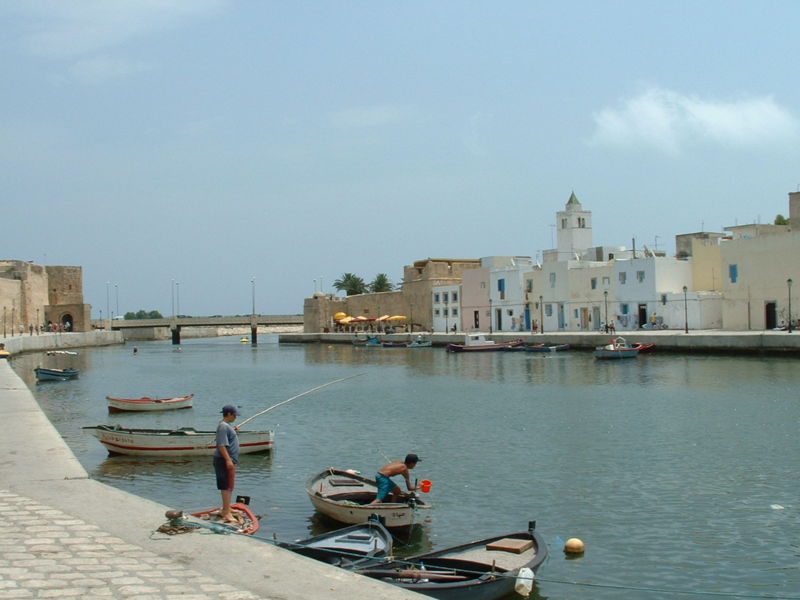
An hour or so north of Tunis (65 km — take a louage from the northern station; the once-a-day train is uselessly timed), Bizerte wraps a photogenic old harbour in pastel houses and fishing nets below a stout kasbah, with proper beaches stretching north and a fish market that out-shouts anywhere in the capital. It was the last piece of Tunisia France gave up (1963), and it wears its history saltily. Lunch on the old port, an hour in the kasbah lanes, an ice cream on the corniche: that’s the day. It’s the least “sight”-driven trip on this list and, for that reason, the one that feels most like travel.
21. Catch a show: festivals and stages
Tunis does culture by night better than any city in North Africa. The summer headliner is the Carthage International Festival — its 60th edition runs in July–August 2026 — which fills the ancient theatre at Carthage with everything from Arab pop royalty to symphony orchestras under the stars (the 2026 programme lands in late June; check the festival’s site for dates and book popular nights early). Year-round, the Théâtre Municipal’s playbill is cheap and gorgeous, the cinema culture is lively, and in Ramadan the medina’s festival fills restored palaces with music — though note Ramadan fell in February–March in 2026, so summer visitors will miss that one.
Things to do in Tunis by type of traveller
History lovers
You’ve hit the jackpot: Bardo + Carthage on the combined 45 TND ticket, Dougga as a day trip, and the medina’s 700 monuments as connective tissue. Three full days minimum; you’ll leave plotting a return for Sousse, Kairouan and El Jem further south.
Couples
Sidi Bou Said at golden hour, a dar (courtyard guesthouse) in the medina, dinner in La Marsa, and a lazy morning over croissants on Avenue Bourguiba — Tunis is a quietly romantic city precisely because nobody’s marketing it that way. If you’re combining city and sand, my guide to where to stay in Tunisia maps the coast options.
Families
Kids tend to love the TGM train, the Punic Ports (space to run + boats), brik-watching at the market, and Bizerte’s harbour. The Bardo in small doses (mosaic “treasure hunts” work wonders). Pavements and traffic are the main stress with very small children; the coastal suburbs are calmer bases than the centre. For a softer first-Tunisia trip with a beach attached, see Hammamet — under an hour away.
Budget travellers
Tunis might be the best-value capital break in the Mediterranean: 30p trains, £1 street feasts, £5 museum mornings, medina dorms and budget dars from £15–25. Your biggest costs are the flight and, if you take them, day-trip tours — louages shrink those to pennies too.
How many days do you need in Tunis?
Two full days covers the essentials; three lets the city breathe; four adds a proper day trip. If Tunis is your gateway to a longer Tunisian loop, the capital pairs naturally with an onward run south — my guide to the best things to do in Tunisia sketches the big picture.
| Time | Morning | Afternoon | Evening |
|---|---|---|---|
| Day 1 | Medina: Zitouna, souks, palaces | Avenue Bourguiba, cathedral, Bab el Bhar | Dinner in the Ville Nouvelle |
| Day 2 | TGM to Carthage: baths, Byrsa, ports | Sidi Bou Said + Ennejma Ezzahra | Sunset tea; fish in La Goulette |
| Day 3 | Bardo Museum | Marché Central + missed medina corners | La Marsa corniche |
| Day 4 | Day trip: Dougga, the Zaghouan trio, or Bizerte | Pack, vowing to return | |
Getting to Tunis from the UK
Quietly, this got easy again. As of June 2026 there are direct flights from London to Tunis-Carthage with Tunisair from both Heathrow (T4) and Gatwick, and with Nouvelair from Gatwick — between them currently around eight or nine departures a week, with the schedule heaviest at Gatwick; flying time is about 2 hours 45 minutes to 3 hours. Schedules on this route do shuffle seasonally, so check current days before locking plans. From elsewhere in the UK (or when direct times don’t suit), the workhorse one-stops are Air France via Paris, ITA via Rome and Lufthansa via Frankfurt or Munich. Tunis-Carthage airport sits absurdly close to town — 8 km, 15–30 minutes by taxi depending on traffic.
UK passport holders get 90 days visa-free; your passport should be valid for the full stay. Note that the UK GHIC card is not valid in Tunisia — proper travel insurance matters here.
Arriving by cruise ship at La Goulette
Cruise calls have returned to Tunis in force, and the terminal at La Goulette is a 15–25 minute drive from both the medina and Carthage — but it’s also one of the most aggressive taxi gauntlets in the Mediterranean, with quotes of $60–80 for what should be a 15–25 TND metered ride. Your options, best to worst: pre-book a driver or ship excursion if you want zero friction; negotiate a return-trip price firmly (knowing the meter rate) if you want flexibility; or do what I do — walk the ~900 m to the Goulette TGM stations and ride the train, towards Tunis Marine for the medina (then a 15-minute walk up Avenue Bourguiba) or the other way to Carthage Hannibal and Sidi Bou Said for pennies. With six hours ashore you can comfortably do Carthage’s baths plus Sidi Bou Said by train; with eight, add the medina. Carry small dinar notes (there’s an exchange desk in the terminal) and leave a fat margin for the all-aboard.
Getting around Tunis
Central Tunis is compellingly walkable — medina + Ville Nouvelle is one continuous stroll — and the TGM covers the coast. For everything else: metered yellow taxis are everywhere and cheap (flagfall under 1 TND; most cross-town rides 3–8 TND; the Bardo 5–10 TND). Insist on the meter — “compteur, s’il vous plaît” — or step out; at night fares legitimately rise about 50% between 9pm and 5am. A heads-up that catches travellers out: Bolt no longer operates in Tunisia (it pulled out in May 2025 after a regulatory dispute), and there’s no Uber; the local app that works in Greater Tunis is Yassir, worth installing before you fly. The métro léger tram network is extensive and costs small change — line 4 for the Bardo is the one tourists actually use — though carriages get sardine-tight at rush hour and pickpockets know it. For intercity hops, louages (shared eight-seat minibuses that leave when full) are the national superpower: Moncef Bey station serves the south and Hammamet/Sousse, the northern station serves Bizerte and the Dougga road, and fares work out around 7 TND per hour of travel.
Money in Tunis: the closed-currency rules
The Tunisian dinar is a closed currency: you cannot legally buy it before you travel or take it home, so everyone exchanges on arrival — airport desks are fine, banks and post offices marginally better, and ATMs dispense dinars readily (tell your bank you’re travelling). The rate hovers around 3.8–3.9 dinars to the pound as I write in June 2026. Tunis runs on cash: cards work in proper restaurants, supermarkets and hotels, but the souks, lablabi joints, taxis and the TGM ticket window do not negotiate with plastic. Two rules save headaches: keep your exchange/ATM receipts (you’ll need one to convert leftover dinars back at the airport, and you can re-export only a small amount in any case), and hoard small notes — a 50-dinar note meets genuine despair at a 2-dinar fricassé stand.
Where to stay in Tunis
Three good answers depending on your trip. A medina dar — a restored courtyard mansion — is the romantic choice and my default for first-timers: atmospheric, central, £40–90 a night for serious charm (pack earplugs for the dawn call to prayer, and arrange a luggage-friendly meeting point; cars don’t enter the lanes). The Ville Nouvelle has the business hotels and faded grande-dames along and off Avenue Bourguiba — practical, walkable, best for short stays and solo arrivals after dark. The TGM coast (Sidi Bou Said, La Marsa, Gammarth’s resort strip) trades centrality for sea air and calm — ideal with kids or as a soft landing, with the train linking you to town until late. Hotel bills add the national tourist tax (4–12 TND per person per night depending on the hotel’s class, capped at 10 nights, collected at check-in). For the full national picture — including the all-inclusive coast — see my guide to where to stay in Tunisia.
Food, drink and whether you can get a beer
Eat your way up the scale: street level (lablabi, brik, fricassé, bambalouni — £1–2 a hit), market level (Marché Central picnics), medina-lunch level (Fondouk El Attarine’s fish couscous, El Ali’s daily plates — £8–15), then La Goulette’s fish terraces and La Marsa’s modern bistros (£15–25 a head, properly good). Couscous in Tunisia is Friday’s dish at home but every day’s dish for visitors; ojja — eggs poached in spicy tomato with merguez — is the brunch you didn’t know you needed; and harissa here will permanently recalibrate your supermarket jar.
Alcohol: legal and unfussy in the right places, invisible elsewhere. Hotel bars, licensed restaurants and a clutch of Ville Nouvelle brasseries pour the local Celtia lager and decent Tunisian wine (try a Magon red — the grape heritage goes back to Carthage); medina restaurants are nearly all dry; supermarkets sell alcohol except on Fridays, when the shutters come down on the booze aisle nationwide. Drink prices are gentle — £2–3 a beer in most bars, more in hotel lounges. Public drunkenness gets you nothing but trouble; treat it like visiting a slightly stricter Italy.
Is Tunis safe to visit?
I’ve walked Tunis at all hours for years and the data backs my gut: this is a heavily policed, generally welcoming capital where the realistic risks are pickpockets and overcharging, not violence. The UK Foreign Office (FCDO) does not advise against travel to Tunis, Carthage, Sidi Bou Said or any of the day trips in this guide. Its Tunisia advice (last updated 23 February 2026, current as I publish) states: “The majority of visits to Tunisia are unaffected by crime. The most common crime experienced is theft”, and notes that “criminals are known to sometimes use confidence tricks as a distraction while carrying out thefts.” That matches my experience precisely: medina “helpers” steering you to cousins’ shops, the airport taxi shuffle, crowded-tram fingers. Money belt, meter, polite firmness — sorted.
For completeness: the FCDO does advise against all but essential travel to specific areas far from Tunis — including “the Chaambi Mountains National Park and the designated military operations zones”, “Kasserine Governorate, including the town of Sbeitla”, areas “within 20km of the Tunisia-Algeria border in El Kef and Jendouba governorates south of the town of Jendouba”, and “areas north and west of the town of Ghardimaou in Jendouba Governorate” — all of which sit a long way from every place in this article (Dougga, the closest sight to any of them, is still comfortably clear). A state of emergency has been in place since 2015 and you’ll notice the security presence on Avenue Bourguiba; remember that “your travel insurance could be invalidated if you travel against FCDO advice”. I keep a fuller, regularly updated picture — including the 2015 attacks and what changed after them — in my dedicated guide: Is Tunisia safe right now?
When to visit Tunis
The capital is a spring and autumn city: April–June and September–October bring 20–30°C sightseeing weather, warm evenings and bearable museum halls. July and August are hot (mid-30s, occasionally worse) — doable with a TGM-and-beach rhythm and 8am starts at Carthage, and you get the Carthage Festival as compensation. Winter is mild (15–18°C days), often bright, occasionally properly wet — and gloriously crowd-free; pack a jumper for evenings. Two calendar notes: Ramadan (which fell in February–March in 2026, and shifts ~11 days earlier each year) changes café rhythms and closes some kitchens by day, while making evenings festive; and Sundays/Mondays respectively flatten the souks and shut the museums — plan around both. Month-by-month detail lives in my guide to the best time to visit Tunisia.
Frequently asked questions
Is Tunis worth visiting?
Emphatically yes — for the Bardo’s mosaics, Carthage, the UNESCO medina and Sidi Bou Said alone, all within one cheap, compact city break three hours from London. Manage expectations on polish (this is a working capital, not a resort) and you’ll be richly rewarded.
How many days do you need in Tunis?
Two full days covers the medina, Ville Nouvelle, Carthage and Sidi Bou Said at a push. Three days adds the Bardo properly and some breathing room; four lets you take a day trip to Dougga or Bizerte. As a stop on a wider Tunisia trip, give it a minimum of two nights.
Is Tunis safe at night?
The Ville Nouvelle’s main streets, La Marsa, Sidi Bou Said and the Gammarth hotel zone are fine for evening strolling and dinner. The medina largely empties after dark — I’d avoid wandering its deeper lanes late, less from danger than from locked-up loneliness. Use metered taxis at night (the legal +50% night rate applies from 9pm) and the usual capital-city sense.
Is Tunis walkable?
Very. The medina and Ville Nouvelle form one continuous walking city — you can cross the whole centre in 30 minutes — and the TGM train handles the coastal sights. You only need wheels (taxi or tram) for the Bardo and the airport. Wear proper shoes: medina lanes are cobbled and pavements can be ankle-traps.
Is Tunis expensive?
It’s one of the cheapest capitals on the Mediterranean. Realistic daily costs: street-food lunch £1–3, restaurant dinner £8–20, museum entry £5–8, cross-town taxi £1–2, the TGM 30p, good doubles £40–90. A comfortable couple’s day — sights, meals, transport — rarely clears £60 between you, excluding the room.
Can you drink alcohol in Tunis?
Yes — in hotel bars, licensed restaurants and certain brasseries, where local Celtia beer and Tunisian wines flow without fuss. The medina is dry, supermarkets don’t sell alcohol on Fridays, and street drinking is a no. During Ramadan, options narrow mostly to hotel bars.
Do they speak English in Tunis?
French is the second language and works everywhere; Arabic (Derja) is the first. English is increasingly common in hotels, museums and with younger Tunisians, but taxi drivers and souk traders often have little. Learn “chukran” (thanks), “la, chukran” (no thanks — the medina essential) and numbers in French, and you’ll fly.
How do you get from Tunis to Carthage and Sidi Bou Said?
The TGM suburban train from Tunis Marine station (eastern end of Avenue Habib Bourguiba) runs to both: roughly 25 minutes to Carthage Hannibal for the ruins, 35 to Sidi Bou Saïd, every 15–30 minutes, for under 1.5 TND. A taxi runs 15–25 TND if you’re short on time. Full service resumed across the line in February 2026.
What is Tunis famous for?
Its UNESCO-listed medina (one of the Arab world’s best preserved), the Bardo Museum’s unrivalled Roman mosaics, the adjacent ruins of ancient Carthage, the blue-and-white artists’ village of Sidi Bou Said, harissa-fired street food, and its role as the heart of the 2011 Arab Spring.
Can I combine Tunis with a beach holiday?
Easily — that’s the classic Tunisia trip. Hammamet is under an hour south for resort comfort; Sousse and the Sahel beaches are two hours by train or louage; and a short internal hop (or gorgeous overland run) gets you to Djerba in the south. Two capital days plus a beach week is the formula package holidays never offer — and it’s better.
Do I need to book Carthage or the Bardo in advance?
No — both sell tickets at the door, and queues are rarely more than minutes (cruise-ship mornings at the Antonine Baths are the exception; go early or flip your day). Book ahead only for Carthage Festival shows in summer and popular medina dars in spring and autumn.
Final thoughts: the capital nobody briefs you on
Somewhere on your second evening — maybe on a rooftop with the medina’s terraces going gold, maybe on the TGM home from Sidi Bou Said with sand in your shoes and a paper cone of bambalouni sugar on your lap — Tunis will quietly make its case: that a city can hold Carthage and Klee, beys and brutalism, the Arab world and the Mediterranean, all at once, and barely mention it. The package coaches will keep rolling past to the beaches, and honestly, let them. It leaves more rooftop for the rest of us. Start with the full-country picture in my guide to the best things to do in Tunisia, check when to go, and give the capital the weekend it’s been patiently waiting for.
Tunis & the North: our full guides
- Tunis medina: a walking guide to the old city
- How to visit Carthage: sites, tickets & route
- Sidi Bou Said: the blue & white village
- Bardo Museum: visiting guide & highlights
- The best day trips from Tunis
- Where to stay in Tunis: medina, centre or coast
- 2 days in Tunis: the perfect city-break itinerary
- Where to eat in Tunis: food & cafe guide
Further north: beyond the capital
Photo credits
All images via Wikimedia Commons, used under their stated licences: Zitouna Mosque courtyard (CC BY-SA 3.0); Rue du Diwan, medina, by Rais67 (public domain); Bab el Bhar (public domain); Avenue Habib Bourguiba clock tower by Dan Sloan (CC BY-SA 2.0); Cathedral of St Vincent de Paul by Sami Mlouhi (CC BY-SA 4.0); Virgil mosaic, Bardo, by David Stanley (CC BY 2.0); TGM station by M.Rais (CC BY-SA 3.0); Antonine Baths by Tico, Romanian Wikipedia (public domain); northern Tunis panorama by Nicholas.gosse (CC BY-SA 4.0); Sidi Bou Said doorway by Mstyslav Chernov (CC BY-SA 3.0); Sidi Bou Said street by Rene Cortin (CC BY-SA 4.0).
If Tunis is your way in, our Tunisia itinerary shows how the capital fits a longer loop — down to the Sahara and the Star Wars country beyond — and the travel tips guide covers everything this one hasn’t.
One response to “Tunis Travel Guide: Things to Do in the Capital (2026)”
[…] pairs naturally with our full guide to Tunis and northern Tunisia, and with our roundup of the best day trips from Tunis if you’re basing yourself in the […]