By the Tunisia Tourism Guide team · Last updated 6 June 2026 · Climate figures are long-term averages; we refresh this guide each year
The best time to visit Tunisia is spring (April to June) and autumn (September to October), when days sit at a comfortable 22–28°C, the sea is warm, and you dodge both the August heat and the August prices. July and August are for beach holidays and festivals if you can take the heat; November to March is mild, cheap, and the right time for the Sahara and the Roman ruins. The rest of this guide breaks that down month by month, region by region, because “Tunisia” covers everything from a green northern coast to the edge of the desert.
Here’s the thing most “when to go” articles miss, and it matters: Tunisia isn’t one climate, it’s three. The northern coast around Tunis gets proper Mediterranean winters with rain. The resort coast — Hammamet, Sousse, Djerba — runs warmer and drier. And the Sahara south, Tozeur and Douz, does its own thing entirely: unbearable in July, glorious in January. A single national verdict is useless to you. So this guide gives you the weather for where you’re actually going, in the month you’re actually thinking about, plus the sea temperatures (can you swim?), the crowd levels, the prices, and — because we’re a UK site — how it all maps onto half-terms and the school summer holidays. Let’s get you the right week.
Best time to visit Tunisia: the quick verdict
| If you want… | Go… | Why |
|---|---|---|
| The best all-rounder | May, then late September–October | Warm sea, 25–28°C days, sites open, crowds and prices down. May is the single best month |
| A beach holiday | June to mid-October | Sea 22–29°C; July–August hottest and busiest, June and September the smarter picks |
| The Sahara & desert camps | October to April | Daytime 20–30°C instead of 40°C+; cold nights but that’s what the camp blankets are for |
| Roman ruins & sightseeing | April–May, September–November, mild winter days | Walking Carthage or El Jem in 35°C is misery; spring and autumn are made for it |
| The cheapest holiday | November to March (not Christmas/New Year) | Package and hotel prices fall 30–50% off summer; January–March is rock bottom |
| The fewest crowds | November to early March | Resorts quiet, sites empty, sea too cool to swim — a fair trade for some |
| UK October half-term | Late October | Quietly the sweet spot: sea still ~24°C, 26°C days, autumn calm. More below |
| To avoid the worst of it | Skip late July–August inland | Hottest, most crowded, priciest; the desert is genuinely dangerous in high summer |

Tunisia’s three climates, explained
Before the month-by-month, get the geography straight, because it’s the whole game. Tunisia stretches about 750km north to south, and the weather changes completely as you go.
The northern coast (Tunis, Bizerte, Tabarka, Cap Bon). This is the Mediterranean you know: hot dry summers, mild wet winters. Tunis averages around 470mm of rain a year, almost all of it between October and March. The far north-west around Tabarka is genuinely green — over 1,000mm a year, the wettest corner of the country, with cork forests that feel more Italian than African. Winter here means grey days and the odd downpour, not a beach.
The resort coast / the Sahel (Hammamet, Sousse, Monastir, Mahdia, Djerba). Warmer, drier and sunnier than Tunis. Sousse gets only around 335mm of rain a year, Djerba just 200mm — the island is the driest, sunniest resort base, with seven hours of sunshine even in midwinter. This is where the package holidays land, and the climate is most of the reason why.
The Sahara south (Tozeur, Douz, Matmata, the ksour). A true desert climate: scorching summers, big swings between day and night, and almost no rain (Tozeur sees under 100mm a year). In July and August the desert hits 40°C in the shade and there isn’t much shade; in January it’s a perfect 17–20°C by day and near freezing at night. The desert’s high season is the coast’s low season, and vice versa — remember that and half your planning is done.
Tunisia weather and sea temperature by month
The master table. Air temperatures are daytime highs for the resort coast (Sousse/Hammamet); the Sahara column is Tozeur, to show how different the south runs. Sea temperature is the Hammamet–Sousse coast; Djerba and the south run 1–2°C warmer in the swimming season. The UK column is London’s average high, so you can see exactly what you’re escaping.
| Month | Coast high °C | Sahara high °C | Sea °C | Rain days (coast) | UK high °C | Crowds & price |
|---|---|---|---|---|---|---|
| January | 17 | 17 | 16 | 6 | 8 | Lowest — cheap, quiet |
| February | 17 | 19 | 15 | 6 | 8 | Low — cheap, quiet |
| March | 19 | 23 | 15 | 5 | 11 | Low — rising |
| April | 22 | 27 | 16 | 6 | 13 | Shoulder — good value |
| May | 25 | 32 | 19 | 4 | 17 | Shoulder — the sweet spot |
| June | 29 | 37 | 23 | 2 | 20 | Rising — still good value |
| July | 32 | 40 | 26 | 1 | 23 | Peak — hot, busy, pricey |
| August | 33 | 40 | 27 | 2 | 23 | Peak — hottest, dearest |
| September | 30 | 35 | 27 | 4 | 20 | Shoulder — excellent |
| October | 26 | 30 | 24 | 6 | 15 | Shoulder — excellent |
| November | 22 | 23 | 21 | 5 | 11 | Low — mild, quiet |
| December | 18 | 18 | 18 | 6 | 8 | Low (bar Christmas) |
Two things jump out of that table. First, look at the sea column: it’s swimmable (20°C+) from June right through to November, peaks at a bath-like 27°C in August, and is still 24°C in October when the UK has dropped to a drizzly 15. Second, look at the Sahara column in summer — 40°C — and in winter — 17°C. That single contrast explains why desert tours run October to April and barely operate in July.
Tunisia by season
Spring (March to May): the sweet spot opens
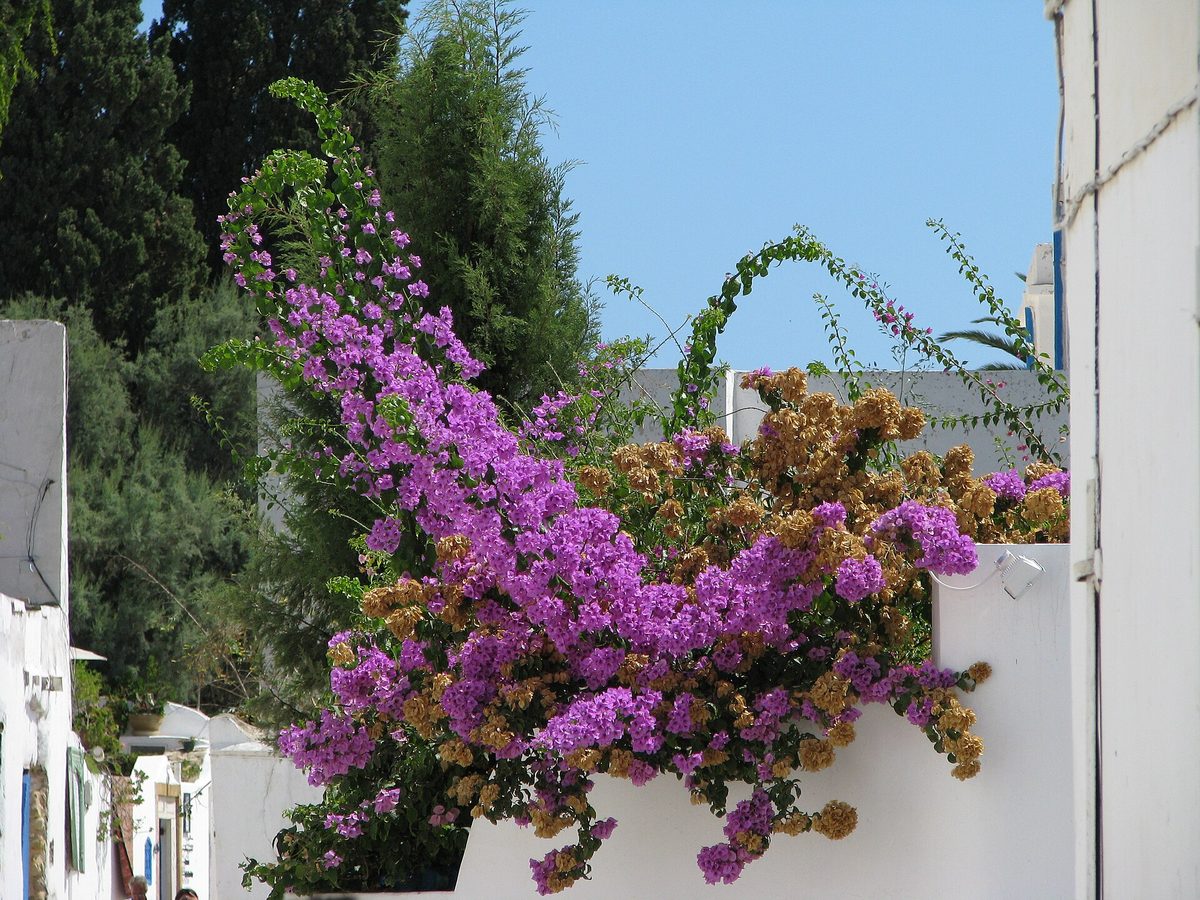
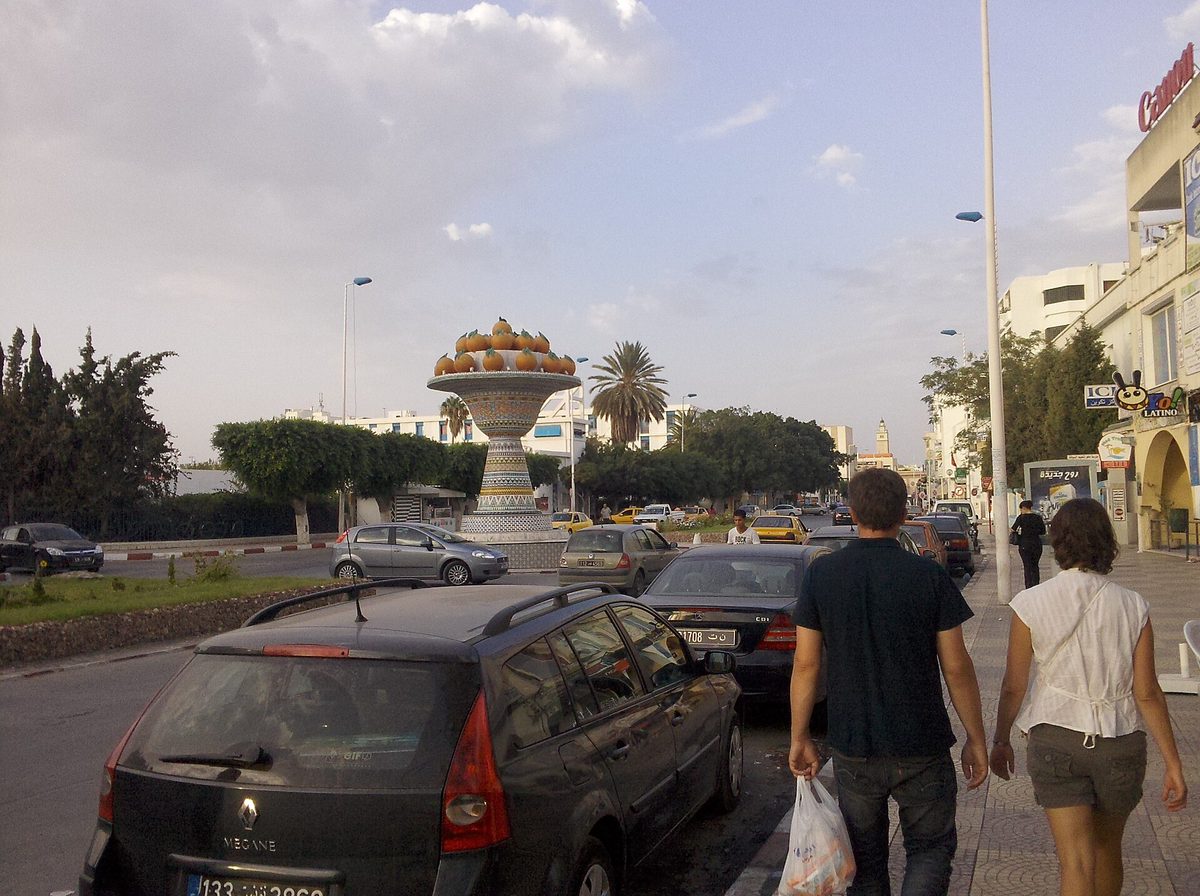
If someone forced me to pick one season, it’d be late spring. The countryside is green and wildflowered, the Roman sites are perfect walking weather, and prices haven’t woken up to summer yet. March is still cool and changeable on the coast (19°C, a few showers) but the desert is already glorious by day. April warms to the low 20s and the orange blossom scents the whole Cap Bon peninsula. May is the star: 25°C days, the sea finally crossing into swimmable, the Sahara still comfortable before the furnace arrives, and crowds thin. One honest caveat — spring is the sirocco’s most frequent season, so you may catch a few hot, dusty days when the desert wind blows north, and it’s the main window for the occasional sandstorm down south. Pack a scarf for the desert leg.
Summer (June to August): beach prime, inland furnace
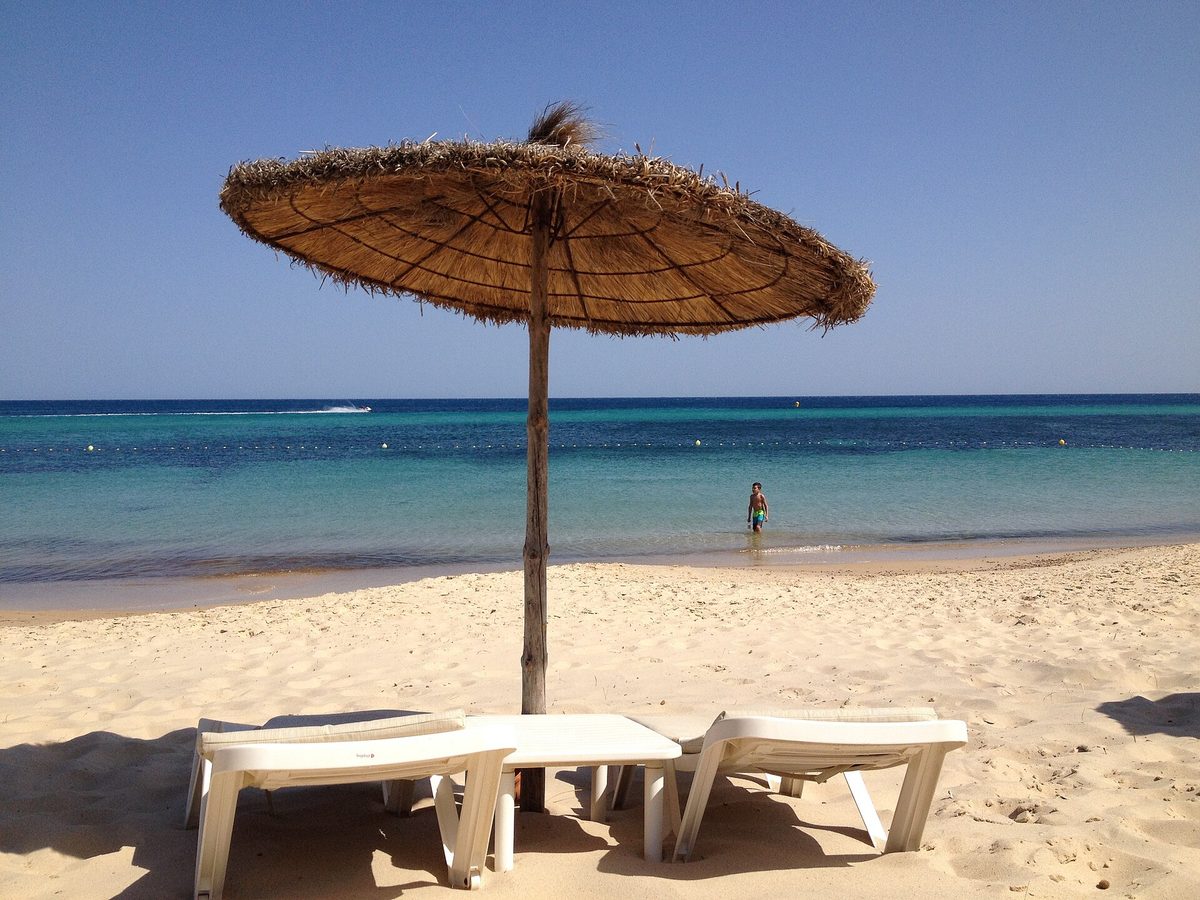
Summer splits hard by geography. On the coast it’s a proper beach holiday: 29–33°C, the sea a warm 23–27°C, reliable sunshine, and the festival calendar in full swing — orchestras under the floodlights at El Jem, big names at Carthage. June is the pick of the three: hot but not yet brutal, sea warm, prices below the August peak. July and August are when the resort coast is busiest and dearest (UK school holidays collide with the European and Tunisian ones), and when inland Tunisia becomes genuinely hostile — Tozeur and Kairouan sit at 40°C, and the Sahara tours dwindle to dawn-and-dusk affairs because midday desert exposure at those temperatures is dangerous, not uncomfortable. Two summer realities the brochures skip: August can bring jellyfish to the Sousse–Monastir beaches (mauve stingers bloom in late summer, variable year to year), and the humidity on the coast wears people down faster than the thermometer suggests. Drink more water than you think you need.
Autumn (September to November): the insider’s season
September is summer with the crowds turned down and the sea at its warmest of the entire year — 27°C, holding bath temperature from a long summer of heating. By late September the families have gone home and the prices have softened, but you’d never know summer was over from the water. October is arguably the best-value good-weather month on the calendar: 26°C days, 24°C sea, the Sahara reopening for tours, autumn light on the ruins. The one thing to know about autumn is flash-flood risk: September and October bring occasional violent convective storms to the east coast and Cap Bon — rare, short, and dramatic when they hit (2018 and 2024 both saw serious September flooding around Nabeul and Sousse). It won’t define your trip, but don’t be shocked by a spectacular thunderstorm. By November the coast is mild (22°C) and quiet, and the desert is back to perfect.
Winter (December to February): mild coast, magic desert
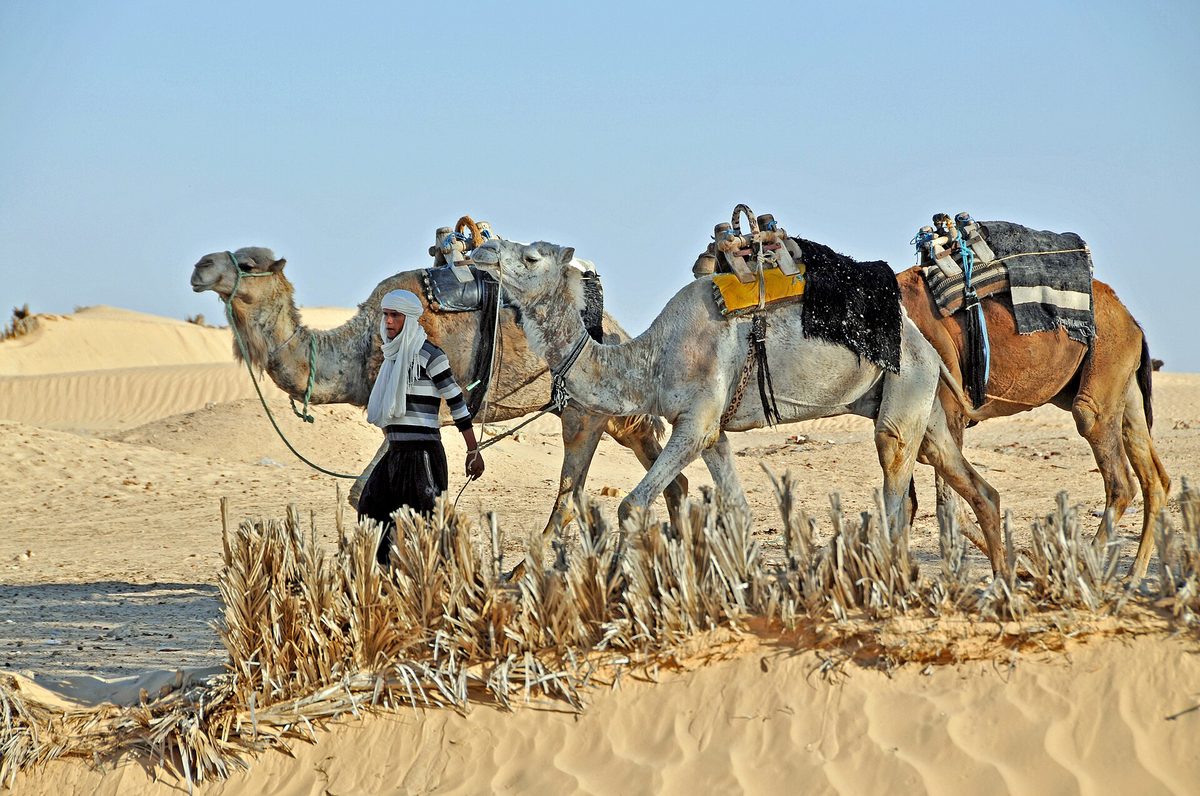
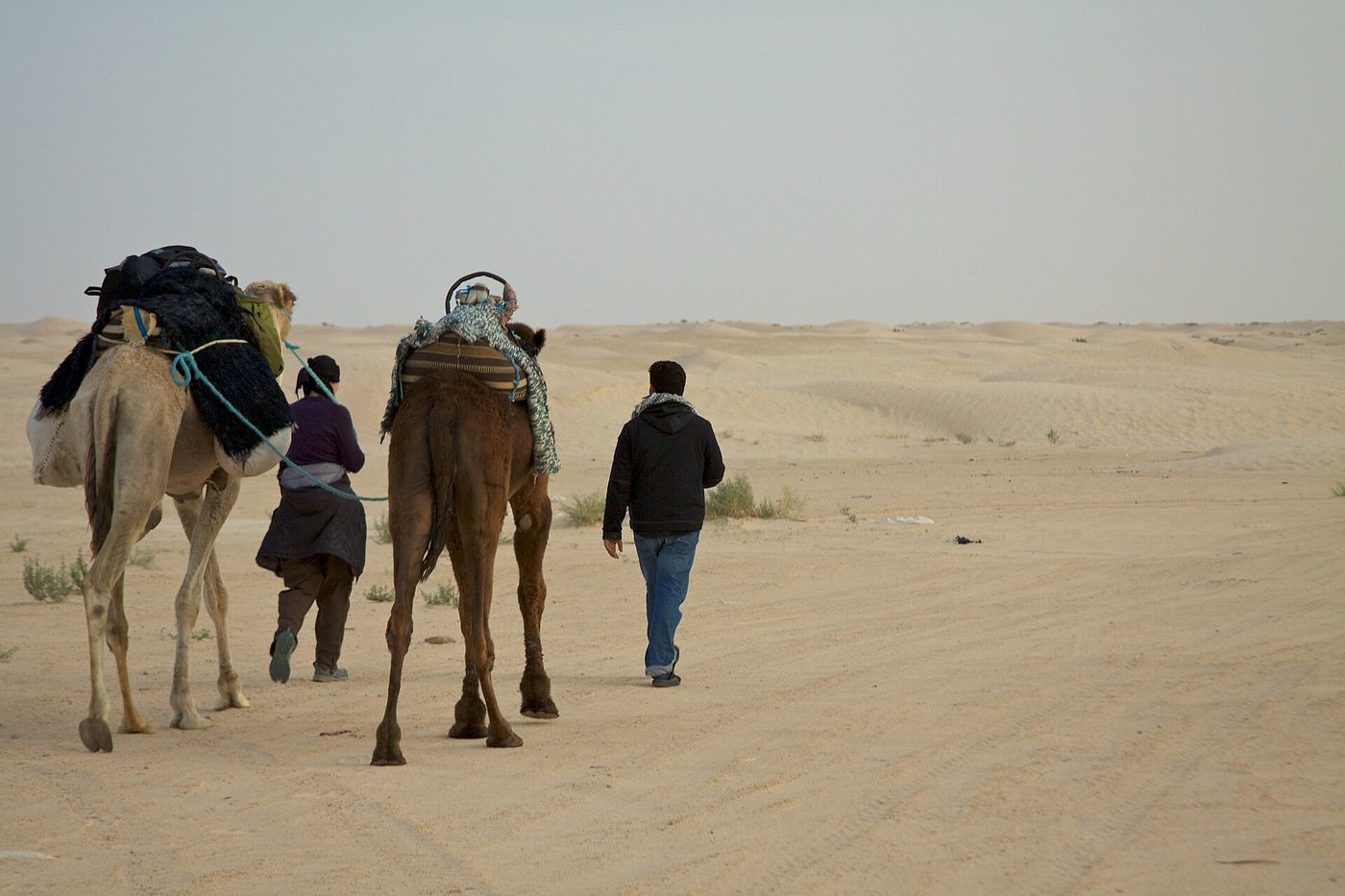
Tunisian winters are mild, not warm — think 17–18°C on the coast, cool enough that you’ll want the pool heated rather than the sea, which drops to a bracing 15–16°C. What winter is genuinely brilliant for is two things. First, the Sahara: October to March is desert high season precisely because the days are a perfect 17–23°C for camel trekking and dune-walking, even if the nights drop close to freezing (the camps have the blankets sorted). Second, the ruins and the cities — wandering Carthage, the Tunis medina or El Jem in 18°C winter sunshine, with the sites near-empty, is one of Tunisia’s underrated pleasures. Winter is also the cheapest time to come and the season the coast reinvents itself around thalassotherapy spas and golf, which run year-round. Just know that some beach hotels reduce service or close for the winter, so choose a property that’s geared up for it.
Tunisia month by month
The detail, all twelve. Each month covers the coast and the desert, whether you can swim, the crowd and price picture, what’s on, and a one-line verdict.
Tunisia in January
The coolest, quietest month. The coast sits at 17°C by day and 8°C at night, with the year’s grey skies and around six rainy days; the sea is 16°C and nobody’s swimming. But the Sahara is at its crisp best — sunny 17°C days for dune-walking, cold starlit nights — and the cities are yours, with Carthage and the medinas all but empty. Prices are rock bottom. Verdict: come for the desert, the ruins and the bargains, not the beach.
Tunisia in February
Much like January but with the first hint of a turn: the desert warms to 19°C, the almond trees blossom, and the light lengthens. Still cool and quiet on the coast (17°C, sea 15°C), still cheap, still excellent for the Sahara and sightseeing. UK February half-term (around 15–19 February 2027) makes this a viable kids’ escape — just pitch it as a desert-and-culture trip, not a beach one. Verdict: winter sun for sightseers and desert lovers, not sunbathers.
Tunisia in March
Spring stirs. The coast nudges up to 19°C and the countryside greens; the desert is lovely at 23°C by day. The sea’s still too cold to swim (15°C) and you may catch a windy, dusty sirocco spell, but the sightseeing is superb and the crowds and prices are still low. Verdict: a quietly excellent month for ruins, cities and the Sahara, with spring in the air.
Tunisia in April
One of the loveliest months to tour the country. 22°C on the coast, 27°C in the desert, orange blossom on Cap Bon, wildflowers everywhere, and Easter (late March/April) bringing a UK-holiday window of genuinely good touring weather. The sea’s still bracing at 16°C so beach days are optimistic, but everything else is ideal, and prices remain shoulder-season reasonable. Verdict: the best month for a touring or culture trip, before the heat and crowds arrive.
Tunisia in May
My pick for the best all-round month. 25°C days, the sea finally warm enough to enjoy (19°C and climbing), the Sahara still comfortable before summer’s furnace, long sunny days, and prices still below the summer peak. The Djerba pilgrimage to El Ghriba usually falls now, and the whole country feels fresh and green. Verdict: if you can only go once, go in May.
Tunisia in June
Summer proper, at its best. The coast hits 29°C, the sea crosses 23°C into genuinely warm, and you get long reliable sunshine without August’s peak heat, peak crowds or peak prices. The desert (37°C) is getting serious but early-morning tours still run. School’s not out yet in the UK, so the first three weeks are a beach-holiday bargain. Verdict: the smart beach month — summer weather, shoulder-season feel.
Tunisia in July
Hot, busy, expensive — and brilliant if that’s the holiday you want. The coast bakes at 32°C with a warm 26°C sea and barely a cloud; the festivals (Carthage, El Jem, Tabarka jazz) are in full flow. But the UK and European school holidays have begun, so resorts are full and prices peak, and the Sahara is effectively off the table by day at 40°C. Verdict: prime time for a festival-and-beach holiday; wrong time for the desert or for budget travellers.
Tunisia in August
The hottest, busiest, dearest month. Coast 33°C, sea at its 27°C peak, wall-to-wall sun, and every resort at capacity with European and Tunisian holidaymakers both. It’s a fine beach holiday if you book early and don’t mind crowds and prices — but watch for late-summer jellyfish around Sousse and Monastir, and write off serious inland sightseeing or desert travel in the heat. Verdict: beach-only, book-ahead, bring-a-bigger-budget territory.
Tunisia in September
The insider’s favourite. The schools go back, the crowds evaporate, the prices drop — and the sea is at its warmest of the entire year (27°C, banked from a long summer). Days are a perfect 30°C, the desert is cooling back to tour-able, and the light turns golden. The only watch-out is the small autumn flash-flood risk on the east coast. Verdict: arguably the best beach-and-everything month on the calendar.
Tunisia in October
The quiet star, and a gift for UK travellers (more on half-term below). 26°C days, a still-warm 24°C sea, the Sahara fully reopened, autumn harvests, thin crowds and falling prices — while back home it’s 15°C and grey. A few more rainy days creep in, but October consistently delivers the best balance of warmth, value and calm of any month. Verdict: the best-value warm-weather month, full stop.
Tunisia in November
The shoulder closes and winter eases in. The coast is mild at 22°C, the sea just about swimmable at 21°C early in the month, and the desert is back to perfect for trekking. Crowds are gone, prices low, the olive and date harvests under way and the Tozeur and Douz festival season approaching. Northern Tunisia gets its wettest weather now, so base south if rain bothers you. Verdict: mild, cheap and excellent for the desert and the south; iffy for the beach.
Tunisia in December
Winter, with one bright spot. The coast is 18°C and cool, the sea 18°C and unswimmable for most, and the north can be grey and wet — but the Sahara is magnificent (the Douz Sahara Festival lands late in the month), the cities are atmospheric and empty, and prices are at their lowest outside the Christmas and New Year bump. Verdict: a desert-and-culture month, and a genuine winter-sun bargain if you keep your expectations off the beach.
Where to base yourself, season by season
Because Tunisia’s climate splits by region, the best base shifts with the calendar. Here’s where to point yourself depending on when you can travel.
Djerba is the year-round all-rounder. The island is the driest, sunniest resort base in the country, with seven hours of sun even in midwinter and only around 200mm of rain a year. Its sea runs a degree or two warmer than the mainland through the swimming season, and it’s the most comfortable winter beach base if you must have one. For a shoulder-season or winter-leaning trip where you still want the option of a mild beach day, Djerba is the safest bet — and it’s the natural springboard for the southern desert and the ksour, which are at their best exactly when the island’s sea has cooled.
Hammamet and the Cap Bon coast suit spring and autumn. The northern end of the resort coast is a touch cooler and greener than Sousse, and it comes into its own in April and May when the Cap Bon citrus and orange blossom are out, and again in September and October. It’s also the best-placed base for the spring touring trip — Tunis, Carthage and Sidi Bou Said are an easy day north, and the Roman sites inland are in perfect walking weather. In high summer it’s a busy beach resort like any other.
Sousse, Monastir and Mahdia are the summer-beach heartland. This central stretch of the Sahel is warm, dry and sunny, with the country’s biggest concentration of beach hotels and the easiest access to El Jem and Kairouan for a culture day. It’s the classic June-to-September package base. The honest seasonal caveat is the late-summer jellyfish risk around Sousse and Monastir, and that some properties wind down in winter — so for a December trip, look to Djerba or a winter-geared spa hotel instead.
Tozeur and Douz are winter desert bases, full stop. Nobody should be booking the oasis south for July or August. From October to April, though, these are the gateways to the Sahara at its glorious best — the dunes, the salt lake, the mountain oases and the Star Wars sets all in comfortable daytime temperatures. Pair a few desert nights here with a coastal base for the classic combined trip, and let the season decide which gets the beach days.
The north-west — Tabarka, Ain Draham and the cork forests — is the outlier: lush, green and genuinely rainy in winter, it’s a late-spring-to-early-autumn destination for hiking, diving and the July jazz festival, and best skipped in the December–January wet.
Best time for what you’re actually doing
The single national answer is a fudge. Here’s the right month for each kind of Tunisia trip.
| You’re here for… | Best months | Avoid | Why |
|---|---|---|---|
| Beach & resort | June, September, early October | August (crowds/price), Nov–April (cool sea) | Warm sea without peak heat, crowds or prices |
| The Sahara & desert camps | October–April (peak Nov–March) | July–August | 20–30°C by day instead of 40°C+; summer is genuinely unsafe |
| Roman ruins & sightseeing | April–May, October–November, mild winter days | July–August midday | Walking Carthage or El Jem in 35°C is no fun |
| The cities (Tunis, Kairouan) | March–May, October–December | July–August | Medinas are sweaty and airless in peak heat |
| Hiking the green north (Tabarka, Ain Draham) | April–June, September–October | December–February (wettest) | The north-west is lush but genuinely rainy in winter |
| Diving (Tabarka) | June–September | Winter | Warmest, clearest water and settled seas |
| Golf & thalassotherapy | October–April | — | The winter proposition: mild days, spa season, low prices |
| Festivals | July–August (Carthage, El Jem), December (Douz) | — | The big cultural calendar is a summer and midwinter affair |
For the full detail on the desert trips, the ruins and the rest, our guide to the best things to do in Tunisia runs through all 45 of them with the prices and the practicalities.
The UK school-holiday planner
Nobody else writes this bit, and it’s the bit British families actually need. Here’s how Tunisia stacks up across each UK holiday window.
| UK holiday | Rough dates | Tunisia verdict |
|---|---|---|
| February half-term | ~15–19 Feb 2027 | Good for a desert-and-culture trip, not the beach. Mild 17°C coast, perfect Sahara, low prices. Don’t expect to swim |
| Easter holidays | ~29 Mar–9 Apr 2027 (Easter Sun 28 Mar) | Excellent shoulder. 20–22°C, green countryside, orange blossom, good touring weather, reasonable prices. Sea still cool |
| May half-term | Late May 2027 | Arguably the best of the lot. 25°C, sea warming, Sahara still comfortable, prices pre-peak. Highly recommended |
| Summer holidays | ~23 Jul–1 Sep 2026 | Beach prime, but hot, packed and priciest. 33°C and a warm sea; book early, expect crowds, skip the desert |
| October half-term | 26–30 Oct 2026 | The quiet winner. 26°C days, 24°C sea, autumn calm, lower prices — while the UK is 15°C and grey. Our top half-term pick |
| Christmas / New Year | Late Dec | Mild, atmospheric, but a price bump. Cool for the beach; lovely for the desert and the festive resort galas. Book the Sahara |
The cheapest time to visit Tunisia
Tunisia is already one of the Mediterranean’s best-value destinations, and timing sharpens that further. The cheapest window is November to March, excluding the Christmas–New Year bump, when package and hotel prices fall 30–50% off the August peak and January to March hits rock bottom. The catch is the obvious one: that’s when the sea’s too cool to swim and some beach hotels wind down for winter. The clever middle ground is the shoulder months — May, June, September and October — where you get genuinely warm weather and a swimmable sea at a real discount to high summer. May and September are the value sweet spots: summer conditions, spring-and-autumn prices.
A practical money note specific to Tunisia: the dinar is a closed currency, so you can’t buy it before you fly and shouldn’t try — you exchange on arrival and spend in cash for most things. That makes “spending money” genuinely separate from your package price, so budget it as its own line. Our money guide (coming in this series) covers the closed-currency rules in full; for now, just know that a cheap shoulder-season package plus modest spending money is about as good value as a winter-sun-ish trip gets.
The worst time to visit Tunisia (and when NOT to go)
An honest section, because most guides are too polite to give you one. The worst time to visit Tunisia is late July and August if you care about anything beyond the beach: it’s the hottest (33°C on the coast, 40°C inland), the most crowded (every European school holiday at once), and the most expensive, and the heat shuts down the desert and makes city sightseeing a sweaty slog. If your heart’s set on the Sahara, the ruins or the medinas, high summer is simply the wrong time — come in spring, autumn or winter instead. The other “avoid” is narrower: the far north-west (Tabarka, Ain Draham) in December and January, which is the wettest part of the country at its wettest time. None of this is a reason not to go to Tunisia — it’s a reason to match the month to the trip.
Visiting during Ramadan
Ramadan is worth understanding because it genuinely changes the texture of a trip. In 2026 it ran roughly 19 February to 19 March; in 2027 it falls about 8 February to 8 March, with Eid al-Fitr around 9 March (these shift by moon sighting, so confirm nearer the time). During the fasting month, many cafés and restaurants outside the tourist hotels close or reduce hours during daylight, the pace slows by day, and then the evenings come alive after iftar with food, family and a special warmth. For a package holidaymaker inside an all-inclusive resort, almost nothing changes — meals and bars run as normal. For independent travellers it’s a trade: quieter sites and a real cultural window, against reduced daytime services and altered opening hours. Either way, eating and drinking discreetly in public during daylight is the respectful move. The big resort coast barely notices Ramadan; the medinas and small towns feel it most.
What to pack, by season
Quick version, because it follows from everything above. Summer (Jun–Sep): light cottons, strong sun cream, a hat, and one cover-up for medinas and mosques (shoulders and knees covered shows respect and cuts hassle, especially for women). Spring and autumn (Mar–May, Oct–Nov): add a light jumper and a packable rain layer for the odd shower. Winter (Dec–Feb): proper layers — warm days but cool evenings, and a coat for the north. The Sahara, any season: a warm fleece and hat for the genuinely cold desert nights (near freezing in winter), plus a scarf for wind-blown sand, sunglasses and more water than feels necessary. Decent walking shoes for the ruins and medinas year-round — those Roman sites are large and uneven.
Best time to visit Tunisia: your questions answered
What is the best month to visit Tunisia?
May, narrowly, for the all-round trip: 25°C days, a warming sea, the Sahara still comfortable, long sunshine and pre-peak prices. September and October are nearly as good, with the warmest sea of the year in September. Avoid pinning a first visit on July or August unless it’s strictly a beach holiday.
What is the hottest month in Tunisia?
August on the coast (around 33°C), and July–August inland, where Tozeur and Kairouan average 40°C. Records are extreme: Kairouan hit 50.3°C in August 2021, and July 2025 saw 48°C in the south. The sea is also warmest in August, at 27°C on the resort coast and up to 29°C at Djerba.
What is the cheapest time to visit Tunisia?
November to March, excluding Christmas and New Year, when prices fall 30–50% off summer and January to March bottoms out. For warm-weather value rather than rock-bottom price, May and September give you summer conditions at shoulder-season rates.
What is the worst time to visit Tunisia?
Late July and August if you want anything beyond the beach: hottest, most crowded, priciest, with the desert effectively closed by day and city sightseeing a sweaty endurance test. High summer suits beach-and-festival holidays and little else.
Can you swim in the sea in Tunisia?
Comfortably from June to November, when the Mediterranean is 20°C or warmer, peaking at 27°C in August (29°C at Djerba). It’s still a pleasant 24°C in October. From December to May the sea sits at 15–19°C — swimmable for the hardy, but most people stick to a heated pool.
Is October a good time to visit Tunisia?
Excellent — arguably the best-value warm month. Expect 26°C days, a 24°C sea, the Sahara reopened for tours, autumn calm and lower prices, all while the UK has dropped to 15°C. UK October half-term is our top pick of the school-holiday windows for exactly this reason.
Is Tunisia warm in winter?
Mild rather than warm: around 17–18°C by day on the coast, cooler at night, with a sea too cool for most. Winter’s real strengths are the Sahara (perfect 17–23°C touring days), the near-empty Roman sites and cities, and the lowest prices of the year. Think winter sun for sightseers and desert lovers, not sunbathers.
When is the best time to visit the Tunisian Sahara?
October to April, with November to March the prime window. Daytime temperatures sit at a comfortable 17–30°C instead of summer’s 40°C+, which is why desert tours run in winter and barely operate in July and August. Bring warm layers: desert nights drop close to freezing in midwinter.
Is there a rainy season in Tunisia?
Yes, on the north and resort coasts, roughly September to March, heaviest from October to January (December is the single wettest month). The far north-west around Tabarka is much wetter than the rest of the country; the Sahara south barely sees rain at all. Autumn can bring rare but dramatic flash-flood storms to the east coast.
How hot is Tunisia in August?
The coast averages 33°C with a warm 27°C sea; inland, Tozeur and Kairouan hit 40°C and beyond. It’s a full beach holiday with reliable sun, but crowds and prices peak, late-summer jellyfish can appear around Sousse and Monastir, and serious sightseeing or desert travel is off the table in the heat.
Is Tunisia good for a winter-sun holiday?
With realistic expectations, yes. It won’t deliver Canary-style beach weather — the sea’s too cool and some beach hotels wind down — but it offers mild sunny days, magnificent desert touring, empty historic sites, thalassotherapy and golf, and the year’s lowest prices. Choose a winter-geared resort or base south on Djerba for the mildest, sunniest option.
When is the least crowded time to visit Tunisia?
November to early March, when resorts are quiet, sites near-empty and prices lowest — the trade-off being cooler weather and a sea too chilly to swim. For a balance of thin crowds and warm weather, late September to October is the smart middle ground.
Does it ever rain on a Tunisia beach holiday?
From June to August, almost never on the resort coast — Sousse and Hammamet average one or two rainy days a month all summer, and the desert south sees none. The rain comes October to March, heaviest around December, and concentrates on the north. A summer beach week is about as rain-proof as the Mediterranean gets; a winter one is a gamble you’d lose some days of.
Is spring or autumn better for visiting Tunisia?
Both are excellent and it comes down to priorities. Spring (April–May) gives you green countryside, wildflowers, orange blossom and the freshest feel, but a cooler sea. Autumn (September–October) gives you the warmest sea of the year and reliable heat, with the small trade-off of an occasional autumn storm. For beach-leaning trips, pick autumn; for touring and scenery, spring.
The bottom line
There’s no single best time to visit Tunisia — there’s a best time for your Tunisia. Want the all-rounder with warm sea, open sites and sensible prices? May, September or October. Chasing a beach and a budget? June or late September. Dreaming of the Sahara, the ruins and the medinas? October to April, and especially the mild bright days of winter when you’ll have Carthage to yourself. The only genuine misstep is booking a desert-and-culture trip into the August furnace, or a beach week into a January chill. Match the month to the holiday and Tunisia rarely disappoints.
Got your dates? Next, work out whether the country’s safe for them — our straight-talking guide to whether Tunisia is safe to visit has the current advice quoted in full — then start filling the itinerary from our run-down of the best things to do in Tunisia. Region guides, resort comparisons and the full month-by-month detail pages are rolling out across this series through 2026.
Once your dates are pencilled in, the rest follows: where to stay in Tunisia, which beach suits which month, the excursions worth your money, how to get around, what you’ll be eating, and the travel tips we wish everyone read before flying.
Tunisia weather & when to go, month by month
- Tunisia in January
- Tunisia in February
- Tunisia in March
- Tunisia in April
- Tunisia in May
- Tunisia in June
- Tunisia in July
- Tunisia in August
- Tunisia in September
- Tunisia in October
- Tunisia in November
- Tunisia in December
- Tunisia winter sun: the complete guide
- Visiting Tunisia during Ramadan
Photo credits
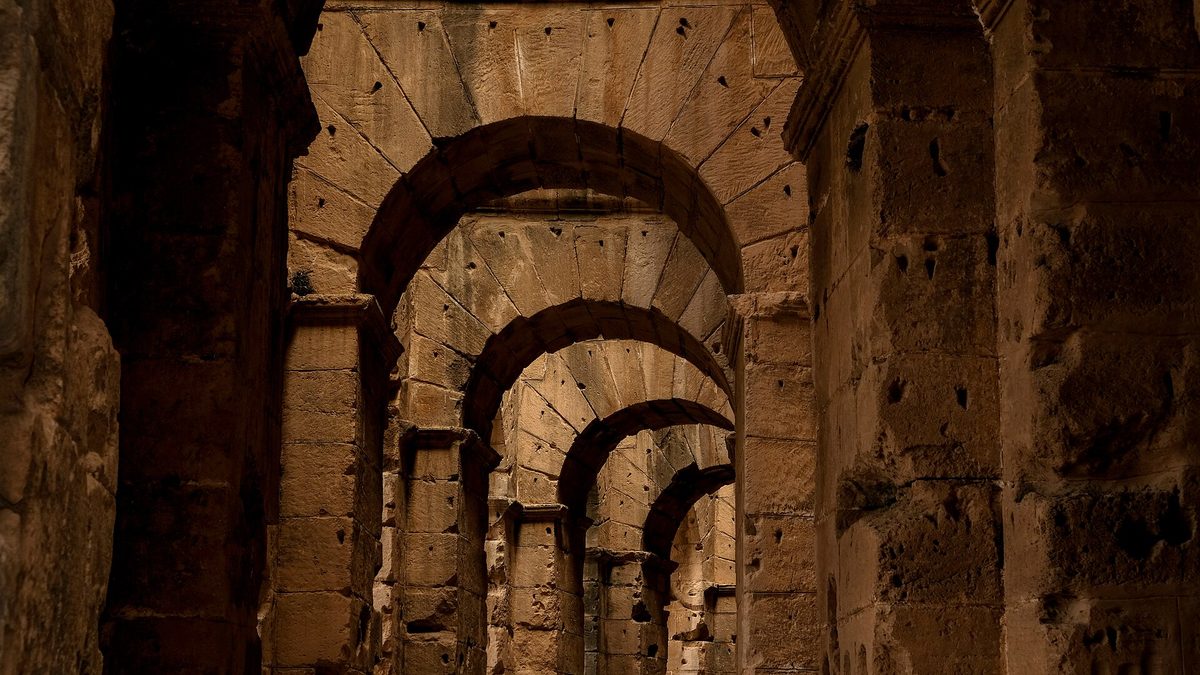
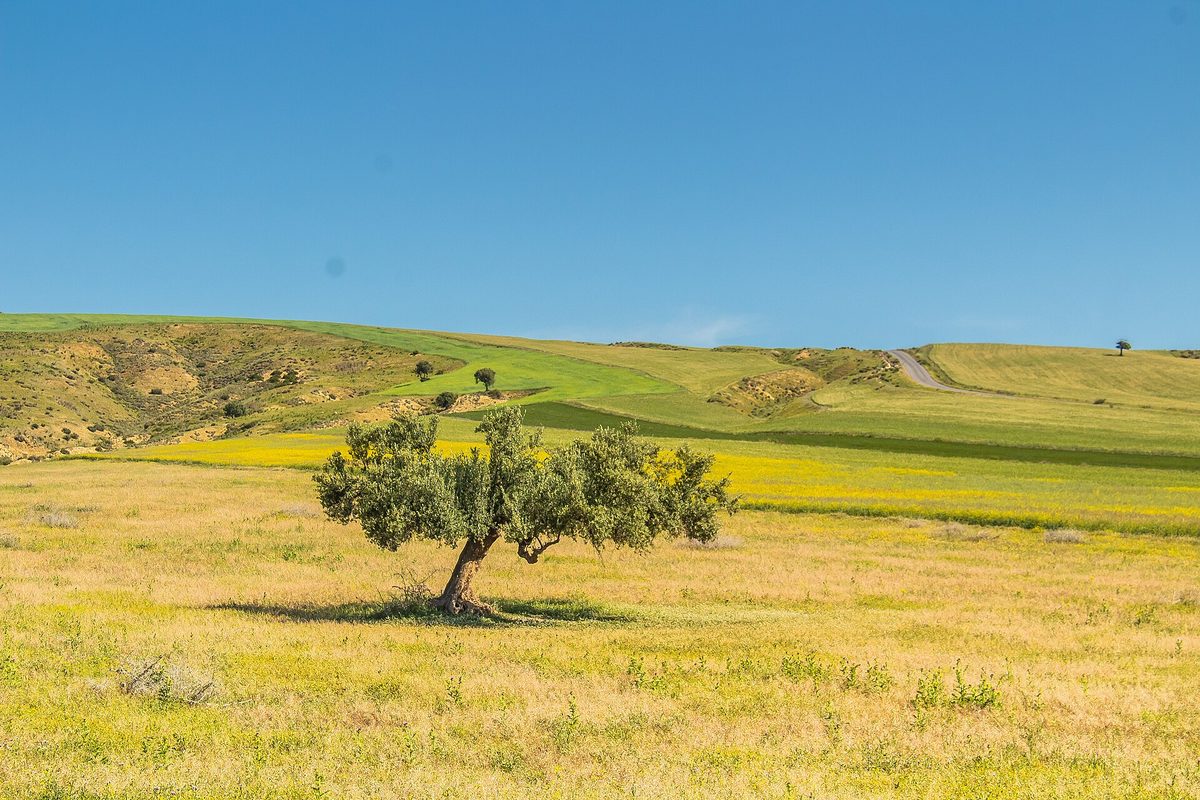
All images via Wikimedia Commons, used with thanks: Sidi Bou Said © Sharon Hahn Darlin (CC BY 2.0); Cap Bon citrus © Szymon9 (CC BY-SA 4.0); Hammamet beach © Faresbenrayana (CC BY-SA 4.0); Sahara dunes © Dennis G. Jarvis (CC BY-SA 2.0); El Jem amphitheatre © Brunodias.photography (CC BY-SA 4.0); Tunisian olive grove © Smailtn (CC0).
One response to “Best Time to Visit Tunisia: Month-by-Month Guide (2026)”
[…] across a full trip, our Tunisia itinerary guide maps out how many days you really need, and our best time to visit guide will tell you whether the ruins will be baking or the desert nights freezing when you […]