Researched on the ground and updated 6 June 2026. Prices in Tunisian dinars (TND) with pound conversions at roughly £1 = 3.85 TND. FCDO travel advice quoted exactly as published (last updated 23 February 2026, checked 6 June 2026).
The best beaches in Tunisia are Sidi Mahres on Djerba for classic white-sand resort holidays, La Mansoura at Kelibia for clear water, Mahdia for the mainland’s finest quiet sand, and Sidi Ali el Mekki for wild beauty an hour from Tunis. The Sahel strip — Sousse, Port El Kantaoui, Skanes — is where most UK package holidays land.
I’ve been swimming my way around Tunisia’s coast for years — all 1,148 km of it, from the Algerian border to the Libyan one — and I’ll tell you something most beach listicles won’t: this is two different countries. There’s the Tunisia of the brochures, a chain of raked hotel sand from Hammamet to Djerba where your biggest decision is pool or sea. And there’s the other Tunisia — pine-backed coves in the north where you might share a kilometre of sand with three fishermen and a dog, and where the water goes a shade of glassy turquoise that genuinely embarrasses some Greek islands I could name.
Most guides to Tunisian beaches are written by people who have clearly never stood on most of them. They call everything “white sand” (most of it is golden), they ignore the entire north coast, and they never mention the things you actually notice when you’re there: the seagrass, the jellyfish weeks, the sunbed men, the fact that every beach in the country is public by law no matter what a hotel tells you. So this is my attempt at the guide I wish existed — 17 beaches, ranked honestly, north to south, with the practical bits attached.
The best beaches in Tunisia at a glance
| Beach | Where | Sand | Best for |
|---|---|---|---|
| 1. Sidi Mahres | Djerba (north-east coast) | White, soft | Classic resort holidays |
| 2. La Mansoura | Kelibia, Cap Bon | White, powder-fine | Clearest water in Tunisia |
| 3. Mahdia | Sahel coast | Pale gold, fine | Quiet luxury, families |
| 4. Sidi Ali el Mekki | Near Ghar el Melh, north | Golden spit | Wild day trips from Tunis |
| 5. Hammamet | Cap Bon south coast | Golden | First-timers, packages |
| 6. Seguia | Djerba (south-east) | Golden, shallow | Small children |
| 7. Skanes | Monastir | Golden | All-inclusive ease |
| 8. Raf Raf | North coast | Fine gold | Scenery (Pilau island) |
| 9. Port El Kantaoui | North of Sousse | Golden | Marina resort comfort |
| 10. Tabarka | North-west, Coral Coast | Dark gold, coarser | Diving, green scenery |
Numbers 11 to 17 — Ras ed Drek, Boujaffar, Zarzis, Cap Serrat, Kerkennah, the Tunis city beaches and Ras R’mal — get their full write-ups below, because a ranking only tells you so much. A beach that’s perfect for a couple with a hire car is useless for a family of five on an all-inclusive, so I’ve organised everything by coast, the way you’d actually travel it.
How I judge a Tunisian beach (and why “white sand” is usually a lie)
Every beach in this guide I assess on the same five things: the sand itself, how the water shelves (toddler-flat or instant swim?), facilities and food, hassle level, and how it feels in high season versus the shoulder months. Where a beach has a flaw, I’ll tell you, because Tunisian beaches have a few recurring ones that the brochures airbrush out.
First, the sand. Genuine white sand exists in Tunisia — on Djerba, at La Mansoura near Kelibia, at Mahdia — but the default along the package coast is a handsome pale gold. Competitor guides that promise “700 miles of pristine white sand” are quoting the length of the entire coastline, cliffs and ports included, which should tell you how carefully they’ve checked the rest.
Second, the seagrass. In autumn and winter, many beaches — Djerba especially — develop brown banks of dried posidonia seagrass along the tideline. Hotels in the tourist zones rake it away daily in season; on wilder beaches it stays, and it’s deliberate. Those banquettes protect the sand from winter erosion, and the seagrass meadows offshore are why the water is so clear in the first place. It isn’t dirt and it isn’t neglect, but if you book a Djerba holiday in November expecting July’s catalogue beach, you’ll meet it.
Third, the calendar matters more here than almost anywhere in the Med. Tunisian beach life runs roughly June to September; outside those months, beach bars shut, lifeguards vanish and whole resort strips go quiet. I’ve covered the month-by-month picture — sea temperatures included — further down, and in detail in my guide to the best time to visit Tunisia.
Which Tunisian coast is for you?
Tunisia’s beaches sort themselves into five coasts, and picking the right one matters more than picking the right hotel. Here’s the thirty-second version, including which airport serves each — useful, since easyJet and TUI between them connect a dozen UK airports to Enfidha (NBE) and Djerba (DJE) this summer, while Monastir (MIR) currently has no direct UK service and is reached via Enfidha, about 45 minutes up the road.
| Coast | Character | Headline beaches | UK arrival airport |
|---|---|---|---|
| The wild north | Green hills, empty sand, no big hotels | Sidi Ali el Mekki, Raf Raf, Cap Serrat, Tabarka | Tunis (TUN), then drive |
| Cap Bon | Clear water, Tunisian summer culture | La Mansoura, Ras ed Drek, Hammamet | Enfidha (NBE) |
| Gulf of Tunis | City beaches, café society | La Marsa, Gammarth | Tunis (TUN) |
| The Sahel | Package-holiday heartland | Boujaffar, Port El Kantaoui, Skanes, Mahdia | Enfidha (NBE) |
| Djerba & the south | White sand, warmest sea | Sidi Mahres, Seguia, Zarzis | Djerba (DJE) |
If you’re still deciding where to base yourself — resort versus town, all-inclusive versus riad — I’ve written a full breakdown in where to stay in Tunisia. What follows is the coast-by-coast tour, starting in the green north-west and finishing at the Libyan-border end of the map.
The wild north: Tunisia’s best-kept beach secret
Nobody on a UK package sees this coast, and that’s precisely its charm. From Bizerte west to the Algerian border, northern Tunisia is green — properly green, cork oaks and pines down to the waterline — and the beaches are the emptiest genuinely beautiful sand I know anywhere on the Mediterranean’s southern shore. You need a hire car or a taxi negotiation to reach most of them, there are barely any facilities outside July and August, and I’d plan them as day trips or a touring loop from Tunis rather than a beach-resort week. That trade-off will either sell this coast to you instantly or rule it out. Both are correct answers.
1. Sidi Ali el Mekki — the north’s showpiece
About an hour and a quarter’s drive from Tunis, past the old corsair port of Ghar el Melh, the road runs out at a golden spit of sand between a turquoise sea and a flamingo-flecked lagoon, with a hermit’s shrine dug into the headland above. Seen from the cape, Sidi Ali el Mekki looks frankly tropical — a curl of pale sand and gin-clear shallows that you’d happily believe was the Caribbean until the call to prayer drifts over from the village.
In July and August a strip of palm-frond huts and beach cafés appears (you can usually rent a simple hut for the day for a modest, negotiable sum) and Tunisian families arrive in force at weekends; come midweek, or in June or September, and it’s gloriously sparse. The lagoon system behind the beach is serious ecology, not scenery filler — Ghar el Melh lagoon has been a Ramsar-protected wetland since 2007, and in 2018 the town became the first in Africa and the Arab world to earn Ramsar “Wetland City” status. The shallow water warms early in the season, the shelving is gentle, and the only real downsides are weekend crowds in peak summer, patchy rubbish collection at the car-park end, and zero infrastructure off-season. Bring cash, water and shade.
Verdict: the best wild beach within easy reach of Tunis, and the day trip I recommend to anyone staying in the capital. Pair it with lunch in Ghar el Melh village.
2. Raf Raf — the postcard view

Twenty minutes east of Sidi Ali el Mekki, Raf Raf beach pulls off one of the great Mediterranean party tricks: a long ribbon of fine sand staring straight at Pilau, a conical rock island moored about a mile offshore like a miniature Gibraltar that wandered off. It’s the view that makes Raf Raf — local photographers never tire of it, and neither have I.
The village above is famous for its muscat grapes, which appear at stalls along the beach road in late summer, and the whole place runs on Tunisian weekenders rather than foreign tourism: expect grilled-fish restaurants, casual café service, busy Sundays, and very little English. The sand shelves gently, though the bay is more exposed than Sidi Ali el Mekki, so on a windy day you’ll get proper waves. Out of season you’ll have it almost to yourself, minus the facilities.
Verdict: the most photogenic beach in northern Tunisia. Come for a half-day with a camera and an appetite.
3. Cap Serrat and Sidi Mechreg — beaches with Roman plumbing
Halfway between Bizerte and Tabarka, a winding 10 km lane drops off the Sejnane road through cork forest to Cap Serrat, where long strands of sand run away on either side of a lighthouse-topped headland. There’s a seasonal café-camp or two, some summer tents, and otherwise nothing but forest, dunes and sea — this stretch is classed as a sensitive natural zone, and it feels like it. The neighbouring bay at Sidi Mechreg goes one better: the crumbling arches of a small Roman bath complex stand directly on the sand, which means you can swim off a beach the Romans built a spa on. I find that detail irrationally pleasing every single time.
Be realistic with logistics. You want your own wheels, a full tank and supplies; the nearest proper towns are a long way back up the lane, and mobile signal dips in the valleys. Swim with care when the sea is up — these are open, unsupervised Mediterranean beaches with nobody to fish you out.
Verdict: the wildest swimmable sand in the country. If “empty beach, Roman ruin, cork forest” sounds like your perfect afternoon, nowhere else in Tunisia comes close.
4. Tabarka — the Coral Coast one-off

Tucked under green mountains 20-odd kilometres from the Algerian border, Tabarka doesn’t feel like the rest of Tunisia. A Genoese fort — garrisoned by the Lomellini family from 1540 to 1742 — watches over a harbour where the shore erupts into Les Aiguilles, a row of weathered rock “needles” up to 20 metres tall that glow ochre at sunset. The town beach is a broad crescent of darker, coarser gold than the postcard south, backed by a low-key strip of hotels, and the sea here is the clearest cold-rinse blue on this coast.
Tabarka’s real fame is underwater: this is the historic red-coral coast, with some of the best diving in Tunisia across 30-plus sites, at its clearest between May and October. Add the famous jazz festival in summer, mountain air from neighbouring Ain Draham, and an utterly different green landscape, and you have Tunisia’s best beach town for people who get bored on beaches.
Now the question everyone asks: the border. Here is the FCDO‘s current position, quoted exactly (advice last updated 23 February 2026, checked 6 June 2026). The FCDO advises against all but essential travel to “areas north and west of the town of Ghardimaou in Jendouba Governorate, including El Feidja National Park” and “within 20km of the Tunisia-Algeria border in El Kef and Jendouba governorates, south of the town of Jendouba, including the archaeological site of Chemtou”. Those zones sit inland and south of here — Tabarka town and its coast lie outside every advisory area, and the official FCDO map shows the town clearly in the unrestricted zone. Check the advice before you travel as a matter of habit; I cover the wider picture in my honest guide to safety in Tunisia.
Verdict: worth the four-hour haul from Tunis for divers, festival-goers and anyone who wants their beach with scenery and a backstory. Sand connoisseurs should head south instead.
Detour for the map-obsessed: 15 km west of Bizerte, the rocky headland of Cap Angela is the northernmost point of mainland Africa — officially confirmed in 2014, complete with an Africa-shaped monument and an arrow pointing 8,060 km to Cape Agulhas at the other end of the continent. It’s a windswept photo stop with wild coves around it rather than a swimming beach, but if you’re touring the north, the bragging rights cost you an hour.
Cap Bon: clear water and Tunisian summer
The Cap Bon peninsula points at Sicily like a finger, and its tip and eastern shore hide the clearest swimming water in the country. This is where Tunisian families summer — Kelibia and El Haouaria in August are a culture in themselves — and where you’ll eat the best grilled fish of your trip for the price of a UK meal deal.
5. La Mansoura, Kelibia — the clearest water in Tunisia

I’ll say it plainly: on a calm June morning, the water at La Mansoura is the clearest I’ve swum in Tunisia, and it’s not an especially close contest. The sand is white and powder-fine, the shallows stay knee-deep for ages, and the whole scene is overseen by Kelibia’s enormous fortress on its 150-metre rock — Punic in origin (the city began as Aspis, founded by Agathocles of Syracuse at the end of the 4th century BC), though the walls you see today were raised by the Byzantines at the end of the 6th century AD. Sunset from those ramparts, with the beach below and Pantelleria sometimes visible on the horizon, is one of my favourite views in the country.
August weekends get rammed with Tunisian holidaymakers and the foreshore sprouts cafés and pedalos; walk north past the Cap Bon Kelibia Beach Hotel and the crowds thin fast. Foreign tourists remain rare enough that you’ll be a minor curiosity. Facilities are local-summer standard: seasonal cafés, casual loungers, no British-resort polish.
Verdict: the best beach in Tunisia that almost no British visitor has heard of. If clear water is your whole criterion, this is your number one.
6. Ras ed Drek and El Haouaria — the tip of the finger

At Cap Bon’s very point, below the hill where banks of migrating raptors stream across to Sicily each spring, Ras ed Drek is a long white-sand local favourite with a scatter of summer cafés and a view across the strait that makes you squint for Europe. Clamber over the rocky rise to the north and you find a string of pebble-and-sand coves with water so clear the boats look airborne. The nearby Ghar el Kebir caves — sandstone quarries worked by Carthaginians and Romans for a thousand years — add the obligatory Tunisian layer of antiquity to your beach day.
On the gulf side of the peninsula, the spa hamlet of Korbous pulls off a genuine oddity: at Aïn Atrous, a hot spring at around 50°C gushes down the rocks straight into the sea, and bathers wallow in the warm mixing zone where spring meets Mediterranean — most entertaining in the cooler months, when the contrast is greatest. It’s a curiosity dip rather than a beach day, but it’s free, faintly surreal, and very Tunisian.
Verdict: combine Ras ed Drek, the caves and Kelibia into one Cap Bon road-trip day and you’ve had one of Tunisia’s great coastal days out for the cost of lunch and petrol.
7. Hammamet and Yasmine Hammamet — the classics

Hammamet is where Tunisian beach tourism began, and the fundamentals still hold: a vast, gently shelving arc of golden sand wrapping a whitewashed medina, with water warm enough for proper swimming from June into October. The town beach immediately south of the medina is the picturesque one — fishing boats, kasbah backdrop — while the sand improves and widens as you head south-west down the hotel strips.
Crucially, “Hammamet” on a booking site means one of two different places. Hammamet proper is the original town with the medina and a beach used by real Tunisians as well as tourists; Yasmine Hammamet, 10 km south, is a purpose-built resort zone from the 1990s with a 700-plus-berth marina, a replica medina, and a broad, manicured beach lined end-to-end with big hotels. Yasmine’s sand is wide and well-groomed and its sea is flat and family-friendly; what it isn’t is Tunisia in any meaningful sense. I’ve unpacked the two (plus the quieter Hammamet Sud in between) in my full Hammamet guide.
Expect high-season hassle from beach traders on the main strips — a polite, firm “la, shukran” works — and expect banana boats, parasailing and camel-photo men. That’s the deal at any big-name Mediterranean resort beach, and Hammamet wears it better than most.
Verdict: still the best all-round package beach on the mainland. Town end for character, Yasmine for small kids and step-off-the-plane ease.
The Gulf of Tunis: beaches with a metro stop
8. La Marsa and Gammarth — the capital’s seaside
Tunis is one of the few capitals anywhere with proper sandy beaches on its doorstep: ride the TGM suburban train to its terminus and you’re at La Marsa, the city’s smart seaside suburb, where a long golden city beach fronts a corniche of cafés and ice-cream parlours. Around the headland, Gammarth is the upmarket strip — hotel beach clubs, summer DJ bars, and wide sand that gets cleaner and quieter the further north you walk towards Raoued.
Manage expectations: these are urban beaches, busiest on summer evenings and weekends, with the people-watching as much the point as the swimming. Water quality is generally fine on the open strands here, but the health ministry publishes an annual list of banned bathing spots that is almost entirely made up of urban corners of greater Tunis and Bizerte — local advice, or the absence of local swimmers, is your cue. For a dip-plus-culture day, swim at La Marsa, then take the TGM two stops back to Sidi Bou Said for sunset over the marina — the famous blue-and-white village has its own small beach and lido scene below the cliff, and the combination is pure Tunis. More in my Tunis guide.
Verdict: not worth flying to Tunisia for on their own — but as the beach wing of a city break, the La Marsa–Sidi Bou Said combination is unbeatable.
The Sahel: Tunisia’s package-holiday heartland
From Hergla down to Mahdia, the Sahel (“coast” in Arabic, fittingly) is one near-continuous ribbon of golden sand, and it’s where the great majority of UK package holidays to mainland Tunisia actually happen. Fly into Enfidha, transfer 30–60 minutes, unpack once: the formula has worked for half a century. My full Sousse and Sahel coast guide covers the towns; here’s how the sand itself stacks up.
9. Boujaffar, Sousse — the city beach with everything
Sousse is a proper Tunisian city of half a million people that happens to have a holiday beach grafted onto its front — and Boujaffar is that beach, a wide band of pale sand running from the medina end north along an avenue of palms, cafés and hotels. The sand is better than a city deserves, the shallows are flat and supervised in season, and everything — ATMs, pharmacies, late-night brochetterie — is two minutes’ walk inland. The price is crowds, jet-ski buzz, evening promenade chaos and more attention from vendors than anywhere else on this list. I find it cheerful rather than oppressive, but if you want serenity, this isn’t where you book.
Verdict: the best beach in Tunisia for people who hate being marooned in a resort bubble. Town, train station, real life — and sand — all in one place.
10. Port El Kantaoui — the purpose-built crowd-pleaser

Ten kilometres north of Sousse, Port El Kantaoui was built from scratch in 1979 around a 340-berth marina done out in whitewashed Andalusian style, and it remains the Sahel’s prettiest piece of resort theatre: gulets and yachts in the harbour, golf behind, and a long, well-kept golden beach fronting the hotel gardens to the south. The sand shelves gently, watersports are everywhere, and the marina restaurants give you somewhere genuinely pleasant to stroll of an evening — which is more than most purpose-built zones manage.
I won’t gloss the history: in June 2015, this beach was the site of the terrorist attack in which 38 tourists, 30 of them British, were murdered. Security across Tunisian resorts was transformed afterwards and the FCDO assesses the country in far better terms today — but I’d rather you hear the name from me with the context than stumble on it mid-holiday. The fuller picture, including exactly what the FCDO says now, is in my safety guide.
Verdict: the most polished all-round resort beach on the mainland. If you want the Sahel formula executed at its best, it’s here.
11. Skanes, Monastir — the all-inclusive mile

Between Monastir‘s airport and its golden-stone ribat runs Skanes: a long, straight hotel beach of soft gold sand where the transfer coach takes ten minutes and the sea stays shallow for a comfortingly long way out. This is Tunisia’s all-inclusive heartland — the beach itself is largely parcelled into hotel frontages with loungers, bars and watersport stations — and as a place to park a family for a week with minimum friction, it does exactly what it promises. Monastir town, ten minutes away, supplies the culture: the 8th-century ribat (a film star, having played both Jerusalem in Jesus of Nazareth and, less reverently, the fortress in Monty Python’s Life of Brian), the Bourguiba mausoleum, and a marina-side city beach with a promenade if you fancy sand with civilians on it.
Verdict: the easiest beach holiday in Tunisia, logistics-wise. Choose your hotel carefully and check the airport flight path on a map if you’re a light sleeper.
12. Mahdia — the mainland’s finest sand

Keep going past where most of the coaches stop and the Sahel saves its best for last. Mahdia’s zone touristique, north of the old town, is regularly described as the finest beach on the Tunisian mainland, and I won’t argue: pale, fine sand that genuinely approaches white, a clean and gently shelving sea, and a fraction of Sousse’s crowds or hassle. The hotel strip is small and low-rise by Tunisian standards, the sand south towards Rejiche gets quieter still, and the old town — out on the slender Cap Afrique peninsula, past the Ottoman Borj el Kebir fort and a sea-sprayed marine cemetery that is one of the most atmospheric spots in the country — is the prettiest on the coast.
Verdict: the best beach on mainland Tunisia for sand quality and calm, and my pick for couples and families who want package convenience without the circus. The catch: fewer big-brand hotels and a longer transfer (roughly 1¾ hours from Enfidha).
Further south, the low-key summer towns of Salakta and Chebba — the latter under the lighthouse cape of Ras Kaboudia, where the Byzantine army of Belisarius landed in AD 533 — carry on the quiet-sand theme for drivers in no hurry. Both flew the Blue Flag in years past; Tunisia has no current Blue Flag sites, so treat any such claim you read as historical.
The islands and the deep south: white sand, warmest water
13. Kerkennah — the anti-beach beach
An hour off Sfax on the SONOTRAK ferry (sailings roughly every hour or two through the day, around a dinar for foot passengers — call it pocket change — and a few dinars for a car), the Kerkennah Islands are flat, palm-dotted and almost waveless, fringed by water that takes a hundred metres to reach your waist. Let me be honest in a way most guides aren’t: if your measure of a beach is sand quality and swimmability, Kerkennah will disappoint you. The shores are narrow, weedy in places, and the sea is a giant warm paddling pool.
What Kerkennah offers instead is the Tunisia of forty years ago: palm-frond fish traps (charfia) staked across the shallows in autumn and winter, octopus pots stacked on jetties, grilled seafood that was swimming that morning, and sunsets over glassy water that I’d put against anywhere in the Med. Come for two slow nights, hire a bike, eat fish. Just don’t come for the swimming.
Verdict: the best place on this list to do nothing beautifully; the worst place on this list to actually swim.
14. Sidi Mahres, Djerba — Tunisia’s flagship beach
Here it is: the long, soft, genuinely white strand along Djerba’s north-east coast that built the island’s tourist industry, with shallow turquoise water, palm shade and a sea that’s reliably the warmest in Tunisia — swimmable from May to November, a clear month longer than the mainland resorts. Practically every big hotel on the island fronts this sand (the zone touristique runs from near Houmt Souk down towards the Taguermess lighthouse), and at its best — June, September — Sidi Mahres is everything the brochure says.
The honesty clause: in shoulder season the seagrass banquettes appear, hotel frontages are raked daily but public stretches aren’t, and a few half-finished or shuttered hotel blocks punctuate the strip — legacies of leaner tourism years. None of it has ever spoiled a holiday I’ve spent there, but you should arrive knowing the catalogue photo is a summer photo. One spelling note for your map app: you’ll see Sidi Mahres, Mahrez and Mahares; same beach.
Verdict: the best resort beach in Tunisia, full stop. The whole island around it — Houmt Souk’s markets, Erriadh’s street art, the El Ghriba synagogue — is covered in my complete Djerba guide.
15. Seguia and the south-east — Djerba for families

Round the corner at Djerba’s south-eastern tip, between Aghir and the Lalla Hadria headland, Seguia is my pick for small children anywhere in the country: golden sand and water that stays shin-deep for what feels like half the distance to Libya, with a more local, less corporate feel than the main strip (one abandoned ex-Club Med site sits behind the beach — eyesore for some, atmosphere for others). The quieter sands at Sidi Yati carry the same easy shallowness on towards Zarzis.
Off the north coast, the sandspit of Ras R’mal — “Flamingo Island” — is Djerba’s signature boat trip: pirate-ship outings from near Houmt Souk to a bar of white sand and shallow lagoons, lunch included. Two truths the ticket sellers skip: it’s the flamingos’ winter residence, roughly November to March, so summer visitors should expect sandbars and gulls rather than pink birds; and on August days the spit can host several boatloads at once. Go early-season or late, and it’s magic.
Verdict: Seguia for toddlers, Ras R’mal for the photo, Sidi Mahres for the holiday.
16. The kitesurf lagoon — Djerba’s flat-water playground

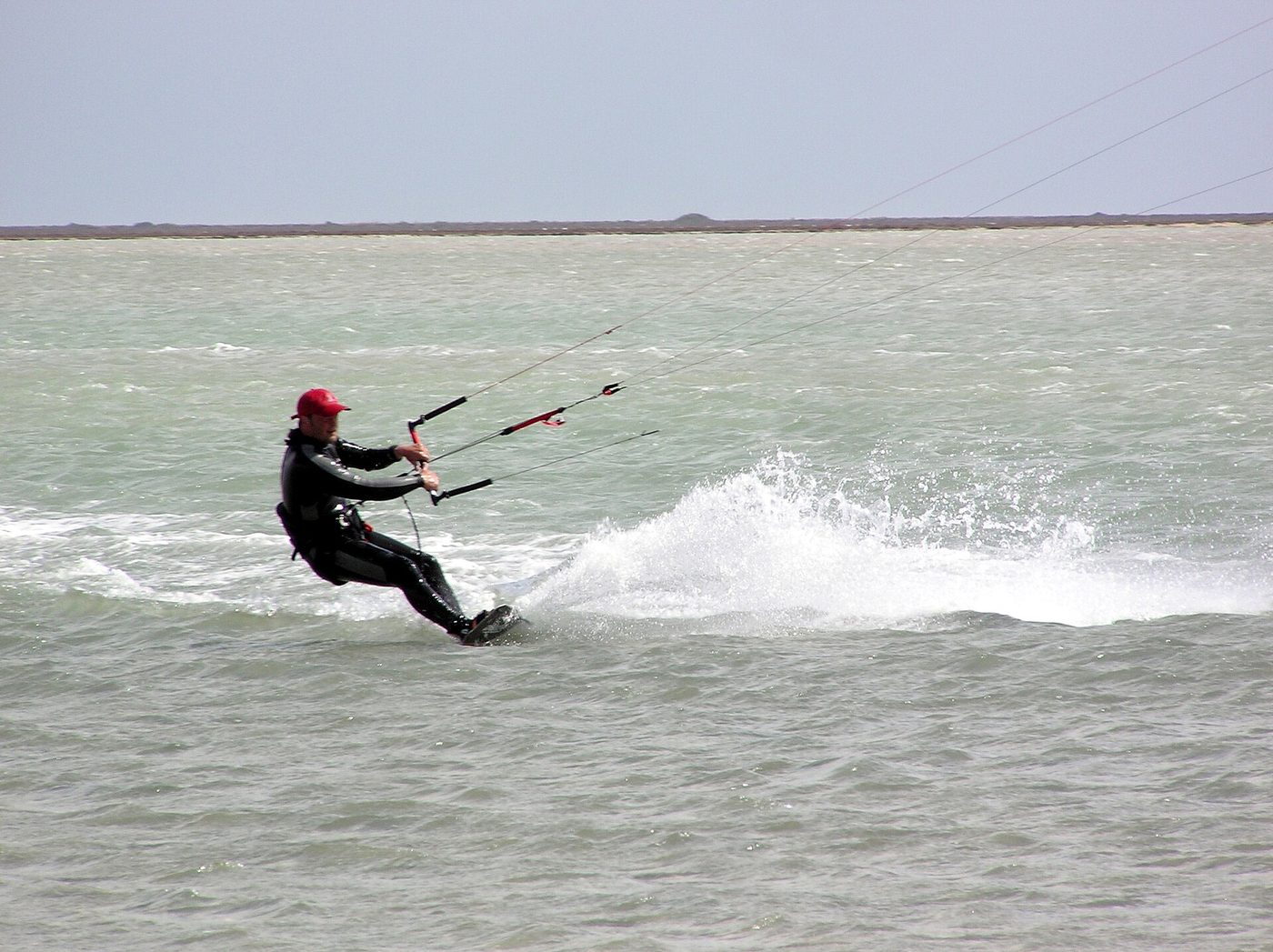
Djerba hides one more world-class beach asset that most package guests never notice: the vast lagoon at El Kantara on the island’s south-east side, near the Roman causeway — roughly 40 square kilometres of butter-flat water mostly between knee and waist deep. For learning to kitesurf, conditions like these are about as forgiving as the sport gets, and a cluster of schools (around the lagoon and at Aghir) run lessons from roughly March to November, with the most reliable thermal winds in high summer. I’ve watched complete beginners riding within a long weekend here; try that on a choppy European sea.
Verdict: the best place in Tunisia to learn a watersport — and a genuinely good reason to pick Djerba over the mainland if that’s on your list.
17. Zarzis — the far south, without the crowds

Beyond Djerba on the mainland, Zarzis is Tunisia’s last beach town before the map runs out: kilometres of pale sand backed by real palm groves at Sangho and Oamarit, the warmest sea in the country, low-tide sandbars that turn the shallows into rippled white flats, and a fraction of the development an hour north. A small clutch of hotels serves mainly French and Tunisian visitors; British package tourism hasn’t really found it, which for some of you is the entire pitch.
The geography question, answered exactly. The FCDO advises against all but essential travel “to within 75km of the Tunisia-Libya border, including Remada and El Borma but excluding Zarzis, the C118 road and all areas in Medenine Governorate north of the road” (advice last updated 23 February 2026, checked 6 June 2026). In plain English: Zarzis — like all of Djerba — is explicitly carved out of the border advisory by name. Read the advice yourself before booking, as ever.
Verdict: for independent travellers who want southern warmth, empty sand and a working Tunisian town, Zarzis is the quiet find of this list. Package purists should stay on Djerba.
Honourable mention for completists: Chaffar, south of Sfax, where the city’s families have summered in beach villas since the 1960s — a slice of local seaside life no tour bus visits.
Sea temperature in Tunisia, month by month
The single most-asked question about Tunisian beaches: how warm is the sea, really? Here are the long-run averages from satellite data, rounded to the nearest degree. My UK-calibrated commentary: anything from about 22°C reads as “pleasantly warm”, and the August sea off Djerba is bathwater by any standard you care to use.
| Month | Hammamet | Sousse | Djerba |
|---|---|---|---|
| May | 19°C | 19°C | 21°C |
| June | 23°C | 23°C | 25°C |
| July | 26°C | 26°C | 28°C |
| August | 27°C | 27°C | 29°C |
| September | 27°C | 27°C | 28°C |
| October | 24°C | 24°C | 25°C |
Three takeaways. First, Djerba runs one to two degrees warmer than the mainland all season — it’s the only Tunisian destination where May swimming is comfortable rather than character-building. Second, September quietly beats June for sea warmth everywhere, which is why I rate it the smartest beach month of the year. Third, the north coast runs cooler and choppier than any of these. The full seasonal picture — weather, crowds, prices, Ramadan dates — is in my month-by-month guide to the best time to visit Tunisia.
Jellyfish, seagrass and the other things nobody puts in the brochure
Time for the section that makes this guide either useful or unpopular, depending on who you ask.
Jellyfish are a real, intermittent feature of Tunisian summers. The main culprit is the mauve stinger (Pelagia noctiluca — locals say “horrika”, roughly “the burner”), small, purplish and properly unpleasant, which arrives in wind-blown blooms. The traditional season was late August; in recent warm years swarms have appeared as early as June, and the east-coast gulfs — the Sousse–Monastir–Mahdia stretch and around to Sfax — tend to see the worst of it, with Hammamet often luckier. Some summers barely register a sting; others bring a bad fortnight. If you’re stung: rinse with seawater (never fresh water), scrape off any tentacle fragments with a card edge, and a pharmacy gel sorts the rest. One newer arrival deserves its own line: Portuguese man o’ war — a blue-violet floating balloon, far more serious — was sighted off Tunisian coasts in late May 2026, including near Tabarka. Sightings were brief and isolated, but the rule is absolute: never touch one, even dead on the sand, and report it to the lifeguard.
The brown stuff on the tideline is seagrass, and it’s meant to be there. Posidonia banquettes protect beaches from winter erosion and signal a healthy sea; resort zones rake them away daily in season, wild beaches don’t. November Djerba is not July Djerba. Now you know, which puts you ahead of half of TripAdvisor.
Cleanliness varies — and it’s being worked on. Away from hotel-raked frontages, Tunisian beaches can carry litter, especially after busy weekends; it’s the country’s most honest beach flaw. The state runs an annual cleaning programme that this summer covers more than 150 beaches nationwide (launched 1 June 2026, expanded after January’s storms), and the difference on managed sands is visible. On wild beaches, carry your rubbish out — standards rise exactly as fast as visitors’ do.
Flags and lifeguards run summer-only. Supervised beaches use a simple flag system (the FCDO’s advice: “Some beaches have a flag system. Make sure you understand the system and follow any warnings”) — red means stay out, and on unsupervised wild beaches you are your own lifeguard, with currents on the north coast deserving particular respect. Lifeguard posts generally operate from June to mid-September.
Beach law, sunbeds and etiquette: how Tunisian beaches actually work
Every beach in Tunisia is public. The shore is state maritime public domain, and the coastal agency APAL is explicit that its use is free, equal and open to all; licensed concessions (the sunbed-and-café operators) are legally capped — installations may take up at most half the beach’s width, and the rest must stay freely accessible. In practice: no hotel can lawfully fence you off the sand, “private beach” means “private loungers”, and you can lay your towel on the free half of any strip in the country. Hotels’ own loungers are typically free for their guests; on public stretches, expect to pay roughly 5–15 TND (£1.30–£3.90) for a bed-and-parasol set depending on the beach and the season — agree the price before you sit down, the one rule that prevents 90% of beach arguments. Beach car parks have official guidance capping fees at about 5 TND.
What to wear: simpler than the internet thinks. Bikinis and swimsuits are completely normal on every resort and city beach in this guide — the FCDO’s own wording is that “beach-appropriate clothing in holiday resorts is acceptable”, with modest dress the custom at religious sites and in remote areas. My practical additions: topless sunbathing is not customary anywhere public (whatever you may glimpse at the odd hotel pool — public indecency is an actual offence in the penal code, so keep it for destinations that welcome it), local women often swim in more coverage and nobody will expect you to match them, and a cover-up for the walk from sand to café is basic good manners. On wild and rural beaches, dial the swimwear modesty up a notch; you’ll likely be sharing the sand with families. Finally, the FCDO notes that reports of harassment rise in summer, including at quieter beaches — solo women I know rate busy resort sands as entirely comfortable and recommend the usual big-city instincts on empty ones. More on all of this in the safety guide.
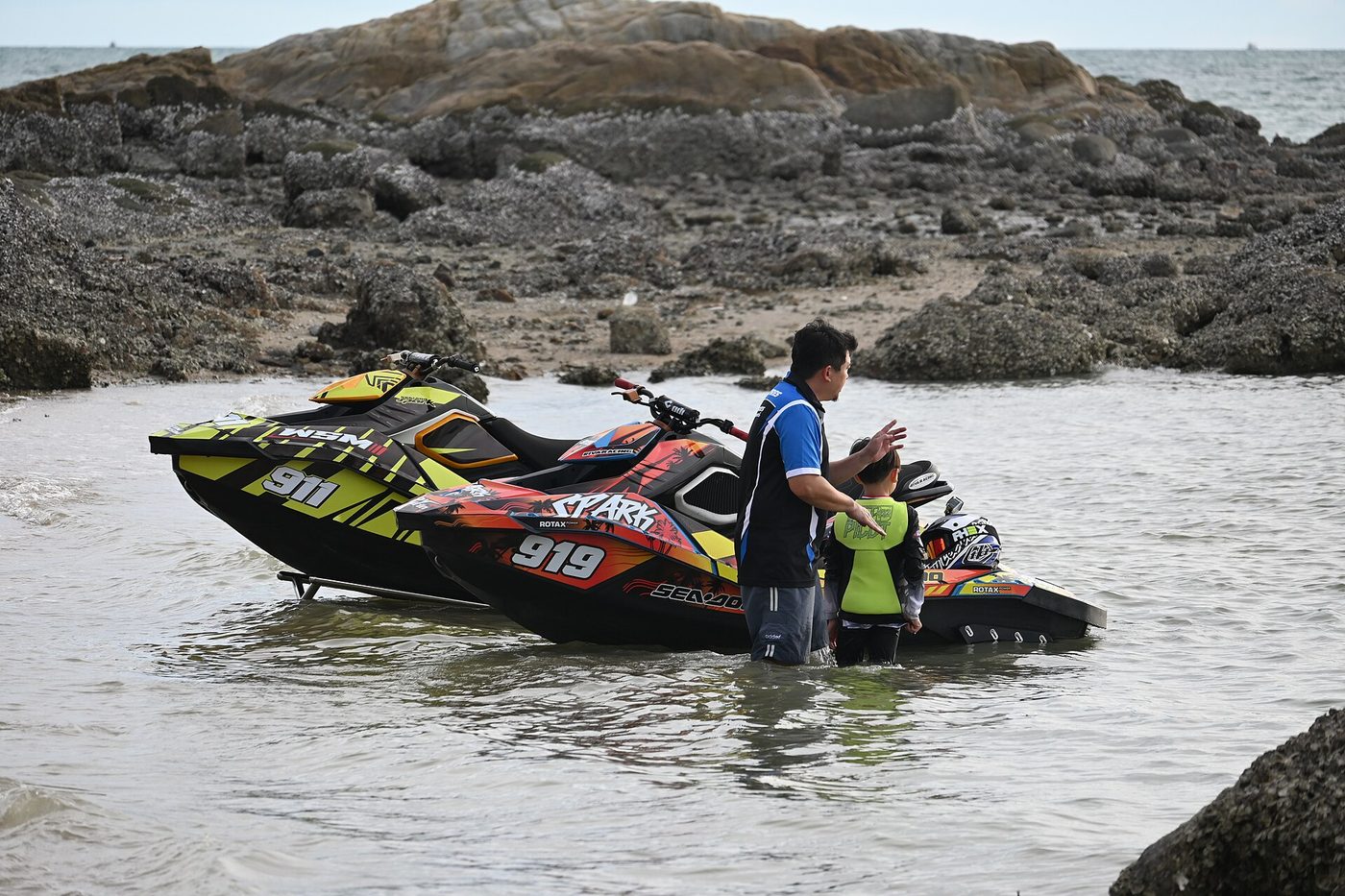
Watersports pricing is negotiable theatre. Jet skis, parasailing, banana boats and pirate-ship trips line every resort beach from June to September; there are no fixed prices, so treat the first number as an opening bid, agree exactly what’s included, and pay at the end. For divers, Tabarka is the serious destination; for everyone else, the Djerba lagoon (beach 16, above) is the standout actual sport. Surfing, for the curious: Tunisia has a tiny scene around La Marsa and Bizerte that fires a handful of days a year — pack a kite, not a board.
So which beach should you book?
| You are… | Book this | Why |
|---|---|---|
| A family with young children | Seguia (Djerba) or Yasmine Hammamet | Shallowest, calmest water; easiest logistics |
| A couple wanting quiet polish | Mahdia | Best mainland sand, least hassle |
| A first-time package visitor | Hammamet or Port El Kantaoui | The formula, done properly |
| A beach purist | Sidi Mahres (Djerba) | Tunisia’s best sand-sea-warmth package |
| An independent explorer | The wild north + Cap Bon by hire car | Sidi Ali el Mekki, Raf Raf, La Mansoura |
| A diver or scenery person | Tabarka | Coral Coast, mountains, character |
| Allergic to other tourists | Zarzis or Kerkennah | Warmth and slowness, no coaches |
Whichever you choose, the beach is rarely the whole holiday here — Roman cities, Saharan day trips and some of the best food in North Africa sit within reach of every resort on this list, and I’ve ranked the lot in my guide to the best things to do in Tunisia.
Tunisia beach FAQs
Does Tunisia have nice beaches?
Yes — genuinely excellent ones, and more varied than its package-holiday image suggests. Djerba and Mahdia offer soft white-to-pale-gold sand and warm shallow water; Kelibia’s La Mansoura has arguably the clearest sea in the country; and the wild north coast hides pine-backed strands most visitors never learn exist. The honest caveats are seasonal seagrass, occasional jellyfish weeks and variable cleanliness away from managed zones.
Which part of Tunisia has the best beaches?
For classic resort beaches, Djerba — Sidi Mahres is the country’s flagship sand and the sea is warmest there. For the mainland, Mahdia has the finest sand and Hammamet the best all-round resort package. For wild beauty, the north coast between Ghar el Melh and Tabarka wins, and Cap Bon has the clearest water.
What is the most popular beach in Tunisia?
By sheer visitor numbers, Hammamet’s bay (including Yasmine Hammamet) and Djerba’s Sidi Mahres strip host the most holidaymakers, with Sousse’s Boujaffar the busiest city beach. Among Tunisians themselves, summer favourites like Raf Raf, Kelibia and Sidi Ali el Mekki are the institutions.
Is the sea warm in Tunisia?
From June to October, yes. Expect about 23°C in June, 26–27°C in July and August on the mainland — Djerba runs warmer still, peaking around 29°C — and a pleasant 24–25°C hangover into October. May is brisk (19–21°C); proper swimming season starts in June and, around Djerba, stretches from May to November.
Does Tunisia have white sand beaches?
A few real ones: Djerba’s Sidi Mahres and Ras R’mal sandbars, La Mansoura at Kelibia, and Mahdia’s strip, which is as close as the mainland gets. Most of the package coast — Hammamet, Sousse, Monastir — is pale golden sand, whatever the brochures claim.
Can you wear a bikini in Tunisia?
Yes, everywhere tourists swim — resort beaches, hotel pools and city beaches alike, per the FCDO’s own advice. Topless sunbathing is not customary and is best avoided; pack a cover-up for cafés and the walk home, and dress more modestly on rural beaches and in town.
Are there jellyfish on Tunisian beaches?
Some summers, yes — wind-blown blooms of mauve stingers can arrive between June and early September, typically for days or a couple of weeks at a time, with the Sousse-to-Sfax gulfs most affected. Many seasons pass with barely an incident. Rinse stings with seawater, not fresh water, and ask the lifeguard about conditions.
Which Tunisian beach is best for families?
Seguia on Djerba for the shallowest, calmest water; Yasmine Hammamet and Skanes (Monastir) for all-inclusive convenience with gently shelving sand; Mahdia for families who prefer quiet to waterparks. All four combine easy transfers with supervised summer swimming.
Planning a beach holiday: our detailed guides
- Northern Tunisia’s wild beaches: Rafraf to Cap Serrat
- Tunisia sea temperature by month
- Diving & snorkelling in Tunisia
- Tabarka & the Coral Coast
- Kitesurfing in Djerba: the lagoon guide
- Watersports in Tunisia: prices by resort
Photo credits
All photographs via Wikimedia Commons, used with thanks: Sidi Ali el Mekki aerial © Citizen59 (CC BY-SA 3.0); Raf Raf and Pilau © Citizen59 (CC BY-SA 3.0); Les Aiguilles, Tabarka © Causseni Nour (CC BY-SA 4.0); La Mansoura, Kelibia © AmineKmira (CC BY-SA 4.0); Cap Bon coast at El Haouaria © Smailtn (CC0); Hammamet beach © Marc Ryckaert (CC BY 3.0); Port El Kantaoui marina © Jorge Franganillo (CC BY 3.0); Monastir beach © “Monastir” (CC0); Mahdia beach © Habib M’henni (CC BY-SA 4.0); Ras R’mal sandbar © Bilel Hawari (CC BY-SA 3.0); kitesurfing, Djerba © Henning Leweke (CC BY-SA 2.0); Zarzis sandbars © Smailtn (CC0).
The beach is rarely the whole holiday. Around it: a route that strings the coast together, how to travel between resorts, Roman ruins an hour from most sun-loungers, hammams and souks for the wind-down days, the Sahara and its Star Wars sets if you’ll trade sand for dunes — plus what to eat and the tips that keep it all easy.