
By the Tunisia Tourism Guide team · Last updated 19 June 2026 · All prices checked at publication
The best Tunisia excursions take you from a Roman amphitheatre that rivals the Colosseum to a night under canvas in the Sahara, with blue-and-white villages, holy cities, salt lakes and Star Wars film sets in between. Most cost between £30 for a half-day and £150 for a two-day desert overnight, and almost all can be booked from your resort in Hammamet, Sousse, Monastir or Djerba.
I’ll be honest with you from the start: the excursion desk in your hotel lobby is not your friend, or at least not your cheapest one. After several trips spent doing these tours — some brilliant, one or two I’d happily have skipped — I’ve learned that the difference between a great day out and a long, hot coach disappointment usually comes down to three things: picking the right trip for the way you like to travel, booking it through the right channel, and knowing what the day is actually going to feel like before you hand over your dinars.
This guide is built for the way most British visitors actually do Tunisia: flying into Enfidha, Monastir or Djerba on a TUI or easyJet package, based in a beach resort, wanting a few good days out without renting a car or learning Arabic. I’ve organised it so you can read it two ways — by the excursions themselves (ranked, with honest verdicts and real prices), and by where you’re staying, because the trip that’s a comfortable morning from Sousse can be an unrealistic slog from Djerba. There’s a section on booking without the rep markup, one on the excursions I think you should approach with your eyes open, and the safety facts quoted exactly from the Foreign Office. If you’re still deciding what to see at all, start with our overview of the best things to do in Tunisia; this page is about the organised tours and day trips specifically.
Tunisia excursions at a glance
| The essentials | The short version |
|---|---|
| Typical price range | £25–40 for a half-day; £45–90 for a full day with lunch; £90–150 for a two-day Sahara overnight |
| How to book cheapest | Online platforms (GetYourGuide, Viator, TUI Musement) or a reputable local agency in resort — usually 10–30% under the hotel rep desk |
| Pay in | Tunisian dinar, cash, for street and local bookings; card online before you fly. The dinar is a closed currency, so you can’t buy it at home |
| The big one | The two-day Sahara & Star Wars overnight — long days, very early starts, but the trip people remember most |
| Best months | April–June and September–October for sightseeing and the desert; July–August is punishing inland |
| One honest warning | Skip the dolphin show — Friguia Park’s dolphinarium closed in 2016. More on the trips to think twice about below |
A quick word on prices before we go further. Every figure in this guide is in pounds, converted at roughly 3.9 dinars to £1 (the rate in June 2026), and checked against the main booking platforms at the time of writing. Excursion prices move with the season, the size of your group and how hard you haggle, so treat them as a realistic guide rather than a quote. Where a price is genuinely hard to pin down, I’ve said so rather than inventing one.
Tunisia excursion prices: what you should actually pay
Here is the single table I wish someone had handed me on my first trip. These are typical per-adult prices booked through the major online platforms in June 2026; a good local agency in resort will often come in a little under the lower end, and a hotel rep desk will usually sit at or above the top.
| Excursion | Length | Price guide (per adult) | Sold from |
|---|---|---|---|
| Half-day medina, market or local town tour | 3–4 hrs | £25–40 | All resorts |
| Pirate or catamaran boat trip | 3–4 hrs | £30–50 | Hammamet, Sousse, Djerba |
| Quad bike or buggy safari | 1–2 hrs | £25–45 | Hammamet, Djerba, Sousse |
| El Jem amphitheatre (half or full day) | 5–6 hrs | £40–55 | Sousse, Monastir, Mahdia |
| Carthage, Sidi Bou Said & Bardo with lunch | Full day | £45–75 | Hammamet, Sousse, Tunis |
| Kairouan & El Jem with lunch | Full day | £40–75 | Sousse, Hammamet |
| Cap Bon & Kerkouane | Full day | £45–90 | Hammamet, Tunis |
| Dougga (and Bulla Regia) | Full day | £80–120 | Tunis |
| Djerba 4×4 island day or jeep safari | Full day | £45–90 | Djerba |
| Two-day Sahara & Star Wars overnight | 2 days | £90–150 | Sousse, Hammamet, Port El Kantaoui |
| Camel ride (add-on at desert stops) | 1 hr | About £8 (30 TND) | Douz, Sahara tours |
Two things to notice. First, the boat trips and quad safaris are cheap, cheerful and close to your resort — they’re the easy wins. Second, almost everything cultural that’s worth doing is a full-day commitment, because Tunisia’s headline sights are spread out and the coach has to get there. Entry fees to the ancient sites are almost always included in an organised tour, which removes one of the few genuine hassles of doing it yourself: at the flagship monuments — the Bardo, Carthage, El Jem and Kairouan — admission now runs up to around 30 dinars (about £8) following a national price rise in April 2026, with smaller Roman sites such as Dougga still nearer 8 dinars. When you book a tour, you don’t have to think about any of that.
The best Tunisia excursions, ranked
I’ve put these in the rough order I’d recommend them to a first-time visitor with a week on the coast, weighing how special the day is against how much of it you spend on a coach. Your priorities may differ — a family with young children will rank the boat trip far higher than I have — so each entry tells you who it’s really for and who should skip it.
1. The two-day Sahara & Star Wars overnight
This is the big one, the trip people are still talking about at the airport on the way home. Over two days you cross the country from the green coast to the edge of the Sahara, sleep somewhere out near the dunes, and come back having seen more of the real Tunisia than a fortnight on a sunbed would ever show you. If you do one excursion, do this one.
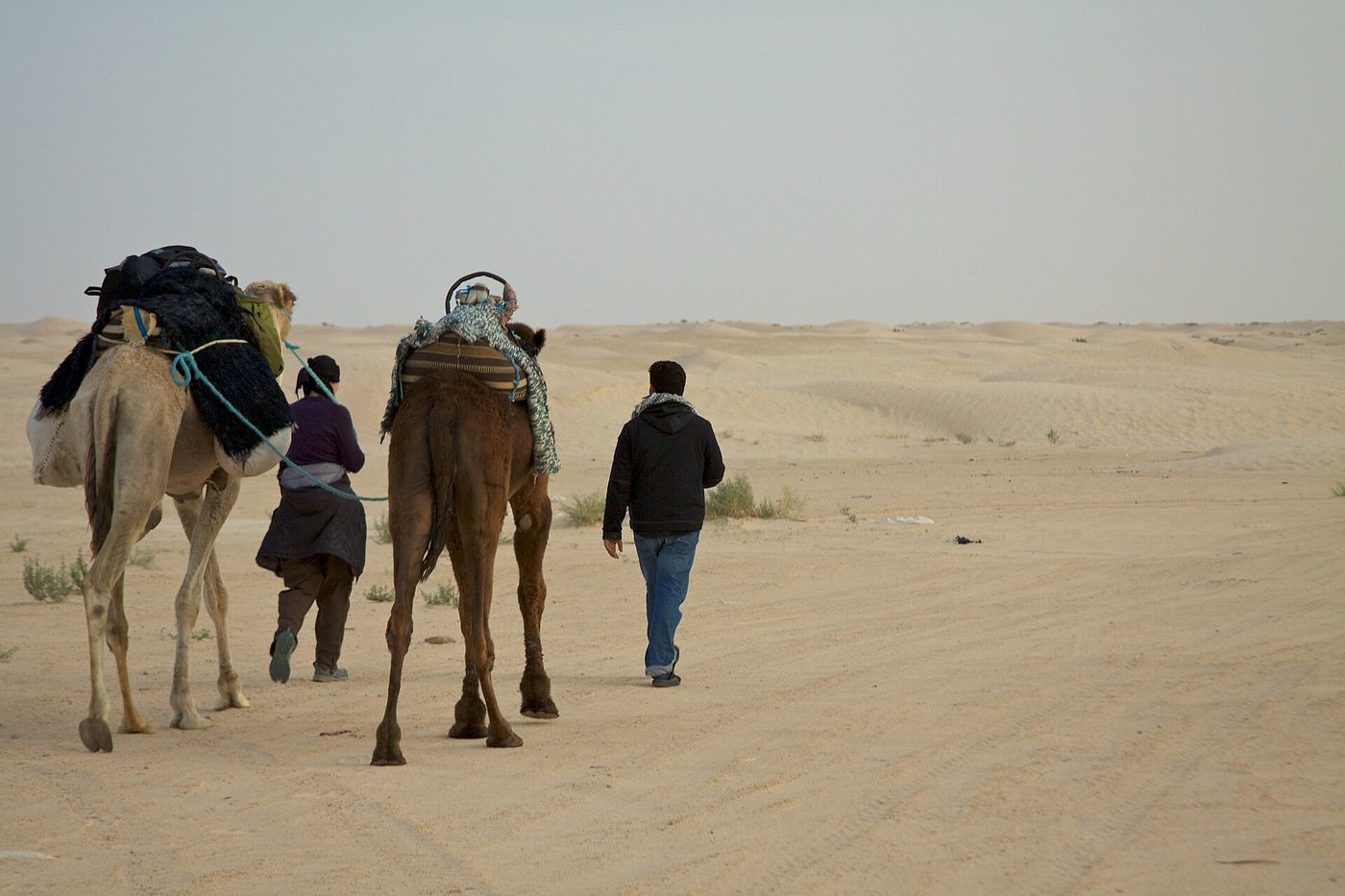
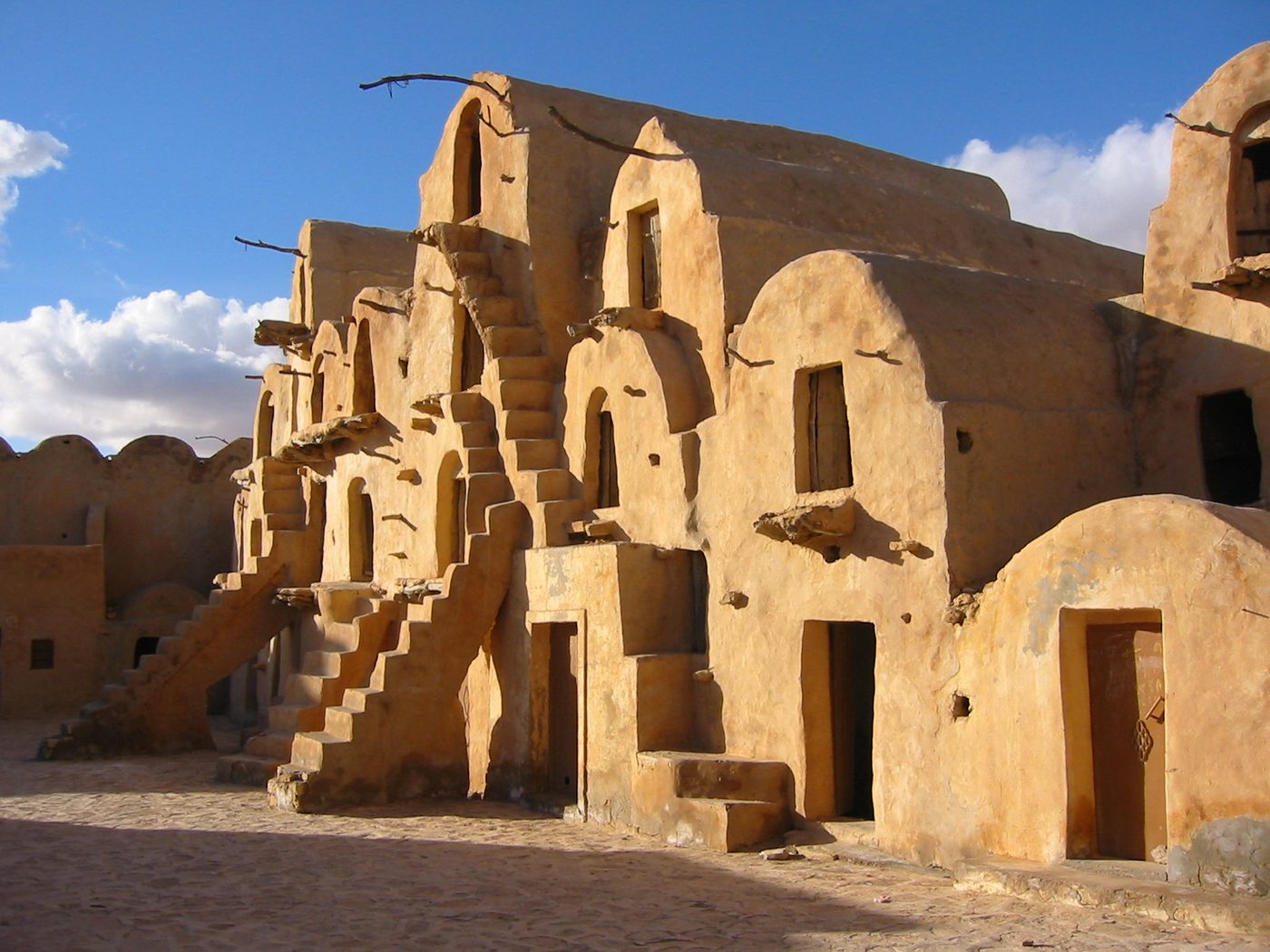
The standard circuit, sold from Sousse, Port El Kantaoui and Hammamet for roughly £90–150 per person including a night’s half-board, runs something like this. Day one: a dawn departure, the Roman amphitheatre at El Jem, then inland to the troglodyte houses of Matmata — cave homes dug into the hills, one of which played Luke Skywalker’s boyhood home — before an overnight stop around Douz, the “gateway to the Sahara.” Day two: an early run across the Chott el Djerid salt lake as the sun comes up, a 4×4 dash out to the Star Wars sets near Nefta, and the long road home with a photo stop, often at Kairouan. You can read the full breakdown of routes, camps and costs in our dedicated guide to the Tunisian Sahara.

Here’s the honest part. The days are long and the starts are brutal — pickups from Hammamet can be around 6am, and the salt-lake sunrise on day two means a 5.30am alarm. You spend real hours on the coach. The overnight stop is usually a comfortable but unremarkable hotel rather than a romantic dune camp, unless you pay more for a desert-camp upgrade. None of that should put you off; it’s simply worth knowing so you pack snacks, a neck pillow and some patience. Who it’s for: anyone curious about Tunisia beyond the beach, couples, older teenagers, Star Wars fans. Who should skip it: families with very young children (the coach time is genuinely hard on toddlers) and anyone visiting in July or August, when the deep south is ferociously hot.
2. Carthage, Sidi Bou Said and the Bardo Museum
The classic culture day, and the one I’d book second. In a single full day from Hammamet, Tunis or the Sousse resorts (about £45–75 with lunch) you get the ancient and the impossibly pretty side by side: the ruins of Carthage, the mosaic treasure-house of the Bardo, and an afternoon wandering the cobbled, jasmine-scented lanes of Sidi Bou Said.

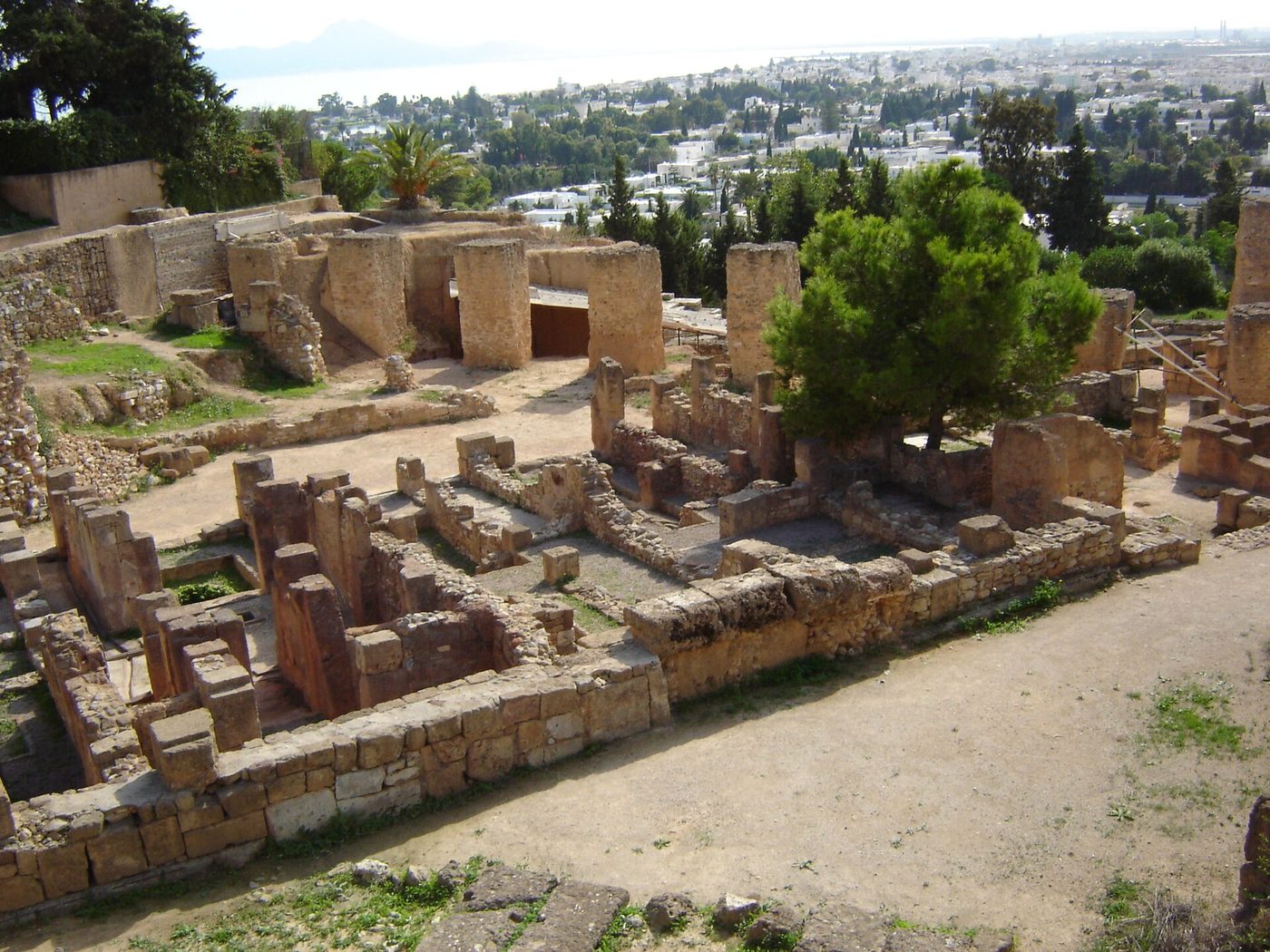
Carthage itself surprises people. It isn’t one tidy site but a scatter of Roman and Punic remains across a wealthy seaside suburb of Tunis — the Antonine Baths down by the water, the theatre, the hilltop of Byrsa, the eerie Tophet. A single ticket covers the lot. Be aware that the National Museum on Byrsa hill has been closed for a long-running restoration and may or may not have reopened by the time you visit, so don’t build your day around it. The Bardo, back in Tunis, holds one of the world’s great collections of Roman mosaics in a former palace; it’s closed on Mondays, so a good tour will route around that. There’s far more detail on every site in our guide to Roman ruins in Tunisia and our Tunis travel guide.

Sidi Bou Said is the reward at the end — a clifftop village of whitewashed walls, cobalt-blue doors and studded shutters above the Gulf of Tunis, with a famous old mat-floored teahouse, the Café des Nattes, at the top of the steps. It’s touristy, it’s gorgeous, and a mint tea on a rooftop here is one of those small perfect travel moments. Who it’s for: first-timers, history lovers, photographers, anyone who wants the “greatest hits” of the north in a day. Who should skip it: if you’re staying in Djerba, this is an unrealistic distance — do it as part of a longer trip or save it for a stay nearer the capital.
3. Kairouan and El Jem
If the Carthage day is about breadth, this one is about two genuinely jaw-dropping single sights, usually sold together from Sousse and Hammamet for around £40–75 with lunch. Kairouan is the spiritual heart of Tunisia, widely described as the fourth holiest city in Islam, and its Great Mosque is a vast, austerely beautiful courtyard of recycled Roman columns. Non-Muslim visitors are welcome in the courtyard and can look into the prayer hall from the threshold; cover your shoulders and knees, and women should cover their heads — wraps are usually lent at the entrance if you arrive without one.

Then there’s El Jem, and there is no gentle way to prepare you for it: a third-century Roman amphitheatre, the third largest the empire ever built, standing almost intact in the middle of an ordinary Tunisian town. You can climb the tiers, walk out into the arena and go down into the underground passages where gladiators and animals once waited. After Rome’s Colosseum it’s the most complete amphitheatre I’ve stood in, and you can often have whole sections of it to yourself. The ticket usually covers the nearby archaeological museum with its mosaics, too. Who it’s for: everyone — this is the most universally loved culture trip on the coast. Who should skip it: nobody, though in high summer go for the morning departure and take water and a hat; there’s little shade in the arena.

4. The pirate boat trip
Every resort coast has one: a galleon-styled boat, a crew hamming it up, music, a swimming stop in a bay, lunch or snacks on board. From Hammamet’s Yasmine marina, Port El Kantaoui in Sousse, or Djerba, expect to pay around £30–50 for three or four hours, transfers usually included, with life jackets for children. It is unapologetically a tourist trip and all the better for it — if you’ve got kids, this is very often their favourite day of the holiday, and the swim stop in clear water is lovely. Book the morning sailing if you can; the sea is calmer and the decks less of a sun-trap.

Who it’s for: families, groups, anyone who wants a fun half-day without a coach. Who should skip it: serious sailors and anyone hoping for a tranquil nature cruise — this is a party boat, not a wildlife trip.
5. Quad bike, buggy and 4×4 safaris
Sold from Hammamet, Sousse and Djerba for roughly £25–45, these run an hour or two through scrubland, olive groves and dry riverbeds, usually with a tea stop at a Berber-style house. They’re a genuine laugh and a good adrenaline hit. One firm piece of advice, and it isn’t mine alone: the Foreign Office specifically warns that “safety standards can vary considerably” and to “always wear a crash helmet.” Insist on one, don’t let an operator wave you off without it, and don’t book a quad for young children to drive. Who it’s for: couples and groups after some fun off the beach. Who should skip it: anyone uneasy on two wheels — take the buggy or 4×4 version instead, where someone else drives.
6. Cap Bon and Kerkouane
The Cap Bon peninsula, an easy run from Hammamet, is the gentle, green, under-touristed alternative to the big-hitter days — vineyards, citrus groves, clifftop towns and, at Kerkouane, the only Phoenician-Punic town to survive anywhere in the world, complete with little pink-plastered bathtubs in the ruined houses. It’s a UNESCO site and almost nobody goes. Tours run from about £45–90 depending on whether you join a group or hire a car and guide. Who it’s for: repeat visitors, history buffs who’ve done the obvious sites, anyone wanting a quieter day. Who should skip it: first-timers who’ve only got time for one culture trip — do Carthage or El Jem first.
7. Dougga (and Bulla Regia)
Dougga is the best-preserved Roman small town in North Africa, in UNESCO’s own words — a whole hillside of temples, a theatre, baths and paved streets with the countryside rolling away on every side. It’s a serious site and a serious day out, realistically only from Tunis (around £80–120, often paired with the underground villas of Bulla Regia), because it’s a fair drive inland. If you’re basing yourself near the capital rather than on the southern resorts, it’s the ruin I’d prioritise after Carthage and El Jem.

Who it’s for: committed ancient-history travellers. Who should skip it: anyone on the Sousse or Djerba coast on a short trip — the distance just doesn’t add up.
8. Djerba island tours and the flamingo lagoon
If you’re staying on Djerba, the island itself is your excursion. A full-day jeep or 4×4 tour (about £45–90) typically loops in the Djerbahood street-art village at Erriadh, the El Ghriba synagogue — one of the oldest in the world and a place of pilgrimage — the souks of Houmt Souk, and the crocodile farm at Djerba Explore. Boat trips out to the flamingo sandbank, often dressed up as “pink lagoon” or pirate-island days, are a Djerba staple, though the flamingos themselves are seasonal (winter, not high summer). Our full Djerba travel guide breaks down every one of these.

Who it’s for: anyone on a Djerba package wanting to see past the hotel zone. Who should skip it: nobody — just don’t expect to combine Djerba with the mainland ruins in a day; they’re a long way apart.
9. Friguia Park and the theme-park days
This one comes with a clear-eyed warning rather than a recommendation. Friguia Park, between Sousse and Hammamet, is an animal park sold heavily as a family day out and as an evening “African” dinner-and-dance show. You should know two things before you book. Its dolphinarium closed in 2016, so despite what some older listings imply, there are no dolphin shows — today the animal displays centre on sea lions. And the park has drawn repeated criticism over animal welfare. I’m not going to tell you what to do, but I’d steer a family towards the boat trip or a desert day instead. The same goes for the manufactured attractions like Hammamet’s Carthage Land theme park — fine for a rainy afternoon with bored kids, but not why you came to Tunisia. Who it’s for: families who’ve exhausted the beach and want a low-effort day. Who should skip it: anyone with concerns about captive-animal attractions.
10. Hammams, food tours and the soft half-days
Not every excursion needs a coach. A traditional hammam (steam bath and scrub), a medina food walk, a pottery visit in Nabeul or a cookery afternoon are all easy, cheap, near-resort half-days that give you a feel for daily Tunisian life. They rarely top anyone’s highlight reel, but they’re a gentle, authentic counterweight to the big trips — and a good shout on a day when you can’t face another early start.
Excursions by where you’re staying
This is the section the booking platforms and the glossy listicles never give you. The same trip is a different proposition depending on which resort you’re in — what’s a comfortable morning from Sousse can be a dawn-to-dark marathon from Djerba. Here’s what realistically works from each of the main UK package bases, and what to leave for another trip.
From Hammamet and Yasmine Hammamet
Hammamet is arguably the best base for excursions in the whole country, because it’s within striking distance of both the capital and the Sahara circuit. The Carthage, Sidi Bou Said and Bardo day is very doable (the capital is about an hour up the motorway). Cap Bon and Kerkouane are practically on the doorstep. The two-day Sahara overnight picks up here. And for easy half-days you’ve got pirate boats from Yasmine marina, quad safaris in the hills, and the medina and Kasbah right in town. If I had a week in Hammamet I’d do Carthage, the Sahara overnight, and a boat trip, and feel I’d seen the country properly. Our Hammamet travel guide has the local detail.
From Sousse and Port El Kantaoui
Sousse is the engine room of the excursion business — more tours leave from here and the marina at Port El Kantaoui than anywhere else, which means more choice and keener prices. El Jem is close (a little over an hour), so the El Jem and Kairouan day is the local star turn. The two-day Sahara trip runs from here too, and the boat trips out of Port El Kantaoui are a reliable family half-day. Carthage and Tunis are a longer haul than from Hammamet but still a sensible full day. You’re genuinely spoiled for choice; see our Sousse and Sahel coast guide for more.

From Monastir and Skanes
Monastir and the Skanes hotel strip sit right next to the airport and share Sousse’s excursion catalogue — many tours simply add a Monastir pickup to the Sousse run. The Ribat fortress and Bourguiba Mausoleum in Monastir itself make a cheap, easy half-day on the doorstep (Monastir’s Ribat is a film veteran — both Monty Python’s Life of Brian and Jesus of Nazareth were shot there). El Jem is even closer from here than from Sousse. Treat Monastir as Sousse’s quieter twin for excursion purposes: the same trips, often with a slightly earlier pickup.
From Djerba
Djerba is a special case, and I want to be straight about it because the disappointment I see most often is a Djerba visitor who booked expecting to “pop” to Carthage or El Jem. You can’t, really — the island is down in the deep south, hundreds of kilometres from the Roman sites of the north, with its own airport precisely because it’s so far from everything else. What Djerba does brilliantly is the island itself (the jeep tour, Djerbahood, El Ghriba, Houmt Souk), boat trips to the flamingo sandbank, and shorter desert excursions onto the nearby mainland — Matmata, Tataouine and Ksar Ghilane are reachable from here in a way they aren’t from the northern resorts. Think of Djerba as the gateway to the south, not a base for the north.
From Tunis and the northern coast
If you’re staying in or near the capital — Gammarth, La Marsa, or a city hotel — you’re perfectly placed for the cultural heavyweights and poorly placed for the beach-resort fun. Carthage and Sidi Bou Said are local. The Bardo is in the city. Dougga and Bulla Regia become realistic day trips. Cap Bon is an easy run. What you lose is the casual pirate-boat-and-quad-bike circuit, which is built around the southern resorts. For most British package holidaymakers Tunis is a day trip rather than a base, but if you’re here independently it’s the best launch pad for serious Roman ruins.
| Your resort | Easy wins | Doable full days | Leave for another trip |
|---|---|---|---|
| Hammamet / Yasmine | Boat trip, quad, medina, Cap Bon | Carthage & Tunis, Sahara overnight | Djerba, far south |
| Sousse / Port El Kantaoui | Boat trip, El Jem, Kairouan | Carthage & Tunis, Sahara overnight | Dougga, Djerba |
| Monastir / Skanes | Ribat & mausoleum, El Jem | Kairouan, Sahara overnight | Dougga, Djerba |
| Djerba | Island jeep tour, El Ghriba, boat trip | Matmata, Tataouine, Ksar Ghilane | Carthage, El Jem, Dougga |
| Tunis / north coast | Carthage, Sidi Bou Said, Bardo | Dougga, Cap Bon, Kairouan | Southern resort boat/quad days |
Wherever you’re based, it’s worth reading our guide to where to stay in Tunisia before you book the holiday itself — the resort you choose quietly decides which of these days are even on the menu. And if you’re trying to fit several together, our Tunisia itinerary plans show how the trips slot into a week or two without burning you out.
How to book excursions in Tunisia (without the rep markup)
This is where you save real money and avoid real headaches, so it’s worth five minutes. You have four ways to book, and they suit different people.
The hotel rep or excursion desk
The easiest and usually the priciest. At your welcome meeting, and from the desk in the lobby, a rep will sell you the standard menu of trips. The upside is total convenience and a clear point of contact if something goes wrong. The downsides are the markup — you’re paying for that convenience — and the gentle hard sell, where the welcome meeting can feel less like an orientation and more like a timeshare pitch. If you book this way, never feel obliged to decide on the spot, and know that the identical trip is almost always available cheaper elsewhere.
Online platforms before you fly
My default. GetYourGuide, Viator and TUI Musement list most of the mainstream excursions with photos, real customer reviews, prices in pounds and — crucially — free cancellation up to 24 hours before on many products. That last point matters more than the small saving: it lets you lock in the popular trips before they sell out, then change your mind if the weather turns or you’re simply too tired for a 6am start. Read the reviews properly; they’ll tell you about the carpet-shop “detour” or the rushed lunch that the listing won’t. Book the headline trips this way and you arrive with the hard part done.
A local agency in resort
Often the cheapest of all, and a perfectly good option if you’re relaxed about it. Reputable agencies cluster around every resort strip, selling the same coaches as everyone else. You can usually shave a little off the platform price and pay in cash. The trade-offs: you’re booking in person once you’re there (so a sold-out trip is a wasted morning), and your consumer protection is weaker than booking at home. Stick to established shops with a real premises, not the man with a clipboard on the beach, and you’ll be fine.
A private driver or guide
The most expensive per day but transformative if there are a few of you, because the cost splits across the car. You go at your own pace, skip the carpet shops, and can tailor the route. For a family or a group of friends wanting the Carthage day or a desert run on their own terms, a private guide can work out at a similar per-head price to a group coach with none of the cattle-class feeling.
A word on paying, and on protection
Two practical points trip people up. First, money: the Tunisian dinar is a closed currency, which means you cannot buy it before you fly and cannot take it out again at the end. So while you can pay online platforms by card at home, anything booked locally is paid in cash dinar drawn out after you arrive — budget for it, and keep your exchange receipts, because you’ll need them to change leftover dinar back at the airport. Our Tunisia travel tips page explains the currency rules and tipping in full. Second, protection: a trip bought as part of your TUI or easyJet package is covered by that operator’s ABTA/ATOL protection; a trip you buy on the ground from a local agency is not. For most day trips that’s a risk worth taking for the saving; for a big-ticket multi-day tour, the peace of mind of booking through a platform or your operator may be worth the few extra pounds. Whichever you choose, a modest tip for a good guide and driver — ten or twenty dinars between you for a full day — is customary and warmly received.
Are excursions in Tunisia safe?
The short answer is that the excursions in this guide all take place in areas the UK Foreign Office considers fine to visit, and millions of package holidaymakers do them every year without incident. But you deserve the exact picture rather than a breezy “don’t worry about it,” so here it is, quoted from the source.
As of the Foreign, Commonwealth & Development Office (FCDO) advice updated 23 February 2026 and still current at 17 May 2026, the British government advises against travel only to specific border and mountain zones, none of which are on any mainstream excursion itinerary. It advises against all but essential travel to, among other areas, “Kasserine Governorate, including the town of Sbeitla,” to areas near the Algerian border, and to “within 75km of the Tunisia-Libya border, including Remada and El Borma but excluding Zarzis, the C118 road and all areas in Medenine Governorate north of the road.” It advises against all travel to the militarised zones right on the Libyan frontier and to “the Chaambi Mountains National Park” and the designated military operations zones in the west.
What that means in plain English for an excursion-booker: the entire standard tourist map — Carthage, Tunis, the Bardo, Sidi Bou Said, El Jem, Kairouan, Sousse, Hammamet, Djerba, and the desert circuit through Douz, Tozeur, Nefta, Matmata and the town of Tataouine — sits comfortably outside the restricted zones. The one place I’d gently flag is that the Foreign Office’s lines run through the deep south, so a reputable desert operator keeps well north and east of the Libyan border; you should never be routed toward El Borma, Ben Guerdane or the frontier itself, and no legitimate tour will take you there. The ancient Roman city of Sbeitla, which you’ll see in some older guidebooks, falls inside the Kasserine advisory zone, which is exactly why you won’t find it on this site’s recommended list — there are a dozen better and safer Roman sites to see instead.
Tunisia has had two attacks that British visitors will remember — the 2015 shootings at a beach resort near Sousse and at the Bardo Museum in Tunis, and a 2023 shooting near the El Ghriba synagogue on Djerba. I mention them not to alarm but because honesty is the whole point of this site: security at tourist sites, the Bardo included, was substantially tightened afterwards, and you’ll notice a visible police and National Guard presence at the major monuments and on the approaches to resorts. For the full, current safety picture — terrorism, road safety, the lot — read our dedicated, regularly updated guide on whether Tunisia is safe to visit, and always check the live FCDO advice yourself before you travel, because these things can change.
The likelier risks on an excursion are mundane ones: heat, dodgy quad bikes and tired coach drivers on long days. Wear the crash helmet, carry more water than you think you need, and don’t book the most exhausting trip for your first morning.
The best time of year for excursions
Beach weather and excursion weather are not the same thing in Tunisia, and getting this right makes the difference between a magical desert dawn and a heat-stricken ordeal. The coast is glorious from June to September, but that’s exactly when the interior and the Sahara become punishing — Tozeur and the deep south routinely sit at 40°C and above in July and August, with little shade at the ruins or in the dunes.
For the cultural and desert excursions, the sweet spots are spring (April to June) and autumn (September to October), when you can walk El Jem or stand on a dune at midday without wilting. If you’re travelling in high summer and based on the coast for the beach, you can still do everything in this guide — just book the early-morning departures, treat the air-conditioned coach as a feature rather than a chore, and save the desert overnight for a cooler month if you possibly can. Our month-by-month guide to the best time to visit Tunisia breaks the weather down in detail, and if you’re weighing beach days against trips, the guide to Tunisia’s beaches will help you balance the two.
What to wear and pack for a day out
A few small things make these days far more comfortable:
- Cover up for the mosques. At Kairouan’s Great Mosque and other religious sites, shoulders and knees must be covered; women should bring a scarf for their head, though wraps are usually lent at the gate. A light long-sleeved layer in your day bag solves this and doubles as sun cover.
- Sun protection, always. The Roman sites and the desert offer almost no shade. Hat, high-factor sun cream, sunglasses and more water than you expect to drink — the coach won’t always stop when you’re thirsty.
- Real shoes. Ancient sites are uneven, dusty and often involve steps and slopes. Leave the flip-flops at the pool.
- Layers for the desert. On the two-day trip, desert nights and dawn salt-lake stops can be genuinely chilly even after a scorching day. A fleece earns its place in the bag.
- Cash in small notes. For tips, mint teas, toilet stops and the inevitable souvenir, carry small-denomination dinar; nobody at a roadside stop will change a big note.
Travelling responsibly on your excursions
A quick, non-preachy note, because it genuinely shapes which trips are worth your money. Camel rides are a staple of the desert tours, and the welfare of working animals in tourism varies enormously; choosing an established operator over a roadside hawker, and keeping rides short, is the kindest approach. Give the captive-animal attractions a hard look before you book — as covered above, Friguia Park’s dolphinarium closed years ago and the park has faced welfare criticism. And the simplest responsible choice of all is to spend your money with local guides, family-run agencies and the tea houses and craft stalls along the way, rather than only with the big resort desks. It’s usually cheaper, and it puts your holiday money where it does the most good.
Tunisia excursions: frequently asked questions
Are excursions in Tunisia worth it?
For most visitors, yes — with one caveat. Tunisia’s best sights are spread across the country, so an organised excursion is often the only practical way to reach them from a beach resort without hiring a car. The cultural and desert trips genuinely justify the day they take. The boat trips and quad safaris are fun rather than essential. The only ones I’d question are the captive-animal parks.
How much do excursions in Tunisia cost?
Roughly £25–40 for a half-day trip like a boat ride or quad safari, £45–90 for a full day with lunch and entry fees, and £90–150 for the two-day Sahara overnight including a night’s half-board. Prices vary with the season, your group size and how you book; the online platforms and local agencies generally undercut the hotel rep desk.
Are excursions cheaper if you book independently rather than through the hotel?
Almost always. The hotel excursion desk is the most convenient and usually the most expensive option. Booking the same trips online before you fly (GetYourGuide, Viator, TUI Musement) or through a reputable local agency in resort typically saves 10–30%, and online bookings often add free cancellation. The trade-off is slightly weaker consumer protection on locally bought trips.
What is the best excursion for a first-time visitor?
If you can only do one, make it the two-day Sahara and Star Wars overnight — it shows you the real country. If you only have a day, the Carthage, Sidi Bou Said and Bardo trip, or the El Jem and Kairouan day, are the two unmissable cultural outings. Families with young children usually rate the pirate boat trip highest of all.
Is the two-day Sahara desert trip worth it?
It’s the trip people remember most, and for that reason I’d say yes. Be ready for long coach hours and very early starts — a pickup around 6am and a dawn salt-lake stop on day two — and avoid it in July and August when the south is dangerously hot. Pack layers for the surprisingly cold desert nights. For couples and older children it’s a highlight.
Can you visit Star Wars filming locations in Tunisia?
Yes, and it’s one of the country’s quirkier draws. The Mos Espa set near Nefta still stands in the dunes (though encroaching sand threatens it), the salt flats of Chott el Djerid hosted the Lars homestead exterior, and the underground Hotel Sidi Driss in Matmata — Luke’s boyhood home — is still a working hotel where you can eat in the filmed courtyard. The two-day desert tour takes in several of these.
Is El Jem worth visiting, and is it bigger than the Colosseum?
El Jem is absolutely worth it — for many people it’s the single best thing they see in Tunisia. It’s the third-largest Roman amphitheatre ever built, slightly smaller than Rome’s Colosseum but far better preserved in parts and gloriously uncrowded. You can walk the arena floor and explore the underground passages, which you can’t always do in Rome. A UNESCO World Heritage Site since 1979.
Can you still swim with dolphins at Friguia Park?
No. Friguia Park’s dolphinarium closed in 2016, so there are no dolphin shows, despite what some older listings still suggest; the animal displays today centre on sea lions. The park has also drawn repeated criticism over animal welfare. If you’re after a family day out, I’d point you towards a boat trip or a desert excursion instead.
Do you need a guide for Carthage, or can you visit independently?
You can visit independently — a single ticket covers all the scattered Carthage sites, and the TGM light railway from Tunis stops right among them. But the ruins are spread out and lightly labelled, so a guide adds a great deal of context. Most people see Carthage as part of a guided day that also takes in Sidi Bou Said and the Bardo, which is the most efficient way to do it.
What should I wear to visit the Great Mosque in Kairouan?
Cover your shoulders and knees; women should also cover their heads. Wraps are usually available to borrow at the entrance if you arrive without one. Non-Muslim visitors are welcome in the courtyard and can view the prayer hall from the doorway but not enter it. The same modest-dress principle applies at other religious sites and in more traditional inland towns.
Can you pay for excursions in euros, or do you need dinar?
Online bookings made before you travel are paid by card in pounds. Anything booked locally is paid in Tunisian dinar cash. The dinar is a closed currency — you can’t buy it before you fly or take it home — so withdraw or exchange what you need after you arrive, and keep the receipts to change leftover dinar back at the airport. Some operators will take euros informally, but expect a poor rate.
Do you tip tour guides and drivers in Tunisia?
It’s customary, not obligatory. For a full-day excursion, something like 10–20 dinars between a couple, split between the guide and driver, is a normal and appreciated thank-you for good service. Tip in dinar cash. It’s a low-wage industry and a decent guide makes the day, so if yours has been good, it’s worth doing.
Final thoughts: which excursions to actually book
If you take one thing from this guide, let it be that the excursions are what turn a Tunisia package from a fortnight by a pool into a proper encounter with one of the Mediterranean’s most layered, surprising countries. You don’t need to do all of them. Pick two or three that match the way you like to travel, book them through a channel that isn’t the lobby desk, go in with your eyes open about the early starts, and you’ll come home with the stories.
My standing advice for a first week on the coast: the two-day Sahara overnight for the sheer scale of it, one of the great culture days — Carthage or El Jem and Kairouan — for the history, and a boat trip or quad safari to keep it light. That trio, from any of the main resorts, is hard to beat. Then leave Cap Bon, Dougga and the deep south for the trip you’ll inevitably want to make back here.
Plan the rest of your Tunisia trip
This excursions guide is one piece of a much bigger picture. If you’re still shaping the holiday, start with our overview of the best things to do in Tunisia, then use our itinerary plans to slot the trips into your week, and our guide to where to stay to make sure your resort actually puts the excursions you want within reach. For the deep dives, we’ve got full standalone guides to the Tunisian Sahara and the country’s Roman ruins. New guides — including a complete Star Wars trail and detailed cluster pages for every excursion here — are rolling out daily through 2026, so bookmark us and come back.
If you’d rather do any of these independently, start with getting around Tunisia — then reward yourself with proper Tunisian food wherever you end up.
Photo credits
All images via Wikimedia Commons, used with thanks: Camel caravan near Douz © Dennis G. Jarvis (CC BY-SA 2.0); Chott el Djerid salt lake © Gorik Francois (CC BY-SA 2.0); Antonine Baths, Carthage © Tamerlan Dulaev (CC BY-SA 4.0); Sidi Bou Said © Mstyslav Chernov (CC BY-SA 3.0); Great Mosque of Kairouan © Dennis G. Jarvis (CC BY-SA 2.0); El Jem amphitheatre © Agnieszka Wolska (CC BY-SA 3.0); Yasmine Hammamet beach © Marc Ryckaert (MJJR) (CC BY 3.0); Dougga © Dennis G. Jarvis (CC BY-SA 2.0); El Ghriba synagogue, Djerba © Dr. Ondřej Havelka (CC BY 4.0); Matmata troglodyte house © Bernard Gagnon (CC BY-SA 3.0).
2 responses to “Tunisia Excursions: The Best Tours & Day Trips for 2026”
[…] look at whether the resort itself earns its keep in is Hammamet worth visiting, and with the wider Tunisia excursions […]
[…] week that also sees the real country. Each plan assumes a 7-night stay with a mix of beach days and excursions. Book the longer day trips through your hotel’s tour desk or a local operator the day before […]