
The first time I tried to leave a carpet shop in Kairouan without buying anything, the owner had already poured three glasses of mint tea, shown me forty rugs and told me about his grandmother. I left two hours later with a small mergoum kilim I hadn’t planned on, a phone number “for when you come back”, and the distinct sense that I’d been on the losing side of a very pleasant negotiation. That is Tunisian culture in miniature: warm, theatrical, deeply hospitable, and far more layered than the all-inclusive buffet ever lets on.
Tunisian culture is a layered Mediterranean blend — Amazigh (Berber) roots, an Arab-Islamic core, Ottoman and Andalusian influence and a French colonial overlay — and you can actually experience it on a package holiday: haggling in the souks, sweating through a hammam scrub, taking a thalassotherapy spa day, hearing malouf at a summer festival. This guide explains how to do all of it respectfully, what to buy, and what it costs.
I’ve written it for the UK traveller flying into Enfidha, Monastir or Djerba who wants more than a sunlounger — whether that’s a single afternoon in a medina or a whole trip built around Tunisia’s wellness scene. Wherever money comes up I’ve used dinar (TND) with rough pound conversions at about 3.9 TND to the pound (June 2026), and I’ve flagged where prices are negotiable, seasonal or worth checking on the day.
Last updated: June 2026. Safety and entry details reference UK Foreign, Commonwealth & Development Office (FCDO) advice; I’ve quoted and date-stamped it where it matters.
Tunisian culture in a nutshell: who Tunisians are
Tunisia packs an outsized history into a country smaller than England and Wales. The Phoenicians founded Carthage near modern Tunis around 814 BC; Rome flattened and then rebuilt it; Vandals and Byzantines passed through; Arab armies arrived in the 7th century and founded Kairouan in 670 AD, seeding Islam across North Africa. The Ottomans ruled from the 16th century, France imposed a protectorate in 1881, and independence came on 20 March 1956 under Habib Bourguiba, whose secular, education-first reforms still shape the country today.
All of that has settled into a national character that feels, to me, distinctively Mediterranean: sociable, food-obsessed, family-centred, and more relaxed than first-time visitors expect. Tunisia’s 1956 Personal Status Code gave women rights — banning polygamy, setting a minimum marriage age, allowing divorce — that were radical for the region and remain among the most progressive in the Arab world. You’ll see that lived out in mixed cafés, women working every kind of job, and a generally easy-going attitude in the tourist coast.
The deepest layer is Amazigh, or Berber — the indigenous people of North Africa, here long before Carthage. Most Tunisians today are of mixed Arab-Amazigh descent and identify as Arab, but the Amazigh substrate survives in village names, pottery motifs, the troglodyte homes of the south and a Tamazight language still spoken as a mother tongue by perhaps 1% of the population (heritage estimates run much higher). I’ve given the Amazigh their own section below, because it’s one of the most rewarding and least-understood parts of a Tunisian trip.
Language: Modern Standard Arabic is official, but the street language is Derja (Tunisian Arabic), peppered with French, Italian and Amazigh words. French is widely spoken and appears on menus, shopfronts and road signs — a legacy of the protectorate that makes Tunisia easy to navigate. In the resorts and souks you’ll find plenty of English, German and Russian too; vendors are formidable linguists. A few words of Arabic go a long way: aslema (hello), shukran (thank you), barcha (a lot), la, shukran (no, thank you — useful in the souk).
Religion: Around 99% of Tunisians are Sunni Muslim, mostly of the Maliki school, alongside the distinct Ibadi Muslim community on Djerba and a small, ancient Jewish community of roughly 1,500 people centred on Djerba and Tunis. Faith is woven through daily life — the call to prayer, Friday’s rhythm, Ramadan — but worn fairly lightly along the tourist coast. Understanding a little of it is the single best thing you can do to travel respectfully here, which is where the next section comes in.

Traditions, etiquette and how to be a respectful guest
Tunisians are forgiving of visitors who get things slightly wrong — but a little effort is noticed and rewarded, often with an invitation to tea you’ll struggle to refuse. Here’s what actually matters on the ground.
Greetings, hospitality and the right-hand rule
Greetings are warm and unhurried. A handshake is standard (often followed by a brief touch of the hand to the heart, which I’ve always found a lovely gesture); good friends of the same sex kiss on the cheek. Between men and women, wait and follow their lead — some women, especially more religious ones, prefer not to shake hands, and a hand-to-heart nod covers it gracefully.
Hospitality is close to a sacred duty. If you’re invited into a home, expect to be fed enormously and refused permission to help. Bring a small gift — pastries, or something from your own country — and remember the right-hand rule: eat, give and receive with your right hand, as the left is traditionally considered unclean. Take your shoes off at the door if your hosts have. And accept the tea; declining the first glass outright can read as a snub, though “just a little” is perfectly fine.
What to wear (resort, medina and mosque)
Tunisia is relaxed by regional standards, but context is everything. The FCDO puts it well, and it’s worth quoting directly (travel advice updated 23 February 2026): “Beach-appropriate clothing in holiday resorts is acceptable, however when visiting religious sites or remote areas of the country, local custom is to dress modestly.”
In practice: bikinis and shorts are completely fine around the hotel pool and resort beaches. For a wander through a medina, a market town or any village away from the coast, I’d cover shoulders and knees — light trousers or a long skirt, a top with sleeves. It’s cooler in the sun anyway, draws far less attention, and is simply more courteous. For mosque courtyards (more on those below), women should carry a scarf for the hair and everyone should cover arms and legs; some sites lend cover-ups at the door. None of this requires a special wardrobe — just a bit of awareness about where you’re heading that day. Our Tunisia travel tips guide goes deeper on packing and practicalities.
Ramadan and the religious calendar
Islam follows a lunar calendar, so the big dates shift about 11 days earlier each year. Ramadan in 2026 ran from roughly 18 February to 19 March; in 2027 it begins in early February (around the 8th, subject to the moon sighting). During the holy month many Tunisians fast from dawn to dusk, cafés and some restaurants keep reduced daytime hours inland, and the whole country comes alive after the sunset iftar meal — the Tunis medina in particular hosts evening cultural events through Ramadan that are wonderful if you’re there.
Crucially for package travellers, the FCDO confirms the resorts run as normal: alcohol and daytime dining rules “do not apply at holiday resorts.” If you venture out independently during Ramadan, the courteous move is simply not to eat, drink or smoke conspicuously in the street in daylight. The other movable feasts to know are Eid al-Fitr (end of Ramadan) and Eid al-Adha (around late May/early June 2026) — joyful family holidays when some shops and sites close. If you’re trying to time a visit, our month-by-month guide to the best time to visit Tunisia maps these against weather and crowds.
A few honest dos and don’ts
Alcohol is legal and easy to find in hotels, licensed restaurants and bars; the one quirk worth knowing is that the FCDO notes it’s “banned from sale in supermarkets on Fridays” — bars and hotels are unaffected. Ask before photographing people, especially women and older folk, and never photograph government buildings, police or military sites (the FCDO is explicit on this). Public displays of affection are best kept low-key away from resorts. And a factual note for LGBT+ travellers: same-sex sexual activity remains illegal under Article 230 of the Penal Code, carrying up to three years’ imprisonment, and the FCDO records that “members of the LGBT+ community have been targeted by criminals” — discretion is sensible. For the full safety picture, see our honest guide to whether Tunisia is safe to visit.
Tunisia’s souks: a shopping and haggling guide
The souk — the covered market at the heart of every old town — is where Tunisian culture is loudest, most fragrant and most fun. It’s also where nervous first-timers freeze up, convinced they’re about to be fleeced. You won’t be, if you understand how the game works. Shopping the souks is one of the best things to do in Tunisia, and it’s free to just wander.
The great souks, and what each one sells
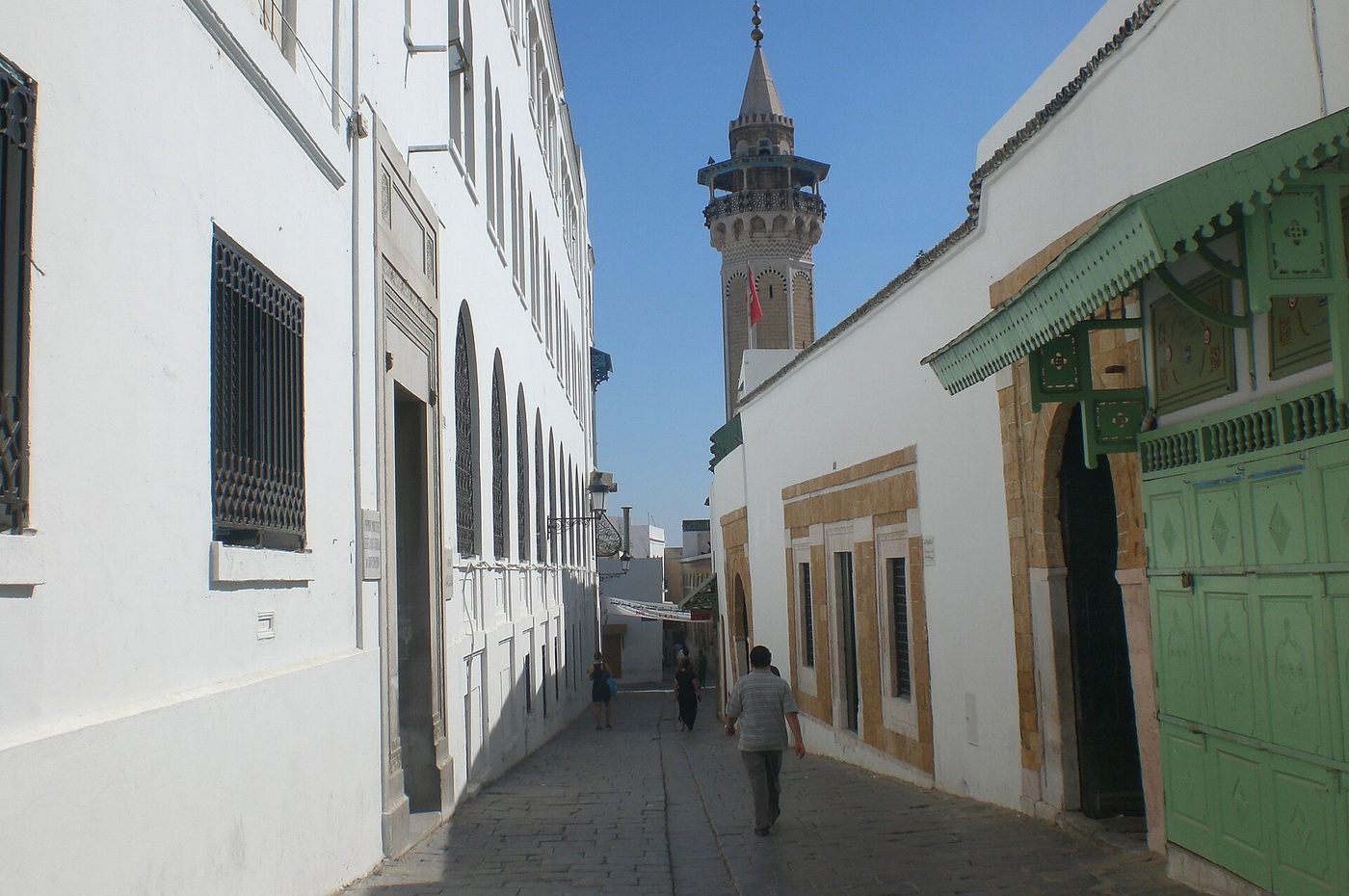
The Tunis medina is the grandest, a UNESCO-listed warren of some 700 monuments where the lanes are still organised by trade, medieval-guild style. Souk El Attarine (the perfumers’, dating to the 13th century) is a wall of essences and rosewater; Souk des Chéchias — built by a Mouradite bey in 1691–92 for the city’s Andalusian hat-makers — is where the red felt caps are still blocked by hand; Souk El Berka, a former slave market, is now the gold and jewellery quarter; and Souk des Étoffes drips with fabric. Get lost on purpose; that’s the point.
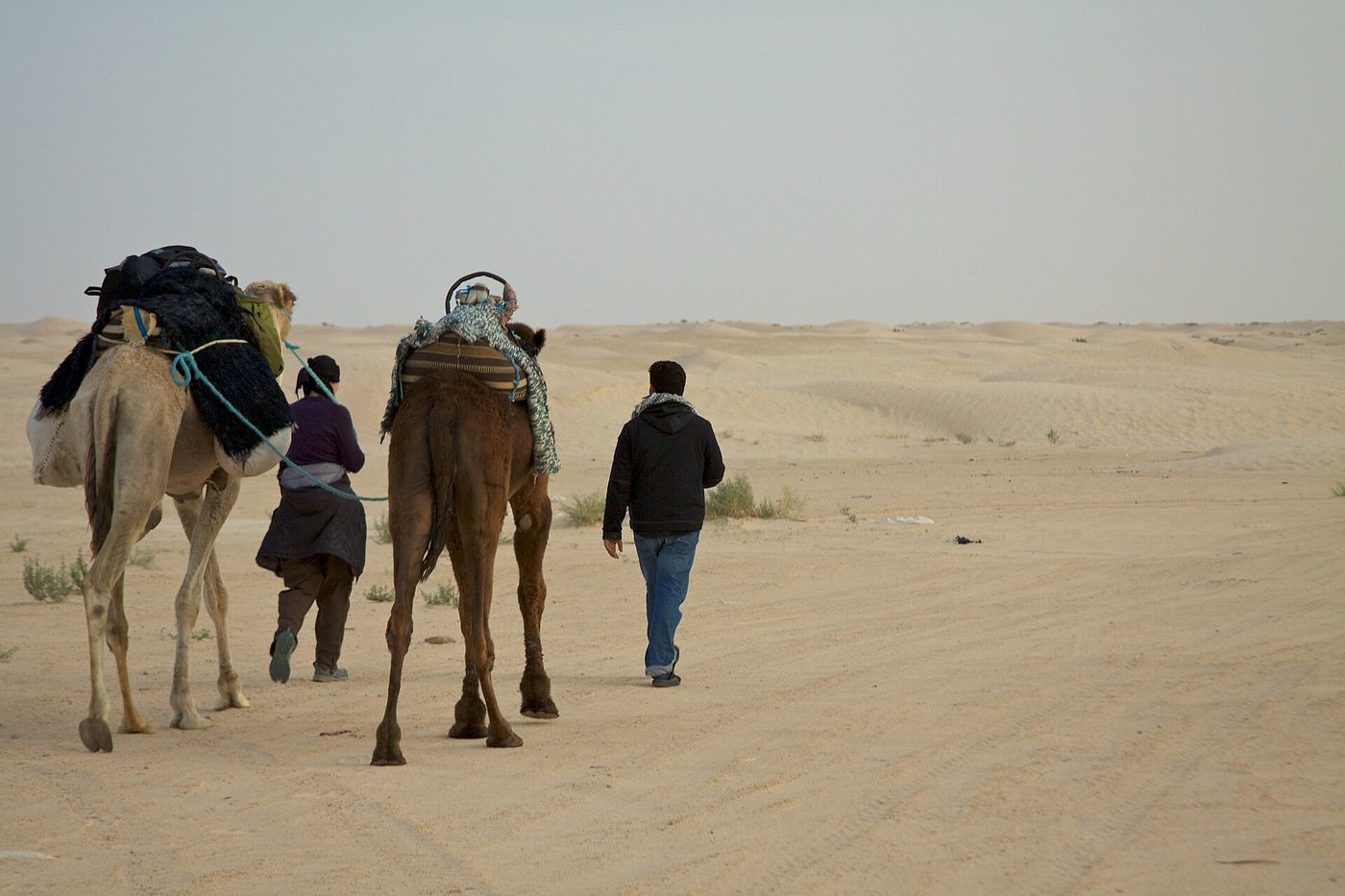
Beyond the capital, the Sousse medina has its own atmospheric, UNESCO-listed souk right by the resorts of the Sahel — the most convenient for package travellers. Kairouan is Tunisia’s carpet capital (more below). Nabeul, on Cap Bon near Hammamet, holds a big weekly market every Friday and is the pottery town. On Djerba, Houmt Souk — the name literally means “market quarter” — comes alive on Monday and Thursday mornings. And deep in the south, Douz hosts a Thursday-morning souk famous for its Saharan leather, wool burnous cloaks and a working livestock-and-camel market that is pure theatre.
How to haggle without the stress
Haggling here is expected, friendly and faintly performative — not the adversarial ordeal people fear. A few rules I’d pass on:
- Greet first. An aslema and a smile resets the whole interaction. You’re a guest having a chat, not a mark.
- Only start if you might actually buy. Naming a price you’re then unwilling to pay is the one genuine faux pas. Browsing is fine — “just looking, thank you” (nahawes barka, shukran) is a complete sentence.
- The opening price is theatre. A common rule of thumb is to counter at roughly a third of the first quote and meet somewhere in the middle. It’s guidance, not gospel — quality and your own interest move the number.
- Stay good-humoured and be willing to walk. The walk-away is the most powerful tool you have; half the time you’ll be called back. If you’re not, the price really was fair.
- Carry small dinar in cash. Splitting a 50-dinar note for a 12-dinar trinket loses you leverage, and many stalls don’t take cards.
Here’s the insider move nobody mentions: before you haggle for anything serious, visit a government-run fixed-price craft shop first. The national artisans’ body, ONAT (Office National de l’Artisanat Tunisien), and its retail arm SOCOPA run no-haggle stores in Tunis and the craft towns. Prices there are higher than a hard-won souk bargain but they anchor you: you’ll know what a genuine, decent-quality chechia or kilim actually costs before a charismatic vendor starts the music. Tour reps and our guide to Tunisian excursions can also steer you to reputable workshops.
The closed dinar: money facts every shopper needs
One genuinely important quirk: the Tunisian dinar is a “closed” currency. You legally cannot buy it before you fly, you change money on arrival (airports, banks, hotels, ATMs), and you’re not supposed to take dinar out of the country. Keep your exchange receipts — you’ll need them to convert leftover dinar back at the airport, and the FCDO notes that cash-machine receipts are not accepted for this. Budget your souk spending in cash, keep small notes handy, and change a bit more than you think for market days. Our Tunisia travel tips covers the currency rules and tipping in full.
What to buy: traditional Tunisian crafts
Tunisia’s craft heritage is the real souvenir story — not the mass-produced magnets, but ceramics, carpets and metalwork made the way they have been for generations. A buyer’s note up front: look for the ONAT quality stamp on genuine certified pieces, and be a little sceptical of anything suspiciously cheap and identical to the next stall’s — imported, machine-made goods (and even imported wool) do get sold as local handwork.

Pottery and ceramics
Two traditions, two looks. Nabeul (and historically Djerba’s Guellala) are the pottery heartlands. Guellala makes porous, unglazed earthenware — amphorae, water jars, earthy tones with Berber motifs — using techniques you can still watch in the village workshops on a Djerba day out. Nabeul, whose potters originally migrated from Guellala, went the other way: glazed, decorative ware and tiles in the famous blue-and-white floral and marine patterns that now tile half the country’s riads.
The connoisseur’s buy, though, is Sejnane pottery from the Amazigh villages of the north-west. Hand-built by women without a wheel, open-fired on the ground and painted with red ochre and black geometric symbols, it was inscribed on UNESCO’s list of Intangible Cultural Heritage in 2018 — Tunisia’s very first such listing. The little modelled animals and figurines are utterly distinctive; if you see the real thing in a co-op or a good shop, buy it.

Carpets and kilims
Kairouan is the name to know. The city’s textile prestige goes back to the medieval Aghlabid era, but the famous knotted Kairouan carpet is really a 19th-century tradition — local legend credits a governor’s daughter with introducing the Anatolian knot around 1830. Know your three types before you negotiate:
- Zerbia — the premium knotted-pile rug, priced by knot density and size. A small one runs into the low hundreds of pounds; a good room-sized piece, well into the hundreds or beyond.
- Mergoum — flat-woven, with bold diamond and lozenge patterns and brilliant colour. My personal favourite for the money.
- Klim (kilim) — simpler flat-weave stripes, the most affordable; small ones start from around 60–120 TND (roughly £15–30) depending on size and how well you haggle.
To sort handmade from machine-made: flip the rug over. A genuine hand-knotted carpet shows the pattern clearly on the back with slightly irregular knots; a perfectly uniform, rubbery or printed reverse is a factory job. Ask to see the knots, and don’t be rushed. Prices are very negotiable, so treat any single figure as a starting point.

The chechia, copperware, leather and the little things
The chechia — the soft red felt cap that is Tunisia’s national headwear — is a craft on the brink. Made in that 17th-century Tunis souk by a dwindling band of artisans (a few dozen masters remain, down from thousands), a good one is a meaningful, packable buy at roughly 20–40 TND (£5–10). Tunisia’s metal engraving on gold, silver and copper earned its own UNESCO Intangible Heritage listing in 2023, and the hammered copper trays, lanterns and the engraved brass of the medinas are genuinely beautiful — just be realistic about getting a metre-wide tray home.
Then there are the small, joyful things: the white birdcages of Sidi Bou Saïd, hand-built in the blue-and-white village above Tunis; olive-wood bowls and boards from the central groves; soft leather babouche slippers and bags; the protective khomsa (Hand of Fatima) charm against the evil eye, in silver or enamel; and, in summer, a machmoum — a tiny posy of jasmine, Tunisia’s emblematic flower, sold on street corners for small change and traditionally tucked behind a man’s ear. None of it will break the budget, and all of it beats a fridge magnet.
| What to buy | Where it’s best | Rough price (negotiable) | Watch out for |
|---|---|---|---|
| Knotted carpet (zerbia) | Kairouan | From low hundreds of £ | Machine-made “silk”; check the back |
| Kilim / mergoum flat-weave | Kairouan, Gafsa, the south | ~60–250+ TND (£15–65+) | Imported, printed patterns |
| Blue-and-white pottery | Nabeul | A few dinar upwards | Fragile — pack well |
| Sejnane pottery (UNESCO) | Sejnane co-ops, good shops | Tens of TND upwards | Crude imitations |
| Chechia (felt cap) | Souk des Chéchias, Tunis | ~20–40 TND (£5–10) | Imported wool; buy from a maker |
| Engraved copper / brass | Tunis, Kairouan, Sousse | Varies by size | Getting it home; thin plate |
| Olive wood, leather, khomsa | Everywhere | Small change to ~tens of TND | Over-paying on the first stall |
The hammam: Tunisia’s bathhouse ritual, for first-timers
If you do one cultural thing in Tunisia beyond the souk, make it a hammam. The steam bathhouse is a centuries-old fixture of every town — part wash-house, part social club, part budget spa — and a proper scrub leaves you feeling, frankly, reborn. It’s also the experience UK visitors are most nervous about, mostly because nobody explains what actually happens. So here it is.
What actually happens, step by step
- Undress and wrap up. You leave your clothes in a changing area and keep your underwear on, wrapped in a fouta (a thin cotton sarong). You do not go fully naked — more on that below.
- Warm up in the steam. You move through warm rooms into the hot, humid steam room (the harara), sit, and let the heat open your pores. Pour warm water over yourself from the buckets or basins.
- Soap and soften. You slather on saboun beldi — a dark, soft olive-oil “black soap” — and let it sit while the steam does its work.
- The scrub (the main event). Using a coarse kessa mitt, you (or an attendant) exfoliate hard. Watching the grey rolls of dead skin come off is equal parts horrifying and satisfying; this is the gommage everyone raves about.
- Rinse. Bucket after bucket of warm water to sluice it all away.
- Optional massage, then rest. Many places offer a massage afterwards. Then you wrap up, cool down, and rehydrate — mint tea is traditional and very welcome.
Hammam etiquette and the awkward questions, answered
Do I get naked? No. Keep your underwear on; women usually keep knickers on (and sometimes nothing on top among locals, but a swimsuit bottom or briefs is normal for visitors), men wear shorts or underwear. Full nudity is not the custom.
Is it mixed? Never, in a traditional hammam. Bathhouses are strictly single-sex — either separate premises, or, more often, separate time slots (commonly women in the daytime/afternoon, men early morning and evening). Hours vary by bathhouse and aren’t always posted, so ask locally or have your hotel check. The only “mixed” hammams are private couples’ treatments in some hotel spas, which are a different thing entirely.
What do I bring? A kessa mitt, saboun beldi, a fouta, flip-flops, a towel and a change of underwear. You can buy the mitt and soap cheaply at the door or in any souk if you’d rather not pack them. Leave valuables at the hotel.
Do I tip? Yes — if an attendant scrubs or massages you, a few dinar tip is customary and appreciated.
A gentle word on the benefits: people have used hammams for relaxation, circulation and glowing skin for centuries, and I always sleep brilliantly afterwards — but treat the deep-“detox” claims as folklore rather than medicine, and skip the very hot rooms if you’re pregnant or have heart or blood-pressure issues.
Neighbourhood hammam vs hotel hammam (and what it costs)
There are two very different experiences here. A neighbourhood hammam is the real, local, no-frills version: you bring your own kit, do it yourself, and entry is just a few dinar — roughly 5–10 TND (£1.30–£2.60), with a small extra fee if you want an attendant to scrub you. In the Tunis medina, the long-running Hammam el Kachachine is a well-known working example, at around 10 TND entry plus a little more for the gommage. It’s authentic, occasionally chaotic, and not remotely aimed at tourists — which is the appeal.
A hotel or spa hammam packages the ritual with guided steam, a full scrub, a massage and sometimes a wrap, in calmer, more polished surroundings. Expect roughly 80–165 TND (£20–42) at a mid-range spa — I paid 165 TND in Sousse for a hammam, scrub and massage that was worth every dinar — rising to the equivalent of $100-plus at five-star resorts. If you’re shy, start with a hotel hammam to learn the ropes, then try a local one. Either way, it’s the best-value pampering in the Mediterranean.
Thalassotherapy and spa: why Tunisia is a wellness powerhouse
Here’s the part of Tunisian culture that the guidebooks skip and that might genuinely change how you book your holiday. Tunisia is one of the world’s great wellness destinations — and for spa lovers flying from the UK, it’s spectacular value.
What thalassotherapy actually is
Thalassotherapy (from the Greek thalassa, “sea”) is the use of warmed seawater and marine products — algae and seaweed wraps, marine mud, mineral-rich ghassoul clay, hydro-massage pools, sea-water jets — for relaxation and recovery. The term was coined in France in the 1860s, and the science-y idea is that warm seawater and its minerals soothe muscles and skin. I’d frame the benefits honestly as deeply relaxing and restorative rather than medically curative, but as a way to spend a holiday afternoon it is sublime, and Tunisia happens to do it better and cheaper than almost anywhere.
The world’s number two — and the value
According to reporting by AFP in early 2025, Tunisia is the world’s second-largest thalassotherapy destination after France, drawing around 1.2 million wellness visitors a year (roughly 70% of them European), across some 60 dedicated thalasso centres and around 390 spas. Djerba was even named a “Mediterranean thalassotherapy capital” by an international hydrotherapy federation back in 2014. Treat the exact rankings as industry claims, but the scale is real — and so is the price gap. An all-inclusive thalasso week (hotel, treatments and meals) starts from around €1,000, roughly £850, against something nearer €3,000 for the equivalent in France. A single treatment or a half-day “discovery” pass typically runs about 80–200 TND (£20–50). For a UK spa-break budget, that’s transformative.
Where to go, and what a day involves
The wellness coast is easy to reach on a normal package. Hammamet and Yasmine Hammamet are the spa heartland; Sousse and Port El Kantaoui, Monastir, Gammarth on the Tunis north shore, and Djerba all have major centres, many built right into the big resorts so you can pad down in a robe after breakfast. Djerba’s Hasdrubal Prestige is often described as Tunisia’s largest thalasso centre; The Residence at Gammarth is the byword for luxury. If you want a spa-led trip, our guide to where to stay in Tunisia flags the resorts with the best on-site thalasso.
A typical half-day might open with a warm sea-water pool and jet massage, move through an algae or mud wrap, a hammam scrub and a massage, and finish in a relaxation room with herbal tea. Book a day or two ahead in peak season, bring or buy flip-flops, and go easy on the sun afterwards.

Korbous: bathing where hot springs meet the sea
For something wilder and far older, head to Korbous, a tiny thermal-spring village wedged into the cliffs of Cap Bon, about 56 km from Tunis. People have taken the waters here since Roman times. Several hot springs feed the village’s spa hotels, but the magic spot is Aïn Atrous, a couple of kilometres outside, where scalding spring water — somewhere around 50°C (sources vary, roughly 45–60°C) — pours straight out of the rock and down to the shore. Bathers scoop out little pools where the hot water meets the cool Mediterranean and soak with the sea crashing in. The in-village springs sit inside paying hotels; Aïn Atrous is free and public. It’s a brilliant, slightly ramshackle half-day from the Cap Bon coast — bring water shoes and a sense of humour.
Amazigh (Berber) heritage and the villages you can visit
Long before Carthage, North Africa belonged to the Amazigh — the indigenous people often called Berbers, though “Amazigh” (plural Imazighen, meaning roughly “free people”) is the term they prefer; “Berber” descends from the same root as “barbarian”. Most Tunisians carry Amazigh ancestry, but the living language and customs survive mainly in pockets of the south and a few northern villages. Tamazight is spoken as a first language by only a small minority now — perhaps around 1% of the population, though heritage runs far wider — which makes visiting these communities feel like touching the country’s bedrock.
Who the Amazigh are
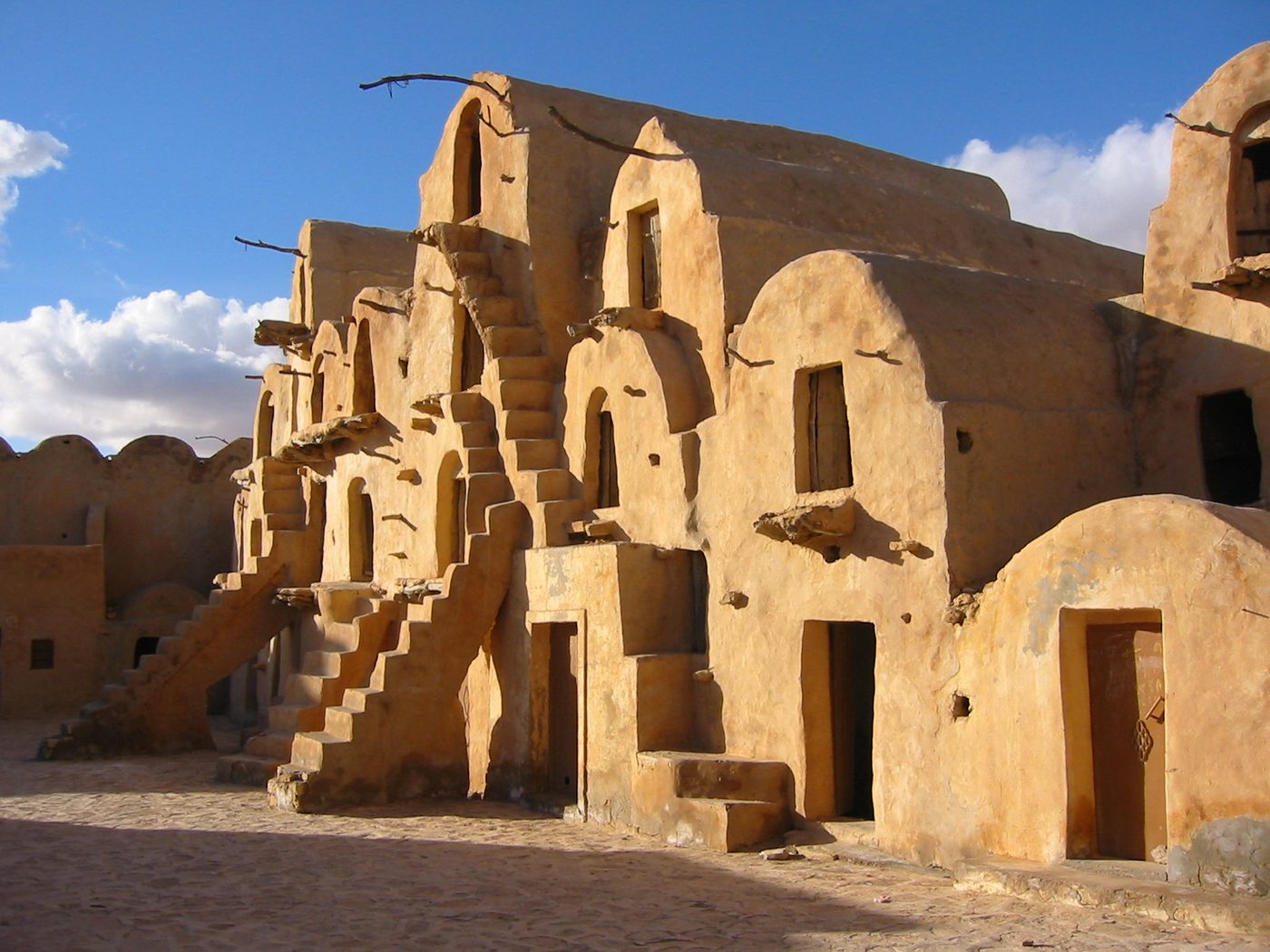
You’ll meet the Amazigh legacy everywhere once you know to look: in the geometric symbols on Sejnane pottery and kilims, the khomsa hand, the fortified granaries (ksour) of the south, and the ingenious underground homes built to beat the desert heat. It’s a culture of resilience and craft, and Tunisians are increasingly proud of it. A note on respect — these are lived-in villages, not open-air museums, so ask before photographing people and buy a tea or a craft to put something back into the community.

Berber villages worth the trip
All of the following sit comfortably within the normal tourist map. (One caution per the FCDO: the deep south near the Libyan and Algerian borders includes areas the FCDO advises against travelling to, so stick to the established villages below and check current advice before any far-south desert excursion — our is Tunisia safe guide has the exact zones.)
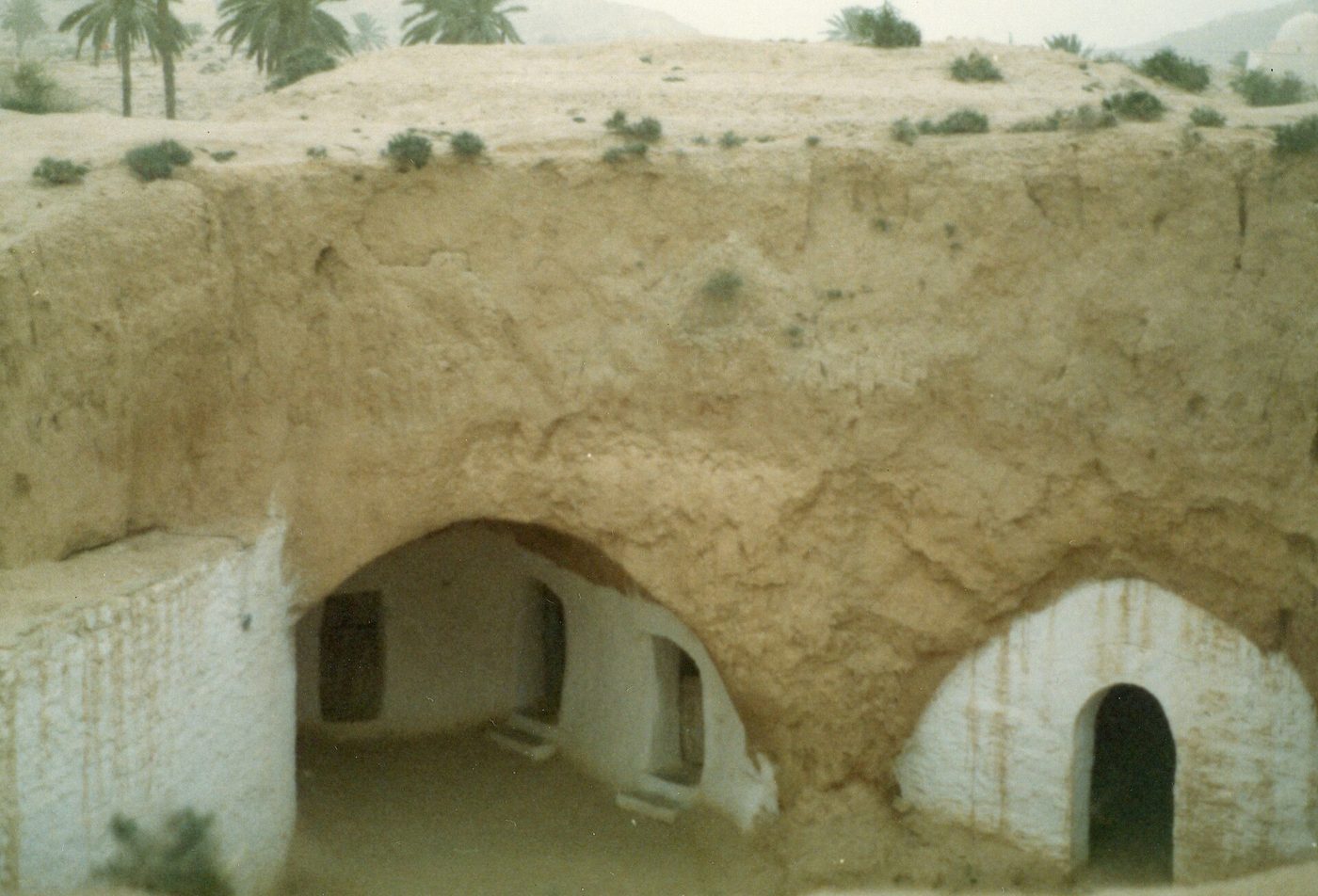
- Matmata — the most famous, and an easy add-on to a southern tour: a lunar landscape of troglodyte pit-homes dug into the ground around sunken courtyards. The Hotel Sidi Driss here played the Lars family homestead in Star Wars and you can still eat lunch in the filmed courtyard — see our Star Wars filming locations guide.
- Chenini and Douiret — dramatic hilltop ksar villages near Tataouine town, with cave dwellings, whitewashed mosques and Tamazight still spoken. Achingly photogenic in late afternoon light.
- Tamezret and Toujane — quieter Berber hill villages near Matmata, good for a slower, less touristy feel and a glass of almond tea.
- Takrouna and Zriba — clifftop Amazigh hamlets in the north near Zaghouan, an easy detour from Hammamet or Sousse.
- Guellala, Djerba — the island’s Ibadi-Amazigh potters’ village, where the unglazed-pottery tradition lives on.
Most travellers reach the southern villages on an organised tour from the coast or from a Sahara trip; the northern ones are doable by hire car. Either way, see our guide to getting around Tunisia for the logistics.

Music, festivals and the cultural calendar
The sound of Tunisia
Three traditions dominate. Malouf is Tunisia’s Arab-Andalusian classical music, carried here by Muslims and Jews expelled from Spain between the 15th and 17th centuries and nurtured in towns like Testour and Soliman; the Rashidiyya Institute, founded in Tunis in 1934, codified and saved it, and President Bourguiba later promoted it as national heritage. Mezoued — named after the goatskin bagpipe that drives it — is the raucous, danceable folk-pop of the working class, long looked down on by the establishment and now utterly mainstream at weddings. And stambeli is the haunting, trance-like spirit music brought by the descendants of enslaved West Africans, used in healing ceremonies and built on the iron shqashiq clappers and the gumbri lute. Listen for the oud, the double-reed zukra and the bendir frame drum threaded through all of it.
Festivals month by month
Tunisia’s festival season peaks in summer, when Roman theatres and amphitheatres become some of the most atmospheric concert venues on earth. Dates shift year to year, so I’ve given the usual window rather than invent specifics; check the official festival pages closer to the time, and note that the religious holidays move with the lunar calendar.

| When | Festival | Where | What it is |
|---|---|---|---|
| During Ramadan (Feb 2026 / early Feb 2027) | Medina Festival | Tunis | Evening concerts and cultural events after iftar |
| Spring | Orange Blossom Festival | Nabeul / Menzel Bou Zelfa | Cap Bon’s citrus harvest celebration |
| Usually June | Testour Malouf Festival | Testour | Tunisia’s flagship Andalusian-music gathering |
| Usually June | Falconry (Sparrowhawk) Festival | El Haouaria, Cap Bon | Cap Bon’s ancient bird-of-prey tradition |
| July–August | International Festival of Carthage | Ancient theatre, Carthage | The big one — music, theatre and dance, 60th edition in 2026 |
| July–August | International Festival of Hammamet | Open-air theatre, Hammamet | Long-running arts festival by the sea |
| July–August | Symphonic Music Festival | El Jem amphitheatre | Orchestras under the stars in a Roman arena |
| Summer | Dougga Festival | Roman site of Dougga | Performances among the ruins |
| Late December | International Sahara Festival | Douz | Camel races and Bedouin culture on the desert’s edge |
| Autumn/winter | Date & oasis festivals | Kébili, Tozeur | Harvest celebrations in the palm groves |
If a festival is your reason to travel, line it up against our best time to visit guide and the venue write-ups in our Roman ruins guide — watching an orchestra in the El Jem amphitheatre is a bucket-list evening. The Sahara Festival at Douz is the great winter alternative.
Food, mint tea and the culture of the table
You can’t separate Tunisian culture from its food, and the kitchen is where the country’s heritage is most deliciously alive. Couscous — the national dish, and a UNESCO Intangible Heritage element since 2020 — is the Friday ritual; fiery harissa earned its own UNESCO listing in 2022; and the crisp, egg-filled brik is the snack you’ll crave for years. Meals end, always, with sweet mint tea, often with pine nuts floating on top, and honey-soaked makroud from Kairouan. Sharing a tagine of ojja or a plate of grilled fish with Tunisians is the warmest cultural exchange there is — our guide to Tunisian food tells you exactly what to order and how to eat it.
Frequently asked questions
What is Tunisia known for culturally?
Tunisia is known for its layered Mediterranean culture: Carthaginian and Roman ruins, Arab-Islamic medinas and souks, the indigenous Amazigh (Berber) heritage of the south, a famous craft tradition (Kairouan carpets, Nabeul and Sejnane pottery, the red chechia hat), the steam-bath hammam ritual, and being one of the world’s leading thalassotherapy spa destinations.
Is Tunisia a Muslim country, and can I visit mosques?
Yes — around 99% of Tunisians are Sunni Muslim, with a small Jewish community and Djerba’s distinct Ibadi Muslims. Most working mosques are closed to non-Muslims, but you can usually visit the courtyards of a few historic ones, such as the Great Mosque of Kairouan and the Zitouna in Tunis. Dress modestly and respect prayer times.
What should I wear in Tunisia as a tourist?
Around resorts and pools, normal beachwear is fine. Away from the coast — in medinas, markets and villages — cover shoulders and knees out of courtesy and to draw less attention; women may want a scarf for mosque courtyards. The FCDO advises that beach clothing suits resorts, but “local custom is to dress modestly” at religious sites and in remote areas.
What happens in a Tunisian hammam, and do you get naked?
No, you keep your underwear on, wrapped in a thin cotton fouta. You warm up in steam, lather with olive-oil “black soap”, then exfoliate hard with a coarse kessa mitt — the famous scrub — before rinsing and, often, a massage. Hammams are always single-sex, usually split by time slot. Bring flip-flops, a towel and a few dinar to tip.
How much does a hammam or spa cost in Tunisia?
A local neighbourhood hammam costs just a few dinar — roughly 5–10 TND (£1.30–£2.60) — for self-service entry. A hotel or spa hammam with a full scrub and massage runs about 80–165 TND (£20–42), rising at five-star resorts. A thalassotherapy day pass is typically 80–200 TND (£20–50). Prices are approximate; check on the day.
Why is Tunisia famous for thalassotherapy?
Reporting in 2025 ranked Tunisia as the world’s second-biggest seawater-therapy destination after France, with around 60 thalasso centres and some 390 spas drawing about 1.2 million wellness visitors a year. The draw is quality at a fraction of European prices — an all-inclusive thalasso week starts from around €1,000 (about £850), versus roughly €3,000 in France.
How do you haggle in a Tunisian souk?
Greet the seller first, only start bargaining if you genuinely might buy, and treat the opening price as theatre — a common rule of thumb is to counter at about a third and meet in the middle. Stay friendly, carry small dinar in cash, and be ready to walk away (it often brings the price down). Visiting a fixed-price ONAT craft shop first helps you gauge fair value.
What are the best souvenirs to buy in Tunisia?
The standouts are a Kairouan carpet or kilim, Nabeul’s blue-and-white pottery or UNESCO-listed Sejnane terracotta, a handmade chechia felt hat, engraved copper and brass, olive-wood kitchenware, a Sidi Bou Saïd birdcage, and silver khomsa charms. Look for the ONAT quality stamp on certified crafts, and be wary of cheap imported lookalikes sold as local handwork.
Who are the Amazigh, and which Berber villages can I visit?
The Amazigh are North Africa’s indigenous people, here before Carthage. The most visitable villages are Matmata (troglodyte homes and a Star Wars set), Chenini and Douiret near Tataouine, Tamezret and Toujane near Matmata, and Takrouna and Zriba in the north. Most southern villages are reached on a tour; check FCDO advice before any deep-south desert trip near the borders.
What are the main festivals in Tunisia?
The summer headliners are the International Festival of Carthage (in the ancient Roman theatre), the Hammamet festival, and the symphonic music festival in the El Jem amphitheatre, all roughly July–August. Winter brings the Sahara Festival at Douz in late December. Dates shift each year, so check official sources before booking around one.
Final thoughts
The thing I want UK visitors to take away is that Tunisian culture isn’t a side excursion from the beach holiday — it is the holiday, if you let it be. An afternoon haggling for a kilim, a morning being scrubbed pink in a hammam, a thalasso day that costs less than a posh dinner at home, an evening of malouf under Roman arches: this is some of the best value, most welcoming cultural travel anywhere on the Mediterranean. Be a gracious guest, learn three words of Arabic, accept the tea, and Tunisia will open right up. For the bigger picture, start with our master list of things to do in Tunisia and build your trip with our Tunisia itinerary guide.
About the author: Written by the Tunisia Tourism Guide editorial team — UK-based travel writers who have spent years exploring Tunisia’s coast, medinas and desert, from Tunis to Tataouine. We write practical, honest guides for British travellers and update them regularly. Last updated June 2026.
Sources & further reading: UK FCDO Tunisia travel advice (updated 23 February 2026); UNESCO Intangible Cultural Heritage lists (Sejnane pottery 2018, couscous 2020, harissa 2022, metal engraving 2023); AFP/France 24 reporting on Tunisia’s thalassotherapy sector (2025). Prices and dates are indicative for June 2026 and should be confirmed locally before you travel.
Photo credits
- Hand-painted blue doors and crafts in Sidi Bou Said, an icon of Tunisian culture — Photo: Mstyslav Chernov / CC BY-SA 3.0 via Wikimedia Commons (source).
- An arched lane in the historic medina of Tunis — Photo: Rais67 (CC0) via Wikimedia Commons (source).
- Women weaving a kilim on a traditional loom, a living Tunisian craft — Photo: Dennis G. Jarvis / CC BY-SA 2.0 via Wikimedia Commons (source).
- A hand-painted Tunisian ceramic cup with traditional geometric decoration — Photo: Nicholas Johnson from Brookline, MA, USA (CC0) via Wikimedia Commons (source).
- Knotted carpets hanging in a traditional carpet showroom in Kairouan — Photo: Максим Улитин / CC BY 3.0 via Wikimedia Commons (source).
- The resort coast at Yasmine Hammamet, heart of Tunisia’s thalassotherapy scene — Photo: Marc Ryckaert (MJJR) / CC BY 3.0 via Wikimedia Commons (source).
- A troglodyte Berber home dug into the ground at Matmata, southern Tunisia — Photo: Bernard Gagnon / CC BY-SA 3.0 via Wikimedia Commons (source).
- The Amazigh hilltop village of Chenini in southern Tunisia — Photo: Simunaire / CC BY-SA 4.0 via Wikimedia Commons (source).
- The Roman amphitheatre at El Jem, summer venue for the symphonic music festival — Photo: Agnieszka Wolska / CC BY-SA 3.0 via Wikimedia Commons (source).
2 responses to “Tunisian Culture, Shopping & Wellness: The 2026 Guide”
[…] 30 to 45 minutes. It’s a good pairing with the Ribat and a natural thread into our wider Tunisia culture […]
[…] That protected look is now recognised well beyond Tunisia: in 2024 the village was added to UNESCO’s Tentative List, a first step towards possible World Heritage status. It has long drawn artists — Paul Klee and August Macke painted here in 1914, and writers from André Gide to Simone de Beauvoir passed through — which is part of why it looms so large in Tunisia’s cultural imagination. For more on that thread, see our guide to Tunisian culture. […]