By the Tunisia Tourism Guide team · Last updated 14 November 2026 · We don’t sell tours or take hotel commissions — this is independent advice, written to be useful.
If your French stopped at GCSE and your Arabic never started, it’s a fair worry before a first trip: will anyone understand you? Can you get a taxi, order dinner and sort out a problem at the hotel in English, or will you spend the week pointing and smiling?
Do they speak English in Tunisia? Yes, in hotels, resorts and the main tourist sights, and increasingly among younger people. But it isn’t the country’s second language: everyday life runs in Tunisian Arabic, and French is the foreign language most widely used. Away from the tourist trail, a few words of French or Arabic help a lot.
This is part of our wider guide to travelling in Tunisia. Below we explain which languages Tunisians actually speak and where, how much English you can expect in different situations, and how to get by when English runs out. There’s also a cheat sheet of Tunisian Arabic and French phrases that earn a smile out of all proportion to the effort.
Languages in Tunisia at a glance
| Language | Status | Where you’ll meet it |
|---|---|---|
| Arabic | The official language under Article 6 of the 2022 constitution | Government, official signs, news, religion, schools |
| Tunisian Arabic (Derja or Tounsi) | The everyday spoken language | Everywhere: homes, markets, taxis, cafés |
| French | No official status, but widely used | Menus, road signs, shopfronts, business, many conversations with visitors |
| English | A growing foreign language | Hotels, resort restaurants, tourist sights, younger people in cities |
| Amazigh (Berber) | Spoken by a small minority | A few villages in the south and parts of Djerba |
In short: Arabic is the language of the state, Derja is the language of the street, French is the language you’ll see written alongside Arabic almost everywhere, and English is the language of the tourist industry and of a generation that grew up online.
What language do they speak in Tunisia?
Arabic and Tunisian Derja
Tunisia’s 2022 constitution states in Article 6 that the country is part of the Arab nation and that its official language is Arabic. That means Modern Standard Arabic, the formal written language shared across the Arab world, used in official documents, the news, schools and the mosque.
What you’ll actually hear on the street is different. Tunisians speak Tunisian Arabic, known as Derja or Tounsi, a dialect with its own vocabulary and rhythm, and plenty of words borrowed from French, Italian, Turkish and Amazigh. It’s quite distinct from the Arabic of Egypt or the Gulf, so even fluent Arabic speakers from elsewhere sometimes take a moment to tune in. For a visitor, the practical point is that Derja is the language people use with each other, and a word or two of it goes a long way.
French
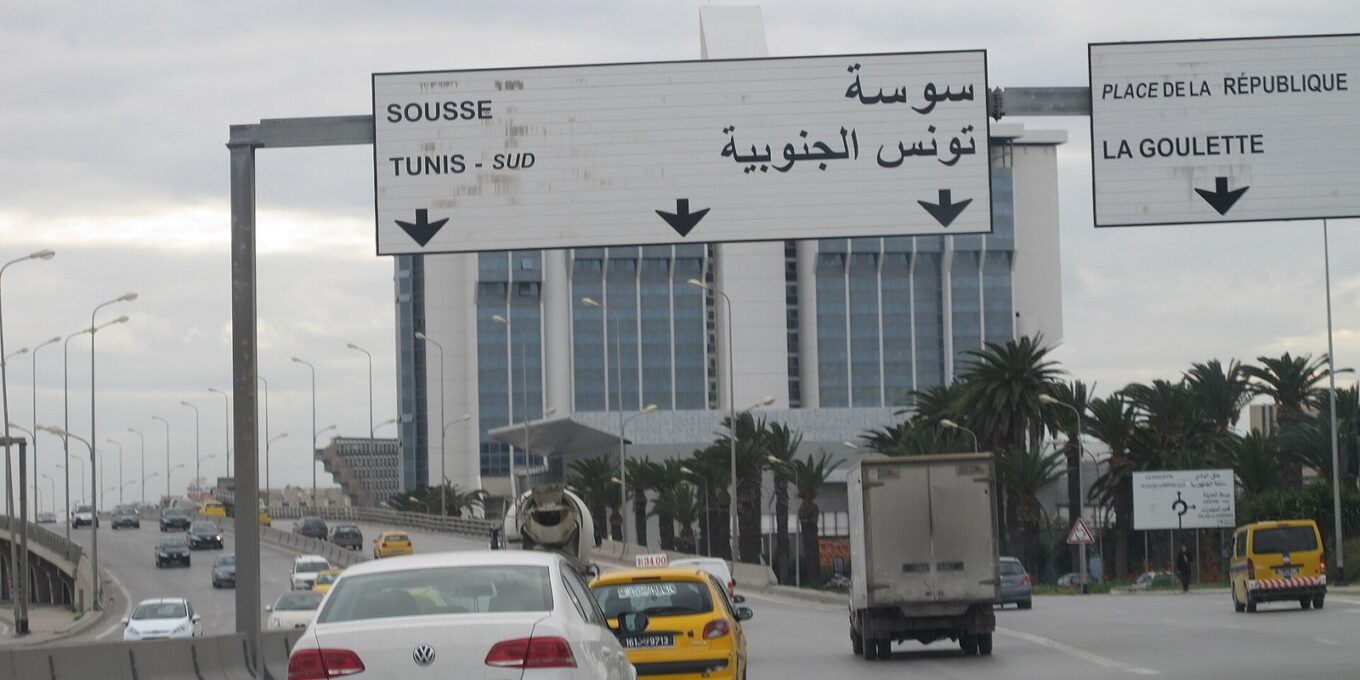
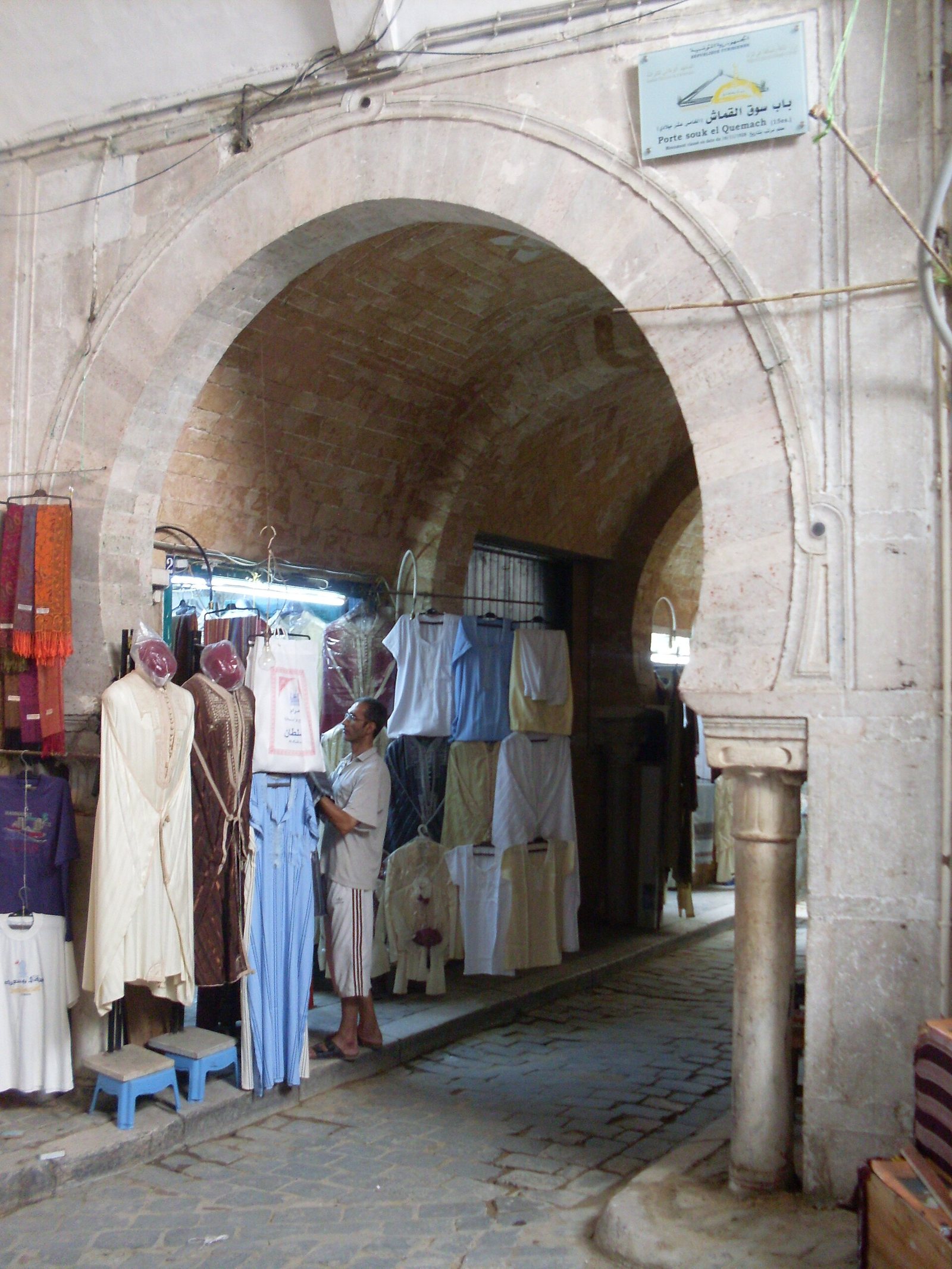
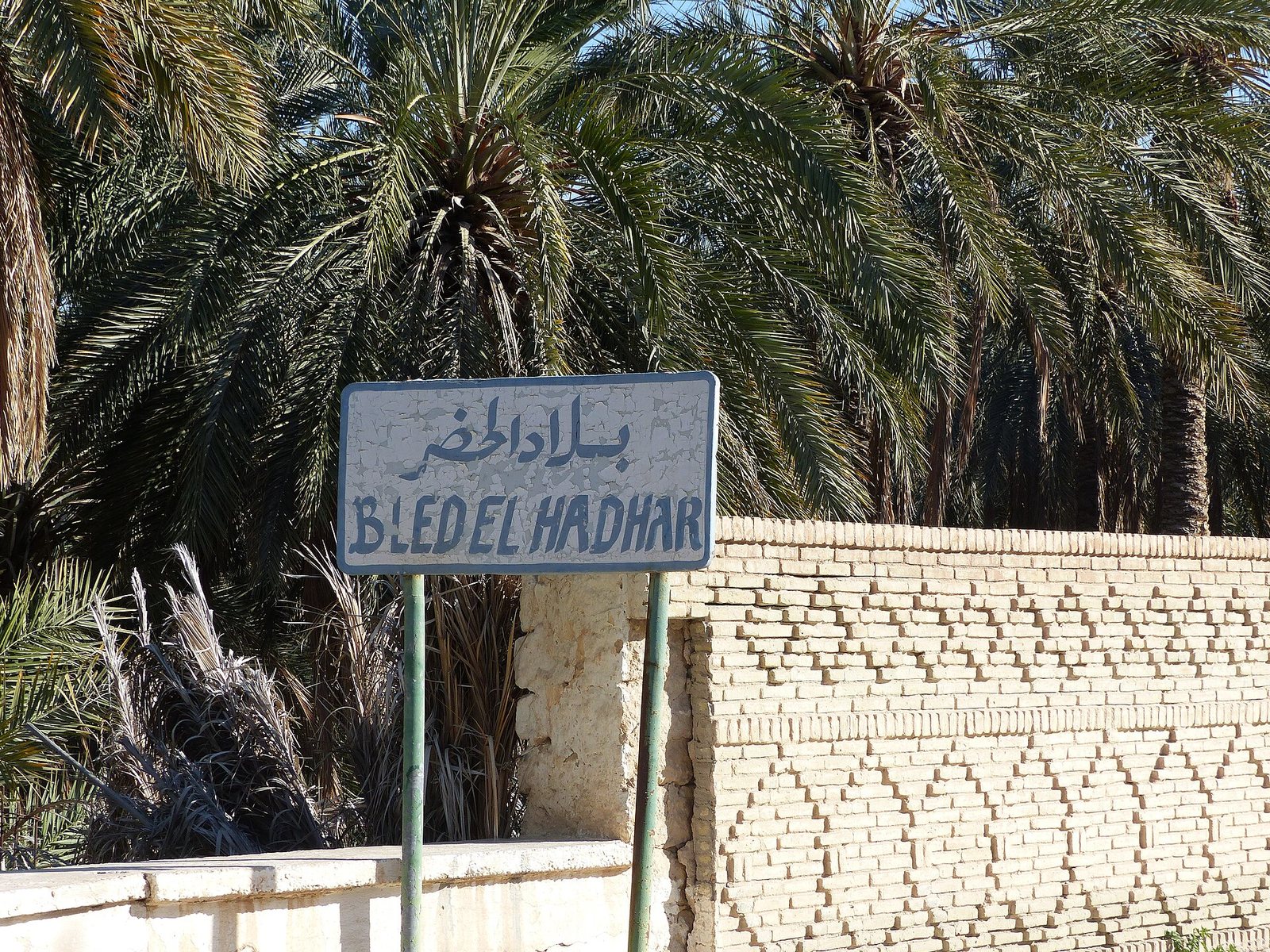
French has no official status in the constitution, but it’s woven into daily life, a legacy of the French protectorate that ended with independence in 1956. You’ll see it on road signs next to Arabic, on menus, shopfronts, receipts and tickets, and you’ll hear it in business and among educated Tunisians of all ages. Many Tunisians switch between Derja and French mid-sentence.
For British visitors, this matters more than you might expect. In situations where English doesn’t get you far, basic French very often will, especially with older people and in smaller towns.
Amazigh (Berber)
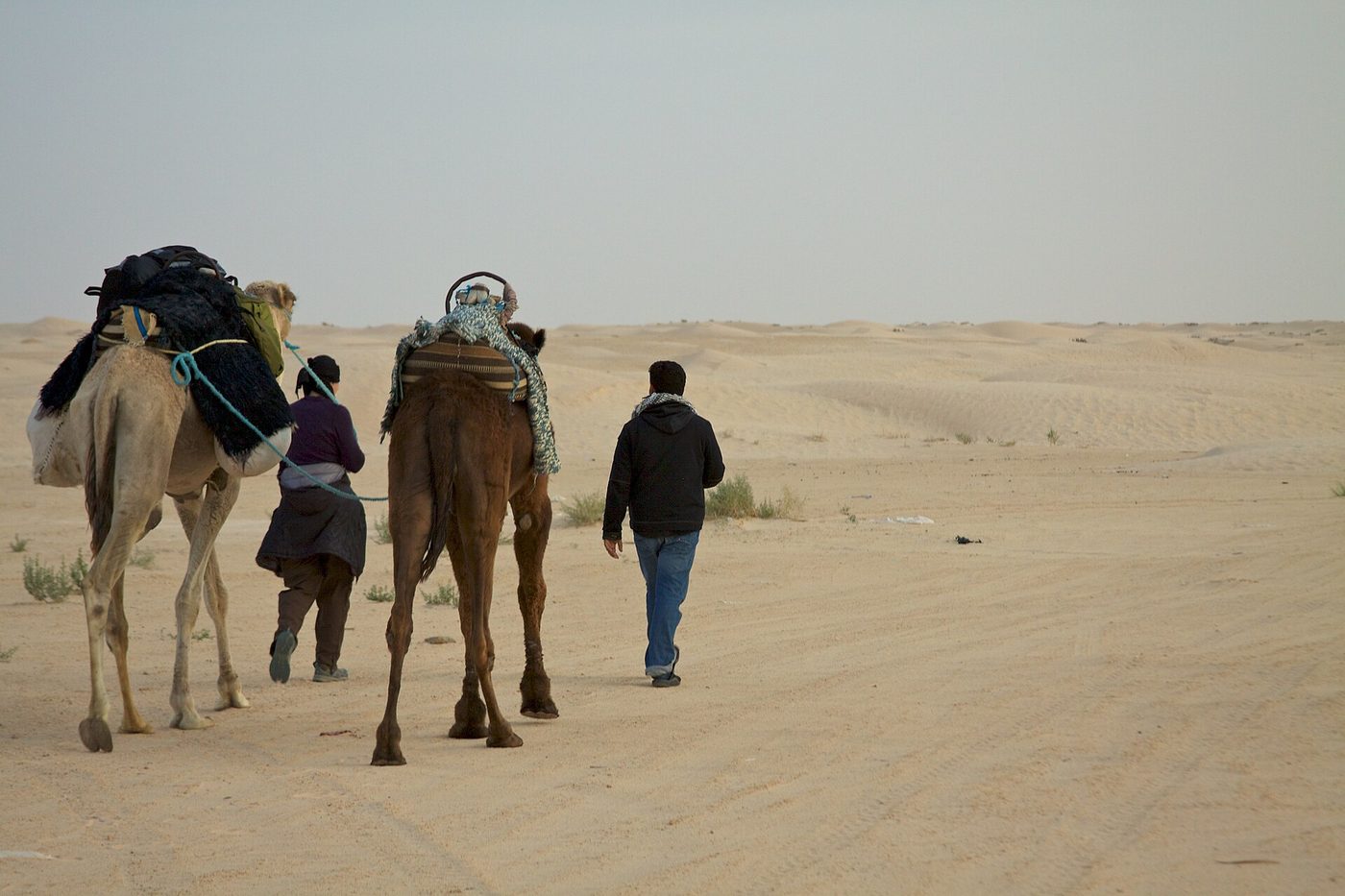
Before Arabic arrived, North Africa spoke Amazigh languages, and a small minority of Tunisians still do, mainly in a handful of villages in the south, including around Matmata, and in parts of Djerba. You’re unlikely to need it, but it’s part of what makes places such as Matmata and Djerba culturally distinct, and it explains some of the place names you’ll see on the map.
Do they speak English in Tunisia? It depends where you are
In hotels and resorts
This is where you’ll have the least trouble. Reception, guest relations, the bar and the main restaurant in tourist hotels in Hammamet, Sousse, Port El Kantaoui, Monastir and Djerba deal with British guests all season, and staff generally speak at least working English. The same goes for hotel reps and tour operators. On a typical all-inclusive holiday you can get by in English alone, though a “merci” or “aychek” (thank you, in Derja) is always appreciated.
At the main sights
Ticket offices and official guides at the big heritage sites, such as Carthage, the Bardo Museum and El Jem, are used to foreign visitors, and English-speaking guides are available at the busiest. Labels and information panels are usually in Arabic and French, sometimes with English. If English interpretation matters to you, book an English-speaking guide for the day rather than relying on signs.
In the medinas and souks
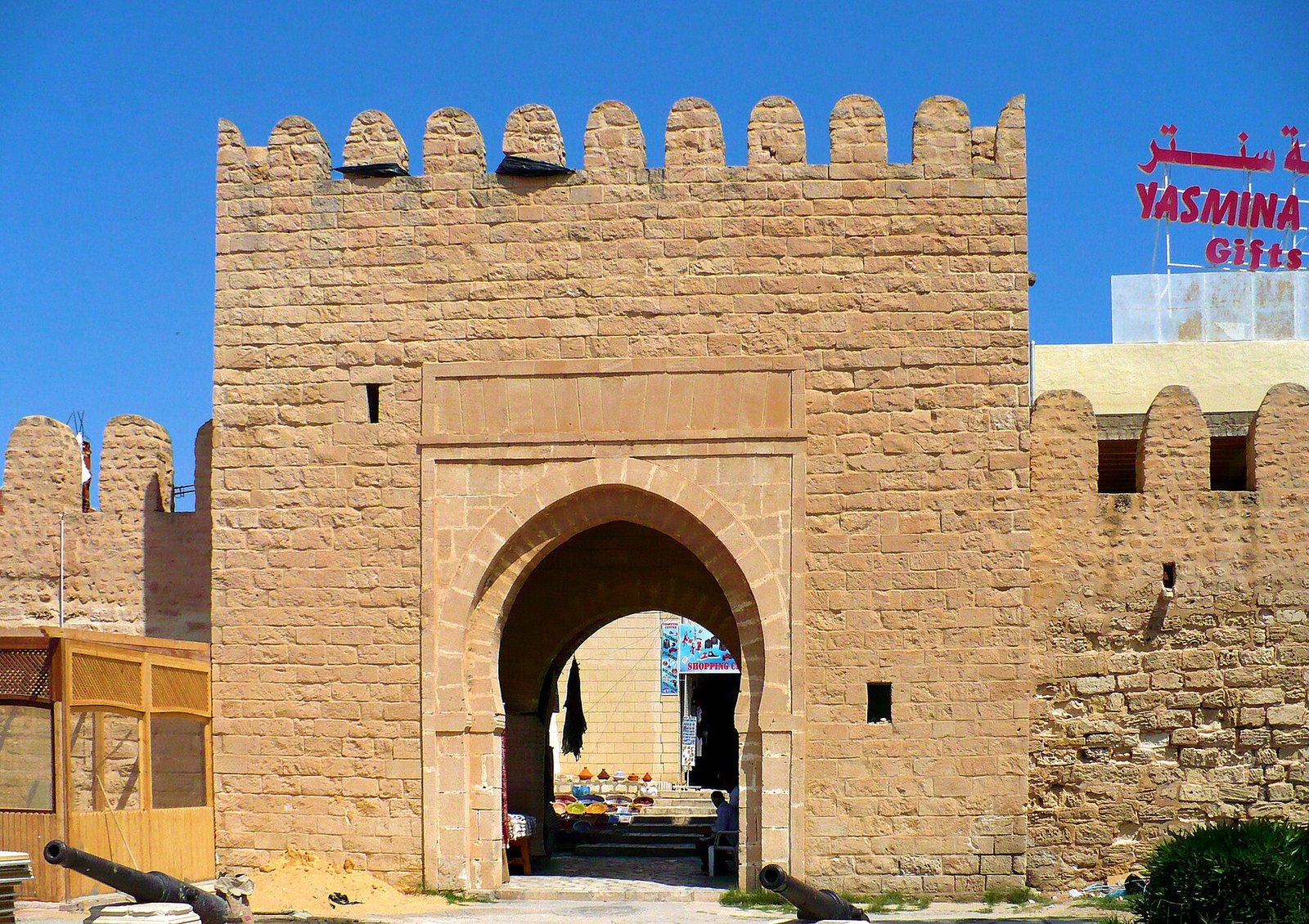
Shopkeepers in the tourist souks of Tunis, Sousse and Hammamet speak whatever language sells: English, French, German, Italian and more. That’s useful when you want to buy something and less useful when you’re trying to walk past. Often the first word you’ll hear is a hopeful “English?” Our guide to common Tunisia scams explains why the friendliest English speaker in the medina isn’t always the one to follow.
In taxis, louages and local shops
This is where English starts to thin out. Many taxi drivers know enough English for a destination and a fare, but not always more, and drivers of louages (shared minibuses between towns) and staff at local shops, pharmacies and bus stations are more likely to speak French than English. Have your destination written down, or shown on your phone in Arabic or French, and you’ll rarely have a problem. Our guide to getting around Tunisia covers taxis and louages in detail.
In the countryside and the south
Outside the tourist zones, expect much less English. In small towns and villages, older people are more likely to speak French as their second language, and some speak only Derja. Gestures, a translation app and a smile go a long way, and people are usually patient and keen to help.
How good is English in Tunisia? The numbers
The most widely quoted measure is the EF English Proficiency Index, run by the education company EF from test results of adults who take its online English test. It isn’t a census, but it’s a useful comparison. In the 2025 edition, which covered 123 countries and regions, Tunisia ranked 66th with a score of 498, slightly above the global average of 488.
The city breakdown is more revealing, and it tracks the picture a visitor would expect:
| Area (EF EPI 2025) | Score |
|---|---|
| Ariana (Greater Tunis) | 530 |
| Tunis | 528 |
| Sousse | 513 |
| Nabeul | 505 |
| Sfax | 504 |
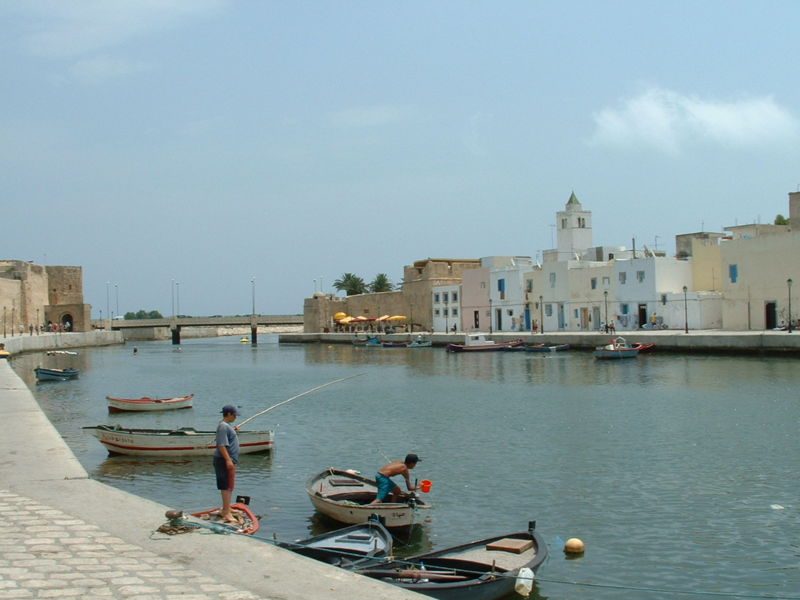
| Bizerte | 504 |
| Monastir | 501 |
| Mahdia | 487 |
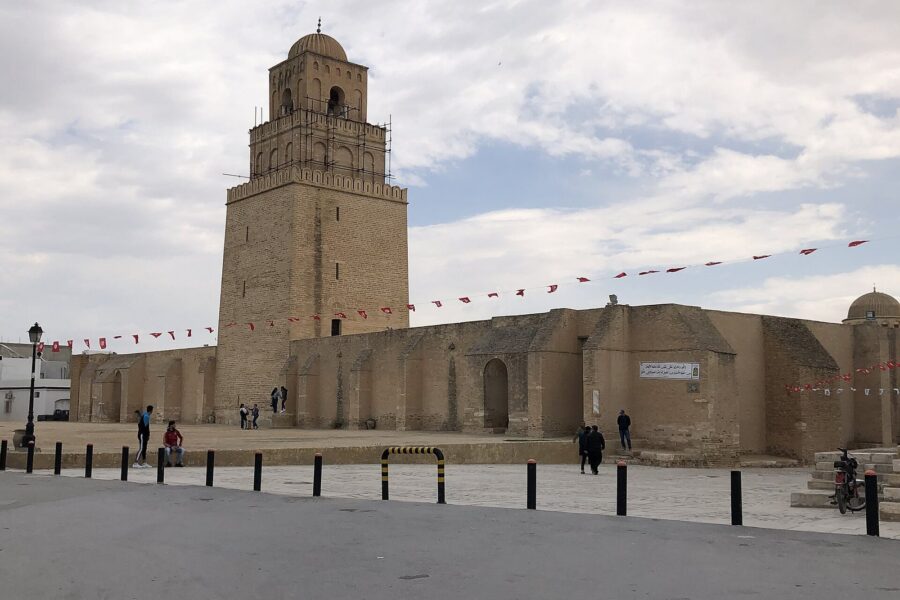
| Kairouan | 469 |
By region, EF scored the north-east highest (515), the central east next (505) and the central west lowest (466), just below the south-east (468). In other words, the capital and the coast, where most visitors spend their time, score best, and the further south and inland you go, the less English you should count on.
A language on the rise
English is gaining ground among younger Tunisians, helped by the internet, the job market and school reforms. In October 2018 the then education minister announced that English would be taught from the fourth year of primary school from the following school year, under an agreement with the British government to train teachers. In 2026, a proposed law to make English a main language of learning from early primary school reignited the debate, though it was a proposal rather than a decision.
The practical upshot: if you need help in English, ask someone in their twenties first. They’re the generation most likely to have learned it at school and kept it up online.
How to get by when English runs out
- Download a translation app with offline Arabic and French. Point-and-show works everywhere. A camera translation function is brilliant for menus and signs.
- Write addresses down. Ask your hotel to write your destination in Arabic for taxi drivers, or show it on a map.
- Try French first, then English. In shops, pharmacies and with older people, French often works when English doesn’t.
- Use numbers on your phone. For prices, typing the figure on a calculator avoids any confusion over French or Arabic numbers.
- Ask a young person. If you’re stuck, someone in their teens or twenties is the likeliest English speaker nearby.
- Have local data. Translation, maps and messaging all work better online. Our guide to Tunisia SIM cards and eSIMs explains how to get connected for a few pounds.
Understanding prices: dinars and millimes
One quirk that confuses visitors has nothing to do with English. The dinar is divided into 1,000 millimes, and Tunisians often quote prices in thousands of millimes. You may hear “khamsa alef” (literally “five thousand”) for a price of 5 dinars, or see “5,000” or “5.000” on a price tag meaning 5 dinars, not 5,000. If a price sounds absurdly high, it’s almost certainly in millimes. Our guide to the Tunisian dinar explains the notes and coins.
Tunisian Arabic phrases for travellers
You don’t need many. A handful of words of Derja shows effort, and in Tunisia that’s rewarded with warmth, a better welcome in shops and, occasionally, a better price. Spellings vary, because Derja is mostly spoken rather than written; these are common transliterations.
| English | Tunisian Arabic (Derja) | Notes |
|---|---|---|
| Hello | Aslema | The everyday Tunisian greeting |
| Peace be upon you | Salam alaykum | Reply: wa alaykum salam |
| Welcome | Ahla / Marhba | You’ll hear these a lot |
| How are you? | Labes? | Reply: labes, hamdoullah (fine, thank God) |
| Thank you | Aychek | “Shukran” is understood too |
| Thank you very much | Aychek barcha | Barcha means “a lot” |
| Yes / No | Ey / Le | |
| No, thank you | Le, aychek | Useful in the souk |
| OK / good | Bahi | Probably the most useful word in Tunisia |
| How much? | Kaddech? | |
| Where is…? | Win…? | Win el-medina? Where’s the medina? |
| Excuse me / sorry | Smahli | |
| Enough! | Yezzi! | Firm, for persistent sellers; use with a smile |
| God willing | Inshallah | Heard constantly, about everything from buses to weather |
| Goodbye | Beslama |
Numbers in Derja
Useful for prices and taxis: wahed (1), zouz (2), thletha (3), arba (4), khamsa (5), setta (6), sab’a (7), thmanya (8), tes’a (9), achra (10). Note that “two” is zouz in Tunisia, not the ithnan you’d learn in standard Arabic classes.
French phrases worth knowing
If you have any French at all, dust it off. These cover most situations a visitor meets:
| English | French |
|---|---|
| Hello / Good evening | Bonjour / Bonsoir |
| Please / Thank you | S’il vous plaît / Merci |
| How much is it? | C’est combien ? |
| The bill, please | L’addition, s’il vous plaît |
| Where is…? | Où est… ? |
| Do you speak English? | Vous parlez anglais ? |
| I don’t speak French | Je ne parle pas français |
| Please use the meter | Le compteur, s’il vous plaît |
| Too expensive | C’est trop cher |
| I’d like to go to… | Je voudrais aller à… |
“Le compteur, s’il vous plaît” alone will save you money in taxis. And starting with “bonjour” before you ask anything is good manners in Tunisia, as in France.
How much language you need, by type of trip
An all-inclusive week
Almost none. Your rep, the hotel and the excursion desk will all work in English, and so will most of the people selling to you on the beach. Learn “aslema”, “aychek” and “le, aychek” (no, thank you) for courtesy and for the souk, and you’re set. If you book trips through the hotel, check that the guide will be speaking English rather than French or German, because mixed-language coach tours sometimes split the commentary.
A city break in Tunis
More useful. Tunis is among the most English-friendly places in the country on EF’s figures, but you’ll be dealing with taxis, cafés, museum ticket desks and the medina’s shopkeepers on your own. A little French makes a real difference here, and our guide to the Tunis medina helps you find your way through the lanes without depending on a self-appointed guide.
A road trip or independent travel
This is where some French pays for itself: at petrol stations, in small-town restaurants, with guesthouse owners and when you need directions. Download offline translation packs before you set off, and keep your accommodation’s address saved in Arabic and French on your phone.
A Sahara tour
Desert tours draw visitors from all over Europe, and guides switch between languages. When you book, ask specifically whether the guide or driver will speak English for the whole trip, and get the answer in writing. A guide who only explains things in French is a disappointing way to see the desert.
Language and etiquette
A few points that go beyond vocabulary:
- Greetings matter. Start with “aslema” or “bonjour” before launching into a question. Jumping straight to “Where’s the station?” can come across as abrupt.
- “Inshallah” isn’t a brush-off. It’s an everyday expression of hope that things work out, attached to plans of every size.
- Don’t assume English speakers are guides. In the medinas, someone who strikes up a friendly conversation in perfect English may be heading for a shop where he earns commission. Be polite, and decide for yourself where you go.
- Keep your voice down near mosques and be respectful during prayer times; our guide to what to wear in Tunisia covers dress at religious sites.
- Mind your hand gestures. As across much of the region, pointing a finger at people can come across as rude; a nod or open hand is safer.
Want to learn more? Arabic and English courses in Tunisia
If a holiday sparks a deeper interest, Tunis is a popular place to study Arabic. The Institut Bourguiba des Langues Vivantes, part of the University of Tunis El Manar, runs Arabic courses for foreigners in three sessions across the academic year, including intensive options. Check the institute’s own site for current dates and fees before you plan around it.
Going the other way, the British Council runs an English language centre in Tunis, at 87 Avenue Mohamed V in the Belvedere district. It’s one sign of how much demand there is for English among Tunisians.
Do they speak English in Tunisia: frequently asked questions
Is English widely spoken in Tunisia?
In tourist areas, yes; across the country, not as widely as French. Hotel staff, tour operators, guides and souvenir sellers in resorts such as Hammamet, Sousse and Djerba usually speak working English. Outside tourist zones, and among older people, French is far more common than English. Younger Tunisians in the cities are the most likely to speak English well.
What language do they speak in Tunisia?
Arabic is the official language under Tunisia’s 2022 constitution, but everyday conversation is in Tunisian Arabic, called Derja or Tounsi. French is widely used in business, on signs and menus, and by many educated Tunisians, though it has no official status. English is growing, especially among the young, and a small minority speak Amazigh (Berber) in parts of the south and Djerba.
Is French or English more useful in Tunisia?
French, overall. It’s the foreign language you’ll see on road signs, menus and shopfronts, and the one older Tunisians and people in smaller towns are most likely to speak. In hotels and tourist areas, English works fine. If you speak some French, use it outside the resort; if you don’t, English plus a translation app will get you through.
Can I get by in Tunisia with only English?
On a resort-based holiday, yes, easily. Hotels, reps, excursion operators and the main tourist sights all work in English. If you’re travelling independently, you’ll manage too, but expect to rely on a translation app, written addresses and a few French or Arabic words for taxis, louages, local shops and smaller towns.
How do you say hello and thank you in Tunisian?
“Aslema” is the everyday Tunisian hello, and “salam alaykum” is a more formal greeting understood everywhere. Thank you is “aychek”, or “aychek barcha” for thank you very much. “Merci”, the French word, is also used constantly, so you can’t go wrong with either.
Is Tunisian Arabic different from other Arabic?
Yes, noticeably. Derja shares its roots with standard Arabic but has its own vocabulary, pronunciation and many words borrowed from French, Italian, Turkish and Amazigh. Some everyday words differ completely; “two” is zouz rather than ithnan, for example. Tunisians understand standard Arabic from school and the media, but speak Derja among themselves.
How good is English in Tunisia compared with other countries?
Middling. In the 2025 EF English Proficiency Index, Tunisia ranked 66th of 123 countries and regions, with a score of 498, slightly above the global average of 488. Scores were highest around Tunis and on the coast, and lower in Kairouan and the south-east, which matches what most visitors notice.
Do taxi drivers in Tunisia speak English?
Some do, especially in resort areas, but many know only a few words. Have your destination written in Arabic or French, or shown on a map, and ask for the meter with “le compteur, s’il vous plaît”. Hotels can call a taxi and explain where you’re going, which helps if you’re heading somewhere less obvious.
Are signs in Tunisia in English?
Mostly not. Road signs and public signs are usually in Arabic and French. In tourist areas, many shops, restaurants and hotels add English, and the major heritage sites have some English information. A translation app with a camera function is the easiest way to read anything else.
Final thoughts
Language barriers in Tunisia are smaller than many visitors fear. English will carry you through the resorts and the big sights, French unlocks most of the rest, and a few words of Derja turn polite service into genuine warmth. Learn “aslema”, “aychek” and “bahi” on the flight and you’ll be surprised how far they go. Next, get a feel for the wider culture in our introduction to Tunisian culture, read up on tipping in Tunisia, and check how safe Tunisia is for visitors before you book.
Written by the Tunisia Tourism Guide team — an independent UK-focused guide to travelling in Tunisia. We don’t sell tours or take hotel commissions. Prices and advice were checked at publication; always confirm current details before you book.
Photo credits
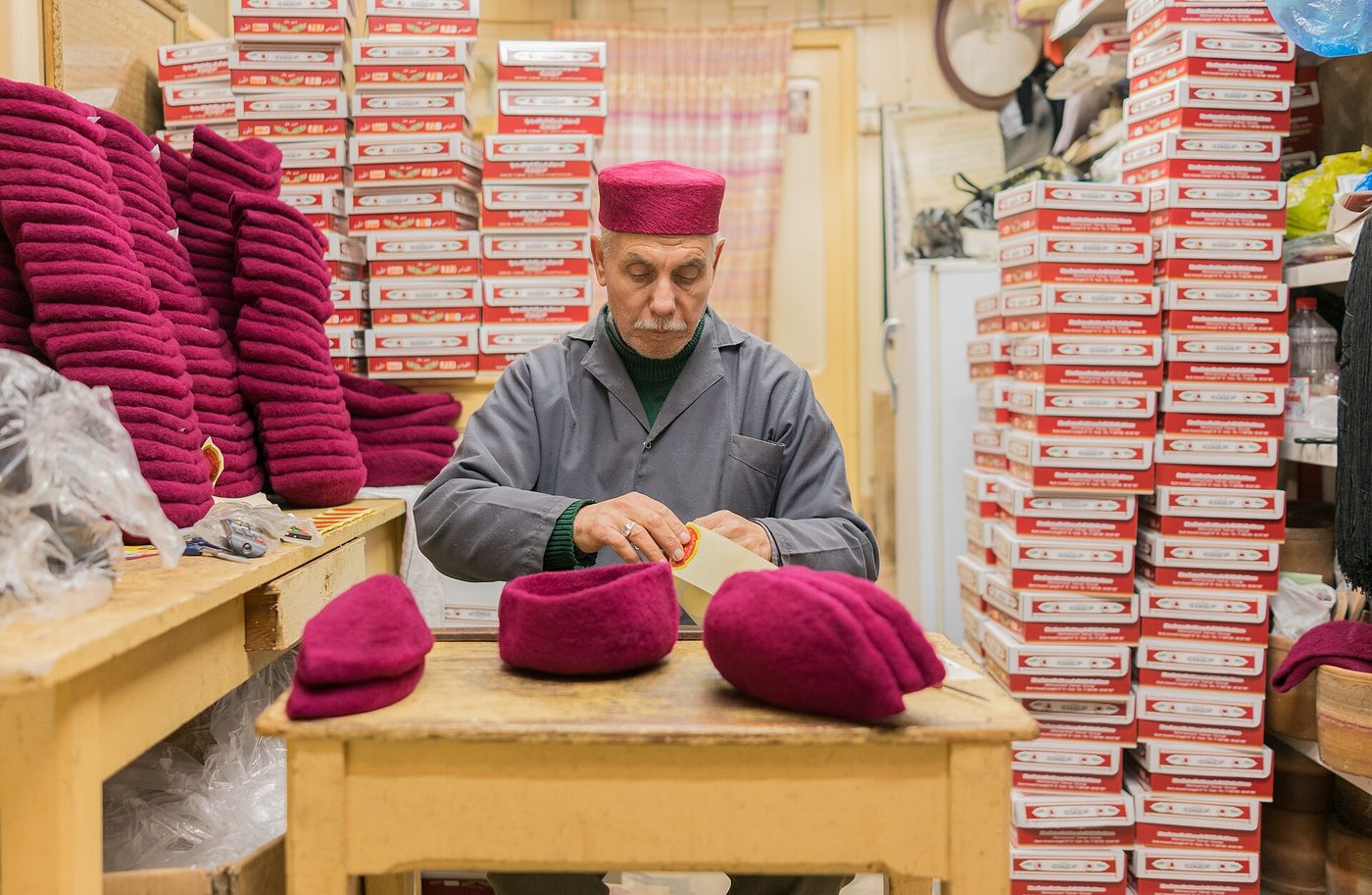
All images via Wikimedia Commons, used with thanks: A souk gateway in the Tunis medina: Rais67 (Public domain); A gate into the Monastir medina © Mietek Ł (CC BY-SA 3.0); Bookshop on Rue des Tanneurs, Tunis © Mohatatou (CC BY-SA 4.0); Bled el Hadhar sign, Tozeur © Tsaag Valren (CC BY-SA 4.0); A chechia maker at work © IssamBarhoumi (CC BY-SA 4.0); Bilingual road signs in Tunis © Kritzolina (CC BY-SA 4.0).