By the Tunisia Tourism Guide team · Last updated 18 November 2026 · We don’t sell tours or take hotel commissions — this is independent advice, written to be useful.
Do I need jabs for Tunisia? It’s usually the first health question after booking, followed swiftly by two more: can I drink the tap water, and what happens if I get ill? The answers are mostly reassuring, with a couple of real exceptions.
Tunisia vaccinations are about being up to date rather than collecting exotic jabs: no vaccine is required to enter from the UK, and TravelHealthPro lists hepatitis A and a tetanus check for most travellers, with hepatitis B, measles, rabies and typhoid for some. Drink bottled water, and buy proper insurance: the GHIC doesn’t work here.
This guide is part of our practical Tunisia travel tips, and it takes the health side in order: what the UK’s travel-health experts recommend and why, which jabs are free on the NHS and what the rest cost, rabies, the water, food, pharmacies, hospitals and insurance, and what to pack. The medical guidance comes from TravelHealthPro’s Tunisia page (the website of the UK’s National Travel Health Network and Centre, NaTHNaC), the NHS, the Foreign, Commonwealth & Development Office (FCDO) and the US Centers for Disease Control and Prevention (CDC), checked in November 2026. None of it replaces an appointment with a nurse or pharmacist who knows your medical history. Think of it as the briefing before that conversation.
Tunisia vaccinations and health at a glance
| Question | Short answer | Where to check |
|---|---|---|
| Any jabs required to get in? | No. Tunisia has no certificate requirements under the International Health Regulations | TravelHealthPro |
| Recommended for most travellers | Hepatitis A, and tetanus up to date (given in the UK as one jab with diphtheria and polio) | TravelHealthPro |
| Worth discussing | Hepatitis B, measles (MMR), rabies and typhoid, depending on your plans and health | A travel nurse or pharmacist |
| Free on the NHS | Hepatitis A, typhoid and the tetanus-diphtheria-polio jab, at your GP after a risk assessment | NHS |
| Yellow fever | Not required and not recommended | CDC |
| Tap water | Supplied as drinking water, but on a short trip we’d drink bottled or filtered | Your hotel; SONEDE |
| Pharmacies | Green cross sign; on Sundays and public holidays only the on-duty pharmacies open | The notice posted in every pharmacy |
| Emergency number | 190 for an ambulance | FCDO |
| GHIC | Not valid in Tunisia; private clinics expect payment on the spot | NHSBSA; FCDO |
| Travel insurance | Essential: medical treatment, evacuation and every activity you plan | Your policy wording |
Do you need vaccinations for Tunisia?
Nothing is compulsory. TravelHealthPro says there are no certificate requirements for Tunisia under the International Health Regulations, the CDC’s Tunisia page says the yellow fever vaccine is neither required nor recommended, and the FCDO’s entry requirements for Tunisia contain no vaccination rules at all; they simply send you to TravelHealthPro. There’s no certificate to carry and nothing to show at the airport.
Recommended is a different matter, and that’s where most of the confusion comes from. Travel-health advice comes in tiers: jabs for “most travellers” to a country, and jabs for “some travellers”, depending on what you’ll be doing, for how long, and on your own health. A week on an all-inclusive in Port El Kantaoui and a month cycling between southern oases are not the same trip, and the advice doesn’t pretend they are.
The jabs most travellers should have
Hepatitis A. TravelHealthPro recommends it for all previously unvaccinated travellers to Tunisia. It’s a liver infection caught from contaminated food and water, which is exactly the kind of risk a holiday of buffets, street snacks and salads carries. It’s free on the NHS at your GP, and if you go private, Superdrug’s Health Clinic was charging £67 for its one-dose course in November 2026.
Tetanus. TravelHealthPro’s line is that you should have had the full UK course, with a booster if your last dose was more than ten years ago and you’ll be somewhere medical facilities may be limited. In the UK the booster comes as one jab with diphtheria and polio, and that combined jab is free at your GP. If you can’t remember when you last had one, that’s your answer: ask.
The jabs some travellers need
TravelHealthPro puts four more vaccines in its “some travellers” column for Tunisia. Whether they apply to you is exactly what a travel health appointment is for, but here’s who each one is aimed at.
| Vaccine | Who TravelHealthPro suggests it for | NHS or private? | Superdrug price (November 2026) |
|---|---|---|---|
| Hepatitis B | Could be considered for all travellers; recommended for those at higher risk, such as unprotected sex, possible contact with blood or needles, the chance of medical or dental treatment, contact sports and long stays | Pay privately | £52 a dose; three doses £156 |
| Measles (MMR) | Everyone should be up to date; the measles risk in Tunisia is greater than in the UK, and babies from six months who’ll mix with local people may be offered an early dose | Routine UK jab: check your record with your GP | £45 a dose |
| Rabies | Work that carries a risk, higher-risk activities such as running and cycling, stays of more than a month, and trips where post-exposure treatment would be hard to reach quickly | Pay privately | £82 a dose; three doses £246 |
| Typhoid | Higher-risk travellers, such as those visiting friends and relatives, or staying often or for long periods where sanitation is poor; oral and injectable vaccines exist | Free at your GP | £42 (one dose) |
Our honest read: for a typical one- or two-week beach holiday, the conversation tends to come down to hepatitis A, a tetanus check, MMR if your records are patchy, and a judgement call on typhoid and hepatitis B. Rabies is the one people dismiss without thinking about it, which is why it gets its own section below.
Where the UK and US advice differ
If you’ve read an American guide that calls typhoid essential, that isn’t a mistake, just a different system. The CDC recommends typhoid vaccination for most travellers to Tunisia, hepatitis B for unvaccinated travellers under 60, and hepatitis A for unvaccinated travellers aged one and over. TravelHealthPro, the site the NHS itself points travellers to, keeps typhoid and hepatitis B in the “some travellers” tier and ties them more closely to the kind of trip you’re taking.
Neither is wrong. For a UK traveller, the UK advice is the one your nurse will work from, and if the difference bothers you, ask about typhoid at your appointment: it’s free on the NHS anyway.
Malaria, yellow fever and COVID-19
Yellow fever is off the table: the CDC says the vaccine is neither required nor recommended for Tunisia. Malaria tablets aren’t part of the advice either, as neither TravelHealthPro nor the CDC recommends antimalarials for Tunisia. If Tunisia is one leg of a longer trip, the advice for your other countries applies too, so give the nurse your whole itinerary.
On COVID-19, the FCDO’s entry rules for Tunisia list no vaccination requirement. The CDC’s general advice is that eligible travellers should be up to date with their COVID-19 vaccines, which is a conversation for your GP rather than a border formality.
When and where to get your jabs in the UK
Start early. The FCDO suggests checking TravelHealthPro’s recommendations at least eight weeks before you go, and the NHS says to see a travel health professional at least four to six weeks before you travel, because some vaccines come as a course of doses and others take time to build up protection. If you’ve left it late, go anyway: TravelHealthPro says an appointment is still worthwhile even when time is short. If you have a long-term health condition, book earlier still.
Where you go depends on the jab. The NHS travel vaccinations page splits them like this:
- Free at your GP surgery, after you fill in a travel risk assessment form: hepatitis A, typhoid, and the combined tetanus, diphtheria and polio jab. Cholera is on the NHS free list too, though TravelHealthPro doesn’t list it for Tunisia.
- Paid for: hepatitis B and rabies, which you book at a private travel clinic, a pharmacy with travel health services, or a GP surgery that offers them. Yellow fever, Japanese encephalitis and tick-borne encephalitis are paid jabs as well, but TravelHealthPro lists none of them for Tunisia.
- Not sure what you’ve had? The NHS says you can get help with your vaccination history in the NHS App, or ask your GP.
Private prices vary between clinics and change, so treat these as a benchmark rather than a quote. The Superdrug Health Clinic price list in November 2026 put hepatitis A at £67 (one dose), typhoid at £42 (one dose), the combined polio, diphtheria and tetanus jab at £42, hepatitis B at £52 a dose (£156 for three) and rabies at £82 a dose (£246 for three). Ask whether a consultation fee is added, and check what your own GP offers before paying for anything the NHS gives free.
One practical point: Superdrug sells both hepatitis B and rabies as three-dose courses, and a course takes weeks to complete, so raise them at your first appointment rather than the week before you fly. A partly finished course still needs finishing when you get home, which is easy to forget.
Rabies: the risk worth taking seriously
This is the part of Tunisia’s health advice that’s easiest to shrug off and most important to get right. TravelHealthPro says rabies is “considered a risk and has been reported in domestic animals” in Tunisia, and that bats may carry rabies-like viruses. The CDC is blunter: dogs infected with rabies are commonly found in Tunisia. Rabies is almost always fatal once symptoms appear, which is why the advice after any bite is urgent rather than wait-and-see.
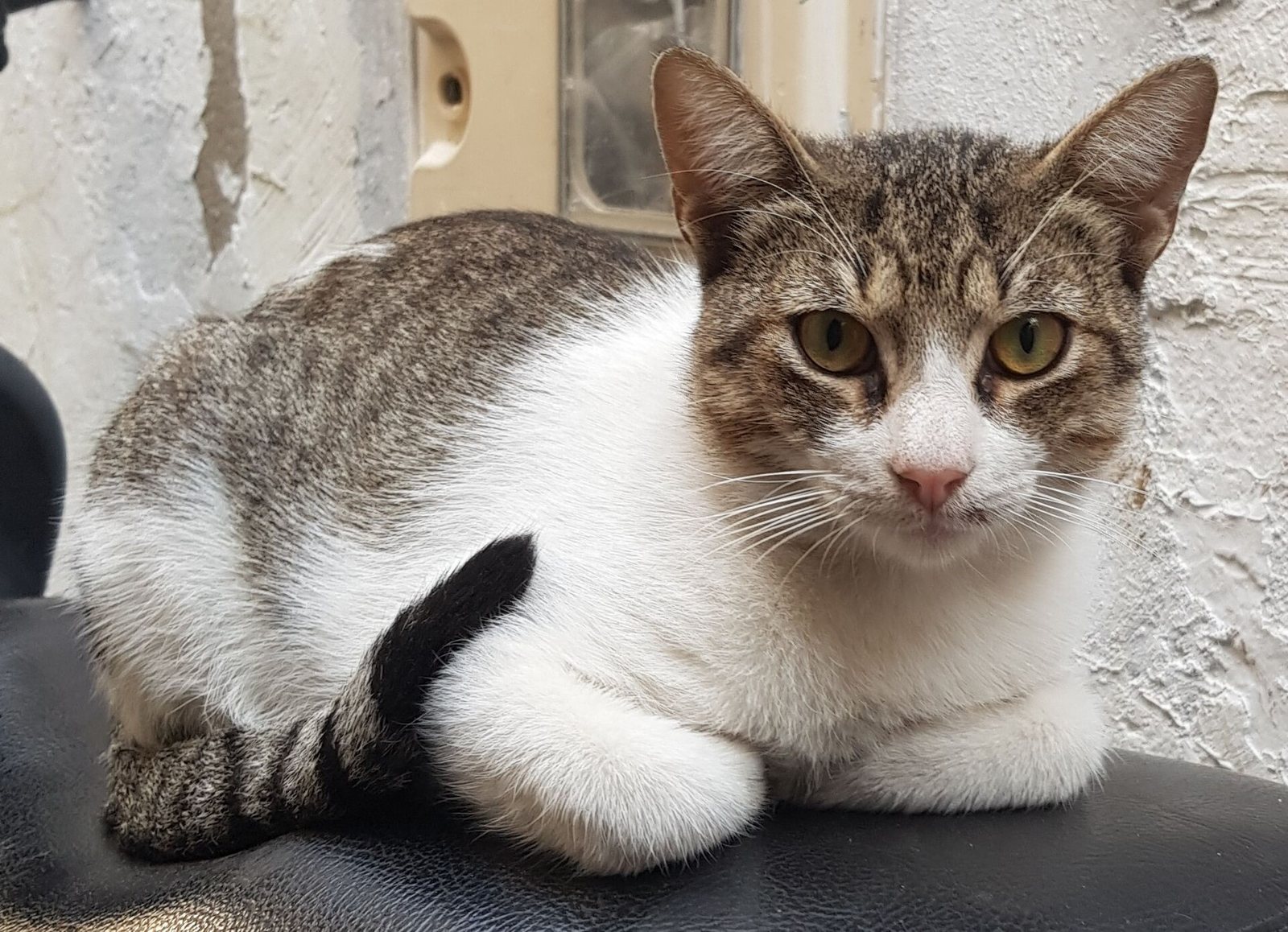
The practical rule is simple: don’t touch animals. That’s harder than it sounds in Tunisia, where friendly street cats doze in medina doorways and on parked motorbikes, and you’ll meet dogs too, especially outside the resorts. Children are the ones most likely to reach out to a kitten, so have the talk before you go; our guide to holidaying in Tunisia with children covers the rest of the family logistics.
If you’re bitten, scratched or licked
TravelHealthPro’s advice is to clean the wound and get urgent local medical assessment, even if the bite or scratch looks trivial. Don’t wait until you’re home. According to the CDC, rabies vaccines are typically available throughout most of the country, so the calls to make are to your hotel reception and your insurer’s medical assistance line: between them they’ll know where to go nearby. Make a note of the animal, the place and the time, and tell your GP once you’re back.
Should you have the rabies jab before you go?
TravelHealthPro recommends pre-exposure vaccination for people whose work carries a risk, for higher-risk activities such as running and cycling, for stays of more than a month, and for anyone heading somewhere post-exposure treatment would be hard to reach. The big advantage of having had it is that after a bite you no longer need rabies immunoglobulin. You’d still need prompt medical care, but a simpler version of it.
At £246 for three doses at Superdrug in November 2026, it’s a real cost, especially for a family. For a week by the pool with sensible behaviour around animals, skipping it is a reasonable call. If you’ll be cycling, running, trekking for days or staying a while, or you’re travelling with small children who will try to befriend every cat in Sidi Bou Said, it deserves a proper conversation with the nurse.
Can you drink the tap water in Tunisia?
The short answer: technically yes, but on a short trip we wouldn’t. Tunisia’s mains water comes from SONEDE, the state water company set up in 1968, which supplies it as drinking water (eau potable).
But “drinking water at the treatment works” and “kind to a visitor’s stomach this week” aren’t quite the same test. What comes out of a particular tap also depends on that building’s own pipes and tanks, and a change of water is one more variable you don’t need on a week’s holiday. TravelHealthPro counts diseases spread by contaminated food and water among the risks that apply to every traveller, and in March 2026 it issued a fresh food and water hygiene reminder for UK travellers, prompted by new research on travel-related stomach bugs.
So our advice is the boring one:
- Drink bottled or filtered water. It’s sold everywhere, and stocking up at a supermarket beats paying minibar prices.
- Keep a couple of bottles in your room. The FCDO notes that summer power cuts can, in extreme cases, affect the water supply.
- Treat ice as a judgement call. If you’re being careful, skip it at roadside juice stalls and small cafés.
- Brushing your teeth with tap water is a personal call. If you have a sensitive stomach, or you’re travelling with young children, use bottled.
- A filter bottle is a good compromise if you hate the plastic, as long as you follow its maker’s instructions on what it removes.
Food, buffets and the dreaded upset stomach
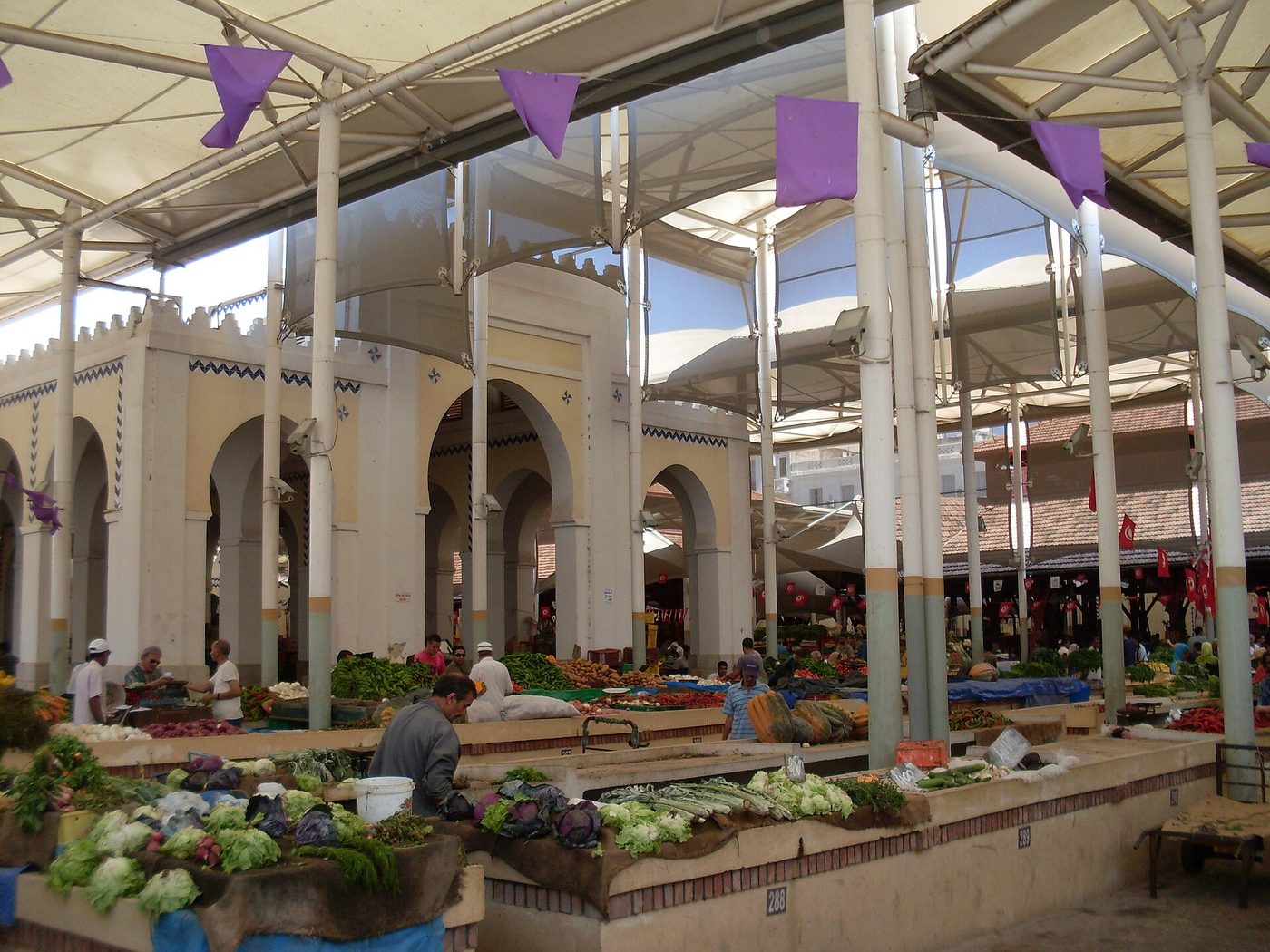
A bad stomach is the health problem most worth planning for, because it’s the one you have the most control over. Dishes cooked fresh and served hot are rarely the worry. The usual suspects are food that has sat around lukewarm, salads and raw vegetables washed in tap water, and fruit someone else has cut.
- At the buffet, go for what’s freshly cooked and steaming, and pass on anything that looks as if it’s been waiting since the last sitting. Fruit you peel yourself beats a fruit salad.
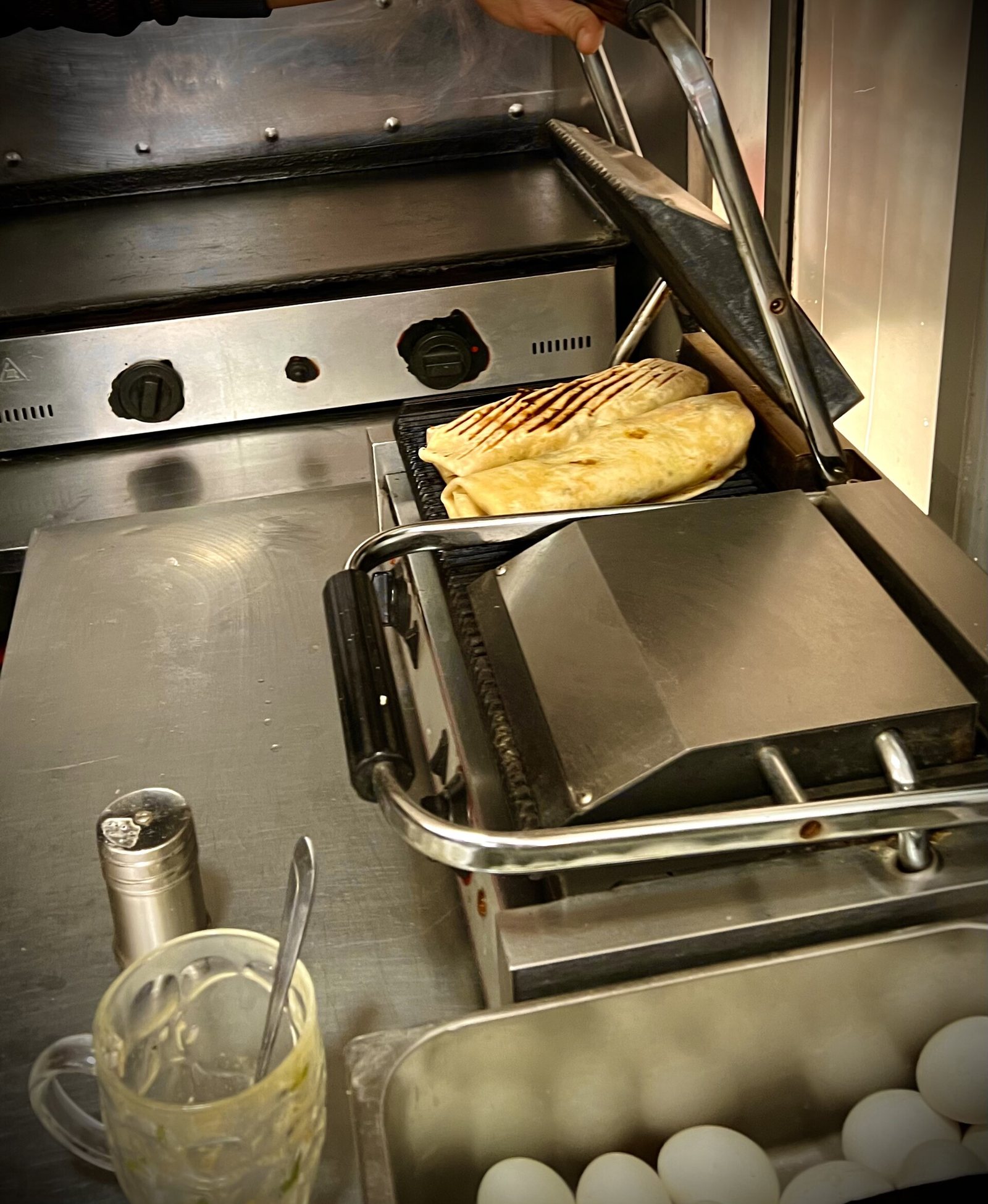
- Street food is safest when it’s cooked to order in front of you: a brik (a crisp fried pastry, often with egg and tuna) or a hot sandwich straight off the grill.
- Wash your hands before eating and carry hand gel. The CDC notes that washing hands at key times also helps prevent typhoid.
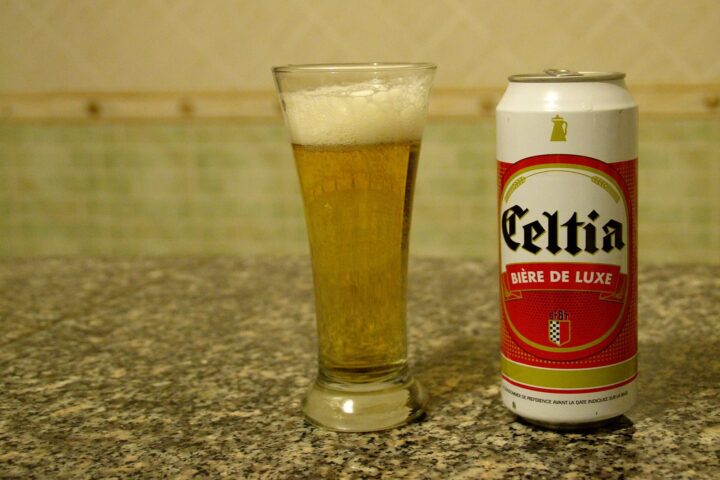
- Don’t count on alcohol. A strong drink won’t cancel out a dodgy salad, and dehydration makes a bad stomach worse. Our guide to drinking alcohol in Tunisia explains where and when you can get one.
None of this means eating timidly. Tunisian food is one of the best things about the country, and our guide to Tunisian food is a long list of reasons to be adventurous. On an all-inclusive, a busy restaurant with a fast turnover is your friend, which is one more reason to read recent reviews before you choose from the best all-inclusive hotels in Tunisia.
If it happens anyway
Most bouts of travellers’ diarrhoea are short-lived and miserable rather than dangerous. Drink plenty, and use oral rehydration sachets, which are worth packing from home. See a doctor, or ring your insurer’s medical line, if there’s blood, a high temperature, signs of dehydration, or it simply isn’t settling, and do it sooner for babies and young children, older travellers, pregnant women and anyone with a long-term condition. For milder cases a pharmacist can help, which brings us to how Tunisian pharmacies work.
Pharmacies in Tunisia: how they work
Tunisian pharmacies are easy to spot: look for the green cross and the word Pharmacie in French, or صيدلية (saydaliya) in Arabic. For minor problems, such as a stomach upset, sunburn, a cough or insect bites, the pharmacist is the obvious first stop, and there are pharmacies in towns and resort areas across the country.
Opening hours and the Sunday problem
Hours are set nationally by the pharmacists’ council, the Conseil National de l’Ordre des Pharmaciens de Tunisie (CNOPT), and they change with the season, so check the council’s site for the current timetable. In summer 2026 (1 June to 31 August), for instance, ordinary pharmacies opened on weekdays from 08:00 to 13:30 and again from 16:00 to 20:00, on-duty pharmacies (pharmacies de garde) from 08:00 to 20:00, and night pharmacies (pharmacies de nuit) from 20:00 to 08:00. On Sundays and public holidays, only the on-duty pharmacies open.
The on-duty system works the same way all year, and here’s the useful bit: every pharmacy has to display its hours and the current on-duty list. So if you find one shut on a Sunday or late in the evening, read the notice in the window. It tells you which pharmacy nearby is open.
Getting the right medicine
Brand names differ from the UK, so know the generic name of what you take or might need: paracetamol, ibuprofen, loperamide for diarrhoea, an antihistamine for bites. Having it written down, or a photo of the box on your phone, saves a lot of pointing if your French is rusty. Our guide to whether people speak English in Tunisia explains which languages you’ll actually hear.
Bringing your own medicines
Bring enough of any regular medication for the whole trip, plus a few days’ spare in case of delays, and keep it in your hand luggage. The FCDO’s advice is to keep prescription medicines in their original packaging and carry a note from your GP, because the legal status of some medicines prescribed or bought in the UK can be different abroad. If you take anything tightly controlled at home, such as strong painkillers or ADHD medication, do what the FCDO suggests for specific medicines and contact the Tunisian Embassy in the UK before you travel.
Doctors, hospitals and what happens if you get ill
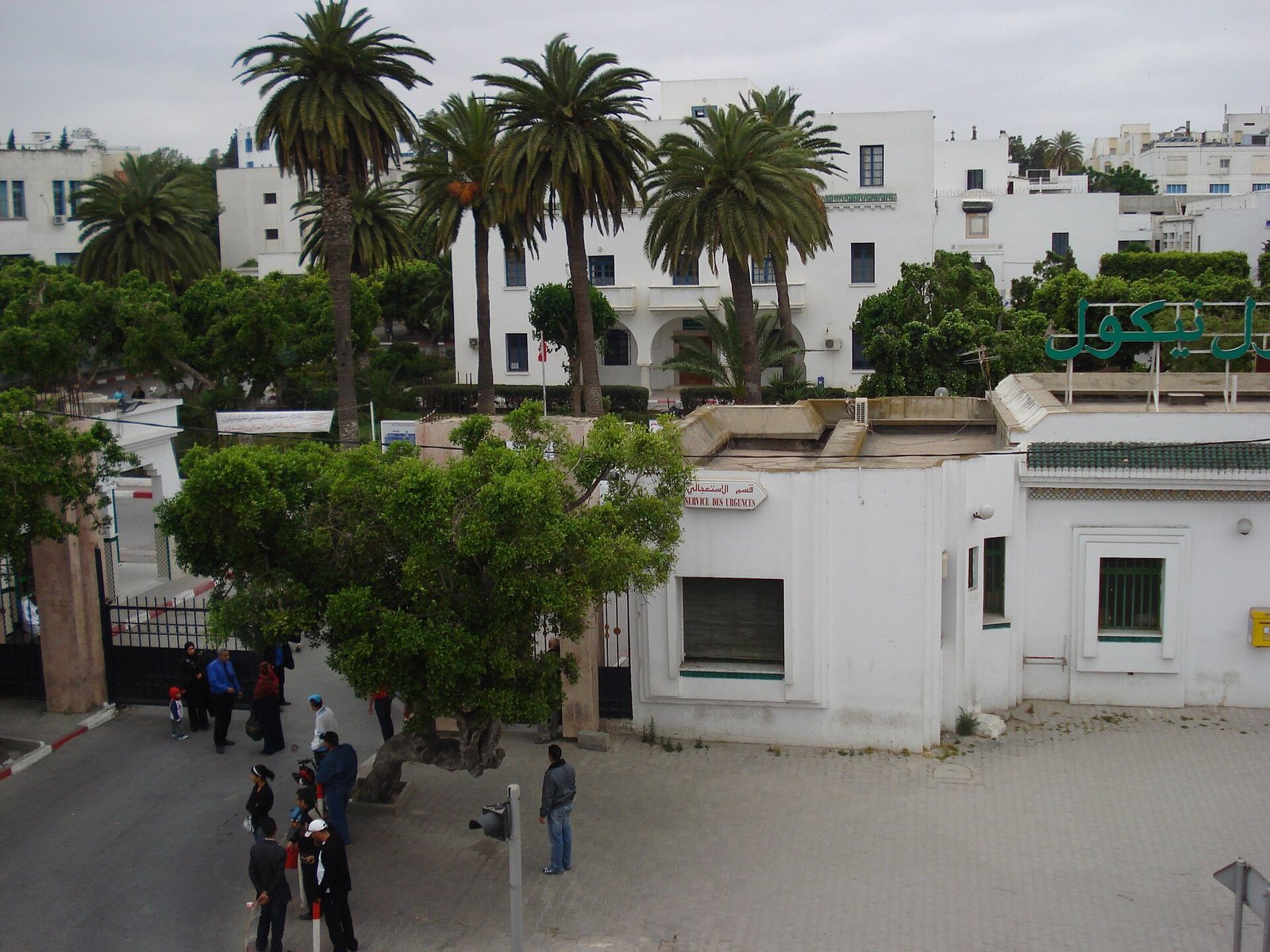
Healthcare isn’t free for visitors. The FCDO’s health advice for Tunisia puts it plainly: there’s no provision for free medical attention for foreign nationals in Tunisia, and fees at private clinics must be paid for on the spot. That’s the best argument on this page for proper travel insurance, ahead of any jab on the list.
Emergency numbers
| Service | Number |
|---|---|
| Ambulance | 190 |
| Fire and car accidents | 198 |
| Police (towns and cities) | 197 |
| National Guard (rural areas and small villages) | 193 |
Those are the numbers the FCDO’s getting help page for Tunisia lists, and for an ambulance its advice is simply to call 190 and ask for one. Save them in your phone, along with your insurer’s 24-hour assistance line, before you fly.
Your GHIC won’t help here
The UK Global Health Insurance Card (GHIC) is accepted only in the countries the NHS Business Services Authority lists: the EU countries, Switzerland, Norway, Iceland, Liechtenstein, Montenegro and a few overseas territories. Tunisia isn’t among them, so the card is not valid in Tunisia. Even where it does work, the NHSBSA is clear that it isn’t a replacement for travel insurance.
What your travel insurance needs to cover
The FCDO’s health advice is to make sure your insurance covers local treatment and unexpected medical evacuation, and to have accessible funds for the cost of any treatment. In practice that means:
- Medical treatment and repatriation, with a high limit and a 24-hour assistance line.
- Every pre-existing condition declared. GOV.UK’s foreign travel insurance guidance warns that failing to declare one may invalidate your cover.
- Every activity named. The same guidance says quad-bike use or hire isn’t usually covered, and the FCDO notes that quad bikes are popular in desert resorts, that safety standards can vary considerably and that riders should always wear a crash helmet. If you’re planning quads, camel rides or watersports, check the policy wording or buy the add-on.
- Your plans within the advice. Travelling against FCDO advice may also invalidate cover, and the FCDO advises against travel to some border areas of Tunisia. Our explainer on the FCDO’s Tunisia travel advice maps out where that applies.
FCDO advice, last updated 24 July 2026 and still current on 18 November 2026; always check gov.uk/foreign-travel-advice/tunisia before you book.
Paying for treatment
For anything short of an emergency, ring your insurer’s assistance line before you’re treated if you can: many policies ask you to, and the insurer may be able to settle the bill with the clinic directly. Otherwise, expect to pay and claim it back, so keep every receipt and medical report. A credit card helps, because the dinar is a closed currency and you can’t load up on cash before you fly; our guide to the Tunisian dinar explains how to handle money once you land.
Sun, heat and the desert
Beyond your stomach, the health problems most worth planning for are the ones you’d plan for in Spain: too much sun and not enough water. The difference is the south. Tunisia’s national weather institute (INM) put the summer 2025 maximum temperatures in the Saharan and pre-Saharan regions, including Tozeur and Kebili, at 46 to 50°C, so a desert excursion in high summer is a serious undertaking rather than a day out.
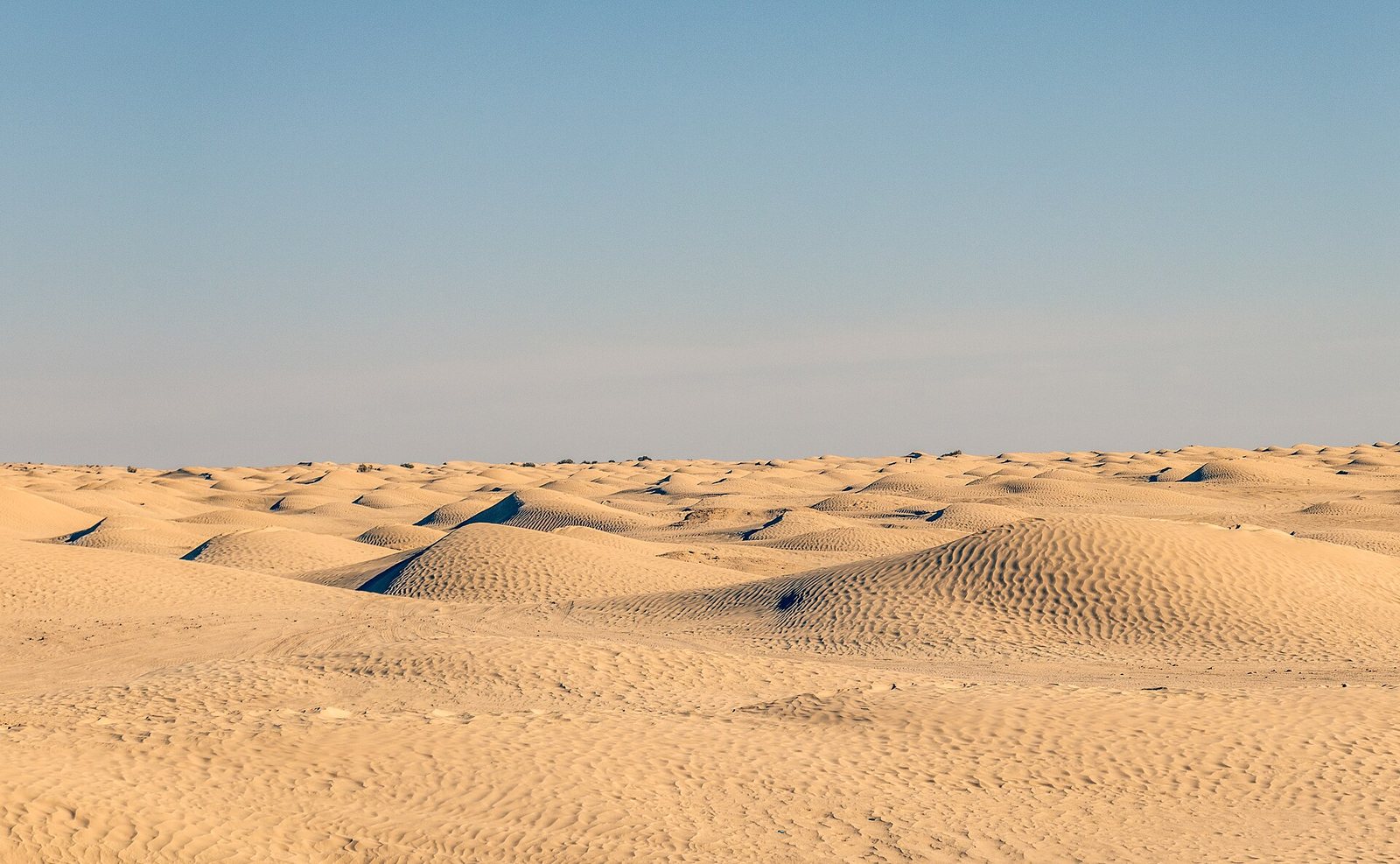
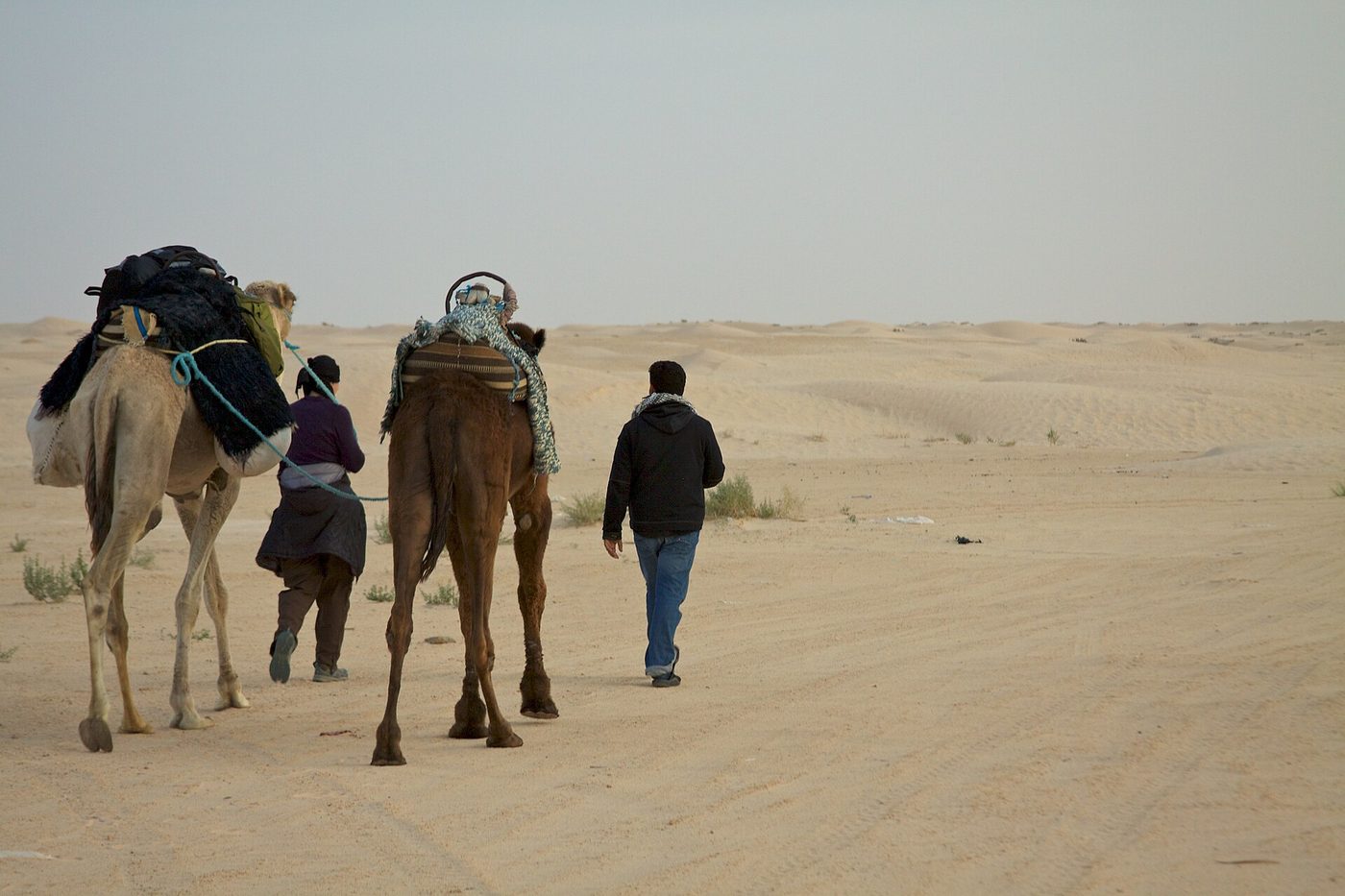
- Do desert activities, including camel treks in the Sahara, early in the morning or towards sunset, and carry more water than you think you’ll need.
- Cover up. Loose, light clothes over your shoulders and legs keep the sun off and are respectful in towns, and our guide to what to wear in Tunisia covers both.
- Use a high-factor sunscreen and reapply it after swimming. Boat trips and long pool days are where people get caught out.
- If your dates are flexible, our guide to the best time to visit Tunisia shows when the heat eases, and our Tunisian Sahara guide explains how to plan a desert trip around it.
Insects, sandflies and fresh water
TravelHealthPro flags a risk of insect- and tick-borne diseases in some areas of North Africa, including leishmaniasis, Rift Valley fever and West Nile virus. There’s no vaccine or tablet to prevent any of them, so the protection is avoiding bites, day and night: repellent on exposed skin, long sleeves in the evening, and screens or a fan in your room. TravelHealthPro’s insect and tick bite avoidance advice, linked from its Tunisia page, explains which repellents work.
One thing you can stop worrying about: TravelHealthPro rates schistosomiasis, a parasitic infection picked up from fresh water, as a very low risk in Tunisia, and says swimming in the sea or in adequately chlorinated water is not a risk for it. Its advice is still to avoid wading, swimming or bathing in fresh water such as streams, rivers and lakes.
Your Tunisia health checklist
- Check TravelHealthPro’s Tunisia page and book a travel health appointment four to eight weeks before you fly.
- Make sure hepatitis A and tetanus are covered, and talk through hepatitis B, MMR, rabies and typhoid.
- Buy travel insurance with medical treatment and evacuation cover, every condition declared and every activity named.
- Pack prescription medicines in their original packaging, with a GP letter and a few days’ spare.
- Write down the generic names of your medicines and of anything you might need.
- Pack oral rehydration sachets, high-factor sunscreen, insect repellent, plasters, antiseptic wipes, hand gel and your usual painkillers.
- Save 190 (ambulance) and your insurer’s assistance number in your phone. A local SIM or eSIM makes calls and maps easier, and our Tunisia SIM card guide explains the options.
- Buy bottled water on day one, and keep some in the room.
Health is only one part of getting ready. Our list of things to know before visiting Tunisia covers the rest, from the closed currency and the drone ban to Fridays, Ramadan and taxi meters.
Tunisia vaccinations: frequently asked questions
Do I need any vaccinations to travel to Tunisia?
None is required for entry: TravelHealthPro says Tunisia has no certificate requirements under the International Health Regulations, and the FCDO’s entry rules list no vaccinations. Recommended is different. TravelHealthPro suggests hepatitis A and an up-to-date tetanus jab for most travellers, and hepatitis B, measles (MMR), rabies and typhoid for some, depending on your trip. See a travel nurse or pharmacist at least four to six weeks before you go.
Is hepatitis A recommended for Tunisia?
Yes. TravelHealthPro recommends hepatitis A for all previously unvaccinated travellers to Tunisia, and the CDC recommends it for unvaccinated travellers aged one and over. It protects against a liver infection spread through contaminated food and water. It’s free on the NHS at your GP surgery; privately, Superdrug was charging £67 for its one-dose course in November 2026.
Do I need a rabies jab for Tunisia?
Not for every trip, but think about it carefully. TravelHealthPro says rabies is a risk in Tunisia and has been reported in domestic animals. It recommends pre-exposure vaccination for higher-risk activities such as running and cycling, stays of over a month, work that carries a risk, and trips where post-exposure treatment would be hard to reach. It isn’t free on the NHS: Superdrug charged £246 for three doses in November 2026.
Do I need a typhoid jab for Tunisia?
It depends whose advice you follow. TravelHealthPro lists typhoid for “some travellers”, mainly those visiting friends and relatives, or staying often or for long periods where sanitation is poor. The CDC recommends it for most travellers to Tunisia. As the typhoid vaccine is free on the NHS at your GP surgery, it costs nothing to raise it at your travel health appointment.
Do I need malaria tablets for Tunisia?
No. Neither TravelHealthPro nor the CDC recommends antimalarial tablets for Tunisia, and the CDC says the yellow fever vaccine is neither required nor recommended there. If Tunisia is part of a longer trip, follow the advice for your other destinations as well, and give the nurse your full itinerary.
Can you drink the tap water in Tunisia?
Tunisia’s mains water is supplied as drinking water by SONEDE, the state water company, but on a short holiday we’d drink bottled or filtered water instead. What comes out of a particular tap depends on the building’s own pipes and tanks, and a change of water is an unnecessary gamble when you only have a week. Bottled water is sold everywhere.
Can I brush my teeth with tap water in Tunisia?
It’s a personal call. A rinse of tap water is a much smaller exposure than drinking a glass of it. If you have a sensitive stomach or a weakened immune system, or you’re travelling with young children who swallow as they brush, use bottled water to be on the safe side.
Does my GHIC work in Tunisia?
No. The UK GHIC is valid only in the countries the NHS Business Services Authority lists, mainly the EU states plus Switzerland, Norway, Iceland, Liechtenstein, Montenegro and a few overseas territories, and Tunisia isn’t one of them. The FCDO says there’s no provision for free medical attention for foreign nationals in Tunisia and private clinic fees are paid on the spot, so travel insurance is essential.
Are pharmacies open on Sundays in Tunisia?
Only some. Under the pharmacists’ council’s rules, only the on-duty pharmacies (pharmacies de garde) open on Sundays and public holidays, and night pharmacies take over overnight. Every pharmacy has to display its hours and the current on-duty list, so if the nearest one is shut, check the notice in its window to find the one that’s open.
Can I take my prescription medicines to Tunisia?
Yes, with care. The FCDO advises keeping prescription medicines in their original packaging and carrying a note from your GP, because the legal status of some UK medicines can be different abroad. If you’re unsure about a particular medicine, contact the Tunisian Embassy in the UK before you travel. Pack enough for the whole trip, plus a few spare days, in your hand luggage.
What number do I call for an ambulance in Tunisia?
Call 190 and ask for an ambulance. The FCDO also lists 198 for fire and car accidents, 197 for the police in towns and cities, and 193 for the National Guard in rural areas and small villages. In a hotel, reception can make the call and direct the crew to your room. Ring your insurer’s assistance line as soon as you can.
Final thoughts
For most visitors, Tunisia asks little of your health beyond common sense: a hepatitis A jab, a tetanus check and a bit of discipline at the buffet. The two things we’d never skimp on are the conversation about rabies and decent travel insurance, because when something does go wrong here, you pay at the counter. Sort those out, drink bottled water and you can spend your energy on the good stuff. For the bigger picture before you book, read our honest answer to whether Tunisia is safe, then plan your transfers and day trips with our guide to getting around Tunisia.
Written by the Tunisia Tourism Guide team — an independent UK-focused guide to travelling in Tunisia. We don’t sell tours or take hotel commissions. Prices and advice were checked at publication; always confirm current details before you book.
Photo credits
All images via Wikimedia Commons, used with thanks: A cat in the medina of Tunis © Wildtunis (CC BY-SA 4.0); A covered produce market in Tunisia: Rais67 (CC0); Malfouf toasting in Sidi Bou Said © Sharon Hahn Darlin (CC BY 2.0); Charles Nicolle Hospital, Tunis © DrFO.Jr.Tn (CC BY-SA 3.0); Dunes near Douz © Smailtn (CC BY-SA 4.0); The Institut Pasteur de Tunis © Habib M’henni (CC BY-SA 3.0).