By the Tunisia Tourism Guide team · Last updated 12 November 2026 · We don’t sell tours or take hotel commissions — this is independent advice, written to be useful.
Can you wear shorts in Tunisia? Is a bikini all right on the beach? Do women need to cover their hair? These are the questions that fill forums before a first trip, and the answers you find tend to swing between “wear what you like, it’s a resort” and “cover everything, it’s a Muslim country”. Neither is quite right, and the truth is more useful than either.
What to wear in Tunisia depends on where you are. In resorts and hotels, normal holiday clothes and swimwear are fine. In towns, medinas and the countryside, dress a little more modestly, with shoulders and knees covered for women and no vests for men. At mosques and religious sites, cover arms and legs.
This guide sits within our wider Tunisia travel tips, and it covers the whole wardrobe question: what women and men wear in each setting, the beach rules that actually apply, mosques, the desert, Ramadan, the weather month by month and a full packing list you can work through before you zip up the case. We give men’s advice its own section, because they ask too.
What to wear in Tunisia at a glance
| Where you are | Women | Men |
|---|---|---|
| Resort hotel and pool | Anything you’d wear on a Mediterranean holiday, swimwear included | Anything you’d wear on a Mediterranean holiday |
| Resort beach | Bikini or swimsuit; cover up to walk off the beach | Swim shorts; a T-shirt to walk into town |
| Towns, medinas, souks | Shoulders and knees covered is the safe default; loose trousers, midi skirts, light shirts | Knee-length shorts or trousers, T-shirt; skip the vest |
| Mosques and religious sites | Arms and legs covered; a scarf in your bag for your hair | Long trousers, sleeves |
| Rural towns and the south | More conservative again: long, loose layers | Trousers, shirt |
| Sahara trips | Layers, closed shoes, a scarf for sun and sand, warm top for night | Same |
| During Ramadan | Lean modest everywhere outside the resort | Lean modest everywhere outside the resort |
| Evenings in the hotel | Smart-casual; some à la carte restaurants have dress codes | Long trousers are often expected at dinner |
That table is the whole article in miniature. The rest is the detail behind it, and the reasons, which are worth knowing because they make the choices feel natural rather than like a list of rules.
What the FCDO says about dress
The UK’s Foreign, Commonwealth & Development Office covers clothing in its Tunisia advice under local laws and customs. In short, it says beach-appropriate clothing is acceptable in holiday resorts, that local custom at religious sites and in remote areas is to dress modestly, and that during Ramadan you should follow local dress codes, since clothing that doesn’t may cause more offence than usual.
FCDO advice, last updated 24 July 2026 and still current on 10 November 2026; always check gov.uk/foreign-travel-advice/tunisia before you book.
That’s it. Visitors aren’t expected to dress like Tunisians. What there is, as in most of the Mediterranean, is a difference between what feels normal on a resort strip and what feels normal in a working town, and a lot of goodwill earned by visitors who notice it.
Tunisia’s dress culture, in plain terms
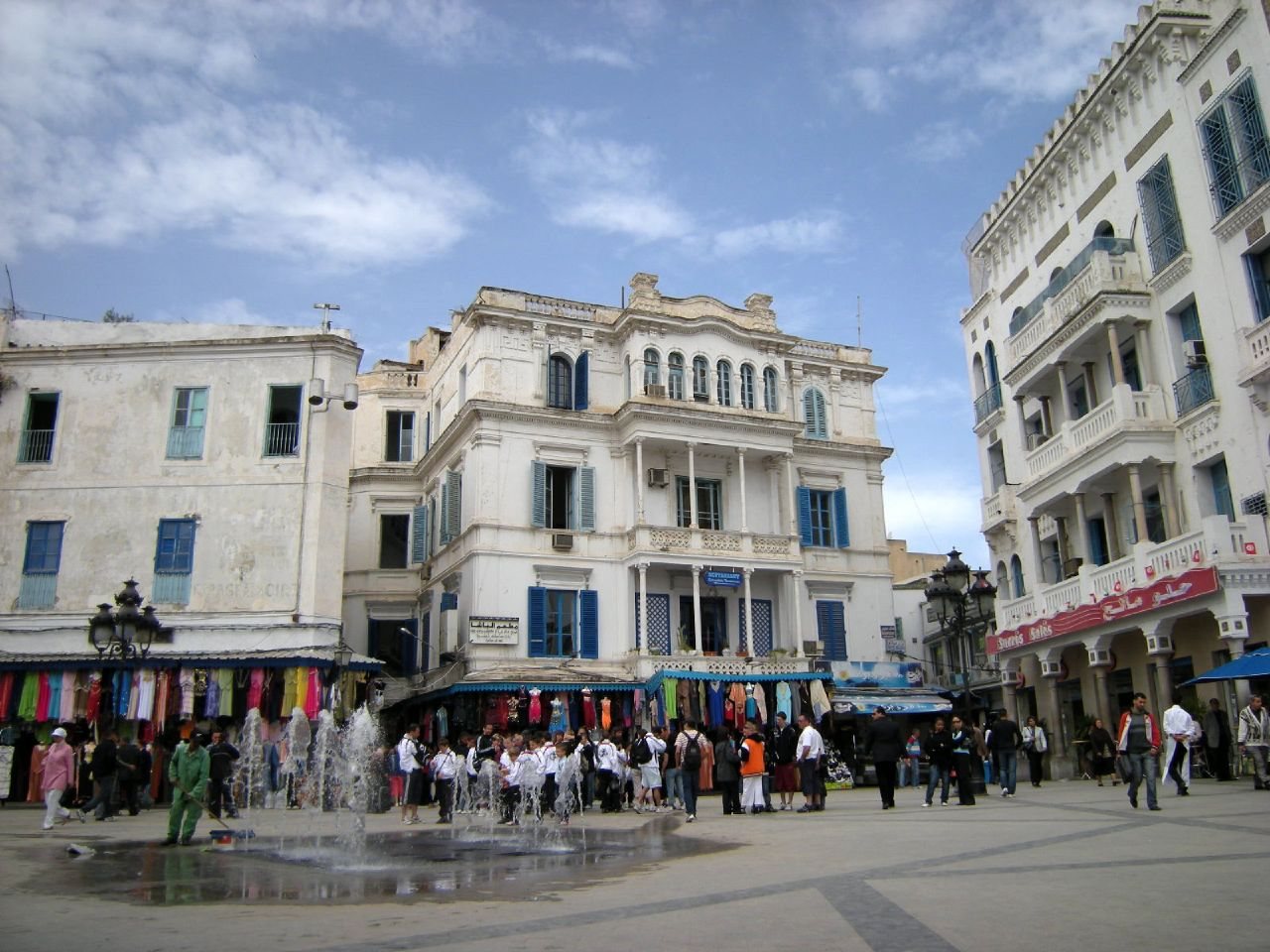
Tunisia is a Muslim-majority country, but it’s also socially liberal by regional standards, and you’ll see the full range on any city street. In Tunis, young women in jeans and T-shirts walk alongside women in headscarves and older women in the traditional white safsari (a long wrap worn over the head and body). Men wear everything from suits to football shirts. Nobody expects a visitor to cover their hair.
The gradient runs roughly like this: the resort zones of Hammamet, Port El Kantaoui, Monastir and Djerba’s hotel strip are the most relaxed; the bigger cities, Tunis especially, are cosmopolitan; smaller towns, rural areas and the south are more traditional; and religious sites are the most formal of all. Most visitors’ holidays include two or three of those settings, sometimes in the same day, which is why a light cover-up in your day bag is the single most useful thing you can pack.
What women should wear in Tunisia
In the resort
Inside your hotel and on its beach, wear exactly what you’d wear in Spain or Greece: swimsuits, bikinis, sundresses, shorts, vest tops. The resorts are built around European package holidays and nobody will look twice. The one adjustment is to throw a cover-up or a dress on over swimwear when you leave the pool or beach area, for the lobby, the restaurant or a walk along the front.
In towns, medinas and souks
Here the safe default is shoulders and knees covered. That doesn’t mean heavy or shapeless: a linen shirt or a T-shirt with sleeves, a midi skirt or loose trousers, a maxi dress with a light cardigan, all work well and are cooler in the sun than shorts and a strappy top. Loose, breathable fabrics are your friend.
Will anything happen if you wear shorts in the Sousse medina? Almost certainly not. Many visitors do. But you’ll attract more attention, and in the medinas attention usually comes from the people trying to sell you something. More covered clothing tends to mean fewer comments and a calmer walk, which is a practical reason as much as a cultural one.
Smaller towns, the countryside and the south
The further you get from the coast and the cities, the more traditional dress becomes. In a village market or a small southern town, longer, looser clothing will help you feel less conspicuous and will be appreciated. It’s also simply sensible for heat and dust.
Harassment and travelling alone
The FCDO notes that reports of sexual harassment rise in the summer months, including in busy public places at night and in quieter parks and beaches during the day. Clothing doesn’t cause harassment, and dressing modestly is no guarantee against it. But many women travelling in Tunisia find that more covered clothing, sunglasses and a confident walk reduce the background noise of comments. Our guide to solo female travel in Tunisia covers this properly, with practical advice from transport to evenings out.
What men should wear in Tunisia
Men get far less advice, and occasionally get it wrong. The short version: Tunisian men in towns rarely wear vests or very short shorts, and you’ll blend in better if you don’t either.
- Shorts: fine in resorts, on the beach and in most tourist areas. Knee-length shorts are more acceptable in towns than short ones. For mosques, smarter restaurants and rural areas, wear long trousers.
- Vests and tank tops: keep them for the pool and beach. In a medina or a city centre, a T-shirt or short-sleeved shirt is the norm.
- Going shirtless: only on the beach or by the pool. Walking through town or into a shop without a shirt is considered rude.
- Swimwear: standard swim shorts are fine everywhere you’d swim. Very brief swimwear is more of a talking point than an offence in a resort, but it stands out.
- Evenings: many hotel à la carte restaurants expect long trousers and closed shoes for men at dinner. Check your hotel’s dress code if you plan to eat there.
A pair of lightweight chinos or linen trousers and a couple of short-sleeved shirts will cover every situation a man is likely to meet on a Tunisia holiday, from a mosque visit to a nice dinner.
Beaches and pools: bikinis, burkinis and what to avoid
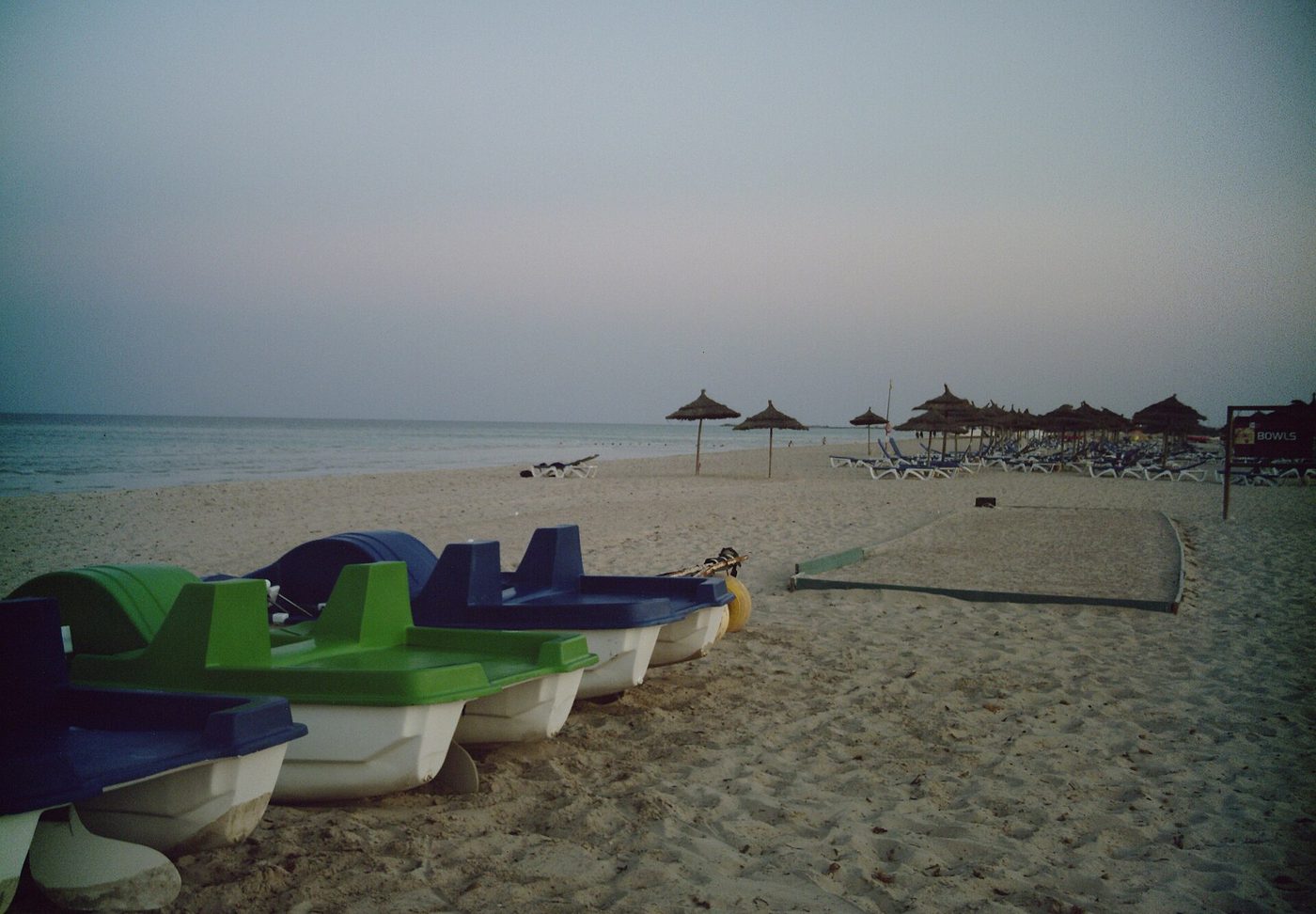
Yes, you can wear a bikini in Tunisia. On hotel beaches and at resort pools, bikinis and swimsuits are completely standard. On public beaches in the resort towns, such as the main beaches in Sousse and Hammamet, you’ll see plenty of tourists in bikinis alongside Tunisian families, some of whom swim fully clothed or in burkinis. Everyone gets on with their day.
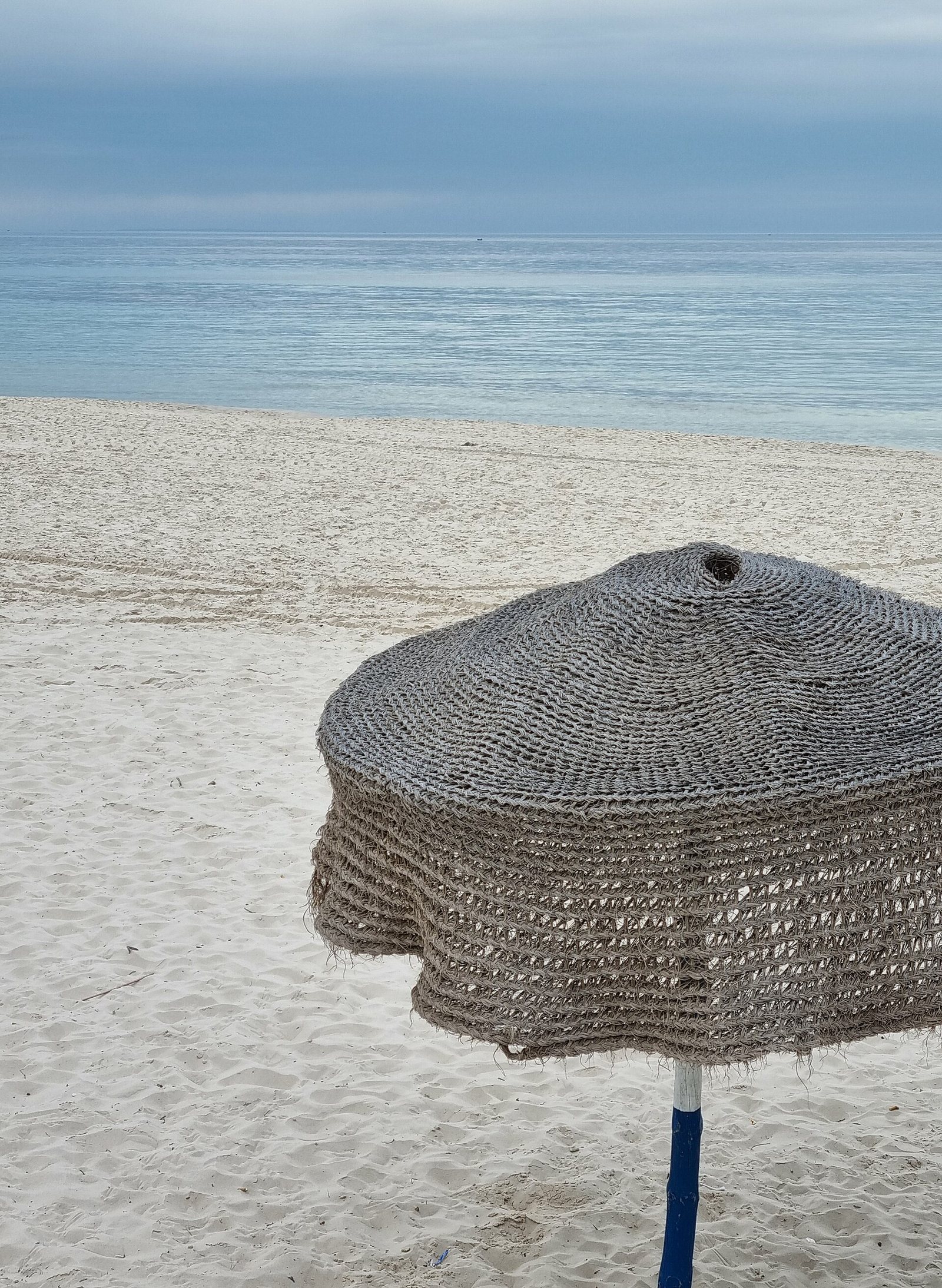
Topless sunbathing is a different matter. It isn’t part of the beach culture here, even on resort beaches, and we’d strongly advise against it unless your hotel has a private area where it’s clearly accepted. The same applies to changing on the beach without a towel or cover.
Away from the resorts, on town beaches used mostly by local families, a little more coverage goes a long way: a swimsuit rather than a minimal bikini, and a cover-up for the walk to and from the water. For an honest look at where each beach falls on that spectrum, see our guide to Tunisia’s best beaches.
Visiting mosques and religious sites
Many mosques in Tunisia are closed to non-Muslims, but several of the most important are partly open to visitors, and they’re among the highlights of the country. The rule for all of them is simple: cover your arms and legs, and women should have a scarf to cover their hair.
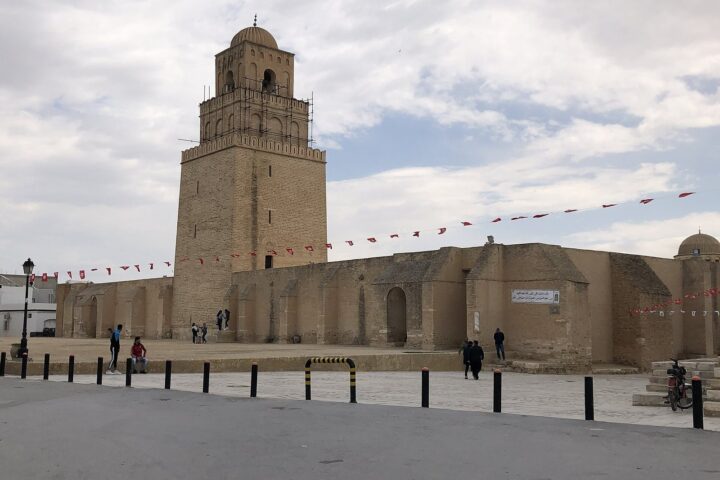
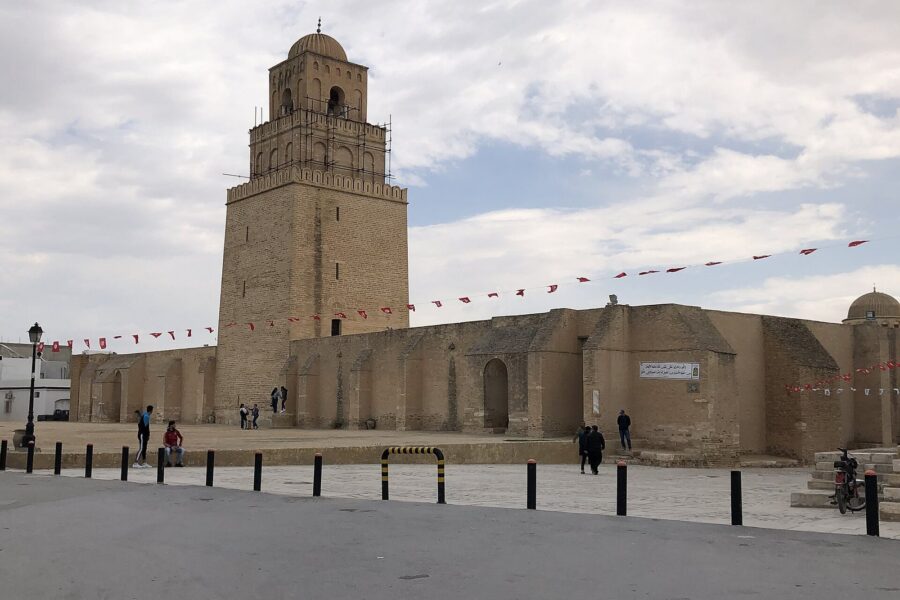
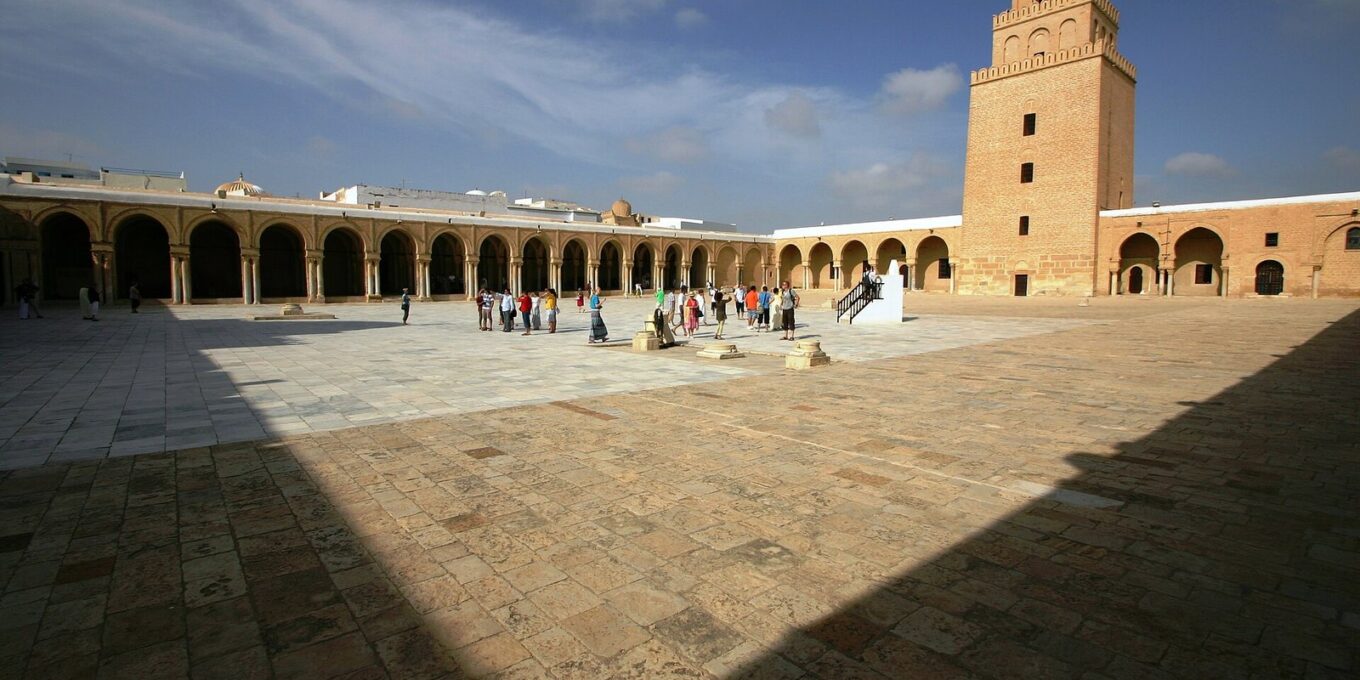
The Great Mosque of Kairouan is the one most visitors see. According to the national tourist board, non-Muslims may enter the courtyard and look into the prayer hall, though not go inside it, and may climb the minaret. Opening hours for visitors are limited and change around prayer times and on Fridays, so ask locally or at your hotel before you set off rather than relying on a time you’ve read online.
Access to other mosques that sometimes admit visitors, including the Zitouna Mosque in the Tunis medina and the Great Mosque in Sousse, varies, so check on the day. On Djerba, the El Ghriba synagogue also expects visitors to dress modestly.
A few practical points for religious sites:
- Carry a large, light scarf or shawl. It covers hair, shoulders or bare legs in seconds and weighs nothing.
- Wear shoes you can slip off easily if you’re asked to remove them.
- Avoid visiting during prayer times, and never walk in front of someone praying.
- Ask before photographing people, and respect any no-photography signs.
What to wear in the Sahara
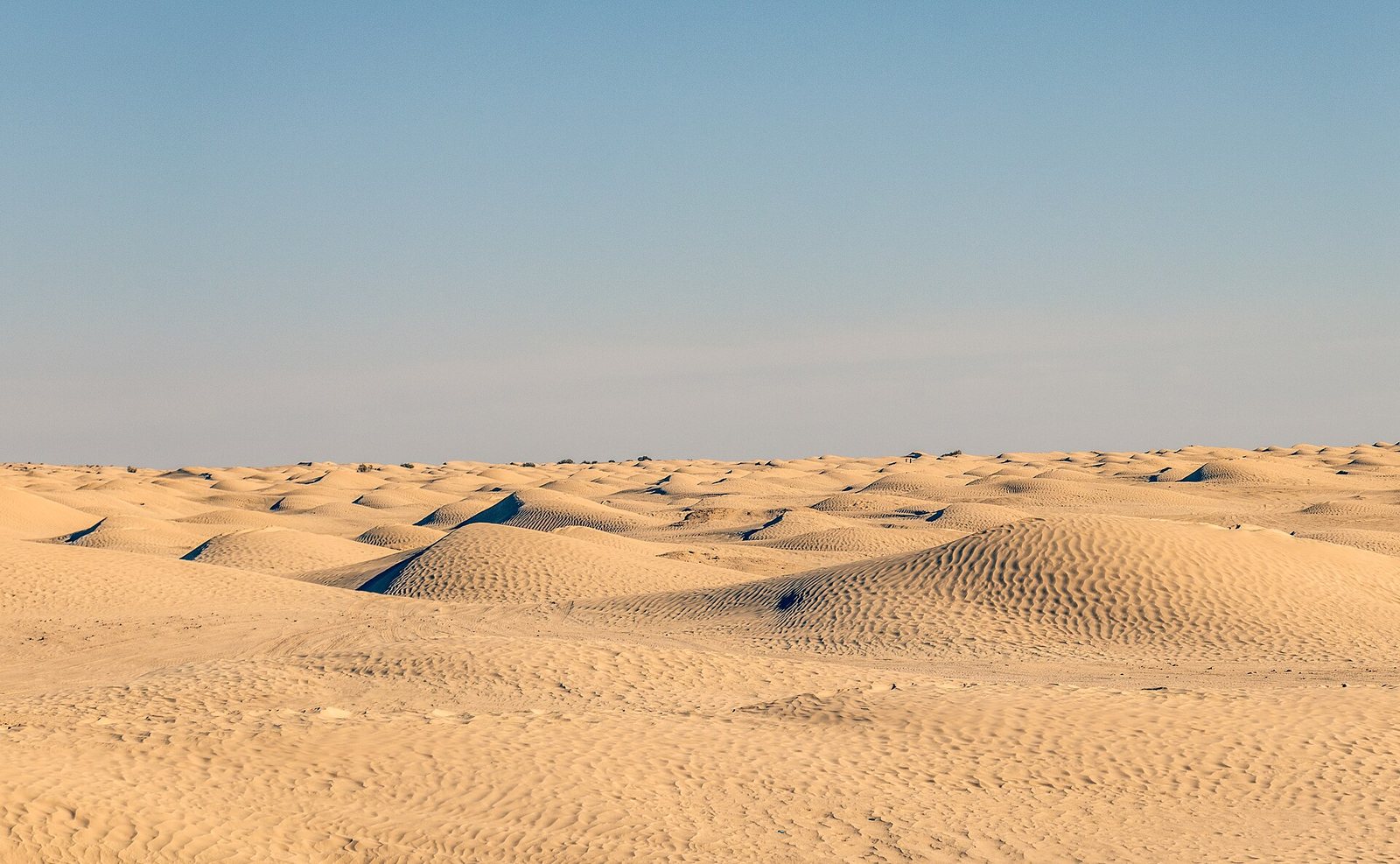
A desert trip is where most people get their packing wrong, usually by assuming the Sahara is hot all the time. It isn’t. Days can be warm or very hot, but nights in the desert are cold for much of the year, and in winter they can be properly chilly.
The numbers make the point. Long-term averages for Tozeur, on the edge of the desert, show mean daily highs of about 17°C in January and 40°C in July. Tozeur’s average January low is about 7°C (6.8°C), and nights out in open dunes can feel colder still.
Pack for both extremes:
- Loose, long, light layers for the day: they protect from sun and wind better than shorts and a vest.
- A warm fleece or jumper and, in winter, a proper warm jacket for the camp at night.
- A large scarf to wrap around your head and face against sun and blown sand. Many visitors buy a cheche (the long desert headscarf) in Douz.
- Closed shoes or trainers for the sand: it gets very hot by day and sandals fill with it.
- Sunglasses and high-factor sunscreen.
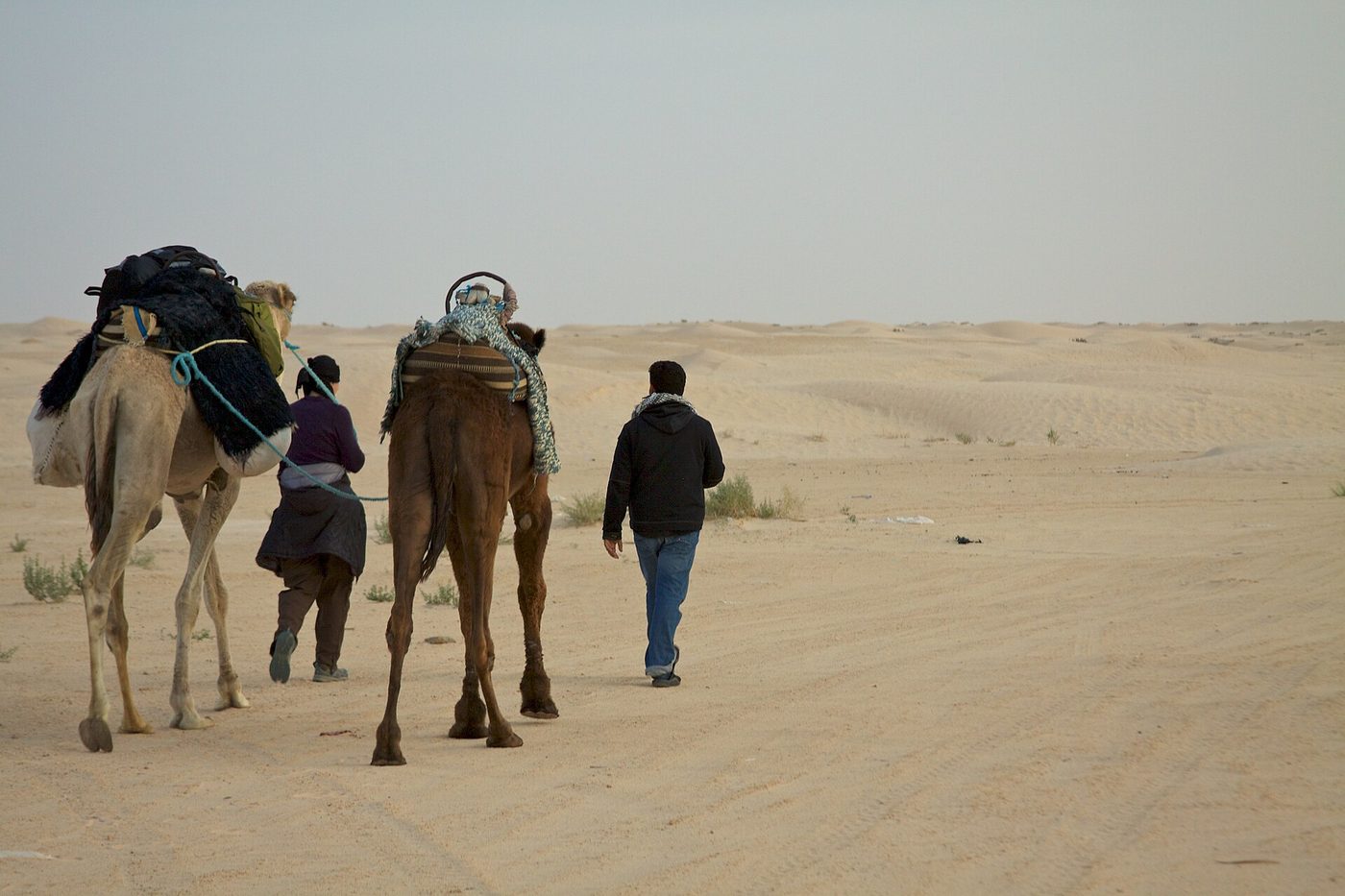
If you’re planning a night or two in the desert, our guides to the Tunisian Sahara and camel trekking in Tunisia cover the trips themselves.
What to wear during Ramadan
Ramadan is the month when Tunisia is most conservative. The FCDO’s advice is to follow local dress codes, and it notes that eating, drinking, smoking or chewing gum in public during daylight hours may cause offence. Inside the resorts, little changes and you can dress as you normally would. Outside them, lean towards the modest end of everything in this guide: sleeves, longer hemlines, trousers rather than shorts.
In 2027, Ramadan is expected to begin in February. La Presse reported astronomical calculations from Tunis’s Cité des Sciences pointing to a start on Monday 8 February, with Eid al-Fitr around 9 or 10 March, but these are provisional: the official announcement comes from the Office of Fatwa (Dar al-Ifta) nearer the time. Our guide to Ramadan in Tunisia explains what changes for visitors, from opening hours to the lively evenings.
What to wear in Tunisia by season
Tunisia’s coast has hot, dry summers and mild, damp winters; the south is hotter and drier, with cold desert nights. Here’s what that means for your suitcase, using long-term averages (Tunis 1991–2020 figures; Djerba 1981–2010).
| Month | Tunis average high | Djerba average high | What to pack |
|---|---|---|---|
| January | 16.4°C (low 8.2°C) | 16.5°C | Jumper, warm jacket, waterproof, closed shoes |
| April | 22.3°C | 23.1°C | Light layers, a jacket for evenings |
| July | 34.0°C | 32.9°C | Lightest linen and cotton, sun hat, cover-ups |
| August | 34.5°C | 33.5°C | As July; loose long clothing beats shorts in the sun |
| October | 26.7°C (low 17.3°C) | 27.6°C | Summer clothes plus a light layer for evenings |
| December | 17.6°C (low 9.4°C) | 17.8°C | Winter layers, waterproof; December is the wettest month in Tunis |
Spring (March to May)
Arguably the best time for sightseeing. Days are pleasantly warm, evenings cool, and you’ll want light layers and a jacket or fleece. The sea is still cool for swimming early in the season.
Summer (June to September)
Hot, especially inland and in the south. Pack the lightest natural fabrics you own, a wide-brimmed hat and sunglasses. Counter-intuitively, loose long sleeves and trousers are more comfortable than shorts and a vest when you’re out in the sun, which also happens to suit the medinas.
Autumn (October and November)
Warm days, warm sea well into October, and cooler evenings. Summer clothes plus a light jumper. Autumn rain arrives in short bursts, so a packable waterproof is useful.
Winter (December to February)
Mild by British standards on the coast but not beach weather, and Tunisian buildings can feel cold inside. Bring a warm jumper, a waterproof jacket, socks and closed shoes. For the Sahara, add a properly warm jacket and a hat for the nights. Our guide to the best time to visit Tunisia goes through the weather month by month.
The full Tunisia packing list
Here’s the list we’d work through for a typical week, combining a resort stay with day trips. Trim it for a pure beach holiday; add the desert items if you’re heading south.
Clothes
- Swimwear (two sets, so one is always dry) and a cover-up or sarong
- Light, loose trousers or a long skirt, at least one pair
- T-shirts and shirts with sleeves, plus vest tops for the resort
- Shorts (knee-length for town)
- A large, light scarf or shawl: the most useful item on this list
- Something smart-casual for evenings, including long trousers for men
- A light jumper or fleece, even in summer, for air-conditioning and evenings
- A warm jacket and waterproof between November and March, or for the desert at any time
- A sun hat and sunglasses
Footwear
- Comfortable walking shoes or trainers: medina lanes are uneven and archaeological sites are dusty
- Sandals or flip-flops for the beach and pool
- Something easy to slip off for mosque visits
Health and toiletries
- Sunscreen: the NHS recommends SPF 30 or higher with at least 4-star UVA protection, and it’s often cheaper to bring your own
- Insect repellent: TravelHealthPro advises avoiding insect and tick bites day and night in Tunisia
- Any prescription medicines in their original packaging, plus a basic kit for upset stomachs
- Hand sanitiser and tissues, which double as loo paper where there isn’t any
Documents, money and tech
- Passport, with any entry requirements checked on our Tunisia visa guide
- Travel insurance details: the UK’s GHIC isn’t valid in Tunisia, so insurance is essential
- A debit card with low foreign fees and some pounds or euros to change on arrival: the Tunisian dinar is a closed currency, so you can’t buy it in advance
- A plug adaptor: Tunisia uses Type C and E sockets, the same as France and Spain, according to the tourist board
- A power bank and a phone you can use with a local SIM or eSIM
What to leave at home
- Your drone. The FCDO says it’s illegal to bring a drone into Tunisia without authorisation, and drones found at customs are confiscated and held until you leave.
- Your best jewellery. There’s no need for it on a beach holiday, and it marks you out in the souks.
- Heels. Cobbled medina lanes and sandy pavements make them miserable.
- Too many clothes. Hotel laundry services and cheap local laundries make it easy to wash things mid-trip.
One more practical note: the FCDO advises against photographing government buildings or military sites, so pack a little discretion with your camera too.
A note on cost
If you forget something, you can buy most basics in Tunisia, and local markets sell light cotton clothing, scarves and sandals at good prices. Branded sunscreen, toiletries and imported goods tend to cost more than at home, so bring those with you. For the wider picture of what things cost on the ground, see our guide to whether Tunisia is expensive.
What to wear in Tunisia: frequently asked questions
Can you wear shorts in Tunisia?
Yes. Shorts are completely normal in resorts, on beaches and around hotels. In towns and medinas, knee-length shorts are acceptable, though both women and men blend in better in trousers or a longer skirt. For mosques, rural areas and smarter restaurants, wear long trousers. In very hot weather, loose long clothing is often more comfortable than shorts anyway.
Can you wear a bikini in Tunisia?
Yes. Bikinis and swimsuits are standard on hotel beaches, at resort pools and on the main public beaches in resort towns such as Sousse and Hammamet. Cover up when you leave the beach or pool area. On quieter town beaches used mainly by local families, a swimsuit and a cover-up is the more comfortable choice. Topless sunbathing isn’t part of the beach culture and is best avoided.
Do women have to cover their hair in Tunisia?
No. Female visitors aren’t expected to cover their hair, and many Tunisian women don’t. The exception is visiting a mosque or other religious site, where women should cover their hair, arms and legs. Carry a light scarf in your day bag and you’ll be ready for any visit without having to plan around it.
What should men wear in Tunisia?
Anything you’d wear on a Mediterranean holiday in the resort, but in towns swap vests for T-shirts and very short shorts for knee-length shorts or trousers. Never walk around town shirtless. Pack at least one pair of long trousers for mosques and for hotel restaurants that expect them at dinner, plus closed shoes for the evening.
Is there a dress code in Tunisia?
The FCDO says beachwear is acceptable in resorts, and that local custom at religious sites and in remote areas is to dress modestly, with local dress codes followed during Ramadan. Mosques set their own rules for visitors, and some hotel restaurants have their own evening dress codes.
What should I wear in the Tunis medina?
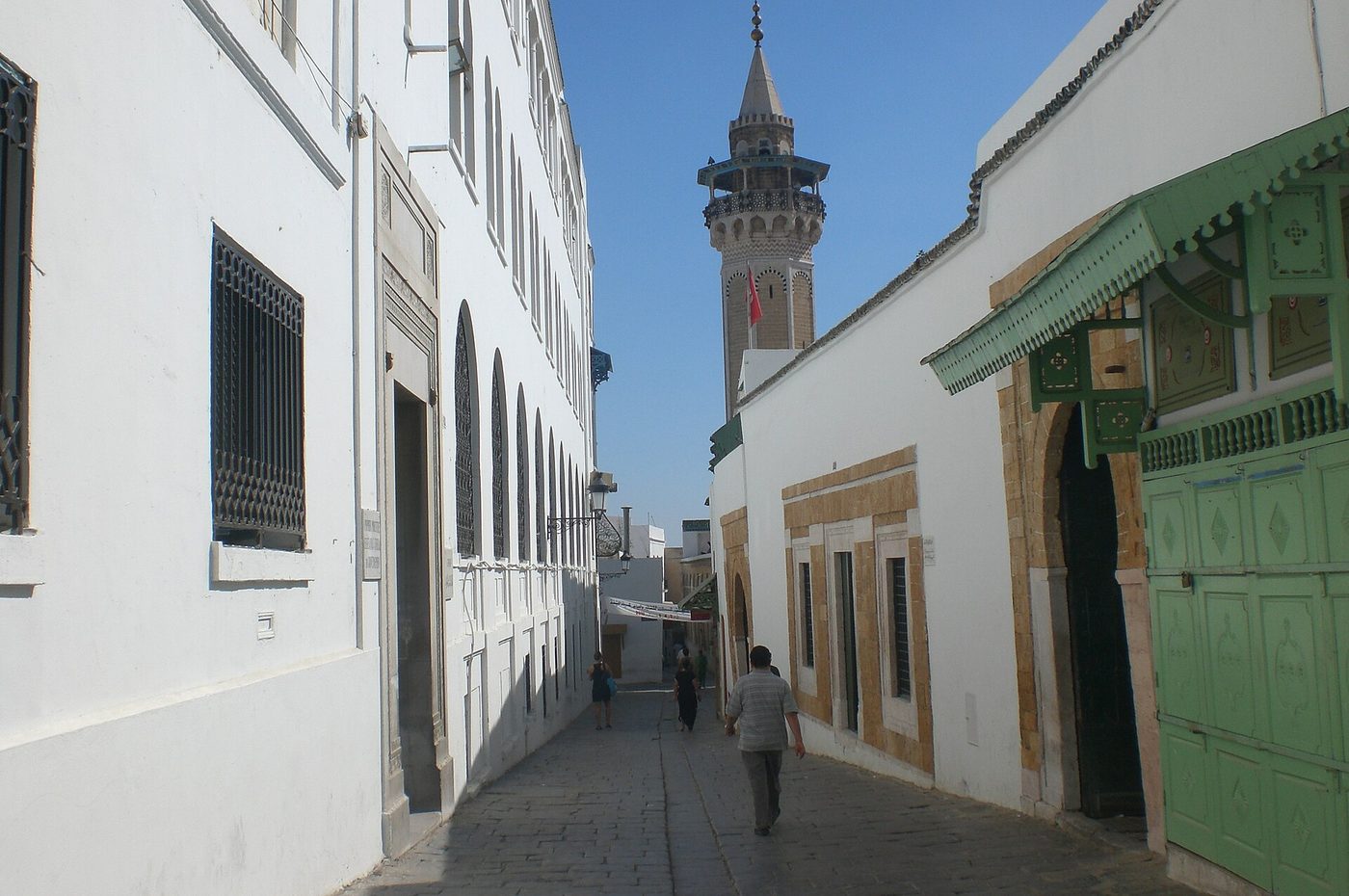
Comfortable walking shoes and clothes that cover shoulders and knees. The medina is a working neighbourhood with mosques, shops and homes as well as souvenir stalls, so modest, light clothing is both respectful and practical. If you plan to visit a mosque that admits visitors, bring a scarf and wear long trousers or a long skirt.
What should I pack for a Sahara trip?
Layers. Loose, long clothing for the day, a warm fleece or jacket for the cold desert night, a large scarf for sun and blown sand, closed shoes or trainers, sunglasses and high-factor sunscreen. Long-term averages for Tozeur put the January low at about 7°C, and open dunes can feel colder, so don’t underestimate the night.
Is Tunisia conservative about clothing?
Less than many visitors expect. Tunisia is socially liberal by regional standards, and you’ll see everything from jeans and T-shirts to headscarves on city streets. It’s more conservative in small towns, rural areas and the south, and at religious sites. Dressing a little more modestly away from the resorts is a courtesy rather than a requirement.
Do I need a plug adaptor for Tunisia?
Yes. Tunisia uses Type C and E plugs, the round two-pin European type, so you’ll need the same adaptor you’d take to France or Spain. A multi-port USB charger with one adaptor is the easiest way to charge phones, cameras and power banks at once.
Can I bring a drone to Tunisia?
Not without authorisation. The FCDO says it’s illegal to bring a drone into Tunisia without permission, and that drones detected at customs are confiscated and stored until you leave the country. Unless you’ve arranged the authorisation in advance, leave it at home.
Final thoughts
Dressing for Tunisia isn’t about rules so much as reading the room: relaxed in the resort, a little more covered in town, properly covered at a mosque and wrapped up warm for a desert night. Pack light, loose layers and a big scarf and you’ll be comfortable everywhere. Before you go, read our advice on how safe Tunisia is for visitors, check the customs in our guide to tipping in Tunisia, and get a feel for the country’s character in our introduction to Tunisian culture.
Written by the Tunisia Tourism Guide team — an independent UK-focused guide to travelling in Tunisia. We don’t sell tours or take hotel commissions. Prices and advice were checked at publication; always confirm current details before you book.
Photo credits
All images via Wikimedia Commons, used with thanks: The square at the Tunis medina entrance © Leandro Neumann Ciuffo (CC BY 2.0); A straw parasol on the beach at Sousse © Aziz0161 (CC BY-SA 4.0); A Tunisian resort beach at dusk © Mackem16_CVB (CC BY-SA 3.0); Sand dunes near Douz © Smailtn (CC BY-SA 4.0); A camel trek near Douz © McKay Savage from London, UK (CC BY 2.0); The courtyard of the Great Mosque of Kairouan © John Whitaker (CC BY-SA 2.0).