By the Tunisia Tourism Guide team · Last updated 24 July 2026 · We don’t sell tours or take hotel commissions — this is independent advice, written to be useful.
If you’re staying up the coast in Hammamet, Nabeul is the day trip locals keep telling visitors to make — especially on a Friday. It’s the working heart of the Cap Bon peninsula: a pottery town, a market town, and the place a great deal of Tunisia’s harissa and orange-blossom water quietly comes from. It sees a fraction of the visitors the resorts do, and that’s rather the point.
Nabeul Tunisia is the pottery capital of Cap Bon and the site of one of the country’s biggest weekly markets. Come for the Friday souk — get there before 9am — then spend an afternoon in the ceramics workshops along Avenue Habib Thameur, and pick up harissa and orange-blossom water made a few streets away. It’s an easy, rewarding day out from the coast.
This guide is the conversation we’d have with a friend heading over for the day: when to arrive at the market, how to tell a hand-thrown pot from a factory copy, where the harissa and neroli actually come from, and how to fit it all into a single visit without wilting in the heat. Nabeul repays a bit of planning, so here’s ours.
Nabeul at a glance
| The essentials | What to know |
|---|---|
| Best for | Pottery, the Friday market, harissa and orange-blossom water, a real working town |
| Famous for | Ceramics (an estimated 70–80% of Tunisia’s pottery), the weekly souk, neroli |
| Market day | Friday morning — the animal market starts around dawn, the crafts run to early afternoon |
| The golden rule | Arrive before 9–10am to beat the heat, the coaches and the crowds |
| Getting there | About 15km from Hammamet (20–30 minutes); around 70km / 75 minutes from Tunis by car or train |
| Time needed | A half-day for the market or pottery; a full day to do both properly |
| Money | Cash town — the dinar is a closed currency, so change money after you land |
Nabeul is a town of roughly 85,000 people, prosperous by Tunisian standards, walkable, and refreshingly un-staged. It runs straight into the Hammamet resort strip to the south, which is why so many people visit as a day trip. But it has a life entirely its own, and understanding what that life is built on — clay, chillies and orange blossom — is what makes a visit click.
The Nabeul Friday market: a survival guide
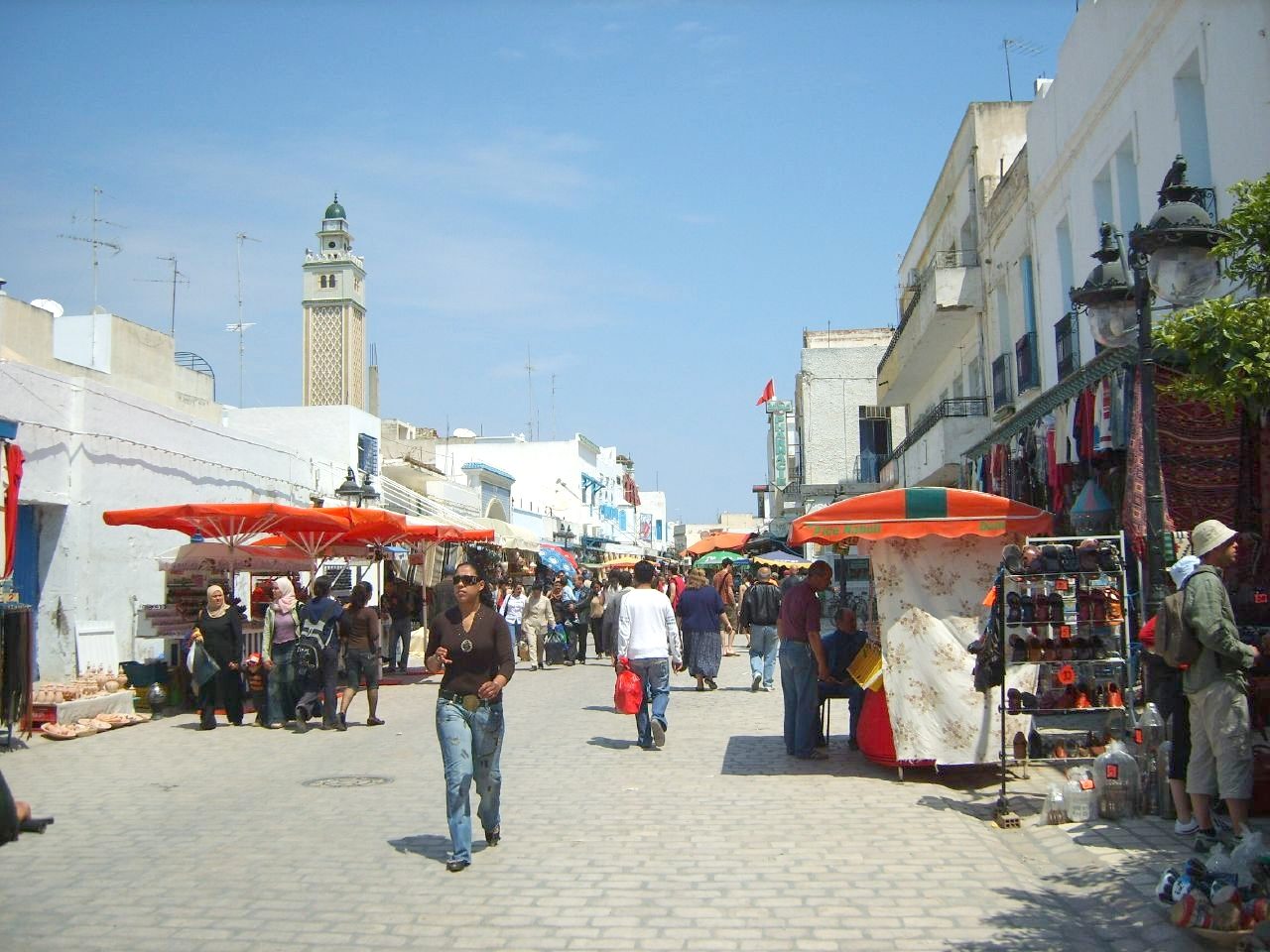
The Nabeul market is the reason most people time their visit for a Friday, and it deserves the reputation. The Souk el-Jemaâ — literally the Friday market — spreads across several streets on the eastern edge of the old town and is one of the largest weekly markets in the country. Crucially, it hasn’t been rebuilt for tourists. It’s a market for the peninsula, and you’re a guest at it.
What actually happens
It’s really several markets stitched together. There’s a livestock section where sheep, goats and the occasional camel change hands — the trading starts around 5am and is long finished by mid-morning. There’s a produce market piled with Cap Bon citrus, tomatoes, peppers, olives and herbs. There’s a clothing and textile run, a household-goods sprawl, and a craft corner selling pottery, woven rush mats, basketry and leatherwork. The smell is oranges, mint, grilled lamb and diesel, all at once.
Prices at the market move with your nerve. This is a place to buy spices, harissa, olives, a rush mat or a cheap everyday bowl rather than serious ceramics — for the good pottery you want the workshops, which we’ll come to. Bring small notes: nobody at a spice stall wants to break a 50-dinar bill first thing.
When to go — and why before 9am matters
This is the single most useful thing in this guide. Go early. By 9–10am the Friday market fills with tour coaches from the resorts, the sun is high, the lanes are shoulder-to-shoulder, and the sellers have switched into full tourist mode. Arrive between 7.30 and 9am and you get cooler air, room to move, better-humoured traders and first pick of the produce. Wear a hat, carry water, and keep your valuables zipped and in front of you in the crush — ordinary market sense, nothing dramatic.
One timing note worth flagging: during Ramadan the rhythm of the day shifts, cafés are quieter until sunset, and the market winds down differently. It still runs, but plan around it. If you’re coming in high summer, early is doubly important — Cap Bon is warm and the midday sun is unforgiving in an open souk.
How the haggling works
Bargaining is expected at the market stalls and in the souk-style pottery shops, and it should be good-humoured, not a battle. A rough rule: the first price is a starting position, and somewhere around half to two-thirds is often where things settle, depending on the item. Smile, be patient, and be willing to walk — the walk is the most powerful tool you have. If haggling isn’t your idea of a holiday, don’t worry: the fixed-price options below take the sport out of it entirely.
Nabeul pottery: Tunisia’s ceramics capital
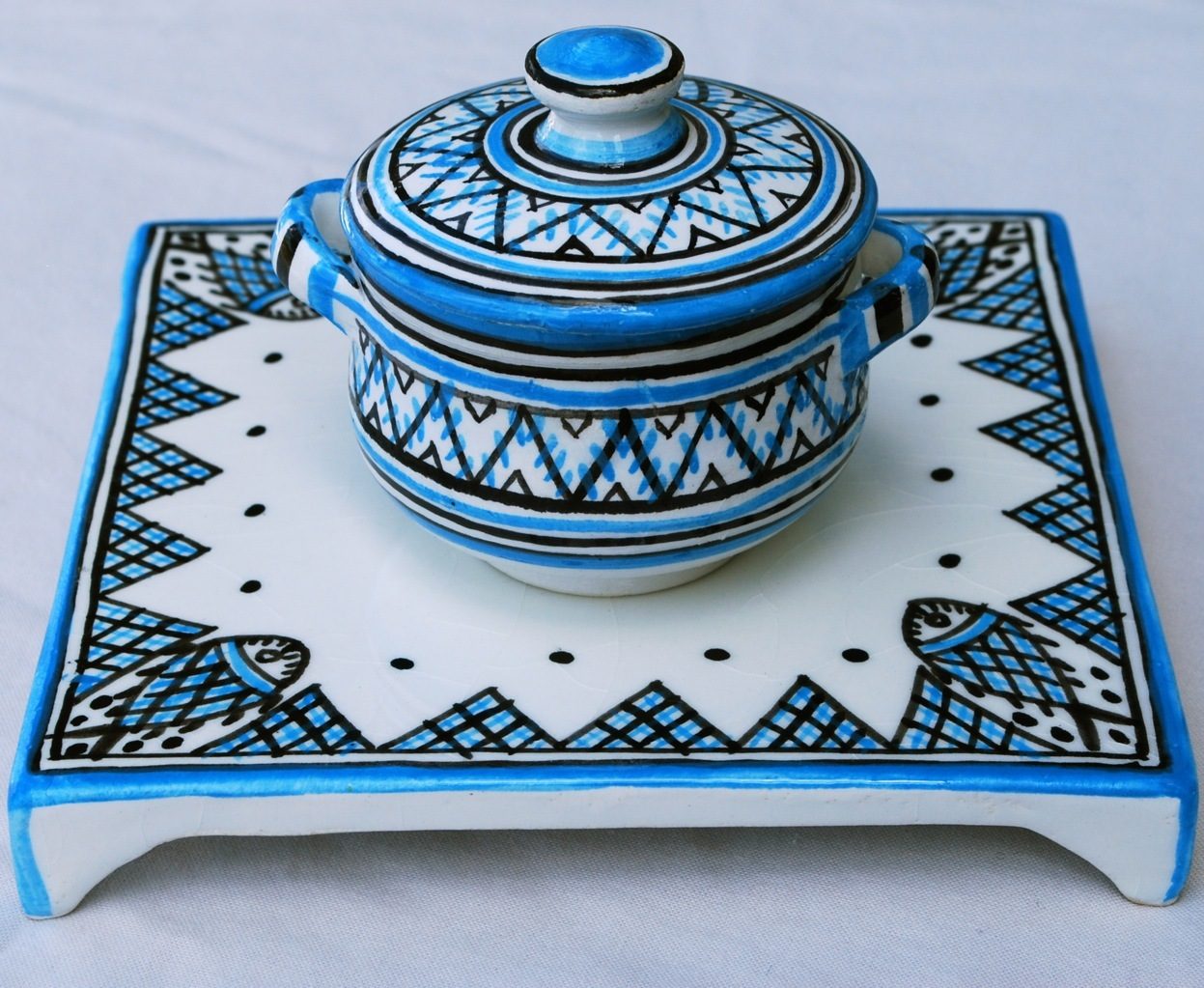
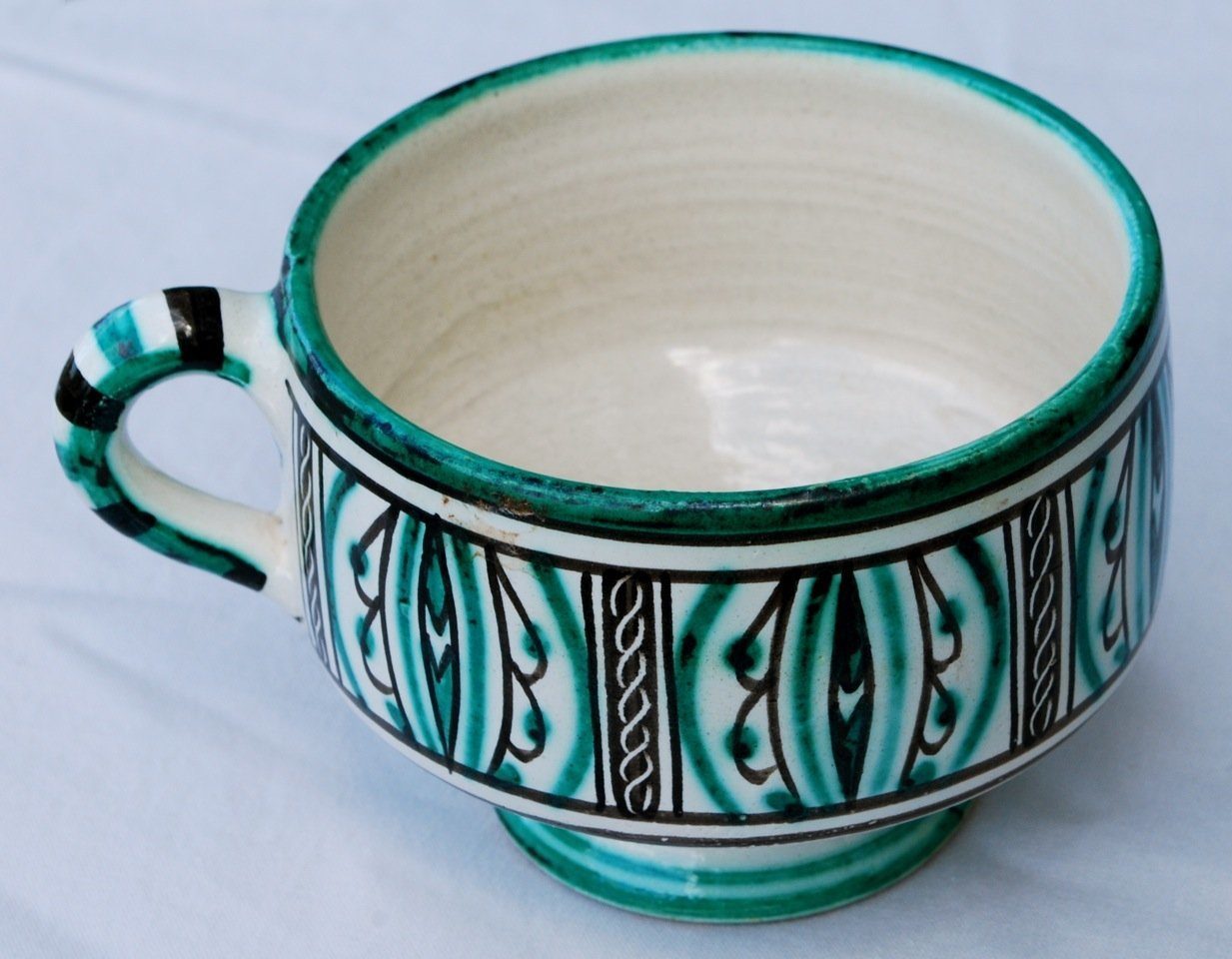
If the market is Nabeul’s event, pottery is its identity. The town has been a ceramics centre since antiquity and today turns out a large share of everything Tunisia produces. The trade clusters along Avenue Habib Thameur and the streets running off it toward the sea, where something like a hundred workshops still throw, glaze and hand-paint the local style.
The Nabeuli style — what you’re actually looking at
The classic Nabeul look is glazed earthenware in yellow, green and brown over a pale cream slip, painted with stylised fish, eight-pointed stars, palmettes and the khomsa (the protective hand). Much of the refinement comes from the Andalusian craftsmen who arrived in the 17th century, expelled from Spain, bringing tin-glaze and tile-making know-how with them. Alongside the traditional earthenware you’ll see brightly coloured decorative tiles, tagine dishes, lamps and the big painted storage jars that are the showpieces of the trade.
Where to buy — from fixed-price to serious
- ONAT (the national craft office) — the government-run shop on Avenue Habib Thameur has fixed, labelled prices. Even if you plan to buy elsewhere, walk in first to calibrate what things should cost and to see the quality benchmark. No haggling, no pressure.
- The established workshops — the long-standing ateliers on Avenue Habib Thameur are where the finest hand-painted work is made and sold; the oldest have been going since the 1880s and supply pieces to the top of Tunisian society. Prices here are firmer but the quality is obvious.
- The smaller cooperatives and family shops — dozens of them along the same run, where haggling is fair game and you can find lovely mid-range pieces.
If you’re short on time, a taxi hired for a couple of hours (roughly 20–30 dinars in 2026 — agree the fare first) can loop you round several workshops and back, which beats trudging in the heat.
Telling the real thing from a factory copy
Not everything sold as “Nabeul pottery” is made by hand in Nabeul; some is factory-pressed and simply decorated to look the part. The genuine hand-thrown, hand-painted pieces have small irregularities — a slightly wobbly base, brushstrokes that aren’t machine-perfect, a faintly textured glaze. Perfectly uniform, transfer-printed patterns are the tell-tale of mass production. Neither is “wrong” — a cheap decorative bowl is a fine souvenir — but you should know which you’re paying for.
Getting it home in one piece
Ceramics and hold luggage are natural enemies. Most airlines won’t thank you for a large jar as checked baggage, and bubble wrap only does so much. The larger workshops will professionally pack and ship internationally, and for anything valuable that’s money well spent. For smaller pieces, buy at the end of your trip, wrap them in clothes, and carry them in your hand luggage where you can. Our wider Tunisia travel tips cover the practical odds and ends, including the closed-currency dinar.
Harissa: the town that gave Tunisia its heat
Nabeul and the surrounding Cap Bon plains are the historical home of harissa, the fiery sun-dried chilli paste that flavours half of what you’ll eat in Tunisia. The local baklouti and gabsi peppers, the particular soil, and the long hot autumn together produce the chillies the rest of the country relies on. Tunisian harissa was added to UNESCO’s list of intangible cultural heritage in 2022 — a rare official nod to a condiment, and a deserved one.
The peak harissa season is September and October, when chillies are spread out to dry on rooftops across town and the smell drifts through the streets. You can buy freshly made paste by weight at the market or from small producers, and the well-known Cap Bon brands are sold nationwide in jars and tubes that travel home easily. It’s one of the best-value, most authentically local souvenirs you can carry out of Nabeul — far more of the place than a fridge magnet. If harissa whets your appetite, our guide to Tunisian food maps out what else to eat while you’re here.
Orange blossom and neroli: Nabeul’s other perfume
The other thing Cap Bon grows in quantity is bitter-orange blossom, and Nabeul is the centre of turning it into fragrance. Each spring, roughly March to April, the blossom is hand-picked and distilled — over a slow fire in the traditional method — into orange-flower water (eau de fleur d’oranger) and the precious essential oil known as neroli. Geranium and roses go through the same process. The region processes thousands of tonnes of blossom a year, and the resulting floral waters are used across Tunisian cooking, pastries and home life.
For visitors, a small bottle of orange-blossom water is a wonderful, unbreakable, cheap souvenir that smells of the whole peninsula — splash it in a syrup, a cake batter or a pot of mint tea back home. There’s a local floral-water fair that celebrates the tradition, and if you visit in blossom season the scent alone justifies the trip. Between the pottery, the harissa and the neroli, Nabeul is one of the best places in the country to shop for things that are genuinely, unmistakably of the place — the sort of stop that earns Cap Bon its billing among the most beautiful places in Tunisia.
Beyond the market: the medina, museum and beach
Nabeul isn’t only about buying things. The old medina is small, low-key and pleasant to wander — a working neighbourhood rather than a tourist set-piece, with a modest central mosque and the everyday shops of a Tunisian town. It’s a gentle counterpoint to the market frenzy and a good place to slow down over a mint tea.
The Archaeological Museum of Nabeul, on Avenue Habib Bourguiba, is small but well put together, holding Roman mosaics and objects excavated from Neapolis — the Roman-era port whose remains lie a few hundred metres west of the museum and are still being dug. It’s a 45-minute stop and inexpensive (around 5 dinars in 2026 — check on the day). If Roman Tunisia interests you, it’s a taste of a much bigger story told in our guide to the Roman ruins in Tunisia.
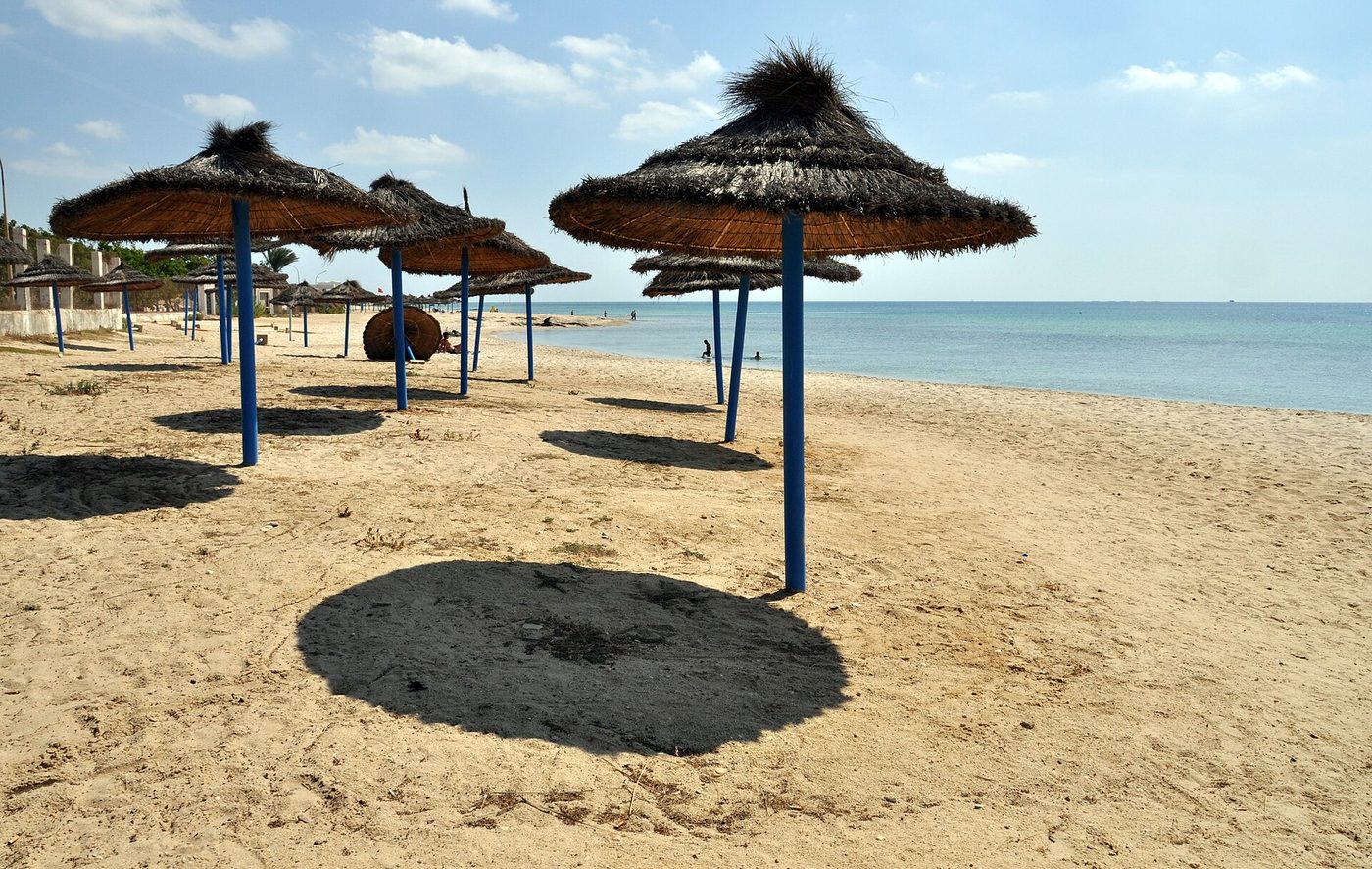
And there is a beach. Nabeul’s sands sit about 15 minutes from the centre and run south, uninterrupted, into the Hammamet hotel zone — long, sandy and far quieter at the Nabeul end than in the resorts. It’s not the peninsula’s showpiece coast (for that, head north to Kelibia), but it’s a perfectly good place to cool off after the market. Our roundup of Tunisia’s beaches puts it in context.
How to spend a day in Nabeul
Here’s the shape of a good Friday, if you want one to copy:
| Time | Do this |
|---|---|
| 07.30–09.00 | The Friday market, early — produce, spices, harissa, a rush mat, people-watching |
| 09.00–10.30 | A coffee and a brik, then the pottery quarter on Avenue Habib Thameur (start at ONAT) |
| 10.30–12.00 | The medina and the archaeological museum |
| 12.00–13.30 | Lunch — grilled fish or a Cap Bon kafteji at a local place |
| Afternoon | The beach, or push north into the peninsula on a Cap Bon road trip |
If you’d rather not drive, Nabeul is one of the classic day trips from Hammamet and easy to reach without a hire car — see getting there below.
Getting to Nabeul, and getting around
Nabeul is genuinely easy to reach, which is part of its appeal:
- From Hammamet: around 15km, 20–30 minutes by taxi or the frequent regional service. The two towns effectively merge along the coast.
- From Tunis: about 70km. The SNCFT train runs down to Nabeul (via Bir Bou Rekba) in roughly 90 minutes for a handful of dinars; a louage (shared minibus) from Tunis is quick and cheap; by car it’s about 75 minutes on the A1 then the coast road.
- Around town: the centre, market and pottery quarter are walkable. Yellow petit taxis handle longer hops — agree the fare or ask for the meter (compteur) first.
For the mechanics of trains, louages and taxis across the country, our guide to getting around Tunisia has the detail. If you’re weighing Nabeul against a beach day or wondering how it fits a wider trip, whether Hammamet is worth visiting and our list of things to do in Tunisia will help you slot it in.
A few practical must-knows
- Money. The dinar is a closed currency: you can’t buy it before you fly or take it home, so change money on arrival and keep some small notes for the market. Reckon on roughly £1 to 3.8–3.9 dinars in mid-2026, but check the current rate.
- Health and insurance. A day at a market is low-risk, but your UK GHIC is not valid in Tunisia, so comprehensive travel insurance with medical cover is essential. For jabs and food-and-water advice, check the NHS’s TravelHealthPro Tunisia page before you travel.
- When to come. Spring and autumn are loveliest — blossom season in March–April, harissa season in September–October — while high summer is hot but workable if you start early. Our best time to visit Tunisia guide breaks it down.
- Dress. Cap Bon is relaxed, but this is a real town rather than a resort — covered shoulders and knees in the market and medina are appreciated; beachwear for the beach.
Nabeul: your questions answered
What is Nabeul known for?
Nabeul is best known as Tunisia’s pottery and ceramics capital, producing a large share of the country’s output, and for its big Friday market. It’s also the historical home of harissa and a major centre for distilling orange blossom into neroli oil and orange-flower water. In short: clay, chillies and perfume.
What day is the Nabeul market?
The main weekly market — the Souk el-Jemaâ — is held on Friday morning and is one of the largest in Tunisia. The livestock trading starts around dawn and the produce and craft sections run into the early afternoon. There are smaller daily markets too, but Friday is the big one worth planning around.
What time should I get to the Nabeul Friday market?
Before 9am, ideally between 7.30 and 9. Arrive early and you beat the tour coaches and the heat, get room to move and better-tempered traders. By mid-morning it’s crowded, hot and firmly in tourist mode. Early birds get the calmer, cheaper, more enjoyable version of the same market.
Is Nabeul worth visiting?
Yes, particularly on a Friday and especially if you like markets, crafts and a real working town over a polished resort. It’s an easy half- or full-day from Hammamet, cheap, and genuinely of its place. If you only want to lie on a sunlounger it may not grab you, but for anyone curious it’s one of Cap Bon’s highlights.
How do I get from Hammamet to Nabeul?
It’s only about 15km — 20 to 30 minutes. A taxi is simplest (agree the fare or ask for the meter first); frequent regional services and shared louages also link the two towns cheaply. The coast between Hammamet and Nabeul is effectively continuous, so it’s a very short hop.
How do I know if Nabeul pottery is genuine?
Genuine hand-made pieces have small imperfections — a slightly uneven base, hand-painted brushwork that isn’t machine-perfect, a faintly textured glaze. Factory pieces look flawlessly uniform, often with transfer-printed patterns. Start at the fixed-price ONAT shop to see the quality benchmark, then you’ll spot the difference in the workshops.
How much does Nabeul pottery cost?
It spans a huge range. Small decorative bowls and trinkets are just a few dinars; a good mid-size hand-painted piece is tens of dinars; and a large decorated jar by a named workshop can run into the hundreds or more (2026 prices — always check on the day). Bargaining is expected in the souk shops, while ONAT and the top ateliers are fixed-price.
Can I bring pottery home on the plane?
Small pieces, yes — wrap them in clothes and carry them in hand luggage. For anything large or valuable, use the workshop’s international packing-and-shipping service rather than risking it in the hold; airlines rarely treat ceramics kindly as checked baggage. Buy near the end of your trip so it isn’t rattling around your case for a fortnight.
What is Nabeul harissa?
Harissa is Tunisia’s signature sun-dried chilli paste, and Nabeul and the Cap Bon plains are its historical home, growing the baklouti and gabsi peppers the rest of the country uses. It gained UNESCO cultural-heritage status in 2022. Buy it fresh by weight at the market or in sealed jars from the local brands to take home.
Does Nabeul have a beach?
Yes. Nabeul’s sandy beach is about 15 minutes from the centre and runs south into the Hammamet hotel strip, quieter at the Nabeul end. It’s a decent spot to cool off after the market, though the peninsula’s most beautiful beaches are further north around Kelibia, on the eastern coast.
Do I have to haggle in Nabeul?
At the market stalls and souk-style shops, yes — it’s expected and should be friendly. But if you dislike bargaining, the ONAT craft office and the established ateliers use fixed, labelled prices, so you can buy good pottery without any negotiation at all. Being willing to walk away is your best tactic when you do haggle.
Is Nabeul safe for tourists?
Nabeul is a calm, family-oriented town and the usual tourist areas of Tunisia are considered safe and heavily visited. Take the same sensible precautions you would in any crowded market — keep valuables zipped and in front of you — and you’ll be fine. For the fuller, date-stamped picture, see our guide to whether Tunisia is safe.
Written by the Tunisia Tourism Guide team — an independent UK-focused guide to travelling in Tunisia. We don’t sell tours or take hotel commissions. Prices and advice were checked at publication; always confirm current details before you book.
Photo credits
PHOTO_CREDITS_PLACEHOLDER