By the Tunisia Tourism Guide team · Last updated 15 August 2026 · We don’t sell tours or take hotel commissions — this is independent advice, written to be useful.
Holidays on Djerba are a beach affair first, and there’s nothing wrong with spending a whole week on the sand. But the island’s quiet advantage is where it sits — right at the edge of southern Tunisia, close enough that some of the strangest, most film-set scenery in the country is a morning’s drive away.
The best day trips from Djerba nearly all point the same way: south, off the island into the desert. Matmata’s underground houses and Star Wars hotel make the easiest full day; the Berber ksour around Tataouine and Chenini are a longer haul; and the real Sahara at Ksar Ghilane is best done as a two-day overnight, not crammed into one.
If you’re still choosing where to base yourself, our main guide to the island of Djerba covers the resorts, towns and beaches; this piece is about the days you spend off it. Below we go through each trip in turn — honest about the drive times, the early starts and whether each one earns them. For the gentler outings you can do without leaving the island — the souks of Houmt Souk, the beaches, the street art — skip to the on-island half-days near the end.
At a glance: the trips, ranked by effort
Here’s the shape of it before the detail. Drive times are rough and one-way — southern Tunisia’s roads are slow, so a “two-hour” trip means two hours each way, plus stops.
| Trip | Rough drive (each way) | Time needed | Worth it? |
|---|---|---|---|
| Matmata (troglodyte houses + Star Wars hotel) | ~2–2.5 hours | Full day | Yes — the easiest desert taster |
| Ksour country (Tataouine, Chenini, Douiret, Ksar Ouled Soltane) | ~2.5–3 hours | Long full day | Yes if you like history and empty landscapes |
| Ksar Ghilane / Douz (the real Sahara) | Half a day’s driving | Two days, ideally | The big one — do it as an overnight |
| Zarzis (mainland town) | ~1 hour | Half or full day | Only if you want quiet, not a headline sight |
| Ajim & the Roman causeway (on your way out) | 20-min ferry | Combine with another trip | Star Wars fans, yes |
| On-island half-days (souks, synagogue, beaches, Flamingo Island) | None | Half a day each | Easy wins and recovery days |
Two honest themes run through everything below. First, the desert trips are long days in a vehicle — genuinely rewarding, but you’ll spend serious hours on the road. Second, almost none of these places are reachable by public transport or a flagged-down taxi, so you’ll be booking a tour or a driver. We’ll cover how to do that well at the end.
First, how you actually get off the island
Djerba is joined to the mainland in two ways, and which one your trip uses is a small pleasure in itself.
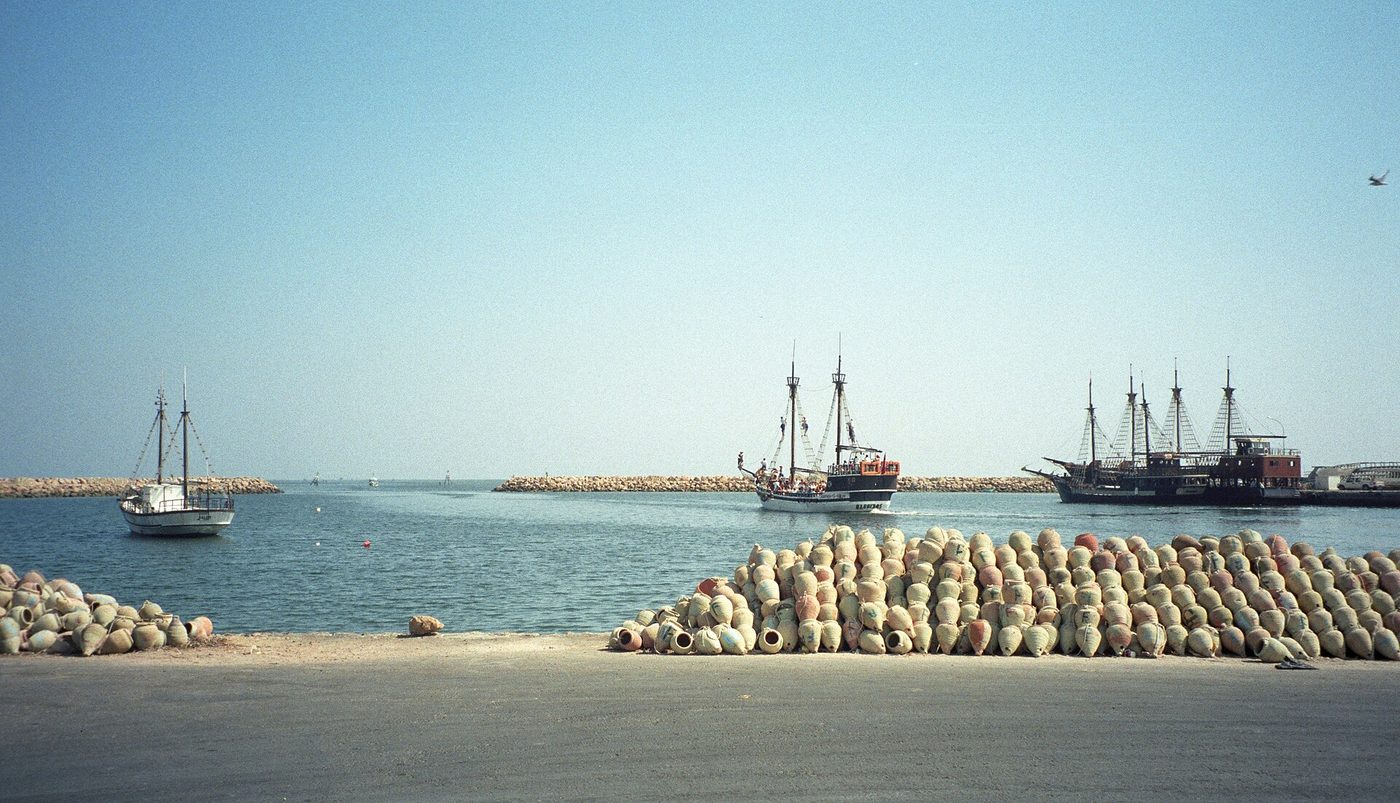
The classic route is the Roman causeway at El Kantara, a low road running roughly six kilometres across the shallow Boughrara lagoon to the mainland on the island’s south-east side. The Carthaginians and then the Romans built a crossing here two thousand years ago — the modern road follows the same line — and it’s the way most tours to Tataouine, Ksar Ghilane and Zarzis leave the island.
The other way out is the little Ajim–Jorf ferry on Djerba’s western tip, a short crossing locals call “le Bac” that takes around 20 minutes. It’s cheap, runs frequently through the day, and lands you handy for Gabès and Matmata. It’s also a small draw in its own right, because the port town of Ajim has a claim to fame we’ll get to in a second.
Either way, since Djerba has no ride-hailing apps and the desert sights are hours apart, sorting your transport in advance is the difference between a smooth day and a stranded one. Our guide to getting around Tunisia covers the practical side.
Ajim: the Star Wars stop most people miss
Before you barrel off towards the desert, the scruffy fishing port of Ajim is worth ten minutes. Its whitewashed lanes stood in for Mos Eisley — the “wretched hive of scum and villainy” — in the original 1977 Star Wars, and a small domed building a couple of kilometres from the ferry, on the seaward side of the road, served as the exterior of Obi-Wan Kenobi’s home. Nothing is signposted and there’s no visitor centre; that’s part of the charm, and part of why a driver who knows the spots helps. Our full guide to Star Wars filming locations in Tunisia maps the whole trail, of which Djerba is only the start.
Matmata: underground houses and the Lars homestead
If you do one mainland trip and want the biggest payoff for the least driving, make it Matmata. Roughly two to two and a half hours from the island, it’s a village where Berber families dug their homes down into the soft hillsides — sunken circular courtyards with rooms burrowed off them, a form of desert architecture built over centuries to escape the heat. Some are still lived in; a few open their doors to visitors for a look and a glass of tea.
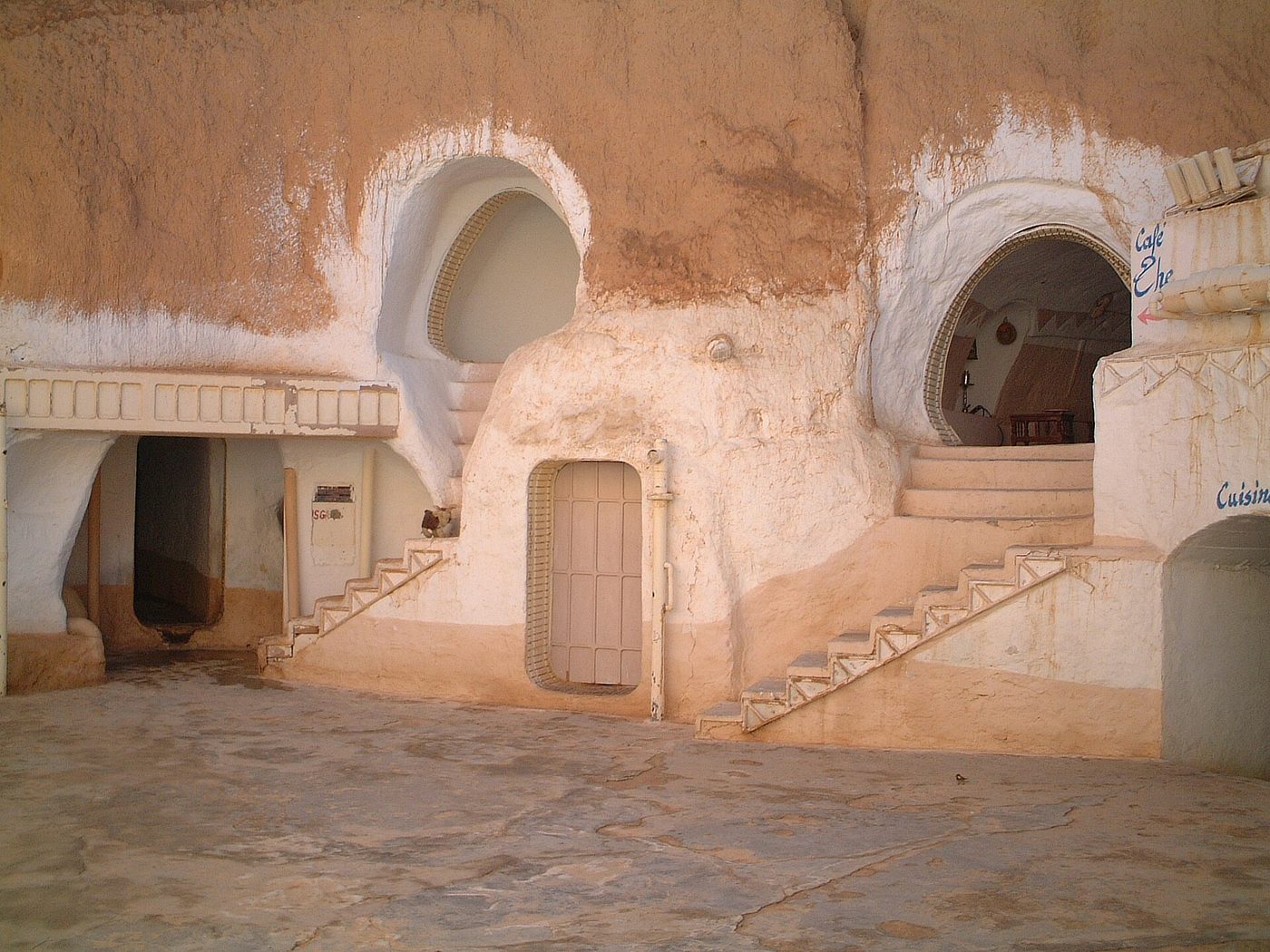
Matmata is also a proper Star Wars pilgrimage. The Hotel Sidi Driss, a genuine troglodyte structure in the village, was dressed as the interior of the Lars homestead — Luke Skywalker’s boyhood home — and it’s still a working hotel. You can walk into the courtyards you’ve seen on screen, have lunch there, or even stay the night, and some of the sci-fi set dressing has been left in place. It’s kitsch and wonderful in equal measure.
The honest word: Matmata sees a lot of coach traffic, and at busy times the best-known houses can feel a little like a production line, with a small tip expected for photos. It’s still worth it — the drive alone, all bare ochre hills and lunar folds, is unlike anything on the coast. Many tours pair Matmata with the mountain oasis of Toujane or fold it into the two-day desert loop, which is the better way to see it if you can spare the time.
The ksour country: Tataouine, Chenini, Douiret and Ksar Ouled Soltane
Push further inland and south-east and you reach the Dahar — a region of bare ridges and hilltop villages so odd-looking that George Lucas borrowed the name of its main town, Tataouine, for an entire planet. This is a longer day, roughly two and a half to three hours each way, and it’s the one for travellers who like their scenery big, empty and strange rather than pretty.
Tataouine town itself is a workaday market crossroads — you’ll likely stop for its souk and to stretch your legs — but the real rewards are the villages and granaries around it.
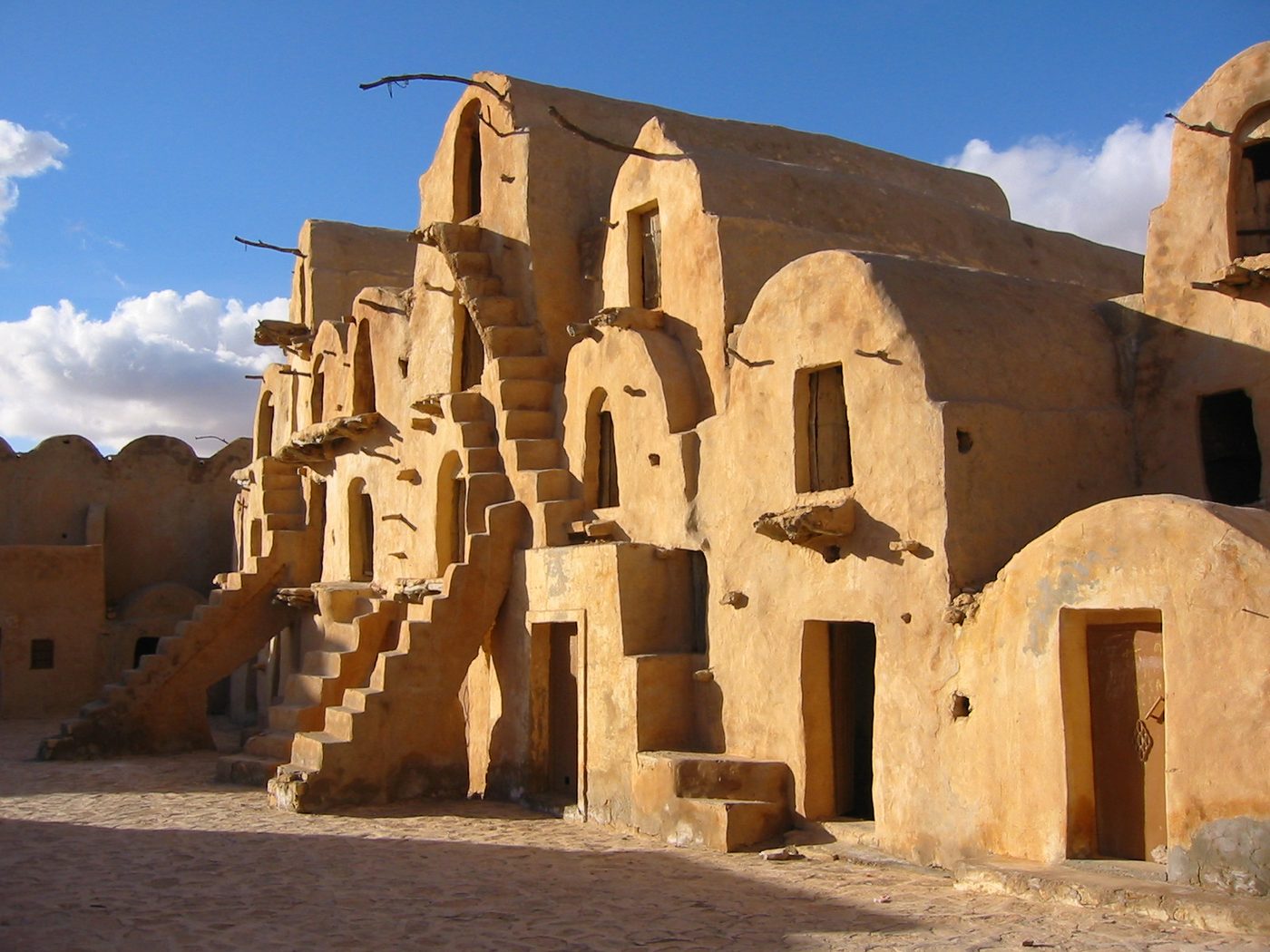
Ksar Ouled Soltane is the star: a fortified Berber granary of stacked ghorfas — barrel-vaulted storage cells — piled several storeys high around two courtyards. Parts of it are thought to go back some three centuries, and it’s among the best-preserved ksour in the south. If it looks familiar, that’s because granaries like this shaped the look of Star Wars’ slave quarters; the nearby Ksar Hadada was used directly as a filming location.
Chenini is the other unmissable stop — a Berber village built vertically into a mountainside, its pale houses and a bright white mosque folded into the rock, with an old ridge-top granary above and long views over the plains. The climb is hot work in summer, so bring water and go early. It’s the kind of place that photographs beautifully and feels genuinely remote.
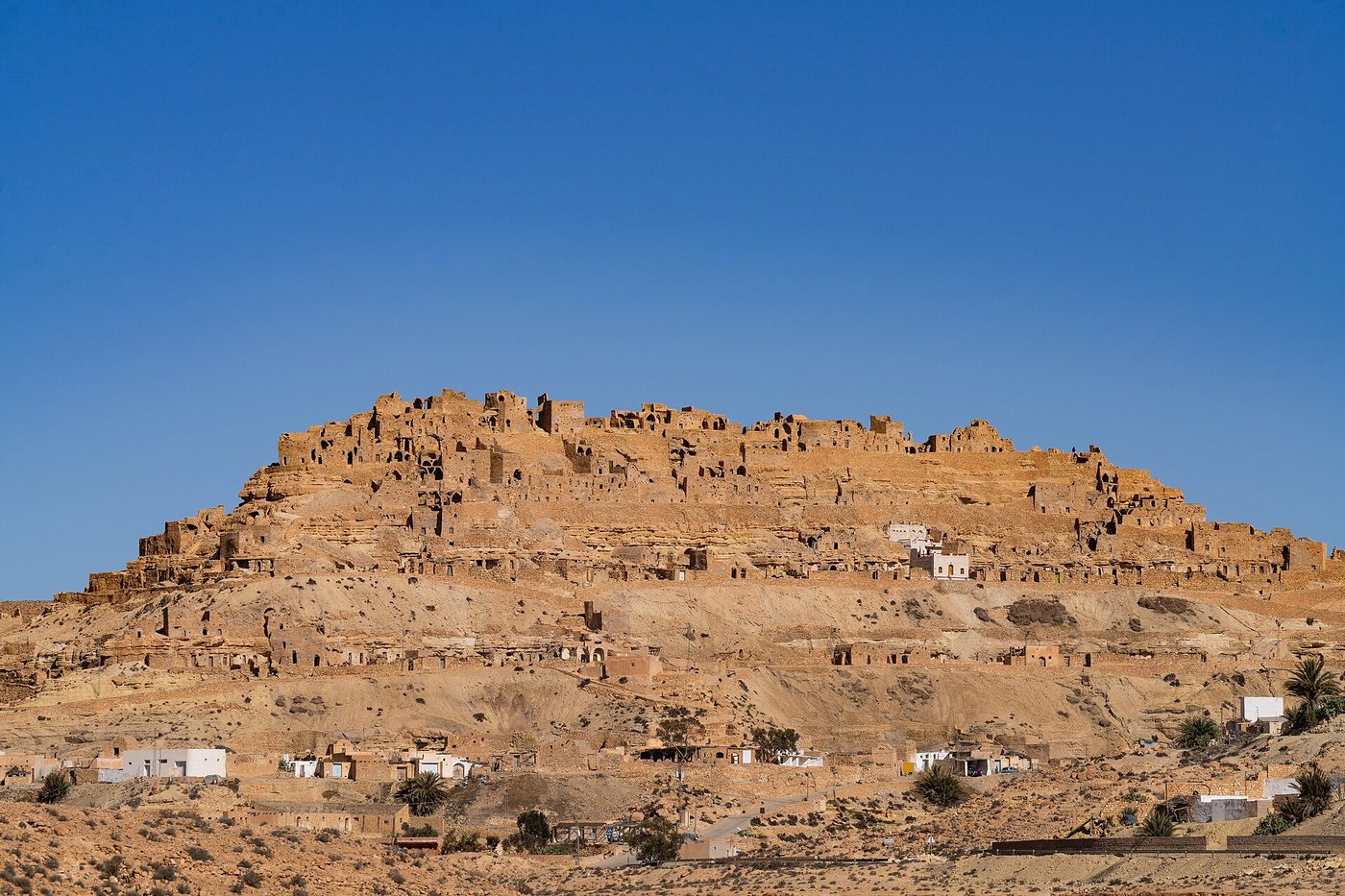
Douiret, a little further on, is a similar hilltop village — half-abandoned, with rock-cut homes and an old white mosque — and often quieter than Chenini. A typical organised day runs something like a 7.30am pickup, a photo stop at a salt flat, the Tataouine souk, Ksar Ouled Soltane, lunch near Chenini and a filming-location stop, then back on the island by early evening. It’s a lot for one day, and the driving dominates — but for the landscape and the sense of stepping off the tourist map, we reckon it earns the early alarm.
One reassuring point, because people ask: Tataouine town and this whole ksour circuit sit well to the north of the sensitive border areas the Foreign Office warns against. The standard tourist route — Chenini, Douiret, Ksar Ouled Soltane — is nowhere near the restricted zone. More on safety towards the end.
Into the Sahara: Ksar Ghilane and Douz
This is the big one, and the trip most people who’ve done it talk about for years. If you want the desert — real dunes, silence, a night under more stars than you knew existed — you’re heading for Ksar Ghilane or Douz, on the edge of the Grand Erg Oriental, the great eastern sand sea.
Ksar Ghilane is an oasis on the very fringe of the dunes, with a natural hot spring you can actually swim in, the ruins of a Roman fort on a rise nearby, and sand stretching to the horizon. The classic routine is a camel ride into the dunes at golden hour (a quad bike is the noisier alternative), a soak in the warm spring, dinner around a fire with drumming, and a night in a desert camp.
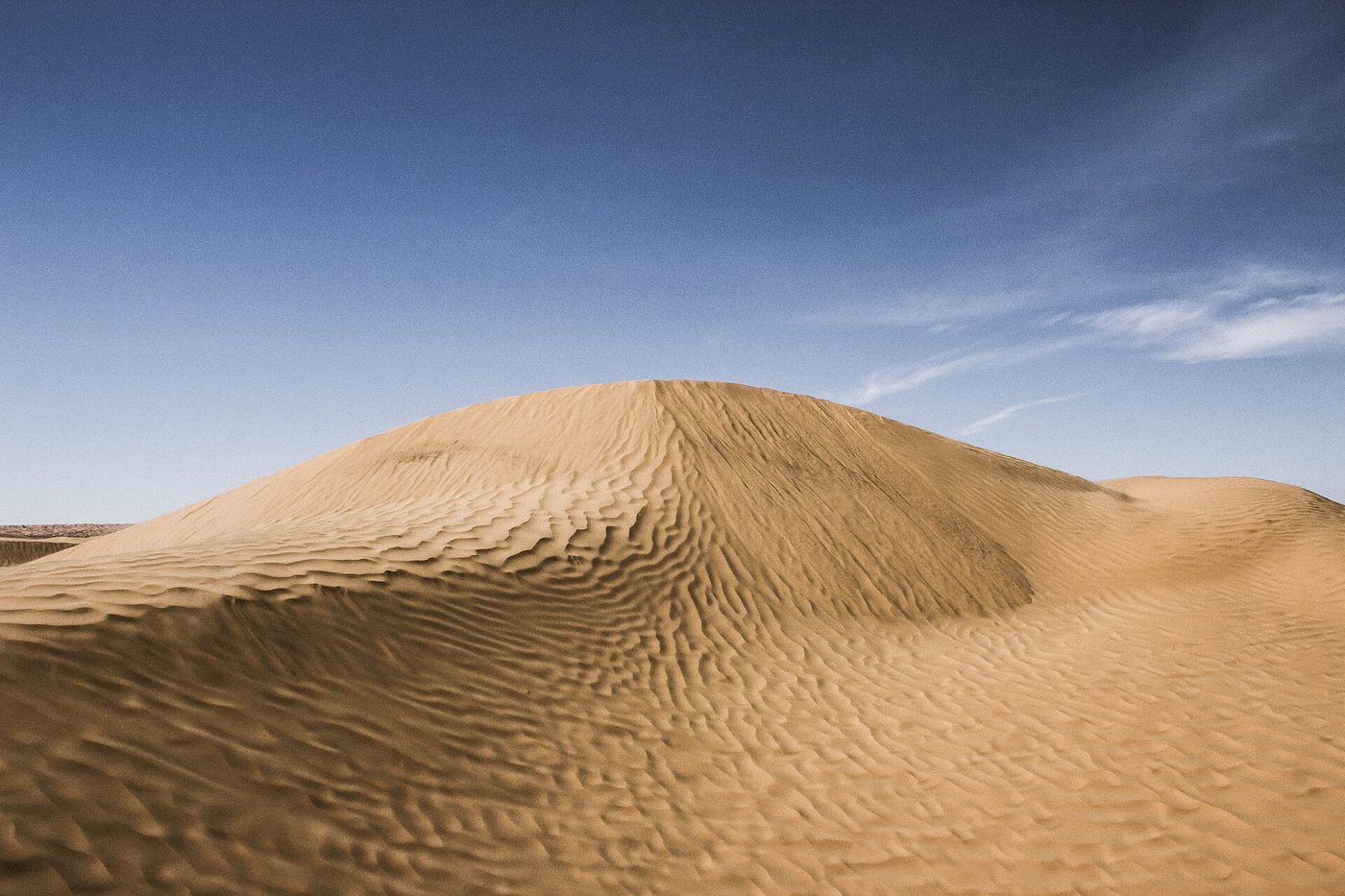
Douz, further west, is the last real town before the open desert begins — a market settlement on the sand’s edge that’s long been a launch point for camel treks, and home to a big Sahara festival each winter.
Here’s the honest logistics. You can reach Ksar Ghilane or Douz as a single very long day from Djerba with a brutally early start, but you’ll spend the best part of eight hours in a 4×4 to snatch a couple of hours in the sand. Far better, if your holiday allows, is the two-day overnight: down through Tataouine and Chenini on day one, a night in a desert camp, Matmata on the way home. That itinerary bundles almost every headline sight in the south into one trip and gives the desert the time it deserves. It’s the single excursion we’d prioritise from Djerba. Read our guide to the Tunisian Sahara for what the desert nights are actually like, and see our roundup of the best Tunisia excursions for how these trips are packaged and sold.
Zarzis and the mainland coast
Not every trip off Djerba means the desert. Just across the causeway, the low-key town of Zarzis offers long, quiet beaches, olive groves and a working port rather than resort gloss. It’s around an hour by road, and it makes an easy half-day if you fancy a slower, more everyday slice of the south without a punishing drive.
It won’t wow you with a single headline sight, and we’d never send a first-timer here over the desert. But if you’ve had your fill of the beach and want to potter round a real Tunisian town, our full guide to Zarzis lays out what’s worth your time.
Flamingo Island and the easy on-island half-days
Some of the best “trips from Djerba” don’t leave Djerba at all — and after a long desert day, an easy island morning is exactly what you want. These need no tour and little planning:
- Flamingo Island — a sandbar off the north-east coast reached by boat, named for the flamingos that gather in the cooler months. Touristy, and best out of high summer, but a fun, cheap outing, especially with children.
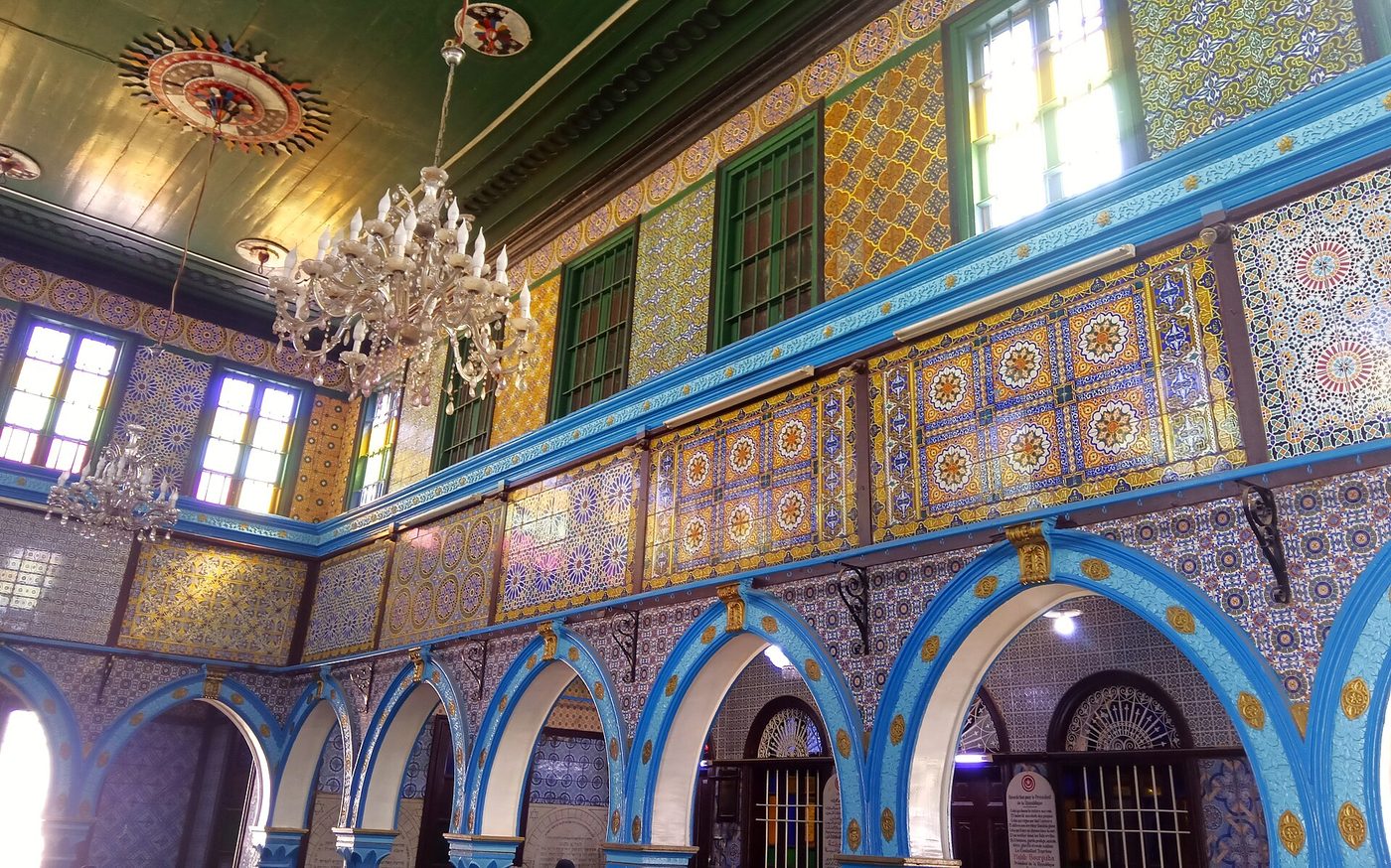
- El Ghriba synagogue — one of the oldest synagogues in the world, in the village of Erriadh: a small jewel of blue-tiled walls and hanging lamps.
- Djerbahood — the open-air street-art museum in the same village, where around 150 artists painted the lanes; the two pair perfectly on one morning.
- Houmt Souk — the island capital, with its old fondouks, fish auction and Ottoman fort, best in the late afternoon.
- Guellala and the beaches — the potters’ village on the south coast, and the long sands of the north-east; our roundup of Djerba’s beaches points you to the best of them.
The smart rhythm for a week is to alternate: a hard day in the south, then an easy island day to recover.
How to book — and the honest truth about group tours
You’ve essentially got three ways to do the mainland trips, and the right one depends on your budget and your patience.
- Hotel rep or excursion desk. The path of least resistance — you book at a desk in the lobby, a coach collects you, and everything’s handled. It’s the cheapest way to reach the desert, but you’re on a fixed schedule in a full minibus, with pick-ups from several hotels first and waiting around at each stop. Fine for the two-day Sahara; a bit soulless for the shorter trips.
- Local agency. Booking directly with a Djerba-based operator, online or in Houmt Souk, often gets you a better price and a smaller group than the hotel desk. Read recent reviews, and confirm exactly what’s included — lunch, entry fees, the camel ride — before you pay.
- Private driver. For the on-island half-days and the nearer mainland stops, hiring a car with a local driver for the day turns a logistical puzzle into a relaxed trip at your own pace. You agree the itinerary and the price up front, skip the convoy, and stop where you like. It costs more than the coach but, split between a couple or a family, it’s often the best value of the lot.
Whichever you choose, a few realities are worth knowing. Start times are early — 7am to 8am pick-ups are normal, because the distances are real and the guides want you back before dark. Prices are quoted in dinar and shift with fuel and season, so get a current figure rather than trusting last year’s blog; as a very rough steer, reckon on the tens of dinars per person for a long group day tour and more for the two-day desert trip (2026 — always check the current price). And remember the Tunisian dinar is a closed currency: you can’t buy it before you fly or take it home, so change money on arrival and carry small notes for tips, drinks and photo stops. Reckon very roughly on £1 to 3.8–3.9 dinars in mid-2026, but check the rate.
When to go, and a calm word on safety
Timing matters more for the desert trips than for the beach. From roughly June to September the south is fiercely hot — a midday climb up to Chenini or a walk on the dunes can be genuinely draining — so spring (March–May) and autumn (October–November) are far kinder for the mainland excursions, even if the sea’s a touch cooler. Our best time to visit guide breaks the seasons down, and if you’re building a longer trip, our Tunisia itinerary ideas show how Djerba and the south knit together.
On safety, the reassurance is straightforward. Djerba, the causeway, Zarzis and the standard Tataouine–Chenini ksour circuit all sit well to the north of the areas the UK Foreign Office advises against, which run along the remote Libyan border. The FCDO’s advice specifically excludes Zarzis and the roads you’ll actually travel, and every mainstream day trip sold from the island keeps well clear of the restricted zones. For the full, date-stamped picture, see our guide to whether Djerba is safe — and it’s worth remembering Tunisia as a whole welcomed record visitor numbers in 2025.
The verdict: which day trip should you actually do?
If you take one trip, make it the desert — ideally the two-day overnight that strings together Tataouine, Chenini, a night at Ksar Ghilane and Matmata on the way home. It’s the thing you’ll still be describing to people months later. If you’ve only got a single day, Matmata gives you the most for the least driving, with the Star Wars bonus thrown in. Keep Zarzis and the on-island half-days for your gentler days, start early, sort your transport before you go, and give the south the time it asks for. Djerba’s real luxury isn’t only the beach — it’s how close the extraordinary is.
Day trips from Djerba: your questions answered
What are the best day trips from Djerba?
The standouts head south into the desert: Matmata’s underground houses and Star Wars hotel, the Berber villages and granaries around Tataouine and Chenini, and the Sahara dunes at Ksar Ghilane. Closer to home, Zarzis on the mainland and the island’s own beaches, souks and Flamingo Island make easy half-days. The two-day desert overnight is the one most people rate highest.
Can you visit the Sahara desert from Djerba in a day?
Just about, but we wouldn’t. Reaching real dunes at Ksar Ghilane or Douz means the best part of four hours’ driving each way, so a single day gives you only a brief taste for a very long slog. The two-day overnight, with a night in a desert camp, is far more rewarding and not much more expensive.
How far is Matmata from Djerba?
Roughly two to two and a half hours by road, crossing to the mainland by the Ajim–Jorf ferry or the Roman causeway and heading inland past Gabès. It’s the closest of the classic desert trips, which is why it works as a comfortable full day out rather than an overnight.
Can you visit Star Wars locations from Djerba?
Yes. On Djerba itself, the town of Ajim doubled as Mos Eisley and has Obi-Wan’s house nearby. On the mainland, the Hotel Sidi Driss at Matmata was Luke Skywalker’s home, and ksour near Tataouine feature too. Our guide to Star Wars in Tunisia maps the full trail.
Do you need a tour, or can you do Djerba day trips independently?
For the desert, you’ll want a tour or a private driver — the oases and mountain villages aren’t reachable by public transport, and the distances are long. The on-island sights (beaches, souks, synagogue, street art) are easy to do yourself by taxi or hire car. Our getting around Tunisia guide has the detail.
How much do Djerba excursions cost?
Prices are quoted in dinar and move with fuel and season, so treat any figure as a rough steer and confirm before booking. Group day tours run to the tens of dinars per person; the two-day desert overnight costs more. A private driver costs more than the coach but, split between a few people, is often the best value. (2026 — always check current prices.)
Is the two-day desert trip from Djerba worth it?
For most people, yes — it’s the highlight of a Djerba holiday. Two days lets you see Tataouine, Chenini, Ksar Ghilane and Matmata properly, with a night in a desert camp under the stars, instead of rushing one of them in a single exhausting day. Go in spring or autumn if you can, to dodge the worst of the heat.
Are day trips from Djerba safe?
The mainstream trips are. Djerba, Zarzis and the Tataouine–Chenini ksour circuit all sit well north of the remote Libyan-border areas the UK Foreign Office advises against, and standard tours keep clear of the restricted zones. Take normal care, use a reputable operator, and read our date-stamped Djerba safety guide for the full picture.
How do you get from Djerba to the mainland?
Two ways: the six-kilometre Roman causeway at El Kantara, which most desert tours use, or the short Ajim–Jorf car ferry on the island’s western tip, which takes about 20 minutes and lands you handy for Gabès and Matmata. Both are cheap and run through the day.
Is Zarzis worth a day trip from Djerba?
Only if you want a quiet, everyday town rather than a big sight. Zarzis has long empty beaches, olive groves and a working port, and it’s about an hour away, but there’s no single must-see. We’d pick the desert over it every time for a first visit — see our Zarzis guide to judge for yourself.
Are the desert day trips suitable for children?
The shorter trips can be — kids often love Matmata’s underground houses, the camels and Flamingo Island — but the long hours in a minibus test small children, and summer heat in the south is intense. For families, the two-day overnight paces things better than a marathon single day. Bring water, sun cover and snacks.
What’s the best time of year for day trips from Djerba?
Spring (March–May) and autumn (October–November) are ideal for the mainland and desert trips: warm but not punishing, and much easier for walking around Chenini or the dunes. High summer is very hot inland; winter is mild and fine for the ksour, though desert nights turn cold. Our best time to visit guide has the month-by-month detail.
Written by the Tunisia Tourism Guide team — an independent UK-focused guide to travelling in Tunisia. We don’t sell tours or take hotel commissions. Prices and advice were checked at publication; always confirm current details before you book.
Photo credits
All images via Wikimedia Commons, used with thanks: A sunken troglodyte courtyard house at Matmata © Neil Rickards from Cambridge, England (CC BY 2.0); Stacked ghorfa storage cells at Ksar Ouled Soltane © Ian Sewell (CC BY 2.5); The Berber village of Chenini built into a mountainside © Skander zarrad (CC BY-SA 4.0); Sahara dunes at the Ksar Ghilane oasis © Jérôme Prax jeromeprax (CC0).