By the Tunisia Tourism Guide team · Last updated 8 August 2026 · We don’t sell tours or take hotel commissions — this is independent advice, written to be useful.
Djerba’s coast gets sold as Tunisia’s answer to the Maldives, then dismissed as shallow and weedy in the very next breath. The truth sits somewhere in between, and it depends almost entirely on which stretch of sand you pick.
Here’s the honest verdict: the best Djerba beaches are Sidi Mahrez for serviced, family-friendly sand, Ras Rmel (Flamingo Island) for a wild boat-trip escape, and Aghir for quiet space to walk. Most Djerba beaches are shallow, warm and gently shelving — brilliant for children, less so for lap-swimmers who want deep water fast.
This is the beach-by-beach guide we wish we’d had on our first trip to the island of Djerba. We rank the sand honestly, from the busy hotel strands to the sandspit you can only reach by boat, and we’re straight about the seaweed, the tides and the loungers you can’t sit on. It sits alongside our wider roundup of Tunisia’s best beaches, if you’re still deciding where on the coast to base yourself.
The best Djerba beaches at a glance
If you only read one section, read this. Here’s how we’d rank the island’s beaches for a typical UK holidaymaker, with the honest “best for” note that the hotel blogs leave out.
| # | Beach | Where | Best for |
|---|---|---|---|
| 1 | Sidi Mahrez (Sidi Mahres) | North-east, hotel zone | Families, first-timers, easy serviced beach days |
| 2 | Ras Rmel (Flamingo Island) | Sandspit off Houmt Souk | A special day out, photos, escaping the crowds |
| 3 | Aghir | East coast | Space, long walks, calmer families, sunsets |
| 4 | Seguia / Sidi Garrous | South-east coast | Kitesurfing and windsurfing, not sunbathing |
| 5 | Borj Jillij | North-west tip | Sunsets, couples, a car-hire day out |
| 6 | Sidi Jmour | West coast, near Ajim | Solitude, photography, picnics |
| 7 | Houmt Souk town beach | North coast, capital | Beach plus shopping, cafés and the old fort |
| 8 | Sidi Yati | South coast, near Guellala | A local feel, horse riding, pairing with pottery |
A quick word on spelling before we go on. You’ll see Sidi Mahrez written as Sidi Mahres, Sidi Mehrez and Playa Sidi Mehrez depending on the map — they’re all the same beach. Djerba is roughly 125km of coastline in Tunisia’s south-east, most of it low, sandy and lined with palms, so there’s far more shoreline here than any single week can cover.
Djerba’s beaches, ranked
We’ve ordered these by how strongly we’d tell a friend to seek them out — not by how “five-star” they photograph. Some are serviced hotel strands; one is a deserted sandbank you reach by boat. We’ll tell you which is which.
1. Sidi Mahrez (Sidi Mahres) — the main event
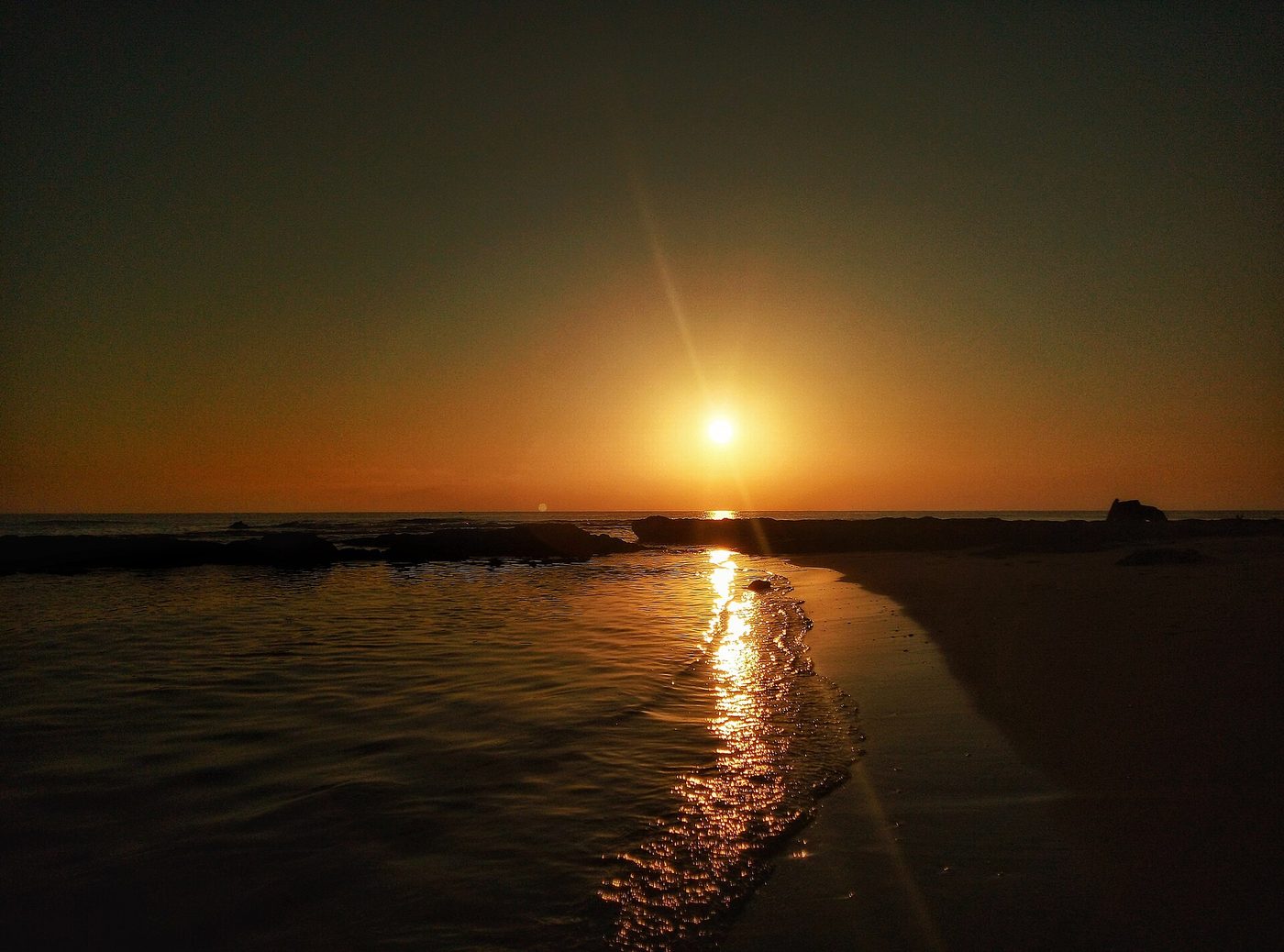
This is the beach most people picture when they book Djerba, and for good reason. Sidi Mahrez runs for kilometres along the north-east coast — the island’s tourist zone — a broad ribbon of pale, soft sand backed by the big hotels, beach clubs and the odd aqua park. If you want a serviced beach day where lunch, a lounger and a paddleboard are all within a short walk, this is the one.
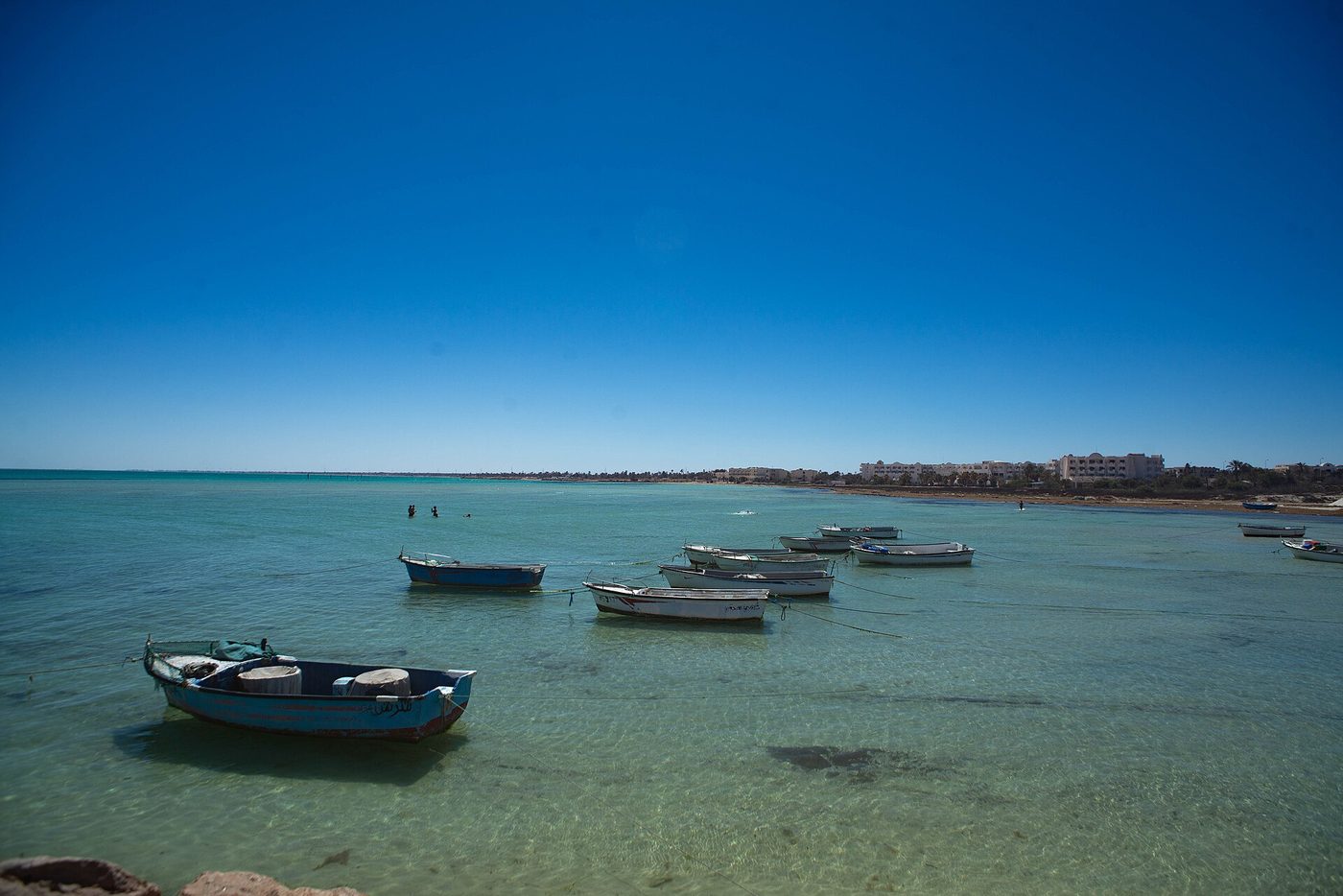
The sea here is the calm, shallow, warm turquoise that Djerba is famous for. It shelves so gently that you can wade out a long way and still be waist-deep, which is exactly why families with small children love it and why the central stretch fills up in July and August. The flip side is that lap-swimmers and anyone who likes to strike out into deep water quickly will find it frustratingly shallow.
Our honest tip mirrors what the locals say: walk away from the busiest central hotel section and head to the northern end of the strand, which is noticeably quieter and just as pretty. The sand is public by Tunisian law even where a hotel has laid out its loungers, so you can always set up on the open sand with your own towel. It’s the beach we’d point a first-timer to, and it pairs naturally with our guide to where to stay in Djerba, since almost every package hotel sits on or near it.
2. Ras Rmel (Flamingo Island) — the boat-trip beach
If Sidi Mahrez is the everyday beach, Ras Rmel is the one you’ll still be talking about at home. It isn’t really an island at all but a long, curling sandspit that reaches out from the north of Djerba into the Gulf of Gabès, and at low tide it unfurls into a dazzling white sandbar ringed by shallow, glass-clear lagoon. It’s a protected Ramsar wetland, and from roughly late October to March it draws the flocks of greater flamingos that give it its tourist name.
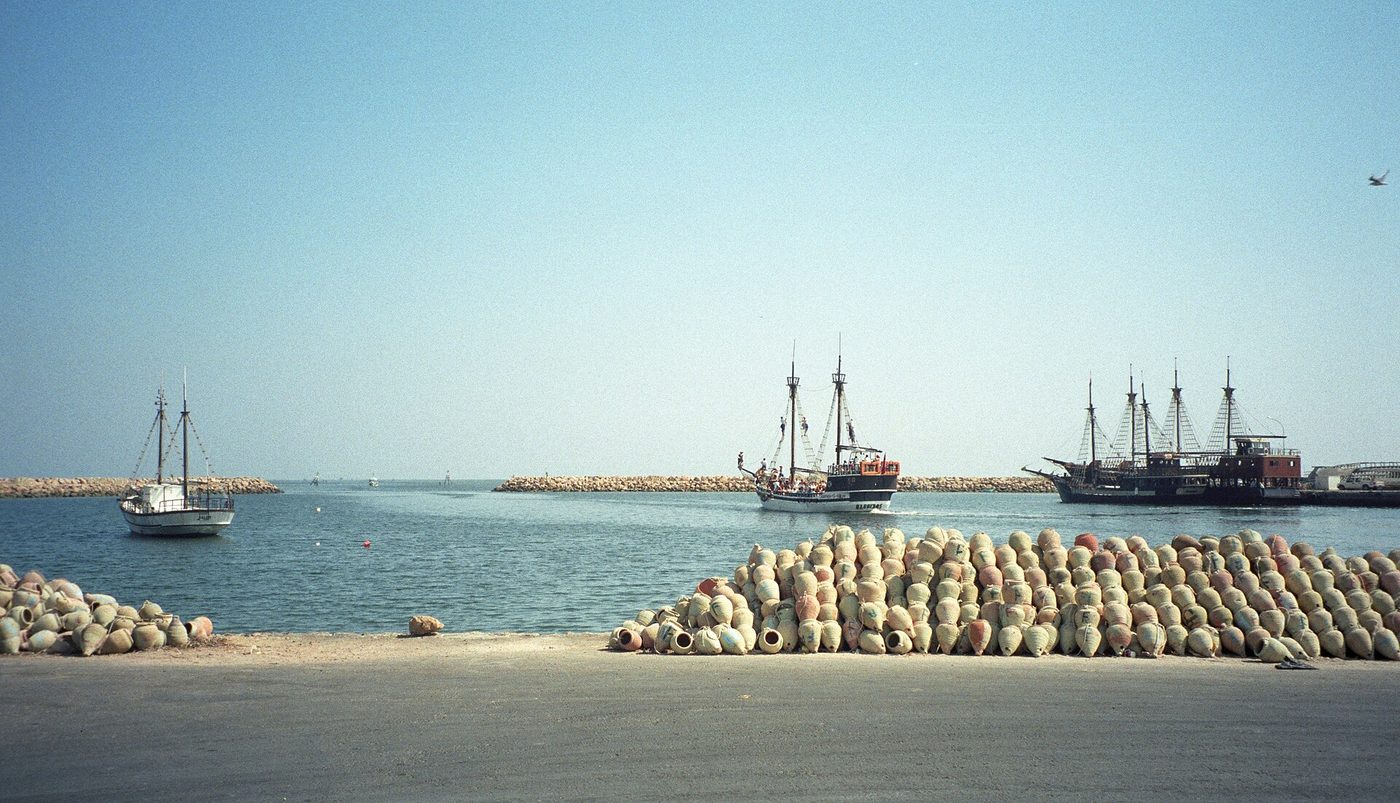
The catch — and it’s a big one — is that this is a day out, not a beach you can walk to. You reach it by boat from Houmt Souk harbour, often on the theatrically painted “pirate” boats that run excursions across the bay. There are essentially no facilities once you’re there: no loungers, no café, no shade to speak of, so bring water, a hat and everything you’ll need for the day.
Go early if you can. The morning boats land before the bigger tour groups arrive, and you get the sandbar close to empty, which is when it’s at its most extraordinary. It’s a firm fixture on most lists of the best excursions in Tunisia, and rightly so. Just don’t expect to see flamingos in high summer — the birds are a winter visitor, and in July you’ll get the sandbar and the lagoon but not the pink.

3. Aghir — the quiet golden expanse
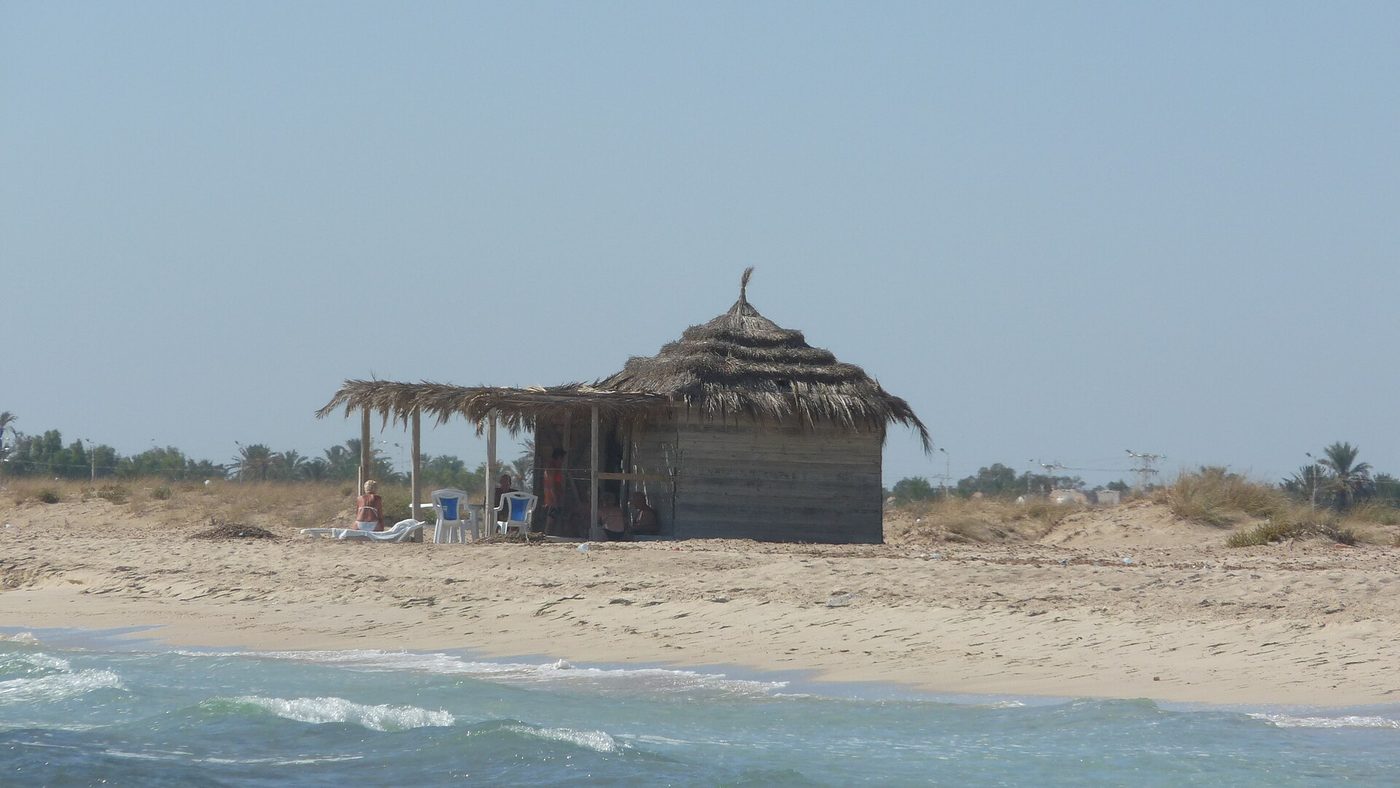
Aghir is our pick for anyone who finds the hotel-zone crowds a bit much. It’s a long, wide sweep of golden sand on the east coast, roughly a quarter of an hour from Houmt Souk, backed in places by low natural dunes and palm groves rather than a wall of concrete. It feels more open and more Tunisian than the busiest parts of Sidi Mahrez.
The water is the same warm, shallow turquoise, receding a fair way at low tide, so it suits families and gentle swimmers rather than anyone chasing depth. There’s enough space to walk for a proper stretch of the legs — a rarity on a busy resort beach — and it’s a lovely spot to be at sunset. Facilities are thinner here: a scattering of beachfront cafés, fewer loungers, so bring a bit of everything.
If your idea of a good beach day is space, a long walk and a coffee with your feet in the sand rather than a full animation programme, Aghir edges out the busier strands. It’s also a sensible base if you’re travelling with children but want something calmer than the resort core — our guide to Tunisia’s family resorts covers how to weigh that up.
4. Seguia and Sidi Garrous — the watersports coast
Down towards the south-eastern tip of the island, the beaches change character. This is Djerba’s watersports coast, and Seguia — sometimes written Essaguia or Plage de la Seguia, near the old Club Med and the Mövenpick — is its heart. A big, shallow, flat-water lagoon and steady afternoon winds have made it one of the better-known kitesurfing and windsurfing spots in North Africa.
As a sunbathing beach, it’s honestly not the island’s prettiest — the appeal is what you do on the water rather than the sand itself. The neighbouring Sidi Garrous area shares the same wind and lagoon conditions. If you don’t do watersports, you can happily skip this stretch; if you do, it may be the reason you come.
We go into the wind seasons below, but the short version is that the thermal breeze tends to build through the afternoon from spring to autumn, giving reliable, beginner-friendly flat water in a shallow lagoon. Several schools run lessons and hire out kit along here.
5. Borj Jillij — the sunset beach
Right up on Djerba’s north-western tip, Borj Jillij is a beach we’d send couples and photographers to rather than families after a full day’s facilities. It faces west, it’s quiet, and it’s known locally for some of the best sunsets on the island — the sort of low golden light that makes the whole trip feel worthwhile.
The sand is soft and scattered with small shells, the crowds are thin, and there’s little more than a café or two. That’s the point. It’s not a beach you’d build a week around, but it’s a wonderful early-evening trip if you’ve got a car for the day. Time your visit for an hour before sunset and you’ll understand the fuss.
6. Sidi Jmour — the wild west coast
On the opposite, western side of the island near the village of Ajim, Sidi Jmour is about as far from a package beach as Djerba gets. Think a clean crescent of white sand, clear water, a small whitewashed mosque on the headland, traditional fishing boats — and often barely another soul.
There are next to no facilities, so this is a bring-everything beach: water, snacks, shade, sun cream. What you get in return is space, silence and a genuinely photogenic corner of the island that most fly-and-flop visitors never see. It’s a favourite for couples and anyone who wants a picnic away from the loungers. If solitude matters more to you than a beach bar, put it near the top of your list.
7. Houmt Souk town beach — sand plus a proper town
The beach right by the island’s capital won’t win any beauty contests against Sidi Mahrez, but it earns its place by being useful. Golden sand and calm, shallow water sit a short walk from the cafés, ice-cream shops and the old Ghazi Mustapha fort (Borj el Kebir), so you can combine a swim with a wander round town.
It’s the beach to pick on a day when you fancy more than sand — a morning on the shore, then lunch and a browse round the medina. Our full guide to Houmt Souk covers the market, the fort and where to eat the day’s catch. As a pure beach it’s middling; as a beach-and-town combination it’s one of the most practical on the island.
8. Sidi Yati — the authentic south
Down on the southern coast near the pottery village of Guellala, Sidi Yati is a golden-sand beach with a distinctly local feel — palm groves, small family-run guesthouses, and horse riding along the shore rather than a row of four-star resorts. It’s more about atmosphere than amenities.
Pair it with a morning in Guellala’s potteries for a culture-and-beach day that most package tourists skip entirely. It won’t suit anyone who wants a full beach club, but if you’re after the real, quieter Djerba, it delivers.
The honest downsides nobody puts in the brochure
We’d be doing you a disservice if we stopped at the pretty bits. Djerba’s beaches have some genuine quirks, and knowing them before you book is the difference between a lovely week and a disappointed one.
Seaweed happens — and it isn’t always cleared
The single most common gripe UK visitors report is seaweed. Bands of dried seagrass wash up along the tideline, especially after windy spells and more often in the autumn, and some mornings the water’s edge is fringed with it. It’s natural — Posidonia seagrass is a protected part of a healthy Mediterranean, and some hotels aren’t permitted to strip it out wholesale — so the better resorts rake or scrape the worst of it away from the sunbeds rather than removing it entirely.
Don’t let it put you off, but do set your expectations. If a spotless, raked-white beach every single day is non-negotiable, read very recent reviews of your specific hotel’s beach frontage before you book, because it varies enormously from stretch to stretch and week to week.
Shallow water and a long, slow tide
Djerba’s gentle shelving is a feature for families and a bug for swimmers. On the east coast the tide goes out a long way, and at low water you can find yourself walking for what feels like an age before it’s deep enough to swim. Toddlers love it; anyone wanting to dive straight into deep, cool water will be underwhelmed. Check the tide roughly against your beach day if proper swimming matters to you.
The best beaches are hotel-fronted
The most convenient, best-serviced sand — most of Sidi Mahrez — sits directly in front of the big hotels, and their loungers and parasols are reserved for guests. The good news is that the beach itself is public: Tunisian law keeps the sand open to everyone, so you can walk the whole strand and lay your own towel on the open sand. You just can’t help yourself to a hotel’s sunbed unless you’re staying there or paying for a day pass.
Touts and hire touts on the busy strands
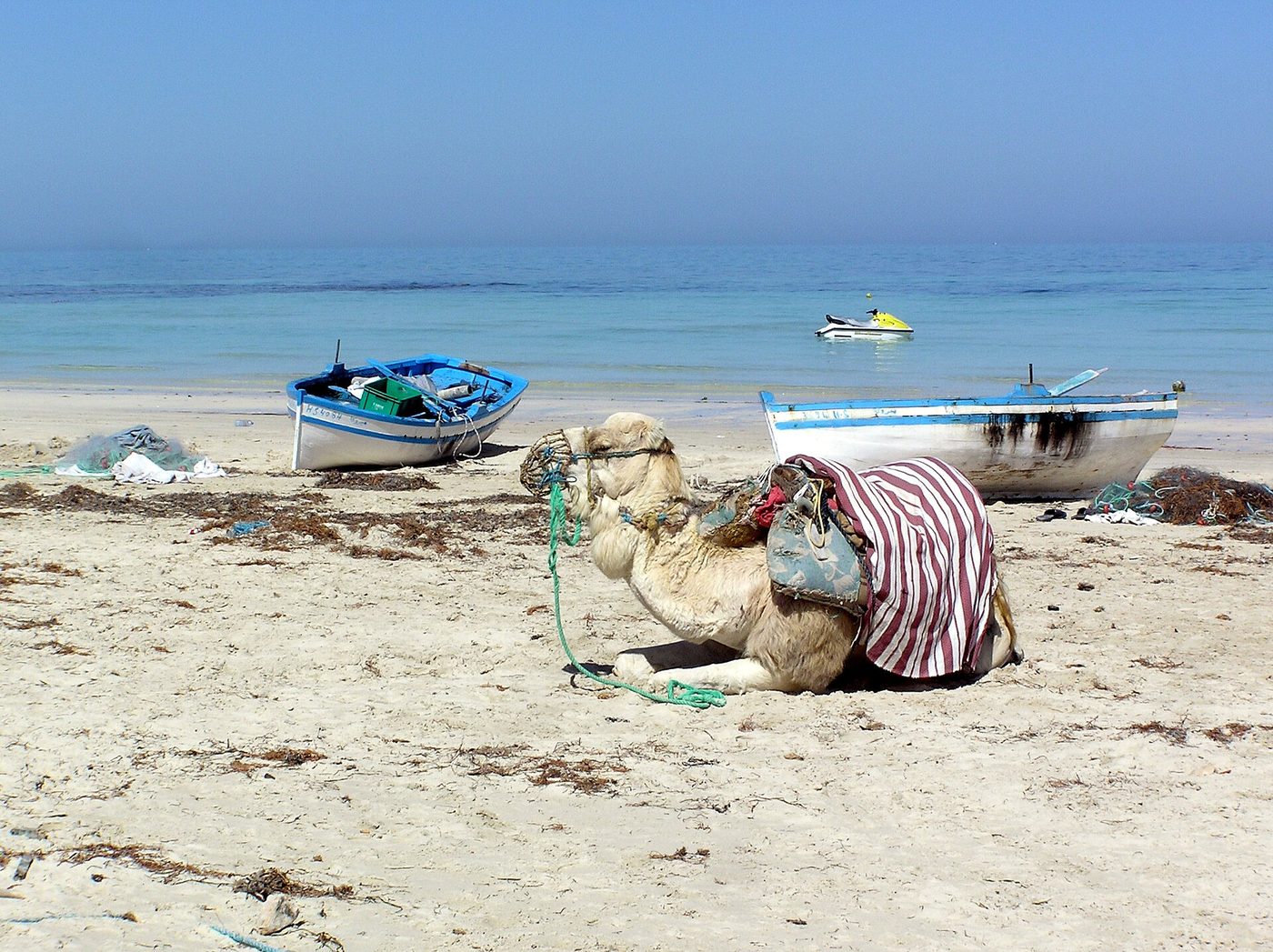
On the popular beaches you’ll be offered camel and horse rides, jet skis, boat trips and sunglasses, sometimes persistently. It’s rarely aggressive and a polite, firm “no thank you” works, but it’s part of the texture of a busy Tunisian beach. The quieter beaches — Sidi Jmour, Borj Jillij — are almost free of it. For the wider picture on friendly-but-persistent selling, our Tunisia travel tips are worth two minutes before you fly.
Watersports: kitesurfing, windsurfing and boat trips
Djerba is quietly one of the Mediterranean’s better watersports islands, largely thanks to that south-eastern lagoon. Here’s the honest rundown of what’s on offer.
- Kitesurfing and windsurfing. The Seguia / Sidi Garrous lagoon is shallow, flat and forgiving, with a steady thermal wind that typically builds through the afternoon from around spring to autumn — often in the region of 12–20 knots, stronger in high summer. That flat, shallow water makes it one of the friendliest places in the region to learn, and there are several schools hiring kit and running lessons.
- Best wind seasons. Riders generally rate April to June and September to November for reliable, manageable wind, with July and August windier and better suited to confident riders. The lagoon works for beginners because there’s no real current and you can usually stand up.
- Boat trips and snorkelling. The calm, clear water lends itself to gentle boat excursions — the Flamingo Island trips from Houmt Souk are the classic — plus paddleboarding and pedalos off the main hotel beaches. It’s not a serious dive or big-surf destination; the appeal is easy, warm-water pottering.
- Pedalos, parasailing and camel rides. The serviced beaches at Sidi Mahrez have the full holiday-beach menu. Agree a price before you get on anything, and expect the first quote to be optimistic.
A note on money throughout: the Tunisian dinar is a closed currency, so you can’t buy it before you fly and can’t take it home — you change money on arrival and convert leftover cash back before departure. Reckon on very roughly £1 to 3.8–3.9 dinars in mid-2026, but check the current rate, and agree watersports prices up front rather than after.
When to go: Djerba sea temperatures month by month
Djerba’s beaches only really come alive when the sea warms up, and that window is wider here than on Tunisia’s north coast. Here’s the rough shape of the year — treat every figure as a typical average rather than a guarantee, because any given week can run warm or cool.
| Month | Approx. sea temp | Beach verdict |
|---|---|---|
| January | ~16°C | Too cold to swim; walks and sun only |
| February | ~15°C | Coldest sea of the year |
| March | ~16°C | Bracing; wetsuit weather for watersports |
| April | ~17–18°C | Warming, but chilly for swimming |
| May | ~19–20°C | Swimmable for the hardy; lovely on the sand |
| June | ~23°C | Comfortable swimming, fewer crowds |
| July | ~26°C | Warm sea, peak season, busiest beaches |
| August | ~28°C | Warmest of all; hot, busy, bath-like sea |
| September | ~26°C | Our sweet spot — warm sea, thinning crowds |
| October | ~24–25°C | Still swimmable, quiet, good value |
| November | ~21°C | Cooling fast; borderline for swimming |
| December | ~18°C | Too cold to swim; mild for walks |
In short, the reliable swimming season runs from about June to October, peaking in August. If we had to pick, we’d take Djerba in June or Djerba in September for the best balance of warm sea and thinner crowds — the shoulders of the season, when the sand isn’t packed and the water is still lovely. For the full month-by-month picture across the country, our guide to the best time to visit Tunisia lays it all out.
How to reach the beaches (and the public-access rules)
Getting between beaches on Djerba is straightforward. The island is flat, compact and joined to the mainland by a Roman-era causeway, and most visitors fly into Djerba–Zarzis International Airport (DJE), a short hop from the hotel zone. TUI runs seasonal direct flights from the UK to Djerba, though routes change season to season, so check current schedules when you book.
On the ground, yellow taxis are cheap and the easiest way to reach the beaches — insist on the meter (the “compteur”) or agree a fare first, because tourists are routinely quoted several times the going rate, and hotel-arranged cars cost noticeably more than a flagged-down taxi. For the outlying beaches like Borj Jillij, Sidi Jmour or Sidi Yati, a day’s car hire opens the island up and is the only realistic way to string several together. Our guide to getting around Tunisia covers taxis, car hire and the local quirks.
The rule worth repeating: every beach on Djerba is legally public. Hotels can reserve their loungers, but not the sand, so you’re free to walk the entire coast and settle wherever you like on the open beach. On safety, Djerba is one of Tunisia’s most established and reassuringly low-key resort islands — we cover the detail, including the exact Foreign Office wording, in our guide to whether Djerba is safe.
Which Djerba beach is right for you?
To pull it together, here’s the quick match-up we’d give a friend at the airport:
- Families with young children: Sidi Mahrez for full facilities, or Aghir for the same warm shallows with more space and fewer crowds.
- Couples and photographers: Borj Jillij for sunset and Sidi Jmour for wild, quiet sand.
- Kitesurfers and windsurfers: the Seguia / Sidi Garrous lagoon, no contest.
- A once-a-trip wow moment: the Ras Rmel (Flamingo Island) boat trip, ideally early in the morning.
- Beach plus culture: Houmt Souk town beach, then the medina and fort; or Sidi Yati paired with Guellala’s potteries.
- Lap-swimmers wanting deep water: honestly, Djerba’s gentle shelving may frustrate you — set expectations, or head out on a boat for deeper water.
Still weighing Djerba against the mainland resorts? Our head-to-head on Djerba or Hammamet compares the beaches, the vibe and the value, and the bigger question of whether the island earns a week of your holiday is one we tackle in is Djerba worth visiting.
Djerba beaches: your questions answered
Which is the best beach in Djerba?
For most holidaymakers, Sidi Mahrez (Sidi Mahres) is the best all-round beach — a long, soft, serviced strand along the hotel zone with warm, shallow water ideal for families. For sheer beauty, the Ras Rmel (Flamingo Island) sandspit wins, but it’s a boat trip from Houmt Souk rather than a beach you can walk to.
Are Djerba’s beaches sandy or pebbly?
Sandy. Djerba is a low, sandy island ringed by soft golden and white-sand beaches that shelve gently into shallow, warm water. There’s very little in the way of pebbles or rock, which is part of why it suits families and paddlers so well.
Is there seaweed on Djerba’s beaches?
Sometimes, yes. Bands of dried seagrass wash up along the tideline, more often after windy spells and in autumn. It’s a natural, protected part of the Mediterranean, so hotels can’t always remove it entirely — the better ones rake the worst away from the sunbeds. It varies a lot by beach and week, so check recent reviews of your specific hotel.
Can you swim at Djerba’s beaches?
Yes, from roughly June to October, when the sea sits between about 23°C and 28°C. The water is shallow and calm rather than deep, so it’s better for paddling and gentle swimming than for anyone who wants to strike out into deep water quickly. Winter and early spring are too cold for comfortable swimming.
What is Flamingo Island in Djerba?
Flamingo Island, or Ras Rmel, is a long white sandspit reaching out from the north of the island, ringed by a shallow turquoise lagoon. It’s a protected wetland reached by boat from Houmt Souk, with no facilities on it. Flamingos gather there in winter, roughly late October to March; in summer you get the sandbar and lagoon but not the birds.
Are the beaches in Djerba free and public?
Yes. Every beach on Djerba is public by Tunisian law, so you can walk the whole coast and lay your towel on the open sand for free. Hotels reserve their own sun loungers and parasols for guests, but they don’t own the beach itself, and non-guests can often buy a day pass to use a hotel’s facilities.
Which Djerba beach is best for families with children?
Sidi Mahrez and Aghir are the top family choices, thanks to their soft sand and very shallow, warm, gently shelving water — you can wade a long way out and still be waist-deep. Sidi Mahrez has the most facilities; Aghir offers the same shallows with more room and fewer crowds.
Where can you kitesurf or windsurf in Djerba?
The Seguia and Sidi Garrous area on the south-eastern coast is Djerba’s watersports hub — a large, shallow, flat-water lagoon with a steady afternoon thermal wind. It’s a well-known kitesurfing and windsurfing spot with several schools, and the calm, standable water makes it good for beginners. Spring and autumn are the most reliable seasons.
Is the sea warm in Djerba?
In summer, very. The sea peaks around 28°C in August and stays above 25°C from July into October, warmer and for longer than on Tunisia’s north coast. In winter it drops to about 15–16°C, too cold for comfortable swimming, though the beaches are still pleasant for a walk.
Do you need a car to reach Djerba’s best beaches?
Not for the main hotel-zone beaches, which are on your doorstep or a cheap taxi ride away. But for the quieter outliers — Borj Jillij, Sidi Jmour, Sidi Yati — a day’s car hire is the only realistic way to reach several in one trip. Taxis are fine for one-off runs; just use the meter or agree the fare first.
When do the flamingos arrive at Ras Rmel?
Greater flamingos gather on and around Ras Rmel (Flamingo Island) during their winter migration, roughly from late October to March. If seeing the birds is the point of your trip, come in that window; if you visit in summer, you’ll still get the beautiful sandspit and lagoon, just without the flamingos.
Written by the Tunisia Tourism Guide team — an independent UK-focused guide to travelling in Tunisia. We don’t sell tours or take hotel commissions. Prices and advice were checked at publication; always confirm current details before you book.
Photo credits
All images via Wikimedia Commons, used with thanks: The long soft-sand hotel-zone strand of Sidi Mahrez beach on © Philippe HECKEL from France (CC BY 2.0); The white sandspit and shallow turquoise lagoon of Ras Rmel © Touzrimounir (CC BY-SA 4.0); The wide golden-sand beach at Aghir on the east coast © YayaKaufen (CC BY-SA 4.0); A quiet stretch of Djerba beach in Tunisia with palms © Henning Leweke from Kiel, Germany (CC BY-SA 2.0).