By the Tunisia Tourism Guide team · Last updated 10 August 2026 · We don’t sell tours or take hotel commissions — this is independent advice, written to be useful.
Djerba is really two holidays sharing one island, and the version you get depends almost entirely on where you unpack. Pick the wrong base and you’ll spend the week feeling like you never quite arrived.
Where to stay in Djerba comes down to one decision: base yourself in the Zone Touristique — the Sidi Mahres hotel strip, with the island’s best beach and the big all-inclusive resorts — or somewhere with more local life, like the capital Houmt Souk or Midoun. Families and first-timers usually pick the beach; couples and independent travellers choose the towns.
Neither is wrong. They’re just different trips, and the trade-off is the whole point of this guide. It sits inside our wider guide to the island of Djerba, so once you’ve settled on a base you can build the rest of the holiday around it. Below we walk through each area honestly — what it’s genuinely like, who it suits, and the catch nobody mentions in the brochure.
The short version: pick your base first
If you only read one thing, read this. It’s the matcher we’d sketch on a napkin for a friend who’d just booked flights and panicked about the hotel.
| If you want… | Best base | Why |
|---|---|---|
| The best beach and an easy all-inclusive | Zone Touristique (Sidi Mahres) | Longest, softest sand; most resorts; least effort |
| Real town life, restaurants, character | Houmt Souk | Working capital, converted-inn guesthouses, ferry port |
| Local markets and everyday island life | Midoun | Big Friday-into-weekend market, fewer tourists |
| Peace, space and a quieter beach | Aghir / Sidi Garous / the east | Resorts spread thin along calmer sand |
| Kids’ clubs and shallow pools in one place | Zone Touristique big resorts | Family facilities without leaving the grounds |
| Adults-only calm or a spa focus | Sidi Mahres thalasso resorts | Seawater spas, hushed pools, no children’s splash zone |
| To explore with a hire car | Houmt Souk or a villa | Central, walkable, easy to drive out from |
Bottom line: the Zone Touristique wins on beach and convenience, the towns win on character and value, and the island is small enough that you can base in one and dip into the others. The rest of this guide is the detail behind that sentence.
How Djerba fits together
Djerba is flat, roughly circular and about the size of the Isle of Wight, joined to the mainland by a Roman-era causeway in the south and a quick car ferry from Jorf in the south-west (the crossing itself is only around 15 minutes). Once you picture where things sit, the whole “where to stay” question gets much easier.
The Zone Touristique runs along the north-east coast, following Sidi Mahres beach. This is the hotel strip: a long ribbon of resorts, a few kilometres of sand, and not a great deal else besides the odd bar, shop and camel handler. Houmt Souk, the island’s capital, sits on the north coast, a short hop west of the strip. Midoun, the second town, is inland to the south-east. The airport (Djerba-Zarzis, code DJE) is over on the west side, and the quieter beaches trail down the east and south.
Distances are small. From the Sidi Mahres strip it’s only around ten to fifteen minutes by taxi into Houmt Souk, and a similar hop to Midoun. Even the further-flung sights — the street-art village of Djerbahood at Erriadh, or the pottery village of Guellala — are half-hour drives at most. Nowhere on Djerba is truly far from anywhere else, which is exactly why your choice of base is about atmosphere rather than logistics.
The Zone Touristique: the Sidi Mahres hotel strip
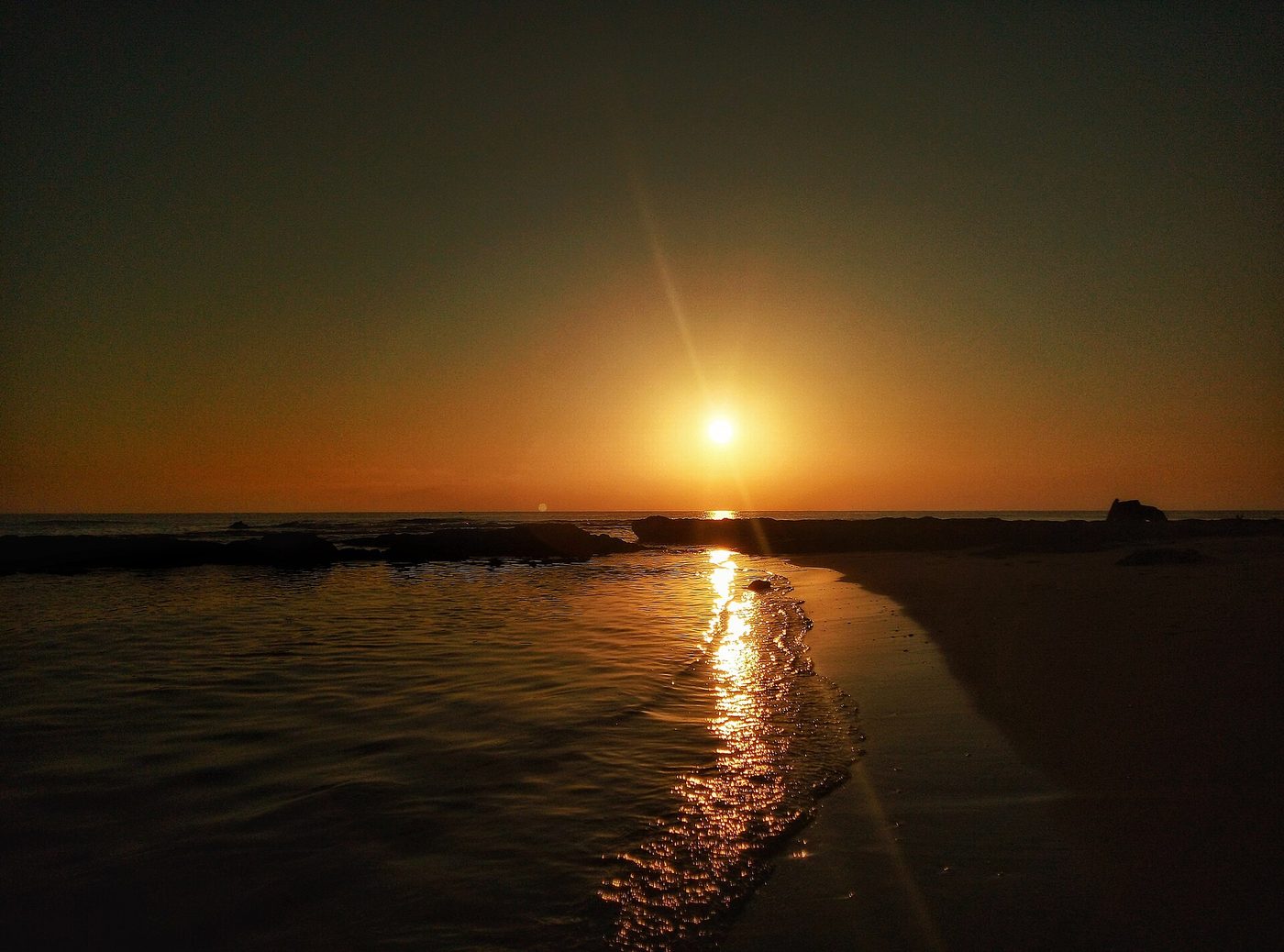
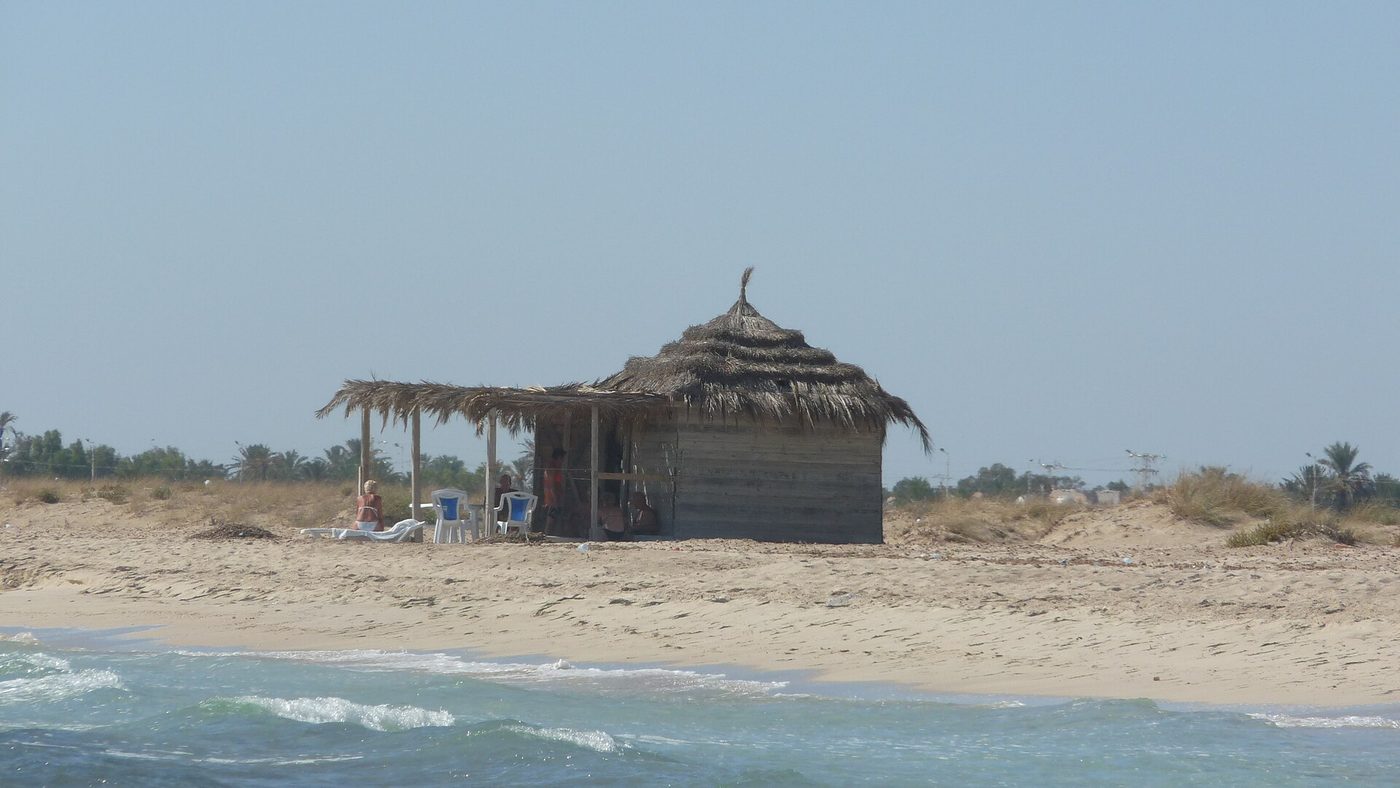
This is where the overwhelming majority of UK, French, German and Polish package holidaymakers stay, and for good reason. Sidi Mahres is the best beach on the island — a long, shallow, pale-sand bay with warm, calm water that’s ideal for children and nervous swimmers. If your holiday is essentially “beach, pool, buffet, repeat”, this strip does it better than anywhere else on Djerba.
What you get
The strip is wall-to-wall resorts, most of them all-inclusive, ranging from cheerful three-stars to genuinely smart five-stars. The names UK operators sell most often include the Radisson Blu Palace Resort & Thalasso, the Iberostar and Vincci properties, Djerba Plaza, Seabel Rym Beach and the upmarket Hasdrubal Prestige. Several are built around thalassotherapy — seawater spa — centres, which is a Djerba speciality and a big draw in the cooler months.
The appeal is effortlessness. You land, you transfer, and everything you need for a week is within the gates: pools, a private stretch of beach with loungers, evening entertainment, and food and drink already paid for. For a first trip to Tunisia, or a family who just want the logistics to disappear, that’s worth a lot. If you’re weighing up the resort names in detail, our roundup of the best all-inclusive hotels in Tunisia covers the island’s stronger properties.
The honest downsides
Here’s the part the brochures skip. The Zone Touristique is a bubble. It’s pleasant, but it’s not really Djerba — it’s a purpose-built resort corridor that could, bar the odd palm and camel, be almost any warm-weather package destination. Step outside the gates and there’s no charming town to wander into; just the road, a scattering of tourist shops, and more hotels.
You’ll also meet Djerba’s version of resort-strip hassle: beach vendors, quad-bike touts and the occasional over-friendly “do you remember me?” opener designed to steer you toward a shop. It’s low-level and rarely threatening, but it’s there. And because the strip is spread out, getting to Houmt Souk or Midoun for dinner means a taxi each way — cheap, but a faff if you’d rather stroll. If genuine local texture matters to you, read the honest case in our guide to whether Djerba is worth visiting before you commit to a week behind the gates.
What a UK all-inclusive package actually gets you
Most people who ask us about Djerba all-inclusive deals are picturing the Spanish or Turkish version. Tunisia is a little different, and it’s worth knowing before you book so you’re not caught out.
Broadly, all-inclusive here covers your buffet meals, snacks at set times, and locally produced drinks — the local Celtia lager, Tunisian wine, soft drinks and spirits made with local brands. Imported names and premium spirits usually cost extra. Star ratings run generous: a Djerba “four-star” often feels like a comfortable British three, so read recent reviews of your exact hotel rather than trusting the number. Food is plentiful but can be samey by day five, which is another quiet argument for basing somewhere you can walk out to a proper restaurant.
Here’s how the common board options actually stack up, and who each suits:
| Board basis | What it covers | Best for |
|---|---|---|
| All-inclusive (AI) | Buffet meals, snacks, local-brand drinks, most facilities | Families, budgeters, dedicated sunlounger-and-pool weeks |
| Half-board (HB) | Breakfast and dinner; lunch and drinks extra | People who’ll eat out in Houmt Souk or Midoun a few nights |
| Bed & breakfast (B&B) | Breakfast only | Town stays, foodies, anyone exploring the island properly |
Our companion guide on how Tunisia all-inclusive holidays work goes deeper on the concept, tipping culture and the little extras that aren’t included. The short version: all-inclusive is superb value on Djerba, but it quietly discourages you from leaving — so if you’ve come for the island, consider half-board.
Houmt Souk: staying in the real capital
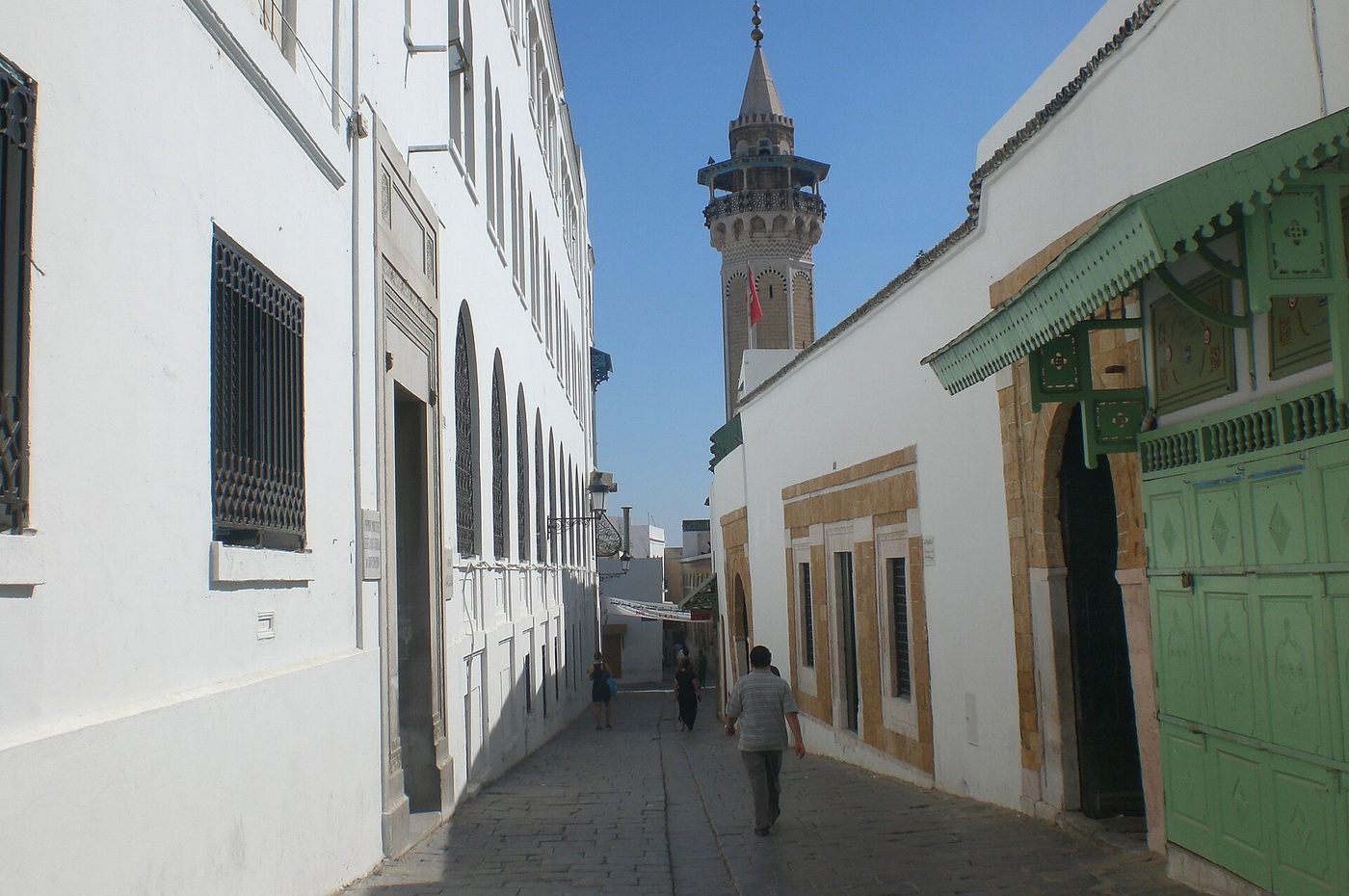
If the Zone Touristique is the easy answer, Houmt Souk is the rewarding one. This is Djerba’s working capital — a genuinely lived-in town of whitewashed lanes, a daily fish market, a Spanish-built fort by the harbour, and a knot of old fondouks (former merchant inns) now turned into cafés and small hotels. Evenings here are the island at its best: families out strolling, seafood restaurants filling up, and not a wristband in sight.
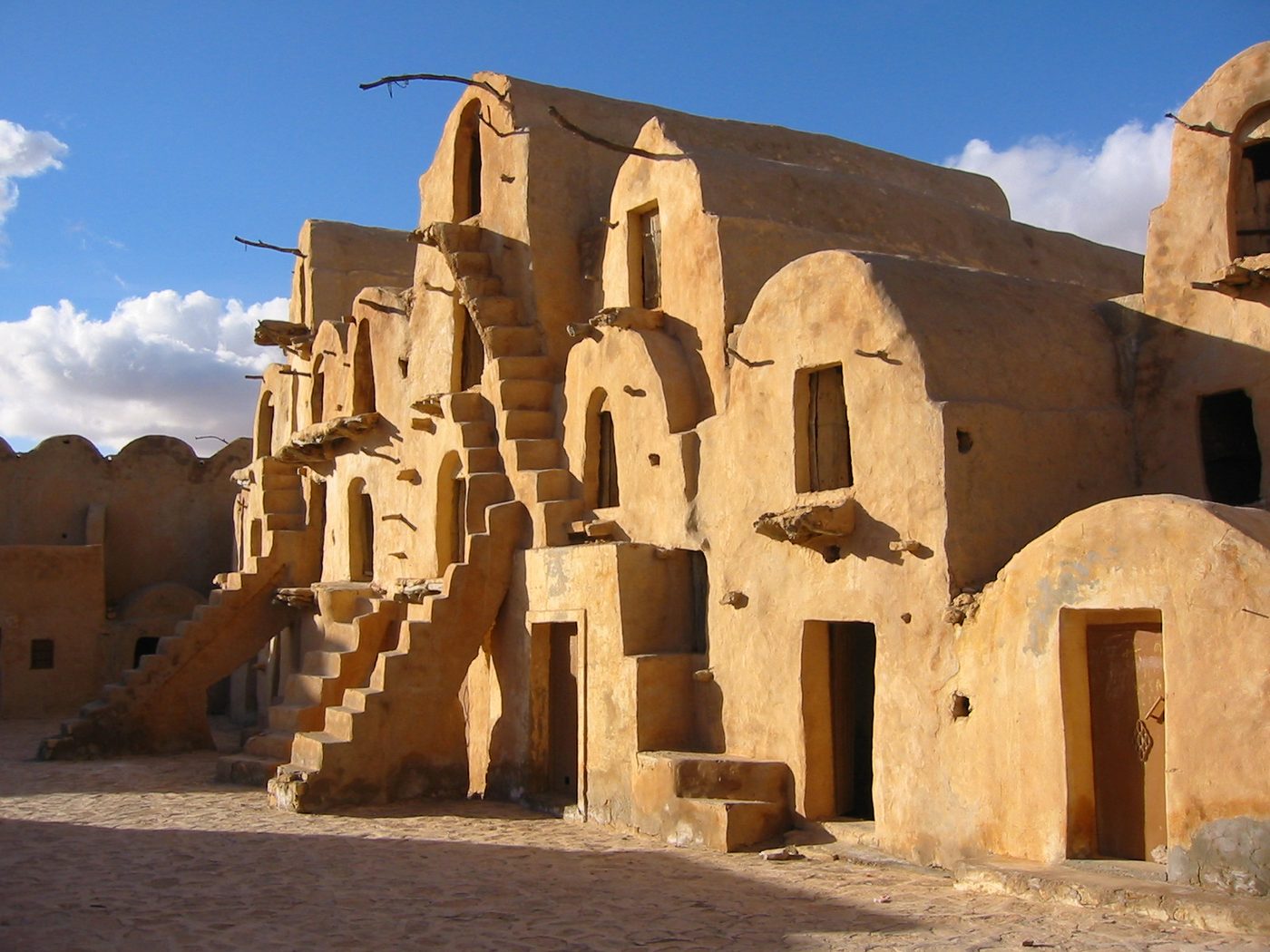
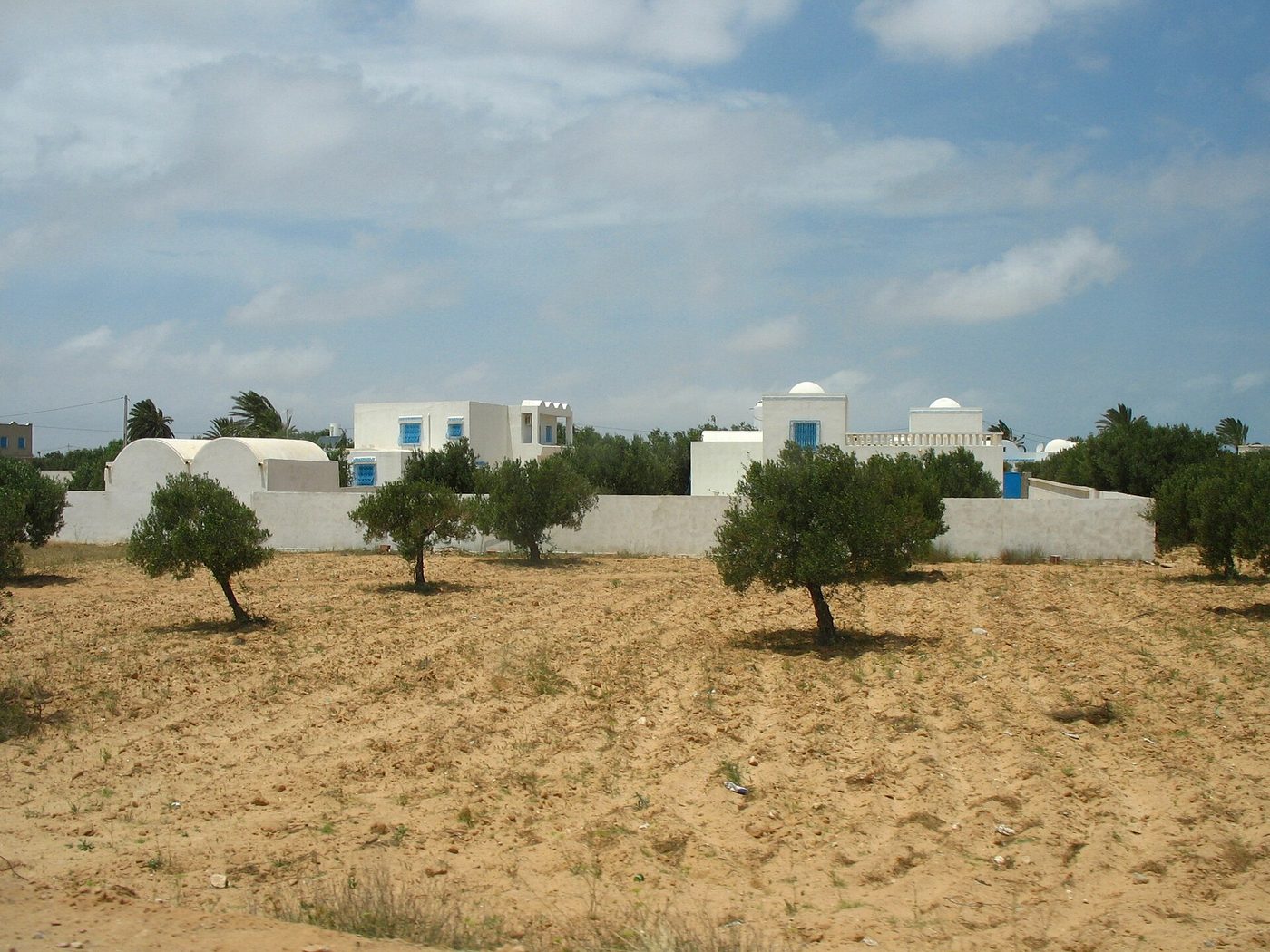
Staying in town usually means a small guesthouse or a converted dar or fondouk rather than a mega-resort — places like the well-known Dar Dhiafa, built around a traditional courtyard. You trade the private beach and the all-you-can-drink bar for character, better food on your doorstep, and prices that tend to undercut the resorts. The catch is the obvious one: the beach isn’t at the bottom of the garden. The nearest good swimming is a short, cheap taxi ride toward Sidi Mahres, so this base suits people for whom the town is the point and the beach is a bonus.
We think Houmt Souk is the smartest choice for couples, second-time visitors and anyone who found resort-strip holidays a bit airless. It’s also the easiest base if you’re hiring a car, because you’re central and can drive out to the beaches rather than the other way round. We’ve given the town its own full write-up in our Houmt Souk guide, and the swimming options in our roundup of Djerba’s beaches.
Midoun and the eastern side
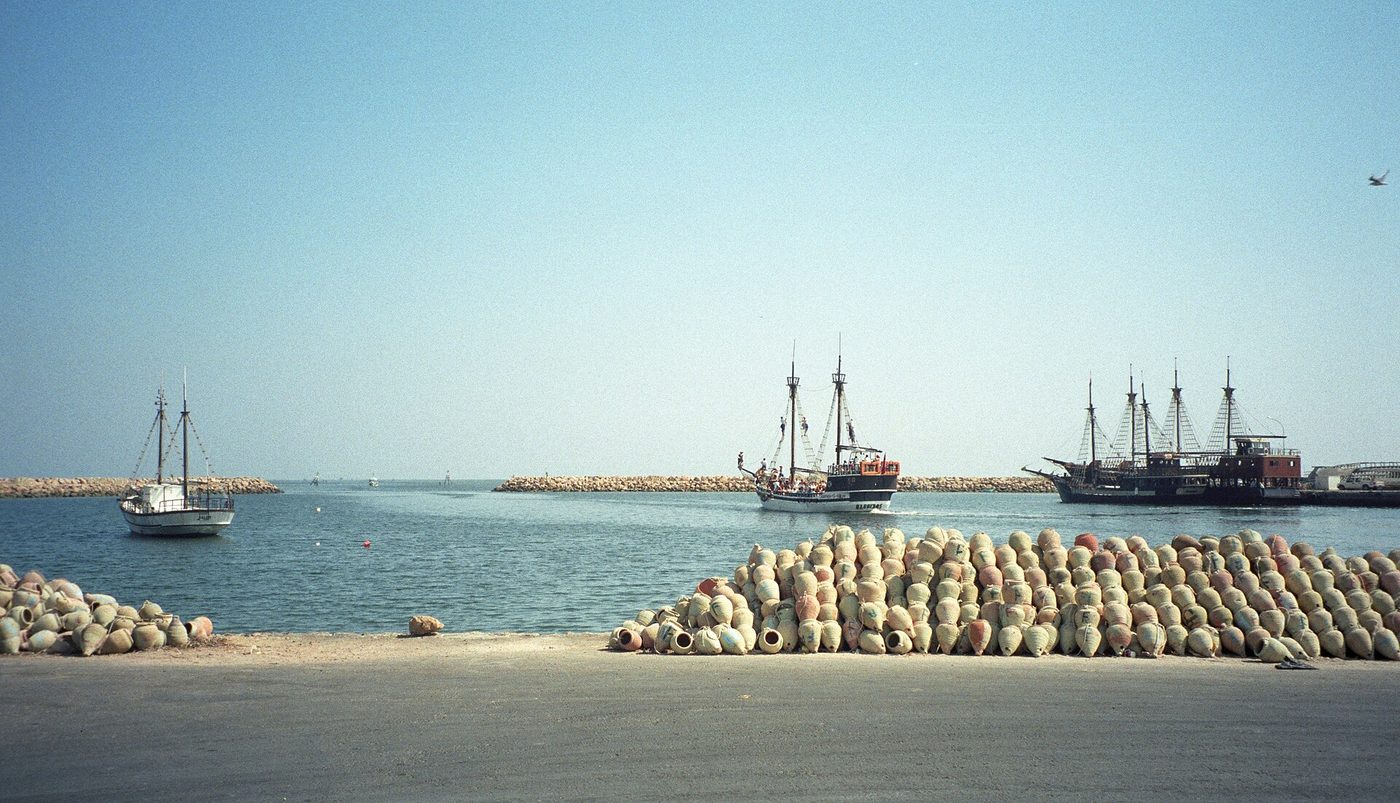
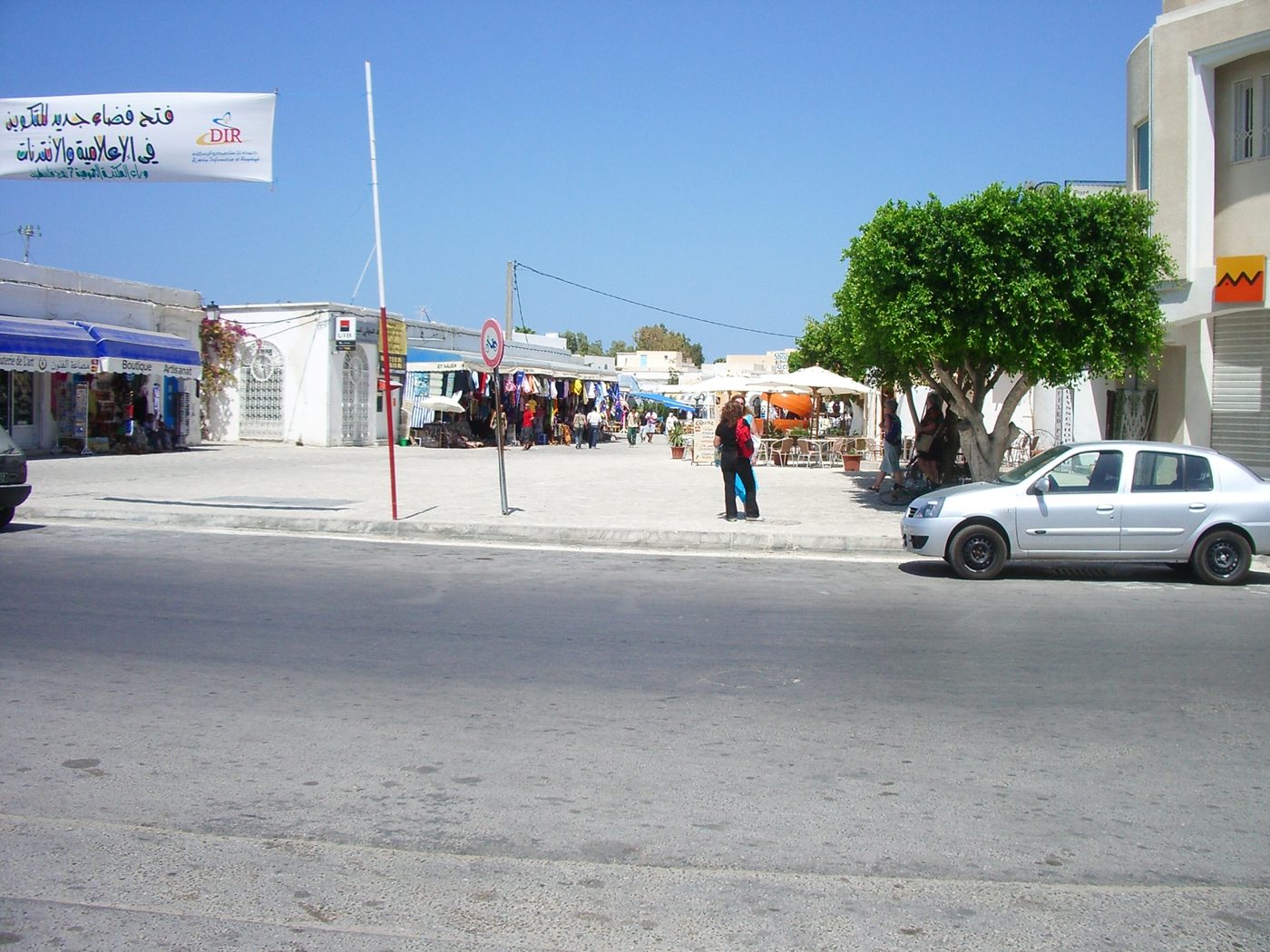
Midoun is Djerba’s second town and its market capital — smaller, plainer and less touristy than Houmt Souk, which is exactly its charm. The big event is the weekly market, which spills through the town from Thursday afternoon into the weekend: fruit, vegetables, spices and dates on one side, great heaps of clothes to rummage and haggle over on the other. It’s local life rather than a tourist show, and all the better for it.
Few people base themselves in the town of Midoun itself — there’s little in the way of hotels in the centre — but the wider eastern side of the island around it has its own scatter of beach resorts, and a stay here puts you within easy reach of the market and the quieter sands. If you want the island’s everyday rhythm and cheap, excellent street food (the local fricassé sandwich is a must), Midoun is the day-trip you’ll remember, and a reasonable orientation for a car-based stay.
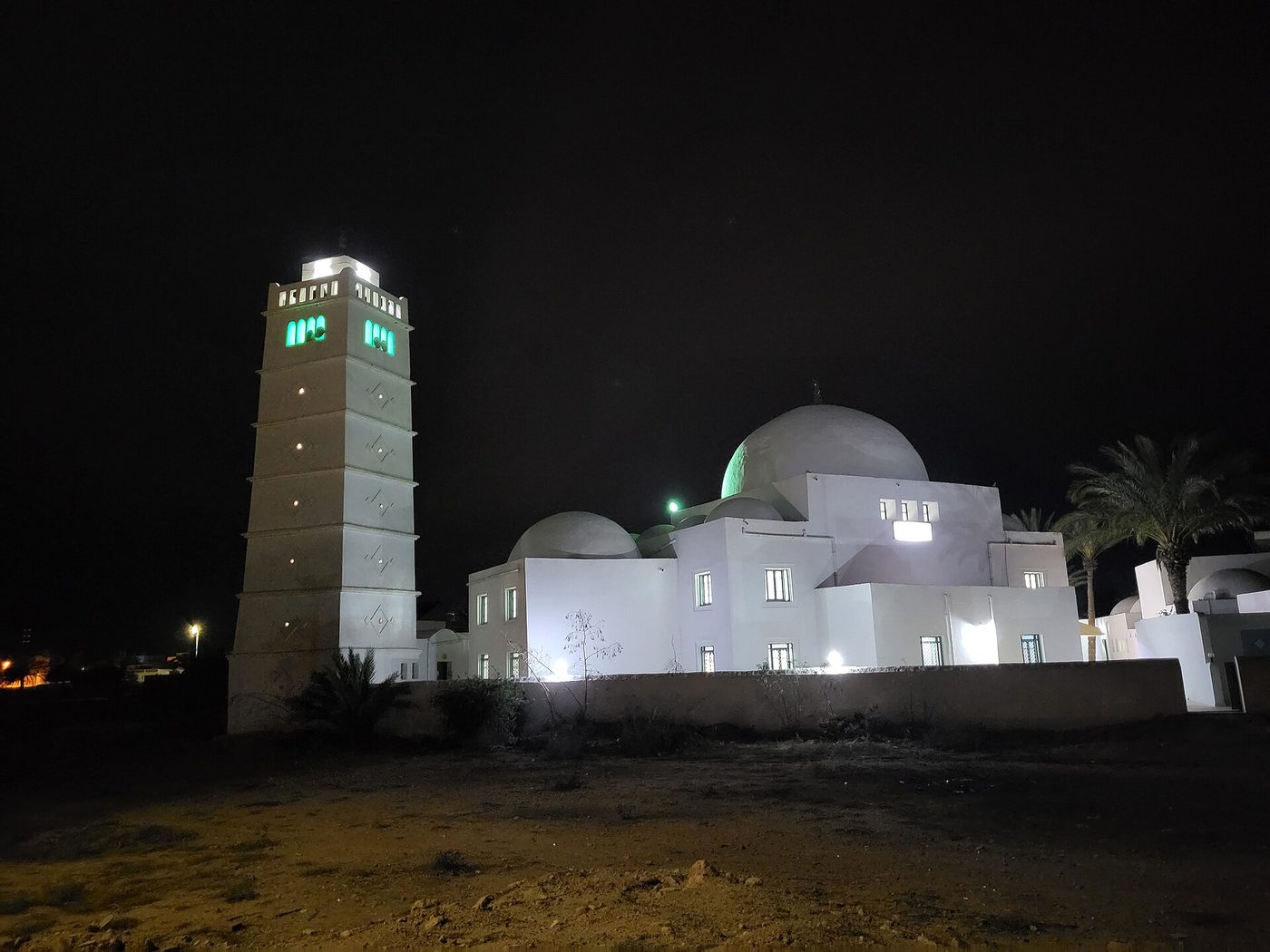
The eastern and southern coasts — around Aghir and Sidi Garous — are where you’ll find the more spread-out resorts and calmer, emptier beaches. They’re quieter than Sidi Mahres, with less on the doorstep, which is either a drawback or the entire appeal depending on your temperament. For a slow, do-nothing week away from the busiest strip, they’re worth a look.
Best area for… families, couples and independent travellers
Most of the “where do we stay” panic comes down to who’s actually going. Here’s how we’d steer each type of traveller.
- Families: the big Sidi Mahres resorts, no contest. Kids’ clubs, shallow pools, the safest swimming on the island and everything paid for up front. Djerba’s gentle pace suits younger children, and our guide to Tunisia’s family resorts flags the properties that get the details right.
- Couples wanting a resort: the thalasso five-stars on the strip, or one of the adults-only hotels in Tunisia that dot the island — TUI’s adults-only Palm Beach Palace is the best-known. You get calm pools and a spa without a splash zone next door.
- Couples wanting character: a dar or fondouk guesthouse in Houmt Souk. Better food, more atmosphere, and the town on your doorstep for an evening wander.
- Independent travellers and explorers: Houmt Souk with a hire car, or a rented villa. Central, flexible, and you set your own pace rather than the resort’s.
- Winter-sun seekers: a thalasso resort on the strip. Djerba is one of the warmer UK winter-sun bets, though it’s mild rather than hot — see our honest take on Tunisia for winter sun before you pack shorts.
If you’re still torn between Djerba and the mainland resorts entirely, our head-to-head on Djerba or Hammamet weighs the island against the coast, and the broader where to stay in Tunisia guide zooms right out.
Getting around once you’re there
Your base decision is easier once you know how simple it is to move around. Djerba is flat and compact, and you’ve got a few options.
Taxis are the default: cheap, plentiful yellow cars you can wave down almost anywhere. For short hops within town, insist on the meter — the compteur — because tourists are routinely quoted a flat rate several times the real fare. For longer island crossings a driver may prefer to agree a price up front, which is fair enough; just settle it before you set off. Note that there’s no Uber, Bolt or Careem anywhere in Tunisia, Djerba included.
Car hire is the move if you want to see the real island — Guellala’s potteries, the quiet western beaches, Djerbahood, the flamingo lagoons. The island’s flat, quiet roads make it one of the gentler places in Tunisia to drive. The usual firms (Europcar, Avis, Budget and local outfits) operate from the airport and the resorts; minimum age is generally 21, and speed limits run to about 50km/h in towns and 90km/h on the open road. A central base like Houmt Souk makes a car most worthwhile.
One money note that trips up first-timers: the Tunisian dinar is a closed currency. You can’t buy it before you fly and you can’t take it home, so you change money on arrival and spend or convert it back before departure. Reckon on very roughly £1 to 3.8–3.9 dinars in mid-2026, but check the current rate. Our wider notes on getting around Tunisia cover the practicalities in more depth.
Is Djerba a safe place to stay?
Yes — reassuringly so. Djerba is one of the safest places a UK visitor can holiday in Tunisia: an island, physically separate from the mainland, with a long tourism history and a relaxed, welcoming feel. Petty opportunism (overcharging, pushy sales) is the main annoyance rather than any real danger, and normal holiday common sense covers it.
On the official picture, the UK Foreign Office advice is worth reading properly, because the headlines can mislead. The FCDO “advises against all travel to the Chaambi Mountains National Park and the designated military operations zones of Mount Salloum, Mount Sammamma and Mount Mghila; and against all but essential travel to parts of the interior including Kasserine Governorate (including the town of Sbeitla), and to within 75km of the Tunisia–Libya border, including Remada and El Borma but excluding Zarzis, the C118 road and all areas in Medenine Governorate north of the road.” That was still current at 19 June 2026 (last updated 23 February 2026).
The key point for anyone booking a bed on the island: Djerba — along with nearby Zarzis — sits in Medenine Governorate, north of the C118, and is explicitly excluded from that border advisory. In other words, the place you’d actually stay is outside the warning zone, not inside it. We lay all this out, with the current wording and dates, in our dedicated guide to whether Djerba is safe.
One health note while we’re on practicalities: your UK GHIC card is not valid in Tunisia, and public healthcare is thin outside the private clinics, so comprehensive travel insurance with medical cover is essential rather than optional. Check the NHS’s TravelHealthPro Tunisia page for the current health advice before you travel.
How to choose: our honest take
If we had to boil six sections into one recommendation, it’s this. First-timers, families and anyone who mainly wants sun, sand and no hassle should book an all-inclusive on the Sidi Mahres strip and not overthink it — the beach is the island’s best and the value is hard to beat. Couples, returning visitors and independent-minded travellers should stay in Houmt Souk, hire a car for a day or two, and treat the beach as an outing rather than the whole holiday.
The mistake we see most often is a curious, active traveller booking a big resort miles from anything, then feeling penned in by day three; and, less often, a family with young children booking a lovely town guesthouse and spending the week ferrying everyone to and from the sand. Match the base to the trip you actually want, and Djerba rarely disappoints. Whatever you choose, do the boring bits — insurance, a rough plan, a note of the dinar rate — before you fly, and the island will look after the rest.
Where to stay in Djerba: your questions answered
Where is the best area to stay in Djerba?
For most holidaymakers it’s the Zone Touristique along Sidi Mahres beach on the north-east coast — the island’s best sand and the biggest concentration of all-inclusive resorts. If you’d rather have local life, restaurants and character, base yourself in the capital, Houmt Souk, and treat the beach as a short taxi ride away.
Is it better to stay in Houmt Souk or the resort zone?
It depends on your holiday. The resort zone is easier, has the best beach and suits families and first-timers. Houmt Souk has more character, better food and lower prices, but the beach isn’t on the doorstep. Couples and independent travellers tend to prefer the town; sunlounger-and-buffet holidaymakers prefer the strip.
What is the Zone Touristique in Djerba?
It’s the purpose-built hotel strip along the north-east coast, following Sidi Mahres beach. It’s where most package resorts, private beach stretches and thalassotherapy spas are concentrated. It’s convenient and beach-focused, but self-contained — there’s no real town within it, so exploring the island means heading out by taxi or hire car.
Are Djerba hotels all-inclusive?
Most resort hotels on the Sidi Mahres strip offer all-inclusive, and it’s the way the majority of UK visitors book. All-inclusive here covers buffet meals, snacks and locally produced drinks; imported spirits and some extras cost more. Guesthouses in Houmt Souk usually run on a bed-and-breakfast basis, which suits people who want to eat out in town.
Is Midoun a good place to stay in Djerba?
Midoun is a great place to visit — especially for its Thursday-into-weekend market and cheap street food — but there’s little accommodation in the town centre itself. Most people stay on the beach strips nearby or in Houmt Souk and treat Midoun as a day trip. It’s the spot for everyday island life rather than resort comforts.
How far is the hotel zone from Houmt Souk?
Not far at all — roughly ten to fifteen minutes by taxi from the Sidi Mahres strip into Houmt Souk. Djerba is small and flat, so the town, the market at Midoun and the main beaches are all short, cheap hops apart. That’s why your choice of base is more about atmosphere than distance.
Do I need a hire car in Djerba?
Not if you’re staying on the resort strip for a pure beach week — taxis cover everything cheaply. But if you want to explore Guellala’s potteries, the quiet western beaches, Djerbahood or the lagoons, a hire car is the most flexible way to do it. The island’s flat, quiet roads make it one of the easier places to drive in Tunisia.
Which Djerba resorts are best for families?
The larger all-inclusive properties along Sidi Mahres, which pair kids’ clubs and shallow pools with the island’s safest swimming. Djerba’s gentle pace also suits younger children. Read recent reviews of your exact hotel, as standards and refurbishments vary, and see our Tunisia family resorts guide for the properties that consistently get it right.
Are there adults-only hotels in Djerba?
Yes. Several resorts operate adults-only, the best-known being TUI’s Palm Beach Palace. They offer calmer pools, quieter atmospheres and often a spa focus, without a children’s splash area next door. They suit couples wanting a peaceful base while still being on the island’s better beach stretches.
When do Djerba’s hotels close for winter?
Some resort hotels reduce operations or close over the quietest winter months, roughly November to March, though many stay open year-round for the thalasso-spa trade. If you’re booking a winter break, confirm your specific hotel is open for your dates. Djerba is one of Tunisia’s milder winter options, but it’s warm-ish rather than hot.
Is Djerba good for a winter-sun holiday?
It’s one of Tunisia’s better winter-sun bets — mild, bright days and a strong thalassotherapy-spa scene make it popular from November onwards. Just set expectations: this is gentle winter warmth, not guaranteed beach weather, and the sea is cool. Our Tunisia winter-sun guide is honest about what the season actually delivers.
Is it safe to stay in Djerba?
Djerba is very safe for tourists — an island with a long, relaxed tourism history, well away from the border and mountain zones the Foreign Office warns about. Djerba and Zarzis sit north of the C118 in Medenine Governorate and are explicitly excluded from the Libya-border advisory. Take normal precautions, and take out travel insurance, as the UK GHIC isn’t valid here.
Written by the Tunisia Tourism Guide team — an independent UK-focused guide to travelling in Tunisia. We don’t sell tours or take hotel commissions. Prices and advice were checked at publication; always confirm current details before you book.
Photo credits
All images via Wikimedia Commons, used with thanks: The long sandy beach at Sidi Mahres in Djerba’s Zone © Philippe HECKEL from France (CC BY 2.0); A whitewashed lane in the old town of Houmt Souk © Jaume Ollé (CC BY 2.5); The town of Midoun © Nagaboussi (CC BY 4.0); A traditional Djerban dar or menzel with a courtyard © SuperManu (CC BY-SA 3.0).