By the Tunisia Tourism Guide team · Last updated 9 August 2026 · We don’t sell tours or take hotel commissions — this is independent advice, written to be useful.
Every summer a version of the same question lands in our inbox: the flights to Djerba look cheap, the photos look idyllic, but is the island actually any good — or a bit of a gamble?
So here’s the honest answer. Is Djerba worth visiting? For most UK holidaymakers, yes — if you want warm, reliable beach weather, genuine island culture and standout value, with the Sahara and Star Wars country a day trip away. It’s not the place for lively nightlife or polished five-star gloss. Match it to a relaxed, curious trip and it delivers.
This is the on-the-fence conversation we’d have with a friend about the island of Djerba — the real draws, the downsides UK visitors actually report, and a plain “who it’s for and who it isn’t.” It’s the Djerba-specific companion to our broader take on whether Tunisia is worth visiting, and it’ll help you decide before you part with a deposit.
The short answer: a quick verdict
If you only read one thing, read this. It’s the summary we’d give at the airport.
| Book Djerba if you want… | Give it a miss if you want… |
|---|---|
| Warm, reliable sun and a calm, shallow sea | A buzzing, late-night party-resort scene |
| Genuine island culture — souks, potters, street art | Faultless five-star, Dubai-grade service |
| Some of the best value in the Mediterranean | Spotless pavements and slick infrastructure |
| A relaxed, flat, easy-going island to potter round | Big-hitter sightseeing on your doorstep, not a drive away |
| The Sahara and Star Wars country as day trips | Guaranteed depth for swimming off the beach |
Bottom line: Djerba is one of the cheapest, sunniest, most laid-back weeks you can book in the Med, and it rewards anyone happy to slow down and explore. It frustrates travellers expecting a polished party island. Here’s the honest detail behind that.

Why visit Djerba? The genuine draws
Let’s start with the good stuff, because there’s plenty of it, and it’s the reason most people should go.
Warm, reliable weather
Djerba sits off Tunisia’s south-east coast, and it’s one of the warmest, sunniest corners of the country. Summers are hot and dry — often into the mid-30s°C in July and August — and the shoulder seasons of spring and autumn stay pleasantly warm long after mainland Europe has cooled off. Even winter is mild and bright, if too cool for the beach.
That reliability is a big part of the appeal. The sea is swimmable from around June into October, peaking near 28°C in August, so you get a longer, safer beach window than most Mediterranean options. For the full month-by-month picture, our guide to the best time to visit Tunisia lays it out, and the island’s mild off-season makes it a fair shout for winter sun if you’ll settle for warmth over swimming.
Beaches and a calm, shallow sea
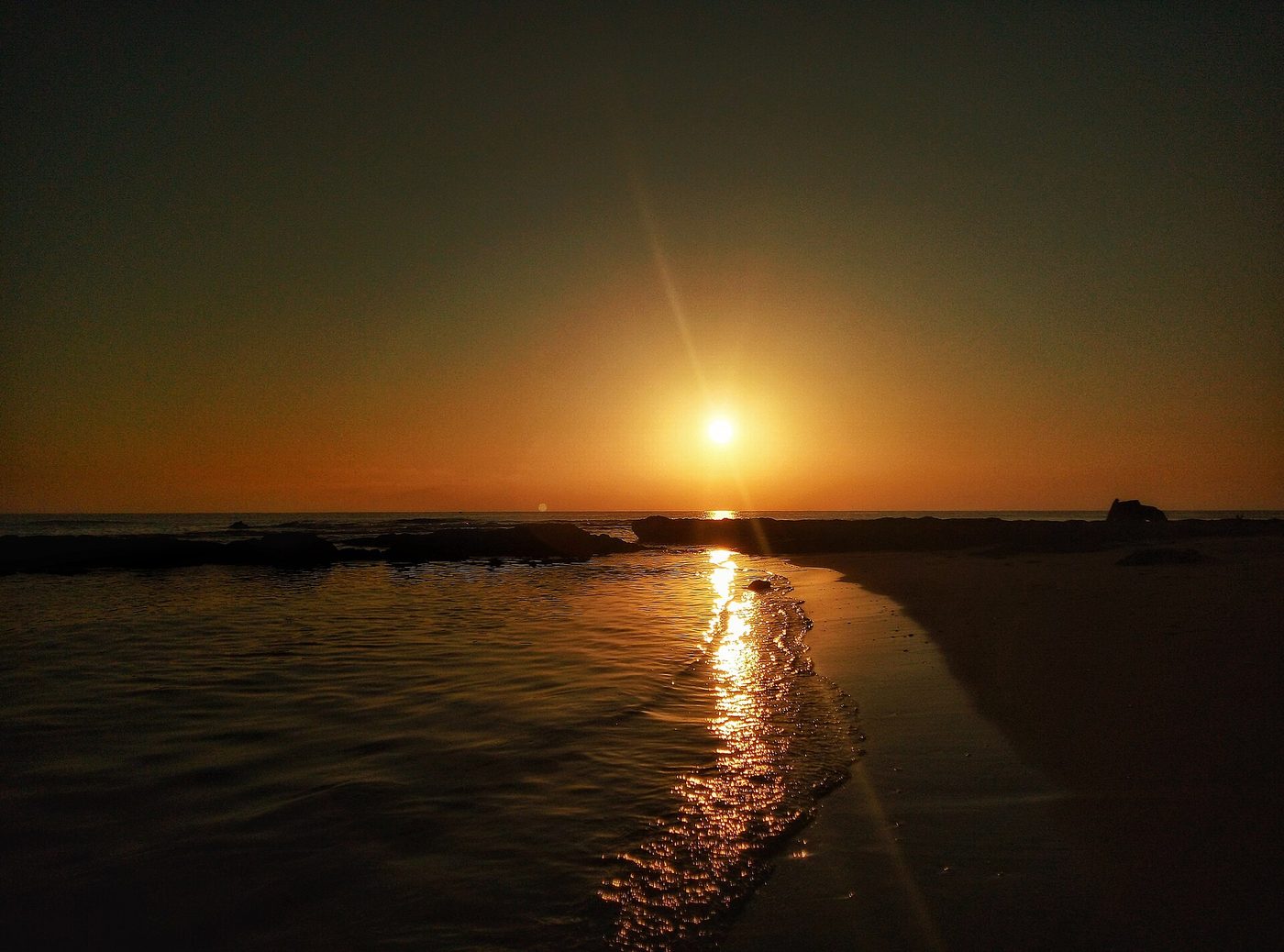
The coast is why most people come, and it delivers a particular kind of beach: long, soft, pale sand and warm, shallow, gently shelving water that’s brilliant for children and nervous swimmers. The hotel-zone strand at Sidi Mahrez is the headline, but there are quieter stretches at Aghir and wilder sand at Sidi Jmour and Borj Jillij if you’re willing to explore.
It isn’t flawless — some stretches are shallow for a long way out and pick up seaweed, and the best-serviced sand sits in front of the hotels — but there are genuinely lovely beaches here. We rank them honestly, downsides and all, in our guide to the best Djerba beaches, which sits alongside our wider roundup of Tunisia’s beaches.
Houmt Souk and real island life
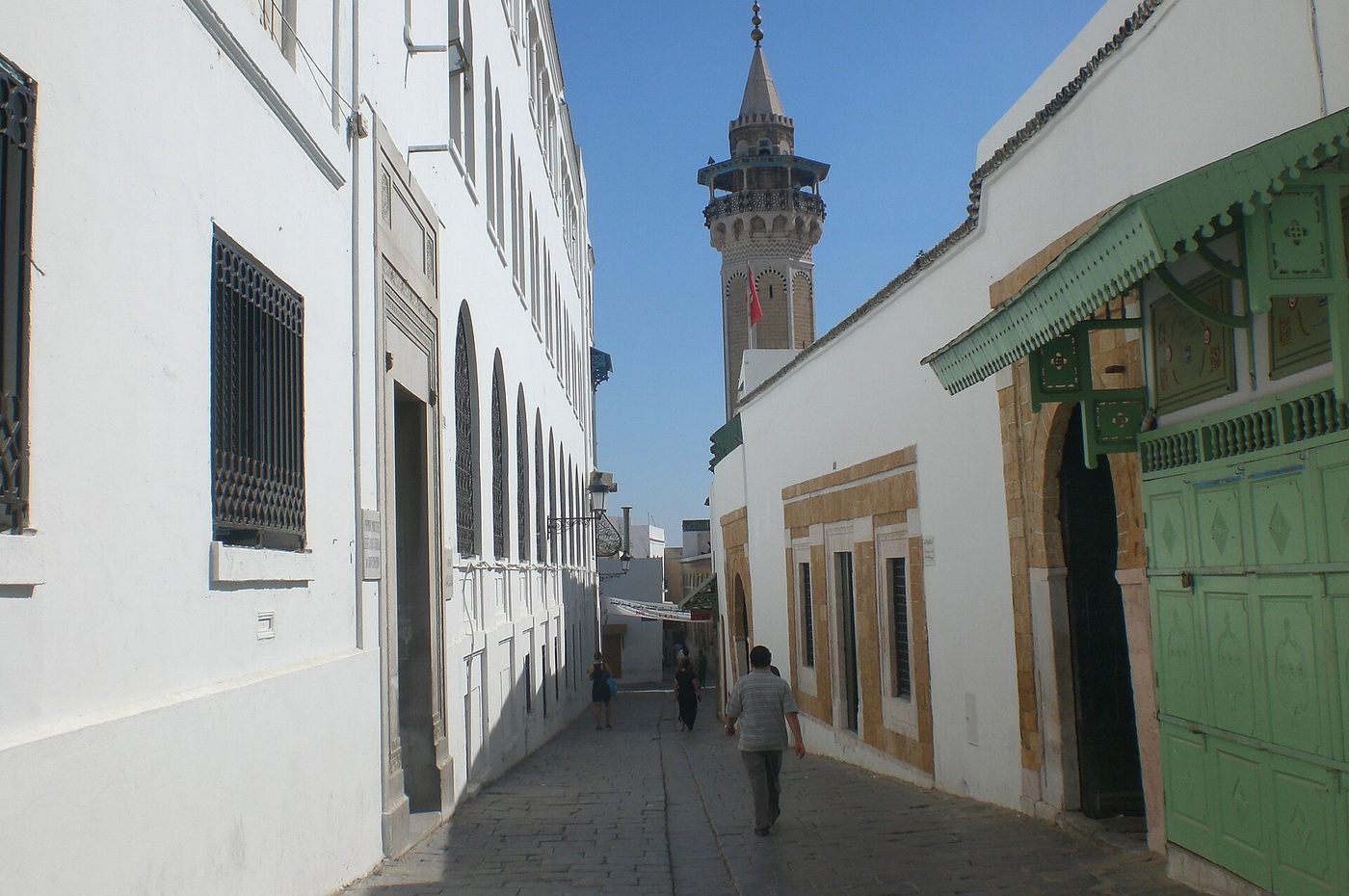
Djerba isn’t just a strip of resorts. Its capital, Houmt Souk, is a proper working town with a whitewashed medina, a daily fish auction, craft shops spilling with the island’s famous pottery, and the old Ghazi Mustapha fort (Borj el Kebir) guarding the harbour. It’s the kind of place you can wander for an afternoon and actually feel you’re somewhere, not just anywhere with a pool.
Beyond it, Midoun holds a big Friday market, and Guellala in the south has kept a pottery tradition that goes back to Roman times, plus a small museum of island life. Our full guide to Houmt Souk covers the medina, the fort and where to eat the day’s catch. This everyday, lived-in quality is what sets Djerba apart from a purely purpose-built resort.
Djerbahood — the street-art village
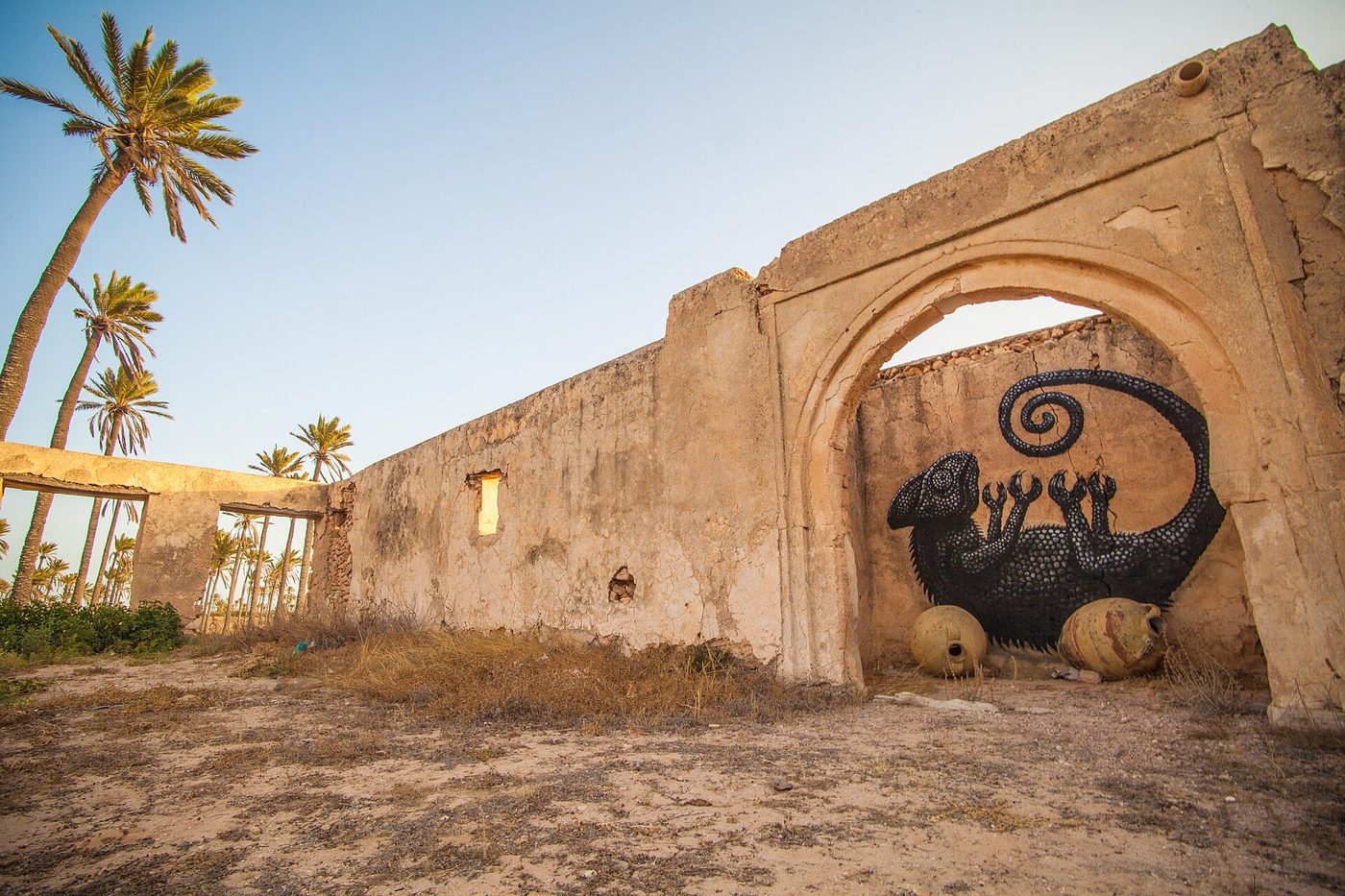
One of the island’s real surprises is Djerbahood, an open-air street-art project in the village of Erriadh. It began in 2014 when the French-Tunisian gallerist Mehdi Ben Cheikh invited more than a hundred artists from around thirty countries to paint the village’s walls — some 250 murals in all — turning a sleepy settlement into one of the more remarkable art walks in North Africa.
It’s free to wander, endlessly photogenic, and constantly changing as older works fade and new ones appear. If your idea of a good holiday includes a morning of something a bit different, it’s a highlight — we’ve a full guide to Djerbahood and how to visit.
El Ghriba and a rare religious coexistence
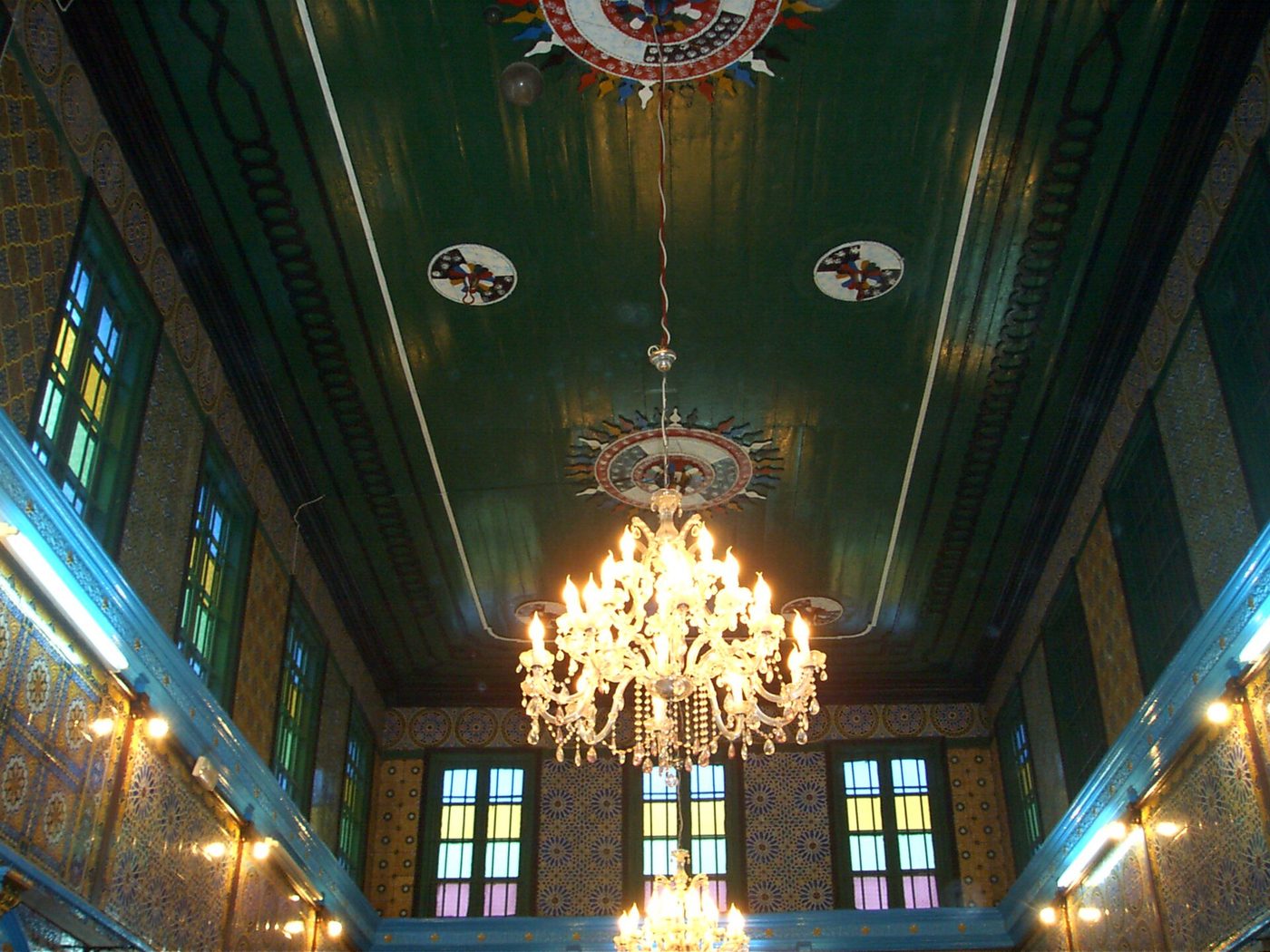
In the same village of Erriadh stands El Ghriba, by tradition the oldest synagogue in North Africa and, the community says, in near-continuous use for some 2,000 years. Once a year, at Lag BaOmer, it hosts one of the oldest Jewish pilgrimages still observed, drawing visitors from Israel, Europe and the wider diaspora. You can visit respectfully outside the pilgrimage too; modest dress and a head covering are expected.
It speaks to something bigger about Djerba. In 2023 the whole island was added to the UNESCO World Heritage List — not for a single monument, but for its cultural landscape: the way Muslim, Jewish and Christian communities, fortified Ibadi mosques, synagogues and olive groves have coexisted across the island for centuries. That layered history is a genuine reason to come, and it’s the sort of thing our guide to Tunisian food and culture only deepens once you’re there.
A launchpad for the Sahara and Star Wars country
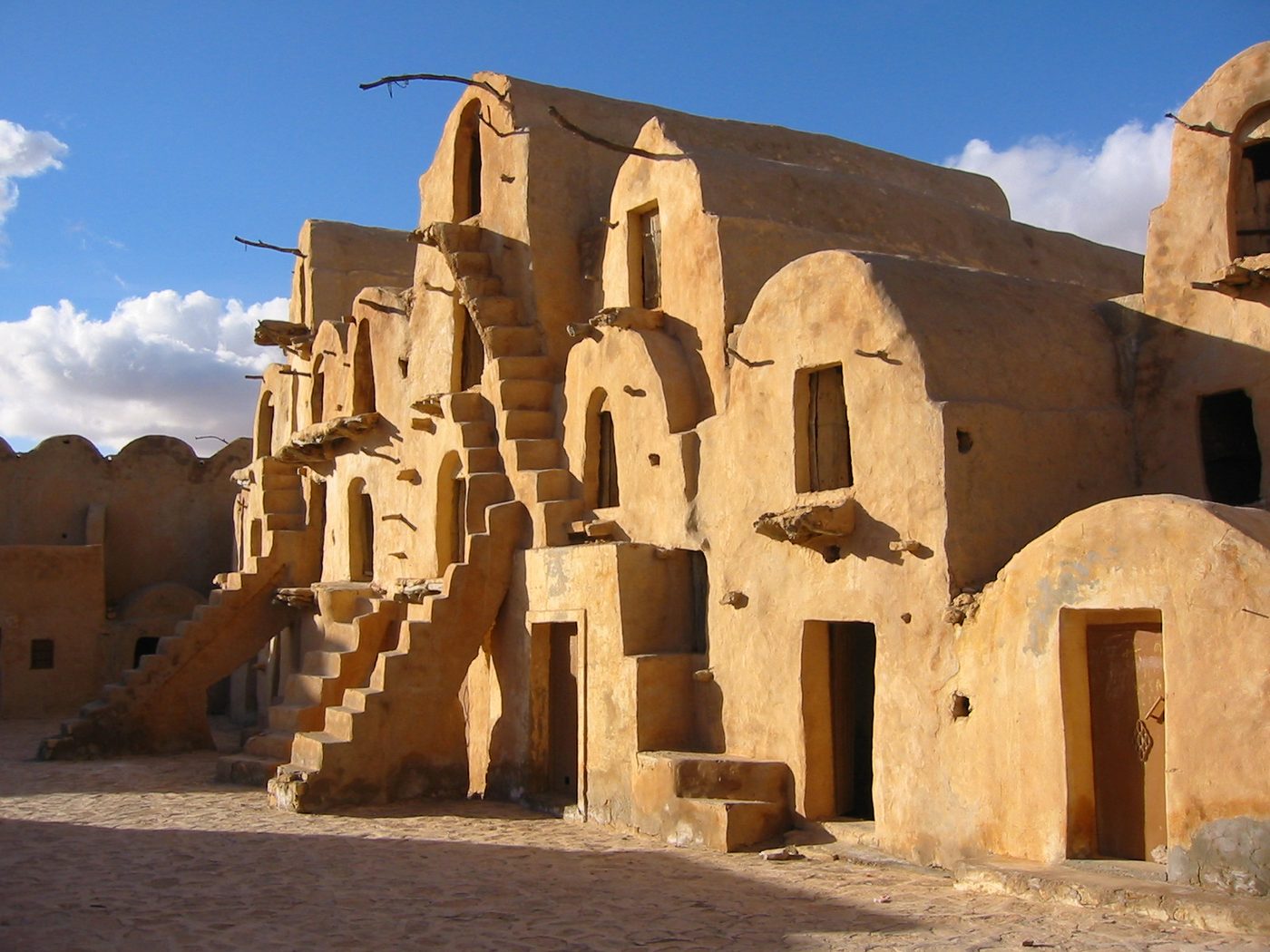
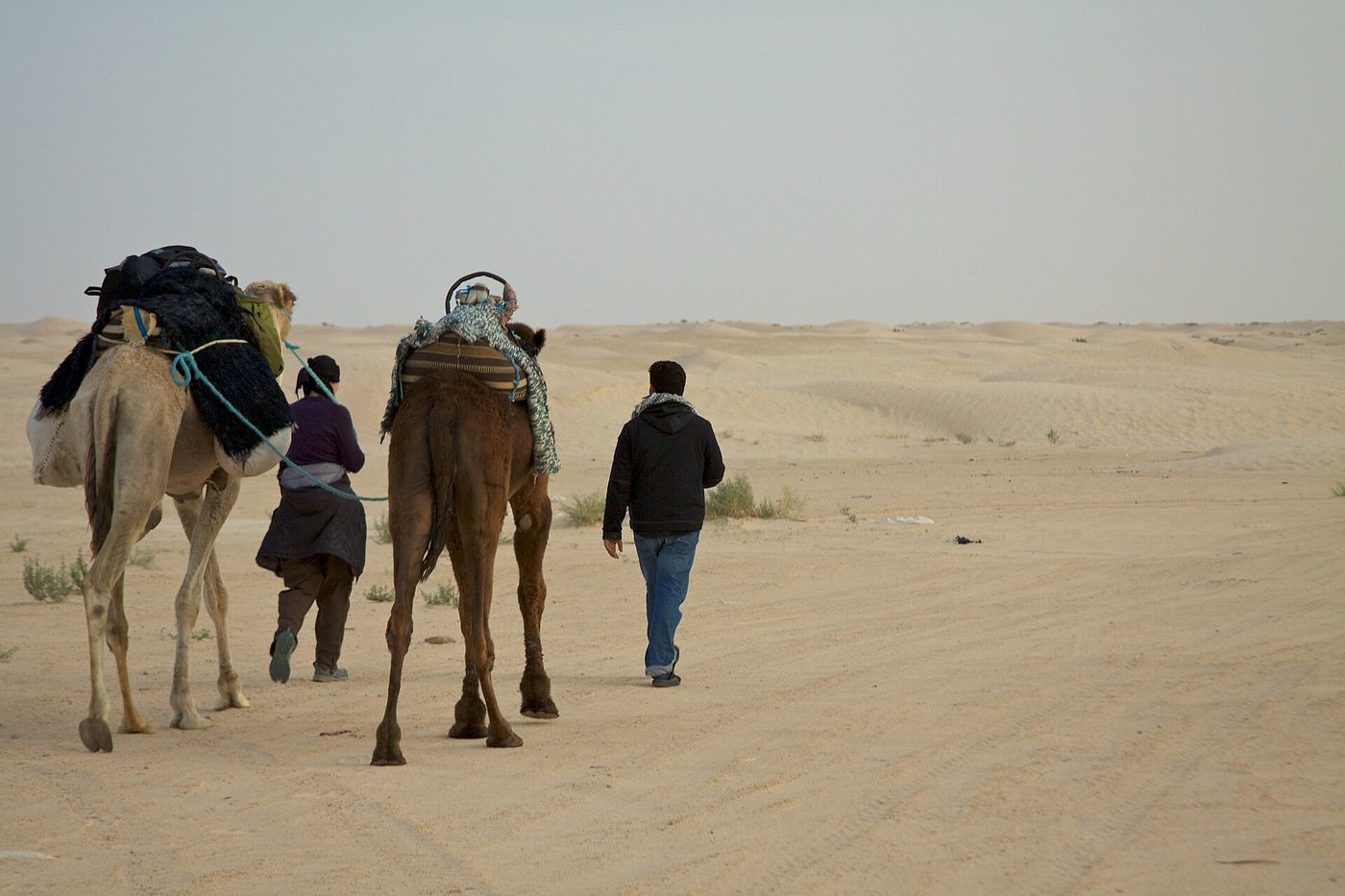
Here’s the draw that turns a good beach week into a memorable trip. Djerba is the natural jumping-off point for Tunisia’s deep south, and day trips run to the edge of the Sahara at Ksar Ghilane, the troglodyte houses of Matmata, and the hilltop Berber ksour around Tataouine and Chenini.
Much of that country doubled as Tatooine on screen, so it’s prime territory for fans — our guide to Star Wars in Tunisia maps the filming locations, and our Tunisian Sahara guide covers the desert trips. Being able to swim in the Med and stand in real dunes in the same week is a big part of why we’d tell most people the island is worth it.
Value that’s genuinely hard to beat
Djerba is, year in year out, one of the cheapest island weeks a British traveller can book. Package all-inclusives routinely undercut Spain, Greece and Turkey for the same star rating, and on the ground it stays cheap — a sit-down lunch of grilled fish, a strong coffee for around a pound, a taxi across town for a few dinars. We’ll come back to money in detail below, because “is Djerba expensive?” is one of the most common questions we get.
The honest cons — what UK travellers actually report
This is where we part company with the glossy “ten reasons to visit” lists. Djerba has real downsides, and pretending otherwise helps nobody. None is a dealbreaker on its own, but you should know them before you book.
Nightlife is quiet
If a big night out is the point of your holiday, Djerba will disappoint. This is a relaxed, family-leaning island, and the evening scene is mostly hotel bars, beach lounges and a cluster of livelier spots around the Midoun tourist zone — a few bars, the odd club with a dancefloor and karaoke, sunset cocktails by the sea. It’s pleasant rather than pumping, and noticeably calmer than Sousse or Hammamet after dark. For a proper comparison on that front, see our head-to-head on Djerba or Hammamet.
Some tired resorts — and a few abandoned ones
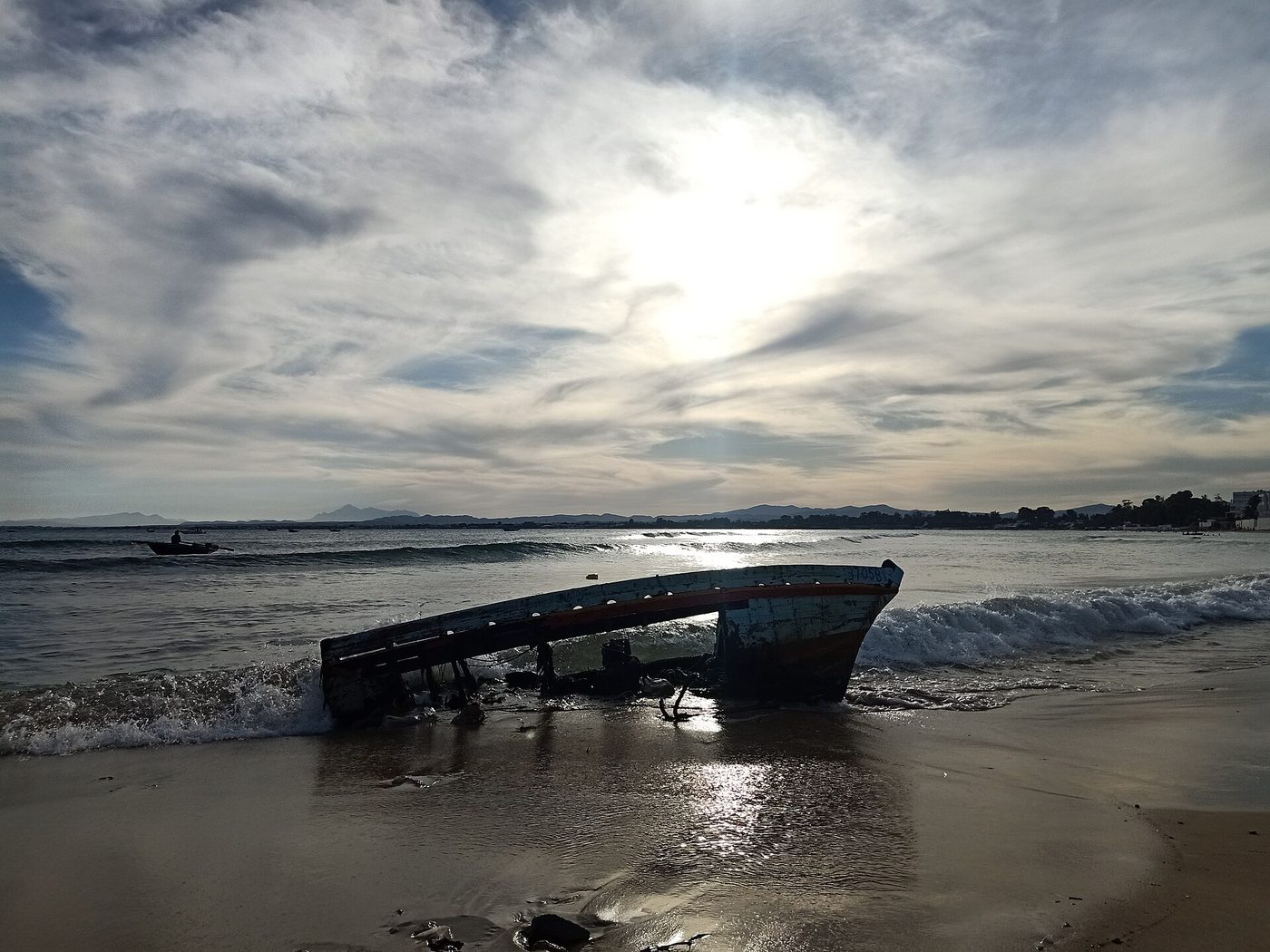
Star ratings in Tunisia don’t map neatly onto UK expectations, and a “four star” can feel like a well-worn three. Some hotels are dated inside even when they look smart from the pool, and the tourism dip that followed the 2015 mainland attacks left a scatter of shuttered, half-abandoned hotels around the island — melancholy reminders you’ll spot from the road. The newer and renovated properties are genuinely good, so read very recent reviews of your specific hotel and pick carefully with our guide to where to stay in Djerba.
Touts and hassle in the tourist spots
Around the beaches and souks you’ll be approached — sometimes persistently — by people selling boat trips, camel rides, carpets and “special price” souvenirs. It’s rarely threatening, and a polite, firm “no thank you” works almost every time, but it can wear you down on a busy day. It fades once you get the rhythm of it, and the quieter beaches and villages are almost free of it.
Shallow, sometimes weedy beaches
The gentle, shallow sea that makes Djerba so good for families is a drawback if you want to swim properly. On the east coast the tide goes out a long way, so you can wade for ages before it’s deep enough, and bands of dried seagrass wash up along the tideline, more so after wind and in autumn. It’s natural and protected, so it isn’t always cleared. If a pristine, deep-water swim is non-negotiable, temper your expectations.
Litter and rough edges
Away from the raked hotel frontages, Djerba can look scruffy. Roadside litter and stray cats and dogs are a recurring gripe from visitors, and infrastructure is patchy — mobile signal can drop off outside the towns. None of it spoils a holiday, but it’s part of the honest texture of the island, and worth knowing if you like everything neat.
The island’s own sights are low-key
Djerba’s on-island attractions are charming rather than jaw-dropping. The fort, the potters, the crocodile park and the two modest Star Wars spots — a fisherman’s store that played Obi-Wan’s house, a mosque that stood in for Tosche Station — are pleasant half-days, not blockbusters. The genuinely epic stuff, from the Sahara to the Berber ksour, is a day trip off the island. Come expecting a relaxed beach base with brilliant excursions, not a sightseeing marathon on your doorstep.

Is Djerba expensive?
In a word, no — Djerba is one of the best-value beach destinations in the Mediterranean, and it’s a big part of the island’s appeal. Package prices routinely undercut Spain, Greece and Turkey, and once you’re there, day-to-day spending goes a very long way.
Here’s the rough shape of on-the-ground costs. Treat every figure as an indication for 2026, not a fixed price — always check the current rate before you rely on it.
| What | Rough cost (2026 — check current) |
|---|---|
| Coffee or mint tea in a café | Around £1 or less |
| Sit-down local meal for one | Roughly £7–13 |
| Tourist/international restaurant, per head | Roughly £17–35 |
| Short taxi across the hotel zone | A few dinars — use the meter or agree first |
| Budget hotel room, per night | From around £20–35 |
| All-inclusive week | Typically cheaper than Spain for the same stars |
One quirk to plan around: the Tunisian dinar is a closed currency. You can’t buy it before you fly and you can’t take it home, so you change money on arrival, keep the receipts, and convert any leftover cash back before departure. Reckon on very roughly £1 to 3.8–3.9 dinars in mid-2026, but check the current rate. Budget beyond the package too — day trips, tips, taxis and souvenirs add up, though a modest daily spend stretches further here than almost anywhere in the Med. Our tips on getting around Tunisia cover taxis and the meter, where tourists are most often overcharged.
Is Djerba safe?
This is the question underneath many of the others, usually because people half-remember headlines about Tunisia rather than Djerba itself. The honest picture is reassuring: Djerba is one of Tunisia’s most established and low-key resort islands, a mainstream destination that European families have holidayed on for decades.
It’s worth being precise about the official advice, because the wording matters. The UK Foreign Office does advise against travel to specific areas of Tunisia — and Djerba is not one of them. Here’s the relevant advisory in full:
“FCDO advises against all travel to the Chaambi Mountains National Park and the designated military operations zones of Mount Salloum, Mount Sammamma and Mount Mghila; and against all but essential travel to parts of the interior including Kasserine Governorate (including the town of Sbeitla), and to within 75km of the Tunisia–Libya border, including Remada and El Borma but excluding Zarzis, the C118 road and all areas in Medenine Governorate north of the road.”
That advice was still current at 19 June 2026 (last updated 23 February 2026). The key line for you is the very end of it. Djerba, and neighbouring Zarzis, sit in Medenine Governorate north of the C118 road, and are explicitly excluded from the Libya-border advisory. In plain English: Djerba is a mainstream resort island, far from any restricted zone, and the Foreign Office does not advise against travelling there.
Everyday precautions are the same as anywhere — use metered taxis, keep an eye on valuables in the souk, buy comprehensive travel insurance (your UK GHIC is not valid in Tunisia, so proper medical cover is essential), and check NHS TravelHealthPro before you go. We cover the whole picture, with the exact wording and dates, in our guide to whether Djerba is safe.
Package or independent? How to do Djerba
Djerba works both ways, and which suits you shapes how much you’ll enjoy it.
- Package / all-inclusive. The easiest and usually cheapest route. You get a beachfront base, food and drink sorted, and reps who can book the day trips. It’s ideal for families and first-timers, and the value is excellent. The trade-off is that all-inclusive can keep you cocooned in the resort, so build in a couple of excursions to actually see the island.
- Independent. Flights into Djerba can be booked without a package, and there are villas, guesthouses and boutique stays — especially around the north-east near Midoun and inland near the villages. This suits confident travellers who want to hire a car, chase the quieter beaches, and treat Djerba as a base for the south. You’ll work a little harder and see a lot more.
Either way, the sweet spot is a relaxed beach base with two or three proper trips bolted on — a Sahara or Star Wars day, a morning at Djerbahood and El Ghriba, an afternoon in Houmt Souk. That mix is what turns “nice enough” into “we’d go back.”
So, who is Djerba actually for?
This is the part the listicles skip, and it’s what actually decides whether you’ll love your holiday.
You’ll love Djerba if…
- You want maximum sunshine and beach for minimum money, and you’re relaxed about a bit of wear and tear.
- You’re travelling with children and want warm, shallow, gently shelving sea and a cheap all-inclusive base.
- You like the idea of real culture on the doorstep — souks, potters, street art and one of the world’s oldest synagogues.
- You’re Sahara- or Star Wars-curious and love that the deep south is a day trip away.
- You prefer calm evenings and a slow pace to a party scene.
- You’re after reliable shoulder-season or winter warmth and you’ll take a longer, gentler beach season.
You might give it a miss if…
- Clubbing and a lively night scene are the whole point of your trip.
- You expect flawless five-star service and get genuinely annoyed by rough edges.
- You want deep water to swim in straight off the beach, every day, with no seaweed.
- You can’t let persistent vendors wash over you.
- You want a dense hit of major sights within walking distance, rather than a relaxed base with day trips.
The verdict: is Djerba worth visiting?
Yes — with your eyes open. For value, reliable sun, a warm shallow sea, genuine island culture and the Sahara within reach, few places come close for the money. It isn’t polished, the nightlife is quiet and some resorts are tired, but the things Djerba does well are things pricier destinations can’t match at any price.
Go for the beaches, the culture and the day trips; make peace with the rough edges and the shallow sea; and you’ll almost certainly come home glad you took the chance. For most curious, budget-minded travellers who don’t need a party or five-star polish, Djerba is well worth a week.
Is Djerba worth visiting? Your questions answered
Is Djerba worth visiting in 2026?
Yes, for most holidaymakers. Djerba offers reliable sun, a warm shallow sea, standout value and real island culture — souks, pottery, the Djerbahood street art and one of the world’s oldest synagogues — plus easy day trips to the Sahara. It’s not for party-seekers or anyone wanting flawless five-star polish, but as a relaxed, good-value beach base it’s a strong choice.
Is Djerba nice?
It’s a relaxed, sunny, friendly island with soft-sand beaches, a genuine working capital in Houmt Souk, and a laid-back pace. It’s “nice” in a low-key, unpolished way rather than a glossy one — charming and characterful, with some scruffy edges. If you like somewhere with a bit of soul over somewhere immaculate, you’ll warm to it.
Is Djerba expensive?
No. Djerba is one of the cheapest beach destinations in the Mediterranean. Packages usually undercut Spain, Greece and Turkey, and on the ground meals, taxis and coffees are inexpensive. Remember the dinar is a closed currency you can only get on arrival, and budget a little extra for day trips and tips on top of an all-inclusive.
What is the downside of visiting Djerba?
The main gripes are quiet nightlife, some dated or abandoned resorts, persistent vendors around the tourist spots, shallow and occasionally weedy beaches, and roadside litter. The island’s own sights are also fairly low-key, with the epic scenery a day trip away. None is a dealbreaker, but they’re worth knowing so you arrive with the right expectations.
Is Djerba worth it for a beach holiday?
Yes, especially for families. The sea is warm, calm and shallow — ideal for children and gentle swimmers — and the sand is soft and plentiful. Just know that some stretches are shallow for a long way out and pick up seaweed, and the best-serviced beaches front the hotels. For lap-swimmers wanting deep water, it’s less ideal.
Is Djerba safe for tourists?
Yes. Djerba is one of Tunisia’s safest, most established resort islands and is explicitly excluded from the UK Foreign Office’s border-zone travel advice — it sits in Medenine Governorate north of the C118 road, well away from any restricted area. Take normal precautions with taxis and valuables, and buy travel insurance, since a UK GHIC isn’t valid in Tunisia.
How many days do you need in Djerba?
A week is the classic package length and works well: five or so beach days plus two or three excursions — a Sahara or Star Wars trip, Djerbahood and El Ghriba, and a day in Houmt Souk. If you only want to relax, three or four days is enough; if you want to use it as a base for the south, ten days is not too many.
Is Djerba better than mainland Tunisia?
It’s different rather than strictly better. Djerba wins on reliable sun, a longer beach season and a relaxed island feel, and it’s the best base for the deep south. The mainland resorts of Hammamet and Sousse have livelier nightlife and quicker access to the big Roman sites, so the right pick depends on what you want from the trip.
Can you drink alcohol in Djerba?
Yes. Resort hotels and licensed bars serve beer, wine and spirits, and a poolside or beach drink is completely normal. It’s a Muslim island, so alcohol isn’t sold everywhere and it’s pricier than in Europe, and during Ramadan daytime service is limited outside tourist hotels. The scene is relaxed rather than boozy.
What is there to do in Djerba besides the beach?
More than you’d expect. Wander Houmt Souk’s medina and fort, explore the Djerbahood street-art village and El Ghriba synagogue, watch the potters at Guellala, browse Midoun’s Friday market, visit the crocodile park, and take a boat to Flamingo Island. Off the island, day trips reach the Sahara, Matmata and the Berber ksour of the south.
When is the best time to visit Djerba?
Late spring and early autumn — roughly May to June and September to October — give the best mix of warm sea, comfortable temperatures and thinner crowds. July and August are hot and busy but reliably sunny, while winter is mild and quiet but too cool for the beach. Late spring and early autumn are our overall picks for the island.
Written by the Tunisia Tourism Guide team — an independent UK-focused guide to travelling in Tunisia. We don’t sell tours or take hotel commissions. Prices and advice were checked at publication; always confirm current details before you book.
Photo credits
All images via Wikimedia Commons, used with thanks: A soft-sand Djerba beach in Tunisia with palm trees and © Philippe HECKEL from France (CC BY 2.0); A colourful street-art mural on a whitewashed wall in the © Galerie Itinerrance (CC BY-SA 4.0); The whitewashed medina and market streets of Houmt Souk © Katina Rogers (CC BY 2.0); The tiled interior of the historic El Ghriba synagogue in © Jalo (Public domain).