By the Tunisia Tourism Guide team · Last updated 2 September 2026 · FCDO advice checked the same day (page last updated 24 July 2026) · We don’t sell tours or take hotel commissions — this is independent advice, written to be useful.
After three hours of stony grey nothing, the palms appear before the dunes do — a smear of green on a flat horizon that looks, briefly, like something you’ve imagined. Then you get closer and there are actually people in it: a couple of cafés, a line of parked 4x4s, kids selling fossils, and forty or fifty holidaymakers sitting shoulder-deep in a warm pool in the middle of the Sahara.
Ksar Ghilane is an oasis at the eastern edge of the Grand Erg Oriental in Tunisia’s deep south, built around a natural warm spring of about 32–35°C. It has a palm grove, big accessible dunes, permanent tented camps, and the ruins of a Roman frontier fort four kilometres away. It’s the most reachable slice of real Sahara in the country.
This guide covers what the spring is actually like, how to get there from Djerba, Douz or Tozeur, whether to do it in a day or stay the night, which camps are which, the Roman fort most visitors never bother with, and — because people ask, and they should — exactly where the FCDO‘s southern advisory falls in relation to this oasis. It’s part of our wider guide to the Tunisian Sahara desert.
Ksar Ghilane at a glance
| Details | |
|---|---|
| Where | Deep southern Tunisia, eastern edge of the Grand Erg Oriental. Roughly 32.98°N, 9.64°E |
| What it is | A working oasis of around 50 families, plus a warm spring, dunes and a cluster of desert camps |
| Spring temperature | Around 32–35°C, sulphurous, fed by a deep fossil aquifer |
| From Djerba | About 3½ hours by road; day trips leave around 06:30 |
| From Douz | About 90km by desert piste (2–3 hours, 4×4) or 144km by surfaced road (about 2½ hours) |
| Road access | Tarmac reaches the oasis; a 4×4 isn’t essential for the road but is for the tracks |
| Accommodation | Several permanent tented camps, from rustic to air-conditioned with a pool |
| Activities | Swimming, camel rides, quad biking, 4×4 tracks, dune walking, stargazing, the Roman fort |
| Best months | October, November, February, March, April and early May |
| Typical cost | Day trip from Djerba from about €80 / 270 TND; two days with a camp night from about €128 / 430 TND |
| Safety | Comfortably outside every FCDO restricted zone — the detail is below |
The hot spring: what it’s really like
Let’s manage expectations, because the photographs oversell it and the reality is still good.
The spring rises in the middle of the palm grove and feeds a circular open-air pool perhaps fifteen metres across. The water is warm rather than hot — somewhere around 32–35°C, roughly bath temperature on a cool day and disconcertingly mild on a hot one — mineral-rich, faintly sulphurous, and drawn from a deep fossil aquifer laid down long before anyone was here to swim in it. Locals will tell you it’s good for aching joints, and after five hours in a 4×4 you may be inclined to agree.
What it is not: a spa. The facilities amount to a small café and a changing area beside the pool. There are no loungers, no towels, no treatments and no attendant. It’s a public pool in an oasis, used by tour groups, local families, camel handlers and quad guides in roughly equal measure, and that mix is part of the charm.
Timing matters more than anything else here. Between roughly 11am and 3pm the day-trip convoys from Djerba and Zarzis all arrive at once and the pool is busy and loud. Early morning and late afternoon are a different place entirely: fewer people, softer light, and the temperature contrast between the water and the air actually working in your favour. This is the single strongest argument for staying the night.
Practicalities: bring your own towel, bring flip-flops (the surround gets hot and gritty), and change in the hut rather than behind a palm tree. Modest swimwear is the norm — this is a mixed public pool in rural southern Tunisia, and while nobody will say anything about a bikini, most women visitors are more comfortable in a swimsuit or a t-shirt over one.
Getting to Ksar Ghilane
From Djerba and Zarzis
The most common approach, and the reason the oasis is as developed as it is. It’s roughly three and a half hours by road from the island, with day trips leaving around 06:30 and getting back in the evening. The route crosses to the mainland by the Roman causeway, runs south-west through Medenine and the Dahar plateau, and usually takes in Tataouine, Chenini or Matmata on one leg. Our guide to Sahara tours from Djerba compares the operators and the real 2026 prices.
From Douz
Two options and they’re genuinely different. The desert piste east from Douz is about 90km across flat reg and sand tracks and takes two to three hours in a 4×4 — bumpy, brilliant, and not something to attempt without a driver who knows it. The surfaced road round is roughly 144km and about two and a half hours. Either way, an overnight round trip out of Douz including camp, meals and transport tends to run somewhere around 200–350 TND per person. Our Douz guide covers using the town as a base.
From Tozeur and the west
Possible, but long. From Tozeur you’d cross Chott el Jerid, run through Kebili and Douz, and continue east — realistically a full day’s driving, and better built into a three or four-day southern loop than done as an out-and-back.
Driving yourself
The oasis is connected to the outside world by tarmac, and an ordinary hire car can physically reach it. We’d still hesitate. Fuel stops are sparse, the last stretch is exposed, and the FCDO warns specifically to “be careful when approaching sand drifts on roads” — a live hazard on this route after wind. Night driving outside towns is genuinely dangerous because of unlit vehicles and livestock, and you’ll pass military or police checkpoints where you should approach slowly and carry ID. Do not take a hire car off the tarmac: most rental agreements forbid it and recovery from soft sand is slow, expensive and occasionally dangerous. Our getting around Tunisia guide has the full picture.
Day trip or overnight?
The question that decides whether you love this place or shrug at it.
| Day trip | Overnight | |
|---|---|---|
| Time at the oasis | Two to three hours, in the middle of the day | Afternoon, sunset, night, sunrise |
| Light | Flat, harsh, white | The good stuff, twice |
| Crowds | Peak | Empty after about 4pm |
| Silence | None | The reason to come |
| Cost from Djerba | From about €80 / 270 TND | From about €128 / 430 TND |
| Suits | Short packages, small children, tight budgets | Almost everyone else |
Our position, stated plainly: if you are coming all the way from Djerba, Zarzis or the northern resorts, do the overnight. The drive is the same either way, and the two hours you’re paying extra for — dusk and dawn — are the two hours that make the desert the desert. A day trip gives you a warm swim and a long journey.
Where to stay: the camps
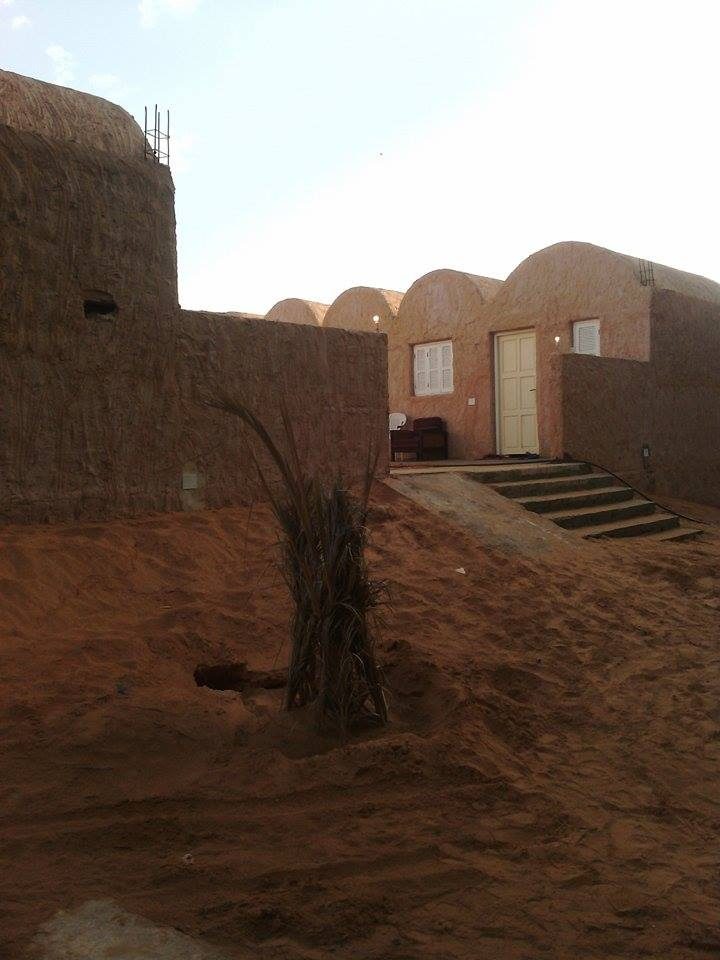
Several permanent camps operate at the oasis, and they differ far more than the booking photos suggest. Broadly there are three tiers.
Campement Yadis Ksar Ghilane is the big, well-known option — around sixty air-conditioned Berber-style tents arranged around a large pool, with private bathrooms and a restaurant serving Tunisian food. It’s a three-star desert camp rather than a bivouac, and it’s where most organised groups end up. Comfortable, a bit institutional, entirely fine.
Hotel Pansy sits at the more comfortable end: a tented resort with a pool and restaurant, aimed at people who want the desert without giving up plumbing and a decent bed. If your travelling companion is on the fence about the whole idea, this is the compromise that wins the argument.
L’Oasis Zarga is the mid-range choice, literally on the sand at the edge of the desert. Reviews call it rustic — which it is — but clean, and the food gets consistently strong praise. If you want the camp to feel like a camp rather than a hotel with canvas walls, this is closer to the mark.
Beyond the fixed camps, operators also run wild bivouacs further out in the dunes: no walls, no pool, no electricity, dinner cooked on a fire and a mattress under the sky. From Djerba these are sold at around €193 / 650 TND for two days. It’s the purest version and it’s not for everyone — there’s no bathroom.
Whichever you book, ask three questions first: is the tent private or shared, is there electricity for charging, and is the bathroom en suite or a shared block? The answers vary enormously and the price often doesn’t tell you.
Tisavar: the Roman fort almost nobody visits
Four kilometres from the oasis, half-swallowed by the dunes, stand the ruins of a Roman castellum called Tisavar. It was built between roughly 180 and 192 CE — a rectangular stone fort of about 30 by 40 metres with corner towers and a small central temple — as part of the Limes Tripolitanus, the chain of frontier posts the empire strung along the northern edge of the Sahara. Its purpose was to watch the caravan routes and the movements of desert peoples at the very edge of Roman control. The name is thought to come from a local Amazigh word.
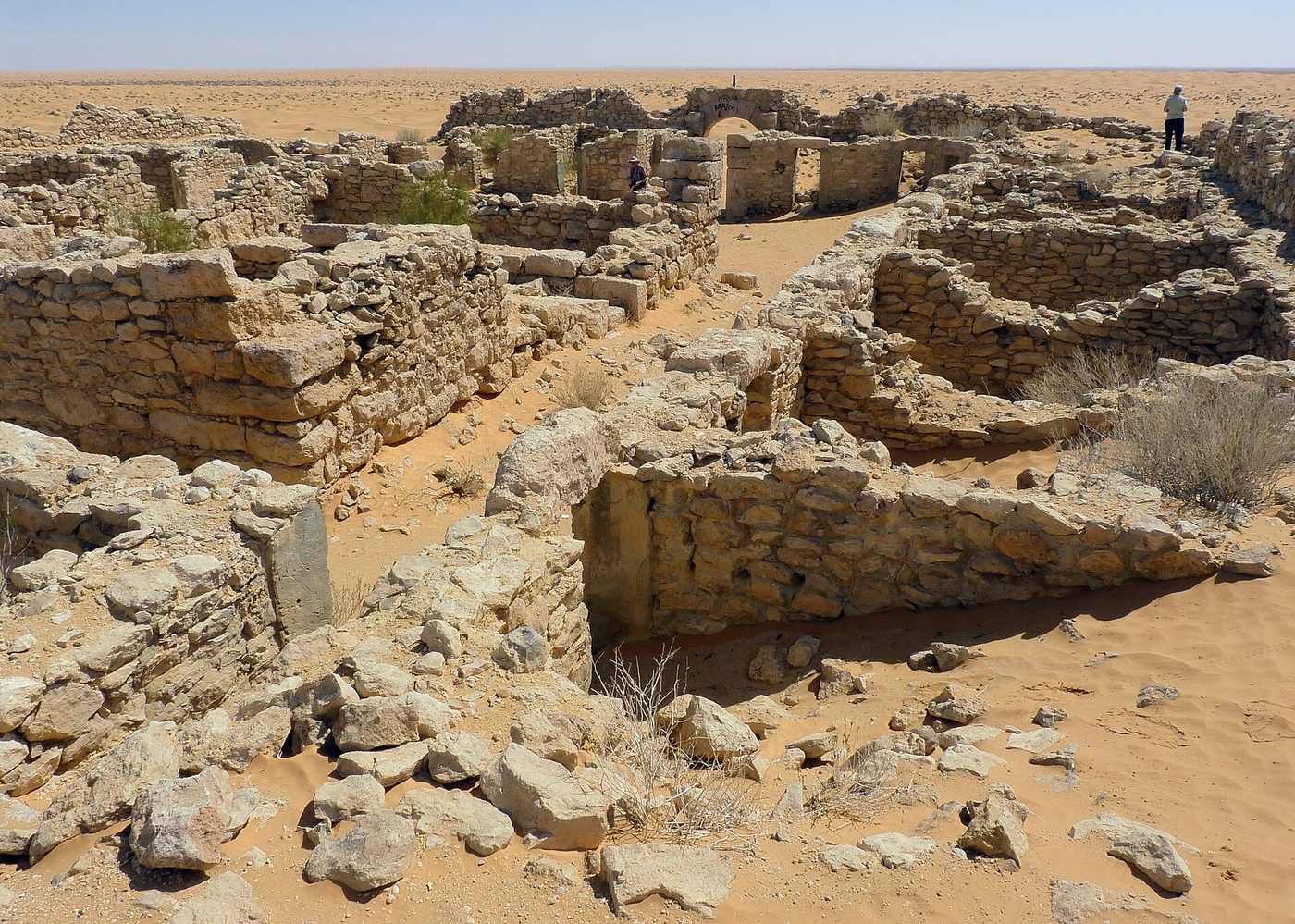
What survives is modest: walls to waist height in places, the outline of rooms, drifted sand where the courtyard was. What makes it worth the effort is the setting and the sheer improbability of it — a garrison posted here, at the end of everything, presumably counting the days. It’s on Tunisia’s UNESCO tentative list as part of the wider frontier system.
Getting there: about an hour’s walk from the oasis through soft dunes, which is harder work than the distance suggests and should not be attempted in the middle of a hot day. Most people go by quad or 4×4, which takes minutes and is what the camps will offer. Take water either way, and go early or late.
There’s a second layer of history here that’s rarely mentioned. In March 1943, during the Tunisia campaign, the Ksar Ghilane area was a strategic point on the desert tracks between the Matmata hills and the south, and the Free French column under Leclerc fought an action here after crossing the Sahara. The last people to occupy the Roman fort were soldiers of that column, some seventeen centuries after the first ones. If you like your Roman ruins with an odd postscript, this is your site.
What else to do
The dunes
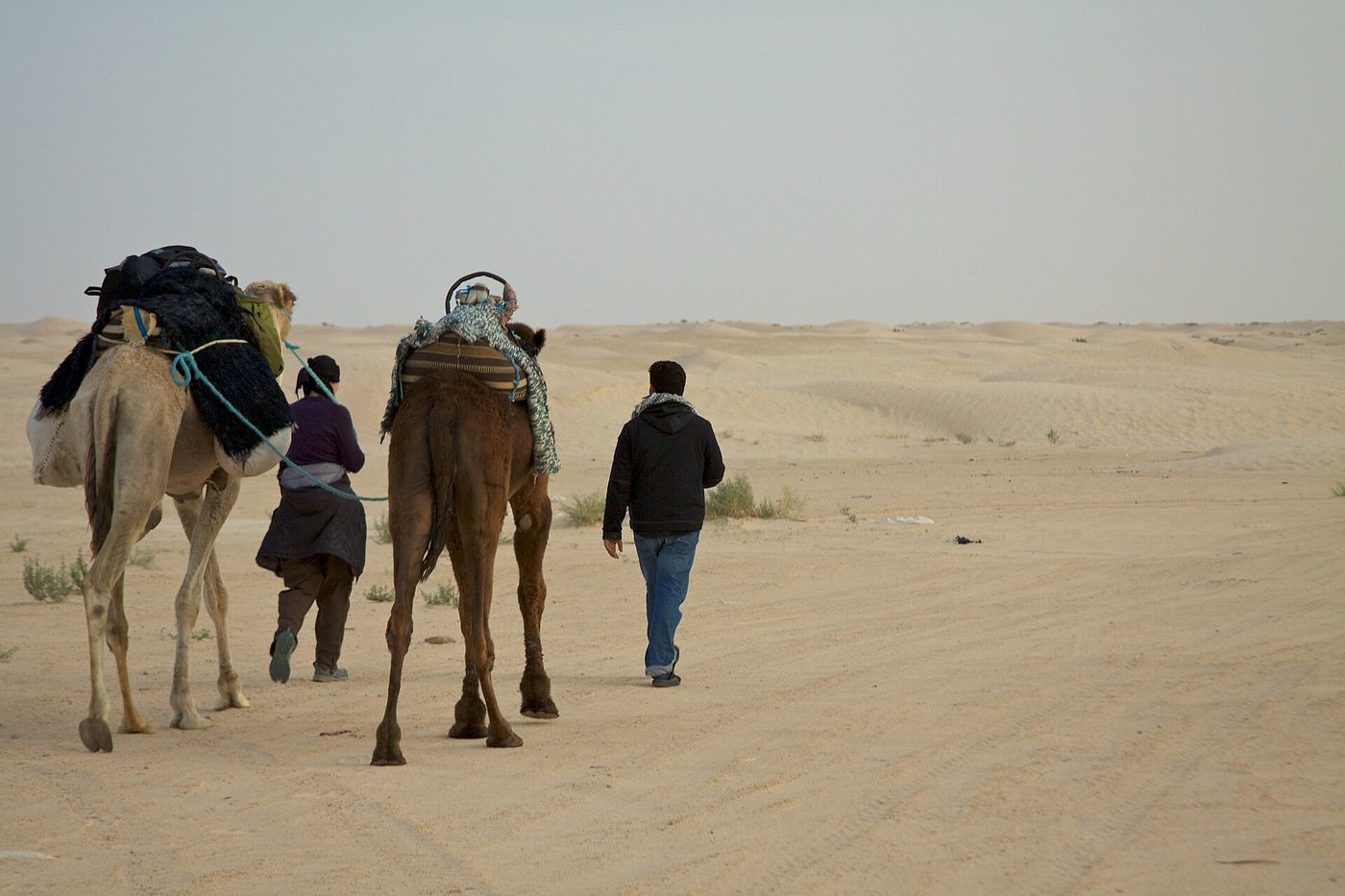
The Grand Erg Oriental proper begins here, and unlike the modest sand at Douz these are the big rolling dunes people picture. They change colour through the day — pale gold in the morning, bleached at noon, then deep orange and finally violet as the light goes. You can walk into them straight from the camps. Do that at least once, alone, at dusk.
Camel rides
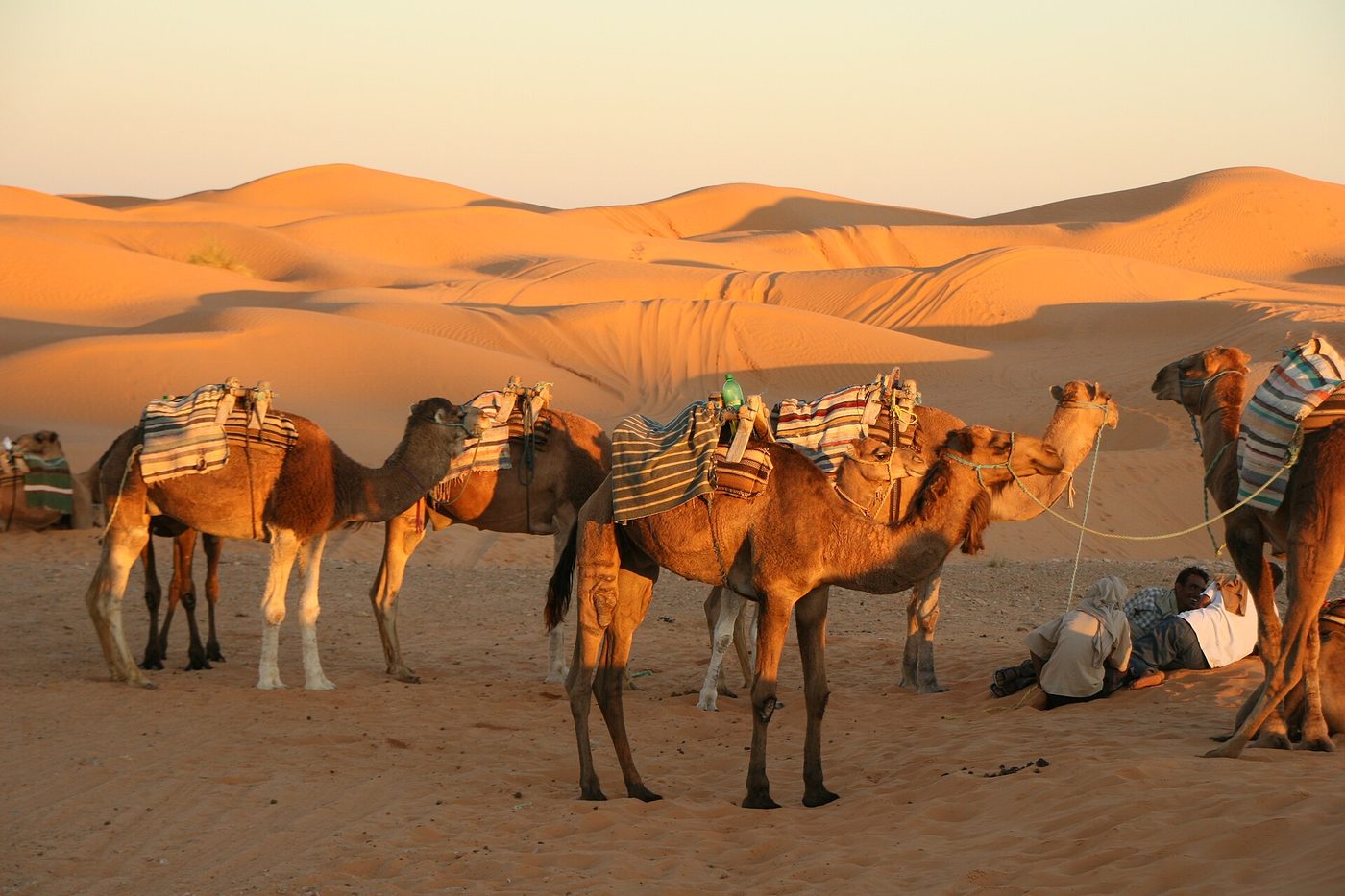
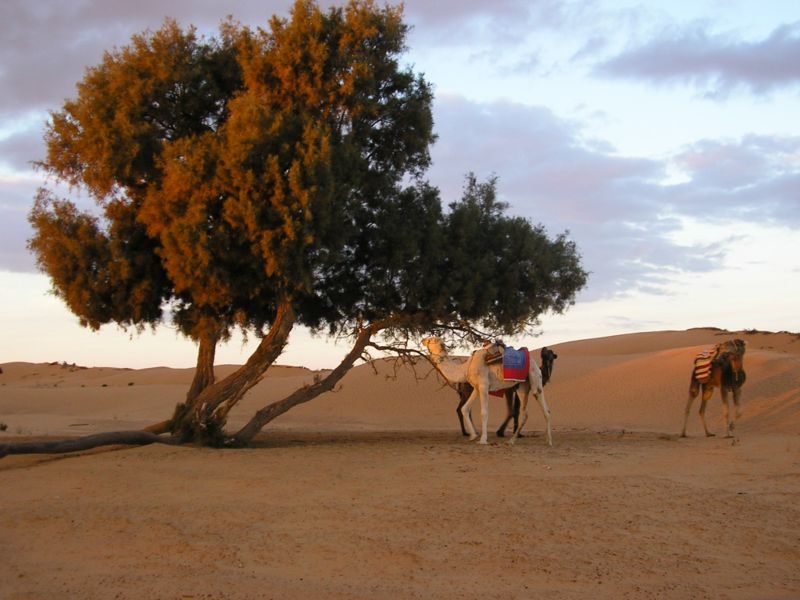
Short rides into the dunes, usually thirty minutes to an hour, sold at the oasis for around €15 per person as a tour add-on. Slow, quiet and the traditional way to see the place. Long trousers, and be ready for the getting-up and sitting-down, which is the alarming part.
Quad biking
The other big seller, around €25 per person for a session, and the way most people reach the fort. It’s fun and it covers ground. It also carries real risk: soft sand, poor orientation, heat, and variable maintenance. The FCDO’s line is worth quoting exactly — “Quad bikes are popular in desert resorts. Take the same precautions as you would in the UK. Safety standards can vary considerably. Always wear a crash helmet.” Ride with a guide, wear the helmet, and don’t let anyone talk you into a solo run into the erg.
Horse riding and 4×4 tracks
Both available; horse riding is the quiet, underrated option if you can already ride. Guided 4×4 runs go further out into the erg and towards the tracks heading south and west, and are the way to see dune country without other visitors in it.
The stars
Free, and the single best thing about staying over. There is effectively no light pollution for a hundred kilometres in any direction. Walk five minutes from the camp, let your eyes adjust for a quarter of an hour, and look up. Bring a jumper.
Safety: where the advisory zones actually are
People book a trip this far south and then have second thoughts, so here is the geography set out precisely, with the official wording rather than a paraphrase.
The Foreign, Commonwealth & Development Office advises against all but essential travel to “within 75km of the Tunisia-Libya border, including Remada and El Borma but excluding Zarzis, the C118 road and all areas in Medenine Governorate north of the road”. It advises against all travel to “the militarised zone south of the towns of El Borma and Dhehiba; within 20km of the rest of the Tunisia-Libya border area north of Dhehiba; the town of Ben Guerdane and immediate surrounding area”.
Ksar Ghilane sits well outside all of that. The oasis is roughly 125 to 150 kilometres from the nearest point of the Tunisia–Libya border in a straight line — which puts it around 50 kilometres clear of the outer edge of the 75km restricted band. Remada, the nearest place the FCDO names inside that band, is over 100 kilometres away to the south-east. Ksar Ghilane is also far from the western advisories along the Algerian frontier. It is, in short, comfortably in bounds, which is why thousands of package 4x4s run here every season without a second thought.
The reason we’re spelling out the geography rather than just saying “it’s fine” is that the boundary matters if you carry on travelling. Remada, Dhehiba, El Borma and Ben Guerdane are inside restricted areas and are not tourist destinations — do not let a driver improvise a route towards them, and don’t be tempted by a track heading south-east from the erg. Tataouine town and the ksour around Chenini and Douiret are outside the zone and are perfectly normal places to visit; it’s the country beyond them, towards the frontier, that isn’t. The FCDO also notes plainly that “your travel insurance could be invalidated if you travel against advice”, which makes the line a financial matter as well as a safety one.
That is the FCDO’s position as updated on 24 July 2026 and checked by us on 2 September 2026. Read it yourself at gov.uk’s Tunisia travel advice before you book and again before you fly, and see our fully date-stamped Tunisia safety guide for every zone quoted in full.
One last practical point: if you’re travelling independently and plan to leave the standard routes, the National Guard’s tourism brigade asks visitors to register their route at its offices in Douz, Tozeur or Tataouine before setting out. It takes ten minutes and it means someone knows where you are.
Insurance, health and money
Your UK GHIC is not valid in Tunisia. There’s no reciprocal healthcare arrangement, public hospitals expect foreign nationals to pay, and out here the nearest serious medical facility is hours away. Comprehensive travel insurance with medical cover and repatriation is essential — and it must specifically cover what you’ll actually do. Camel riding, quad biking and 4×4 excursions are among the most commonly excluded activities in standard policies. Phone your insurer, get them named, keep the confirmation.
For vaccinations and food-and-water guidance, use TravelHealthPro’s Tunisia page, the NHS-linked service the FCDO points to. Nothing exotic is needed for this trip. Do carry rehydration sachets: heat plus a long drive plus unfamiliar food is a combination that catches people out.
On money, the Tunisian dinar is a closed currency — you cannot buy it before you fly and cannot legally take it out of the country. Change money on arrival, keep the receipts, and bring cash south with you. Reckon on roughly 3.8–3.9 dinars to the pound in mid-2026 and check the current rate. At the oasis, cash is the only thing that works: the camps may take cards, the camel handlers, the café and the fossil sellers absolutely will not. Our Tunisia travel tips guide covers the currency rules in detail.
When to go
Autumn, winter and spring — specifically October, November, February, March, April and early May. Those are the months when daytime temperatures make dune walking and quad riding a pleasure rather than a trial, and the light is at its best.
Winter brings beautiful clear days and genuinely cold nights; a January bivouac without a proper coat is a mistake you make once. Spring is superb for walking. October is arguably the pick of the year for the south — warm, stable and past the summer crush.
Summer is the problem. From June to September the southern interior routinely exceeds 40°C, and July and August can push far higher. Trips still run, but they run early, with shaded breaks and hydration discipline, and the middle of the day becomes something to survive rather than enjoy. Heatwaves also strain the electricity grid, and temporary cuts can take a camp’s air conditioning and the phone signal with them. If your holiday dates are fixed in high summer, do the oasis as an early-morning stop or leave it for another trip — our best time to visit Tunisia guide sets out the whole calendar.
What to bring
- Swimwear and your own towel — the spring is the point, and nobody lends towels.
- Flip-flops or sandals for the pool surround, plus closed shoes for the dunes and the fort.
- A warm layer — fleece minimum year-round, a proper jacket from November to March.
- Sun protection — hat, high-factor cream, sunglasses. There is no shade past the palms.
- A cheche or scarf against wind and sand. Buy one on the way.
- Cash in small dinar notes for the camel, the café, tips and the fossil sellers.
- A torch or head torch — camps are dark between the tents and it’s genuinely useful.
- A power bank, because camp electricity is shared and sometimes intermittent.
- A copy of your passport for checkpoints, plus your insurance details.
Ksar Ghilane: your questions answered
Is Ksar Ghilane worth visiting?
Yes — it’s the most accessible piece of genuine Sahara in Tunisia, and the combination of big dunes, a warm spring and a Roman fort is unusual anywhere. Come with realistic expectations: it’s a busy working oasis by day, not an untouched wilderness. Stay the night and it becomes something else entirely.
Can you swim in the hot spring at Ksar Ghilane?
Yes, all year. The water sits at around 32–35°C, is mineral-rich and slightly sulphurous, and the pool is open to everyone. Facilities are limited to a café and a changing area, so bring a towel and sandals. Early morning and late afternoon are far quieter than the middle of the day.
How far is Ksar Ghilane from Djerba?
Roughly three and a half hours by road. Day trips from the island leave around 06:30 and return in the evening; two-day versions with a night in a camp are the more comfortable option and cost around €128 / 430 TND per person from Djerba in 2026.
How far is Ksar Ghilane from Douz?
About 90km east by desert piste, which takes two to three hours in a 4×4, or roughly 144km and two and a half hours by the surfaced road. An overnight round trip from Douz including camp, meals and transport typically runs around 200–350 TND per person.
Do you need a 4×4 to get to Ksar Ghilane?
Not for the surfaced road — tarmac reaches the oasis and an ordinary car can manage it. You do need one, with a driver who knows the routes, for the desert tracks, the fort and anything beyond the village. Hire-car agreements generally forbid driving on sand, and recovery is expensive.
Is Ksar Ghilane safe?
Yes. The oasis lies roughly 125–150km from the Tunisia–Libya border, around 50km clear of the outer edge of the FCDO’s 75km restricted band, and far from the Algerian-frontier restrictions in the west. Don’t continue towards Remada, Dhehiba, El Borma or Ben Guerdane, which are inside restricted areas. FCDO advice updated 24 July 2026, checked 2 September 2026.
Where do you stay at Ksar Ghilane?
In one of the permanent tented camps around the oasis. Options range from rustic sand-side camps through mid-range places praised for their food to larger three-star camps with sixty air-conditioned tents, private bathrooms and a pool. Wild bivouacs further out in the dunes are also sold, with no facilities at all.
What is the Roman fort at Ksar Ghilane?
Tisavar, a small frontier fort built around 180–192 CE as part of the Limes Tripolitanus — roughly 30 by 40 metres, with corner towers and a central temple. It sits about 4km from the oasis, an hour’s walk through dunes or a short quad or 4×4 ride. It was reoccupied by Free French troops during the 1943 Tunisia campaign.
How long should I spend at Ksar Ghilane?
One night is the right answer for most people: you arrive in the afternoon, swim, ride out for sunset, eat outdoors, sleep and catch the sunrise. A day trip works if time is short but gives you the oasis at its busiest and its least photogenic. Two nights only if you want serious dune time.
What’s the best time of year to visit?
October, November, February, March, April and early May. Winter days are lovely and the nights are cold. June to September regularly exceeds 40°C in the southern interior, which makes outdoor activity genuinely hard work and takes most of the pleasure out of the trip.
Is there phone signal and wifi at Ksar Ghilane?
Mobile coverage exists but is patchy and slow, and it’s the first thing to disappear in a power cut. Some camps advertise wifi in the communal areas; treat it as a bonus rather than a plan. Download anything you need before you leave Douz or Tataouine, and tell people at home you’ll be offline.
Is Ksar Ghilane better than Douz for the desert?
For dunes and scenery, yes — the erg here is bigger and more dramatic, and the spring is a genuine bonus. Douz wins on convenience, on the weekly market, and as a base for multi-day camel treks. Many southern itineraries include both, and they’re a few hours apart.
The bottom line
Ksar Ghilane is the compromise that works: real Saharan dunes, a Roman frontier post and a warm spring, all reachable without an expedition. It is busier and more commercial than the brochure photographs suggest, and midday in high summer it can feel like a car park with palm trees.
Fix that by doing the obvious thing — stay the night, travel between October and April, walk out past the last tent after dark and stand still for ten minutes. That’s the bit you’ll remember, and it costs nothing.
Next, read our honest breakdown of the Sahara tours from Djerba and the two-day trip from Sousse, then plan the rest of the south with our guides to Douz, Chott el Jerid and Tozeur — or start at the top with the Tunisian Sahara.
Written by the Tunisia Tourism Guide team — an independent UK-focused guide to travelling in Tunisia. We don’t sell tours or take hotel commissions. Prices, distances and government advice were checked on 2 September 2026; always confirm current details before you travel.
Photo credits
All images via Wikimedia Commons, used with thanks: Mud-brick huts at the Ksar Ghilane oasis camp © Anisbouch (CC BY-SA 4.0); The Roman fort of Tisavar above Ksar Ghilane © Bellyglad (CC BY 2.0); Dromedaries browsing acacia near Ksar Ghilane on the edge of © The original uploader was Elcèd77 at French Wikipedia. (CC BY-SA 3.0); Camels resting among the dunes at Ksar Ghilane as the © veroyama from Meguro, Japan (CC BY 2.0).