By the Tunisia Tourism Guide team · Last updated 2 September 2026 · FCDO advice checked the same day (page last updated 24 July 2026) · We don’t sell tours or take commission — this is independent advice, written to be useful.
One reviewer we came across summed the whole thing up without meaning to. She’d loved it — the guide, the food, the sunrise — and then mentioned, almost in passing, that the tour covers around 770 miles. That’s Land’s End to John o’ Groats, and back to Birmingham. In two days. On a coach.
A Sahara tour from Sousse is a two-day coach excursion that runs south via the amphitheatre at El Djem and the cave houses of Matmata, overnights in Douz on the edge of the dunes, then crosses Chott el Jerid at sunrise for the Star Wars sets before looping home through Kairouan. Expect around £110–130 per person in 2026.
It is, with real caveats, one of the best-value excursions in the Mediterranean. It is also long, early and relentless, and nobody selling it will tell you that the second day starts at a quarter to five in the morning. This guide gives you the full picture: the actual itinerary, the real 2026 prices, the honest experience, what the FCDO says about the route, and how it compares with the same trip run out of Hammamet or from Djerba. It’s part of our wider guide to the Tunisian Sahara desert.
The two-day Sahara trip at a glance
| The short version | |
|---|---|
| Departs from | Sousse, Port El Kantaoui, Monastir, Skanes, Hammamet, Yasmine Hammamet, sometimes Tunis |
| Duration | Two days, one night |
| Price (2026) | Roughly US$135–175 per person, so about £105–135. Check current rates |
| Vehicle | Air-conditioned coach, with a short 4×4 leg on day two |
| Total distance | Around 1,200km round trip — travellers report roughly 770 miles |
| Overnight | A three or four-star hotel in Douz, half board |
| Day two wake-up | Departure around 04:45 to reach the salt lake for sunrise |
| Usual extras | Camel ride about €15 / 50 TND, hotel tax about €3.50 cash, single supplement about €17, drinks |
| Best months | October to April. July and August inland are brutal |
| Safety | The route enters no FCDO restricted zone — exact wording quoted below |
Ratings across the main sellers sit between 4.4 and 4.8 out of five on hundreds of reviews each, and “value for money” consistently scores higher than “transportation”. That tells you almost everything.
What you actually see, in order
Operators shuffle the running order, but the mainstream product from the Sahel resorts covers the same ground. Here’s the shape of it.
Day one, morning: El Djem
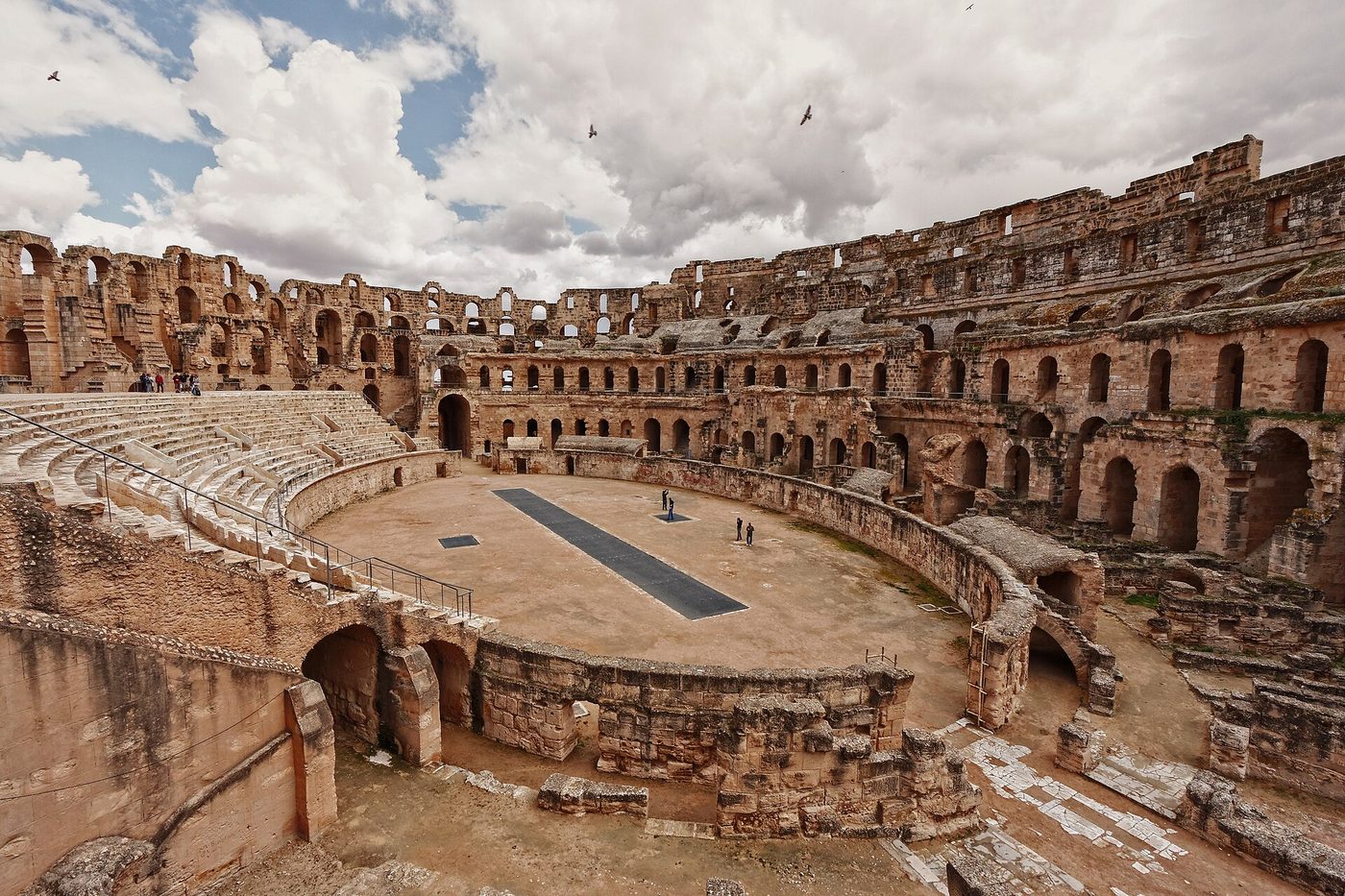
Pickup starts early — anywhere from 05:30 to 07:00 depending how far along the coast you are — and the first stop is the Roman amphitheatre at El Djem, roughly an hour south of Sousse. It seated around 35,000 people, it is one of the largest surviving amphitheatres anywhere in the Roman world, and you can walk out onto the arena floor and climb the tiers with a fraction of the crowds you’d meet in Rome. If you only get one hour of Roman Africa on your holiday, this is a very good hour. Our guide to Roman ruins in Tunisia has the wider context.
Day one, midday: Matmata
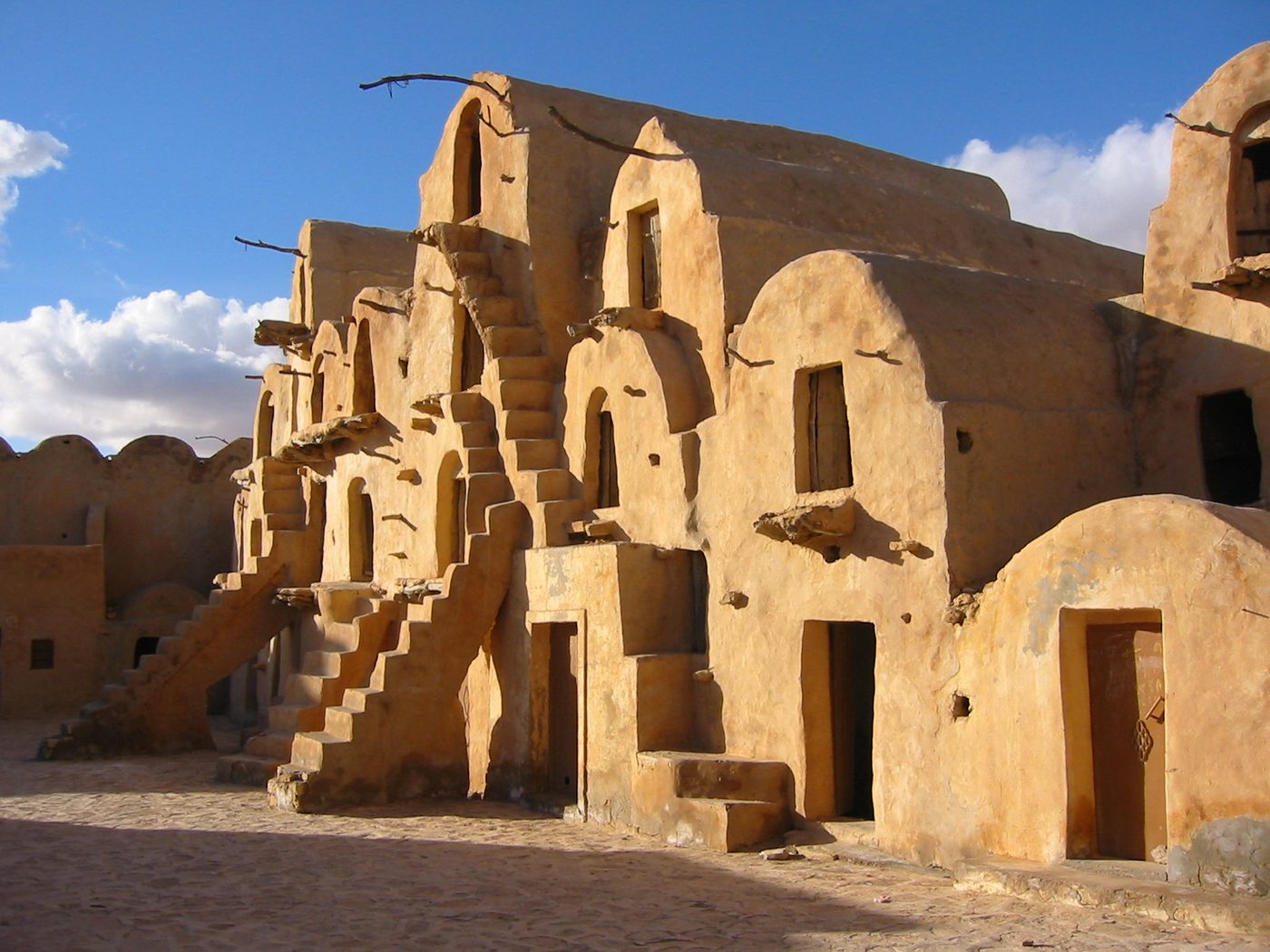
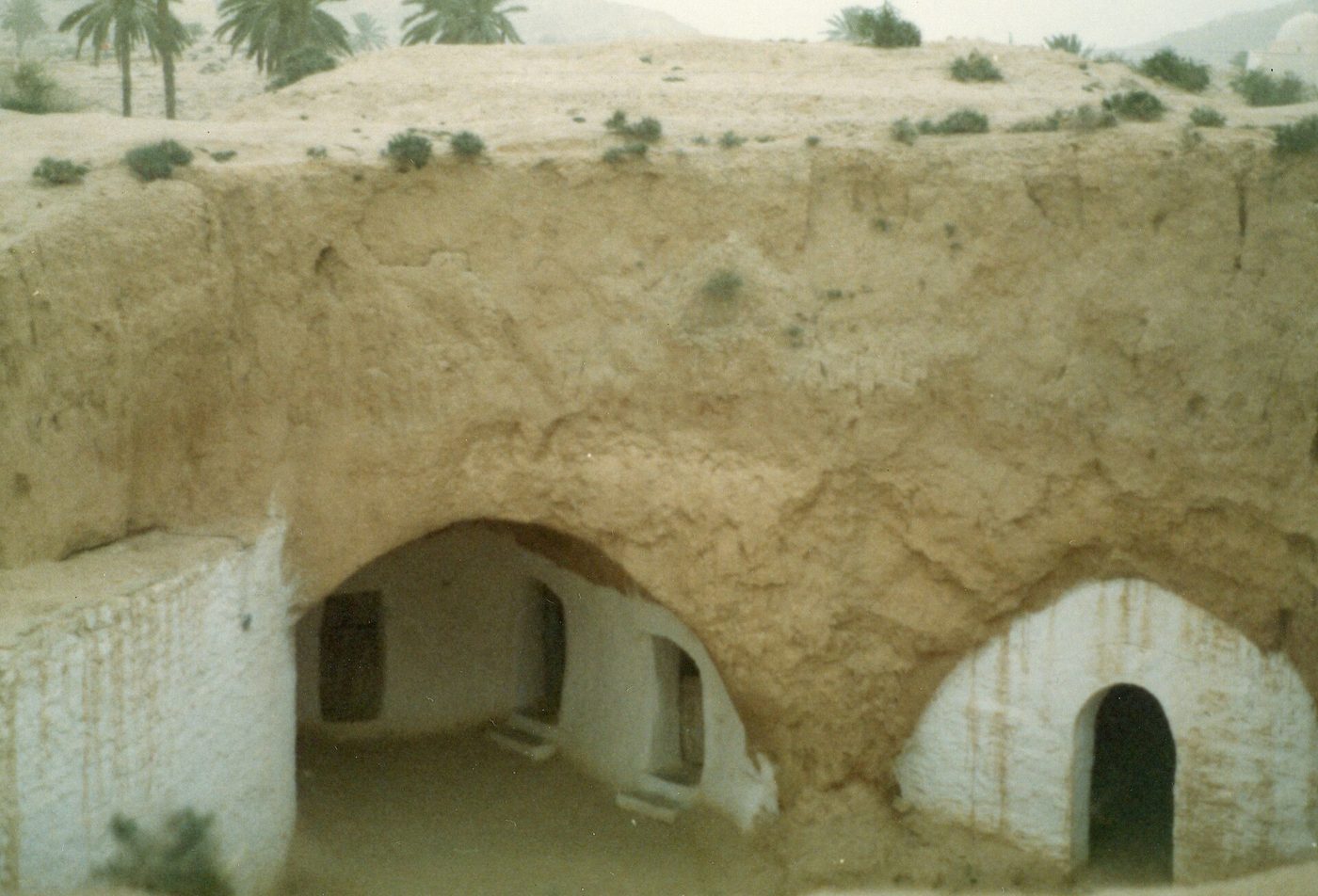
Then the long haul south-west into the Matmata hills, where houses are dug down into the ground around sunken courtyards. Lunch is usually taken here, often at a troglodyte property, and the group visits at least one working home. The Sidi Driss hotel — the interior of the Lars homestead in the original Star Wars — is on some itineraries and not others, which is worth checking before you book if that’s why you’re going. Our Star Wars locations guide maps which sets are where.
Day one, evening: Douz
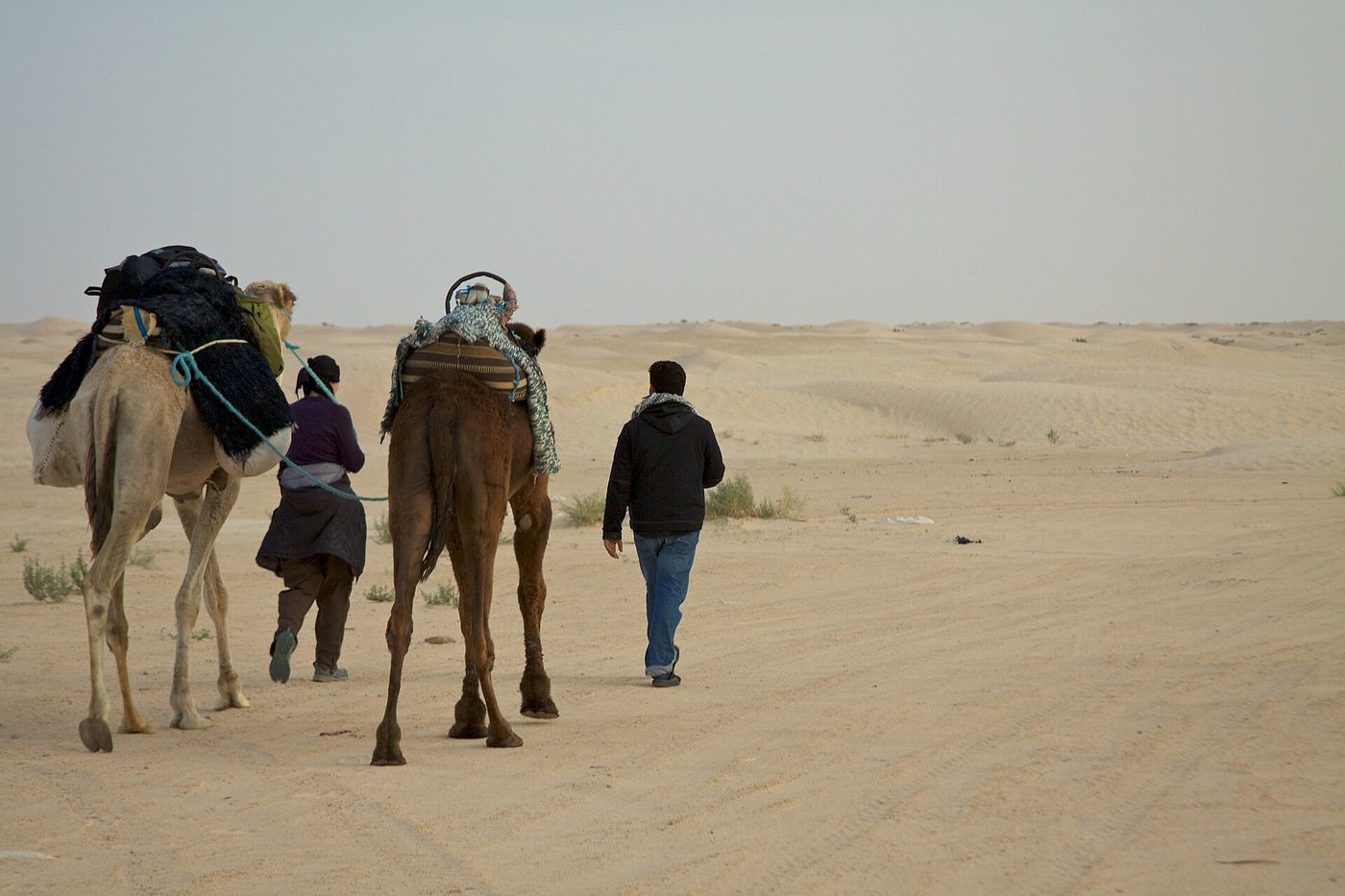
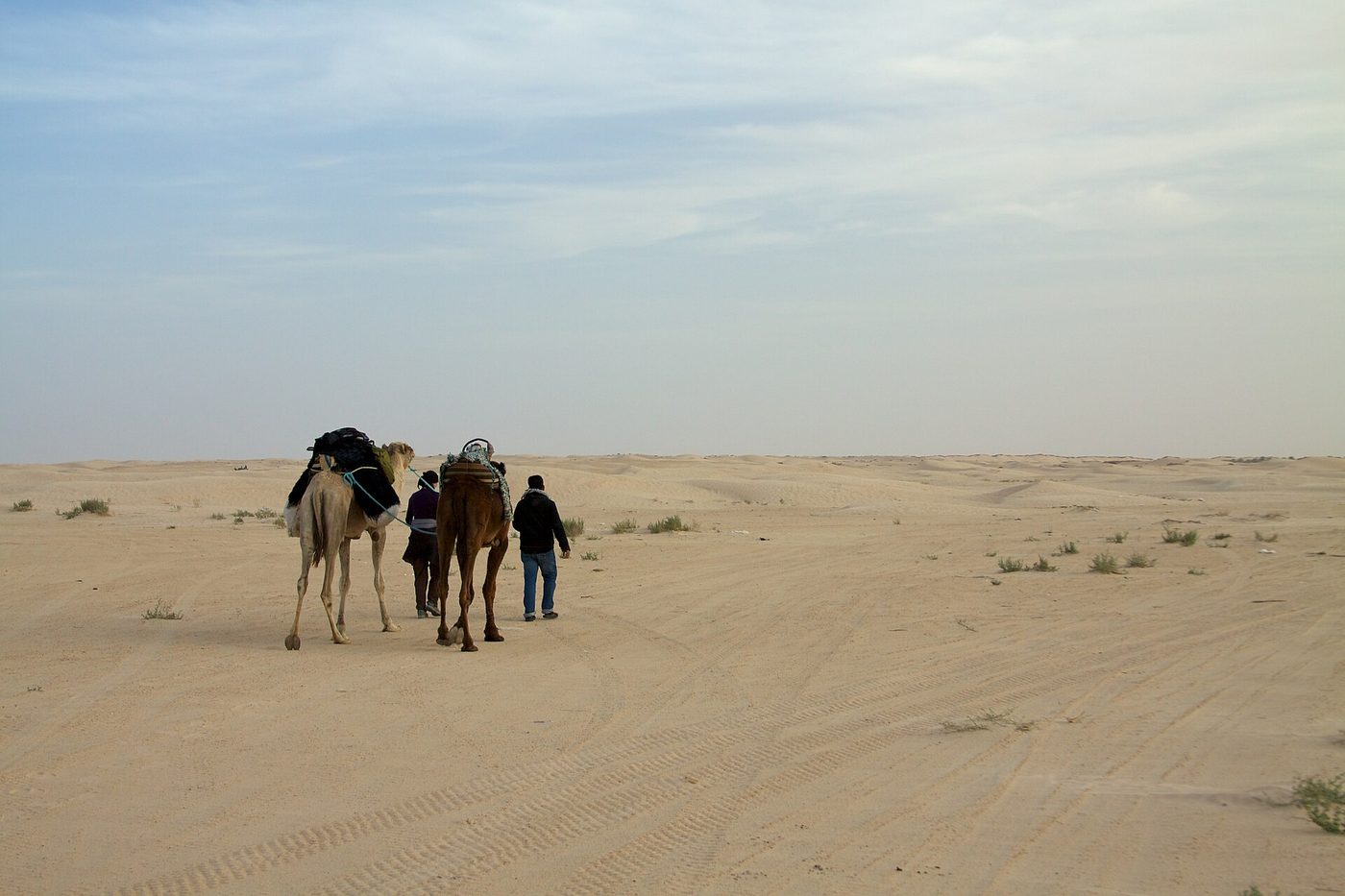
You arrive in Douz in the late afternoon, at the northern edge of the Grand Erg Oriental. This is where the optional camel ride happens — about 50 TND per person, roughly forty-five minutes out into the dunes for sunset, with a horse-drawn carriage offered as an alternative for anyone who’d rather not climb aboard a dromedary. Then it’s dinner and a bed at a hotel in the Douz tourist zone; the four-star Sunpalm comes up repeatedly in recent traveller accounts, generally favourably, and most of the properties have a pool.
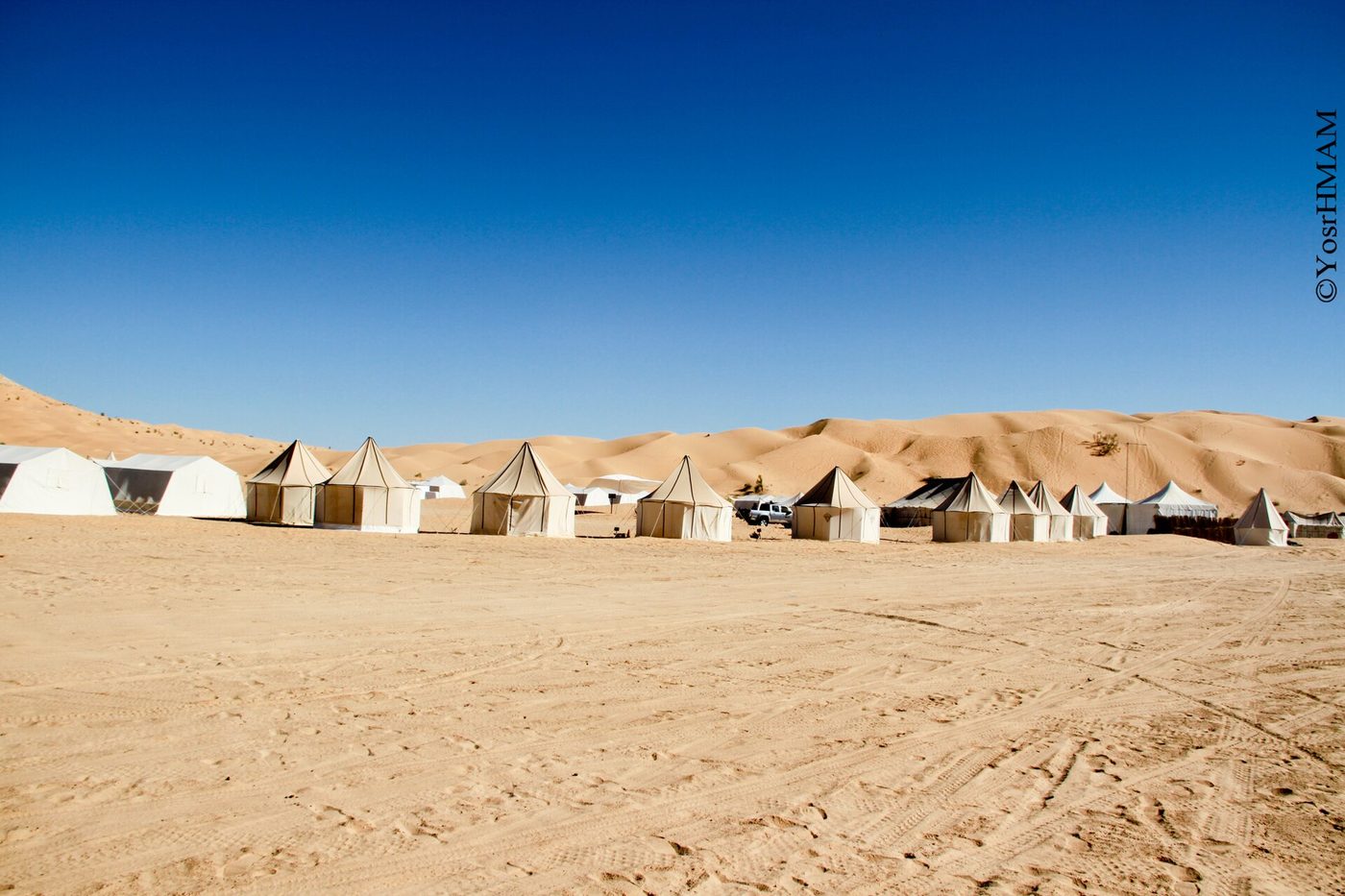
A word of warning that no operator prints: this is not a night in a desert camp. You sleep in a conventional hotel with walls and plumbing. If the tent-under-the-stars image is what you’re buying, you need a different product — see below.
Day two, before dawn: Chott el Jerid
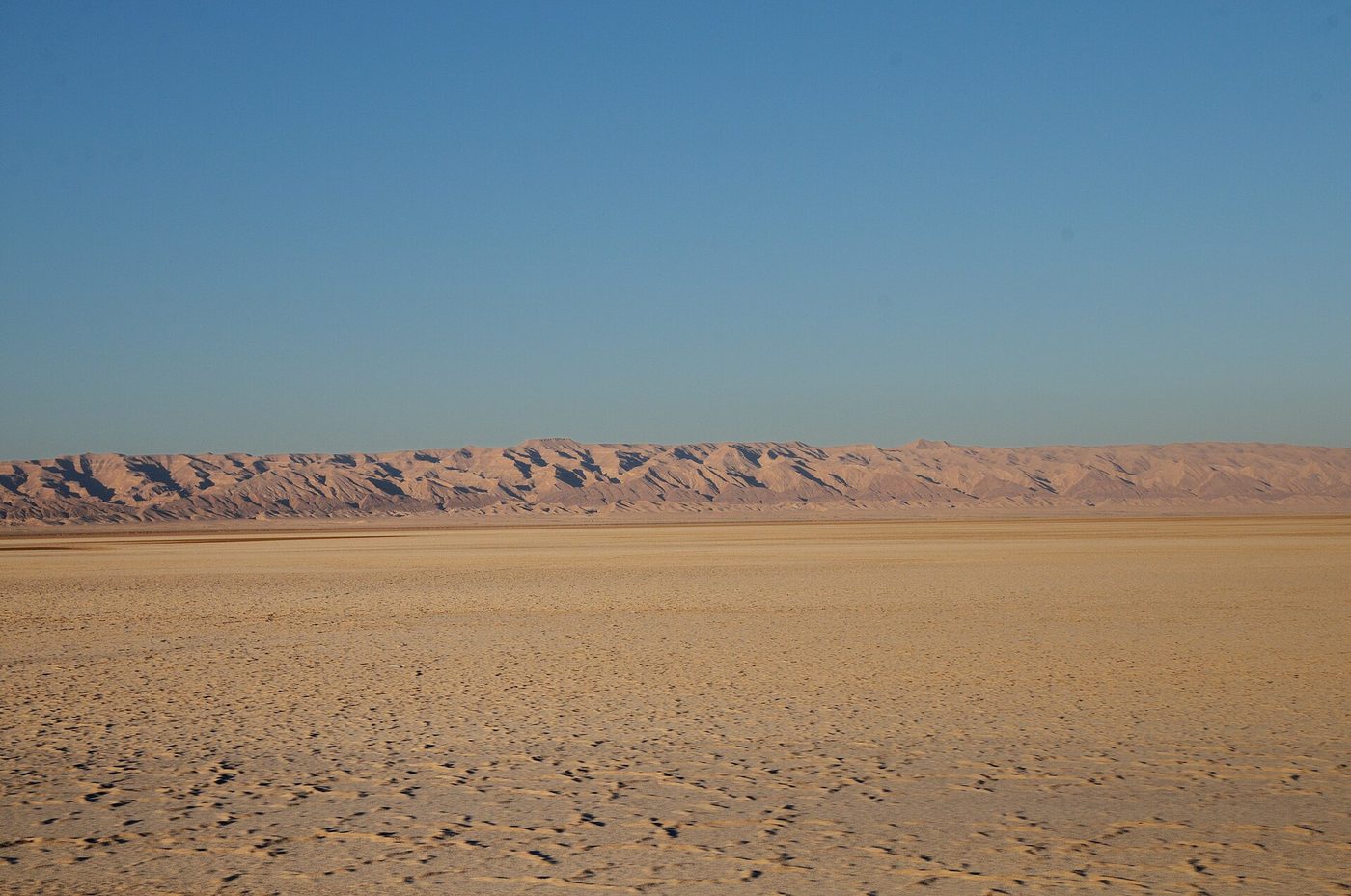
Departure around 04:45. Yes, really. The point is to be on the causeway across Chott el Jerid as the sun comes up — a salt lake the size of a small county, crusted white and pink, with the light doing extraordinary things across it. Travellers who grumble about the alarm clock almost universally concede that this bit was worth it.
Day two, morning: Ong Jemel and the film sets
Off the coach and into 4x4s for a run out to Ong Jemel, near Nefta, where the Mos Espa set still stands in the sand. The 4×4 leg is included in the price and is usually reported as one of the highlights — several vehicles running in convoy, some enthusiastic driving over the dunes, and a set that has been photographed a million times and is still oddly moving to stand in.
Day two, afternoon: Gafsa and Kairouan
Lunch is typically at Gafsa on the way back north, then a photo stop at Kairouan — the Great Mosque and the old town — before the last leg to the coast. Most groups are back at their hotels between 19:00 and 21:00.
What it costs in 2026
Prices below are the listed rates from the main sellers as we write in September 2026. They move with season and demand, so treat them as bands.
| Product | Departs | Rating | Indicative price |
|---|---|---|---|
| Tunisian Sahara 2-Day Tour (TUI Tunisia) | Sousse / Monastir | 4.4 from 401 reviews | Around US$136–151 |
| 2-Day Sahara Express Tour | Tunis / Hammamet / Sousse | 4.7 from 1,008 reviews | Around US$141–156 |
| 2-Day Sahara Adventure | Tunis / Sousse / Hammamet | 4.5 from 93 reviews | Around US$146–162 |
| 2-Day Tunisian Sahara with accommodation | Hammamet | 4.4 from 342 reviews | Around US$139–154 |
| 2-Day desert tour with a night in a Bedouin tent | Tunis / Sousse / Hammamet | 4.6 from 136 reviews | Around US$174 |
| 2-Day Mountain Oases & Sahara Desert Camp | Tunis / Sousse | 4.8 from 55 reviews | Around US$147–184 |
| 3-Day tour to the South & Sahara | Tunis / Sousse / Hammamet | 4.8 from 79 reviews | Around US$344–405 |
Included in almost all of them: hotel pickup and drop-off, coach transport, a multilingual guide, one night’s accommodation, two lunches, dinner and breakfast, and the 4×4 leg. Not included: drinks (cheap, but you pay), tips, the camel, a local hotel tax of roughly €3.50 per person payable in cash at the desk, and a single-room supplement of around €17 if you’re travelling alone.
On money generally: the Tunisian dinar is a closed currency. You cannot buy it in the UK before you fly and you cannot legally take it out again, so change what you need on arrival and convert the remainder back before you leave. Mid-2026 rates have been running around 3.8–3.9 dinars to the pound — check the current rate rather than trusting that figure. Bring small dinar notes for the camel handler, the tea stops and the tip; card payment effectively stops existing once you’re south of Gafsa. Our Tunisia travel tips guide covers the currency rules properly.
The honest experience: what the reviews don’t put in the headline
We read several hundred recent traveller accounts of this trip. The pattern is remarkably consistent, and it’s worth setting out plainly.
It is a huge amount of driving. Sousse to Douz alone is roughly 390km and five hours; the full circuit is around 1,200km. One measured German reviewer, travelling in April 2026, put it well: the journey is tiring, with several hours on the bus, but there are frequent breaks, and if you can handle that you experience a great deal in two days. That’s the fairest one-line summary of the trip we’ve seen.
The coaches vary. Recent accounts describe modern, well air-conditioned vehicles with plenty of café and toilet stops — and, from a passenger of 1.83m, seats that were “rather cramped” but just about manageable. If you’re tall, get on early and take an aisle seat near the front.
The 04:45 start is real. It isn’t padding; it’s the only way to reach the salt lake at sunrise. Pack the night before, set two alarms, and accept that day two is front-loaded.
The guides carry the trip. Across the reviews, the single most-praised element is the guiding — one group got a history lecturer from the University of Sousse — with commentary in two or three languages on history, religion, the economy and daily life. Guide scores consistently outrank transport scores, which tells you where the value is.
The food is generous and included. Buffet lunches, a hotel dinner, breakfast. You pay for drinks only, and they’re inexpensive.
Nobody regrets it. The overwhelming sentiment, even from the people complaining about the bus, is that the value is remarkable and they’d do it again. That is not something we can say about most resort excursions.
Is it safe? The FCDO wording, quoted exactly
Because this trip goes south, people ask. Here is the actual advice rather than a summary.
The Foreign, Commonwealth & Development Office advises against all travel to “the militarised zone south of the towns of El Borma and Dhehiba; within 20km of the rest of the Tunisia-Libya border area north of Dhehiba; the town of Ben Guerdane and immediate surrounding area”. It advises against all but essential travel to “within 75km of the Tunisia-Libya border, including Remada and El Borma but excluding Zarzis, the C118 road and all areas in Medenine Governorate north of the road”.
Note the carve-out: Zarzis, the C118 road and all areas in Medenine Governorate north of that road are explicitly excluded from the advisory. The FCDO has named them as outside the restriction. And your route — El Djem, Matmata, Douz, Chott el Jerid, Ong Jemel, Gafsa, Kairouan — runs down the centre and west of the country, nowhere near the Libyan frontier and nowhere near the Algerian border restrictions either. It enters no restricted zone at any point.
That is the FCDO advice as updated on 24 July 2026 and checked by us on 2 September 2026. Read it yourself at gov.uk’s Tunisia travel advice before you book and again the week you fly. Our full, date-stamped Tunisia safety guide quotes every zone, and we cover the resort itself on our is Sousse safe page.
One thing worth knowing rather than worrying about: you will pass military and police checkpoints on the southern roads. The FCDO’s own advice is to approach slowly and be ready to present ID. On a coach the guide handles it and it adds a couple of minutes. Carry a copy of your passport photo page — as a foreign national you’re required to have ID on you.
Insurance, health and the GHIC problem
Two hard facts before you book anything.
Your UK GHIC is not valid in Tunisia. There is no reciprocal healthcare agreement. Public hospitals expect foreign nationals to pay, private clinics want payment up front, and repatriation costs run into five figures. Comprehensive travel insurance with medical cover isn’t a nice-to-have.
Check that your policy covers the activities. Camel rides, quad bikes and 4×4 excursions are among the most common exclusions in standard travel cover, and all three appear on this itinerary. Call your insurer, get them named, keep the email.
On quads — offered at several stops on the southern circuit — the FCDO is blunt and worth quoting: “Quad bikes are popular in desert resorts. Take the same precautions as you would in the UK. Safety standards can vary considerably. Always wear a crash helmet.” If no helmet appears, don’t ride.
For jabs, food and water guidance, use TravelHealthPro’s Tunisia page. Nothing unusual is required for this route. Do pack rehydration sachets and something for a dodgy stomach — two days of buffet food and long coach hours is a combination best not tested unprepared.
Heat, cold and dust: the seasonal reality
The southern interior is not the coast, and the gap between them in high summer is enormous.
June to September is genuinely hard. Inland temperatures regularly exceed 40°C and can reach the high forties in July and August. A coach with good air conditioning helps until you step out of it, at which point Matmata and the dunes are an endurance exercise. In heatwaves, pressure on the national grid can trigger temporary power cuts that take hotel air conditioning and phone signal with them for a while. If your holiday falls in August, we’d honestly suggest a shorter coastal excursion instead and saving the desert for another trip.
Desert nights are cold, even in spring. Douz sits at the edge of the erg and the temperature drops fast after dark; December and January nights can fall to around 5°C. Take a fleece for the sunset camel ride and something warm for the pre-dawn start on day two — you’ll be standing on a salt flat at six in the morning in a wind.
Dust is constant. Buy a cheche at the first stop and use it. Keep camera gear in a bag on the 4×4 leg.
The sweet spot for this trip is October to April, and if you can choose, October and March–April give you warm days, workable nights and the best light. Our best time to visit Tunisia guide breaks it down month by month.
Hotel night or tent night? Choosing the right version
This is the decision most people get wrong, so here it is plainly.
| Version | You sleep in | Best for | Trade-off |
|---|---|---|---|
| Classic 2-day coach tour | A hotel in Douz | Maximum sights: El Djem, Matmata, salt lake, film sets, Kairouan | No desert night; a lot of coach |
| 2-day tour with a Bedouin tent night | A tented camp | People whose priority is the desert itself | Fewer headline sights; basic facilities |
| 2-day mountain oases & desert camp | A camp, via Tozeur’s oases | Landscape and photography | Longer legs west; skips some Star Wars sets |
| 3-day southern tour | Two nights, mixed | Anyone who can spare the time | Roughly double the price |
| Any tour from Djerba instead | A camp near Ksar Ghilane | People already staying in the south | Only works if you’re based on the island |
Our honest steer: if this is your one big excursion and you want to see the country, take the classic version. If you specifically want to sleep in the sand, book the tent-night product and accept that you’ll see less. And if you’re basing yourself in the south anyway, the Sahara tour from Djerba reaches the dunes in a fraction of the driving.
What to pack for the two-day trip
- An overnight bag only. Leave your main case at the resort — most hotels will store it free.
- Swimwear. The Douz hotels have pools, and you’ll want twenty minutes in one after nine hours on a coach.
- A warm layer. Non-negotiable for the sunset ride and the dawn start.
- Closed shoes. Matmata’s courtyards and the dune walk aren’t flip-flop terrain.
- Sun protection. Hat, cream, sunglasses. The salt lake glare is severe.
- Cash in dinars, in small notes, for the camel, the hotel tax, drinks and tips.
- A copy of your passport for checkpoints, plus your insurance details.
- Motion-sickness tablets if you’re prone — the Matmata hills road is winding.
- A power bank and a scarf. One for the coach, one for the sand.
Is it worth it? Our verdict
Yes — for most people, and with the caveats above firmly in view.
Around £120 buys you two lunches, a dinner, a breakfast, a hotel night, a Roman amphitheatre, a troglodyte village, a sunset in the Sahara, a sunrise over a salt lake, a 4×4 run to a film set and a stop in one of Islam’s most significant cities. Nothing else on the excursion board comes close on value, and nothing else shows you Tunisia beyond the beach in the same way. If your alternative is a fifth day by the pool, book it.
Don’t book it if you struggle with long journeys, if you’re travelling with a toddler, if you’re going in high summer, or if what you actually want is a slow, quiet night in the dunes — in which case pay more for the tent version, or plan a proper southern leg into your route. Our guides to day trips from Sousse and the excursions worth booking cover the shorter alternatives.
Sahara tour from Sousse: your questions answered
How far is the Sahara from Sousse?
Douz, the closest desert town on the standard route, is roughly 390km south-west of Sousse — about five hours’ driving. The full two-day circuit covers around 1,200km, which travellers routinely clock at about 770 miles. There is no short version; the desert is a long way from the Sahel coast.
How much is the two-day Sahara trip from Sousse?
Roughly US$135–175 per person in 2026, so around £105–135, including transport, guide, one night’s half-board accommodation, two lunches and the 4×4 leg. Budget separately for the camel ride (about 50 TND), a hotel tax of about €3.50 in cash, drinks and tips. Check current prices before booking.
Do you sleep in the desert on the Sousse Sahara tour?
On the classic version, no — you sleep in a conventional three or four-star hotel in Douz. Separate products do offer a night in a Bedouin tent at a desert camp for around US$174. If sleeping in the sand is the point of the trip for you, check the listing carefully, because the wording is often ambiguous.
What time does day two start?
Around 04:45. The early departure exists so the group reaches Chott el Jerid for sunrise, which is one of the best moments of the whole trip. Pack the night before and go to bed early — dinner in Douz tends to be served promptly for exactly this reason.
Is the Sahara tour from Sousse safe?
The route enters no FCDO restricted zone. The southern advisory relates to the Libya border area, and the FCDO explicitly excludes “Zarzis, the C118 road and all areas in Medenine Governorate north of the road”; the tour runs far west of all of it. That advice was updated 24 July 2026 and checked by us on 2 September 2026. Expect routine police checkpoints on southern roads — carry ID.
Can you do the trip from Hammamet or Tunis instead?
Yes. The same operators run near-identical itineraries with pickups from Hammamet, Yasmine Hammamet, Monastir, Skanes and Tunis. Pickups from Tunis and Hammamet are earlier and the coach legs longer, since you’re starting further north. Prices are broadly the same.
Is it suitable for children?
Older children generally cope well and love the camels and the film sets; one recent group travelled with a 17-month-old and rated it highly. But the driving is the deciding factor. If your child struggles with long journeys or an 04:45 start, this is not the trip.
Is the camel ride included?
Almost never. It’s an optional extra at Douz, usually about €15 or 50 TND per person for a sunset ride into the dunes, with a horse-drawn carriage offered as an alternative. It’s worth doing once, and it’s genuinely optional — nobody pressures you.
What should I do with my luggage?
Take an overnight bag and leave your main case at your resort hotel, which will store it at no cost and keep your room booking intact. Coach hold space exists but there’s no reason to drag a suitcase 1,200km.
Which is better — the trip from Sousse or the one from Djerba?
Different products. From Sousse you get more headline sights (El Djem, Kairouan, the film sets) but far more coach time. From Djerba you get to the dunes in three and a half hours in a small 4×4 and can realistically sleep at a desert camp. If you’re staying on the coast at Sousse, the Sousse version is the one that exists; if you’re on the island, take the southern one.
What’s the best time of year for it?
October to April, with the shoulder months of March, April, October and November the pick. Summer inland routinely tops 40°C and makes the outdoor sections genuinely unpleasant. Winter days are lovely; winter nights and the pre-dawn start are cold, so pack a jacket.
Can I do the same route independently?
You can, and with a hire car and three or four days it’s a rewarding drive — but read the practicalities first. Fuel is sparse in the south, night driving outside towns is hazardous, and the FCDO warns specifically about sand drifts on roads. Our Tunisia road trip guide covers it properly.
Where to go from here
If you’ve decided to book, read up on the places you’ll pass so the stops mean something: Douz for the dunes and the Thursday market, and Tozeur if you’re tempted to extend westwards. Still choosing an excursion? Our shorter-trip roundups cover the alternatives, and things to do in Tunisia covers everything else worth your holiday.
Written by the Tunisia Tourism Guide team — an independent UK-focused guide to travelling in Tunisia. We don’t sell tours or take hotel commissions. Prices, timings and government advice were checked on 2 September 2026; always confirm current details before you book.
Photo credits
All images via Wikimedia Commons, used with thanks: El Djem amphitheatre © Agnieszka Wolska (CC BY-SA 3.0); The salt flats of Chott el Djerid © Josep M. Gracia (CC BY-SA 4.0); A camel trek at Douz © McKay Savage from London, UK (CC BY 2.0); A desert camp beyond Douz — where the longer Sahara © Ena Tounes (CC BY 2.0).