By the Tunisia Tourism Guide team · Last updated 24 July 2026 · We don’t sell tours or take hotel commissions — this is independent advice, written to be useful.
Ask a Tunisian where the country’s best beach is and a surprising number will say the same thing: Mansoura, just outside Kelibia. It’s a name most British holidaymakers in Hammamet have never heard, and that’s exactly why we like it. Kelibia is a working fishing town on the far side of the Cap Bon peninsula — no resort strip, no coach parties, just a hilltop fort, glass-clear water and some of the freshest fish in Tunisia.
Kelibia Tunisia is a low-key fishing town on the northeast tip of Cap Bon, best known for its dramatic hilltop fort, the white sand and clear water of Mansoura beach — widely rated the finest in the country — and its own dry muscat wine. It’s a quieter, more local alternative to the big resorts, and an easy add-on to a Cap Bon road trip.
This guide covers what to actually do in Kelibia: climbing the fort (and when to go), picking the right beach, drinking the local muscat, and eating your way through the fishing port. It’s the sort of place that rewards slowing down, so we’ll show you how.
Kelibia at a glance
| The essentials | What to know |
|---|---|
| Best for | Beaches, seafood, a hilltop fort, a quiet local base — not nightlife or all-inclusives |
| Star attraction | Mansoura beach — often called the best in Tunisia — and the fortress above the port |
| Local speciality | Muscat de Kelibia (dry white wine) and straight-off-the-boat fish |
| Getting there | ~71km / 1 hour from Hammamet; ~100km / 1 hr 45 from Tunis |
| How long to stay | A day trip works; one or two nights is better |
| When to go | Late spring and early autumn for warm, uncrowded beaches |
Kelibia sits on the eastern coast of Cap Bon, facing Sicily across the channel. It’s a real town that happens to have wonderful beaches, rather than a beach resort with a town bolted on — and that distinction is the whole appeal. Come for the swimming and the seafood, stay for the unhurried pace, and use it as a base to explore the rest of the Cap Bon peninsula.
Kelibia fort: the best view on Cap Bon
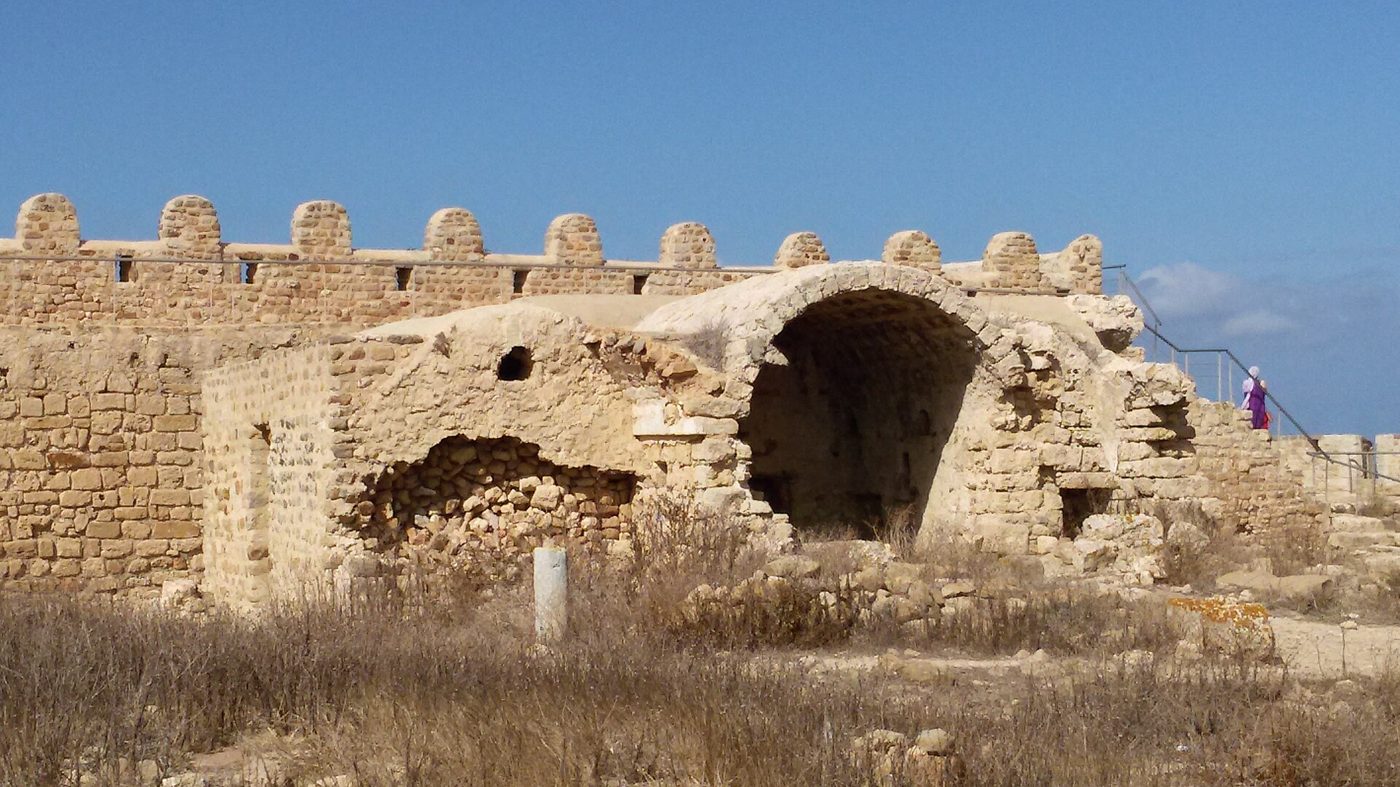
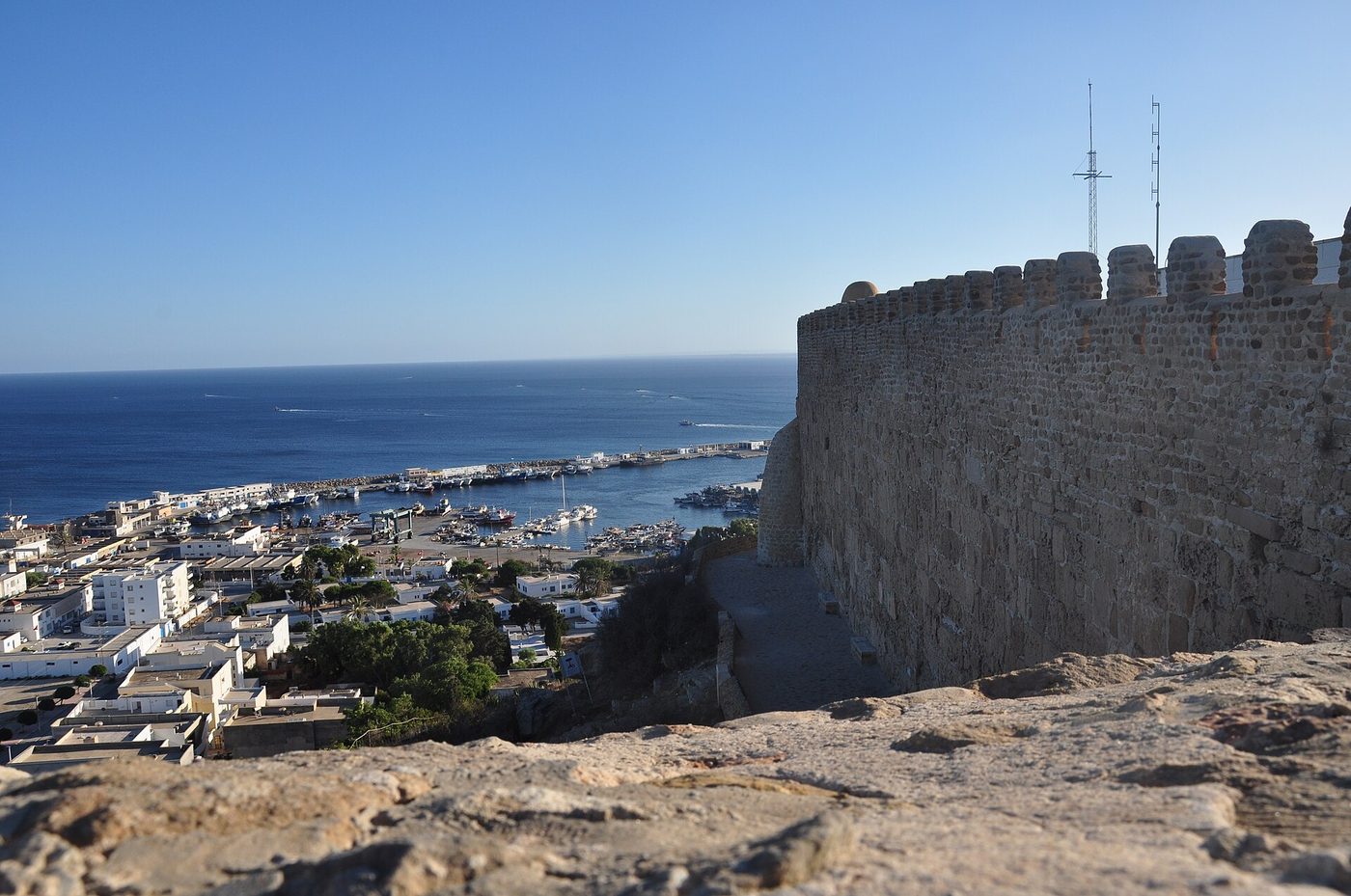
The fortress crowning the hill above Kelibia is the largest in Tunisia, and the climb up to it is the town’s signature experience. Its story is a layer cake of empires: Punic in origin, extended by the Romans and heavily rebuilt by the Byzantines, reworked by the Hafsids, and given much of its present Ottoman shape in the 16th century. The last soldiers to hold it were Italian and German forces during the Second World War. The stone you walk on today is a patchwork of all of them.
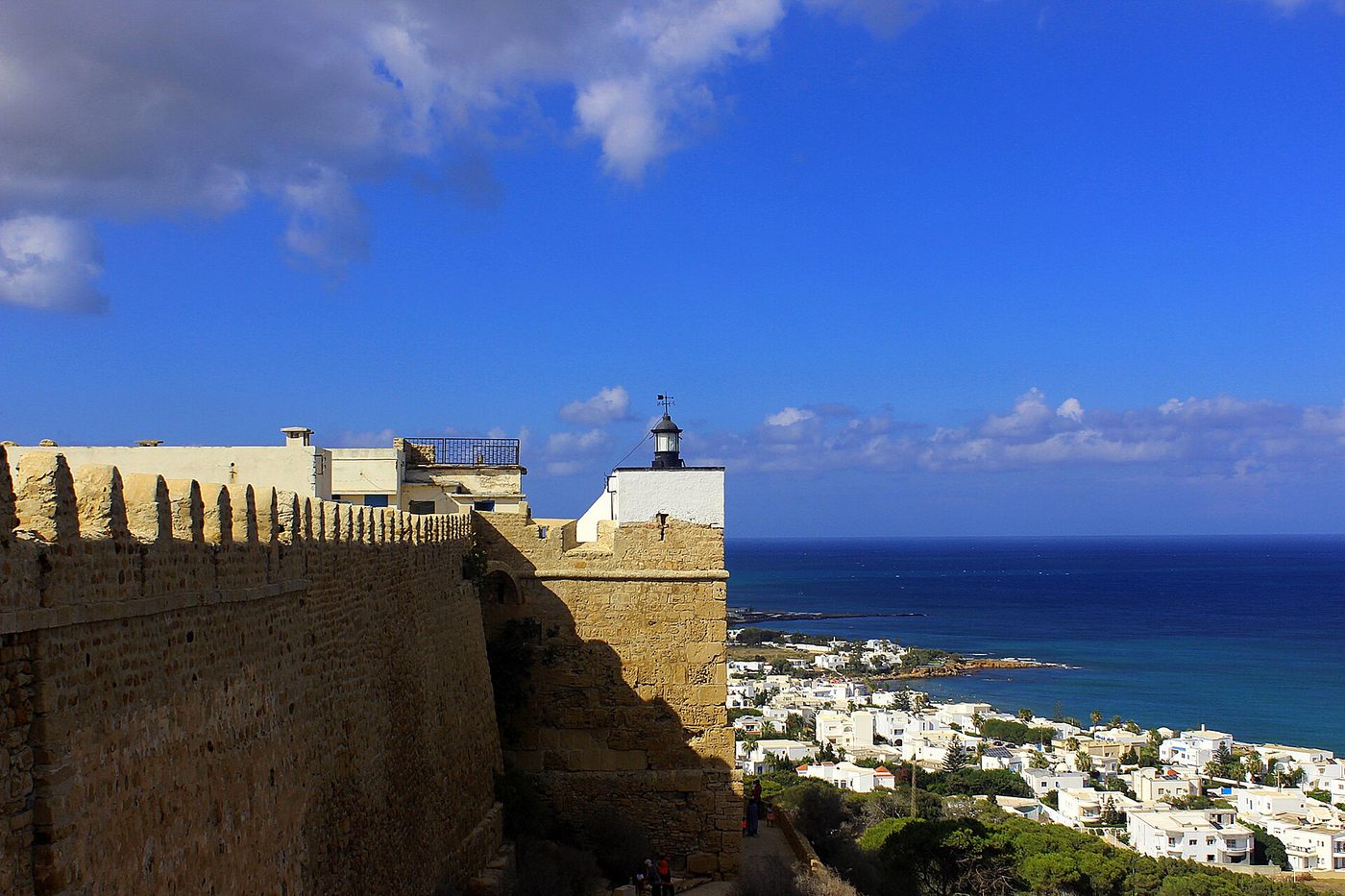
Inside the walls there’s less to “see” in a museum sense than to feel — this is a place for wandering the ramparts and bastions rather than touring furnished rooms. Look for the old cisterns cut to catch rainwater, the gun positions angled out to sea, and the lighthouse on the headland below. Signage on the ground is thin, so it pays to read a little of the history before you climb: do that and the layers separate out in front of you — Punic foundations, Byzantine walls, Ottoman bastions — rather than blur into one heap of old stone. Bring the kids and it becomes a proper castle to explore; come alone and it’s a quiet hour with one of the best views in the country.
The reward at the top is the view. From the ramparts you look down over the fishing port and the whole sweep of the coast, out across the Sicily Channel toward the volcanic island of Pantelleria — and, on a genuinely clear day, Sicily itself. It’s the finest panorama on the peninsula, and it’s the one sight in Kelibia no one should skip.
Visiting the fort: hours, tickets and what to bring
The climb from the harbour takes about 15 minutes on foot and is moderate rather than gruelling, but the stones underfoot are loose and can be slippery, so wear proper shoes with grip and bring bottled water — there’s little shade. Allow 60 to 90 minutes for the visit. Late afternoon is the sweet spot: the heat has eased and the light is kinder for photographs.
| Kelibia fort (2026) | Details |
|---|---|
| Opening (summer) | Around 9am–7pm |
| Opening (winter) | Around 9am–5pm |
| Opening (Ramadan) | Around 9.30am–5pm |
| Ticket (non-residents) | Around 8 dinars (2026 — check on the day) |
| Bring | Water, sun protection, grippy shoes |
Hours shift with the season and during Ramadan, so treat the table above as a guide and confirm locally. There’s a small café near the top where you can sit with the view and get your breath back before the walk down.
Mansoura beach: is this really Tunisia’s best?
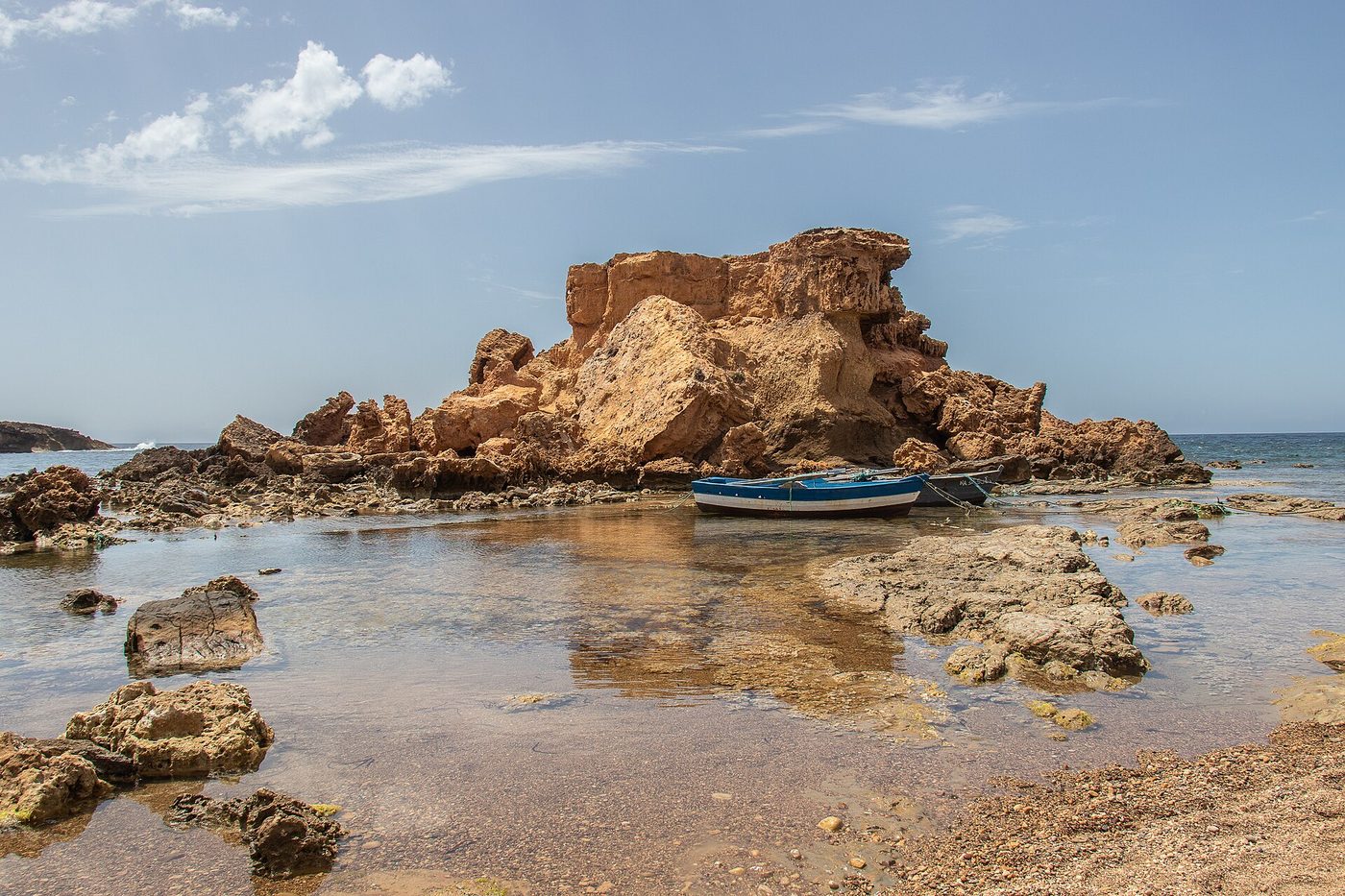
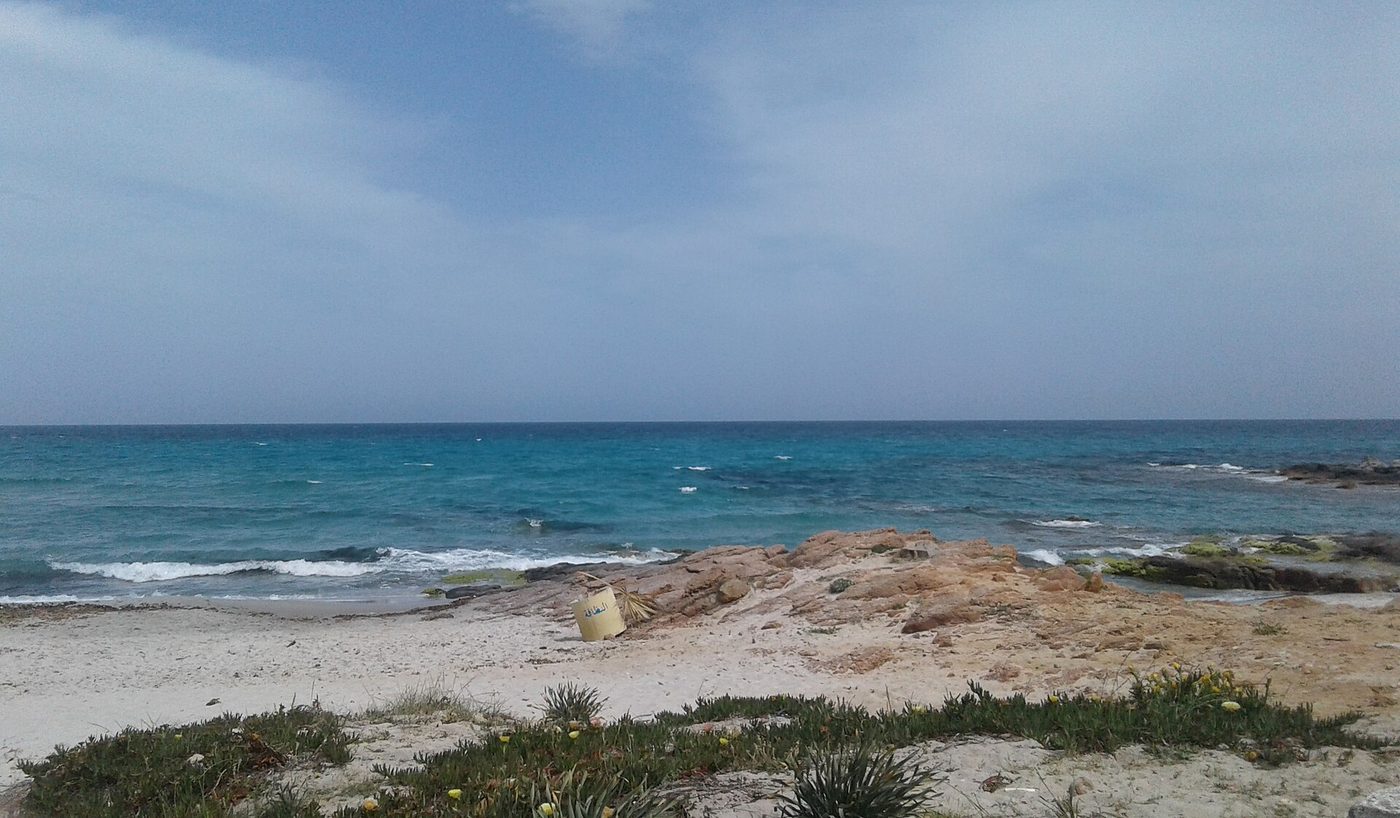
Three kilometres north of the town, Mansoura beach is the reason a lot of people make the trip. It’s a long crescent of fine, pale sand that slips gently into water so clear it makes much of the Mediterranean look cloudy, backed by low cliffs and — crucially — almost no development. There’s no wall of hotels here, no jet-ski racket, just sand, sea and space. It picked up a Blue Flag for water quality back in 2015, and on its day it lives up to the “best beach in Tunisia” billing.
The one catch is weekends, when Tunisian families pour in and the main stretch gets busy. The fix is simple: walk north, past the sun-coloured Cap Bon Kelibia Beach Hotel, and the crowds thin to almost nothing as empty sand opens up ahead of you. Go on a weekday and you may have great swathes of it to yourself even in summer.
The other Kelibia beaches
Mansoura is the headline, but it isn’t the only option:
- Petit Paris — a small, sheltered cove just north of the town centre, sandy and pretty, good for an easy swim close to base.
- Plage de Sidi Mansour — quieter and wilder, with dunes and rock pools; you really need a car to reach it and there are few facilities, which is precisely why it stays peaceful.
- The wild sands further north — beyond the hotel, the coast unspools into long, empty beach for those willing to walk.
Between them, Kelibia’s beaches are a strong claim to a spot among the most beautiful places in Tunisia, and a very different experience from the busy resort sands further south. For how they compare nationally, see our roundup of the best beaches in Tunisia.
Muscat de Kelibia: the local wine worth trying
Kelibia makes its own wine, and it’s genuinely good. Muscat de Kelibia is a fragrant white made from the Muscat of Alexandria grape, grown on vineyards so close to the coast that this is, as locals like to point out, the only Tunisian wine made within sight of where its grapes ripen. It’s been produced here since Roman times, and the crisp, dry version is the one to seek out — light, aromatic and made for a plate of grilled fish.
You can buy it from the local cooperative’s small shop near the fortress and drink it in the port restaurants. A bottle runs around 25 dinars in 2026 (check on the day), and it’s a far more characterful souvenir than the usual airport fare — assuming you’ve room after the pottery from Nabeul down the coast. A note on the practical side: Tunisia is a Muslim country where alcohol is sold in licensed places rather than everywhere, and it’s not sold during the daytime in Ramadan, so plan accordingly.
Eating in the fishing port
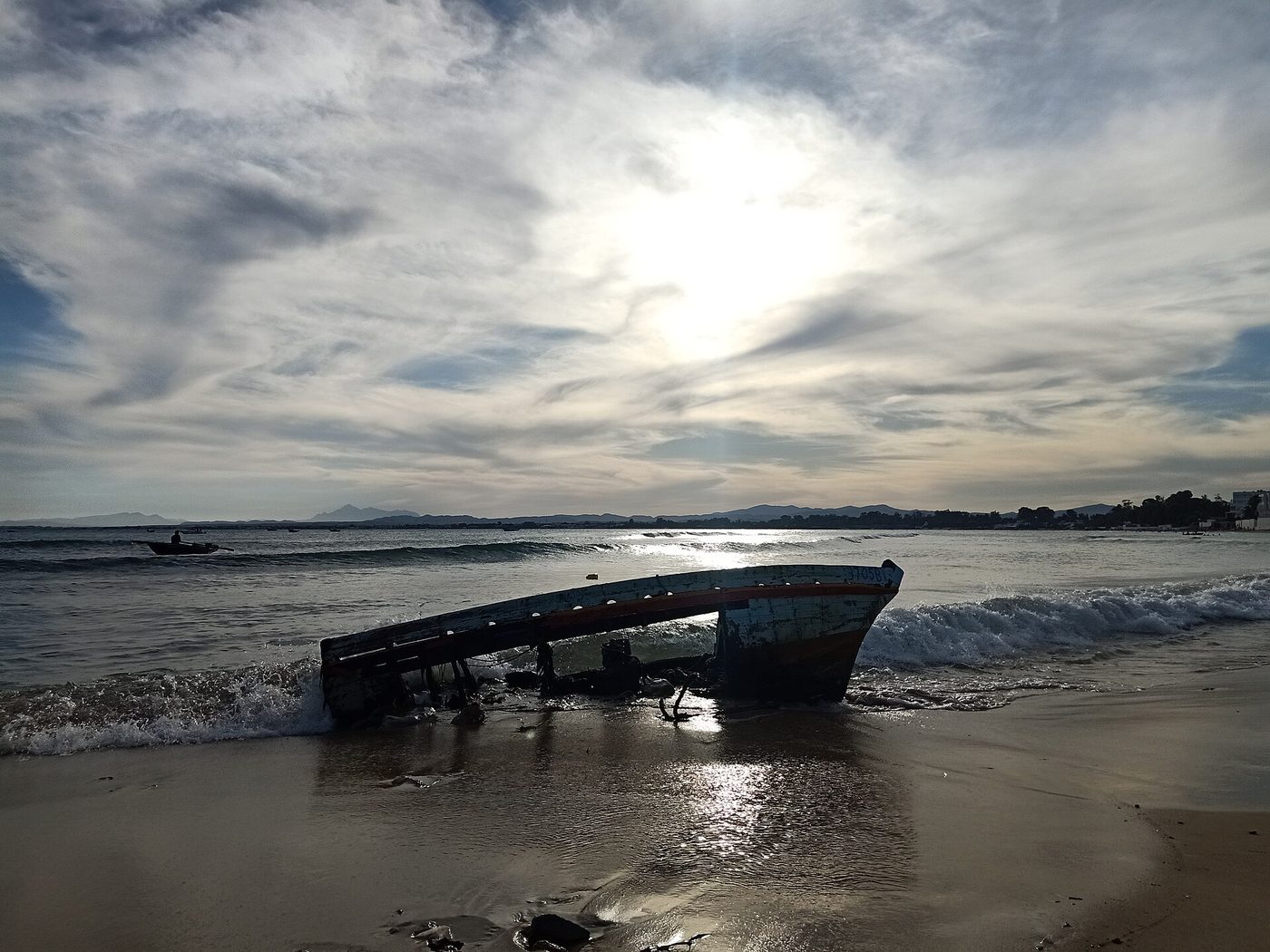
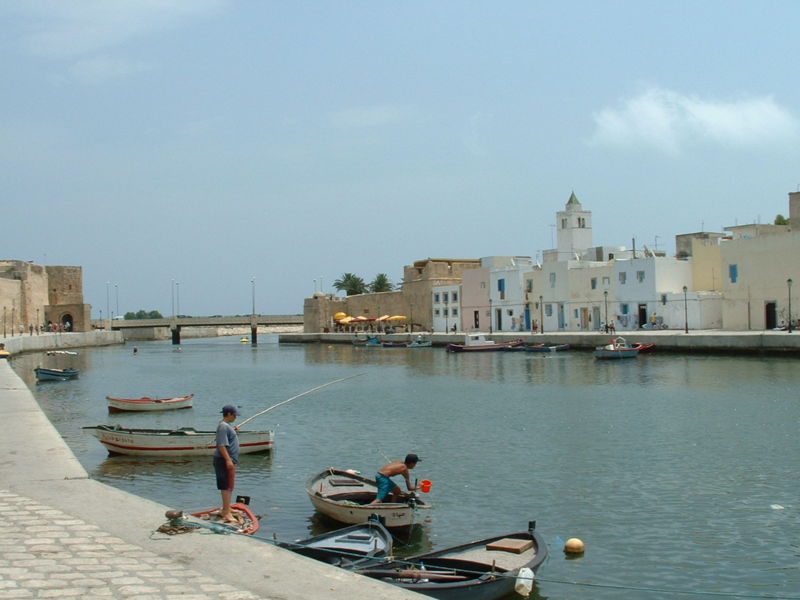
Kelibia is one of Tunisia’s larger fishing ports, and it shows on the plate. The restaurants along the harbour and corniche serve whatever the boats brought in that morning — sea bream, sea bass, octopus, squid, prawns, the local cuttlefish (soupia), and sea urchins in season. The classic order is fish grilled simply and served with tastira, a warm tangle of fried peppers, tomato and chopped egg, or the local fish couscous, which is a Cap Bon speciality in its own right.
Prices are fair for what you get: a simple local meal is modest, while a proper fish spread on the corniche costs more but is still a fraction of what the same freshness would cost at home. Pair it with a cold glass of the local muscat and you have one of the best-value meals on the Tunisian coast. Our Tunisian food guide explains the wider menu, from brik to harissa.
Part of the pleasure is the setting. This is a proper working harbour, busiest at dawn when the boats come in and again in the late afternoon, and the restaurants are an extension of it rather than a tourist add-on. Point at whatever looks freshest, ask the price by weight before it hits the grill, and don’t overlook the plainer places — some of the best fish comes off the simplest kitchens. Cuttlefish and octopus are near-constant, prawns and squid come and go, and sea urchins appear in the cooler months for those who like them. Bread, olives, a dish of harissa and a chilled bottle of the local white round it all off nicely.
Kelibia or the big resorts? An honest take
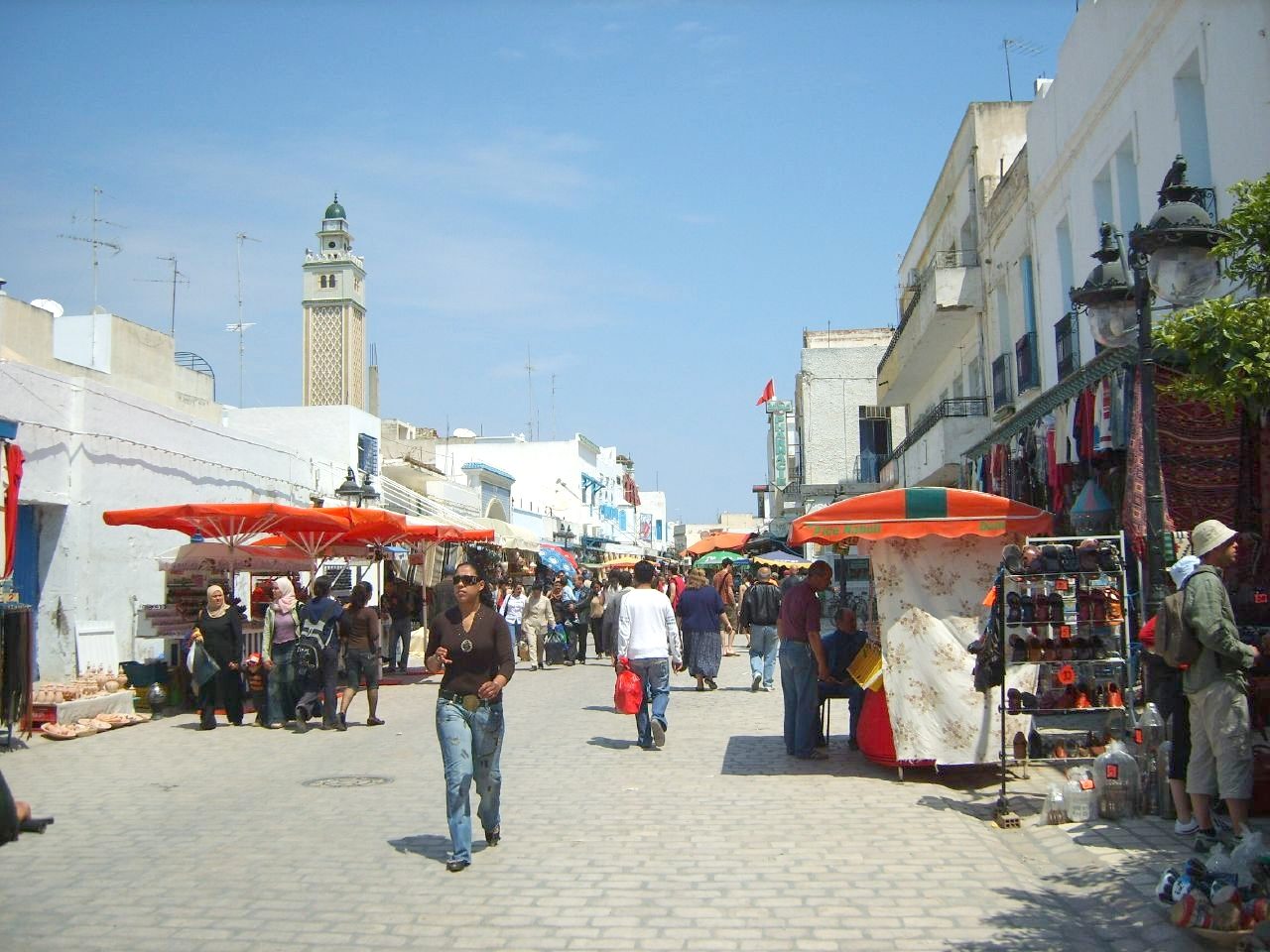
Kelibia isn’t trying to be Hammamet or Sousse, and that’s the whole point. There are no towering all-inclusives, no strip of neon bars, no animation team by the pool. What you get instead is a real Tunisian town that happens to sit on a lovely coast — fishermen mending nets, families picnicking on the sand at weekends, and a handful of small hotels and guesthouses rather than resort complexes.
That suits some travellers perfectly and frustrates others. If you want a lively resort with everything on tap, water parks and late-night entertainment, a bigger base like Sousse will serve you better. But if your ideal day is a slow swim, a long seafood lunch and a fortress at sunset, Kelibia offers something the resorts can’t: the real place, at a gentler pace and a lower price. It’s one of the reasons the town keeps turning up on lists of Tunisia’s quieter corners.
Our honest rule of thumb: come to Kelibia for a night or two as part of a Cap Bon trip rather than a whole fortnight, and pair its calm with a livelier base if you want variety. Do that and you get the best of both worlds — the sand and seafood here, the buzz and facilities elsewhere.
A perfect day (or two) in Kelibia
Kelibia works beautifully at a slow pace. Here’s how we’d spend it:
| When | Do this |
|---|---|
| Morning | Mansoura beach while it’s cool and quiet — swim, walk north, laze |
| Lunch | Fish and tastira at the fishing port, with a glass of Kelibia muscat |
| Late afternoon | Climb the fort for the light and the view across to Pantelleria |
| Evening | A stroll along the corniche and a slow seafood dinner |
| Next day | The Punic ruins at Kerkouane, 10km south, or push on around Cap Bon |
With a second day, the UNESCO-listed Punic town of Kerkouane is a short drive south and one of the most remarkable archaeological sites in the country — a whole 3rd-century-BC town left frozen in time. Combine it with the fort and you’ve got a proper history morning to balance the beach afternoons.
Getting to Kelibia, and getting around
- From Hammamet: about 71km, roughly an hour by car — the simplest option is your own hire car or an agreed-fare taxi. There’s no direct bus; public routes go via Nabeul and take a good deal longer.
- From Tunis: around 100km and an hour and three-quarters by car. Shared louages (minibuses) run from the capital, and there are bus connections via Nabeul, but nothing direct or fast.
- From Nabeul: under an hour by car, with roughly hourly buses if you’d rather not drive.
- Around town: the centre and port are walkable; the fort is a 15-minute climb from the harbour. For the quieter beaches like Sidi Mansour you’ll want a car. Yellow petit taxis cover short hops — agree the price first.
Because the best of Kelibia and Cap Bon is spread out, a hire car makes the most sense; our guide to getting around Tunisia covers the options. Kelibia is also one of the rewarding stops on a wider day trip from Hammamet, though it’s far enough that staying over is the nicer way to do it.
Where to stay
Kelibia isn’t a resort town, and its accommodation reflects that — a handful of modest seafront hotels and a growing number of guesthouses rather than big all-inclusives. A room near the beach or the old town typically runs a fraction of resort prices, and the trade-off — fewer facilities, more local character — is the point of coming. If you’re comparing bases across the country, our guide to where to stay in Tunisia puts Kelibia in context. One night is the minimum to make the drive worthwhile; two lets you have a full beach day plus the fort and Kerkouane.
Book ahead for July and August, when Tunisian families take their own holidays here and the best-placed beach rooms go quickly; outside those weeks you can often turn up and find something without much trouble. Wherever you land, you’re rarely more than a short walk or drive from the sand, the port and the fort, so don’t agonise over the exact address — a clean, friendly guesthouse near the water is really all Kelibia asks of you.
Practical must-knows
- Money. The dinar is a closed currency — change money on arrival, and carry cash, as smaller places don’t take cards. Reckon on roughly £1 to 3.8–3.9 dinars in mid-2026, but check the current rate.
- Health and insurance. Your UK GHIC is not valid in Tunisia, so travel insurance with proper medical cover is essential. Check the NHS’s TravelHealthPro Tunisia page for jabs and food-and-water advice before you go.
- Facilities. Bring what you need to the wilder beaches — sun shade, water, snacks — as Sidi Mansour and the sands north of the hotel have few or no services.
- Safety. Kelibia is a quiet, family-friendly town in a calm part of northern Tunisia. Take normal precautions and see our date-stamped guide on whether Tunisia is safe if you want the fuller picture.
Kelibia: your questions answered
Is Kelibia worth visiting?
Yes, if you want beaches, seafood and a genuine local town rather than a resort. Kelibia has arguably the best beach in Tunisia at Mansoura, a dramatic hilltop fort, a proper fishing port and its own wine — all with a fraction of the crowds. It’s not for nightlife-seekers, but for a quiet, scenic, good-value coastal break it’s hard to beat.
Is Mansoura really the best beach in Tunisia?
It’s certainly in the conversation, and many Tunisians would say yes. Mansoura has fine pale sand, clear water and almost no development, which sets it apart from the busier resort beaches. It gets crowded on summer weekends, but walk north from the main stretch and you’ll find long, empty sand. On a quiet weekday it’s genuinely special.
How do I get to Kelibia?
From Hammamet it’s about 71km and an hour by car; from Tunis around 100km and an hour and three-quarters. There’s no direct bus, so a hire car or an agreed-fare taxi is easiest, though shared louages and buses run via Nabeul if you’re on a budget and not in a hurry.
How old is Kelibia fort?
Its foundations are Punic, so the site has been fortified for well over two thousand years. It was extended by the Romans and Byzantines, reworked under the Hafsids, and given much of its current form by the Ottomans in the 16th century. It’s the largest fortress in Tunisia, and was last garrisoned during the Second World War.
What are Kelibia fort’s opening hours and ticket prices?
Roughly 9am–7pm in summer, 9am–5pm in winter, and around 9.30am–5pm during Ramadan; entry for non-residents is around 8 dinars (2026 — confirm on the day). Allow 60 to 90 minutes, wear grippy shoes for the loose stones, and bring water, as there’s little shade on the climb.
What is Muscat de Kelibia?
It’s the local wine — an aromatic white made from the Muscat of Alexandria grape grown in vineyards near the coast, produced here since Roman times. Look for the crisp, dry version, which pairs beautifully with the port’s grilled fish. Buy it from the cooperative shop near the fort; a bottle is around 25 dinars in 2026.
Where should I eat in Kelibia?
Head for the fishing port and corniche, where restaurants grill the morning’s catch — sea bream, sea bass, octopus, cuttlefish and prawns. Order fish with tastira or the local fish couscous, and a glass of Kelibia muscat. It’s some of the freshest, best-value seafood on the Tunisian coast.
How many days should I spend in Kelibia?
A day trip covers the fort, a beach and a seafood lunch, but one or two nights is better. Two nights lets you enjoy a full lazy beach day, the fort at sunset, the port in the evening, and a morning at the Punic ruins of Kerkouane just down the coast — without a long drive bookending everything.
Can you see Sicily from Kelibia?
On a clear day, yes — from the fort ramparts you can see the volcanic Italian island of Pantelleria across the channel, and occasionally Sicily itself beyond it. Kelibia is one of the closest points on the Tunisian mainland to Italy, which is part of why it was fortified in the first place.
Is there anything to do near Kelibia?
Plenty. The UNESCO-listed Punic town of Kerkouane is 10km south, the Roman caves and falconers of El Haouaria are up at the tip of the peninsula, and Nabeul’s pottery and Friday market are down the coast. Kelibia makes an excellent base for exploring the whole of Cap Bon.
Is Kelibia good for families?
Very. The beaches are sandy and the water is shallow and clean, the fort is an easy adventure for older children, and the town is calm and safe. It suits families who want a relaxed, beachy, low-key trip rather than a big resort with waterslides and entertainment — think buckets and spades over all-inclusive buffets.
When is the best time to visit Kelibia?
Late spring (May–June) and early autumn (September–October) are ideal: warm sea, comfortable temperatures and quiet beaches. July and August are hot and lively, with Mansoura busy at weekends. Winter is mild but not beach weather. See our guide to the best time to visit Tunisia for the month-by-month detail.
Written by the Tunisia Tourism Guide team — an independent UK-focused guide to travelling in Tunisia. We don’t sell tours or take hotel commissions. Prices and advice were checked at publication; always confirm current details before you book.
Photo credits
PHOTO_CREDITS_PLACEHOLDER