By the Tunisia Tourism Guide team · Last updated 24 July 2026 · We don’t sell tours or take hotel commissions — this is independent advice, written to be useful.
Come off the train at Mahdia and the town does something Tunisian resorts rarely manage: nothing much. Fishermen mend nets by the harbour, old men play cards in the shade of a great stone gate, and the medina lanes run quietly down to a glassy sea. The calm is a real surprise.
Mahdia Tunisia sits on a slim rocky peninsula on the central Sahel coast, about an hour south of Sousse. It’s the country’s calmest mainstream beach town — a working fishing port wrapped around a walled Fatimid old quarter, with long, clean sandy beaches to the north and a famous weekly market. Come for history and quiet, not nightlife.
Mahdia belongs to the Sousse and the Sahel coast, and it earns its place with history rather than hotel bars. This guide covers the old town on the Cap Africa peninsula, the Fatimid story that begins in 921, the beaches and fishing harbour, the Friday market and silk-weaving tradition, and the easy day trips — including how Mahdia pairs with Sfax and the Kerkennah Islands further down the coast.
Mahdia at a glance
| Detail | What to know |
|---|---|
| Where | Central Sahel coast, on the Cap Africa peninsula, ~200km south of Tunis |
| Known for | Fatimid old town, the Skifa el-Kahla gate, quiet clean beaches, silk weaving |
| Founded | Early 10th century; first Fatimid capital from 921 |
| Beaches | Long golden sand north of town, by the zone touristique |
| Getting there | Sahel metro from Sousse and Monastir; Monastir airport ~50km |
| Nearby day trip | El Djem Roman amphitheatre; Monastir |
| How long | A relaxed 2–3 nights, or a day trip from Sousse |
Allow a full day for the old town and harbour, and as long again for the beach. Now, the detail behind the shortlist.
Why Mahdia feels different from Sousse
Most people meet the Sahel coast through Sousse, and there’s plenty to love there — but Mahdia is a different animal. Where Sousse has a big resort strip, a busy medina and a proper nightlife scene, Mahdia keeps things small and slow. The old town is still lived in rather than turned over to souvenir stalls, and the beaches feel like the town’s back garden rather than a hotel forecourt.
We’d frame it simply. If you want waterparks, bars and a lively promenade, base yourself in Sousse and read our guides to Sousse beach and the Sousse medina. If you want long lie-ins, a real fishing town and history you can have largely to yourself, come to Mahdia. Better still, do both — they’re an easy hop apart, and Mahdia makes one of the best day trips from Sousse on the coast.
The trade-off is honest. Mahdia has fewer big-name hotels, a quieter evening scene and less of the polished tourist infrastructure some people want. If a buzzy resort is the whole point of your holiday, you may find it too sleepy. If that sleepiness sounds like a feature rather than a fault, read on — this is one of our favourite towns on the coast.
A walk through the old medina
Mahdia’s old town fills the tip of a narrow peninsula, so you can walk its length in well under an hour — though you’ll want longer, because it’s the kind of place that rewards dawdling. Start at the great gate and work your way out to the open sea at the point.
The Skifa el-Kahla: the great dark gate
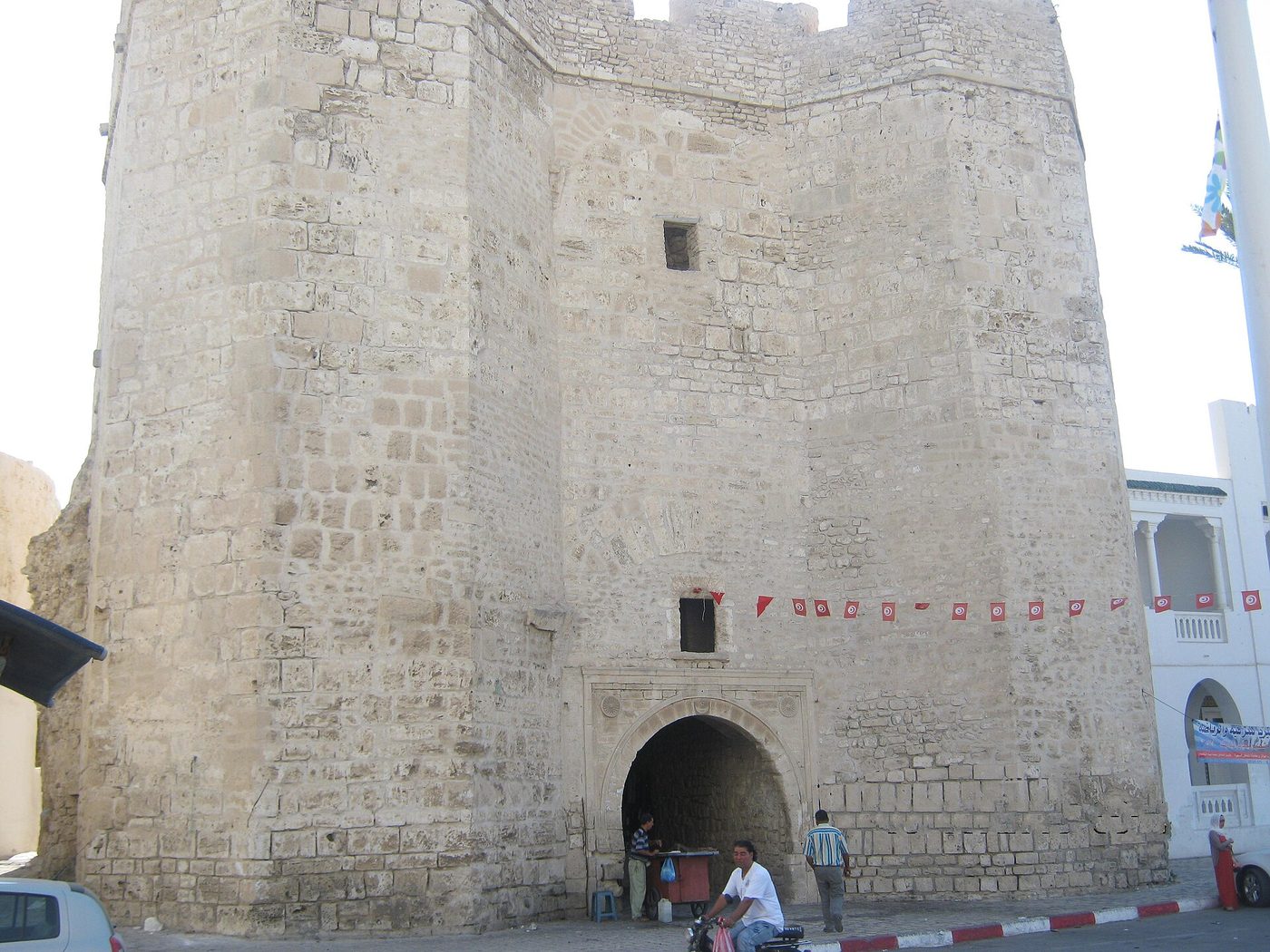
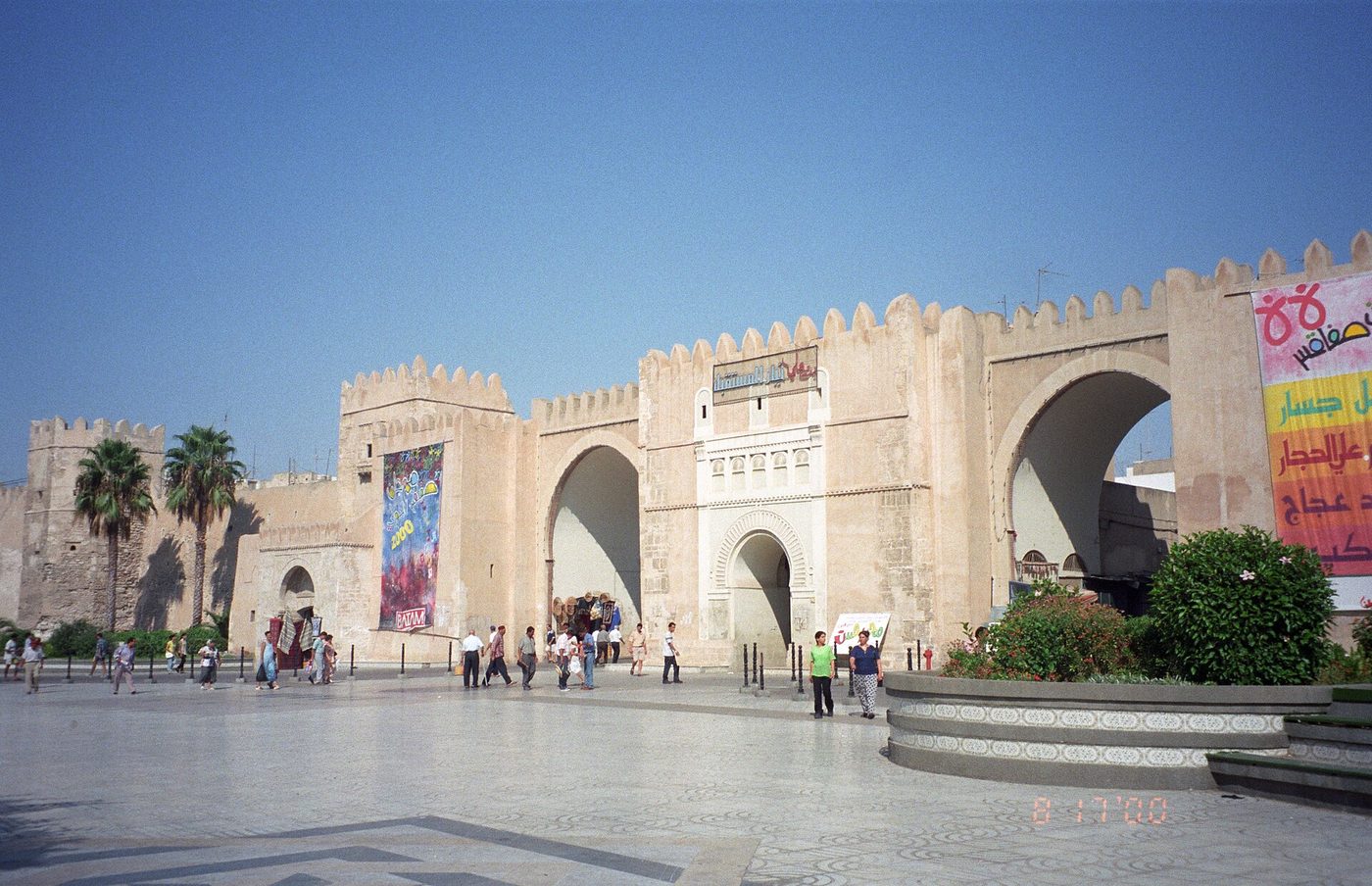
The single most striking thing in Mahdia is the Skifa el-Kahla, usually translated as “the dark gate” or “dark passage”. It’s the surviving gateway of the original Fatimid fortifications: a massive block of stone pierced by a long, vaulted tunnel that was once the only way into the walled city. The founder cut a ditch clean across the neck of the peninsula and funnelled everyone through this single, heavily defended throat of stone.
Walk through the cool, dim passage and out the other side and you’ve followed in the footsteps of a thousand years of Mahdians. You can usually climb up for a view over the square and the medina roofs, and the small town museum sits right beside the gate, with mosaics, coins and statues if you want the historical context first.
Place du Caire and the medina lanes
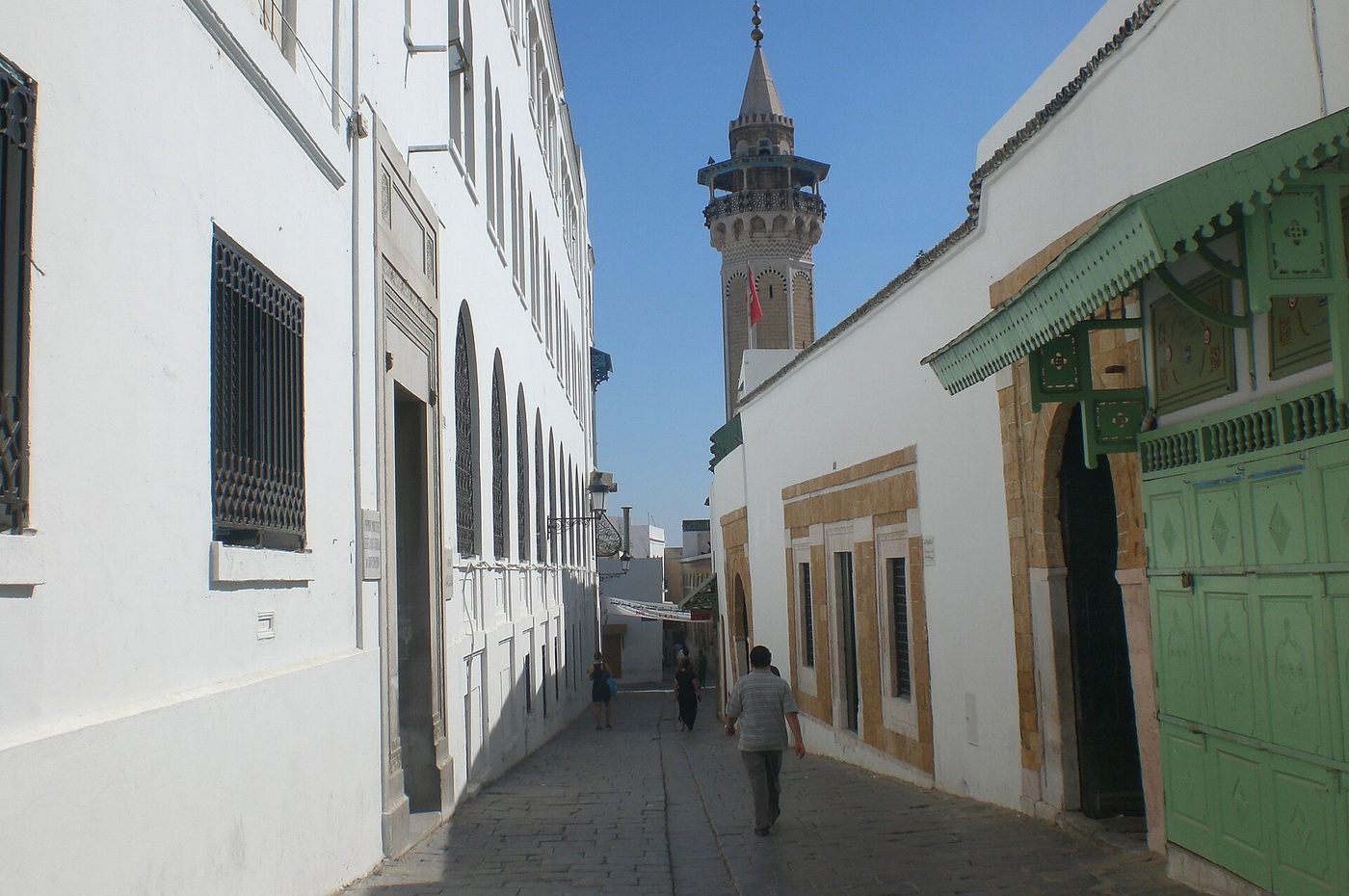
Past the gate, the medina opens into a web of whitewashed lanes with those distinctive green and blue doors framed in carved stone. The prettiest spot to pause is Place du Caire (Cairo Square), a small café-lined square shaded by the odd fig tree, with an octagonal minaret rising over the rooftops. Order a mint tea, watch the town go by, and you’ll see why people fall for Mahdia.
The lanes are dotted with small shops, a covered market and craft workshops rather than wall-to-wall souvenir touts, so browsing here feels relaxed. It’s one of the least hassly medinas in the country — a genuine relief if the harder sell elsewhere has worn you down.
The Great Mosque and the Fatimid heart
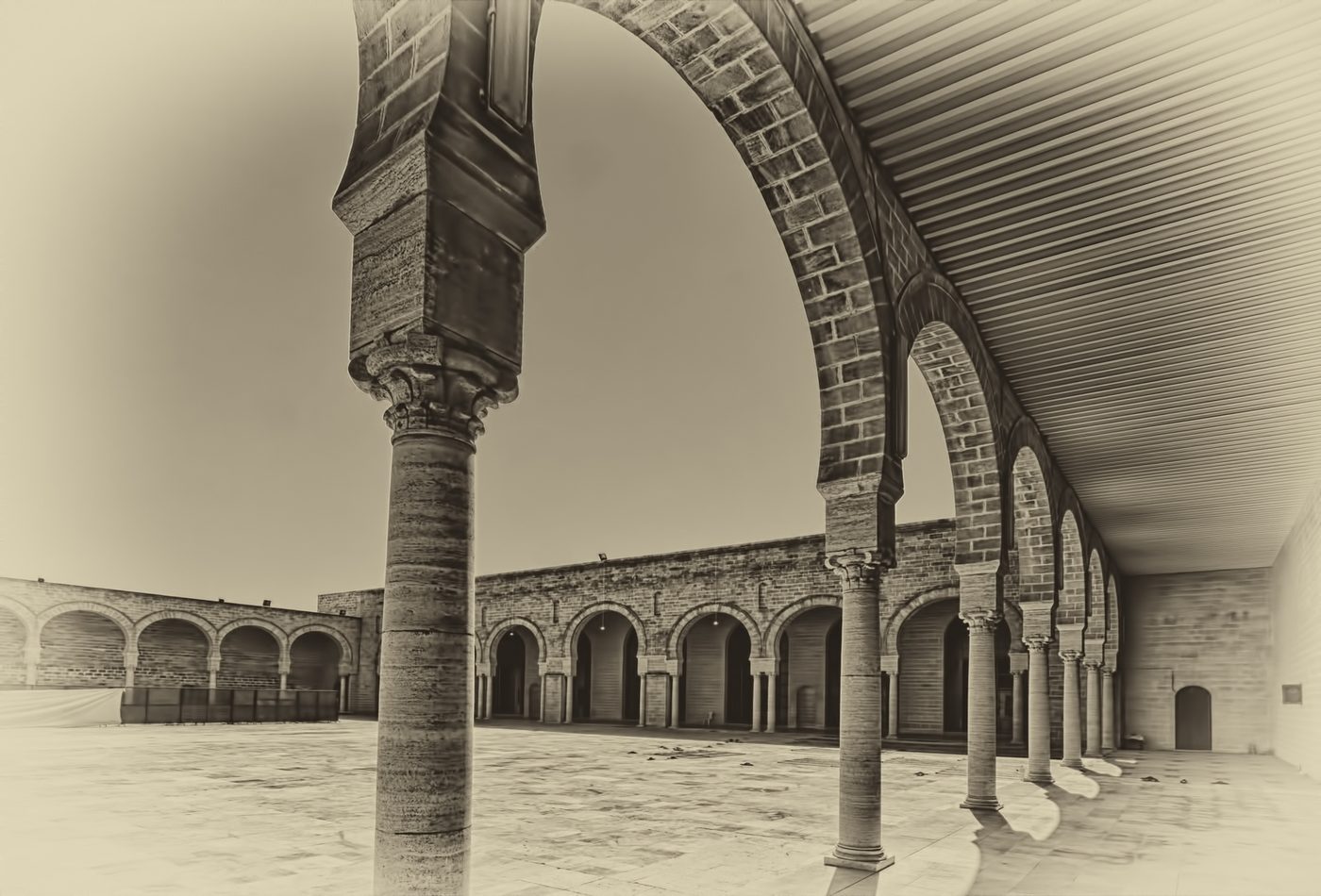
Deeper in stands the Great Mosque of Mahdia, a low, austere building with a broad courtyard and a monumental projecting entrance. The original was raised under the Fatimids in the 10th century; what you see now was largely reconstructed by archaeologists in the 1960s on the old foundations, so it reads as a careful rebuild rather than an untouched ancient monument. It’s still a fine, sober piece of early Islamic architecture, and its plainness is the point — this was the mosque of a puritanical new dynasty.
Non-Muslim visitors usually can’t enter the prayer hall, but you can admire the courtyard and exterior. Dress modestly, as at any religious site, and keep your voice down if prayers are underway.
Cap Africa, the old port and the marine cemetery
Keep walking and the peninsula narrows to Cap Africa (Cap d’Afrique), where the medina runs out into rock and sea. Here you’ll find the remains of the ancient harbour — a small semi-circular basin cut into the stone, used in Punic and then Fatimid times, when this was a naval base rather than a fishing town.
At the very tip lies Mahdia’s marine cemetery, its plain white tombs sloping gently towards the water. It’s an oddly moving place, quiet but for the waves, and a favourite spot to watch the light change late in the day. Loop back along the seaward wall and you’ve done a full circuit of one of the prettiest old towns on the coast.
Borj el-Kebir and Mahdia’s Fatimid story
Overlooking the peninsula is the Borj el-Kebir, a chunky fort built in the 16th century on much older foundations. You can climb up onto the ramparts for a sweeping view over the medina, the cemetery and the sea — the best high vantage point in town. Opening hours and the small entry fee change with the season, so check locally; it’s usually only a few dinars (2026 — confirm on arrival).
The fort is a good place to tell Mahdia’s real story, because this modest town was once the capital of an empire. In the early 10th century Ubayd Allah al-Mahdi, the first caliph of the Fatimid dynasty, chose this easily defended peninsula for his new city and made it his capital in 921. He gave it his name — Mahdia, “the city of the Mahdi”.
From here the Fatimids ruled a broad stretch of North Africa and, for a time, Sicily, before they marched east, conquered Egypt and founded Cairo, moving their capital there around 973. Mahdia slid back into a quieter life as a fishing and weaving town, was fought over by Zirids, Normans and others down the centuries, and never regained its old importance — which is precisely why it feels so unhurried today. For the country’s earlier chapters, our guide to Roman ruins in Tunisia picks up the story before the Arab conquest.
The Friday market and Mahdia’s silk-weaving tradition
Mahdia has a long history as a textile town. For generations its weavers were known across Tunisia for silk — Mahdia silk went into the elaborate wedding costumes worn along the Sahel, and you’ll still find the odd weaver’s workshop tucked into the medina, working a traditional loom. The craft has shrunk with the times, so treat a working loom as a lucky find rather than a guaranteed sight, and be wary of “silk” that turns out to be synthetic.
The town’s big weekly market has traditionally fallen on a Friday, spilling out near the old gate with produce, clothes, household goods and the usual cheerful chaos. Market days can shift, so confirm the current day with your hotel before you plan around it. If you like a souk, it’s a fine, low-pressure place to browse:
- Textiles and weaving — traditional cloth, blankets and what remains of the local silk trade.
- Fresh produce and fish — this is a working town’s market, not a tourist bazaar.
- Everyday goods — more a window into ordinary Sahel life than a souvenir run.
Either way, haggle politely, keep small notes handy, and remember the dinar is a closed currency you can only get once you’re in Tunisia — bring cash for the market, because cards are little use here.
Mahdia’s beaches
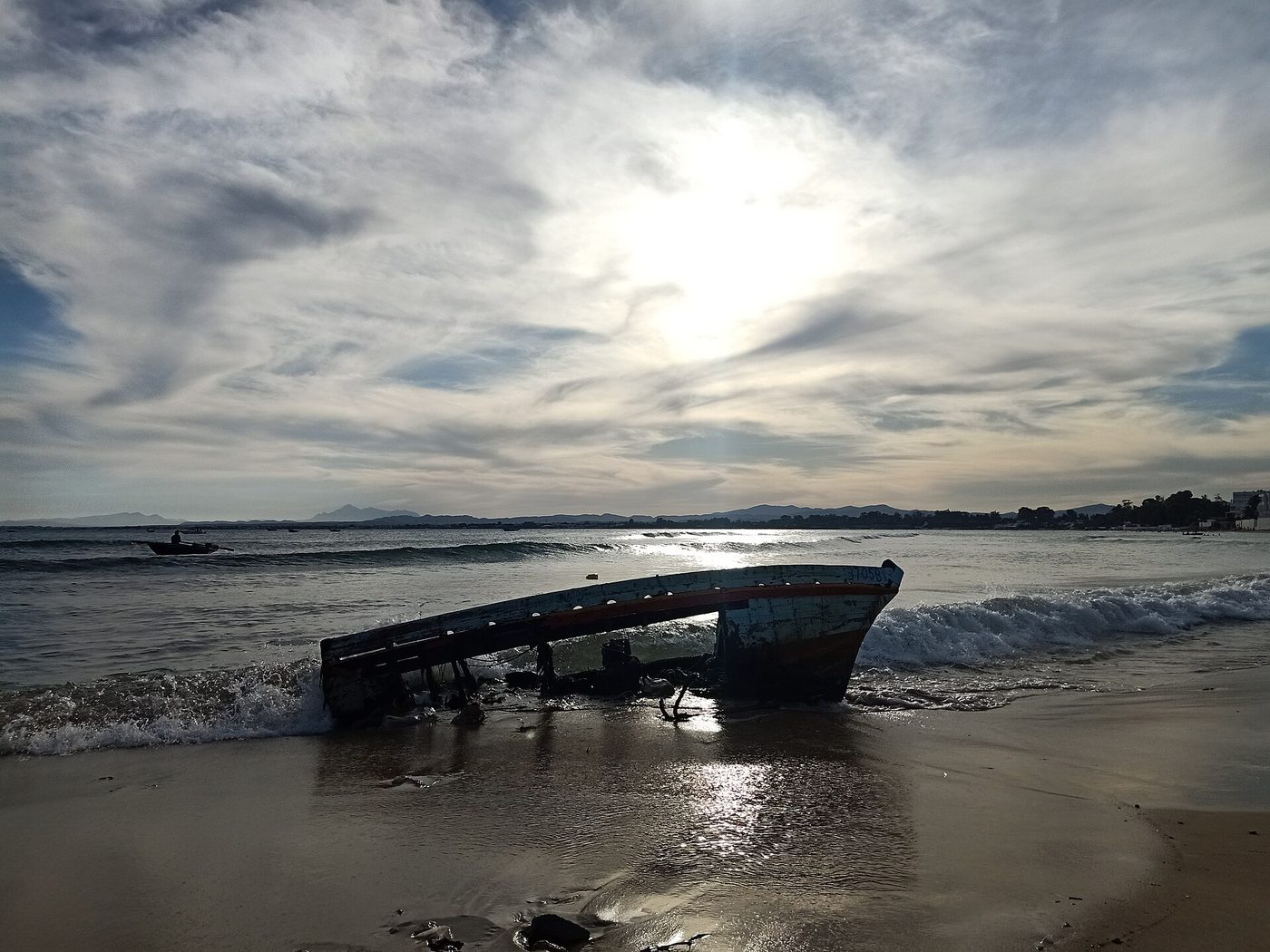
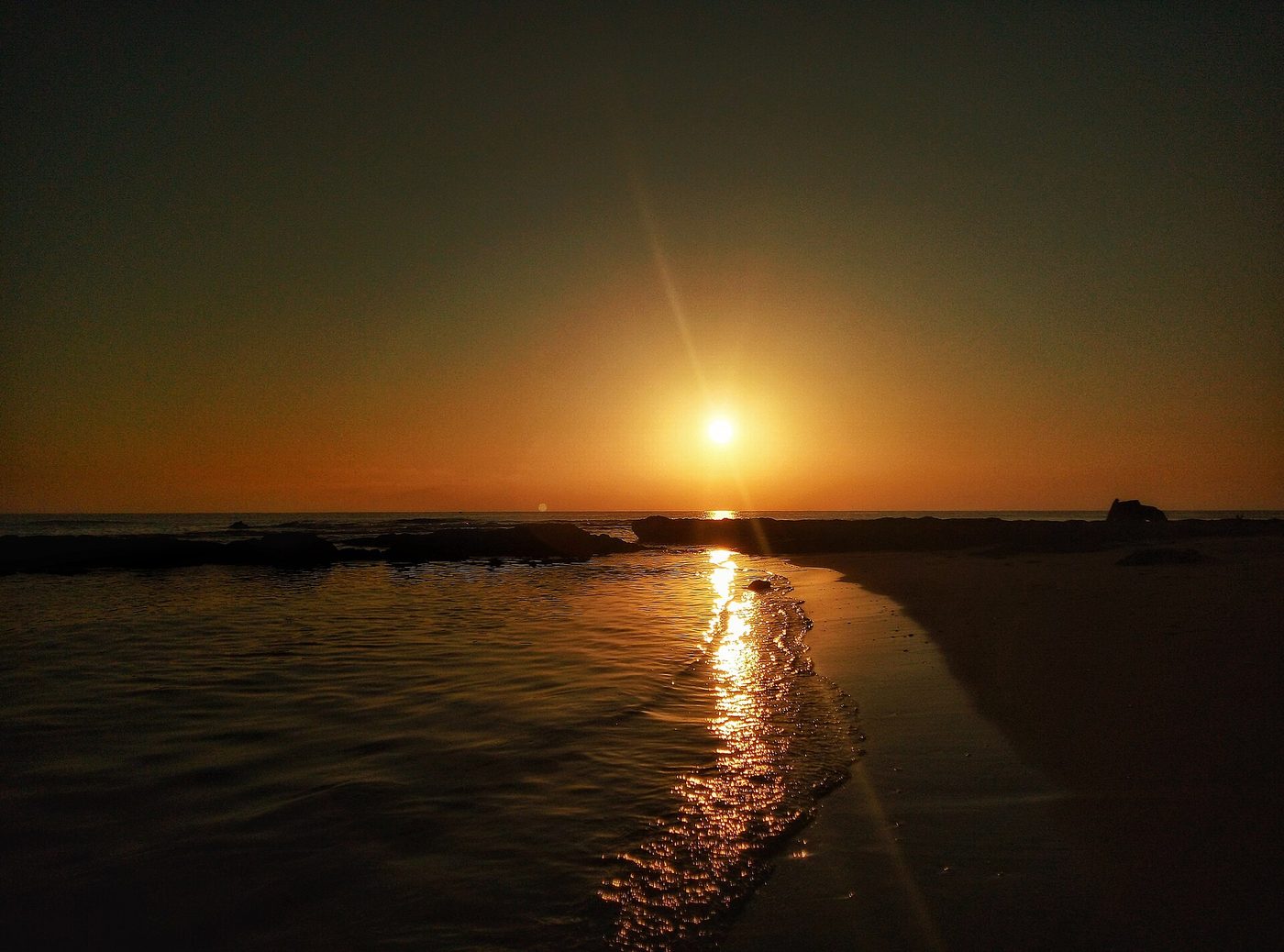
The beaches are the other half of Mahdia’s appeal, and they’re genuinely good. The long sandy strip runs north of the old town towards the zone touristique — the low-key hotel zone — where the sand is fine and pale, the water shallow and clear, and the whole thing far calmer than the busier resort beaches up the coast.
Closer to town the beach is more of a local affair; further north, by the hotels, you’ll find sunbeds, cafés and water sports. The sea stays swimmable well into the autumn, which makes an early-September trip like this a sweet spot. For how Mahdia stacks up against the rest of the shoreline, see our roundup of Tunisia’s best beaches.
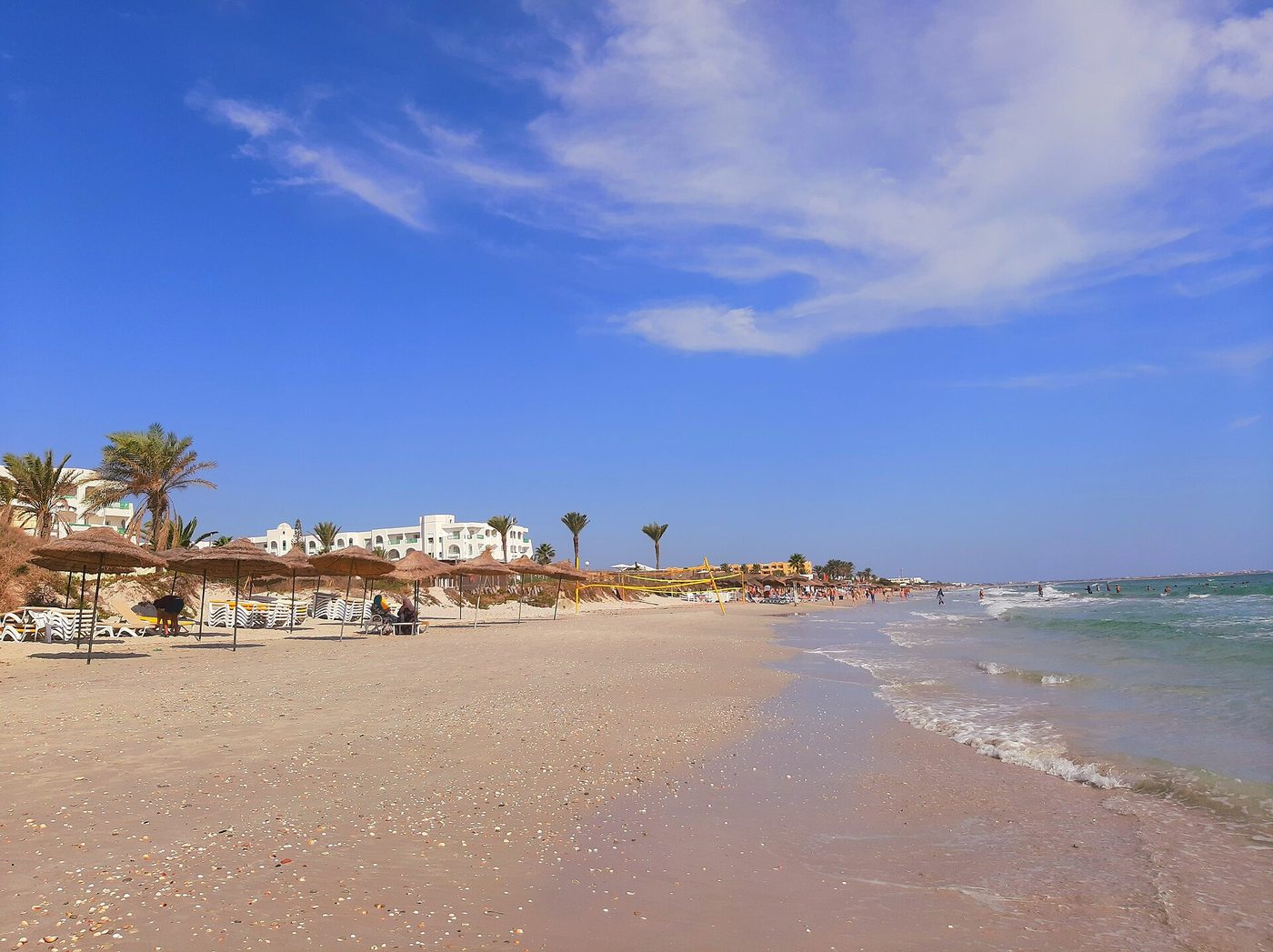
A few honest caveats. Public stretches can be scruffier than the hotel-managed sand, quality varies from spot to spot, and there’s less of the slick beach-club scene you get in Hammamet. But for space, cleanliness and calm, Mahdia’s beaches are among the nicest on this part of the coast.
The fishing harbour and what to eat
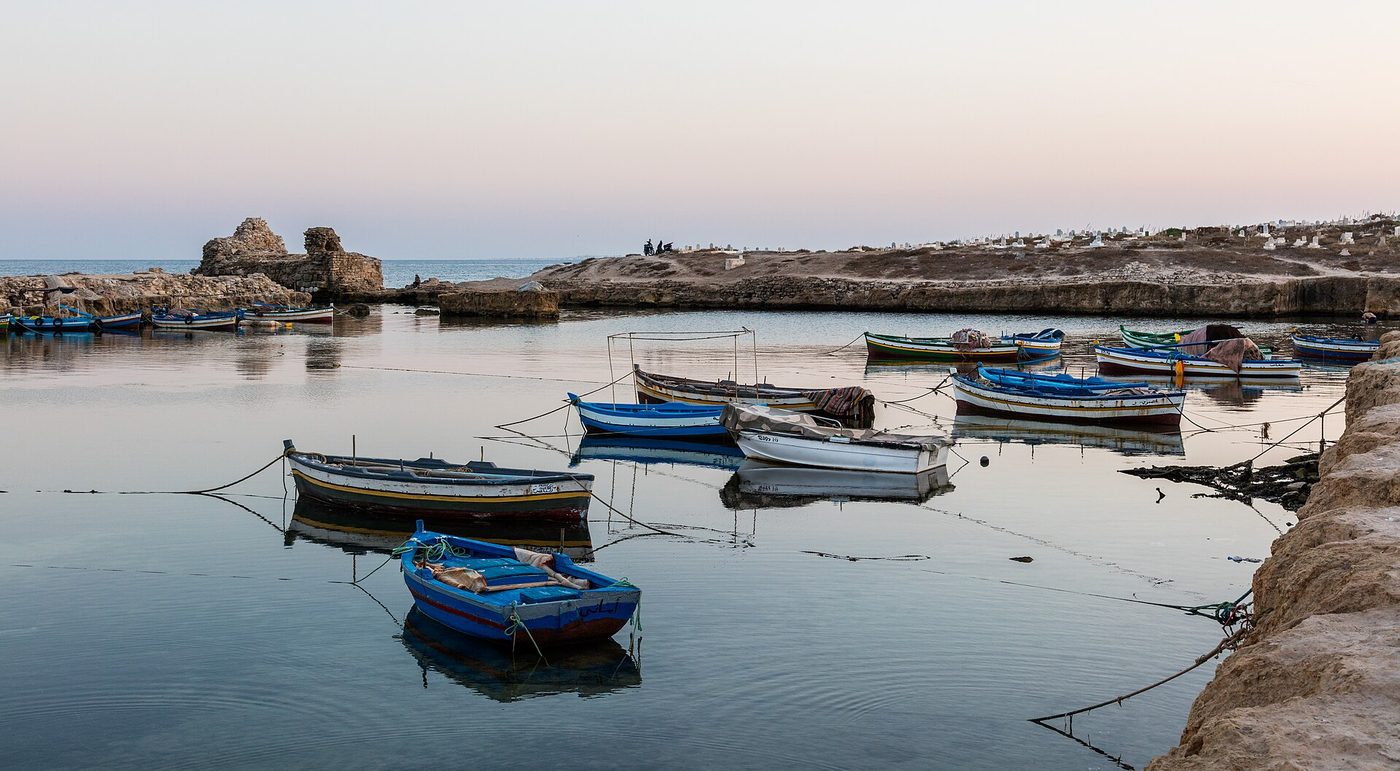
Mahdia is a serious fishing port — one of the busiest in the country — and the harbour is the best free show in town. Wander down in the morning as the boats come in and the catch is landed, and again in the late afternoon when the fleet heads out under a low sun. The modern harbour sits just beyond the old Fatimid basin, so you get working Tunisia and ancient Tunisia in the same short walk.
All that fish means Mahdia eats well. Seafood is the thing here: grilled sea bream and sea bass, calamari, a punchy octopus salad, and the local sweet brik — a triangle of pastry, here sometimes filled with almonds rather than the usual egg. Eat where the boats land and you’ll pay far less than in a resort dining room. Our Tunisian food guide explains what to order and how.
Where to base yourself in Mahdia
Mahdia splits neatly into two bases. Stay in or near the old medina and you’re steps from the gate, the cafés of Place du Caire and the harbour, in the atmospheric heart of town — best for history lovers and anyone who likes to wander out for an evening stroll. Rooms here tend to be smaller guesthouses and simple hotels rather than big resorts.
Stay in the zone touristique, the strip of beach hotels north of town, and you trade a little atmosphere for direct beach access, pools and half-board convenience — the easier option for a straightforward family beach week. It’s a short taxi or walk into the old town, so you needn’t choose entirely between the two. Either way, Mahdia makes a calm base for the southern Sahel.
Day trips: El Djem, Monastir and the Sahel metro
Part of Mahdia’s charm is how easy it is to slip out for a day and come back to the quiet. Three trips stand out.
| Day trip | Why go | Rough distance |
|---|---|---|
| El Djem | One of the largest, best-preserved Roman amphitheatres anywhere | ~40km inland |
| Monastir | The great seafront Ribat fortress and Bourguiba mausoleum | ~45km up the coast |
| Sousse | Bigger medina, resort strip and the region’s transport hub | ~65km up the coast |
The star is the Roman amphitheatre at El Djem, a short hop inland and genuinely jaw-dropping — you can walk the arena floor and the underground passages with a fraction of the Colosseum’s crowds. It’s a highlight of our guide to getting around Tunisia by train, since the mainline south stops right by it.
Up the coast, Monastir is worth a half-day for its magnificent seafront fortress — see our guides to the Ribat of Monastir and the wider things to do in Monastir. The neat trick that links most of this is the Sahel metro, the coastal light-rail line running Sousse–Monastir–Mahdia, with Mahdia at its southern end. It’s cheap, scenic and simple, and it turns the whole southern Sahel into one easy day-trip network.
Visiting Mahdia: know before you go
A relaxed, practical checklist for a smooth trip.
- Getting there. The Sahel metro (SNCFT light rail) runs down from Sousse and Monastir to central Mahdia; the nearest airport is Monastir, around 50km away, with Enfidha a further option. Louages (shared minibuses) and taxis fill the gaps.
- Costs. Sights are cheap — the fort and museum are usually only a few dinars each (2026 — confirm locally). Carry cash: the dinar is a closed currency you change on arrival, and small towns are card-light.
- When to go. Late spring and early autumn are ideal — warm sea, gentler heat. Our best time to visit guide and the month-by-month Tunisia in September page have the detail.
- What to wear and bring. Sensible shoes for medina cobbles and fort steps, a hat and water in summer, and modest cover for mosque courtyards.
- How long. A day trip shows you the highlights; two or three nights lets you slow to Mahdia’s pace, which is really the point of coming.
- Safety. Mahdia is a calm, family-friendly town; take the usual small-city precautions. Our is Tunisia safe guide has the full, date-stamped picture.
Building a longer route? Mahdia drops neatly into a Sahel leg of our Tunisia itinerary, best paired with a day inland at El Djem and a coastal hop to Monastir.
Mahdia: your questions answered
Is Mahdia worth visiting?
Yes, if you want calm over crowds. Mahdia offers a lived-in Fatimid old town, one of Tunisia’s most striking medieval gates, quiet clean beaches and a proper fishing harbour, all with far less hard-sell than the bigger resorts. It’s sleepy in the evenings, so night-owls may prefer Sousse, but for a peaceful, history-rich coast it’s a gem.
What is Mahdia known for?
Mahdia is known for three things: its history as the first Fatimid capital, founded in the early 10th century; its quiet, clean beaches north of town; and its old textile and silk-weaving trade. It’s also one of Tunisia’s biggest fishing ports, which makes it a fine place for fresh seafood straight off the boats.
Is Mahdia better than Sousse?
It depends what you want. Mahdia is calmer, prettier and more authentic, with a lower-key beach scene and almost no nightlife. Sousse is bigger and livelier, with more hotels, a larger medina and a proper resort strip. Many travellers base in one and day-trip to the other, since the Sahel metro links them in around an hour.
Are the beaches in Mahdia good?
Yes — they’re among the nicer stretches on this coast. The long sandy beach north of the old town, by the zone touristique, has fine pale sand and shallow, clear water, and stays calmer than the busier resort beaches up the coast. Public sections can be scruffier than hotel-managed sand, so pick your spot.
How do you get from Sousse to Mahdia?
The easiest way is the Sahel metro, a coastal light-rail line that runs from Sousse through Monastir to Mahdia in roughly an hour to 90 minutes for a small fare. Louages (shared minibuses) and taxis also cover the route. Mahdia sits at the southern end of the line, a short walk from the old town.
How far is Mahdia from Monastir airport?
Monastir’s Habib Bourguiba International Airport is around 50km north of Mahdia, roughly an hour by road. You can reach town by taxi, louage or, with a change, the Sahel metro. Enfidha-Hammamet airport is further away but sometimes has more UK flights, so compare both when booking.
What is the Skifa el-Kahla?
The Skifa el-Kahla — usually translated as “the dark gate” — is Mahdia’s great fortified gateway, the surviving entrance of the original Fatimid city walls. A long vaulted tunnel of stone, it was once the only way into the peninsula town. Today you can walk through it and often climb up for views over the medina.
Was Mahdia really the first Fatimid capital?
Yes. Ubayd Allah al-Mahdi, the first Fatimid caliph, founded the city on this easily defended peninsula in the early 10th century and made it his capital in 921. The Fatimids ruled from here until they conquered Egypt and moved their capital to their new city of Cairo around 973.
How long do you need in Mahdia?
You can see the headline sights — the gate, medina, Great Mosque, fort and harbour — in a single day, which is why Mahdia works as a day trip from Sousse. To enjoy the beaches and the slow pace properly, give it two or three nights. It’s a place to unwind rather than tick off.
Is Mahdia good for families?
Very. The shallow, gentle beaches suit young children, the old town is compact and walkable, and the low-key atmosphere and light hassle make it less stressful than busier resorts. There’s less in the way of big waterparks and organised entertainment, so families wanting non-stop activity may prefer Sousse or Hammamet.
When is the best time to visit Mahdia?
Late spring (May to June) and early autumn (September to October) are ideal: warm sea, comfortable temperatures and fewer crowds. High summer is hot and busier; winter is mild but not really beach weather. Our best-time-to-visit and Tunisia-in-September guides break the seasons down month by month.
Is there nightlife in Mahdia?
Not really, and that’s rather the point. Evenings in Mahdia mean seafood dinners, a stroll along the harbour and a mint tea in the medina rather than clubs and bars. A few hotels in the zone touristique have some evening entertainment, but if a lively night scene matters to you, Sousse is the better base.
Written by the Tunisia Tourism Guide team — an independent UK-focused guide to travelling in Tunisia. We don’t sell tours or take hotel commissions. Prices and advice were checked at publication; always confirm current details before you book.
Photo credits
All images via Wikimedia Commons, used with thanks: The Skifa el-Kahla © Anouarhamzamahdia (CC BY-SA 3.0); The Fatimid Great Mosque of Mahdia on the Cap Africa © Walid Mahfoudh (CC BY-SA 3.0); Fishing boats in Mahdia’s working harbour on Tunisia’s Sahel coast © Diego Delso (CC BY-SA 4.0); The long sandy beach north of Mahdia town on the © Habib M’henni (CC BY-SA 4.0).


One response to “Mahdia: Tunisia’s Quietest Beach Town”
[…] and mosques; the Kerkennah Islands and the ferry across; the food; and how Sfax pairs with quieter Mahdia up the coast. If you like your travel unpolished, it’s one of Tunisia’s most rewarding […]