By the Tunisia Tourism Guide team · Last updated 24 July 2026 · We don’t sell tours or take hotel commissions — this is independent advice, written to be useful.
Sousse doesn’t have one beach. It has a single long ribbon of sand that starts in the middle of the city and runs for miles up the coast, changing character every kilometre — from busy and free in front of the old town to quiet and hotel-fringed by the time you reach the north. Where you spread your towel makes a real difference to the day you have.
Here’s the short version: the main Sousse beach is Boujaffar (also spelt Bou Jaafar), a long, free, golden-sand strip along the city corniche — lively and handy, but not the cleanest. For calmer, tidier sand, head north through the resort zone to Port El Kantaoui and quiet Chott Meriem. Same coast, very different moods.
Which stretch you choose shapes the whole holiday, so it’s worth getting right — through Hammam Sousse’s hotel strip and up the coast, the sand gets tidier and the crowds thinner the further north you go.
Below we walk the whole strip north, beach by beach: what each one is like, who it suits, the honest truth about the water, and the practical stuff on loungers, prices and getting between them. It’s part of our wider guide to visiting Sousse, so you can slot the beach days around the old town and the day trips.
The best beaches in Sousse at a glance
The whole coast is essentially one beach with different postcodes. Here’s how the main stretches compare before we walk them properly.
| Stretch | Feel | Loungers & facilities | Best for |
|---|---|---|---|
| Boujaffar (city beach) | Busy, free, urban, sociable | Hired loungers, cafés, water sports in season | Budget trips, walkers, being near the medina |
| Hotel zone / Hammam Sousse | Organised, resort-backed, tidier | Hotel loungers, beach bars, watersports | All-inclusive guests who want facilities |
| Port El Kantaoui | Polished, marina-side, family-friendly | Full facilities, diving, boat trips | Families and couples wanting a smart base |
| Chott Meriem (Sousse Nord) | Quiet, newer, low-key | Hotel beaches, fewer crowds | Peace-seekers and repeat visitors |
In one line: the further north you go, the calmer and cleaner it gets, but the further you are from the buzz of the city. Now the detail.
How Sousse’s coast is laid out
Picture the shoreline running roughly south to north. It begins at the port and the medina, where the city beach, Boujaffar, fronts the corniche. Keep heading north and the free city sand gives way to the “zone touristique” — the hotel strip through Hammam Sousse — where resort after resort backs the beach. About 10 km up, that strip arrives at the purpose-built marina of Port El Kantaoui. Carry on beyond it and you reach Chott Meriem, sometimes signposted “Sousse Nord”, the newest and quietest resort area.
The upshot is simple. You can pick your spot on a sliding scale: maximum life and minimum cost at the city end, maximum calm and facilities at the northern end, and every shade in between. Most people don’t beach-hop much day to day — they choose a base that suits them and stick to it — but it’s genuinely easy to sample the others by cheap taxi.
Boujaffar (Bou Jaafar): the city beach
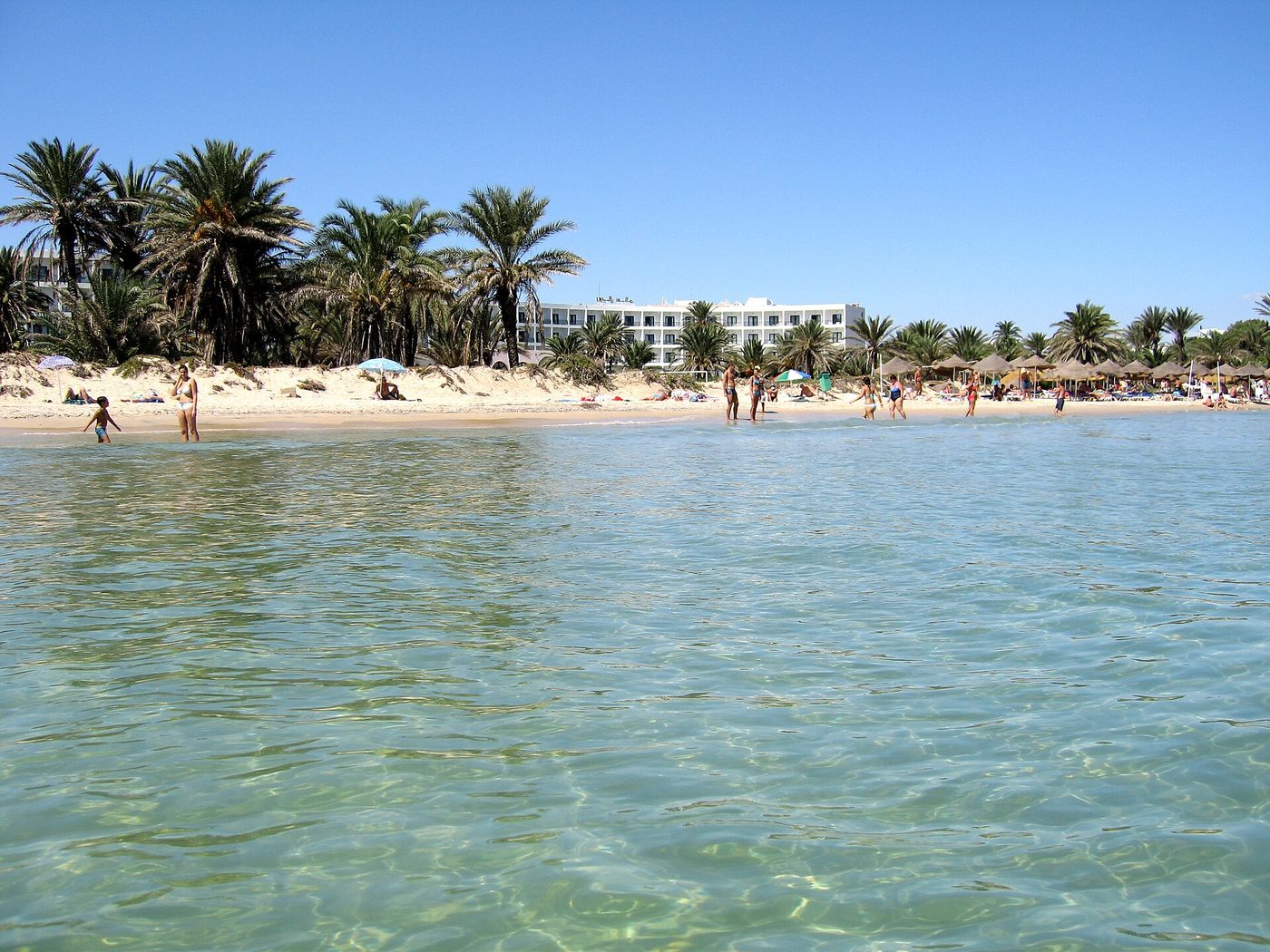
Boujaffar is the beach most people mean when they say “Sousse beach”. It’s a wide, gently shelving strip of pale golden sand running for a couple of kilometres along the city’s palm-lined corniche, and it’s completely free and public — no hotel wristband required.
Its great strength is convenience and atmosphere. You can walk here in minutes from the Sousse medina, mix a morning of history with an afternoon swim, and never need a taxi. In season a little tourist train trundles along the promenade, horse-drawn carriages ply the seafront, and cafés and ice-cream stalls line the walkway behind. It’s sociable, family-friendly and very Tunisian — as many local families as tourists, especially at weekends and on summer evenings when half the city comes down to stroll.
The trade-offs are the flip side of all that life. Because it’s a free city beach in the middle of a working port city, Boujaffar is busier and scruffier than a manicured resort strand. It can get crowded and noisy in July and August, the sand sees litter by the end of a hot day (crews clean it, but it’s a losing battle at peak times), and the water nearest the centre is the least clear on the whole coast — more on that below. Vendors work the sand selling sunglasses, doughnuts and boat trips; a smile and “la, shukran” handles it.
Verdict: brilliant for budget trips, for anyone staying in or near the old town, and for people who like a beach with a pulse. If your dream is an empty, pristine cove, this isn’t it — walk or ride north.
The hotel zone: Hammam Sousse and the tourist strip
North of the city centre, roughly from the big Marhaba and Riadh Palms hotels onwards, Boujaffar’s free sand blends into the resort strip that runs up through Hammam Sousse. This is where most of Sousse’s beach hotels sit, and the beach here feels different: the same sand, but combed, organised into hotel sections, and backed by loungers, parasols, beach bars and water-sports huts rather than city cafés.
If you’re on an all-inclusive, this is likely your home stretch. Hotel beaches here are cleaner and calmer than the city end, the sea is a little clearer as you move away from the port, and you’ve got sunbeds, showers and a bar within a towel’s throw. Non-guests can still use the sand — Tunisian beaches are public below the high-water line — though the loungers usually belong to a hotel or a concession you’ll pay to use.
It’s less characterful than either the city beach or the marina, and one resort blurs into the next, but for straightforward sun-lounger days with everything to hand, it does the job well. For choosing between properties here, our where to stay in Sousse guide breaks down the zones, and there are quieter grown-up options in our adults-only hotels roundup.
Port El Kantaoui: the polished option
About 10 km (6 miles) north of central Sousse, the strip arrives at Port El Kantaoui, a purpose-built marina resort wrapped around a pretty yacht harbour. The beaches here are among the best-kept on this coast: wide, well-raked, backed by manicured gardens and a promenade of cafés, restaurants and shops rather than city traffic.
This is the smart, family-friendly end of the Sousse experience. The sand is cleaner, the sea clearer, and the harbour gives you plenty to do off the beach — a dive centre, boat trips (including the inevitable pirate-ship cruise the kids will demand), mini-golf, and an easy evening stroll around the marina with the masts and the sunset. It has more of a resort-Europe polish than the rest of Sousse, with prices to match: you’ll pay more here for a lounger, a coffee or a meal than on Boujaffar.
It also has the liveliest after-dark scene on this coast, with bars and clubs clustered near the marina; our guide to Tunisia’s nightlife covers what to expect. By taxi it’s around 20 minutes from the city centre — agree the fare first — so even if you’re based in town, it’s an easy half-day. We’ve given it its own full write-up in our Port El Kantaoui guide.
Verdict: the pick for families and for anyone who’ll trade a bit of authenticity and a few more dinars for cleaner sand, calmer water and things to do.
Chott Meriem: quiet at the northern end
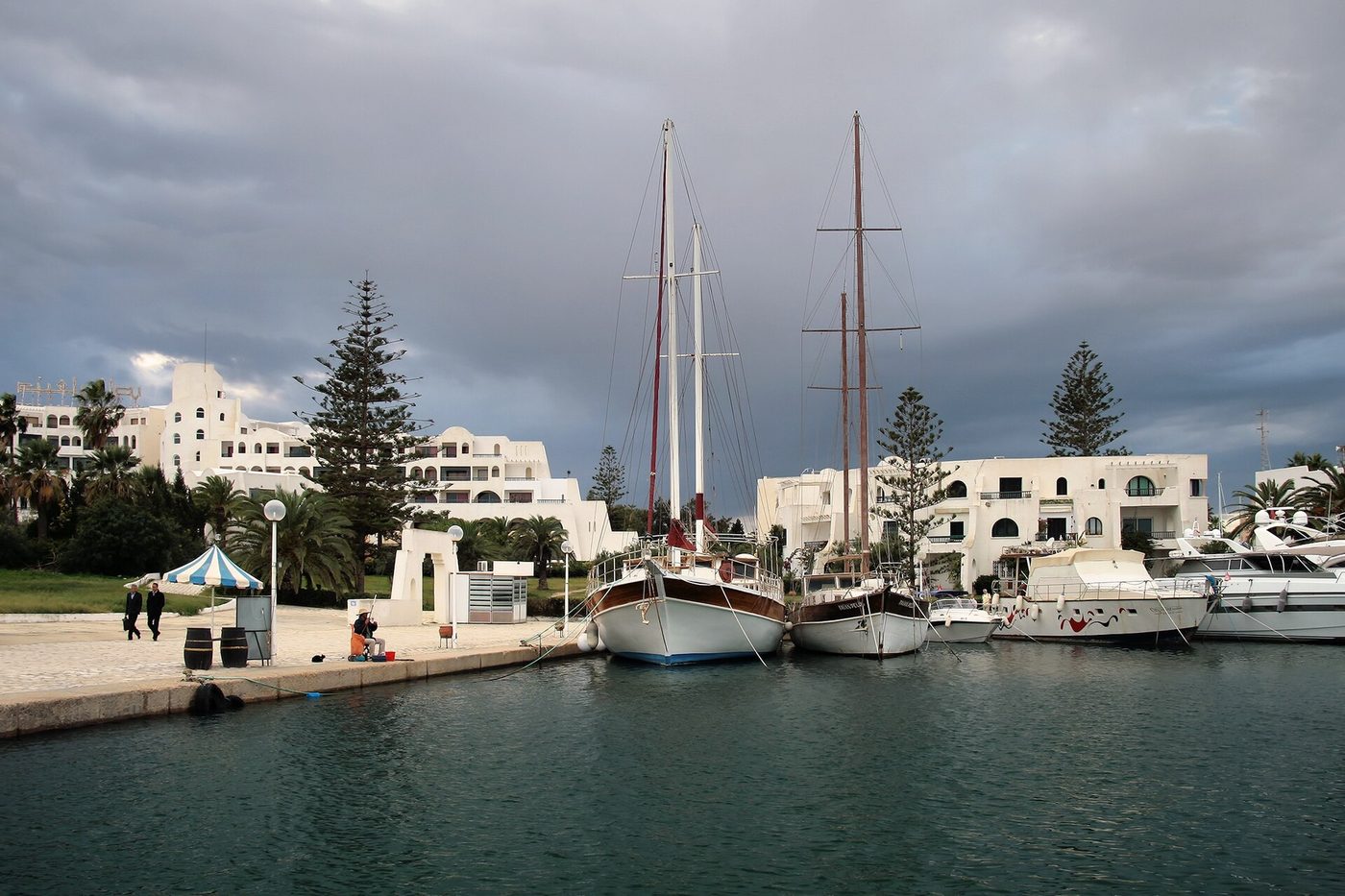
Keep going north past Port El Kantaoui and the crowds thin out at Chott Meriem, a newer, lower-key resort area sometimes badged “Sousse Nord”. The beaches are broad and quiet, the sea is among the cleanest on the strip, and the pace drops noticeably — this is where you come to read a book, not to be sold a jet-ski ride.
The trade-off is that there’s less within walking distance. Chott Meriem is more of a self-contained hotel zone than a place with its own buzz, so you’ll rely on your resort or a taxi for evenings out, and it’s furthest from the medina and the city sights. For repeat visitors who already know Sousse, families with young children who value calm, and anyone whose idea of a good holiday is a quiet beach and a good book, that’s a fair swap. First-timers who want to be near the action are usually happier further south.
The honest truth about the water
We won’t pretend the sea off Sousse is Caribbean-clear, because it isn’t, and the gap between the glossy photos and some stretches of the real thing is the single most common complaint we hear.
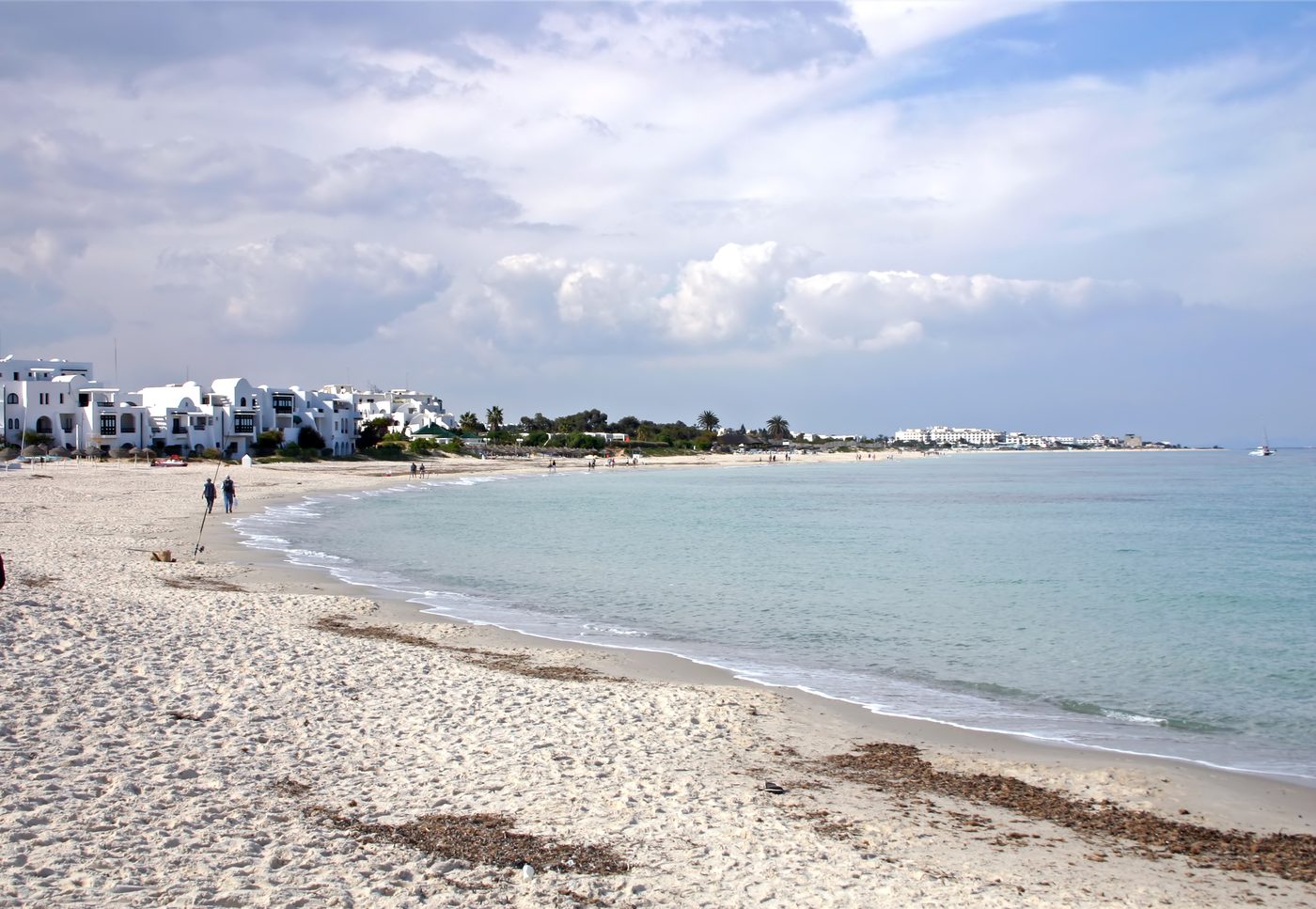
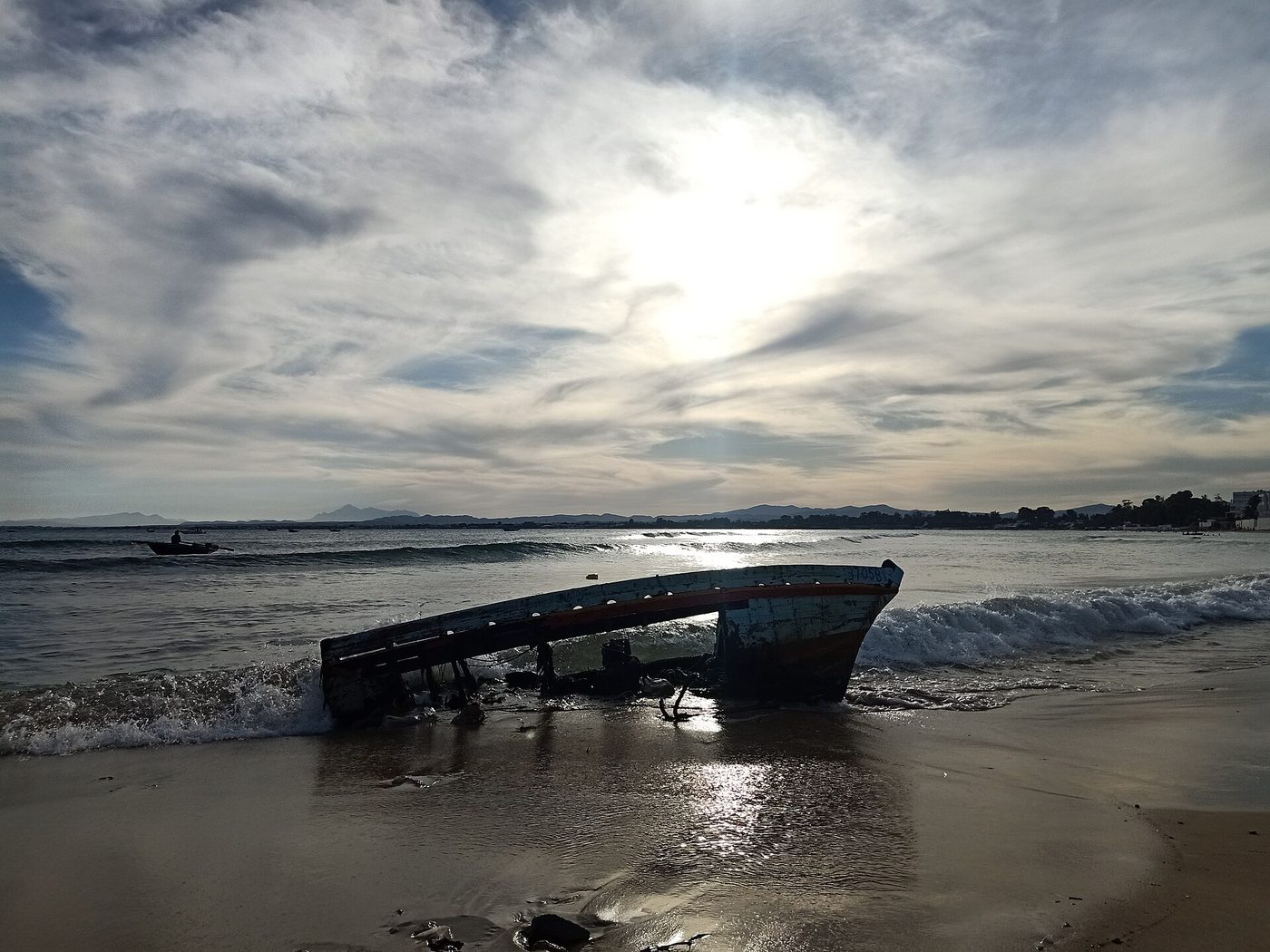
The water quality varies along the coast and from day to day. At the city end, near the commercial port, the sea can look cloudy or greenish, and after a storm or a strong onshore wind you’ll sometimes see floating litter and clumps of seagrass washed up on the sand. Crews rake the beaches, and it clears, but on a bad day the central beach is not its best self. Move north and it improves steadily: by the resort zone the water is clearer, and off Port El Kantaoui and Chott Meriem it’s cleaner again.
A few honest, practical notes. The seagrass (posidonia) that washes up is natural, not pollution — it’s actually a sign of a healthy seabed — but it’s not pretty underfoot. The shallow, gently sloping sand that makes these beaches so good for children also means the water warms up and can look less sparkling than a deep, rocky bay. And tides and wind matter: the same beach can be flat and clear one morning and murky the next afternoon. If crystal water is your top priority, base yourself north of the city and check recent guest photos of your specific hotel’s beach rather than trusting the brochure. Our national roundup of Tunisia’s best beaches is honest about where the clearest water actually is.
Loungers, prices and practicalities
A few things worth knowing before you head down to the sand:
- Public vs hotel sand. All Tunisian beaches are public below the high-water line, so you can lay a towel anywhere on Boujaffar for free. The sunbeds and parasols, though, are run by hotels or private concessions and cost a few dinars a day to hire — agree the price before you sit down.
- Bring cash in dinars. Loungers, beach snacks and the tourist train all want small notes. The dinar is a closed currency you can only get on arrival — reckon on roughly 3.8–3.9 TND to the pound in mid-2026, but check the current rate.
- Sun and safety. The North African sun is stronger than it feels off the sea breeze; use high-factor sunscreen and cover up at midday. Larger hotel and Kantaoui beaches often have seasonal lifeguards and flag systems, but the free city beach may not, so watch children in the water yourself.
- Health cover isn’t optional. A UK GHIC card is not valid in Tunisia, so comprehensive travel insurance with medical cover is essential — check NHS Fit for Travel (TravelHealthPro) before you fly for current health advice.
- Getting between beaches. Metered taxis are cheap and the easiest way to hop from the city to Kantaoui or Chott Meriem; insist on the meter. Our getting around Tunisia guide covers the fares and the tricks.
Which Sousse beach suits you?
To save you the walk, here’s the quick matchmaking:
- On a budget, or here for the city: Boujaffar. Free, central, walkable from the medina, full of life.
- On an all-inclusive who wants facilities: the hotel zone through Hammam Sousse. Loungers, bars and cleaner sand on your doorstep.
- Travelling with children, or wanting things to do: Port El Kantaoui. Clean beaches, calm water, boat trips and a safe marina to stroll. See our tips on Tunisia with kids.
- After peace and quiet: Chott Meriem. The calmest sand and cleanest sea, if you don’t mind being out of town.
- Torn between resorts entirely: our Hammamet or Sousse comparison helps you choose the right base before you even book.
Eating, drinking and evenings by the sea
The beach day doesn’t end when the sun drops — in Sousse it often gets better. Along the Boujaffar corniche, simple cafés and ice-cream stalls line the promenade, and this is where the city comes to unwind: as the heat fades, local families arrive to stroll, and the seafront fills with the smell of grilled fish and freshly fried brik. It’s cheap, cheerful and about as authentic as a resort city gets. Our Tunisian food guide tells you what to order.
Port El Kantaoui is the smarter, pricier alternative, with marina-side restaurants and bars where you pay a premium for the yacht views and the polish. It’s touristy, but a sunset lap of the harbour with an ice cream is a lovely way to spend an evening, kids in tow.
Two honest notes. If you’re on an all-inclusive it’s tempting never to leave the hotel, but walking out for one meal on the seafront is worth it — see how the packages work in our guide to Tunisia all-inclusive holidays. And stick to bottled or sealed water rather than the tap, which is the usual culprit behind a holiday upset stomach here.
When to go, and how warm the sea gets
Sousse’s beach season is long. The sea is at its warmest and most swimmable from roughly June to October, peaking in August and September when it’s genuinely bath-like and still pleasant well into the autumn. July and August bring the hottest sun and the biggest crowds; June and September are our pick for the best balance of warm water and elbow room. See how the months stack up in our guides to Tunisia in August and the best time to visit Tunisia.
Outside those months the beaches are quieter and prettier for a walk, but the sea cools quickly and beach services scale back from late autumn. If sunbathing and swimming are the whole point of the trip, aim for the core summer and shoulder months rather than gambling on a cheap off-season week.
Making beach days part of a bigger trip
The beauty of Sousse is that you never have to choose between beach and everything else. Bank a lazy morning on the sand, then walk into the medina for the Ribat and the souks, or take one of our day trips from Sousse out to the Roman amphitheatre at El Jem or the holy city of Kairouan. A half-day on a lounger and a half-day of history is, for our money, the ideal Sousse rhythm. For the full menu, browse our overview of things to do in Tunisia.
Sousse beaches: your questions answered
Which is the best beach in Sousse?
It depends what you want. For life, convenience and price, the free city beach at Boujaffar wins. For clean sand and calm, family-friendly water, Port El Kantaoui to the north is the best of the lot. For peace and quiet, keep going to Chott Meriem. There’s no single “best” — just the best stretch for your kind of holiday.
Is Bou Jaafar beach free?
Yes. Boujaffar (Bou Jaafar) is a free, public city beach — you can lay a towel anywhere on the sand at no cost. What you pay for are the extras: hiring a sunbed and parasol runs to a few dinars a day, and snacks, drinks and the little tourist train are cash on top. Bring small notes.
Is the sea clean at Sousse?
Honestly, it varies. Near the city centre and the commercial port the water can look cloudy, and wind or storms occasionally wash up litter and natural seagrass onto the central beach. It gets steadily cleaner as you move north, and the water off Port El Kantaoui and Chott Meriem is clearer. If pristine sea matters most, base yourself at the northern end.
Are Sousse beaches sandy or pebbly?
Sandy. The whole Sousse strip, from Boujaffar up to Chott Meriem, is soft, pale golden sand with a gentle, shallow slope into the sea — which is exactly why it’s so good for children and hopeless if you want a deep, dramatic bay. You won’t need beach shoes for pebbles here.
Is Sousse beach safe for swimming?
Generally, yes. The sea is shallow and gently shelving, and the larger hotel and Port El Kantaoui beaches usually have seasonal lifeguards and a flag system. The free city beach may not be patrolled, so keep an eye on children yourself, be wary after strong winds, and don’t swim far out. Take the usual sensible precautions and you’ll be fine.
How far is Port El Kantaoui from Sousse beach?
Port El Kantaoui is about 10 km (6 miles) north of central Sousse, or roughly a 20-minute taxi ride from the city centre. You can also reach it by the road-train tourist “noddy train” in season, or drive. Agree the taxi fare or insist on the meter before you set off to avoid the tourist mark-up.
Which Sousse beach is best for families?
Port El Kantaoui is the strongest family choice: clean, well-kept sand, calm shallow water, seasonal lifeguards, and boat trips and mini-golf close by. The hotel zone through Hammam Sousse is a good runner-up for facilities. Boujaffar works too and is cheaper, but it’s busier and less pristine. See our Tunisia with kids guide for more.
What is Chott Meriem like?
Chott Meriem, north of Port El Kantaoui, is the quiet end of the Sousse coast — broad, clean beaches, calm sea and a relaxed, newer resort area sometimes called Sousse Nord. There’s less to walk to and it’s furthest from the city sights, so it suits peace-seekers and repeat visitors more than first-timers who want to be near the action.
When is the sea warm enough to swim in Sousse?
The comfortable swimming season runs roughly June to October, with the warmest sea in August and September and pleasant water often lingering into early autumn. May and late October are swimmable for the hardy. In winter the sea is too cold for most, and many beach services shut down until spring.
Can you walk from Sousse to Port El Kantaoui along the beach?
In theory you can walk a long way north along the sand and the corniche, but the full 10 km from Boujaffar to Port El Kantaoui is a serious hike in the heat, and the promenade doesn’t run unbroken the whole way. Most people walk a scenic stretch of the resort strip and take a cheap taxi for the rest.
Are there sunbeds and parasols on Sousse beach?
Yes. On Boujaffar and the hotel beaches you can hire a sunbed and parasol for a few dinars a day from hotels or beach concessions; agree the price first. All-inclusive guests usually get loungers on their own hotel stretch. The sand itself is free, so you can always bring a towel and skip the hire.
Are the Sousse beaches safe to visit right now?
Yes. Sousse is a mainstream, heavily visited resort city, and the beaches and corniche have a visible tourist-police presence. Take normal seaside precautions — mind your valuables on the sand and be sun-safe — and you’ll be fine. For the full, honest picture, including the tourist areas versus the zones to avoid inland, see our is Sousse safe guide.
Written by the Tunisia Tourism Guide team — an independent UK-focused guide to travelling in Tunisia. We don’t sell tours or take hotel commissions. Prices and advice were checked at publication; always confirm current details before you book.
Photo credits
PHOTO_CREDITS_PLACEHOLDER

2 responses to “Sousse’s Beaches: Bou Jaafar to Chott Meriem”
[…] The trade-offs are honest ones. The beach is public and gets busy and a little scruffy in high summer, vendors work the sand, and the seafront road carries traffic, so a room facing it can be noisier than a garden view. But for sheer convenience and value, Boujaffar is hard to beat, and it’s our default suggestion for anyone visiting Sousse for the first time. For a proper look at the sand itself, see our guide to Sousse beach. […]
[…] If you want waterparks, bars and a lively promenade, base yourself in Sousse and read our guides to Sousse beach and the Sousse medina. If you want long lie-ins, a real fishing town and history you can have […]