By the Tunisia Tourism Guide team · Last updated 2 July 2026 · We don’t sell tours or take hotel commissions — this is independent advice.
September is the month we quietly recommend to friends who want a summer holiday but hate the summer crowds and prices. The heat has softened, the sea is at its warmest of the year, and the July–August rush has gone home. If you can travel outside the school holidays, it might be the smartest week you book all year.
Tunisia in September is late summer at its best. Expect hot, sunny days averaging around 30°C on the coast, a Mediterranean sea at its yearly warmest — roughly 25–26°C — and very little rain. Crowds thin out sharply after the August peak and prices soften, making it a superb value beach-and-culture combination.
That’s the headline, and it sits inside our wider guide to the best time to visit Tunisia, where we weigh up every month; here we look at September on its own, week by week. It’s a genuinely happy one to write, too — September has fewer honest downsides than most months we cover.
Tunisia in September: the weather at a glance
These are the coastal averages for the Hammamet–Sousse belt, where most UK visitors stay. As ever, treat them as long-term norms rather than a cast-iron forecast — but September is one of the more dependable months, so the gamble is small.
| September (coast) | What to expect |
|---|---|
| Air high | Around 30°C — still properly warm, easing gently from August’s peak |
| Air low (night) | Around 19–20°C — warm, balmy evenings |
| Sea temperature | Around 25–26°C — the warmest of the whole year |
| Rainfall | Low; roughly 25–30mm across a couple of days, mostly late month |
| Sunshine | Around 9–10 hours a day |
| Crowds & prices | Thinning fast after August; better value, especially from mid-month |
In a sentence: September gives you high-summer sea and near-high-summer sun, with the crowds and the prices of the shoulder season. That’s a rare and rather brilliant combination.
Is Tunisia hot in September?
Yes — comfortably so, but the edge has come off. Where August can be draining, September’s coastal highs of around 30°C feel warm and pleasant rather than oppressive. The humidity eases, the light softens a touch, and long days on the beach are a joy rather than an endurance test. This is what people picture when they imagine a Mediterranean summer holiday: hot enough to want the sea, not so hot you’re hiding indoors at midday.
The nights stay lovely too — around 19–20°C — so you can eat outdoors in shorts and a T-shirt and stroll the marina after dark without a second thought. It’s the last month of the year where the evenings feel truly summery; by October they start to cool. If you want the beach without the beating sun, September is the sweet spot.
Early September vs late September
September shifts gently across the month, and it’s worth knowing which end you’re booking.
- Early September (the 1st to the 15th) is still unmistakably summer — hot days, hot sea, long evenings — but with the crowds already noticeably lighter than August once UK schools go back.
- Late September (the 16th to the 30th) is a touch cooler and even quieter, with the best value of the month as resorts wind down. The sea is still gloriously warm and days remain reliably sunny; you simply trade a degree or two of heat for lower prices and more space on the sand.
Because UK schools return at the start of September, families tied to term dates largely can’t take advantage — which is precisely why the resorts empty out and the deals appear. If you’re child-free or can travel in term time, this is your reward.
Can you swim in the sea in Tunisia in September?
This is September’s showpiece. The Mediterranean off Tunisia reaches its warmest of the entire year in September, holding around 25–26°C — bath-warm by British standards and blissful for swimming, snorkelling and long lazy floats. All that summer sun has poured heat into the water, and September is when you cash it in.
It stays warm right across the month, barely cooling by the end, so there’s no early-or-late calculation to make on the sea front — every week delivers. Down in the south, Djerba can nudge even warmer. For where to find the loveliest stretches of sand to go with that warm water, our honest guide to Tunisia’s best beaches separates the gems from the let-downs.
September weather resort by resort
Tunisia’s regions run to slightly different rhythms, and where you base yourself shapes your September. Here’s the honest breakdown.
Hammamet and Nabeul
The reliable UK favourite, and an excellent September choice. Expect daytime highs around 30°C, balmy nights near 20°C and a sea around 25–26°C. The big sandy bay is at its best, the old-town beach is lovely in the softer late-summer light, and the town has an easy, unhurried feel once August departs. Our Hammamet guide covers where to stay and what’s within reach.
Sousse and Port El Kantaoui
Near-identical weather to Hammamet — hot 30°C days, a warm 25–26°C sea — with the added draw of a lively medina, the ribat to climb and the marina at Port El Kantaoui for evening wanders. Sousse suits anyone who wants beach plus a bit of life and simple day trips; see our Sousse guide.
Djerba
The southern island runs a shade warmer than the mainland resorts, with highs sometimes edging past 30°C and a sea that can reach the top of that 25–27°C range. It’s a fine September base for pure beach warmth, and it stays comfortable well into the autumn. Explore it with our Djerba guide.
Tunis and Carthage
The capital is warm and sunny in September — great for the beach clubs at La Marsa, the ruins of Carthage and the blue-and-white lanes of Sidi Bou Said, though midday sightseeing at the exposed Roman sites still calls for a hat and water. Coastal temperatures mirror Hammamet, with warm evenings for dining out. Our Tunis guide has the detail.
The Sahara — Tozeur and Douz
Here’s September’s one honest caveat: the desert is still very hot. Inland around Tozeur and Douz, early September can push well above 35°C, which makes daytime camel rides and dune walks hard going. The Sahara tour season really gets comfortable from October onwards, once the heat breaks. If a desert night is high on your list, September travellers are better off doing it as a brief, well-shaded excursion — or timing the whole trip a few weeks later. Our guide to the Tunisian Sahara explains the seasons.
Events and what’s on in September
September isn’t Tunisia’s busiest month for festivals — the big summer cultural season peaks earlier — but there’s a pleasant late-summer rhythm to it, and a couple of things worth timing around.
The headline for foodies is the grape harvest around Cap Bon, the fertile peninsula just north of Hammamet. Through September the vineyards come in and the markets fill with fresh produce; it’s a lovely time to eat well and cheaply, and to see a working side of the country away from the resorts. Down south, the date palms are ripening towards the autumn harvest, though the main Deglet Nour crop comes in later.
Culturally, September is a quiet, settled stretch. The International Festival of Carthage — the summer’s big draw, staged in the ancient Roman theatre — usually wraps up in August, so September visitors typically miss it; if a festival is the reason for your trip, check the current year’s dates before you book, as programmes shift. What you gain instead is a calmer country: the domestic summer holidays are ending, local families head back to work and school, and the beaches and sights settle into an easy, unhurried pace.
It’s also worth knowing that September sits firmly outside Ramadan for the next few years, so daytime cafés, restaurants and shops all run normally — no closures or reduced hours to plan around, unlike the late-winter and early-spring months.
What to do in Tunisia in September
September is a beach month first and foremost, but the warm, settled weather makes it a lovely time to mix in some culture — provided you dodge the midday heat inland.
- Swim, all month. The sea is at its yearly warmest; make the most of it.
- Sightsee in the mornings. Tackle the Roman ruins and medinas early, then retreat to the beach when the sun climbs — our Roman ruins guide ranks the best.
- Wander Sidi Bou Said and Carthage. The capital’s headline sights are glorious in warm, clear September light.
- Take a boat trip. The warm, calm sea makes September ideal for catamaran and pirate-ship excursions — see our Tunisia excursions overview.
- Eat with the seasons. The Cap Bon grape harvest is around now and the markets are heaving with produce; dive into our Tunisian food guide.
- Enjoy the evenings. September’s warm nights are made for late dinners and marina strolls; here’s our take on Tunisia’s nightlife.
To weave the beach and the sights into one trip, our Tunisia itinerary is a good starting point.
What to pack for Tunisia in September
September packing is refreshingly simple — it’s a summer holiday, with just a nod to cooler evenings later in the month. Here’s the checklist.
| Bring | Why |
|---|---|
| Full summer wardrobe | Days around 30°C — shorts, T-shirts, sundresses, sandals |
| Plenty of swimwear | The sea is at its warmest; you’ll be in it daily |
| Strong sun cream and a hat | The September sun is still fierce, especially at midday |
| Sunglasses | Bright, clear skies most days |
| A light layer for evenings | Nights are balmy but a thin cover-up is handy later in the month |
| Comfortable walking shoes | For early-morning ruins and medina wanders |
| Modest layers for sites | Shoulders and knees covered for mosques and holy places |
| A refillable water bottle | Stay hydrated in the heat — stick to sealed or bottled water to fill it |
A practical must-know: the Tunisian dinar is a closed currency, so you can’t buy it before you travel or take it home. Change money on arrival, keep your receipts, and convert leftovers back before you fly. Reckon on roughly £1 to 3.8–3.9 dinars in mid-2026, but check the current rate.
Crowds, prices and daylight in September
This is where September earns its reputation. Once UK and European schools go back at the start of the month, the peak-summer crowds evaporate and hotels drop their rates to fill the quieter weeks. You get near-peak weather at well below peak prices — the value sweet spot that makes September such a canny booking.
The resorts feel calmer and more spacious, restaurants are easier to get into, and the beaches have room to breathe. Value keeps improving as the month goes on, so late September is often the best deal of all. Wherever you land, our where-to-stay guide helps you match the resort to your trip.
Daylight is still generous — around twelve and a half hours early in the month, easing to about twelve by the end — so you get long, useful days for both beach and sightseeing, with warm evenings to round them off. It’s the last month before the clocks and the shorter autumn days start to bite.
Who is September in Tunisia good for?
It’s one of the most crowd-pleasing months, but here’s the specific picture.
- Couples and honeymooners — arguably the best month: hot sea, warm evenings, thinner crowds and softer prices make for a romantic, relaxed trip.
- Solo travellers — warm, easygoing and sociable without August’s crush; our solo female travel guide covers the practical side.
- Child-free and term-time-flexible visitors — the standout winners, enjoying summer weather at shoulder prices.
- Families with pre-school children — a lovely, less crowded alternative to August, with warm shallow sea; see our Tunisia with kids guide.
- Beach lovers — no better month for the sea, which is at its yearly peak.
- Desert-first travellers — the one group better served a little later, once the inland heat breaks in October.
How September compares to August and October
September sits at the graceful end of summer, and the choice around it is really about heat and crowds versus reliability and value.
- August is hotter and far busier — peak temperatures, peak crowds and peak prices, with the school-holiday families in full force. September gives you almost the same warmth and the same warm sea with a fraction of the crush, which is why we so often steer people a few weeks later.
- October cools things down — days around 25°C and a sea slipping to roughly 23–24°C — and brings the first autumn showers late in the month, but opens up the Sahara as inland heat drops. If you want the interior to be comfortable and don’t mind slightly cooler beach days, look at Tunisia in October. Heading the other way for the quietest, greenest shoulder trip? See Tunisia in November.
Put simply: August for guaranteed peak heat (and peak crowds), September for the best balance of warm sea and value, October for the coolest touring weather and the opening of desert season. For most people chasing a late-summer beach holiday, September is the pick.
Is Tunisia safe to visit in September?
September is no different from any other month where safety is concerned, and every place you’d actually holiday — Hammamet, Sousse, Djerba, Tunis and the main Sahara circuit — sits well away from the areas the UK Foreign Office advises against, chiefly the Chaambi Mountains and remote parts of the Algerian and Libyan borders. Tunisia welcomed more than 11 million visitors in a record 2025. We set out the exact FCDO wording, date-stamped, in our guide to whether Tunisia is safe — a sensible read before booking.
Tunisia in September: your questions answered
Is September a good time to visit Tunisia?
Yes — it’s one of the best. You get hot, sunny days around 30°C, the year’s warmest sea at roughly 25–26°C, very little rain, thinning crowds after August and softer prices. It’s a superb late-summer beach holiday with the option to mix in culture, especially if you can travel outside the school holidays.
Is Tunisia hot in September?
Yes, but pleasantly so. Coastal daytime highs average around 30°C — warm and enjoyable rather than August’s draining peak — with balmy nights near 19–20°C. The humidity eases and the light softens, making long beach days and outdoor evenings genuinely comfortable.
How warm is the sea in Tunisia in September?
It’s at its warmest of the entire year, holding around 25–26°C across the whole month and staying warm right to the end. That’s bath-warm by British standards and ideal for swimming and snorkelling. Djerba in the south can be a shade warmer still.
Is September better than August for Tunisia?
For most people, yes. September offers almost the same warmth and the same warm sea as August but with far thinner crowds and lower prices, since the school-holiday rush has ended. Choose August only if you’re tied to peak school-holiday dates or want the absolute hottest weather.
Does it rain much in Tunisia in September?
Very little. September is one of the drier months on the coast, with roughly 25–30mm of rain across just a couple of days, most likely late in the month. You’ll get mostly clear, sunny skies, though the odd short shower is possible towards the end.
What’s the weather like in Hammamet in September?
Hammamet in September averages daytime highs around 30°C, warm nights near 20°C and a sea around 25–26°C, with plenty of sunshine and very little rain. It’s classic late-summer beach weather — hot enough to want the sea, with lovely warm evenings for dining out.
Is September good for a beach holiday in Tunisia?
It’s arguably the best month for one. The sea is at its yearly warmest, days are hot and reliably sunny, and the beaches are far less crowded than in peak summer. Add softer prices and warm evenings and you have an outstanding beach holiday with room to breathe.
How busy is Tunisia in September?
Much quieter than July and August. Once UK and European schools return at the start of the month, the crowds thin quickly and the resorts feel calm and spacious. It gets quieter and better value as the month goes on, with late September often the best deal.
Can you do a Sahara desert trip in September?
You can, but it’s still very hot inland — early September can top 35°C around Tozeur and Douz, making midday camel rides hard going. The desert becomes far more comfortable from October. If a Sahara night is a priority, keep it brief and well-shaded in September, or time your trip a little later.
What should I pack for Tunisia in September?
A full summer wardrobe — shorts, T-shirts, sundresses and sandals — plenty of swimwear, strong sun cream, a hat and sunglasses. Add a light layer for cooler evenings later in the month, comfortable shoes for morning sightseeing and modest cover-ups for mosques and holy sites.
How many hours of sunshine does Tunisia get in September?
Around 9–10 hours of sunshine a day, with roughly twelve and a half hours of daylight early in the month easing to about twelve by the end. You get long, useful days for both beach and sightseeing, rounded off with warm, summery evenings.
Should I choose September or October for Tunisia?
Choose September for the warmest sea and the most reliable beach weather, with summer evenings still in play. Choose October for cooler, quieter touring weather and the opening of Sahara season, accepting slightly cooler beach days and the first late-month showers. September for the beach; October for the interior.
Written by the Tunisia Tourism Guide team — an independent UK-focused guide to travelling in Tunisia. We don’t sell tours or take hotel commissions. Weather figures are long-term averages and prices were checked at publication; always confirm current forecasts and rates before you book.
Photo credits
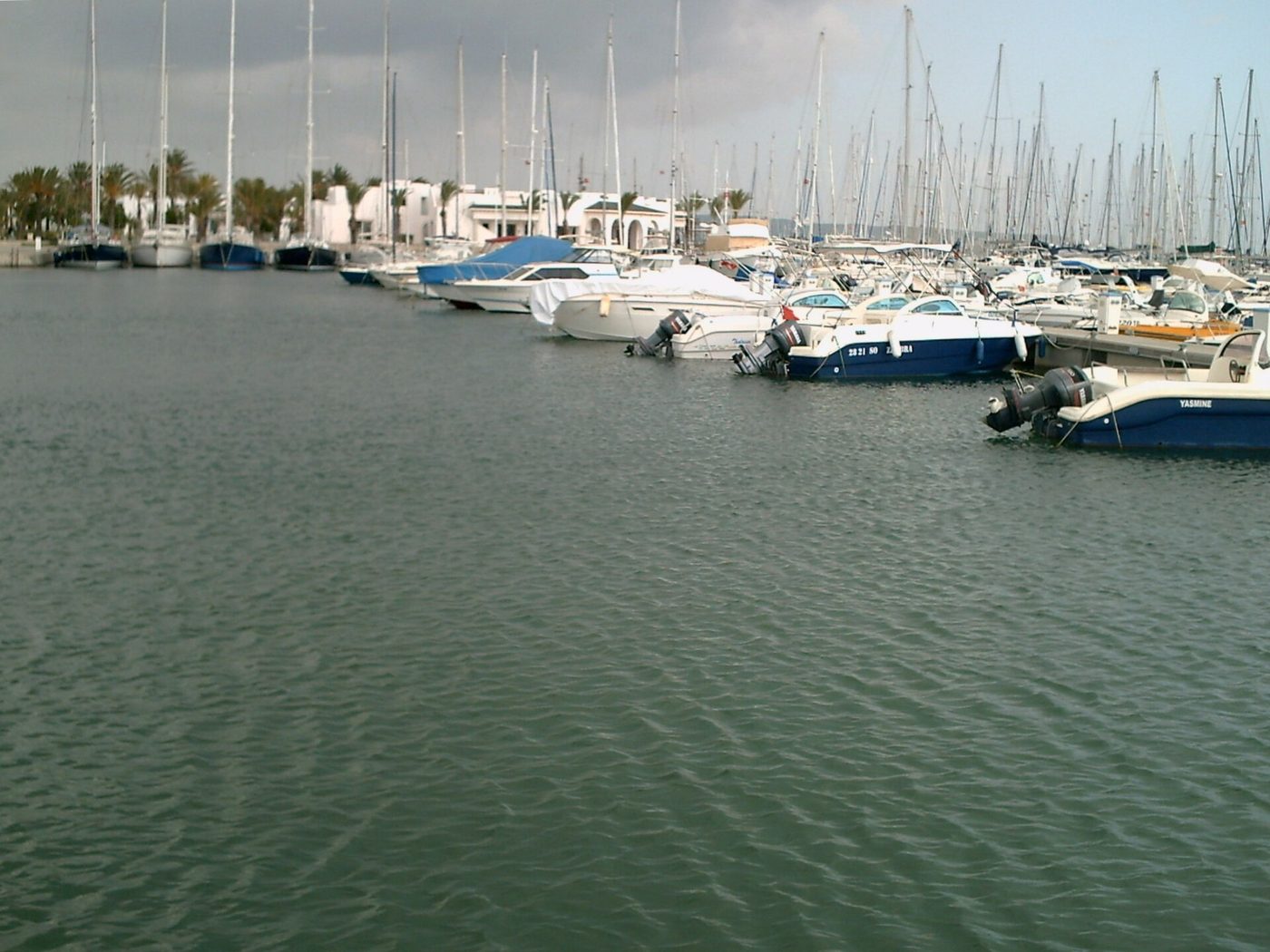
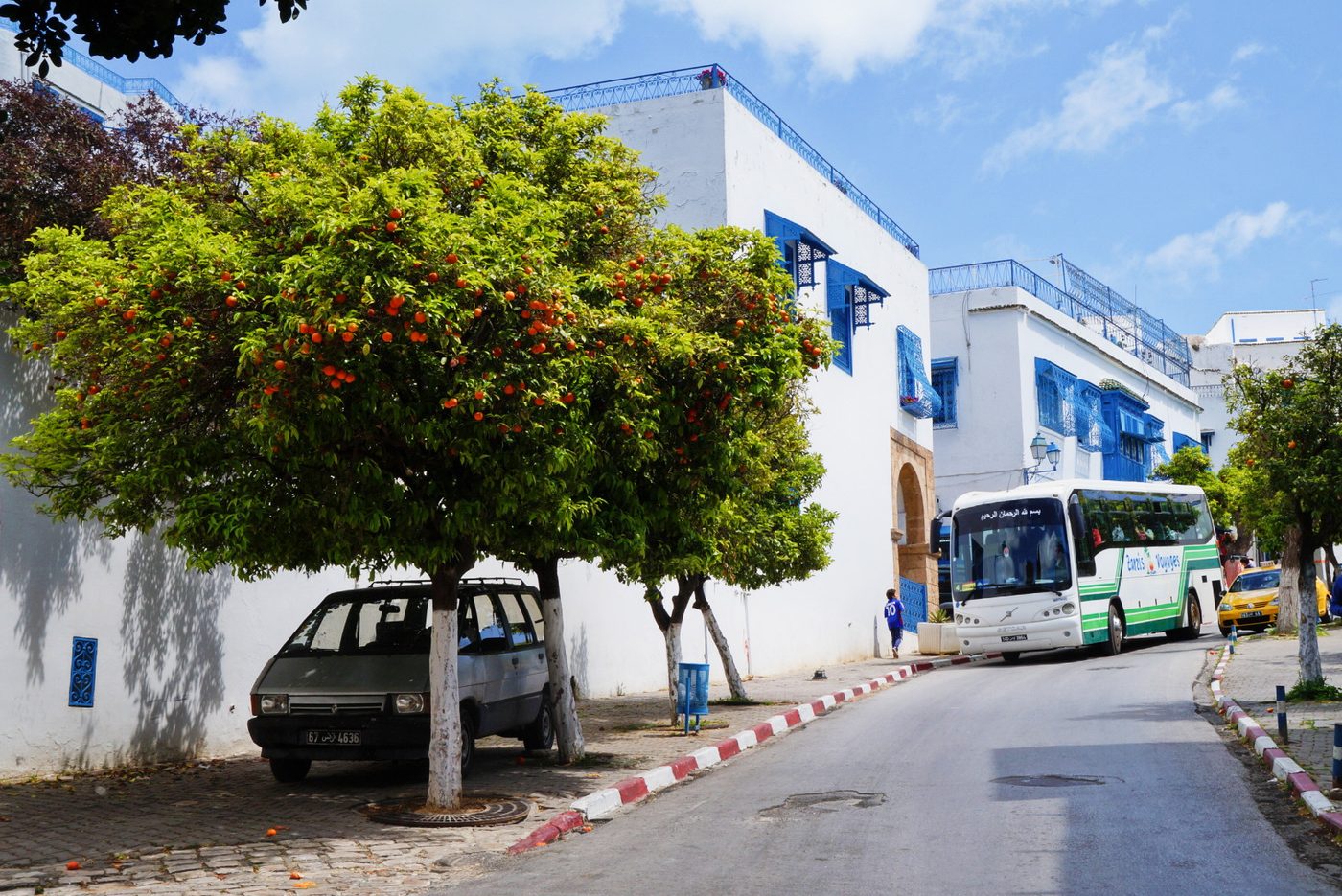
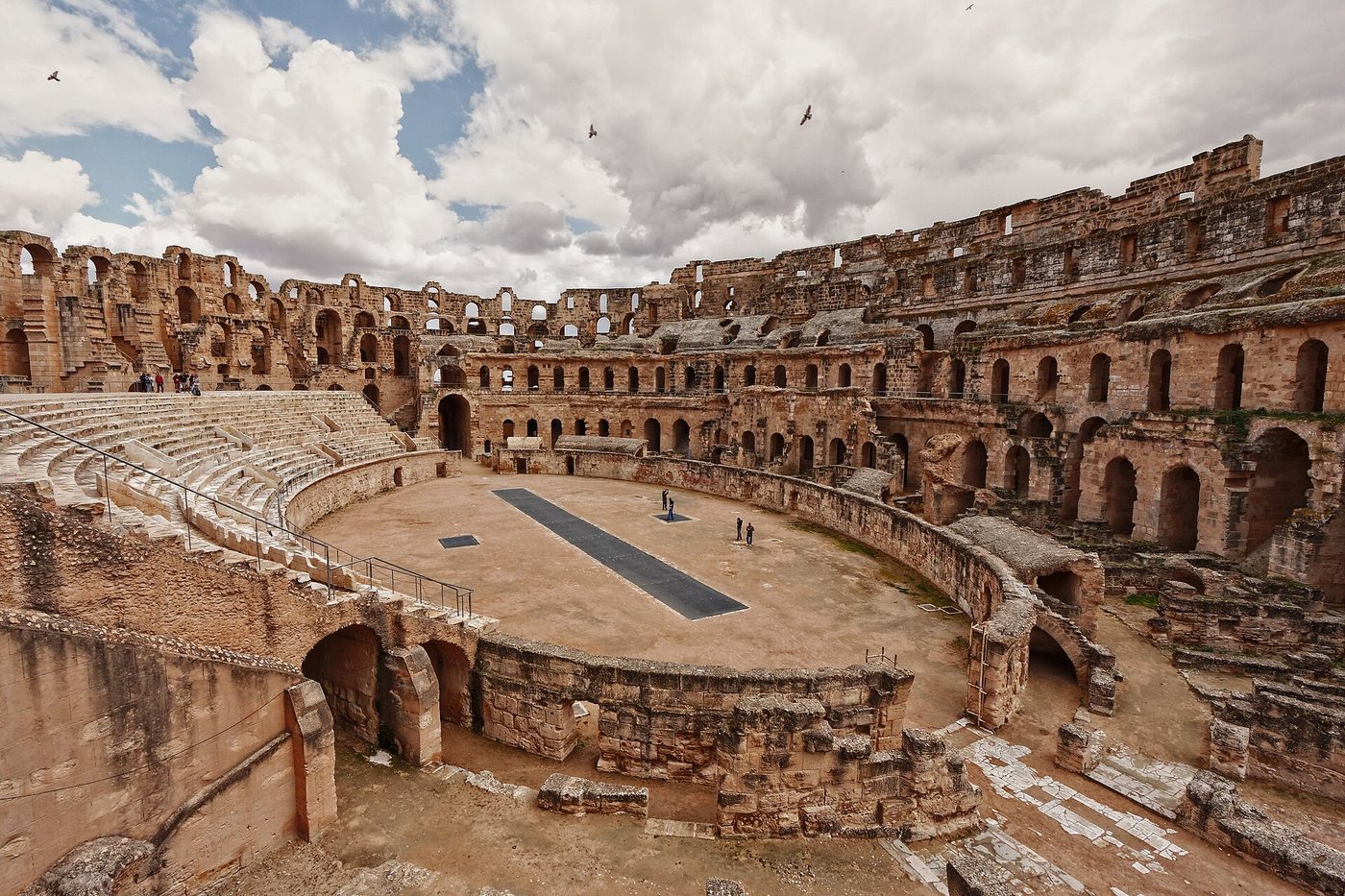
All images via Wikimedia Commons, used with thanks: Late-summer sun over the marina at Yasmine Hammamet in September © R-E-AL (talk | contribs | Gallery) (German Wikipedia) (CC BY-SA 3.0); The blue-and-white clifftop village of Sidi Bou Said near Tunis © Rene Cortin (CC BY-SA 4.0); The vast Roman amphitheatre at El Djem © Agnieszka Wolska (CC BY-SA 3.0).