By the Tunisia Tourism Guide team · Last updated 24 July 2026 · We don’t sell tours or take hotel commissions — this is independent advice, written to be useful.
Sfax doesn’t try to charm you, and that’s exactly why we like it. No film-set medina, no camel touts, no fake hotel ‘friends’ — just a great walled old town going about its business, and a string of sleepy islands an hour offshore.
Sfax Tunisia is the country’s second city and its most authentic — a real working port with an intact walled medina that never became a tourist film set. Offshore lie the low, palm-fringed Kerkennah Islands, reached in about an hour by car ferry. Come for real Tunisian life, olive-oil wealth, superb seafood and octopus-fishing culture, not for resorts or nightlife.
Sfax sits at the southern end of the Sousse and the Sahel coast, and it’s the anticlimax that turns into a highlight — a city few holidaymakers plan for and many end up loving. This guide covers the walled medina and its gates, museums and mosques; the Kerkennah Islands and the ferry across; the food; and how Sfax pairs with quieter Mahdia up the coast. If you like your travel unpolished, it’s one of Tunisia’s most rewarding under-the-radar gems.
Sfax and Kerkennah at a glance
| Detail | What to know |
|---|---|
| What it is | Tunisia’s second city and main southern port; a working, non-touristy place |
| Don’t miss | The walled medina, Bab Diwan, Dar Jellouli museum, the Great Mosque |
| Founded | By the Aghlabids around 849, on an earlier Roman site |
| The islands | Kerkennah — low, palm-fringed, sleepy; car ferry from Sfax (~1 hour) |
| Famous for | Olive oil, almonds, pastries, seafood and octopus fishing |
| Getting there | Train or motorway from Tunis and Sousse; Sfax-Thyna airport |
| How long | A day for the medina; add 1–2 nights for Kerkennah |
Think of it as a trip in two halves: a gritty, characterful city, then dozing island calm. Here’s how to do both.
Why visit Sfax? An honest pitch
Let’s be honest about what Sfax is and isn’t. It isn’t a beach resort, it isn’t especially pretty from the ring road, and its industrial port and olive-processing plants won’t win prizes. What it is, though, is the most genuinely Tunisian city most visitors never see — a place that lives off olives, fish and trade rather than tourism, and is all the more interesting for it.
The payoff is a medina that feels real. Because Sfax was never remodelled for coach parties, its walled old town is one of the best-preserved and most authentic in the country — lived-in, working, and refreshingly free of the hard sell. You can walk the souks as an observer rather than a target, which after a week on a resort strip can feel like a small holiday in itself. For a sense of how differently medinas can feel, compare it with the more visited Sousse medina.
Add the Kerkennah Islands offshore and you have a proper two-part trip: characterful working city followed by palm-fringed calm. It isn’t for everyone — if you want sunbeds and swim-up bars, this isn’t your week — but for curious travellers it’s among the most rewarding corners of the coast.
The walled medina of Sfax
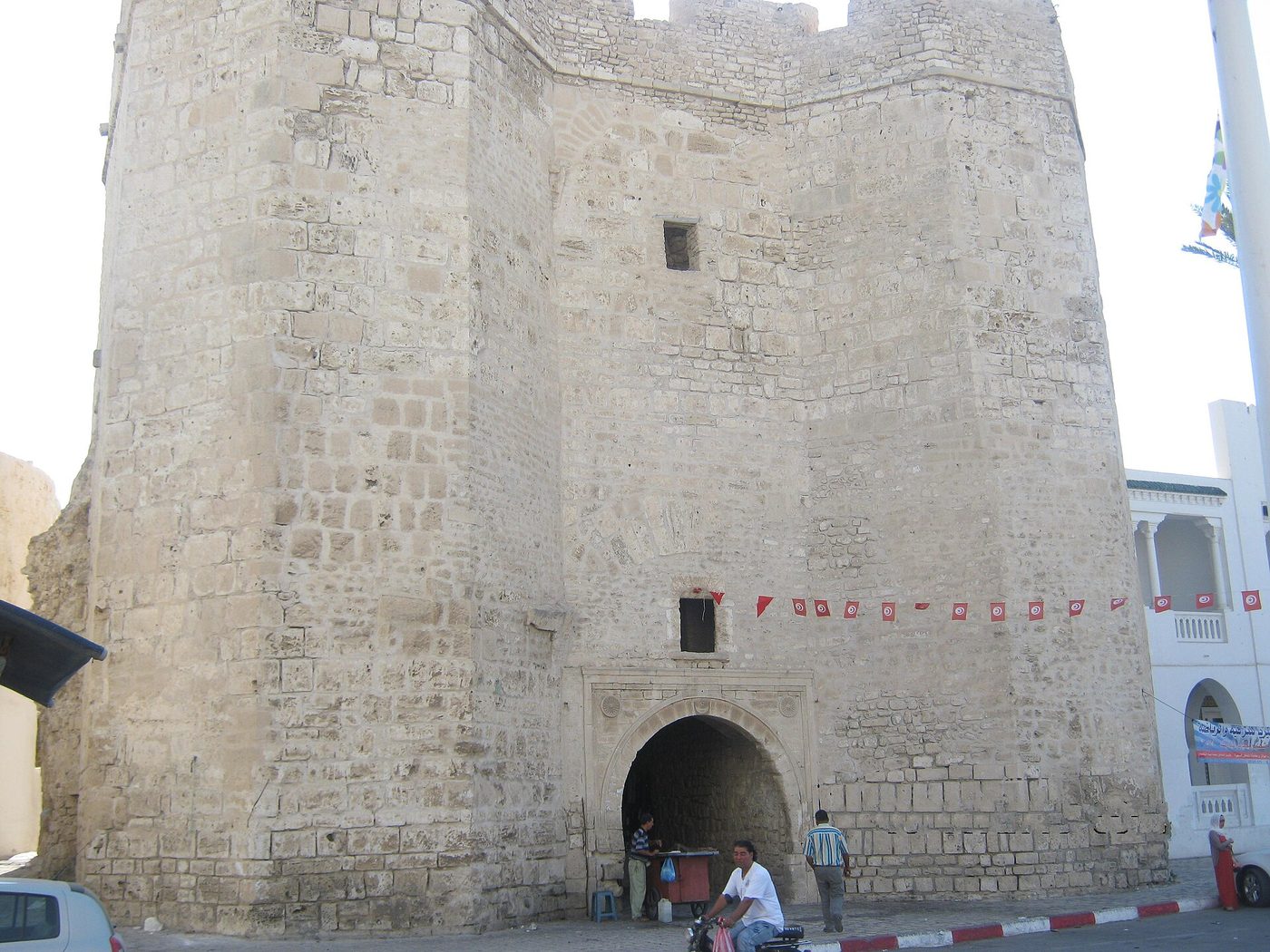
The medina is the reason to come, and it’s a beauty in an understated way — a rectangle of fawn-coloured walls, crenellated ramparts and monumental gates, laid out on a logical grid that makes it easy to explore. Founded in the 9th century, it has been continuously inhabited ever since, and life still runs through it: carpenters turning wooden spinning tops, bakers sliding out golden loaves, a fish market the locals take very seriously.
Bab Diwan and the ramparts
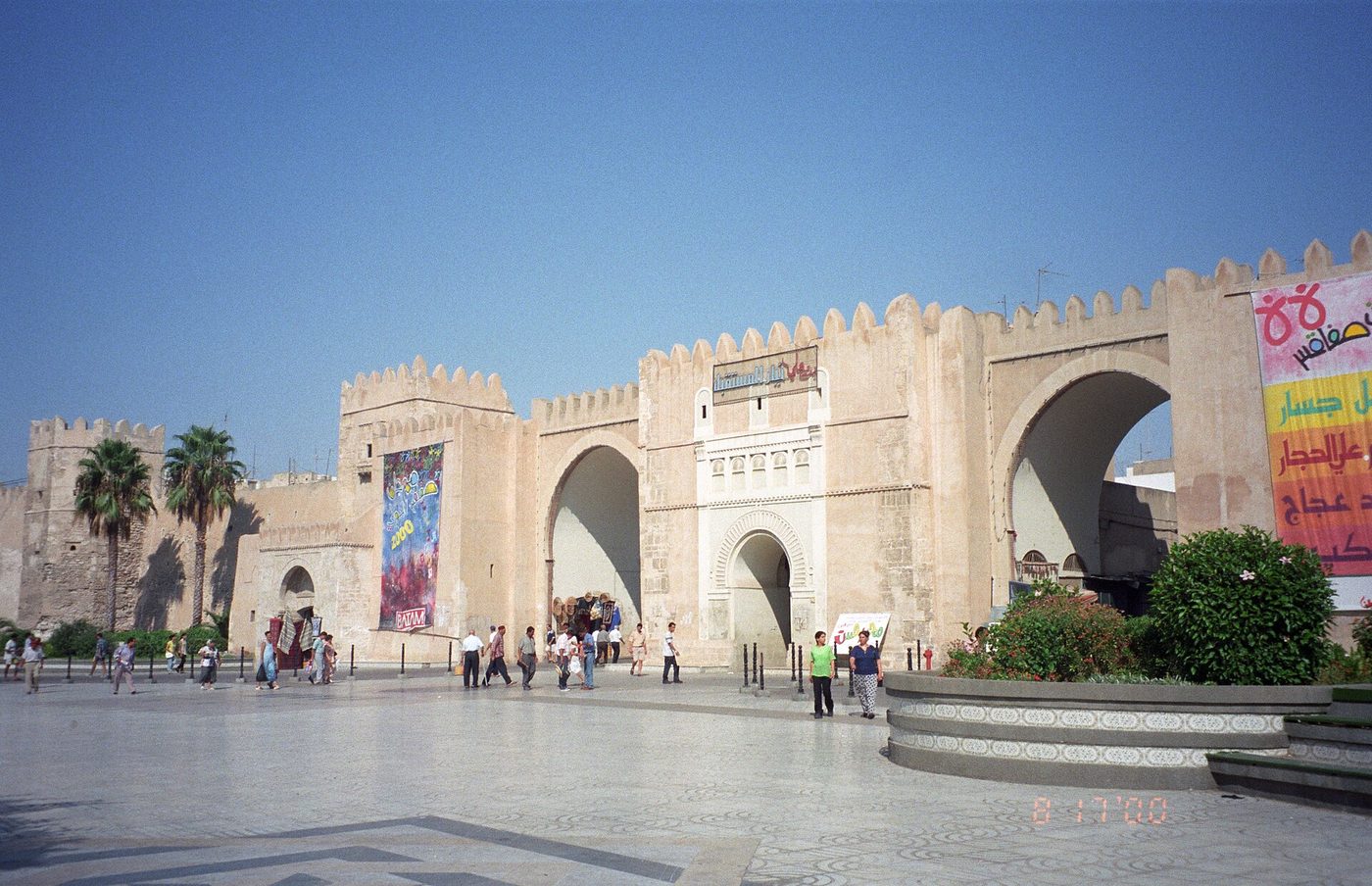
Most visitors enter through Bab Diwan, the grand main gate on the southern wall. Its honey-coloured stone has been smoothed by centuries of hands, and parts of the surviving structure date back many hundreds of years. From here you can walk stretches of the old ramparts, which still ring most of the medina — one of the few places in Tunisia where you really get the sense of a complete walled city.
The souks and the Great Mosque
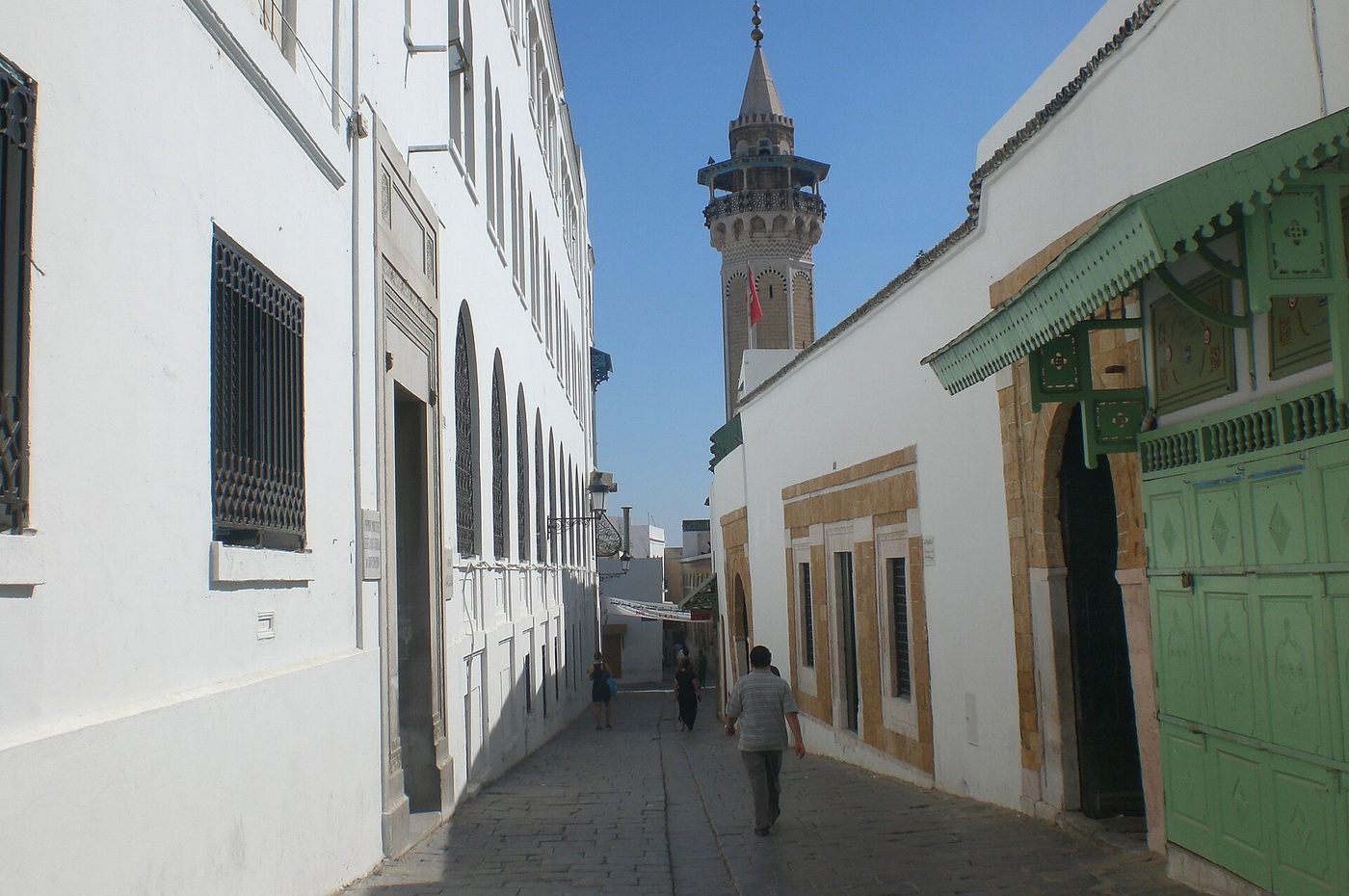
Inside, narrow streets fan out into souks organised, more or less, by trade — cloth here, metalwork there, spices and produce deeper in. At the centre stands the Great Mosque, first built by the Aghlabids in the 9th century, with a fine square minaret carved in bands of stonework. Non-Muslims generally can’t go inside, but the exterior and the lanes around it are the atmospheric heart of the old town.
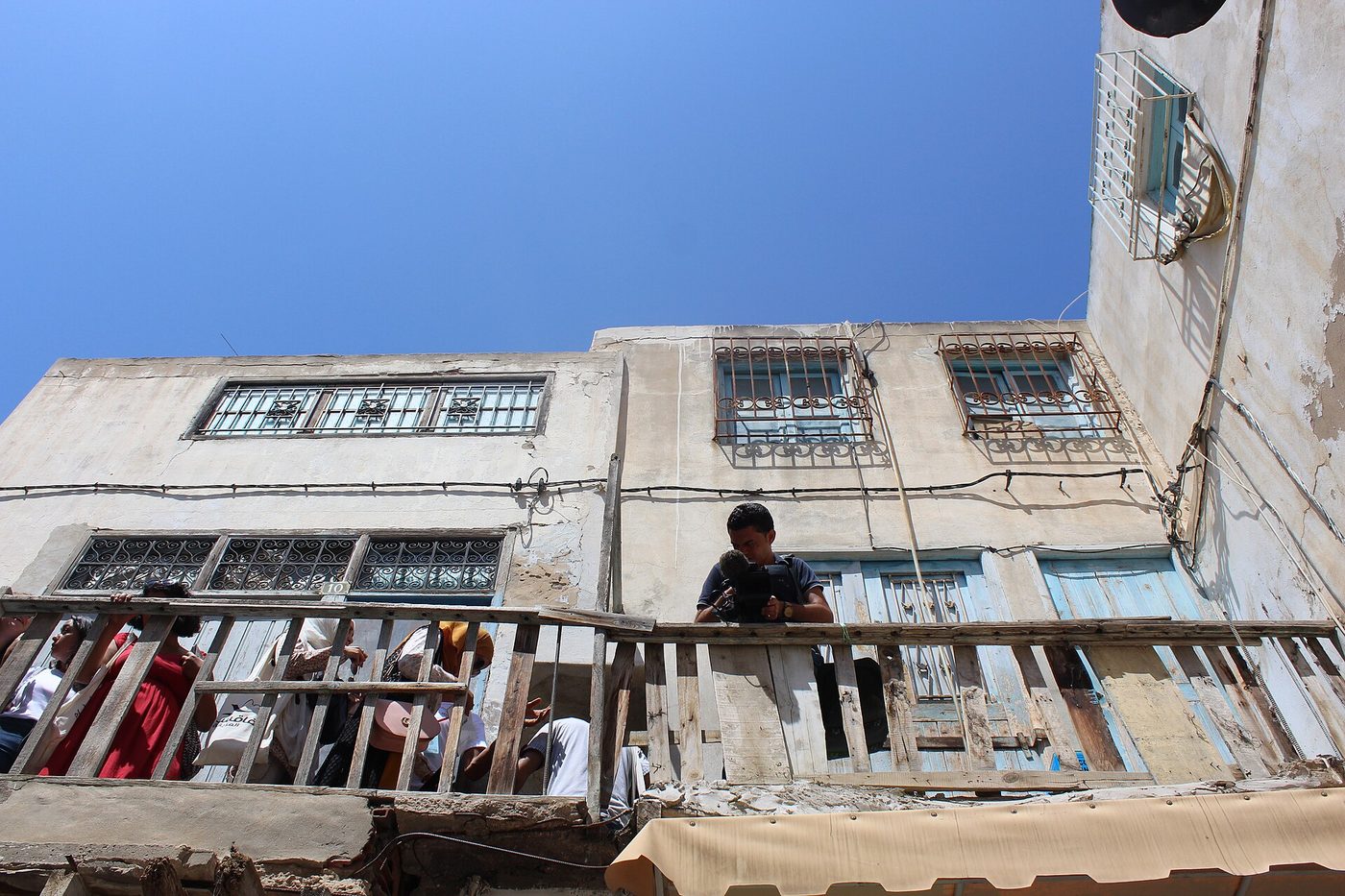
This is browsing without pressure. Prices are for locals rather than tourists, the crafts are things people actually use, and you can potter for an hour without a single “just look, no charge”. Bring cash in small notes — the dinar is a closed currency you can only get inside Tunisia, and the medina runs on coins and paper, not cards.
Dar Jellouli: a merchant’s palace
The single best interior in Sfax is Dar Jellouli, a richly decorated 17th-century mansion built by a wealthy merchant family and now the regional Museum of Popular Arts and Traditions. Behind a plain street door you step into a courtyard of carved stone, painted ceilings, marble columns and walls lined with blue ceramic — a reminder that in the medina, the real façades face inwards.
The collection fills the old rooms with the stuff of well-to-do Sfaxian life: ceremonial costumes, silver jewellery, glasswork, painted panels and the tools of traditional crafts. It’s one of the finest folk museums in Tunisia and well worth the small entry fee (2026 — confirm on arrival).
The Kasbah and the best view
In the south-west corner sits the Kasbah, the medina’s old citadel, rebuilt by the Hafsids in the 14th century on earlier foundations. It now holds a small museum, but the reason to climb up is the view: from the ramparts you look out over a sea of flat medina rooftops, punctuated by minarets — the best single overview of the old town. For more of what came before the Arab city, including the Roman site of Thyna just south of Sfax, see our guide to Roman ruins in Tunisia.
Beyond the walls: the French-era town
Step out of the medina and Sfax changes character again. The gates open onto the ville nouvelle, the town the French laid out in the colonial era, where you’ll spot a distinctive Neo-Moorish style — arched windows, ceramic tilework and towers dressed up like minarets. The grandest example is the old town hall on Place de la République, which houses a small archaeology museum. It’s no headline sight, but the contrast between the walled Arab city and the early-20th-century boulevards tells you a lot about how Sfax grew from a fortified port into a modern city.
Sfax’s story: olives, oil and trade
Sfax grew rich on the land around it. The city was founded by the Aghlabid dynasty in the 9th century, on the site of a Roman town, and from the start it was a fortified port shipping the produce of the central plains — above all olive oil. That trade never stopped. The Sfax region is the powerhouse of Tunisian olive oil, producing a large share of the national crop, and the plains inland are planted with millions of olive and almond trees in tidy, endless rows.
That agricultural wealth shows up on the plate as much as in the port. Almonds and olive oil are the backbone of the region’s famous pastries and its generous cooking, and centuries of seafaring have made Sfaxians serious about fish. The city has been a merchant town for over a thousand years, trading across the desert and the sea, and it still feels like one: busy, self-made and quietly proud. It rarely appears on a first-timer’s map, but it belongs on any thorough list of things to do in Tunisia for anyone who wants the real thing.
The Kerkennah Islands
If Sfax is the working city, the Kerkennah Islands are its opposite: a low, flat archipelago about 20km offshore where the pace drops to almost nothing. There are several islands, but only the two largest — Gharbi in the west and Chergui in the east, joined by a causeway — are really inhabited. Barely anything rises above the palm tops, the water stays shallow for hundreds of metres out, and the whole place feels becalmed. They’re among the more unusual beautiful places in Tunisia — not dramatic, but quietly hypnotic.
Getting there: the Sfax to Kerkennah ferry
The islands are reached by car ferry from Sfax, run by SONOTRAK, crossing from the city’s port to Sidi Youssef on Kerkennah. The trip takes roughly an hour to 80 minutes. In quieter months there are around eight sailings a day; in summer they run far more frequently, sometimes close to hourly and late into the night. Times and fares change with the season, so check the current SONOTRAK schedule before you travel.
| Sfax–Kerkennah ferry | Rough guide (2026 — check current) |
|---|---|
| Operator | SONOTRAK car ferry |
| Route | Sfax port to Sidi Youssef (Kerkennah) |
| Crossing time | About 1 hour to 1 hour 20 |
| Frequency | ~8 a day off-season; roughly hourly in summer |
| Foot passenger fare | Only a few hundred millimes — very cheap |
| Tip | Arrive ~30 minutes early; book ahead in summer with a car |
Foot passengers pay a tiny fare and rarely need to book; taking a hire car across costs more and is worth reserving in summer. Our guide to getting around Tunisia covers ferries, trains and louages in more detail.
What the islands are like
Don’t come to Kerkennah for big sights or lively resorts — come to slow down. The appeal is long, empty beaches of fine sand, warm shallow water ideal for a lazy swim, palm groves, and villages where fishing still sets the rhythm of the day. Sidi Frej and Sidi Founkhal are the best-known beach spots; Remla is the low-key main town, with a market on Thursdays; El Attaya, at the eastern tip, is a proper fishing village.
The sea is the star here, and it’s gentle stuff — you can wade a long way out. For how Kerkennah compares with the country’s other shores, see our roundup of Tunisia’s beaches. One word of warning: in high summer the prettiest spots do draw crowds of Tunisian holidaymakers, so late spring and early autumn are the sweet spot for having the sand to yourself.
Charfia traps and octopus fishing
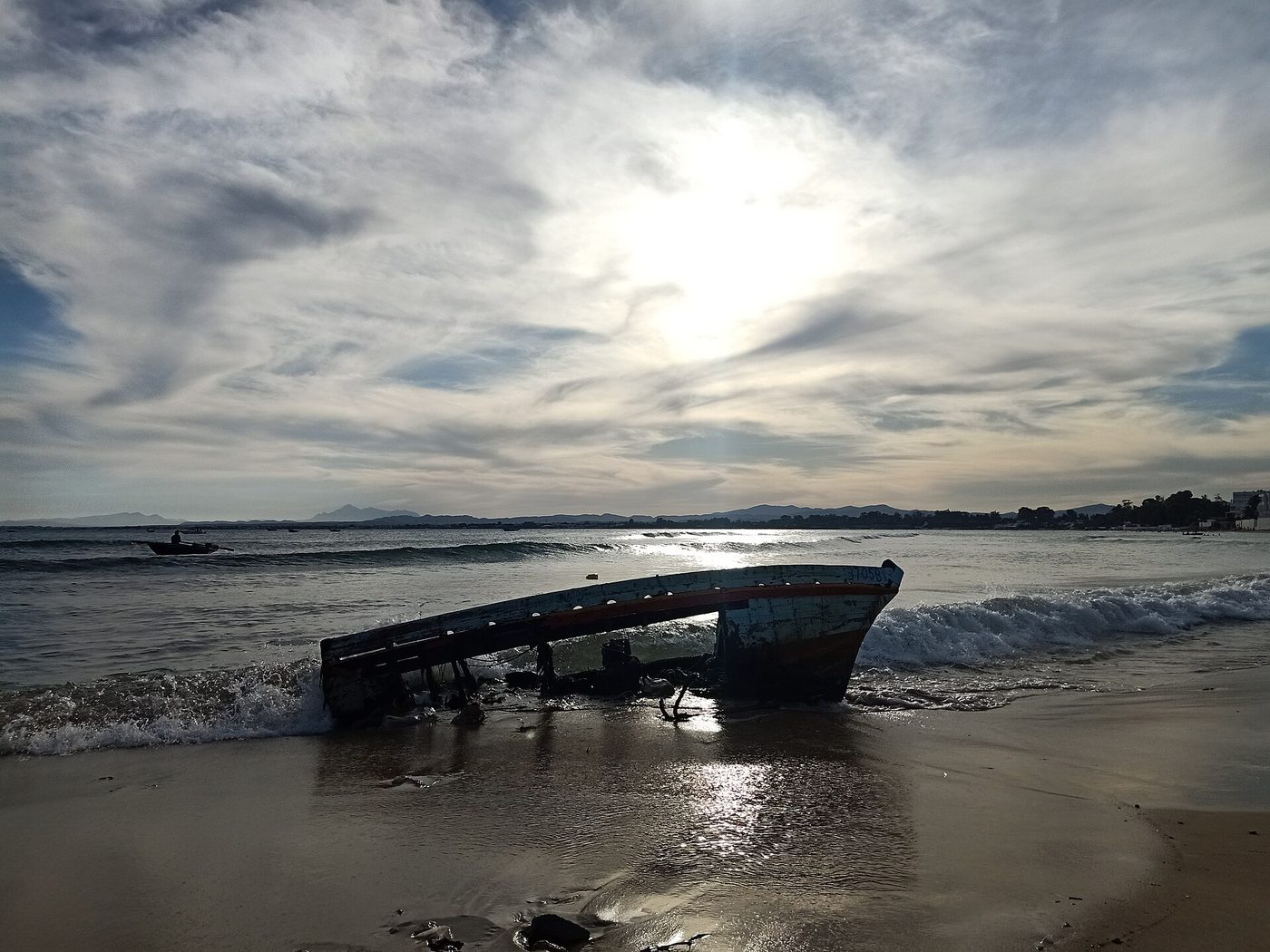
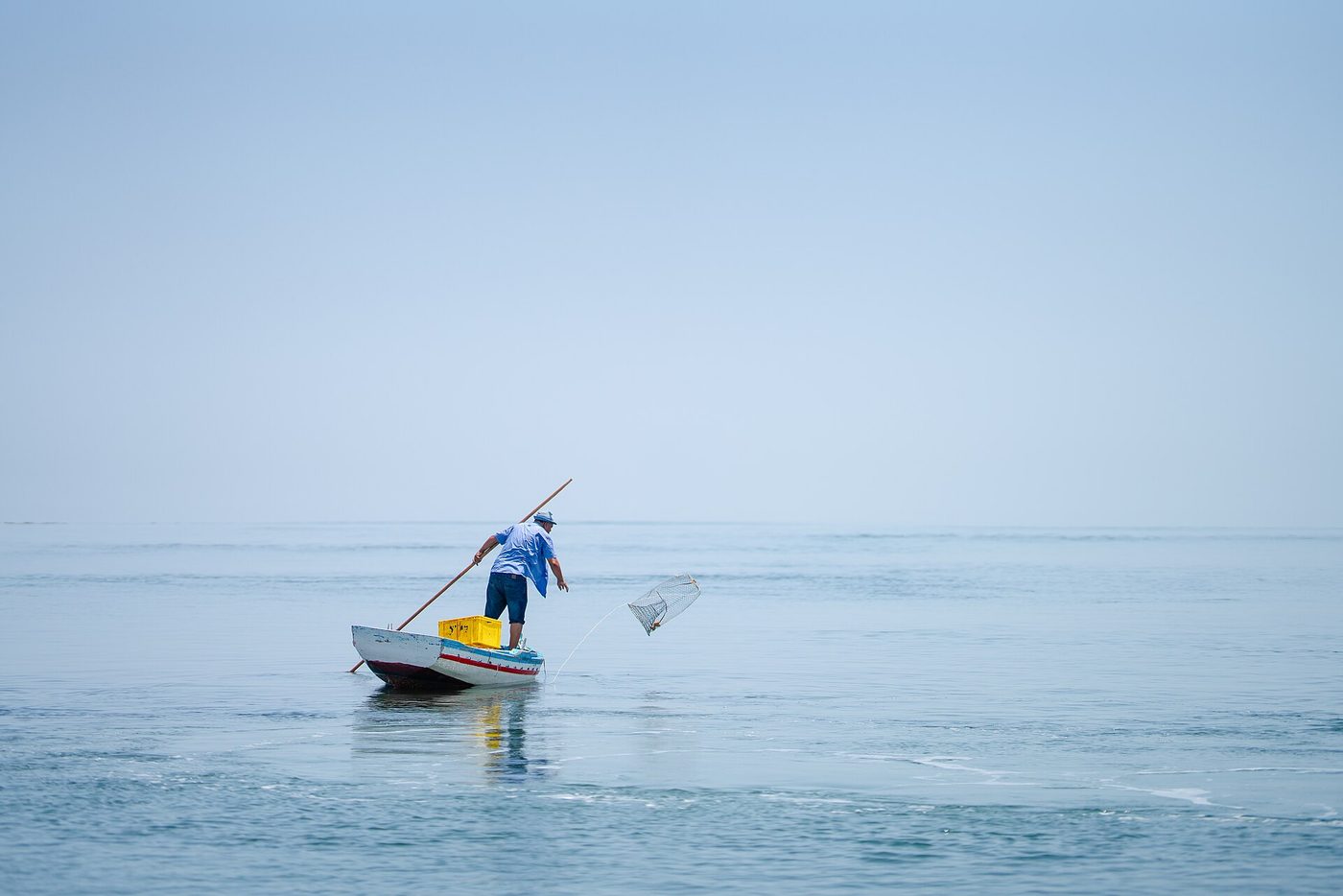
Kerkennah’s real fascination is its fishing culture, which has barely changed in centuries. The islanders practise charfia fishing — elaborate fixed traps built from palm fronds planted into the shallow, muddy seabed, arranged in long V-shaped fences that funnel fish into a chamber the fishermen empty at intervals. It’s ingenious, sustainable and genuinely ancient; charfia fishing here is recognised on UNESCO’s list of the intangible cultural heritage of humanity.
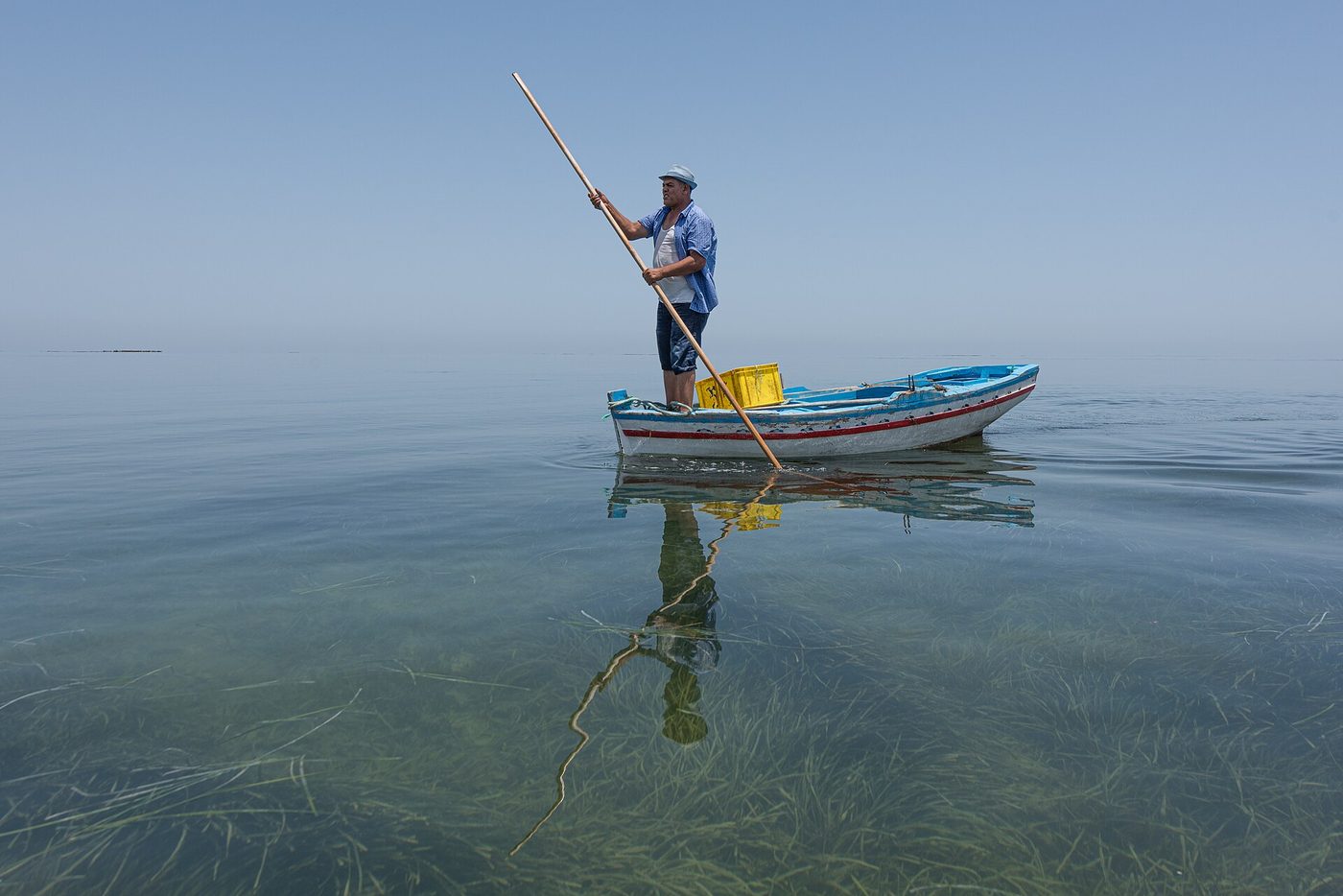
Octopus is the other speciality. Fishermen catch it using rows of clay pots or palm traps laid on the seabed, which the octopus crawl into — a traditional method you’ll see drying by the harbours. Many visitors arrange a morning out with a local fisherman in one of the flat-bottomed, lateen-sailed boats, the loudes, to see the traps up close and, often, to eat the catch afterwards. It’s the most memorable thing to do on the islands.
Getting around Kerkennah and what to do
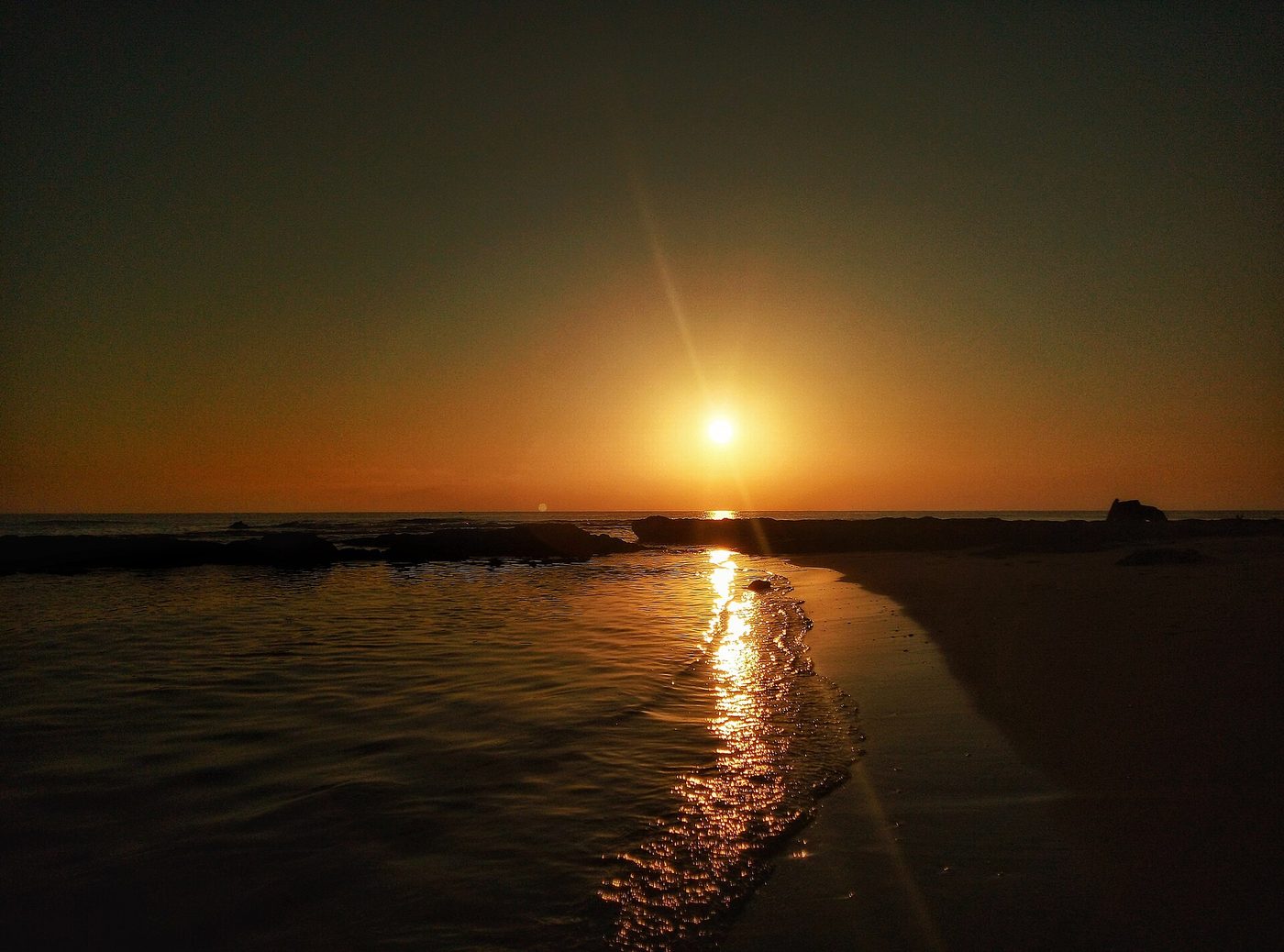
The islands are flat and spread out, so a car, scooter or bicycle helps — taxis exist but aren’t always around. Beyond the beaches and the fishing, there’s the Roman-era Borj el Hsar fort on Gharbi, a small island heritage museum, the Thursday market at Remla, and sunsets at Sidi Founkhal that people talk about for years. None of it is polished; all of it is quietly lovely.
- Beaches: Sidi Frej and Sidi Founkhal for the best sand and shallow, warm water.
- Fishing trips: a morning on a loude to see the charfia traps and octopus pots.
- Borj el Hsar: a ruined Roman and later fort on the western island.
- Remla: the main town, best on Thursday market day.
What to eat in Sfax and Kerkennah
This is one of Tunisia’s great eating regions, and it’s built on the sea and the olive grove. In Sfax, look for fish cooked “Sfaxian style” in a rich sauce, stuffed squid, couscous with cuttlefish, and anything dressed with the region’s superb, fruity olive oil. A local signature is fish with charmoula — a slow-cooked, sweet-savoury onion relish with raisins and cinnamon that sounds odd and tastes wonderful.
Sfax is also, by common consent, the pastry capital of Tunisia, thanks to all those almonds: seek out flaky samsa, kaak warqa rings and rosewater-scented sweets from the old bakeries. On Kerkennah it’s all about the day’s catch — octopus, grey mullet and sea bream, simply grilled by the water. Our Tunisian food guide has the full rundown of what to order.
Visiting Sfax and Kerkennah: know before you go
A practical checklist for a smooth trip to the coast’s most authentic corner.
- Getting to Sfax. Trains and louages run from Tunis and Sousse, and there’s a motorway most of the way (Sfax is around 260km south of Tunis). Sfax-Thyna airport handles some regional flights.
- The ferry. For Kerkennah, use the SONOTRAK ferry to Sidi Youssef; arrive about 30 minutes early, and reserve ahead in summer if you’re bringing a car.
- When to go. Spring and early autumn are ideal — warm but not scorching, and the islands are quiet. Our best time to visit and Tunisia in September guides have the seasonal detail.
- How long. Give Sfax’s medina at least half a day; add one or two nights on Kerkennah to feel the calm. It’s a slow trip, not a checklist.
- What to bring. Cash in small notes (cards are little use), comfortable shoes for the medina, sun cover, and modest clothing for mosque exteriors and everyday respect in a non-resort city.
- Safety. Sfax is a normal working city — take usual city precautions with valuables. Our is Tunisia safe guide gives the full, date-stamped position.
Fitting it into a bigger route? Sfax and Kerkennah form the southern leg of our Tunisia itinerary, and the Roman amphitheatre at El Djem — one of the great sights on any day trip from Sousse — sits right on the road north, making an easy stop between the two.
Sfax and the Kerkennah Islands: your questions answered
Is Sfax worth visiting?
Yes, for the right traveller. Sfax won’t suit anyone after a beach resort, but its walled medina is one of the most authentic in Tunisia, the food is superb, and the Kerkennah Islands offshore are wonderfully calm. If you value real, working places over polished tourist sights, Sfax is one of the country’s most rewarding stops.
What is Sfax known for?
Sfax is Tunisia’s second city and its industrial and port hub, known for olive oil, almonds, seafood and pastries. For visitors, the draw is its exceptionally well-preserved walled medina — a genuine working old town rather than a tourist showpiece — and the sleepy Kerkennah Islands, reached by ferry, with their traditional fishing culture.
Is Sfax safe for tourists?
Sfax is a normal, busy working city, and tourists rarely have trouble beyond the usual big-city pickpocketing risks. Keep valuables discreet, use registered taxis and take the same care you would in any large town. It sees few foreign visitors, so expect curiosity rather than hassle. See our is-Tunisia-safe guide for the full, date-stamped picture.
How do you get from Sfax to the Kerkennah Islands?
Take the SONOTRAK car ferry from Sfax port to Sidi Youssef on Kerkennah. The crossing takes about an hour to 80 minutes, with roughly eight sailings a day off-season and far more in summer. Foot passengers pay a tiny fare; cars cost more and are worth booking ahead in the summer months.
How long is the ferry from Sfax to Kerkennah?
The Sfax to Kerkennah ferry takes roughly one hour to one hour and twenty minutes each way, depending on conditions. Aim to arrive at the terminal about 30 minutes before departure. Schedules change seasonally, with many more sailings in summer than in winter, so always check the current SONOTRAK timetable before you set off.
Are the Kerkennah Islands worth visiting?
If you want peace, yes. Kerkennah is flat, low-key and short on big sights, but that’s the appeal — empty sandy beaches, warm shallow water, palm groves and a centuries-old fishing culture. It suits slow travellers and anyone curious about traditional island life. Those after resorts, nightlife or dramatic scenery will likely be underwhelmed.
What is charfia fishing?
Charfia is a traditional fixed-trap fishing method used in the Kerkennah Islands, built from palm fronds planted in the shallow seabed to form long fences that guide fish into a trap. It’s sustainable, ingenious and very old — so distinctive that it is recognised on UNESCO’s list of the intangible cultural heritage of humanity.
How do you get to Sfax from Tunis or Sousse?
Sfax is well connected by train and by shared louage minibuses from both Tunis and Sousse, and a motorway runs most of the way (it’s around 260km south of Tunis). There’s also a small airport, Sfax-Thyna, with some regional flights. Trains are comfortable and scenic; louages are quicker but busier.
Is the Sfax medina worth seeing?
Very much so. The Sfax medina is one of the best-preserved and most genuinely lived-in walled old towns in Tunisia, never remodelled for tourists. You can wander its souks, ramparts and gates — Bab Diwan chief among them — with almost none of the hard sell found elsewhere, plus fine museums like Dar Jellouli.
How long do you need in Sfax and Kerkennah?
Half a day covers the Sfax medina’s highlights, so the city works as a day stop. To do Kerkennah justice, add one or two nights on the islands, since their charm is the slow pace rather than a list of sights. All in, two to three days lets you enjoy both without rushing.
What food is Sfax famous for?
Sfax is famous for seafood and olive oil, and above all for pastries — it’s often called Tunisia’s pastry capital, thanks to the region’s almonds. Look for fish cooked “Sfaxian style” in a rich sauce, stuffed squid, couscous with cuttlefish, and almond sweets like samsa and kaak warqa.
Do you need a car on Kerkennah?
It helps. The islands are flat but spread out, and taxis aren’t always around, so a hire car, scooter or bicycle gives you the freedom to reach the better beaches and villages. You can bring a car over on the ferry, or arrange wheels on the island; many visitors simply cycle between the nearer spots.
Written by the Tunisia Tourism Guide team — an independent UK-focused guide to travelling in Tunisia. We don’t sell tours or take hotel commissions. Prices and advice were checked at publication; always confirm current details before you book.
Photo credits
All images via Wikimedia Commons, used with thanks: Bab Diwan © upyernoz (CC BY 2.0); A souk street inside the walled medina of Sfax © Houssem Abida (CC BY-SA 4.0); A Kerkennah fisherman casting a traditional wicker fish trap in © Skander zarrad (CC BY-SA 4.0); A traditional flat-bottomed fishing boat and palm-frond traps in the © Atef Ouni (CC BY-SA 4.0).