By the Tunisia Tourism Guide team · Last updated 24 July 2026 · We don’t sell tours or take hotel commissions — this is independent advice, written to be useful.
Most people meet Monastir by accident. They fly into its airport for a Sousse or Skanes package, glimpse a golden dome and a fortress on the way past, and never come back to look properly. That’s a shame, because Monastir is one of the most likeable towns on this coast: small, walkable, low on hassle, and stacked with more history per square metre than anywhere else in the region.
The best things to do in Monastir are climbing the 8th-century Ribat for its tower views, paying respects at the gold-domed Bourguiba Mausoleum, wandering the walled medina and stopping for coffee at the marina. It’s a calm, walkable town, easily reached from Sousse in about 30 minutes on the Sahel metro.
Sitting on its own peninsula just south of Sousse, Monastir rewards a slow day rather than a rushed checklist. This is our full rundown — what to see, how long it takes, what it costs, and how to get there. Let’s start with the shortlist.
Things to do in Monastir at a glance
You don’t need long here. One unhurried day covers the highlights comfortably; a half-day covers the essentials if you’re over from Sousse. Costs and hours change, so treat these as a planning guide and confirm on the day.
| What to do | What it is | Time needed | Rough cost (2026) |
|---|---|---|---|
| The Ribat | 8th-century fortress and film location | 1–1.5 hours | ~8 TND |
| Bourguiba Mausoleum | Gold-domed presidential tomb | 30–45 minutes | Free |
| The marina (Cap Marina) | Yacht harbour, cafés and seafood | 1 hour or more | Free to stroll |
| The medina | Walled old town and souvenir souks | About 1 hour | Free |
| The Great Mosque | 9th-century mosque (courtyard) | 20–30 minutes | Free; modest dress |
| Skanes beach strip | Sandy hotel zone west of town | Half a day or more | Free beach |
| Kuriat Islands | Boat trip to offshore sandbanks | Half a day | Boat fare |
The good news is that the Ribat, mausoleum, medina and Great Mosque are all clustered together and walkable in a single loop. Here’s the detail on each.
The Ribat: Monastir’s cinematic fortress
Start here, ideally first thing when the light is best and the stone hasn’t yet baked in the sun. The Ribat of Monastir is an 8th-century fortified monastery — one of the oldest and largest in North Africa — and it dominates the seafront exactly as it was built to do, watching for hostile ships. Inside it’s a warren of courtyards, prayer cells, staircases and a small museum of Islamic art, and it’s endlessly photogenic.

The unmissable bit is the climb up the nador — the tall watchtower. It’s a fair few steps up a narrow spiral staircase, but the reward is a 360-degree view over the sea, the domes of the mausoleum, the medina rooftops and the enormous whitewashed cemetery below. It’s the best view in town, easily.
Film fans get a bonus. The Ribat’s maze of high walls stood in for the Holy Land in Monty Python’s Life of Brian (1979) and, before that, in Franco Zeffirelli’s Jesus of Nazareth (1977). If the phrase “Welease Woger!” means anything to you, you’ll want to linger. We’ve told the fortress’s full story — history, tower and screen credits — in our dedicated guide to the Ribat of Monastir. Entry was around 8 dinars for adults in 2026, and it typically opens from about 8.30am to 5.30pm; confirm current hours before you go.
The Bourguiba Mausoleum
A short walk from the Ribat, along a grand ceremonial avenue lined with the town’s cemetery, stands the mausoleum of Habib Bourguiba — and you’ll spot its gold dome and two tall minarets long before you reach it. Bourguiba was born in Monastir and became independent Tunisia’s first president, widely known as the country’s “father of independence”, which is why his home town gave him such a monument.
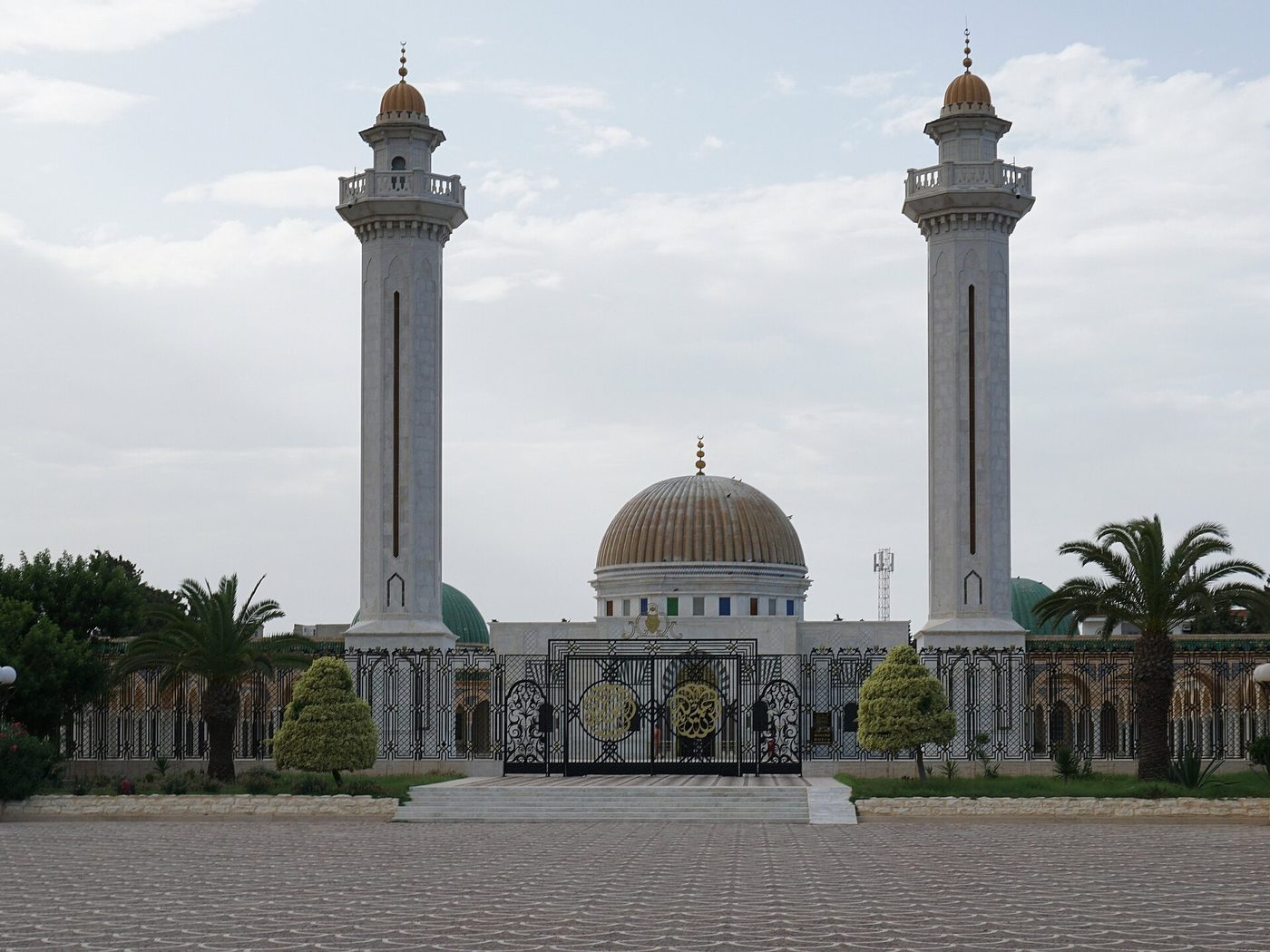
It’s genuinely impressive inside: marble halls, a gilded dome, and glass cases displaying his personal effects — reading glasses, a walking stick, photographs from a long political life. It was decades in the making and built on the spot where his family were buried. Entry is free, though you pass through a security check first, and the surrounding esplanade is a pleasant, breezy stroll in its own right. Whatever you make of the man’s long rule — and Tunisians hold varied views — the building is a real piece of 20th-century national history and worth 30 to 45 minutes. It’s a good pairing with the Ribat and a natural thread into our wider Tunisia culture guide.
The marina and Cap Marina
When you’ve had your fill of history, the marina is where Monastir slows right down. Cap Marina has berths for several hundred boats — a mix of fishing craft, local yachts and the odd gleaming visitor — and a palm-lined promenade made for an aimless wander. It’s the town’s café-and-people-watching heart: pick a waterfront table, order a mint tea or a coffee, and watch the boats come and go.
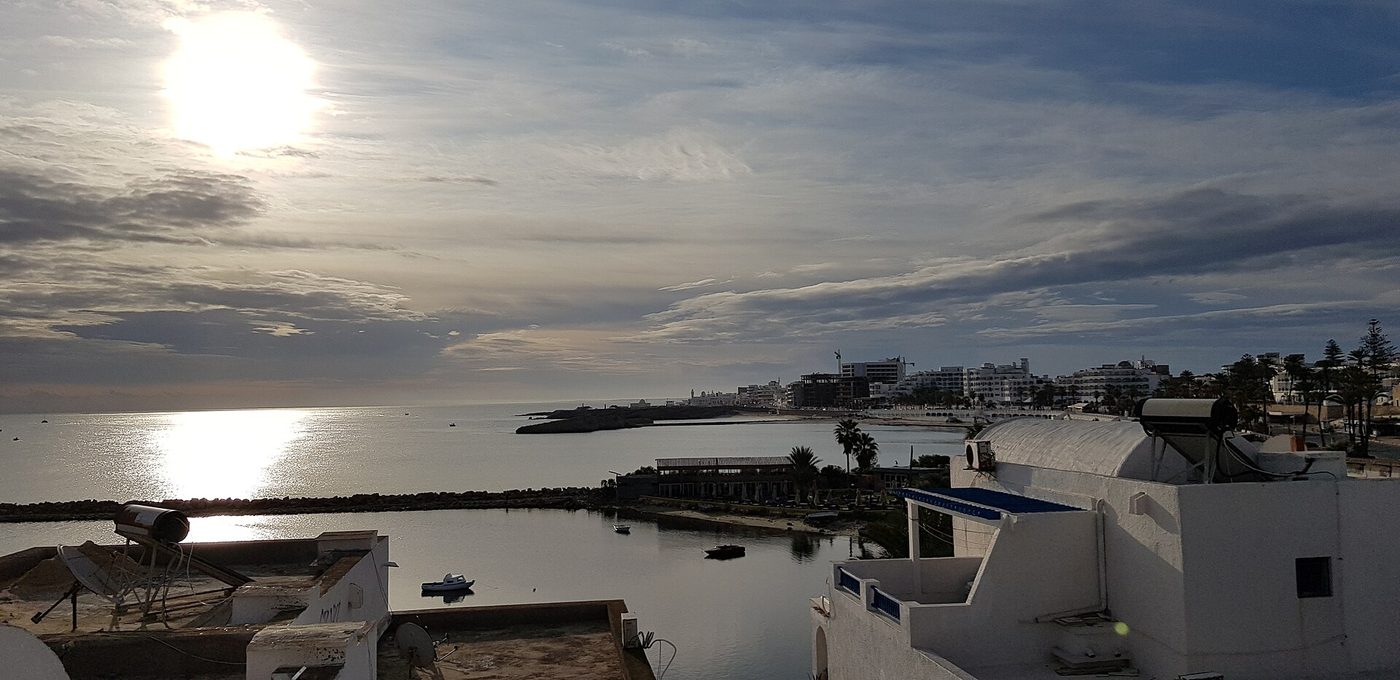
It’s also where you’ll eat well. The seafood here is landed locally and cooked simply — grilled fish, calamari, the works — and the setting beats any resort buffet. If you fancy getting out on the water, boat trips leave from around here, including day-sails to the Kuriat Islands (more on those below).
The medina and Great Mosque
Monastir’s old town is one of its quiet pleasures — and one of its best features is what it lacks. Compared with the medinas of Sousse or Hammamet, this one is small, relaxed and refreshingly light on hard-sell touts. You can browse without a running commentary.
The medina
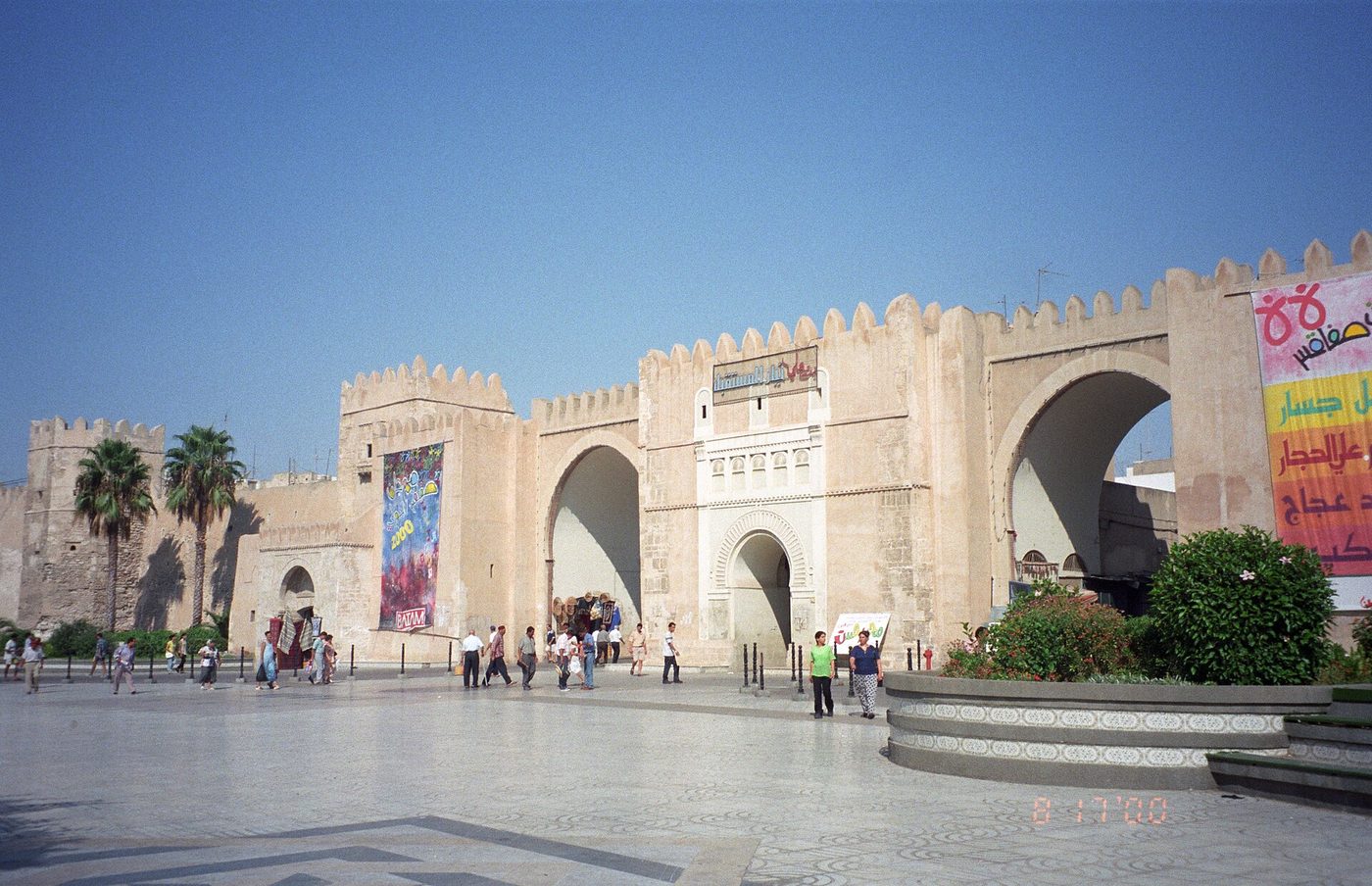
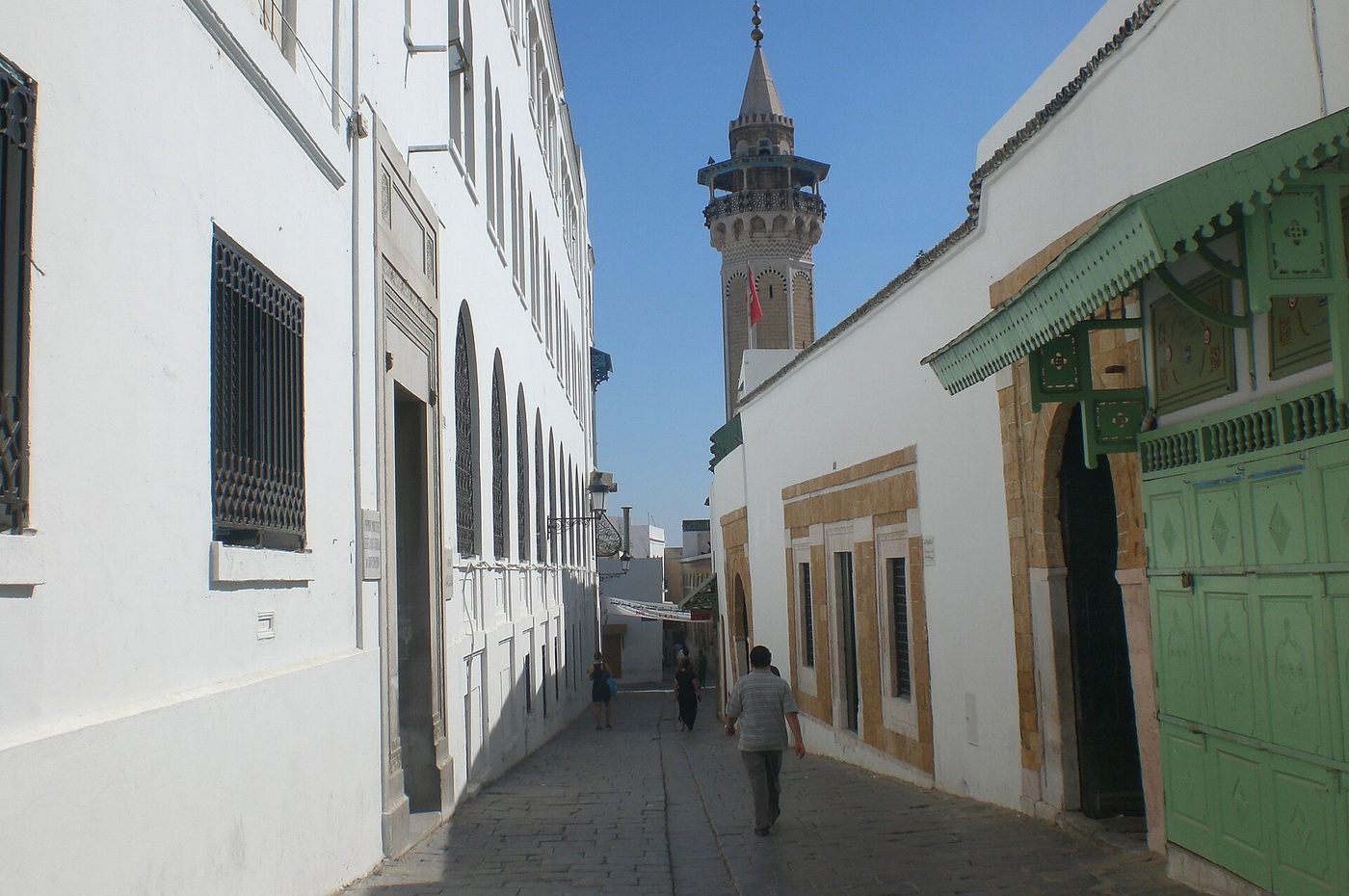
Behind whitewashed walls and blue-shuttered lanes you’ll find stalls of pottery, Berber blankets, leather sandals, spices and dates. It’s compact enough that you can’t really get lost, and you’ll likely pass through it anyway on the walk between the train station and the Ribat. Prices are negotiable, so a friendly haggle is expected — but there’s none of the pressure you get in the bigger resorts, which makes it a nice place to actually enjoy the process.
The Great Mosque
Tucked beside the medina, Monastir’s Great Mosque dates to the 9th century, with later expansions through the medieval Hafsid period. Architecture buffs will note the unusual detail that there’s no dome over the mihrab — a genuine rarity. It’s a working mosque, so it’s closed to non-Muslims during the five daily prayer times; outside those, access is usually limited to the courtyard. Dress modestly — shoulders and knees covered, and a scarf for women — and always check if you’re welcome to enter that day.
Skanes: Monastir’s beach and hotel strip
Most package holidaymakers who “stay in Monastir” actually stay in Skanes, the tourist zone that runs west along the bay towards the airport. This is the beach-and-resort end of things: a long sandy strand, big all-inclusive hotels with pools and entertainment, and easy access to the water. If your idea of Monastir is a sunlounger and a swim, Skanes is where that happens, and it’s only a short taxi or metro hop from the historic centre.
It’s worth being clear-eyed about the trade-off. Skanes gives you the beach and the resort comforts but keeps you a little out of town; staying nearer the marina or medina puts the history on your doorstep but with fewer big-hotel facilities. Our guide to where to stay in Sousse covers the same choice for the wider area, and for a pure beach steer, our Tunisia beaches guide is honest about which stretches deliver. The sand at Skanes is decent, the sea shallow and warm — good for families — if not quite the postcard you might picture.
Arriving at Monastir: the airport and the metro
Monastir is unusually easy to reach, which is part of its charm as a day trip or a base.
Habib Bourguiba International Airport
Monastir’s own airport (code MIR) sits at Skanes, only around 9 km from the town centre, and it has long been a gateway airport for package flights to Sousse and the Sahel coast — though these days many UK charters land at Enfidha instead. If you do fly into Monastir, you’re barely 15–20 minutes from the beach. There’s a taxi rank, hotels will arrange transfers, and — unusually — the airport even has its own stop on the local metro line, which is a cheap way into town if you’re travelling light.
The Sousse–Monastir metro
The Sahel metro is the star of the show for independent travellers. It’s a coastal light-rail line (not an underground) that links Sousse, the airport, Monastir and Mahdia, running many times a day for a tiny fare. From Sousse’s Bab Jedid station it’s about 30 minutes into central Monastir, and the main station, Gare de Monastir, drops you right by the medina and a short walk from the Ribat.
Buy your ticket at the station or from the conductor, in cash; there are no seat reservations, and the trains are basic but perfectly fine — grab a window seat, because the line hugs the coast. It genuinely is the simplest way to visit, which is why Monastir features so prominently in our day trips from Sousse guide. Louages (shared minibuses) cover the same route and are just as cheap; our getting around Tunisia guide explains how they work.
Beyond the town: Kuriat Islands and day trips
If you have longer, Monastir opens onto more. The Kuriat Islands, a pair of low, sandy islets a boat-ride offshore, have some of the clearest water and quietest beaches in the region — and are an important nesting site for sea turtles, so they’re protected. Day-boats run in season from the marina; go with a responsible operator and don’t expect facilities, just sand and sea.
Monastir also works both ways as a hub: it’s a stop on the metro line down to laid-back Mahdia and up to Sousse, and the Roman amphitheatre at El Jem is an easy louage ride inland. In short, you can happily use the town as a quiet base and range out from it. For the full sweep of what’s reachable, see the pillar guide to things to do in Tunisia.
Where to eat and drink in Monastir
Monastir eats well, and it does so without resort mark-ups. The town’s kitchens lean on the staples of this coast — fish landed that morning, olive oil, fiery harissa, preserved lemon and slow-cooked couscous that actually tastes of something. It’s generous, home-style cooking rather than fine dining, and it’s all the better for it.
The marina and the old port are the obvious places to settle in for a proper meal, with a run of seafood restaurants where grilled fish, calamari and prawns come straight off the boats. Look out for local specialities beyond the couscous: kammounia, a cumin-scented meat stew, and mermez, a hearty dish of meat with chickpeas. In summer, ask if there’s fish couscous on the menu — a regional favourite. For something lower-key, the medina has traditional tea houses where a glass of scalding mint tea and a plate of honey-soaked pastries costs next to nothing and buys you an hour of watching the world go by.
A quick word on drinks: Tunisia is a Muslim country, so alcohol is served mainly in licensed restaurants and hotels rather than everywhere, and it’s dearer than the food. The marina restaurants are your best bet for a glass of wine or a cold Celtia beer with dinner. For the wider story of what to order around the country, our Tunisian food guide is the place to start.
Who Monastir suits — and who might want more
We’re honest about fit, so here’s the straight version. Monastir is a fine choice if you want history and sea air without the sales pressure of the bigger resorts, if you like a place you can cover on foot, and if a slow rhythm — fortress in the morning, long seafood lunch, an afternoon swim — sounds like your kind of day. It’s also a gentle, low-stress introduction to Tunisia for first-timers, and a calm base for families, with shallow water at Skanes and short distances everywhere.
It’s a less obvious pick if nightlife, big shopping or a lively resort scene are what you’re after — Monastir is quiet after dark, and deliberately so. In that case you might prefer to base yourself in busier Sousse or Port El Kantaoui and visit Monastir for the day, which is how plenty of people do it. Our day trips from Sousse guide covers that approach, and if you’re still choosing a resort, the where to stay in Sousse guide weighs up the options.
How long to spend, when to go, and staying safe
One full day is plenty to see Monastir’s core without rushing: Ribat and mausoleum in the morning, marina lunch, medina and a swim in the afternoon. If you’re basing yourself here, two or three nights lets you add the Kuriat Islands, a Mahdia run and slow mornings by the water.
- Best time to go. April–June and September–October are the sweet spot — warm enough for the beach, cool enough for walking the fortress and old town. July and August are hot and busy; winter is mild and quiet but not reliably beach weather. Our best time to visit guide has the month-by-month detail.
- Getting around town. The centre is flat and walkable; you won’t need transport once you arrive. Agree taxi fares first (ask for the meter, the “compteur”) for trips out to Skanes or the airport.
- Money. Carry cash — the dinar is a closed currency you change on arrival, and small sights, the metro and the medina all run on notes and coins. Roughly £1 to 3.8–3.9 dinars in mid-2026, but check the rate.
- Safety. Monastir is a calm, low-hassle town well inside Tunisia’s normal tourist areas. Take the usual sensible precautions; for the current picture, see our guide on whether Sousse and the Sahel are safe.
- Health. Your UK GHIC isn’t valid in Tunisia, so travel insurance with medical cover is essential; check TravelHealthPro before you fly.
Do that, and Monastir is about as stress-free as Tunisia gets. It’s the town we send people to when they want the history and the sea without the crowds or the sales pitch.
Things to do in Monastir: your questions answered
Is Monastir worth visiting?
Yes — especially if you like history without the hassle. Monastir gives you a magnificent 8th-century fortress, a striking presidential mausoleum, a relaxed medina and a pretty marina, all walkable and far less touty than Sousse or Hammamet. It’s not a big nightlife or shopping destination, but for a calm, characterful day by the sea it’s excellent.
What is Monastir known for?
Monastir is best known for its Ribat — one of the oldest fortified monasteries in North Africa and a famous film location — and as the birthplace and burial place of Habib Bourguiba, Tunisia’s first president, whose gold-domed mausoleum is here. It’s also known for its marina, its beaches at Skanes and its own international airport.
How do you get from Sousse to Monastir?
The easiest way is the Sahel metro (a coastal light-rail line) from Sousse’s Bab Jedid station, which reaches central Monastir in about 30 minutes for a very small fare. Louages (shared minibuses) and taxis also cover the route. The metro drops you by the medina, a short walk from the Ribat.
How long do you need in Monastir?
One full day covers the highlights comfortably — the Ribat, mausoleum, medina, Great Mosque and marina. A half-day is enough if you’re visiting from Sousse and focusing on the fortress and mausoleum. Stay two or three nights and you can add the Kuriat Islands, a Mahdia trip and plenty of beach time.
Is Monastir good for a beach holiday?
Yes, mainly around Skanes, the hotel zone west of town, where there’s a long sandy beach, big all-inclusive resorts and shallow, warm, family-friendly sea. It’s a solid, good-value beach base. Just know that Skanes sits a short ride from the historic centre, so you’re trading a little town-centre character for beach and resort comforts.
Can you visit the Ribat of Monastir?
Yes. The Ribat is open to visitors most days, typically from around 8.30am to 5.30pm, for an entry fee of about 8 dinars (2026 — confirm current). You can explore the courtyards, the small Islamic art museum and, best of all, climb the watchtower for panoramic views. See our full Ribat of Monastir guide for the history and film credits.
Is Monastir or Sousse better?
They suit different moods. Sousse is bigger and livelier, with a major medina, a long resort strip and more nightlife — but also more crowds and touts. Monastir is smaller, calmer and more walkable, with arguably better single sights in the Ribat and mausoleum. Many people base in Sousse and visit Monastir for the day, which gets you both.
What is there to do in Monastir at night?
Monastir is quiet after dark, which many visitors love. The marina is the focus — waterfront restaurants and cafés for a long seafood dinner and a stroll along the harbour. The resort hotels at Skanes have their own evening entertainment. For a livelier scene, nearby Sousse and Port El Kantaoui have more going on.
Is Monastir safe for tourists?
Monastir is a relaxed, low-hassle town firmly within Tunisia’s established tourist areas, and it’s noticeably less pushy than the bigger resorts. Take the usual sensible precautions with cash, valuables and taxi fares. For the current, date-stamped picture of the region, see our guide on whether Sousse and the Sahel are safe.
Does Monastir have an airport?
Yes — Monastir Habib Bourguiba International Airport (MIR), at Skanes, about 9 km from the centre. It has long served package flights to the Sahel coast, though many UK charters now use Enfidha instead. If you do land at Monastir, you’re only 15–20 minutes from town, with taxis, transfers and even a metro stop at the airport.
What is the Skanes area of Monastir?
Skanes is Monastir’s tourist zone, running along the bay towards the airport. It’s where most of the big all-inclusive beach hotels sit, on a long sandy stretch of coast. It’s the resort end of Monastir — good for a beach holiday — and a short taxi or metro ride from the historic centre with the Ribat and mausoleum.
Can you swim in Monastir?
Yes. The main beaches are along the Skanes strip, with shallow, warm, calm water that suits families, and there are smaller stretches nearer town. For the clearest water, take a boat trip to the Kuriat Islands offshore. The sea is swimmable from late spring well into autumn; midsummer is warmest.
Written by the Tunisia Tourism Guide team — an independent UK-focused guide to travelling in Tunisia. We don’t sell tours or take hotel commissions. Prices and advice were checked at publication; always confirm current details before you book.
Photo credits
PHOTO_CREDITS_PLACEHOLDER

One response to “Things to Do in Monastir”
[…] for its magnificent seafront fortress — see our guides to the Ribat of Monastir and the wider things to do in Monastir. The neat trick that links most of this is the Sahel metro, the coastal light-rail line running […]