By the Tunisia Tourism Guide team · Last updated 24 July 2026 · We don’t sell tours or take hotel commissions — this is independent advice, written to be useful.
There’s a moment, somewhere in the Bardo, when the sheer quantity stops being impressive and starts being faintly comic. You’ve admired a mosaic worthy of its own gallery in London or Paris — and then you notice you’re standing on another one, laid into the corridor floor like lino, because the museum simply owns too many to hang. Few places on earth keep this much of the ancient world under one roof.
The Bardo Museum in Tunis holds the world’s greatest collection of Roman mosaics, displayed inside a former palace of the Husainid beys. As of 2026 it is open again after a long closure, running Tuesday to Sunday with a ticket of around 30 TND (2026 — check current). Reach it by Métro Léger to the Le Bardo stop, and allow two to three hours.
The museum sits about 4km west of the centre, and it is the anchor of any serious visit to the capital — so this guide belongs with our wider coverage of things to do in Tunis. Below we walk you through the star mosaics room by room (the Virgil portrait above all), the palace that holds them, the collections beyond the mosaics, and the practical questions English-language sources so often get wrong — starting with the one everyone asks: is it actually open?
The Bardo Museum at a glance
| Detail | What to know |
|---|---|
| What it is | Tunisia’s national museum — the world’s finest collection of Roman mosaics |
| Where | Le Bardo, about 4km west of central Tunis |
| Housed in | A former palace of the Husainid beys |
| Star piece | The Virgil mosaic — the only known portrait of the poet |
| Opening | Tue–Sun, closed Mondays (check seasonal and Ramadan hours) |
| Tickets | Around 30 TND for non-residents (2026 — check current) |
| Getting there | Métro Léger (light rail) line 4 to the Le Bardo stop |
| How long | Two to three hours minimum |
One honest word before you plan a trip around it: confirm the museum is open on your date. Here’s why that matters.
What is the Bardo Museum?
The Bardo — in full, the National Bardo Museum — is Tunisia’s grandest museum and, after the Egyptian Museum in Cairo, the most important in Africa. Its fame rests on mosaics; it holds the largest and finest collection of Roman mosaic art anywhere in the world. But the setting is half the story.
The collection is housed in a former beylical palace: the rambling residence the Husainid beys, Tunisia’s rulers under Ottoman and then French overlordship, built and embellished on the western edge of Tunis. The museum opened here in 1888 as the Musée Alaoui, after the reigning bey, and took the name Bardo after independence. That heritage means a visit is really two visits at once — the mosaics, and the gilded, tiled, carved state rooms that hold them. The harem’s ceremonial hall, the painted ceilings and the small tiled courtyards would justify the ticket even if the walls were bare.
Why so many mosaics? Because Roman Africa was wealthy — rich in olive oil and grain — and its provincial elite floored their villas with mosaic the way later ages commissioned oil paintings. When archaeologists lifted these floors from sites like Carthage, Dougga, Sousse, El Jem and Bulla Regia, they needed somewhere to display them, and the beys’ palace was the obvious home. To see where they came from, pair the museum with our guide to Roman ruins in Tunisia — the Bardo makes far more sense once you’ve stood in the villas these floors were cut from, and the ruins make more sense once you’ve seen the floors.
A museum inside a palace
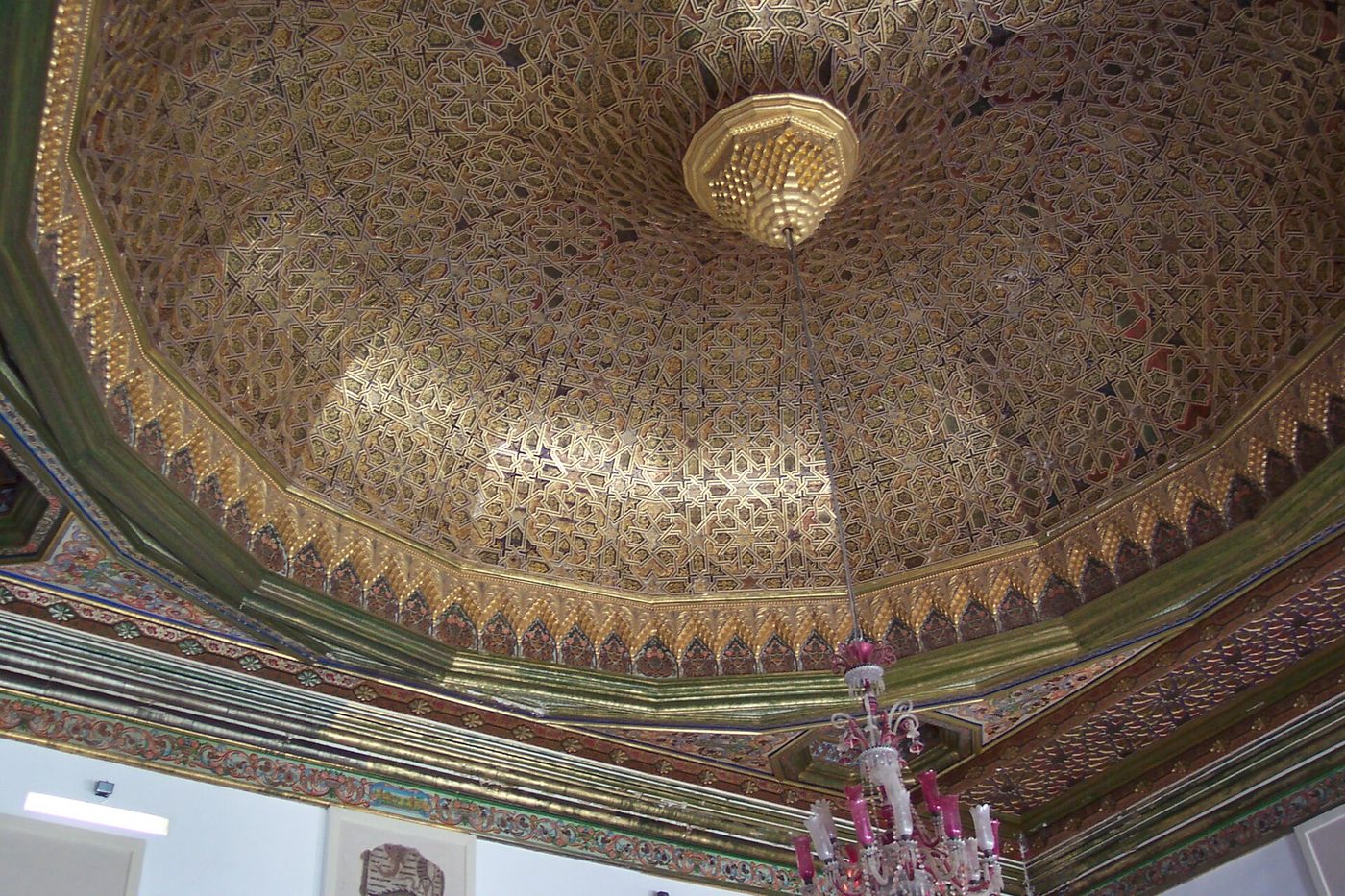
It’s worth slowing down for the building itself. The Husainid beys spent the better part of two centuries turning Bardo into a small royal city, and the museum occupies the grandest of its surviving palaces. As you move between galleries you pass beneath carved and painted wooden ceilings, along walls sheathed in glazed tiles, through the great hall where the beys once held court and the intimate courtyards of the former harem. The effect is peculiar and wonderful: Roman gods laid across the floor, Ottoman-Tunisian craftsmanship on the walls and overhead, and centuries of the Mediterranean layered into a single room. Plenty of visitors who arrive purely for the mosaics leave talking about the ceilings.
The star mosaics: a room-by-room highlights tour
You cannot absorb the Bardo in one visit — nobody can — so the trick is to anchor yourself to a handful of masterpieces and let the rest wash over you. These are the ones we’d cross the city for.
The Virgil mosaic
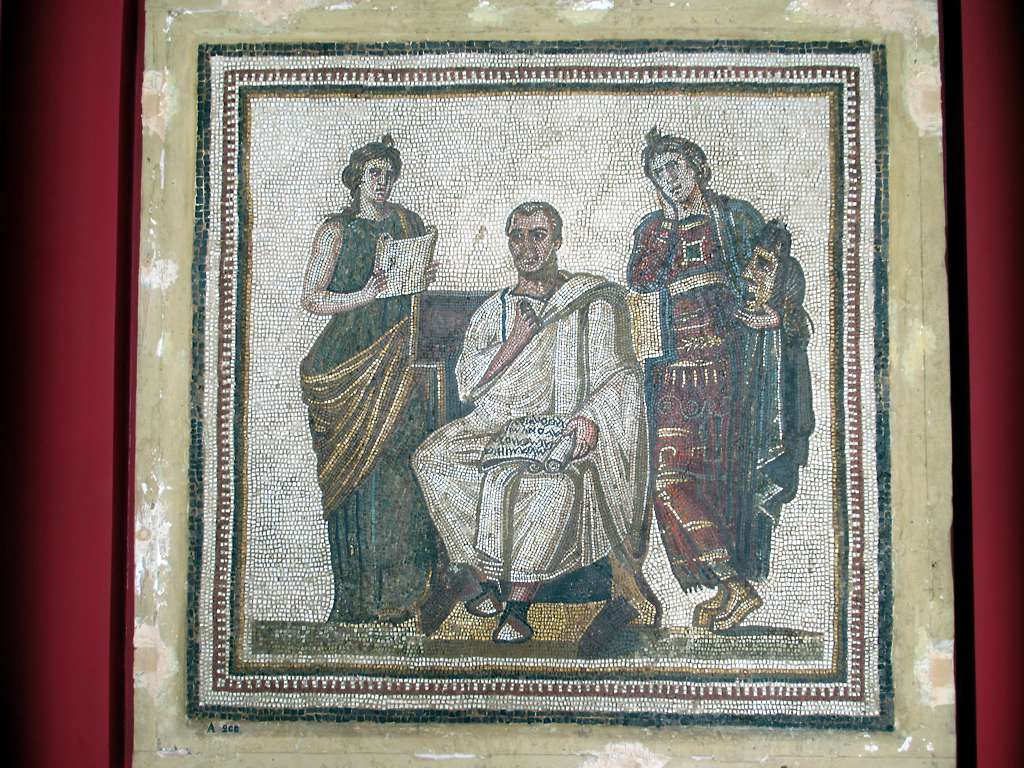
This is the Bardo’s Mona Lisa, and rightly so. It shows the Roman poet Virgil seated with a scroll of the Aeneid on his lap, flanked by two Muses — Clio, muse of history, and Melpomene, muse of tragedy. Dated to the third century and lifted from a house in Sousse (Roman Hadrumetum), it is the only known portrait of Virgil to survive from the ancient world, which makes it one of the most significant images in all of Roman art. It hangs, fittingly, in a former apartment of the beys. Give it more time than you think you need.
The Triumph of Neptune
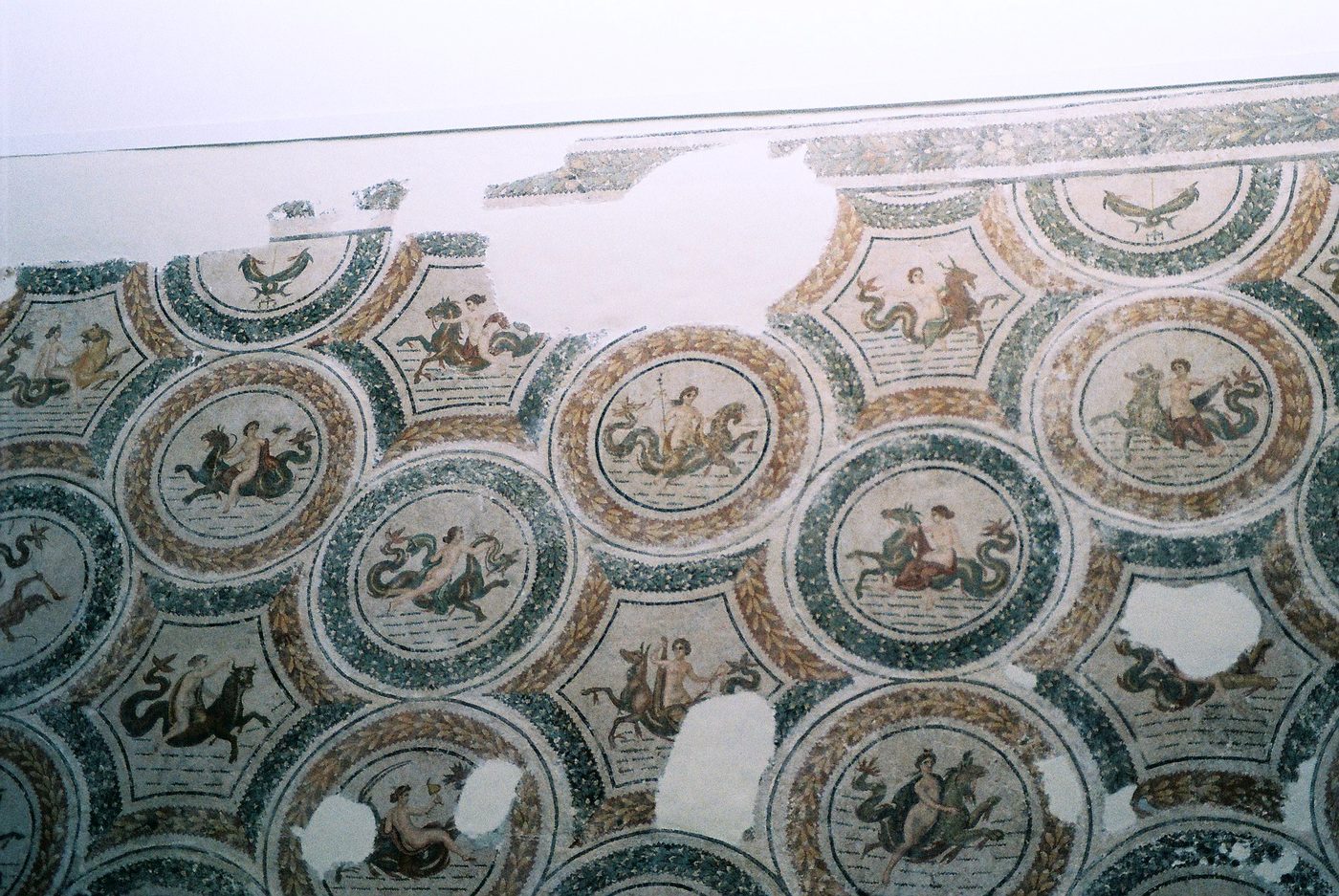
Also from Sousse, the Triumph of Neptune is the collection’s showstopper for sheer scale — the sea god riding his chariot at the centre of an enormous composition, ringed by panels of the four seasons and a swirling marine world. It is among the largest Roman mosaics ever found in Tunisia, and standing over it gives you a real sense of how these floors were built to overwhelm a dinner guest. Look for the smaller fishing and sea-creature scenes nearby, a speciality of the African workshops.
Ulysses and the Sirens
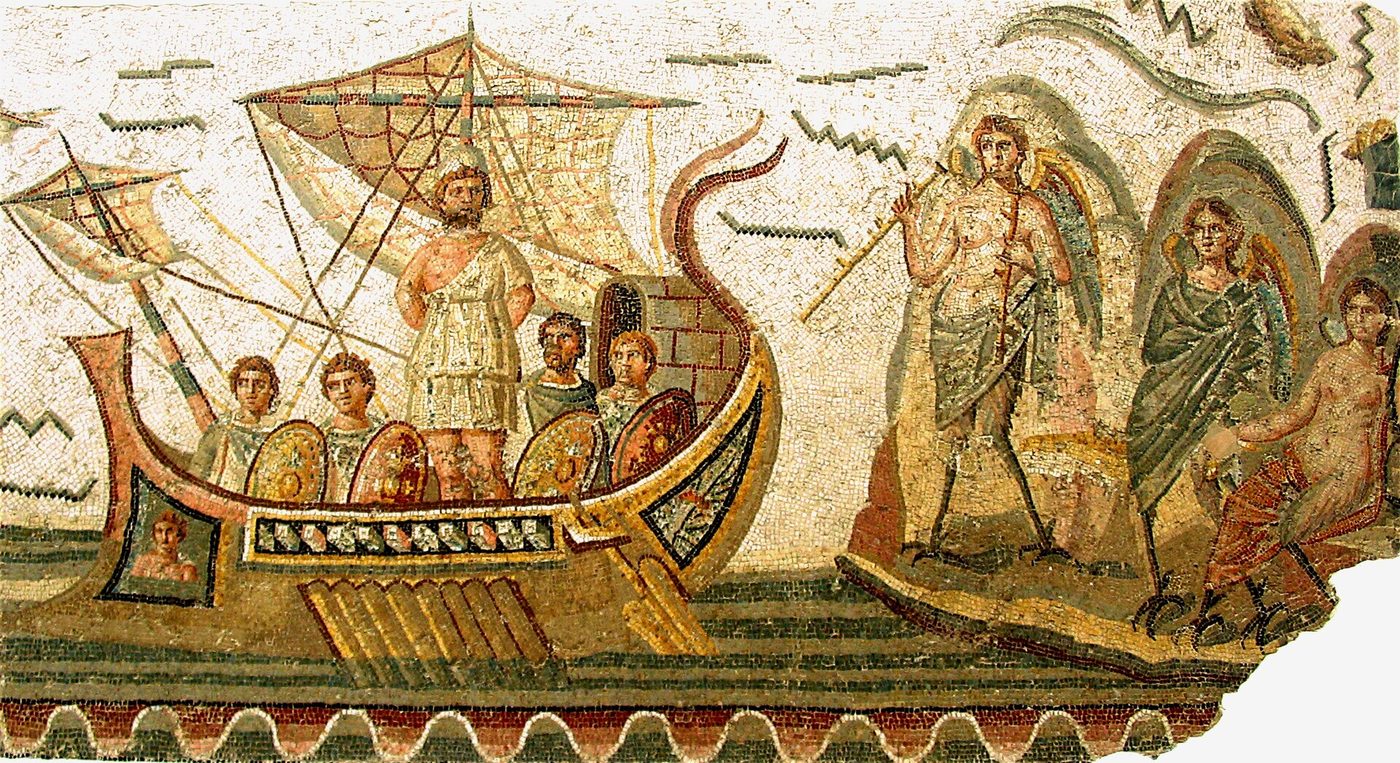
From the hilltop city of Dougga comes Ulysses and the Sirens — the hero lashed to his ship’s mast, ears open, straining against the ropes while his wax-plugged crew row past the Sirens’ rocks. The Sirens themselves perch at the edge of the scene, part bird and part woman, their deadly song rendered useless by one captain’s cunning. It’s among the most reproduced images of the ancient Mediterranean, and to stand over the original, cut from a real Roman floor, is a quiet thrill for anyone who grew up on Homer. Dougga, where it was found, is itself one of the best-preserved Roman towns in North Africa, which makes the pairing of museum and site especially satisfying.
Dionysus, and the baptismal font from Kelibia
The mosaics of Dionysus (Bacchus to the Romans) recur throughout the museum — the god of wine presiding over vintages, processions and drunken revels, a favourite subject for rooms built to impress over dinner. One celebrated panel shows him handing the gift of the vine to a mortal; others turn his myths into sprawling, colour-drenched set pieces. Don’t miss the early-Christian section either, where the star is the baptismal font from Kelibia: a deep, four-lobed basin sheathed in mosaic, its symbols and inscriptions spelling out the faith of the community that made it. Together these pieces trace Roman Africa’s slow shift from pagan to Christian across a few centuries of floor — the same arc you can follow in the ruins themselves.
A rough map of the highlights, so you can prioritise:
| Masterpiece | Where it’s from | Why it matters |
|---|---|---|
| The Virgil mosaic | Sousse (Hadrumetum) | The only known portrait of Virgil; the museum’s signature piece |
| The Triumph of Neptune | Sousse | One of the largest Roman mosaics found in Tunisia |
| Ulysses and the Sirens | Dougga | An icon of the ancient Mediterranean, straight from Homer’s Odyssey |
| Baptismal font | Kelibia | A four-lobed early-Christian font sheathed in mosaic |
Beyond the headline pieces, it’s the everyday life caught in these floors that stays with you: fishing fleets hauling their nets, hunters and their hounds, country estates at harvest, boxers, chariot-racers and reclining banqueters. Roman North Africa left almost no wall painting behind, so its mosaics double as the fullest surviving picture of how people here actually lived, dressed and ate. Slow down over a few of the smaller panels and the ancient province stops being an abstraction and starts feeling like somewhere real people once had lunch.
Beyond the mosaics: Punic Carthage, a shipwreck and the Blue Qur’an
Spectacular as they are, the mosaics aren’t the whole museum, and three other collections repay the extra half-hour.
The Punic and Libyco-Punic rooms hold the eerie, staring terracotta masks and carved votive stelae of Carthage — the spare, strange world of the civilisation Rome set out to erase. They’re the natural companion to a walk around Carthage itself, where the ruins are thin on portable finds precisely because so much of it ended up here.
The Mahdia shipwreck galleries display the cargo of a Greek ship that went down off the Sahel coast around 80 BC — bronzes, marble columns and statuary bound from Athens for some wealthy Roman patron who never took delivery. Recovered by divers in the early twentieth century, it counts as one of the founding discoveries of underwater archaeology.
And the Islamic collection holds folios of the famous Blue Qur’an of Kairouan — gold Kufic script on parchment dyed deep indigo, made around the ninth or tenth century and among the most beautiful manuscripts ever produced anywhere. A hall added since the reopening also shows the Chemtou treasure, more than 1,600 late-Roman gold coins found buried in a single jug. It’s a reminder that the Bardo tells the whole sweep of Tunisian history, not just its Roman chapter — the through-line of our guide to Tunisian culture.
Is the Bardo Museum open? The recent history you should know
This is the question that matters most for planning, because the Bardo has had a turbulent decade and English-language sources are often out of date. Here’s the honest picture as we understand it in 2026 — but do check locally before you build a day around it.
In March 2015, gunmen attacked the museum, killing around 22 people, most of them foreign tourists. It was a dark day for Tunisia, and the country answered by returning to the Bardo in numbers; security was overhauled afterwards, and there is an airport-style check at the entrance today.
Then, from July 2021, the museum closed again — this time for political rather than security reasons. The Bardo shares its palace complex with Tunisia’s parliament, and when the president suspended the assembly that summer, the whole site was sealed off. The museum became, in effect, an accidental casualty of the standoff, and stayed shut for more than two years.
It reopened in September 2023 with refurbished galleries, a rehung Carthage Room and new displays, and by all accounts visiting is entirely normal again: school groups in the courtyards, families photographing Neptune, guards waving you through the scanner. Two honest caveats remain. The reorganisation was still being finished after the reopening, so the odd gallery may be closed and the labelling can be uneven — some masterpieces are richly explained, others left nearly mute, which is where the audio guide earns its small fee. And because the site sits beside parliament, we’d always confirm it’s open on your date before crossing town. For the wider security context, our guide to whether Tunisia is safe lays out the current advice.
Visiting the Bardo Museum: tickets, hours and getting there
Assuming it’s open on your day — do check — here’s how to visit without the usual confusion.
- Getting there. The easiest option is the Métro Léger (Tunis’s light-rail tram), line 4, to the Le Bardo stop, a short walk from the gate — about the most convenient rail link any of the capital’s sights has. A metered taxi from central Tunis costs roughly 10–15 dinars and takes about 20 minutes; from the airport, reckon on 20–30. Our getting around Tunisia guide covers both.
- Tickets. The non-resident ticket was around 30 TND in 2026 (roughly £8 — check current), with reduced rates for Tunisian residents. Bring cash: the dinar is a closed currency you change on arrival, at roughly £1 to 3.8–3.9 dinars.
- Opening hours. Generally Tuesday to Sunday, closed Mondays, with longer hours in summer (roughly 9am–5pm) and shorter ones in winter (about 9.30am–4.30pm). Hours shrink during Ramadan and public holidays, so confirm before you go.
- How long. Two to three hours is the sweet spot. “Mosaic fatigue” is real, so pace yourself and use the courtyard café for a breather.
- Photography. Personal photos without flash are allowed. An audio guide (French, English and Arabic) is available for a small surcharge and genuinely helps where the labels run thin.
- When to go. Mornings are quietest. Arrive near opening and you’ll have the Virgil mosaic almost to yourself before the tour groups roll in.
See the Bardo early in your trip and everything afterwards makes more sense: the floors still in place at El Jem, the underground villas of Bulla Regia, the streets of Dougga. Pair it with the medina of Tunis and the blue-and-white village of Sidi Bou Said for a full day in the capital, or with a Roman site for a day trip from Tunis. It’s a fixture of any thoughtful Tunis itinerary, and if you’re deciding on a base, our where to stay in Tunis guide helps — all of which makes it one of the essential things to do in Tunisia.
Bardo Museum: your questions answered
Is the Bardo Museum open in 2026?
Yes, as far as we know. After closing from July 2021, the Bardo reopened in September 2023 and has operated normally since, Tuesday to Sunday. Because it shares its complex with parliament, however, access has been disrupted before — so we’d always confirm it’s open on your specific date before making the trip across the city.
What is the Bardo Museum famous for?
Above all, its mosaics — the Bardo holds the largest and finest collection of Roman mosaic art in the world, gathered from sites across ancient Tunisia. The single most famous piece is the Virgil mosaic, the only known portrait of the poet. The palace setting, Punic masks, Mahdia shipwreck and Blue Qur’an round out the collection.
How much are Bardo Museum tickets?
The non-resident ticket was around 30 dinars in 2026 (roughly £8), with cheaper rates for Tunisian residents. Prices change, so confirm on arrival, and bring cash — the Tunisian dinar is a closed currency you can only obtain once you’re in the country. An audio guide is available for a small extra charge.
What are the Bardo Museum’s opening hours?
It generally opens Tuesday to Sunday and closes on Mondays, with longer summer hours (around 9am–5pm) and shorter winter ones (about 9.30am–4.30pm). Hours are reduced during Ramadan and public holidays. Times have changed repeatedly in recent years, so check locally before you set out across town.
How do you get to the Bardo Museum?
The simplest way is the Métro Léger light-rail (line 4) to the Le Bardo stop, a short walk from the entrance. A metered taxi from central Tunis costs roughly 10–15 dinars and takes about 20 minutes; from the airport, expect 20–30 dinars. Insist on the meter, or agree a fare before you set off.
What is the Virgil mosaic?
It’s the Bardo’s signature piece: a third-century mosaic showing the Roman poet Virgil seated with the Aeneid on his lap, flanked by the Muses Clio and Melpomene. Found in a house at Sousse, it is the only known portrait of Virgil from the ancient world, which makes it one of the most significant images in all of Roman art.
How long do you need at the Bardo Museum?
Allow two to three hours. That’s enough to take in the star mosaics, the palace rooms and a couple of the other collections without rushing, while accepting you can’t see everything. “Mosaic fatigue” sets in surprisingly fast, so pace yourself and use the courtyard café for a break halfway round.
Was the Bardo Museum attacked, and is it safe now?
Yes — in March 2015 gunmen attacked the museum, killing around 22 people, most of them tourists. Security was overhauled afterwards, and there is an airport-style check at the entrance today. Visiting is entirely routine now, with school groups and families throughout. See our Tunisia safety guide for the current national picture.
Why was the Bardo Museum closed?
It closed from July 2021 for political rather than safety reasons. The museum shares its palace complex with Tunisia’s parliament, and when the president suspended the assembly that summer, the whole site was sealed off. The Bardo stayed shut for more than two years before reopening, refurbished, in September 2023.
Can you take photographs in the Bardo Museum?
Yes — personal photography without flash is permitted, so you can capture the Virgil mosaic and Neptune to your heart’s content. Tripods and professional shoots may need permission. Flash is banned to protect the ancient tesserae, so switch it off before you start snapping.
What else is in the Bardo besides mosaics?
Plenty. The Punic rooms hold the terracotta masks and stelae of ancient Carthage; the Mahdia galleries display a Greek shipwreck’s cargo of bronzes and marbles; and the Islamic collection includes folios of the Blue Qur’an of Kairouan, gold script on indigo parchment. The beylical palace that houses it all is a highlight in its own right.
Is the Bardo Museum worth visiting?
Absolutely — it’s the single richest indoor sight in Tunisia and unrivalled for Roman mosaics, set inside a beautiful former palace. Seen early in a trip, it brings the country’s Roman ruins to life. Just allow enough time, go in the morning to beat the crowds, and confirm it’s open before you travel.
Written by the Tunisia Tourism Guide team — an independent UK-focused guide to travelling in Tunisia. We don’t sell tours or take hotel commissions. Prices and advice were checked at publication; always confirm current details before you book.
Photo credits
All images via Wikimedia Commons, used with thanks: The Ulysses and the Sirens mosaic © Giorces derivative work: Habib M’henni (Public domain); The Virgil mosaic showing the Roman poet seated between two © David Stanley from Nanaimo, Canada (CC BY 2.0); A large Roman marine mosaic of nereids riding sea-creatures on © Verity Cridland (CC BY 2.0); An ornate former beylical palace hall with carved ceiling housing © JD554 (CC BY-SA 3.0).