By the Tunisia Tourism Guide team · Last updated 18 August 2026 · We don’t sell tours or take hotel commissions — this is independent advice, written to be useful.
Start searching hotels in Hammamet and you hit the same wall everyone does: the results are scattered across “Hammamet”, “Yasmine Hammamet” and “Hammamet Nord”, the map looks confusing, and it is not obvious which one you actually want. This guide sorts it out in plain terms so you can book the right area first time.
Where to stay in Hammamet comes down to three zones: Hammamet Centre (the walkable old town by the medina), Hammamet Nord or Mrezga (the quieter northern beach strip toward Nabeul), and Yasmine Hammamet (the modern purpose-built resort area to the south, with the marina and Carthage Land). Which one is “best” depends entirely on the kind of holiday you want.
The good news is that all three sit on the same warm, sheltered bay, all have good sand, and none is more than a short taxi ride from the others — so there is no disastrous choice here, only a best fit. Below we explain each zone honestly: the vibe, who it suits, the beach, how walkable it is, how far it is from the old medina, and the type of hotel you will find. There is a comparison table, a clear verdict by traveller type, and notes on transfers from the airport. If you want the fuller picture of the resort as a whole first, our main Hammamet guide is the place to start.
Where to stay in Hammamet at a glance
| Zone | Vibe | Best for | Beach | Walk to the medina |
|---|---|---|---|---|
| Hammamet Centre (old town) | Real town, old-Tunisia character, walkable | First-timers, couples, culture-plus-beach | Mix of public and hotel sand | In it or a short stroll |
| Hammamet Nord / Mrezga | Quiet, spread-out resort strip | Beach-first families, quiet-seekers | Widest, best-kept sand | 15–30 min by taxi |
| Yasmine Hammamet (south) | Modern, planned, marina and theme park | Families, all-inclusive, nightlife, spa | Wide sand; some hotels set back | 10–15 min by taxi |
Everything below is written to be useful in 2026. Hotels change hands, rebrand and refurbish constantly on this coast, so treat any named property as an example of its type and check its current status and recent reviews before you book. We have deliberately not quoted nightly room rates, because they swing wildly by season and operator — but we do explain which zones tend to cost more.
The three zones, quickly
Before the detail, the one-line version. Hammamet Centre is the original town — you can walk to the medina, the fort and cafés, and it feels like a real place. Hammamet Nord (often listed as Mrezga) is the long beach strip running north toward Nabeul — quieter, more spread out, and home to some of the best sand on the bay. Yasmine Hammamet is the newer resort zone about ten kilometres south — a planned area built around a marina, a mock-historic “medina” and the Carthage Land theme park, and the subject of Zone 3 below.
Now let’s take them one at a time.
Zone 1: Hammamet Centre — the old town
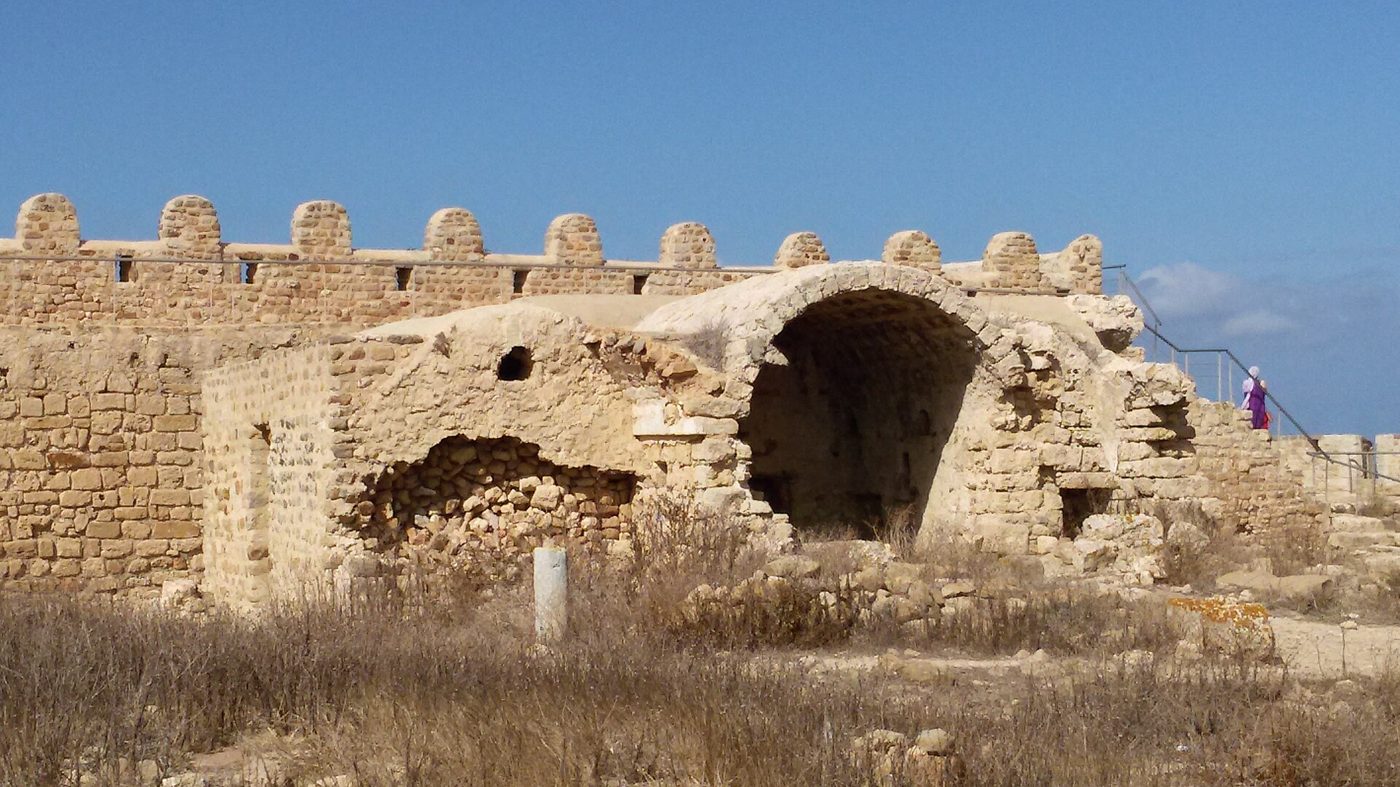
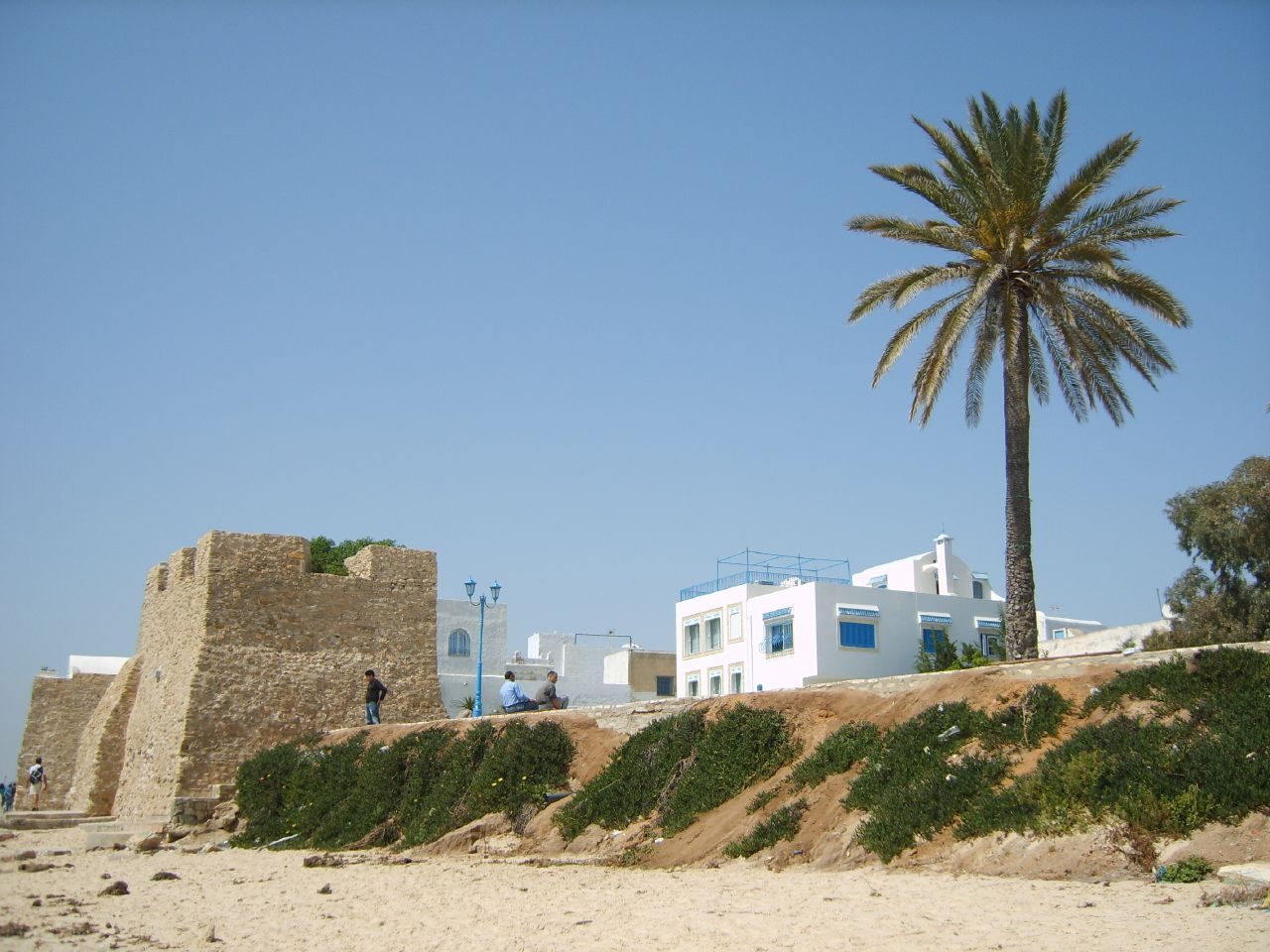
The vibe. This is the original Hammamet: a small, whitewashed medina right on the sea, a 15th-century fort on the headland, cafés where locals actually sit, a weekly market, and a beach that ordinary Tunisians use alongside visitors. It is the most characterful of the three zones and the only one that feels like a town rather than a resort. Streets are a mix of tourist-facing and everyday, and you are never far from an independent restaurant or a shop that isn’t aimed solely at holidaymakers.
Who it’s for. First-timers who want beach and real Tunisia in one place; couples; anyone who would rather stroll to dinner in the medina than eat in the same hotel buffet every night. If you like being able to walk out of your hotel and be somewhere, this is your zone.
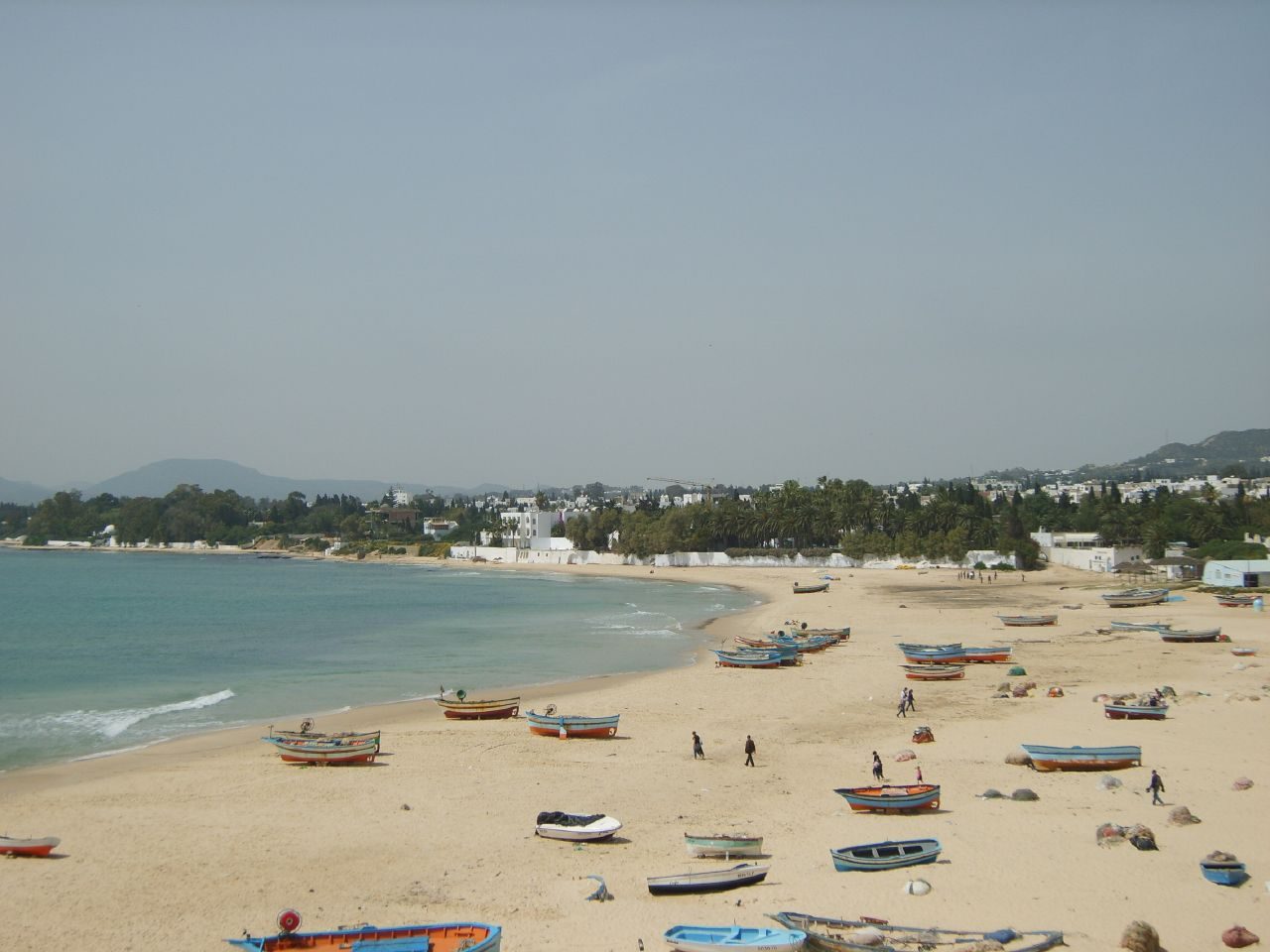
The beach. A mix of public stretches and hotel frontage along the bay. The sand is good, if a touch narrower and busier in places than the northern strip, and the water is calm and sheltered. Our Hammamet beach guide has the detail on which stretches are best.
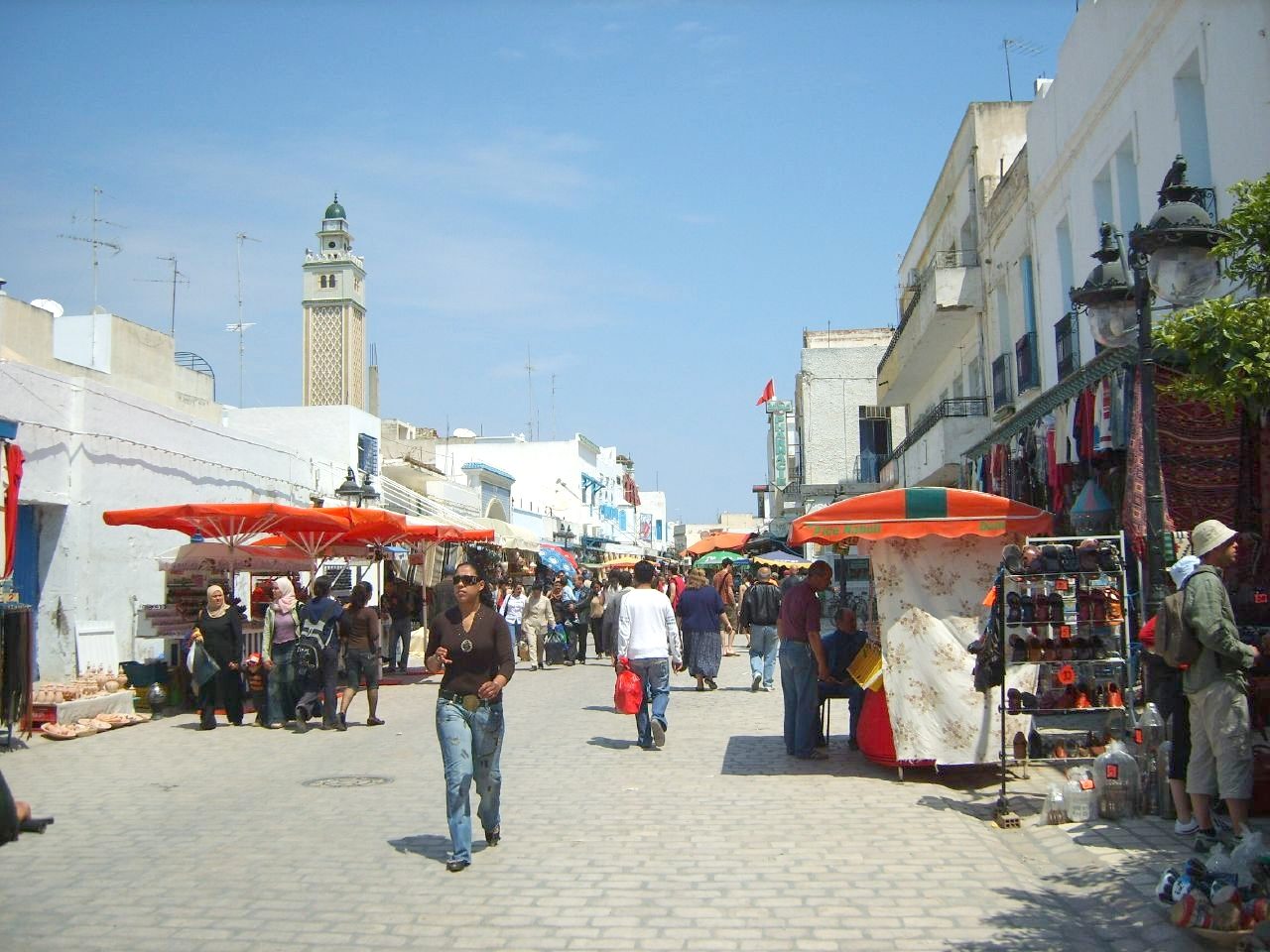
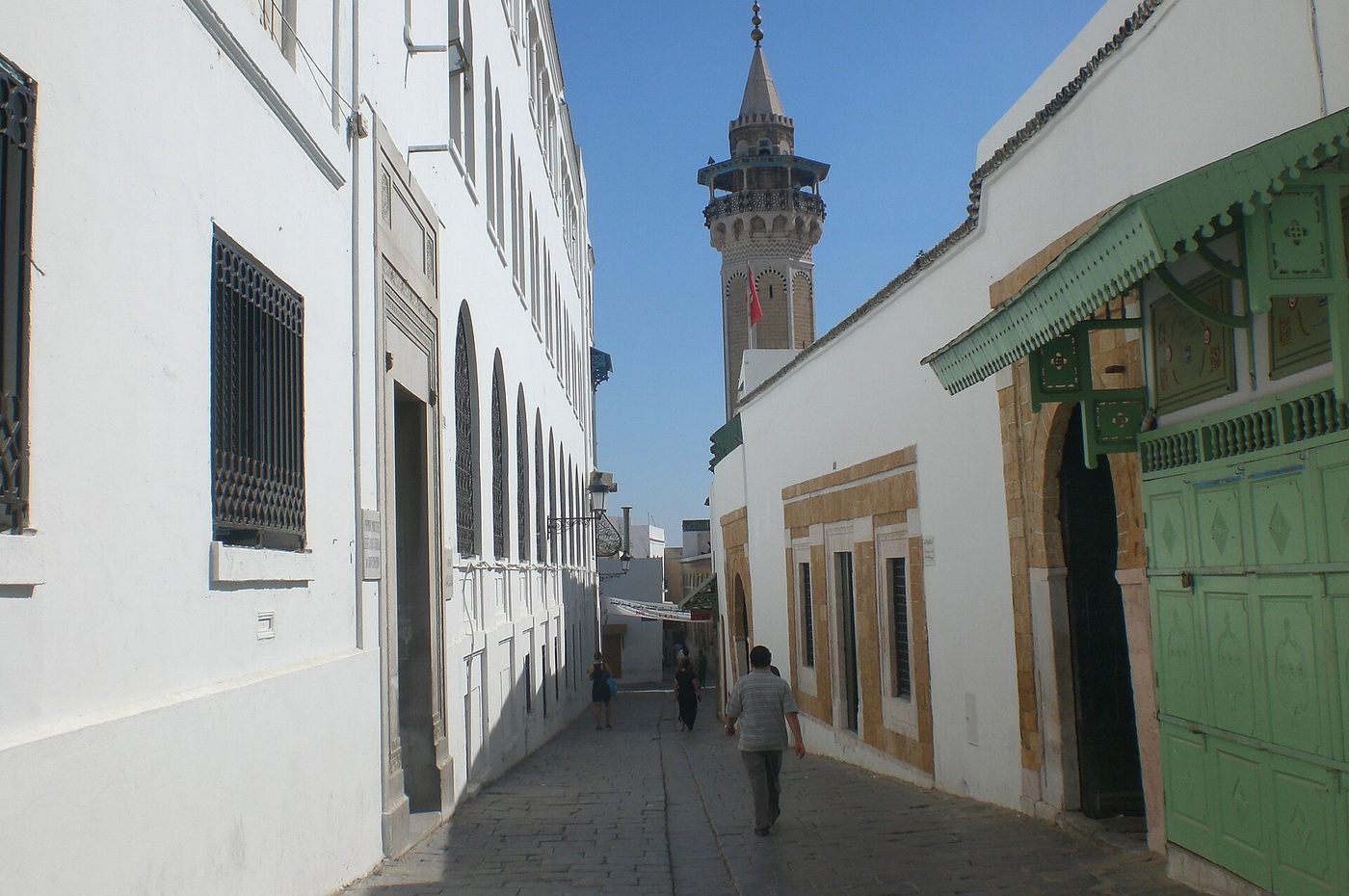
Walkability and the medina. Best of the three by a distance. Most central hotels are a short walk from the Hammamet medina, the kasbah and the cafés, and you can genuinely do without taxis for day-to-day life. Day trips are easy to launch from here too — see our guide to day trips from Hammamet.
The type of hotel. The most varied of the three zones. You will find small guesthouses (dars) inside or beside the medina, mid-range town-and-beach hotels, and a few high-end beachfront properties — the adults-only five-star La Badira is the best-known of these, and if a smart couples’ base is the plan it is worth checking whether it still suits your dates. Names like the Sindbad (mid-range near the medina) and the guesthouse Dar Hayet come up often; verify current status and reviews, as ownership and standards shift.
- Pros: real character; walk everywhere; best for a first visit; independent dining; medina and fort on the doorstep.
- Cons: fewer giant all-inclusives; beach busier in parts; less of the “resort bubble” some families want.
Zone 2: Hammamet Nord (Mrezga) — the quiet beach strip
The vibe. Head north out of the centre toward Nabeul and the town thins into a long, low-rise ribbon of beach hotels set among gardens — the area usually listed as Hammamet Nord or Mrezga. It is calmer and more spread out than either the centre or Yasmine, with less going on outside the hotels. For a lot of people that is exactly the appeal: you come for the beach and the pool, not for nightlife on the doorstep.
Who it’s for. Beach-first families and couples who want quiet; returning visitors who already know Hammamet and just want good sand and a sun-lounger; anyone whose ideal holiday is a book, a beach and not much else. It is the most relaxed of the three zones.
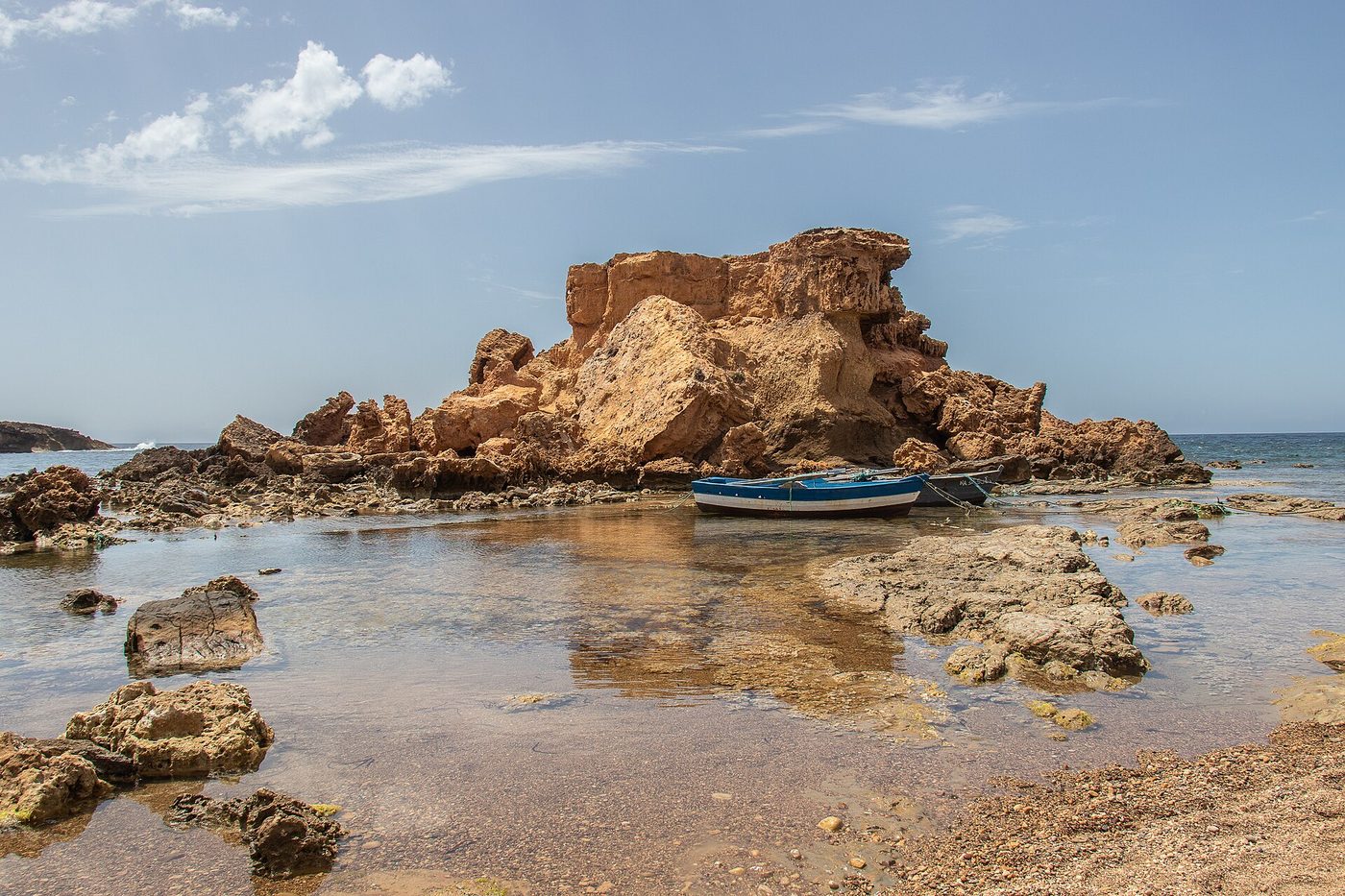
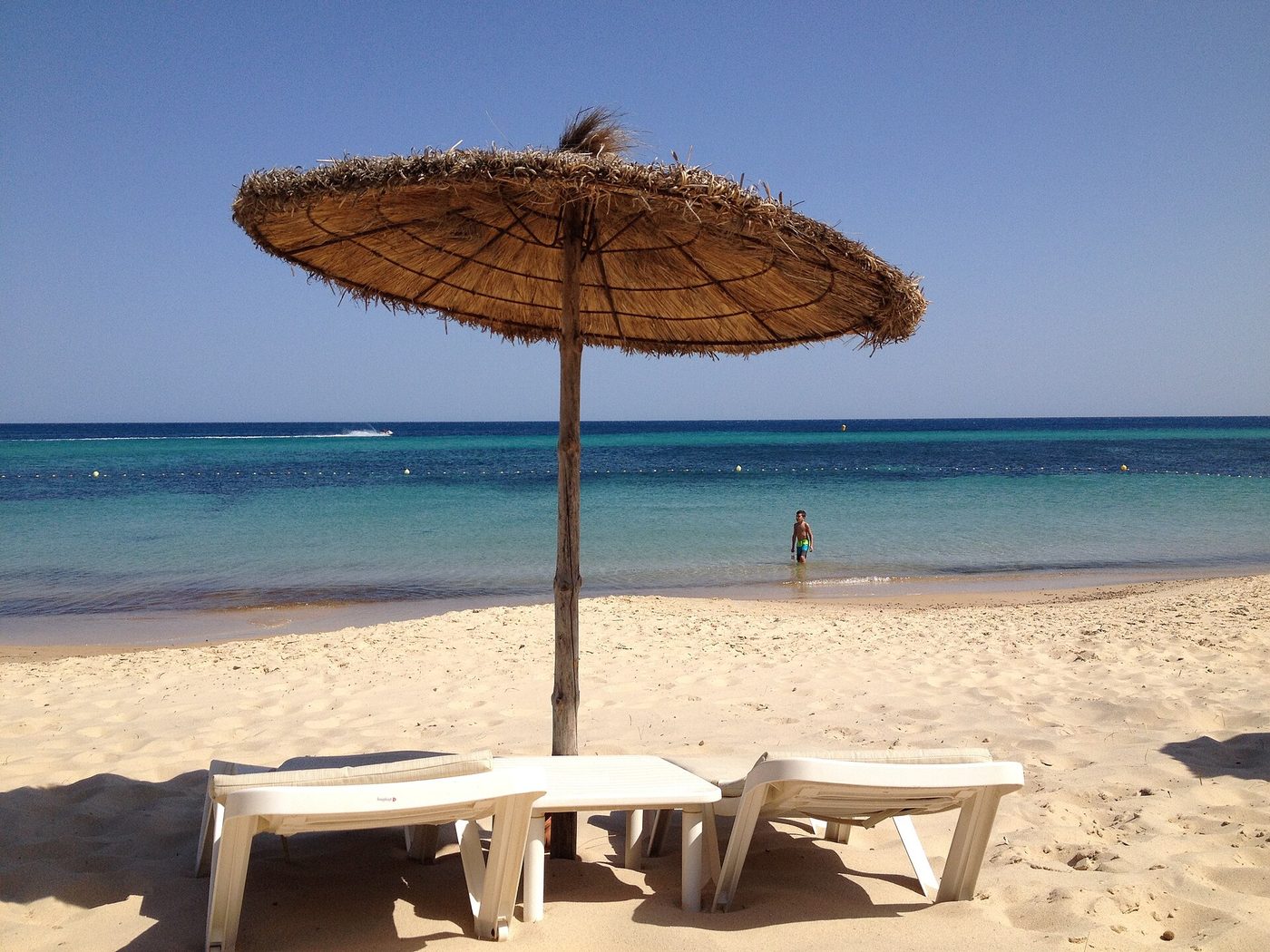
The beach. This is the strip’s trump card — the Mrezga sand is among the widest and best-kept on the whole bay, and because the hotels are spread out it rarely feels crowded. Sheltered, gently shelving water makes it good for children, which is a big part of why beach-first families keep coming back to this stretch year after year.
Walkability and the medina. This is the trade-off. The zone is spread out and light on pavements in places, so you will lean on taxis or hotel shuttles to reach the old medina — reckon on fifteen to thirty minutes depending on exactly where you are. It is not walkable in the way the centre is. If getting out and about under your own steam matters, factor that in.
The type of hotel. Large beachfront resorts, mostly three- to five-star and heavily all-inclusive, many with big gardens, several pools and their own patch of sand. Names such as the TUI BLUE Manar, Royal Nozha and the various Calimera and One Resort beach properties appear on this stretch; as ever, check the current brand, standard and reviews before booking, because resorts here rebrand often. If the all-inclusive format is the plan, our guide to the best all-inclusive hotels in Tunisia is the place to compare options.
- Pros: best sand on the bay; quiet and spread out; strong beachfront all-inclusives; good for young families.
- Cons: you need taxis to reach the old town; little to do outside the hotels; can feel isolated in the evenings.
Zone 3: Yasmine Hammamet — the modern south
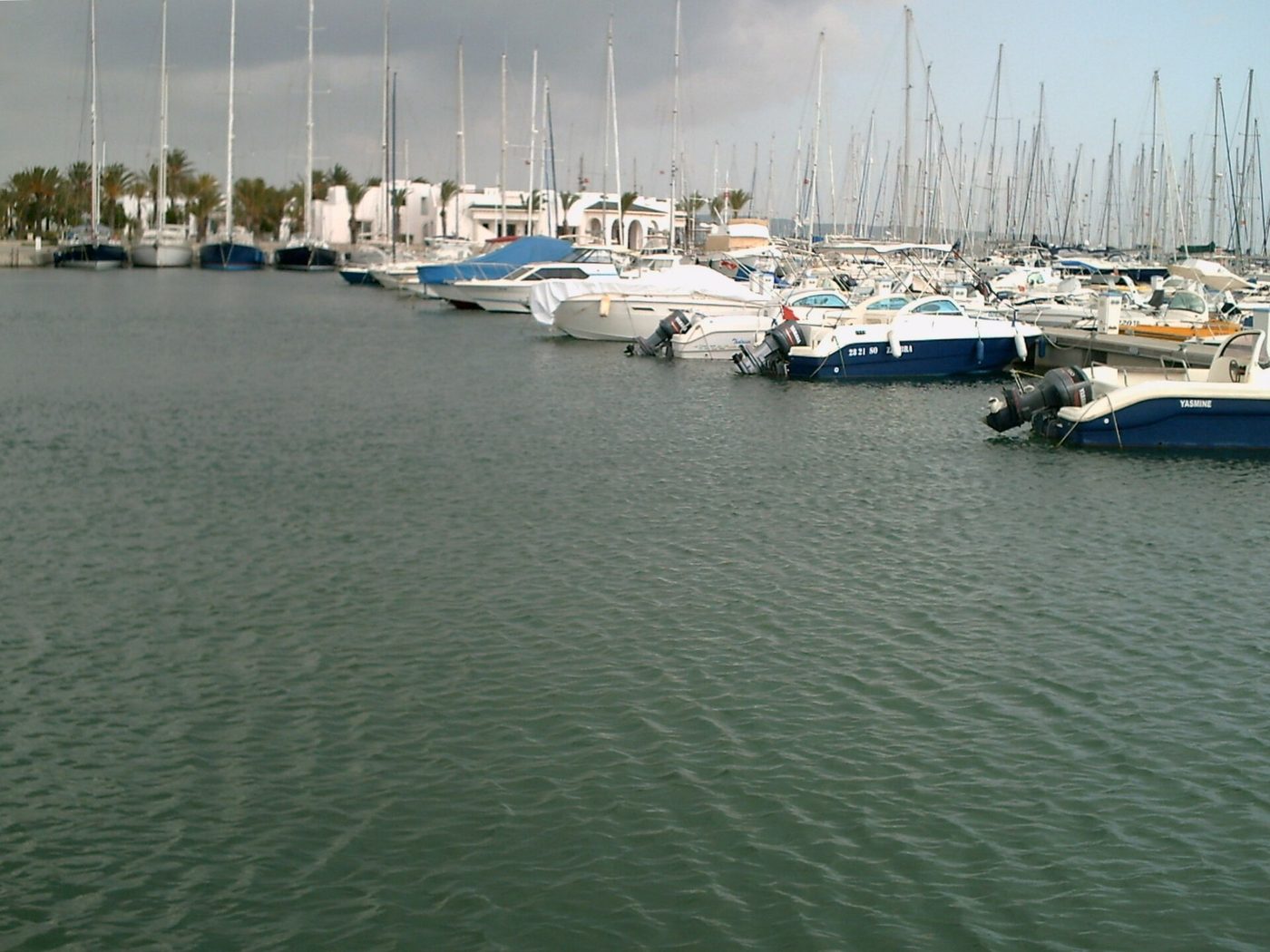
The vibe. About ten kilometres south of the centre lies Yasmine Hammamet, a resort zone built from scratch in the 1990s. It is polished, planned and self-contained: wide avenues, a marina lined with restaurants and bars, a reconstructed “Medina Mediterranea”, the Carthage Land theme park, a casino and a long beach. It has the most to do of the three zones and the least genuine local life — it was designed as a holiday area, not a town. We cover it in full in our Yasmine Hammamet guide.
Who it’s for. Families who want the theme park, big pools and kids’ clubs on tap; first-timers who want a soft, everything-organised landing in Tunisia; couples after a spa-and-golf week; and anyone who likes a marina to stroll and dine along in the evening. It is also the zone with the most in the way of bars, a casino and dinner-shows, so if a little evening buzz matters it edges the others.
The beach. Wide and sandy, with the same calm water as the rest of the bay. The catch, as in Nord, is that not every hotel sits directly on the sand — several are set back a road or a short walk, so check the exact position before you book.
Walkability and the medina. You can walk around the zone itself easily — the marina, the “medina” and the beach are all close together. But the real Hammamet medina is ten kilometres away, reached by the little tourist “noddy train” (a scenic half-hour) or a ten-to-fifteen-minute taxi.
The type of hotel. Big four- and five-star all-inclusives, several built around thalassotherapy spas, plus a handful of themed hotels inside the mock medina itself. Well-known names on this stretch include the Iberostar Selection Royal El Mansour, the Steigenberger Marhaba Thalasso and various Vincci and Samira-branded resorts; check the current standard and reviews before committing, as line-ups change season to season.
- Pros: most to do; marina, theme park, casino and spa on the doorstep; great for families and first-timers; the most evening options.
- Cons: engineered, resort-bubble feel; the “medina” is a stage set; the real old town is a taxi away.
Which zone should you pick?
Here is the shortcut. Match your traveller type to a zone and you will not go far wrong.
| You are… | Pick | Why |
|---|---|---|
| Families with young children | Yasmine Hammamet or Hammamet Nord | Yasmine for Carthage Land and big pools on the doorstep; Nord for the quietest, widest sand |
| Couples / adults-only | Hammamet Centre | Boutique beachfront hotels, medina strolls, independent dinners — grown-up and characterful |
| First-timers to Tunisia | Hammamet Centre | Beach, a real town and the medina in one walkable base |
| Quiet-seekers | Hammamet Nord (Mrezga) | Spread-out beach hotels, the best sand and the least footfall |
| Nightlife and marina evenings | Yasmine Hammamet | Marina bars, a casino and dinner-shows, plus the most restaurants |
Our honest steer for a typical first visit is Hammamet Centre: it gives you the beach and a genuine town, it is the easiest to explore on foot, and you can still nip down to Yasmine for a day at the theme park or an evening on the marina. Choose Hammamet Nord if a quiet beach is the whole point, and Yasmine Hammamet if you want everything organised and on tap — especially with children in tow. If you are still deciding between Hammamet and the next resort down the coast, our Hammamet or Sousse comparison lays them side by side, and our national overview of where to stay in Tunisia zooms further out.
A few booking tips before you commit
Wherever you land, a handful of checks will save you the most common Hammamet disappointments.
- Find the hotel on a map, not just in the listing. “Beach”, “plage” or “marina” in a hotel’s name does not guarantee it sits on the sand. Drop the exact name into a map and measure the walk to the water yourself before you commit.
- Look at recent guest photos. Hotels on this coast refurbish, rebrand and change operator often, so a review or picture from three years ago may describe a different place. Filter for the last few months.
- Match your board basis to your zone. All-inclusive makes sense in Yasmine and Nord, where the resorts are built for it and there is less reason to wander out. In the centre, half-board or room-only frees you up to eat in the medina.
- Book early for July and August. European tour operators block-book the big resorts months ahead, so peak-summer availability thins out fast. Three to four months’ notice gives you the best pick and price.
- Consider the shoulder months. May, June, September and October bring warm sea and quieter beaches, and often better value than high summer — a strong shout if you are flexible on dates.
- Don’t bury yourself if you want the old town daily. If wandering the medina most evenings is the plan, staying deep in Hammamet Nord means a taxi every time. The centre, or the town-end of the northern strip, keeps it walkable.
- Sort the transfer when you book the room. Most hotels will quote an airport transfer at the time of booking; it is usually calmer than haggling for a taxi at arrivals after a late flight.
None of this is complicated, but ten minutes of checking beforehand is the difference between a hotel that matches the brochure and one that quietly doesn’t.
Getting there: transfers from Enfidha
Most UK holidaymakers fly into Enfidha-Hammamet airport, which sits south of the resort and serves the TUI and charter flights that dominate this coast. From Enfidha, reckon on roughly 40 to 60 minutes to your hotel: Yasmine Hammamet, being furthest south, is usually the shortest hop; the centre a little more; and Hammamet Nord, up toward Nabeul, the longest. Tunis-Carthage airport, to the north, is about an hour to an hour and a quarter and reverses that order.
Almost every hotel can arrange an airport transfer or shuttle — the simplest option, and worth booking with your room. Otherwise a pre-booked private transfer or an agreed-fare taxi does the job; agree the price before you set off. Once you are settled, our guide to getting around Tunisia covers taxis, the tourist train, louages and day trips.
On money, one thing to plan for: the Tunisian dinar is a closed currency, so you change money on arrival and cannot take it home. Resort prices are often quoted in euros but you pay in dinar on the ground; as a rough guide in mid-2026, a pound was worth somewhere around 3.8 to 3.9 dinar, though rates move. And because the UK’s GHIC is not valid in Tunisia, travel insurance with proper medical cover is essential.
Where to stay in Hammamet: your questions answered
Where should I stay in Hammamet for the first time?
Hammamet Centre, the old town, is our pick for a first visit. You get the beach, a genuine Tunisian town, the medina and the fort in one walkable base, and you can still visit Yasmine Hammamet for a day. It gives the most rounded sense of the place.
What is the difference between Hammamet Centre and Yasmine Hammamet?
Hammamet Centre is the original town — walkable, historic, with a real medina. Yasmine Hammamet is a purpose-built resort zone about ten kilometres south, built in the 1990s around a marina, a reconstructed “medina” and the Carthage Land theme park. One is a town; the other is a holiday area. Our Yasmine Hammamet guide explains the south in detail.
Which area of Hammamet has the best beach?
Hammamet Nord — the Mrezga strip running toward Nabeul — has the widest and best-kept sand on the bay, and because the hotels are spread out it rarely feels crowded. Yasmine’s beach is also wide; the centre’s is good but busier in parts.
Where should families stay in Hammamet?
Two strong options. Yasmine Hammamet puts Carthage Land, Aqualand, big pools and kids’ clubs on the doorstep. Hammamet Nord offers the quietest, widest sand and large beachfront all-inclusives. Choose Yasmine for entertainment, Nord for a calm beach holiday. See our Tunisia family resorts guide for more.
Where is best for couples or adults-only in Hammamet?
Hammamet Centre. The old town has the most character for evening strolls and independent dining, and it is home to the smartest couples’ hotels on the bay, including well-known adults-only beachfront properties. Our roundup of adults-only hotels in Tunisia covers the options.
Is Hammamet Nord (Mrezga) a good area to stay?
Yes, if you want a quiet beach holiday. It has the best sand on the bay and some good all-inclusive resorts, but it is spread out and light on nightlife, and you will need taxis to reach the old town. It suits beach-first families and anyone after a calm week.
Is Yasmine Hammamet good for nightlife?
It is the liveliest of the three zones after dark, with marina bars, a casino and cabaret-style dinner-shows, plus the most restaurants. It is holiday nightlife rather than a serious club scene — see our Tunisia nightlife guide for the wider picture.
How far are Hammamet hotels from Enfidha airport?
Roughly 40 to 60 minutes by road, depending on the zone. Yasmine Hammamet, furthest south, is usually closest to Enfidha; Hammamet Nord, up toward Nabeul, is the longest transfer. Most hotels arrange a shuttle or transfer if you ask when booking.
Is it better to stay all-inclusive in Hammamet?
All-inclusive works well in Yasmine Hammamet and Hammamet Nord, where big resorts are built for it and there is less reason to leave the grounds. In the centre we would lean toward half-board or room-only so you can enjoy the medina’s independent restaurants. Compare options in our Tunisia all-inclusive holidays guide.
How much should I budget for a Hammamet holiday?
Costs vary hugely by hotel, season and board basis, so we won’t quote room rates that go stale. As a rule of thumb, all-inclusive four-stars are the value option, five-star thalasso and adults-only properties cost the most, and the centre’s smaller hotels can be cheaper room-only. Remember the dinar is a closed currency you change on arrival — and budget for insurance, as the UK’s GHIC is not valid here.
Is Hammamet safe to stay in?
Hammamet sits a long way from any area the UK’s FCDO advises against, and its tourist zones are well used to visitors. Ordinary holiday sense applies — mind valuables, agree taxi fares. For the detail see our guide to whether Hammamet is safe.
Do I need a car to stay in Hammamet?
Not for a beach holiday. In the centre you can walk to most things; in Nord and Yasmine, taxis, hotel shuttles and the tourist train cover the gaps cheaply. A car only earns its keep if you plan lots of independent day trips — otherwise skip it.
Written by the Tunisia Tourism Guide team — an independent UK-focused guide to travelling in Tunisia. We don’t sell tours or take hotel commissions. Prices and advice were checked at publication; always confirm current details before you book.
Photo credits
All images via Wikimedia Commons, used with thanks: The kasbah fortress rising above Hammamet’s old town © 金娜 Kim S (CC BY-SA 2.0); A summer’s day on the sandy beach at Hammamet © Faresbenrayana (CC BY-SA 4.0); The marina at Yasmine Hammamet © R-E-AL (CC BY-SA 3.0); The main beach curving along Hammamet bay © 金娜 Kim S (CC BY-SA 2.0).