By the Tunisia Tourism Guide team · Last updated 3 August 2026 · We don’t sell tours or take hotel commissions — this is independent advice, written to be useful.
These two resorts sit barely an hour apart on the same warm stretch of Tunisian coast, yet they give you completely different holidays — and every summer we watch people book the wrong one for what they actually want.
The honest answer to Hammamet or Sousse is simple: pick Hammamet for a calmer, prettier beach holiday with the better resort beaches and an easy pace, and choose Sousse for a livelier city with late nightlife, a UNESCO-listed medina and quicker day trips to the big Roman sites. Families and couples usually prefer Hammamet; groups and night owls lean to Sousse.
That’s the two-line version. The rest of this guide is the proper conversation — the sort we’d have with a friend who’d narrowed Tunisia down to these two and couldn’t split them. It sits inside our wider guide to where to stay in Tunisia, so if you’re still weighing up regions rather than resorts, start there first and come back.
Hammamet or Sousse: the quick verdict
If you read nothing else, read this. It’s the summary we’d give someone at the check-in desk.
| Hammamet | Sousse | |
|---|---|---|
| In a phrase | Purpose-built resort town, greener and calmer | Real working city with a holiday coast bolted on |
| Best resort beaches | Winner — finer sand, better kept | Good, but busier; Port El Kantaoui is the sweet spot |
| Nightlife | Quieter, winds down earlier | Winner — bars and clubs going until dawn |
| Medina & culture | Small, pretty, low-key | Winner — UNESCO medina, ribat, Great Mosque |
| Families | Winner — relaxed, Carthage Land, calm sea | Very good, especially Port El Kantaoui |
| Day trips | Closer to Tunis, Carthage, Sidi Bou Saïd | Closer to El Djem, Kairouan, Monastir |
| Nearest airport | Enfidha, roughly 40 min | Enfidha ~1 hr, or Monastir ~25 min |
| Overall value | Excellent all-inclusive value | Excellent, slightly more to spend on the ground |
Both are safe, cheap by Mediterranean standards and easy to reach on a three-hour flight from the UK. Neither is a mistake. But they reward different people, and the honest detail below is where the choice actually gets made.
The two towns in a nutshell
Understanding the basic character of each place solves about half the decision on its own.
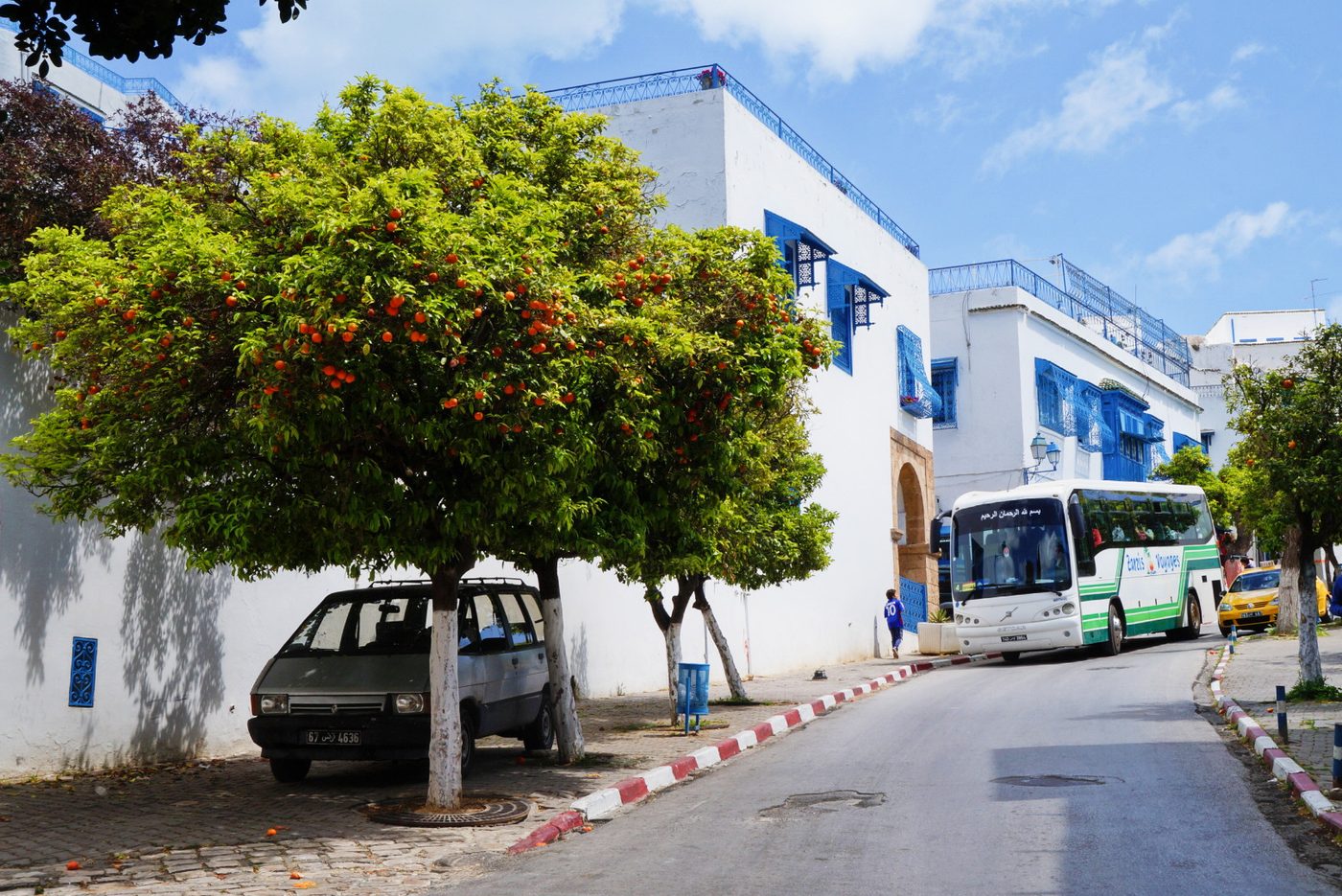
Hammamet is, first and foremost, a holiday town. It grew up around tourism, and it shows in the best way: whitewashed low-rise hotels, gardens full of jasmine and citrus, a tidy old medina by the sea and a purpose-built resort strip — Yasmine Hammamet — a few kilometres south. It’s greener and gentler than most of the Tunisian coast, the pace is slow, and the whole place is geared around people on holiday rather than people going to work. Our full guide to Hammamet digs into the neighbourhoods.
Sousse is a proper city — Tunisia’s third largest — with a university, a port, traffic, and a genuine local life that carries on with or without you. The tourist beaches and the big hotels run north from the centre up to the marina at Port El Kantaoui, but behind them is a real Tunisian city with a thousand-year-old medina at its heart. You get more grit, more energy and more of a sense of the actual country, plus the trade-off that comes with any working city. Our Sousse guide has the lie of the land.
Put crudely: Hammamet is a resort with a town attached; Sousse is a city with a resort attached. If you want your holiday sealed off and serene, that points one way. If you’d be bored without a bit of real-city buzz around you, it points the other.
Beaches: Hammamet edges it, but location matters more than town
This is usually the first question, and it’s closer than the brochures pretend. Both towns front the same Gulf of Hammamet, with the same warm, gently shelving Mediterranean — the sea sits at around 24–26°C through July, August and September (2026 — check current), and stays swimmable into October.
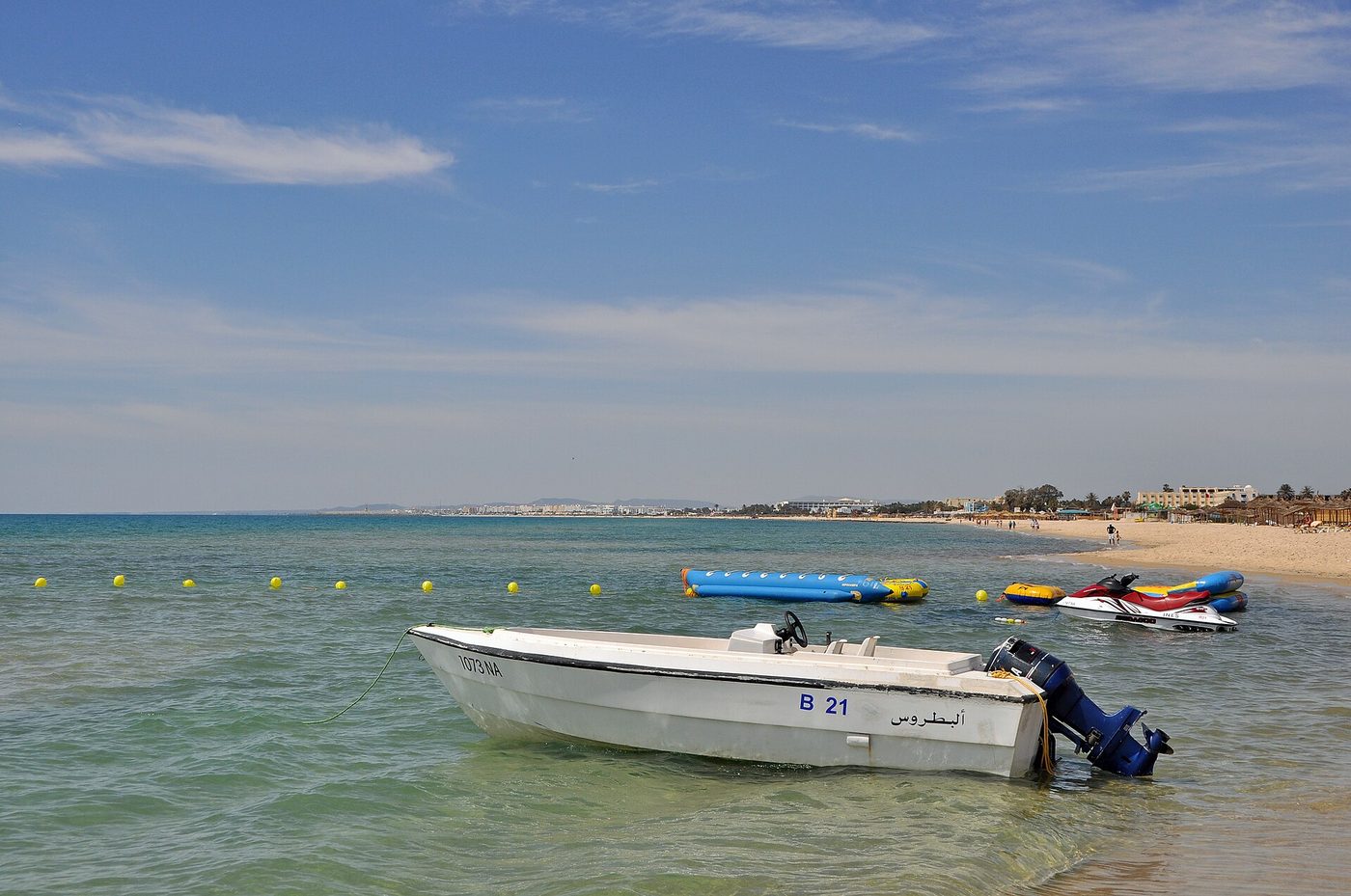
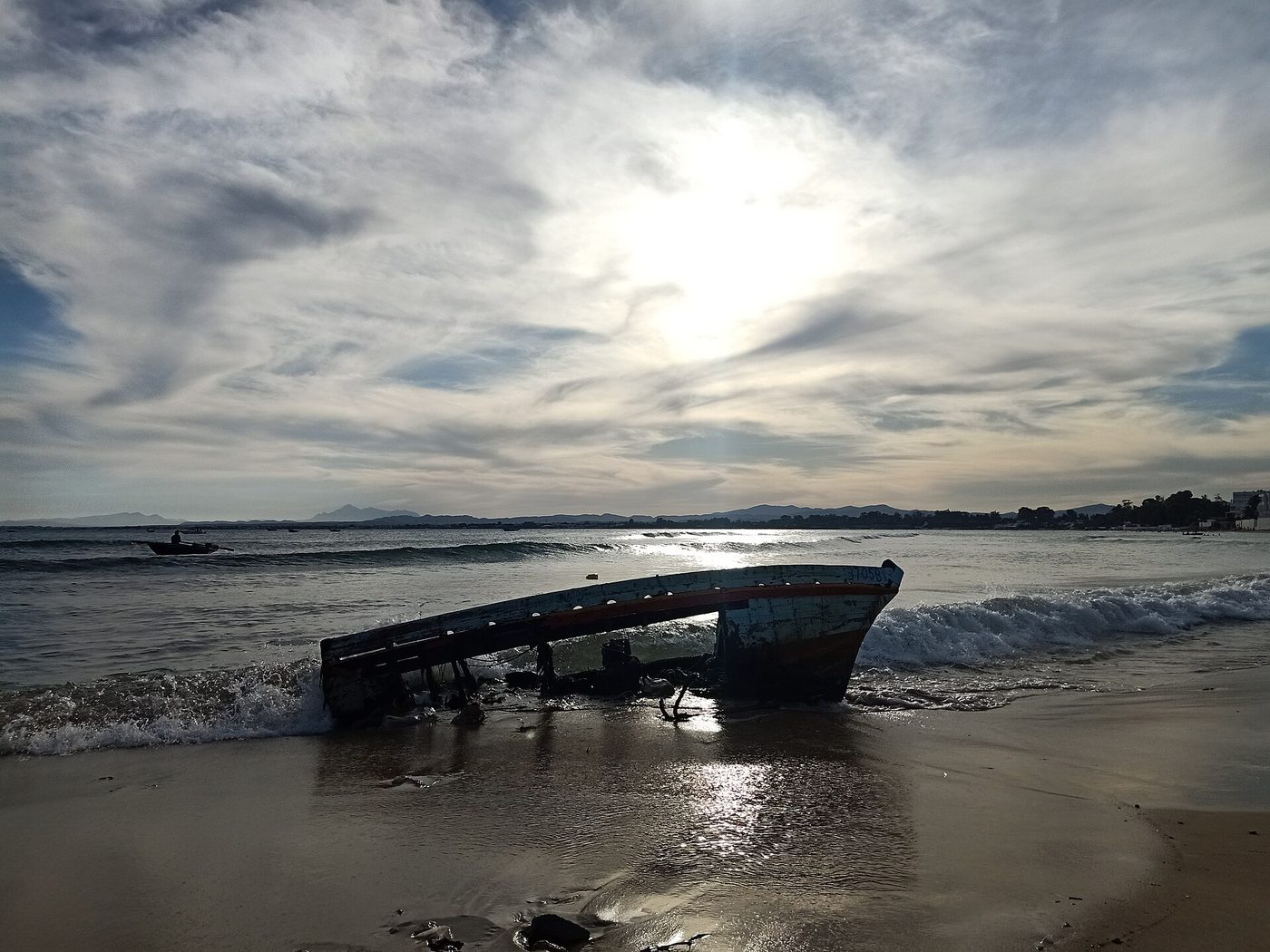
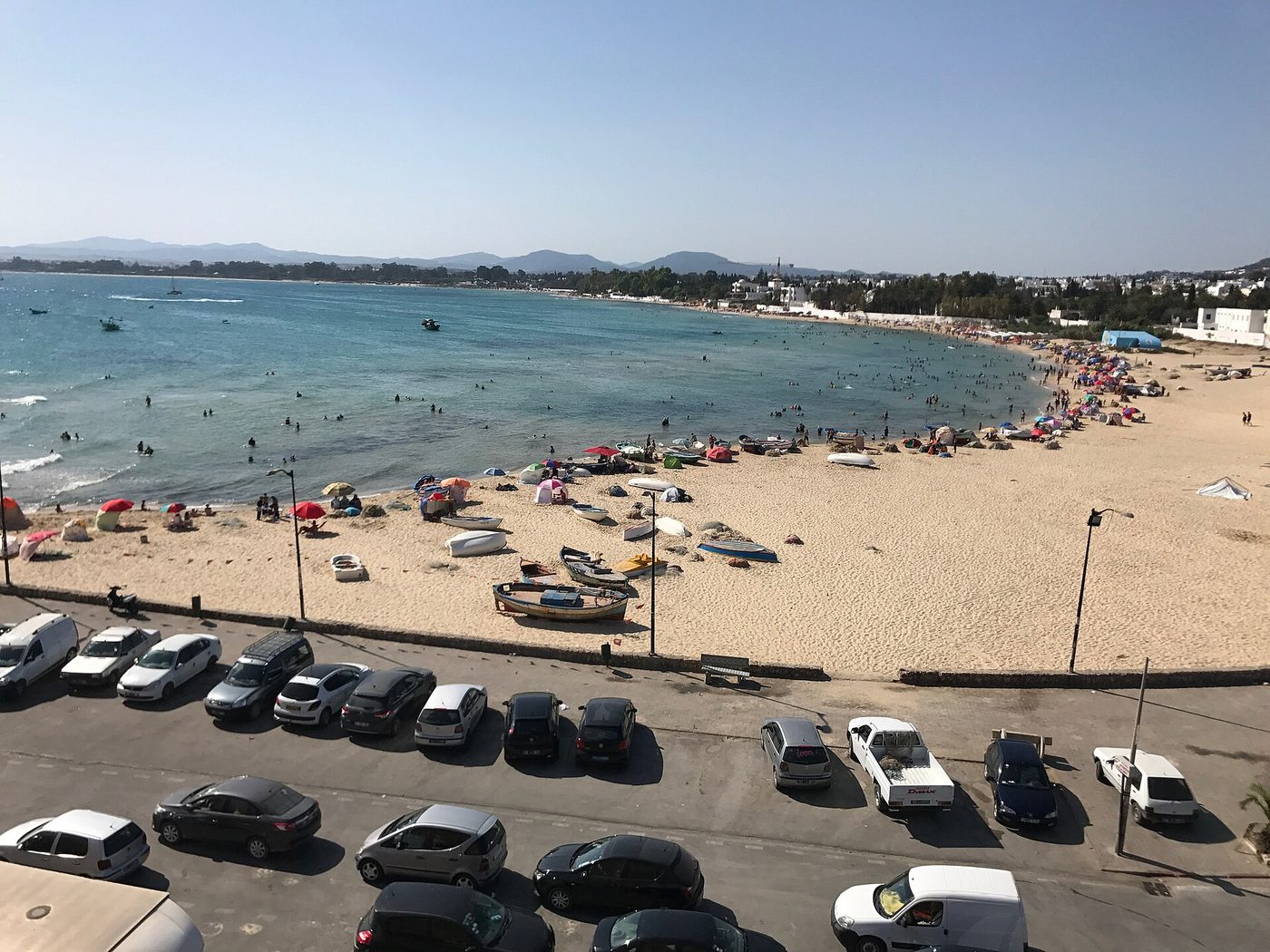
On balance, Hammamet has the better resort beaches. The sand along Yasmine Hammamet is finer and paler, the water tends to run clearer, and because the strip was planned from scratch the beaches are wide and reasonably well kept. It’s the postcard Tunisian beach most people picture.
Sousse’s town beach — the Boujaffar — is a long, sandy, sociable strip right in front of the city, and in high summer it gets genuinely busy with locals and tourists together. That’s either a lively plus or a crowded minus depending on your temperament. The smarter move in the Sousse area is to base yourself a little north at Port El Kantaoui, the marina resort where the sand is cleaner, the sea calmer and the whole thing feels more like Hammamet anyway.
The honest truth: the gap between a good Hammamet beach and a good Sousse-area beach is smaller than the gap between a well-kept resort beach and a scruffy public one in either town. Read recent reviews of your specific hotel’s stretch of sand rather than trusting the town’s reputation. Our roundup of Tunisia’s best beaches separates the good from the overhyped.
Resort zones: Yasmine Hammamet vs Port El Kantaoui
Here’s a distinction that trips up a lot of first-timers. In both towns, most package hotels aren’t in the old centre at all — they’re in a purpose-built marina resort a few kilometres away. Knowing which zone you’re booking matters more than the town name on the brochure.
| Yasmine Hammamet | Port El Kantaoui | |
|---|---|---|
| Built as | A whole resort district south of Hammamet | A marina resort ~10 km north of Sousse |
| Feel | Large, spread out, lots of big all-inclusives | Compact, walkable, marina-centred |
| Centrepiece | Marina, Medina Mediterranea, Carthage Land | Yachting marina lined with cafés and bars |
| Beach | Wide, fine sand, family-friendly | Clean, calm, good for children |
| Getting to the “real” town | Cheap taxi into old Hammamet | Little tourist train or taxi into Sousse |
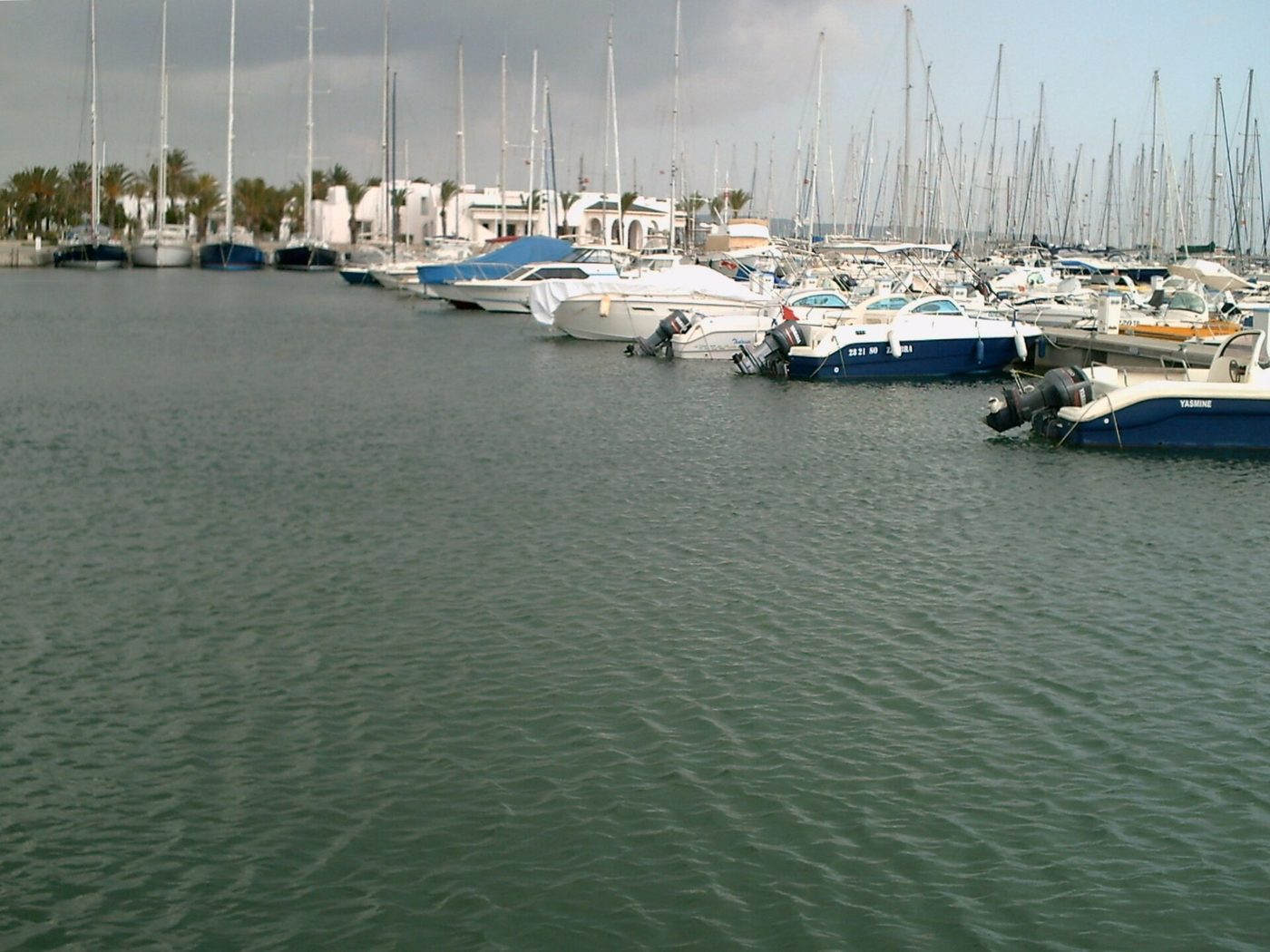
Yasmine Hammamet is the bigger, more self-contained of the two — a manufactured resort world with its own mock-medina shopping street and a theme park, designed so you never strictly need to leave. Some love that; others find it a bit soulless and prefer the older, prettier Hammamet Nord near the original medina.
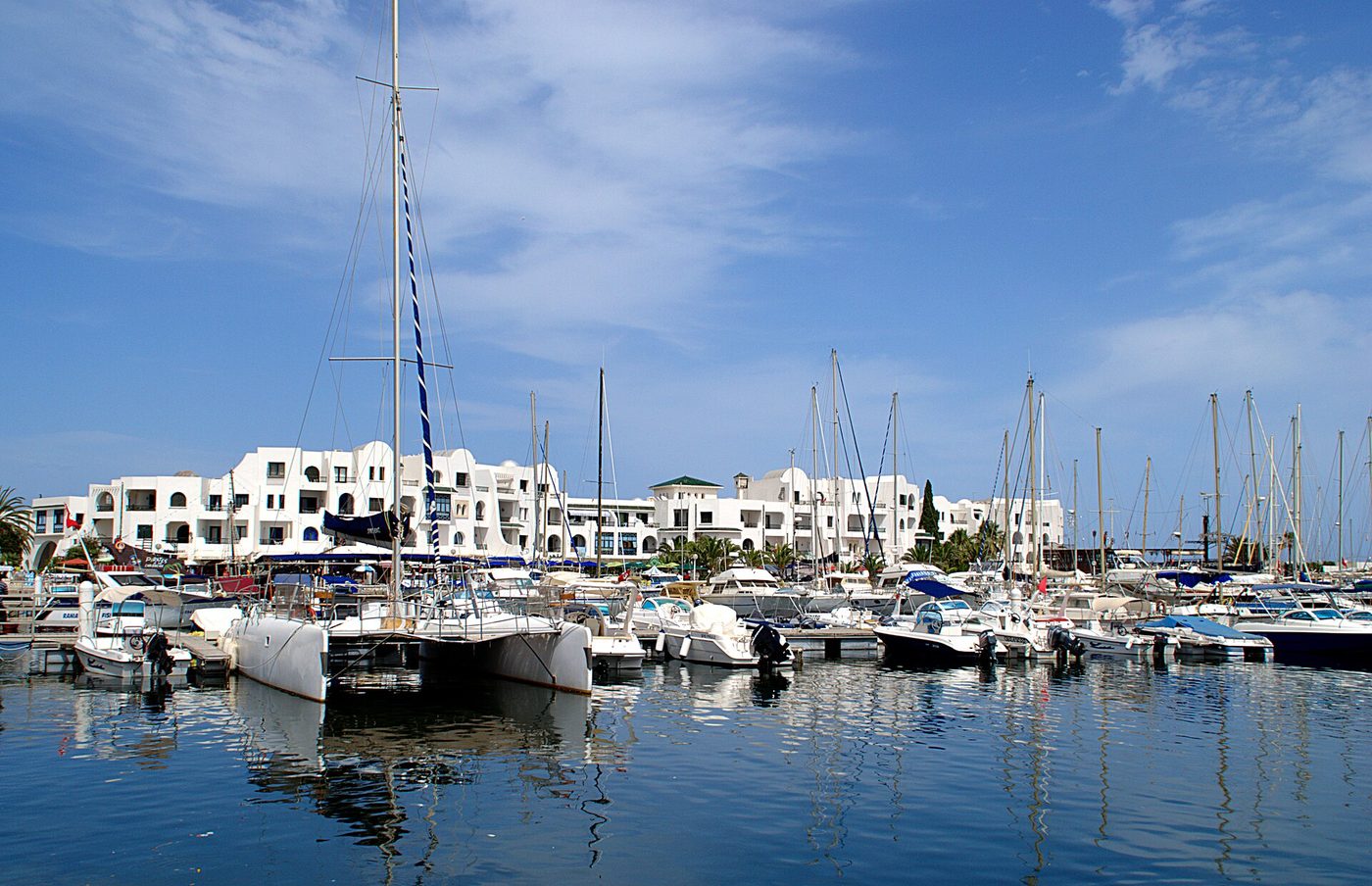
Port El Kantaoui is smaller and, to our eyes, one of the nicer resort marinas in the country: you can stroll the quayside past the boats, eat within earshot of the water and still be twenty minutes from the full clatter of Sousse when you want it. If you like the idea of Sousse’s energy but want to sleep somewhere calmer, this is the answer. Either way, our pick of Tunisia’s best all-inclusive hotels covers the standout properties in both zones.
Nightlife: Sousse, and it isn’t close
If your evenings matter as much as your days, this one’s decisive. Sousse is the livelier town by a distance. It has the biggest concentration of late bars, beach clubs and open-air discos on this part of the coast — places along the strip and up towards Port El Kantaoui that keep going into the small hours, with the occasional visiting DJ pulling a proper crowd in peak season. For a group of friends or anyone who wants the option of a real night out, Sousse delivers in a way little else in Tunisia does.
Hammamet isn’t dead after dark — Yasmine Hammamet has a handful of clubs and bars, and the marina is pleasant for a late drink — but it’s calmer, more couple-and-family paced, and things wind down earlier. Plenty of people count that as a point in its favour.
Two honest caveats for both. First, this is a Muslim country: alcohol is served freely in tourist hotels and licensed bars but it’s pricier and less central to the scene than in Spain or Greece, and during Ramadan (roughly mid-February to mid-March in 2026) the atmosphere is quieter, though tourist hotels keep serving. Second, “nightlife” here means resort bars and clubs, not a sophisticated city scene. Set expectations accordingly and read the fuller picture in our guide to nightlife in Tunisia.
Families and kids: Hammamet, just
Both towns are strong family choices — warm shallow sea, cheap all-inclusives, short flight — but Hammamet edges ahead for younger families. The pace is calmer, the resort beaches are gentle, and Yasmine Hammamet has Carthage Land, a sizeable theme park right in the resort zone, plus water parks and the usual camel-and-pony fare within easy reach. The whole environment is built to keep small children happy without much effort from you.
Sousse is far from a bad family pick — Port El Kantaoui in particular is calm, contained and well set up for kids, with its own little attractions and a tourist train the little ones love. The main difference is the surroundings: choose central Sousse and you’ve got a busy city on the doorstep, which suits families with older kids and teenagers who’ll appreciate the buzz and the shopping more than toddlers will.
Whichever you choose, the family fundamentals are the same across Tunisia. Pack rehydration sachets, be sensible at buffets, and read recent reviews of your specific hotel rather than the resort’s reputation. Our guides to Tunisia with kids and the best family resorts in Tunisia go deeper on choosing a hotel.
Culture and the medinas: Sousse has the substance
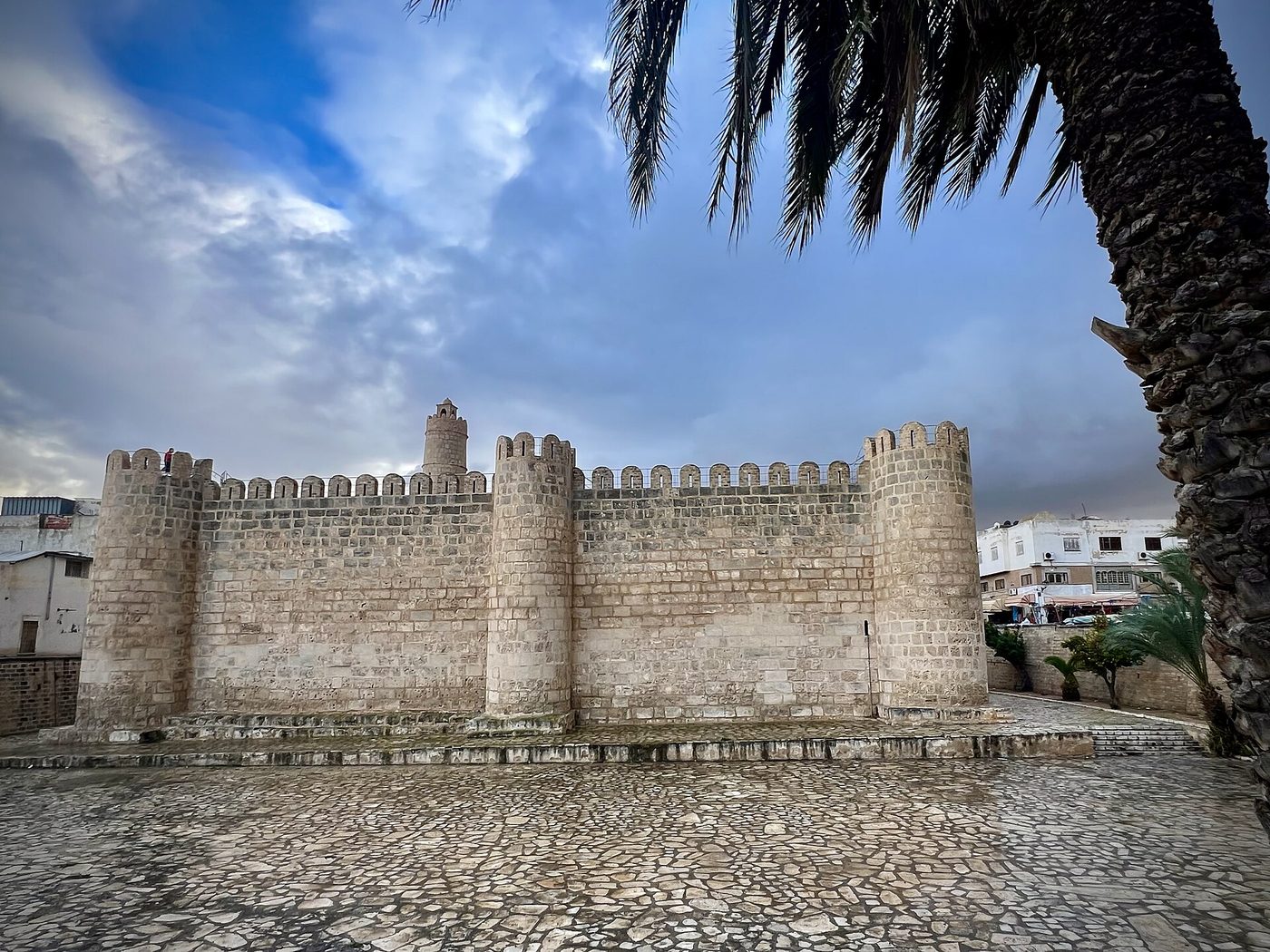
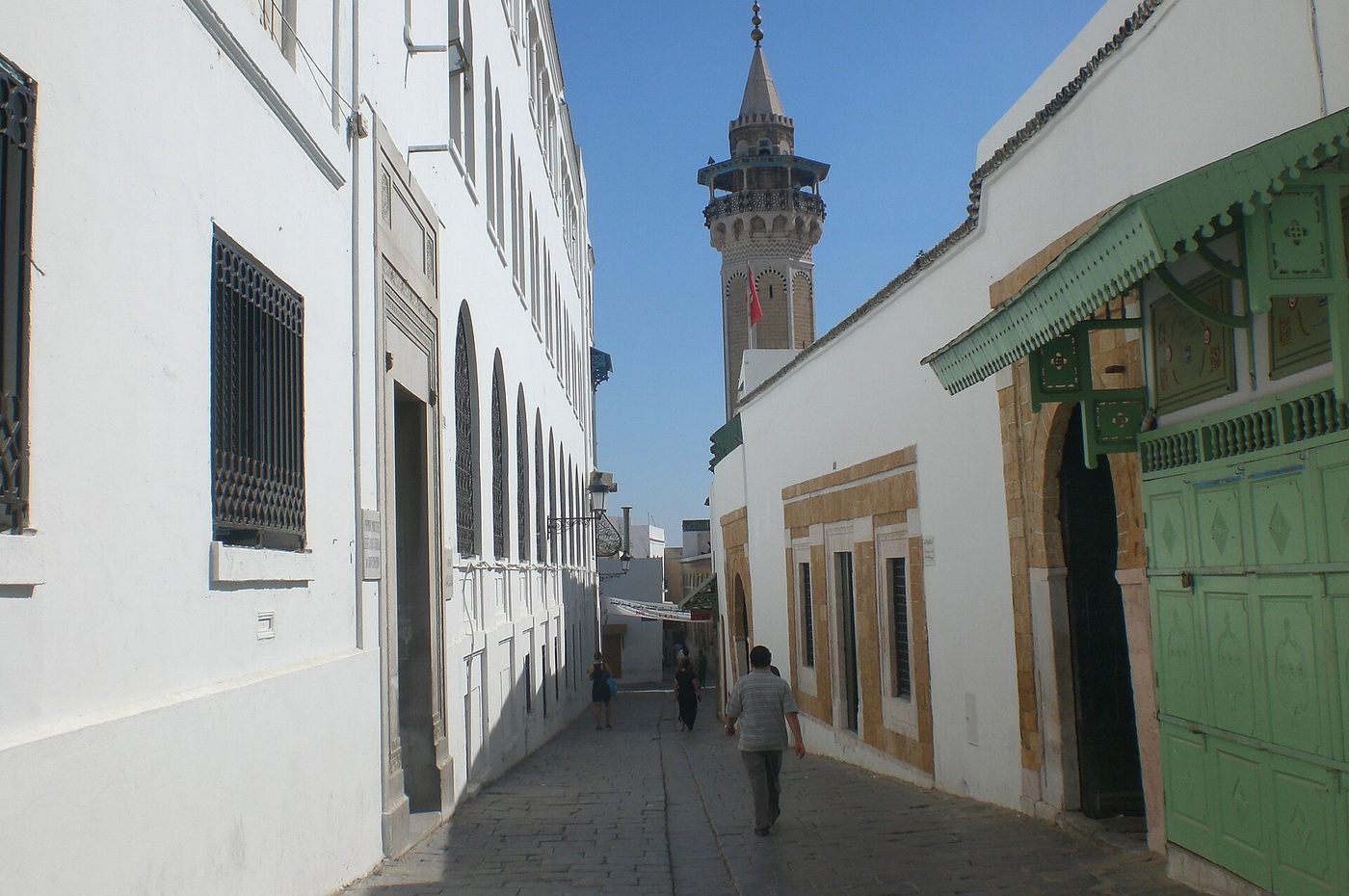
If you like a bit of history and street life woven into your beach week, Sousse is the clear winner. Its medina is UNESCO-listed, and unlike a lot of “old towns” it’s the real thing — a walled maze of a place still lived and worked in, with the ribat (a squat, atmospheric 8th-century fortress-monastery you can climb for a view over the rooftops), the Great Mosque, and a kasbah museum with a fine set of Roman mosaics. You can spend a proper half-day here and feel like you’ve actually seen something.
Hammamet’s medina is genuinely charming — a compact, whitewashed old quarter wrapped around a little kasbah right on the sea, and lovely at golden hour — but it’s small, and you’ll walk it in half an hour. It’s a pretty backdrop rather than a day out. For history woven into the holiday, Sousse gives you more to get your teeth into, and it’s a short hop from even bigger sites (more on those below).
Day trips and excursions: it depends which way you’re facing
This is where the map does the talking, and it’s genuinely one of the biggest practical differences between the two. Hammamet sits at the top of the coast, closer to the capital; Sousse sits further south, closer to the great Roman sites and the holy city of Kairouan. Neither is better overall — they simply open different doors.
| From Hammamet, easier | From Sousse, easier |
|---|---|
| Tunis, the Bardo Museum and the medina | El Djem — the giant Roman amphitheatre |
| Carthage — Rome’s old rival by the sea | Kairouan — Tunisia’s holy city and Great Mosque |
| Sidi Bou Saïd — the blue-and-white cliff village | Monastir — ribat, marina and mausoleum |
| Cap Bon peninsula and Nabeul’s pottery market | Mahdia — a quieter, pretty coastal town |
Both towns can, of course, reach almost everything on a longer coach excursion — including the big two-day Sahara trips down to Douz and Tozeur, which run from resorts all along this coast. But for the marquee day out, the split is real. If seeing Carthage, Sidi Bou Saïd and the capital matters most, Hammamet has the shorter drive. If it’s the colossal amphitheatre at El Djem — one of the best-preserved in the Roman world, and closer to Sousse than to Hammamet — plus the mosques of Kairouan, Sousse wins.
El Djem in particular is a reason some history-minded travellers pick Sousse outright; it’s genuinely one of the most jaw-dropping things in the country and you can often have the tiers half to yourself. See our guide to the best excursions in Tunisia to plan a couple of proper days out from either base.
Getting there and getting around
Both towns are easy from the UK, but the airport maths differs. Enfidha (NBE) is the main airport for both, sitting roughly between them — TUI and easyJet fly there direct from several UK airports, about a three-hour hop. From Enfidha it’s around 40 minutes to Hammamet and roughly an hour to Sousse or Port El Kantaoui (2026 — check your transfer). Sousse has a second option: Monastir airport (MIR) is only about 25 minutes away, which can mean a shorter final leg if your package flies in there.
On the ground, Sousse is the easier of the two to explore without a hotel coach. It’s a transport hub, with the quirky little Sahel Metro train linking central Sousse, Port El Kantaoui and Monastir, plus cheap city taxis and long-distance louages (shared minibuses). Hammamet is more spread out and more reliant on taxis, though they’re cheap. In both, insist on the meter — the “compteur” — or agree a price first, because tourists are routinely quoted several times the going rate, and hotel-arranged taxis in particular can cost double the street price. Our guide to getting around Tunisia explains how taxis, trains and louages actually work.
Value and prices
Neither town will hurt your wallet — this is one of the cheapest coastlines in the Mediterranean, and that’s a big part of the appeal. Both offer superb all-inclusive value, and low-season weeks routinely appear for a couple of hundred pounds a head. We won’t quote a fixed package price because they move constantly, but the honest comparison is this: Hammamet is often marginally the better all-inclusive value, especially in the big Yasmine Hammamet properties, while Sousse can cost a touch more once you’re out and about, simply because there’s more temptation — bars, restaurants, shops — in a real city.
A few money notes that apply to both. The dinar is a closed currency: you can’t buy it before you fly and you can’t take it home, so you change money on arrival, keep the receipts, and convert leftover cash back before departure. Reckon on roughly £1 to 3.8–3.9 dinars in mid-2026, but check the current rate. And budget beyond the package — a couple of excursions, taxis, tips and souvenirs add up, though a modest daily spend still goes a very long way here. Our guide to all-inclusive holidays in Tunisia covers what’s really included and what isn’t.
Health and insurance
One health note that applies to both towns, and to Tunisia generally. Your UK GHIC card is not valid here, so comprehensive travel insurance with medical cover and repatriation is essential rather than optional. Private clinics in the resort areas are decent, but you’ll often be asked to pay up front, even for a minor problem. Check the NHS’s TravelHealthPro Tunisia page for jabs and food-and-water advice before you travel, and pack rehydration sachets in case of the upset stomach that resort buffets and tap water occasionally bring — it’s the single most-cited Tunisia niggle, and easy to plan around.
Is Hammamet or Sousse safer?
Both are mainstream, heavily visited holiday resorts, and millions of Europeans holiday on this coast every year without incident. Petty issues — pushy vendors, taxi overcharging, the odd pickpocket in crowded spots — are the realistic things to watch, and they’re the same low-level nuisances you’d manage anywhere touristy. As a working city, Sousse has a bit more urban bustle to stay switched-on in, particularly around the medina and station; Hammamet is more cocooned and relaxed. We cover each in detail in is Hammamet safe and is Sousse safe.
On the wider question, the UK Foreign Office does advise against travel to specific areas of Tunisia — all of them remote, and none anywhere near this coast. For the record, the FCDO “advises against all travel to the Chaambi Mountains National Park and the designated military operations zones of Mount Salloum, Mount Sammamma and Mount Mghila; and against all but essential travel to parts of the interior including Kasserine Governorate (including the town of Sbeitla), and to within 75km of the Tunisia–Libya border, including Remada and El Borma but excluding Zarzis, the C118 road and all areas in Medenine Governorate north of the road.” That advice was still current at 19 June 2026 (last updated 23 February 2026) as we write. Crucially, Hammamet, Sousse, Djerba, Tunis and the main Sahara circuit all lie far from those zones — reassuringly far, in fact — and both resorts are visited safely by huge numbers of UK holidaymakers every year.
So — Hammamet or Sousse? Our verdict
After all that, here’s the plain recommendation we’d actually give a friend.
Pick Hammamet if…
- You want the calmer, prettier, greener resort with the better beaches.
- You’re a family with young children or a couple after an easy, restful week.
- You’d rather be sealed into a relaxed resort than surrounded by a working city.
- Your dream day trips are Tunis, Carthage and Sidi Bou Saïd.
- You want top-tier all-inclusive value and a short airport transfer.
Pick Sousse if…
- You want real nightlife and the buzz of an actual city on your doorstep.
- You’re a group of friends, or a couple who’d get restless in a quiet resort.
- History matters — a UNESCO medina, the ribat, and El Djem and Kairouan within reach.
- You like eating and drinking out in local spots, not just the hotel.
- You want the option of a shorter transfer via Monastir and easy trains along the coast.
And if you genuinely can’t choose? Base yourself in Port El Kantaoui. It’s the honest compromise — Hammamet’s calm and clean sand with Sousse’s energy a short hop up the road. Still torn between mainland resorts and the island south? Our Djerba or Hammamet comparison is the natural next read, and our best time to visit Tunisia guide will help you nail the dates once you’ve settled on the place.
Hammamet or Sousse: your questions answered
Is Hammamet or Sousse better for a first holiday in Tunisia?
For most first-timers we’d nudge you towards Hammamet: it’s calmer, the resort beaches are the country’s best, and the whole town is geared around holidaymakers, which makes for a gentle introduction. Choose Sousse instead if you specifically want nightlife, city life and easy access to the big Roman sites.
Which has the better beaches, Hammamet or Sousse?
Hammamet, narrowly. The sand at Yasmine Hammamet is finer and the water often clearer, and the resort beaches are well kept. Sousse’s town beach is long but busy in summer; the trick is to base yourself just north at Port El Kantaoui, where the sand and sea rival Hammamet’s.
Is Sousse or Hammamet better for nightlife?
Sousse, comfortably. It has the biggest concentration of late bars, beach clubs and open-air discos on this coast, and things run into the small hours in peak season. Hammamet has a few clubs around Yasmine Hammamet but is quieter and more couple-and-family paced after dark.
Which is better for families with young children?
Hammamet edges it, thanks to its calm pace, gentle resort beaches and Carthage Land theme park in Yasmine Hammamet. Sousse is still a strong family choice, especially the quieter marina resort of Port El Kantaoui; central Sousse suits families with older kids who’ll enjoy the city buzz.
How far is Hammamet from Sousse?
Around 80–90 km along the coast, roughly an hour by car or louage. They share Enfidha airport, which sits between them. Because they’re so close, some visitors even day-trip from one to the other, though most people simply pick a base and explore outwards from there.
What’s the difference between Yasmine Hammamet and Port El Kantaoui?
Both are purpose-built marina resort zones rather than old towns. Yasmine Hammamet is larger and more self-contained, with a theme park and mock-medina shopping street. Port El Kantaoui is smaller, walkable and marina-centred, about 10 km north of Sousse. Both have clean, family-friendly beaches and plenty of all-inclusive hotels.
Which is closer to El Djem and Kairouan?
Sousse. The huge Roman amphitheatre at El Djem and the holy city of Kairouan are both an easy day trip from Sousse. From Hammamet they’re doable but longer. Conversely, Hammamet is closer to Tunis, Carthage and Sidi Bou Saïd, so the “better excursions” answer depends on which sights you most want to see.
Do Hammamet and Sousse use the same airport?
Mostly yes — Enfidha (NBE) is the main airport for both, about 40 minutes from Hammamet and roughly an hour from Sousse. Sousse has a second option in Monastir (MIR), only about 25 minutes away, so check which airport your package flies into as it changes the final transfer time.
Is Hammamet or Sousse cheaper?
They’re similar, and both are among the cheapest Mediterranean resorts you can book. Hammamet often has a slight edge on pure all-inclusive value, particularly in the big Yasmine Hammamet hotels. Sousse can cost a touch more day to day simply because a real city offers more bars, restaurants and shops to spend in.
Is Sousse safe for tourists?
Yes — it’s a mainstream resort city visited by huge numbers of European holidaymakers. As with any busy city, keep an eye on your belongings in crowded areas like the medina and station, and use metered or pre-agreed taxis. The FCDO’s travel-advisory zones are all remote and far from Sousse. See our dedicated Sousse safety guide for detail.
Can I visit both Hammamet and Sousse on one holiday?
Easily. They’re about an hour apart on the same coast, linked by louages, taxis and (near Sousse) the Sahel Metro. Many people base themselves in one and take a day trip to the other — Sousse’s medina makes a great half-day out from Hammamet, and Hammamet’s calm beaches a pleasant change of pace from Sousse.
Which should I choose for a couples’ holiday?
Either works, but it depends on your style. For a restful, romantic week with pretty sunsets and quiet dinners, Hammamet Nord near the old medina is lovely. For a couple who want some buzz, nightlife and city life alongside the beach, Sousse or Port El Kantaoui is the livelier pick.
Written by the Tunisia Tourism Guide team — an independent UK-focused guide to travelling in Tunisia. We don’t sell tours or take hotel commissions. Prices and advice were checked at publication; always confirm current details before you book.
Photo credits
All images via Wikimedia Commons, used with thanks: The fine sandy beach at Hammamet © Marc Ryckaert (MJJR) (CC BY 3.0); The yacht-lined marina at Port El Kantaoui near Sousse © Habib M’henni (CC BY-SA 3.0); The 8th-century ribat fortress in the UNESCO-listed medina of Sousse © Sharon Hahn Darlin (CC BY 2.0); The purpose-built marina at Yasmine Hammamet © R-E-AL (talk | contribs | Gallery) (German Wikipedia) (CC BY-SA 3.0).
One response to “Hammamet or Sousse: Which Should You Pick?”
[…] Versus Sousse: Hammamet has the better beaches, a calmer feel and stronger value on family all-inclusives; Sousse is a bigger, livelier working city with a UNESCO-listed medina, the Ribat fortress and far more nightlife. Pick Hammamet for relaxed and sandy, Sousse for buzz and a bit more grit. We compare them properly in Hammamet or Sousse. […]