By the Tunisia Tourism Guide team · Last updated 17 August 2026 · We don’t sell tours or take hotel commissions — this is independent advice, written to be useful.
You have booked, or are about to book, a holiday in Hammamet — and every hotel search keeps throwing up somewhere called Yasmine, a few kilometres down the coast. Same name, slightly different place. Here is the plain version of what it actually is, and what you will and won’t find there.
Yasmine Hammamet is a purpose-built resort zone about 10km south of Hammamet’s old town — a planned strip of large, mostly all-inclusive hotels wrapped around a marina, a mock-historic “Medina Mediterranea”, the Carthage Land theme park, a casino and a long sandy beach. It is the modern, package-holiday end of Hammamet, not the historic one.
If that sounds like a lot of separate things bolted together in one place, that is because it is. Yasmine Hammamet was drawn up on a planner’s map in the 1990s and built more or less from scratch, so it does everything a straightforward beach holiday needs and very little that the older town does. Below we walk through each part honestly — the marina, the fake medina, the theme park, the beach and the golf — and we are candid about who loves it and who finds it a bit soulless. If you are still deciding where to base yourself, our guide to where to stay in Hammamet compares all three zones side by side.
Yasmine Hammamet at a glance
| Question | The short answer |
|---|---|
| What is it? | A purpose-built resort area (a “zone touristique”), developed from the 1990s |
| Where is it? | About 10km south of Hammamet old town, on the Cap Bon coast in Nabeul governorate |
| Best for | Families, first-time all-inclusive holidays, spa and golf breaks, marina evenings |
| Main draws | Marina, Medina Mediterranea, Carthage Land and Aqualand, a casino, a long beach |
| The beach | Wide, sandy, gently shelving — though only some hotels sit right on the sand |
| Nearest airport | Enfidha-Hammamet, roughly 40–45 minutes; Tunis-Carthage about an hour |
| Getting to the old town | The little “noddy” tourist train (30–40 min, scenic) or a taxi (10–15 min) |
| Currency | The Tunisian dinar, a closed currency; resort prices are often quoted in euros |
| Our honest verdict | An easy, everything-on-tap holiday — light on old-Tunisia character |
Prices and opening times below are the ones we could confirm in 2026. Tunisia’s tourist economy moves quickly, so treat every figure as a guide and check the current details before you rely on them.
So what actually is Yasmine Hammamet?
Yasmine Hammamet is what Tunisia calls a zone touristique — a stretch of coast set aside and built up specifically for tourism. It went up in the 1990s on the same model as Port El Kantaoui near Sousse: take an empty piece of shoreline, dig a marina, line it with hotels and leisure attractions, and market the whole thing as a self-contained holiday. The result covers a few hundred hectares with something like four kilometres of seafront and, by most counts, somewhere between forty and fifty hotels — the large majority of them four- and five-star, and the large majority all-inclusive.
That planning history explains almost everything about the place. The roads are wide and gridded rather than winding. The palm trees are in neat rows. There is a landscaped promenade, a public garden, a marina full of pleasure boats and a walled attraction dressed up to look like an ancient walled town. It is comfortable, it is easy to get around, and nothing about it is more than a few decades old. If you have been to Port El Kantaoui, or to purpose-built resort strips elsewhere in the Mediterranean, the format will feel familiar the moment you arrive.
None of that is a criticism in itself — for a lot of holidaymakers, “everything in one tidy place” is exactly the point. It just helps to know going in that Yasmine Hammamet is a modern holiday zone rather than a town people actually live in. For the wider picture of where it fits among Tunisia’s coastal resorts, our overview of where to stay in Tunisia sets the main bases in context.
How it’s different from Hammamet town
This is the confusion we untangle most often, so it is worth being blunt. “Hammamet” and “Yasmine Hammamet” are two different places about ten kilometres apart, and they feel nothing alike.
Hammamet town — the original — has a real, lived-in centre: a small whitewashed medina right on the water, a 15th-century Spanish-Turkish fort on the headland, a weekly market, cafés where locals sit, and a beach that ordinary Tunisians use as well as tourists. It grew up over centuries and it shows. If that is the version you pictured, read our guide to the Hammamet medina before you book, and consider whether the old town suits you better.
Yasmine Hammamet has none of that history because it was never meant to. What it has instead is scale, polish and convenience: bigger hotels, bigger pools, more organised entertainment, a marina to stroll along in the evening and a theme park for the children. One is a small Tunisian town that happens to have hotels; the other is a resort that happens to have a fake town inside it. Neither is “better” in the abstract — it depends entirely on what you want from the week.
What’s there in Yasmine Hammamet: the quick rundown
If you just want the checklist of what the zone actually contains, here it is in one place:
- The marina — several hundred berths, waterfront restaurants and bars, and boat trips including the wooden “pirate ship” cruises.
- Medina Mediterranea — a walled, mock-historic “old town” of souks, craft shops, cafés, small museums and restaurants with live entertainment.
- Carthage Land — an ancient-Carthage-themed amusement park (rollercoaster, 5D cinema, rides), billed as the largest in North Africa.
- Aqualand — a water park of slides and pools right next door, handy on a hot afternoon.
- The beach — a long, wide, gently shelving stretch of sand with water sports on tap.
- Golf — the Citrus complex just inland, the biggest in the country, plus the nearby Golf Yasmine course.
- Spa and thalasso — several hotels built around seawater wellness centres and hammams.
- A casino and dinner-shows — evening entertainment aimed squarely at holidaymakers.
- A seafront promenade and public garden — for the evening stroll between all of the above.
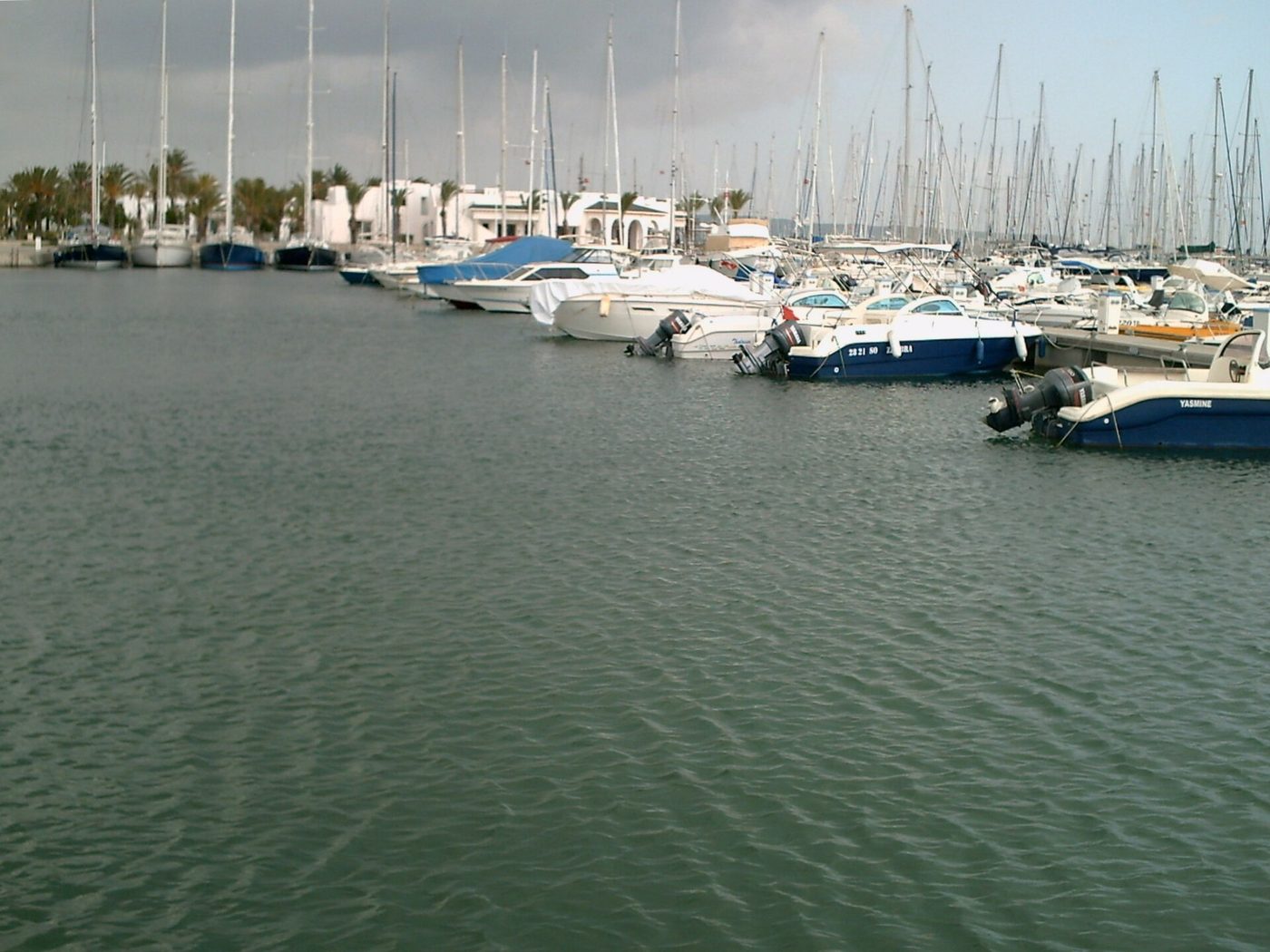
The Yasmine Hammamet marina
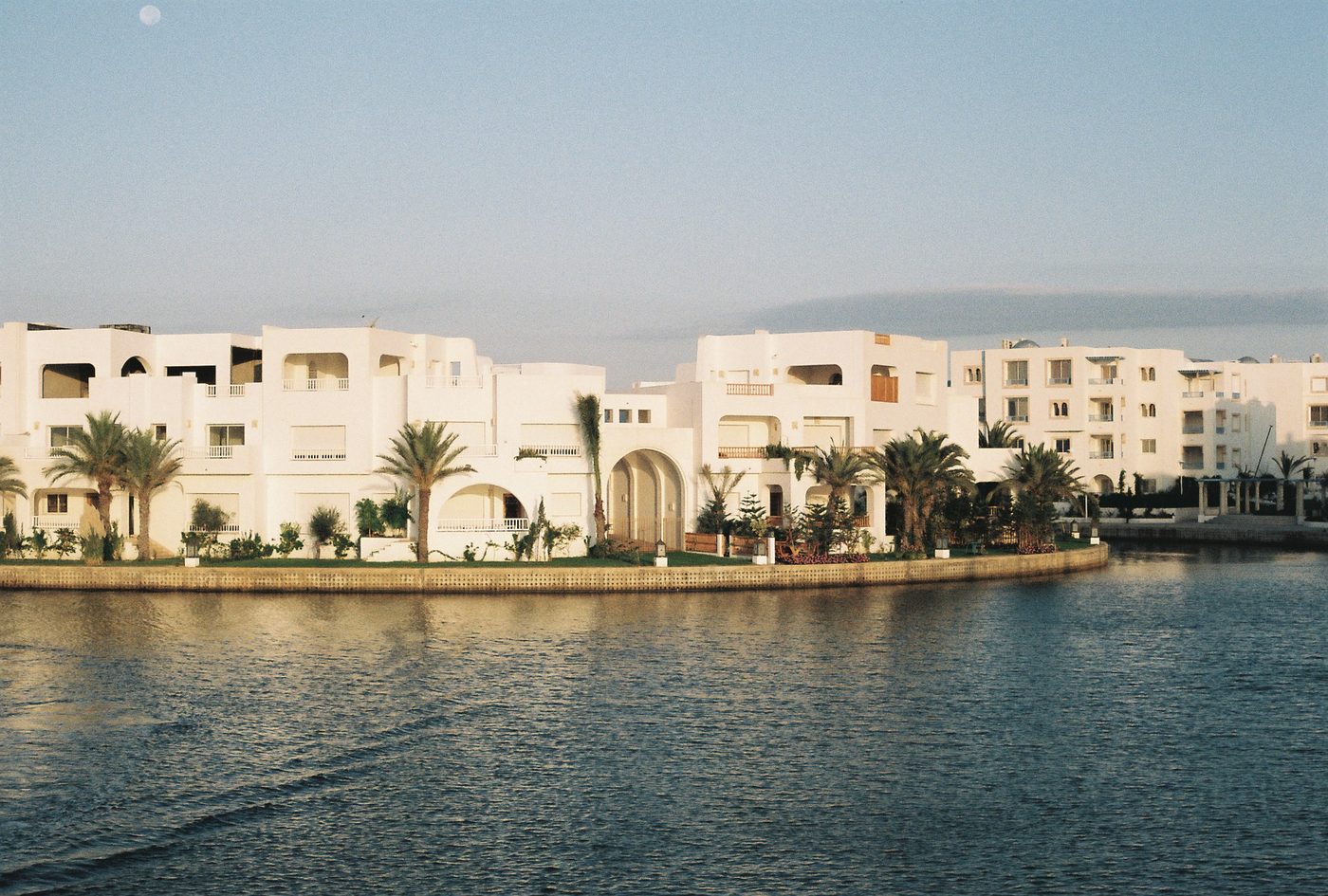
The marina is the heart of the zone and the bit most people enjoy most. It is a proper working harbour with several hundred berths — sailing yachts, motor cruisers and a small fleet of wooden “pirate ships” and old-merchant-style boats that run half-day and full-day trips along the coast. In the evening the quayside comes alive: this is where you will find the Yasmine Hammamet marina restaurants, the ice-cream stands, the shisha cafés and a handful of bars and beach clubs.
It is a pleasant, low-effort way to spend an evening — walk the front, pick a table, watch the boats. The food ranges from fresh grilled fish and seafood to Italian and international menus, and standards vary, so it pays to look at who else is eating there before you sit down. Prices on the marina run higher than in the old town, which is normal for a waterfront tourist strip anywhere.
The boat trips are the main draw beyond eating and drinking. A morning “pirate cruise” with lunch and a swim stop is a reliable family outing, and the marina is also the launch point for fishing trips and short coastal sails. If you would rather see more of the country than the resort, our roundup of Tunisia excursions covers the day trips worth doing from this coast, and there are plenty within reach — see our guide to day trips from Hammamet. For a sense of how the evenings compare with the rest of the country’s resorts, we cover the scene in our Tunisia nightlife guide.
Medina Mediterranea: the mock-historic bit
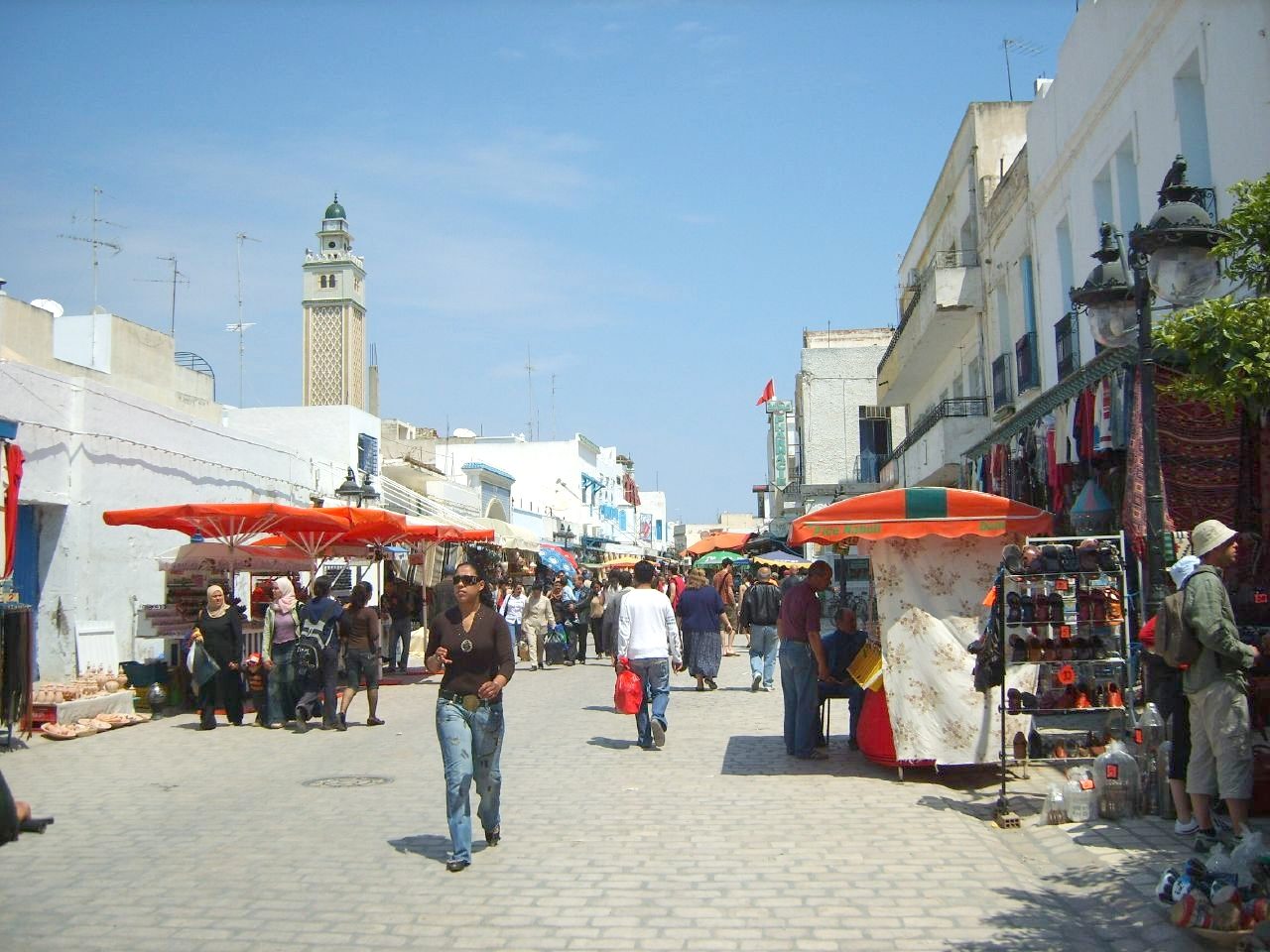
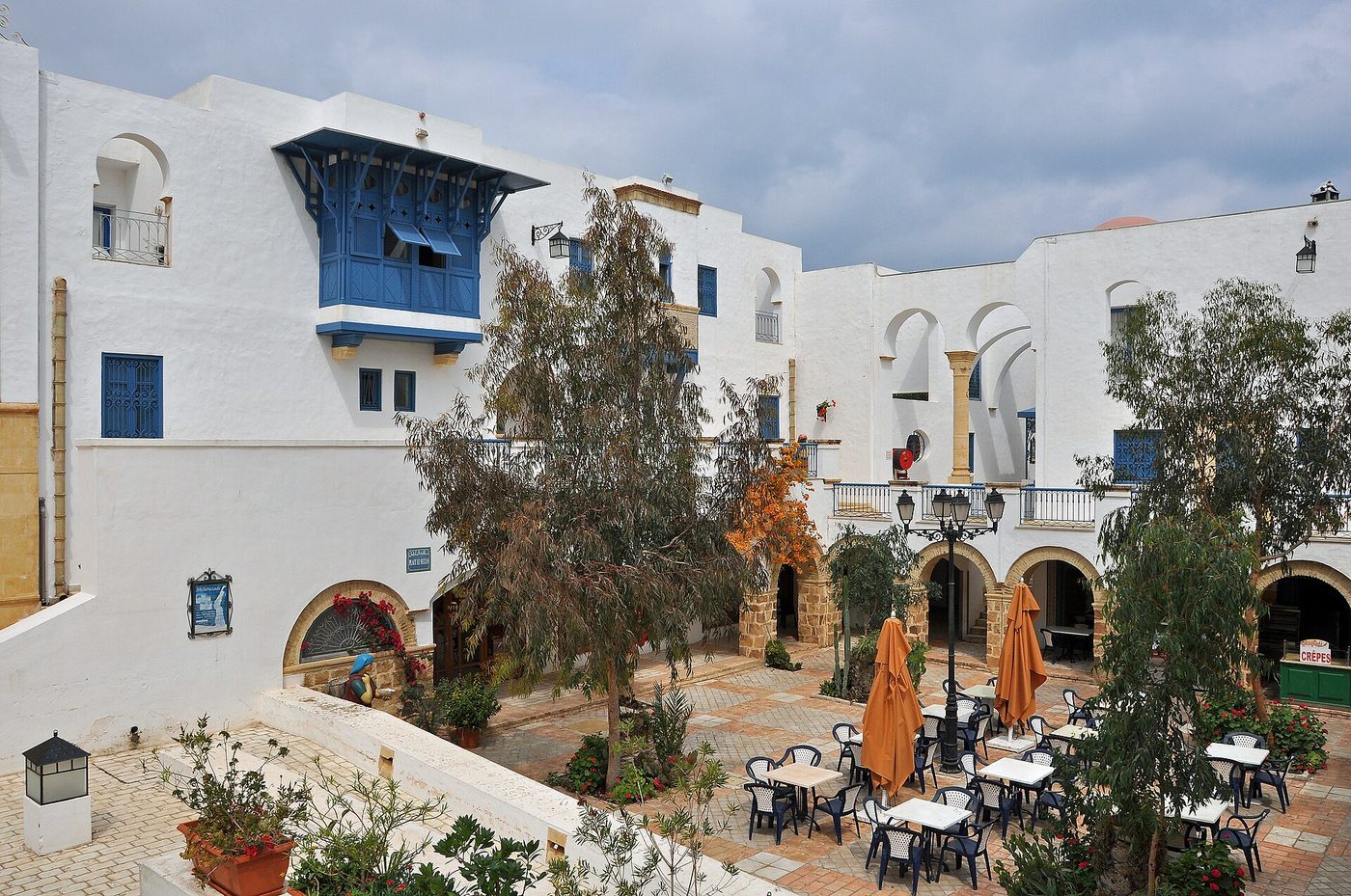
Behind a large crenellated gate that does a good impression of a citadel wall sits the Medina Mediterranea — a purpose-built “old town” complete with narrow lanes, souks, fountains, Moorish cafés and courtyards. It is not a historic medina; it is a reconstruction, opened as part of the resort, and it wears its theme heavily. Inside you will find craft shops, a scattering of small museums (a Palace of 1001 Nights, a museum of religions and civilisations), restaurants with live entertainment, cafés where you can sit under an orange tree over a mint tea, and the odd fire-eater or snake charmer working the crowd.
We will be honest: reactions divide sharply. Children tend to love it — it looks like a film set and there is always something going on. Plenty of adults enjoy an evening wander too. But if you have seen a genuine Tunisian medina, the Medina Mediterranea can feel dated and a touch kitsch, and the sales patter from some of the shops is persistent. A practical tip we have seen echoed again and again: cover your hotel wristband so you are not marked out as all-inclusive, keep a firm “no thank you” ready, and treat any “special price” as an opening bid. It is fun on its own terms — just do not arrive expecting the real thing. For that, the actual Hammamet medina is a short ride up the coast.
Carthage Land and Aqualand
Tucked inside the Medina Mediterranea walls is Carthage Land, described by its owners as the largest amusement park in North Africa and themed — as the name suggests — around ancient Carthage. Across a compact site you get a rollercoaster, a 5D cinema, spinning and swinging rides, boat and wagon rides through reconstructed Carthaginian scenes, resin elephants standing in for Hannibal’s, mock cannon-fire from the “Barbarossa” pirates, and a gentler funfair area (variously branded Aladdin or Ali Baba) aimed squarely at younger children.
Alongside it sits Aqualand, a water park with the usual run of slides and pools. Both are a genuinely useful rainy-day-that-never-comes option for families, and you can get round Carthage Land itself in a couple of hours. On price, we have seen day admission quoted at around 15 dinar per person (very roughly £4, or about €5) for each park in 2026, sometimes with certain headline rides — a King Kong ride crops up often — charged as small extras on top. Treat those figures as indicative only and confirm current prices and opening dates before you go, because both parks run seasonal hours and can close out of high season.
If a theme park on the doorstep is a big part of the appeal, Yasmine Hammamet earns its keep here — it is one of the few Tunisian resorts where the children’s day out is a two-minute walk from the pool. For more on holidaying here with little ones, see our guides to Tunisia with kids and the best Tunisia family resorts.
The beach at Yasmine Hammamet
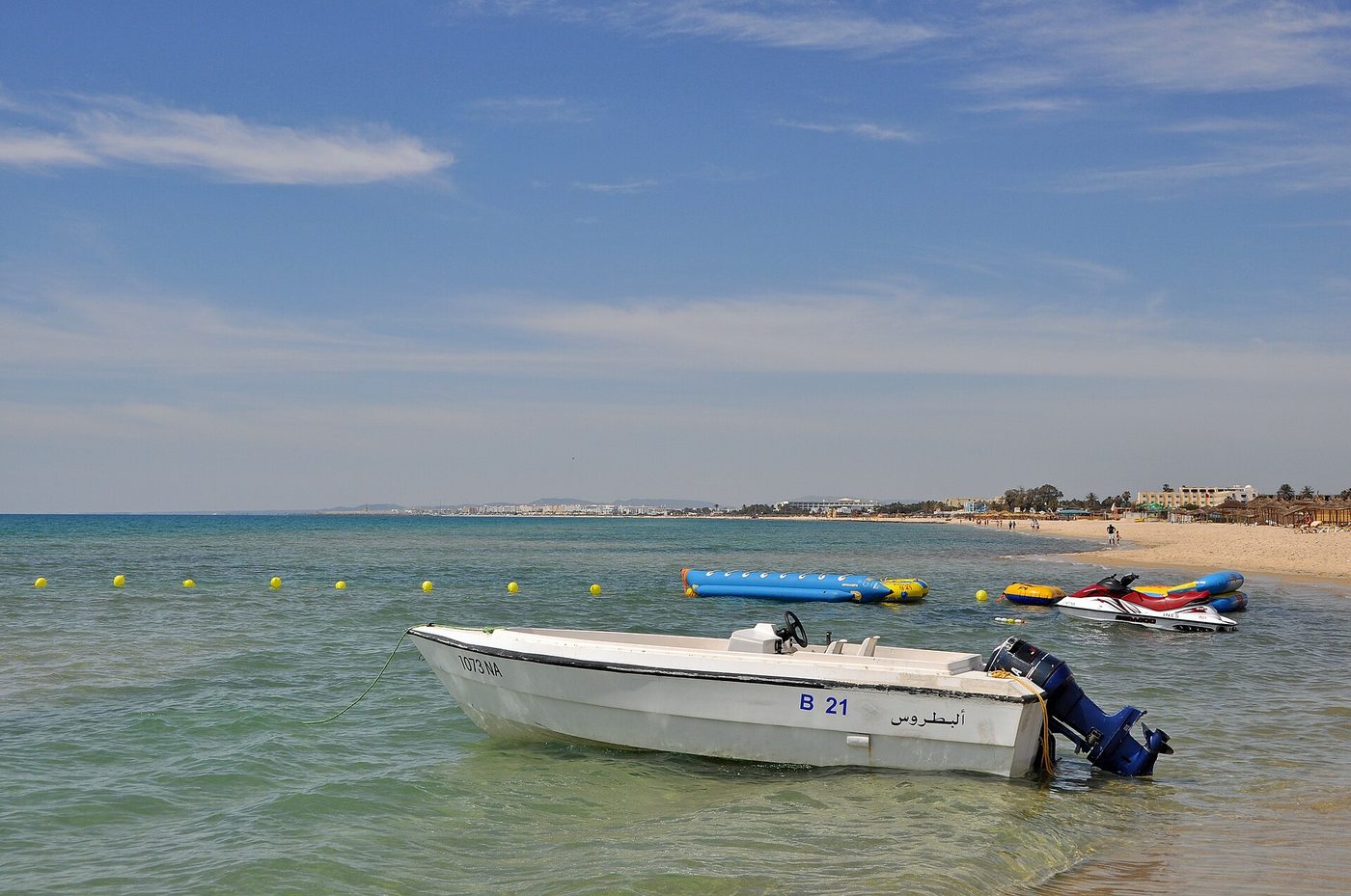
The beach is wide, sandy, pale gold and gently shelving — good, safe swimming for children, and long enough that it rarely feels packed even in July. The water in the Gulf of Hammamet is sheltered and calmer than the more open stretches of Tunisian coast, and it warms up nicely through the summer.
One honest caveat worth knowing before you book: not every hotel in the zone is actually on the sand. By some counts, only a handful of the resort’s forty-odd hotels have direct beachfront; plenty sit a road or a short walk back, with beach access across a road or via a shuttle. If beachfront matters to you — and for a beach holiday it usually does — check the hotel’s exact position on a map and look at recent guest photos rather than trusting the word “beach” in the name. Our dedicated Hammamet beach guide goes into the sand in more detail.
Golf, spa and the casino
Three more things Yasmine Hammamet does well, and that the old town largely doesn’t.
Golf. The Citrus complex, in the pine and olive country just inland between Hammamet and Yasmine, is the biggest in the country — two full 18-hole courses plus a shorter course and a driving range, laid out around a set of lakes. There is a second course, Golf Yasmine, nearer the zone. Green fees we have seen run to roughly €50–60 for eighteen holes in summer and noticeably more in winter high season (2026 — check current), and most resort hotels can arrange tee times and transfers.
Spa and thalasso. This coast is one of the world’s centres for thalassotherapy — seawater-based spa treatment — and several Yasmine hotels are built around large thalasso and wellness centres with hammams, seawater pools and massage. If a spa week is the plan, this is a sensible base.
The casino. There is a casino in the zone (the Casino La Medina), open late into the night with slots and tables, plus cabaret-style dinner shows of the “1001 Nights” variety. It is firmly aimed at holidaymakers rather than high rollers, but it rounds out the evening options.
Getting to Hammamet town — and getting around
You are not stuck in the zone. The two easiest ways into the old town are the little open-sided tourist road train — the “noddy train” everyone calls it — which trundles the coast road for a few dinar and takes roughly half an hour with the scenery thrown in, and a straightforward taxi, which does the same run in ten to fifteen minutes for a modest fare. Agree the fare or insist on the meter before you set off.
Within the zone itself you can walk most places, and the train also loops around Yasmine Hammamet as a sightseeing ride. For getting further afield — to Sousse, Tunis, Kairouan or the Cap Bon villages — hotels sell organised excursions, and louages (shared minibuses) and trains run from nearby Bir Bou Regba. It is easy enough to base yourself here and still see a good slice of the country.
Getting there: flights, transfers and money
Most UK visitors fly into Enfidha-Hammamet airport, which sits south of the resort and is roughly 40 to 45 minutes away by car — handy, because Enfidha is the airport TUI and the charter and package operators mainly use for this coast. Tunis-Carthage, to the north, is about an hour away and tends to suit independent bookings and scheduled flights. Almost every hotel offers an airport transfer or shuttle; if yours doesn’t, a pre-booked private transfer or an agreed-fare taxi does the job.
On money: the Tunisian dinar is a closed currency, which means you cannot buy or sell it outside the country — you change money on arrival and change any leftover back before you fly home. Resort prices, excursions and green fees are frequently quoted in euros for convenience, but you pay on the ground in dinar. As a rough guide in mid-2026, one pound was worth somewhere around 3.8 to 3.9 dinar; rates move, so check before you travel. And because the UK’s GHIC health card is not valid in Tunisia, proper travel insurance with medical cover is essential rather than optional.
If the all-inclusive format is the appeal — and in Yasmine Hammamet it usually is — our roundup of the best all-inclusive hotels in Tunisia is the place to start.
Who Yasmine Hammamet suits — and who it doesn’t
Here is our candid summary after weighing it all up.
It suits you if you want a beach holiday where everything is on tap and nothing needs organising — families with children who will live at the pool and the theme park, first-timers to Tunisia who want a soft landing, couples after a spa-and-golf week, and anyone who likes the reassurance of a big, modern, all-inclusive resort with a marina to stroll in the evening. The convenience is real and the value, especially for families, is hard to beat elsewhere in the Mediterranean.
It won’t suit you if what you came to Tunisia for is the country itself. The zone is comfortable but engineered; the “medina” is a stage set; and once you have done the marina, the theme park and the beach, there is not a great deal of genuine local life to stumble into. Independent travellers, culture-seekers and anyone who bristles at a resort bubble will be happier basing themselves in the old town — and can always pop down to Yasmine for the day. Couples wanting something more grown-up will generally be happier in the old town, where the smarter, quieter hotels sit.
Still torn between resorts? Our head-to-head on Hammamet or Sousse is the natural next read.
Yasmine Hammamet: your questions answered
What is Yasmine Hammamet?
It is a purpose-built resort zone about 10km south of Hammamet’s old town, developed from the 1990s. Think large all-inclusive hotels arranged around a marina, a reconstructed “medina”, the Carthage Land theme park, a casino and a long sandy beach — a self-contained holiday area rather than a real town.
Is Yasmine Hammamet the same as Hammamet?
No. They share a name but they are two different places roughly ten kilometres apart. Hammamet is the original town with a genuine medina and centuries of history; Yasmine Hammamet is the modern, planned resort strip to the south. They feel completely different.
How far is Yasmine Hammamet from Hammamet town?
About 10km. The little tourist “noddy train” takes 30 to 40 minutes along the coast for a few dinar, and a taxi does it in 10 to 15 minutes for a modest fare. Agree the fare or ask for the meter first.
Is Yasmine Hammamet good for families?
It is one of the best family bases in Tunisia. The big all-inclusive hotels have kids’ clubs and large pools, the beach is safe and gently shelving, and Carthage Land and Aqualand are on the doorstep. It is about as low-stress as a family beach holiday gets.
What is there to do in Yasmine Hammamet?
The marina (strolling, dining, boat trips), the Medina Mediterranea and its shops, Carthage Land and Aqualand, the beach and water sports, golf at the Citrus complex, thalassotherapy spas, and a casino with dinner shows. Day trips to Tunis, Sousse and Cap Bon are easy to arrange too.
Is the Medina Mediterranea a real medina?
No — it is a modern reconstruction built as part of the resort, not a historic quarter. It is enjoyable for a wander, especially with children, but it can feel dated and touristy, and some shopkeepers push hard for a sale. For the real thing, visit the old Hammamet medina up the coast.
How much does Carthage Land cost?
We have seen day admission quoted at around 15 dinar per person (roughly £4) in 2026, with a few headline rides charged as small extras and the neighbouring Aqualand priced similarly. Prices and opening dates change with the season, so confirm the current details before you go.
Does Yasmine Hammamet have a good beach?
Yes — a wide, sandy, gently shelving beach with calm, sheltered water. The one catch is that not every hotel sits directly on the sand; some are set back across a road. If beachfront matters, check the hotel’s exact position and recent guest photos before booking.
How do you get from Enfidha airport to Yasmine Hammamet?
Enfidha-Hammamet airport is roughly 40 to 45 minutes away by road, to the south. Most hotels lay on a transfer or shuttle; otherwise a pre-booked private transfer or an agreed-fare taxi is simple. Tunis-Carthage airport is the alternative, about an hour to the north.
Is Yasmine Hammamet safe?
Hammamet and its resort zone sit a long way from any of the areas the UK’s FCDO advises against visiting, and tourist areas here are well used to visitors. Normal resort common sense applies — mind your belongings, agree taxi fares. For the full picture see our guide to whether Hammamet is safe.
Is Yasmine Hammamet worth it?
If you want a comfortable, everything-on-tap beach holiday — especially with children — yes, it delivers reliably and at good value. If you came for authentic Tunisia, you will find the zone a little engineered and may prefer to base yourself in the old town and visit for the day.
When is the best time to visit?
May, June, September and October give warm sea and sunshine without the peak-summer heat and crowds. July and August are hot and busiest but bring the fullest programme of events. See our month-by-month guide to the best time to visit Tunisia to plan around it.
Written by the Tunisia Tourism Guide team — an independent UK-focused guide to travelling in Tunisia. We don’t sell tours or take hotel commissions. Prices and advice were checked at publication; always confirm current details before you book.
Photo credits
All images via Wikimedia Commons, used with thanks: Boats and waterfront restaurants along the marina at Yasmine Hammamet © R-E-AL (CC BY-SA 3.0); Andalusian-style white-and-blue architecture and a cafe courtyard in Yasmine Hammamet © Marc Ryckaert (MJJR) (CC BY 3.0); Waterfront villas and the port at Yasmine Hammamet © anagh (CC BY-SA 3.0); The wide sandy beach and calm sea at Yasmine Hammamet © Marc Ryckaert (MJJR) (CC BY 3.0).