By the Tunisia Tourism Guide team · Last updated 1 September 2026 · We don’t sell tours or take hotel commissions — this is independent advice, written to be useful.
There’s a moment on your first kiteboarding holiday when you realise the water isn’t getting any deeper. You’ve been dragged fifty metres downwind, you’ve lost the board again, and instead of treading water and panicking you simply stand up — waist deep, sandy bottom, kite still flying overhead. On Djerba you can do that for about forty square kilometres. That, in one sentence, is why people fly here to learn.
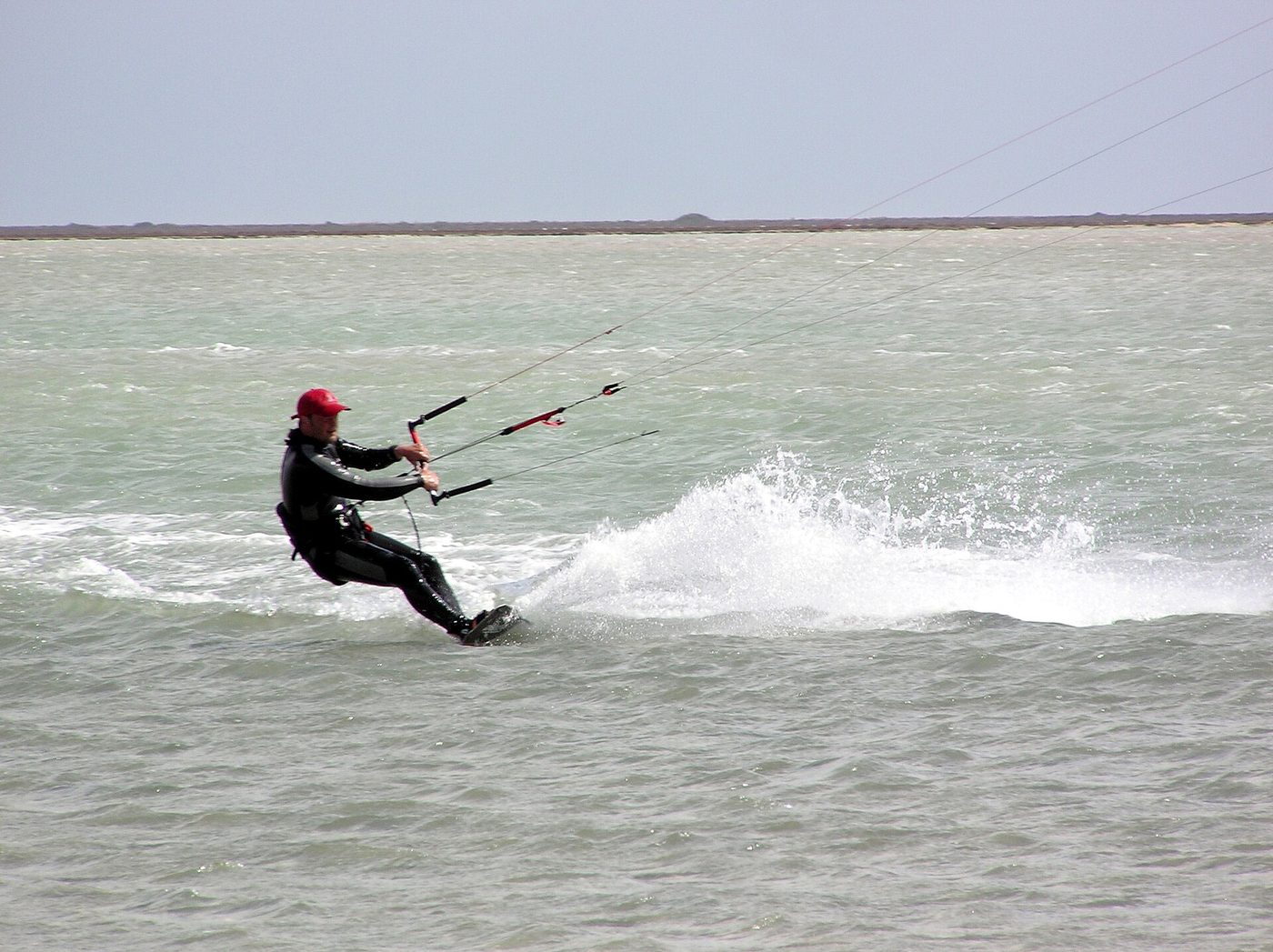
Kitesurfing Djerba’s El Kantara lagoon means roughly 40 km² of flat, waist-deep water with no waves and no current, wind averaging 12–20 knots from around March to November, and schools that will teach you from scratch. It is one of the best beginner kite spots in the Mediterranean and a serious freestyle venue too. The catches are a 20-minute transfer from the hotel zone, seaweed on light-wind days, and a cool sea outside high summer.
This guide belongs to our wider coverage of Tunisia’s beaches, and it’s worth saying up front that the lagoon is not a beach in the sunbathing sense — for that, see our roundup of Djerba’s beaches. The lagoon is a workspace, and a glorious one.
Djerba kitesurfing at a glance
| Factor | The reality |
|---|---|
| Main spot | The El Kantara lagoon, south-east Djerba — roughly 40 km² of flat water |
| Depth | Broadly 40–130 cm. You can stand almost everywhere |
| Water state | Flat to lightly choppy. No waves, no current in the lagoon |
| Wind season | Roughly March to November; shoulder months can still deliver |
| Typical strength | 12–20 knots, occasionally to 30 |
| Direction | Mostly north-east or south-east, thermally reinforced |
| Timing | In summer the wind often fills in during the afternoon and blows into the night |
| Best for | Absolute beginners, improvers, freestyle and wakestyle |
| Airport | Djerba–Zarzis (DJE), with direct UK charters in season |
| Main annoyances | Transfer to the spot, seaweed on light-wind days, chilly water Oct–May |
If you’re still deciding on the island generally, start with our main Djerba guide — the kiting is only one reason to come.
The spots: where you’ll actually ride
The El Kantara lagoon
This is the spot, and everything else is a footnote. It’s a huge shallow basin on the south-eastern side of the island, near the causeway that links Djerba to the mainland at El Kantara. Sandy bottom, no rocks in the main riding area, no swell getting in, and a depth that mostly sits somewhere between your knees and your ribs.
For a beginner, the consequences are enormous. You don’t swim after your board. You don’t get worked by shorebreak. When something goes wrong you plant your feet and sort it out. Instructors can wade out to you rather than shouting from a beach 200 metres away. We’ve watched people go from never having flown a kite to riding upwind inside a week here, which on a wave-and-current spot would be optimistic.
The flip side: the lagoon is so big and so empty that on quiet days you can lose all sense of scale. Kite with someone, tell the station where you’re going, and don’t ride off downwind on a whim.
Borj El Kastil — the old castle
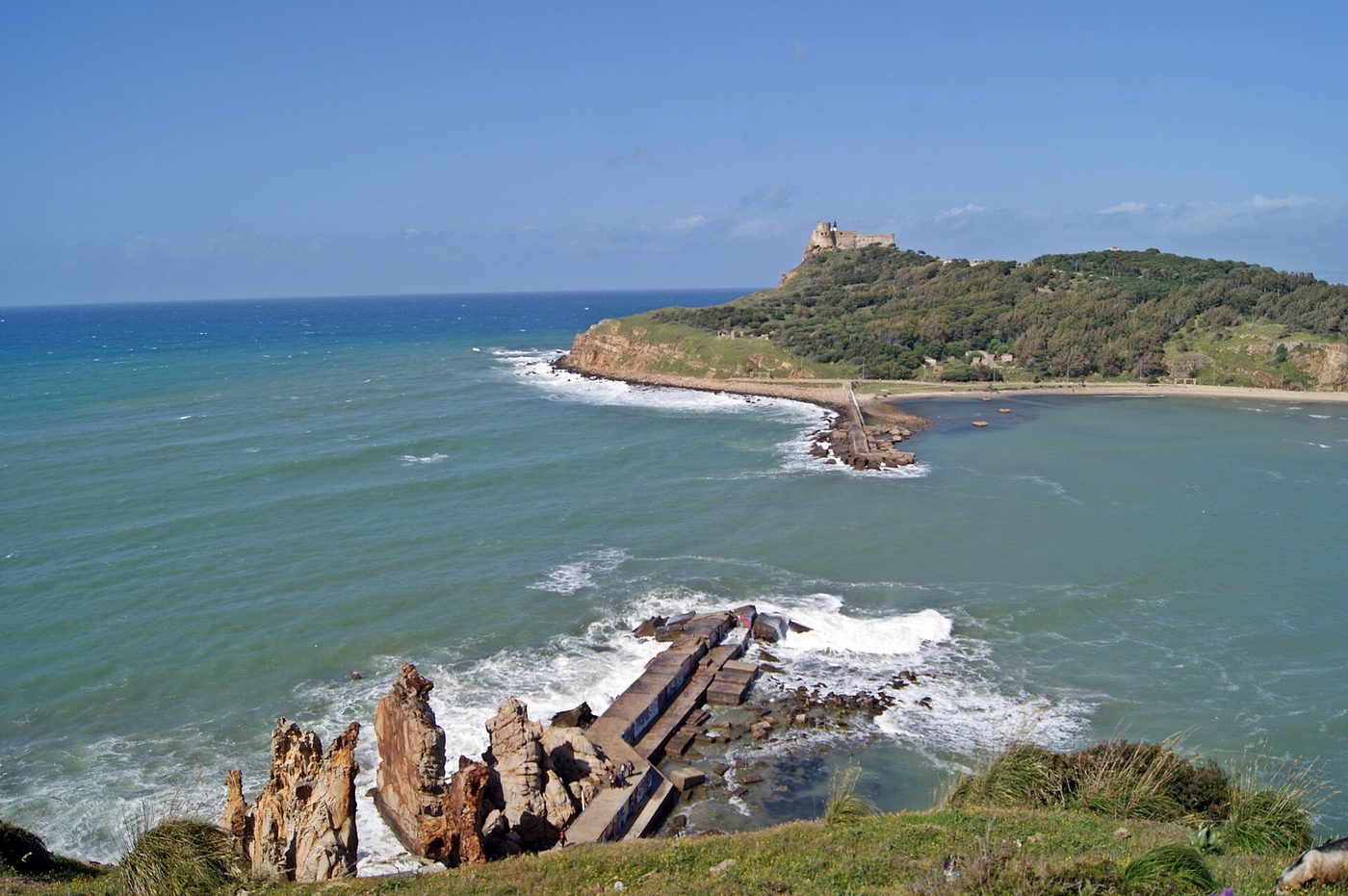
Across the lagoon from the main kite stations sits an old fort on the shore. In the right wind it’s about a twenty-minute ride, and the water behind it is mirror-flat — the sort of surface that makes freestylers and wakestyle riders very happy indeed. It’s the classic Djerba downwinder-and-back mission, and worth doing simply for the strangeness of arriving at a ruined castle by kite.
Do it with the school, not on a whim. It’s a long way from help if your kite goes down out there.
The open sea side
If the lagoon flat water gets too easy, you can ride out towards the open Mediterranean and find chop and small waves to play with. Conditions are more serious and the safety net disappears, so this is intermediate-and-up territory.
Sidi Jmour
Over on the island’s west coast, Sidi Jmour is the exposed, scenic option — a small white marabout above a rocky-and-sandy shore, famous locally for sunsets. It picks up different wind directions to the lagoon, which occasionally makes it the day’s better call. It is not a learner’s spot: deeper water, rougher entry, and no infrastructure. Go with someone who knows it.
Ras Rmel and the Flamingo Island side
The long sandspit north-west of Houmt Souk that everyone knows as Flamingo Island has beautiful shallow water and a genuine flamingo population in the cooler months. It is a lovely place to visit and a poor place to kite: access is by boat or a long walk, there’s no rescue cover, and the birds don’t need you overhead. Treat it as a rest-day trip, not a session.
Wind: what actually happens, month by month
Two things drive the wind here. There’s the general Mediterranean gradient, and there’s a thermal that builds as the land heats up and the lagoon doesn’t. The thermal is why summer sessions so often start after lunch and then keep going long after you’d expect them to stop — riders regularly report the wind still blowing at night.
| Period | Wind | What it means for you |
|---|---|---|
| March–May | Frequently the strongest and most consistent of the year | Great for progression. Cold water — wetsuit needed |
| June–August | Very high probability, usually thermal, often filling in during the afternoon | Almost daily riding, warm water, boardshorts. Peak crowds and heat |
| September–October | Reliable, with the year’s warmest sea in early September | Our pick. Wind, warm water, fewer people |
| November | Still workable; season winding down | Wetsuit, fewer schools fully staffed |
| December–February | Windy days happen, but nothing is guaranteed and it’s cold | Only if you’re relaxed about blank days |
Sources disagree on the very best window — some say March to May and October to December for pure wind statistics, others swear by the June to August thermal machine. Our honest read is that April–May and September–October are the sweet spot for combining wind with tolerable water. Averages run 12–20 knots with occasional days pushing 30, so pack bigger kites than you might for a Tarifa trip; a 12 m and a 9 m covers most people, with a 14 m worth having if you’re heavy.
One useful practical tip: the local wind station most schools and forecasters reference is the one near the lagoon, so check that rather than a generic “Djerba” forecast pinned to the airport, which sits on the other side of the island.
Water temperature and what to wear
People underestimate this one badly. Djerba is warm, but it isn’t the Red Sea, and a shallow lagoon loses heat fast in the shoulder months.
| Months | Rough sea temperature | What to wear |
|---|---|---|
| June–September | Mid-20s, peaking around 28°C in August | Boardshorts or a swimsuit. Rash vest for the sun |
| May and October | Low 20s | Shorty, or a 3/2 if you feel the cold |
| March–April, November | Upper teens | 3/2 full suit |
| December–February | Around 15–17°C at the coldest | Full winter suit; most people don’t bother |
The catch specific to a lagoon: you spend a lot of your first week standing in the water, not riding through it. Standing still in 19°C water for two hours is much colder than riding in it, so err warmer than the chart suggests if you’re a total beginner. Our Tunisia sea temperature guide has the month-by-month numbers for the whole coast.
Learning to kite on Djerba
How long it takes
Be realistic. A typical beginner course is 9–12 hours of tuition, usually spread across three or four days, and that gets most people to waterstarts and short rides — not to riding upwind confidently. Budget a full week if you want to leave genuinely independent, and accept that a windless day or two can eat into the plan. Djerba’s advantage is that the shallow water removes most of the wasted time other spots impose on you.
What lessons cost
Here we’re going to be careful, because kite school pricing changes constantly and several Djerba schools don’t publish current rates. What we can tell you honestly: Djerba sits at the cheaper end of the Mediterranean kite market, courses are usually quoted per hour for private tuition and per package for group beginner courses, and equipment, harness, impact vest and rescue-boat cover are normally included — but not always.
Get a written quote by email before you travel, and check five things: total hours, group size (two or three to an instructor is common and fine; five is not), whether gear is included, what happens on windless days, and what currency you’ll actually pay in. That last one matters because the Tunisian dinar is a closed currency — you can’t buy it in the UK before you fly and you can’t take it out — so you’ll be changing money on arrival or paying a euro price locally. Reckon on roughly 3.8–3.9 dinars to the pound in mid-2026, but check the rate on the day. Bring more cash than you think; card acceptance is patchy outside the hotels.
Choosing a school
A handful of operations are based on or beside the lagoon, ranging from long-standing local schools to German-run kite camps attached to a hotel. Things worth asking about:
- Certification. IKO or VDWS-qualified instructors are the standard to look for.
- Rescue boat. On a lagoon this size, a boat on the water is not a luxury.
- Gear age. Ask what brand and what year. Tired kites teach you bad habits.
- Language. Instruction here is often in French or German first. Confirm English tuition explicitly.
- Storage and shuttles. Most stations keep your kit at the spot and run a minibus from the hotels — check the schedule, because it dictates your day.
- Weather policy. What happens to unused hours if the wind doesn’t come? Get it in writing.
Gear hire and what to pack
Every school on the lagoon rents kit, so you don’t have to fly with your own — and given airline sports-baggage charges, most people on a one-week trip shouldn’t bother. If you do bring gear, remember the wind here rewards big kites.
Things we’d always pack for this spot specifically:
- Booties or reef shoes. You will walk on the bottom constantly. There are sea urchins on rocky patches, and shells.
- A shorty or 3/2 for anything outside July and August.
- Serious sun protection. Rash vest, zinc, and a leash for your sunglasses. Reflected glare off flat water is brutal.
- A spare pump and a repair kit if you’ve brought your own kites. Kite-specific spares are not easy to buy on the island.
- Cash in pounds or euros to change on arrival, plus small notes for the shuttle driver and lunch.
- Rehydration sachets and sunscreen from home. Both are dearer and less familiar locally.
The seaweed problem — the thing nobody tells you
This is Djerba’s one genuine quirk, and it’s worth understanding before you get caught out. On days with low water and light wind, seaweed floats up near the surface. If you drop your kite in it, the lines pick up weed within seconds and the kite becomes too heavy to relaunch. The local walk of shame involves carrying your bar back to the beach and then spending up to half an hour picking green stuff out of your lines while everyone else offers sympathy.
Two consolations. First, it’s a light-wind phenomenon — above about 20 knots more water gets pushed into the lagoon, the level rises, and the weed stays down. Second, the schools have adapted: several now walk beginners’ kites out past the weedy patches so learners can drop them without consequence. Ask about it when you book. If you’re told the problem doesn’t exist, you’re talking to a sales desk rather than an instructor.
Getting there and getting to the water
Djerba–Zarzis airport (DJE) is on the island itself, with seasonal direct charters from the UK and connections via Tunis. Transfer times from the airport to the hotel zone are short.
The awkward bit is the last leg. The main hotel strip runs along the island’s north-east coast around Sidi Mahrez and Midoun, and the lagoon is down in the south-east — a drive of roughly 20–25 minutes each way. Almost every kite operation runs a shuttle bus, and that bus dictates your day: you go when it goes and you come back when it comes back. Riders who’ve done it say the bus rides end up being half the social life of the trip, which is a nicer way of describing a compulsory commute than most.
Your options are to accept the shuttle, hire a car for freedom (see our guide to getting around Tunisia), or stay closer to the water. Taxis exist but insist on the meter or agree a price first.
Where to stay
Three approaches, and they suit very different people.
- A kite camp or kite hotel near the spot. Simplest option: gear, tuition, transfers and a bed in one booking, and everyone at breakfast is doing what you’re doing. Service is friendly rather than polished — one visiting journalist’s summary was that it suits people who don’t need high-class service, which is fair.
- A big all-inclusive in the hotel zone with the shuttle each morning. Better food, pool, family facilities, cheaper per night. You just have to live with the commute. See our guide to all-inclusive hotels in Tunisia.
- A guesthouse in Houmt Souk if the island matters as much as the kiting. More character, more restaurants, further from the lagoon.
Our full comparison is in where to stay in Djerba. If you’re bringing a non-kiting partner, the all-inclusive-plus-shuttle combination is usually the peace treaty that works.
Packages from the UK
You can book this three ways. Specialist kite-travel operators sell all-in weeks with accommodation, tuition and transfers — the least hassle, the highest headline price, and generally the best instructor-to-guest ratios. Alternatively, book a normal Tunisia package to Djerba and buy tuition locally, which is usually cheaper and gives you the option to walk away if a school disappoints. Or fly independently and arrange everything on arrival, which is cheapest and least certain.
Whichever route you take, check what your operator does about wind. A kite holiday that guarantees nothing on a flat week is a beach holiday with extra steps — which, in fairness, on Djerba is not the worst outcome.
Insurance, safety and health
This is the section people skip, and it’s the one that costs money.
Your UK GHIC is not valid in Tunisia. Private clinics on the island are reasonable, public facilities are stretched, and you will typically be asked to pay up front. Comprehensive travel insurance with medical cover and repatriation is essential rather than advisable.
More specifically: most standard travel policies exclude kitesurfing, or cover it only under a hazardous-activities add-on, and some exclude it entirely if you’re riding unsupervised rather than under instruction. Read the policy wording, not the marketing page, and if the words “kitesurfing” or “kiteboarding” don’t appear, ring them. A shoulder dislocation and an air ambulance is not the moment to discover the small print.
On the water: wear a helmet and impact vest while you’re learning, use a leash you can actually release under load, and check your lines every session. The lagoon is forgiving, but shallow water means impacts with the bottom, and urchins are a real if minor hazard on the rockier edges. Jellyfish turn up occasionally in late summer, as they do all over the Mediterranean — ask at the station rather than guessing.
Djerba is one of Tunisia’s calmest and most easy-going destinations; our date-stamped assessment is in is Djerba safe, and the country-wide picture is in is Tunisia safe.
What to do on the windless days
There will be some. Happily, Djerba is a genuinely interesting island rather than a strip of hotels.
- Houmt Souk — the island’s main town, with a proper market, jewellers’ streets, old fondouks and good restaurants. Start with our guide to Houmt Souk.
- Djerbahood — the village of Erriadh, where local and international artists have painted hundreds of works across the walls. Quiet, photogenic and free.
- The El Ghriba synagogue — one of the oldest in North Africa and a reminder of how long Djerba’s communities have lived side by side.
- Diving and snorkelling — modest compared with the north coast, but pleasant. See diving in Tunisia, and note that the country’s serious dive coast is up at Tabarka.
- Everything else on the water — SUP on the lagoon on flat mornings, plus the usual resort menu covered in our watersports in Tunisia guide.
The honest downsides
- The commute. Twenty to twenty-five minutes each way, on someone else’s timetable, most days of your holiday.
- Seaweed. Light-wind days can be genuinely frustrating for beginners.
- Cold water in the shoulder months, made worse by how much time you spend standing still.
- Nightlife is thin. Alcohol is served in licensed hotels and beach bars but not sold everywhere, public drinking isn’t done, and there is no party scene. Evenings are tea, shisha and a good dinner.
- Service is warm rather than slick. Manage expectations and you’ll be fine.
- Wind isn’t a certainty. High probability is not a guarantee. Build in a plan B.
- The lagoon is not a beach. If half your party wants sunbeds and sea swimming, they’ll want to be up on the north coast, not here.
Kitesurfing in Djerba: your questions answered
Is Djerba good for beginner kitesurfers?
It’s one of the best in the Mediterranean. The El Kantara lagoon gives you roughly 40 km² of flat water that’s mostly between 40 and 130 cm deep, with no waves and no current, so you can stand up almost anywhere. That removes the swimming, the shorebreak and most of the fear from learning.
When is the best time to kitesurf in Djerba?
Broadly March to November. Spring often brings the most consistent wind, the summer thermal delivers wind almost daily from June to August, and September to October combines reliable breeze with the warmest sea of the year. We’d pick late September if we could only go once.
How windy is Djerba?
Averages sit around 12–20 knots, with occasional days reaching 30. The wind is mostly north-east or south-east and thermally reinforced, which in summer means it often fills in during the afternoon and can keep blowing well into the night. Pack larger kites than you would for a stronger-wind destination.
How much do kitesurfing lessons cost in Djerba?
Prices move constantly and several schools don’t publish current rates, so we won’t quote a figure we can’t stand behind. Djerba is at the cheaper end of the Mediterranean market. Ask for a written quote covering total hours, group size, gear, rescue cover and the windless-day policy before you book.
How long does it take to learn to kitesurf?
A standard beginner course runs 9–12 hours over three or four days and typically gets you to waterstarts and short rides. Riding upwind confidently usually takes longer. Allow a full week on the island so a couple of light days don’t derail your progress.
Do I need to bring my own kit?
No. Every school on the lagoon rents kites, boards, harnesses and safety gear, and for a one-week trip that’s usually cheaper than airline sports-baggage fees. Do bring booties, a wetsuit for the shoulder months, and a repair kit if you’re flying with your own kites.
What’s the seaweed in the Djerba lagoon?
On days with low water and light wind, seaweed floats near the surface and tangles in your lines if you drop the kite, making it too heavy to relaunch. Stronger wind pushes more water into the lagoon and keeps the weed down. Good schools now walk beginners’ kites out past the affected patches.
How far is the lagoon from the Djerba hotels?
Roughly 20–25 minutes by road from the main hotel strip around Sidi Mahrez and Midoun. Almost all kite operations run a shuttle bus, so your riding day is shaped by its timetable. Hiring a car buys you flexibility if that matters to you.
Is the water cold in Djerba?
In high summer, no — the sea peaks around 28°C in August and boardshorts are plenty from June to September. From October to May you’ll want a shorty or a 3/2, and in February it can drop to around 15°C. Standing in shallow water while learning makes you colder than riding does.
Can non-kiters enjoy a Djerba kite holiday?
Yes, provided they base themselves in the hotel zone rather than at the lagoon. The island has beaches, Houmt Souk’s market, the Djerbahood street-art village, the El Ghriba synagogue and easy excursions. The lagoon itself is not a spot for sunbathing or swimming.
Does my travel insurance cover kitesurfing?
Often not. Many UK policies exclude kitesurfing or place it behind a hazardous-activities add-on, and some only cover it under instruction. Check the wording before you fly. Your GHIC is not valid in Tunisia, so a policy with medical cover and repatriation is essential.
Are there other kite spots on Djerba?
The lagoon is the main event. Advanced riders cross to the flat water behind the old fort at Borj El Kastil, or head out to the open sea for chop and small waves. Sidi Jmour on the west coast catches different directions but is exposed and has no facilities — not a place to learn.
Is Djerba better than Egypt or Greece for kitesurfing?
For pure beginner-friendliness the lagoon is right up there with anywhere in the Med, and it’s cheaper than Greece and quieter than the Egyptian resorts. Egypt generally wins on wind statistics and warm water, Greece on infrastructure. Djerba wins on flat, standable water and value.
Written by the Tunisia Tourism Guide team — an independent UK-focused guide to travelling in Tunisia. We don’t sell tours or take hotel commissions. Prices and advice were checked at publication; always confirm current details before you book.
Photo credits
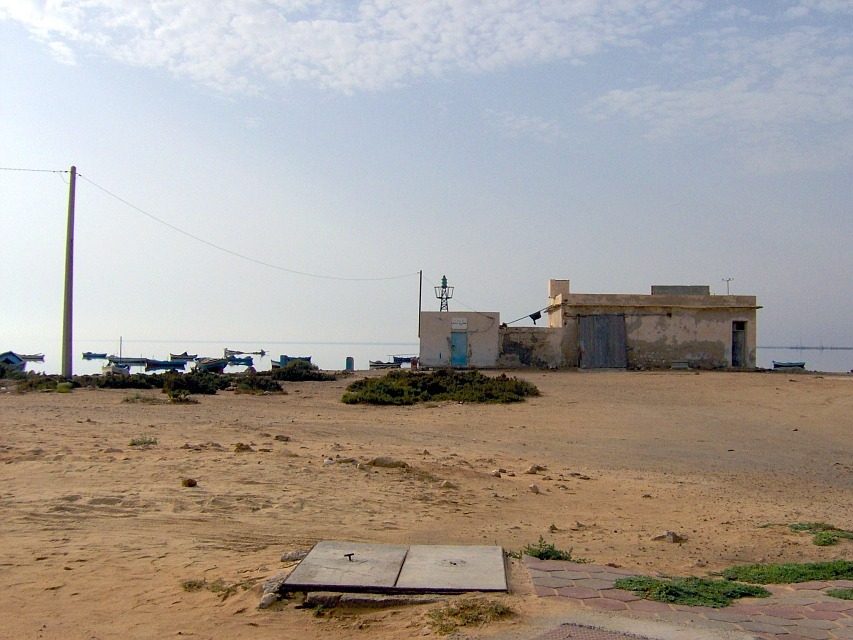
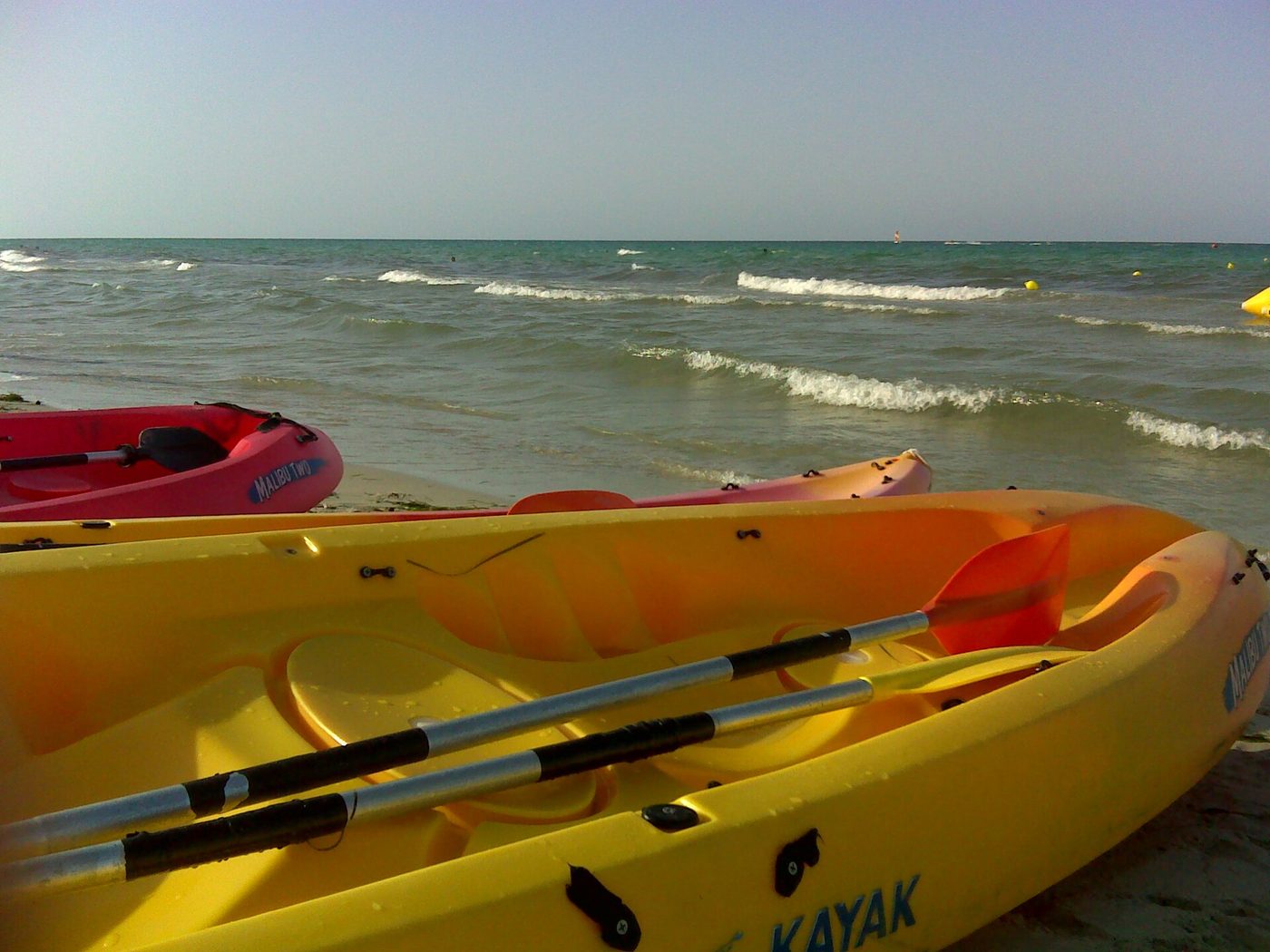
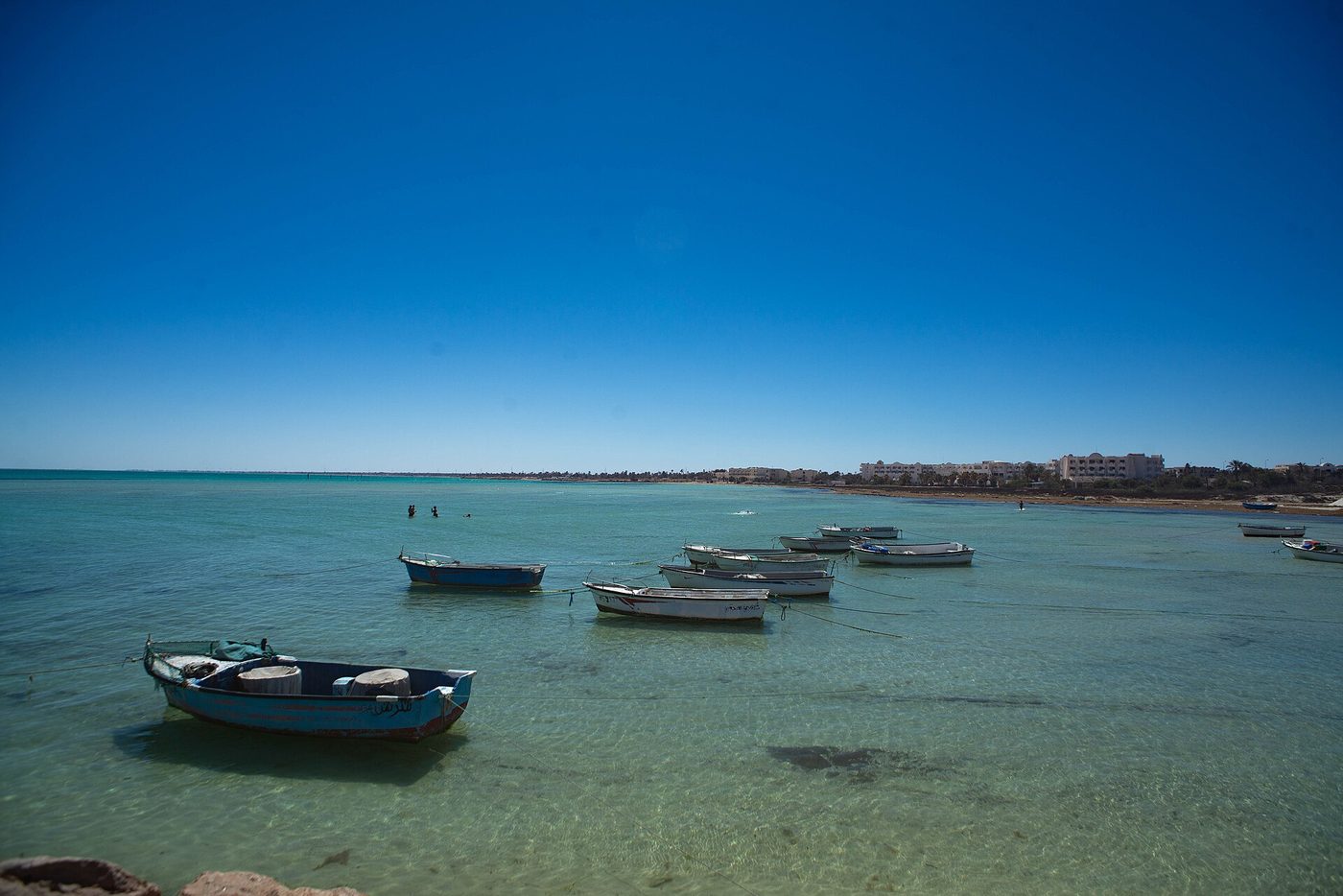
All images via Wikimedia Commons, used with thanks: A kitesurfer riding the flat © Henning Leweke from Kiel, Germany (CC BY-SA 2.0); The shallow shore at El Kantara © Stegop (CC BY-SA 3.0); Kayaks and watersports kit drawn up on a Djerba beach © Michel Mougey (CC BY 3.0); The sandy beach at Aghir on Djerba’s south-east coast © YayaKaufen (CC BY-SA 4.0).