By the Tunisia Tourism Guide team · Last updated 1 September 2026 · We don’t sell tours or take hotel commissions — this is independent advice, written to be useful.
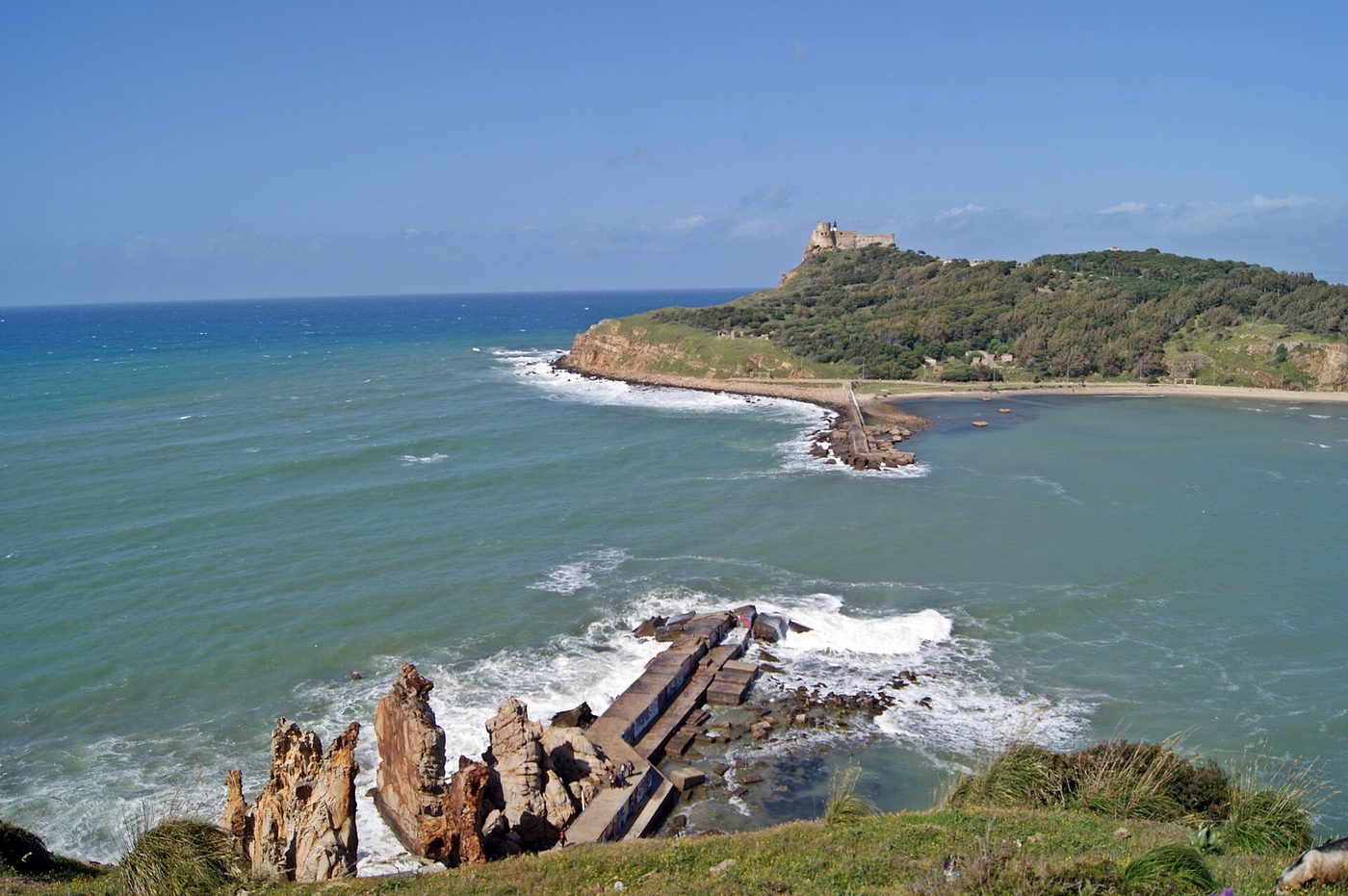
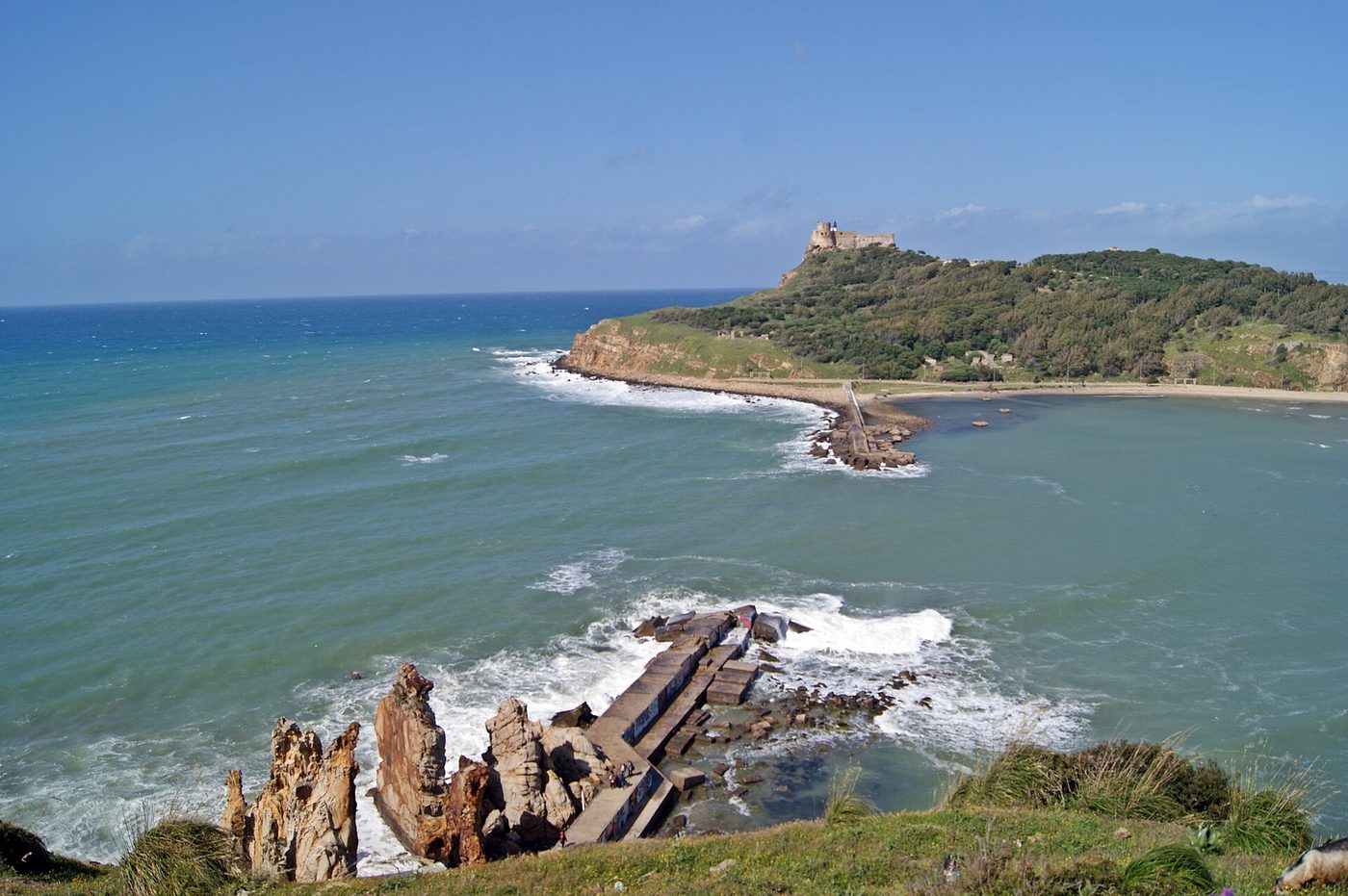
The first time we drove north-west out of Tunis towards the coast, we spent about an hour waiting for Tunisia to look like Tunisia. It never did. The motorway peels away past Béja into wheat country, the wheat gives way to hills, the hills fill up with oak and pine, and by the time you drop down the last few switchbacks to the sea you are looking at something that could pass for Corsica — a green headland, a Genoese fort on a rock, and a row of jagged sandstone pillars standing in the water like broken teeth.
Tabarka Tunisia’s far north-west coral port is the greenest, rainiest and least resort-like corner of the country, and it is worth the three-hour drive from Tunis if you want forest, diving and empty beaches rather than a poolside week. You get Les Aiguilles, a 16th-century fort built on the red-coral trade, Tunisia’s best scuba diving, and a cork-oak mountain town half an hour inland. What you don’t get is nightlife, reliable sun, or much of anything at all outside the summer season.
This guide sits inside our wider roundup of Tunisia’s beaches, and Tabarka is the entry that most surprises people — a coastline of wild coves and pine-backed sand that looks nothing like Hammamet or Sousse. If you have already read our guide to the beaches of northern Tunisia, this is the far western end of that same shoreline.
Tabarka Tunisia at a glance
The short version, before we get into the detail.
| What you need to know | The honest answer |
|---|---|
| Where it is | Far north-west coast, Jendouba Governorate, where the Kroumirie hills meet the Mediterranean |
| From Tunis | Roughly 175–185 km, about 3 hours by car via Béja |
| From Bizerte | Around 130 km, about 2 hours on the coast road |
| Best for | Diving, snorkelling, forest walks, photography, quiet beaches, jazz in July |
| Not for | Nightlife, guaranteed sunshine, easy public transport, big-resort service |
| Peak season | June to September; the town is very quiet from November to March |
| Rainfall | About 1,010 mm a year — the wettest town in Tunisia |
| Sea temperature | Around 15°C in February–March, up to about 26°C in August |
| Getting around | Car hire is close to essential; there is no useful local transport |
Bottom line: Tabarka is a two- or three-night stop on a longer Tunisia itinerary rather than a week on a sunbed. Treat it that way and it’s one of the best things in the country.
Why the north-west feels like a different country
Most British visitors arrive in Tunisia expecting sand, either the beach kind or the Sahara kind. The north-west quietly demolishes that.
The forest comes all the way down to the sea
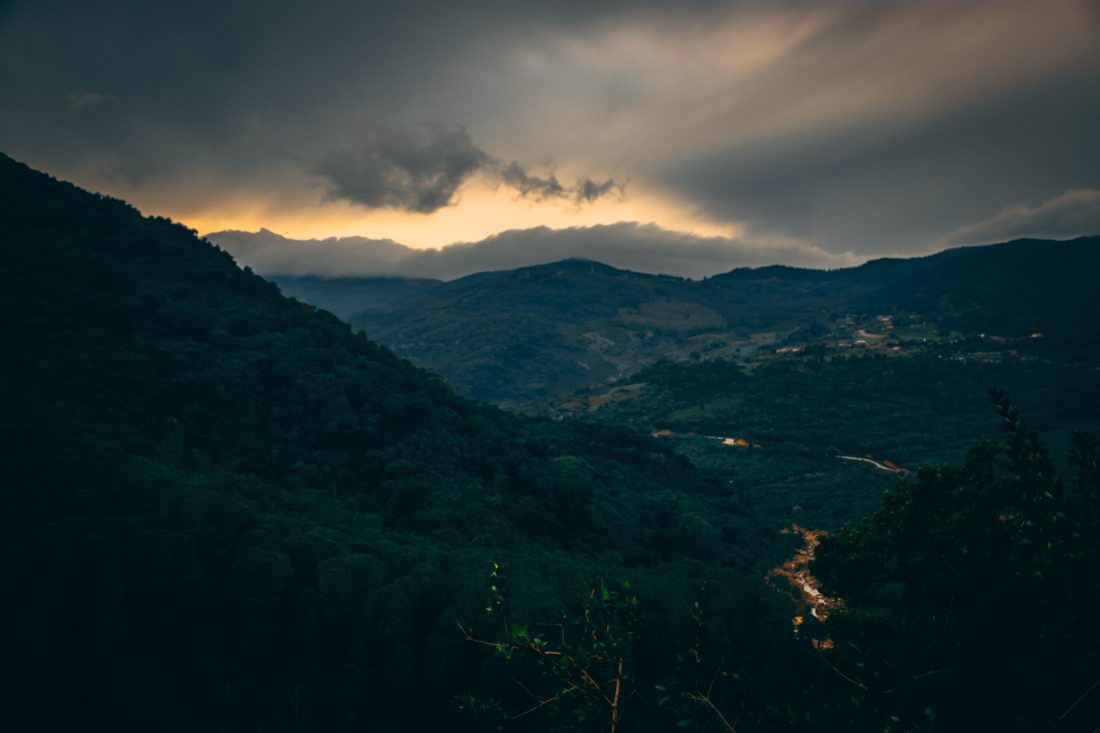
Tabarka sits at the foot of the Kroumirie (or Khroumirie) mountains, a range that catches the wet weather coming in off the Mediterranean and turns it into the densest woodland in Tunisia. Cork oak makes up the great majority of the cover, with zeen oak and pine filling in the rest. The cork trees are a working crop as much as scenery — the bark is stripped on a long cycle, which leaves the lower trunks a raw, startling orange for years afterwards.
The practical effect is that you can be swimming at eleven and walking in deep shade at noon. We know of nowhere else in North Africa where the gap between beach and forest is measured in minutes.
The coral that built the town
The other thing that shaped Tabarka is red coral — Corallium rubrum, the deep-water precious coral that Mediterranean jewellers have prized for centuries. From the 1540s the Genoese banking family the Lomellini held the offshore islet and its fortress, with the blessing of the King of Sicily, for exactly one reason: the coral beds offshore. The whole stretch of shoreline is still called the Coral Coast, and the town’s older jewellers still trade on it.
Coral harvesting is now tightly restricted, so don’t expect to buy a branch of it off a beach stall with a clear conscience — and be aware that taking marine products home can run into customs rules at both ends. Our Tunisia travel tips cover the general souvenir pitfalls.
Les Aiguilles: Tabarka’s needles
If Tabarka has one image, this is it. Les Aiguilles — “the Needles” — are a line of sandstone pinnacles rising straight out of the shallows beside the old harbour. They are Oligocene sandstone, iron-rich, which is why they photograph a warm rust-red at the end of the day, and the tallest of them stand something in the order of 20–25 metres. Erosion did the sculpting; the sea keeps doing it.
The good news for anyone who dislikes an organised excursion: you can simply walk to them. A seaside promenade runs from the town along to the formation, and the stroll takes a few unhurried minutes. Go in the last hour before sunset, when the rock warms up and the Genoese fort catches the light behind them. It is, without much competition, one of the most beautiful places in Tunisia, and it costs nothing.
For a different angle, small boats run out of the harbour in season and cruise along the base of the pinnacles. Snorkellers do well in the clear shallow water around the rocks — bring your own mask, because hire kit on the beach is hit and miss.
The Genoese fort
The fort sits on a wooded rock above the harbour entrance, and you genuinely cannot miss it from anywhere in town. It went up in the 16th century under the Genoese, and for four centuries it was the point of the whole settlement: control the rock, control the coral.
It was closed to visitors for around thirty years and reopened on Independence Day in 2016. When we last checked, opening was daily from mid-morning to late afternoon (reported as 10.00–17.30) with free entry — but this is exactly the sort of detail that changes without notice in Tunisia, so ask at your hotel on the morning you plan to go. Allow an hour. The walls give you the best panorama of the town, the beach and the Needles all at once.
Two practical notes. The approach is uphill on uneven ground, so it isn’t a good bet for anyone with mobility problems. And there is very little shade at the top — in July and August, go early or go late.
Tabarka’s beaches, honestly assessed
These are not manicured resort beaches. They are wide, sandy, backed by pine and, for much of the year, close to empty. In August they fill up with Tunisian families, which is part of the charm.
Plage El Kebir (Barkoukech)
The long white-sand beach east of town, and where most of the hotels in the zone touristique sit. This is your default if you want to walk out of a hotel and onto sand. It’s a proper stretch — long enough that even a busy August day doesn’t feel crowded.
Chatt El Bejia
A smaller beach right by the town centre, next to the old marina, with cafés along it. More local than touristy, and better for an afternoon coffee and a swim than for a full day of sunbathing.
The wild coves
The best swimming on this coast is in the rocky coves scattered east towards Bizerte, most of which need a car and a short walk down a hillside. Sidi Mechrig is the one people name — cliffs, clear water, and often nobody else. Take everything you need with you, because there is nothing there. If you like this kind of coastline, our roundup of Tunisia’s quieter hidden gems has more in the same vein.
Diving the Coral Coast
This is the real reason to come. Tabarka is comfortably Tunisia’s best scuba destination, and it isn’t close. The cooler, Atlantic-influenced water off the north coast supports a completely different ecosystem to the warm shallows down south, and the rocky seabed is riddled with caves, arches and swim-throughs.
There are more than thirty documented sites along this stretch. A few that keep coming up:
| Site | What it is | Level |
|---|---|---|
| Pigeon Grotto | Colourful rocky bottom, clouds of small fish, shallow and forgiving | Beginner |
| The Tunnels | A reef laced with around twenty swim-throughs over roughly 500 metres | Intermediate |
| Le Sec de Cernie | Walls with lobster in the cracks | Intermediate |
| Cap Galena | Deep site dropping to around 40 metres | Advanced |
| La Galite | Protected archipelago 50 km offshore — a full-day boat trip | All, seasonal |
What you’ll actually see
Groupers, moray eels, octopus, barracuda, nudibranchs and dense schools of smaller fish. Red coral grows deep here — you are unlikely to see much of it on a recreational dive, and that’s as it should be. Visibility is at its best from May to October and can reach 25–30 metres on a good day.
Costs, seasons and paperwork
The clubs at the marina run both CMAS and PADI-style courses and take everyone from first-timers to instructor candidates. Published rates we’ve seen put a single dive at roughly 50–70 TND and a two-tank boat day at around 90–120 TND (2026 — check current prices, and confirm what’s included). At roughly 3.8–3.9 dinars to the pound in mid-2026, that’s cheap by Mediterranean standards, but do the sums yourself with the rate on the day.
Season is broadly March to November, with water running from a bracing 15°C in late winter to the mid-20s in late summer. July and August book out — reserve ahead, especially if the jazz festival is on. Bring your certification card and logbook; bring your own computer and mask if you have them. And check that your travel insurance actually covers scuba to the depth you intend to dive: many standard UK policies stop at 30 metres or exclude diving altogether unless you add it. Your GHIC is not valid in Tunisia, so proper cover is not optional. There’s more on the country’s dive scene in our guide to diving in Tunisia.
La Galite
Fifty kilometres offshore sits a cluster of six volcanic islands, protected, and about as far from mass tourism as Tunisia gets. Dolphins, turtles, the giant fan mussel Pinna nobilis, red coral and a remnant monk seal population. Boat access is limited and weather-dependent, and trips run in the summer months only. If a day out there is your ambition, contact a Tabarka club well before you travel rather than turning up and hoping.
The Tabarka Jazz Festival
Founded in 1973, the Tabarka Jazz Festival is one of the oldest jazz festivals in Africa and the Arab world, and for a few nights each July it turns a sleepy fishing town into somewhere with a queue at the bar.
Be careful with what you read about it, though, because the festival has had a stop-start history. It went through a long interruption and returned in July 2026 with a 20th edition running 2–9 July, staged at the Théâtre de la Mer with a “Street Jazz” strand around the town. That is a genuinely encouraging sign — but we would not book flights for a future edition until dates are officially announced. Check before you commit, and if the festival is running, book a bed months out. Tabarka’s hotel stock is small and it fills.
Aïn Draham and the Kroumirie forest
Twenty-five kilometres inland and 800-odd metres up, Aïn Draham is the other half of this trip. It is a small mountain town of around 8,000 people, built up a hillside in dense cork oak, with steep-pitched roofs the French gave it for a reason that will strike most visitors to Tunisia as absurd: to shed snow.
It does snow here, most winters, and Tunisians drive up from Tunis specifically to see it. This is not a ski resort and the snow rarely lies deep or long, but the sight of minarets and cork oaks under white is one of the strangest things in North Africa. In summer the appeal inverts — while the coast bakes, Aïn Draham stays cool and shaded, which is why it has been a hill retreat since colonial days, when officials came up to walk and to hunt wild boar.
The forest is laced with tracks. Marked trails exist but the signage is inconsistent, so the better walks are the ones a local guide takes you on — ask at your guesthouse. Wildlife is genuinely rich: wild boar in numbers, golden jackals, mongoose, genets, raptors, and a remnant population of Barbary deer, the only deer native to Africa. Birding is excellent in spring and autumn.
Nearby Beni M’tir, a forest village by a dam of the same name, has built a small ecotourism scene around family-run guesthouses, home-grown food and eco-camping. It’s the most rewarding place to sleep in the region if you’d rather not be in a hotel.
A word on geography, because it comes up: Tabarka and Aïn Draham are ordinary Tunisian tourist towns with hotels, police and visitors, and they are not the remote border and mountain areas that the Foreign Office singles out elsewhere in the country. FCDO advice for Tunisia was last updated on 24 July 2026 and was still current when we checked for this guide — read the live page before you travel, and see our date-stamped summary of whether Tunisia is safe.
Bulla Regia and the Roman day trips
The north-west has Roman sites that most package tourists never see, and the pick of them is Bulla Regia, roughly an hour inland from Tabarka and about 7 km north of Jendouba.
Bulla Regia is unlike anything else in the Roman world we’ve walked around. The wealthy residents dug their villas downwards, building whole subterranean floors with proper courtyards and columns to escape the summer heat — so you walk down a staircase and find yourself standing in a cool, intact Roman room with the mosaic still on the floor. Three underground houses are usually open: the House of Venus with its restored Venus mosaic, the House of the Hunt, and the New House of the Hunt with its lion, hare and boar. Entry was reported at around 8 TND, cash only (2026 — check current). Ninety minutes is enough for most of it.
Nearby Chemtou (ancient Simitthus) was the largest marble quarry in Roman North Africa and has a good site museum. Dougga, the finest Roman town in the country, is a longer haul but doable as a full day. All three sit in our wider guide to Roman ruins in Tunisia.
Getting to Tabarka
This is where honesty matters most, because the journey is the single biggest reason people skip Tabarka.
| From | Distance | Time | Notes |
|---|---|---|---|
| Tunis | ~175–185 km | About 3 hours | Motorway to Béja, then regional roads. Generally in good repair |
| Bizerte | ~130 km | About 2 hours | Scenic northern coast road |
| Hammamet | ~250 km | 3.5 hours or more | Long. Break the journey |
| Aïn Draham | 25 km | 30–40 minutes | Switchbacks up through the forest |
| Bulla Regia | ~60–65 km | About an hour | Easy half-day |
Tabarka has its own airport, Tabarka–Aïn Draham (TBJ), about 10–11 km from town. Do not build a trip around it. It has had no meaningful scheduled passenger service for years and functions mainly for occasional charters; check live schedules rather than trusting a booking site’s map. In practice, everyone flies into Tunis–Carthage and drives.
Car hire is the sensible answer. Louages (shared minibuses) do run from Tunis and are cheap, but they leave when full, drop you in town without wheels, and leave you stuck for the forest and the coves — which are the whole point. Our guide to getting around Tunisia covers hire, louages and the taxi etiquette. One local rule worth repeating: finish mountain drives before dark.
Where to stay
Tabarka’s accommodation splits three ways, and each suits a different trip.
- The zone touristique hotels east of town, on or near Plage El Kebir. Several combine a beach hotel with thalassotherapy and a dive centre, which is a neat package if diving is your priority. Standards are dated rather than luxurious — set expectations accordingly.
- Small hotels and guesthouses in town, walkable to the harbour, the promenade and the fish restaurants. The best choice if you want to eat out and wander rather than sit by a pool.
- The mountains: the old hunting hotel above Aïn Draham, plus village guesthouses around Beni M’tir. Cooler, greener, and a completely different holiday.
Our national overview of where to stay in Tunisia puts Tabarka in context against the big resort areas. And if you want the classic beach-hotel week instead, that’s a different trip: start with Hammamet or Sousse.
When to go
Tabarka’s weather is not Tunisia’s weather. It is the wettest town in the country, with something in the region of 1,010 mm of rain a year — more than London gets. That’s the price of the forest.
| Season | Air (typical highs) | Sea | Verdict |
|---|---|---|---|
| Dec–Feb | 16–17°C | 15–17°C | Wettest months (Dec around 160 mm over 14 days). Green, atmospheric, dead quiet |
| Mar–Apr | 19–21°C | 15–16°C | Best walking. Sea still too cold for most |
| May | 25°C | 18°C | Lovely on land, brisk in the water |
| Jun–Aug | 29–32°C | 21–26°C | Peak. Almost no rain in July. Everything open |
| Sep–Oct | 26–29°C | 22–25°C | Our pick: warm sea, thinner crowds, autumn rain starting |
| Nov | 21°C | 19–20°C | The shutters start coming down |
Our own preference is mid-September to mid-October — the sea is at its warmest of the year in early September and stays swimmable well into October, the light is better for photographs, and you get the coves to yourself. For a country-wide view see our best time to visit Tunisia guide, and Tunisia in October if that’s the month you’re eyeing.
The honest downsides
We’d rather you knew this before you booked than after.
- Out of season it is genuinely dead. From November to March a good share of the hotels, restaurants and dive centres either close or run on skeleton hours. Charming if you want silence; grim if you wanted a holiday.
- There is no nightlife to speak of. A few hotel bars, some harbour-front restaurants, and that’s your lot. If evenings out matter, this is the wrong town.
- The drive is long and there’s no way round it. Three hours each way from Tunis, on roads that get twisty at the end. Two nights minimum, or it isn’t worth it.
- It rains. A lot. Nearly 100 rain days a year. Autumn and winter storms can shut the boats down entirely.
- Public transport is not a plan. Without a car you will see the town and very little else.
- Hotel standards are dated. A four-star here is not a four-star in Yasmine Hammamet. The setting is the luxury, not the fittings.
- Bring cash. Card acceptance is patchier than on the east coast, and the dinar is a closed currency — you can’t buy it in the UK before you fly and you can’t take it home, so change on arrival and keep the receipts.
None of that stops us recommending it. It just means Tabarka is a destination you choose deliberately, the way you’d choose the west of Ireland over the Costa del Sol.
Tabarka questions, answered
Is Tabarka worth visiting?
Yes, if you want forest, diving and quiet coastline rather than a resort week. Les Aiguilles, the Genoese fort, Tunisia’s best scuba diving and the cork-oak mountains at Aïn Draham make a genuinely different trip. Give it two or three nights and hire a car, or don’t bother.
How far is Tabarka from Tunis?
Around 175–185 km, which takes about three hours by car via Béja. The first half is tolled motorway; the second half is regional road through the hills, generally well maintained but slower. From Bizerte it’s roughly two hours along the north coast.
Can you fly to Tabarka from the UK?
Not directly, and in practice not at all. Tabarka–Aïn Draham airport (TBJ) exists about 10 km from town but has had no meaningful scheduled service for years. Fly into Tunis–Carthage, pick up a hire car and drive. Check any airline’s live schedule before believing a route map.
Is Tabarka good for diving?
It’s the best in Tunisia. More than thirty sites, cool Atlantic-influenced water, caves and swim-throughs, wrecks, and visibility that reaches 25–30 metres from May to October. Clubs at the marina teach beginners through to instructor level. Book ahead in July and August.
What are Les Aiguilles in Tabarka?
A row of iron-rich sandstone pinnacles rising out of the sea beside the old harbour, sculpted by erosion and reaching roughly 20–25 metres. You reach them on foot along a seaside promenade — no ticket, no tour needed. Go at sunset, when they turn rust-red.
Is the Genoese fort open to visitors?
Yes. It reopened on Independence Day in 2016 after around thirty years closed. Reported opening was daily from about 10.00 to 17.30 with free entry, but hours change without notice in Tunisia — ask locally on the day. Allow an hour, and expect an uphill walk on uneven ground.
When is the Tabarka Jazz Festival?
Traditionally July. The festival was founded in 1973, went through a long interruption, and returned in July 2026 with a 20th edition running 2–9 July at the Théâtre de la Mer. Future editions aren’t guaranteed to the same dates, so confirm the official programme before booking travel.
Does it snow in Tunisia?
In a few places, yes. Aïn Draham, 25 km inland from Tabarka at around 800 metres, sees snow most winters and Tunisians drive up specifically to see it. Tabarka itself very rarely does. It isn’t a ski destination — go for the forest and the atmosphere, and pack for real cold.
How many days do you need in Tabarka?
Two nights is the minimum that justifies the drive; three lets you dive, walk the Kroumirie and fit in Bulla Regia. A week works only if you’re diving daily or you genuinely want to do very little. Most people pair it with Bizerte or Tunis.
Is Tabarka better than Hammamet or Djerba?
It’s a different holiday, not a better one. Hammamet and Djerba have the hotels, the warm shallow sea and the direct flights; Tabarka has scenery, diving and solitude. If you want all-inclusive convenience, go east or south. If you’d rather hire a car and explore, come here.
Can you visit Bulla Regia from Tabarka?
Easily — it’s about an hour’s drive inland, near Jendouba. The draw is the underground Roman villas, where whole floors were built below ground to beat the heat, with mosaics still in place. Entry was reported at around 8 TND, cash only (2026 — check current). Ninety minutes covers it.
What should I pack for Tabarka?
Walking shoes with grip for the fort and the forest, a waterproof at any time of year, a jumper for the evenings even in summer if you’re heading up to Aïn Draham, your own snorkel and mask, and more cash than you’d carry on the east coast. Insect repellent for the woods is worth the space.
Is Tabarka good for kitesurfing or watersports?
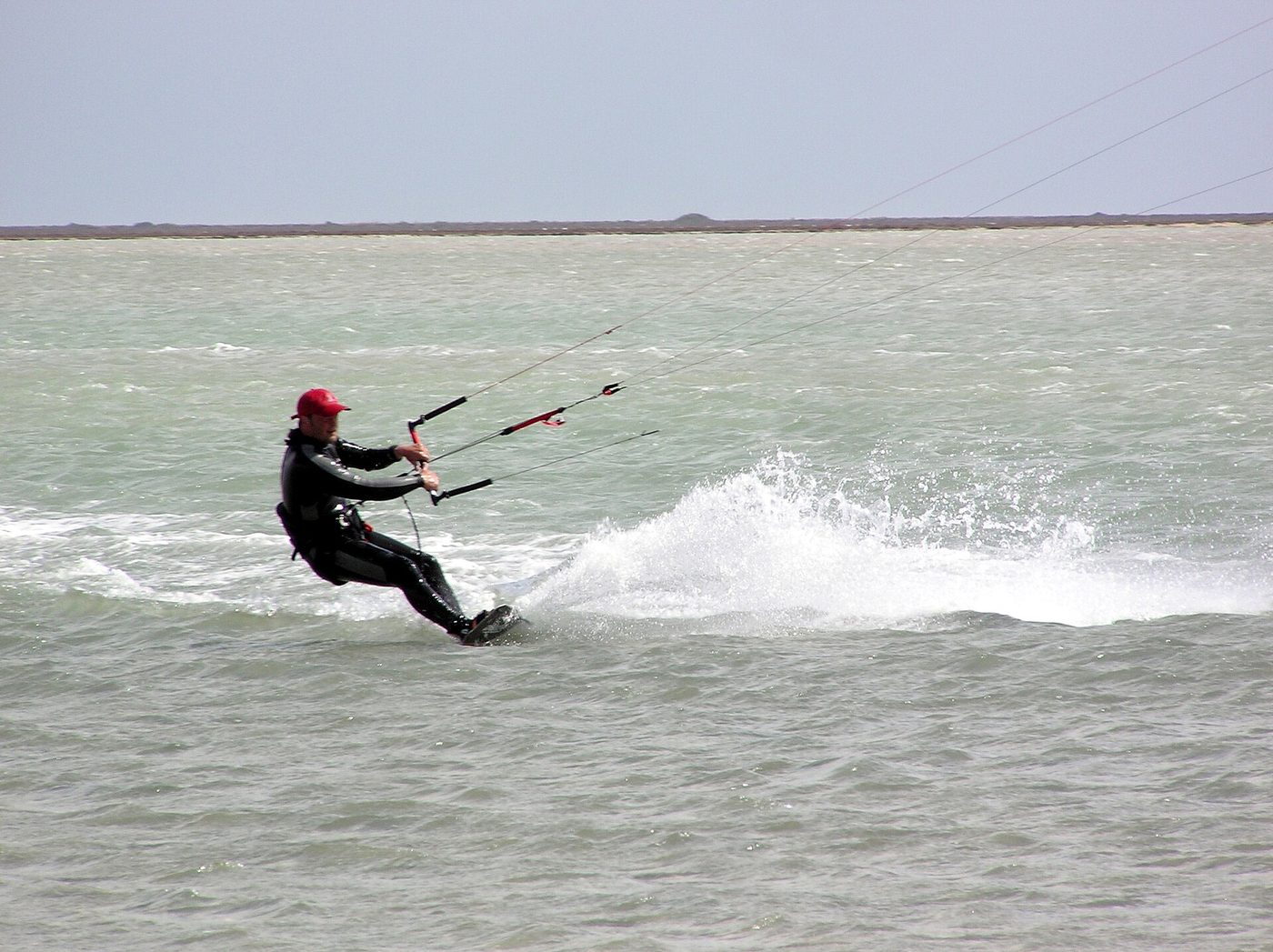
Not really — the north coast is exposed and swelly rather than flat, and it isn’t a learner’s spot. For wind sports, head south: the vast shallow lagoon at El Kantara makes kitesurfing in Djerba one of the best beginner venues in the Mediterranean, and our guide to watersports in Tunisia covers the rest.
Written by the Tunisia Tourism Guide team — an independent UK-focused guide to travelling in Tunisia. We don’t sell tours or take hotel commissions. Prices and advice were checked at publication; always confirm current details before you book.
Photo credits
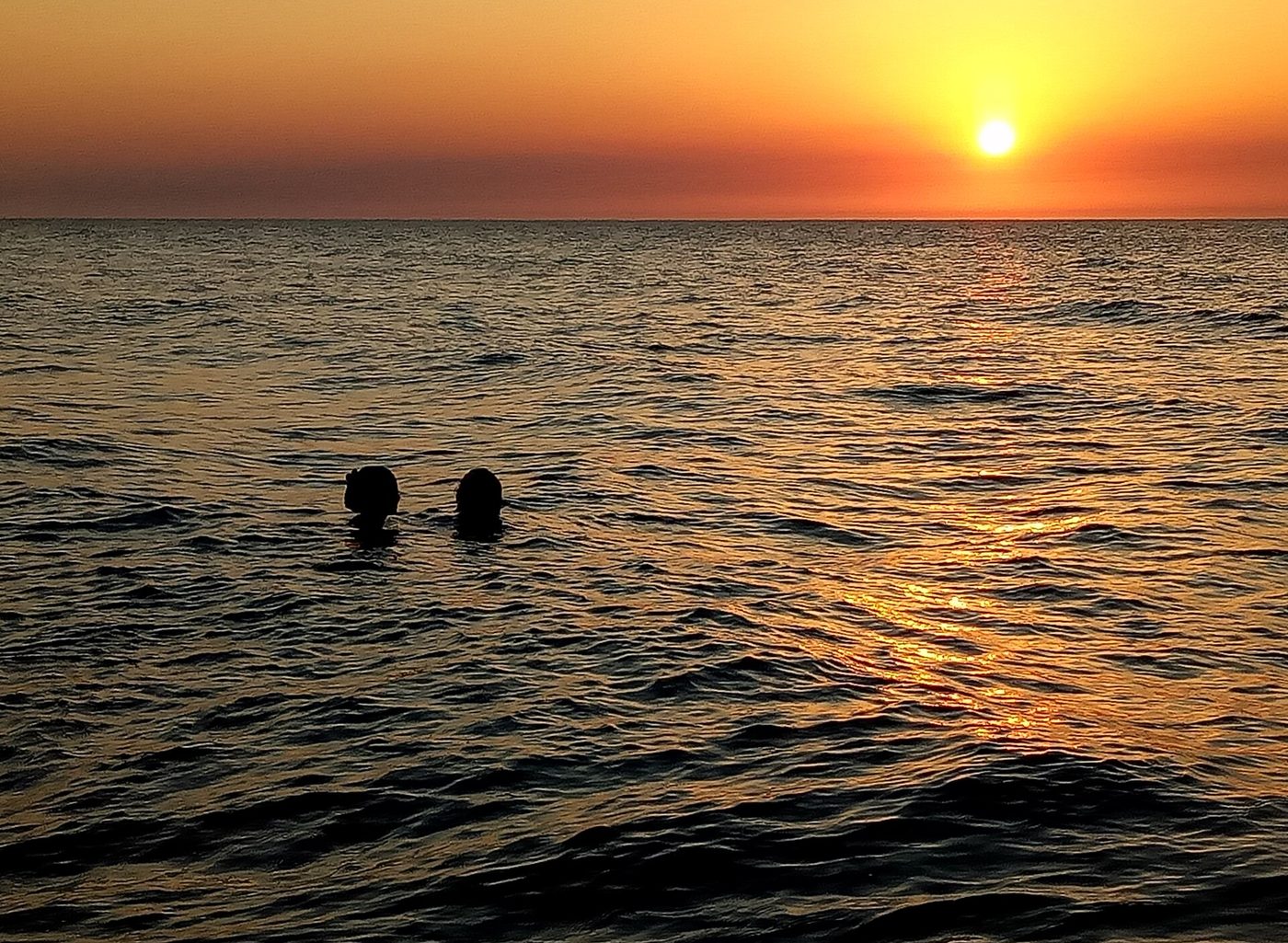
All images via Wikimedia Commons, used with thanks: Sunset swimmers in the sea off Tabarka on Tunisia’s Coral © Mekinos (CC BY-SA 4.0); The Genoese fort above Tabarka © Selma Jmii (CC BY-SA 3.0); Fishing boats moored in the harbour at Tabarka © Yassin Grayaa (CC BY-SA 4.0); Cork oak forest in the Khroumirie hills around Ain Draham © HalloulimedAmeur (CC BY-SA 4.0).