By the Tunisia Tourism Guide team · Last updated 1 September 2026 · We don’t sell tours or take hotel commissions — this is independent advice, written to be useful.
Air temperature sells the holiday. Sea temperature decides if you actually get in. We’ve watched enough British families stand ankle-deep in April water doing the little intake-of-breath dance to know the two numbers are not the same thing — and the brochure only ever prints one of them.
Here’s the short answer. The Tunisia sea temperature runs from about 15°C in February to about 26°C in August along the main resort coast, and roughly two degrees warmer than that down in Djerba. Comfortable swimming for most British holidaymakers starts in late May or June and holds until early November, with August, September and October the most reliable.
This is the reference page we send people to when they’re deciding which week to book. It sits under our main guide to Tunisia’s beaches, which covers where to swim; this one covers when. Below you’ll find a month-by-month table for four points on the coast, an honest translation of what each number feels like, and the bits nobody mentions — the lag between hot air and warm water, the real north–south split, and whether that hotel pool is heated.
Tunisia sea temperature by month: the table
These are long-run monthly averages of sea-surface temperature, rounded to the nearest half-degree. Hammamet, Sousse and Tabarka come from World Sea Temperatures, which uses NOAA satellite data; Djerba’s figures are the ten-year monthly averages published by SeaTemperatures.net. Treat them as the middle of a range, not a promise — any given week can land a degree or two either side, and the last few summers have run warmer than the long-run means.
| Month | Hammamet | Sousse | Djerba | Tabarka (north) |
|---|---|---|---|---|
| January | 15.5°C | 15.5°C | 16°C | 15.5°C |
| February | 14.5°C | 14.5°C | 15.5°C | 14.5°C |
| March | 15°C | 15°C | 16°C | 15°C |
| April | 15.5°C | 16°C | 17.5°C | 16°C |
| May | 18°C | 19°C | 20.5°C | 18.5°C |
| June | 22°C | 22.5°C | 24°C | 22°C |
| July | 24.5°C | 25.5°C | 27.5°C | 25°C |
| August | 25.5°C | 26.5°C | 28.5°C | 25.5°C |
| September | 25°C | 25.5°C | 28°C | 25°C |
| October | 23°C | 23.5°C | 26°C | 23°C |
| November | 20.5°C | 21°C | 23°C | 20°C |
| December | 17.5°C | 18°C | 19°C | 17°C |
Two things jump out of that table, and they’re the two things that actually matter when you’re choosing a week.
The first is that the coldest month is February, not January. The second is that October is warmer than June almost everywhere — by a degree and a half at Sousse and by a full two degrees at Djerba. If you have a free choice between an early-summer week and a mid-autumn one, the autumn week gives you warmer water. That single fact overturns a lot of assumptions, and it’s why our best time to visit guide keeps steering people towards September and October.
What those numbers actually feel like
A number on a chart is useless until you know what it does to you. Here’s our honest translation, written for people who learned to swim in British water and therefore have a slightly warped baseline.
| Sea temp | How it feels | Verdict |
|---|---|---|
| 14–16°C | Genuinely cold. Sharp intake of breath, hands ache after ten minutes. | Wetsuit or wild-swimming enthusiasm required |
| 17–18°C | Bracing. Fine for a quick dip and a brisk towel-off. | Warmer than a British summer sea, still not “lounging” |
| 19–21°C | Swimmable. Cold on entry, pleasant once you’re moving. | Most adults are happy; children get cold quickly |
| 22–24°C | Comfortable. You stop thinking about the temperature. | The sweet spot for actual swimming |
| 25–27°C | Warm. Bath-adjacent. No shock at all on entry. | Ideal for floating about with children |
| 28°C+ | Very warm, and in shallow Djerba lagoons it can feel soupy. | Lovely, but not refreshing on a 35°C day |
For context: the sea off Cornwall in August sits around 17°C, and off the Northumberland coast rather less. So even Tunisia in November is warmer than a good British summer’s day at the seaside. That’s a genuinely useful benchmark, and it explains why our readers who swim at home report happily getting in during months that package holidaymakers write off entirely.
The north–south split — and it isn’t where you’d guess
People assume Tunisia’s coast warms steadily as you go south, so the water at Tabarka must be notably colder than at Hammamet. It isn’t. Look at the table again: Tabarka, Hammamet and Sousse sit within about half a degree of each other for most of the year. The north coast is windier and rougher, and it feels colder because of the breeze and the swell, but the water itself is barely different.
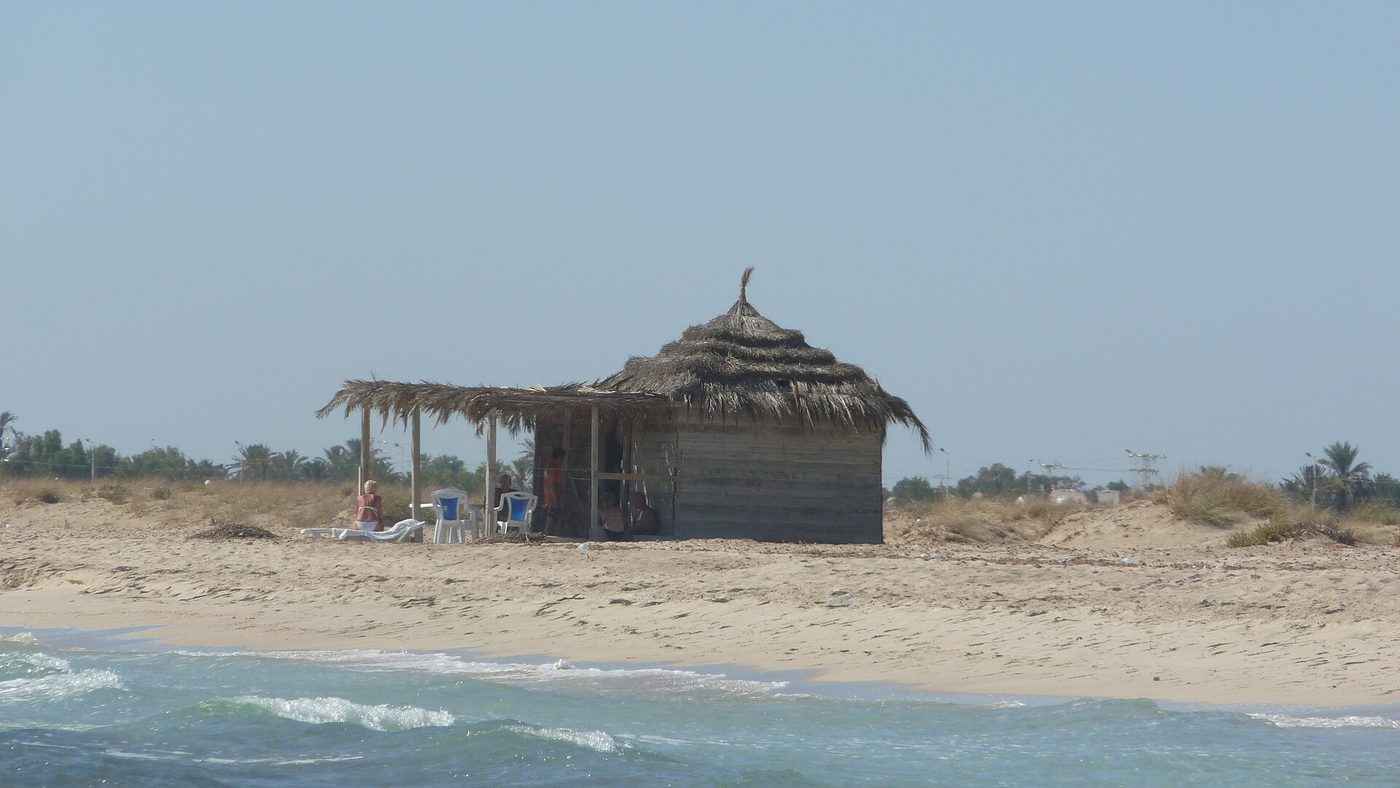
The real outlier is Djerba, and the reason is geography rather than latitude. Djerba sits in the Gulf of Gabès, a broad, shallow shelf of sea with an enormous tidal range for the Mediterranean. Shallow water warms fast and holds its heat, so Djerba runs roughly two degrees ahead of the resort coast through spring and autumn, and closer to three degrees ahead in October. In practical terms that’s a fortnight of extra swimming season at each end of the year.
So if warm water is your priority and you’re travelling in the shoulder months, book Djerba rather than Hammamet. In July and August the difference stops mattering — everything is warm — and other factors should decide it for you. We’ve compared the two properly in our Djerba or Hammamet piece.
A note on the far north
The coast around Tabarka and Bizerte is the one stretch where the sea feels meaningfully different — not because the temperature chart says so, but because the water is clearer, deeper close in, and much more exposed to northerly winds. On a breezy day in June the sea up there can feel five degrees colder than the chart claims. On a still day in September it’s some of the loveliest swimming in the country. Our guide to the northern Tunisia beaches goes into which coves shelter from which wind.
Why the sea lags the air by about six weeks
This is the single most useful thing to understand, and it’s the reason so many people book the wrong month.
Water has a vast heat capacity compared with air. It takes a long time to warm up and just as long to cool down, so the sea’s annual cycle runs weeks behind the sky’s. The hottest air in Tunisia arrives in July and August; the warmest water arrives in late August and holds through September. The coldest air comes in January; the coldest water comes in February.
The consequence is a spring that feels like a swindle and an autumn that feels like a gift. In April and early May you can be sitting on a Hammamet beach in 24°C sunshine with the sea at 15.5°C — sunbathing weather with a swimming pool you don’t want to enter. In late October you get the reverse: cooler, softer air, occasional cloud, and a sea still holding 23°C from the summer. We think October is the most underrated swimming month in Tunisia, and the numbers back that up.
If you’re planning around this, read it alongside our month guides for May and October, which cover crowds, prices and rainfall as well as temperature.
Month by month, honestly
January and February: not swimming weather
The sea sits at 14.5–16°C. That is cold-water swimming, and it needs either a wetsuit or the kind of temperament that queues up for a Christmas Day dip in the Solent. February is the low point of the year everywhere on the coast, and it’s colder in the water than in the air.
People do still come, and rightly — the light is lovely, the Roman sites are empty, and hotel prices collapse. Just come for the country rather than the sea. Our Tunisia winter sun guide is candid about what the season does and doesn’t deliver, and the January and February guides go month by month.
March and April: the frustrating months
Air temperatures climb into the low twenties and the sea barely moves — 15–16°C at Hammamet, 16–17.5°C at Djerba. The mismatch is at its worst in April, when the beach looks perfect and the water is still winter-cold. Children will get in, shriek, and come straight out.
This is prime time for touring rather than swimming: wildflowers in the north, comfortable temperatures at the ruins, low prices. Read the March and April guides before you book a beach week in either.
May: the turn
May is when it finally starts to move. Sousse averages about 19°C, Djerba about 20.5°C. Early May still feels cold; late May is genuinely swimmable, especially in the south. If you want a beach holiday at low-season prices, the last ten days of May are the earliest we’d recommend, and we’d send you to Djerba rather than the north. See our May guide for the detail.
June: comfortable, and not yet baking
Around 22°C on the resort coast and 24°C at Djerba. This is the first month where you can swim without thinking about it, and the air hasn’t yet reached the punishing highs of midsummer. June is our pick for families who want warm water without a heatwave — cross-reference our Tunisia with kids guide and the June month page.
July and August: peak everything
24.5–26.5°C on the resort coast, 27.5–28.5°C at Djerba. The water is warm, the sea is calm, and the beaches are full. The honest downside is that in a genuine heatwave — and Tunisia gets them — a 28°C sea stops being refreshing. Djerba’s shallow lagoons in particular can feel like a warm bath by mid-afternoon, which is charming for toddlers and less so if you want to swim lengths.
Our July and August guides cover the heat, the crowds and the school-holiday pricing.
September: the best month, we’d argue
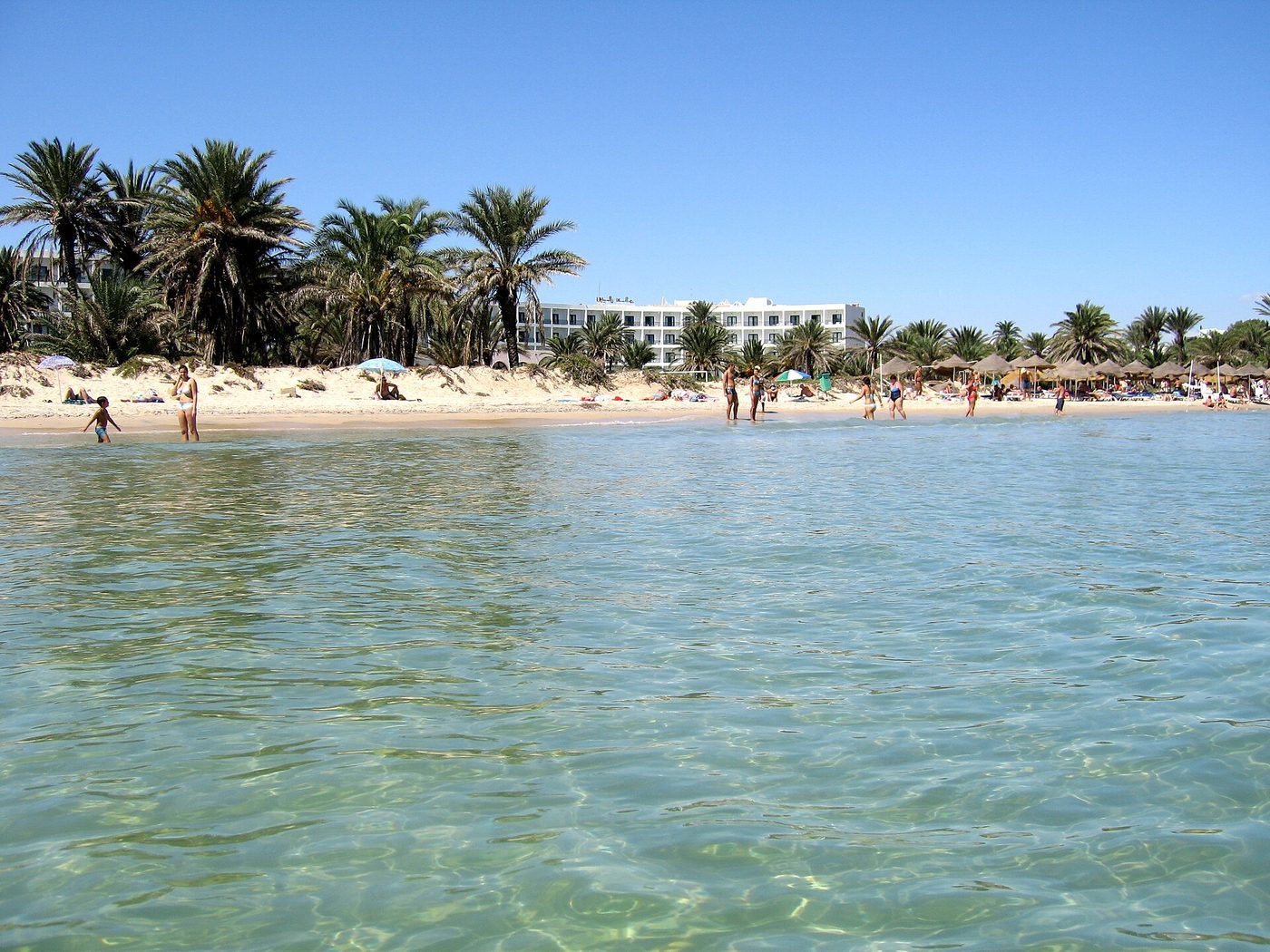
The sea holds almost all its August warmth — 25°C at Hammamet, 25.5°C at Sousse, 28°C at Djerba — while the air softens and the crowds thin after the first week. If you asked us to pick one week of the year for a Tunisian beach holiday, it would be the middle fortnight of September. The September guide makes the same case at greater length.
October: warmer than June, and much quieter
23°C on the resort coast, 26°C at Djerba. Days are pleasant rather than fierce, the light is beautiful, and prices have dropped. There’s a bit more chance of a wet or windy day than in September, and the sea can be choppier on the north coast, but the swimming is genuinely good. This is the month people are most surprised by.
Search interest in the sea temperature in Tunisia in October is enormous, and the reason is that nobody quite believes the water is still warm. It is. See the October guide.
November: the tail end
Around 20–21°C on the resort coast and 23°C at Djerba. Swimmable for adults, chilly for children after ten minutes, and the weather is a lottery — you might get a run of 22°C days or a week of grey and wind. Early November is much better than late. The November guide has the rainfall figures.
December: over for the year
17–19°C. That’s warmer than the English Channel in August, which is a fun fact and not much of a holiday plan. December is for Christmas markets in Tunis, empty desert tours and cheap all-inclusives, not for the beach. See the December guide.
Can you swim in Tunisia in winter?
Physically, yes. Enjoyably, only if you’re a cold-water swimmer. Between December and April the sea sits between 14.5°C and 17.5°C, which is squarely in wetsuit territory for anyone who isn’t already doing winter dips at home.
If you are that person, Tunisia in winter is quietly excellent: empty beaches, water in the mid-teens rather than the single figures you’d get in Britain, and nobody looking at you strangely. Bring your own kit — hire wetsuits are hard to find outside the summer season, and most watersports operations close from November.
What we’d gently push back on is the idea, common in older brochures, that Tunisia is a “winter sun” beach destination in the Canaries sense. It isn’t. The winter sunshine is real and the daytime air is mild, but the sea is not a swimming sea. Book winter for the culture, the desert and the value — our winter sun guide sets out exactly what you get.
Wetsuits, shorties and rash vests: what’s actually worth packing
- December to April: a full 5mm wetsuit if you seriously intend to swim. A shorty won’t cut it at 15°C.
- May: a shorty or 3mm suit extends a ten-minute dip into a proper swim, particularly in the north.
- June to October: nothing needed. A rash vest is worth packing for sun protection rather than warmth, especially for children who’ll be in and out all day.
- November: a shorty is handy if you’re a daily swimmer; most people manage without.
- Diving, any month: centres supply suits, and they’ll be thicker than you expect — 5mm or 7mm even in summer, because at 25 metres the water is several degrees colder than the surface. More on that in our diving in Tunisia guide.
One practical note: water shoes are worth more than a wetsuit on much of this coast. Sea urchins are common on rocky sections, and several resort beaches have patches of shingle or broken shell at the waterline.
Hotel pools: heated, unheated, and the gap between the brochure and reality
This matters far more than people expect, because in the shoulder months the pool is your fallback when the sea is cold.
Most Tunisian resort pools are not heated. Those that are heated usually only run the heating from roughly November to March or April, and “heated” in practice often means around 26–28°C rather than the 30°C a British leisure centre would call warm. An unheated outdoor pool in April will sit somewhere close to the sea temperature — sometimes colder, because it’s shallower and loses heat overnight.
If you’re travelling between November and April and swimming is part of the plan, check three things with the specific hotel before you book: whether the pool is heated, which months the heating actually runs, and whether there’s an indoor pool as well. Plenty of the larger all-inclusive hotels and thalassotherapy spas have indoor heated pools; plenty of others quietly drain the outdoor one for the winter. It’s the single most common winter complaint we hear.
Sea conditions, not just temperature
Temperature is only half the story of how much you’ll enjoy the water.
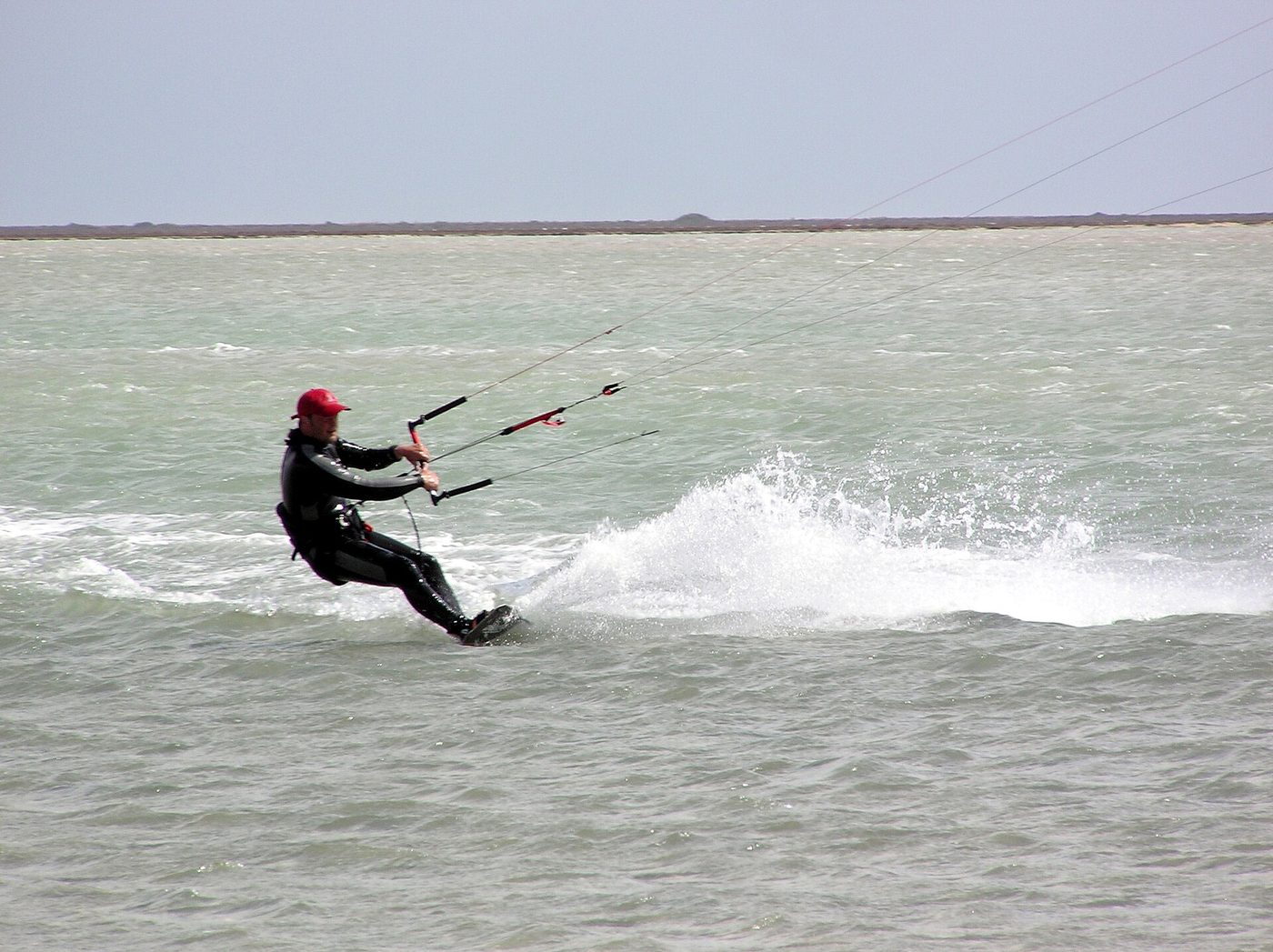
Wind. Tunisia’s coast is breezy, and the prevailing summer wind can whip up an afternoon chop on north-facing beaches even in August. Mornings are almost always calmer. That same wind is why kitesurfing on Djerba works so well.
Jellyfish. Blooms happen, usually in late summer, and they’re unpredictable year to year. Ask at the hotel desk rather than assuming.
Clarity. The southern coast around Djerba and Zarzis is shallow and sandy, so the water is warm but often a bit milky. The north is cooler-looking, clearer and deeper — better for snorkelling, less good for wading toddlers.
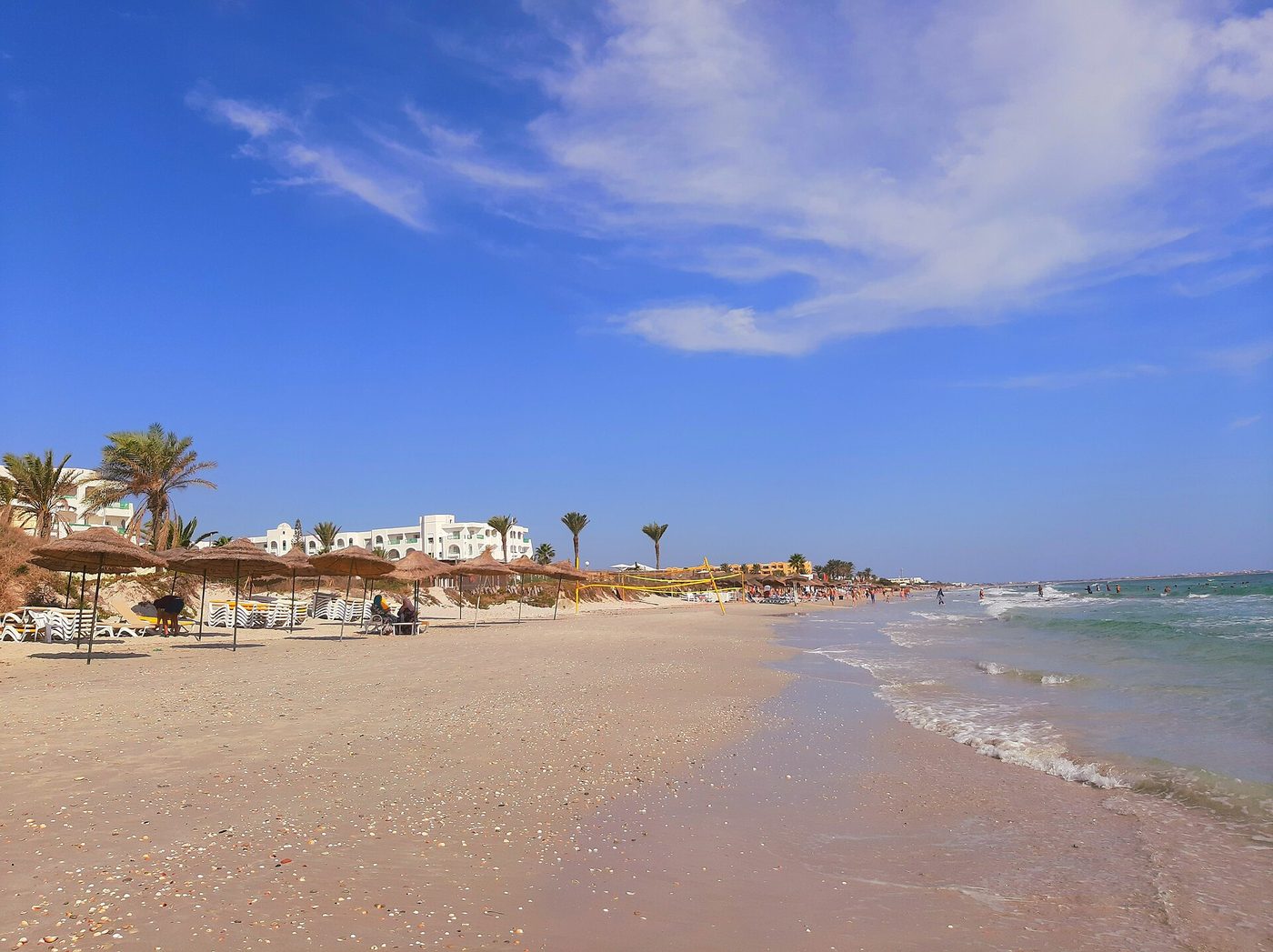
Shelving. Djerba and Sousse beach shelve very gently, which is why they suit families. Mahdia and parts of the north drop away faster.
Tunisia sea temperature: your questions answered
What is the sea temperature in Tunisia?
Across the year the Tunisian Mediterranean averages roughly 21°C, ranging from about 14.5°C in February to about 26.5°C in August on the resort coast. Djerba, in the shallow Gulf of Gabès, runs around two degrees warmer, peaking near 28.5°C in August and only dropping to about 15.5°C at its February low.
What is the sea temperature in Tunisia in October?
About 23°C at Hammamet, 23.5°C at Sousse and 26°C at Djerba, based on long-run averages. That’s warmer than June and comfortably swimmable for most people. Early October is warmer than late October, and the south holds its heat longest. Always check a current reading before you travel.
Can you swim in Tunisia in winter?
Only if you’re a cold-water swimmer. Between December and March the sea sits at roughly 14.5–19°C, which needs a wetsuit for anything beyond a quick dip. It’s warmer than British water year-round, but it is not a winter swimming destination in the way the Canaries or Red Sea are.
Is the sea warm in Tunisia in May?
Borderline. Averages are around 18°C at Hammamet, 19°C at Sousse and 20.5°C at Djerba, and the second half of the month is noticeably better than the first. Adults who swim regularly will be fine; children usually aren’t. If May is your only option, choose the south.
When is the sea warmest in Tunisia?
August, everywhere on the coast, with September running a very close second. The water lags the air by about six weeks, so the peak sea temperature arrives after the peak air temperature — which is why September so often gives you the best combination of warm water and bearable heat.
When is the sea coldest in Tunisia?
February, not January. The same thermal lag that delays the summer peak also delays the winter low. February averages about 14.5°C on the resort coast and 15.5°C at Djerba, and March is barely warmer despite the sunnier days.
Is the sea warmer in Djerba than in Hammamet?
Yes, consistently. Djerba sits in the shallow Gulf of Gabès, which warms faster and cools more slowly than the open Mediterranean. Expect roughly two degrees more through spring and summer and up to three degrees more in October, which is worth a fortnight of extra swimming season.
Is the sea in northern Tunisia much colder?
The measured temperature at Tabarka is within about half a degree of Hammamet for most of the year. What makes the north feel colder is exposure: stronger winds, more swell and deeper water close to shore. On a calm September day the northern beaches swim beautifully.
How does Tunisia’s sea temperature compare with Spain or Greece?
It’s broadly similar to the Costa del Sol and a touch warmer than the Aegean in the shoulder months, largely because North Africa’s coastal waters hold their heat later into autumn. The bigger difference is October and November, when Tunisia — and Djerba especially — stays swimmable after much of the northern Mediterranean has cooled off.
Are hotel pools in Tunisia heated?
Usually not. Where heating exists it typically runs only from about November to March or April, and often reaches around 26–28°C rather than a British leisure-centre warmth. If you’re travelling outside summer, confirm with your specific hotel whether the pool is heated, in which months, and whether there’s an indoor pool.
Do I need a wetsuit to swim in Tunisia?
Not between June and October — the sea is 22°C or warmer and nobody bothers. A shorty helps in May and November if you’re a daily swimmer, and a full 5mm suit is genuinely necessary from December to April. Bring your own; winter hire is scarce once the watersports operators shut.
Is the sea rough in Tunisia?
Usually calm on the eastern resort coast, especially in the mornings, with an afternoon chop kicked up by the sea breeze. The north coast around Tabarka and Bizerte is more exposed and can be genuinely rough outside high summer. Watch for flag warnings and swim where there’s a lifeguard.
Does the sea temperature change much day to day?
By a degree or two, yes. Sustained onshore winds can pull cooler water up from depth and drop a beach by several degrees overnight, while a heatwave over shallow water can push it the other way. The monthly averages here are a planning tool, not a forecast — check a live reading in the week before you fly.
Where can I check the current sea temperature before I travel?
World Sea Temperatures and SeaTemperatures.net both publish daily NOAA-derived readings for Hammamet, Sousse, Tabarka and Djerba, along with the historic monthly ranges we’ve used above. Look at the ten-year average for your dates as well as today’s number — a single warm day tells you very little.
Written by the Tunisia Tourism Guide team — an independent UK-focused guide to travelling in Tunisia. We don’t sell tours or take hotel commissions. Prices and advice were checked at publication; always confirm current details before you book.
Photo credits
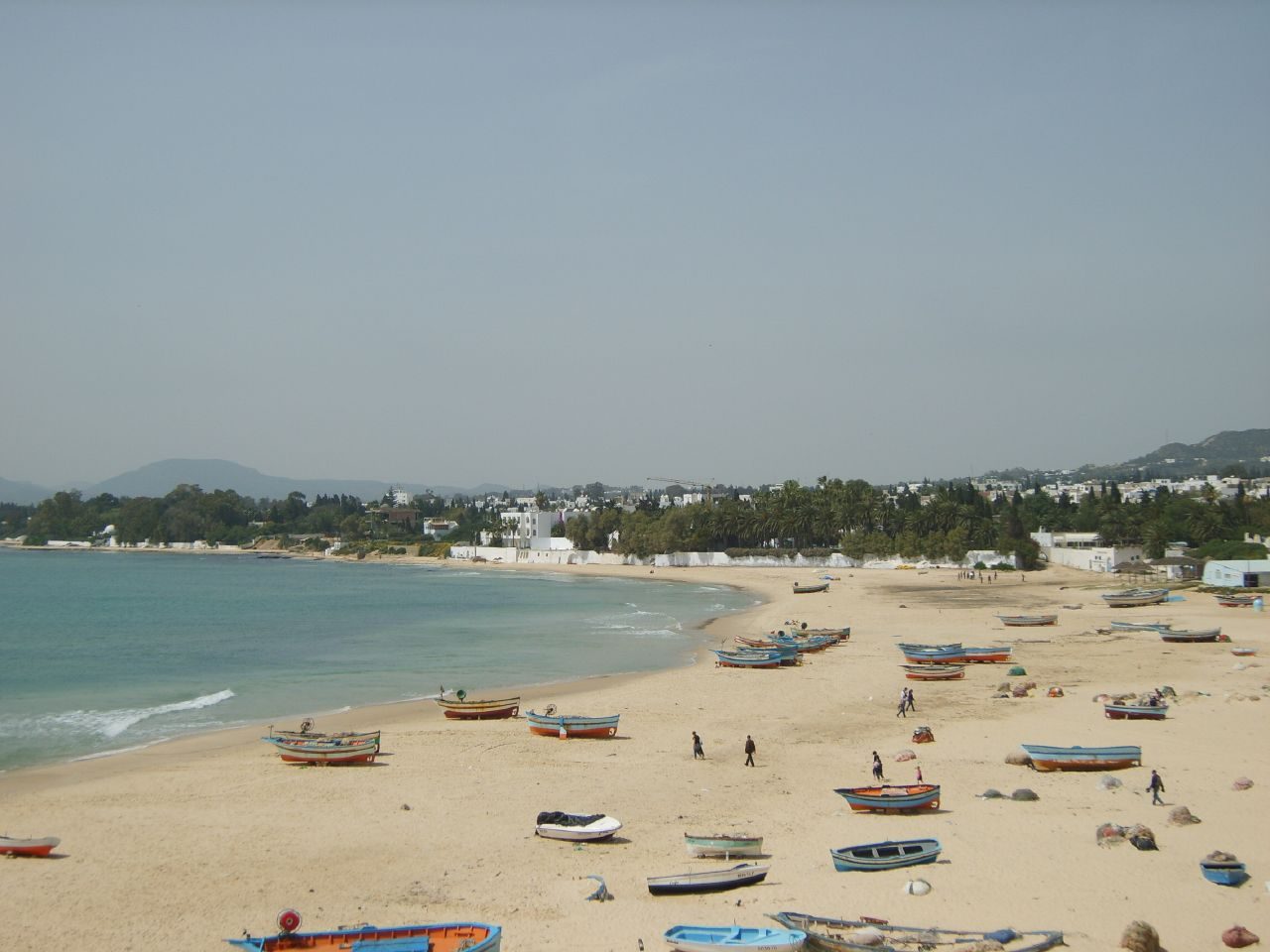
All images via Wikimedia Commons, used with thanks: Fishing boats on the sandy beach at Hammamet © 金娜 Kim S (CC BY-SA 2.0); A straw beach hut and shallow warm water on Djerba © Philippe HECKEL from France (CC BY 2.0); Clear shallow water off the beach at Sousse in high © Sermal (Public domain); Parasols on the beach at Mahdia on Tunisia’s Sahel coast © Habib M’henni (CC BY-SA 4.0).