By the Tunisia Tourism Guide team · Last updated 2 July 2026 · We don’t sell tours or take hotel commissions — this is independent advice.
February is the half-term question. Every year, around the start of the month, UK parents start hunting for somewhere sunny to escape the grey week off school without a long-haul flight or a long-haul price tag — and Tunisia’s cheap February deals catch the eye. So the honest question is whether a Tunisian February half-term is a clever move or a false economy, and the answer, as ever, depends entirely on what you want from the week.
Tunisia in February is mild and quiet — the coast averages around 17°C by day, the sea is at its coldest of the year (about 15°C), and it’s one of the wetter months — so it works for a sun-and-culture or desert half-term but not for a beach one. Treat it as a short-haul winter escape built around history, the Sahara, the cities and gentle warmth down south on Djerba, and February is good value with almond blossom as a seasonal bonus. Expect a beach holiday and you’ll be let down. If you’re still choosing your month, our guide to the best time to visit Tunisia puts February in context with the rest of the year.
One important flag before we go further: in 2027, Ramadan begins on 8 February, which changes the daytime rhythm of Tunisian towns for anyone travelling in the second half of the month. We’ll cover exactly what that means for a half-term trip below. First, the weather.
Tunisia weather in February at a glance
These are coastal climate averages for the Hammamet–Sousse belt, where most package flights arrive. They’re long-run normals, not a forecast, so check the current outlook before you pack.
| February (coast) | Typical |
|---|---|
| Air temperature (daytime high) | Averages around 17°C — check current |
| Air temperature (night low) | Around 8°C |
| Sea temperature | Around 15°C — the coldest of the year |
| Rainfall | One of the wetter months — roughly 55–60mm across about 10 days at Tunis |
| Daylight / sunshine | About 10.5 hours of daylight; roughly 6–7 hours of sun on a clear day |
February brings the faintest hint that winter is loosening its grip — daylight is stretching out and the very end of the month can feel a touch springlike — but on the numbers it’s still firmly a cool, damp winter month. The sea, at around 15°C, is at its coldest of the whole year, colder even than midwinter, because water lags behind the air. When the sun’s out it’s pleasant, jacket-and-jumper weather; when it isn’t, it’s grey and breezy. Pack accordingly.
Is Tunisia warm in February? The honest answer
Set against a British February, yes — 15–17°C and real sunshine is a genuine escape from the damp and the dark. Set against any dream of a beach half-term, no. This is a cool month with the coldest sea of the year, and it’s best pictured as a fine early-spring day rather than a warm one.
On a good February day you’ll happily explore a medina or a ruin in a light jacket, sit in the sun outside a café and feel the winter lift off you. On a poor day it’ll be cloudy, breezy and around 13°C, and you’ll want a coat. Both turn up in February, sometimes in the same week, so the answer — as with any Tunisian winter month — is to plan a trip that works rain or shine. Between the ruins, the museums, the cities and the desert, Tunisia is well equipped for precisely that.
Early February versus late February
There’s a subtle warming trend across the month. Early February is still deep winter — cool, damp, the sea at its lowest. By late February the days are noticeably longer, the light feels softer, and in a good year you’ll catch the first almond blossom inland and the earliest sense of spring. If you have a choice and you’re chasing the gentlest weather, the tail end of the month tends to be marginally kinder. The larger caveat for late February 2027, though, isn’t the weather — it’s Ramadan, which we come to shortly.
Day and night — the temperature swing
As in any Tunisian winter month, the drop from day to night is significant. A pleasant 17°C afternoon on the coast becomes an 8°C evening once the sun’s down, and inland the swing is much larger. Hotels and restaurants cope with heaters and blankets, but pack layers to add as evenings cool — and treat the desert as a category of its own, where cold nights are the defining feature.
Region by region: where February works
In winter, the gulf between Tunisia’s regions is the whole story. Choose your base to match the season and a February trip comes good; choose badly and you’ll wish you’d gone elsewhere.
The mainland coast: Hammamet and Sousse
The classic resorts of Hammamet and Sousse are quiet and cheap in February, which is the appeal and the catch in equal measure. Rates are low and the beaches and promenades are peaceful, but this is the belt that catches the winter rain, the sea is at its coldest, and much of the seasonal machinery — beach bars, watersports, some restaurants — is shut for the off-season. What’s left is an inexpensive, low-key base for sightseeing, with calm medinas and long empty beaches good for a bracing walk.
Choose a mainland resort in February for a cheap sightseeing base with day trips on the side — but check your hotel’s pool is heated (many aren’t in winter) and don’t expect a lively resort scene. Hammamet’s thalassotherapy centres are one of the month’s real pleasures: warm seawater pools, hammams and massages are the perfect antidote to a cool, damp week. Our where-to-stay guide helps you compare bases.
Djerba and the south: the winter-sun pick
For the best chance of warmth and sunshine over February half-term, go south. The island of Djerba runs a couple of degrees warmer than the mainland and drier too, escaping much of the northern rain. February highs on Djerba often sit around 17–18°C, and the island soaks up more winter sun than almost anywhere else in Tunisia, which is why it works as a winter-sun destination when the mainland resorts are dozing.
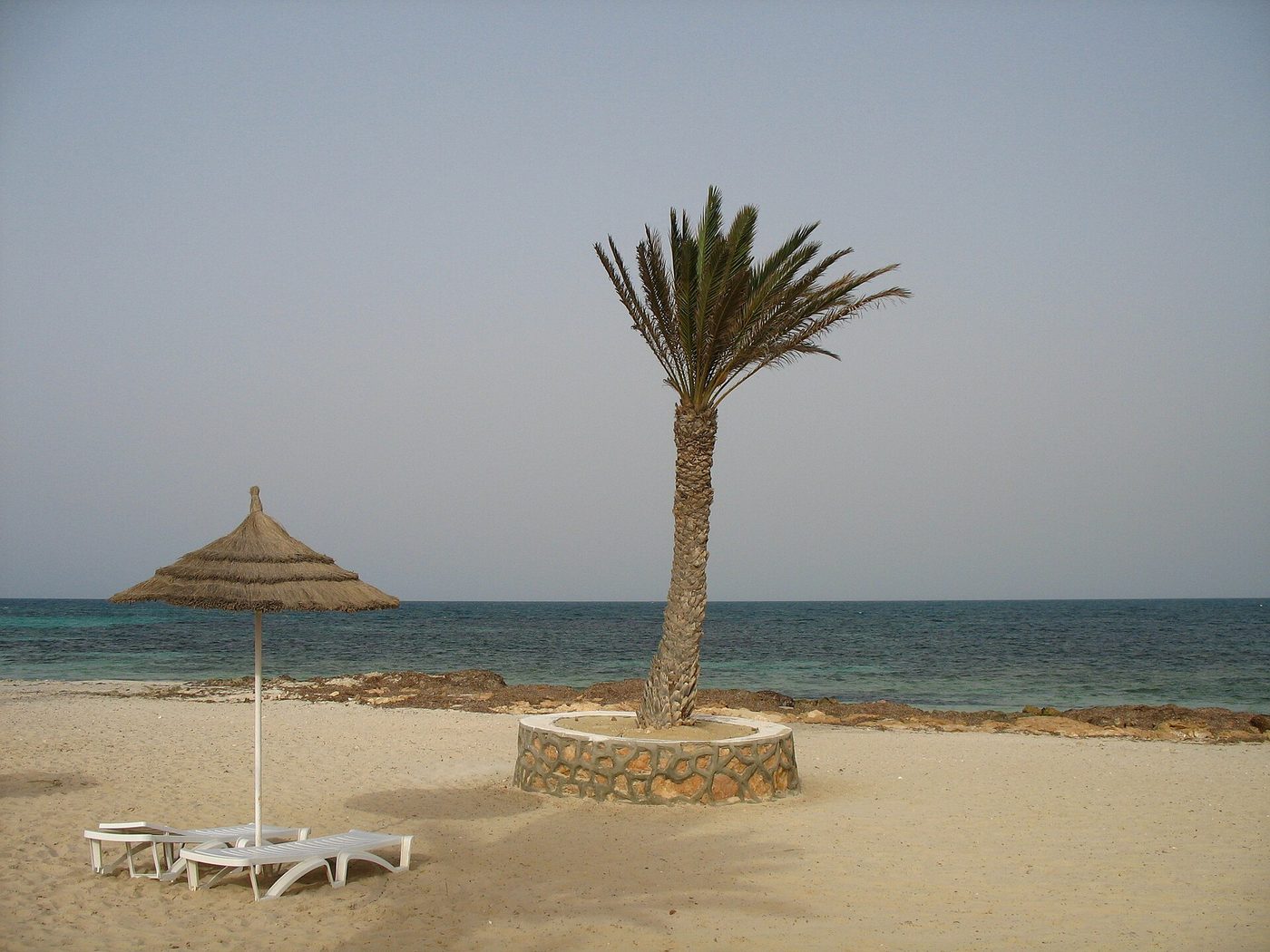
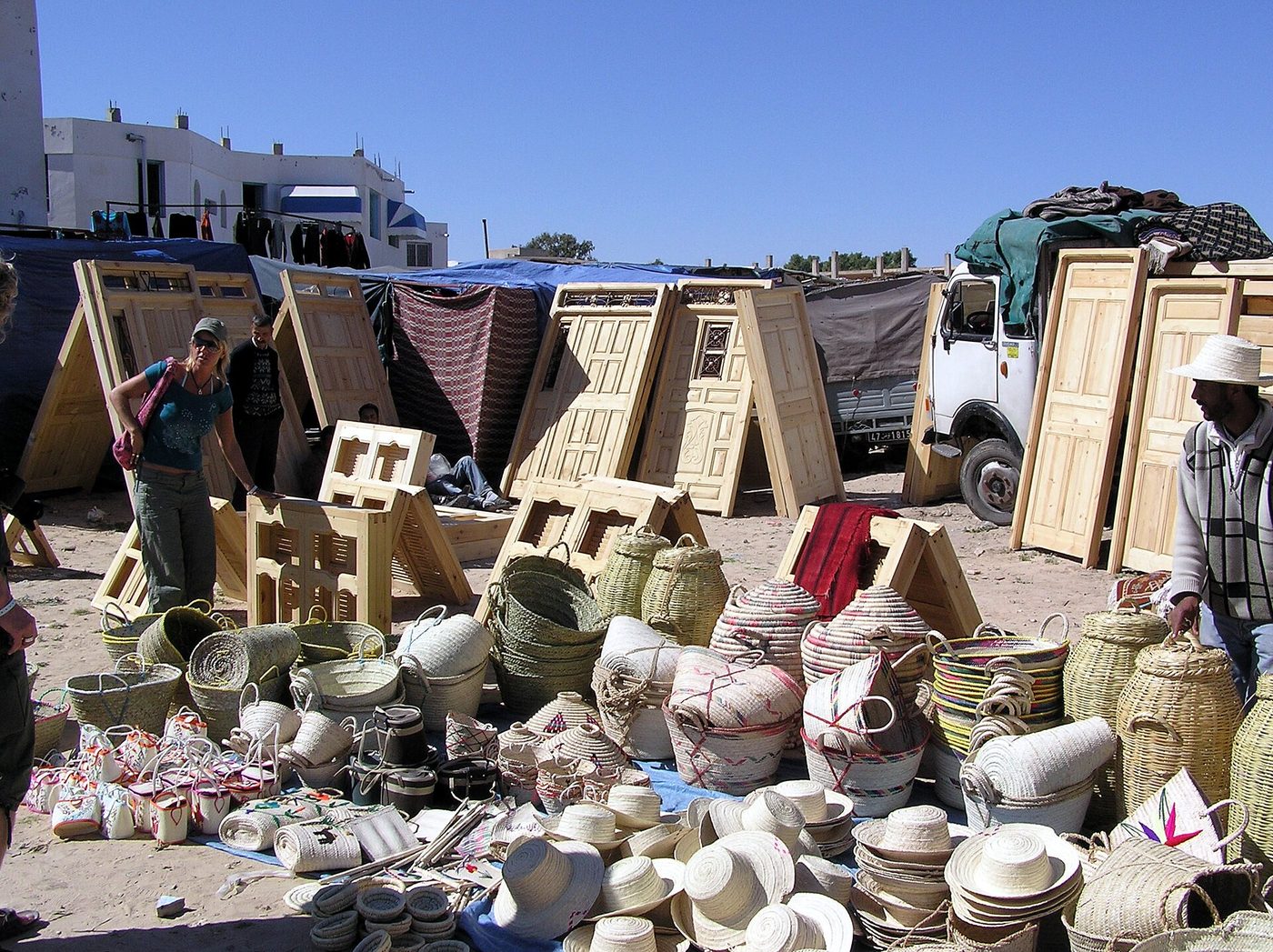
Stay honest, mind: the sea is around 15°C, so swimming is off the table, and Djerba gets cloudy days too. What you’re buying is the best odds of gentle, jacket-optional afternoons — flat, family-friendly cycling, quiet beaches to walk, the whitewashed streets of Houmt Souk, the El Ghriba synagogue and lovely soft light. For families weighing up the south with children in tow, our is Djerba safe guide sets out plainly why the island and its coast sit well inside the reassuring zone.
Tunis and the north: cities and ruins
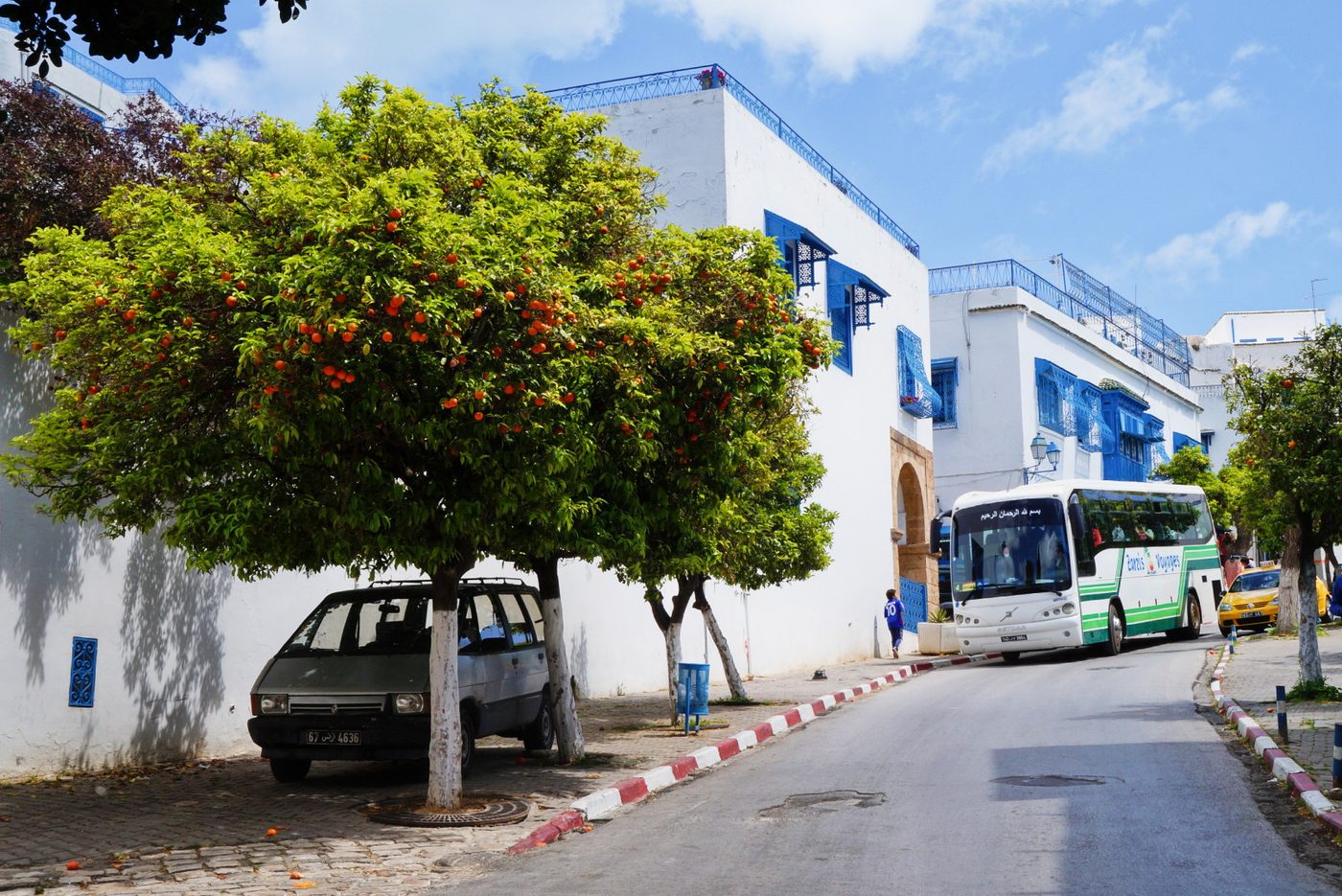
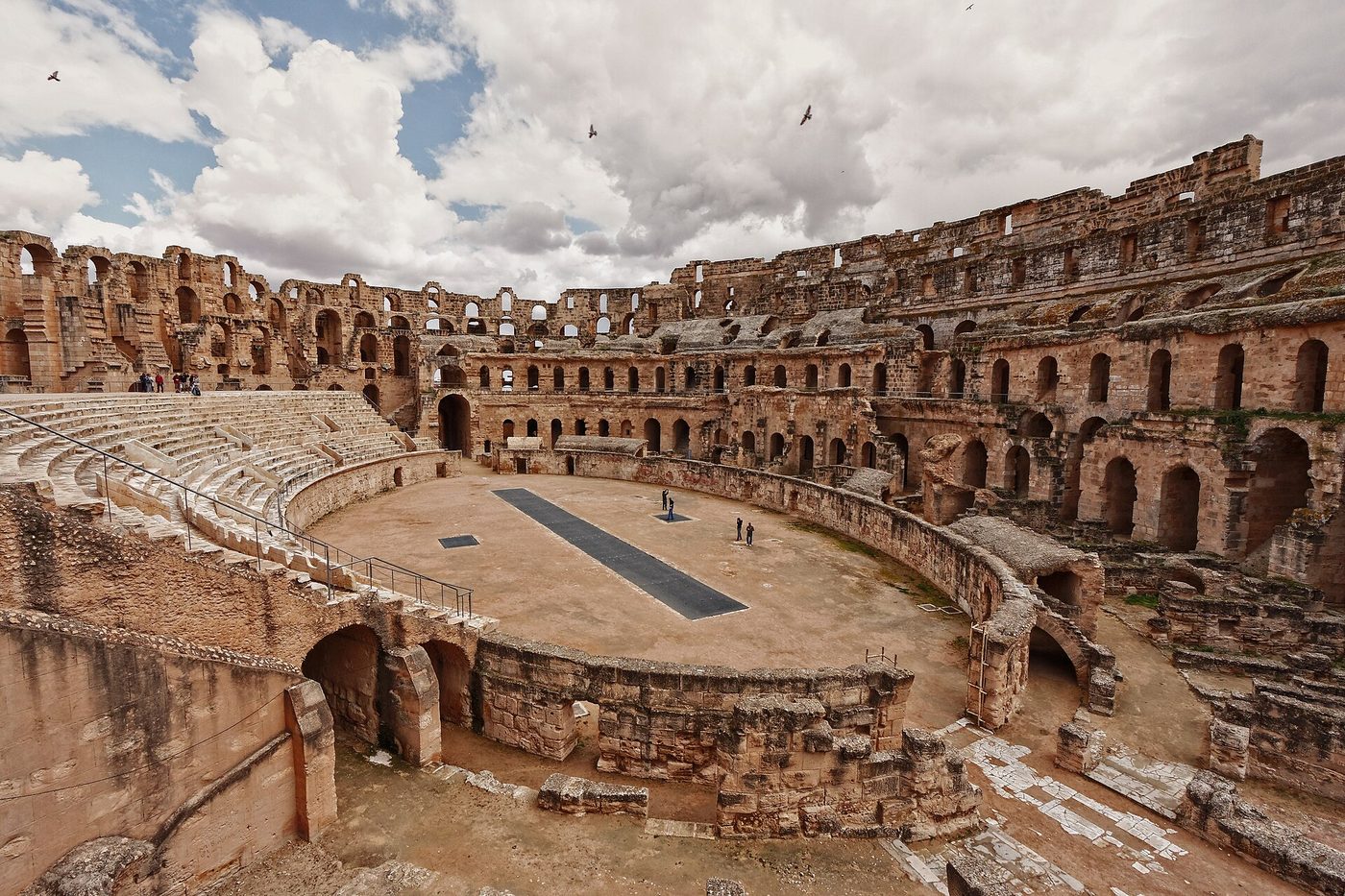
February is a rewarding time to visit Tunis, because the capital doesn’t depend on beach weather. A bright winter’s day is ideal for the medina, the Bardo Museum’s Roman mosaics, the ruins of Carthage above the sea, and the blue-and-white lanes of Sidi Bou Said. You’ll want a coat and one eye on the forecast, since the north catches the rain, but a great city in the crisp February air — with cafés and hammams to duck into — is a fine half-term day out for families and couples alike. The country’s Roman ruins, from El Djem’s mighty amphitheatre to hilltop Dougga, are more comfortable to explore in cool weather than under summer sun, and in February you’ll have them nearly to yourself.
The Sahara: still prime touring season
February sits neatly within the desert-touring window, and it’s a superb time for the Tunisian Sahara. The season runs October to April — before the dangerous summer heat — and February days at the gateways of Tozeur and Douz are typically dry and sunny, often around 18–20°C, with clean air and beautiful light for dune drives, camel rides and the oasis towns. For a half-term with older children or teenagers, a desert overnight is the sort of thing they’ll actually remember.
The nights remain the thing to plan for. Desert temperatures in February still fall sharply after dark, sometimes towards freezing, so an overnight camp needs serious warm layers — thermals, hat, gloves, a proper coat. Reputable camps provide heavy blankets, but the swing from a 19°C afternoon to a near-freezing dawn catches families out every year. Prepare for it and a February night under the desert stars is magical; underpack and someone will be cold and miserable.
February half-term: is Tunisia a good idea?
Let’s answer the question that brought most readers here. For a UK February half-term, Tunisia is a good idea if — and only if — you frame it correctly. It is not a beach half-term; the sea is at its coldest and much of the coast is off-season. But as a cheap, short-haul (roughly three hours from the UK) winter escape built around sunshine, culture and the desert, it works well, and it’s far better value than the usual half-term sun spots.
It suits families who’ll happily swap sunbathing for a mix of pool time at a good hotel, a desert overnight, a day among Roman ruins, and gentle warmth on Djerba. It suits couples and older travellers after a quiet, inexpensive week of history and sun-on-the-face. It suits anyone glad to escape the British damp without the cost or jet lag of going further afield. The almond blossom in bloom inland is a lovely seasonal extra. What it won’t deliver is a fortnight-in-August beach experience squeezed into a February week — so if splashing in the sea is the whole point, look at a shoulder or summer month instead. Our things to do in Tunisia guide is a good place to see what a February trip could actually contain.
Ramadan 2027: an important note for February travellers
This one genuinely matters for planning, so read it before you book a late-February 2027 trip. In 2027, Ramadan begins on Monday 8 February and runs until around 8 March. That means the bulk of February 2027 falls within the Islamic holy month, and it changes the daily rhythm of the country.
During Ramadan, many Tunisians fast from dawn to dusk, and in towns and cities a good number of daytime cafés and restaurants close or run reduced hours, the pace of the day slows, and the atmosphere is quieter until sunset — after which streets and eateries come alive for the evening meal. Crucially for visitors, tourist hotels and resorts carry on serving food and drink as normal throughout the day, so if you’re on an all-inclusive you’ll barely notice the difference within the hotel walls.
What it means in practice for a February half-term 2027: expect fewer daytime dining options in towns and at some sights, plan lunches around your hotel or ask locally what’s open, and be respectful — avoid eating, drinking or smoking conspicuously in the street during fasting hours. Far from a reason to cancel, Ramadan can be a fascinating time to visit, with a special evening buzz once the fast breaks. But it’s absolutely something to know in advance rather than discover on arrival. If your half-term falls in the first week of February 2027, before the 8th, you’ll miss Ramadan entirely; if it’s later in the month, you’ll be travelling during it. Our Tunisia culture guide has more on what Ramadan means and how to travel respectfully during it.
What to do in Tunisia in February
With the beach ruled out, here’s what makes a genuinely good February week.
- Tour the Sahara. Still prime desert season — dune drives, camel rides, oasis towns, salt flats and the Star Wars sets near Tozeur, under clear skies and lovely light. Warm days, cold nights.
- Explore the ruins in comfort. El Djem, Carthage, Dougga and the Bardo mosaics are more pleasant in cool weather and beautifully quiet in February.
- See the almond blossom. Late February brings the first almond blossom inland around Tozeur and Kairouan — a pretty, fleeting sign of the turning season.
- City-break in Tunis. Medina, museums, Sidi Bou Said and Carthage make a great cool-weather couple of days.
- Book a spa day. Hammamet’s thalassotherapy centres — warm seawater pools, hammams, massages — are ideal for a cool, damp February.
- Do Djerba on foot or by bike. Flat, mild and quiet, with the Houmt Souk market and gentle beaches — good, easy family territory.
- Eat well and cheaply. Cool weather suits hearty couscous, lablabi (chickpea soup) and grilled fish; our Tunisian food guide points you to the best of it. (In Ramadan 2027, aim for hotel meals or evening dining.)
What to pack for Tunisia in February
February packing goes wrong when “North Africa” persuades people to leave the warm clothes at home. Pack for a cool, changeable early-spring trip with cold desert nights and you’ll be comfortable. The checklist we’d use.
| What to pack | Why |
|---|---|
| Layers — jumpers, long sleeves, a fleece | Days are cool-mild; evenings turn cold quickly, especially inland |
| A warm, water-resistant jacket | February is one of the wetter months and can be breezy; you’ll want it most days |
| Comfortable closed walking shoes | Sightseeing, medinas and ruins — a walking month, not a sandals one |
| A packable waterproof or small umbrella | Showers are common; the northern coast and Tunis catch the rain |
| Cold-weather kit for the desert | Thermals, hat, gloves and a warm coat if you’re camping in the Sahara — nights near freezing |
| Sunglasses and a little sun cream | The winter sun is still bright, especially in the clear desert air |
| Swimwear (optional) | Only for a heated hotel pool or a spa — the sea is around 15°C, its coldest of the year |
| Modest layers for towns and sites | Covered shoulders and knees for mosques and respectful visits — doubly worth it during Ramadan 2027 |
A money note that catches winter visitors out: the Tunisian dinar is a closed currency, so you can’t buy it before you fly or take it home. Change money on arrival, keep some for taxis and tips, and convert leftovers back before departure. Reckon on roughly £1 to 3.8–3.9 dinars in mid-2026, but check the current rate. More of this practical detail is in our Tunisia travel tips.
Who February suits — and who should pick another month
February is a good choice if you want a cheap, short-haul half-term escape from the British winter, you’re happy to trade beach days for history, culture, cities and the desert, you fancy the Sahara in its clear touring season, or you’d enjoy catching the first almond blossom and a quieter, gentler Tunisia. Families willing to build the week around a hotel pool plus day trips get real value here.
It’s the wrong month if a beach holiday with sunbathing and swimming is the aim — February simply can’t provide it, with the coldest sea of the year. It’s also less suitable if changeable, cool weather would spoil things, or if you want a lively resort scene, which the off-season coast won’t offer. And for 2027 specifically, if you’d rather not travel during Ramadan, either go in the first week of February (before the 8th) or choose a different month — our month-by-month guide (linked near the top) weighs up all the options.
How February compares to January and March
February sits at the tail of the Tunisian winter, and it’s worth seeing beside its neighbours. January is the coolest, quietest month, marginally drier than February and with slightly warmer sea; the two feel very alike, though January lacks the almond blossom and (in 2027) the Ramadan overlap. February’s own signatures are the coldest sea of the year, the first blossom inland, and the start of Ramadan on 8 February 2027.
March is where spring genuinely begins: milder days, longer light, better touring weather, though the sea stays cold well into the month. Note that most of Ramadan 2027 (8 February to around 8 March) actually spills into March too, so March 2027 travellers should expect reduced daytime services for the first week or so. On the coast, the jump in warmth from February to March is real but gradual — March is the better bet if you want the season clearly turning, while February holds the edge for the lowest prices and the quietest atmosphere. Whichever you pick, the winning move stays the same: treat the coast as a base, not a beach, and let the desert and the cities carry the week.
Tunisia in February: your questions answered
Is Tunisia warm in February?
Mild rather than warm. The coast averages around 17°C by day and 8°C at night — pleasant in the sun, cool otherwise — with the sea at its coldest of the year (about 15°C). Djerba and the south run a little warmer. It’s a welcome escape from a British February, but it isn’t hot and it isn’t beach weather.
Is Tunisia good for February half-term?
Yes, if you treat it as a sun-and-culture or desert escape rather than a beach holiday. It’s a cheap, short-haul option — around three hours from the UK — that works well for pool time, Roman ruins, a desert overnight and gentle warmth on Djerba. It won’t deliver a beach-and-swim week, as the sea is at its coldest.
Can you swim in the sea in Tunisia in February?
Not comfortably. February has the coldest sea of the year, around 15°C, which is too cold for all but the hardiest swimmers. For swimming you’ll want a heated hotel pool or a thalassotherapy centre — always confirming the pool is genuinely heated, as many are not in winter.
Where is the warmest place in Tunisia in February?
The south. Djerba is the winter-sun pick, running warmer and drier than the mainland with highs often around 17–18°C. The inland desert around Tozeur and Douz also gets warm, sunny days of about 18–20°C — though with cold nights that can approach freezing.
Does it rain a lot in Tunisia in February?
February is one of the wetter months, with around 55–60mm of rain across roughly 10 days at Tunis. Expect showers and grey, breezy spells alongside clear, sunny days rather than constant rain. The south, especially Djerba, is markedly drier than the northern coast and the capital.
When is Ramadan in 2027 and does it affect travel?
In 2027, Ramadan begins on Monday 8 February and runs until around 8 March, so most of February 2027 falls within it. Many daytime cafés and restaurants in towns close or reduce hours and the pace slows, but tourist hotels serve as normal. Plan lunches around your hotel and be respectful in public during fasting hours.
Is February a good time for the Tunisian Sahara?
Yes — it’s well within the October-to-April touring season. February days at Tozeur and Douz are typically dry and sunny, often around 18–20°C, with clear light for dune drives and camel rides. The nights are the catch, dropping near freezing, so pack serious warm kit for any overnight desert camp.
Can you see almond blossom in Tunisia in February?
Yes — late February brings the first almond blossom inland, around Tozeur and Kairouan, a pretty and fleeting sign of the turning season. Exact timing varies year to year with the weather, so treat it as a lovely bonus rather than something to build a trip around.
Is Tunisia quiet in February?
Yes, it’s one of the quietest months, with calm, cheap coastal resorts, relaxed medinas and near-empty ruins. In 2027, the Ramadan overlap makes towns quieter still during daytime and livelier in the evenings after the fast breaks — a different, atmospheric kind of quiet.
What should I pack for Tunisia in February?
Pack for a cool, changeable early-spring trip: layers, a warm water-resistant jacket, closed walking shoes and a packable waterproof. Add cold-weather kit — thermals, hat, gloves, a warm coat — for any desert camp, where nights near freezing. Bring sunglasses for the bright winter sun and only token swimwear for a heated pool.
Is February or March better for visiting Tunisia?
March is milder with longer days and better touring weather as spring begins, though the sea stays cold. February is cheaper and quieter, with the first almond blossom. Note that most of Ramadan 2027 spans both months (8 February to around 8 March), so both years’ March and February travellers in 2027 may see reduced daytime services.
How does February compare to January in Tunisia?
They feel very similar — cool, damp winter months with the year’s coldest sea and little between them on temperature. January is fractionally drier with slightly warmer sea and is the quietest month overall. February adds the coldest sea, the first almond blossom, and, in 2027, the start of Ramadan on the 8th.
Written by the Tunisia Tourism Guide team — an independent, UK-focused guide to travelling in Tunisia. We don’t sell tours or take hotel commissions. Weather figures are long-run averages and the 2027 Ramadan dates were correct at publication; always check the current forecast and dates before you book.
Photo credits
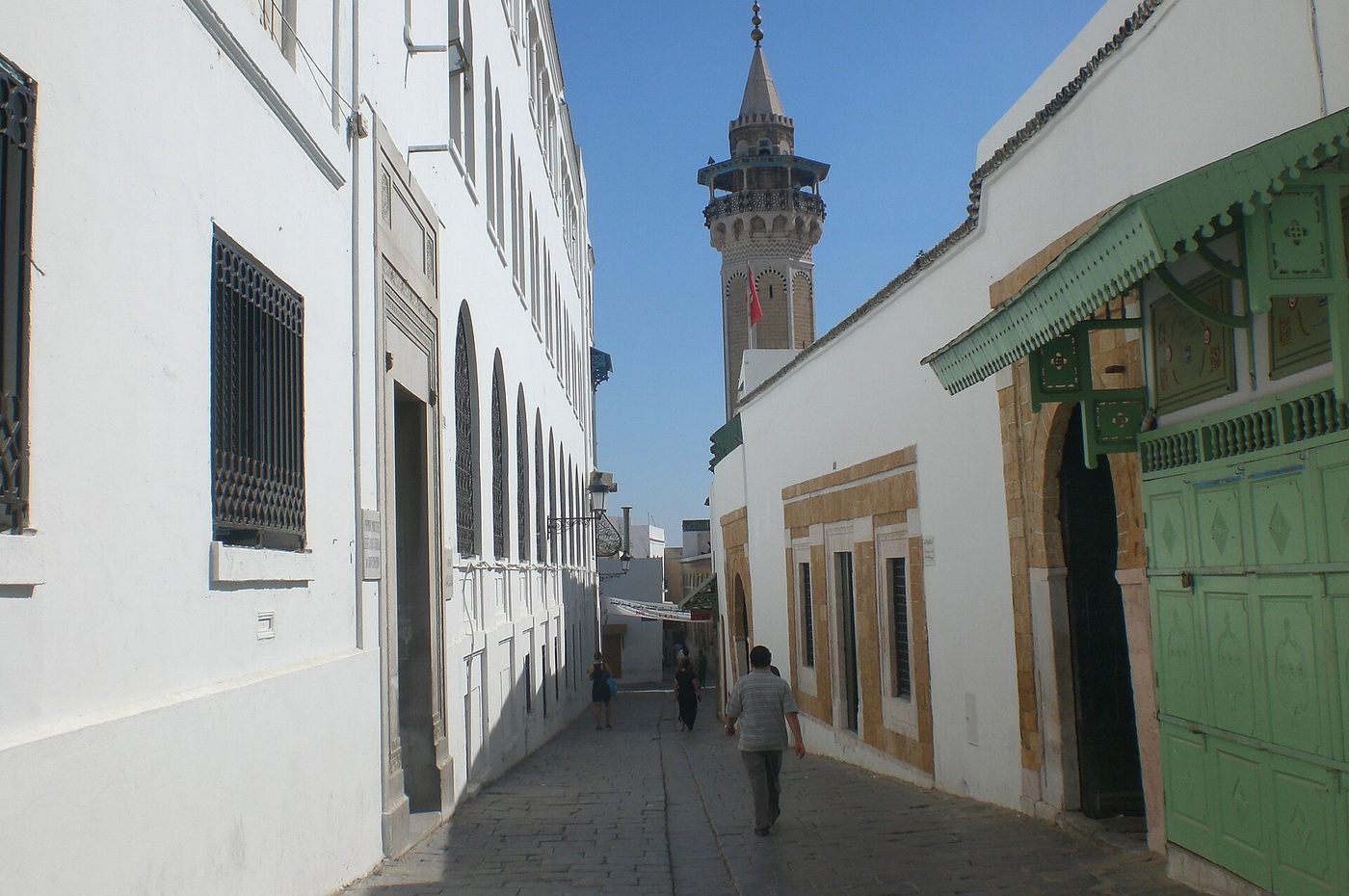
All images via Wikimedia Commons, used with thanks: The blue-and-white lanes of Sidi Bou Said near Tunis in late winter © Rene Cortin (CC BY-SA 4.0); Whitewashed lanes of Houmt Souk on the island of Djerba © Henning Leweke from Kiel, Germany (CC BY-SA 2.0); The great Roman amphitheatre at El Djem © Agnieszka Wolska (CC BY-SA 3.0).