By the Tunisia Tourism Guide team · Last updated 2 July 2026 · We don’t sell tours or take hotel commissions — this is independent advice.
January is the month people book on a whim. The Christmas cards are down, the credit-card bill is looming, everything’s grey — and then a Tunisia deal pops up for the price of a big weekend away. Before you press “book”, though, it’s worth knowing exactly what a Tunisian January delivers, because it’s the coolest, quietest month of the year and it rewards the right kind of traveller while quietly disappointing the wrong one.
Tunisia in January is the country at its coolest and calmest: the coast averages around 16–17°C by day with the sea at its chilliest (about 16°C), so it’s firmly a culture-and-desert month rather than a beach one. But it’s brilliant for the Sahara — the clearest skies and the best light of the year — for near-empty Roman ruins, and for a warmer, drier winter-sun break down on Djerba. Go for the desert, the history and the peace, and January is a bargain. Go expecting to sunbathe and you’ll be sorry. If you’re still weighing up which month to pick, our guide to the best time to visit Tunisia sets January against the rest of the year.
Below we get into what the weather really does in January — coast versus desert, day versus night, early versus late month — plus what’s open, what’s shut, one national-holiday date to keep an eye on, and how to build a January trip that plays to the season.
Tunisia weather in January at a glance
These are the coastal climate averages for the Hammamet–Sousse belt, where most flights land. They’re long-run normals rather than a forecast, so always check the current outlook before you travel.
| January (coast) | Typical |
|---|---|
| Air temperature (daytime high) | Averages around 16–17°C — check current |
| Air temperature (night low) | Around 8–9°C |
| Sea temperature | Around 16°C — the coldest of the year |
| Rainfall | Roughly 9 rainy days; damp but a touch less than December |
| Daylight / sunshine | About 10 hours of daylight; roughly 6–7 hours of sun on a clear day |
January is the coolest month on the Tunisian calendar, but “coolest” here still means a comfortable British-spring sort of day when the sun’s out. The sea, at around 16°C, is at its lowest of the year — properly cold — and while January isn’t quite as wet as December, it’s still a damp month with fierce winds possible. The upside written into that table is the light: on the many clear, crisp days, the low winter sun is glorious, and inland the skies are about as clean as they get all year.
Is Tunisia warm in January? The honest answer
Against a British January, absolutely — landing into 15–17°C and actual sunshine when you left frost behind is a real lift. Against any notion of a beach holiday, no. This is the coolest month of the year, and it’s best framed as a fine-spring-day escape rather than a warm one.
On a good January day you’ll wander a medina or an archaeological site in a light jacket, sit in the sun with a mint tea and feel thoroughly restored. On a poor day it’ll be grey, breezy and around 12–13°C, and you’ll want a proper coat. Both are normal in January, so the winning strategy is a trip built to work whatever the sky does — and Tunisia, with its ruins, museums, cities and desert, is unusually well suited to exactly that.
Early January versus late January
There isn’t a dramatic shift across the month — January is consistently the cool low point of the year — but the first half tends to be the damper, more unsettled stretch, carrying December’s wet weather into the New Year. Later January can bring longer settled spells of clear, crisp, sunny days, the kind that make winter travel a joy. Temperatures barely move across the month; it’s the run of clear versus cloudy days that varies, and that’s impossible to predict far ahead, so watch the forecast in the fortnight before you fly.
Day and night — the temperature swing
The day-to-night drop is a defining feature of a Tunisian January. A pleasant 16–17°C afternoon on the coast becomes an 8–9°C evening once the sun goes down, and inland the swing is far bigger. Hotels and restaurants expect it — heaters, blankets, warm interiors — but pack layers you can pile on as the evening cools. In the desert this swing becomes the single most important thing to plan for, as we’ll come to.
Region by region: where January works
In winter, the differences between Tunisia’s regions matter more than any single number on a chart. Choose your base to suit the season and January is a genuine pleasure.
The mainland coast: Hammamet and Sousse
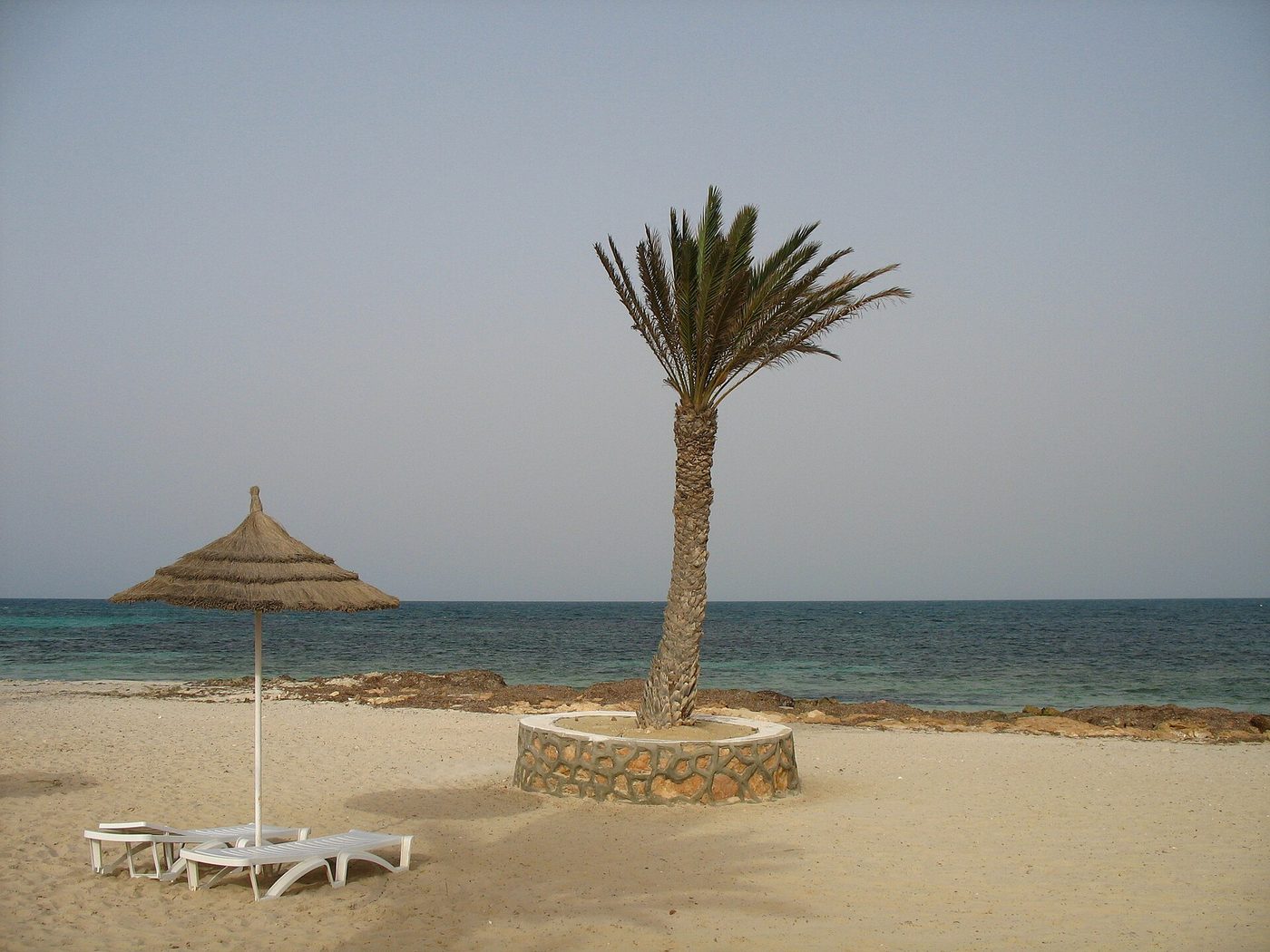
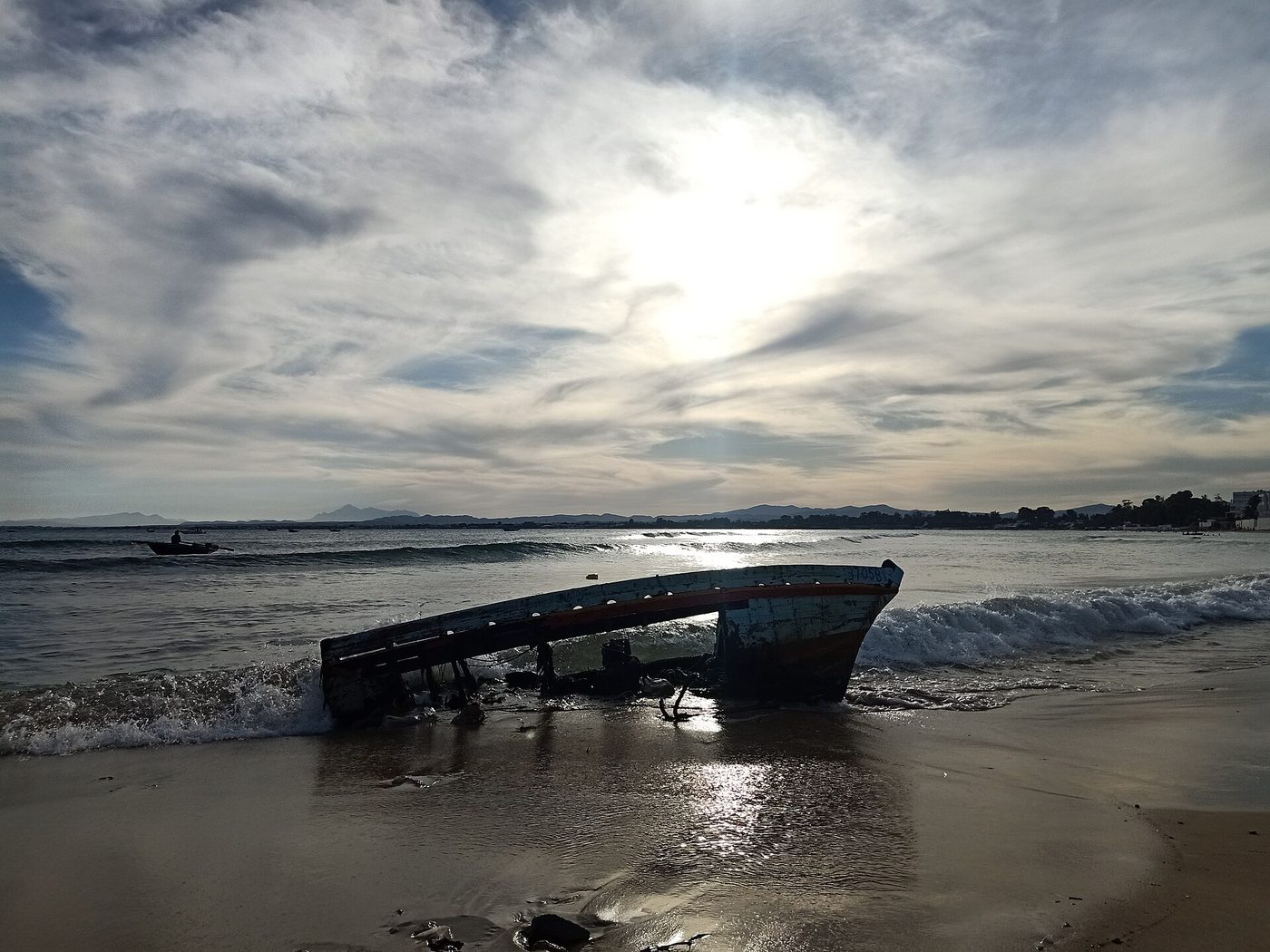
The big package resorts of Hammamet and Sousse are at their absolute quietest in January, and prices reflect it — this is bargain season. The flip side is that a fair amount of the seasonal machinery is closed: beach bars, watersports and some restaurants shut for winter, and the sea is far too cold to swim. What remains is a peaceful, inexpensive base for sightseeing, with calm, hassle-free medinas and long empty beaches lovely for a bracing walk.
Pick a mainland resort in January if you want a cheap, low-key place to lay your head between day trips and spa visits — but confirm your hotel’s pool is heated (many aren’t in winter) and don’t expect the resort to be buzzing. Hammamet’s thalassotherapy centres are a real January highlight: warm seawater pools, hammams and massages are exactly what a cool, damp week calls for. Our where-to-stay guide helps you compare the options.
Djerba and the south: the winter-sun pick
For the best odds of warmth and sunshine in January, head south. The island of Djerba runs a couple of degrees warmer than the mainland and, importantly, drier, dodging much of the rain that dampens the north. January highs on Djerba often sit around 17–18°C, and the island collects more winter sun than almost anywhere else in Tunisia, which is why it stays open as a winter-sun destination when the mainland resorts go quiet.
Keep it realistic, though: the sea is around 16°C, so it’s not swimming weather, and Djerba gets cloudy days too. What you’re paying for is the best chance of gentle, jacket-optional afternoons — flat, easy cycling, quiet beaches to walk, the whitewashed lanes of Houmt Souk, the old El Ghriba synagogue and that soft winter light. If the south’s safety is a worry, we’ve set it out plainly in is Djerba safe: the island and its coast sit comfortably inside the reassuring zone.
Tunis and the north: cities and ruins
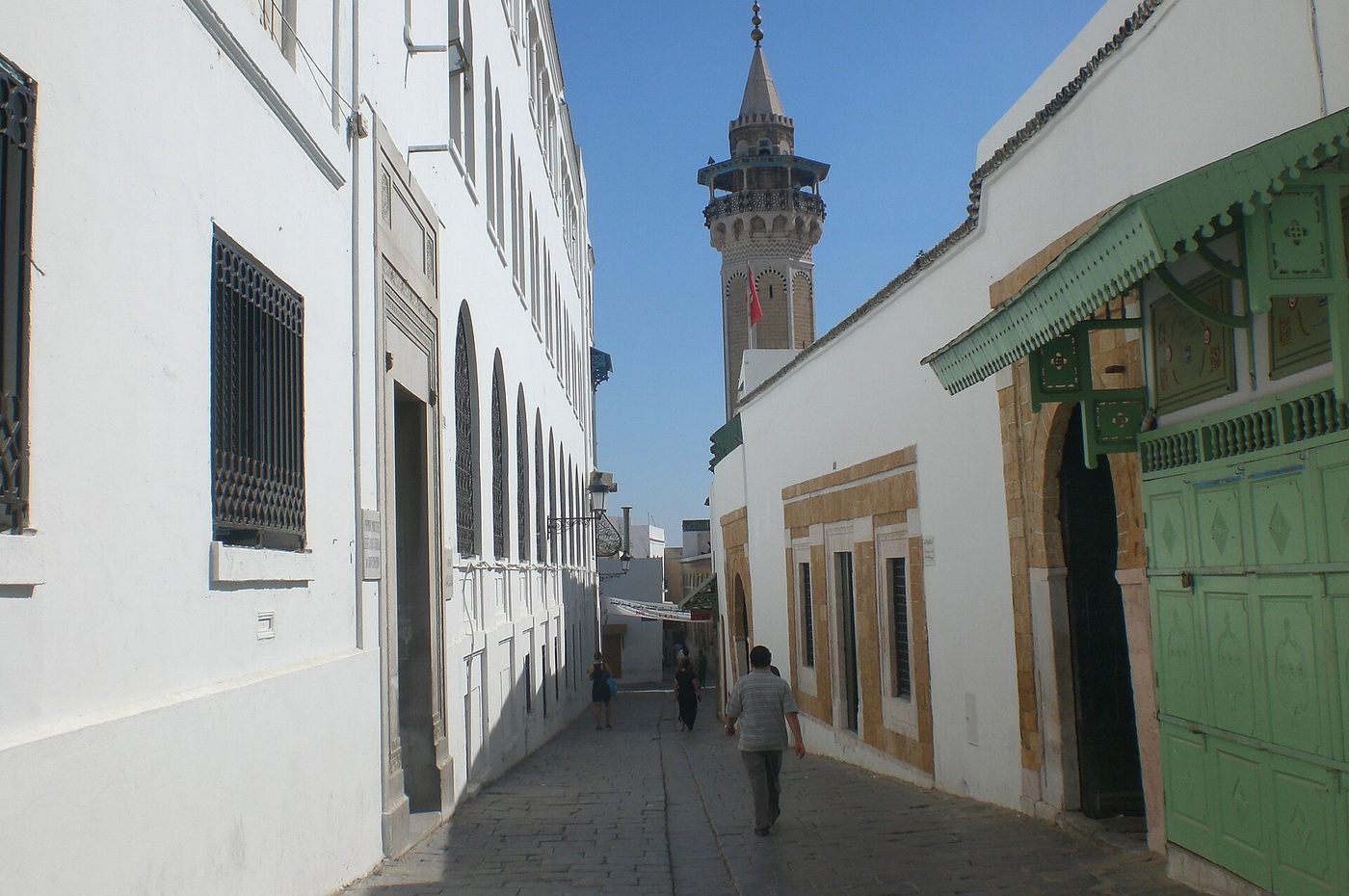
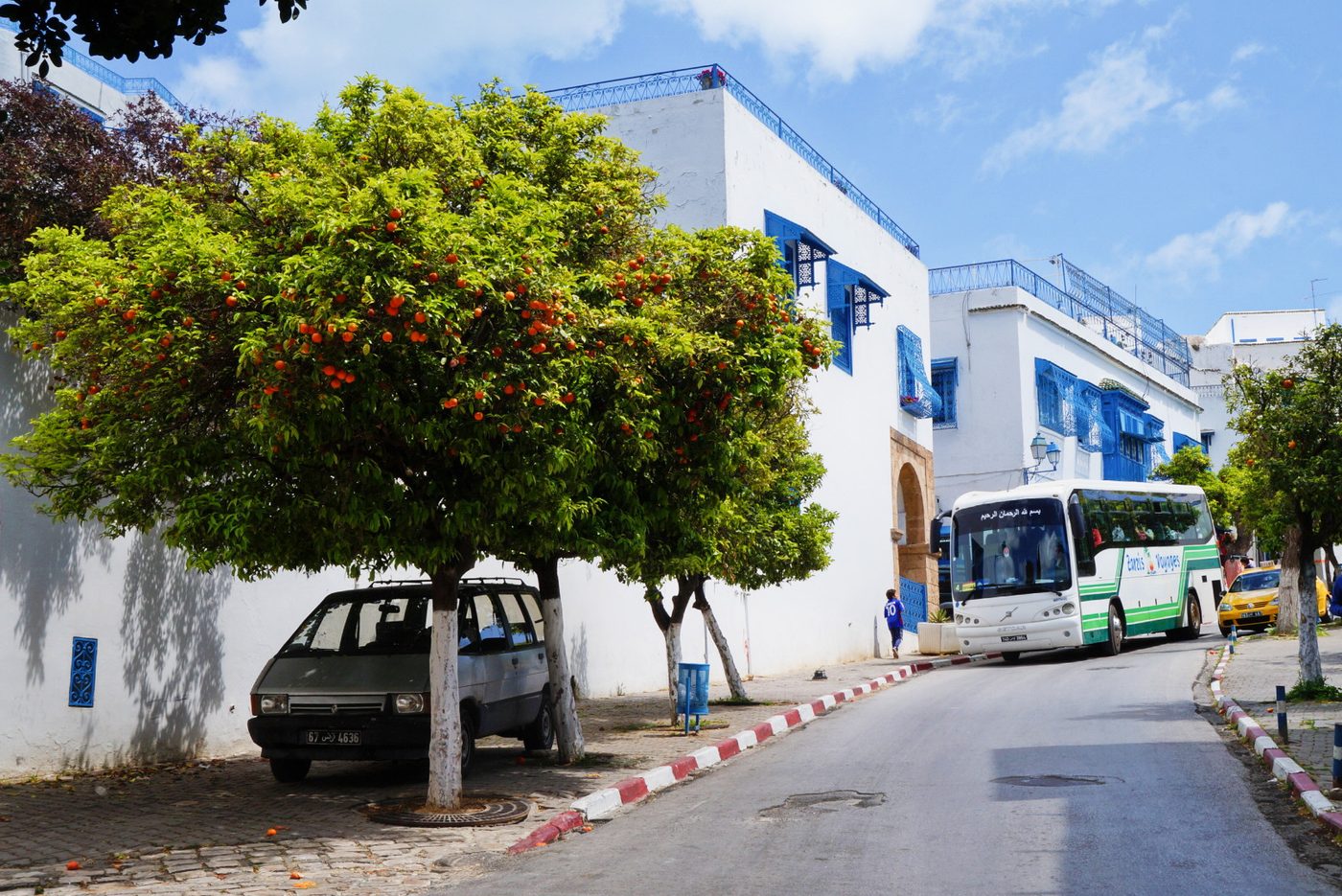
January is a fine time to explore Tunis. The capital doesn’t need beach weather, so a clear, crisp winter’s day is close to perfect for the medina, the Bardo Museum’s astonishing Roman mosaics, the ruins of Carthage on their hill above the sea, and the blue-and-white streets of Sidi Bou Said. You’ll want a coat and an eye on the forecast — the north catches the rain — but a great city in the sharp January air, punctuated by cafés and hammams, is a proper winter treat. And the Roman ruins scattered across the country — El Djem’s vast amphitheatre, hilltop Dougga — are far more comfortable to explore in cool weather than under summer sun, and you’ll often have them entirely to yourself.
The Sahara: the clearest desert days of the year
This is January’s trump card. The Tunisian Sahara is impossible in the summer heat, but the touring season runs October to April, and January delivers some of the clearest, most beautiful desert days of the whole year. At the desert gateways of Tozeur and Douz, days are typically dry and sunny — often around 18–20°C — with astonishingly clean air and long, low light that makes the dunes glow gold. For photographers and for anyone booking that camel ride into the sand, it’s about as good as Tunisia gets.
The price of that clarity is genuinely cold nights. Desert temperatures in January can plunge towards freezing after dark — some nights the far south dips to around 2°C — so an overnight desert camp demands serious warm kit: thermals, hat, gloves, a proper coat. Good camps supply heavy blankets, but the swing from a 19°C afternoon to a near-freezing dawn floors the unprepared every winter. Plan for it and a January night under the desert stars, with the sky as clear as it ever gets, is unforgettable.
National holiday: 14 January
One date to have on your radar. The 14th of January is Revolution and Youth Day, a Tunisian public holiday marking the events of 2011. Most of the time it passes as any public holiday would — some offices and businesses closed, a quieter feel — and it needn’t affect a beach-base-and-day-trips sort of trip at all.
The one sensible precaution: on national dates like this, demonstrations and gatherings can cluster in central Tunis, particularly around Avenue Habib Bourguiba. These are usually peaceful, but the standard advice — ours and the Foreign Office’s — is to give any protest or large crowd a wide berth. If you’re in the capital around the 14th, simply plan your sightseeing away from the central avenue that day, keep an eye on local news, and you’ll be fine. Our broader is Tunisia safe guide covers this kind of practical caution in more depth.
What to do in Tunisia in January
With the beach out of the picture, here’s what genuinely fills a rewarding January week.
- Tour the Sahara. January offers the clearest skies and finest light of the year for dune drives, camel rides, oasis towns, salt flats and the Star Wars sets near Tozeur. Warm days, very cold nights.
- Have the ruins to yourself. El Djem, Carthage, Dougga and the Bardo mosaics are more comfortable in cool weather and blissfully empty in January — arguably the best month for Tunisia’s Roman history.
- City-break in Tunis. Medina, museums, Sidi Bou Said and Carthage make a great cool-weather two- or three-day itinerary.
- Book a spa day. Hammamet’s thalassotherapy centres — warm seawater pools, hammams, massages — are made for a cool, damp January.
- Walk and cycle Djerba. Flat, mild and quiet: the villages, the Houmt Souk market and the beaches are lovely on foot or by bike in winter.
- Eat hearty winter food. Cool weather suits steaming couscous, lablabi (chickpea soup) and fresh grilled fish. Our Tunisian food guide lists what to seek out.
- Bag the year’s lowest prices. January is deep off-season on the coast, so flights, hotels and excursions are among the cheapest you’ll find all year.
If organising a desert trip or a ruins day in winter feels like hassle, a well-run tour takes the strain; our Tunisia itinerary guide suggests how to slot the highlights together.
What to pack for Tunisia in January
January is the month people most underpack for, because “North Africa” tricks them into leaving the warm clothes at home. Pack for a cool, changeable spring trip with genuinely cold desert nights and you’ll be right. Here’s the checklist.
| What to pack | Why |
|---|---|
| Layers — jumpers, long sleeves, a fleece | Days are cool-mild; evenings turn cold quickly, especially inland |
| A warm, water-resistant jacket | January is damp and can be windy; you’ll want it most days |
| Comfortable closed walking shoes | Sightseeing, medinas and ruins — this is a walking month, not a sandals one |
| A packable waterproof or small umbrella | Showers come and go; the northern coast and Tunis catch the rain |
| Proper cold-weather kit for the desert | Thermals, hat, gloves and a warm coat if you’re camping in the Sahara — nights near freezing |
| Sunglasses and a little sun cream | The clear winter sun is bright, particularly in the crisp desert air |
| Swimwear (optional) | Only for a heated hotel pool or a spa — the sea is around 16°C |
| Modest layers for towns and sites | Covered shoulders and knees for mosques and respectful medina visits |
A money note that trips up winter visitors: the Tunisian dinar is a closed currency, so you can’t buy it before you fly or bring it home. Change cash on arrival, keep some for taxis and tips, and convert leftovers back before you leave. Reckon on roughly £1 to 3.8–3.9 dinars in mid-2026, but check the current rate. More of this practical detail sits in our Tunisia travel tips.
Who January suits — and who should pick another month
January is a strong choice if you want the cheapest possible escape from the depths of the British winter, you’re drawn to history, culture, cities and the desert far more than to beaches, you want the Sahara at its clear, photogenic best, or you simply crave peace and quiet — this is Tunisia at its calmest.
It’s the wrong month if you’re after a beach holiday with sunbathing and swimming, which January flatly cannot provide. It’s also a poor fit if changeable, cool weather would spoil the trip for you, or if you’re travelling with very young children who need to be warm and outdoors all day. If you want warmth and value but not midwinter, the shoulder months either side of summer are the sensible target — the month-by-month guide linked at the top of this page lays out the compromises.
How January compares to December and February
January is the cool heart of the Tunisian winter, and it helps to see it beside its neighbours. December is fractionally milder early on and comes with the festive draw — Christmas and New Year galas in the resort hotels, plus the Douz Festival of the Sahara at the month’s end. January strips the events away and gives you the quietest, cheapest, clearest version of a Tunisian winter, with the coldest sea of all.
February is much of a muchness on temperature — still cool, still damp, sea at its lowest — but it adds two things: the first almond blossom appearing inland around Tozeur and Kairouan, and, in 2027 specifically, the start of Ramadan on 8 February, which changes the daytime rhythm of towns. On raw numbers, December, January and February feel very alike on the coast, so the real choice between them is about events, blossom and Ramadan rather than degrees. January’s particular gift is emptiness and desert clarity — and, as ever in a Tunisian winter, the smart play is to treat the coast as a base and let the Sahara and the cities carry the trip.
Tunisia in January: your questions answered
Is Tunisia warm in January?
It’s the coolest month, so mild rather than warm. The coast averages around 16–17°C by day and 8–9°C at night — pleasant in the sun, cool otherwise. Djerba and the south run a little warmer. It’s a welcome break from a British January, but it isn’t hot and it isn’t beach weather.
Can you swim in the sea in Tunisia in January?
Realistically no. The sea is at its coldest in January, around 16°C, which is too cold for all but the hardiest swimmers. For swimming you’ll need a heated hotel pool or a thalassotherapy centre — and always check the pool is actually heated, as many close or cool down for winter.
Is January a good time to visit Tunisia?
Yes, for the right trip. January is superb for the Sahara, Roman ruins, city breaks and spas, it’s the quietest and cheapest month, and Djerba offers gentle winter sun. It’s a poor choice for a beach-and-swim holiday. Go for culture and desert over sunbathing and it’s excellent value.
Where is the warmest place in Tunisia in January?
The south. Djerba is the winter-sun pick, running warmer and drier than the mainland with highs often around 17–18°C. The inland desert around Tozeur and Douz also enjoys warm, sunny days of about 18–20°C — though with very cold nights that can approach freezing.
Is January a good time for the Tunisian Sahara?
It’s one of the best. The desert-touring season runs October to April, and January brings the clearest skies and finest light of the year — ideal for camel rides and photography, with warm days around 18–20°C. The nights are the catch, dipping near freezing, so pack serious warm kit for any overnight desert camp.
Does it rain a lot in Tunisia in January?
January is damp, with around 9 rainy days on the coast, though slightly less wet than December. Expect showers and some grey, breezy spells rather than constant rain, interspersed with clear, crisp, sunny days. The south, especially Djerba, is noticeably drier than the northern coast and Tunis.
Is Tunisia quiet in January?
Very — it’s the quietest month of the year, which is a big part of its appeal. Coastal resorts are calm and cheap, medinas are relaxed and hassle-free, and the Roman ruins are almost deserted. If you value peace and low prices over buzz, January delivers both in abundance.
What is 14 January in Tunisia?
The 14th of January is Revolution and Youth Day, a public holiday marking the 2011 revolution. Some businesses close and the mood is quieter. On national dates like this, demonstrations can gather in central Tunis, so the sensible move is to keep away from any protest or large crowd, especially around Avenue Habib Bourguiba.
What should I pack for Tunisia in January?
Pack for a cool, changeable spring trip: layers, a warm water-resistant jacket, closed walking shoes and a packable waterproof. Add proper cold-weather kit — thermals, hat, gloves, a warm coat — for any desert camp, where nights near freezing. Bring sunglasses for the bright winter sun and only token swimwear for a heated pool.
How cold does the Tunisian desert get at night in January?
Cold — that’s the trade-off for January’s beautiful clear days. Nights in the far south around Tozeur and Douz can drop towards 2–5°C, sometimes near freezing. Reputable desert camps provide heavy blankets, but bring thermals, a hat and a warm coat so the near-freezing dawn doesn’t ruin an otherwise magical night.
Is Djerba good for winter sun in January?
It’s the best winter-sun option in Tunisia, with milder, drier, sunnier days than the mainland — highs often around 17–18°C. It’s warm enough for pleasant walking, cycling and sightseeing in a light jacket, but not for beach days or swimming. Think restorative winter sun rather than a tan.
How does January compare to December and February in Tunisia?
All three are cool, damp winter months with the year’s coldest sea and little between them on temperature. December adds festive hotel programming and the Douz festival; February brings almond blossom and, in 2027, the start of Ramadan. January’s distinct appeal is its emptiness, its low prices and the clearest desert skies of the year.
Written by the Tunisia Tourism Guide team — an independent, UK-focused guide to travelling in Tunisia. We don’t sell tours or take hotel commissions. Weather figures are long-run averages; always check the current forecast and any local advice before you travel.
Photo credits
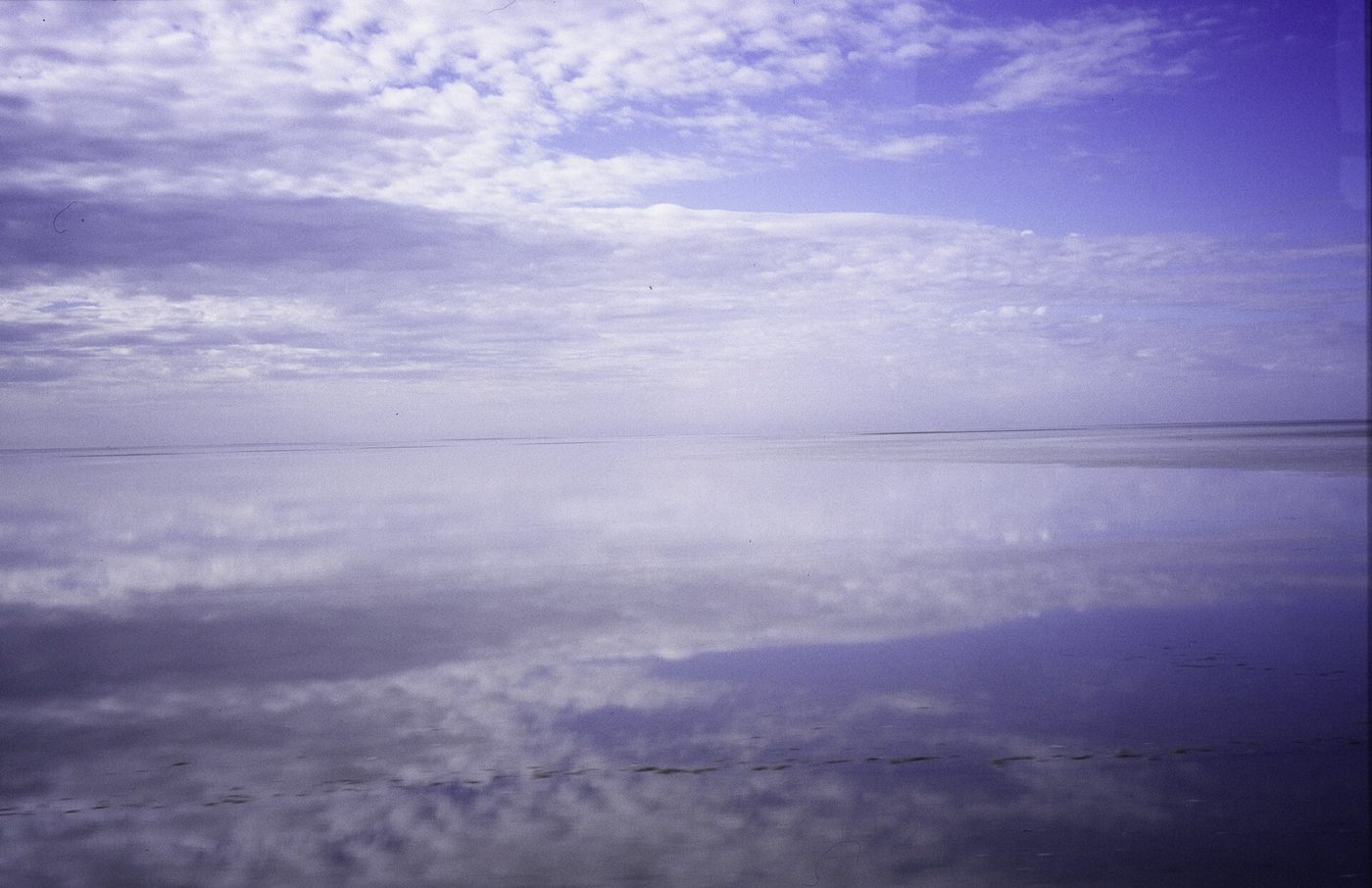
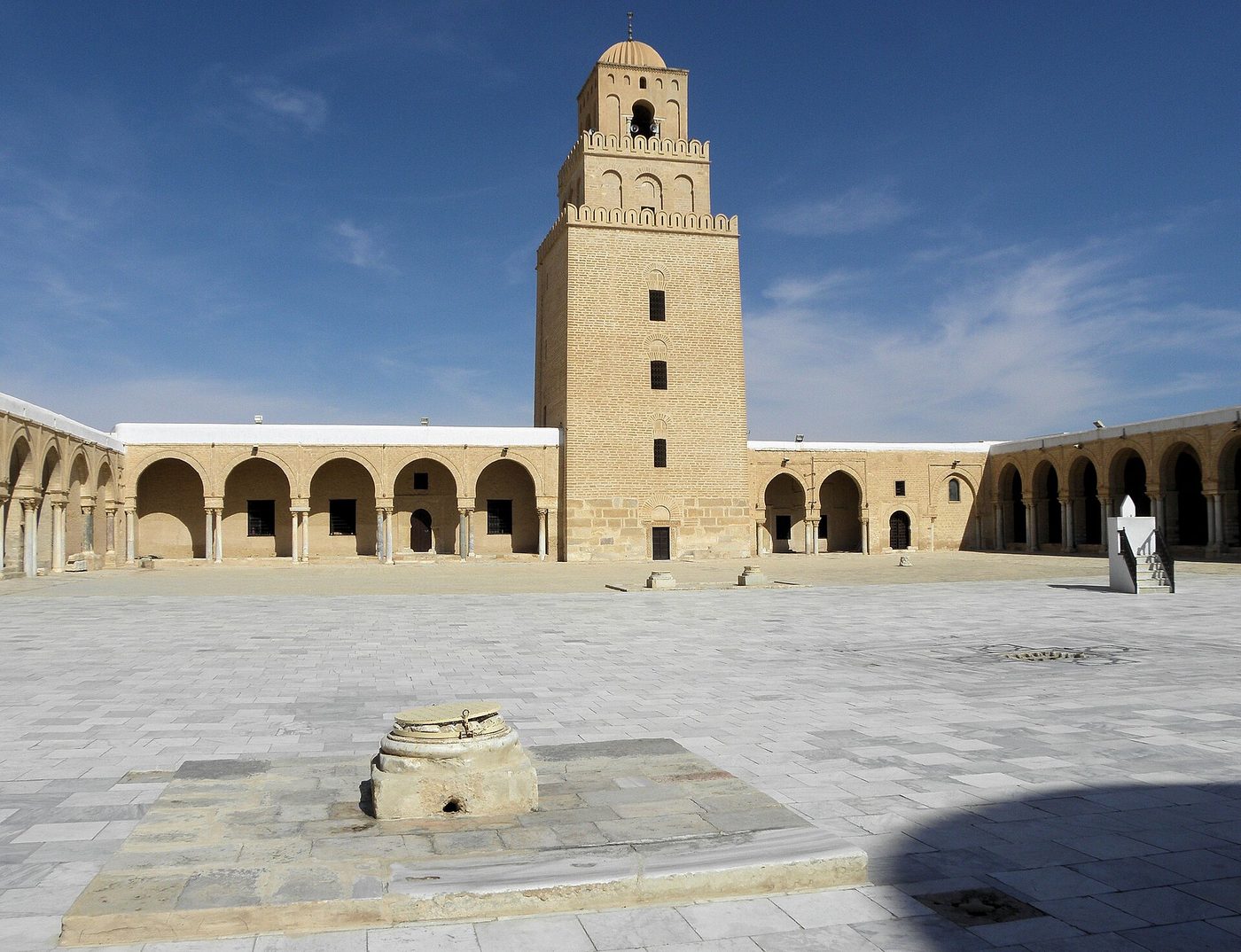
All images via Wikimedia Commons, used with thanks: The vast Chott el Djerid salt lake in the south © Angeline A. van Achterberg (CC BY-SA 4.0); The courtyard and minaret of the Great Mosque of Kairouan in winter light © Keith Roper (CC BY 2.0); Whitewashed houses and blue doorways of Sidi Bou Said above the sea near Tu © Rene Cortin (CC BY-SA 4.0).