By the Tunisia Tourism Guide team · Last updated 4 August 2026 · We don’t sell tours or take hotel commissions — this is independent advice, written to be useful.
One is a low, sun-baked island off Tunisia’s deep south; the other a green resort town an hour from the capital. They’re both sold as “a week on the Tunisian coast”, but they’re further apart — in feel, weather and what you’ll actually do — than the map suggests.
The honest answer to Djerba or Hammamet comes down to island versus mainland: choose Djerba for warmer, more reliable sun, whiter-sand beaches and a slow island calm, and pick Hammamet for a shorter reach to Tunis, Carthage and livelier resorts. Djerba suits sun-seekers and couples; Hammamet suits sightseers and first-time visitors.
That’s the headline. Below is the proper breakdown — flights, beaches, weather, day trips, families and value — the conversation we’d have with a friend stuck between the two. It’s part of our wider guide to where to stay in Tunisia, so if you haven’t settled on a region at all yet, start there and work back to this page.
Djerba or Hammamet: the quick verdict
The short version, before the detail.
| Djerba (island) | Hammamet (mainland) | |
|---|---|---|
| In a phrase | Warm, flat southern island with a slow pace | Green, pretty resort town near the capital |
| Beaches | Winner — whiter sand, calm shallow sea | Very good, well-kept resort strands |
| Weather | Winner — warmer, drier, better off-season | Good, but cooler and wetter in winter |
| Day trips | Sahara south, Star Wars sites, Matmata | Winner — Tunis, Carthage, Sidi Bou Saïd |
| Nightlife | Quiet, mostly hotel-based | Winner — more bars and clubs |
| Flights from UK | Direct but fewer; ~3h25 | Via Enfidha, more frequent; ~3h |
| Best for | Sun-seekers, couples, winter escapes | First-timers, families, sightseers |
Both are safe, cheap and warm, and neither is a wrong answer. The difference is really about what a good day looks like to you — a lazy one on better sand in more dependable sun, or a busier one with big-hitting sights an easy drive away.
Island vs mainland: what actually differs
It helps to picture where these two sit. Hammamet is on the mainland’s north-east coast, at the neck of the Cap Bon peninsula, roughly an hour south of Tunis. It’s greener than most of the country, wrapped in citrus groves and jasmine, and it’s close to the capital’s big historical sights. Our full guide to Hammamet covers the town in detail.
Djerba is an island in the Gulf of Gabès, down in the far south, linked to the mainland by a causeway the Romans first built. It’s flat, sandy and sun-bleached, with a distinct island identity — a blend of Berber, Arab and one of North Africa’s oldest Jewish communities — and a pace that’s noticeably slower than the mainland resorts. Our Djerba guide and our honest take on whether Djerba is worth visiting go deeper.
The practical upshot of that geography runs through everything below. Being 500-odd kilometres further south, Djerba is hotter, drier and sunnier for more of the year, and it’s the natural springboard for the Sahara and the Star Wars country. Being near the capital, Hammamet puts Carthage, Tunis and Sidi Bou Saïd within easy reach and gives you a livelier, more built-up resort scene. Same country, genuinely different holidays.
Getting there: the flight question
This is the first practical thing to sort, because it can quietly settle the decision. Both islands and mainland are a similar distance from the UK — roughly three hours in the air — but the frequency and choice of flights differs, and that matters for price and convenience.
| Djerba | Hammamet | |
|---|---|---|
| Airport | Djerba–Zarzis (DJE), on the island | Enfidha (NBE), ~40 min away |
| Flight time from UK | Around 3h25 direct | Around 3h direct |
| UK direct routes | Fewer, more seasonal (easyJet, TUI) | More frequent, more UK airports |
| Transfer to resort | Short — airport is on the island | ~40 min from Enfidha |
Djerba’s trump card is that the airport is right there on the island, so once you land you’re minutes from your hotel rather than facing a coach transfer. The catch is that direct UK flights to Djerba are fewer and more seasonal than the steady stream into Enfidha (2026 — check current schedules), which serves Hammamet and much of the mainland coast. In practice that means Hammamet often wins on flight choice, timings and price, while Djerba wins on the door-to-lounger convenience once you’ve actually booked. If you’re flexible on dates, check both airports before you commit. Our guide to getting around Tunisia covers onward travel once you’re there.
One more thing worth saying plainly: reaching Djerba overland from the mainland resorts is a slog — it’s a long drive south, so don’t book Hammamet imagining you’ll “pop down to Djerba” for the day. If you want the island, fly to the island.
Beaches: Djerba has the edge
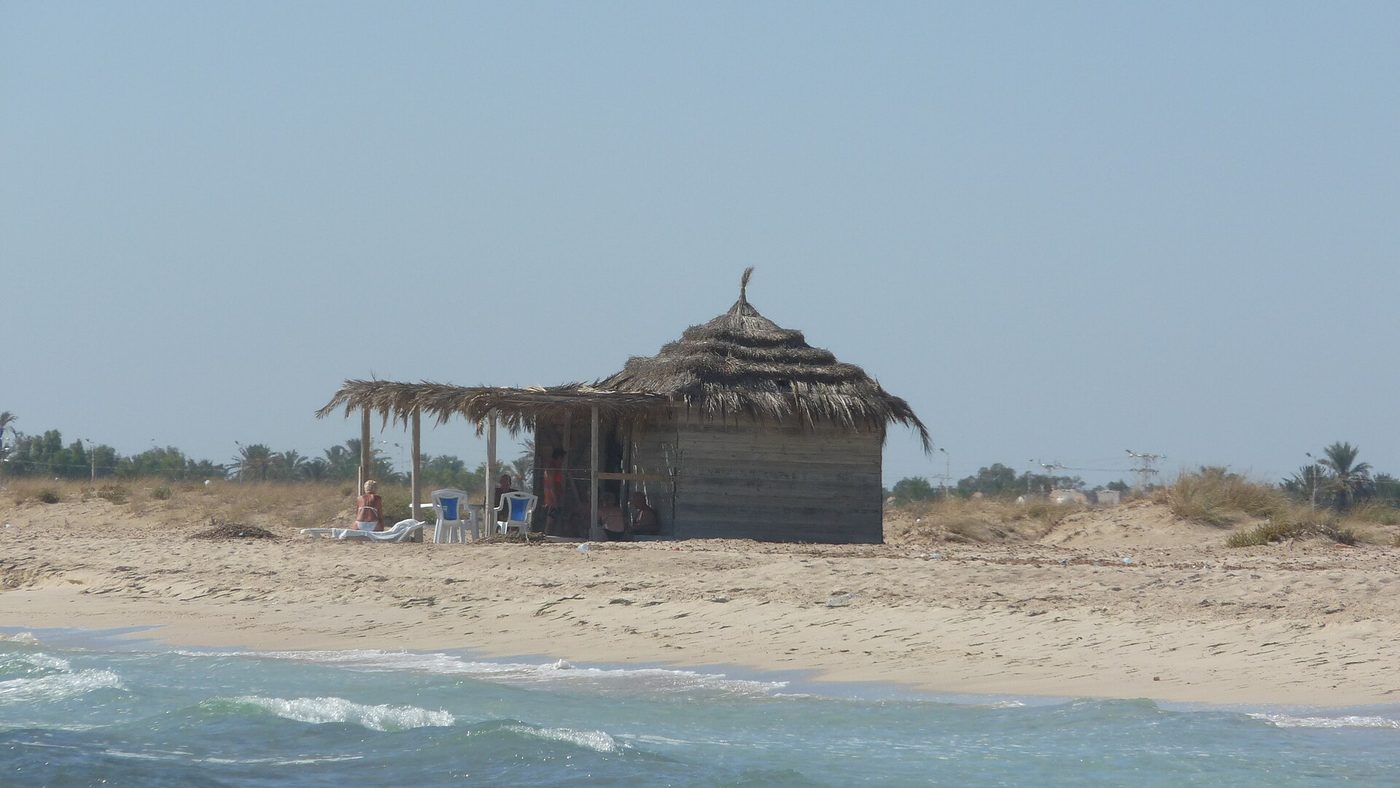
For pure beach quality, Djerba usually wins. The island’s east coast — the long strand around Sidi Mahres and up towards Midoun, where most of the hotels sit — has paler, whiter sand and a shallow, exceptionally calm, turquoise sea that shelves so gently it’s ideal for children and nervous swimmers. It has a genuinely tropical look on a good day, more so than anywhere on the mainland coast.
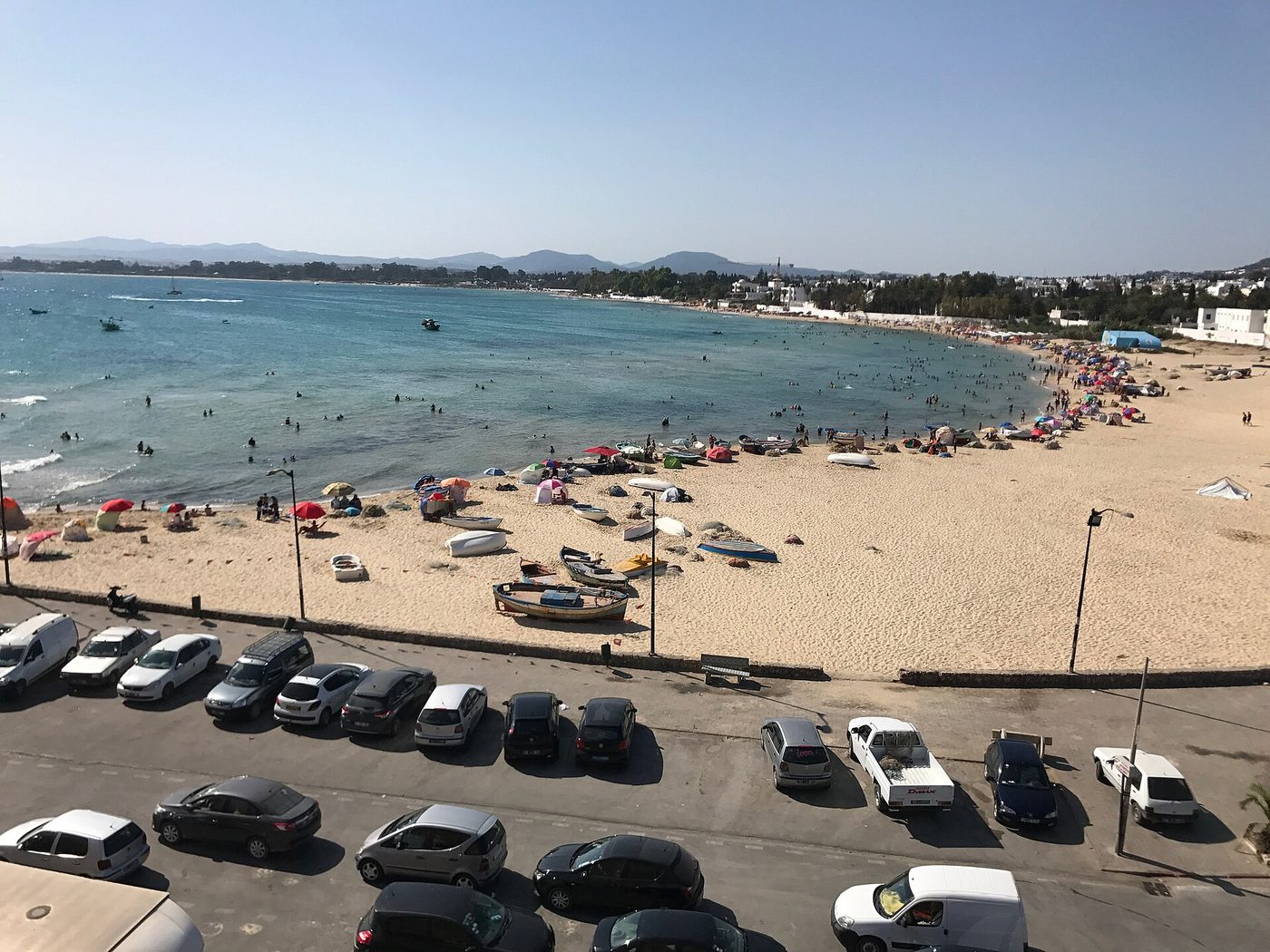
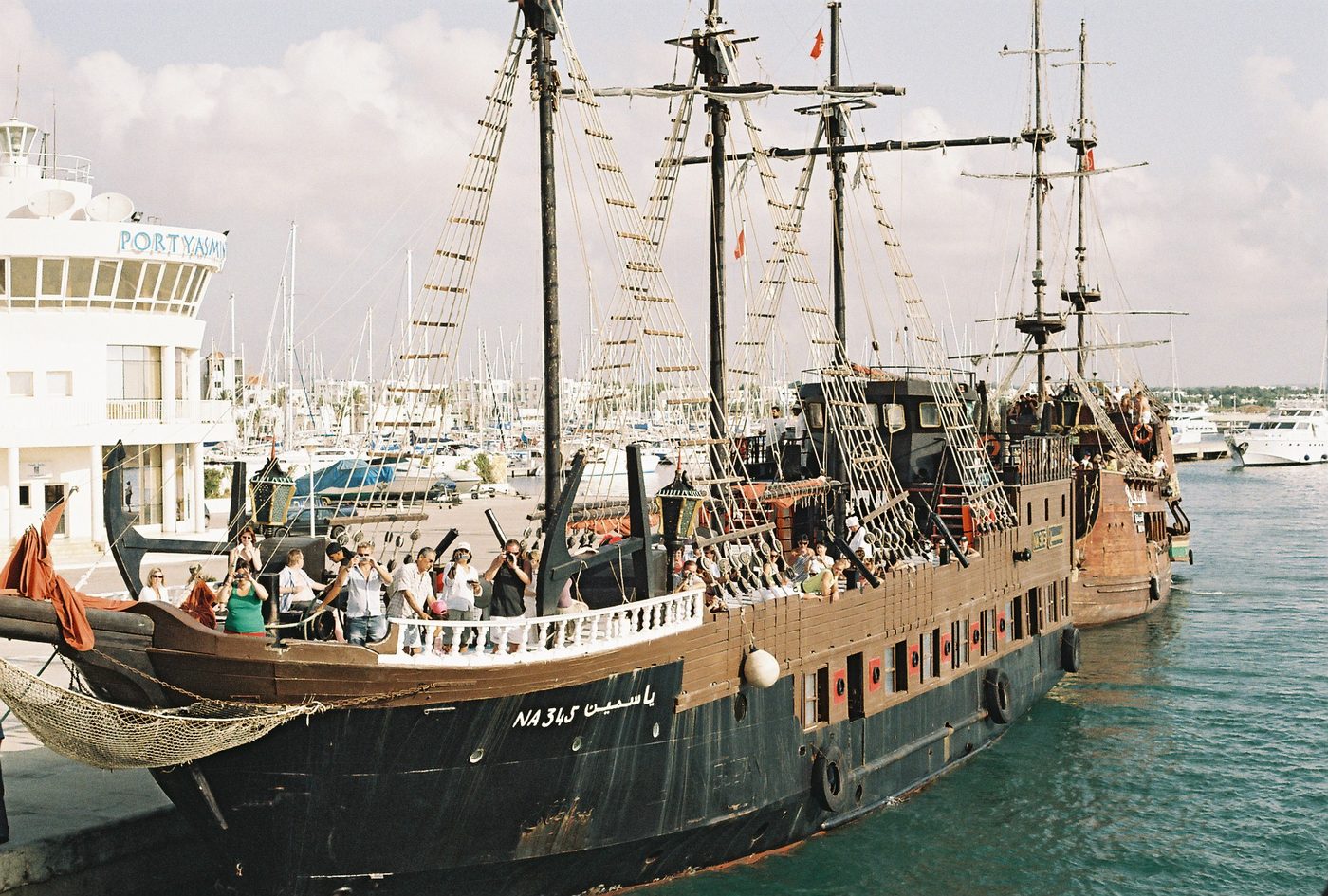
Hammamet’s beaches are no slouch — long, sandy and well-kept along the Yasmine Hammamet resort strip, with the postcard looks that keep families coming back. But side by side, Djerba’s sand tends to be finer and whiter and its water calmer and clearer. Our roundup of Djerba’s beaches goes stretch by stretch, bay by bay.
Two honest caveats about Djerba, though. First, seagrass: on some stretches, banks of dried seagrass (posidonia) wash up on the sand — it’s a sign of a healthy sea, not pollution, but it isn’t always the pristine picture the brochure paints, and how much there is varies by beach, season and wind. Second, in high summer the shallow water that’s so good for toddlers can get bath-warm and a touch weedy. Neither is a dealbreaker; both are worth knowing. Read recent reviews of your specific hotel’s beach either way.
Weather and when to go: Djerba’s big advantage
If sun is the whole point of your trip, this section might decide it. Being far to the south, Djerba is warmer, drier and more reliably sunny than Hammamet — usually by a degree or two on the thermometer and rather more in the feel of it, especially outside high summer. It rains less, and the season stretches longer at both ends.
That makes Djerba the stronger pick for a shoulder-season or winter escape. In spring and autumn it holds warmth and sunshine when the mainland has started to cool or turn showery, and even in winter it stays mild and bright — a proper winter-sun option in a way Hammamet isn’t quite. The sea backs this up: Djerba’s water runs from around 15°C at its February low to roughly 28°C in August, comfortably swimmable from about July into October (2026 — check current), typically a shade warmer than Hammamet’s.
Hammamet’s summers are hot and dependable too, so in July and August there’s little to choose. The gap opens in the quieter months. If you’re eyeing a March, April, October or November break — or genuine winter sun — Djerba is the safer bet for warmth, while Hammamet’s off-season weather is more of a gamble. Our month-by-month best time to visit Tunisia guide breaks down both.
Vibe and atmosphere
The two places feel different, and it’s worth being honest about which mood you’re after.
Djerba is slower, quieter and more insular — an island where a lot of the entertainment happens inside the hotel complexes and the days drift by on the beach. That’s bliss if you want to properly switch off, and it’s why couples, honeymooners and anyone chasing a wellness-and-sunshine week tend to love it. It can feel a little sleepy if you want buzz on the doorstep, and the resort zone is fairly spread out.
Hammamet is livelier and more connected. It’s greener, prettier in a manicured way, busier in the evenings, and being near the capital it feels less cut off from the rest of the country. There’s more going on outside the hotels — bars, a marina, more nightlife around Yasmine Hammamet — and more of a sense that a big, layered country is right there beside you. For nightlife specifically, Hammamet is comfortably the livelier of the two; Djerba’s evenings are gentle.
Neither is right or wrong. It’s the difference between “I want to disappear onto a warm island and do very little” and “I want a relaxing base with plenty within reach when I fancy it.”
Day trips and things to do
Here’s where the split gets interesting, because each opens a completely different set of doors. Hammamet faces the historic north; Djerba anchors the deep, cinematic south.
| From Hammamet, easier | From Djerba, easier |
|---|---|
| Tunis, the Bardo Museum and the medina | The Sahara south — Douz, Ksar Ghilane, dunes |
| Carthage — Rome’s old rival by the sea | Star Wars sites — Ajim, Matmata, Tataouine |
| Sidi Bou Saïd — the blue-and-white village | Matmata’s underground Berber homes |
| Cap Bon, Nabeul pottery and El Djem | The island itself — a day just exploring |
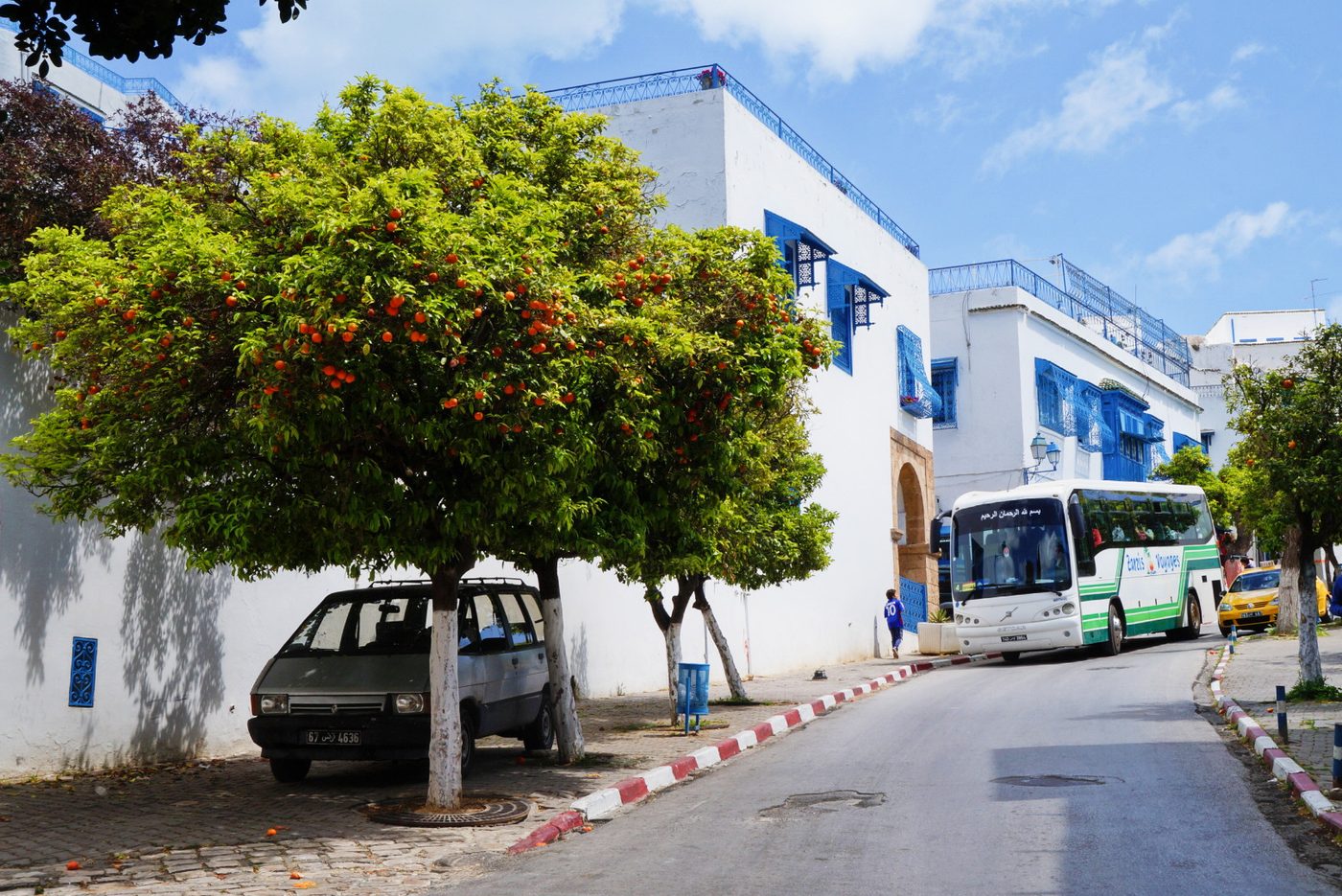
Hammamet is the better base if your dream trips are the classics of the north: the ruins of Carthage, the capital’s great museum, the cliff-top blue-and-white lanes of Sidi Bou Saïd, and the giant amphitheatre at El Djem within a longer day’s reach. It’s the sightseer’s choice.
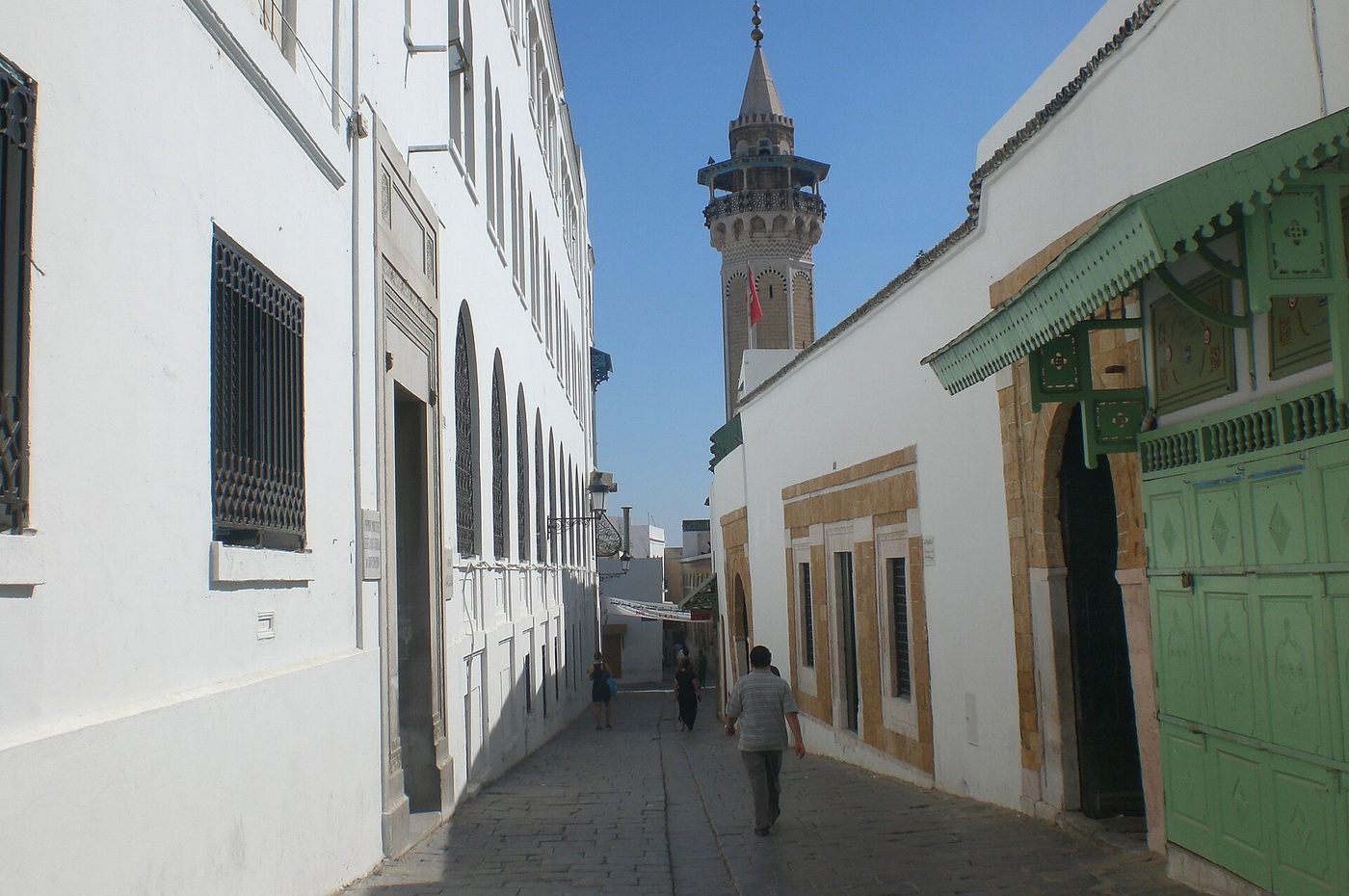
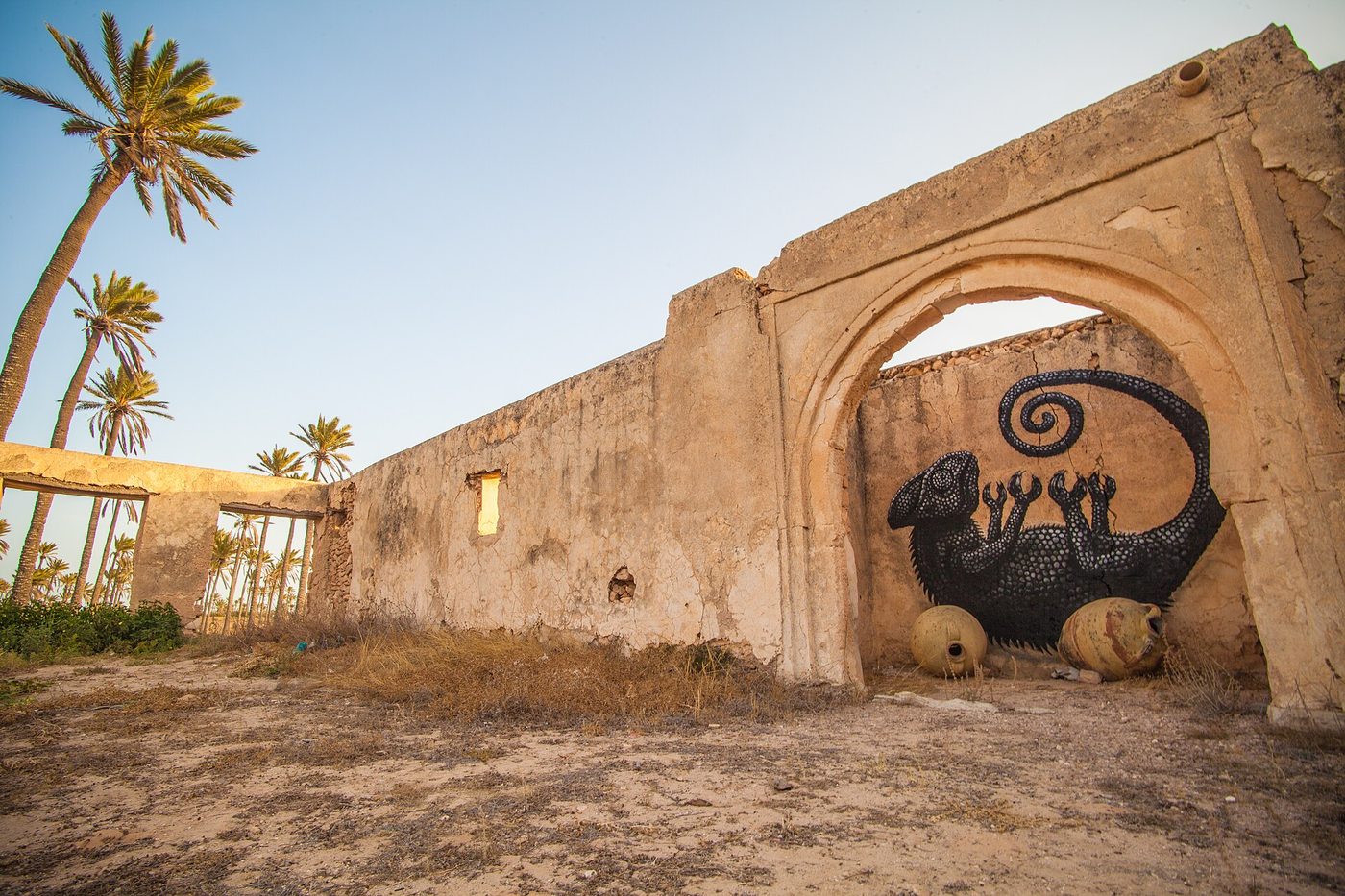
Djerba is the better base for the deep south and for the movie pilgrimage. The island itself keeps you busy for days: the ancient El Ghriba synagogue (among the oldest in the world, and the focus of a famous annual pilgrimage), the open-air street-art village of Djerbahood at Erriadh, the pottery workshops of Guellala, flamingos on the sandbanks, and the fishing town of Houmt Souk with the freshest seafood restaurants in the country. Just across the causeway lies Star Wars country — the village of Ajim on Djerba itself doubled as Mos Eisley, and the Lars homestead at Matmata (about 100 km away) and the ksour near Tataouine are within day-trip reach. It’s also the natural launchpad for the southern Sahara, with dune trips and desert camps far closer than they are from the mainland resorts. Our guides to Houmt Souk and the country’s Star Wars locations map out the best of it.
Families: it depends on the age of your kids
Both are solid family choices, but they suit different stages. Djerba is wonderful for families with very young children: the sea along the main beaches is shallow, warm and calm, so paddling toddlers are in their element, and the whole island is low-key and unhurried. The trade-off is fewer big attractions and the occasional seagrass on the sand that some children (and parents) grumble about.
Hammamet tends to win for families with older kids and teenagers who want more to do. Yasmine Hammamet has the Carthage Land theme park, water parks and more excursions within easy reach, plus a livelier evening scene that keeps teens happier. It’s the more “activity-rich” family base, while Djerba is the more restful one. Our guide to the best family resorts in Tunisia covers standout hotels in both.
Wherever you land, the family basics are the same across the country: warm shallow sea, cheap all-inclusives and a short flight, but pack rehydration sachets, be sensible at buffets, and read recent reviews of your exact hotel rather than the resort’s reputation.
Where to stay in each
A quick orientation, because both spread their hotels out. In Hammamet, most package properties sit in Yasmine Hammamet, the purpose-built resort zone south of the old town, with a marina, a mock-medina shopping street and the theme park; the older, prettier Hammamet Nord near the original medina is quieter and more characterful. On Djerba, the hotel belt runs along the north-east coast between the beaches of Sidi Mahres and the town of Midoun, with Houmt Souk as the island’s main hub for shops, restaurants and the fish market. Our detailed guide to where to stay in Djerba breaks the island down zone by zone.
Value and prices
On the ground, both are gloriously cheap — this is one of the best-value coastlines in the Mediterranean, and neither will stretch your budget. Meals out, taxis and drinks cost a fraction of UK prices in either place. The main difference is the flights: because Enfidha is served by more UK departures more often, Hammamet packages can work out a little cheaper and easier to snag at the dates you want, whereas Djerba’s more limited direct flights can nudge the total up, especially in peak weeks. Both offer superb all-inclusive value once you’re there. Our guide to all-inclusive holidays in Tunisia explains what’s really covered.
A universal money note: the dinar is a closed currency. You can’t buy it before you fly and you can’t take it home, so you change money on arrival, keep the receipts, and convert leftover cash back before departure. Reckon on roughly £1 to 3.8–3.9 dinars in mid-2026, but check the current rate. And budget a bit beyond the package for excursions, tips and taxis — a modest daily spend goes a very long way here.
Health and insurance
Standard across Tunisia, and worth stating once: your UK GHIC card is not valid here, so comprehensive travel insurance with medical cover and repatriation is essential, not optional. Private clinics in the resort areas are decent, but you’ll often be asked to pay up front. Check the NHS’s TravelHealthPro Tunisia page for jabs and food-and-water advice before you go, and pack the usual precautions against the traveller’s tummy that buffets and tap water occasionally bring.
Is Djerba or Hammamet safer?
Both are mainstream, well-established resort areas visited by large numbers of European holidaymakers every year, and the realistic things to manage are the same low-level nuisances you’d find anywhere touristy — pushy vendors, taxi overcharging, the odd opportunist in a crowd. Djerba’s island calm arguably makes it feel even more laid-back; Hammamet is relaxed too. We cover each in is Djerba safe and is Hammamet safe.
On the national picture, the UK Foreign Office advises against travel to certain areas — all of them remote, and none near either resort. For the record, the FCDO “advises against all travel to the Chaambi Mountains National Park and the designated military operations zones of Mount Salloum, Mount Sammamma and Mount Mghila; and against all but essential travel to parts of the interior including Kasserine Governorate (including the town of Sbeitla), and to within 75km of the Tunisia–Libya border, including Remada and El Borma but excluding Zarzis, the C118 road and all areas in Medenine Governorate north of the road.” That advice was still current at 19 June 2026 (last updated 23 February 2026) as we write. Note that Djerba, along with Zarzis and the road across the causeway, sits outside those zones — and Hammamet, Sousse, Tunis and the main Sahara circuit are far from them too. Both destinations are firmly in the safe, mainstream-holiday category.
So — Djerba or Hammamet? Our verdict
Here’s the plain recommendation we’d give a friend.
Pick Djerba if…
- Sun is the priority — especially in spring, autumn or winter, when the island’s warmth and dry skies beat the mainland.
- You want the better beaches: whiter sand, calm shallow turquoise sea.
- You’re a couple or a family with young children after a slow, restful week.
- The deep south calls — the Sahara, Matmata and the Star Wars sites on your doorstep.
- You’d rather land minutes from your hotel than face an airport transfer.
Pick Hammamet if…
- It’s your first time in Tunisia and you want the big northern sights within easy reach.
- Carthage, Tunis and Sidi Bou Saïd are on your must-see list.
- You want a greener, livelier resort with more bars, nightlife and things going on outside the hotel.
- You have older kids or teens who’ll want theme parks and activity, not just a quiet beach.
- You value more frequent, often cheaper UK flights and flexible dates.
Still weighing up the mainland options against each other? Our Hammamet or Sousse comparison is the natural companion to this one — and whichever way you lean, the island won’t disappoint a sun-seeker.
Djerba or Hammamet: your questions answered
Is Djerba or Hammamet better for a beach holiday?
Djerba, narrowly. Its east-coast beaches around Sidi Mahres have whiter sand and a calmer, clearer, shallow sea that looks almost tropical on a good day. Hammamet’s resort beaches are very good too, but for pure beach quality — and for warmth outside high summer — Djerba tends to come out ahead.
Is Djerba warmer than Hammamet?
Yes. Being far to the south, Djerba is warmer, drier and more reliably sunny than Hammamet, usually by a degree or two and noticeably more in spring, autumn and winter. It’s one of Tunisia’s better winter-sun options, whereas Hammamet’s off-season weather is more of a gamble.
Which is easier to get to from the UK?
Both are about three hours’ direct flight, but Hammamet is usually easier: it’s served by Enfidha airport, which has more frequent UK departures from more airports. Djerba has its own airport right on the island — handy once you land — but fewer, more seasonal direct flights, so check schedules and prices for your dates.
Is Djerba or Hammamet better for families?
It depends on your children’s ages. Djerba suits families with young children: calm, shallow, warm sea and a gentle pace. Hammamet suits families with older kids and teenagers, thanks to Carthage Land, water parks and more to do. Both are affordable, family-friendly and a short flight away.
Is Djerba better than mainland Tunisia?
For beaches, reliable sun and island calm, many would say yes — Djerba is a lovely, warm, laid-back escape. But the mainland around Hammamet wins for big historical sights, flight choice and livelier resorts. “Better” depends on whether you want to switch off in the sun or explore Carthage, Tunis and the north.
How far is Djerba from Hammamet?
A long way — roughly 500 km by road, several hours’ drive south. They’re at opposite ends of the coast, so you can’t realistically day-trip between them. If you want to see both on one trip you’d fly or take a domestic connection; most people simply pick one base for the whole holiday.
Can you see the Star Wars locations from Djerba?
Yes — Djerba is the best base for them. The village of Ajim on the island itself doubled as Mos Eisley, and the Lars homestead at Matmata (about 100 km away) and the ksour near Tataouine are within day-trip reach. From Hammamet these southern sites are a much longer haul, so for Star Wars fans Djerba wins.
Djerba or Sousse — which is better?
Similar trade-off to Hammamet: Sousse is a livelier mainland city with a UNESCO medina, nightlife and easy northern day trips, while Djerba offers better beaches, warmer off-season sun and island calm. Choose Sousse for buzz and culture, Djerba for sun and relaxation. Sousse also has more frequent UK flights via Enfidha.
Does Djerba have nightlife?
Not much beyond the hotels. Djerba is a quiet, relaxed island where most evening entertainment happens within the resort complexes. If nightlife matters, Hammamet is livelier, with more bars and clubs around Yasmine Hammamet. Djerba is better suited to couples and families wanting a restful, early-to-bed kind of week.
Is there seaweed on Djerba’s beaches?
On some stretches, yes — banks of dried seagrass (posidonia) can wash up on the sand. It’s a natural sign of a healthy sea rather than pollution, and how much appears varies by beach, season and wind. Many beaches are lovely and clear; it’s just worth checking recent reviews of your specific hotel’s stretch.
Which is better value, Djerba or Hammamet?
On the ground both are very cheap. The difference is flights: Hammamet’s Enfidha airport has more frequent UK routes, which can make packages cheaper and easier to book at your preferred dates, while Djerba’s more limited direct flights can nudge the total up in peak weeks. Both offer excellent all-inclusive value once you’re there.
Is Djerba worth visiting for a week?
For the right traveller, absolutely — a week of warm sun, good beaches, island calm and easy access to the Sahara and Star Wars country. It’s less action-packed than the mainland, so if you’d get restless without big sights nearby, Hammamet may suit you better. For a relaxed, sunny escape, Djerba is hard to beat.
Written by the Tunisia Tourism Guide team — an independent UK-focused guide to travelling in Tunisia. We don’t sell tours or take hotel commissions. Prices and advice were checked at publication; always confirm current details before you book.
Photo credits
All images via Wikimedia Commons, used with thanks: The pale sand and calm shallow sea of a Sidi © Philippe HECKEL from France (CC BY 2.0); The whitewashed streets and market of Houmt Souk © Alain Feulvarch from Le Havre, FRANCE (CC BY 2.0); A colourful street-art mural in the Djerbahood open-air gallery at © Galerie Itinerrance (CC BY-SA 4.0); The marina at Yasmine Hammamet on the Tunisian mainland © anagh (CC BY-SA 3.0).