By the Tunisia Tourism Guide team · Last updated 24 July 2026 · We don’t sell tours or take hotel commissions — this is independent advice, written to be useful.
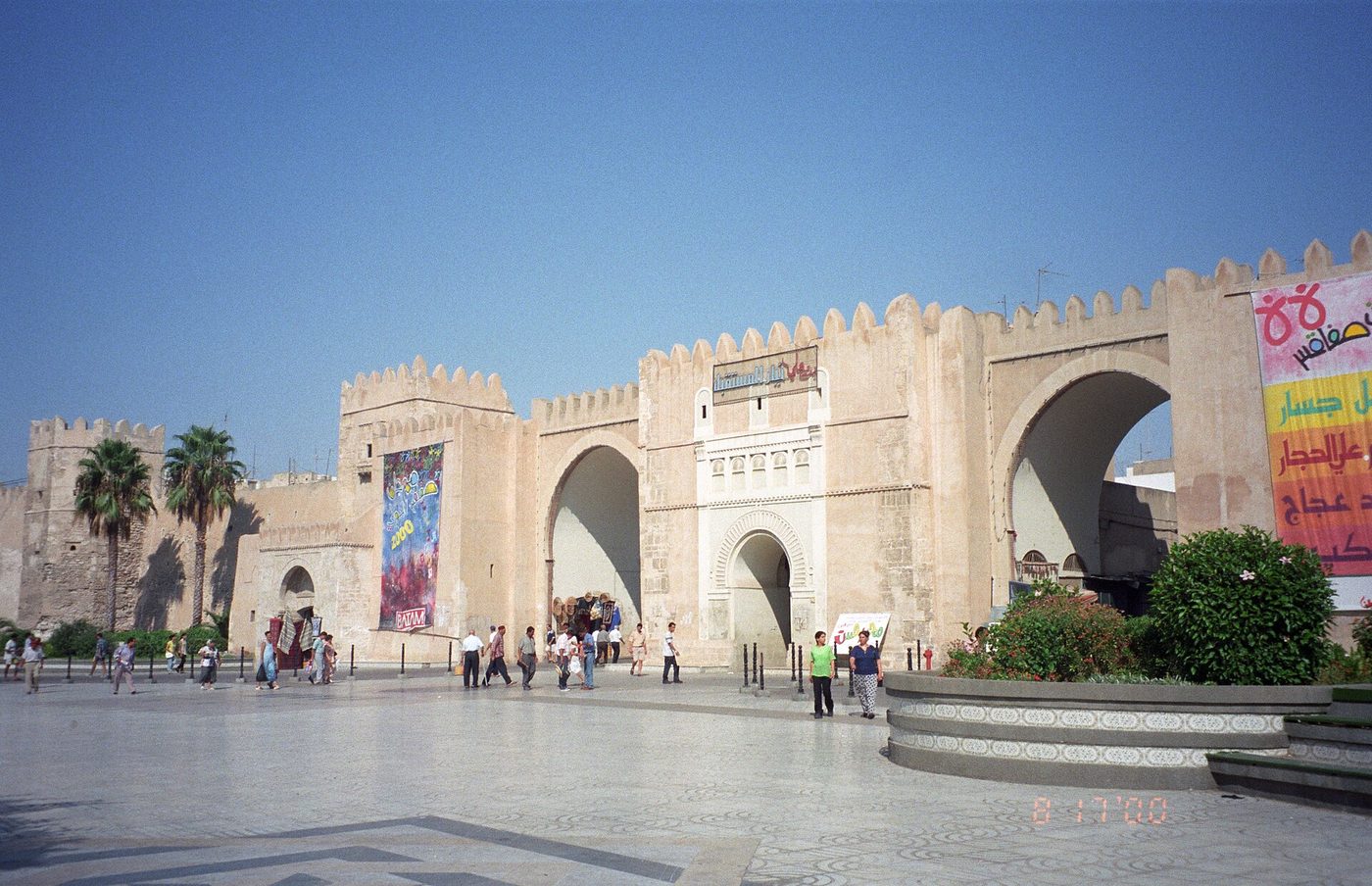
Most people meet Sousse’s old town by accident. You wander up from the beach, the modern seafront gives way to a long crenellated wall the colour of sand, you step through a gate — and you’re suddenly in a ninth-century town that still does much of its shopping the way it always has.
Here’s the short version: the Sousse medina is a walled, UNESCO-listed old town you can cross on foot in a morning. Its two great sights — the Ribat watchtower and the ninth-century Great Mosque — sit a minute apart by the main gate, with Roman mosaics in the kasbah museum nearby.
Do it as a loop and you have the best low-cost half-day in the city: fort, mosque, museum, then the souks with a mint tea in the middle.
This is our on-foot guide to walking it well: where to start, what to see and in what order, how the Ribat and the mosque actually work for visitors, and how to shop the souks without the low-grade hassle that puts some people off. It’s part of our wider guide to visiting Sousse, so once you’ve done the old town you’ll know exactly where to head next.
The Sousse medina at a glance
If you read nothing else, this is the shape of a good morning inside the walls. Times are how long we’d actually linger; prices are a guide only, because Tunisian ticket booths change them without warning.
| Stop | What it is | How long | Rough ticket (2026 — check current) |
|---|---|---|---|
| The Ribat | 9th-century fort-monastery with a climbable watchtower | 45–60 min | Around 8 TND |
| Great Mosque | Austere Aghlabid mosque; courtyard open to visitors | 20–30 min | Small courtyard fee, a few TND |
| Kasbah & Archaeological Museum | One of Tunisia’s best Roman mosaic collections | 60–90 min | Around 10 TND |
| The souks | Covered lanes of ceramics, leather and spices | As long as you like | Free to wander |
| Dar Essid | Restored old family townhouse with a rooftop view | 30–40 min | Around 5 TND |
| Ramparts & gates | A slow loop of the walls and old town gates | 30 min | Free |
Do all six and you’ve filled a comfortable half-day, with a mint tea stop in the middle. Do the first three and you’ve seen the essentials in about two hours.
Where the medina is, and how to walk in
The old town sits right in the centre of Sousse, set back one street from the port and the seafront. If you’re staying on Sousse’s beach or in the hotel strip to the north, it’s a short, cheap taxi to Place Farhat Hached, the busy square where the modern town, the port and the medina all meet. Insist on the meter — the “compteur” — or agree the fare first; our guide to getting around Tunisia explains how the taxis work.
From that square, the main entrance is Bab el Bhar, the “sea gate”, roughly opposite the port. Step through and the whole old town opens up ahead and uphill: the souks run away in front of you, the Great Mosque and the Ribat are a two-minute walk to your right towards the water, and the kasbah crowns the far south-western corner. The walls run for well over two kilometres in a rough rectangle, so as long as you keep a sense of “uphill is the kasbah, downhill is the sea”, you won’t stay lost for long.
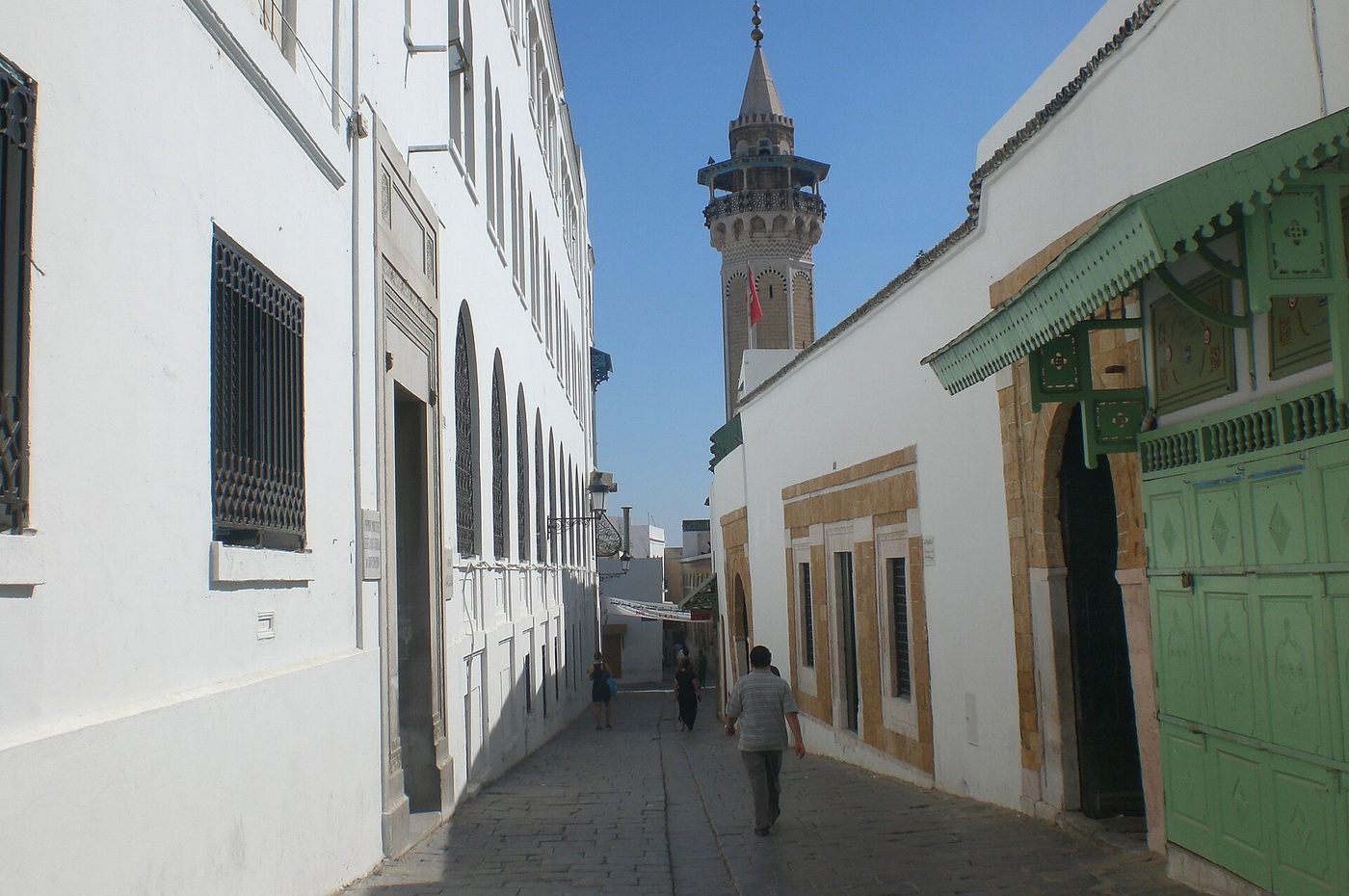
Wear proper shoes. The lanes are cobbled, worn smooth and often uneven, and the Ribat and kasbah both involve steep, tight stairs. In summer, come early — ideally not long after the sights open — because the stone holds the heat and the covered souks turn stuffy by midday.
The Ribat of Sousse: start here
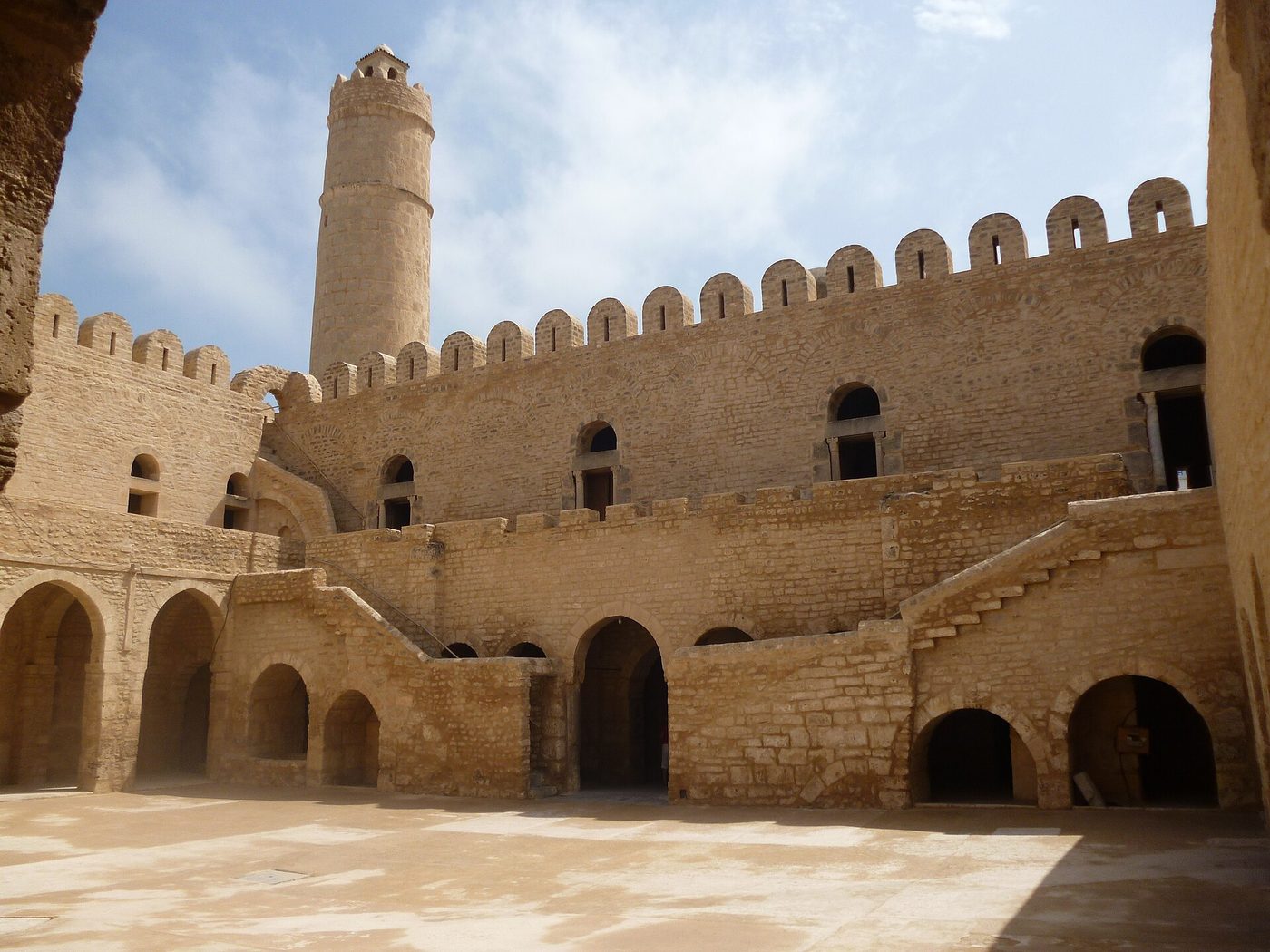
Begin at the Ribat, because it’s the oldest thing in the city and it sets up everything else. It’s a squat, sand-coloured fort just inside the walls, and for once the history is genuinely gripping rather than a plaque you skim.
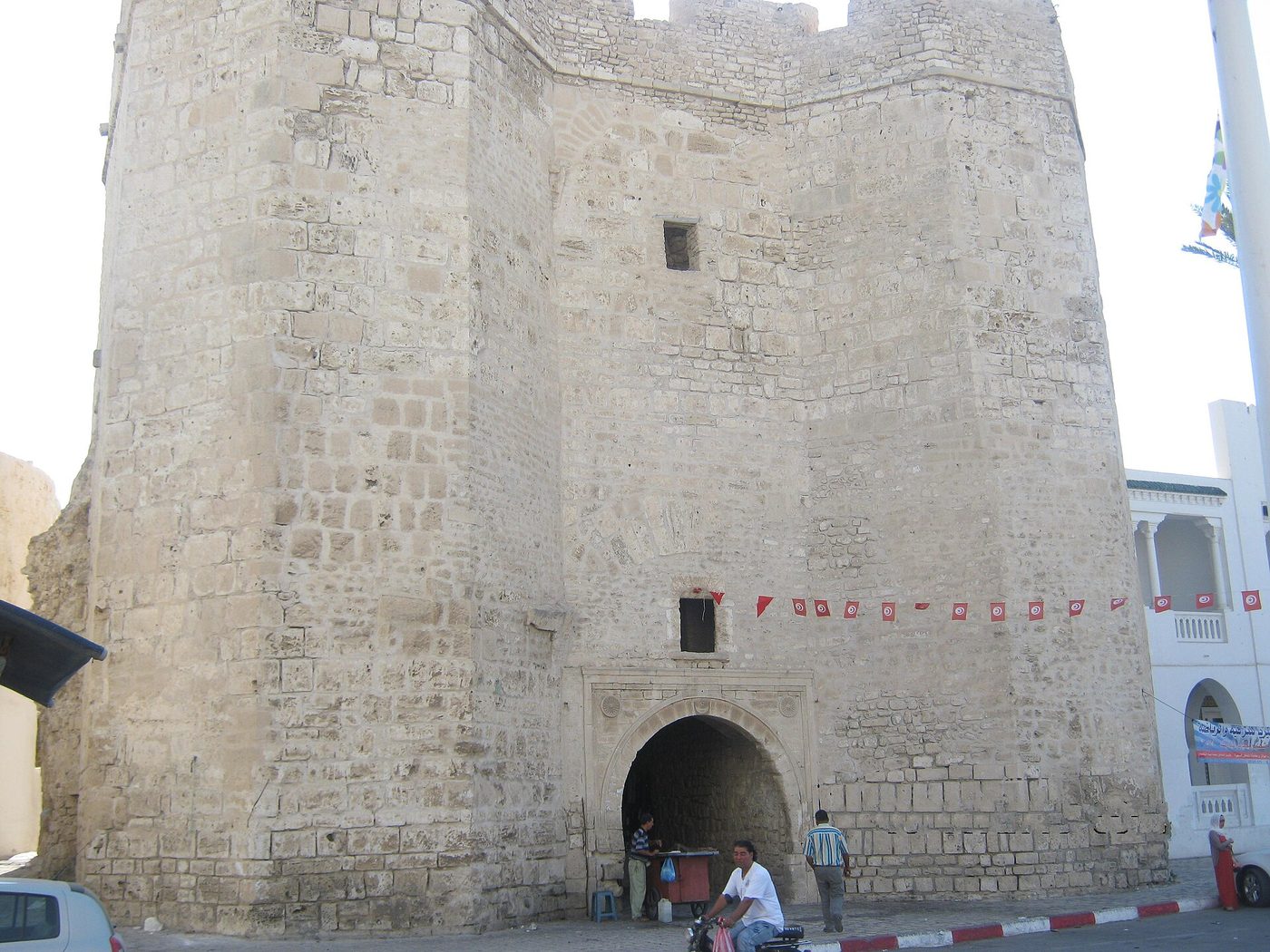
The ribat of Sousse went up in its present form around 821 AD, on the site of an earlier fort, under the Aghlabid rulers who governed this coast from Kairouan. It was part fortress, part monastery. The men who lived here, the murabitun, were warrior-monks: they prayed, studied the Qur’an and kept watch over the sea for raiders, ready to light a signal fire the moment sails appeared. Sousse was one link in a chain of these coastal strongpoints, and the ribat of Sousse is the oldest and best-preserved of the lot.
Inside, it’s simple and severe by design: a square courtyard maybe 38 metres to a side, a ring of small cells over two floors where the monks slept, and a plain prayer room on the upper level that counts as one of the earliest mosques in North Africa. There’s little decoration, and that austerity is the point — this was a frontier of faith, not a palace.
The reason to come, though, is the tower in the south-east corner, the nador. A tight spiral of stone steps climbs to a small platform, and the view from the top is the best in the medina: the courtyard directly below, the dome and courtyard of the Great Mosque next door, a sea of flat medina rooftops and satellite dishes, and beyond the walls the port, the corniche and the Mediterranean. It’s the shot everyone comes for, and it earns it. From this platform, a thousand years ago, watchmen relayed signals down the coast to the sister fort at Monastir — worth a visit too if you’re comparing the two.
The Ribat generally opens around 08:00 and closes around 17:00, with entry of roughly 8 TND (2026 — check current). The staircase is narrow and two-way, so let people come down before you start up.
The Great Mosque: austere and unusual
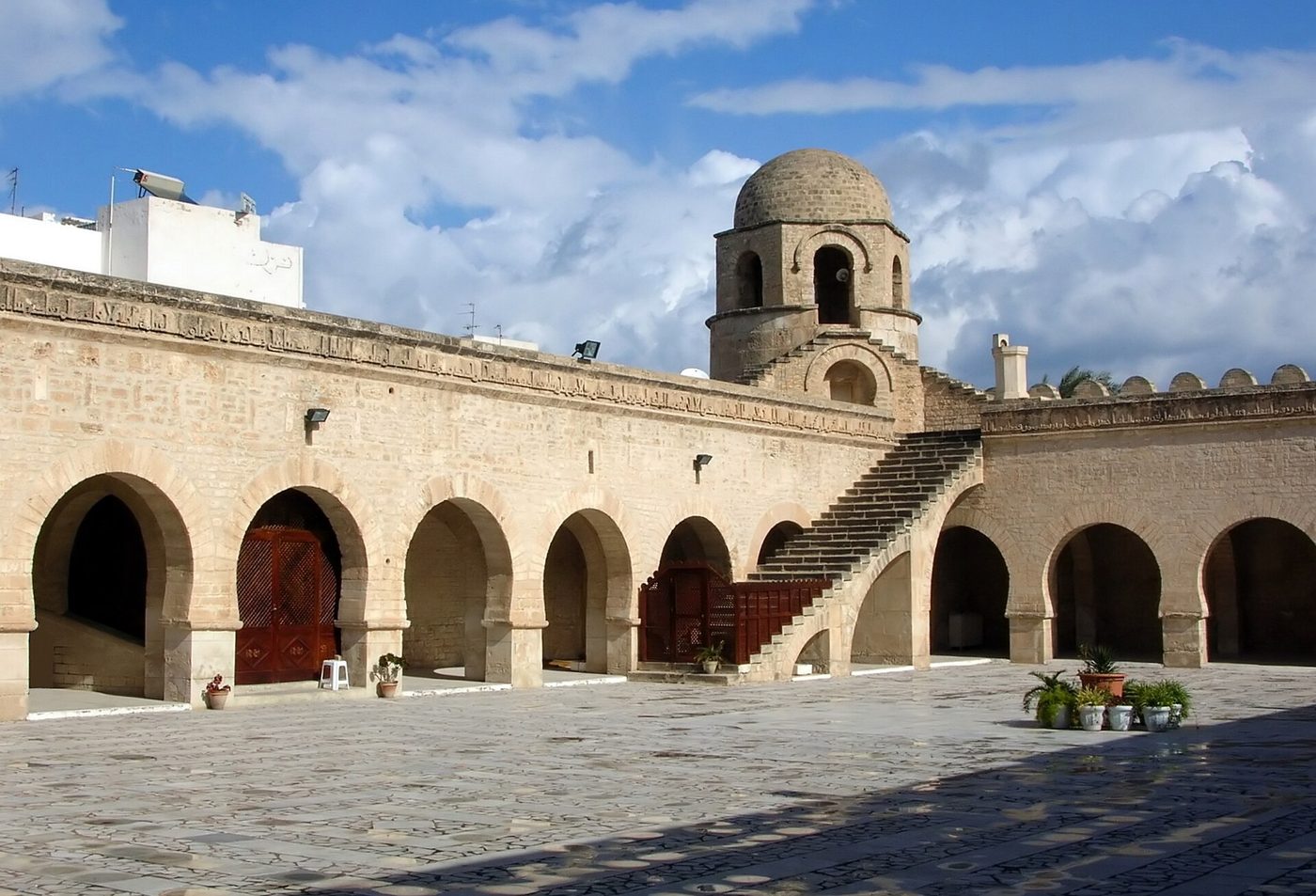
Fifty-odd metres from the Ribat stands the Great Mosque of Sousse, built about 851 AD and just as plainly Aghlabid. If you’ve seen the ornate mosques of Istanbul or Cairo, this will surprise you: it looks less like a place of worship and more like a second fort, with thick, near-blank walls and two stubby staircase turrets at the corners instead of a soaring minaret. In its early days the mosque simply borrowed the Ribat’s tower for the call to prayer.
Step inside the entrance and you reach a wide, bright courtyard ringed by a horseshoe-arched arcade, with a band of elegant Kufic script running around the top of the walls. It’s calm, geometric and beautifully proportioned — a lesson in how much you can do with almost no ornament.
A few practical points, because the mosque is still in active use. Non-Muslim visitors are usually welcome in the courtyard and porticoes but not in the prayer hall itself. Dress modestly, with shoulders and knees covered; it’s worth women carrying a scarf. There’s a small fee, paid at a kiosk by the gate, and the mosque closes to visitors around the main midday prayers, particularly on Fridays. Twenty minutes is plenty to take it in.
The kasbah and the Archaeological Museum
From the mosque, work your way uphill and south-west through the lanes to the highest point of the old town, where the kasbah — the citadel — sits behind the Khalef el-Fata tower, an old signal tower and lighthouse that has watched this coast since the ninth century. The Sousse kasbah is worth the climb on its own for the rampart views, but the real prize is inside it.
The Sousse Archaeological Museum, housed within the kasbah walls, holds one of the finest collections of Roman mosaics in the country — second only, most people agree, to the great Bardo in Tunis. These aren’t fragments. They’re huge, complete floors lifted from the Roman villas of ancient Hadrumetum (Roman Sousse) and the surrounding coast, laid out across cool, calm galleries and a planted courtyard.
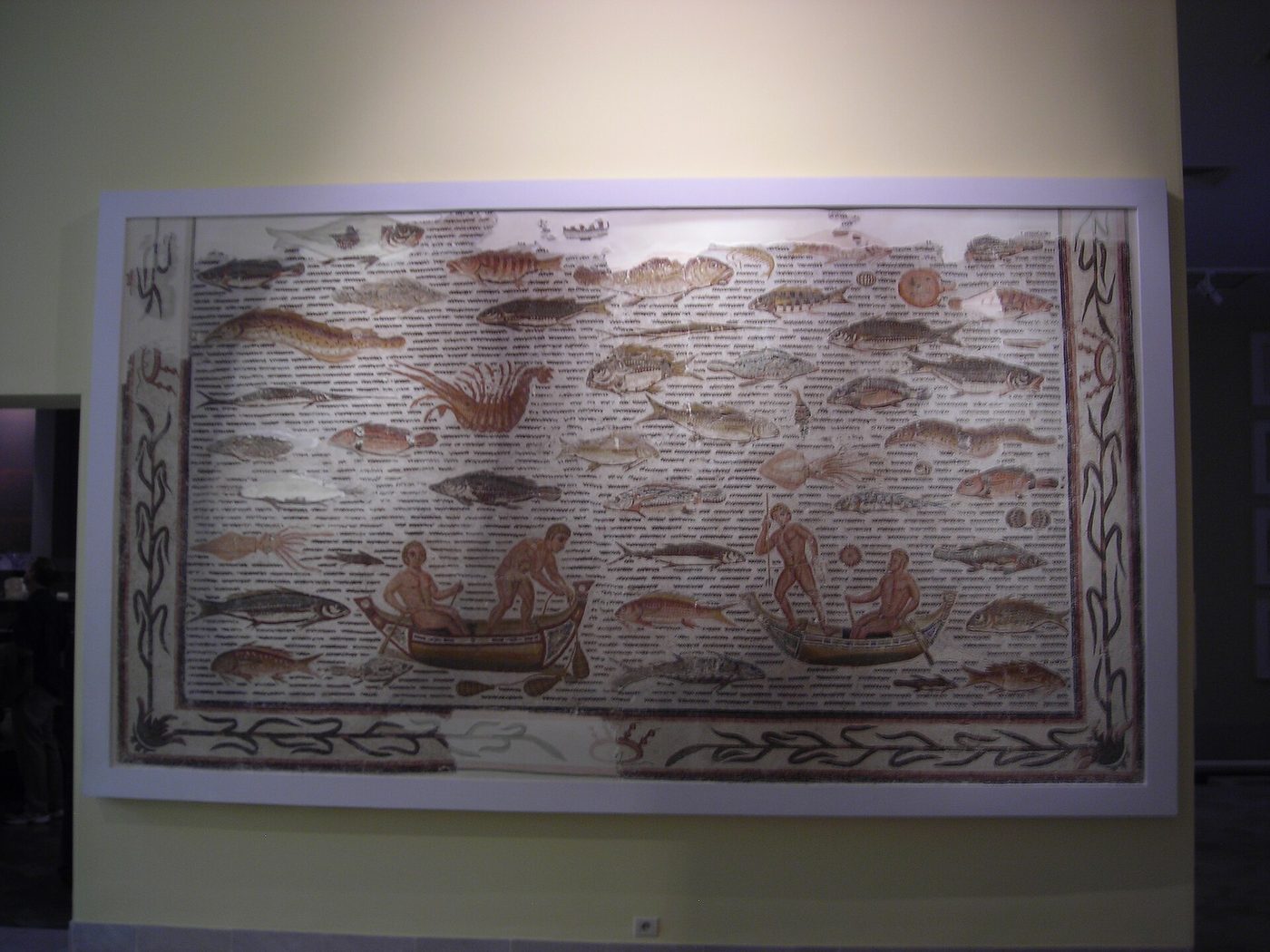
The best of them stop you in your tracks: sea gods riding through the waves, a famous glaring head of Medusa, hunting scenes, and vines and creatures rendered in tiny stone squares with astonishing life. There’s Punic and early Christian material too, so you get a quick, coherent run through the layers of this city’s history. If Roman Tunisia is your thing, pair the museum with our guide to the country’s Roman ruins — the amphitheatre at El Jem, one of the largest anywhere, is an easy day trip from here.
The museum tends to open around 09:00 and close by 17:00, and it’s usually closed on Mondays; entry is roughly 10 TND (2026 — check current). Give it an hour, more if you like mosaics. It’s air-conditioned and shaded, which makes it a smart midday stop when the lanes outside are baking.
The souks: shopping the old town
Between the monuments, the medina is a living market, and wandering the souks is half the pleasure of the walk. The covered lanes north of the Great Mosque are the heart of it, and the goods are what you’d hope for: glazed ceramics and painted plates, leather babouche slippers, olive-wood bowls, red felt chechia hats, spices in open sacks, silver, and rack after rack of the fringed blankets every stall seems to sell.
Quality varies wildly, from genuine hand-work to mass-made souvenirs, and prices are almost never fixed. That’s not a trap; it’s just how trade works here. The good news is that Sousse’s traders are noticeably more relaxed than the hard-sell crews in the Tunis medina — you’ll be called to, but rarely hounded.
One tip that saves a lot of guesswork: the state-run craft shops (you’ll see the ONAT or SOCOPA names) sell decent-quality goods at fixed, labelled prices. Walk through one first and you’ll have a fair ceiling in your head before you start bargaining anywhere else.
An honest haggling primer
Haggling puts some people off entirely, which is a shame, because it’s a friendly ritual once you know the moves. Here’s how we do it:
- Decide your top price before you open your mouth. Know what the thing is worth to you, and don’t go above it whatever the theatre.
- Open low, around a third of the first quote, and expect to settle somewhere near half. The first number is a starting bid, not an insult.
- Keep it light. Smile, chat, accept the mint tea if it’s offered. It’s a social exchange, not a battle to win.
- Be ready to walk away. The genuine price very often follows you to the door — and if it doesn’t, you probably found the real floor.
- Don’t haggle for something you won’t buy. Once you name a price and it’s accepted, you’re morally committed to the sale.
- Carry small notes. Card machines are patchy in the souks, and “I’ve only got this much” is a fair closing move when it’s true.
Get into the rhythm of it and the souks become the most fun part of the day rather than the most stressful.
Touts, and how to shrug them off
You will be approached — it comes with any Tunisian medina. A common opener is a warm “Hello, my friend! Remember me — from your hotel?” designed to steer you towards a particular shop where the greeter earns a cut. Another is the “just look, no charge, only for your eyes” wave into a carpet showroom.
None of it is threatening, and in Sousse it’s fairly gentle. A polite, firm “la, shukran” (no, thank you) without breaking stride works almost every time; tucking an all-inclusive wristband out of sight helps too. Once you stop treating it as a problem and start treating it as background noise, it fades fast. If you’d like the fuller picture, we’ve written up the common tourist scams in Tunisia and a reassuring, honest look at whether Sousse is safe.
Other stops worth your time
Once you’ve done the big three, a handful of smaller sights round out the walk and get you off the main tourist lane.
Dar Essid
Tucked in the lanes near the top of the medina, Dar Essid is a beautifully preserved old family townhouse, lived in by the same family for generations and now opened as a small museum. You wander through tiled rooms set with everyday objects — kitchen, bridal room, a Roman oil lamp said to date back centuries — around a cool central courtyard, then climb the little tower for a rooftop view over the rooftops to the Ribat. Entry is around 5 TND (a bit extra to take photos), and it’s usually closed on Sundays. It’s the best way to picture how people actually lived behind these blank street walls.
The Sofra cistern and Bou Ftata Mosque
Two quieter Aghlabid survivals reward the curious. The Sofra is a vast underground cistern, a forest of stone pillars that once stored the medina’s water. The little Bou Ftata Mosque, from the 840s, is one of the oldest in the country — tiny, austere, and easy to walk straight past. Neither takes long, and both help you feel the age of the place.
The ramparts and the gates
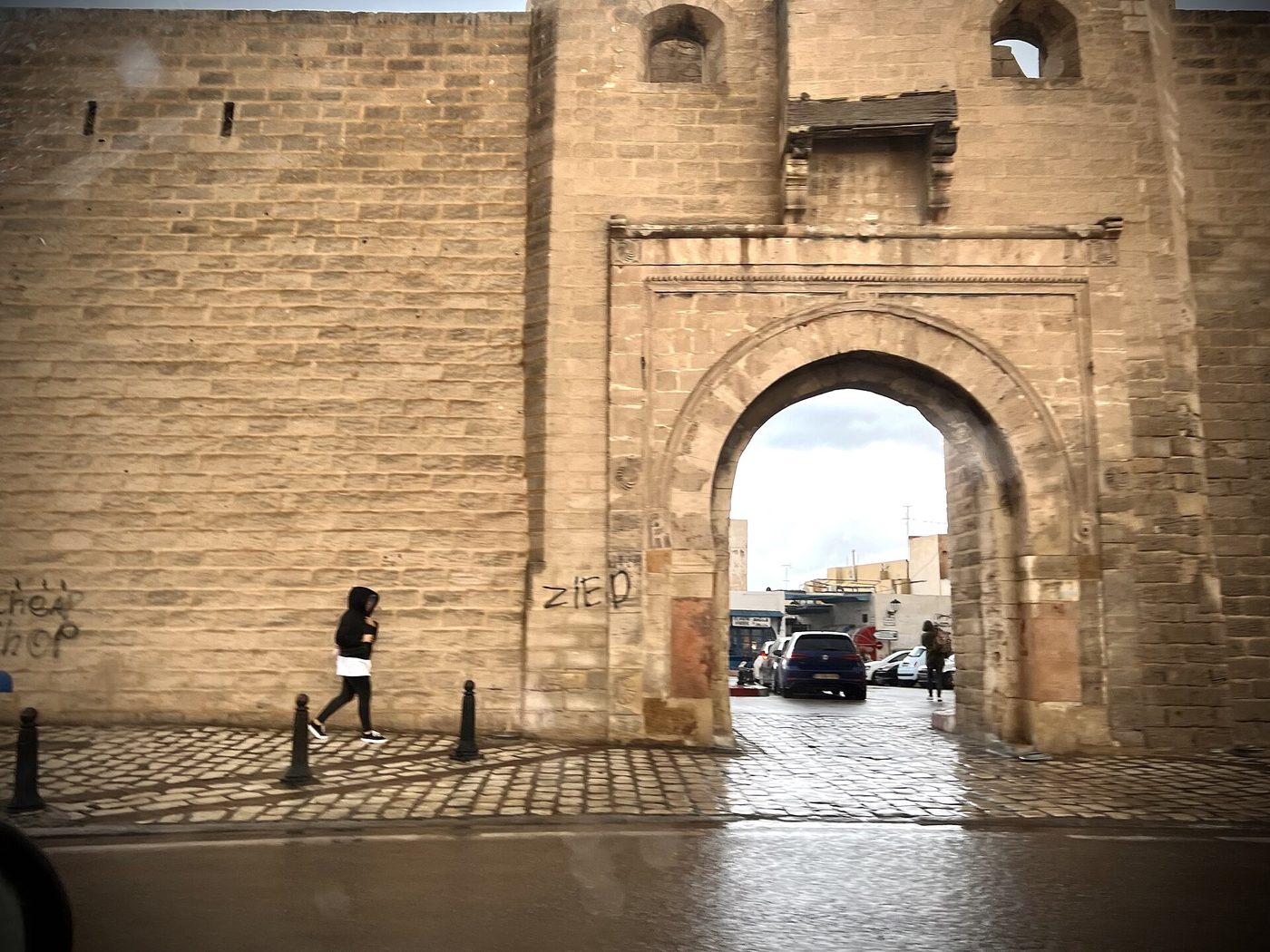
Finish with a slow loop of the walls. You can walk stretches of the ramparts, and the old gates — Bab el Gharbi to the west, among others — are impressively solid for their age. Early morning or the hour before sunset gives the warmest light on the honey-coloured stone and the best photographs of the whole old town.
Making a day of it: food, rest and what’s next
Halfway round, stop for mint tea. A couple of restored townhouses in the medina serve it on their roof terraces with a view over the rooftops, and there are simple cafés near the gates where a pot costs almost nothing. If you’re hungry, this is a fine place to try a crisp brik or a plate of couscous — our guide to Tunisian food tells you what to order.
When your legs have had enough, the medina slots neatly into the rest of a Sousse trip. The city beach is a five-minute walk from Bab el Bhar for a swim to cool off, the marina resort of Port El Kantaoui is a short ride up the coast, and the old town also makes a good base if you’d rather stay among the lanes than out at a resort — see our where to stay in Sousse guide. With the medina done, you’re perfectly placed for the region’s big hitters: our day trips from Sousse cover El Jem, Kairouan and Monastir, and there’s more history nearby in our roundup of things to do in Monastir.
Practical tips for walking the Sousse medina
A few things that make the difference between a lovely morning and a hot, footsore one:
- Go early. Sights open around 08:00–09:00; arriving then means cooler stone, quieter souks and better light.
- Take cash in small notes. Tickets, tea and the souks all want dinars, and the dinar is a closed currency you can only get once you’ve arrived — reckon on roughly 3.8–3.9 TND to the pound in mid-2026, but check the current rate.
- Dress for the mosque. Shoulders and knees covered; a scarf for women. It saves being turned away at the courtyard.
- Time it around the heat and the calendar. Midsummer middays are brutal in the lanes; spring and autumn are ideal. Some hours shift during Ramadan and on Fridays, so check locally — our best time to visit guide has the detail.
- You don’t need a guide. The medina is compact and walkable on your own, though a licensed guide can bring the history alive if you’d like one. Agree the price and the route up front.
Do that, and the Sousse old town gives you the most memorable and least expensive few hours of the whole trip. For where it fits in a bigger plan, see our overview of things to do in Tunisia.
Sousse medina and Ribat: your questions answered
Is the Sousse medina worth visiting?
Yes — it’s the single best thing to do in the city and it costs very little. In one walkable, UNESCO-listed old town you get the ninth-century Ribat with its climbable tower, the austere Great Mosque, a first-rate Roman mosaic museum in the kasbah, and characterful souks. Allow a half-day and you’ll come away feeling you’ve actually seen Tunisia, not just a hotel pool.
How much does it cost to enter the Ribat of Sousse?
Entry to the Ribat is modest — around 8 TND per adult in 2026, though ticket prices change, so treat that as a guide and check on the day. It’s cash only at the gate. Climbing the watchtower is included, and it’s the highlight, so don’t skip the stairs.
What are the opening hours of the Ribat and the medina?
The medina itself is an open, living town you can walk into at any hour, though the souks are liveliest from mid-morning. The individual monuments keep their own hours: the Ribat and Great Mosque roughly 08:00–17:00, and the Archaeological Museum about 09:00–17:00 and closed on Mondays. Hours shorten on Fridays and shift during Ramadan, so confirm locally.
Can non-Muslims go inside the Great Mosque of Sousse?
Partly. Non-Muslim visitors are usually welcome in the mosque’s courtyard and surrounding porticoes for a small fee, but not inside the prayer hall. Dress modestly with shoulders and knees covered, and expect it to close to visitors around the main midday prayers, especially on Fridays.
How long do you need in the Sousse medina?
Half a day covers it comfortably: an hour at the Ribat, twenty minutes at the mosque, an hour in the museum and the rest wandering the souks with a tea stop. If you’re pushed, you can see the Ribat, mosque and museum in about two hours. History lovers happily spend a full, slow day.
Is the Sousse medina safe to walk around?
Yes. It’s a busy, lived-in old town with a visible tourist-police presence, and the usual sensible precautions are all that’s needed — watch your bag in crowds and keep an eye on where you’re walking on the uneven stone. The main annoyance is friendly sales patter, not danger. Our is Sousse safe guide has the full, honest picture.
What can you buy in the Sousse souks?
Ceramics and painted plates, leather slippers and bags, olive-wood bowls, red felt chechia hats, spices, silver and woven blankets are the staples. Quality ranges from genuine craft to mass-made souvenirs, so browse a fixed-price state craft shop first to gauge a fair price, then haggle politely elsewhere.
Where is the Sousse Archaeological Museum and what’s in it?
It’s inside the kasbah at the highest, south-western corner of the medina. The draw is one of Tunisia’s great Roman mosaic collections — huge, complete floors of sea gods, Medusa and hunting scenes lifted from local villas — plus Punic and early Christian pieces. It’s air-conditioned, which makes it an ideal midday stop.
What’s the difference between the Ribat of Sousse and the Ribat of Monastir?
They’re sister forts from the same coastal defence chain, and signals once passed between them. The Ribat of Sousse is the older and more compact, with the better rooftop view over a working medina; the Ribat of Monastir is larger, much rebuilt, and film-famous. If you can only do one, Sousse’s is the more atmospheric; if you’re in Monastir anyway, see both.
Do I need a guide for the Sousse medina?
No. The old town is small and easy to navigate on your own, and this guide plus a map is plenty. That said, a licensed local guide can add a lot of history and steer you past the pushier stalls — just agree the price and route before you set off, and don’t feel obliged to accept the first person who offers.
How do I get to the Sousse medina from the beach hotels?
From the hotel strip north of the centre or from Port El Kantaoui, take a metered taxi to Place Farhat Hached, right by the medina’s main sea gate; it’s a short, cheap ride. From central Boujaffar beach you can simply walk in a few minutes. Agree the fare or insist on the meter to avoid the tourist mark-up.
Is the Sousse medina good for children?
It can be, in short bursts. Younger children enjoy the fort, the tower climb and the market colour, but the heat, crowds and uneven cobbles tire small legs quickly. Go early, keep it to the Ribat and a souk loop, build in a tea-and-pastry break, and hold hands in the narrow lanes.
Written by the Tunisia Tourism Guide team — an independent UK-focused guide to travelling in Tunisia. We don’t sell tours or take hotel commissions. Prices and advice were checked at publication; always confirm current details before you book.
Photo credits
PHOTO_CREDITS_PLACEHOLDER

One response to “Sousse Medina & Ribat: A Walking Guide”
[…] great strength is convenience and atmosphere. You can walk here in minutes from the Sousse medina, mix a morning of history with an afternoon swim, and never need a taxi. In season a little tourist […]