By the Tunisia Tourism Guide team · Last updated 24 July 2026 · We don’t sell tours or take hotel commissions — this is independent advice, written to be useful.
The resort city of Sousse is one of the best-placed bases in Tunisia. Sit still and the beach and the medina will happily fill a week, but the real prize is what sits within an hour or two of your hotel: a Roman amphitheatre that rivals the Colosseum, a holy city with a 1,300-year-old mosque, a walled fortress town on a peninsula, and — if you can spare two days — the edge of the Sahara. This guide is the honest run-through we’d give a friend over coffee.
The best day trips from Sousse are the Roman amphitheatre at El Jem (an easy hour by train), the holy city of Kairouan with its Great Mosque, and the fortress town of Monastir just 30 minutes down the coast. Add Port El Kantaoui, Hergla or a two-day Sahara run, and book through your hotel, online or independently by louage and train.
We’ve written this as the practical companion to our wider guide to Sousse, so once you’ve picked a trip you’ll know exactly how to reach it, what it costs and whether it’s worth your holiday time. Let’s start with the shortlist.
Day trips from Sousse at a glance
Here’s the whole picture on one screen. Distances are approximate and the “how to get there” column assumes you want the cheapest sensible option. Prices and timetables move constantly in Tunisia, so treat everything below as a planning guide and confirm on the day.
| Day trip | Distance from Sousse | How to get there | Best for |
|---|---|---|---|
| El Jem | ~65 km south, about 1 hour | Train, louage or tour | The Roman amphitheatre, crowd-free |
| Kairouan | ~60 km west, about 1 hour | Louage or organised tour | Islam’s holy city and the Great Mosque |
| Monastir | ~20 km south, about 30 minutes | Sahel metro (light rail) | Ribat, mausoleum and marina |
| Port El Kantaoui | ~10 km north, about 20 minutes | Taxi or the tourist “road train” | Marina strolls and a family day |
| Hergla | ~30 km north, about 40 minutes | Car hire or taxi | A quiet clifftop fishing village |
| Mahdia | ~50 km south, about 1 hour | Sahel metro via Monastir | The coast without the crowds |
| Hammamet & Nabeul | ~70 km north, 1–1.5 hours | Train, louage or tour | A fortress, beaches and ceramics |
| The Sahara (Douz/Tozeur) | Deep south, 2 days | Organised overnight tour | Dunes, salt flats and a desert night |
If you only do one, make it El Jem. If you do two, add Kairouan — and the two combine beautifully into a single long day, which we’ll come to. Here’s the detail on each.
El Jem: the Roman amphitheatre that steals the show
This is the trip that turns a beach holiday into a proper one. The amphitheatre at El Jem is a 3rd-century Roman colosseum built in the old town of Thysdrus, and it is enormous — designed to hold something like 35,000 spectators, which makes it one of the largest and best-preserved amphitheatres anywhere in the Roman world. Stand on the arena floor, look up at three tiers of arcaded stone, and the scale is genuinely hard to take in.
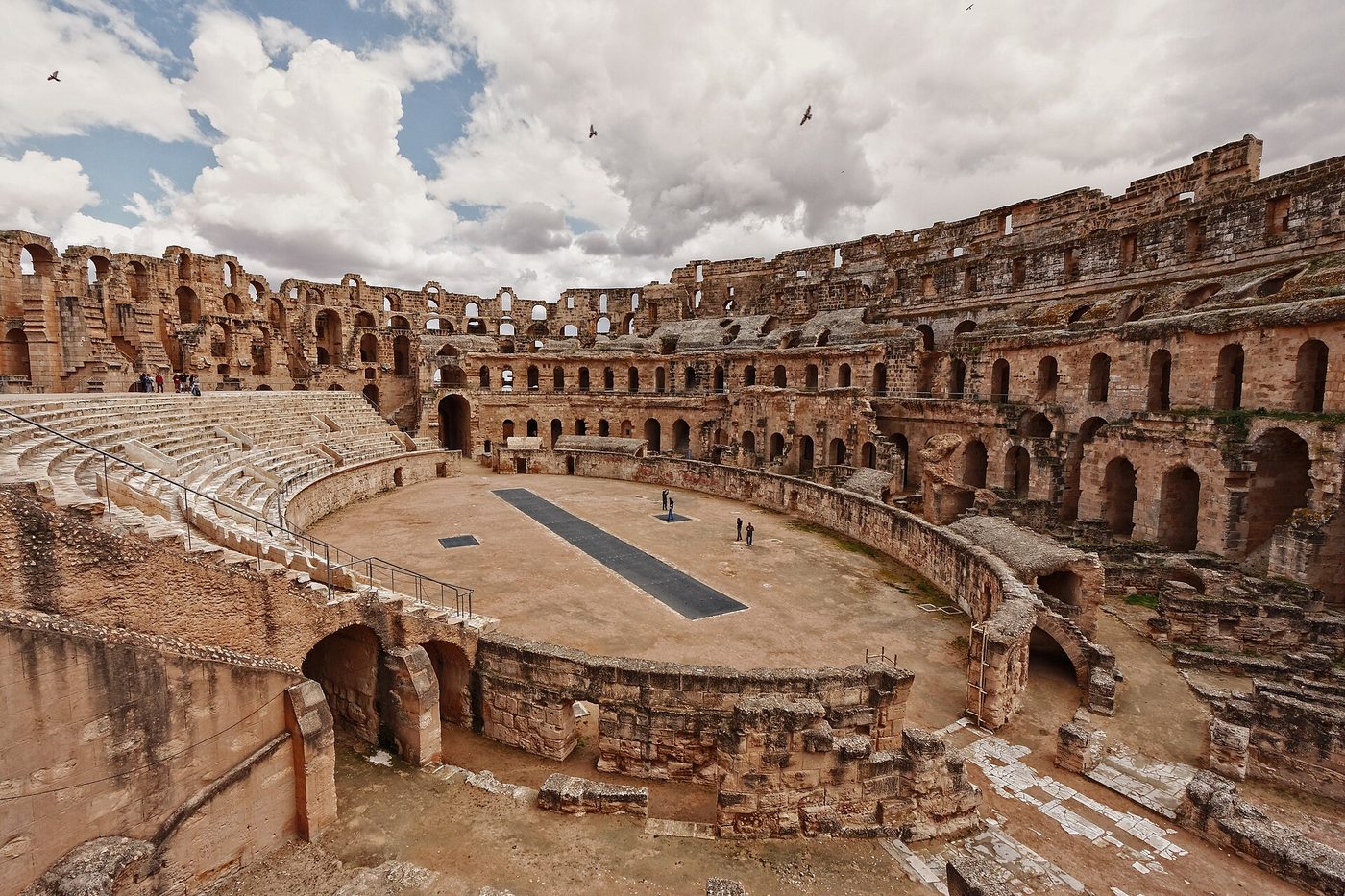
The best part, and the thing we can’t quite believe every time, is that you’ll often share it with only a handful of other people. There are no long queues, no roped-off sections keeping you at arm’s length. You can climb the seating tiers to the top for a view over the arena and the flat Tunisian plains beyond, then descend into the underground galleries where animals and gladiators were once held before being hoisted up through trap doors into the arena. It is one of the finest of Tunisia’s Roman ruins, and for our money the single most impressive thing you can see from Sousse in a day.
Getting to El Jem by train
The train is the classic way, and rightly so. El Jem sits on the main line south, and its little station is a two-minute walk from the amphitheatre — you can see the great arches from the platform. The journey from Sousse takes a little over an hour and costs only a few dinars. There are usually a handful of departures a day rather than a frequent service, so the one thing that matters is checking the return times before you set off, so you’re not left waiting on a hot platform. The national operator SNCFT publishes timetables, but they change, so confirm at Sousse station the day before.
A louage (shared long-distance minibus) is the other independent option, leaving from the Sahel louage station when full. It’s quick and cheap, though the train is more comfortable and drops you closer. However you arrive, give yourself around three hours on site — that’s enough for the amphitheatre and the excellent little archaeological museum nearby, whose Roman mosaics are worth the walk.
El Jem tickets and timings
A single ticket covers both the amphitheatre and the museum. As of 2026 the non-resident entry was in the region of 12 dinars (roughly £3 — check the current price), and opening hours run from around 8am to 5.30pm in winter and 6.30pm in summer, with shorter hours during Ramadan. Go early or late in the day if you’re visiting in high summer: the stone radiates heat and there’s little shade, so a hat, water and sensible shoes make a real difference. The amphitheatre’s acoustics are so good it hosts a classical music festival in July and August — if your trip lines up, an evening concert here is unforgettable.
Kairouan: Tunisia’s holy city
Kairouan is a complete change of pace from the coast, and it’s the trip that surprises people most. Founded in the 7th century, it was the first Arab-Muslim capital of the region and is regarded as one of the holiest cities in Islam. The centrepiece is the Great Mosque of Kairouan, one of the oldest and most important mosques in North Africa, with a vast courtyard, a forest of ancient columns and a square minaret you can photograph from the courtyard even if you don’t go inside.
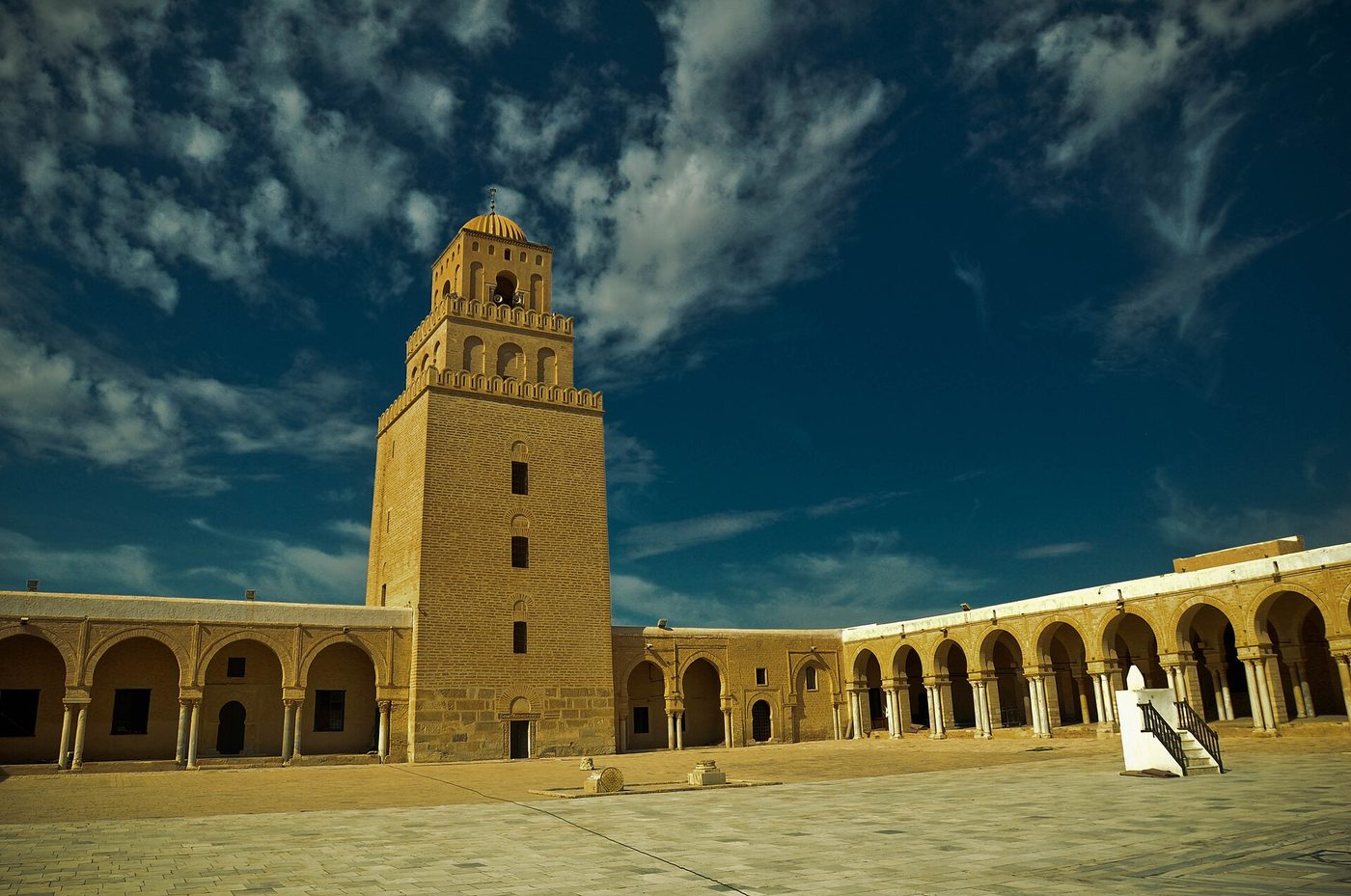
Beyond the mosque, the old walled medina is quieter and far less touristy than Sousse’s, which makes wandering it a pleasure. Kairouan is the historic centre of Tunisian carpet-making, so you’ll be invited to look at rugs — a polite browse is part of the experience, but only buy if you genuinely want to and are happy to haggle. Don’t leave without trying makroud, the local date-and-honey pastry the city is famous for. Other stops worth your time are the 9th-century Aghlabid basins (huge circular water cisterns) and the Zaouia of Sidi Sahbi, often called the Mosque of the Barber.
How to reach Kairouan from Sousse
Here’s the honest catch: there’s no train to Kairouan. Your options are a louage from the Sahel station (cheap, characterful, leaves when full) or an organised tour. Because Kairouan’s sights are spread out and a guide adds a lot of context to what can otherwise look like “another old mosque”, this is one trip where we think a tour earns its keep — especially the combined day that pairs Kairouan with El Jem. You’ll find those on our Tunisia excursions page, and they turn two big-ticket sights into one satisfying day out.
A quick note on dress and respect: Kairouan is a working religious city. Cover shoulders and knees, women may want a scarf for mosque courtyards, and always check whether non-Muslims can enter a given prayer hall — access is often limited to the courtyard, which is still worth it.
Monastir: fortress, marina and a 30-minute metro
Monastir is the easiest “big” day trip of the lot, because the Sahel metro — a coastal light-rail line, not an underground — runs from Sousse right into the centre of town in about half an hour, for the price of a coffee. Take a taxi to Sousse’s Bab Jedid metro station, hop on, and you’re there. It’s so simple that Monastir also makes a relaxed half-day if you can’t face a full excursion.
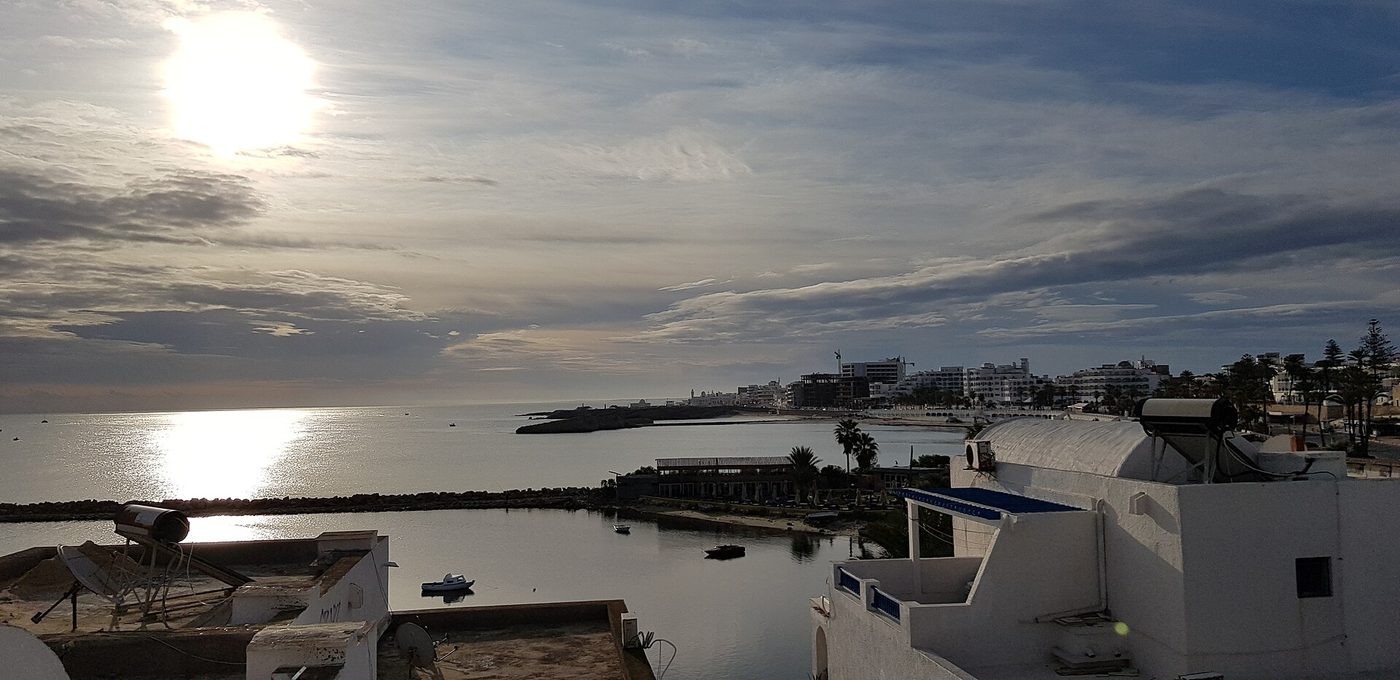
The headline sight is the Ribat, an 8th-century fortified monastery and one of the oldest and largest in North Africa. Climb its watchtower for a sweeping view over the sea, the medina and the great whitewashed cemetery below — and film buffs will recognise the walls from Monty Python’s Life of Brian, which was shot here. We’ve given the fortress its own deep dive in our guide to the Ribat of Monastir. A short walk away, the Bourguiba Mausoleum — the gold-domed resting place of Tunisia’s first president — is free to enter and genuinely striking. Add the marina for a coffee and the compact, low-hassle medina, and you’ve a lovely, gentle day. Our full things to do in Monastir guide maps it all out.
Port El Kantaoui and Hergla: two easy coastal escapes
Not every day trip needs to be a history lesson. Two spots on the coast just north of Sousse make for a shorter, gentler outing.
Port El Kantaoui
Purpose-built as a marina resort in the 1970s, Port El Kantaoui is only about 20 minutes north of central Sousse by taxi or the tourist “road train” that trundles up the coast. It’s polished and a little manufactured — whitewashed buildings, a pretty harbour full of yachts, cafés and restaurants around the water, and a golf course behind. Families love it: there are boat trips (including a replica pirate galleon that kids adore), water sports and a couple of waterparks nearby. It’s an easy half-day, and we’ve covered it fully in our Port El Kantaoui guide. Entry to the marina and beach is free; you only pay for what you do.
Hergla
For something quieter and more real, Hergla is a small clifftop fishing village about 30 km north of Sousse, roughly halfway to Enfidha airport. There are no big resorts here — just white houses above a rocky, cove-studded coast, a domed marabout (holy man’s tomb) looking out to sea, a small harbour and a couple of simple fish restaurants. It’s still known locally for its olive oil and its tuna. There’s no direct public transport, so you’ll want a taxi, a hire car, or to fold it into a coastal drive; but if you want an hour of calm away from the sunloungers, it delivers.
Mahdia: the coast without the crowds
Further south, about an hour away, Mahdia is the answer to “is there a nice beach town that isn’t a resort?” Set on its own narrow peninsula, it’s a working fishing port that has largely dodged the package-holiday build-up of Sousse and Hammamet. You get a genuine old medina, a sea-battered fortress guarding the point, quiet squares for a mint tea, and some of the best fish in the country, landed that morning.
The lovely thing is that the same Sahel metro that serves Monastir carries on down the line to Mahdia, so you can reach it by train via Monastir — it takes a little longer than driving but it’s cheap and the coastal views are the point. You could even string Monastir and Mahdia together on one very full day if you start early. For most people, though, Mahdia deserves its own unhurried outing.
Hammamet and Nabeul: beaches and ceramics to the north
Heading the other way, the twin towns of Hammamet and Nabeul sit about an hour or so north of Sousse and make a change-of-scene day. Hammamet has a photogenic 15th-century kasbah (fortress) rising above its old medina and some of the best beaches on this stretch of coast; neighbouring Nabeul is the ceramics capital of Tunisia, with workshops and a big Friday market heavy on tiles and pottery. The train and louages both run north, or a tour will bundle the two together.
If you’re weighing up which resort suits you, it’s worth comparing the two before you book. Our wider Hammamet guide covers that town in full — the medina, the beaches and the ceramics towns of the Cap Bon peninsula just beyond it — and both sit within easy reach along the coast.
The Sahara: the big one, if you have two days
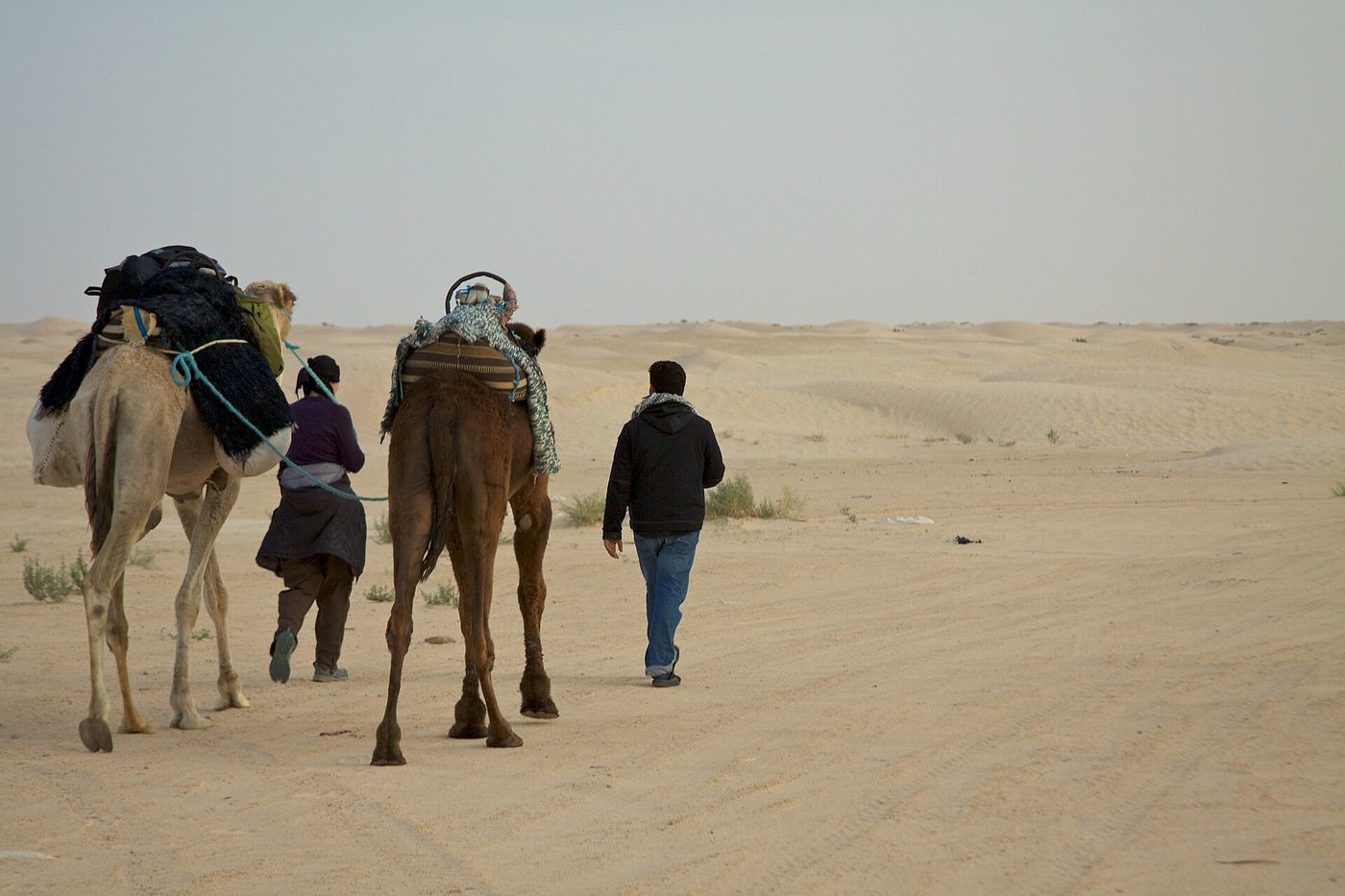
You can’t do the Tunisian Sahara justice in a single day from Sousse — the distances are simply too great — but you can do it brilliantly in two. Organised overnight tours run south to the desert towns of Douz and Tozeur, where you swap the coast for date palms, salt flats, camel rides into real dunes and a night under an astonishing sky. Many of the same trips take in the Star Wars film sets that stood in for Tatooine, which is a thrill if that’s your thing.
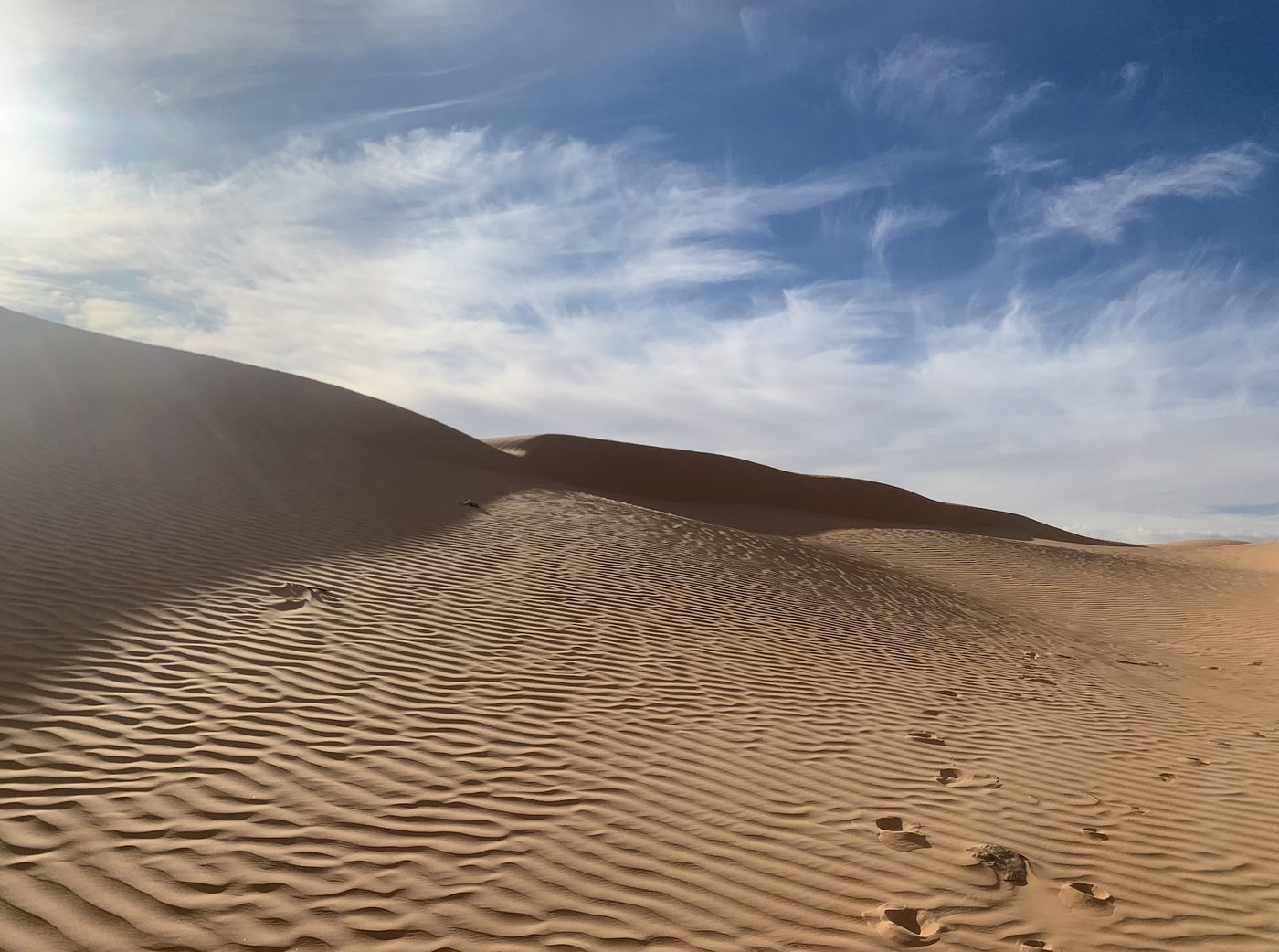
It’s a long haul and an early start, and it isn’t for everyone — but of all the readers who tell us what they remember most about Tunisia, the desert night comes up more than anything else. Read our full Tunisian Sahara guide before you commit; it covers the routes, the overnight camps, the salt flats and the film sets, and how to build the trip in without wearing yourself out.
How to book: hotel rep vs online vs independent
This is the question we get asked most, and it deserves a straight answer, because the three routes suit different people. There’s no single “right” way — it depends on how much you value convenience versus flexibility versus price.
| How you book | Pros | Cons |
|---|---|---|
| Hotel rep / animation desk | Effortless; hotel pickup; someone to chase if it goes wrong | Priciest option; commission built in; big coaches; often herded into a “carpet shop” or two |
| Online (GetYourGuide, Viator, etc.) | Fixed price paid up front; real reviews; smaller groups; free cancellation on many | Still dearer than doing it yourself; you’re on the operator’s schedule |
| Independent (louage / train) | Cheapest by far; total freedom; a proper local experience | No hand-holding; timetables need checking; no guide’s context |
Our honest take: for El Jem, Monastir, Port El Kantaoui and Mahdia, go independent — the train and metro make it genuinely easy, and you’ll save a lot. For Kairouan (no train) and the two-day Sahara (long distances, logistics), a booked tour is worth it for the guide and the door-to-door transport. Booking online usually beats the hotel desk on both price and group size, and you get reviews to check first. If a rep quotes you a price, it’s fair to say you’ll “think about it” and compare online that evening — you’ll often find the same trip for less.
Whatever you choose, agree taxi fares before you get in (insist on the meter, the “compteur”, or fix a price), and be ready for the friendly “remember me from the hotel?” opener that’s designed to steer you toward a shop. None of it is threatening — it’s just worth knowing so it doesn’t catch you out.
A few practical notes before you go
- Money. The dinar is a closed currency — you can’t buy it before you fly or take it home, so change money on arrival and carry cash for trains, louages and entry tickets. Reckon on roughly £1 to 3.8–3.9 dinars in mid-2026, but check the current rate.
- Health and insurance. Your UK GHIC is not valid in Tunisia, so comprehensive travel insurance with medical cover is essential. Check the NHS’s TravelHealthPro Tunisia page (country code 226) for the latest food, water and vaccination advice before you travel.
- Safety. Every trip in this guide — El Jem, Kairouan, Monastir, Mahdia, Hammamet, Hergla — sits firmly within Tunisia’s normal tourist belt, visited by millions each year. For the current, date-stamped picture, see our guides to whether Sousse is safe and whether Tunisia is safe. Take the same sensible precautions you would anywhere.
- Timing. Spring (April–June) and autumn (September–October) are ideal for sightseeing without peak-summer heat — see our best time to visit guide. In July and August, do outdoor sites early or late in the day.
- Getting around. Trains and the Sahel metro are cheap and reliable enough; louages are the local workhorse. Our getting around Tunisia guide explains how each works.
Sort those five things and every trip in this guide becomes straightforward. For the bigger picture of where to base yourself, our where to stay in Sousse guide covers the resort strip, the medina and Port El Kantaoui, and the pillar things to do in Tunisia page zooms right out.
Day trips from Sousse: your questions answered
What is the best day trip from Sousse?
El Jem, for most people. The Roman amphitheatre is spectacular, it’s an easy hour by train, and you’ll often have it nearly to yourself. If you want history and culture together, pair El Jem with Kairouan on a combined tour. For a gentle half-day, Monastir is the easiest of all thanks to the 30-minute metro.
Can you visit El Jem from Sousse by train?
Yes, and it’s the best way. Direct trains run south from Sousse to El Jem in a little over an hour for a few dinars, and the station is a two-minute walk from the amphitheatre. There are only a handful of departures a day, so check the return times before you go so you’re not stranded.
How far is Kairouan from Sousse?
About 60 km west, roughly an hour by road. There’s no train, so you’ll travel by louage (shared minibus) or on an organised tour. Because the sights are spread out and benefit from a guide’s context, Kairouan is one trip where we think a tour is worth the money — especially one that also takes in El Jem.
Is it better to book excursions with your hotel or independently?
It depends on the trip. For El Jem, Monastir and the coast, go independent by train or metro and save a lot. For Kairouan and the two-day Sahara, a tour earns its keep. Booking online usually beats the hotel rep on both price and group size, and lets you read reviews first.
How do you get from Sousse to Monastir?
Take the Sahel metro (a coastal light-rail line) from Sousse’s Bab Jedid station. It runs into the centre of Monastir in about 30 minutes for a very small fare, several times a day. A taxi or louage also works, but the metro is the cheapest and simplest option and drops you within walking distance of the Ribat.
Can you do El Jem and Kairouan in one day?
Yes — it’s one of the most popular combined tours from Sousse, and it works well. Expect a full day of around 8–10 hours with an early start, covering the amphitheatre and museum at El Jem plus the Great Mosque, medina and Aghlabid basins at Kairouan. Doing both independently in a day is possible but tight.
Is it safe to travel outside Sousse on day trips?
The destinations in this guide — El Jem, Kairouan, Monastir, Mahdia, Hammamet and Hergla — are all well within Tunisia’s established tourist areas and visited by huge numbers of holidaymakers each year. Take normal precautions with taxis, cash and belongings. See our up-to-date guides on whether Sousse and Tunisia are safe for the full, current picture.
How much do day trips from Sousse cost?
Independently, very little: a return train to El Jem is a few dinars, the Monastir metro pennies, plus small entry fees (El Jem was around 12 dinars in 2026). Organised tours vary widely — a combined El Jem and Kairouan day or a two-day Sahara trip costs more but includes transport and a guide. Compare online before booking.
What is there to do near Sousse without a tour?
Plenty. El Jem, Monastir, Mahdia and Port El Kantaoui are all reachable by train, metro or a short taxi, so you can explore independently. Add Sousse’s own medina and beach for days when you don’t want to travel at all.
Can you visit the Sahara on a day trip from Sousse?
Not really in a single day — the desert is too far south to do it justice and get back. The sensible option is a two-day overnight tour to Douz or Tozeur, with a night in or near the dunes. It’s a long trip, but the desert night is the thing most of our readers remember most about Tunisia.
Do you need a car to explore around Sousse?
No. Trains, the Sahel metro and louages cover most of the big trips cheaply, and tours handle the rest. Car hire adds flexibility for places with no public transport, such as Hergla or the hill villages inland, but it isn’t necessary for the main sights. See our getting around Tunisia guide for the trade-offs.
When is the best time of year for day trips from Sousse?
Spring (April–June) and autumn (September–October) are ideal: warm, comfortable for walking around ruins and cities, and quieter than peak summer. July and August are hot, so do outdoor sites like El Jem early or late in the day. Our best time to visit guide breaks it down month by month.
Written by the Tunisia Tourism Guide team — an independent UK-focused guide to travelling in Tunisia. We don’t sell tours or take hotel commissions. Prices and advice were checked at publication; always confirm current details before you book.
Photo credits
PHOTO_CREDITS_PLACEHOLDER