By the Tunisia Tourism Guide team · Last updated 2 September 2026 · We don’t sell tours or take hotel commissions — this is independent advice, written to be useful.
This is the question we get more than any other, and it’s almost always asked the wrong way round. People ask how many days Tunisia “needs”, as though the country has a fixed running time like a film. It doesn’t. What it has is a set of distinct experiences — a Roman amphitheatre, a capital city, a beach, a night in the Sahara — that are strung out along 750 km of road with some genuinely slow bits in between. The right answer depends entirely on how many of those you actually want.
So, how many days in Tunisia? Seven is the sweet spot for most first-timers: enough for Tunis, the Sahel coast and one night in the Sahara without living in the car. Four or five works beautifully as a resort base with two big day trips. Ten to fourteen days lets you drive the full loop properly, with rest days built in.
Below we’ve broken that down into a decision matrix you can actually use, with honest notes on what each trip length realistically buys you. If you’ve already settled on a length, jump straight to our Tunisia itinerary planning guide, which links out to full day-by-day routes for every duration we mention here.
How long to spend in Tunisia: the decision matrix
Read across the row that matches your annual leave. The “realistically see” column is deliberately conservative — it’s what you’ll actually enjoy, not what a tour operator will sell you.
| Trip length | What you realistically see | Who it suits | Our verdict |
|---|---|---|---|
| 2–3 days | Tunis medina, Carthage, Sidi Bou Said, the Bardo. Nothing else. | City-breakers, people with a cheap flight and a spare Friday | Works, but only as a capital-city break — don’t try to add the desert |
| 4–5 days | A resort base plus two proper day trips (one Roman site, one medina), or Tunis plus one overnight elsewhere | Families, first-timers testing the water, anyone flying into Enfidha | Genuinely good value. The best short-trip shape Tunisia offers |
| 7 days | Tunis and Carthage, El Djem, a coastal base, and one or two nights in the Sahara | Most people. The default recommendation | The sweet spot — coast, ruins and desert without the burnout |
| 10 days | All of the above plus Tozeur, the salt lake, Matmata or the ksour, and Djerba to finish | Photographers, history buffs, anyone with a fortnight minus travel days | The best trip if you can get the leave. Nothing feels rushed |
| 14 days | The full anticlockwise loop: Cap Bon, the Roman northwest, Kairouan, the Sahel, the deep south, the Sahara, Djerba | Slow travellers, road-trippers, repeat visitors | Complete — but only with three deliberate rest days in it |
| 3 weeks+ | Everything above plus Bizerte, Tabarka, Kerkennah, and time to sit still | Van-lifers, remote workers, retirees | Diminishing returns unless you’re the sort who likes a town for its own sake |
If you take one thing from that table, take this: the jump from five days to seven is the biggest single upgrade in the whole list, because seven days is where the Sahara becomes possible without wrecking everything else.
The short answer, expanded
Tunisia is a small country by African standards — roughly 750 km from the Mediterranean coast in the north to the Algerian and Libyan frontiers in the south, and only about 350 km at its widest. On a map it looks like a long weekend’s worth of driving. It isn’t, and understanding why is the whole trick to planning your trip.
The motorway spine — the A1 running Tunis–Hammamet–Sousse–Sfax and onward — is fast, cheap and in good condition. Tunis to Sousse takes about an hour and three-quarters for 140 km. But the moment you leave that spine, you’re on single-carriageway national roads with speed bumps through every village, agricultural traffic, and a 90 km/h limit that you’ll rarely average. Tunis to Tozeur is around 450 km and takes about five and a half hours; Tunis to Djerba is around 500 km and takes six and a half. Those are not motorway numbers.
Add to that the fact that the two headline experiences — Roman ruins in the north and the Sahara in the south — sit at opposite ends of the country, and you can see where short trips come unstuck. The people who come home disappointed are almost always the ones who tried to do a coast-to-desert-to-coast circuit in five days.
Driving times that decide your itinerary
These are the legs that actually shape a Tunisia plan. We’ve used realistic times rather than optimistic ones, because Tunisian roads punish optimism.
| Route | Distance | Realistic driving time | Road |
|---|---|---|---|
| Tunis → Hammamet | 65 km | Around 1 hour | A1 motorway, tolled |
| Tunis → Sousse | 140 km | Around 1h 45m | A1 motorway, tolled |
| Sousse → El Djem | 65 km | Around 55 minutes | RN1, free |
| Tunis → Kairouan | 155 km | Around 2 hours | A3 then national road |
| Tunis → Sfax | 270 km | Around 3h 15m | A1/A3, tolled |
| Tunis → Tozeur | 450 km | Around 5h 30m | A3 then RN3 |
| Tunis → Djerba | 500 km | Around 6h 30m | A1 then RN1 plus ferry or causeway |
| Tozeur → Douz | 130 km | Around 1h 30m | RN16 across the salt lake |
| Djerba → Tozeur | 350 km | Around 4h 30m | RN16/RN3, free |
Figures are indicative for 2026 — traffic, roadworks and the ferry queue at Jorf all move them. Note that almost none of the southern routes are motorway, and that the last hour into anywhere in the south is usually the slowest.
2 to 3 days: a capital-city break and nothing more
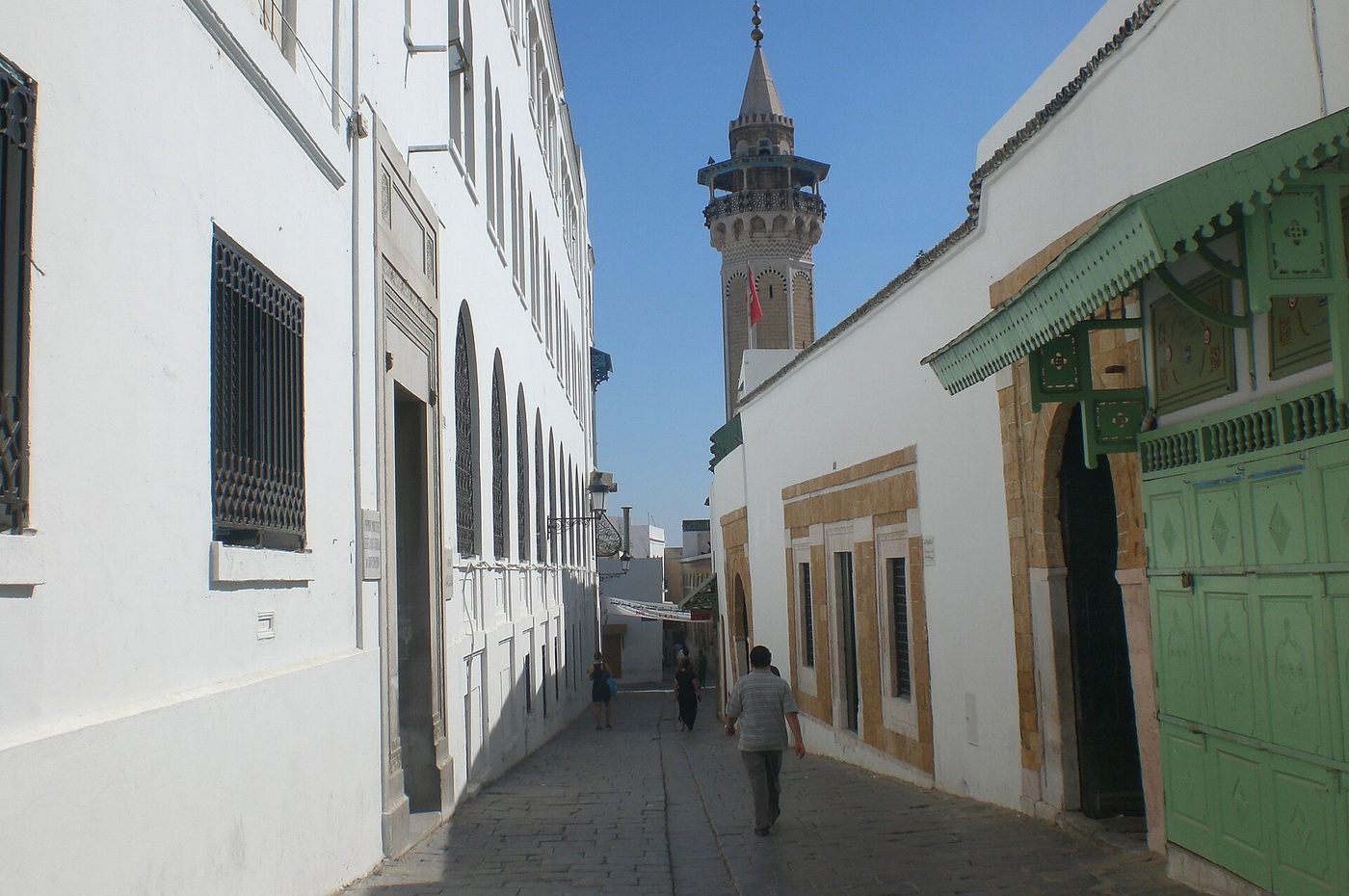
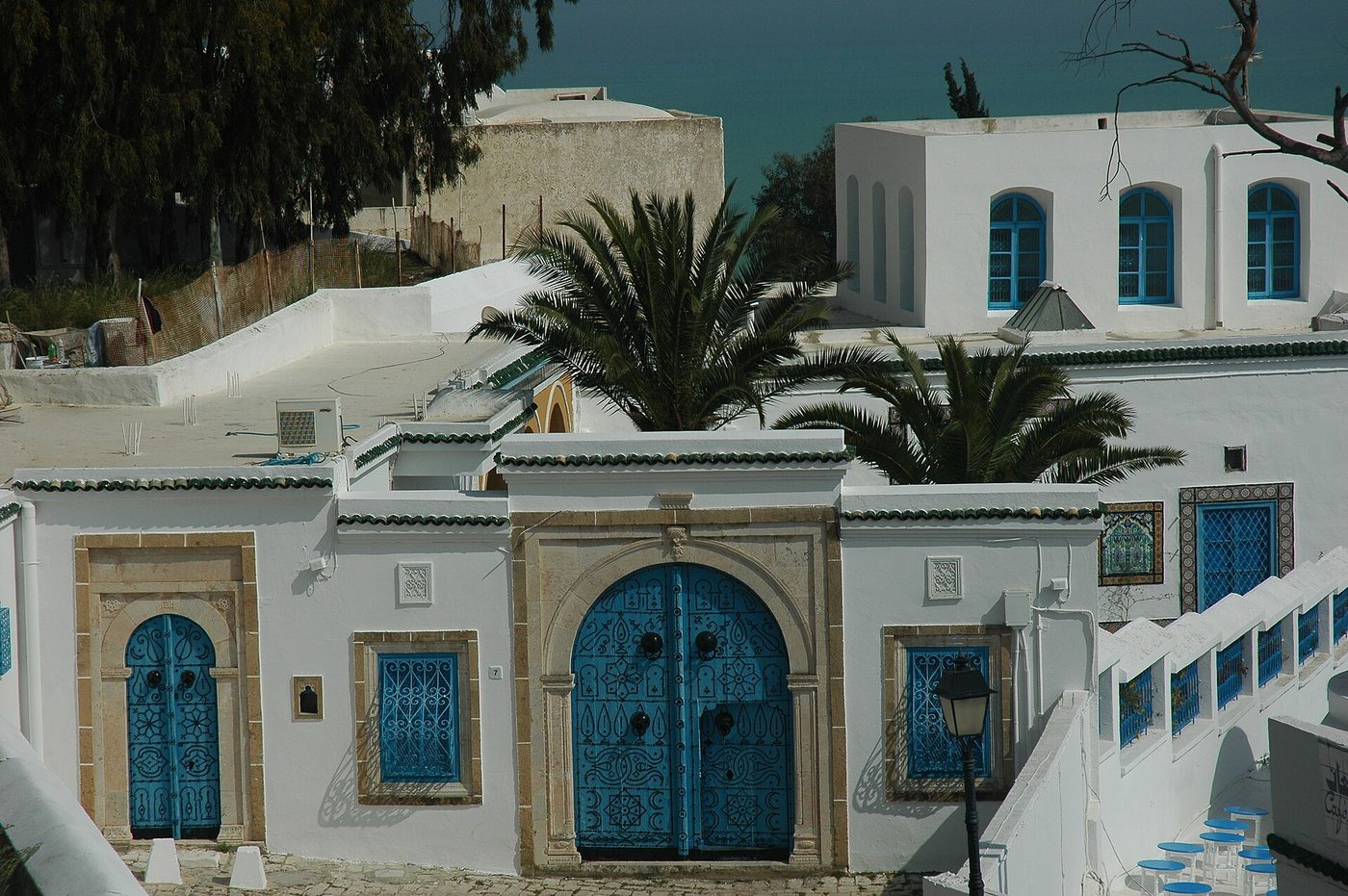
Three days in Tunisia is a real trip, but only if you accept its limits. Fly into Tunis-Carthage, base yourself in the capital or out at Sidi Bou Said, and spend the whole thing on the Gulf of Tunis. That gives you the Tunis medina and its souks, the ruins of Carthage strung along the coast, the blue-and-white lanes of Sidi Bou Said, and the mosaics at the Bardo Museum. That is a properly satisfying long weekend, and the TGM light railway links most of it for pocket change.
What it is not is a Tunisia trip. You will not see the Sahara, you will not see El Djem unless you sacrifice most of a day to it, and you will not get a beach day worth the name. We’ve written the whole thing up separately in our guide to a long weekend in Tunisia, including which flight timings actually make it work from the UK.
Honest note: three days is only worth the airfare if you get a direct flight and a Friday-evening departure. Two travel days out of three is a poor ratio, and Tunis airport security is slow on the way home.
4 to 5 days: a resort base with two big day trips
This is the shape most British package holidays take, and it’s better than its reputation. You fly into Enfidha or Monastir, check into a hotel in Hammamet or Sousse, and then buy back two of your days as excursions.
The two we’d pick, every time:
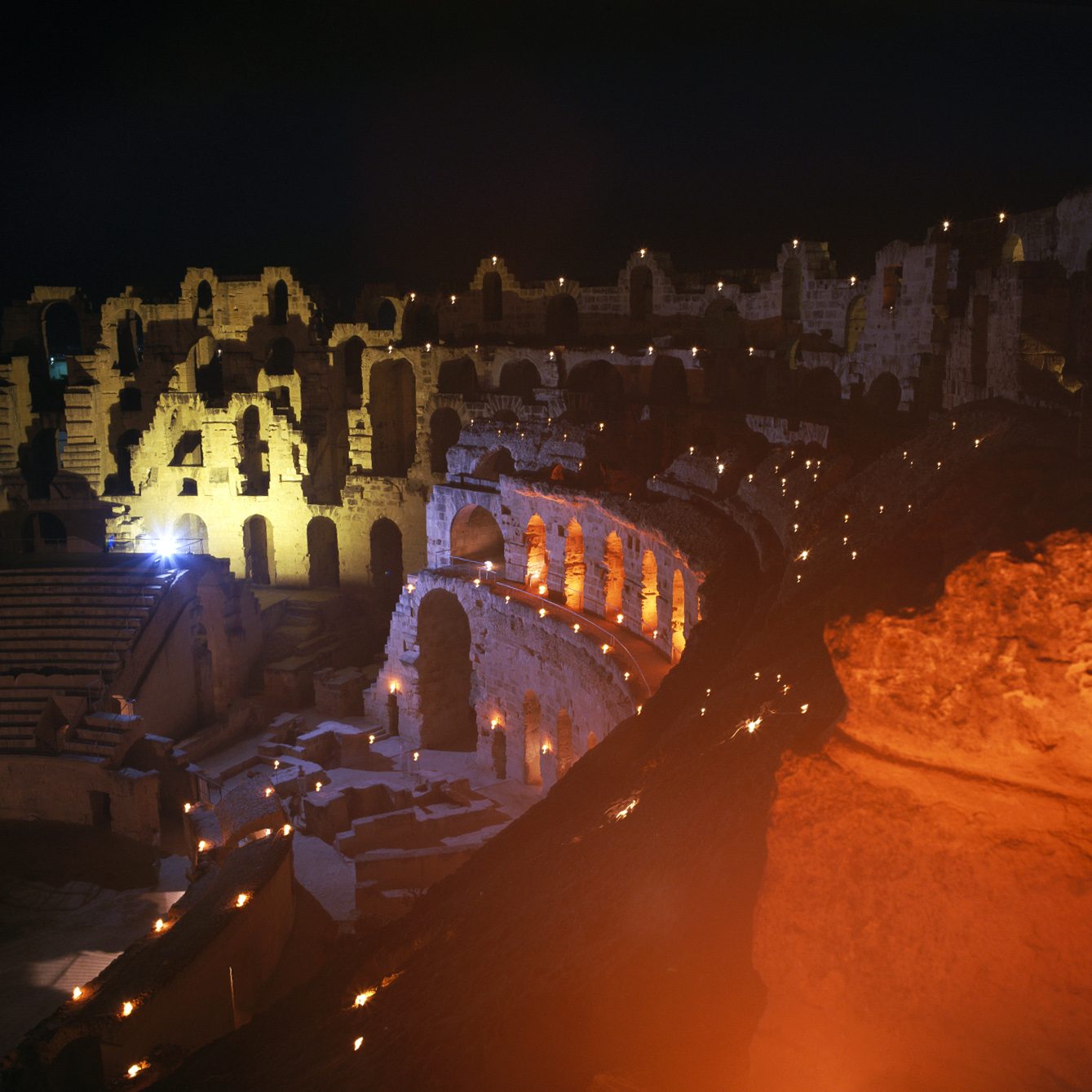
- El Djem plus Kairouan. A full day inland. The amphitheatre at El Djem is one of the largest in the Roman world and you can walk the arena floor and the underground tunnels with almost nobody else there. Kairouan adds the Great Mosque and the ninth-century water basins. Around 55 minutes from Sousse to El Djem, another hour or so cross-country.
- Tunis, Carthage and Sidi Bou Said. Also a full day, but an easy one, and it’s the day that makes people say Tunisia surprised them. Around 1h 45m each way from Sousse on the A1.
Five days gives you those two plus two and a half days horizontal by a pool, which is a genuinely good holiday. Our roundups of day trips from Sousse and day trips from Hammamet rank the rest of the options honestly, including the ones we’d skip.
What we’d advise against on four or five days: the two-day Sahara coach trip. It’s sold hard in every resort lobby, and on a short trip it eats 40% of your holiday in a minibus. Save it for a week.
7 days: the sweet spot, and why
Seven days is our default answer because it’s the shortest trip that includes all three of Tunisia’s headline experiences without any of them feeling like a raid.
The classic shape: two nights in Tunis for the capital and Carthage, then south down the coast with a stop at El Djem, two nights on the Sahel around Sousse or Mahdia, then a two-night run into the desert for Douz or Tozeur and a night under canvas, and back. Our full 7-day Tunisia itinerary lays it out day by day with the drives timed.
A week also solves the single biggest constraint on a short Tunisia trip: the desert is a two-night commitment whichever way you cut it. Even the “2-day” Sahara tour from Sousse takes two full days and an overnight, and the versions from Djerba aren’t much shorter. On seven days that’s a fifth of your holiday and it feels proportionate. On four days it’s a raid.
Is a week enough for Tunisia? For a first visit, yes — comfortably. You’ll leave with things unseen, which is the correct feeling to leave a country with.
10 days: the version we’d book ourselves
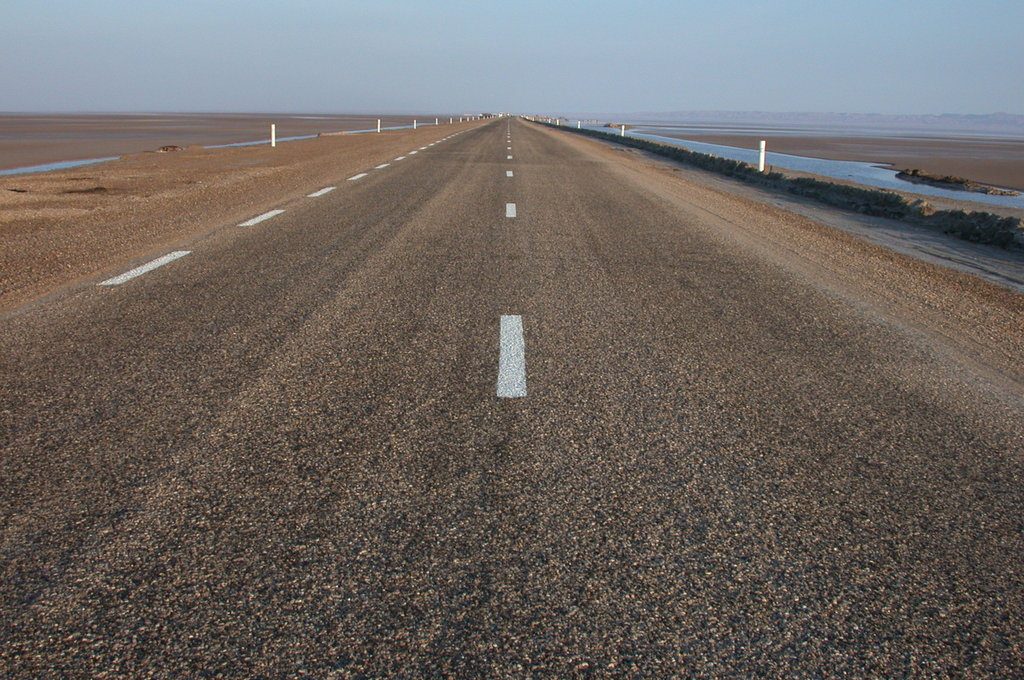
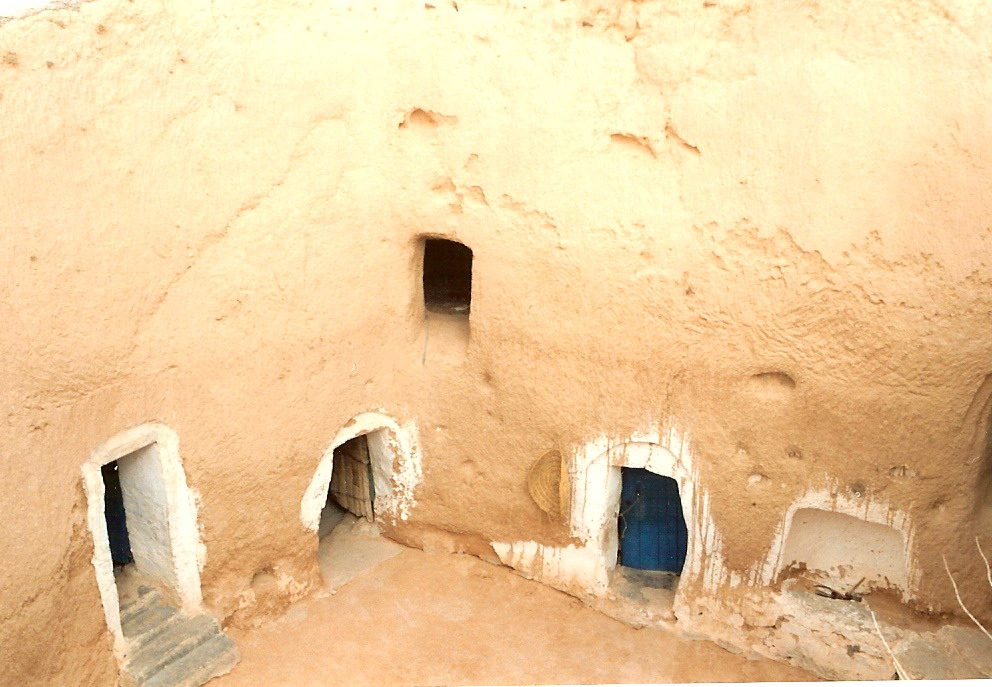
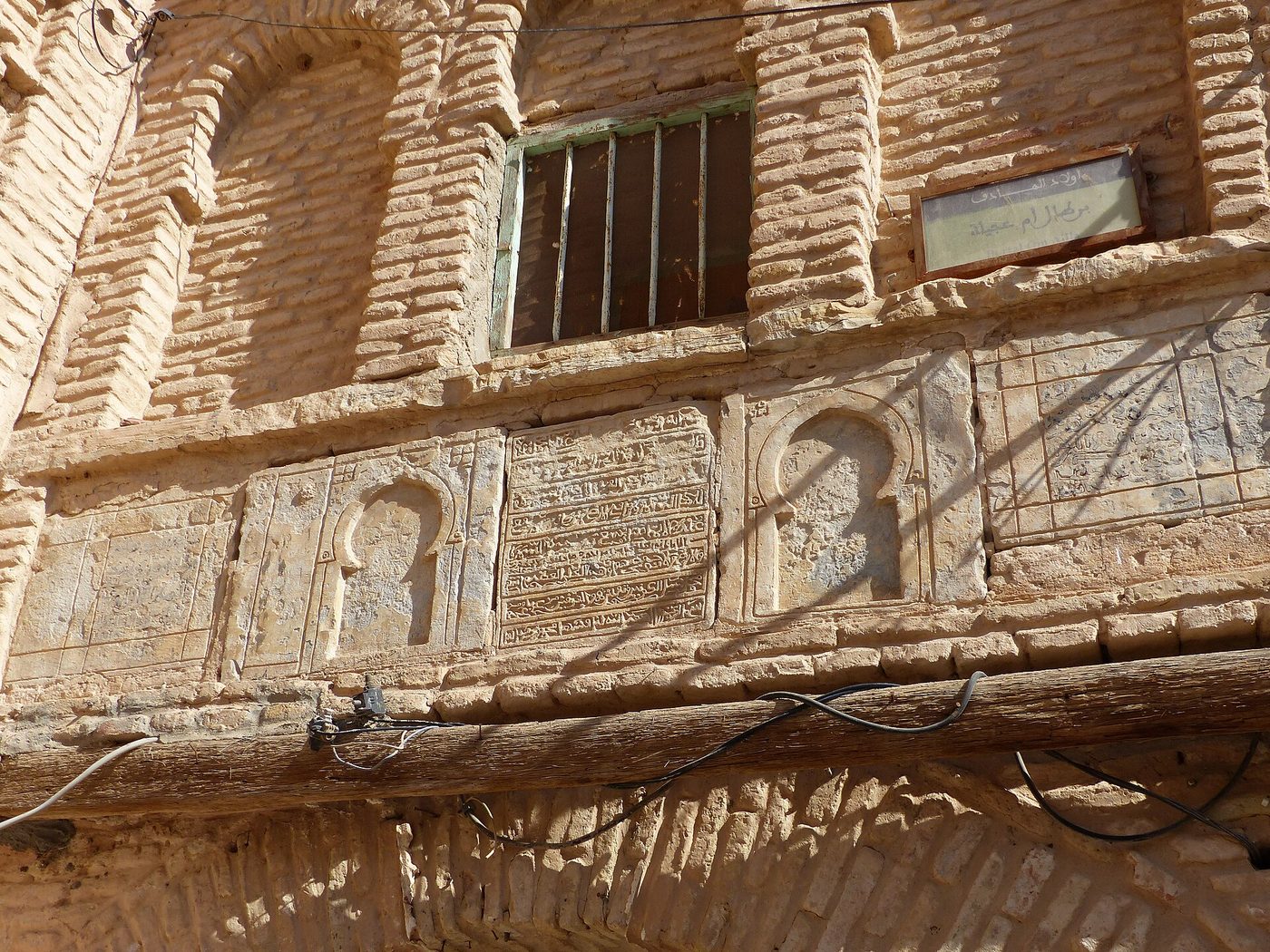
If you can get the leave, ten days is where Tunisia stops being a highlights reel. The extra three days buy you the deep south properly: Tozeur and its ochre brick old town, the causeway across Chott el Jerid, the mountain oases, and either Matmata’s pit houses or the ksour around Tataouine. Then you finish on Djerba and fly home from there rather than driving 500 km back to the capital.
That last point matters more than it sounds. A ten-day trip that ends with a flight out of Djerba-Zarzis is a completely different animal from one that has to loop back to Tunis. easyJet flies Manchester–Djerba direct, which turns the route from a circle into a line. Our 10-day itinerary is built around exactly that.
14 days: the full loop, with rest days
A fortnight is the length at which you stop choosing. You get Cap Bon, the Roman northwest around Dougga and Bulla Regia, Kairouan, El Djem, the Sahel, the ksour, the Sahara and Djerba — and, crucially, room for three days when you don’t drive anywhere at all.
The mistake people make with two weeks is treating it as licence to add stops rather than nights. Fourteen beds in fourteen nights is how you end up eating crisps in a car park outside Gabès wondering why you’re not enjoying it. Our complete two-week loop is deliberately built with rest days in it, and it’s the better trip for it.
Resort base versus touring: which suits you?
This is the other half of the “how long” question, and most guides ignore it. Two people with seven days each can have completely different holidays depending on whether they move.
| Resort base + day trips | Touring / road trip | |
|---|---|---|
| Minimum sensible length | 4 days | 7 days |
| Unpacking | Once | Every night or two |
| Cost | Lower — all-inclusive absorbs meals | Higher — car, fuel, separate hotels |
| How much of Tunisia you see | A slice, well | Most of it, faster |
| Best for | Families, first-timers, anyone travelling with small children or limited mobility | Couples, photographers, repeat visitors, history-led trips |
| The catch | Long coach days there and back for anything inland | Fatigue by day nine; night driving is genuinely to be avoided |
A hybrid works well and nobody sells it: three or four nights in a resort at the start, then pick up a car and tour for the back half. You get the rest and the range. If you’re going that way, our Tunisia road trip guide covers the routes, the hire-car traps and the checkpoint etiquette.
How many days for each part of the country?
If you’d rather build your trip from the bottom up, here’s how long each region actually takes. Add a travel half-day between any two of them.
- Tunis, Carthage and Sidi Bou Said — 2 days. Two full days does it: one in the medina and the Ville Nouvelle, one on the coast for Carthage, Sidi Bou Said and the Bardo. A third day only if you want day trips from the capital to Dougga or Bizerte. See our Tunis itinerary for the detail.
- The Sahel coast (Sousse, Monastir, Mahdia, El Djem) — 2 to 3 days. One for El Djem, one for the Sousse medina and the beach, one spare if you like a fishing town.
- Cap Bon — 2 days. Kerkouane, Kelibia’s fort and beach, and Nabeul’s pottery. Often skipped; shouldn’t be.
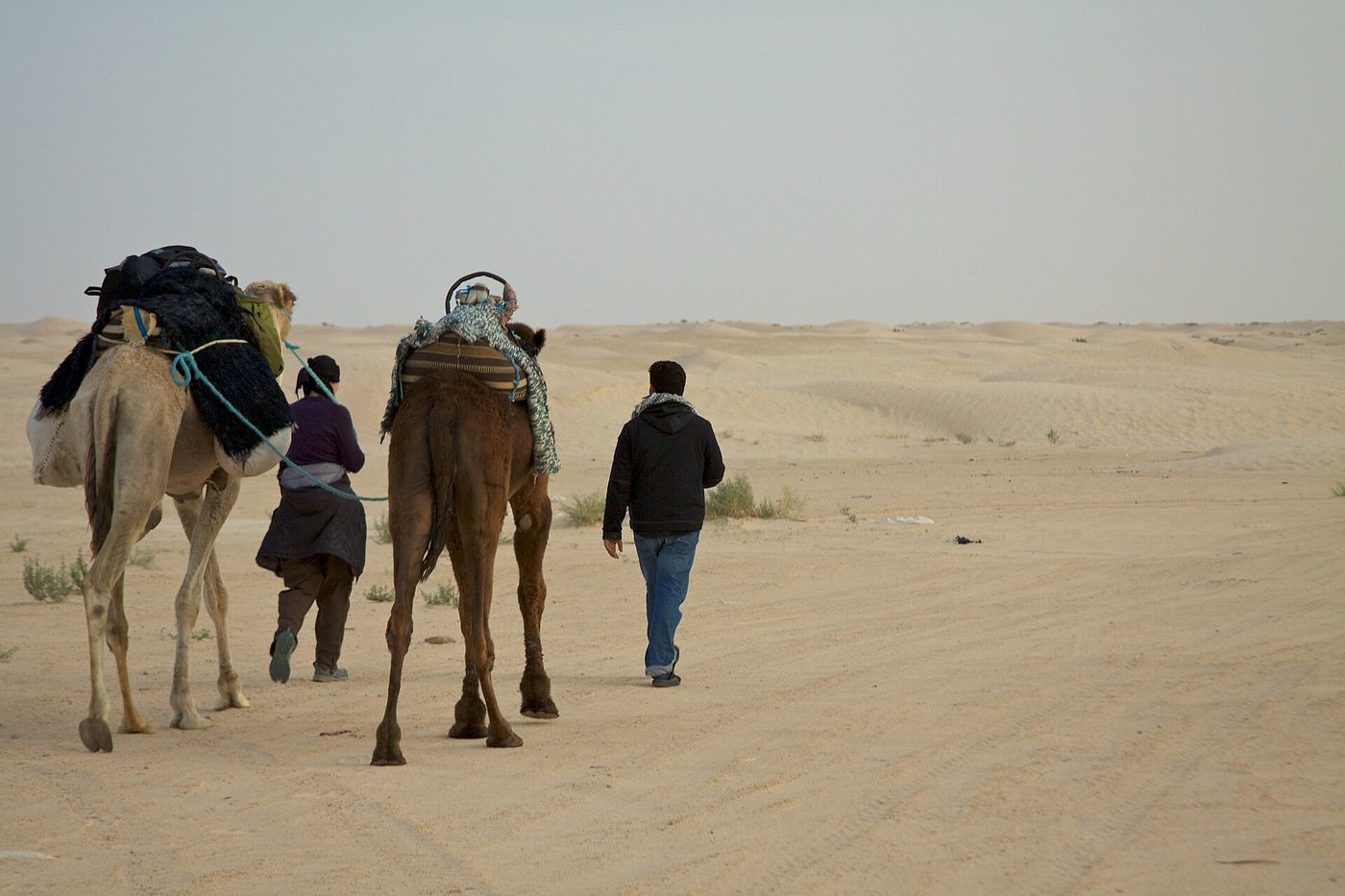
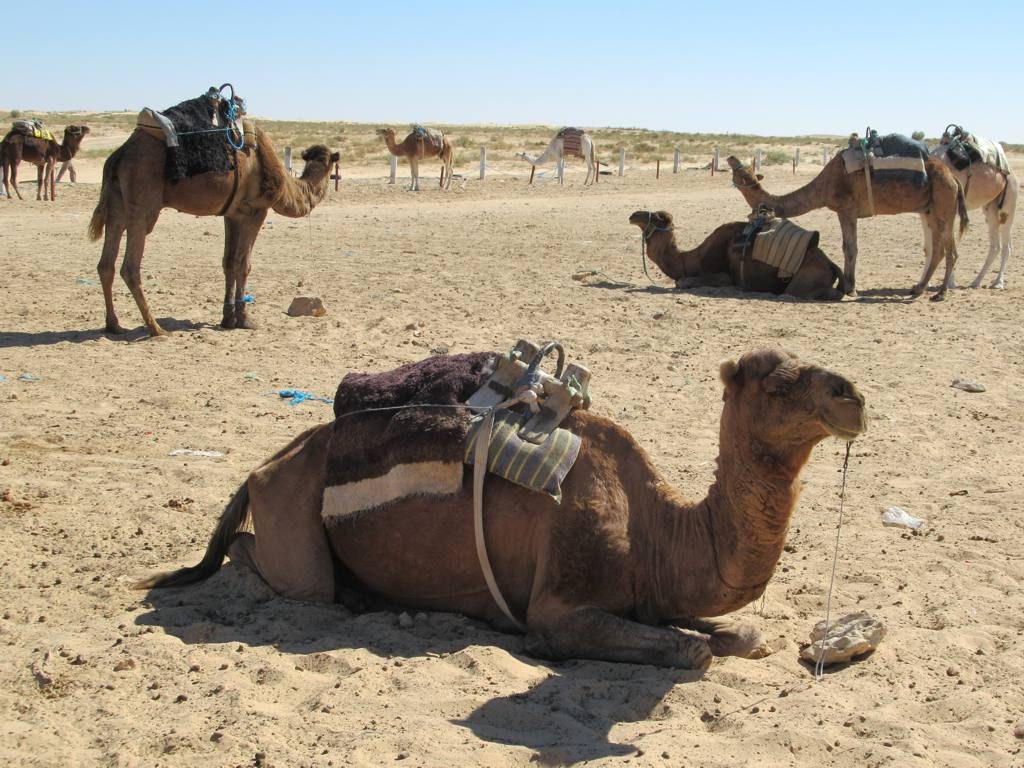
- The Sahara — 2 nights minimum, 3 if you want to enjoy it. One night in a desert camp near Douz or at Ksar Ghilane, plus the driving either side. Our Tunisian Sahara guide explains what the camps are really like.
- The Jerid (Tozeur, Nefta, Chott el Jerid, the mountain oases) — 2 days. One for the town and the palm grove, one for the loop out to Chebika, Tamerza and Mides or the Star Wars sets.
- Djerba — 2 to 4 days. Two if it’s a stop, four if it’s the point. It’s the right place to end a trip.
- The Roman northwest (Dougga, Bulla Regia, Testour) — 2 days. Only sensible with a car, and only on a trip of ten days or more.
The days you didn’t budget for
Every Tunisia plan we’ve seen underestimates the same four things.
Arrival and departure days are not full days. Tunis-Carthage security on departure is slow and the airport wants you early. A “7-day” trip with a late Saturday arrival and an early Saturday departure is five and a half usable days. Count honestly.
The dinar is a closed currency. You can’t buy Tunisian dinars before you fly and you can’t legally take them out, so your first hour on the ground includes an ATM or a bureau, and your last hour includes changing the remainder back before security — dinars are no use airside. Reckon on roughly 3.8–3.9 TND to the pound in mid-2026, but check the day’s rate. More on this in our Tunisia travel tips.
Transfers eat mornings. Enfidha to Hammamet is 40 minutes; Enfidha to Sousse is a bit more. Tunis airport to a Hammamet hotel is about 70 minutes and costs somewhere around £35–45 by taxi (2026 — check current). None of that is a disaster, but three transfers across a five-day trip is half a day gone.
Closing days. The Bardo closes on Mondays. Many archaeological sites shift to shorter winter hours from around November. Always check the specific site the week you go rather than trusting a blog — including ours.
Does the time of year change how long you need?
Yes, and more than people expect.
In July and August the interior and the south routinely go past 40°C, which effectively removes the middle of every day. A seven-day summer trip behaves like a five-day one, because you’re doing everything before ten in the morning and after five in the afternoon. If August is your only option, either stay on the coast entirely or add two days to absorb the lost hours.
In April to early June and mid-September to early November — the shoulder seasons, and the best time to come — you get long usable days at comfortable temperatures, and a week genuinely works like a week. Our best time to visit guide goes month by month.
In winter the coast is mild but not beach weather, the desert nights are properly cold, and daylight is short. Sightseeing trips work well; a four-day beach break doesn’t. Have a look at Tunisia for winter sun before you book a January week expecting to swim.
What each trip length roughly costs
Very approximate, for two people sharing, excluding UK flights. Everything here is indicative for 2026 — check current prices before you build a budget on it.
| Trip | Style | Rough on-the-ground spend |
|---|---|---|
| 3 days | Tunis city break, mid-range hotel, taxis, museums | Around 700–1,100 TND |
| 5 days | All-inclusive resort plus two excursions and tips | Around 500–900 TND on top of the package |
| 7 days | Mixed hotels, hire car or transfers, one desert night | Around 2,000–3,200 TND |
| 10 days | Hire car throughout, mid-range guesthouses, entry fees | Around 2,800–4,500 TND |
| 14 days | Full loop with car, three rest days | Around 4,000–6,300 TND |
For context: fuel runs roughly 2.7–3.0 TND a litre, motorway tolls are 2–8 TND a section with the whole Tunis–Sfax run around 12 TND, most archaeological sites are in the 8–30 TND band, and a good meal out with drinks is comfortably under 50 TND a head. Distance in Tunisia is nearly free; it’s the hotels and the car that cost.
A note on where you can and can’t go
Trip length doesn’t change the safety picture, but it changes how far south and west you might stray, so it’s worth knowing where the lines are before you plan. As at 2 September 2026 (FCDO advice last updated 24 July 2026), the Foreign Office “advises against all travel to” the “Chaambi Mountains National Park” and “the designated military operations zones: Mount Salloum, Mount Sammamma, Mount Mghila”, and against all but essential travel to “Kasserine Governorate, including the town of Sbeitla” and to “within 20km of the Tunisia-Algeria border in El Kef and Jendouba governorates, south of the town of Jendouba”. In the south it advises against all but essential travel to “within 75km of the Tunisia-Libya border, including Remada and El Borma but excluding Zarzis, the C118 road and all areas in Medenine Governorate north of the road.”
Two practical consequences. First, that last exclusion means Djerba and Zarzis are explicitly outside the Libya-border advisory, so a trip that finishes on the island is unaffected. Second, do not let a longer itinerary tempt you into “linking up” the northwest and the south via Kasserine and Sbeitla — several itineraries online do exactly that, and entering an area the FCDO advises against will void most UK travel insurance outright. Check gov.uk/foreign-travel-advice/tunisia before you book, and read our date-stamped Tunisia safety guide for the full wording.
While you’re thinking about insurance: your UK GHIC is not valid in Tunisia. Private clinics expect payment up front, so proper travel insurance with medical cover and repatriation is essential regardless of how long you stay. The NHS TravelHealthPro Tunisia page has the health detail.
How many days in Tunisia? Your questions answered
Is 7 days enough for Tunisia?
Yes, and for most first-time visitors it’s the ideal length. A week covers Tunis and Carthage, the Sahel coast with El Djem, and two nights in the Sahara, with a travel day either end. You’ll leave things unseen — the Roman northwest, Cap Bon, Djerba — but nothing about the week will feel rushed.
Is 5 days enough for Tunisia?
It’s enough for a resort holiday with two excellent day trips, or for Tunis plus one overnight elsewhere. It is not enough to add the Sahara without gutting the rest. Five days is a good short break; treat it as one rather than trying to compress a week into it.
Is 3 days enough in Tunisia?
Only as a capital-city break. Three days gives you the Tunis medina, Carthage, Sidi Bou Said and the Bardo, which is a genuinely rewarding long weekend. Attempting the desert, El Djem and the coast in the same three days will produce a trip made almost entirely of driving.
How many days do you need to see the Sahara in Tunisia?
Two nights and three days at minimum from a coastal base — one long drive down, one night in a camp near Douz or Ksar Ghilane, one long drive back. Three nights lets you add Tozeur and the salt lake and turns a march into a proper leg of the trip.
Is 10 days too long in Tunisia?
Not remotely. Ten days is arguably the best-value length: it adds the whole Jerid region, Matmata or the ksour, and a finish on Djerba with a flight home from there. If you have the annual leave, ten beats seven by a wide margin.
How many days do you need in Tunis?
Two full days covers the medina, the Ville Nouvelle, Carthage, Sidi Bou Said and the Bardo Museum without hurrying. A third day is worth it only if you want a day trip out to Dougga, Bizerte or Zaghouan, or if you’re a serious museum person.
How many days do you need in Djerba?
Two if it’s a stop on a bigger loop, four or more if the island is the holiday. Djerba is flat, low-key and beach-led — it rewards slowing down rather than ticking things off, which makes it the right place to finish a longer trip.
Can you see Tunisia in a week without hiring a car?
Yes. The SNCFT railway runs the coastal spine from Tunis through Sousse, El Djem and Sfax, shared louage minibuses fill the gaps, and the desert is sold everywhere as a two-day excursion. It’s slower and less flexible but perfectly workable — our guide to getting around Tunisia has the practicalities.
How long is the flight from the UK to Tunisia?
Around three hours — much the same as mainland Spain. London to Tunis is just under three hours with Tunisair or Nouvelair; easyJet and TUI fly to Enfidha for the resorts, and there are direct services to Djerba and Monastir too. Schedules change seasonally, so check current routes.
What’s the minimum trip length that’s worth the airfare?
Three nights, and only with a direct flight. Two nights leaves you with roughly one usable day once you account for the transfer and the early departure. If you can only take a short break, aim for a Friday-evening flight out and a Monday-morning flight back.
Does Tunisia get boring after a week?
Not if you move. What gets boring is a fortnight in one resort. The country changes character completely between the green north, the Sahel coast and the desert south, and the reason we recommend ten days over seven is that it gives you all three rather than two.
How many days should a family with young children plan?
Five to seven, resort-based, with one or two day trips rather than a touring route. Long drives with small children are the fastest way to ruin a Tunisia holiday. Our guide to Tunisia with kids has the age-by-age detail.
Is it better to do one long trip or two shorter ones?
Two shorter ones, if the flights are cheap. Tunisia divides cleanly into a northern trip (Tunis, Cap Bon, the Roman northwest) and a southern one (Djerba, the ksour, the Sahara, Tozeur), each of which is a comfortable five to seven days. That beats one exhausting fortnight for most people.
Written by the Tunisia Tourism Guide team — an independent UK-focused guide to travelling in Tunisia. We don’t sell tours or take hotel commissions. Prices and advice were checked at publication; always confirm current details before you book.
Photo credits
All images via Wikimedia Commons, used with thanks: The Roman amphitheatre at El Jem © Yvon Fruneau (CC BY-SA 3.0 igo); Blue-and-white lanes in Sidi Bou Said © GIRAUD Patrick (CC BY-SA 2.5); Camels at Douz on the edge of the Sahara — © David Stanley from Nanaimo, Canada (CC BY 2.0); Patterned brick facades in the old quarter of Tozeur © Tsaag Valren (CC BY-SA 4.0).